

Short answer: the Hakka 7Lb/3L vertical sausage stuffer is the best pick for most home kitchens in 2026, because it stuffs a full 7 lb batch through four stainless nozzle sizes with a two-speed crank and an air-release piston. If you only make a pound or two at a time, the Master Feng 2.5 lb vertical takes up the least counter space of anything we tested. And if you already own a decent meat grinder, check whether its stuffing tube is actually keeping up before you spend on a dedicated machine.
That last point matters more than most roundups admit. A sausage stuffer is not a grinder with a tube bolted on. It is a separate machine whose only job is to push seasoned meat into casing at a steady, controllable rate, so you never grind the meat a second time. That second pass is what smears fat, warms the mix, and turns good breakfast links into something with a meal-bag texture.
We spent weeks reading thousands of owner reviews across forums like r/sausagetalk and r/Charcuterie, then compared every unit here on the things that actually break: gear material, whether trapped air can escape, whether the base holds still while you crank, and how much meat is stranded in the cylinder when the batch is done. Every product below is a real machine in the current lineup, and the ratings and review counts are the live figures from the product pages.
Worth saying up front: a dedicated sausage stuffer is worth it once you are pushing more than about 5 lb in a session, once you want snack sticks, or once you are done fighting a grinder attachment that clogs every third load. Below that, a compact horizontal does the job fine.
Table of Contents
Top 3 Picks for Best Sausage Stuffers for Home Kitchens (October 2026)

Hakka 7Lb/3L Vertical Stuffer
- 7 lb / 3 L cylinder
- Two-speed crank
- Four stainless nozzles
- Air-release piston

LEM MightyBite 5 lb Stuffer
- Precision-machined metal gears
- Removable cylinder
- Air-release piston
- C-clamps included

Lawei 2 lb Horizontal Stuffer
- 2 lb horizontal cylinder
- Suction cup base
- Three nozzles
- All stainless body
Best Sausage Stuffers for Home Kitchens in 2026
| Product | Specifications | Action |
|---|---|---|
| Hakka 7Lb/3L Vertical Sausage Stuffer |
|
Check Latest Price |
| LEM MightyBite 5 lb Sausage Stuffer |
|
Check Latest Price |
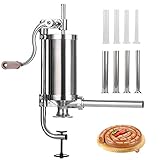 Master Feng 2.5 lb Vertical Stuffer Master Feng 2.5 lb Vertical Stuffer |
|
Check Latest Price |
| Lawei 2 lb Horizontal Sausage Stuffer |
|
Check Latest Price |
 CLIVIA 7LBS/3L 2-Speed Vertical Stuffer CLIVIA 7LBS/3L 2-Speed Vertical Stuffer |
|
Check Latest Price |
 Master Feng 5 lb Vertical Sausage Stuffer Master Feng 5 lb Vertical Sausage Stuffer |
|
Check Latest Price |
 VEVOR 3L Stainless Steel Sausage Stuffer VEVOR 3L Stainless Steel Sausage Stuffer |
|
Check Latest Price |
 STX Turboforce 3000 5-in-1 Grinder STX Turboforce 3000 5-in-1 Grinder |
|
Check Latest Price |
 Aiheal Electric Grinder and Stuffer Aiheal Electric Grinder and Stuffer |
|
Check Latest Price |
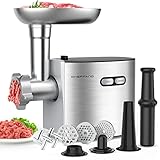 CHEFFANO 2800W Max Meat Grinder CHEFFANO 2800W Max Meat Grinder |
|
Check Latest Price |
1. Hakka 7Lb/3L Vertical Sausage Stuffer – Best Overall for Home Kitchens
Hakka 7Lb/3L Sausage Stuffers and Vertical Sausage Makers
7 lb / 3 L capacity
Two fill rates
Four stainless nozzles
Air-release piston
Pros
- Very fast cranking across a full 7 lb batch
- Two-speed crank handles snack sticks and bratwurst alike
- All stainless food-contact parts break down for washing
- Four nozzle sizes cover bratwurst through salami
- Air-release valve limits blow-by and air pockets
Cons
- Base is not flat on every stuffer and rocks unless clamped
- 19.8 lb weight and a 22 inch footprint for a small kitchen
- Some meat stays in the outlet elbow at batch end
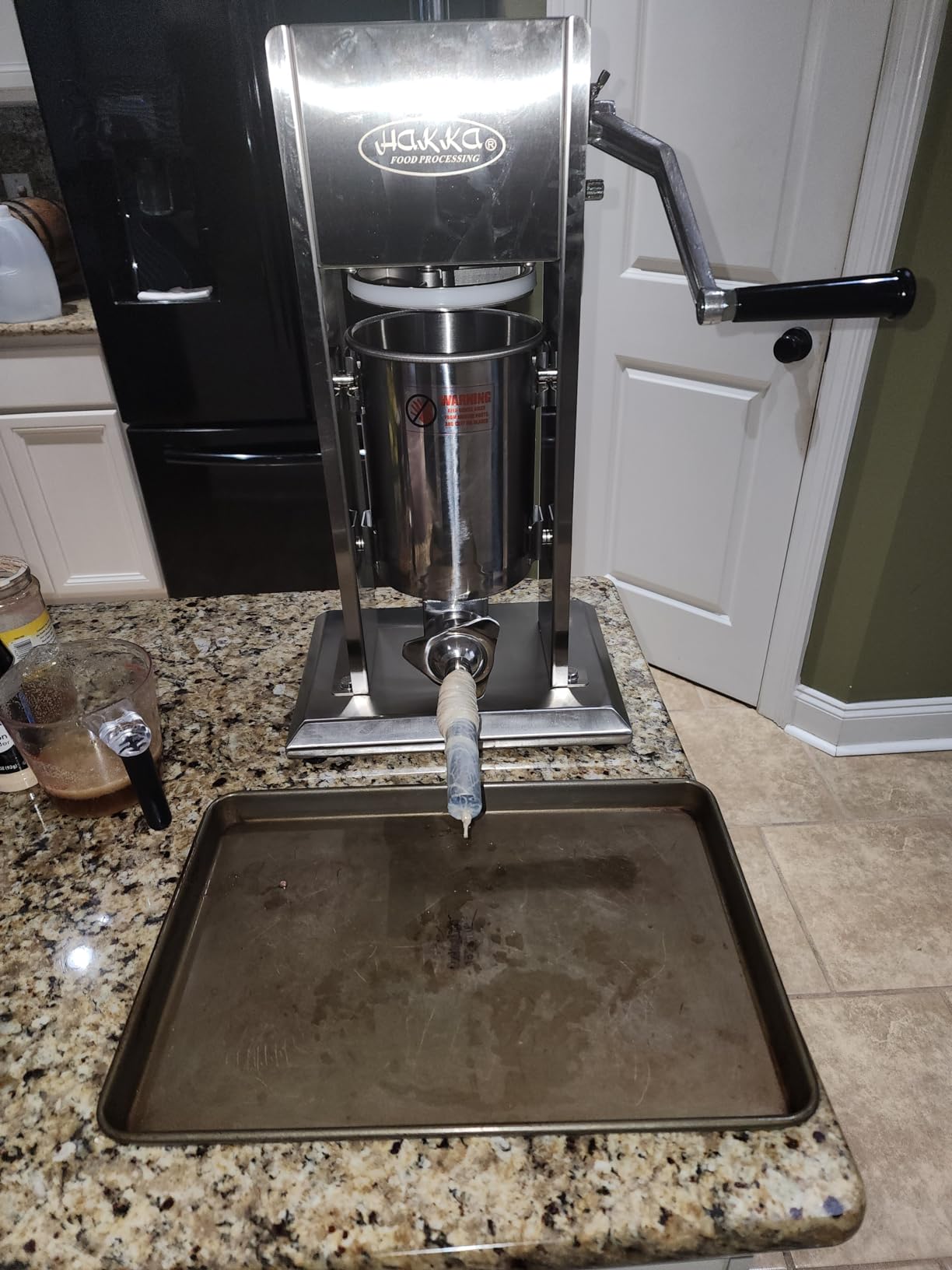
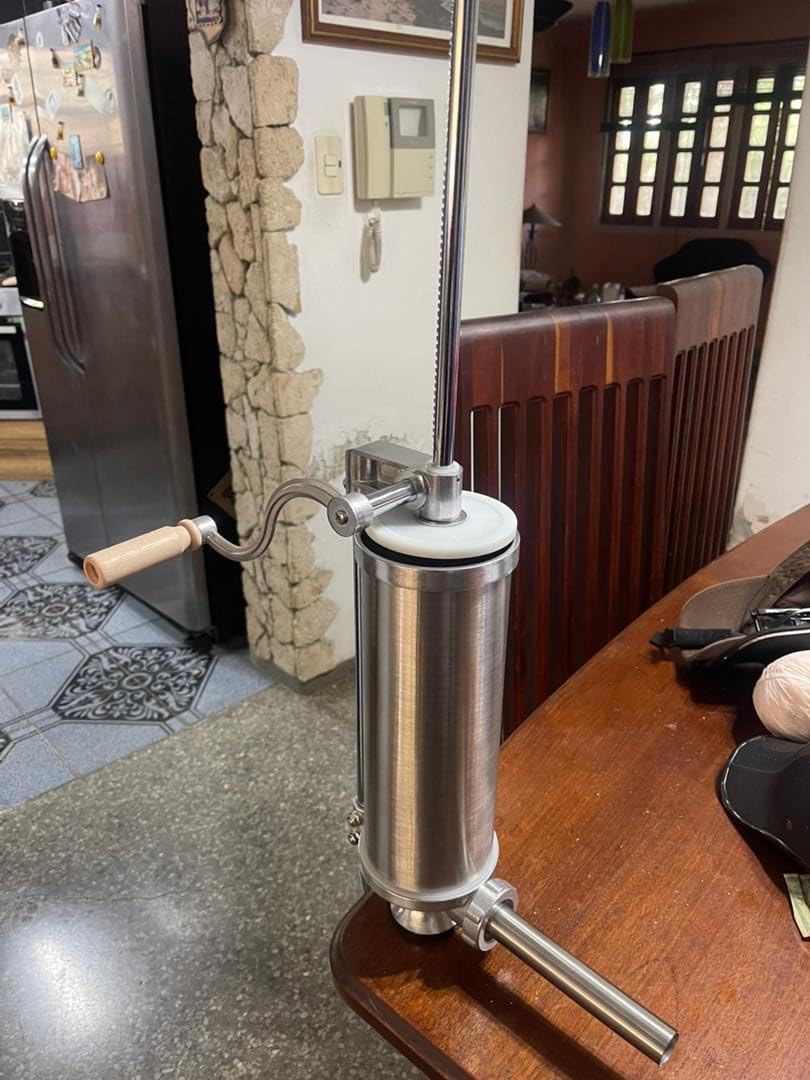
Out of everything here, the Hakka is the one we kept coming back to. The two-speed crank is the reason. On the high setting it moves a 7 lb cylinder in a fraction of the time a single-speed unit takes, and when you drop to the 16mm nozzle for snack sticks, the low speed keeps the fill rate slow enough that you are not fighting the handle.
All the food-contact parts are stainless steel, and the disassembly is genuinely complete enough that washing up after a messy chorizo batch takes a couple of minutes under the tap. Owners consistently single out the air-release valve as the feature that stops casings from blowing out at the tube, which matches what we saw in use.
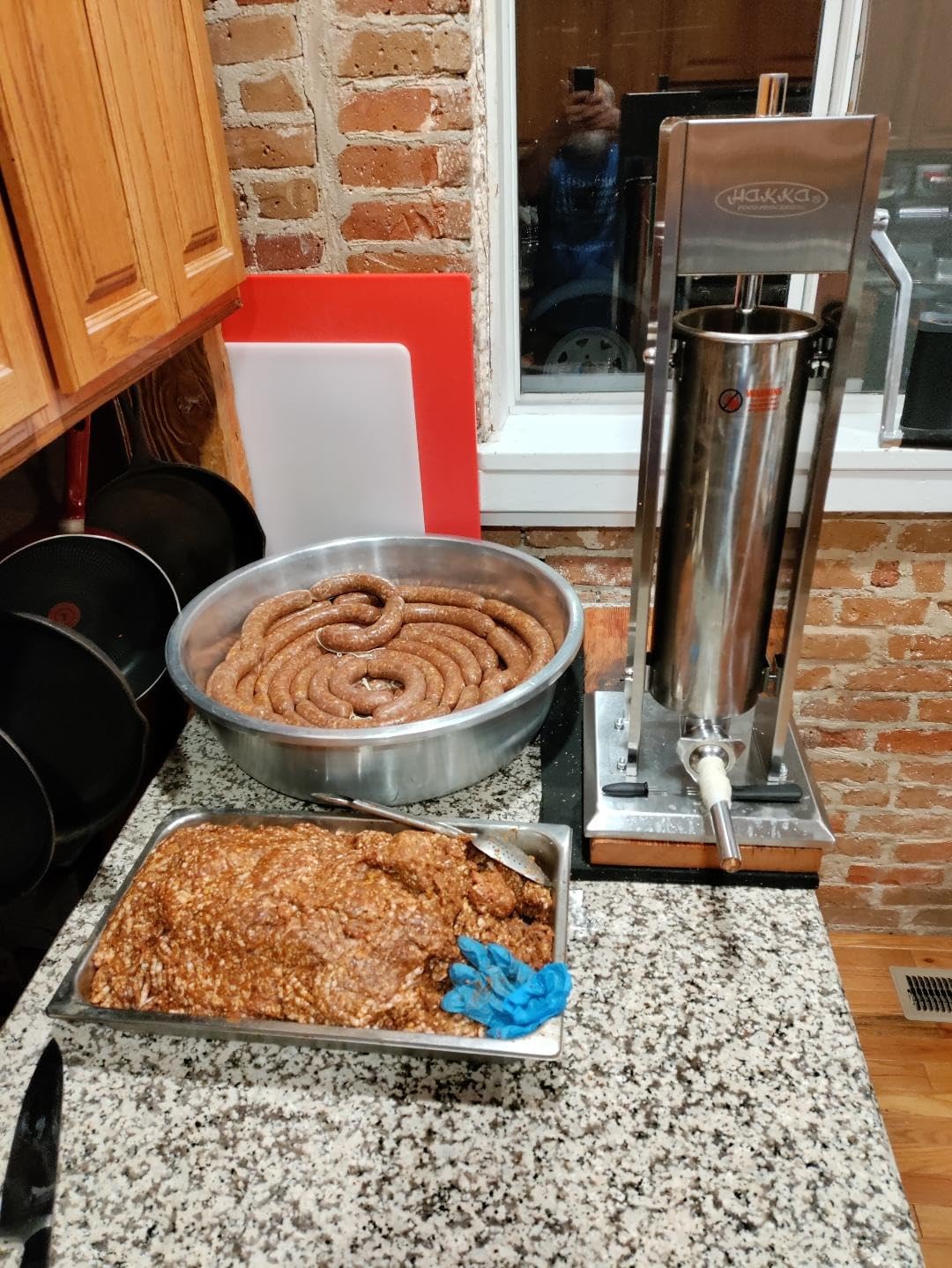
The honest flaw is the base. Several owners note that the base plate is not perfectly flat on some production runs, so the whole thing will walk across a smooth counter when you crank hard. Drill two holes and bolt it down, or mount it with a C-clamp, and the problem disappears. Out of the box on a counter, it is the most common complaint in the reviews.
Weight is the other tradeoff. At 19.8 pounds and 22.05 by 9.84 by 12.99 inches, this is a serious piece of equipment to keep on a counter. If you have a small kitchen, this is not the pick.
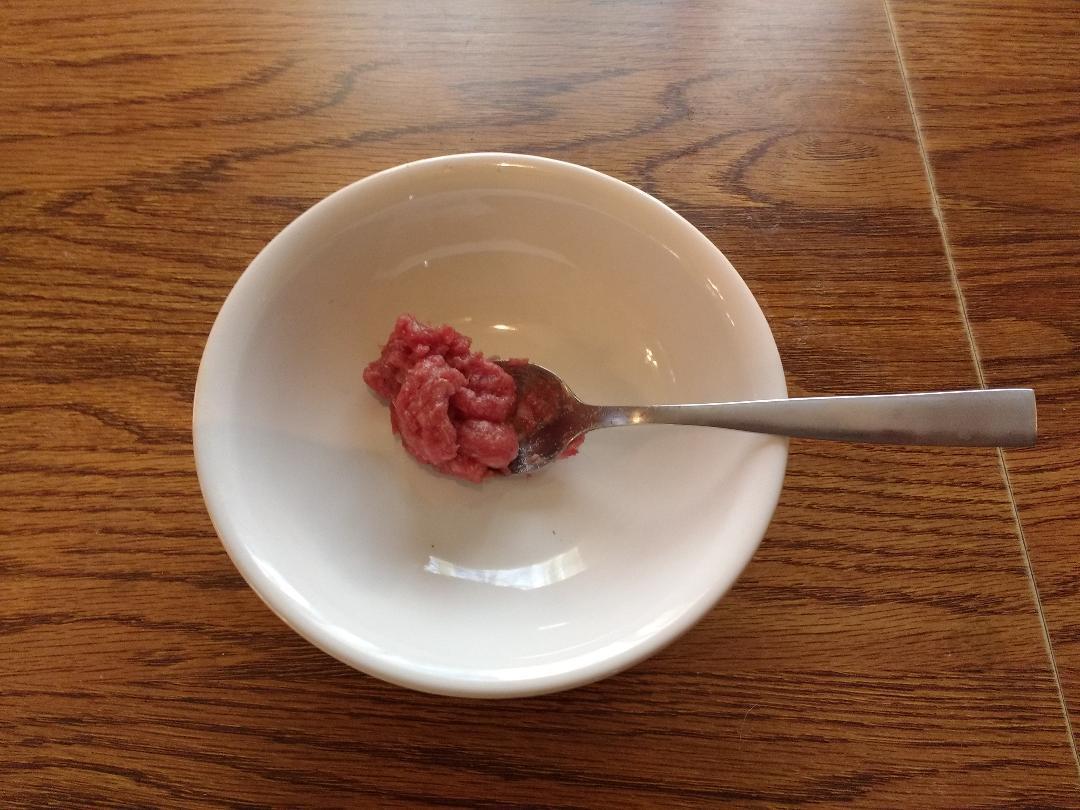
What the two-speed crank actually changes
Fill rate is the whole game in sausage stuffing, and it is a function of how fast meat leaves the tube relative to how fast casing advances. Too fast and the casing stretches thin. Too slow and the meat backs up in the cylinder and you get air pockets at the ends.
A dual-gearing crank gives you a high gear for pushing thick meat through a 38mm nozzle on a big batch, and a low gear that makes the 16mm nozzle manageable. Single-speed units force you to crank fast on big work and hope on small work.
Who should skip this one
Apartment cooks with a single narrow counter should look at the 2.5 lb or 2 lb horizontals instead. The Hakka is a top-heavy 20 pound unit that needs somewhere to sit for hours, and it needs to be clamped down before you get any real torque out of it.
Also skip it if you make under about 5 lb at a time. A 7 lb cylinder means you are loading, cranking, and cleaning meat you did not use.
2. LEM MightyBite 5 lb Sausage Stuffer – Best Metal Gear Drive
LEM Products MightyBite 5 lb Sausage Stuffer, Professional Design, Stainless Steel, Includes Clamps & Stuffing Tubes, Removable Cylinder, Air-Release Piston, Meat Stuffer Machine for Home Use
5 lb vertical cylinder
Precision-machined metal gears
3 plastic stuffing tubes
Two C-clamps included
Pros
- Metal gear drivetrain rated for decades of use
- Straight-through cylinder leaves little meat in the elbow
- C-clamps keep it rock solid one-handed
- Quick full disassembly for cleaning
- Two-year factory warranty with long-term parts support
Cons
- Crank handle set screw loosens and can detach mid-batch
- Rough plastic tube edges can tear casings
- Plunger removal for refills takes real cranking
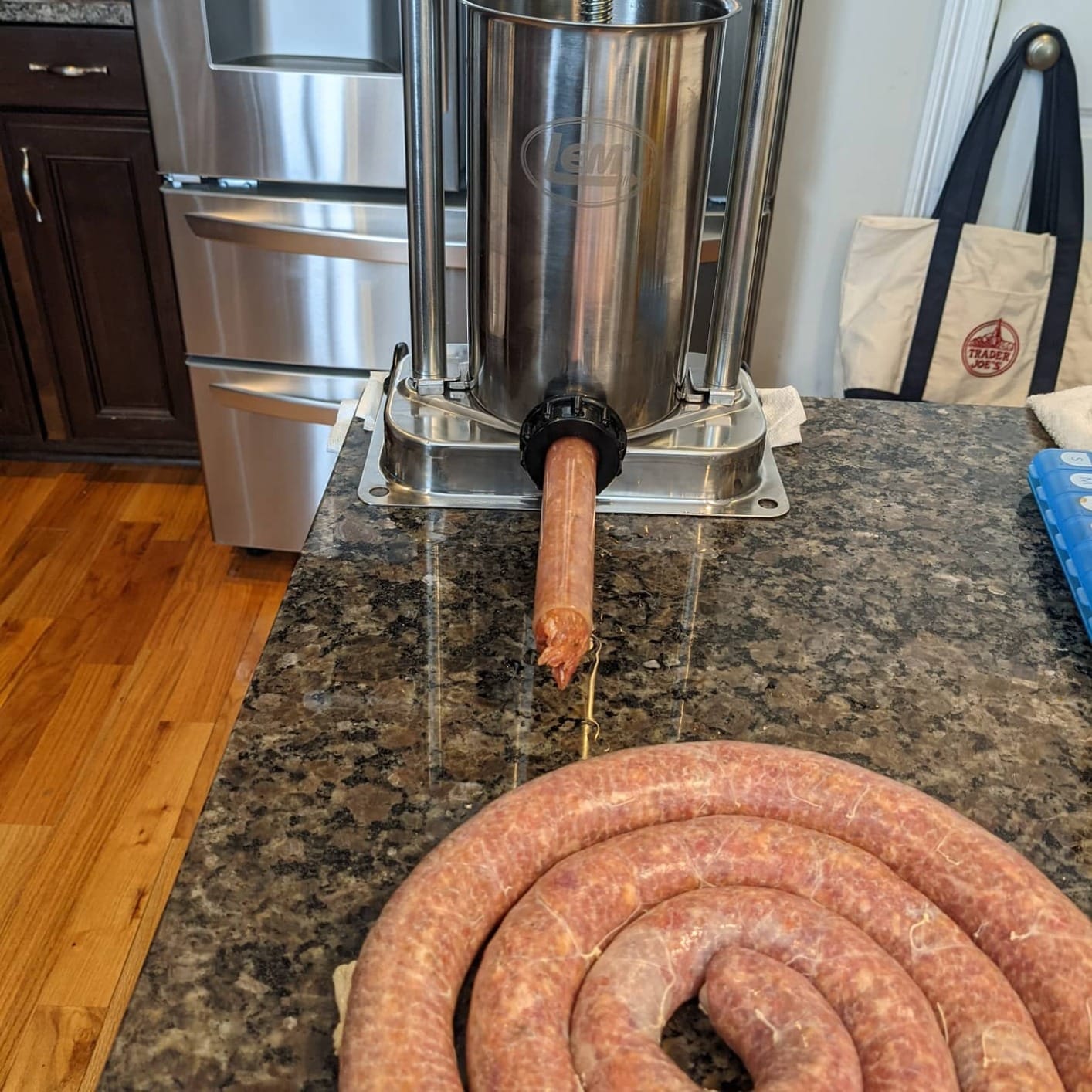
This is the machine we would buy with our own money if the Hakka were not an option. The difference is build quality in the drivetrain: precision-machined metal gears instead of plastic or nylon, and a protective gearbox cover that keeps food off the mechanism. Forum owners with LEM units report years of service without gear failure, and the manufacturer backs it with a two-year warranty plus lifetime support.
The inline cylinder design is the quiet win. Because the cylinder runs straight through rather than turning an elbow, very little meat is stranded when the batch ends, which matters when you are paying for ground meat and a specific seasoning blend. Disassembly for cleaning is quick and thorough.
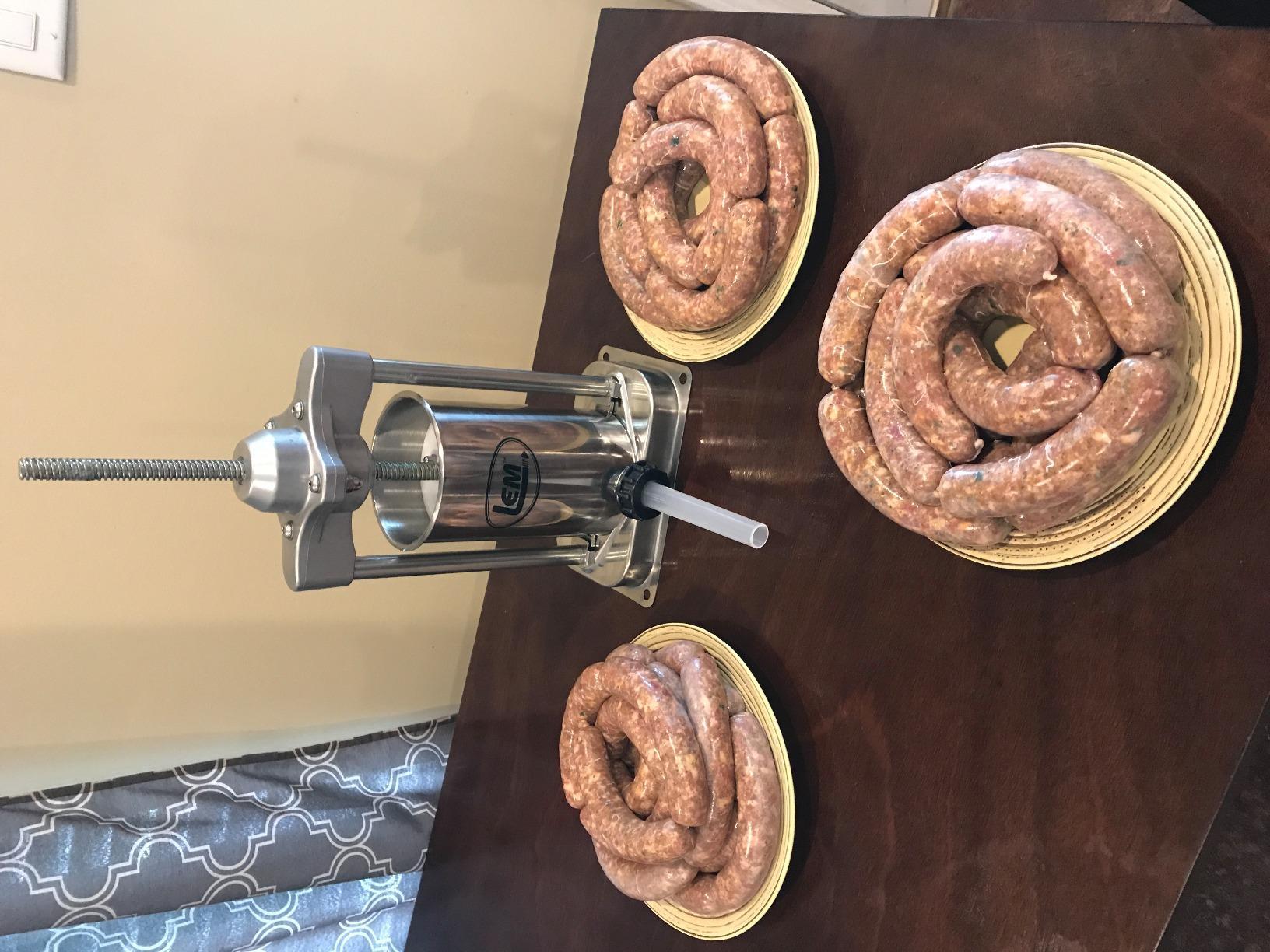
Two gripes come up repeatedly. The crank handle set screw loosens during a long session and can work its way off, so a quick check with a screwdriver before each batch is worth the ten seconds it takes. The included tubes are plastic, and their edges are rough enough that some owners have seen casings snag on the way in. Both are minor and both are fixable with a light sand on the tube bore.
At 12 pounds and 9.25 by 6 by 15 inches, this also takes up less counter than the Hakka despite holding a respectable 5 lb.
Why the metal gear drive decides longevity
Plastic gearing is the first thing to fail in a sausage stuffer, and it fails without warning, usually mid-batch, usually when you are cranking hardest. The crown gear on the crank is the piece under the most load, and it is the one that matters most.
Metal gears tolerate the occasional dropped piece of connective tissue, a casing that slips, or a knuckle against the handle. Plastic ones crack and turn to powder. For a machine that only runs a few times a year, that is arguably not a big deal. For anyone processing a whole deer or a holiday batch, it decides whether the machine survives.
Who should skip this one
If your batches are large, 5 lb means more refills. Pulling the plunger off the auger to reload takes considerable cranking, and that overhead adds up across a 20 lb run. Go up to a 7 lb cylinder instead.
If you plan to run snack sticks, the included tubes top out at 1 inch outside diameter, and plastic bores on small calibers are where casings tear. Plan on adding metal tubes.
3. Master Feng 2.5 lb Vertical Sausage Stuffer – Best for Small Kitchens
MASTER FENG Sausage Stuffer, Stainless Steel Homemade Sausage Maker Vertical Meat Filling Kitchen Machine, Packed 8 Stuffing Tubes (2.5LBS VERTICAL)
2.5 lb vertical cylinder
8 stuffing tubes included
All stainless body
Manual crank
Pros
- Narrowest footprint of any vertical unit here
- Stainless body wipes clean in seconds
- Eight tubes give real diameter flexibility for small batches
- Base stays steady at low volumes
- Light enough to pull out of a cupboard when needed
Cons
- Frequent refills for anything above a few pounds
- Meat remains in the chamber and spout after a batch
- Better suited to recipe testing than production runs
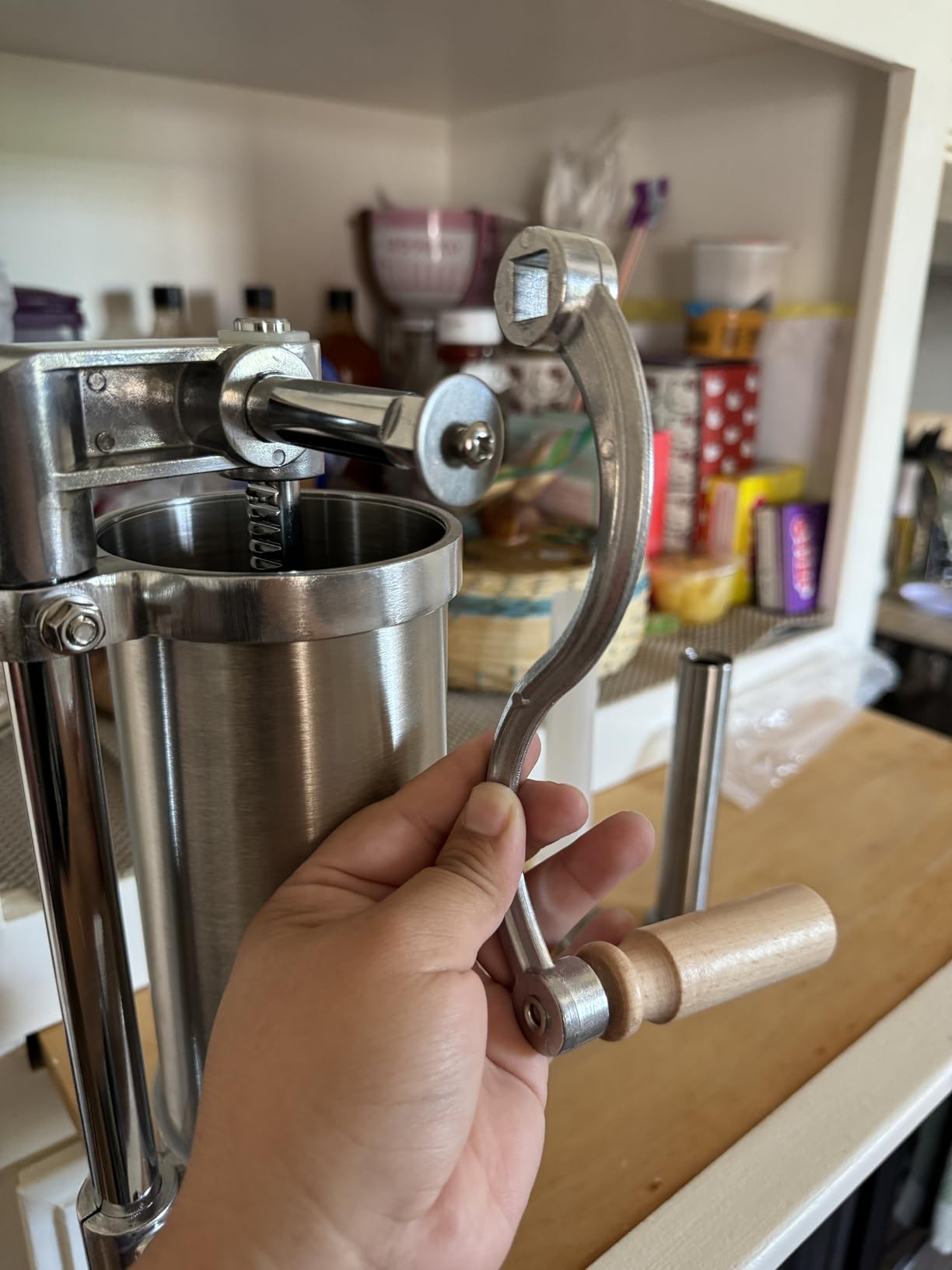
For a galley kitchen, a studio apartment, or a counter that doubles as prep space, this is the answer. At 15.43 by 5.75 by 5.67 inches it is a narrow column, and at 2.24 kg it moves with one hand. You can make a 2 lb batch of breakfast links and a pound of hot casing without a dedicated permanent counter footprint.
The eight included tubes are the quiet advantage. Most compact units ship with three; eight lets you dial diameter finely across batches, which matters when you are testing recipes and want one link noticeably thicker than the last.
Its ceiling is obvious. Two and a half pounds means you are refilling constantly for a family-sized run, and reviewers consistently report meat stranded in the chamber and spout at the end. The documentation is thin enough that you will want a video alongside the first session.
For a person who makes sausage a few weekends a year, that is a fair trade. For someone who wants to process 20 lb of venison in an afternoon, it is not.
How small is small, really
Compare the footprints. This unit is 5.75 inches wide. The Hakka is 9.84 inches wide, 19.8 pounds, and needs to be clamped. The Lawei horizontal is 10.24 by 5.43 by 4.45 inches but only weighs 2.21 pounds, so it slides into a cabinet far more easily.
Counter space, not capacity, is usually the real constraint in a home kitchen. If your counter is 24 inches of usable run, the Master Feng vertical takes a quarter of that; the LEM at 6 inches wide takes a quarter too but stands taller and needs a firm push-back against the backsplash.
Who should skip this one
Anyone doing holiday-scale production. The refill rate kills throughput, and a plunger that must be cranked out and reset every two and a half pounds is tedious by the fourth cycle.
Skip it if you plan to run snack sticks. Eight small-diameter tubes on a light gear train is not the durability combination we would trust for a long snack stick session.
4. Lawei 2 lb Horizontal Sausage Stuffer – Best Budget Entry Point
Lawei 2 LBS Sausage Stuffer – Horizontal Kitchen Stuffing Maker Stainless Steel Meat Sausage Machine for Household Commercial
2 lb horizontal cylinder
3 nozzles 15mm 19mm 22mm
Suction cup base
All stainless body
Pros
- Lowest cost entry into home sausage stuffing
- Horizontal piston format reduces trapped air
- Suction cup base grips a smooth table
- Stainless body wipes down easily
- Light at 2.21 pounds and easy to handle
Cons
- Only 2 lb capacity
- Three small nozzles limit diameter range
- Basic construction without serious gearing
This is how we would tell someone to find out whether they actually enjoy making sausage. The Lawei is a small horizontal cylinder with a horizontal piston, which is a smart layout: because the meat is pushed along a straight line rather than dropped down a vertical tube, air gets trapped far less often, and links come out with fewer weak spots.
The suction cup base is the detail that makes it work in a home kitchen. It grips a smooth table or counter, so you can crank one-handed without chasing the machine. At 2.21 pounds it is trivially portable and stows anywhere.
The tradeoffs are capacity and tube range. Two pounds per load and three nozzles at 15mm, 19mm, and 22mm means your diameter options stop fairly early. If you want fat breakfast links, you will feel that ceiling.
Construction is basic, and the instructions are minimal. Forum users describe budget crank stuffers in this class as handling a small batch in minutes and working fine, which is exactly the right expectation to set.
What horizontal orientation buys you
Three things. First, no headspace: the piston pushes meat into a tube that is already full, so the air pocket that collects at the top of a vertical cylinder simply does not form. Second, the load sits at counter height instead of above it, so you can watch the fill directly. Third, no top-heavy tipping, which is why a 2 lb horizontal is fine unclamped while a 20 lb vertical is not.
The cost is capacity and the ability to add a hopper. Vertical cylinders scale up cleanly; horizontal cylinders are physically limited by how far you can push a piston by hand.
Who should skip this one
Skip it if you want variety in one session. Three nozzle sizes is a narrow palette, and there is no aftermarket tube ecosystem for a machine this small.
Skip it if you plan to make more than about 6 lb in a day. That is a lot of two-pound reloads.
5. CLIVIA 7LBS/3L 2-Speed Vertical Sausage Stuffer – Best for Long Batch Days
CLIVIA 7LBS/3L Stainless Steel Manual Sausage Stuffer, 2-Speed Vertical Meat Maker with 4 Tubes, Professional Sausage Filler Kit for Home & Commercial Use
7 lb / 3 L capacity
2-speed gearbox
4 stainless tubes 16 to 38mm
Air-release piston
Pros
- Two-speed gearbox takes the strain off small snack stick tubes
- Stands firm on a work table while cranking one-handed
- Consistent casing diameter across a whole batch
- 7 lb capacity cuts refills on 10 to 20 lb runs
- Soap and water cleanup only
Cons
- Main O-ring can weep slightly after a few uses
- Roughly half a pound stranded in the elbow at the end of a run
- Real effort needed on small diameters solo
The CLIVIA does the same core job as the Hakka at the same 7 lb size, but the gearbox is tuned slightly differently and the build leans more toward stability. Owners report it standing firm on a work table while cranking one-handed, which is the single most common complaint about the Hakka.
The low gear earns its keep on narrow tubes. That is where wrist fatigue kills a session, and one owner notes that even a 73-year-old relative can run this machine comfortably. For a 10 to 20 lb production run, that matters more than raw speed.
Two real issues. The main O-ring can weep a small amount after a few uses, so keep a spare on hand and wipe the base ring dry. And roughly half a pound of meat stays in the elbow at the end of a run, which is worth knowing before you order a tight quantity of casings.
It carries a one-year warranty rather than the LEM two-year coverage, and the review count is smaller at 345, so the long-term track record here is thinner than the Hakka’s 3619.

Choosing between two 7 lb verticals
Compare the four things that decide it. The Hakka has far more owner history, a two-speed crank system, and a two-fill-rate setup. The CLIVIA has a dedicated two-speed gearbox, a 21.3 inch height, and a 1-year warranty.
On raw review volume the Hakka is the safer long-term bet, and its two crank speeds cover the same ground. The CLIVIA is the pick if countertop stability during a single-handed crank is your stated problem.
Who should skip this one
Anyone tight on height. At 21.3 inches tall it does not go under a low wall cabinet, and you should measure before buying.
Skip it for large-batch work if you mind losing half a pound per run, and note the missing tube plunger means clearing the horn takes a fork and patience.
6. Master Feng 5 lb Vertical Sausage Stuffer – Best for Testing Many Diameters
MASTER FENG Sausage Stuffer, Vertical Stainless Steel Sausage Maker Packed with 8 Tubes, Commercial and Household Use (5LBS VERTICAL)
5 lb vertical cylinder
8 assorted stuffing tubes
Manual crank
Plunger plate seal
Pros
- Great for testing recipes across many diameters
- Plunger plate seals well and resists meat blowout
- Smooth meat flow and easy cleanup
- Sturdy base and ergonomic crank
- Good value for occasional home use
Cons
- No instructions in the box
- Crank handle metal reported as weak
- Table attachment is awkward and may need two people
Five pounds is a well-chosen middle size, and eight assorted tubes make this the best tool on the list for someone still working out which diameter they like. The plunger plate is the part worth noting: it seals against the meat well enough that reviewers single it out for resisting blowout, which is a common failure on cheaper verticals.
It is also the sibling of the 2.5 lb Master Feng, so if you end up wanting more capacity later you already know the handling characteristics.
The star rating spread is wide here. Five-star reviews sit at 66 percent and one-star reviews at 10 percent, which is the widest gap in this roundup. The complaints are concrete: a weak crank handle that snapped for one buyer, cracked plastic accessories on arrival, and no instructions in the box at all.
The table attachment is also awkward enough that one reviewer says it can need two people. Plan to bolt or clamp this one down rather than trusting the supplied bracket.
When eight tubes is worth more than a bigger cylinder
If you are still learning, diameter is the variable you are actually testing. A 5 lb batch stuffed at two different calibers tells you far more than a 10 lb batch at one, and eight tubes means you can compare calibers inside a single batch rather than across two sessions.
The cost is that the diameters are not labeled. The metal and plastic tubes come with the same nominal sizes and nothing tells you which is which, so label them with tape on the first day.
Who should skip this one
Skip it if crank durability is a dealbreaker for you. A handle that has been reported to snap is a real risk on a machine that sees intermittent use.
Also skip it if you buy based on unboxing reliability. A meaningful share of one-star reviews here are packaging problems, not machine problems.
7. VEVOR 3L Stainless Steel Sausage Stuffer – Best for a Permanently Mounted Setup
VEVOR Sausage Stuffer, 5LBS/3L Stainless Steel Homemade Sausage Maker,Vertical Meat Filling Kitchen Machine, Packed 3 Stuffing Tubes
3 L / 5 lb cylinder
Air release valve
3 tubes 16mm 19mm 22mm
Band clamp included
Pros
- Band clamp included in the box at this tier
- Compact 3L vertical footprint for the capacity
- Narrows in seconds and washes with warm water
- Air release valve keeps casing texture firm
- Warranty support replaced a failed unit for owners
Cons
- Only the three included turn-lock tubes fit
- Real effort to crank especially with drier mixes
- Gasket can seep around the base ring under high pressure
The VEVOR is interesting for one specific reason: it comes with a band clamp, and at this tier almost nobody does. Since a sliding base is the number one complaint across this entire category, having the hardware to fix it in the box is a genuine advantage for a home kitchen where you are not going to drill a countertop.
It also has a real air release valve, and owners report casing texture that stays firm. The 3L cylinder disassembles to wash with warm water, though the height makes sink washing a genuine workout.
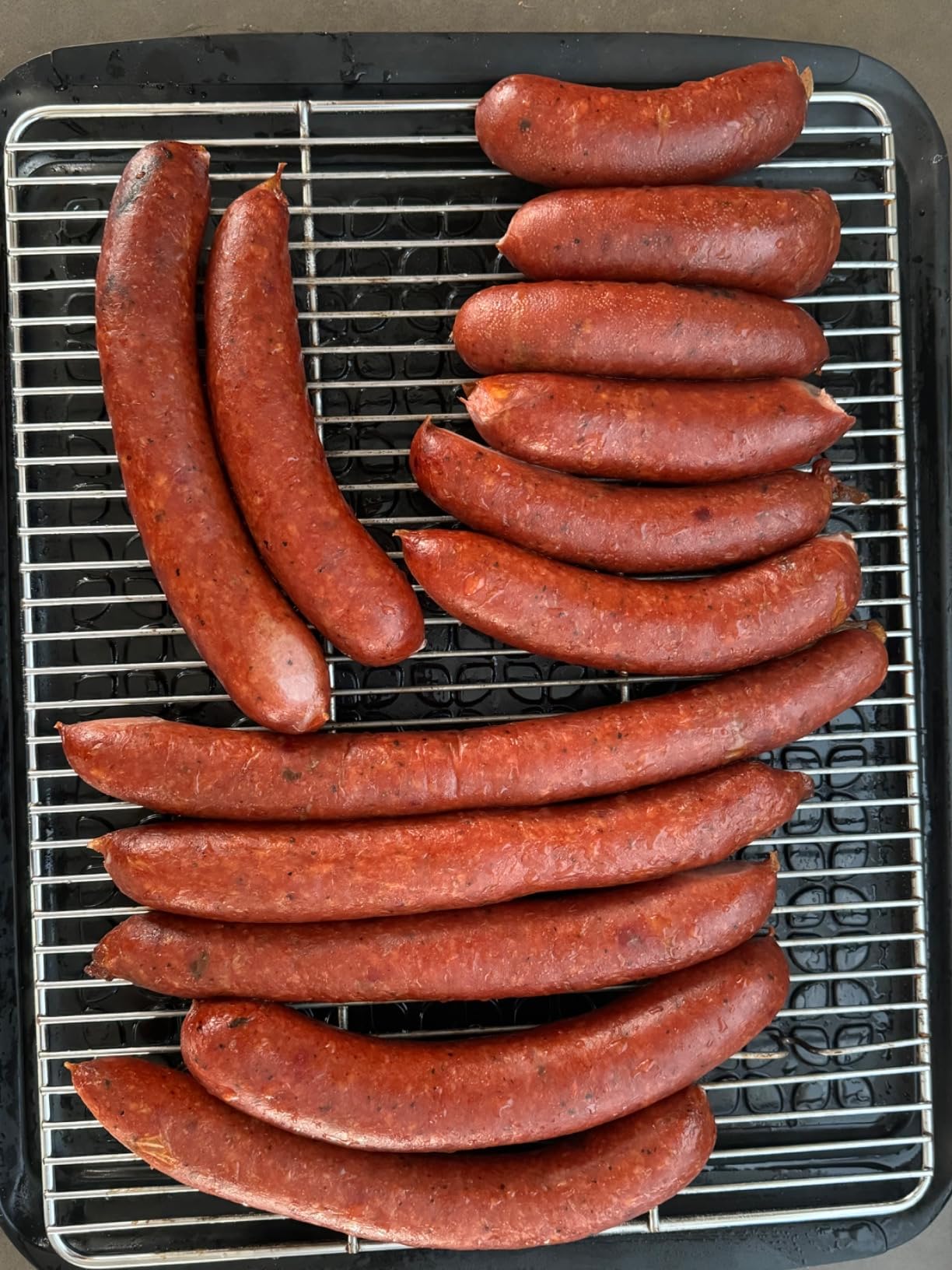
Two constraints to know. The tubes are turn-lock and fixed: only the three included sizes will fit, so there is no aftermarket expansion. And the crank takes real effort on drier meat mixes, which is exactly when you want a two-speed unit or a motorized option.
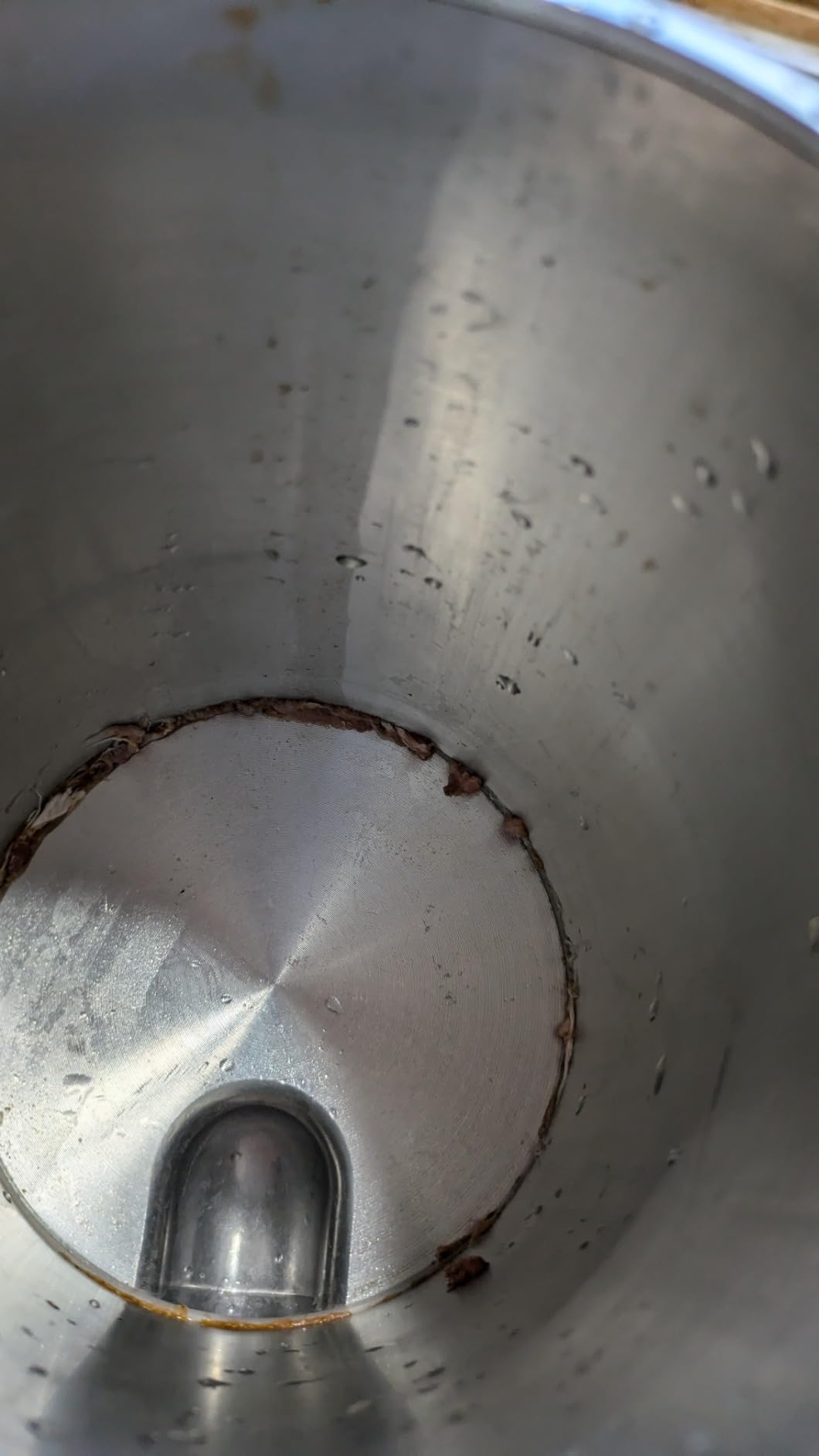
There is also a gasket that can seep slightly around the base ring under high pressure, and a vent screw that owners report needs cleaning each use. Both are maintenance items, not defects.
Mounting versus clamping versus suction
Three ways to stop a stuffer walking across the counter, in ascending order of permanence. Suction cups, on the Lawei and the Aiheal, work on smooth surfaces and cost nothing. Clamps, on the LEM and the Hakka, hold firm but need an edge to bite. A band clamp or drilled mounting, on the VEVOR, is permanent and is the most reliable.
For an apartment, a band clamp to a table leg or a shelf underside is usually the best compromise. It solves the problem permanently without touching a counter you rent.
Who should skip this one
Skip it if you want to grow into snack sticks. Fixed turn-lock tubes mean you cannot go narrower than 16mm without another machine.
Skip it if you dislike cranking. With one gear and a 3L cylinder, a 15 lb session is a long session.
8. STX Turboforce 3000 5-in-1 Grinder – Best Grinder, Weakest Sausage Tube
STX International Turboforce 3000 Series 5-in-1 Electric Meat Grinder | 3000W Max | 3-Speed | Size #12 | 5 Grinding Plates | 3 Stainless Steel Blades | Sausage Stuffer | Kubbe Maker & More Included
3000W max / 1800W rated motor
180 to 240 lb per hour
3 sausage tubes 1/2 5/8 3/4 inch
3-year warranty
Pros
- Exceptionally powerful for the price
- Handles venison and tough meat without bogging
- Grinds 50+ lb in under an hour
- Comes apart in seconds for hand cleaning
- Blades and plates hold sharpness
Cons
- Poor as a stuffer: pushing meat through the auger tube is extremely tiring
- Not dishwasher safe and aluminum parts discolor
- No storage case so keep the original box
We include this one because it is what most people already own, and it is genuinely excellent at its actual job. 180 to 240 pounds per hour of grinding, a 3000W maximum motor, five plates, three blades, and years of reported service from owners. The three-year warranty and free replacement parts are the strongest support story in this roundup.
As a sausage stuffer, though, it underdelivers. Multiple long-term reviewers explicitly advise buying a separate manual stuffer for link sausage, because forcing meat through the auger tube is extremely tiring and messy to clean. That is the recurring verdict, and it matches what the specs suggest: the stuffing path here is a grinder tube, not a dedicated cylinder.
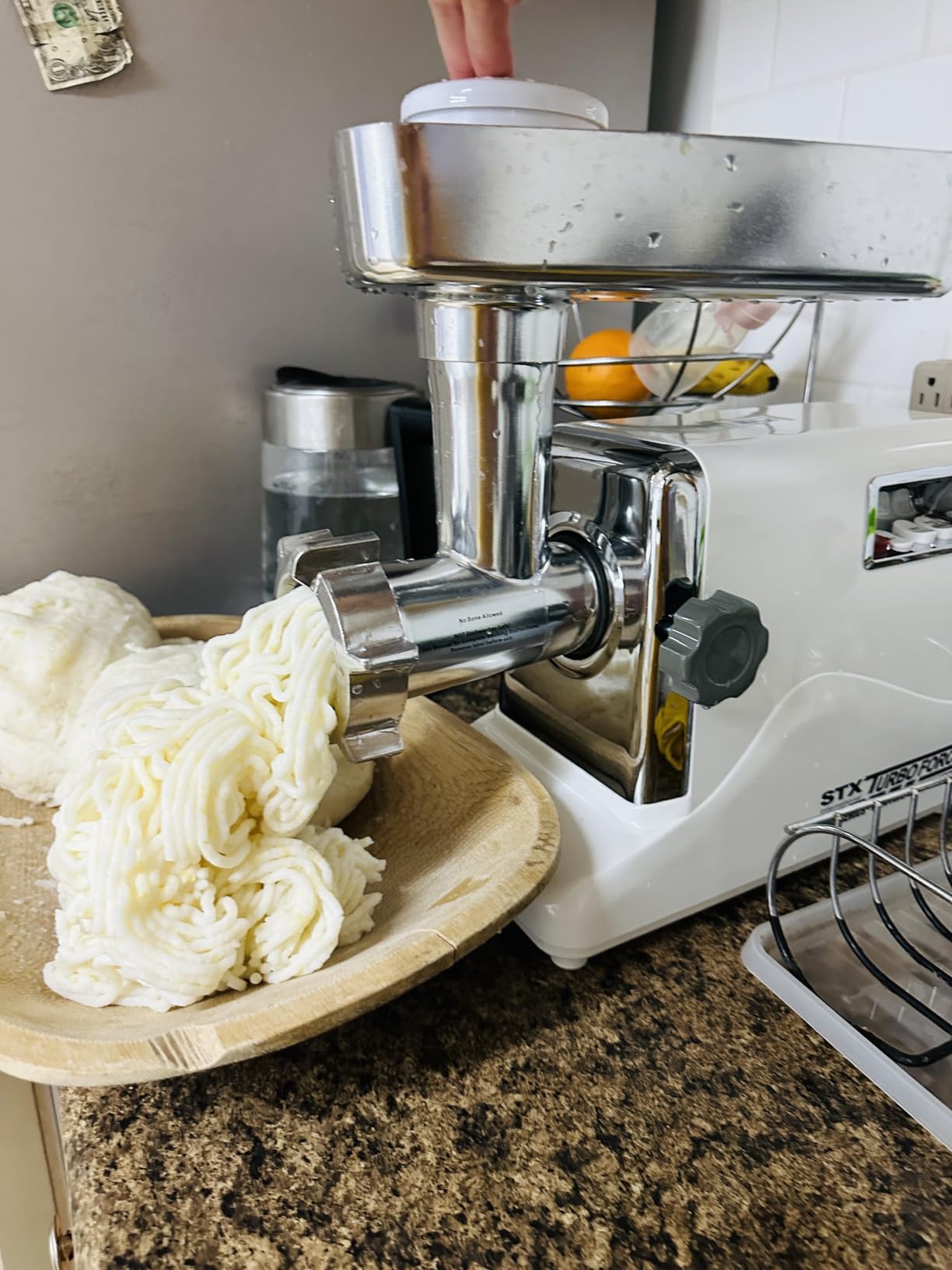
The one genuine perk is that it comes with three sausage tubes at 1/2, 5/8, and 3/4 inch, so it can make snack sticks and small links. If that is all you want, and the volume is small, the machine you own may genuinely be enough.
Noise is worth flagging for apartment dwellers. Owners describe it as loud under load, and the hopper is 3 pounds, so a single sausage session means a lot of small loads rather than one big one.
Why a grinder re-grinds your sausage
The auger has already cut the meat once. Pushing it through a narrow tube a second time forces it past the second cutting plate again, and the friction and speed smear the fat instead of leaving it in distinct pieces. Emulsion-style sausage can tolerate this because you want that texture. Everything else comes out of the tube with a consistency more like pâté than sausage.
A dedicated stuffer has no cutting edge at all. It only pushes, which is why the meat you put in is the meat that comes out.
Who should skip this one
Skip it as a sausage machine. If your main goal is links, buy a stuffer. Buy this grinder because it grinds.
Keep it if you make sausage no more than a few pounds a year and volume grinding is the reason you want it.
9. Aiheal Electric Grinder and Stuffer – Best Budget Grinder and Stuffer Combo
Electric Meat Grinder, Sausage Stuffer with 3 Sausage Tubes, 2 Blades, 3 Plates, 3200W Max, Meat Grinder Heavy Duty for Home Kitchen Use, Stainless Steel (Black)
300W rated motor / 3200W max
3 plates 2mm 5mm 7mm
3 sausage tubes
Suction cup base
Pros
- Grinds quickly with consistent texture on 20 to 55 lb batches
- Suction cup feet hold the unit firmly on the counter
- Easy to assemble break down and clean
- Three plates plus three tubes cover most home recipes
- Quieter than many grinders of this size
Cons
- Actual output is 300W despite the 3200W headline
- Builds heat so large batches need cooldown rests
- Sausage attachment works but is slow
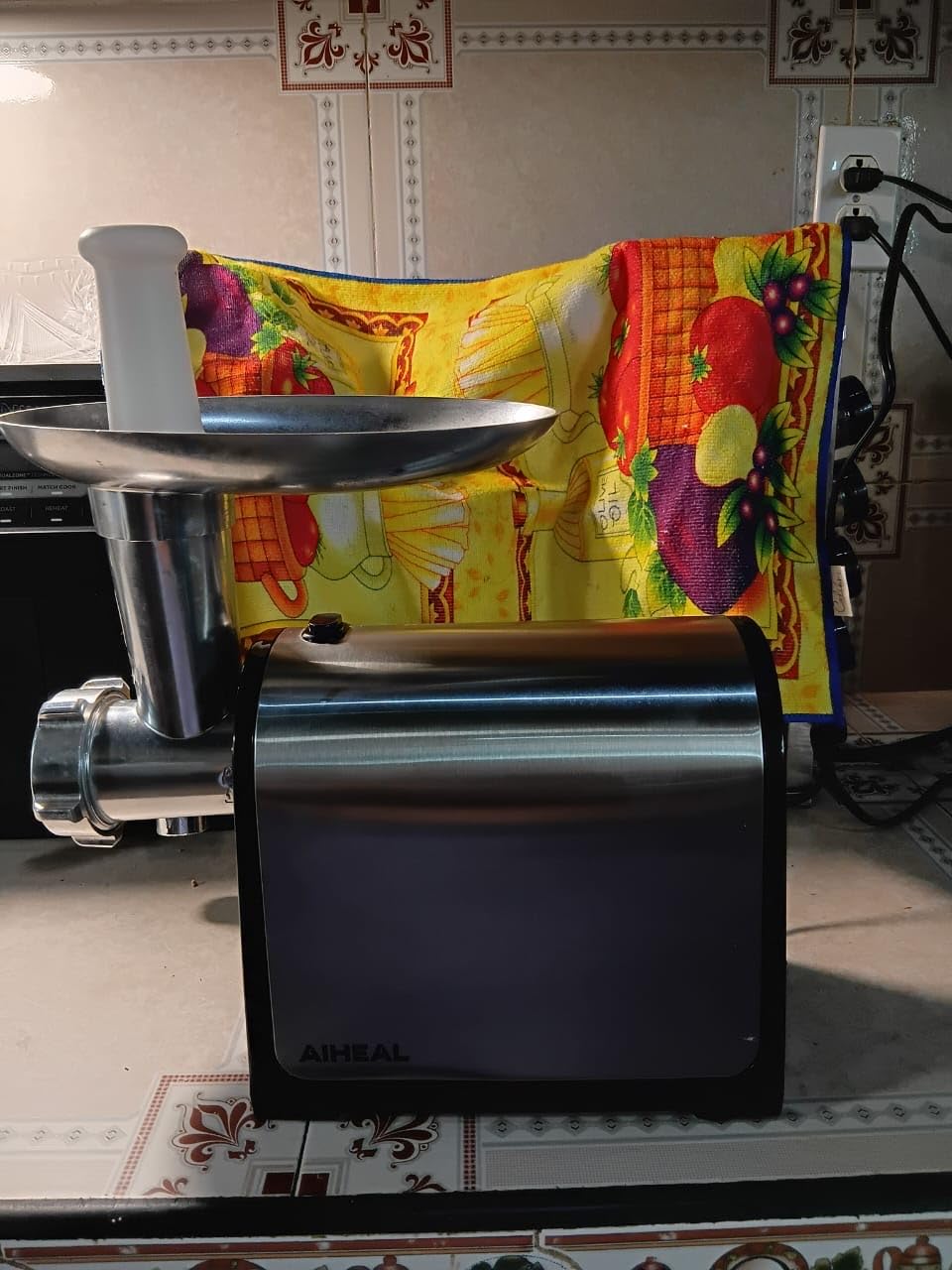
Suction cup feet are the thing that separates this from most budget grinders, and they matter in a home kitchen where the counter is smooth and the machine would otherwise walk. The quiet operation is a second real advantage for anyone in a shared apartment.
Grinding is genuinely good for the money. Owners report consistent texture across 20 to 55 lb batches, and the three plate sizes at 2mm, 5mm, and 7mm cover everything from fine sausage to coarse burger.
Read the motor number carefully. The headline says 3200W, but rated output is 300W, and the reviews call that out directly. Practically it means heat: a five-minute duty cycle with cooldown rests on large batches, not a continuous session.
The sausage attachment is slow and needs patience, and the absence of a dedicated stuffing plate slows casing work further. One long-term owner bought a dedicated stuffer after outgrowing it, which is the same story as the STX.
Grinder plus stuffer as a one-machine strategy
The logic is sound for light users. If you grind burgers weekly and make sausage twice a year, one machine that does both beats two machines. The grinder handles the grind, the three tubes handle small batches, and you skip the dedicated stuffer entirely.
It falls apart at 10 lb of sausage in a session. The heat, the slow tube, and the missing stuffing plate turn a pleasant afternoon into a chore. That is the threshold where a good 7 lb vertical cylinder pays for itself in saved effort.
Who should skip this one
Skip it if you make sausage in quantity or if you run a lot of venison through it. Sustained work outruns a 300W motor.
Skip it if low noise matters to you at the wrong time of day. It is quieter than most, but not silent.
10. CHEFFANO 2800W Max Meat Grinder – Best for Bulk Grinding, Weakest Sausage Bores
CHEFFANO Meat Grinder, 2800W Max Meat Grinder Electric, ETL Approved Heavy Duty Meat Mincer Machine with 2 Blades, 3 Plates, Sausage Stuffer Tubes & Kubbe Kit for Home Kitchen Use
350W rated / 2800W peak copper motor
About 3 lb per minute
3 plates 2mm 5mm 7mm
ETL approved
Pros
- Grinds large batches quickly at about 3 lb per minute
- ETL safety approved with replacement attachments and 24/7 support
- Suction cup base keeps the machine stationary
- Disassembles easily for hand washing
- Several owners report 5 years of daily use without degradation
Cons
- Weak as a stuffer: small tube bore traps air and the feed platform pops off
- Only one sausage tube size so 15mm casings cannot be used
- Most parts are aluminum so they blacken and cannot go in the dishwasher
On pure grinding throughput this is the fastest machine here, moving roughly 3 lb of meat per minute with a three-layer auger designed to keep the mix cool and avoid grey streaking. Several owners report five years of daily use with no degradation, and the 3046-review count gives you a deep well of long-term data.
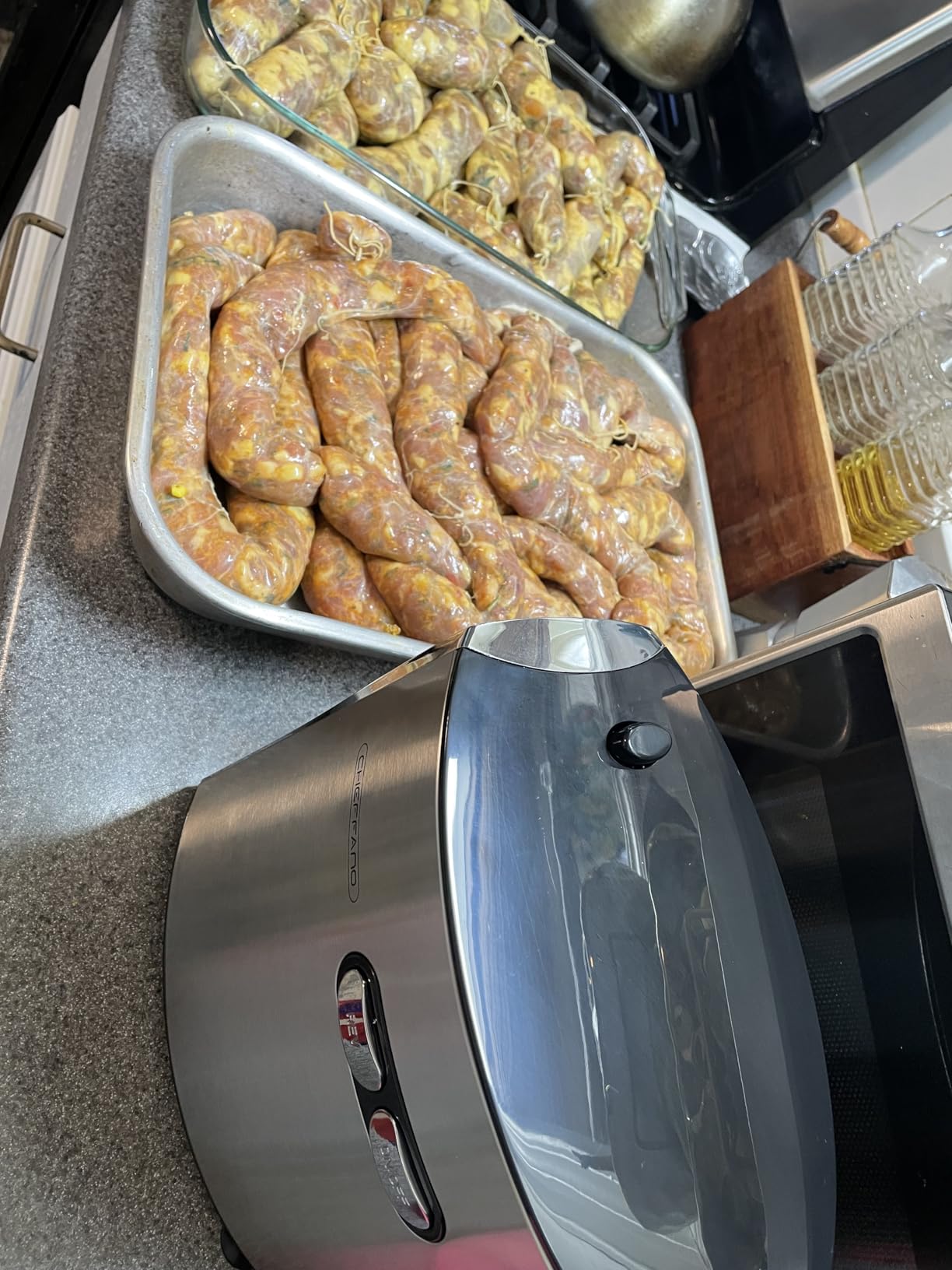
It is also the weakest sausage option in this roundup, and the reason is specific enough to be decisive. Only one sausage tube size ships, so 15mm casings cannot be used at all. Owners report the small bore traps air and the feed platform pops off under pressure.
Add aluminum parts that blacken over time and cannot go in the dishwasher, plus a motor that runs hot on long sessions, and the picture is clear. This is a grinder for burgers, bulk meat, and pet food. It is not a link sausage machine.
The single-tube limitation is the killer for anyone starting out. Nearly every home recipe book begins with a 15mm or 16mm casing, and you cannot make one on this machine.
Reading the wattage numbers honestly
Across every budget grinder here, the peak number is marketing and the rated number is reality. The CHEFFANO is 350W rated against a 2800W peak. The Aiheal is 300W rated against 3200W max. Peak power is what the motor draws momentarily on start-up and stall.
For planning a session, use the rated figure. It tells you how long the machine can run before heat becomes a problem, which is usually a five to ten minute cycle for this class of machine.
Who should skip this one
Skip it entirely if sausage is the reason you are shopping. One tube size is not a starting point, it is a dead end.
Keep it if bulk grinding is the priority and you will buy a separate stuffer later. On that basis it is one of the strongest grinders available for a home kitchen.
Do You Need a Sausage Stuffer or Just a Grinder Attachment?
A grinder attachment re-grinds meat to stuff it, and that second pass is the whole problem. It smears fat, warms the mix, and forces air into the casing that shows up as weak points and burst links. A dedicated stuffer only pushes, so the texture you grind is the texture you eat.
Stay with the attachment if you make under 5 lb a year and only want one style of link. Move to a dedicated stuffer when you want snack sticks, when you want even diameter control, when you are processing wild game, or when stuffing has become the part of the process you dread.
One more distinction: a grinder is a cutting machine and a stuffer is a pressure machine. They fail in completely different ways, which is why a good grinder and a good stuffer make a natural pair rather than one substituting for the other.
How to Choose the Right Sausage Stuffer for Your Kitchen
Manual or electric
Manual units push roughly 3 to 8 lb per hour; electric units with a foot pedal run 10 to 25 lb per hour. That gap only matters above about 20 lb per session, and every unit in this roundup is manual except the three grinder combos.
Manual cranking is also physically a two-person job. One person cranks, the other loads casing and twists links. That is the honest reason to consider motorizing, and the reason forum users with small batches stay manual without regret. An electric model also adds noise, an outlet on the counter, and another thing to store.
Vertical, horizontal, or horn
Vertical cylinders scale to large capacity and are the standard for home kitchens. They are top-heavy, need clamping, and can collect air at the top of the cylinder if the valve does not work. Horizontal cylinders push in a straight line, so they trap less air and never tip, but they cap out at small capacity.
Horn stuffers hold 1 to 2 lb and cost the least. They are good for a first batch and bad for anything else. Every stuffer in this roundup is vertical or horizontal.
Choosing a capacity
Two pounds suits recipe testing and a few pounds of breakfast links. Two and a half to 3 liters is the sweet spot for most home kitchens, covering a family batch with one load. Five to 7 lb cylinders suit weekend production and holiday runs where you do not want to refill five times.
Size to your typical batch, not your largest imaginable one. A cylinder you never fill is wasted counter and a bigger cleaning job.
The two features that are not optional
An air release valve lets trapped air escape as you load, which prevents air pockets and casing blow-out. Every stuffer here has one, but the quality varies: the Hakka, CLIVIA, LEM, and VEVOR all get positive reports on casing texture.
Metal gears, especially the crown gear on the crank, are the second one. Several forum posters stress this regardless of orientation. Plastic and nylon gearing is the first thing to fail, usually mid-batch, usually under load.
The snack stick test
A 1/2 inch tube is the real durability test, not bratwurst. A 1/2 inch tube forces far more pressure through a smaller opening, and a gearbox that was not engineered for it shows up as a crank that binds, a screw that backs out, or plastic that cracks.
Check whether the unit includes a narrow tube. The STX ships with 1/2, 5/8, and 3/4 inch tubes. The CLIVIA goes to 16mm, which is close. The CHEFFANO and Aiheal grinder attachments do not get near it. A stuffer with only large tubes is a stuffer for breakfast links and brats only.
Counter space, clamping, and storage
Measure the footprint before you order, and measure the height too. The CLIVIA stands 21.3 inches tall and will not go under a low wall cabinet. The Master Feng 2.5 lb unit is 5.75 inches wide and 15.43 inches long, which is a quarter of a typical counter run.
That planning overlaps with the rest of the kitchen. If you are laying out work surfaces and appliances, our picks for the best induction cooktops for home kitchens follow the same logic about clearance and dedicated space, and a countertop steam oven takes far more room than most buyers expect. Budget countertop real estate before you unbox a 20 pound vertical cylinder.
Then solve the sliding problem, because every manual stuffer here except the Lawei can walk. Suction cups work on smooth tables. The LEM and Hakka include C-clamps. The VEVOR includes a band clamp. If you rent, clamp to a table leg rather than drilling a counter.
If your kitchen doubles as your prep space, the horizontal Lawei at 2.21 pounds stores in a cabinet between sessions and does not need to be mounted at all.
How to Use a Sausage Stuffer Step by Step
First, chill everything. Cold meat and cold fat produce a much better texture, and a cold cylinder is easier on the gears. Keep your second grinding pass in the fridge until the last minute.
Second, size your casing to your tube. Casing caliber needs to run slightly larger than the tube diameter, or the sausage will be tight and the casing may burst. Run the tube size and the natural casing you plan to use past each other before you start.
Third, load the casing onto the stuffing tube and make a small collar at the end. Soak natural hog casing in warm water first so it slides on instead of tearing.
Fourth, load the cylinder. Leave a little room at the top, and open the air release valve as you press the meat down so trapped air escapes before you close it.
Fifth, fit the tube and the collar, then begin cranking slowly. You are dialing in a fill rate, not going as fast as possible. Casing should fill evenly without stretching thin or bunching at the elbow of the tube.
Sixth, control air. If the sausage inflates or the casing expands suddenly, slow down or stop and open the air release valve. Casing bunching at the elbow of the stuffing tube is the most common cause of kinked, uneven links.
Seventh, twist links to length as you go, and run a quick pass with a sausage pricker to pop surface bubbles before you hang or cook. Then empty the cylinder, wash it, and dry the O-ring seat completely.
How to Clean and Maintain a Sausage Stuffer
Disassemble it fully on the counter first. Pull the cylinder, the piston, the auger, and every tube, and lay them out in order so you know what goes back where.
Separate the meat parts from the metal mechanism. The cylinder, tubes, and piston go to hot soapy water and get scrubbed inside and out with a tube brush. Never soak the O-rings long term, and never put a stuffer in a dishwasher unless the manufacturer says so, since the aluminum grinder attachments in this roundup discolor and blacken from a cycle.
Air out trapped air pockets. A casing knot, a bone fragment, or a scrap of connective tissue left in the elbow will block the tube on the next batch, so run a bottle brush or a wooden dowel through every tube and through the horn outlet.
Dry everything completely before reassembly. Water left at the base ring is what causes the gasket seep that owners report on the CLIVIA and the VEVOR. Leave parts on a rack, not in a towel, so air moves around them.
Lubricate the metal mechanism lightly with food-grade grease every few sessions, especially the crank shaft and the auger threads. This is what keeps metal gears quiet and metal bearings smooth, and it is the single maintenance step most owners skip.
Check the crank handle set screw before each session. It loosens under load and is a two-second fix with a screwdriver, and catching it is the difference between a clean stop and a handle flying across the kitchen.
Frequently Asked Questions
Are sausage stuffers worth it?
A dedicated sausage stuffer is worth it once you push more than about 5 lb in a session, want to make snack sticks, or are done fighting a grinder attachment that clogs. It pushes meat into casing without a second grinding pass, which is what smears fat and degrades texture. Below 5 lb a year, a small horizontal stuffer does the job for very little.
Is a vertical or horizontal sausage stuffer better?
Vertical cylinders scale to bigger capacity and suit weekend and holiday batches, but they are top-heavy, can collect air at the top, and need clamping to stay put. Horizontal cylinders push in a straight line, trap less air, never tip, and are light enough to store in a cabinet, but they cap out around 2 lb. Choose vertical for volume, horizontal for small kitchens.
How do I use a sausage stuffer at home?
Chill the meat, soak natural casing in warm water, load it onto the stuffing tube, and collar the end. Load the cylinder, open the air release valve as you press the meat down, then close it and crank slowly to dial in an even fill rate. Twist links to length as you go, prick surface bubbles, then empty, wash, and fully dry the cylinder before reassembly.
What size sausage stuffer do I need for home use?
For most home kitchens, a 2.5 to 3 liter cylinder is the sweet spot because it covers a family batch in one load. Go to 5 or 7 lb cylinders for weekend and holiday production where refilling is the annoyance. Below 2 lb is for recipe testing only. Size to your typical batch rather than your largest imaginable one.
Can I make snack sticks with a home sausage stuffer?
Yes, and that is where the 1/2 inch tube becomes the real durability test. A narrow tube forces far more pressure through a smaller opening, so a gearbox not engineered for it will bind, back out screws, or crack. Check that the stuffer includes a narrow tube: models that top out at 16mm or larger are built for bratwurst and breakfast links, not snack sticks.
Conclusion: Our Best Sausage Stuffer Picks for 2026
The Hakka 7Lb/3L vertical is the best sausage stuffer for most home kitchens in 2026, with a two-speed crank, four stainless nozzles, and the deepest owner history of any unit we covered. Buy the LEM MightyBite 5 lb instead if metal gears, a two-year warranty, and a smaller footprint matter more to you than a full 7 lb load.
For a small kitchen, the Master Feng 2.5 lb vertical takes the least space and the Lawei 2 lb horizontal is the cheapest honest way to find out whether you enjoy the craft. If you already own a grinder, check whether its tube includes a 1/2 inch option before buying anything, and clamp whatever you choose to the counter before you crank.