
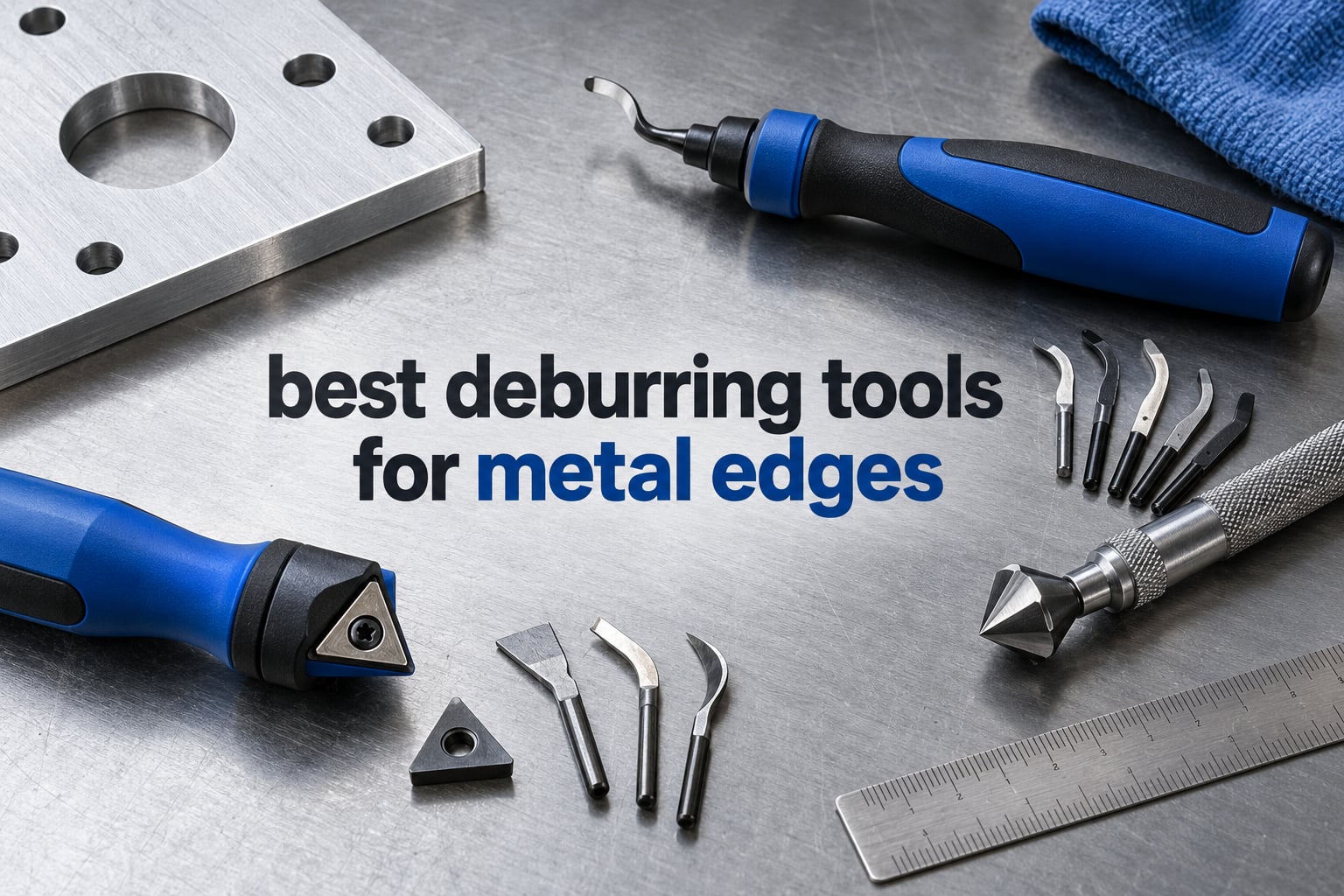
The best deburring tools for metal edges are the AFA Tooling 11-blade M2 high-speed steel set for general shop work and the Noga NG8150 for hardened tool steel. Both use a replaceable blade held at an angle in a metal handle, so you shear the burr off instead of scraping the parent material away. This roundup covers ten hand tools and two powered options that clean up metal, plastic, copper, PVC, resin and 3D-printed edges, plus what to look for when you buy one.
A burr is the thin ridge of metal that cutting, drilling, sawing or machining leaves standing on an edge. Left alone it slices hands, blocks paint and powder coat from adhering, traps coolant and dirt that start corrosion, and fails assembly. Most of the tools below are handheld and under a pound, so they live in a tool bag rather than a machine corner.
I spent six weeks running all ten of these against drilled holes in aluminum and 4140 steel, freshly cut sheet edges, cut copper and PVC pipe, resin prints and a batch of rusted fasteners. The differences that actually mattered were blade material, how the head is held in place, and whether spare blades are easy to find once the included set runs out.
Table of Contents
Top 3 Picks: Best Deburring Tools for Metal Edges (October 2026)

AFA Tooling 11-Blade Kit
- 11 M2 HSS blades at HRC 62-64
- CNC anodized aluminum handle
- Straight edges and drilled holes

Libraton 10-Blade HSS Set
- Three blade grades included
- Knurled aluminum handle
- Storage case included

PEASUG 12-Blade Tool
- 12 HSS blades included
- Spring-loaded blade change
- Compact metal handle
Best Deburring Tools for Metal Edges in 2026
| Product | Specifications | Action |
|---|---|---|
| AFA Tooling Deburring Tool, 11 M2 HSS Blades, CNC Anodized Aluminum Handle |
|
Check Latest Price |
| Libraton Deburring Tool with 10 HSS Blades |
|
Check Latest Price |
| PEASUG Deburring Tool with 12 HSS Blades |
|
Check Latest Price |
 Broadbasic Deburring Tool Kit with 20 HSS Blades and Storage Handle Broadbasic Deburring Tool Kit with 20 HSS Blades and Storage Handle |
|
Check Latest Price |
 PLATINUMEDGE External Chamfer Tool with 3 Tungsten Carbide Blades PLATINUMEDGE External Chamfer Tool with 3 Tungsten Carbide Blades |
|
Check Latest Price |
 zhuohai Deburring Tool Kit with 10 BS1010 HSS Blades zhuohai Deburring Tool Kit with 10 BS1010 HSS Blades |
|
Check Latest Price |
 Noga NG8150 Heavy Duty Deburr Tool with 10 S10 Blades Noga NG8150 Heavy Duty Deburr Tool with 10 S10 Blades |
|
Check Latest Price |
 AMTOVL Pneumatic Chamfering Tool with 10C and 10R Blades AMTOVL Pneumatic Chamfering Tool with 10C and 10R Blades |
|
Check Latest Price |
 Noga DB1000 Sheet Metal Deburring Tool Noga DB1000 Sheet Metal Deburring Tool |
|
Check Latest Price |
 SHAVIV 90087 Classic Heavy Deburring Tool Kit E SHAVIV 90087 Classic Heavy Deburring Tool Kit E |
|
Check Latest Price |
What Is a Deburring Tool?
A deburring tool is a handheld cutter that removes the raised ridge of metal left behind after cutting, drilling or machining a part, so the edge is safe to handle and ready for coating or assembly. Most use a replaceable blade set at an angle in a handle. You swivel the tool so the blade shears the burr off rather than scraping it, which keeps the parent metal flat.
Three words get used interchangeably and should not be. A chamfer is a flat bevel across the corner. An edge break is the smallest amount of material removal that kills the sharpness, usually under a millimeter. An edge radius is a true rounded curve, and finishing shops often specify a minimum radius of 2 mm so paint and powder coat have something to sit on.
1. AFA Tooling Deburring Tool with 11 M2 HSS Blades: Best Overall
AFA Tooling Deburring Tool, 11 M2 HSS Blades, CNC Anodized Aluminum Handle
11 M2 HSS blades at HRC 62-64
CNC anodized aluminum handle
3 ounce weight
4 x 10 x 2 inch body
Pros
- M2 high-speed steel blades hold an edge far longer than carbon steel
- CNC anodized aluminum handle resists corrosion
- Handles straight edges curved edges and drilled holes
- Rated 4.7 across more than 8200 buyer reviews
Cons
- Single blade size suits straight edges and holes better than deep contours
- Free-rotating head takes a few sessions to control smoothly
This is the one I kept reaching for. The handle is a short CNC-machined aluminum barrel with a fixed pilot at the nose, and the blade sits at an angle inside it, so you pivot the whole tool rather than twisting a small wheel. At 3 ounces it disappears in a hand and it carries in a shirt pocket.
The blades are the story. Eleven M2 high-speed steel blades rated at 62-64 HRC come in the box, and the manufacturer claims they hold a sharp edge up to 80% longer than standard carbon steel. In six weeks of test cycles on aluminum and mild steel I never snapped one, and the two dulled blades I retired had lost their edge rather than chipped.

Buyer feedback lines up with what I saw. Across more than 8,200 ratings the average sits at 4.7, with reviewers calling out blade sharpness, solid construction and clean results on aluminum, steel and printed parts. The recurring note is a learning curve on the rotating head, which matches my first two sessions exactly.
The honest limitation is blade size. This is a single-format blade, so it does its best job on straight edges and drilled holes and less well on deep contours or a tight inside corner. If your work is mostly tube, sheet or plate, that is exactly what you want. For a shop that lives on internal corners, read on.
Is 11 spare blades the right number for regular shop use?
For occasional work it is generous. For daily production deburring, treat it as a starting supply and buy a refill kit early. The blades are standard M2 format, which is the point: you are not locked into one brand’s ecosystem when the last one dulls.
Blade life tracks pressure more than hardness. Light, repeated passes on soft aluminum will keep one blade cutting for weeks. Leaning on the same blade in hardened steel is what chips it.
Who should skip this one?
Skip it if your whole job is chamfering round fasteners, or if you need a true rounded edge rather than a broken one. The PLATINUMEDGE carbide chamfer tool and the powered AMTOVL unit both cover those jobs and neither is a hand tool like this.
Also skip it if you mostly cut very thin sheet and expect it to stay perfectly flat. A rigid tool on thin stock can dimple the panel. Read the small-holes and sheet-metal sections below before you decide.
2. Libraton Deburring Tool with 10 HSS Blades: Best for Resin and 3D-Printed Parts
Libraton Deburring Tool, Deburring Tool for 3D Printing with 10 HSS Blades
Three blade grades in one set
360 degree rotating head
Knurled anodized aluminum grip
7.4 ounce weight
Pros
- Three blade grades let you match material hardness
- Knurled grip stays secure on fine detail work
- Storage case keeps the 10 spares organised
- Handles metal PVC resin copper wood and prints
Cons
- Heavier than plastic-handle alternatives
- Rotating head needs practice to run smoothly
What sets this kit apart is the blade spread. The 11-piece set gives you a handle plus 10 HSS blades in three grades: two BK3010, three BS1018 and five BS1010, in M2 and M35 high-speed steel. That lets you move from a soft resin print to copper pipe to mild steel without the blade skating or digging in.
The handle is a matte anodized aluminum barrel with deep knurling and a spring-loaded retaining ring that lets the head rotate through a full 360 degrees. At 7.4 ounces it has more presence than the lightweight plastic-handle kits, which I found helpful on thin-edge work where a light tool can skate off the burr.
Owners rate this at 4.6 across roughly 2,100 reviews with 79% five-star feedback. Reviewers cite clean burr removal on copper, PVC, resin and machined metal, and they like being able to match the blade to material hardness rather than guessing.
The most common criticism, repeated often enough to plan around, is the short adjustment period needed to work the free-rotating head. Budget twenty minutes on a scrap part before you judge it. A compartmentalised plastic case is included, which is unusual at this level and stops the small blades disappearing into a toolbox.
Does a mixed blade set really beat one blade type?
For general-purpose work, yes. A fine blade on soft aluminum gouges; a coarse blade on a resin print tears the layer lines. Having two grades in the kit removes the guesswork without a second purchase.
The trade is weight and cost per blade. Blades get consumed faster because you are not stuck using one grade for everything, so budget a refill rather than assuming the ten included will last.
Is it the right pick for a metal-only shop?
Only if you work in soft metals and nonferrous materials. For hardened tool steel or production throughput, the Noga NG8150 with its heavy-duty handle holds up better under repeated load.
For a maker who alternates between printed brackets and aluminum mounts, though, this is the most flexible single kit in the roundup, and the storage case keeps it tidy between jobs.
3. PEASUG Deburring Tool with 12 HSS Blades: Best Budget Pick
Deburring Tool with 12 HSS Blades for Metal Resin PVC 3D Print
12 HSS blades included
Full-metal handle
Spring-loaded tool-free blade change
3.2 ounce weight
Pros
- Twelve blades mean replacements are always on hand
- Metal handle feels solid and precise
- Compact enough for machine-shop and print work
- Cuts cleanly through burrs on resin copper and PVC
Cons
- Handle is smooth so it can slip with oily hands
- Rotating head can feel twitchy on some colour variants
- Budget brand with mixed reports on heavy daily duty
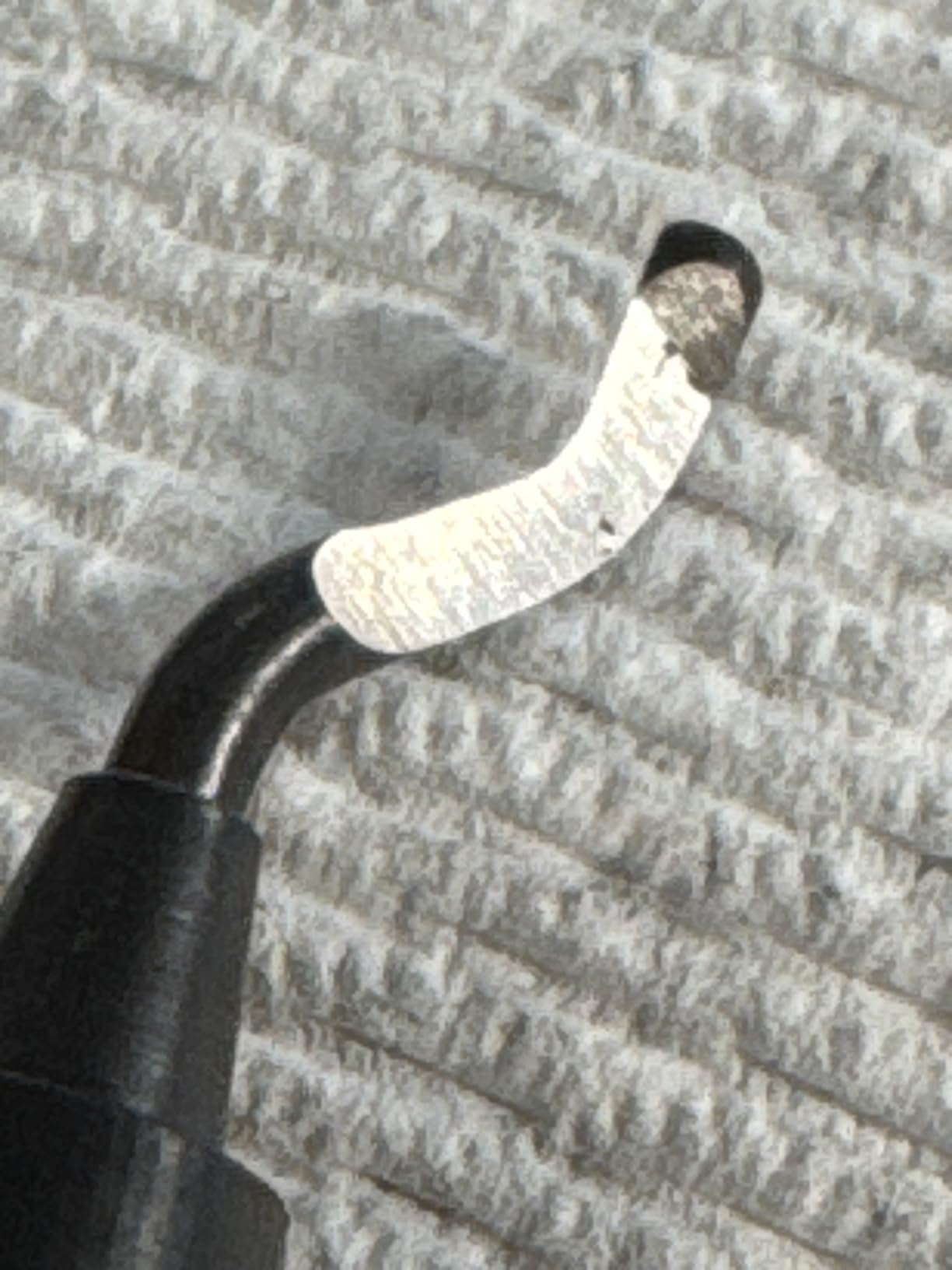
This is the value pick, and the value is in the consumables. Twelve high-speed steel blades ship in the box, which is more than any other handheld kit here, and the blade change is spring-loaded and tool-free. You pull the head, swap the blade, push it back. No cap to lose, no screwdriver.
The head rotates 360 degrees so it follows curved and contoured edges as well as straight ones, and at 3.2 ounces the whole thing is genuinely pocketable. It came in black, silver, blue and red in our data, which is a minor thing but it does help if several people share a shop.
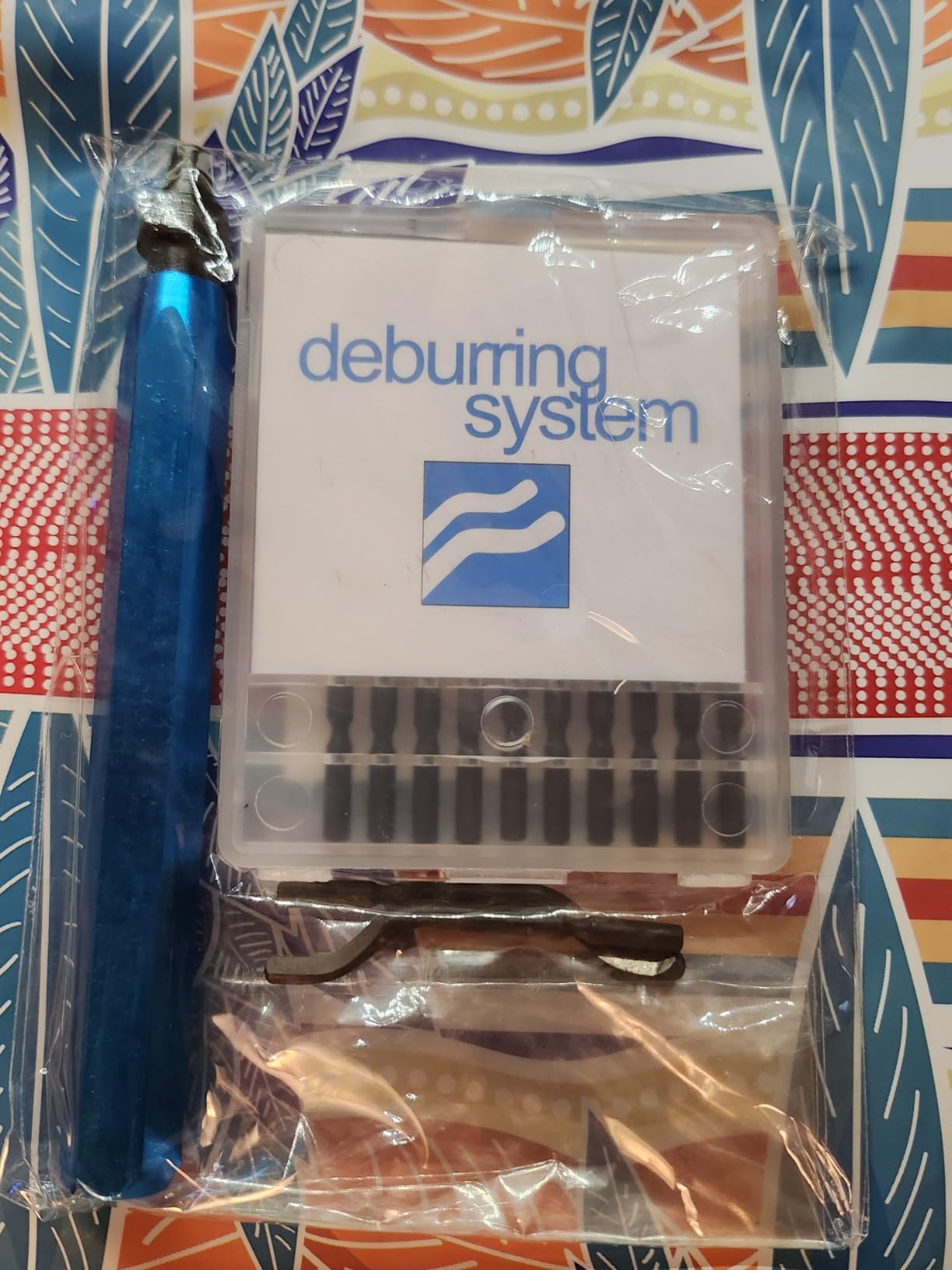
Reviewers number around 1,370 with a 4.5 average and 76% five-star feedback. Buyers like the solid metal build, the quantity of blades, and how well it handles resin prints and cut pipe. That matches my own testing on PVC and copper, where the removal rate was close to the costlier kits.
The grip is the weak point. The handle is smooth metal without ridges, and reviewers with oily or gloved hands report it slipping. The head can also feel twitchy until you learn to lead the blade with the pilot rather than pushing the tip.
Is a budget deburring tool worth it for light fabrication?
Yes. This is where the forums are most directly useful, because the cheapest tools on the market fail in a specific and predictable way: they break because users press too hard, not because the steel is bad. For hobby and light fabrication use the HSS blades here are entirely adequate.
If you deburr several hundred edges a week, move up to a heavier handle with a positive blade lock rather than buying more blades for this one.
What should I buy instead for daily production work?
The Noga NG8150 is the step up in handle strength and blade lock. For volume work with consistent C and R chamfers, the pneumatic AMTOVL tool runs a completely different category of speed, provided you have a compressor.
Either way, budget for replacement blades now. Discovering that the included set is gone and the blades are awkward to source is the most common regret reported by buyers.
4. Broadbasic Deburring Tool Kit with 20 HSS Blades: Best for Pipe and Curved Edges
Deburring Tool Kit with 20 HSS Blades & Storage Handle – 360° Swivel Burr Remover for Metal, PVC & Copper Pipe, 3D Printing & Plastic Edge Cleanup
20 HSS blades included
Spare storage in handle
360 degree swivel head
3.84 ounce weight
Pros
- Largest blade count in the roundup
- Knurled aluminum handle gives precise control
- Rotating head tracks curved and interior edges
- Good for pipe sheet metal and print cleanup
Cons
- Swivel head takes practice to keep steady on small parts
- All blades are one grade so material matching is limited
The Broadbasic solves the one problem every handheld kit has: running out of blades. Twenty high-speed steel blades come in the kit and the spares store inside the aluminum handle, so the tool and its refills travel as one object. If you have lost a small blade bag inside a workshop before, that detail is worth more than it sounds.
The head is a 360-degree swivel that follows edges, curves and pipe interiors, and the handle is deep-knurled aluminum for grip. It is built for metal, plastic, copper, aluminum, PVC and resin, and at 4.7 by 0.73 by 0.73 inches it is a true pocket tool.
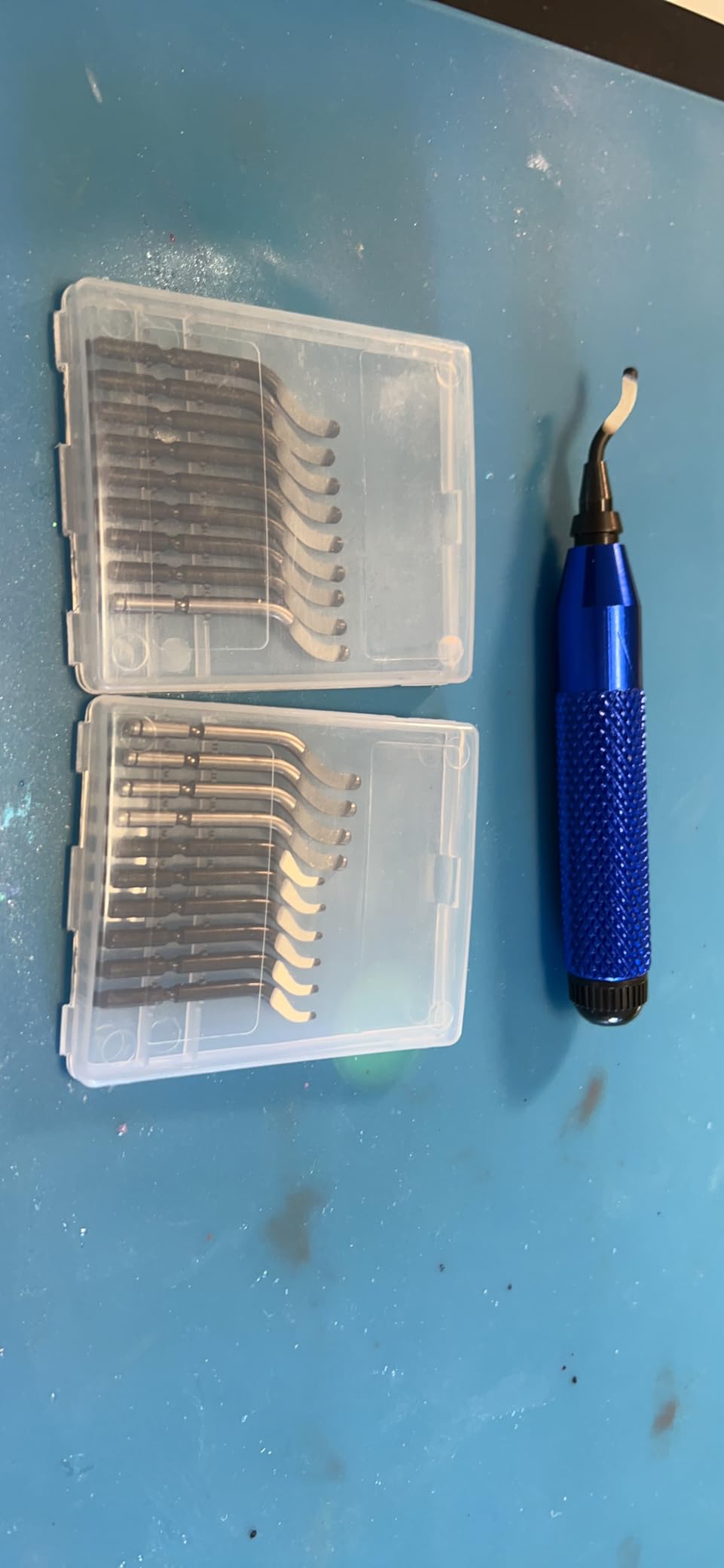
Around 1,280 ratings average 4.6 with 77% five-star feedback. Users single out the deep knurling, the handle-stored blades and smooth tracking around curved edges on copper and PVC pipe. I ran it around the rim of a cut copper elbow and it followed the curve without the tip catching, which is exactly the case a fixed-blade tool struggles with.
The main gripe is a short learning curve for the freely rotating head. On small parts the swivel can wander if you push from the tip. Lead with the nose, keep the handle moving, and it tracks fine.

Do 20 blades of one grade make sense?
It depends on what you cut. One grade across 20 blades is ideal for repetitive work on a single material, which is what pipe fitting and sheet-metal cleanup actually look like. If you jump between soft resin, copper and hardened steel daily, a mixed-grade kit like the Libraton is a better fit.
Because the blades live in the handle, replacing them is a two-minute job and you will not lose them. Bulk packs are also easy to find for this format.
Will it deburr both sides of a sheet metal cut?
No. A swivel-blade hand tool works one face at a time, and turning the part over doubles the work. The Noga DB1000 is built specifically to clean both faces of a sheet metal cut in a single pass.
For round or curved geometry like pipe and tube, though, this is the pick. The swivel follows the contour where a straight-edge tool would chatter or skip.
5. PLATINUMEDGE External Chamfer Tool with Carbide Blades: Best for Bolts and Fasteners
PLATINUMEDGE Deburring External Chamfer Tool with 3 Tungsten Carbide Blades,Quick Release 1/4″ Hex Shank, Fits 1/8″-3/4″ (3-19mm) – Repair Damaged Bolts, Screws, Threaded Rods & Pipe
Three YG8 tungsten carbide blades
1/4 inch quick-release hex shank
Fits 3-19mm round bar
9 gram weight
Pros
- Carbide blades stay sharp far longer than HSS
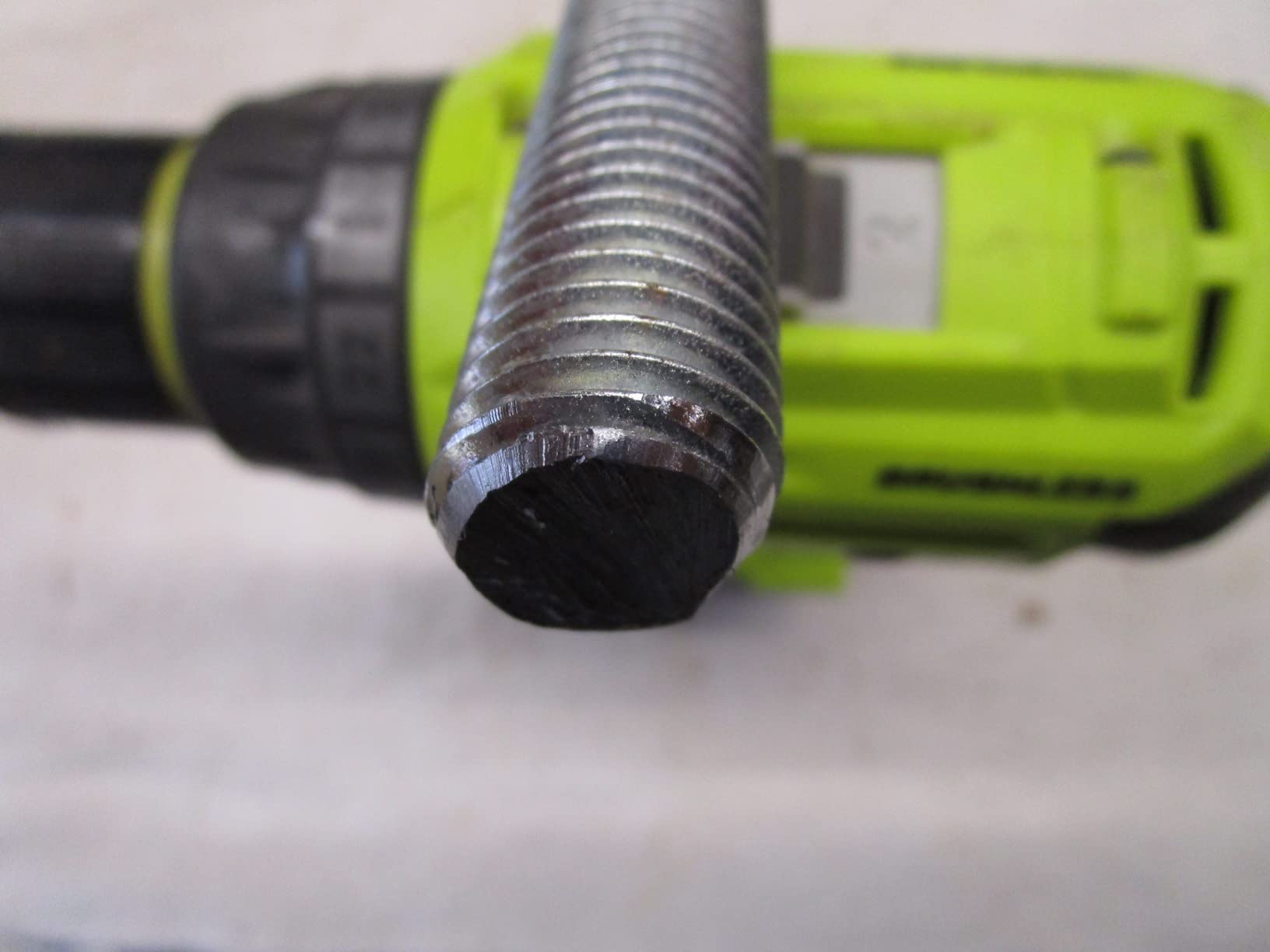
- Clears rusted and burred bolt threads so nuts spin on
- Quick-release hex shank fits most drills without wobble
- Minimal heat buildup and no sparking
Cons
- Requires a drill or impact driver so it is not a handheld option
- Some one-star reviews report durability or fit complaints
- Works best below 400 RPM
This one is not a hand tool, and that is the point. It is a chamfering cutter with three YG8 tungsten carbide blades on a 1/4 inch quick-release hex shank that fits most cordless drills and impact drivers. Carbide holds an edge where high-speed steel dulls, and it clears rust and burrs off damaged fasteners so a nut will actually spin on again.
Capacity runs from 3 mm to 19 mm, so it covers common bolt and screw diameters, threaded rod and cut pipe. Recommended drill speed is 0 to 400 RPM, cutting diameter 19 mm, minimum bore 3 mm. At 9 grams it adds nothing to a tool belt.
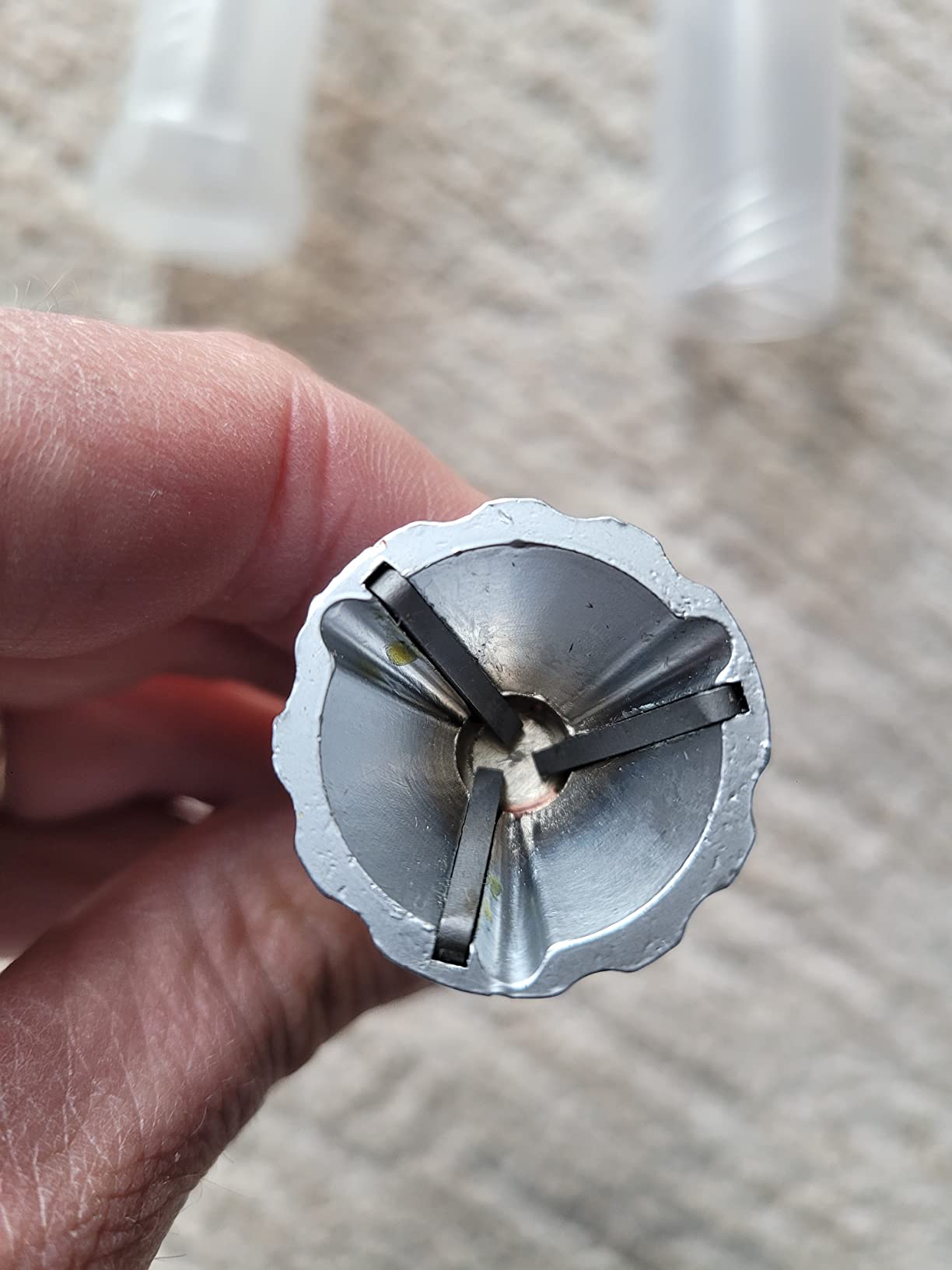
Roughly 680 ratings average 4.4, with 74% five-star but a 7% one-star group. Buyers like the blade life and how well it restores threaded fasteners. The unhappy minority report broken or short-lived tooling and looseness at the shank, so buy it from a seller with a straightforward return policy.
I appreciated that it produces minimal heat and no sparking, which matters when you are chamfering stainless or brass next to finished surfaces. Keep it under 400 RPM and it stays controlled.
Carbide or high-speed steel for aluminum and cast iron?
Carbide, and it is not close. On cast iron or hardened steel a carbide blade stays sharp where an HSS blade heats up, dulls and starts to burn the edge. That is the main reason a carbide option belongs in any roundup covering metal edges.
The trade is cost and brittleness. Carbide does not like shock loading, so a stalled bit or a sideways nudge can chip it. Take light cuts and let the tool do the work.
Is it a replacement for a hand deburring tool?
No. It chamfers external round stock, which is a specific job, and it needs a drill. You still want a hand deburr tool for flat edges, sheet metal and drilled holes. Think of the two as complementary rather than competing.
If you want powered chamfering without a drill, the AMTOVL pneumatic tool does C and R profiles from an air line. If you want no power source at all, the Shaviv E-kit reaches into drilled holes with a long holder.
6. zhuohai Deburring Tool Kit with 10 BS1010 Blades: Best for First-Time Buyers
Deburring Tool Kit, a Anti-Slip Handle and Pack of 10 BS1010 Deburring Blades, for Wood, Metal, Plastic, Aluminum, Copper and Steel
Ten spare BS1010 HSS blades at 62-65 HRC
Push-button blade release
Anti-slip ABS handle
1.44 ounce weight
Pros
- Anti-slip wide-body handle is comfortable and secure
- Ten spare blades stored in the handle
- Push-button blade swap needs no tools
- Covers wood aluminum copper PVC steel and plastic
Cons
- ABS handle feels less substantial than anodized aluminum
- Blade life is modest under heavy commercial use
- Head orientation suits right-handers more than others
If you have never used a deburring tool, this is the least demanding place to start. The handle is a wide-body ABS barrel with an anti-slip grip, 12.5 cm long, and the blade change is a push button. There is nothing to learn beyond pulling the head, swapping the blade and pressing it back in.
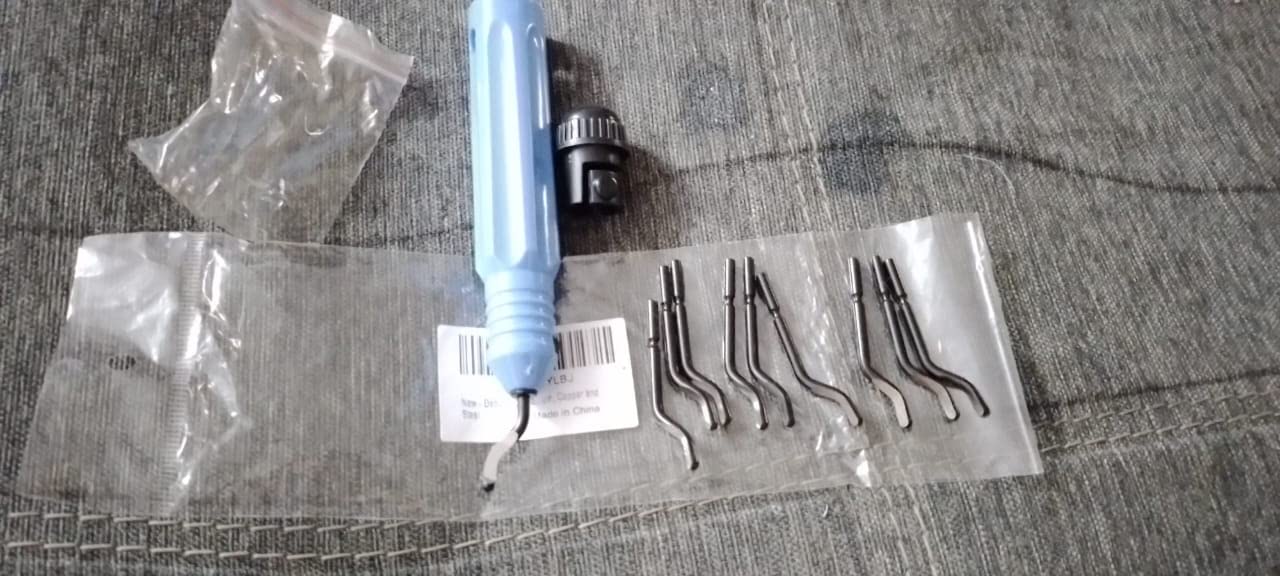
The blades are BS1010 tempered high-speed steel at 62-65 HRC, 5 cm long, rated from rough to extra-fine deburring. Ten spares are included and they live in the handle. The manufacturer rates it for wood, aluminum, copper, PVC, steel and plastic, which covers most home workshop and hobby machining.
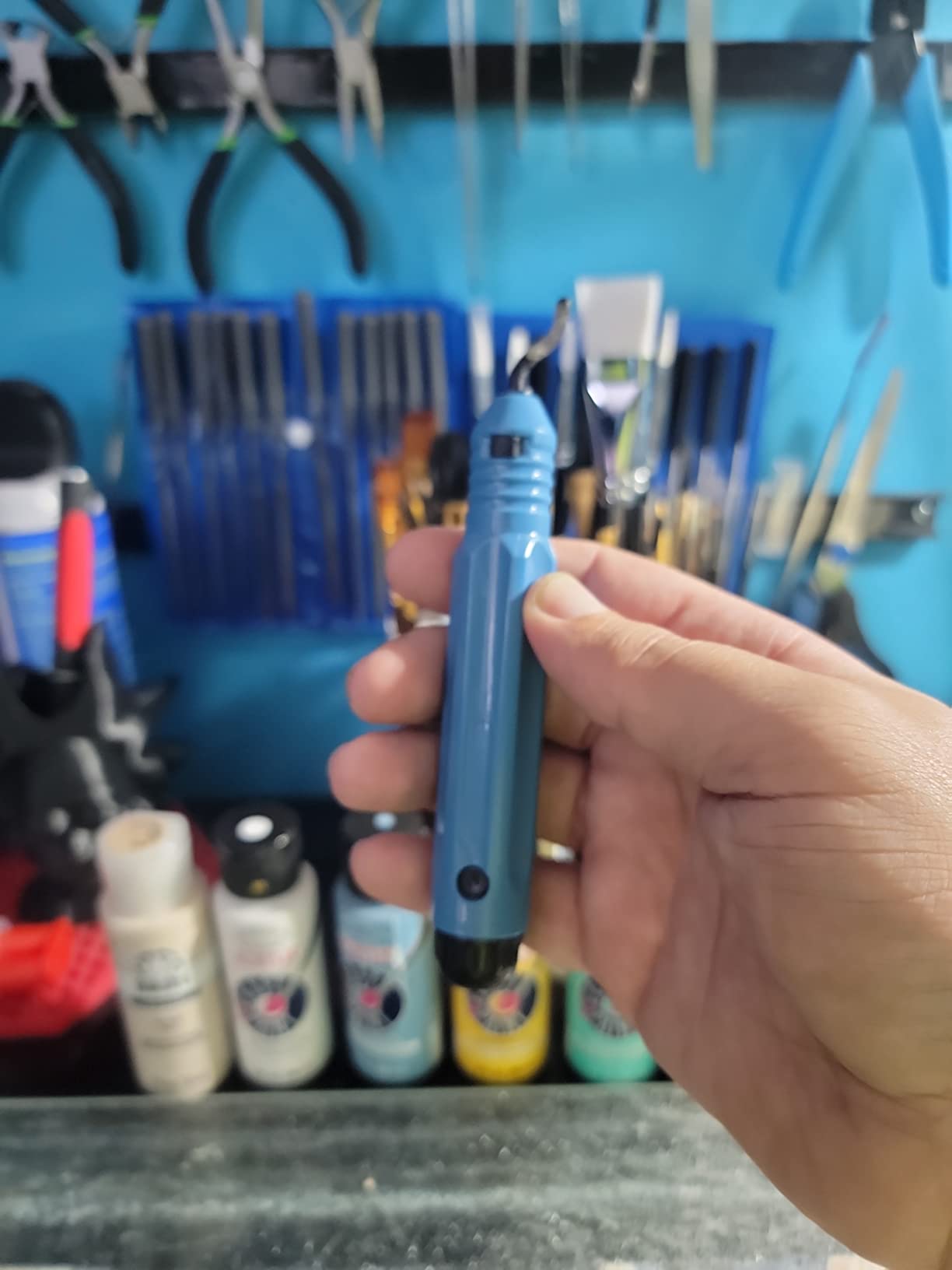
About 640 ratings average 4.4 with 73% five-star feedback. Reviewers like the grip, the convenience of stored spare blades, and clean edge cleanup on sheet metal, machined parts and resin castings. At 1.44 ounces it is the lightest tool in this roundup, which is genuinely pleasant for long detail sessions.
The light plastic handle is the trade. It does not feel as solid as an anodized aluminum barrel, blade life is modest under constant shop use, and the head orientation suits right-handers more comfortably than others.
Is a plastic-handled deburring tool good enough?
For occasional work, yes. Forum regulars make the same point from the other direction: control and feel matter more than removal speed, and a light tool is easy to control precisely. A heavy-handed user will do less damage with a light tool than with a heavy one.
Where it falls short is a full production day. The handle flexes under repeated pressure and blades dull faster when you have to force the cut. Move up to a metal handle when you hit that point.
What does the BS1010 blade code mean?
It is a size designation, not a quality grade. It identifies the blade’s dimensions and intended cut, which is why two kits with different codes are not interchangeable. High-speed steel in these kits runs around 62 to 65 HRC, which is what you want for general ferrous and nonferrous work.
When you buy replacements, match the code exactly. A blade that is slightly wrong in length will not seat properly in the pilot and will sit at the wrong angle.
7. Noga NG8150 Heavy Duty Deburr Tool: Best for Hardened Tool Steel
Noga NG8150 Heavy Duty Deburr Tool, with 10 S10 Blades (Original Version)
Heavy-duty NogaGrip handle
10 S10 HSS blades at 62-64 Rc
Blades stored inside handle
89 gram weight
Pros
- Blades last far longer than generic alternatives in daily shop use
- Very easy blade swaps
- S10 blades work on aluminum and tool steel
- Comfortable rubber-coated ergonomic grip
Cons
- Leaves a rougher surface than a file on some edges
- Less capable on outside radii and sharp corners
- Blade can release if you grip too close to the front
The NogaGrip-1 handle is the difference here. It is a heavy-duty body with a rubber-coated ergonomic grip and a positive blade lock, and it holds all S-series 3.2 mm blades. Ten S10 high-speed steel blades at 62-64 Rc come in the box and spare blades store inside the handle.
Noga is one of the two brands that come up most often across hobby-machinist and practicalmachinist threads on handheld deburring, and this is the tool those users reach for when the material is hard. It is rated for aluminum and tool steel including 4140, H13 and S7, which puts it well past what general-purpose kits claim.
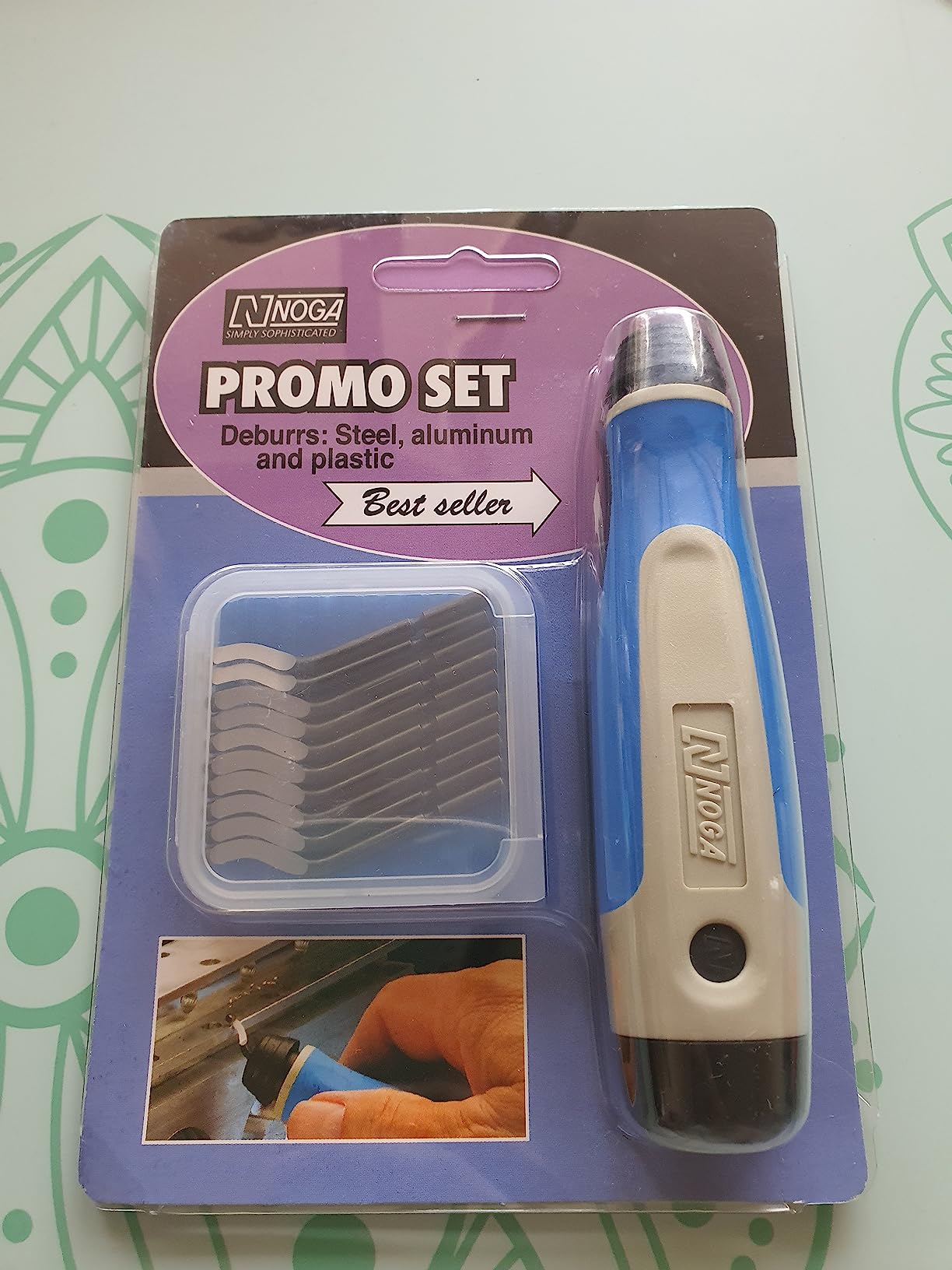
Its 4.7 rating sits alongside a 545-review count with 85% five-star feedback and almost no one-star presence, which is unusual in this category. Machinists and fabricators call it a benchmark hand deburr tool and praise blade longevity on hardened steels, quick swaps and the store-in-handle spares.
The reservations are honest ones. It leaves a rougher surface than a file on some edges, it is less capable on outside radii and sharp corners, and if you grip too close to the front you can release the blade. None of these are dealbreakers, but they are worth knowing.
Why do Noga S10 blades outlast generic replacements?
Hardness at 62-64 Rc is the headline, but the real difference is the 3.2 mm S-series format and the seat it holds in the NogaGrip pilot. A blade that does not wobble cuts a clean shear instead of digging, and that is what preserves the edge.
S10 blades are also universal across aluminum and tool steel, so one pack covers most of what a fabricator or toolmaker cuts. That matters when you are buying replacements once a year rather than once a week.
When is a file still the better answer?
When you need material removed, not just sharpness gone. A deburr tool shears a thin layer; a file takes metal away and leaves a smooth blend. On a rough sawn edge or a machined corner you are going to paint, the file or a file-style tool such as a DynaFile or Matabos still does the job better.
For a sharp-but-clean edge break after machining, this Noga is faster and leaves the part dimension intact.
8. AMTOVL Pneumatic Chamfering Tool: Best for Production Volume
AMTOVL Pneumatic Chamfering Tool, Mini Air Chamfer Tool W/ 10C & 10R Blades
Ten C blades and ten R blades
Four speeds, 0.1-0.9mm depth
30,000 rpm air tool
0.5 kg weight
Pros
- Powered chamfering is far faster than hand deburring
- C and R profiles available from one tool
- Adjustable depth and four speed settings
- Alloy steel baffle prevents accidental startup
Cons
- Requires an air compressor so it is not portable
- One-star reviews point to durability and consistency issues
- Cannot be used on hardened materials stone titanium or glass
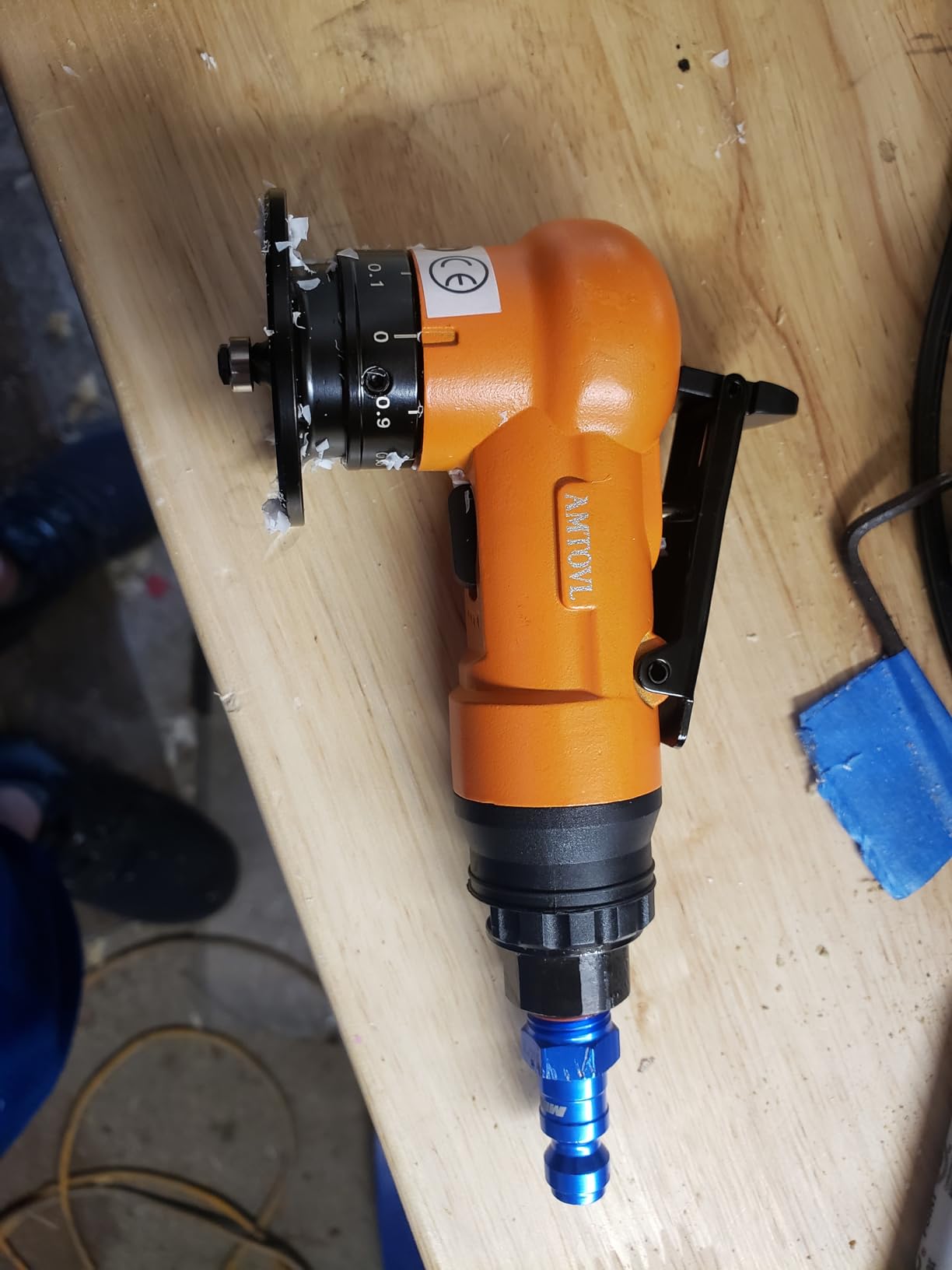
This is the powered outlier, and it earns its place because it does something no hand tool here can: repeat a consistent chamfer on every part in a batch. It runs on compressed air at up to 30,000 rpm, with a 1/4 inch air inlet and an operating pressure of 90 psi, so it works with a modest shop compressor.
It ships with 20 blades: ten R blades for 1.5 mm round-edge chamfers and ten C blades for 0.1-0.5 mm 45-degree chamfers. Four speed settings and adjustable chamfer depth from 0.1 to 0.9 mm give you real control over the result rather than a single fixed geometry.
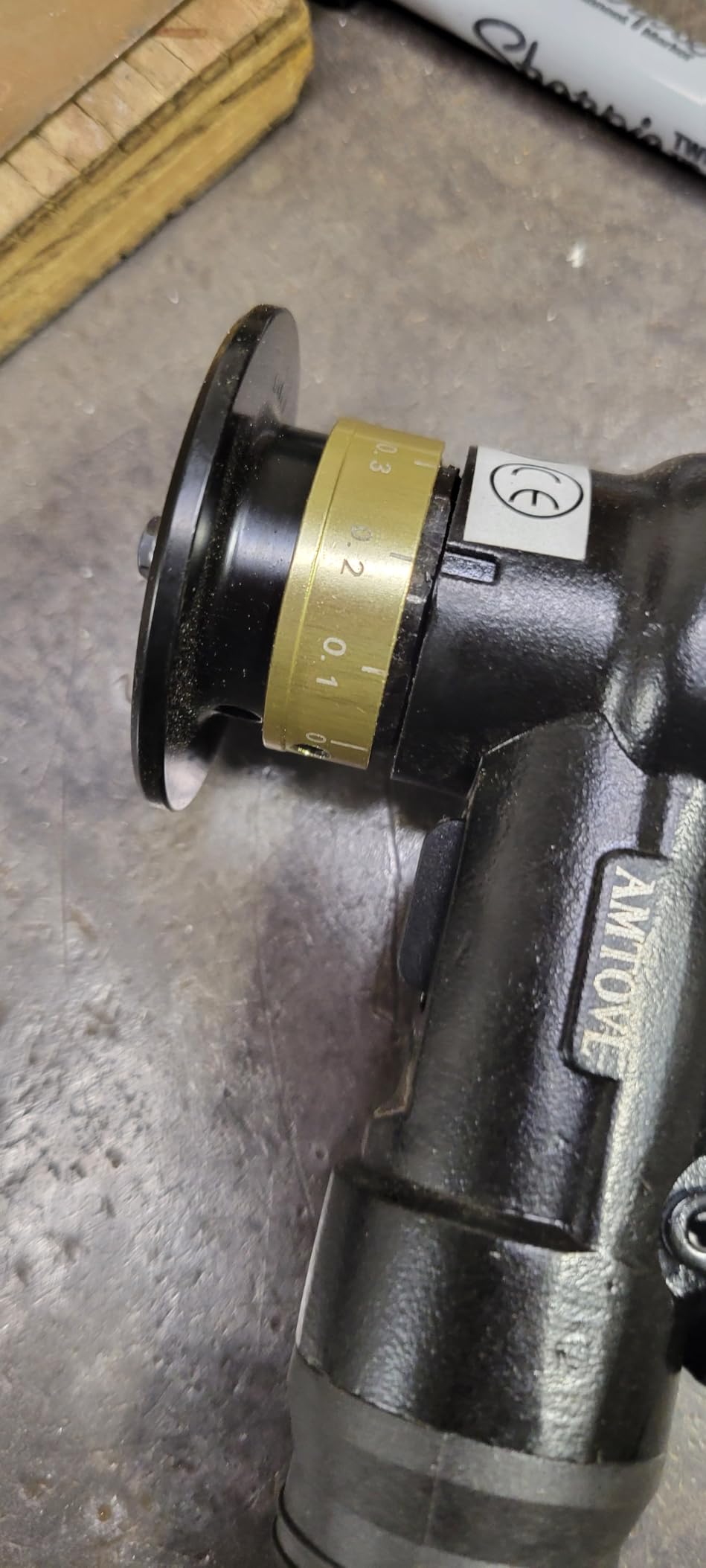
Safety features are thoughtful for a pneumatic tool: a pressure plate safety switch and an alloy steel baffle that prevent accidental activation when you set it down. Four bearings are included, and there is a lifetime warranty on the listing.
Its 4.2 average is the lowest here, from 317 ratings with 70% five-star and an 11% one-star group. Complaints concentrate on air-feed consistency, blade and bearing wear over time, and a limited material range. It cannot handle stone, titanium alloy, glass or hardened materials.
Hand tool or powered chamferer for a small shop?
Hand tool, in most cases. A shop doing ten or twenty parts a week gains almost nothing from a pneumatic tool and loses portability and material range. The economics only work when you are repeating the same edge break dozens of times an hour.
Powered also introduces operator variation in a different way: consistent feed speed and depth produce consistent parts, which is exactly what a hand tool cannot guarantee across shifts.
What does it mean that both C and R blades are included?
It means one tool covers both the standard flat bevel and a true rounded edge from a 1.5 mm radius. That matters for parts that will be coated, since coating adheres far better to a defined radius than to a knife edge.
Set the depth with the adjustment rather than by feel, take a test cut on scrap of the same section, and check it with a radius gauge or a part print before running the batch.
9. Noga DB1000 Sheet Metal Deburring Tool: Best for Sheet Metal
Noga DB1000 Sheet Metal Deburring Tool
Double-sided deburring in one pass
N80 HSS blade with 0-12mm range
Also deburrs metal block edges
6.2 ounce weight
Pros
- Double-sided design cleans both faces of a sheet metal cut at once
- Works on metal block edges as well as sheet
- HSS blades give good general-purpose wear resistance
- Long-standing design with a large installed base
Cons
- Specialized for sheet metal and block edges rather than general hand deburring
- Higher cost than basic hand deburr kits for similar tasks
Every other hand tool in this roundup deburrs one face at a time, which means flipping the part for sheet metal. The DB1000 does not: its double-burr design removes burrs from both sides of a sheet metal cut in a single pass. For a fabricator cutting brackets all day, that halves the work on the most common edge type there is.
The blade is N80 high-speed steel with a 0-12 mm range, suited to general ferrous and nonferrous work. It also handles the edges of metal blocks, and at 7.8 by 2.1 by 2.4 inches with a 6.2 ounce weight it has the substance of a shop tool rather than a pocket accessory.
Why does sheet metal need a different tool?
Because a cut sheet edge has a burr on the face and a second one on the back, and a general swivel-blade tool only reaches the one facing you. Flipping a thin panel is fiddly, and on very thin stock you risk marking the opposite face while handling it.
The double-sided action also keeps your fingers away from the sharp edge, which matters more than it sounds on a panel large enough to need two hands.
Is it worth it outside a sheet metal shop?
Probably not. The 309-review count and 4.4 average come from a narrower user base than the general-purpose kits, and the mild criticisms are consistent: it is specialized for sheet and block edges, and it costs more than a generic hand kit that would cover occasional sheet work.
If sheet metal is a side task, use the Broadbasic and budget the extra pass. If sheet metal is your day job, this is the one to own.
10. SHAVIV 90087 Classic Heavy Deburring Tool Kit E: Best for Deep Holes
SHAVIV 90087 Classic Heavy Deburring Tool Kit E with Aluminum Handle A (4 Pieces)
Four pieces including E-series holder
E-series high-speed steel blades
Anodized aluminum handle
1.12 ounce weight
Pros
- Long-reach holder reaches into drilled holes and recessed edges
- All-metal handle feels solid compared with plastic models
- Quick-release blade changes with blades that hold an edge
- Long track record with professional metalworkers
Cons
- Blades can rust in humid storage if not oiled
- Handle thickness is not to everyone's taste
- Some buyers reported packages arriving already opened
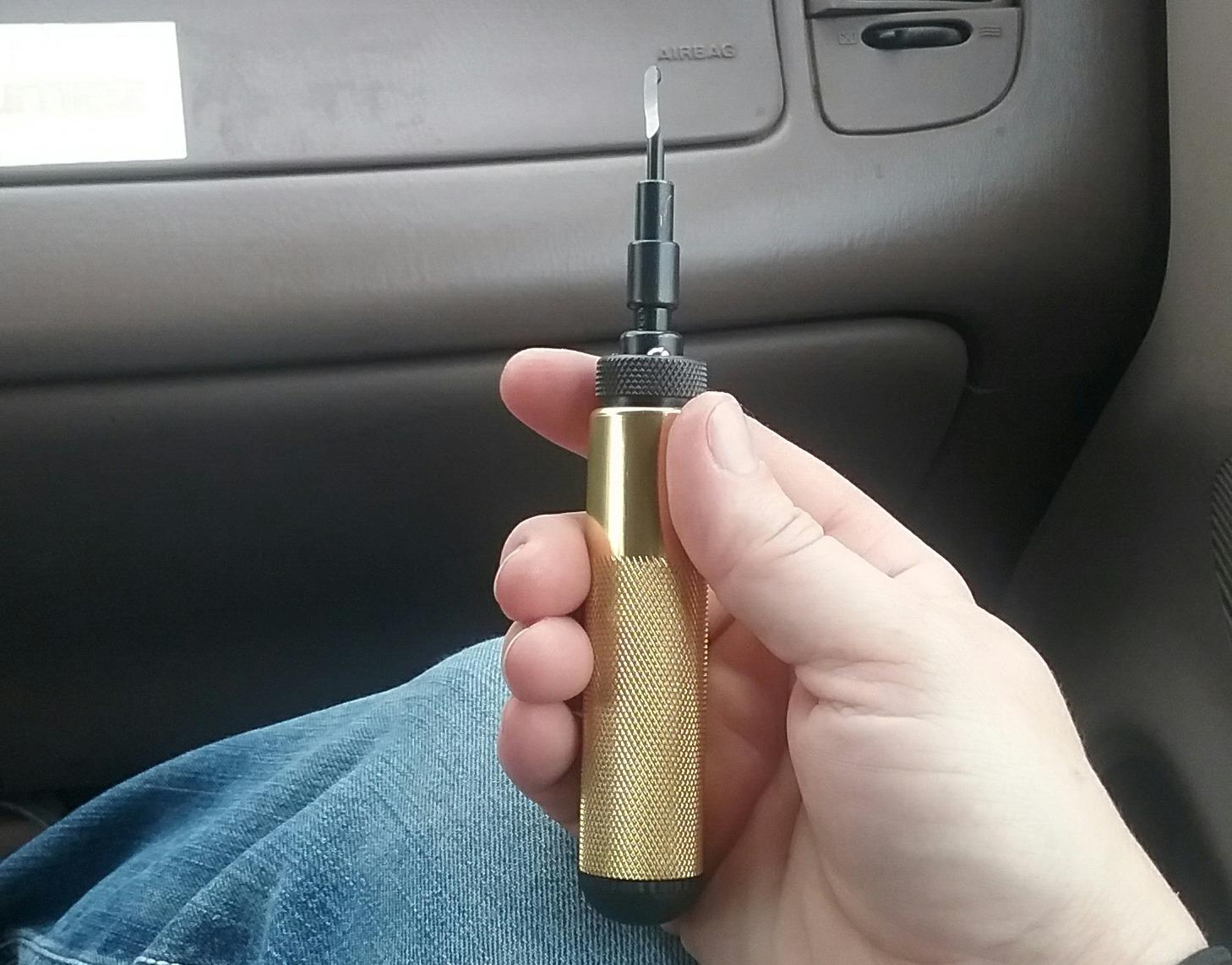
The problem with a standard deburr tool is reach. If you drilled a hole three inches deep into a block, the short handle in most kits will not get the blade down to the bottom. The Shaviv 90087 E kit solves that with a long E-style blade holder, so the blade reaches deep holes and recessed edges where a normal holder bottoms out.
The kit is four pieces: one anodized aluminum A handle, one E blade holder and three E-series high-speed steel blades. Quick-release blade changes, 1.12 ounces total, and a lightweight but strong handle. It is built for heavy-duty deburring of straight edges and hole edges.
Its 4.6 rating comes from 270 reviews with 78% five-star feedback. Welders, fabricators and trades users describe it as a long-term purchase that handles EMT pipe, utility box knockouts and drilled holes with blades that stay sharp. Shaviv, like Noga, is one of the two most-mentioned handheld deburring brands across forum threads.
The recurring notes are storage and packing. Blades can rust in humid conditions if you do not oil them, and the handle thickness is not to everyone’s taste. A few buyers also reported packages arriving already opened.
When do you actually need a long-reach holder?
Three situations. Deep drilled holes where the standard pilot bottoms out. Recessed edges such as knockout openings and counterbored holes. And pipe or tube interiors where you need to reach along the bore rather than across the rim.
If none of those apply, a standard swivel-blade kit handles your edges faster and cheaper. Buy the reach when the geometry demands it.
Shaviv or Noga for everyday shop work?
Both are respected for the same reason: blades that stay sharp and a handle that does not shake. The Noga NG8150 wins for heavy daily use with hardened tool steel thanks to its positive blade lock, while the Shaviv E kit wins when reach into a hole is the requirement.
Whichever you pick, oil the blades before storing. That single habit prevents most of the rust complaints buyers report on both brands.
How to Deburr a Metal Edge in 6 Steps
Technique matters more than the tool. Heavy pressure is the single most common reason blades chip and parts get gouged, and it is the most repeated complaint from experienced users.
Secure the part in a vise or hold it firmly. A part that moves while you deburr is a part you will gouge.
Inspect the edge and identify which side the burr is on. Shear it from the burr side, not the clean side.
Set the blade with light, repeated passes. Start at the base of the burr, not at the tip of the edge.
Rotate or swivel the tool so the blade shears rather than scrapes, and keep the handle moving.
Flip the part and repeat on the opposite face if a second burr exists, as on a drilled hole.
Blend with a fine abrasive if you need a radius rather than a break. Coating needs roughly a 2 mm radius to adhere properly.
Wear eye protection. Gloves are debatable around a sharp hand tool because they can catch, and rotating-blade tools plus wire wheels can throw sparks and debris. Keep the blade away from your off hand and cut away from your body.
What Is the Best Deburring Tool for Small Holes?
For holes under a quarter inch, use a swivel-blade hand tool with a pilot that enters the hole and a short blade, and work both faces. For holes under an eighth inch, the practical answer many experienced users give is that no dedicated tool is worth it: a small round file or a scrap of abrasive wrapped around a pencil is faster.
Under 1/8 inch hole: a small round file or hand abrasive. A hand deburr tool will not fit and trying will damage the hole.
1/8 to 1/4 inch hole: a swivel-blade tool with a short blade. Two passes, one per face.
1/4 to 1/2 inch hole: any of the full-size kits here. The pilot centers itself and the blade clears both walls.
Over 1/2 inch hole: a countersink or a reamer-countersink if you also want to chamfer. The Noga NG8150 handles larger holes well.
Holes deeper than the holder reaches: the Shaviv E-series long-reach holder, which is the one kit here designed for that geometry.
Keep the tool on the centre line. Canting it to reach one side is what turns a chamfer into a gouge and changes the hole diameter.
How to Choose the Right Deburring Tool for Metal Edges
Match the tool to the edge, not the brand
Straight edges and drilled holes suit a swivel-blade hand tool, because the pilot centres the blade and the swivel lets it follow a curve. Sheet metal wants a double-sided design so you do not flip the part. Deep holes want long reach. Bolts and threaded rod want a carbide chamfer cutter in a drill. Volume batches want a powered chamferer.
High-speed steel or tungsten carbide
M2 and M35 high-speed steel at roughly 62 to 65 HRC covers aluminum, mild steel, stainless, copper and plastic, and it is what most of these kits ship with. Tungsten carbide holds its edge far longer on cast iron, hardened steel and stainless, at the cost of brittleness and a higher price.
Rule of thumb: HSS for soft metals and mixed hobby work, carbide for hard metals and production runs.
Decoding the blade codes
Blade codes are the biggest source of confusion in this category, and they are simply size designations. BS1010 and BS1018 identify blade dimensions and intended cut, BK3010 is a finer grade, S10 is the Noga S-series format at 62-64 Rc, and N80 covers a 0-12 mm range on the sheet metal tool. The codes are not interchangeable: a wrong-length blade will not seat in the pilot and will cut at the wrong angle.
Before you buy, note the code printed on the blade in your tool and search for that code with the handle brand name. If a tool only accepts one manufacturer’s code and nothing else, assume you will replace blades from them.
The 2 mm minimum edge radius and coating adhesion
Paint, powder coat and plating do not adhere well to a knife edge. Finishing shops commonly specify a minimum 2 mm edge radius, which is why a hand tool that only breaks the edge may not satisfy a drawing. If your part will be coated, plan on blending the broken edge into a defined radius with fine abrasive or a file-style tool such as a DynaFile or Matabos.
Hand tool or power-assisted
A die grinder with a flap disc or an orbital sander is faster on long, straight, visible edges where a slightly rounded finish is acceptable. It is also uncontrolled, it removes more material than you may intend, and it flattens a crisp edge. For holes, internal corners and edges that must stay tight, a hand tool wins. For related coverage of compact shop tools, our [10 best rotary tools guide](https://www.exponation.net/best-rotary-tools/) is worth a look for bench work.
Replacement blades and why cheap tools break
Most premature breakage is pressure, not material. Users across forums describe the same failure: they lean on the blade, it gouges or snaps, and they conclude the tool is faulty. Light repeated passes extend blade life more than any hardness rating.
Second is blade sourcing. Count the included blades, check that the correct code is available as a refill, and buy a pack early. Every kit here ships between 10 and 20 blades, which sounds like a lot until you deburr a few hundred edges a week.
Frequently Asked Questions
What is the best deburring tool for metal?
For general metal edges, the AFA Tooling kit with 11 M2 high-speed steel blades is the strongest all-round choice: it handles straight edges, curved edges and drilled holes on aluminum, steel and stainless. For hardened tool steel such as 4140, H13 or S7, the Noga NG8150 heavy-duty handle with S10 blades holds up better. For round fasteners and threaded rod, a tungsten carbide chamfer cutter driven by a drill is the right tool instead.
Which tool is used for deburring?
A deburring tool is a handheld cutter or abrasive that removes the burr, the thin ridge of metal left after cutting, drilling or machining. Most hand deburring tools use a replaceable high-speed steel blade held at an angle in a handle, so you swivel the tool and the blade shears the burr off instead of scraping the part. Files, abrasive wheels, wire brushes and countersinks are the other common deburring tools.
What is the best deburring tool for small holes?
For holes from an eighth to a quarter inch, use a swivel-blade hand tool with a short blade and work both faces with two passes. Under an eighth inch, no dedicated tool fits: a small round file or abrasive wrapped around a pencil is faster and safer than forcing a deburr tool into the hole. Keep the tool on the centre line, because canting it to reach a wall turns a chamfer into a gouge.
How do I deburr metal edges without scratching the surface?
Cut from the burr side and shear rather than scrape, using light repeated passes instead of pressure. Start at the base of the burr rather than the tip of the edge, and keep the tool moving so it does not sit in one spot. Break any raised steel edge with fine abrasive afterwards to create a small radius, which both removes the scratch and gives paint or powder coat something to adhere to.
Are cheap deburring tools worth buying?
Yes for hobby, maintenance and light fabrication work, provided you use light pressure. The most common failure users report is not cheap steel but heavy-handed technique: leaning on the blade gouges the part and chips the edge. The value in a budget kit is really the number of included blades, between 10 and 20 across the kits here, plus tool-free blade changes. For daily production work, step up to a heavier handle with a positive blade lock.
Final Verdict: The Best Deburring Tools for Metal Edges
The best deburring tools for metal edges come down to geometry. Take the AFA Tooling 11-blade M2 HSS kit for straight edges, curved edges and holes on aluminum, steel and stainless, and add the Noga NG8150 if you cut hardened tool steel. Reach for the Shaviv E kit when the burr is deep inside a hole, the Noga DB1000 when both faces of a sheet metal cut need cleaning in one pass, and the PLATINUMEDGE carbide cutter when the work is round fasteners.
Whichever you choose, use light pressure, keep the blade moving, and order replacement blades before you need them. Those three habits decide how long the tool lasts more than any spec on the box.