
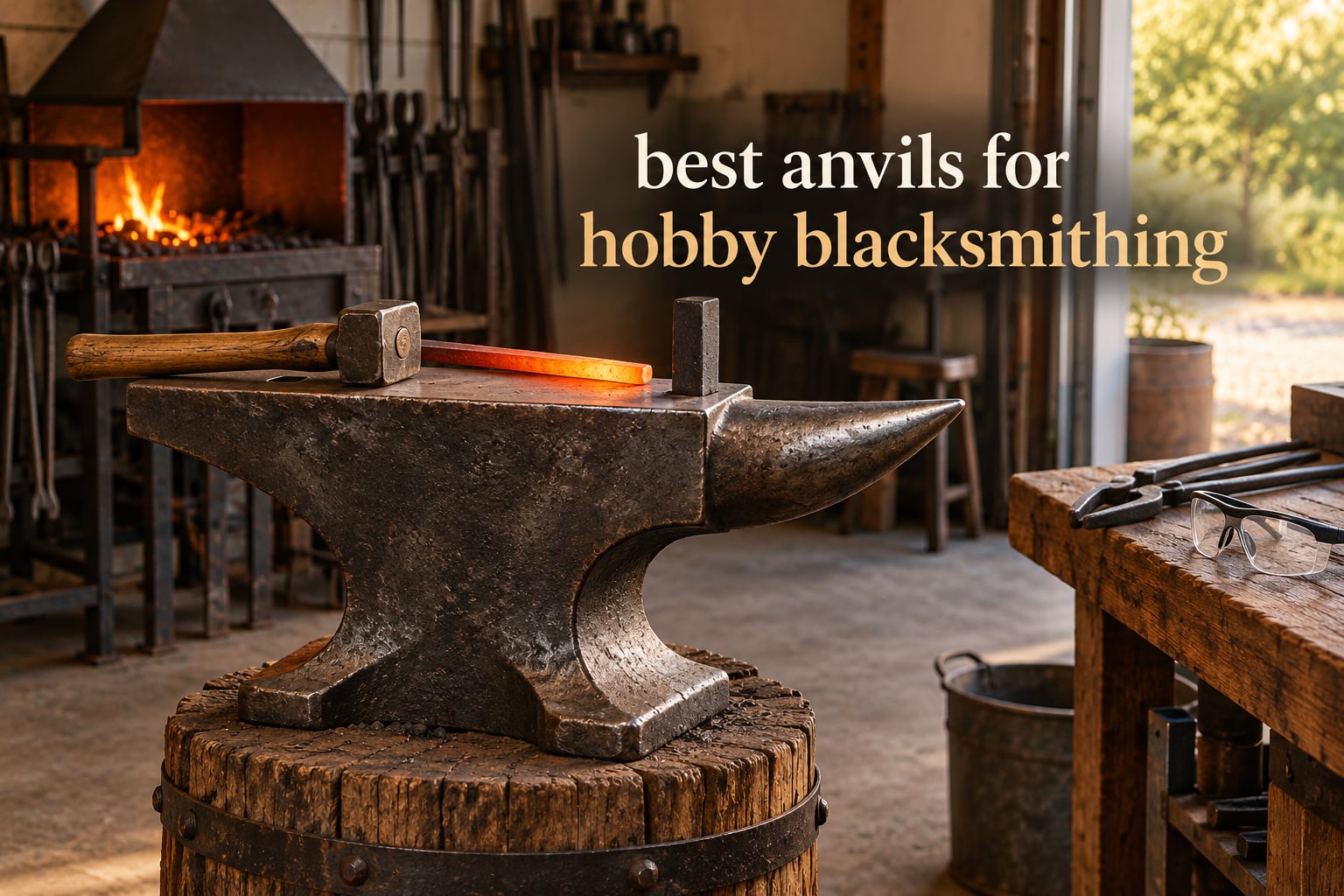
If you have been reading blacksmith forums, you have already noticed the contradiction. Retail listings sell 9 lb cast iron anvils as beginner forging anvils, while almost every experienced smith on r/Blacksmith says to avoid cast iron and buy steel. Both sides are partly right, and untangling that is the whole job when picking the best anvils for hobby blacksmithing in 2026.
An anvil is a mass of hardened steel that soaks up hammer energy instead of passing it into your bench and your arms, then gives part of that energy back into the workpiece. Get that trade working and hot steel moves under the hammer instead of stalling. Get it wrong and you will be fighting a light, shifting lump of iron for an hour.
So this guide splits the category honestly. It leads with the cast steel anvils that suit most hobby smiths, then covers the light cast iron bench anvils for jewelry, stamping and leatherwork, which are useful tools but not forging anvils no matter how the listing words it. It ends with the heavy shop anvils for when you outgrow a garage stump.
One more thing before the picks. The most common answer in the forums is that a good smith never turns down a free anvil, and a length of railroad track or a short I-beam on a stump is a perfectly respectable first anvil. That path costs nothing and teaches you the same fundamentals, so it is worth knowing about before you spend anything.
Table of Contents
Our Top 3 Picks for Best Anvils for Hobby Blacksmithing (October 2026)

VEVOR 22 lb Cast Steel Double-Horn Anvil
- 55 HRC drop-forged steel
- Round horn plus flat horn
- Hardy hole and pritchel hole
- 13.6 inch countertop
Olympia Tools 9-Pound Cast Iron Hobby Anvil
- Cast iron body
- 5.5 by 2 inch face
- 3.5 inch horn
- Limited lifetime warranty

VEVOR 55 lb Cast Steel Single-Horn Anvil
- Heat treated to 50 HRC
- Above 70 percent rebound
- 15.9 by 3.2 inch work surface
- Dedicated cutting table
The VEVOR 22 lb is the anvil we would hand a beginner who wants to actually forge. The Olympia Tools 9 lb is the cheapest sensible way to start knocking shapes into metal on a kitchen table, and the VEVOR 55 lb is where most hobby smiths end up once they are forging regularly.
Best Anvils Compared Side by Side in 2026
| Product | Specifications | Action |
|---|---|---|
| VEVOR 22 lb Cast Steel Double-Horn Anvil |
|
Check Latest Price |
| Olympia Tools 9 lb Cast Iron Hobby Anvil |
|
Check Latest Price |
| VEVOR 55 lb Cast Steel Single-Horn Anvil |
|
Check Latest Price |
 HimaPro 24 lb Single-Horn Anvil HimaPro 24 lb Single-Horn Anvil |
|
Check Latest Price |
 NC Tool 70 lb Anvil with Turning Cams NC Tool 70 lb Anvil with Turning Cams |
|
Check Latest Price |
 Proline 11 lb Bench Anvil Proline 11 lb Bench Anvil |
|
Check Latest Price |
 VEVOR 105 lb Double-Horn Cast Steel Anvil VEVOR 105 lb Double-Horn Cast Steel Anvil |
|
Check Latest Price |
 Easmvetaln 132 lb Cast Steel Anvil Easmvetaln 132 lb Cast Steel Anvil |
|
Check Latest Price |
Two columns in that comparison matter more than the rest. Weight sets how much work you can safely do, and material sets how the anvil responds when you hit it. Everything else is preference.
1. VEVOR 22 lb Cast Steel Double-Horn Anvil – Best Overall Starter
VEVOR Cast Steel Anvil, 22 Lbs(10kg) Double-Horn Anvil with Large Countertop and Stable Base, High Hardness Rugged Round Horn Anvil Blacksmith, for Bending, Shaping
22 lb cast steel
55 HRC
Round and flat horn
Hardy and pritchel holes
13.6 in countertop
Pros
- Cast steel with a 55 HRC face absorbs blows and resists denting
- Hardy and pritchel holes are properly placed and free of casting defects
- Two horns give you both round and flat shaping surfaces
- Large face for its weight class
- Mounts to a stump or stand easily at this mass
Cons
- Some units arrive slightly out of flat and need a short dressing session
- Square-ish horn tip rather than fully rounded
- Face and corners mark easily if you hammer the heel or horn hard
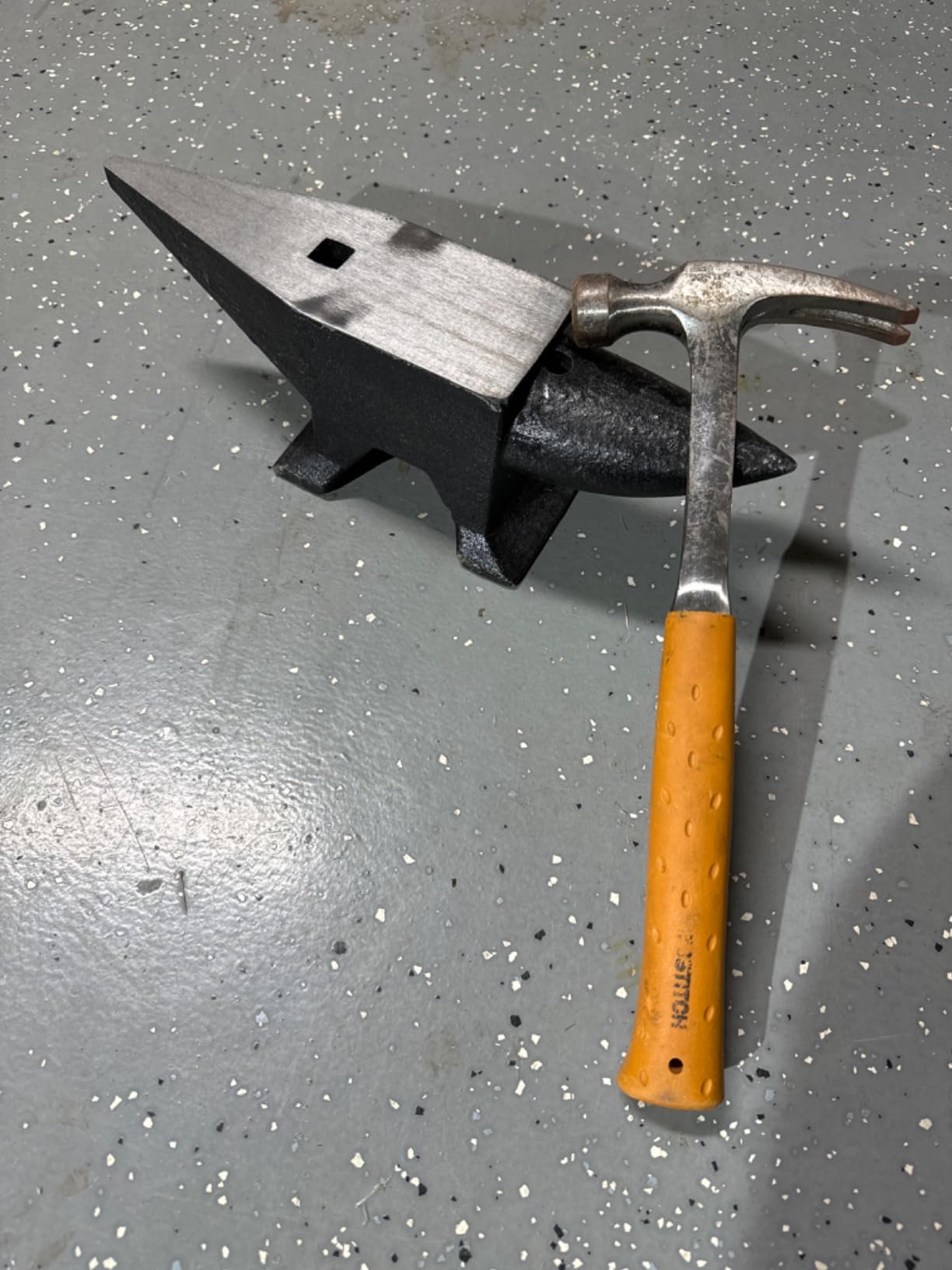
The VEVOR 22 lb is the anvil I keep coming back to, because it is the smallest mass here that still behaves like steel rather than like a heavy doorstop. Cast steel at 55 HRC gives it a face that shrugs off repeated strikes, and at 22 lb you can walk it around a garage or lift it onto a workbench with one hand.
What makes it more useful than a plain block is the tooling. You get a round horn for drawing and bending, a flat horn for smoothing and shaping, and both a hardy hole and a pritchel hole. That is a real set of tools, not decoration, and the holes are positioned well enough that standard hardy tools drop in without fighting the casting.
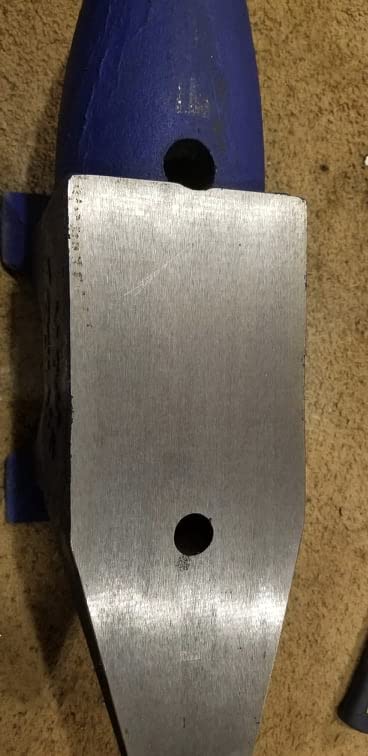
Reviewers consistently describe the same arrival routine: a few minutes of surface dressing before the first heat, then it settles in. The face is described as responsive with good rebound, and owners report having made dozens of knives and small tools on it before moving up in weight.
Its limits are honest ones. At this mass it will not stay put on a bench, so it needs a stump or a stand, and workpieces much over 10 inches are past what it can handle comfortably. The horn tip is squarer than a true round horn, which matters if you plan a lot of scrollwork.
Who this anvil suits
This is the pick for a beginner with a propane forge who wants to make knives and simple forged tools rather than art pieces. It is also the anvil we would suggest for someone working in a small garage where a 100 lb block would dominate the space.
Because it is cast steel and not cast iron, the 22 lb model responds to blows in a way the lighter bench anvils in this guide cannot. That is the difference between hammering metal and hammering a table.
Who this anvil will frustrate
Anyone planning heavy bar reduction, long tongs, or repeated sledge work will grow out of it quickly. It also frustrates buyers who want a permanent shop anvil with a tapered tail and a step, since this pattern is built around horns and a broad countertop instead.
And if your workshop is a shared space where an anvil cannot be bolted down, 22 lb is light enough to walk when a stray blow lands on the wrong side.
2. Olympia Tools 9-Pound Cast Iron Hobby Anvil – Budget Pick
Olympia Tools 9-Pound Cast Iron Hobby Anvil 38-789 , Gray
9 lb cast iron
5.5 by 2 inch face
3.5 inch horn
4 inch height
Limited lifetime warranty
Pros
- Compact and light enough to carry with one hand
- Face arrives smooth and machined for light work
- Absorbs small blows without bouncing
- Largest review pool in this roundup
- Backed by a limited lifetime warranty
Cons
- Cast iron dents and deforms under hard blows
- Casting flaws sometimes need grinding before use
- Horn coating wears off with use
- Not built for hot forging with heavy blows
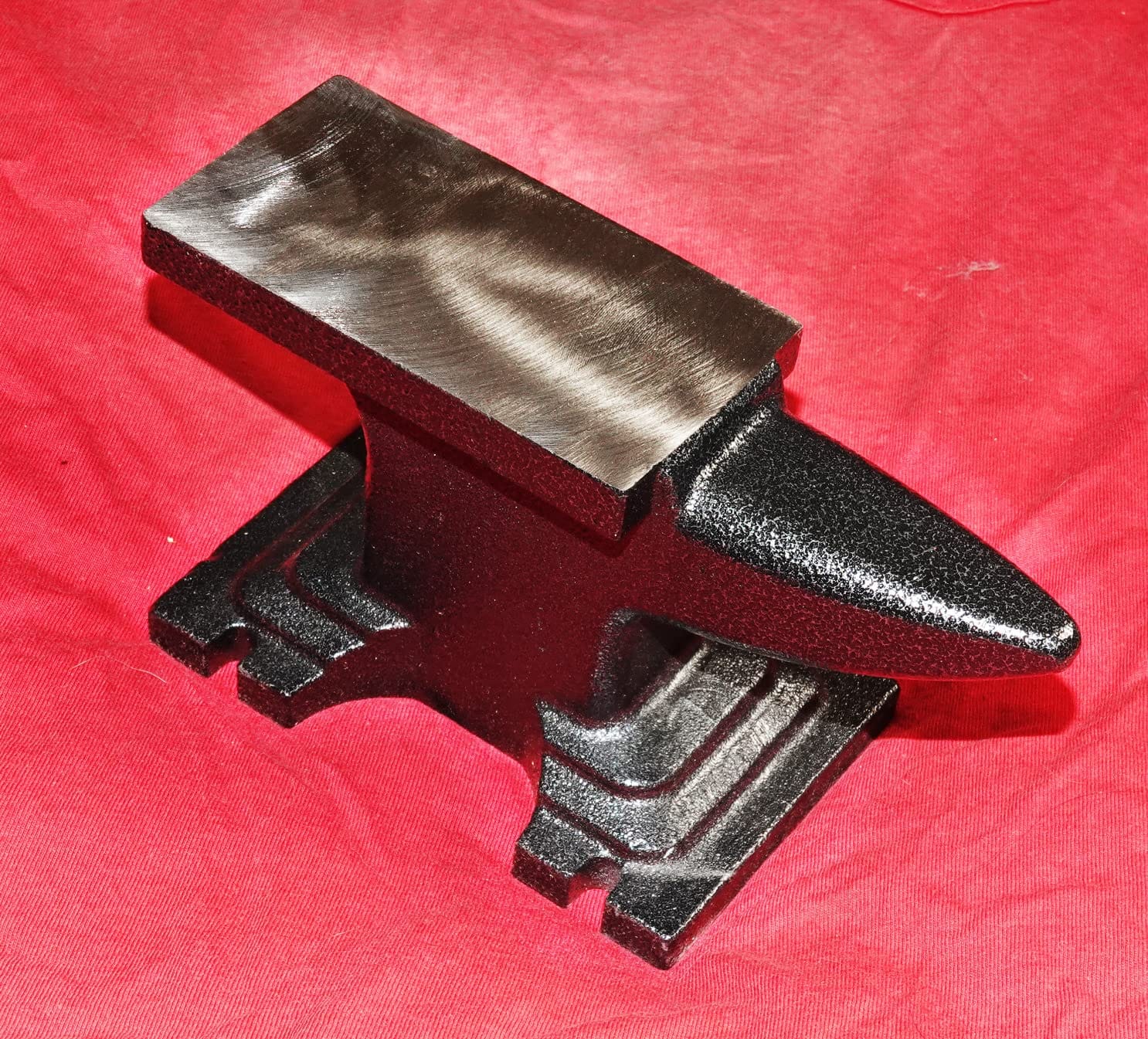
With more than 1,200 ratings, the Olympia Tools 9 lb is the most thoroughly owner-tested anvil here, and the pattern of use is remarkably consistent. It ends up on a kitchen table or a craft bench, and it is used for jewelry, model making, small craft work and light metal forming rather than for hot forging.
For that job it is genuinely good. The 5.5 by 2 inch face is smooth and well finished straight out of the box, the 3.5 inch horn gives you somewhere to bend and shape small work, and 9 lb is heavy enough not to skitter away from light taps while still being easy to carry between rooms.
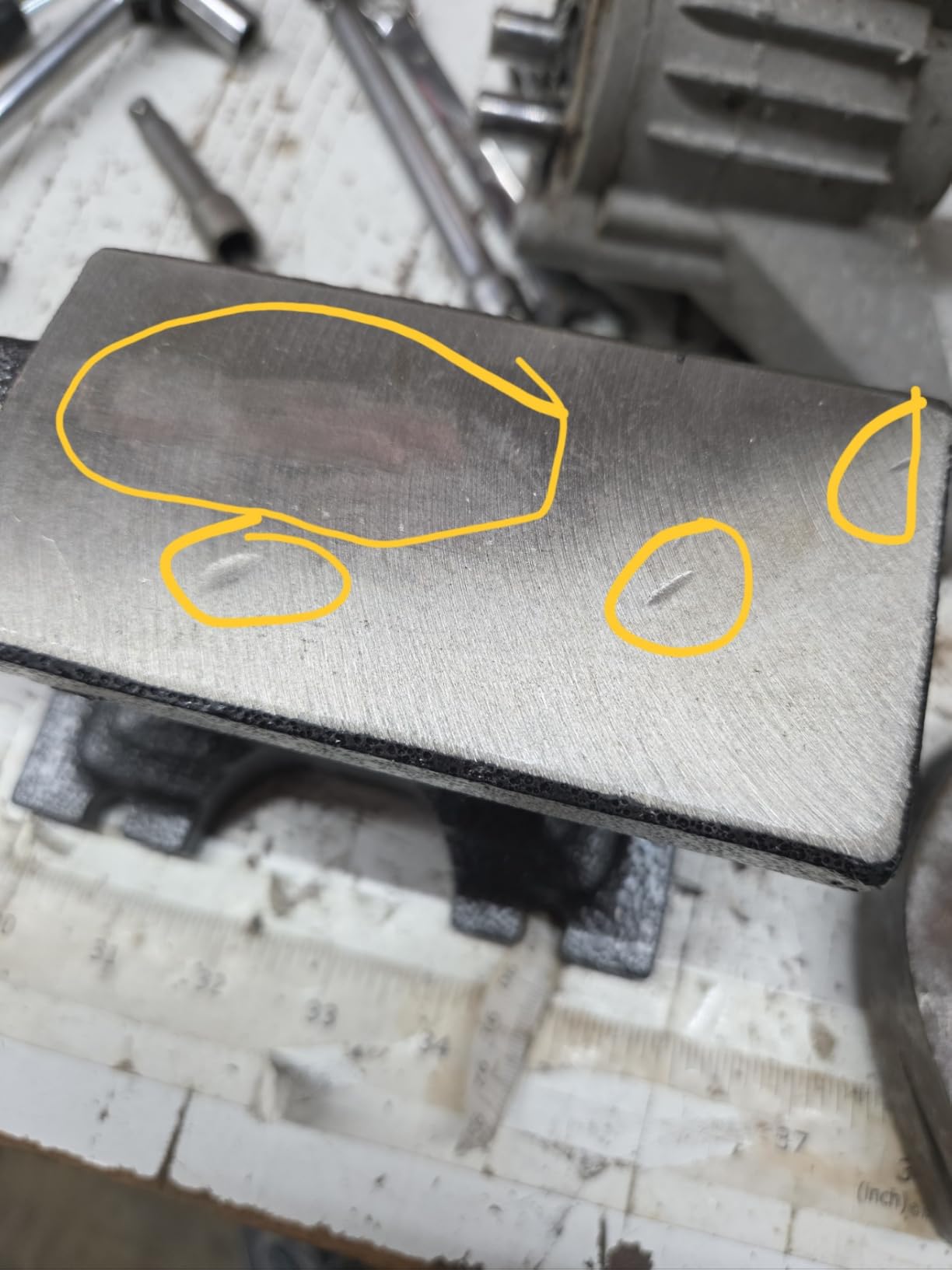
Where the cast iron label matters is in the blow department. Cast iron absorbs energy rather than returning it, so the work does not move as fast and your arm does more of the work. Reviewers also mention that casting imperfections in the face sometimes need grinding out, and that the horn coating wears down with use.
A limited lifetime manufacturer warranty is unusual at this end of the category and worth noting, though it covers the tool rather than any face condition.
Who this anvil suits
It suits a hobbyist who wants to learn hand tool skills, bend wire, set rivets, stamp metal or make jewelry without setting up a forge. It also suits anyone who wants to practise layout, striking and control on something that will not damage the workpiece.
For learning hammer control, an anvil this light is forgiving. A miss costs you a dent in a soft face rather than a flying piece of hot steel.
Who this anvil will frustrate
It will frustrate anyone who arrives expecting to forge. Nine pounds cannot absorb the shock of hot work, and the soft face will mark and pit under the kind of blows that knife and tool forging actually requires.
If your goal is forging rather than cold craft work, put the money toward a cast steel anvil at 50 lb or more, or toward a free railroad track anvil and a forge.
3. VEVOR 55 lb Cast Steel Single-Horn Anvil – Top Rated
VEVOR Single Horn Anvil, 55lbs Cast Steel Anvil, High Hardness Rugged Round Horn Anvil for Blacksmiths, with Large Countertop and Stable Base, Metal Working Tool for Metal Bending, Shaping, Twisting
55 lb cast steel
50 HRC after 800C heat treat
Above 70 percent rebound
15.9 by 3.2 inch surface
Pros
- Cast steel body resists denting under repeated strikes
- Stated rebound rate above 70 percent
- Thick base keeps the anvil from walking
- Large work surface for medium shop work
- Packs well with plywood support
Cons
- Face edges and milling arrive sharp and unfinished
- Pritchel hole and horn profile may need dressing
- Coating can show rust spotting or dripped paint
- No tapered tail
This is the weight where hobby blacksmithing starts to feel like a real trade. At 55 lb the anvil stops needing to be held in place by anything more than its own mass, and the cast steel body with a stated rebound rate above 70 percent means your blows turn into movement in the workpiece instead of heat in your shoulder.
Heat treated at 800C to 50 HRC, it sits in the band that suits general forging. The face is not a knife-hardness surface, so it takes abuse well, and the thick base design is what stops the anvil creeping across the bench under medium work.
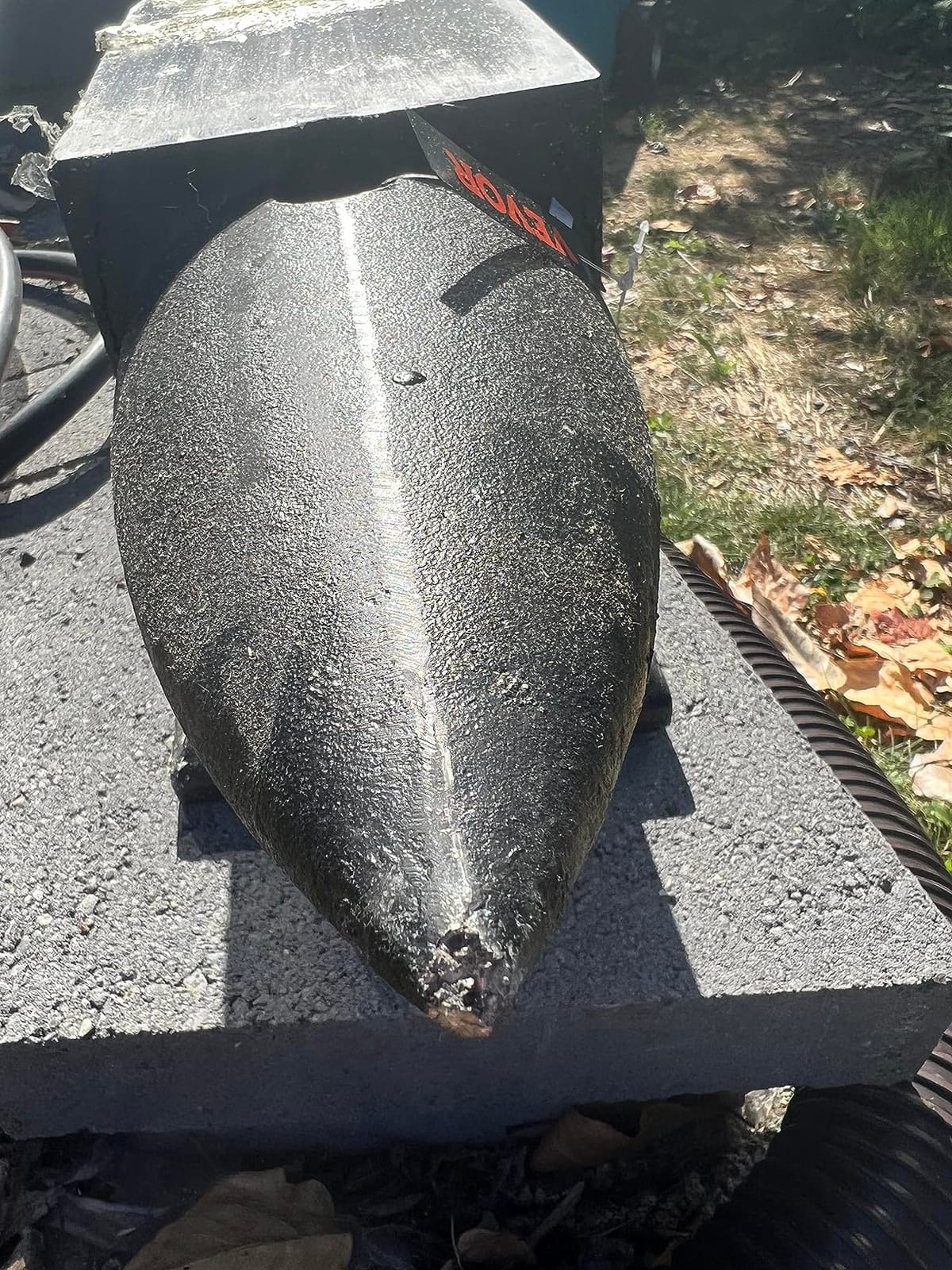
The working surface of 15.9 by 3.2 inches is generous for a single-horn pattern and gives you room to draw out bar and full blades. A dedicated cutting table is included so you are not shearing hot bar directly against the working face and denting it.
Setup is the real work here. Buyers consistently describe grinding the sharp face edges, stripping the protective coating where it has spotted or dripped, and mounting the anvil on a wood stump or post at working height. Reviewers who did that report a dramatic change in how the anvil performs.
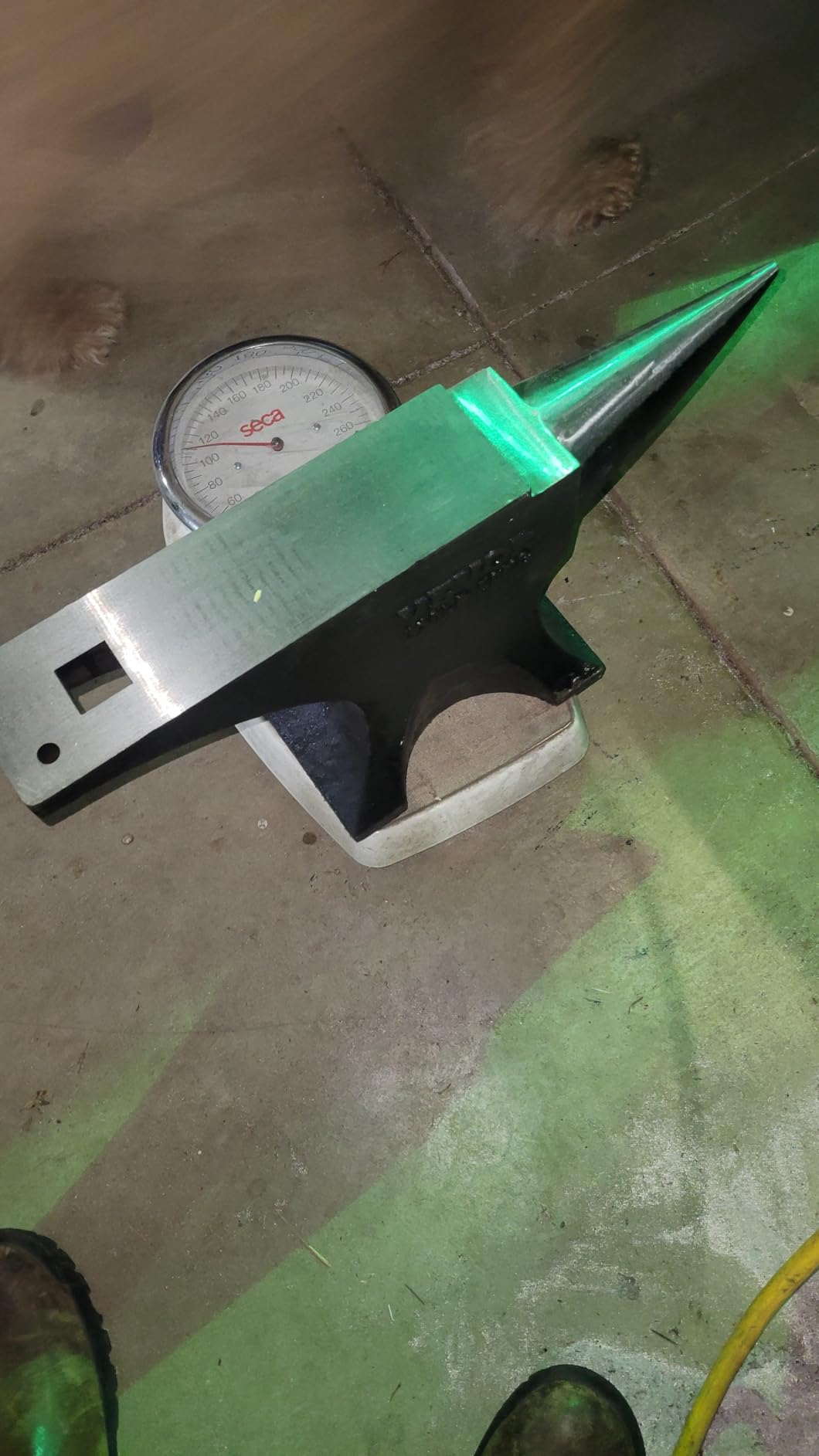
Who this anvil suits
It suits the hobby smith who has moved past first knives and is now forging regularly, plus anyone working from a garage or small shop with limited room. It is also a sensible first anvil for somebody whose hammer has grown to 2 lb or more.
Because it clamps or bolts to a bench, it fits a workshop where the anvil needs to stay put without being cast into a permanent stand.
Who this anvil will frustrate
It will frustrate anyone who wants a tapered tail, since this single-horn pattern does not have one and leatherworkers in particular notice the absence. The raw arrival finish also means you need an afternoon of grinding and coating removal before the first serious heat.
Buyers planning power hammer work or heavy sledge forging will want more mass than 55 lb provides.
4. HimaPro 24 lb Single-Horn Anvil – Best for Jewelry and Stamping
HimaPro Single Horn Anvil for Blacksmith Blue – Cast Iron Anvil- A Wonderful Tool for Jewelry Making and Metal Stamping (24 LBS)
24 lb cast iron
45 to 58 HRC
Large polished flat face
Round horn
13 by 6.3 inch body
Pros
- 24 lb of mass gives a stable base for harder taps than a small bench anvil
- Large polished flat face suits flat work and stamping
- Round horn handles bending and shape forming
- Footprint fits a normal workbench
Cons
- Cast iron body is softer than forged steel and needs a lighter technique
- Less suited to sustained hot forging than a heavier anvil
- Only two distinct handling notes in reviews
The HimaPro 24 lb sits in the awkward middle that most roundups skip, and that is exactly why it is worth its own section. It is heavier than a jewelry bench anvil, so it stays put, and it is far lighter than a forging anvil, so it can still live on a workbench in a room that is not a shop.
The rated hardness band of 45 to 58 HRC is the widest in this roundup, which tells you something about consistency between units. Treat the lower end of that band as the realistic figure for planning purposes, and use a controlled hammer rather than a sledge.
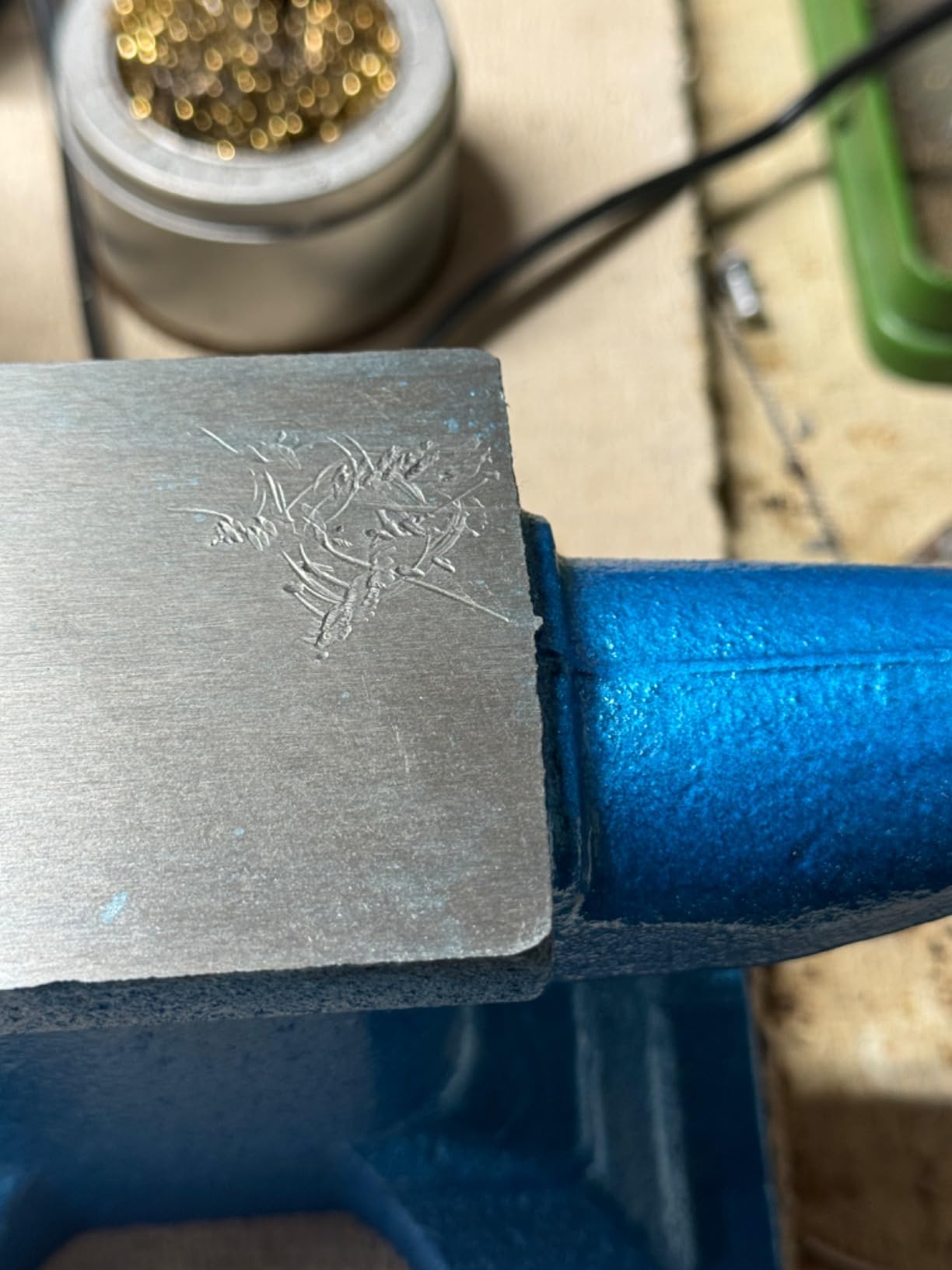
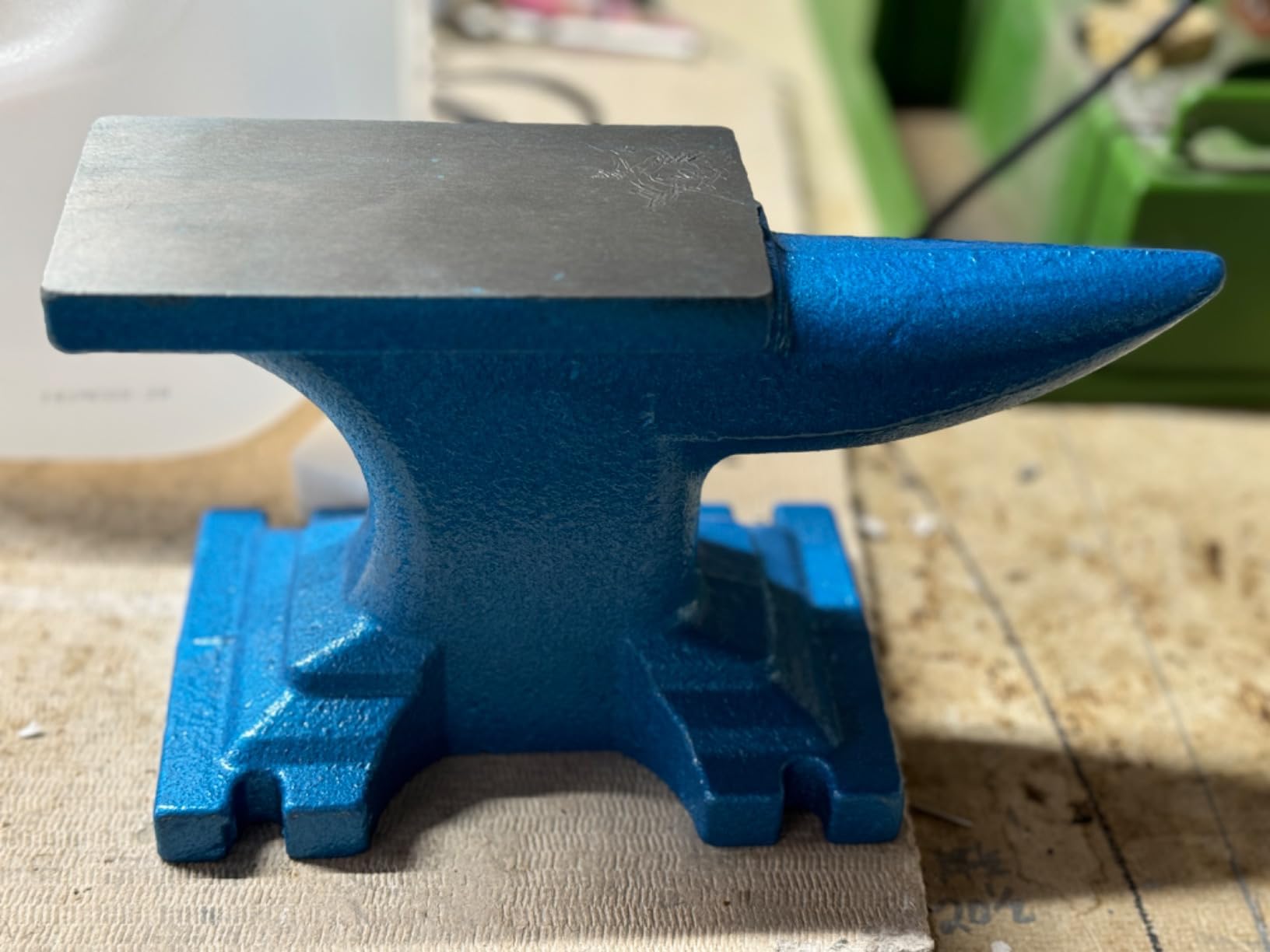
The large polished flat surface is the feature buyers mention most, because it is what makes stamping and flat punching work comfortable. The round horn covers bending and forming, and at 24 lb the anvil has enough inertial mass to take a solid tap without walking across the bench.
Owners use it for jewelry making, metal stamping and general light blacksmithing. The recurring theme is the balance: usable mass on one side, cast iron softness on the other.
Who this anvil suits
It suits makers who stamp, pierce, form and bend more than they forge, and who want an anvil that does not need bolting down. It also works for a beginner who wants to practise on hot metal at a small scale before committing to a heavier shop anvil.
The 13 by 6.3 by 4.9 inch footprint means it fits a standard bench without taking the whole surface.
Who this anvil will frustrate
It will frustrate anyone planning sustained hot forging, because the cast iron body needs a lighter and more controlled technique than a steel anvil forgives. It will also frustrate a buyer who wants a hardened face they can drive punches into hard.
If your plan is knives rather than jewelry, the money is better spent on cast steel at 50 lb or above.
5. NC Tool 70 lb Anvil with Turning Cams – Best for Small-Shop Knife Work
NC Tool 70 Lb. Anvil with Turning Cams
70 lb weight class
Solid steel construction
Turning cams at rear of face
Small to medium knife forging
Pros
- Highest rating average in this roundup at 4.8 stars
- Solid steel that holds up to daily use
- Turning cams are genuinely useful for holding and rotating work
- Suited to beginner through intermediate knife forging
- Welds well to a metal stand
Cons
- Much more expensive than the cast steel anvils in this weight class
- Packaging can be damaged with the horn protruding
- Only 92 reviews so long-term data is thin
At 70 lb this is the first anvil in the roundup that feels like a shop tool rather than a garage tool, and the 4.8 star average across 92 ratings is the highest here. Novice and intermediate bladesmiths describe it as solid, well constructed and a clear step up from cast iron alternatives.
The turning cams mounted at the rear of the face are the feature nobody else in this guide offers. They let you hold a piece while it is hot without burning your fingers, which turns a lot of awkward handling into a smooth, controlled operation.
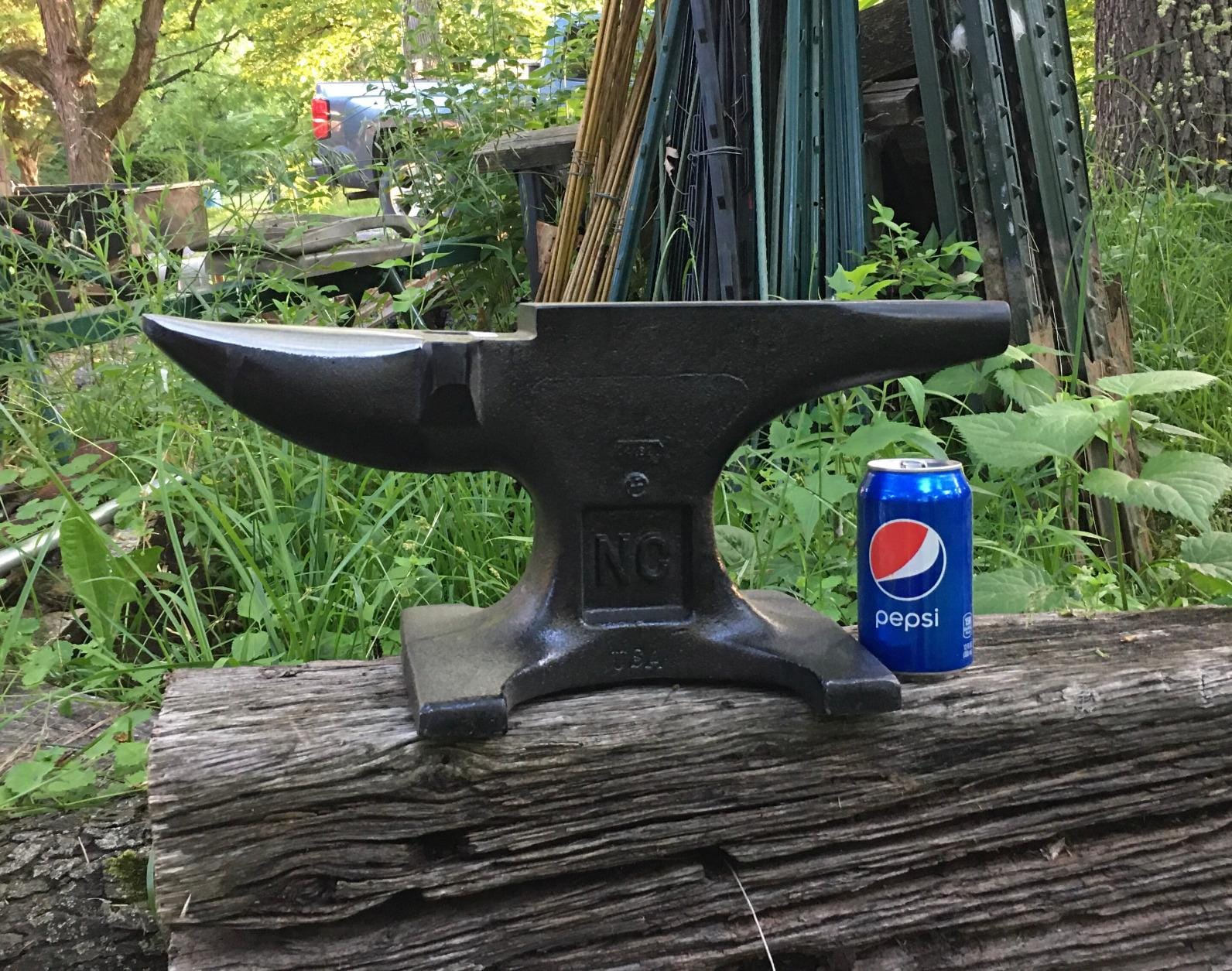
At this weight you are buying permanence. Once this anvil is welded to a metal stand it becomes part of the shop, and buyers describe the change in feel as significant. For knife forging in the small to medium range, the mass means the work moves without you leaning on the hammer.
The trade-off is cost. This sits well above every cast steel option at a comparable weight, and reviewers are blunt about that gap. One reviewer also flagged transit damage with the horn protruding through the packaging, so inspect the horn and face on arrival.
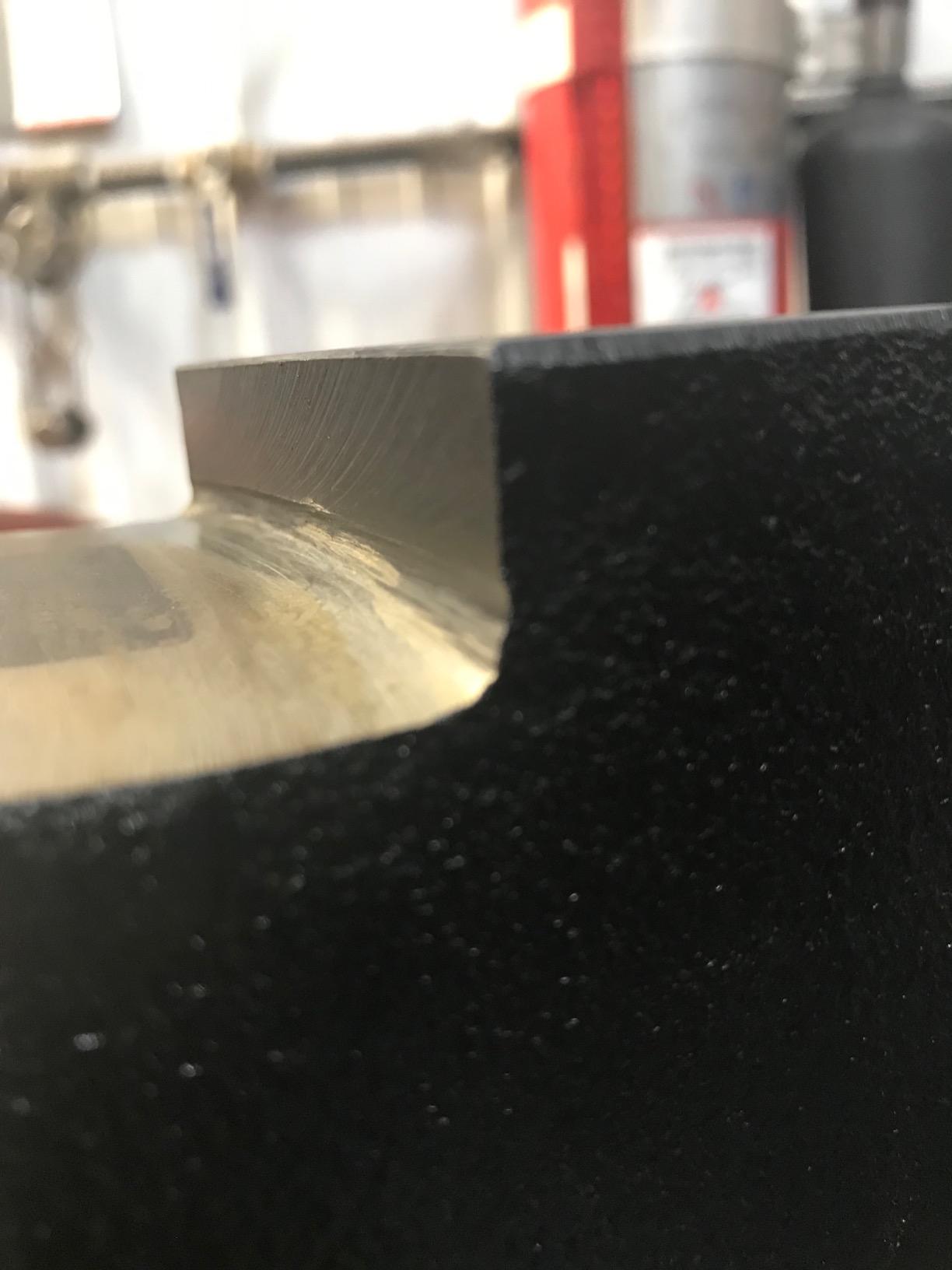
Who this anvil suits
It suits bladesmiths who are forging regularly and want an anvil that stays where it is put. The 70 lb mass matches the 50x rule comfortably for a 1 to 1.5 lb hammer, which is the range most hobby knife smiths actually work in.
It also suits anyone who wants the turning cam feature specifically, because nothing else in this price bracket offers it.
Who this anvil will frustrate
It will frustrate buyers on a strict budget, since cost per pound is the metric r/Blacksmith readers actually use when judging value, and this anvil scores badly on it. It will also frustrate anyone working out of a small garage where a permanent stand at working height is not practical.
With 92 reviews, long-term durability is less well documented than for the picks with thousands of ratings.
6. Proline 11 lb Bench Anvil – Best Value
Proline Amazon 11 lbs Solid Forged Steel Anvil Single Horn Base Jeweler Tool Metal Steel Anvil
11 lb
2.75 by 5 inch top surface
3.5 inch horn
Single horn
Pros
- Smallest footprint in the roundup and easy to reposition
- Top surface is large enough for rivets and light forming
- Inertial mass pushes hammer energy into the work
- Fits on a small work table
Cons
- Listing says forged steel but buyers report cast iron that chips and dimples
- Casting nicks in the face may arrive from the pour
- Limited face and horn area for larger work
The Proline 11 lb earns its place as the cheapest functional mass on this list, and the honest reason to buy it is rivets, small hardware and light forming on a crowded bench. At 11 lb it has more inertia than a 9 lb bench anvil while still being carried with one hand.
There is a labelling problem worth flagging before you buy. The listing title describes solid forged steel, while the product details say cast iron, and buyers confirm the softer material in practice. Plan for cast iron behaviour and you will not be disappointed.
Who this anvil suits
It suits leatherworkers, jewellers and repair hobbyists who need somewhere solid to set rivets, flatten small blanks and bend short lengths of thin copper or brass. The 2.75 by 5 inch top surface platform is the reason it is useful at that size.
It also works as a portable anvil for a small shop where a fixed anvil is not available.
Who this anvil will frustrate
It will frustrate anyone expecting forged steel performance, because the face chips and dimples under a hard strike. The horn length of 3.5 inches and the limited face area also make it a poor fit for anything requiring a real draw out.
If you need a working forging anvil, step up to the cast steel picks rather than trying to make this one do a job it was not built for.
7. VEVOR 105 lb Double-Horn Cast Steel Anvil – Best for Heavy Forging
VEVOR Cast Steel Anvil, 105 Lbs Double-Horn Anvil with Large Countertop and Stable Base, High Hardness Rugged Round Horn Anvil Blacksmith, for Bending, Shaping
105 lb drop-forged steel
55 HRC
Round and flat horn
Hardy and pritchel holes
24.4 inch countertop
Pros
- Full 105 lb of mass stays put without clamping
- 55 HRC drop-forged steel with a wide 24.4 inch countertop
- Dual horns plus hardy and pritchel holes cover most tasks
- Polished coated surface resists corrosion during long sessions
Cons
- Lowest rating here at 4.4 with 7 percent one-star feedback
- Repositioning between jobs takes two people
- Spray coating has to come off before hot work
At 105 lb this anvil answers a problem the smaller picks cannot: it stays exactly where you put it. No mounting hardware, no stump, no clamp, just mass holding position while you work. For heavy forging that is the difference between controlled blows and chasing a moving anvil.
Drop-forged steel rated at 55 HRC with a 24.4 inch countertop gives you room for long workpieces, and the double-horn layout plus hardy and pritchel holes covers most shaping and punching tasks without switching tools.
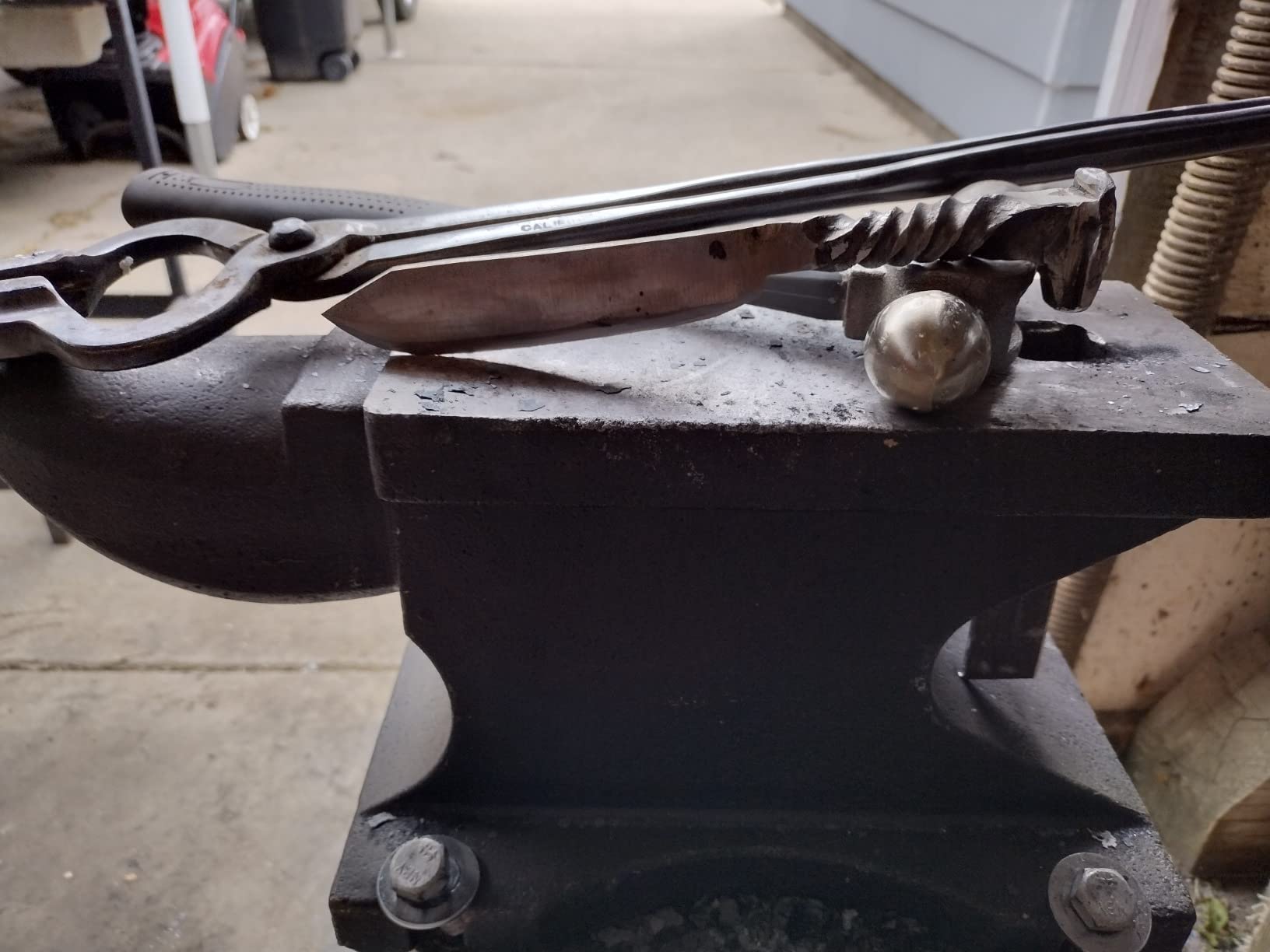
The 4.4 star average is the lowest in this roundup, with 7 percent one-star feedback. Those reviews cluster around transit handling and the protective coating rather than around the steel itself, so the useful response is to inspect the anvil on arrival and plan the mounting before it arrives.
Removing the anti-oxidation spray coating before hot work is the other repeated piece of advice. It is not a defect, it is a manufacturing step you finish yourself.
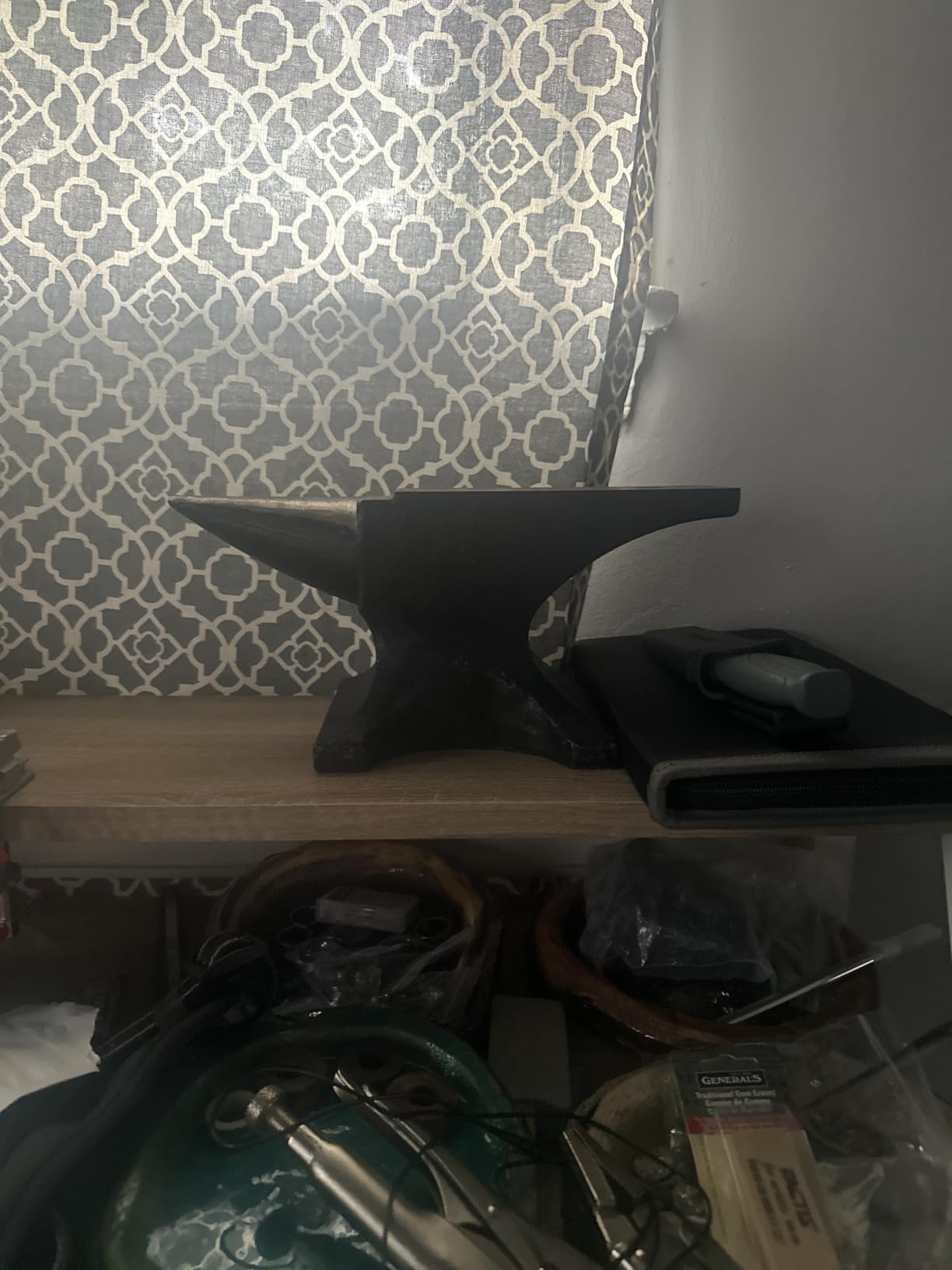
Who this anvil suits
It suits a smith with a dedicated shop space who has already outgrown a garage stump. Once it is placed, it is furniture, and the wide countertop handles the kind of work where you are drawing out long bar rather than trimming a small blank.
It also suits anyone moving toward heavier hammer work where 55 lb begins to feel like a limit on the work.
Who this anvil will frustrate
It will frustrate beginners, because an unmounted 105 lb anvil in a home garage is a fixture you cannot rearrange, and it will be the heaviest object in the room. Repositioning it is a two-person job, which is a real constraint in a one-person shop.
If you are still learning technique, this mass is wasted on you. The efficiency comes from accurate blows, and accuracy comes from practice.
8. Easmvetaln 132 lb Cast Steel Anvil – Best Mass Under a Sledge
Easmvetaln Cast Steel Anvil,132 Lbs(60kg) Single Horn Anvil,High Hardness Round Horn Anvil Blacksmith with Large Countertop and Stable Base,Metalsmith Tool for Bending and Shaping,Black
132 lb cast steel
55 HRC after 800C heat treat
Above 70 percent rebound
13.58 by 3.94 inch surface
Pros
- Heaviest anvil here so it never walks under heavy blows
- 55 HRC heat-treated cast steel resists deformation
- Rebound rate stated above 70 percent for faster cycles
- Mix of round and square holes accepts auxiliary tooling
- Filleted corners give clean bending and punching geometry
Cons
- Only 32 reviews so the thinnest review pool in the roundup
- Single-horn design is less versatile than a double-horn model
- Needs proper mounting at working height given the mass
This is the heaviest anvil in the guide and the one you buy when a power hammer or a sledge is already part of your work. At 132 lb there is no scenario where it moves, which means every blow lands where you aimed it.
Premium cast steel with 800C high temperature heat treatment to 55 HRC and a stated rebound above 70 percent puts the numbers in the same band as the mid-weight cast steel picks, with far more mass behind them. The 13.58 by 3.94 inch work surface is narrower than the double-horn models, so plan your bar length around it.
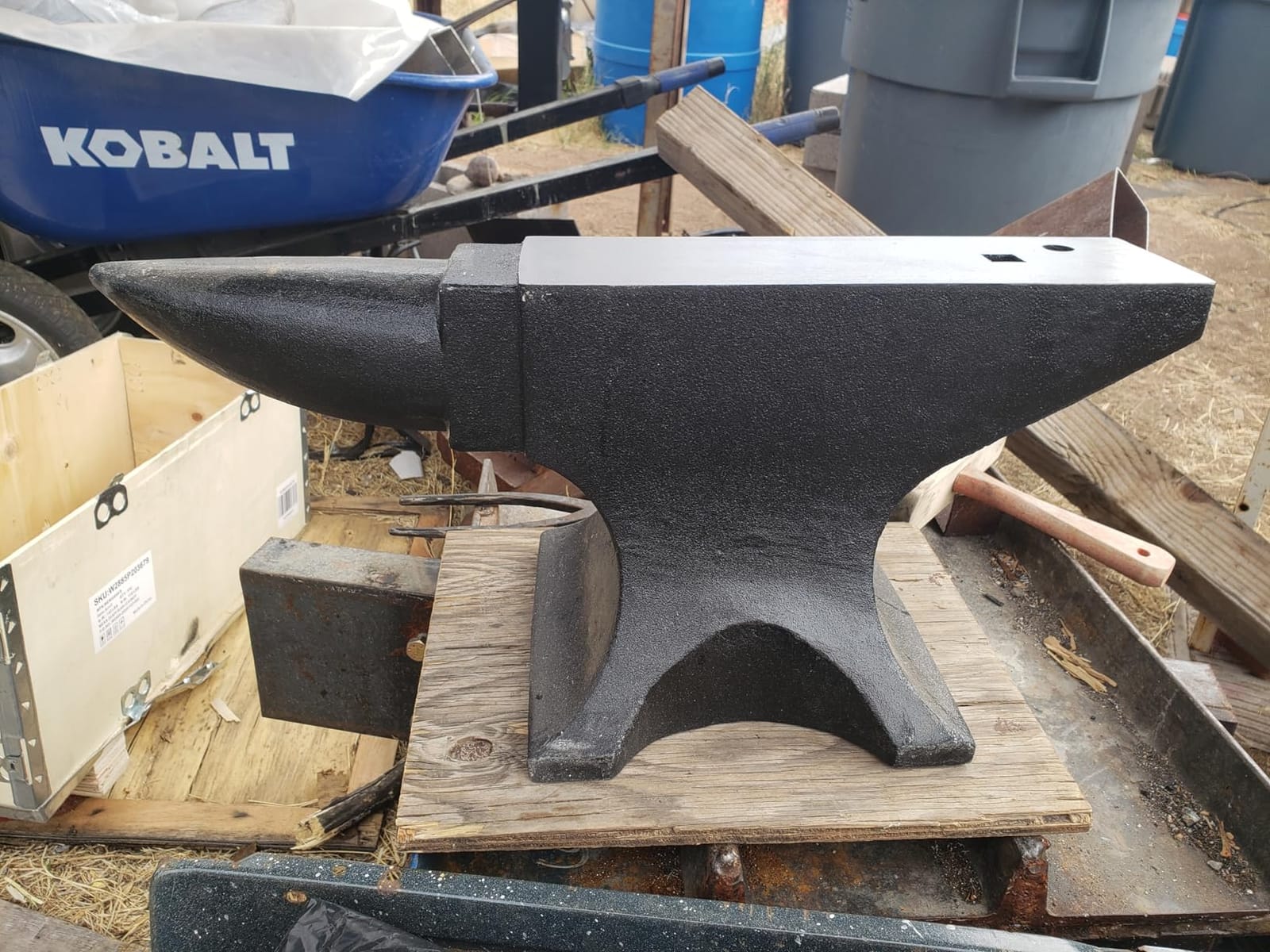
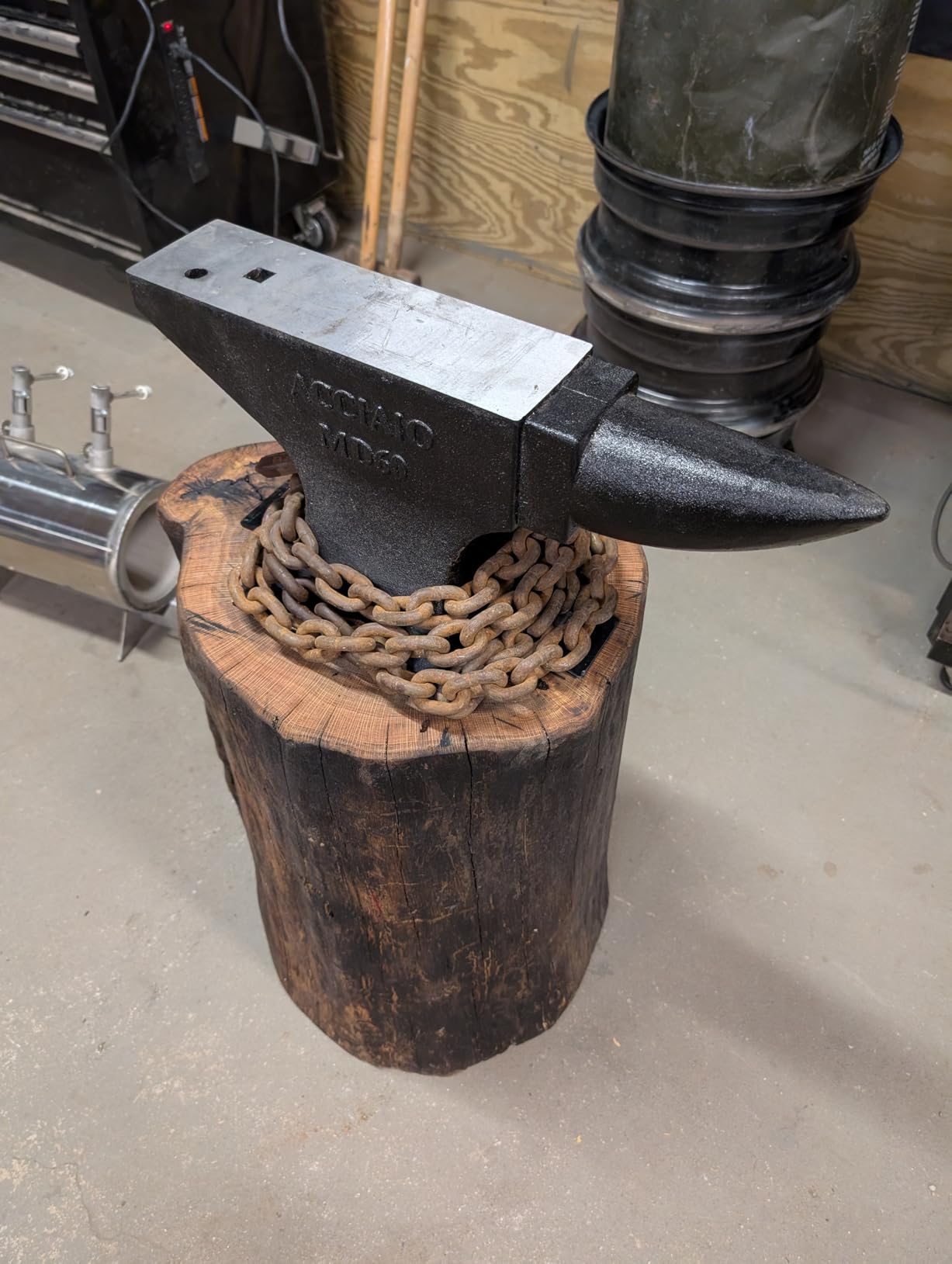
The mix of round holes for punching and shaping and square holes for fixing auxiliary forming tools is genuinely useful for anyone doing repetitive forming work. Filleted corners also give cleaner geometry when you bend or punch than a sharp machined corner would.
Thirty-two ratings is a thin pool, and there are no one- or two-star reviews among them, which means the picture is uniformly positive but lightly tested. Buyers in this weight range are serious hobby and small-shop smiths rather than casual users.
Who this anvil suits
It suits small-shop smiths working heavy bar, or anyone who has already bought heavier hammer work and needs the mass to catch it. Square tool holes also make it attractive for repeat forming operations where a hardy tool stays mounted.
If your shop floor is level and permanent, mounting it at working height is straightforward and it will stay there for a decade.
Who this anvil will frustrate
It will frustrate anyone without a suitable space and mounting plan, because 132 lb cannot be casually moved and the shipping and handling of a casting this size needs planning before purchase. A single-horn design is also less versatile than the double-horn options for shaping work.
And a thin review pool means you are buying on spec rather than on a long public history. That is a real risk on a permanent fixture.
How to Choose an Anvil: Weight, Material, Hardness and Mounting in 2026
How heavy should your anvil be? The 50x rule
Anvil weight should be at least 50 times the weight of your heaviest hammer. That ratio is community doctrine on r/Blacksmith and hobby-machinist, and it is the first thing experienced smiths check when they see a beginner setup.
The reason is energy. A 2 lb hammer carries far more energy than a 1 lb hammer, and if the anvil is not heavy enough to absorb it, the anvil moves, the work slides, and the energy ends up in your wrist instead of the steel. Beginners should add margin on top of the ratio because technique is inefficient early on, and a heavier anvil forgives sloppy strikes rather than punishing them.
As a rough matching table: a 1 lb hammer pairs with a 50 lb anvil or more, a 2 lb hammer wants 100 lb or more, and a 3 lb hammer wants 150 lb. Under 25 lb is bench anvil territory, not forging anvil territory, and treating a 9 lb casting as a forging anvil is the most common first purchase mistake.
Cast iron vs cast steel vs drop-forged steel
Cast iron absorbs hammer energy instead of returning it, and its face dents and marks under real forging blows. That is why experienced smiths say to avoid cast iron, and why the honest use for the sub-25 lb cast iron anvils in this roundup is jewelry, stamping, wire forming and cold work. Cast steel is the right default for almost every hobby blacksmith, because it hits a usable hardness and still gives back a useful share of each blow. Drop-forged steel compresses the grain structure during manufacture, which is why the forged options hold up over decades, and it is the only category here that makes sense as a lifetime purchase. Ductile iron sits between the two and is mentioned regularly on iForgeIron as a sensible middle tier.
What face hardness (HRC) actually means
Rockwell C, written HRC, measures how hard the face is on a scratch scale. Below about 45 HRC the face dents. The 50 to 55 band suits general forging, because the face takes a hit without chipping and still machines cleanly when you dress it. Above 60 HRC you gain wear resistance and lose toughness, which is where chipping and face cracking start to show up on a home anvil that gets unevenly heated.
Two figures in this roundup are worth comparing directly: the 55 HRC drop-forged and cast steel faces against the 50 HRC heat-treated cast steel. Both are sensible. A wider claimed band, such as the 45 to 58 HRC range on a cast iron bench anvil, tells you less about what you will actually receive than a single stated figure does.
Hardy hole, pritchel hole, horn and step
The hardy hole is square and takes tools that sit upright in it, such as hardy tools, fuller stakes and a beak stake. The pritchel hole is round and takes cold chisels and drift punches, which is why it is the hole you reach for when cutting or twisting. Budget anvils sometimes have undersized or conical holes that standard tooling will not fit, so check the size before buying hard tools.
A round horn handles bending and drawing, a flat horn smooths and shapes, and a double-horn layout gives you both. A tapered tail, which is a legacy London pattern feature, is something a few leatherworkers and traditional smiths look for and most modern cast steel anvils omit. A step or cutting table lets you shear hot material without denting the working face, and the 55 lb pick in this guide has a dedicated one.
Anvil stands and mounting: why light anvils shift
Anvils under about 50 lb shift or bounce on a bench during hot work, which wastes blows and tires the arm. The fix is mounting at working height, and mounting is described on the forums as transforming a light anvil into a different tool entirely. A heavy oak stump, a thick timber post or a welded steel stand all work, and the rule of thumb is that the stand should be at least as massive as the anvil.
For light bench anvils that cannot be bolted down, a practical trick shared by readers is to wrap chain around the base on each side to stop it walking. Also remember that listed weight and actual delivered weight are not always the same number, so build the stand after the anvil arrives rather than before.
The free anvil: railroad track and I-beam
Before you spend anything, know that a piece of railroad track or a short length of I-beam on a stump is a legitimate first anvil. It is the answer given most often in the forums for someone starting on a budget, and it teaches every fundamental: rebound, control, reading metal colour and placing blows.
Its limits are real. Track rail is not hardened steel, so the surface deforms and work-hardens rather than taking a clean face, and there is no hardy hole or horn. Treat it as a trainer and a stepping stone, and treat the money you did not spend on it as the budget for a forge, which matters far more to your progress than the anvil does.
Buying a used anvil: inspection checklist and dealbreakers
Used anvils are plentiful, and the secondary market is where serious hobby smiths pick up heritage names like Hay Budden and Kohlswa that appreciate over time. Check for these dealbreakers before you commit: a thin tail that flexes when you tap it, welded repairs anywhere on the body, cracks radiating from the hardy or pritchel holes, and a face that has been ground down unevenly.
For hardness, listen rather than look. Strike the face lightly with a hammer and a bright, long ring means sound hardened steel. A dull, dead thud means the face is either unhardened, work-hardened into a mess, or cracked just below the surface, and a painted or plated face tells you nothing at all about what is underneath. Forum buyers also warn specifically about modern patterns with very thin tails, so put a hand on the tail and judge it before the face.
What a first blacksmithing kit costs in total
Is blacksmithing an expensive hobby to start? Less than most people assume at the entry level. A genuine zero-cost start is a free anvil plus a hammer you already own. A modest start adds a budget bench anvil, a two lb cross peen hammer, tongs, safety glasses and ear protection. A typical hobby kit is a cast steel anvil in the 50 to 70 lb range, a stand, a hammer set, a propane or coal forge, and safety gear.
Shop tier starts when you are buying anvils at 100 lb and above with a dedicated floor space and a proper stand, and that is where the cost curve steepens sharply. The practical advice from the buying guides is to spend on the anvil and the forge, and to buy tools second hand. If you want the matching blade-side kit while you are setting up, our [10 Best Hobby Knife Sets Tested and Reviewed](https://www.exponation.net/best-hobby-knife-sets/) covers what pairs well with a new anvil setup.
Frequently Asked Questions
How heavy should my anvil be for blacksmithing?
Anvil weight should be at least 50 times the weight of your heaviest hammer. A 1 lb hammer wants a 50 lb anvil, a 2 lb hammer wants 100 lb, and a 3 lb hammer wants 150 lb. Beginners should add margin on top of that ratio, because inefficient technique sends far more energy into the anvil than experienced work does.
Are cast or forged anvils better?
For most hobby blacksmiths, cast steel is the right default. Drop-forged steel compresses the grain structure during manufacturing and lasts far longer, which makes it the better long-term investment. Cast iron absorbs energy instead of returning it and dents under real forging blows, so it suits bench work, jewelry, stamping and wire forming rather than hot forging.
Why do blacksmiths tap their hammer on the anvil?
It is a sound test. Striking the face produces a bright, long ring when the steel underneath is sound and hardened, and a dull, dead thud when the face is unhardened, badly work-hardened or cracked just below the surface. On a used anvil it is the fastest way to check condition before you commit, though it tells you nothing about a face that has simply been painted.
What is the best affordable anvil for blacksmithing?
The most recommended budget anvil on blacksmith forums is the Harbor Freight Doyle 65 lb cast steel anvil, valued for functional hardy and pritchel holes and a usable horn. In this roundup the closest equivalent is the VEVOR 22 lb cast steel anvil at a lower weight. The genuinely free starting point is a length of railroad track on a stump, which teaches the fundamentals at no cost.
Is blacksmithing an expensive hobby to start?
Not at the entry level. A railroad track anvil plus an existing hammer costs nothing. A modest setup adds a budget bench anvil, tongs, safety glasses and ear protection. A typical hobby kit pairs a cast steel anvil in the 50 to 70 lb range with a stand, hammers and a propane or coal forge, and costs climb steeply once you buy anvils above 100 lb for a dedicated shop.
Final Verdict: Which Anvil Should You Buy?
For most people reading this, the answer is the VEVOR 22 lb cast steel double-horn anvil. It is the smallest mass in the guide that still returns energy properly, it carries a 55 HRC face with both a hardy and a pritchel hole, and it is light enough to reposition while you are still figuring out where your anvil belongs. It is our pick among the best anvils for hobby blacksmithing because it does not force an early commitment to a permanent shop.
If your work is jewelry, stamping or light forming rather than forging, buy the Olympia Tools 9 lb and save the difference for a forge. If you are already forging regularly with a 2 lb hammer, move up to the 55 lb or 70 lb class, where the anvil stops moving and the work starts moving instead.
Start with the free railroad track anvil if you are not sure this is the hobby for you. Come back to this list when you know you want a real anvil, and you will pick the right weight the first time.