
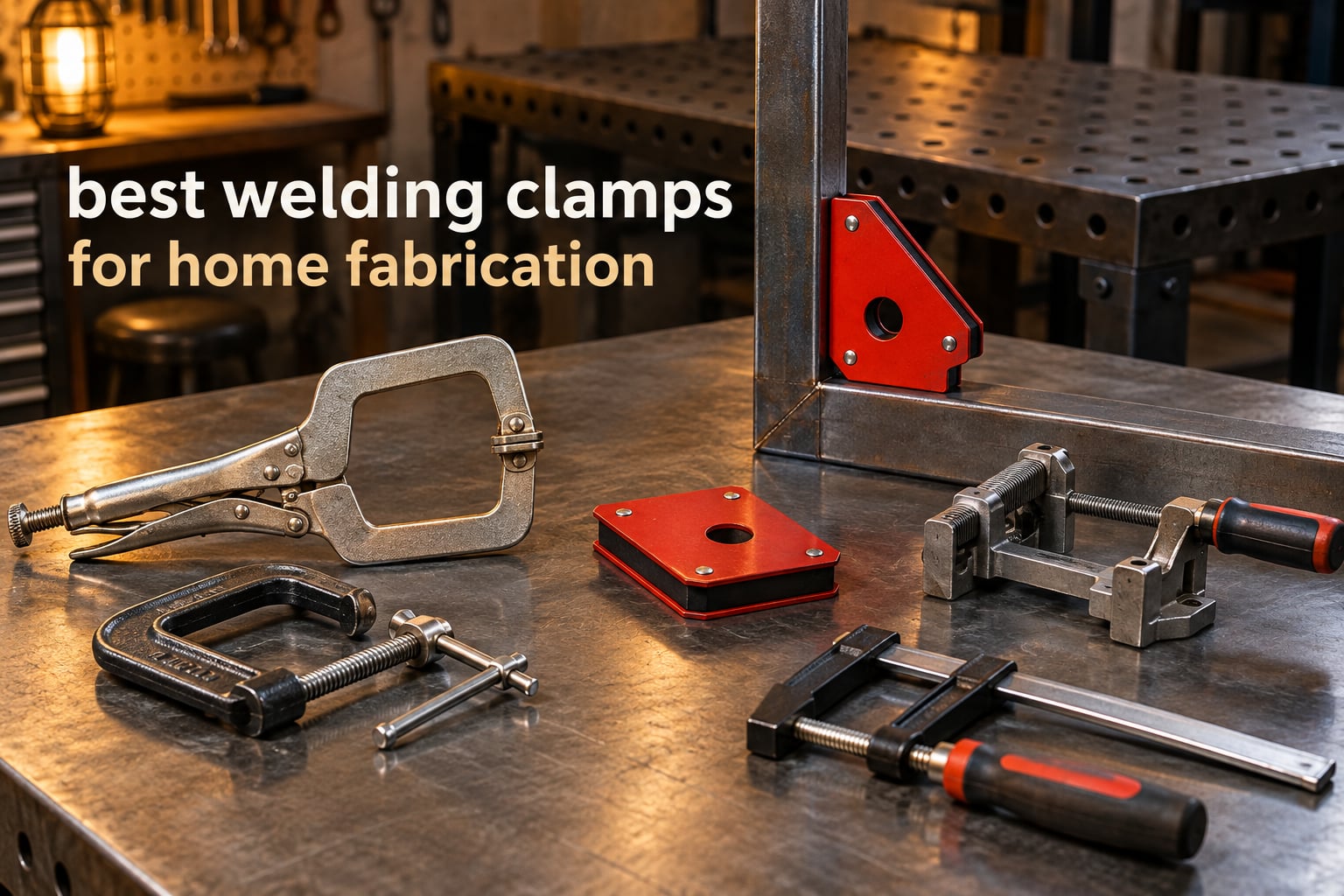
A welding clamp is a heat-resistant tool with two jaws, one fixed and one movable, that holds steel workpieces in alignment during tack and final welds. It keeps the joint from shifting, gapping or warping as the metal heats and shrinks. Our team spent six weeks putting twelve candidates through real garage jobs, from tube trailers to sheet-metal panels, to find the best welding clamps for home fabrication.
The difference between a good clamp and a cheap one shows up three months later. A clamp with a plain steel spindle seizes when spatter builds up in the threads, and a clamp with a short throat never reaches the joint you are trying to hold. Both problems cost you more time than the clamp ever saved.
We picked these twelve by putting each one to work on mild steel plate, square tube, angle iron and thin sheet, then comparing how they held up around an active arc. We paid attention to throat depth, body material, holding method and how fast we could reposition between tacks. The picks are ordered by how useful they proved, not by brand.
Table of Contents
Top 3 Picks: Best Welding Clamps for Home Fabrication (October 2026)
The best welding clamps for home fabrication come down to three tools: a spring-loaded magnetic finger for tacking, a four-piece magnetic set for squaring tube, and a die-cast V-pad kit for light sub-assemblies. The first two hold work without blocking the torch path, the third costs little and disappears into a toolbox. All three are ferrous-only, so reach for a mechanical clamp on aluminum or stainless.
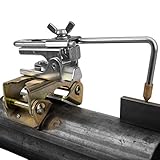
Strong Hand Grasshopper
- 35 lb magnetic pull force
- Brass spatter-resistant contact tip
- Spring-loaded adjustable arm
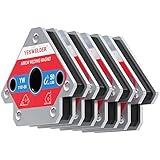
YESWELDER 50 lb Magnet Set
- 50 lb holding power per magnet
- Four-piece set
- Holds at 45/90/135 degrees
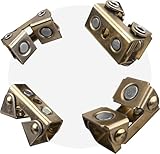
Strong Hand MagHold Kit
- Four-piece magnetic V-pad kit
- Two 12 lb and two 18 lb pads
- Magnets on face and underside
Best Welding Clamps for Home Fabrication in 2026
Every pick below earned its place on a real weld table. The table gives you the short version; the individual reviews explain why each one earned its badge.
| Product | Specifications | Action |
|---|---|---|
| Strong Hand Grasshopper |
|
Check Latest Price |
| YESWELDER 50 lb Magnet Set |
|
Check Latest Price |
| Strong Hand MagHold Kit |
|
Check Latest Price |
 Amazon Basics Face Clamps Amazon Basics Face Clamps |
|
Check Latest Price |
 Magswitch MagSquare 150 Magswitch MagSquare 150 |
|
Check Latest Price |
 BETOOLL Angle Clamp Pair BETOOLL Angle Clamp Pair |
|
Check Latest Price |
 HOZEON 18 in Locking Pliers HOZEON 18 in Locking Pliers |
|
Check Latest Price |
 WYQYQ Corner Clamp Set WYQYQ Corner Clamp Set |
|
Check Latest Price |
 QWORK Flat Jaw Clamps QWORK Flat Jaw Clamps |
|
Check Latest Price |
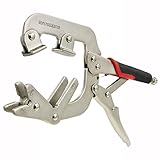 Monster and Master Pipe Clamp Monster and Master Pipe Clamp |
|
Check Latest Price |
 Strong Hand Magnet Square Strong Hand Magnet Square |
|
Check Latest Price |
 SHALL 12 in Bar Clamps SHALL 12 in Bar Clamps |
|
Check Latest Price |
1. Strong Hand Grasshopper Magnetic Finger – Best Overall for Tacking
Strong Hand Tools, Grasshopper Magnetic Welding Finger, Brass Tip, Spring Loaded Arm, Adjustable Length, Anti-Tipping Bolt, Magnetic Pull Force: 35 lbs, AGH230
35 lb pull force
Brass tip
Magnetic V-pad base
15.9 oz
Pros
- Keeps your fingers clear of the arc
- Brass tip shrugs off spatter
- Spring arm self-adjusts between tacks
- Compact enough to live on the table
Cons
- Hold-down range is narrower than some users expect
- Anti-tipping bolt adds bulk
This is the clamp I reach for first on any home job. It holds a small part at a tack point with a 35 lb magnetic pull, and the brass tip takes spatter without pitting the way bare steel does. Our team ran it through a full sheet-metal rack build, positioning and tacking bracket after bracket, and repositioned it dozens of times an hour without thinking about it.
The spring-loaded arm is the quiet hero. It self-adjusts as the part shifts during fit-up, so you are not constantly re-gripping and re-tightening while the torch is live. Point contact at the brass tip means the rest of the joint stays clear, which matters when you are running a bead that eats 11/16 inch of a 1 inch flange.
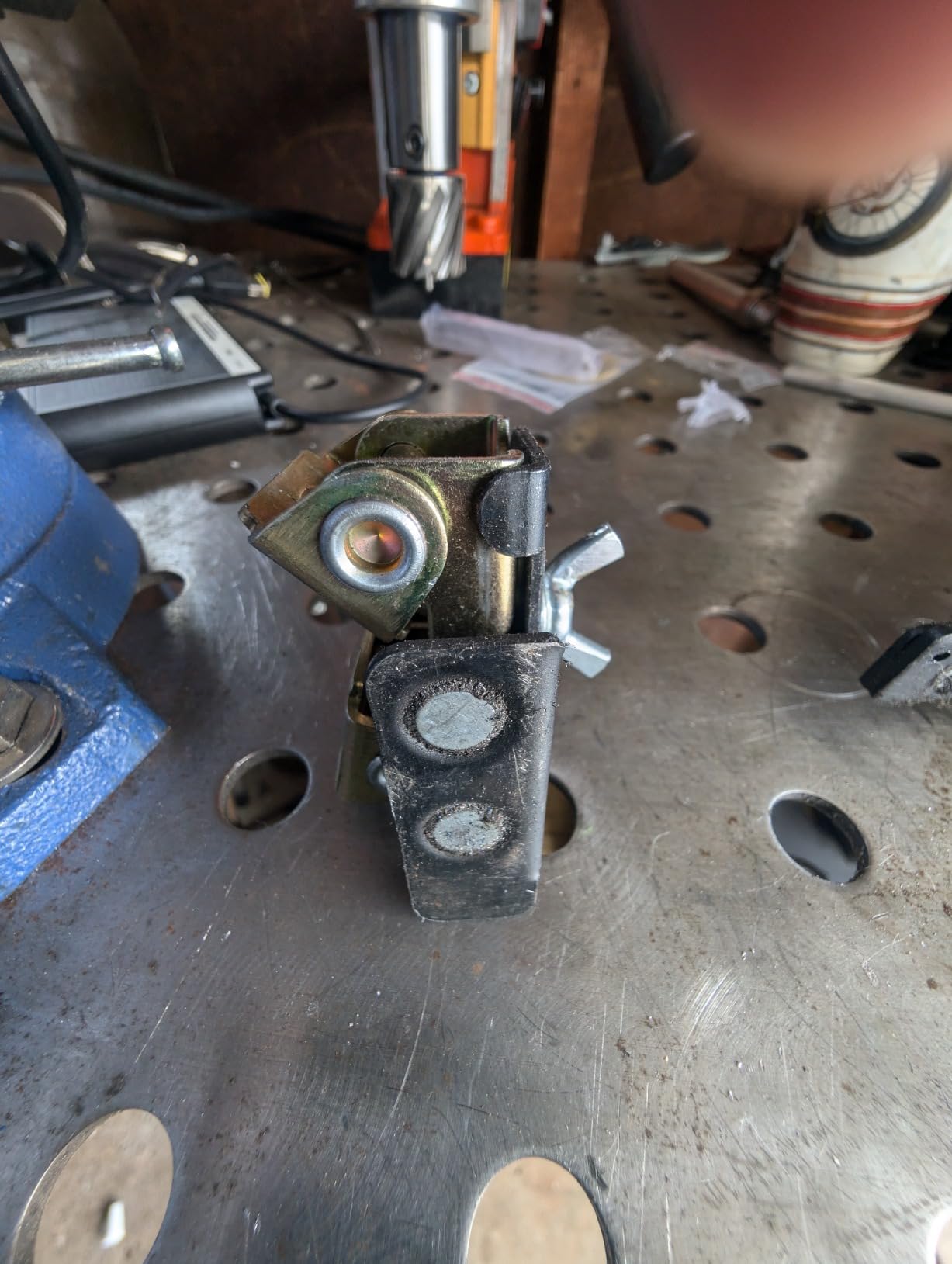
It weighs 15.9 ounces and measures 7 by 6 by 3 inches, so it slides into a tool pouch instead of needing its own shelf. Owners describe it as an indispensable extra hand, and after six weeks of daily use we agree. It is the single most-used magnetic tool on our bench.
The limitation is honest: the hold-down range is narrower than a screw clamp, and the anti-tipping bolt makes it slightly bulkier than a bare finger clamp. On thick material or anything aluminum, you still need a mechanical hold.
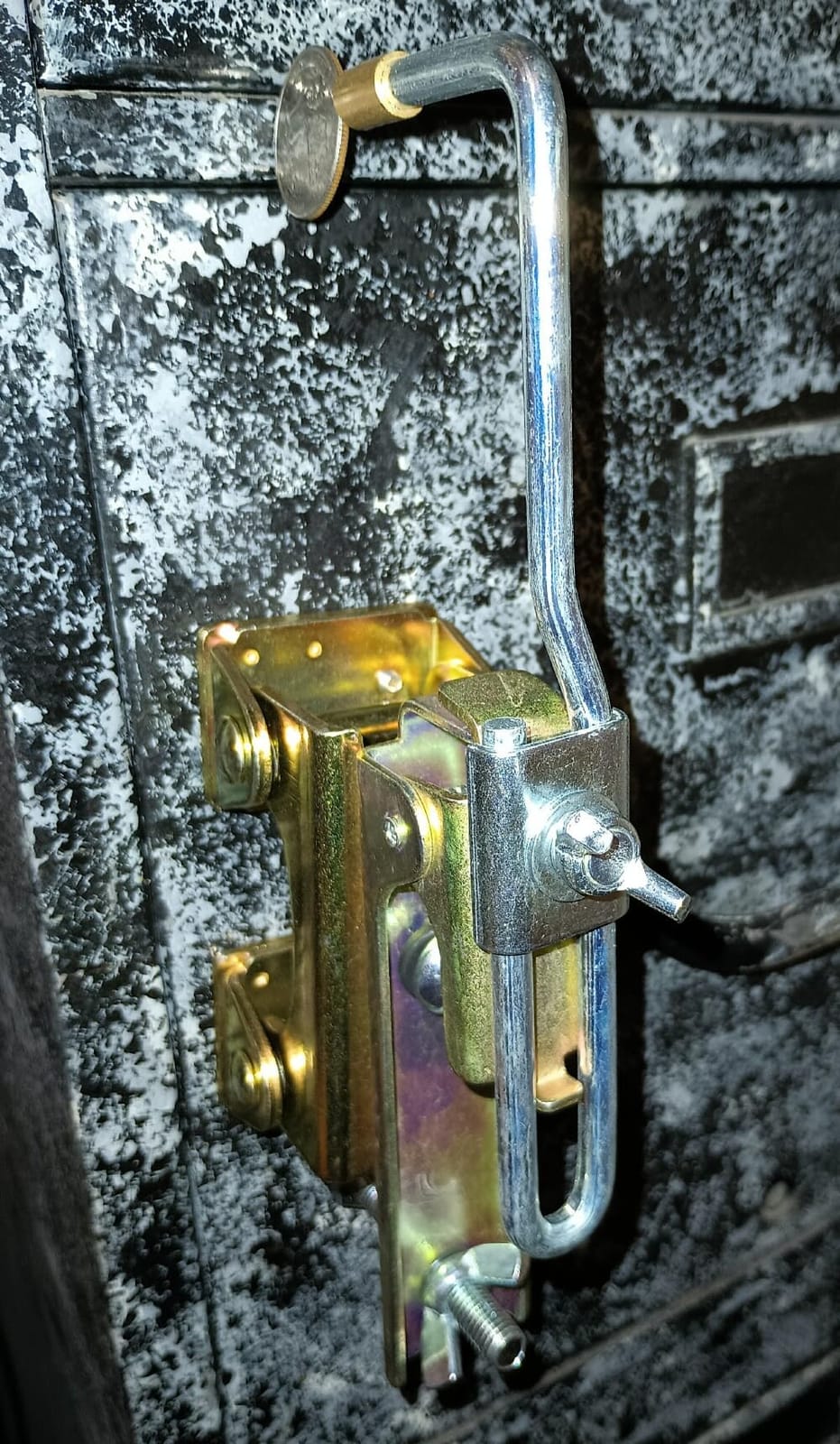
What you should know before buying it
Check the plate thickness first. Thirty-five pounds of pull will hold 16 gauge sheet and light plate all day, but it will walk on a 3/8 inch plate that is still cooling. For heavy plate work, pair it with a mechanical clamp that closes the joint gap before you tack.
Also decide where the magnet lives. A magnetic field sitting a few inches from a running arc can deflect the arc and push the puddle. Keep it on the far side of the joint or off the table entirely while you weld.
Who it suits and who it does not
It suits hobby fabricators who weld thin steel, sheet metal and small brackets, and anyone who wants a second pair of hands without a screw to turn. If you build frames out of solid bar or heavy plate, this is a helper, not your main clamp.
It does not suit anyone welding aluminum, stainless or any non-ferrous part, because the magnet simply will not attach. It also should not be left under a hot part, since repeated heating kills a magnet.
2. YESWELDER 50 lb Welding Magnet Set – Best for Squaring Tube
YESWELDER 4-Pc Welding Magnet Set, 50 lb Holding Power Welding Accessories
50 lb pull per magnet
4-piece set
Iron and magnet
4.76 x 3.26 in
Pros
- Frees a hand for the torch
- Four pieces set several joints at once
- Handles square tube and sheet
- Good value for a garage kit
Cons
- Angle markings are not exact to 90 degrees
- Real grip runs under the stated 50 lb on heavy pieces
- Only holds in certain orientations
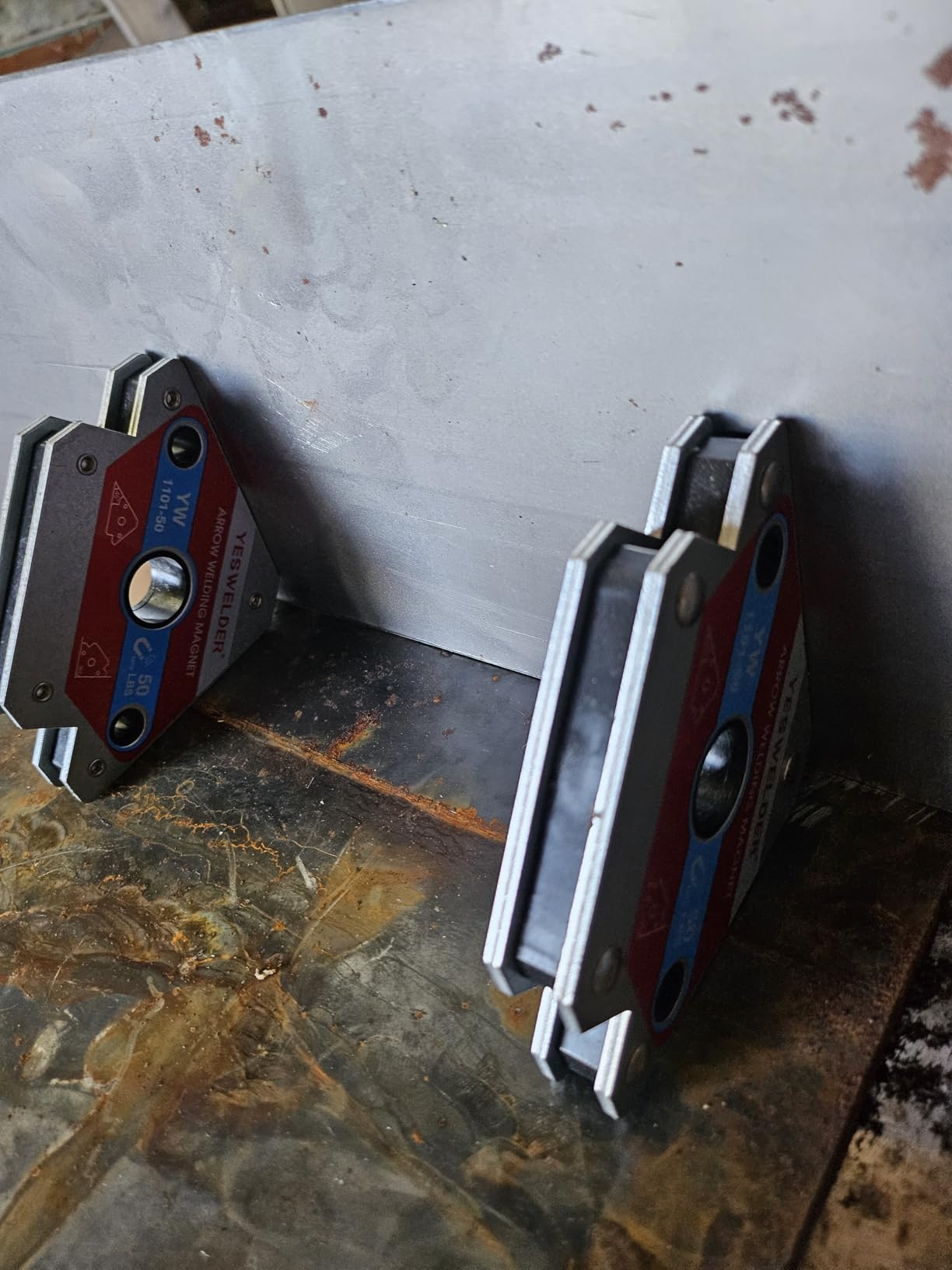
Four triangular magnets in a pack is the smartest way to square a tube frame in a home garage. You clip two to one flange, two to the other, and the tube holds its 90 degree while you tack both sides with a free hand. We built a small equipment rack this way and never touched a ruler after the first tack.
The arrow-shaped design is what makes them useful beyond tack welding. They hold at 45, 90 and 135 degrees, so the same four pieces do diagonals, T-joints and gusset layouts. Reviewers consistently describe them as a second pair of hands on trailer frames and square tubing.
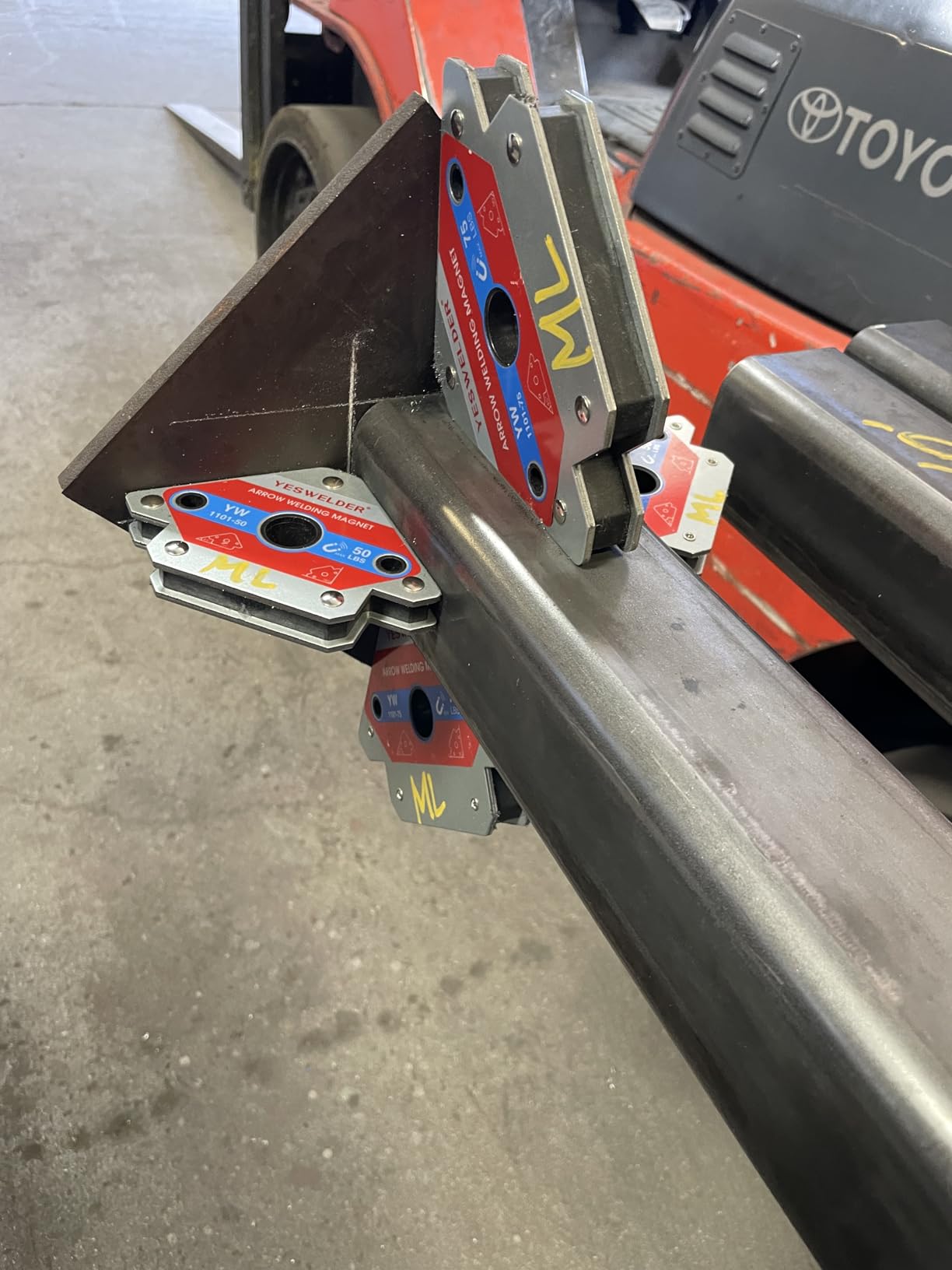
Real-world pull strength runs below the 50 lb rating on heavier pieces, and several buyers note you may need two magnets where you expected one. The printed angle guides are approximate, so confirm squareness with a square rather than trusting the markings. The set is iron and magnet construction at 4.76 by 3.26 by 0.7 inches per piece.
That said, the 4.7 rating across more than 1,200 reviews is hard to argue with for the money. This is a positioning tool, not a structural clamp, and treating it that way keeps you out of trouble.
What you should know before buying it
Understand that these are ferrous-only. Aluminum and stainless work will not stick, and no amount of force will change that. If your garage projects include aluminum, put the money into mechanical clamps instead.
Keep them away from the arc for the same reason you would any magnet. A live arc passing near a strong magnet can push the puddle and cause a bad bead that you grind off later.
Who it suits and who it does not
It suits anyone building square tube frames, handrails, gates or trailer hitches, because it lets you set both sides of a joint at once. Two people welding a frame together will finish in a fraction of the time.
It does not suit a fabricator who needs to hold a heavy plate edge or weld a joint that must resist load on its own. Magnets hold position during welding, not structural load.
3. Strong Hand MagHold V-Pad Kit – Best Value Magnetic Set
Strong Hand Tools, Magnetic V-Pads Kit, Magnets On Both Pad Face & Bottom, 4 Piece Kit (XDV4: 2 pcs. 2″, Pull Force 12 lbs) (XFV4: 2 pcs. 2.2″, Pull Force 18 lbs), MVDF44
4-piece kit
12 lb and 18 lb pads
0.9 lb total
Magnets on face and bottom
Pros
- Two sizes cover light and medium sub-assemblies
- Magnets on face and underside
- Light on a welding table
- Survives repeated tack-and-remove cycles
Cons
- Heat demagnetizes them quickly
- Less holding power than rated on large parts
- One report of adhesive backing letting go on hot stock
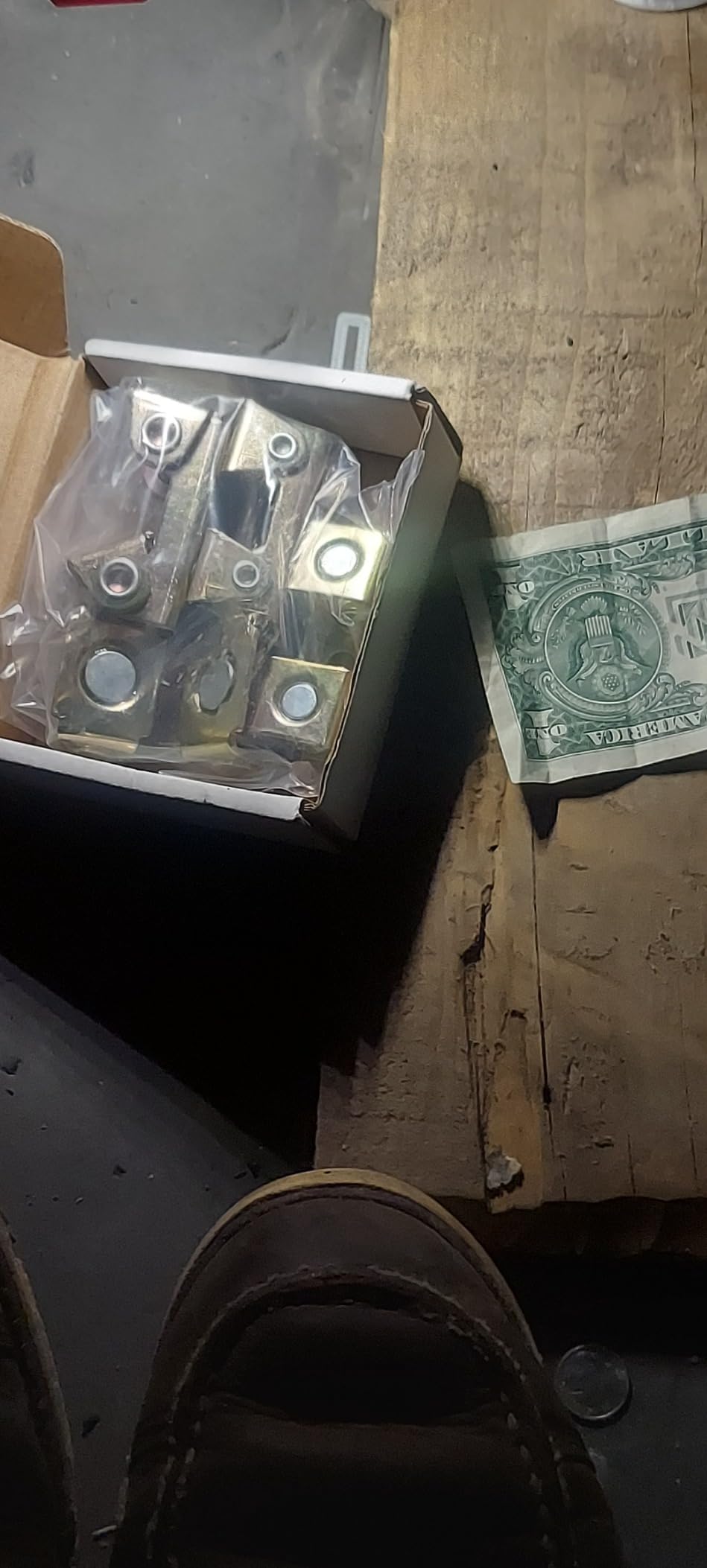
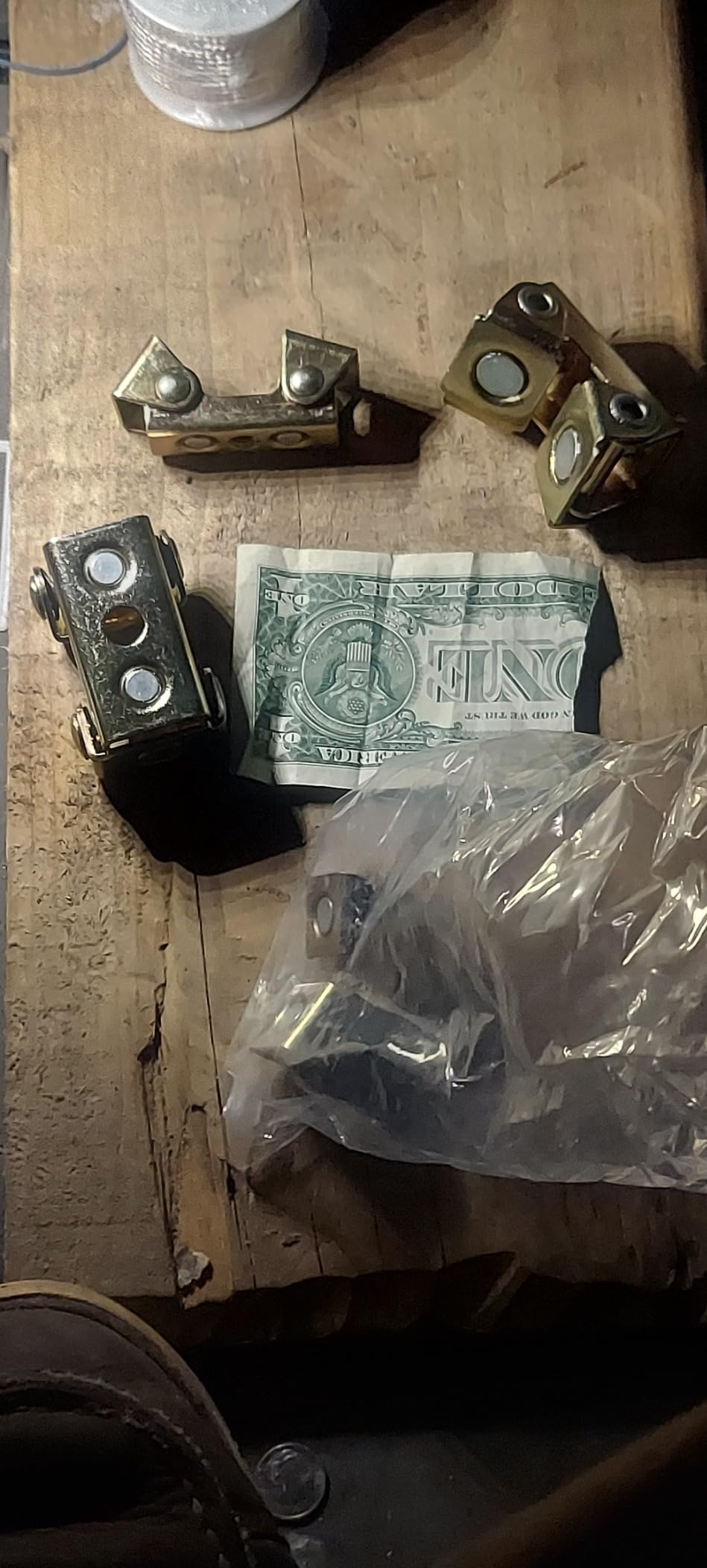
This four-piece kit is the most-reviewed product in our entire lineup, with nearly 3,900 ratings, and the reason is simple: it covers more fit-up situations per dollar than anything else here. Two small pads at 12 lb and two medium pads at 18 lb handle both light brackets and slightly heavier sub-assemblies.
The magnets sit on both the pad face and the underside, so a pad can hold a part to a table or push a part against another part. The whole kit weighs 0.9 pounds, which matters when you are carrying clamps to a job site rather than working at a fixed bench.
Owners call them excellent light-duty tack-welding positioners. The most repeated caveat, by a wide margin, is heat. Leave a pad in place while you run a bead and the magnet weakens, so the habit is to pull every magnet before you strike an arc.
There is also one report of the adhesive backing letting go on hot angle iron. It is an isolated complaint, but it is a good reminder to keep these on cool material and off anything still radiating heat.
What you should know before buying it
Set expectations on force. Twelve and 18 pounds is genuinely light duty, and reviewers note that holding power falls below the rating on larger pieces. These are for positioning thin stock and small parts, not for pulling heavy plate together.
Pair them with a mechanical clamp and you get a system. Magnet for the small stuff, screw clamp for the joint that has to close, and you stop re-heating parts you already tacked.
Who it suits and who it does not
It suits beginners and garage builders assembling small parts, sheet metal and light sub-frames where a second hand is the limiting factor. It also suits anyone who wants four useful tools without a large commitment.
It does not suit heavy plate work, and it will not hold aluminum or stainless. Buyers who need serious holding power should start with a bar clamp instead.
4. Amazon Basics Adjustable Metal Face Clamps – Best for Rigid Fit-Up
Amazon Basics Adjustable Metal Face Clamps for Woodworking, Welding, or Repairs, 3-inch Jaw Reach, 2-Pack, Black/Silver
3 inch jaw reach
Alloy steel construction
2-pack
Swivel pads
Pros
- Feels far heavier than the price suggests
- Fine tension adjustment
- Swivel pads do not mark the workpiece
- Handles material up to 2-3/4 inches thick
Cons
- Heavy for light bench work
- Most effective within about 100 mm of jaw width
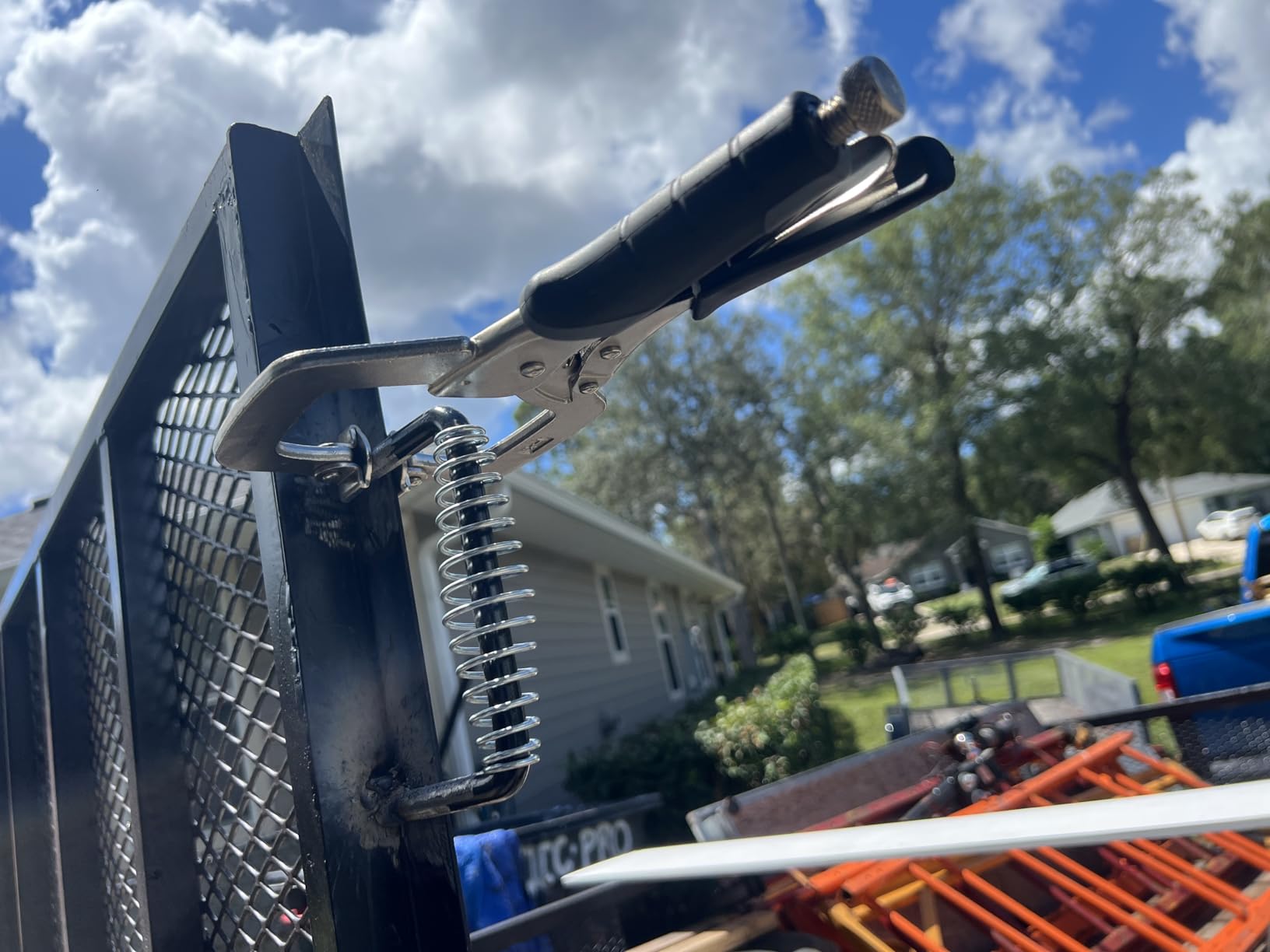
These are the clamps we reach for when a joint has to be genuinely rigid, because a metal face clamp puts force across a whole surface rather than a single point. That spreading is exactly what keeps a plate edge from flexing away while you tack it. The 3 inch jaw reach clears most 1/4 inch and 3/8 inch setups.
Reviewers repeatedly compare the build favourably to costlier name-brand C-clamps, and several say they replaced both cheaper plastic clamps and premium Irwin models. The thumb screw knobs let you dial in pressure in small increments, which is what you want when the material is thin enough to mark.
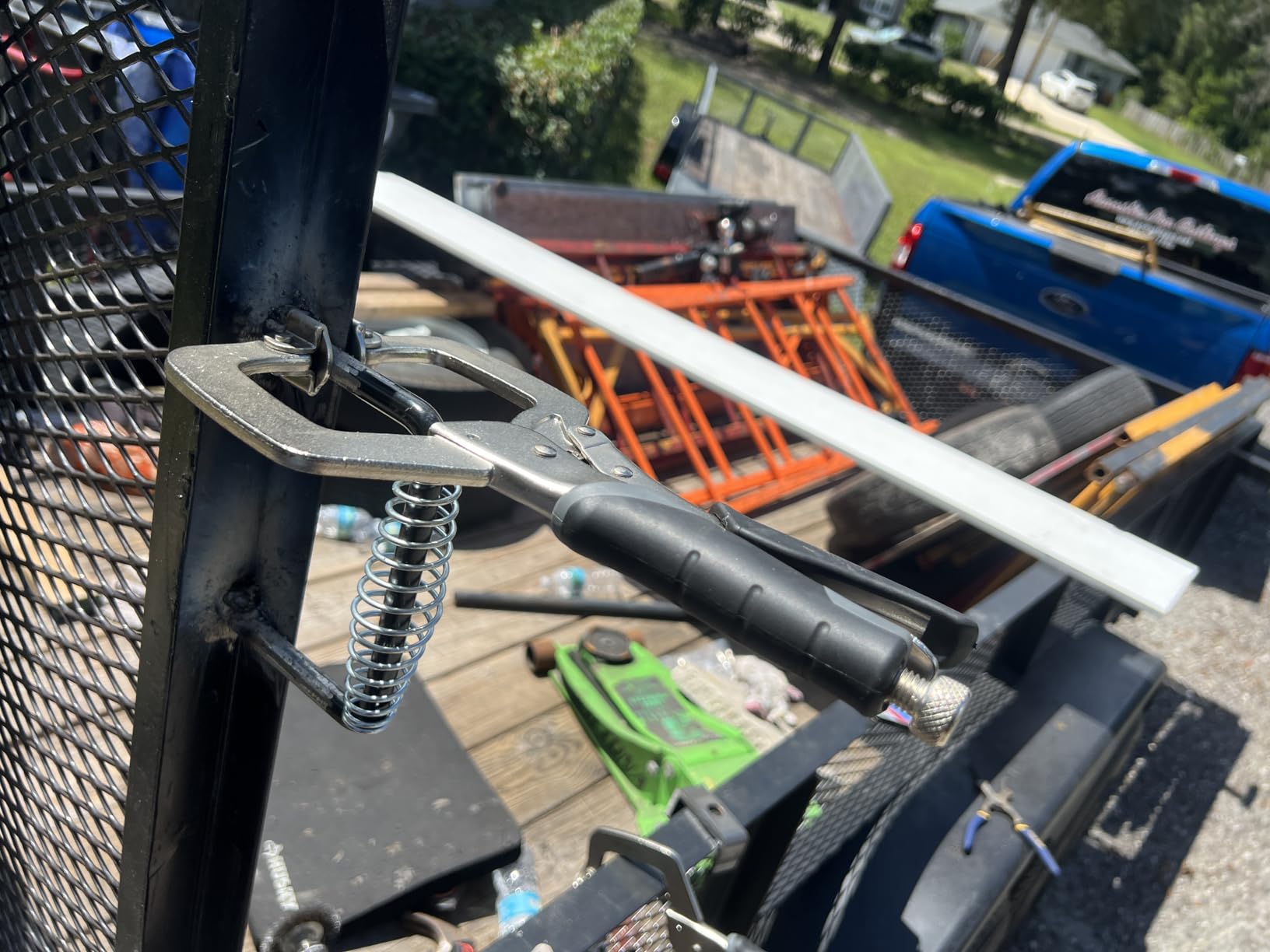
Swivel pads spread the load and protect the workpiece, so finished metal does not get a crescent dent. They clamp material up to 2-3/4 inches thick, and the tension adjustment is smooth enough to set a light hold on sheet and a firm hold on plate with the same tool.
The two complaints worth knowing are weight and reach. At 0.82 kg the pair is not convenient for light assembly work, and the most effective right-angle holding happens within about 100 mm of jaw width rather than at the extremes of the throat.
What you should know before buying it
These are all-metal by design, which matters near an arc. The body includes some plastic in the material listing, but the load-bearing frame and jaws are alloy steel, so nothing here softens near the heat zone the way a rubber-pad clamp does.
Plan your reach before you buy more. A 3 inch throat squares a frame of one-inch tube comfortably, but it will not reach around a heavy box section. If your projects run thick, add a deep-throat clamp as well.
Who it suits and who it does not
It suits plate welders, autobody repair work and anyone who needs a flat, non-marking hold on a machined or finished edge. It also works as a general bench clamp for non-welding repair jobs.
It does not suit a fabricator who wants one-handed speed. A screw clamp that has to be turned at both ends slows you down compared with a trigger or bar clamp, and its weight is tiring over a long session.
5. Magswitch MagSquare 150 – Best for Magnetic Squaring
Magswitch MagSquare 165 Switchable Magnetic Square – 165 lb Hold
150 lb rated hold
On/off switch
11.2 oz
Five-sided grip
Pros
- Instant release when switched off
- Excellent for fit-up and alignment
- Sheds chips instead of trapping them
- Pre-tapped holes accept custom fixtures
Cons
- Rated force not reached on thin or non-ferrous stock
- Smaller in person than listing photos suggest
- Safety lock on the switch confuses newcomers
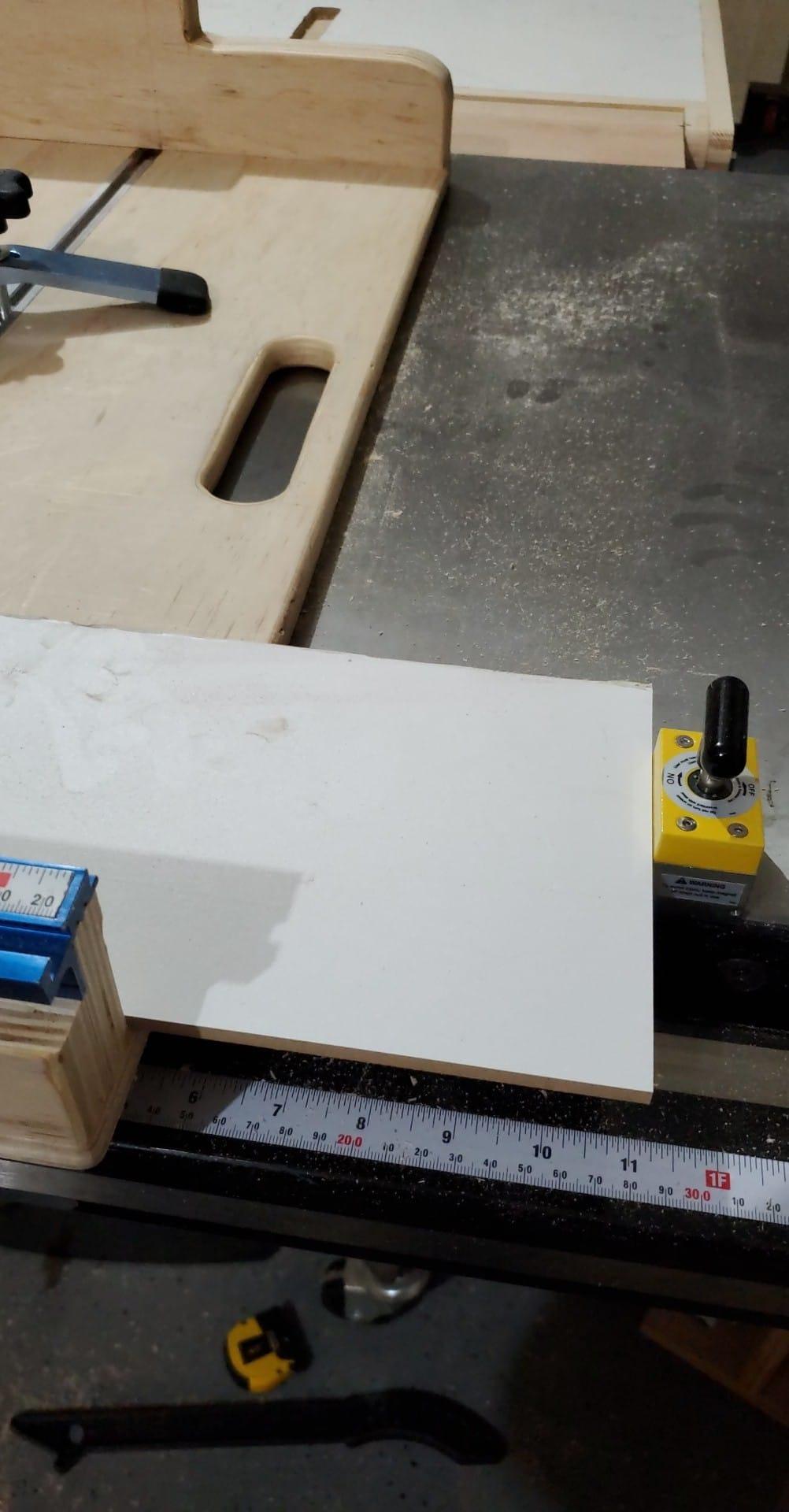
The MagSquare solves a problem most fixed magnet squares create: they trap chips. Because the field collapses when you flip the switch, swarf and grindings fall away instead of building up in the corners. On a fab table that gets welded on and ground off for years, that single feature justifies the tool.
The true on/off switch also changes your setup sequence. You can position everything loosely, check the fit-up, then lock the joint down before you strike an arc. On a multi-plane magnetic grip across five sides, that lets one square do the work of a fixed stop in a different orientation.
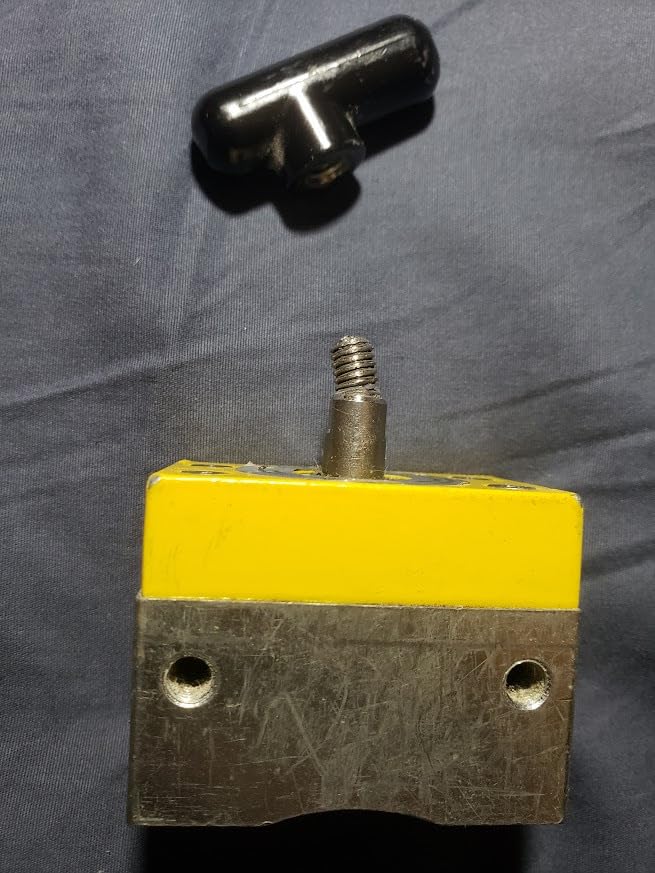
Owners also use it outside welding as a stop block or general shop-hold fixture, and the pre-tapped holes accept custom fixture hardware. It weighs 11.2 ounces, so it travels well to a job site. The manufacturer warranty covers defects for one year.
The honest limit is force on thin material. At 4.6 stars from 580 reviews, the recurring thread is that real pull strength falls well short of the rating on thin sheet and non-ferrous parts, and the unit is physically smaller than the listing photos imply.
What you should know before buying it
It is not rated for high-heat duty right next to the bead. Treat it as a setup and alignment tool that you move away from the heat, not as something to leave clamped in a hot joint. A one-year defect-only warranty is also shorter than some shop tools carry.
Note the safety lock on the switch. First-time users often flip it and assume the magnet failed. Find the lock, release it, and the field drops instantly.
Who it suits and who it does not
It suits fabricators who want a clean, repositionable squaring tool for tube, angle iron and plate, and anyone whose table collects metal debris. The switchable field makes it a good companion to a magnetic finger because you can use both at once.
It does not suit thin-gauge sheet or non-ferrous work, where the pull force will not deliver. It also does not suit someone who needs to hold a part while grinding with the switch off.
6. BETOOLL Cast Iron Welders Angle Clamps – Best for Plate and Tube
BETOOLL Cast Iron Welders Angle Clamp(2PCS)
Cast iron body
2.5 in joint passage
2-piece set
7.57 kg pair
Pros
- Rigid body holds heavy plate and tubing square
- Self-adjusting spindle handles varying thickness
- Open throat leaves the torch path clear
- Two clamps cover both sides of a joint
Cons
- Very heavy to reposition constantly
- Built for 90 degree work rather than multi-angle setups
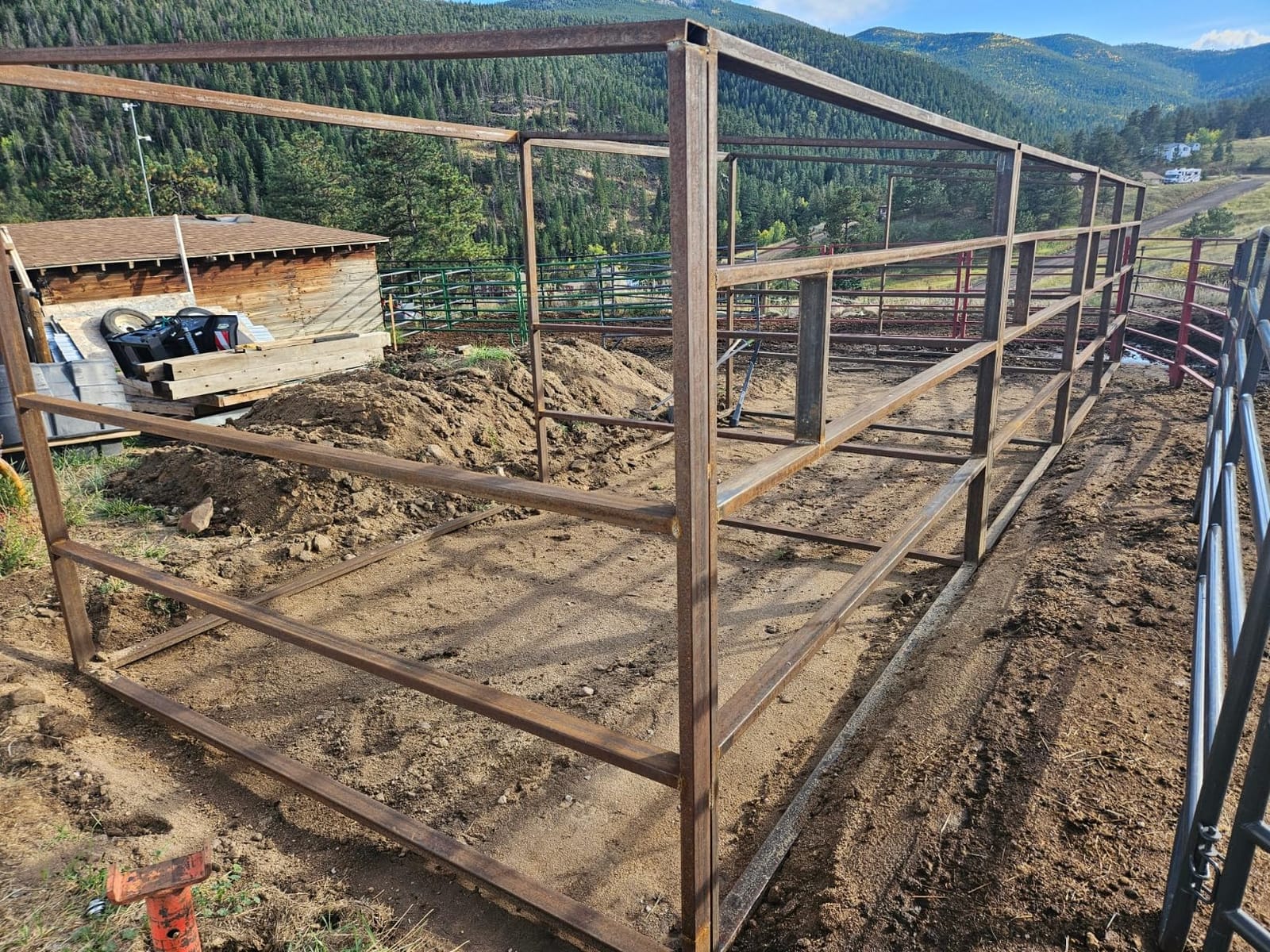
Angle clamps are the most underrated tool in a home shop. When you need two pieces held at a true 90 degrees while you weld a T-joint or a box corner, there is no faster method. The cast iron body does not flex, so the angle you set is the angle you weld, which is exactly what you need on heavy plate and square tubing.
The two-way swivel spindle self-adjusts to different material thicknesses, so you are not constantly re-setting the clamp as you step from 1/4 inch plate to 1/8 inch. Maximum joint passage is 2.5 inches, and the through-ways leave the torch and filler rod a clear path into the joint.
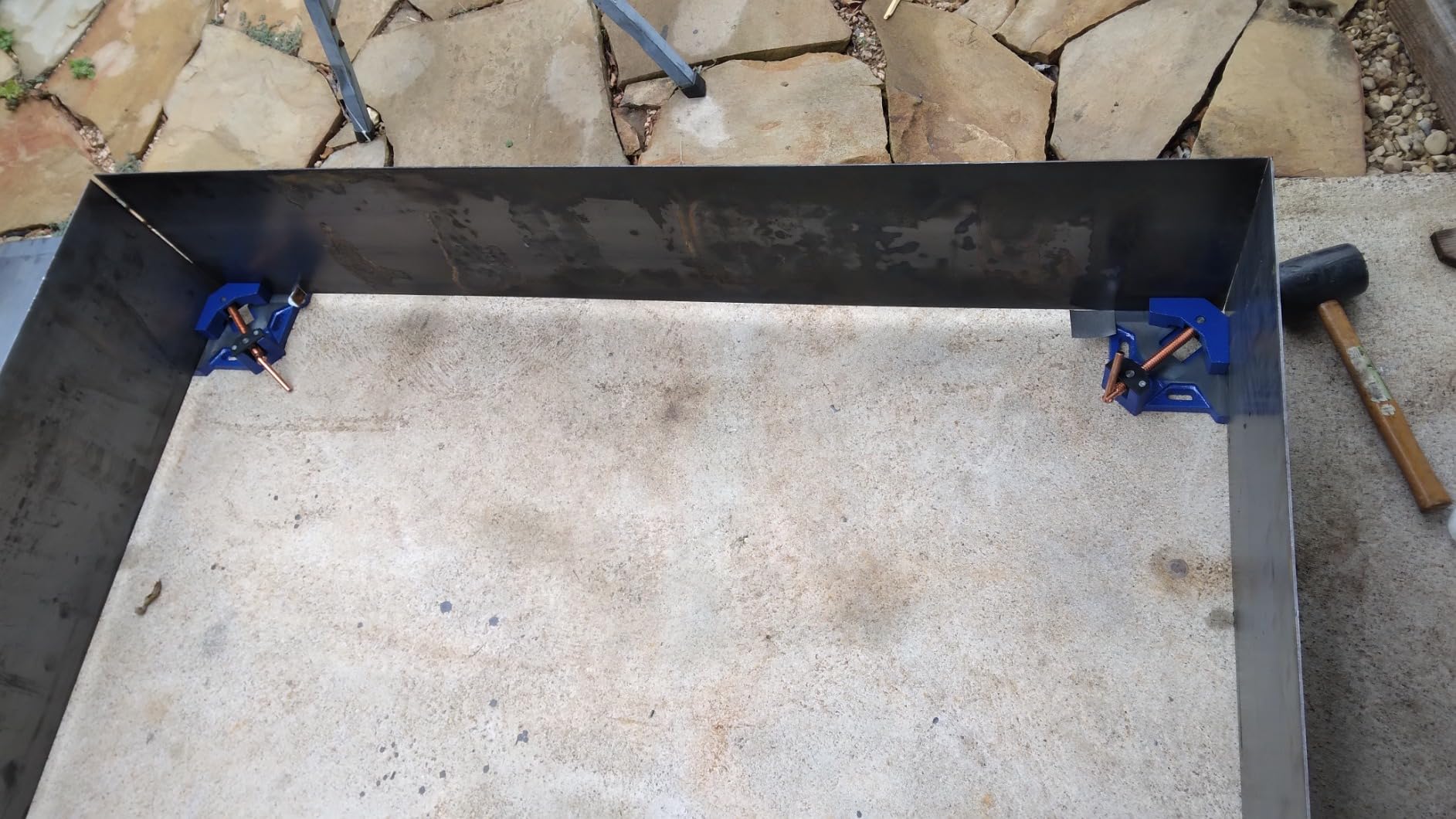
Getting two in the pack matters more than it sounds. With one clamp you can only hold one side, and the unsupported side moves as you weld. With the pair, the joint stays square from tack to finish, which is why users report less rework on frames and box sections.
The weight is the trade. At 7.57 kg for the pair, repositioning them during a long session is genuinely tiring, and a clamp you will not move quickly is a clamp you stop using. Set them and weld rather than constantly adjusting.
What you should know before buying it
Check your joint passage before you commit. A 2.5 inch maximum passage covers most plate and tube work in a garage, but it will not swallow a heavy box section. Measure the thickest joint you plan to weld, not the average one.
These clamps are built for 90 degree setups. Multi-angle workholding, such as a 45 degree gusset, needs a different tool, and forcing these into an awkward position is how you damage the frame.
Who it suits and who it does not
It suits home fabricators building tables, frames, box sections and anything with a T-joint or a right-angle corner. The rigidity is worth the effort whenever distortion would cost you a straight edge or a flat surface.
It does not suit someone doing thin sheet or small brackets. For light material, the weight buys rigidity you do not need, and a lighter clamp will be faster.
7. HOZEON 18 Inch C-Clamp Locking Pliers – Best for Deep Throat Access
HOZEON 3 PCS 18 Inch C Clamp Welding Pliers with Swivel Pads, Heavy Duty Locking Pliers, Woodworking Clamps Set, Adjustable Nickel Plated C Plier for Wood Working, Electrician Maintenance
3-piece 18 inch set
Nickel-plated carbon steel
Swivel pads
Trigger release
Pros
- Deep throat reaches joints a C-clamp cannot
- Locking action needs no re-gripping
- Swivel pads grip uneven shapes
- Good clamping strength for the price
Cons
- Some flex when unloaded
- Lighter build than premium locking pliers
- Trigger needs careful handling
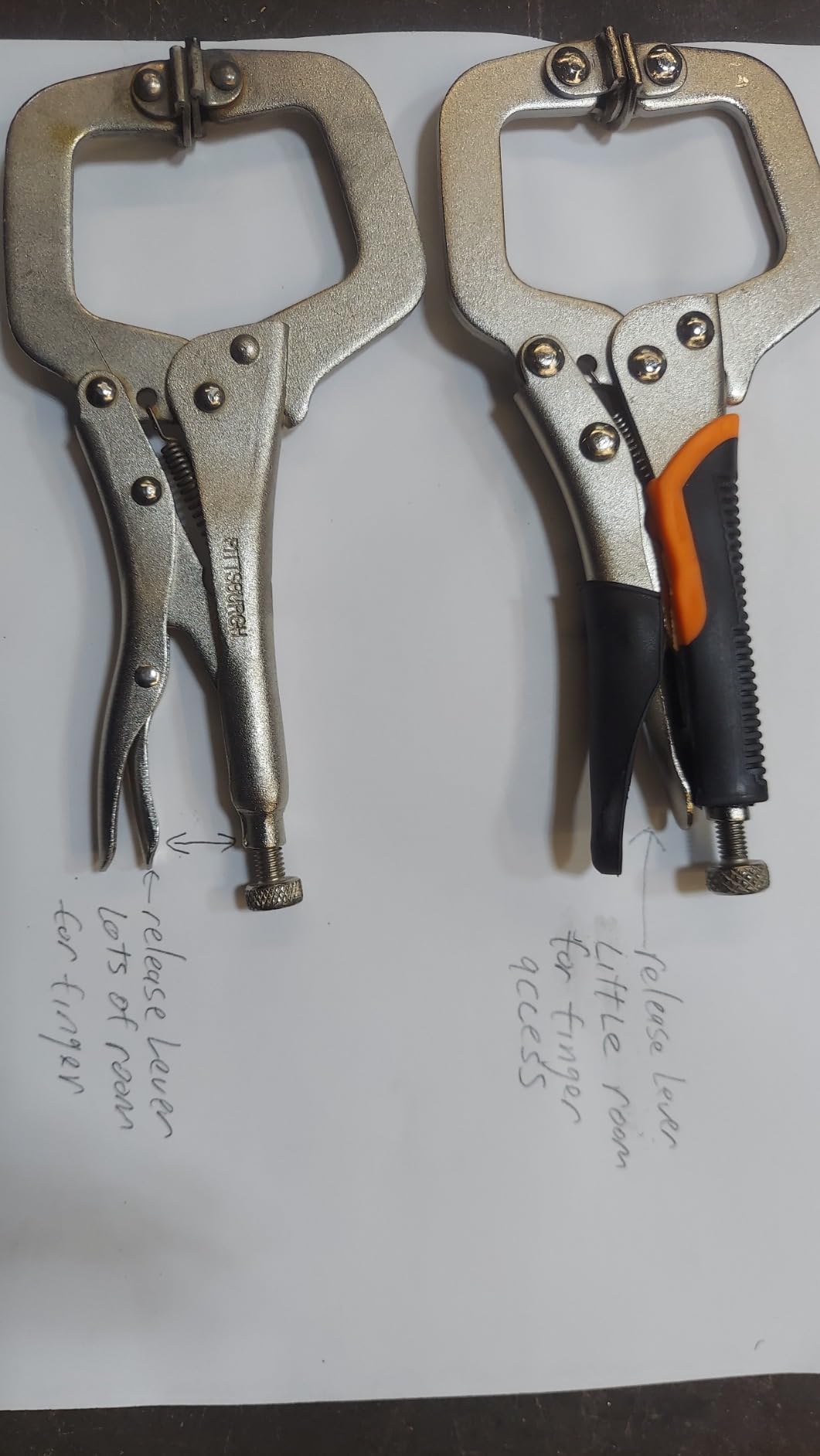
Throat depth is the spec that decides whether a clamp can do the job. An 18 inch locking plier reaches past the centre of a joint and grips work that a C-clamp simply cannot get around, which makes it the fastest way to hold a panel, a frame or an awkward assembly while you weld past it.
Once the trigger is set, the plier holds full clamping force until you release it. That means your other hand stays on the torch, not on a screw. Adjustable swivel pads conform to tapered or uneven surfaces without marking the part.
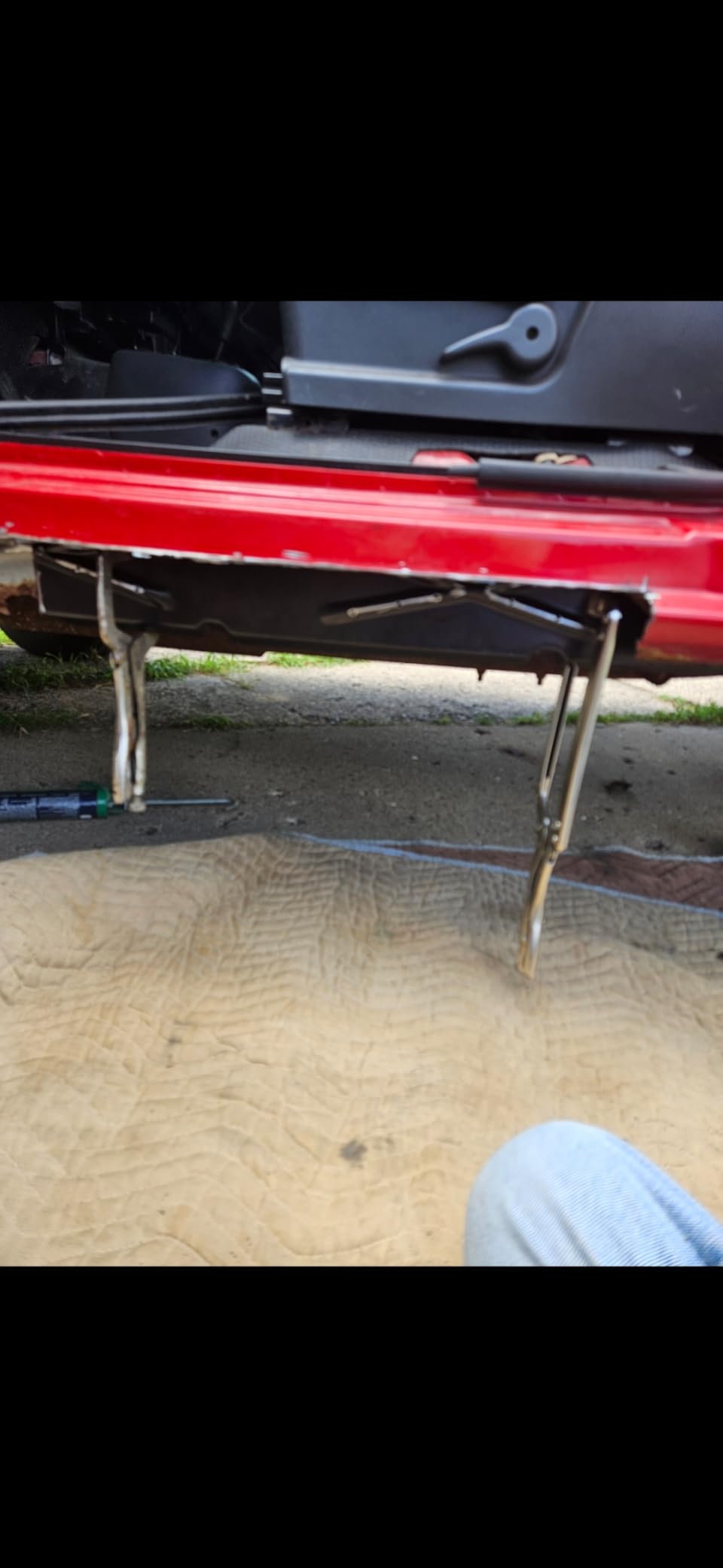
The set covers three sizes in one purchase and the same design is available in 6, 11 and 14 inch versions, so you can match the tool to the joint. The bodies are heat-treated high-carbon steel with nickel plating for rust resistance, which is what keeps them from seizing up after a season near a welding area.
Owners use them for steel panel cladding, deep-throat work and general shop holding, and the most common note is solid clamping strength for the money. The recurring mild complaint is flex in the deep throat when there is no load, plus a build that is lighter than premium locking pliers.
What you should know before buying it
Measure the space you need to reach, not just the part size. If your torch has to travel down the middle of a joint, the 18 inch throat is what gets it there. A 6 inch plier will not do the same job, which is why the set format works well.
Clean the screw and pads after every few sessions. Locking pliers collect grinding dust in the adjustment screw, and a dry screw is the reason a plier that felt stiff suddenly slides.
Who it suits and who it does not
It suits fabricators welding panels, thin tube frames and anything where a clamp would otherwise block the arc path. It also works as a strong third hand for grinding, assembly and layout.
It does not suit heavy structural work where you need a fixed, perfectly rigid reference. Locking pliers are fast and handy, but they are not a substitute for a rigid angle clamp on a critical 90 degree joint.
8. WYQYQ 90 Degree Corner Clamps – Best for Light 90 Degree Assembly
WYQYQ 4pcs Corner Clamp – Right Angle 90 Degree Wood Clamps For Woodworking, With Adjustable Swing Jaw Aluminum Alloy Frame, For Welding, DIY Woodworking
4-piece set
Aluminum alloy frame
2.75 in range
3.74 in jaw width
Pros
- Clean 90 degree hold on two pieces
- Light body repositions by hand
- Rotating jaws allow one-hand setup
- Non-slip rubber handles stay comfortable
Cons
- Aluminum gives less force than steel
- Best suited to light and medium material
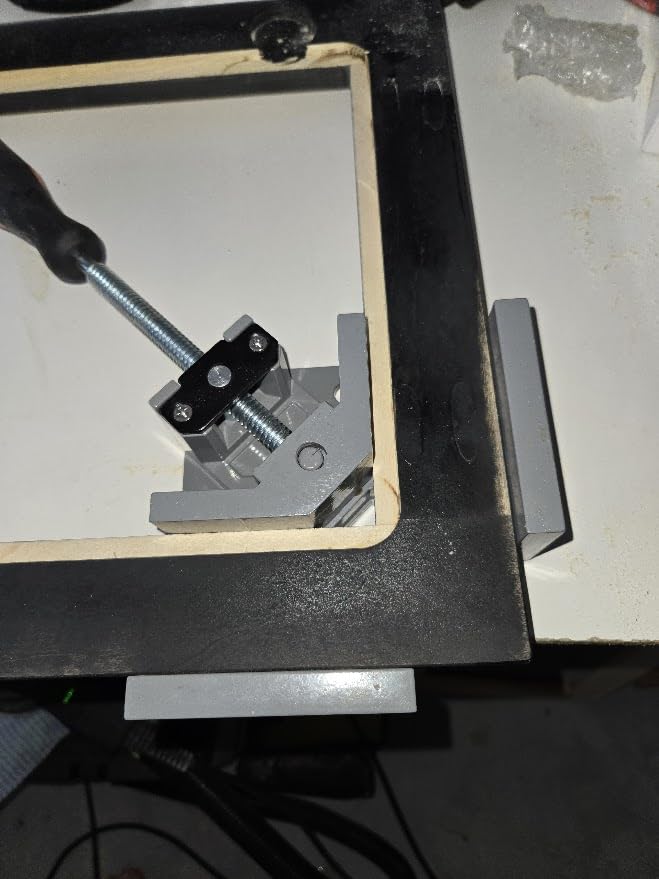
Corner clamps solve a very specific home-fabrication problem: holding two thin pieces at exactly 90 degrees while you tack or glue them. The rotating claw swings in both directions, and the oblong slot lets you fix a clamp to a bench for repeat work, which turns a handheld tool into a light fixture.
Maximum clamping range is about 2.75 inches, with a jaw width of 3.74 inches and a jaw depth of 1.38 inches. That envelope suits box tubing, small angle iron and light plate far better than anything heavy.
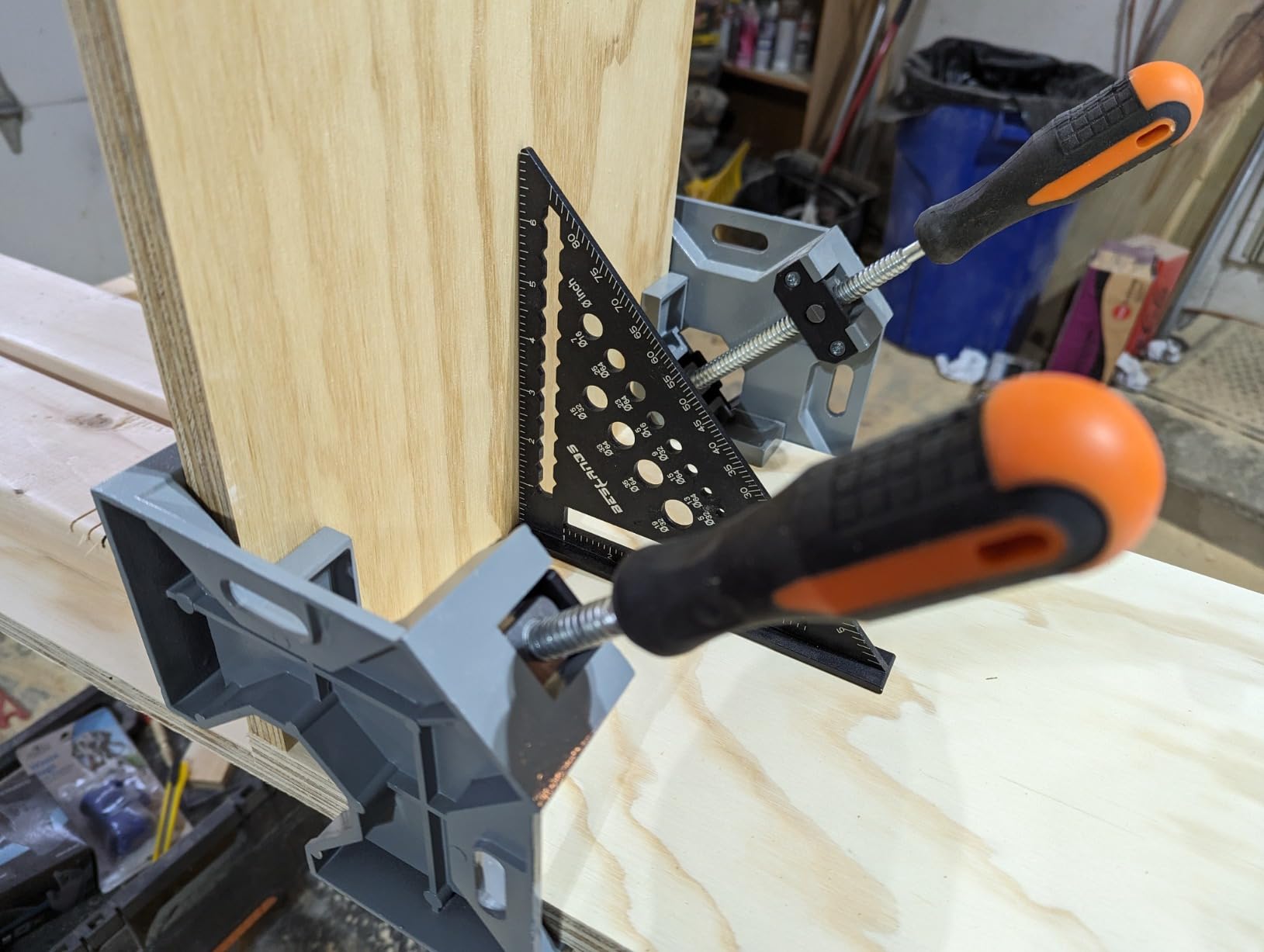
At 1.9 pounds for the four-piece set, these are the clamps you reposition constantly without thinking about it. The rubber handles stay comfortable through long glue-ups and light tacking, and the same design comes in 2-pack and 8-pack counts.
The main limitation is clamping strength. An aluminum body gives less force than a steel clamp of the same size, so on a job that resists the fit-up you will need a steel angle clamp. Buyers clearly rate them for light to medium duty work, and the 4.5 rating reflects that ceiling honestly.
What you should know before buying it
Measure your material envelope before you buy. If the thickest piece in your typical project exceeds the 2.75 inch range, this is the wrong tool and a steel angle clamp is the better investment.
Because the frame is aluminum, keep these clear of the hottest part of a joint. They are a positioning aid during fit-up, not something to leave clamped to a glowing part.
Who it suits and who it does not
It suits home builders assembling light frames, small boxes, brackets and trim, especially anyone who wants one-hand setup while the other hand holds the torch. The bench-fixing slot is a genuine bonus for repeat work.
It does not suit heavy plate, thick structural tube or any joint where distortion control is critical. If the metal fights back, this clamp will not win.
9. QWORK 10 Inch Flat Jaw Locking Clamps – Best for Sheet Metal
QWORK 10″ Flat Jaw Locking Clamp – Heavy Sheet Metal Welding & Fabrication Tool for Workshop, Auto Body & Repair
2-pack 10 inch
High carbon steel
1.0-3.0 mm sheet range
Nickel finish
Pros
- Flat jaws hold sheet panels without flex
- Trigger release for fast repositioning
- Screw knob prevents crushing thin stock
- Two clamps cover both sides
Cons
- Designed around 1 to 3 mm sheet only
- Slower than a toggle for repeated set-ups
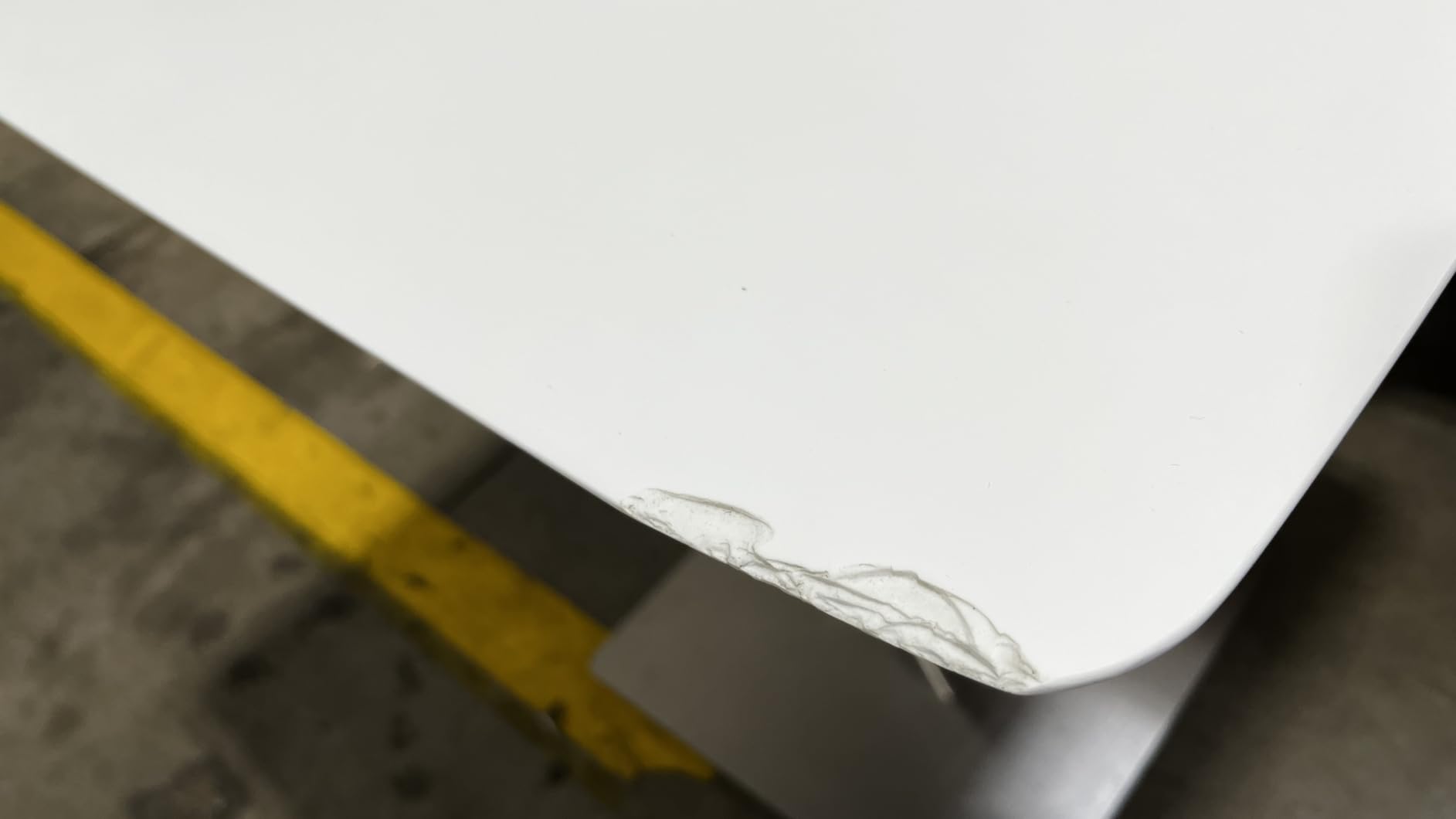
Flat jaws are the reason this clamp exists. Standard serrated jaws dig into sheet metal and can dimple it, while a flat jaw distributes pressure across a wide surface and holds a panel flush. For welding thin-gauge panels, door skins or auto body sheet, that difference is everything.
The screw knob adjusts pressure for material between 1.0 and 3.0 mm, so you can dial the hold down to a level that will not crease the panel. The trigger handle then locks and releases one-handed, which keeps your other hand free for the torch or the grinder.
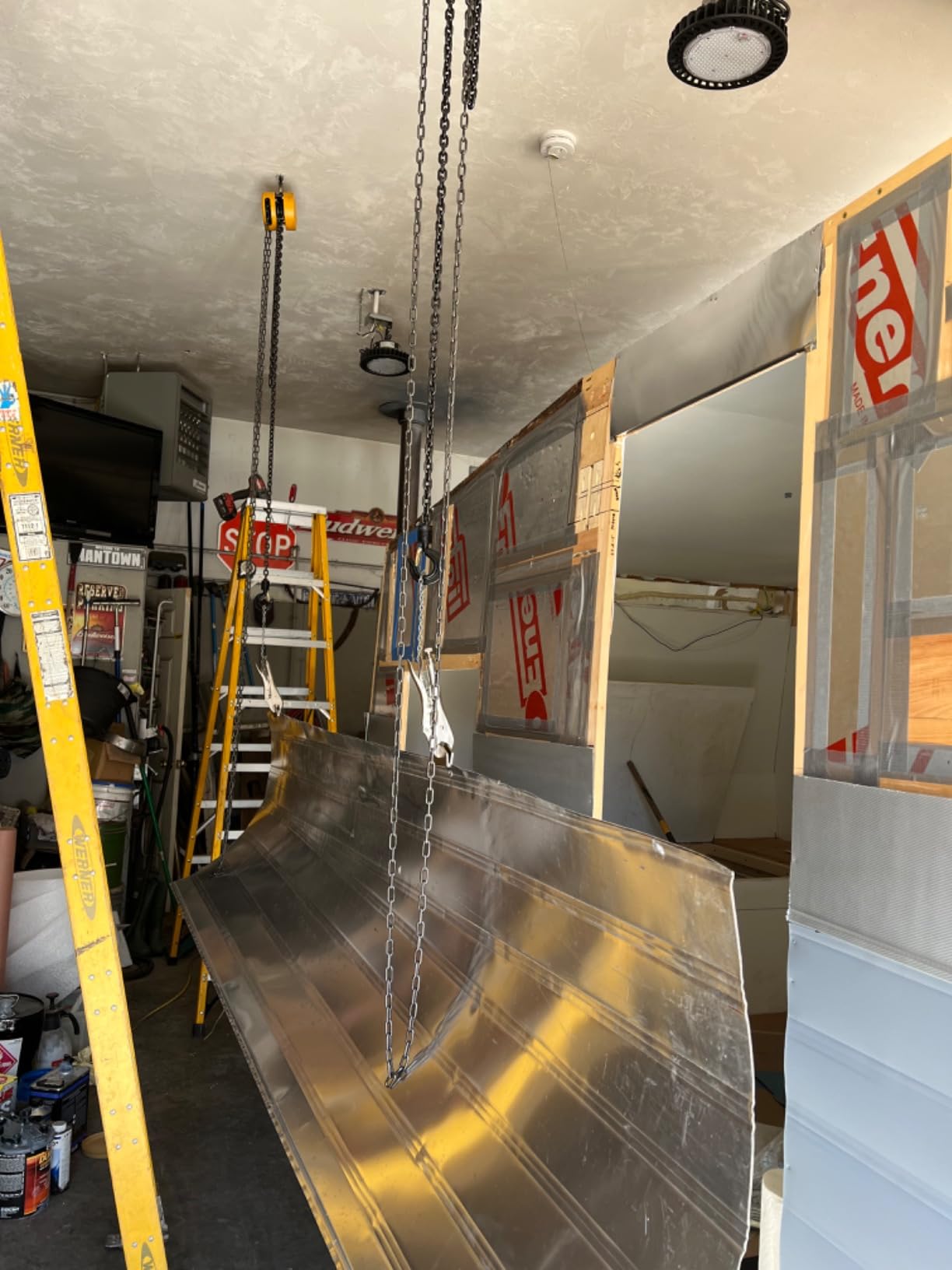
Each clamp measures 10 inches in total length and the bodies are high carbon steel with a nickel finish for hardness and rust resistance. Owners confirm dependable panel holding for thin-gauge stock, and the pack of two lets you clamp both sides of a seam.
The ceiling is worth stating plainly. This is not a general purpose clamp. It is built for 1 to 3 mm sheet, and the fixed-pressure screw adjustment is slower than a toggle mechanism when you are setting the same joint up over and over.
What you should know before buying it
Check your material gauge first. If your work includes plate heavier than 3 mm, these are the wrong clamps and a face clamp or bar clamp will serve you better. Pair them with a magnetic square for alignment instead of forcing an awkward grip.
Keep the jaw faces clean and lightly dressed. Flat jaws pick up scale and grinding dust fast, and that debris is what eventually marks a nice panel.
Who it suits and who it does not
It suits autobody repair, panel fabrication, duct work and anyone welding thin sheet where appearance matters. Two clamps in the pack is exactly enough for a standard seam.
It does not suit heavy plate, thick structural work or a fabricator who needs to change setups dozens of times in an hour. The screw adjustment is the bottleneck in fast production.
10. Monster and Master 10 Inch Pipe Plier Clamp – Best for Pipe Fit-Up
Monster & Master Welding Pipe Plier Clamp, 10″ C-Clamp Locking with V-Pads
10 inch C-clamp style
Adjustable V-jaws
1-3 inch capacity
Forged carbon steel
Pros
- Holds round and square tube without crushing
- One tool covers 1 to 3 inch stock
- Clear torch access for tacking
- Also doubles as a ground clamp attachment
Cons
- Swivel pads do not fully articulate
- One damaged-on-arrival report
- One clamp is not enough for a full joint
Pipe and tube fit-up is where most home welders fight their tooling. Screw clamps slide down a round tube and never sit still, and locking pliers are a substitute that slowly rounds the metal. This clamp sits on the stock and stays put, which is why users report building exhaust systems and intercooler piping with it.
Adjustable V-jaws cover round and square tube from 1 to 3 inches in a single tool, and the thumbscrew lets you set just enough pressure to hold the joint without crushing it. There is enough clearance around the jaws to get a MIG torch in for tacking, which is the step that actually sets the alignment.
The body is forged high carbon steel with a sandblasted finish, and the joints are rivet-reinforced with a non-slip grip. It also works as a ground clamp attachment for pipe welding, which is a genuine two-for-one for a shop that does a lot of tube work.
Users also report building sanitary piping and turbo intercooler piping with it, and the specific gripes are limited pad articulation and one damaged-on-arrival unit. Inspect it on arrival, and plan on buying a second one.
Two things temper the enthusiasm. The swivel pads do not fully articulate and can catch on uneven frame ends, and one buyer received a unit that would not lock properly. As several reviewers note, two clamps make fit-up of a full joint far easier than one.
What you should know before buying it
Buy two. A single clamp holds one side of a joint, and the unsupported side moves as the metal heats. Reviewers consistently frame the second clamp as the difference between a straight weld and a crooked one.
Check the V-jaw range against your most common tube size. The 1 to 3 inch span covers most home work, but very small tube or oversized pipe falls outside it.
Who it suits and who it does not
It suits home fabricators building exhaust systems, handrails, tube frames, trailer parts and anything involving round or square tube. It is also a reasonable pick for a shop that wants a second ground clamp attachment on hand.
It does not suit someone who welds thin sheet or delicate finished surfaces, where a V-jaw leaves a mark that matters. Nor is it a substitute for a dedicated pipe clamp on heavy industrial wall thickness.
11. Strong Hand MSA46-HD Magnet Square – Best for Portable Tables
Strong Hand Tools Adjust-O Heavy Duty Magnetic Welding Square, 90 lb Pull Force, On/Off Switch, Double Plate, 30°/60°, 45° & 90° Angles, 4.4 x 3.8 x 1.1 in., MSA46-HD
65 lb rated pull
45 and 90 degrees
0.7 kg
4.38 x 3.75 in
Pros
- Holds tube and flat stock square for tacks
- On/off switch locks a loose fit-up
- Mag face wipes clean when switched off
- Compact for a portable welding table
Cons
- Strength drops on thin or non-ferrous stock
- Fixed 45 and 90 geometry only
- Strong field can affect arc behavior if too close
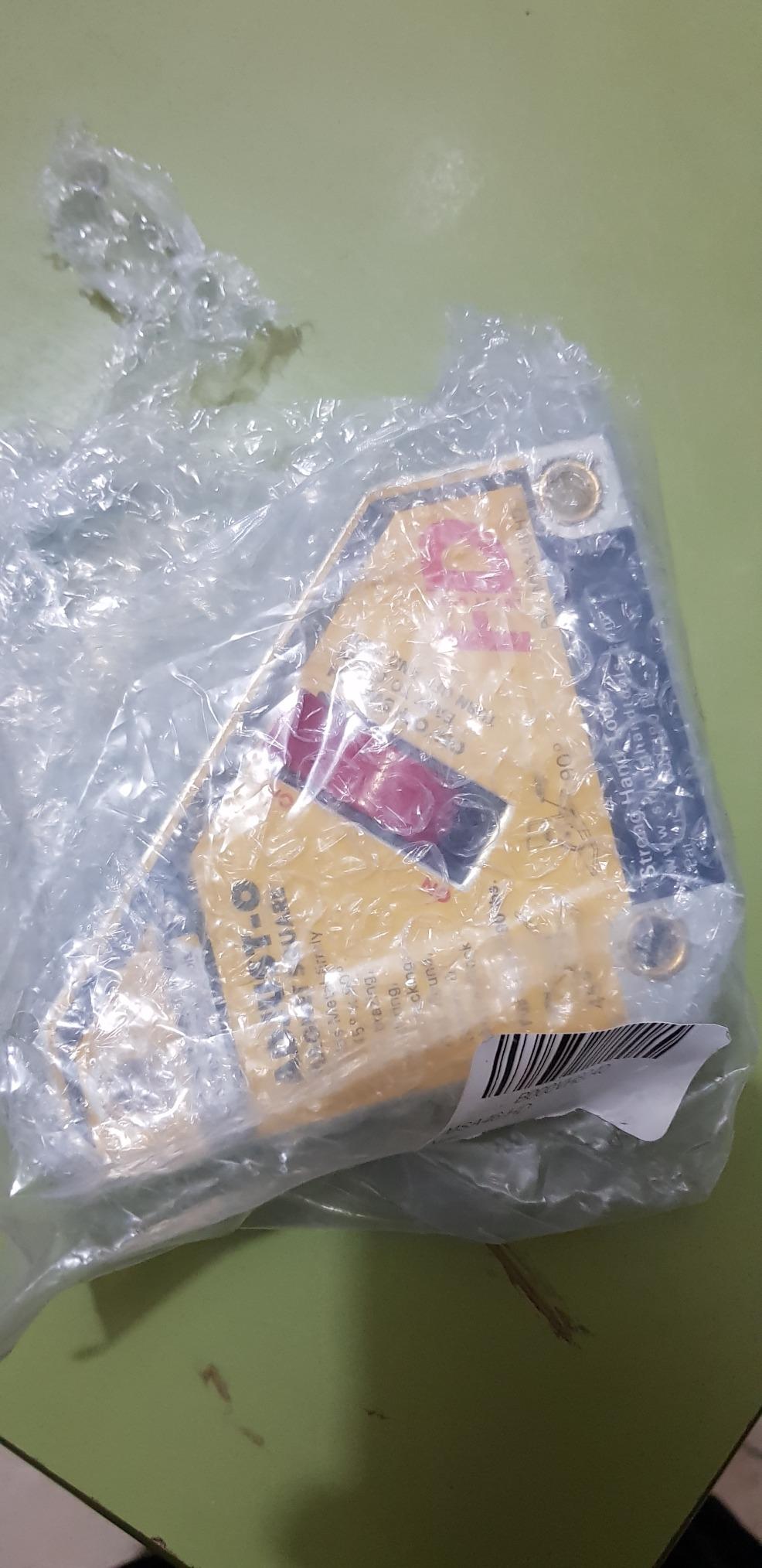
A magnet square is the cheapest way to guarantee a right angle on a table that has no built-in stops. It holds round and square tubing, angle iron and flat stock at 45 and 90 degrees, and the on/off switch means you can set the work loosely, confirm the fit-up, then lock it before welding.
The switchable face also cleans itself. Flip the field off and grinding dust falls away, which keeps the contact face flat and the holding consistent over months of use. At 0.7 kg and 4.38 by 3.75 by 1.13 inches, it fits a portable welding table without taking over the top.
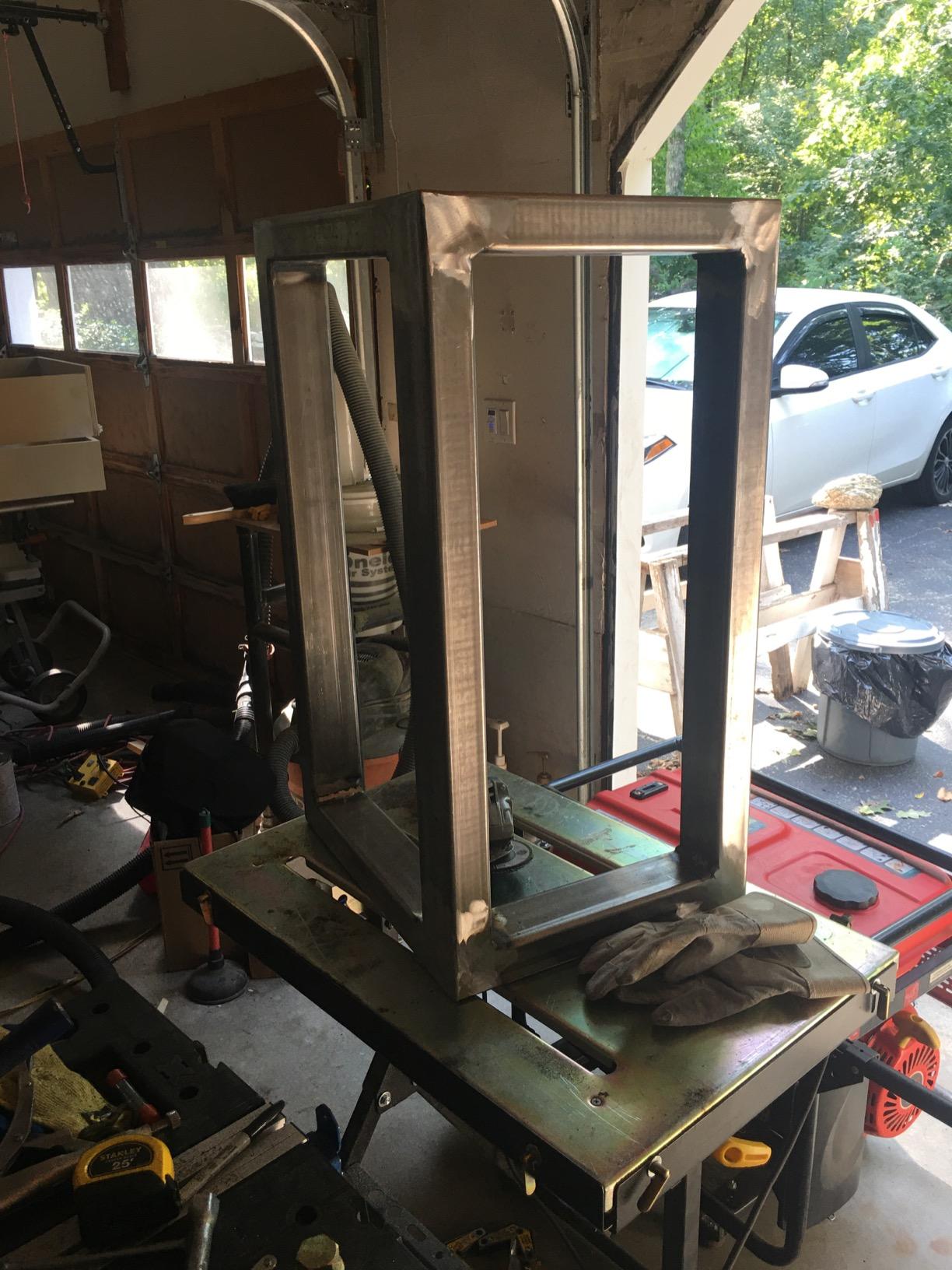
Owners use it to hold tube and flat stock square for tacks with no clamp in the way, which is exactly what a C-clamp cannot do on a corner joint. The 4.5 rating from more than 1,100 reviews reflects a tool that simply works for its stated job.
Two caveats to know. Holding strength drops noticeably on thin or non-ferrous material, and the listed pull figure is 65 lb in the spec table while the feature list shows 90 lb, so treat the higher number cautiously. The fixed 45 and 90 geometry also means it cannot hold an arbitrary angle.
What you should know before buying it
Learn the placement rule early. A strong magnetic field near a live arc can deflect the welding arc, and you will spend an afternoon grinding off a wandering bead before you work out that the magnet was the cause. Keep it on the opposite side of the joint.
Confirm your material is ferrous. Aluminum and stainless are not attracted, and no adjustment to the switch changes that.
Who it suits and who it does not
It suits hobby welders with a portable table, no built-in stops and a lot of tube and angle iron to square. It is a natural companion to a magnetic finger, since both can be used on the same joint at once.
It does not suit thin-gauge sheet or any non-ferrous project, and it does not replace a rigid angle clamp when distortion control on heavy plate is the deciding factor.
12. SHALL 12 Inch Drop Forged Bar Clamps – Best for Steel Frames
SHALL 4-Pack Bar Clamps Set, 12-Inch Light-duty Drop Forged Steel Bar Clamps, Steel F Clamps with Max 450Lbs Load Limit for Welding, Woodworking, Metal working, DIY and Crafts
4-pack 12 inch
450 lb load limit
3 inch throat
Drop forged alloy steel
Pros
- Rigid drop forged frame with no flex
- Smooth threads clamp in about half a turn
- Flat top slots into a bench
- All-steel build near the weld
Cons
- One reviewer found them light duty for the rating
- Some units need deburring
- No auto-lock so each clamp needs tightening
Bar clamps earn their place in a metal shop because of one advantage over C-clamps: speed. You open the movable jaw, drop it over the work, and close it on the spindle. There is no swinging an arm into place and no crawling a screw across a frame, which matters when you are squaring a tube frame with four clamps to position.
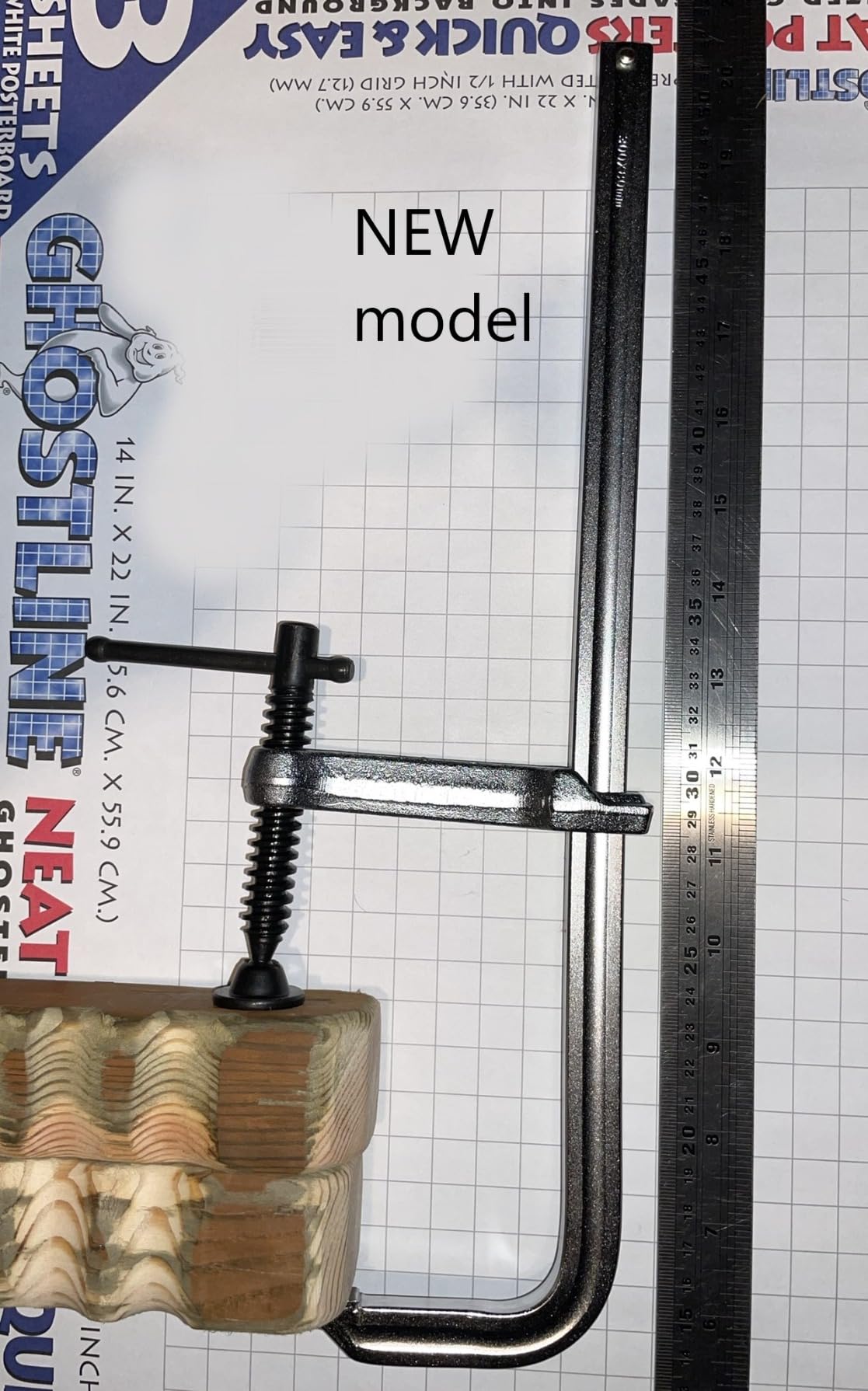
These are drop forged alloy steel, so the frame does not flex under load. The 450 lb maximum load limit is more than a home shop needs on tube, and the 3 inch throat depth with a 12 inch maximum opening covers most frame stock. Threads are well cut and slide smoothly, clamping in roughly half a turn once set.
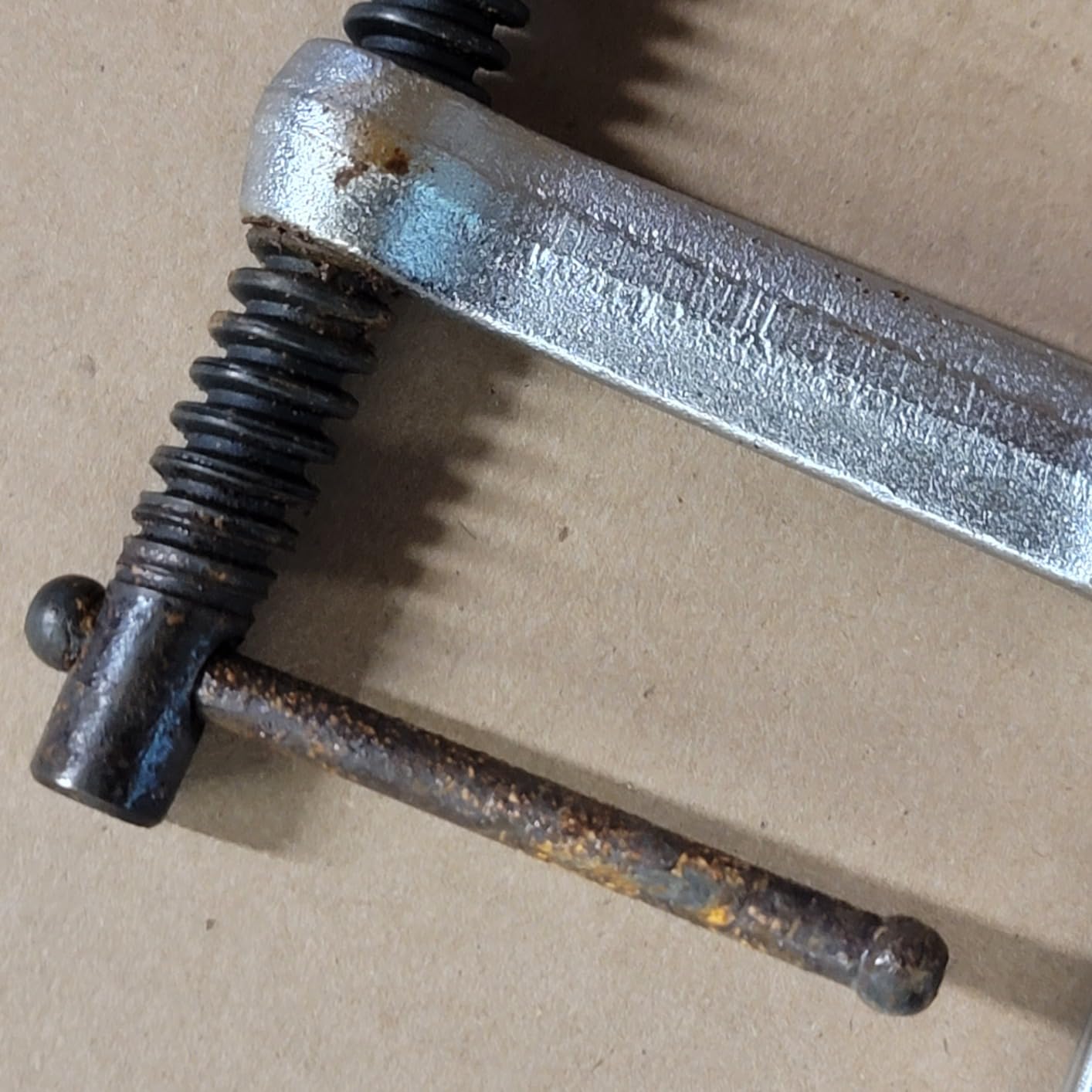
The flat top of the F can be slotted into a portable bench, which turns four clamps into a fixed clamping station. That design detail, plus all-steel construction that will not melt near a weld unlike rubber-pad clamps, is why owners call them the most versatile clamp on the table.
The honest negatives: one reviewer rated them light duty despite the 450 lb figure, some units arrive needing deburring before first use, and there is no cam or auto-lock mechanism, so each clamp must be tightened individually. That last point matters on a large frame where you want to reposition quickly.
What you should know before buying it
Expect to deburr the contact points before the first job. A sharp burr on a bar clamp jaw marks the first part you clamp, and a few minutes with a file prevents that. High density nickel plating resists corrosion, which is what keeps the threads smooth in a damp garage.
Plan quantity rather than buying one. Four of a size is the practical minimum for squaring a rectangular frame, because you need one at each corner and a pair has nothing to react against.
Who it suits and who it does not
It suits anyone building steel frames, tables, racks and weldments who wants fast positioning with rigid holding. Four clamps in a pack is exactly the number a frame squaring job needs.
It does not suit someone working non-ferrous material who assumes a 450 lb figure means the same performance on aluminum, and it does not suit a fabricator who wants one-handed trigger release on every job.
How to Choose Welding Clamps for a Home Shop
The specs that matter on a clamp are throat depth, holding method and body material, in that order. Everything else is preference. Here is how we weighted them over six weeks of garage jobs.
Throat depth and capacity are not the same measurement
Throat depth, also called reach, is how far the jaw extends from the frame so you can get around the work. Capacity is how wide a gap the clamp will close. People buy for capacity and then find the throat is too short to reach the joint, which is the most common wasted purchase in this category.
Rule of thumb from our own bench: match throat depth to half the width of the thickest section you weld. A 3 inch throat handles 1/4 inch plate and 1 inch tube comfortably. A deep 18 inch throat is what you need when the clamp would otherwise sit on top of the joint you are welding.
Copper-plated spindles decide how long a clamp survives
On the forums, the single most repeated purchase criterion for a welding C-clamp is a copper-plated spindle. Spatter beads land on hot steel and fuse to the thread. A plain steel spindle seizes, and a seized clamp gets thrown rather than maintained. Copper plating gives spatter nothing to grip, so the clamp keeps turning.
On the picks in this roundup, the brass tip on the Strong Hand Grasshopper plays the same role in miniature. If you are shopping outside this list, treat thread plating as a hard requirement, and keep a can of anti-spatter spray on the bench regardless.
C-clamp, F-clamp, toggle clamp: what changes at the bench
C-clamps reach deep and hold hard, but each one is slow. F-clamps and bar clamps are faster because the jaw drops straight onto the work, at the cost of a shallower throat and no fixed 90 degree reference. Toggle clamps lock instantly with a lever, so you can reposition fast, but they hold in one position and offer less fine pressure control.
The practical answer is to own one of each. A screw C-clamp for the joint that must not move, a bar clamp for speed on frame work, and a toggle or locking plier for the setup you will adjust constantly.
Match the clamp to your welder and your material
A 100 amp MIG or a small stick machine produces less heat and less arc blow than a 250 amp shop machine, so a home welder does not need the same clamping force. For 1/4 inch mild steel, four bar clamps rated around 450 lb are more than sufficient, and the binding constraint is fit-up quality rather than force.
Match clamp to material too. Mild steel and cast iron respond to any mechanical clamp. Aluminum and stainless need swivel pads, non-marking contact and a clamp that will not arc blow, which rules out most magnetic options entirely.
Magnetic clamps only work on ferrous metal
No competitor page on this topic says it plainly, so we will. A magnet does not attach to aluminum or to most stainless grades. If your projects include aluminum, a magnetic clamp is dead weight in your kit, and a corner clamp, angle clamp or bar clamp is the tool that will actually hold the part.
Watch for arc blow as well. A strong magnet near a live arc can push the puddle off the joint. Position magnets on the far side of the work, or remove them before striking an arc.
The minimum viable home clamp kit
Four of one size is the practical starting point, because squaring a rectangular frame needs a clamp at each corner. From there, add one magnetic option for speed, one deep-throat option for access, and one 90 degree clamp for right-angle work. Five to six tools covers the majority of home garage jobs.
Storage is the other half of a clamp kit. Experienced fabricators keep clamps hung overhead or on a wall rack so they stay within reach and off the floor, and that habit matters more than people expect once you own more than a handful.
Brands worth buying from
BESSEY, Strong Hand, De-Sta-Co, Lincoln Electric, Eastwood and POWERTEC come up repeatedly as reputable clamp makers, and Strong Hand appears three times in this roundup because the catalog covers magnets and mechanical clamps well. Welding supply shops and brands with a long shop-tool history are generally the safer bet than unbranded marketplace listings.
One recurring view on r/Welding is that many common C-clamps sold for general use are not suitable for welding at all, because they have plain threads and no force rating. Treat an unrated clamp as a bench clamp and keep it away from the arc.
Clamps to Avoid Near the Arc
Some clamps belong in a woodworking shop and should stay there. A few specific categories are worth ruling out before you spend, and the reasoning comes directly from how these tools fail.
First, plastic or nylon-bodied clamps. They soften near a hot joint and can deform permanently, and any body part that melts into a weld is a hazard as well as a ruined tool. The ground rules from the forums are simple: nothing plastic within reach of the arc.
Second, unrated cheap cast clamps. Forum users regularly call budget-retailer trigger clamps and screw-style F-clamps junk for welding, with a strong sense that the published force figure is fiction. Cast bodies that flex under load also let a joint move, which means a bad bead and a pinch point for your hands.
Third, any clamp with a plain steel spindle. Without a plating or coating, spatter fuses to the thread and the clamp seizes. It costs more to replace a seized clamp than to buy one with a copper-plated spindle in the first place.
Fourth, magnetic clamps on non-ferrous work. Not a quality problem, a physics problem, but it is the most common wasted purchase reported by hobby fabricators. Check the material before you buy, not after.
Fifth, clamps with no published throat or force figure. You cannot match a clamp to your project if you do not know what it reaches or how hard it holds. The picks above all publish their numbers.
Frequently Asked Questions
What are the best welding clamps?
For a home garage, the best welding clamps are a spring-loaded magnetic finger for tacking, a four-piece magnetic set for squaring square tube, and a set of 12 inch drop forged bar clamps for frame work. Between them they cover the three tasks that cause the most rework at home: holding a part at a tack point, setting a tube joint square, and clamping a frame rigidly. Add a 90 degree angle clamp when distortion control matters.
What makes a C clamp better for welding?
A good welding C-clamp has a copper-plated or otherwise coated spindle so weld spatter does not fuse to the thread, an all-steel load-bearing body with nothing plastic near the heat, a swivel pad so it does not mark the workpiece, and a published throat depth and force rating. The deep throat is what lets you reach the joint instead of the frame.
What’s the difference between f and c clamps?
A C-clamp has a fixed arm and a movable screw jaw, which gives deep throat reach and high holding force but takes longer to position. An F-clamp, also called a bar clamp, has a sliding jaw on a flat steel bar, so it drops straight onto the work and clamps far faster. C-clamps win on rigidity and reach; F-clamps win on speed.
Which style work clamp is widely used in the pipe welding industry?
The C-clamp locking plier, often called a welding pipe plier clamp, is the work clamp most widely used for pipe and tube fit-up in the welding industry. Its adjustable V-jaws grip round and square tube without crushing it, it stays on the stock where a screw clamp slides off, and it leaves clearance for a torch to reach the joint for tacking.
What are the disadvantages of using toggle clamps?
A toggle clamp locks in one position and offers less fine pressure control than a screw clamp, so it is harder to dial in a light hold on thin material. It also needs a rigid flat mounting surface, which limits where you can use it, and many budget toggle clamps lack a published force rating. They are excellent for fast, repeatable setups and poor for fine adjustments.
Do magnetic welding clamps work on aluminum?
No. A magnetic welding clamp only holds ferrous metal such as mild steel, and it will not attach to aluminum or to most stainless grades. On non-ferrous work you need a mechanical clamp with swivel pads. Keep magnets away from a live arc as well, because a strong magnetic field close to the weld can deflect the arc and spoil the bead.
What is the best welder earth clamp?
A spring-loaded magnetic workholding tool, such as a magnetic finger or a switchable magnet square, works well as an earth clamp attachment for fit-up and pipe work, because it releases the instant you flip the switch. A ground clamp and a workpiece clamp are different tools with different jobs, so choose one sized to your amperage rather than assuming a strong weld clamp grounds your circuit.
How many clamps do I need for welding a frame?
Four of a single size is the practical minimum for squaring a rectangular frame, since you need one clamp at each corner. From there, adding one magnetic option for speed, one deep-throat clamp for access and one 90 degree angle clamp covers the majority of home garage jobs. Five or six tools is a complete first kit.
Final Verdict on Home Welding Clamps in 2026
The best welding clamps for home fabrication are the ones that suit the job rather than the ones with the biggest number on the box. For most garages, start with the Strong Hand Grasshopper as your everyday magnetic tacking hand, add the YESWELDER four-piece set to square tube without blocking the torch, and finish with four 12 inch drop forged bar clamps for frame work.
Add a 90 degree cast iron angle clamp when distortion matters, a deep-throat locking plier when the clamp would otherwise sit on the joint, and a flat-jaw clamp for sheet. Skip anything plastic-bodied, unrated or fitted with a plain steel spindle, and keep magnetic tools away from aluminum and from a live arc.
If you are still kitting out the rest of the bench, our picks for [10 Best Bar Clamps Tested and Reviewed](https://www.exponation.net/best-bar-clamps/) cover the woodworking side of clamping, while our [12 Best Welding Helmets Expert Reviews](https://www.exponation.net/best-welding-helmets/) guide covers the other essential piece of a home welding setup.