
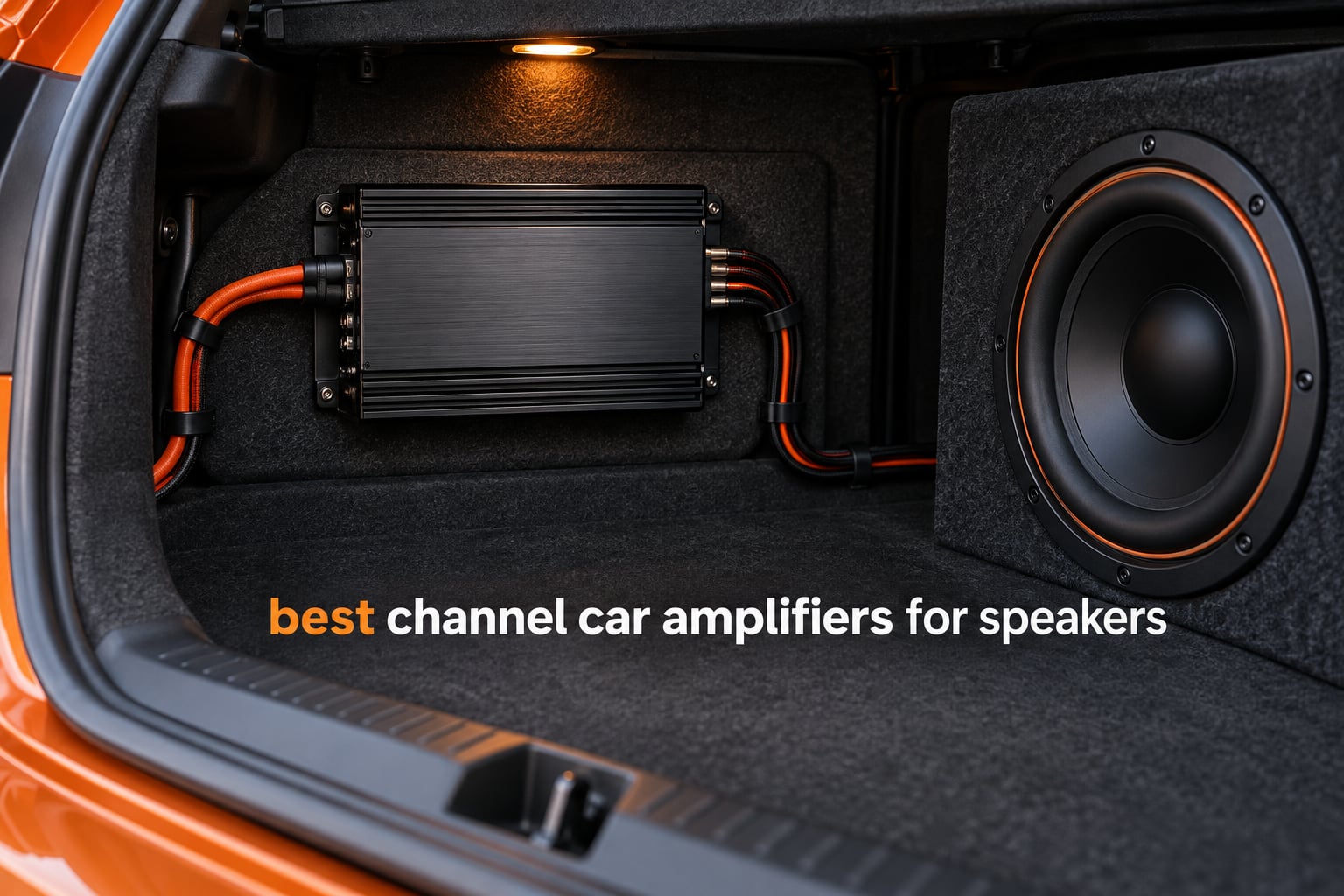
Most factory car stereos push about 15 to 20 watts per channel, and they only manage that at low volume before the signal starts to strain. A four-channel amplifier fixes that in one box by feeding clean, matched power to all four door and rear speakers at once. If you have been searching for the best 4 channel car amplifiers for speakers, this roundup covers ten of them, from tiny Class D units that hide behind a dash to full Class A/B amplifiers with the tuning controls a serious system needs.
So which one comes out on top? For most people the Alpine S-A32F is the best 4-channel amplifier for a car, because it pairs the highest average rating in this group with a compact Class D chassis that runs cool and stays out of sight. If you want deep control over your system instead of raw simplicity, the Rockford Fosgate R2-500X4 is the pick, and if you are after real per-channel power the Taramps TS 1200X4 takes it. We compared all ten on clean per-channel RMS output, input flexibility, thermal behaviour and the amount of adjustment each one hands you.
Do you actually need an amplifier? If you are still driving factory speakers off factory power and you are happy with the volume, an amp is optional. The moment you swap in aftermarket door speakers, an amplifier stops being a luxury, because those speakers are built to be driven hard and they will sound thin and distorted on a weak factory signal. We explain the whole matching question, including the 1.5 to 2x headroom rule, in the buying guide below. If you are also planning a full speaker setup at home, our guide to the best stereo amplifiers for bookshelf speakers covers the same matching logic for a living room.
Table of Contents
Top 3 Picks for 4-Channel Car Amplifiers in 2026
These three are the shortlist. Each one wins a different category, so the right choice depends on what your car and your speakers actually need rather than on which brand has the loudest number on the box.

Alpine S-A32F
- 55W RMS x 4 at 4 ohm
- Class D efficiency
- Configurable 4/3/2 channel
- 83 dB signal-to-noise
Rockford Fosgate R2-500X4
- 75W RMS x 4 at 4 ohm
- C.L.E.A.N. gain calibration
- 12 dB/octave crossovers
- Punch EQ

Taramps TS 1200X4
- 4 x 300W RMS at 2 ohm
- High-level auto turn-on
- HPF
- LPF and full modes
- 2 x 600W bridged
Best 4 Channel Car Amplifiers for Speakers (October 2026)
All ten amplifiers below, with the specs that actually decide how they perform in a car. Read the per-channel RMS figure first, because the big number printed on the front of the box is usually peak power and tells you very little.
| Product | Specifications | Action |
|---|---|---|
| Alpine S-A32F |
|
Check Latest Price |
| Rockford Fosgate R2-500X4 |
|
Check Latest Price |
| Taramps TS 1200X4 |
|
Check Latest Price |
 Pioneer GM-A6704 Pioneer GM-A6704 |
|
Check Latest Price |
 Taramps TS 400X4 Taramps TS 400X4 |
|
Check Latest Price |
 Recoil DI550.4 Recoil DI550.4 |
|
Check Latest Price |
 SounDigital 400.4 EVO SounDigital 400.4 EVO |
|
Check Latest Price |
 Pioneer GM-A4704 Pioneer GM-A4704 |
|
Check Latest Price |
 ORION CBA2000.4 ORION CBA2000.4 |
|
Check Latest Price |
 ORION CBA2500.4 ORION CBA2500.4 |
|
Check Latest Price |
1. Alpine S-A32F – The Best 4-Channel Car Amplifier Overall
Alpine S-A32F, S Series Class D 4 Channel Digital Amplifier, 320 Watts
55W RMS x 4 at 4 ohm
320W max output
Class D
83 dB signal-to-noise
11 x 11 x 5 in
Pros
- Highest average rating in this group at 4.6 stars with 84 percent five-star reviews
- Class D efficiency means less heat and a smaller footprint
- Reconfigurable as 4
- 3 or 2 channels to suit different speaker layouts
- Signal-to-noise of 83 dB keeps the output quiet and clean
Cons
- 55W RMS per channel is modest for power-hungry door speakers
- Fewer built-in crossover options than rivals
- Smaller sales rank means fewer owner reviews than the big sellers
The Alpine S-A32F is the amplifier we would fit to a car that already has decent factory speakers and only needs clean, quiet volume. Owners consistently rate it as one of the cleanest-sounding options in this group, and the 84 percent five-star share backs that up. At 55 watts RMS per channel into 4 ohms, it is not trying to be a power monster, so it suits factory-style or moderate-efficiency door speakers rather than a stage of hungry component sets.
What it does well is refinement. The signal-to-noise figure of 83 dB referenced to 1 watt means the noise floor sits far below your music, which is exactly what you want for a system that lives inside a cabin with road noise. The compact 11 by 11 by 5 inch surface-mount chassis also means it is far easier to hide than a long Class A/B amplifier.
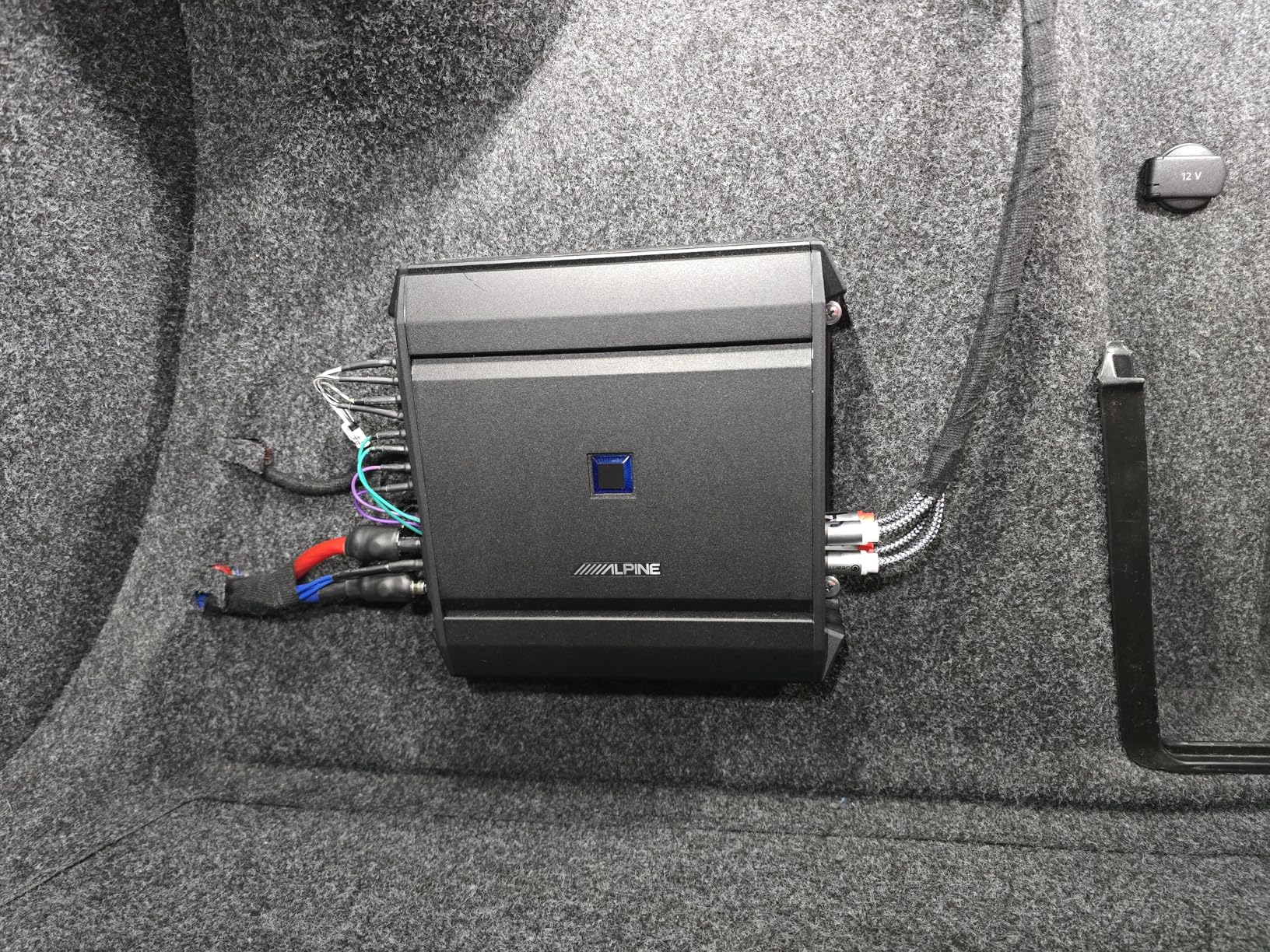
The reconfiguration is the part owners mention most. Running as a 4/3/2 channel amp means you can drive a pair of front door speakers, a pair of rear speakers, or push one subwoofer and a front stage from a single unit, and the channel layout adapts to the job. That flexibility is what makes this a safe recommendation for a car you might upgrade in stages.
It also draws less from the charging system than a Class A/B equivalent, which matters in older vehicles with tired alternators. Owners who swapped a stock head unit for this amp frequently describe the improvement as a cleaner, less strained version of the same music rather than a dramatic change in volume.
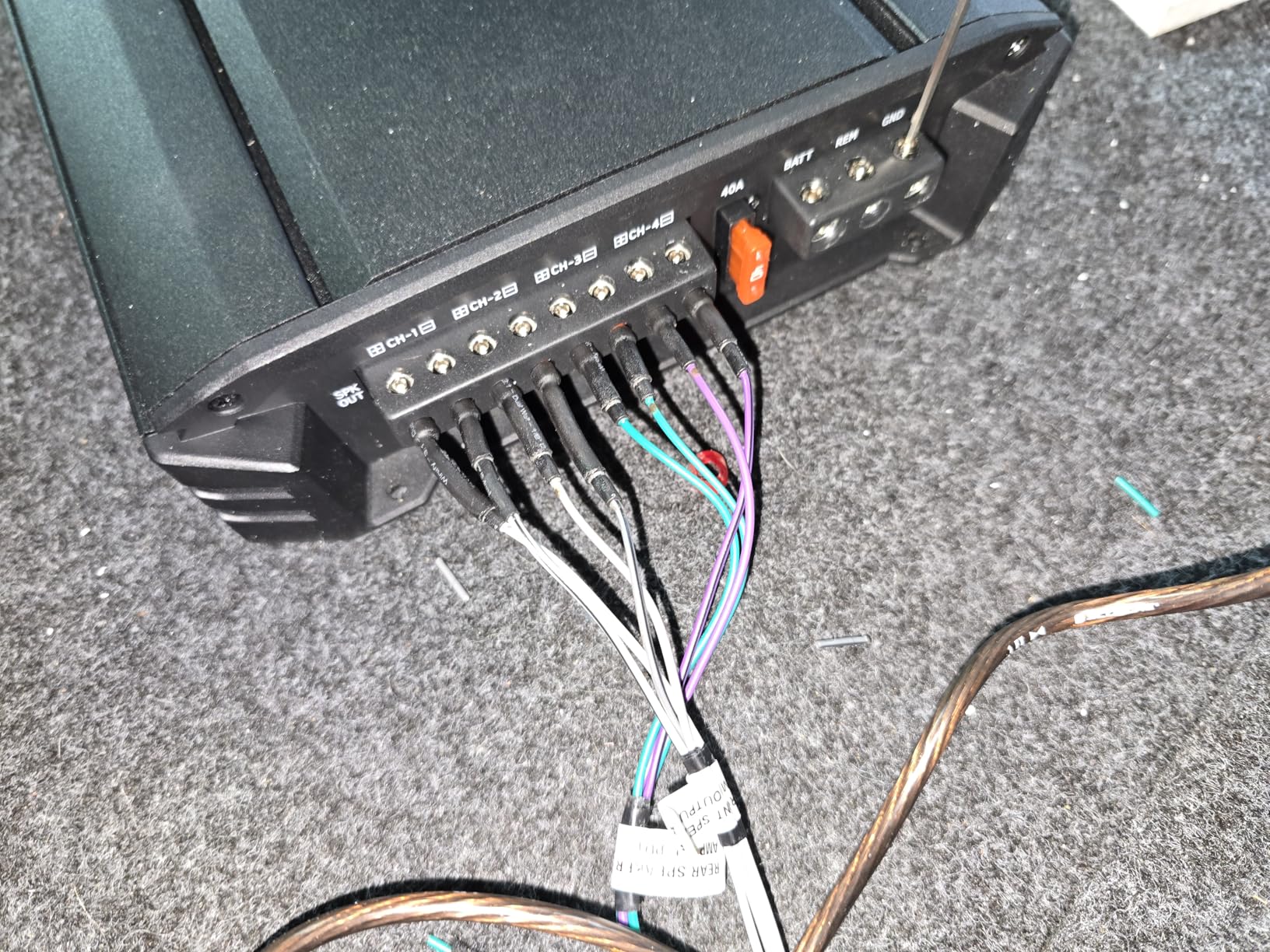
Is 55 watts per channel enough for your speakers?
It is enough when your speakers are efficient factory or replacement sets rated around 40 to 70 watts RMS. It is not enough if you are running low-sensitivity component sets that want 100 watts or more per channel, because you will hit the ceiling on the amp and the system will strain on loud passages. Check the RMS rating on your speaker spec sheet before you commit.
Sensitivity matters as much as raw power here. A speaker rated 88 dB will make far more volume from 55 watts than one rated 84 dB, which is why two builds with the same amp can sound nothing alike. If your speakers sit at the lower end of the sensitivity range, budget for one of the higher-power options further down this list.
Where this Alpine falls short
The main limitation is adjustment. If you want to shape your front stage with a high-pass filter, tune upper bass with a low-pass, or add a subsonic filter for a ported enclosure, you will be doing it with an external signal processor instead of the amp. The S-A32F prioritises clean, simple full-range output over on-board control.
It is also a modest performer on paper. The 320 watt headline figure is the total, and per-channel RMS at 4 ohms is the number that matters. If your speakers are power-hungry, this is the amp to skip in favour of something with more current capability.
2. Rockford Fosgate R2-500X4 – Best for Tuning Control
Rockford Fosgate Prime R2-500X4 500-Watt 4-Channel Amplifier
75W RMS x 4 at 4 ohm
155W x 4 at 2 ohm
250W x 2 bridged
Class D
5 lb
Pros
- C.L.E.A.N. circuitry makes gain calibration straightforward on a tap or multimeter
- Integrated Punch EQ plus adjustable 12 dB/octave Butterworth crossovers
- Balanced differential inputs with RCA pass-through and high-level capability
- Class D efficiency reduces demand on the vehicle electrical system
Cons
- Most expensive amplifier in this roundup by a wide margin
- One owner who swapped a Rockford unit for a Pioneer cited reliability problems
- Heavier at 5 lb than the micro Class D alternatives
The R2-500X4 is the amplifier for someone who intends to actually tune the system rather than just turn it up. Rockford Fosgate packs in a feature set that is normally reserved for higher tiers: balanced differential inputs, RCA pass-through outputs, high-level input capability and fully adjustable crossovers, all in a Class D package that stays cool and draws modest current.
Power is a solid step above the entry options. You get 75 watts RMS per channel into 4 ohms, 155 watts into 2 ohms, and 250 watts per channel bridged at 4 ohms, which is enough headroom for most door speakers and enough bridging capability to drive a subwoofer pair from a single box if your enclosure demands it.
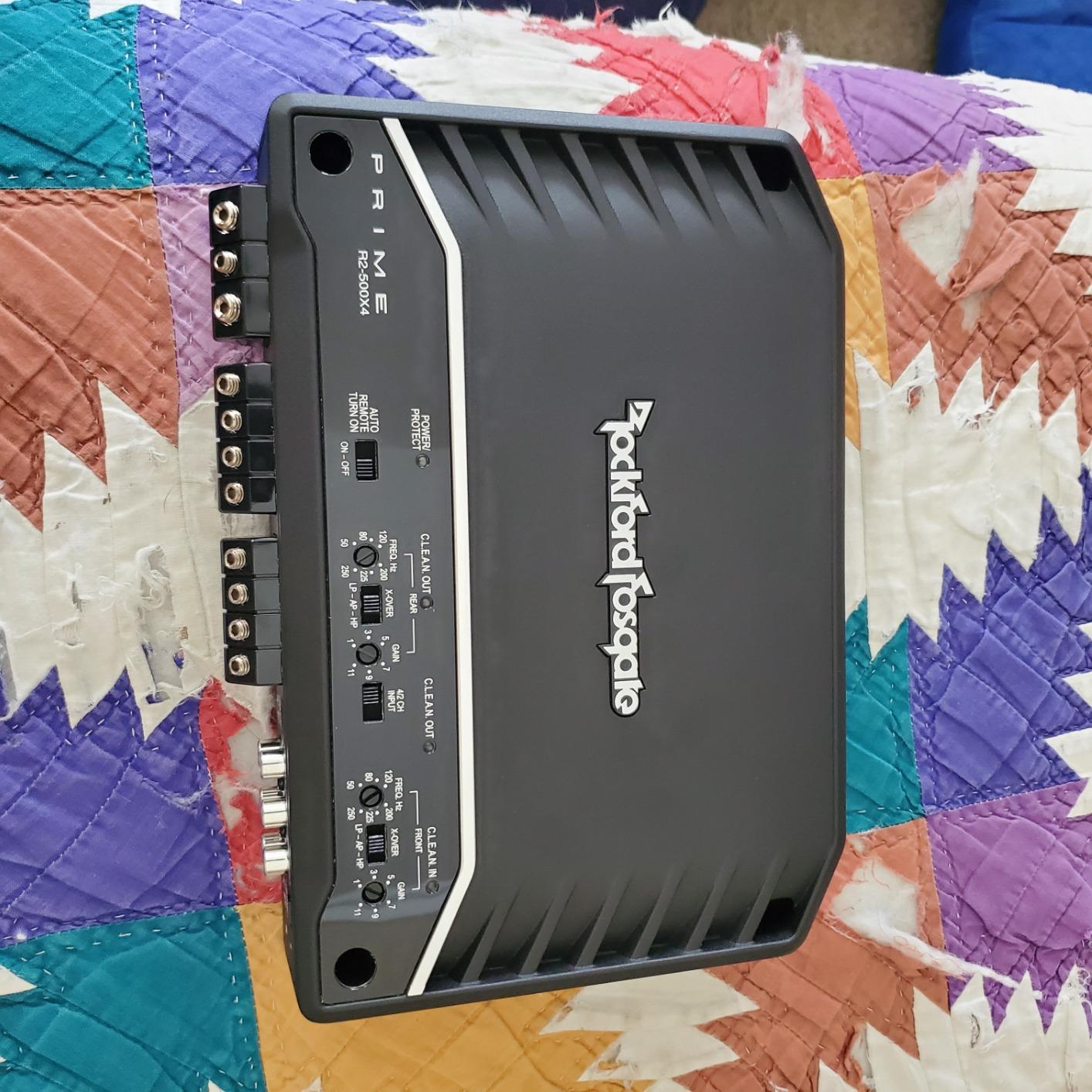
The C.L.E.A.N. circuit is the feature owners bring up most often. Instead of guessing with a screwdriver, you tap a test point and adjust until an indicator lights, which removes the most common cause of distorted car audio: gain set too high. The P.O.W.E.R. supply design also increases output as system voltage rises, so an amp that measures well at 12.6 volts still has something left when the engine is running.
Buyers at this level tend to care about build and warranty as much as output, and the Prime R2-500X4 carries a full one-year manufacturer warranty alongside a chassis that feels considerably more substantial than the budget units. Reviewers describe the sound as clean and the setup process as unusually painless.
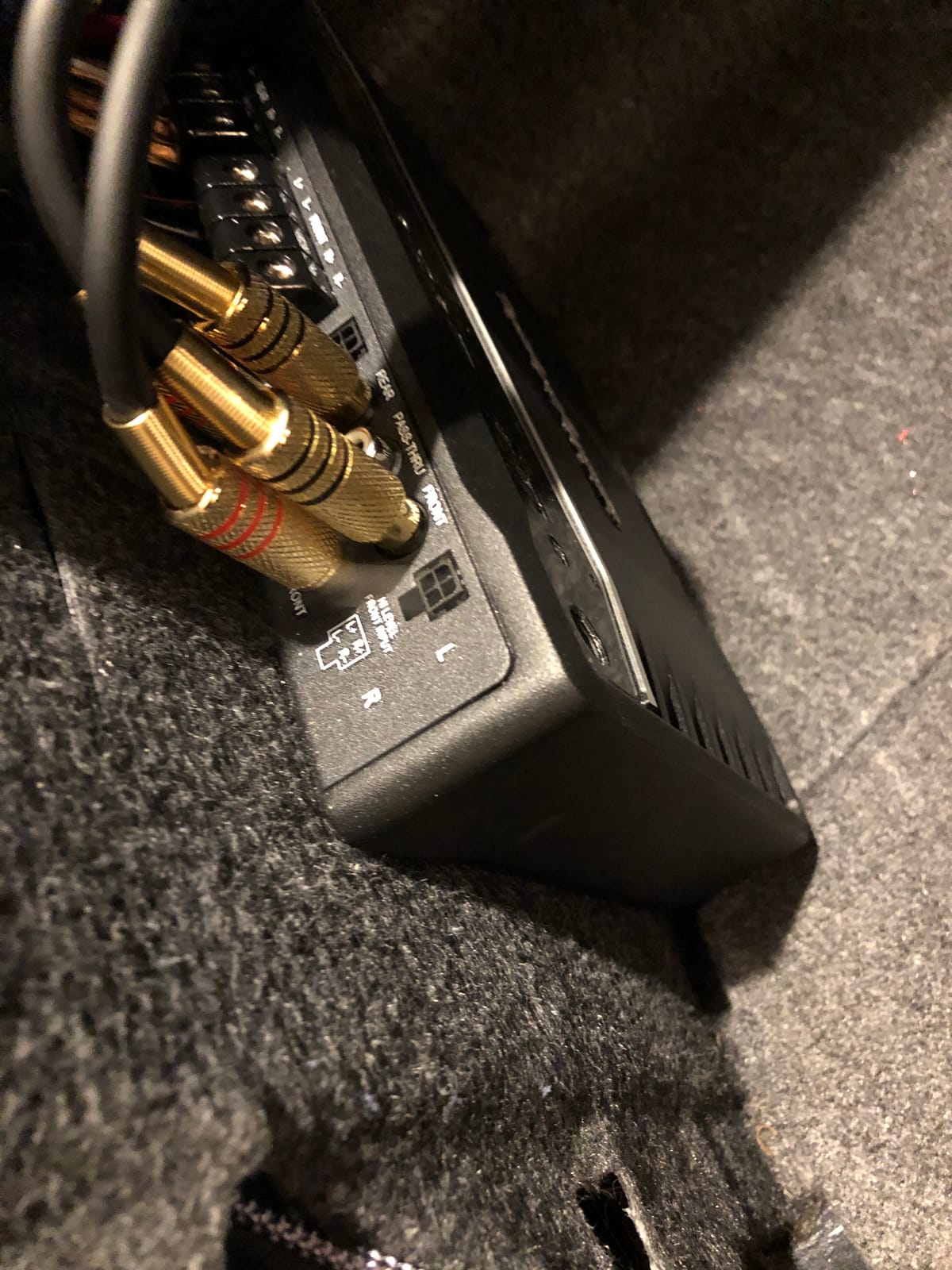
Does the on-board filtering replace a separate processor?
For most front and rear speaker builds, yes. The adjustable 12 dB/octave high-pass filters let you clear low rumble off your door speakers, and the low-pass filters let you pair the rears with a subwoofer, which is the classic use of a four-channel amp. Punch EQ handles the bass lift that smaller factory-style speakers often need.
What it will not do is replace a proper sound-shaping processor. If you want time alignment, per-seat EQ or a hard subsonic cut for a ported box, you are still adding a separate unit. This amp gives you the essentials with much less complexity than a full DSP.
Who should skip this amplifier
If your goal is a simple factory-radio upgrade and you are working with a tight budget, the tuning features here will go unused and you will be paying for control you never touch. The same applies if physical space is the constraint, since at 1.9 by 6.8 by 10.1 inches it is one of the larger units in this list.
Warranty terms and dealer support also tend to matter more at this level. If your build is going to be tuned by a professional, that support is part of what you are buying, and it is the main reason experienced installers lean toward a Rockford Fosgate or Alpine over a generic no-name chassis.
3. Taramps TS 1200X4 – Best for Real Headroom
Taramps TS 1200 Watt Amp 4 Channel Amplifier Car Audio, Full Range Crossover Fixed RCA/Wire Input – Multichannel Class D, 2 Ohm Car Amplifier Kit Profesional Installation Recommended
4 x 300W RMS at 2 ohm
2 x 600W bridged
High-level auto turn-on
HPF LPF and full modes
1340 g
Pros
- Far more total RMS output than most rivals at a compact size
- Factory-radio ready with high-level inputs and automatic turn-on
- HPF
- LPF and full-range modes make it usable for speakers and subs
- Reinforced terminals and bridgeable channels suit truck and SUV installs
Cons
- One-star share of 12 percent reflects a cluster of isolated failures
- Professional installation is recommended to reach the rated output
- Needs a proper power wire to deliver the full rating
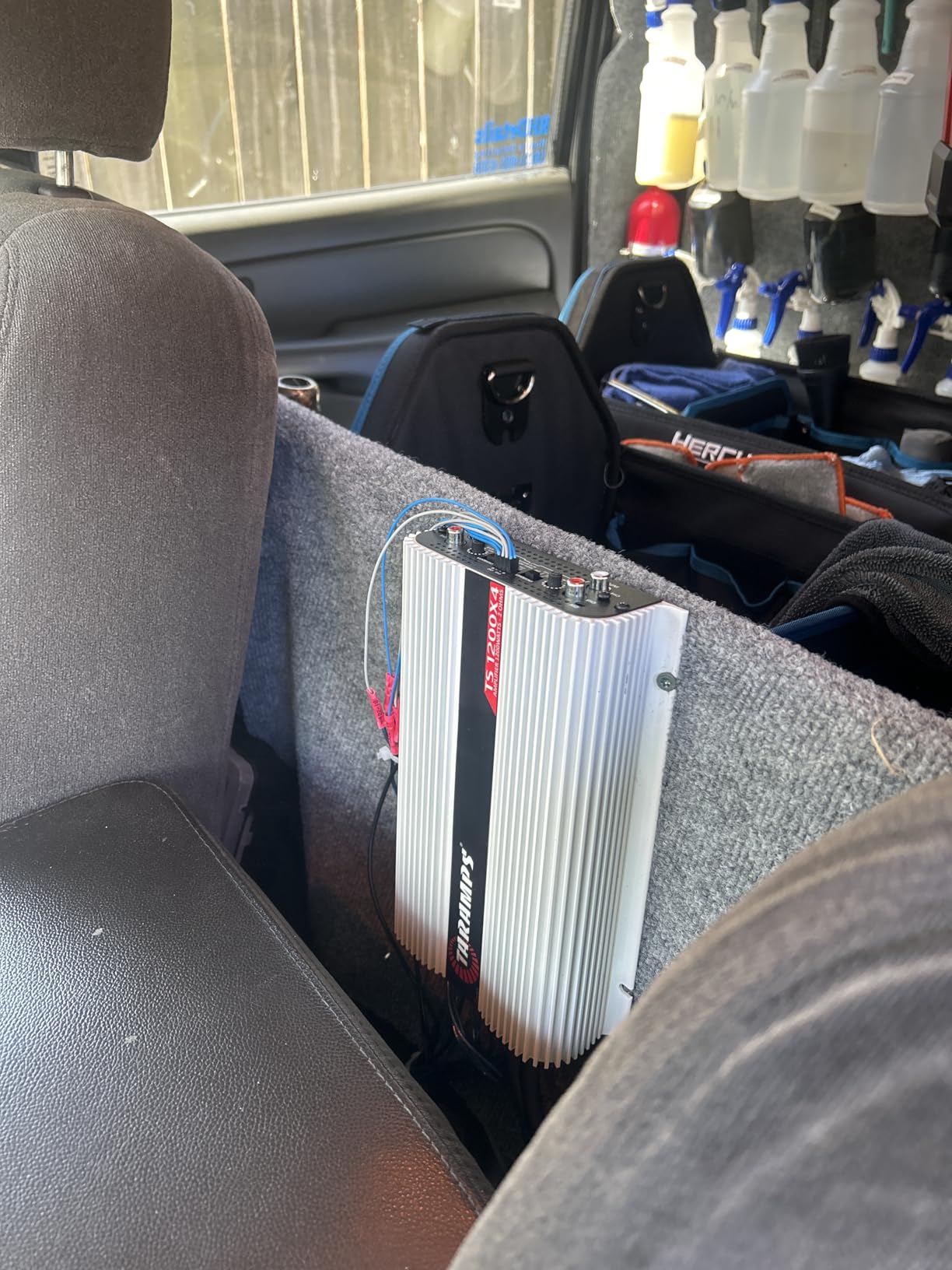
The Taramps TS 1200X4 is the one to look at if you have power-hungry door speakers and you want real headroom rather than adequacy. It delivers 4 x 300 watts RMS at 2 ohms or 2 x 600 watts bridged at 4 ohms, which puts it in a different power bracket from the 40 to 75 watts per channel most four-channel amps in this roundup manage at 4 ohms.
That headroom is the whole point. When your amp is running well below the power your speakers can absorb, you are not straining to reach the volume you want, which is what causes the clipping and distortion that makes an aftermarket system sound worse than the stock one. Taramps is a brand the r/CarAV community regularly places in its top tier of recommenders, and this model is the reason.
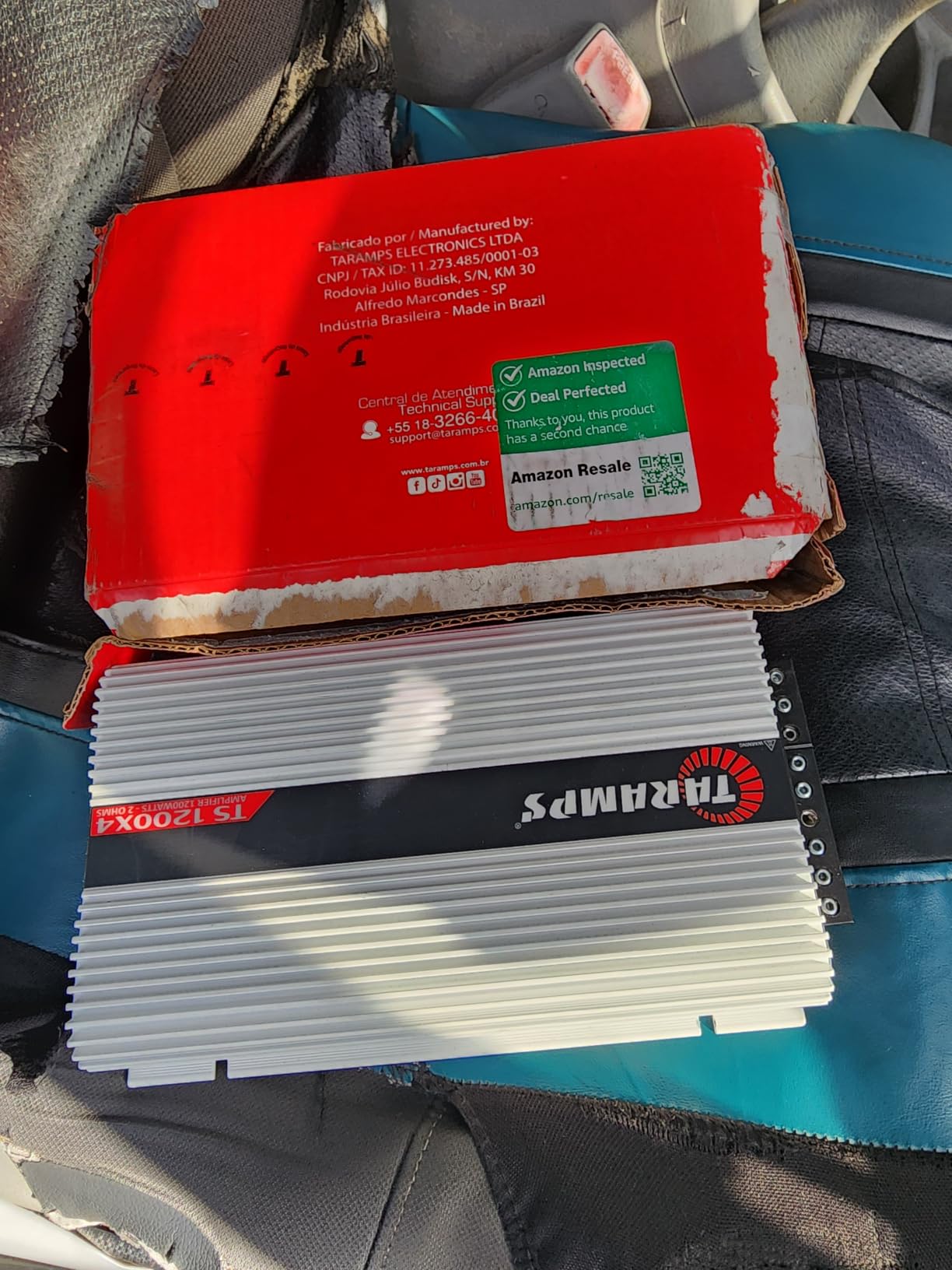
The factory-radio integration is unusually good. High-level speaker-level inputs with automatic turn-on mean you can feed it straight from a stock head unit that has no RCA pre-outs, with no line signal converter and no manual turn-on wire to the head unit. That single feature removes the most common reason people give up on an amplifier upgrade.
For system design it is also flexible. RCA and high-level inputs can be used together, and the selectable HPF, LPF and full-range modes let you run front door speakers on high-pass, rear speakers on low-pass with a subwoofer, or everything flat if you have a full-range set.
What does 300 watts per channel mean for your speakers?
It means you have power in reserve, not power you must use. With a 1.5 to 2x headroom target, this amp pairs comfortably with door speakers rated anywhere from 120 up to about 200 watts RMS, and it will run them at full volume without the amplifier reaching its limits. Speakers rated lower than that will simply never ask it for the extra power.
Keep the impedance honest, though. The rating is quoted at 2 ohms, so make sure your speaker set presents a load the amp is happy with and that you do not present an impedance below its rating. Overloading an amp with too low an impedance is a fast route to protection mode.
What to watch out for
The 12 percent one-star share is the highest among the Class D units here, and those reviews cluster around units that failed or cut out rather than around sound quality. That kind of failure rate pattern usually shows up as a small batch problem rather than a design flaw, but it is a real reason to test the amp thoroughly before your return window closes.
The other point is wiring. An amp rated at this level will not deliver the numbers printed on it through an undersized power wire, so budget for a proper gauge run, a correct fuse near the battery and a solid ground. This is not a beginner-friendly first amplifier, and reviewers consistently recommend professional installation for that reason.
4. Pioneer GM-A6704 – Best Value for a Real Four-Speaker System
Pioneer GM-A6704 1000W Max Class AB Bridgeable 4-Channel Car Amplifier
60W RMS x 4 at 4 ohm
190W x 2 bridged
Class A/B
8.5 x 14 x 2.38 inches
4.9 lb
Pros
- Around 990 owner reviews give it one of the deepest feedback pools in the group
- Variable high-pass and low-pass filters for genuine system tuning
- Bridging lets you run 1
- 2 or 3 channels depending on the layout
- Compact for the output class and does not overheat in normal use
Cons
- Modest 60W RMS per channel ceiling
- Can run warm with low-impedance loads if gain is set wrong
- A small number of buyers report a defective unit so test it early
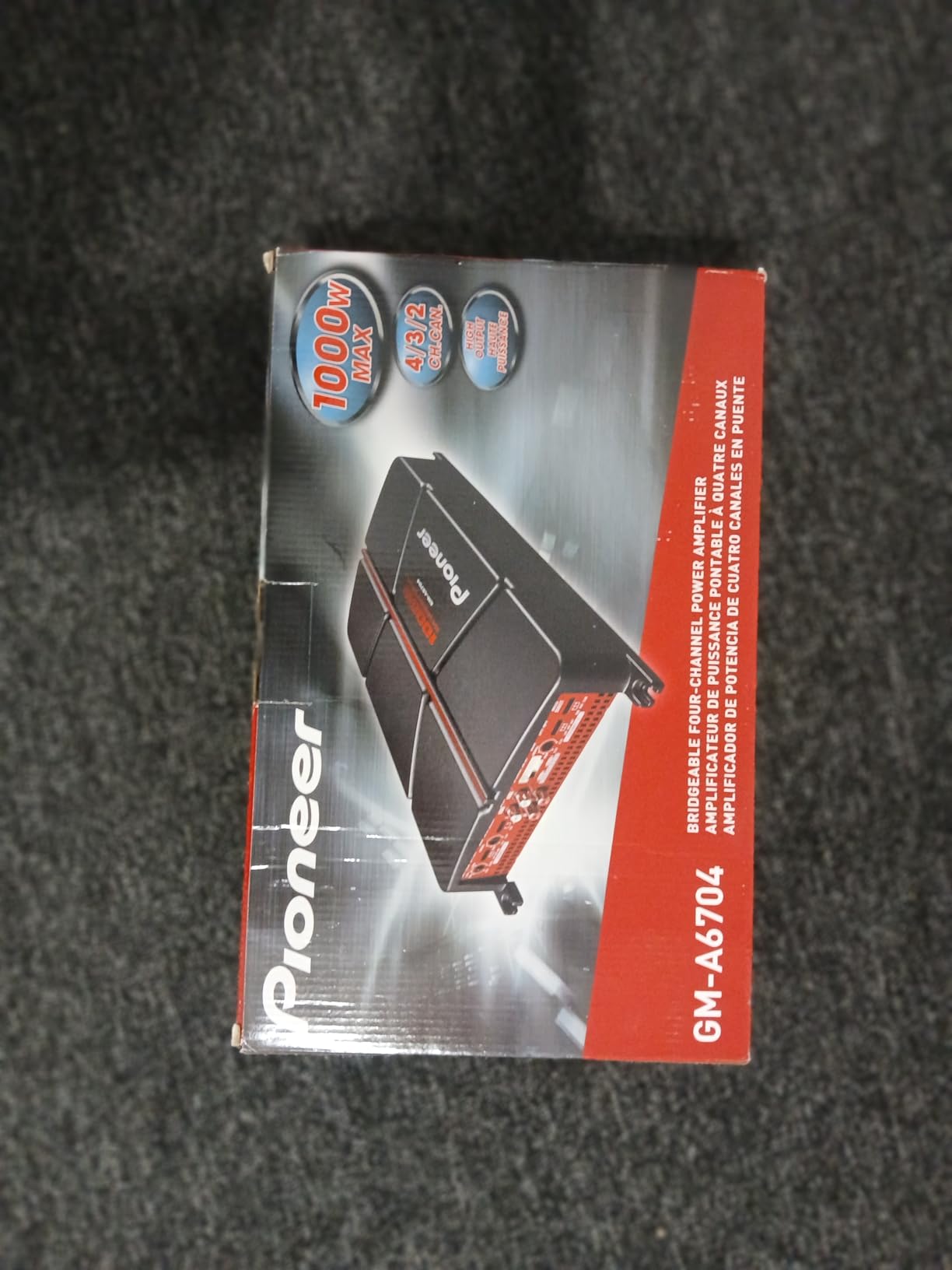
The Pioneer GM-A6704 has more owner feedback behind it than any other amplifier in this roundup, close to 1000 reviews, which makes its 4.4 star average one of the most reliable numbers here. It is a Class A/B design that focuses on clean, adjustable output rather than headline power, and at 60 watts RMS per channel it is a strong fit for a full four-door upgrade.
Owners treat it as the dependable entry-to-mid option. The most repeated theme is that gain calibration determines everything: set correctly the amp stays cool and clean, set too high it runs warm. That single setting is worth more than any spec on the box, and it is the first thing to get right on any install.
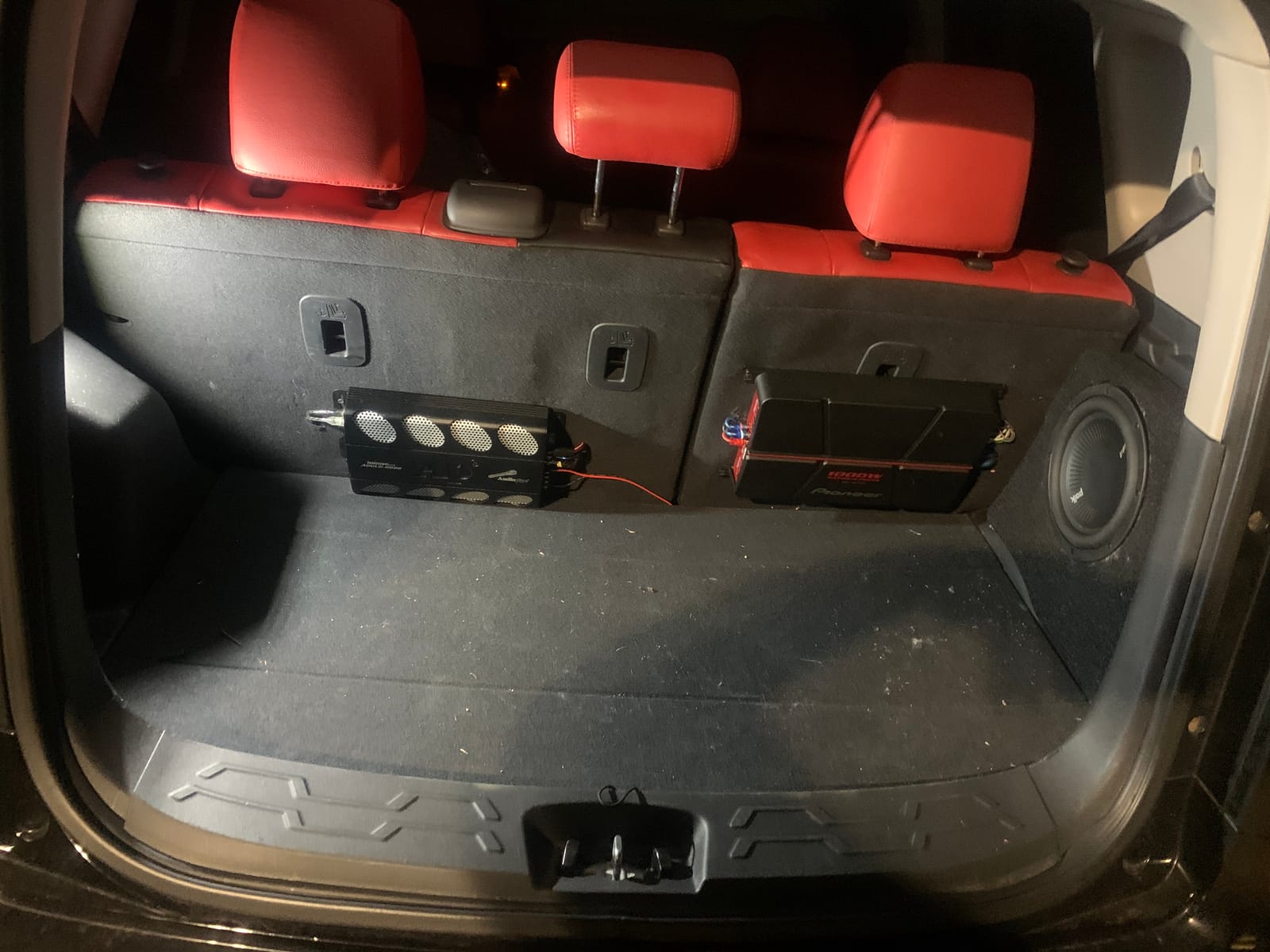
The variable high-pass and low-pass filters are the feature that separates it from cheaper four-channel units. A high-pass lets you protect small door speakers from low-frequency waste, and a low-pass lets you feed a subwoofer from the same amplifier, which is exactly how a front stage plus rear fill plus sub system is often built on a single box.
Bridging flexibility is genuinely useful here. At 190 watts RMS per channel bridged, this amp can drive a pair of modest subwoofers or push the front stage harder, which gives you room to grow without buying a second amplifier on day one.
Is a Class A/B amplifier better sounding than Class D?
There is no universal winner, and the difference is far smaller than the forums suggest. A well-engineered Class D amplifier like this Pioneer produces clean, accurate output with far less heat, while Class A/B designs spend more of your electrical current as warmth. The warmth is not free quality, and most listeners cannot hear a reliable difference once both amps are set correctly.
Choose Class A/B when you want the familiar, slower-blooming character and have the mounting space and airflow to deal with heat. Choose Class D when you care about size, efficiency and how hard the vehicle electrical system works. Pioneer’s GM series is a well-regarded budget option in the r/CarAV community, with the caveat that some models lack a subsonic filter, which matters only if you plan a ported enclosure.
Where the ceiling shows up
Sixty watts RMS per channel is a real limit for low-sensitivity component systems. If your door speakers are rated 100 watts or more and drop below about 86 dB sensitivity, you will run out of clean power before you run out of volume, and that is when distortion creeps in.
There is also a small but real reliability caveat. A handful of buyers report a unit that failed outright, so when you install it, run it hard for an hour within the return window and confirm every channel is clean before you close the trunk for good.
5. Taramps TS 400X4 – Most Versatile for Small Builds
Taramps TS 400X4 Black 2 Ohms 400W RMS 4-Channel Car Audio Amplifier
4 x 100W RMS at 2 ohm
2 x 200W bridged
15.84 oz weight
Class D
HPF LPF and full modes
Pros
- Lightest amplifier in the roundup at under 16 ounces so it mounts almost anywhere
- High-level auto turn-on works with factory stereos without extra wiring
- Built-in crossover with HPF
- LPF and full-range modes
- Also usable in motorcycles
- ATVs
- UTVs
- golf carts and boats
Cons
- 100W per channel at 2 ohms is modest for demanding speaker loads
- Around 9 percent of buyers report early failures
- Less headroom for high-power component systems
The TS 400X4 is the budget workhorse of this list, and the reason is the weight. At 15.84 ounces it is by far the lightest amplifier here, which means it fits in a tight footwell, behind a seat panel or on a motorcycle frame where a full-size chassis simply will not go.
Power is 100 watts RMS per channel at 2 ohms and 200 watts per channel bridged at 4 ohms, which is enough to give efficient factory-style door speakers a genuine upgrade without asking for much from the electrical system. Owners consistently describe it as doing more than they expected for the money rather than reaching for it.
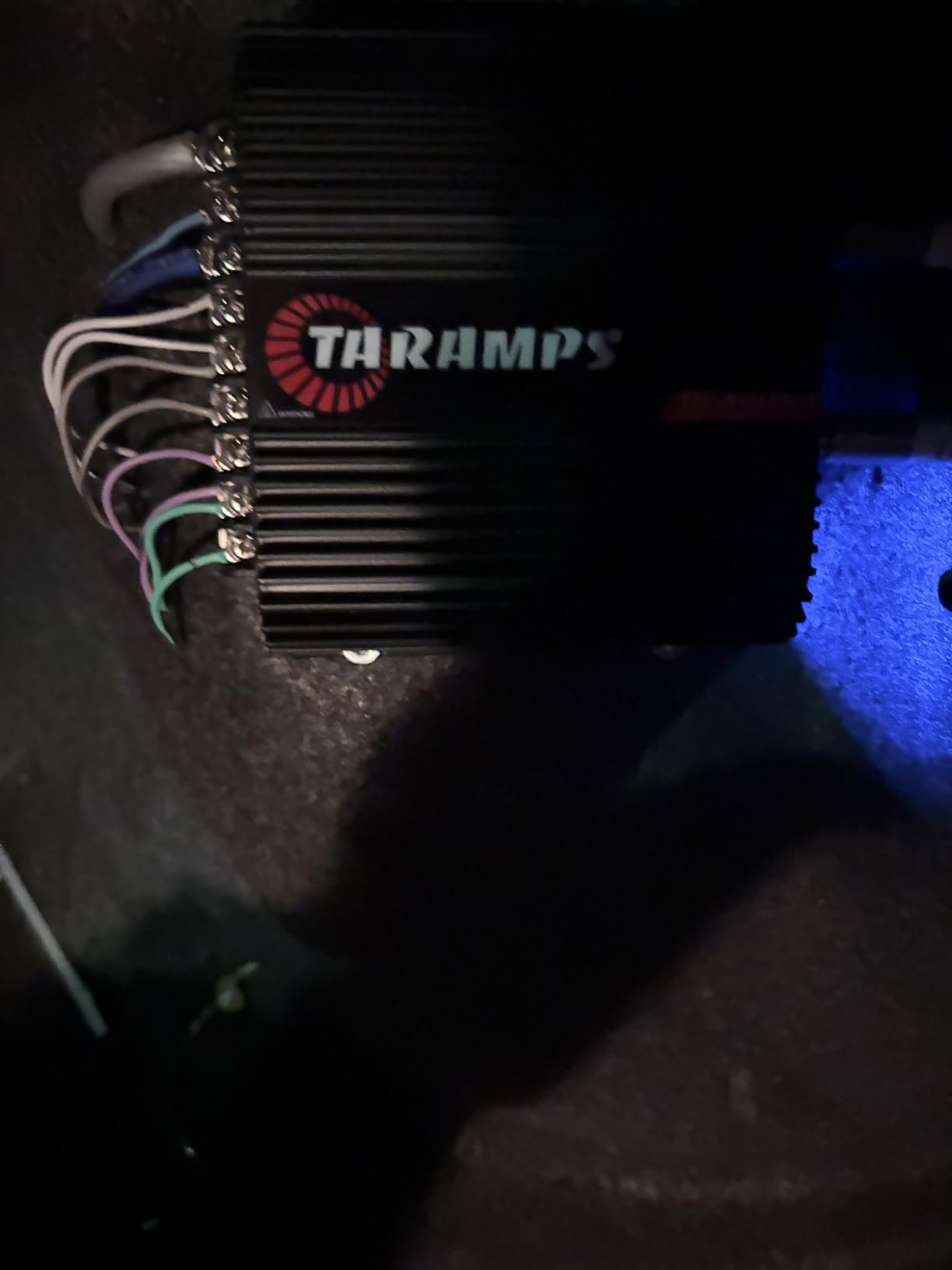
Automatic turn-on through the high-level inputs removes the usual installation headache on a factory radio. You tap the speaker-level wires for signal and the amp wakes up by itself, so there is no need to run a remote turn-on lead back to the head unit or fit a line signal converter.
The crossover controls matter more than you would expect at this level. Being able to switch channels between high-pass, low-pass and full range means the same four-channel amp can run a front stage on high-pass and a subwoofer on low-pass, which is a genuinely useful configuration for a compact build.
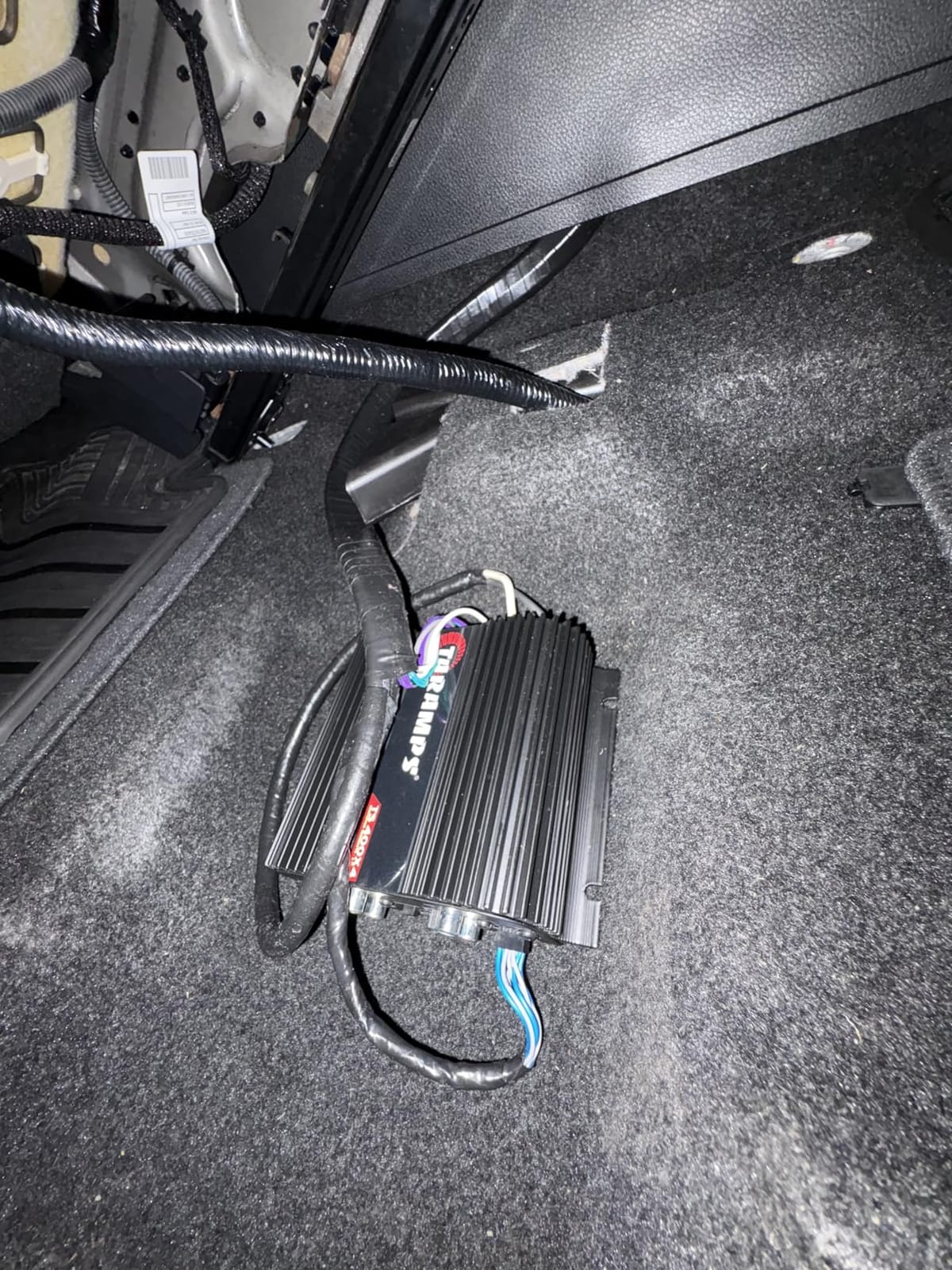
Will 100 watts per channel improve factory speakers?
Almost certainly, yes. Factory speakers are typically rated 15 to 25 watts RMS, so an amp delivering 100 watts per channel gives them more than three times their rated power. That is why factory door speakers sound dramatically better on an amplifier than they do on a head unit, even though the speakers themselves have not changed.
The extra power matters even at low volume because it removes the strain of running out of clean headroom. You are not using all 100 watts, but you have it available, and that is what keeps the midrange from getting harsh and the bass from thinning out as you turn the volume up.
What you give up at this level
You give up headroom for high-sensitivity gains. If you later upgrade to power-hungry component sets, this amp will not have the current capability to drive them cleanly, so it is better viewed as a final answer for a modest speaker set than a stepping stone to a loud one.
The 9 percent early-failure share is worth noting, as with the rest of this price group. Test the amplifier properly before the return window closes, and if you are installing it yourself, keep the gain conservative and the airflow around the chassis clear.
6. Recoil DI550.4 – Best for 2-Ohm Stability and Deep Adjustment
Recoil DI550.4 Full-Range Class-D 4-Channel Car Audio Amplifier 1040W
130W RMS x 4 at 2 ohm
80W RMS x 4 at 4 ohm
260W x 2 bridged
7.48 x 5.90 x 1.77 in
Pros
- 130W RMS per channel into 2 ohms is strong output for this class
- Unusually deep adjustment with gain
- LPF
- HPF
- crossover and bass EQ controls
- Metal chassis with efficient heatsinks that stay cool in use
- Four-way protection circuitry for long listening sessions
Cons
- Lower sales rank and fewer owner reviews than the leading sellers
- Around 7 percent of buyers report early failures
- No high-level inputs so factory radios need a converter
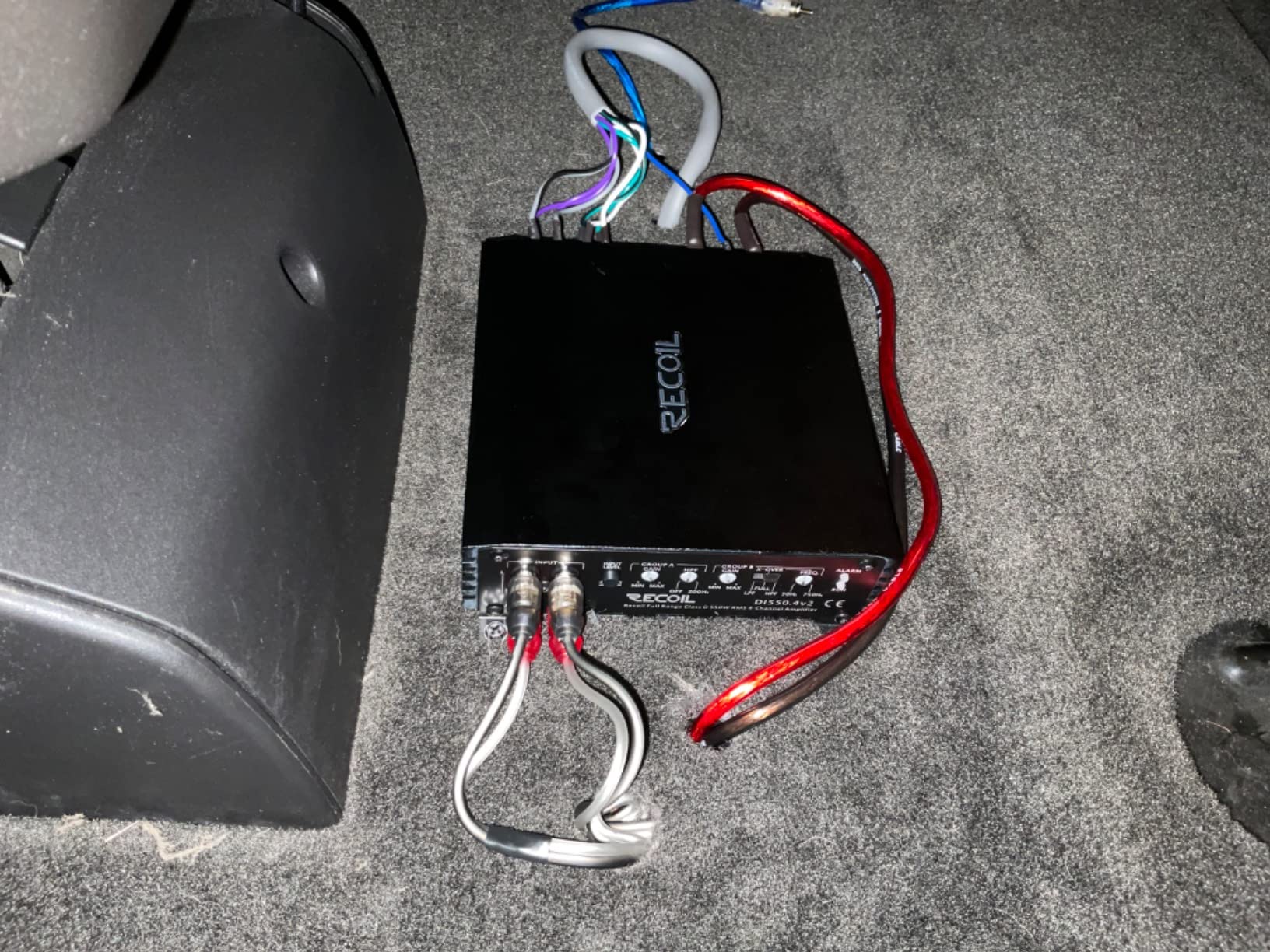
The Recoil DI550.4 is the one to consider if you want meaningful per-channel power at 2 ohms without moving up to a much larger chassis. It delivers 130 watts RMS per channel at 2 ohms, 80 watts at 4 ohms and 260 watts per channel bridged, with stable operation across a 2 to 4 ohm range rather than only at the ideal load.
Output per dollar is the headline claim and owners back it up. What they praise more is the control surface, because this amp offers separate gain, low-pass, high-pass, crossover and bass EQ adjustment, which is more tuning hardware than many amplifiers costing far more include.
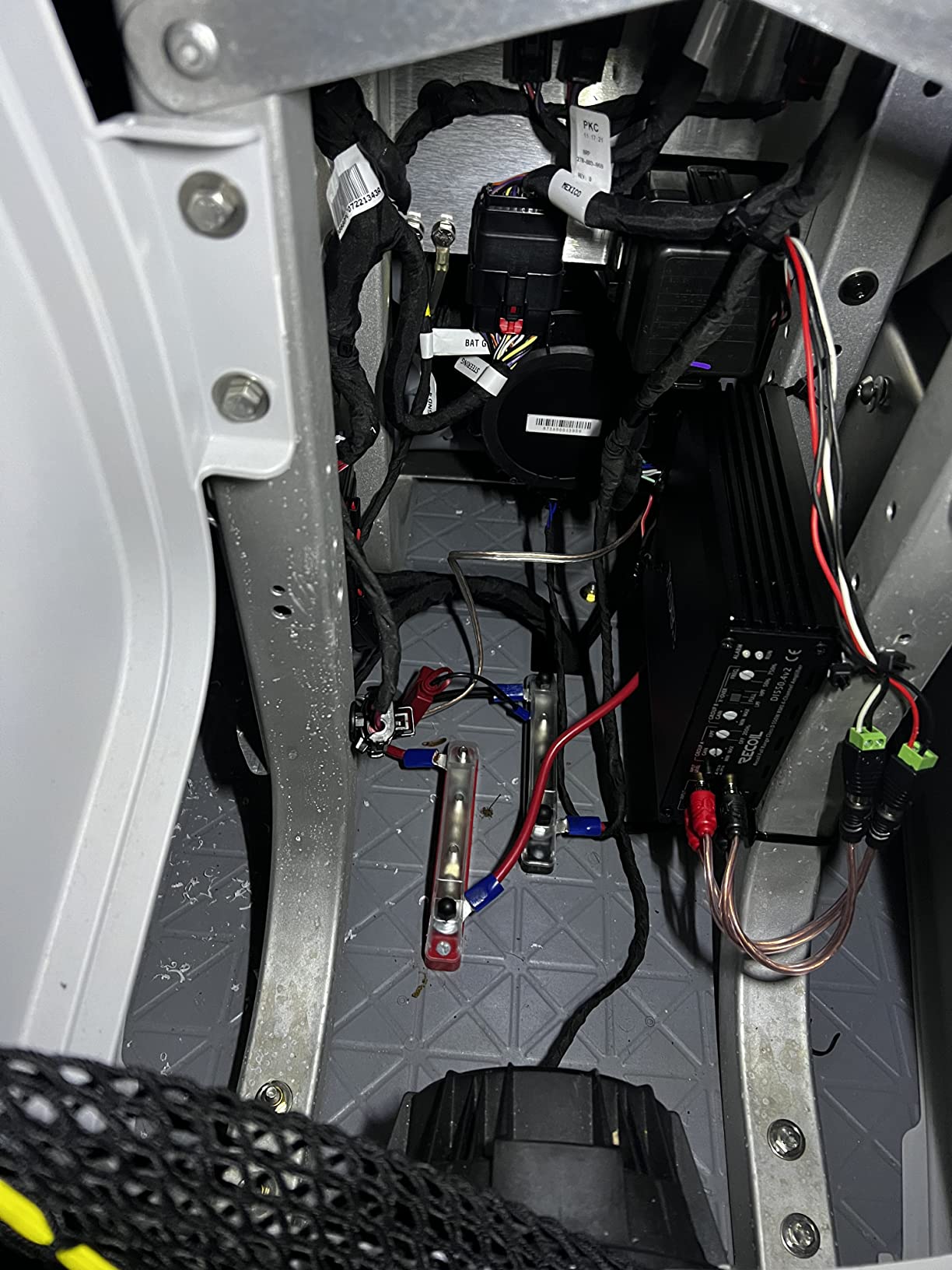
Thermally, it behaves well. The heatsinks are designed to move heat away efficiently, and owners running it at higher volume for extended periods report that it stays cool, which is what protects the output stage from the thermal cutback that some competitors suffer in hot climates.
Those same owners mention the four-way protection circuitry as the reason they are comfortable with long sessions. A metal chassis at this size feels more substantial than the plastic bodies in this roundup, and the one-year warranty with replacement for defects within 12 months is a reasonable safety net.
What does 2-ohm stability actually mean for you?
It means you have flexibility in what you connect. A 2-ohm stable amplifier keeps working properly when a speaker pair is wired in parallel to present a 2 ohm load, which is a common way to add output when your speakers support it. An amp rated only at 4 ohms can get hot, distort or shut down at that load.
If your future speakers might be a pair of component sets wired in parallel, or if you plan to bridge pairs for subwoofers, 2-ohm stability is worth paying for. If you are running a straightforward four-speater at 4 ohms, it is a nice-to-have rather than a necessity.
The catch: no high-level inputs
This is the amp to avoid if you are keeping a factory head unit. The DI550.4 takes RCA low-level inputs only, so a stock radio with no pre-outs means adding a line signal converter and an extra wiring step before the amp will even see a signal.
That is the single reason this is not higher in the list. For an aftermarket head unit with proper pre-outs, the power and the adjustment range here are genuinely excellent for the money. For an OEM system, look instead at a model with high-level inputs and automatic turn-on.
7. SounDigital 400.4 EVO – Best for Compact and Stealth Installs
SounDigital Amplifier (400W 4 Channels)
400W total across 4 channels
4.33 x 4.33 x 1.97 inches
8V to 16V supply
HPF LPF and full modes
Pros
- Tiny square footprint that fits behind a dash or in a motorcycle frame
- Independent gain knobs per channel pair with no screwdriver adjustment needed
- Selectable HPF
- LPF and full-range crossover modes on board
- Operating range from 8V to 16V suits smaller vehicle electrical systems
Cons
- Some owners notice a faint buzz at very low listening levels
- A small number of units have failed soon after purchase
- Modest output per channel for power-hungry speakers
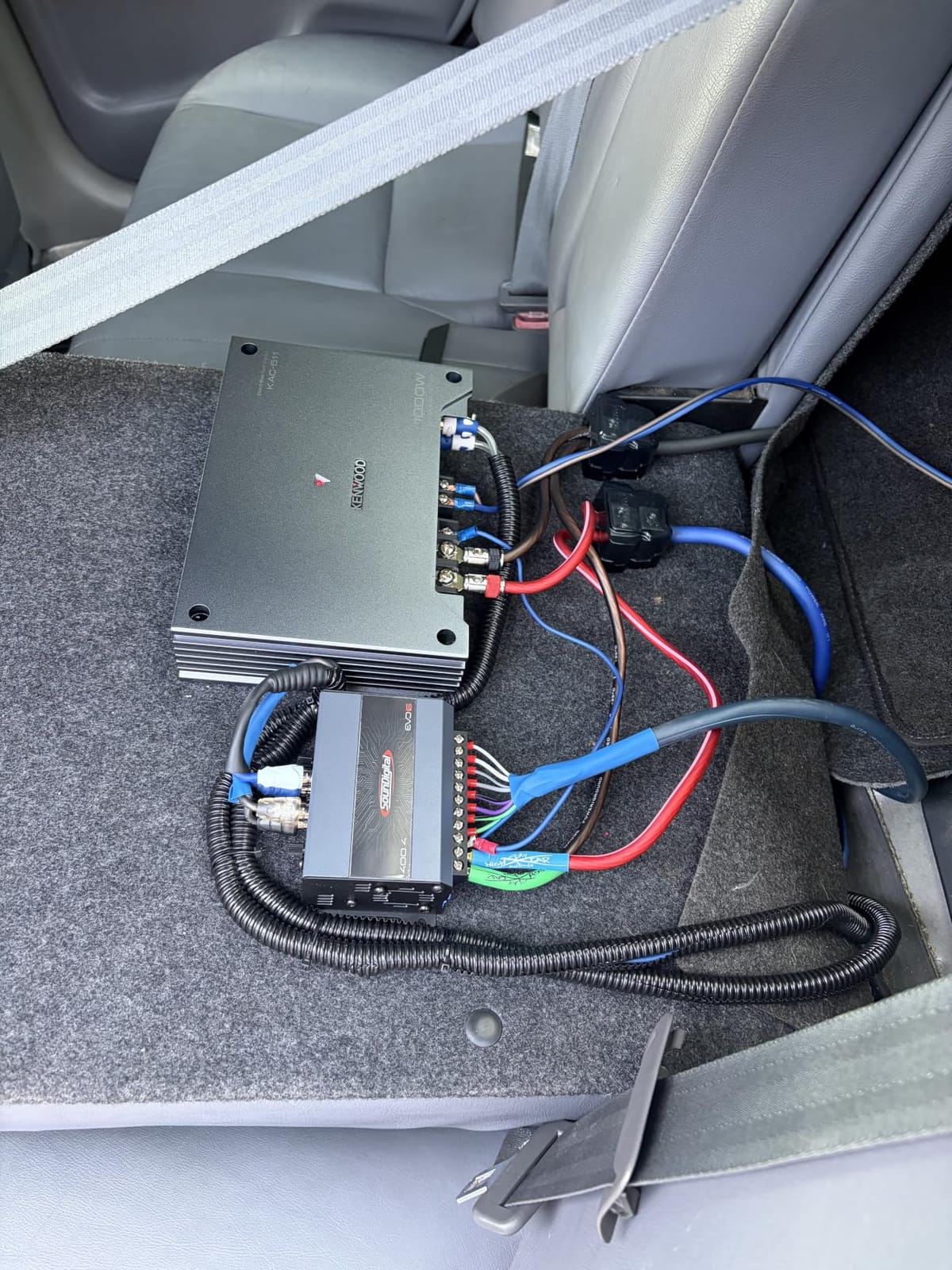
The SounDigital 400.4 EVO is the smallest amplifier in this roundup by a wide margin, measuring 4.33 by 4.33 by 1.97 inches. That size makes it the answer when a normal four-channel chassis physically will not fit, and it is a genuine option in a small hatchback, behind a dash panel or in a motorcycle or scooter frame.
Owners are routinely surprised by how much output they get from something this size, and several report upgrading from a larger amplifier with a far higher headline wattage and finding this unit cleaner and more reliable. Independent gain knobs for each channel pair mean you can set levels without a screwdriver, which is unusual at this size.
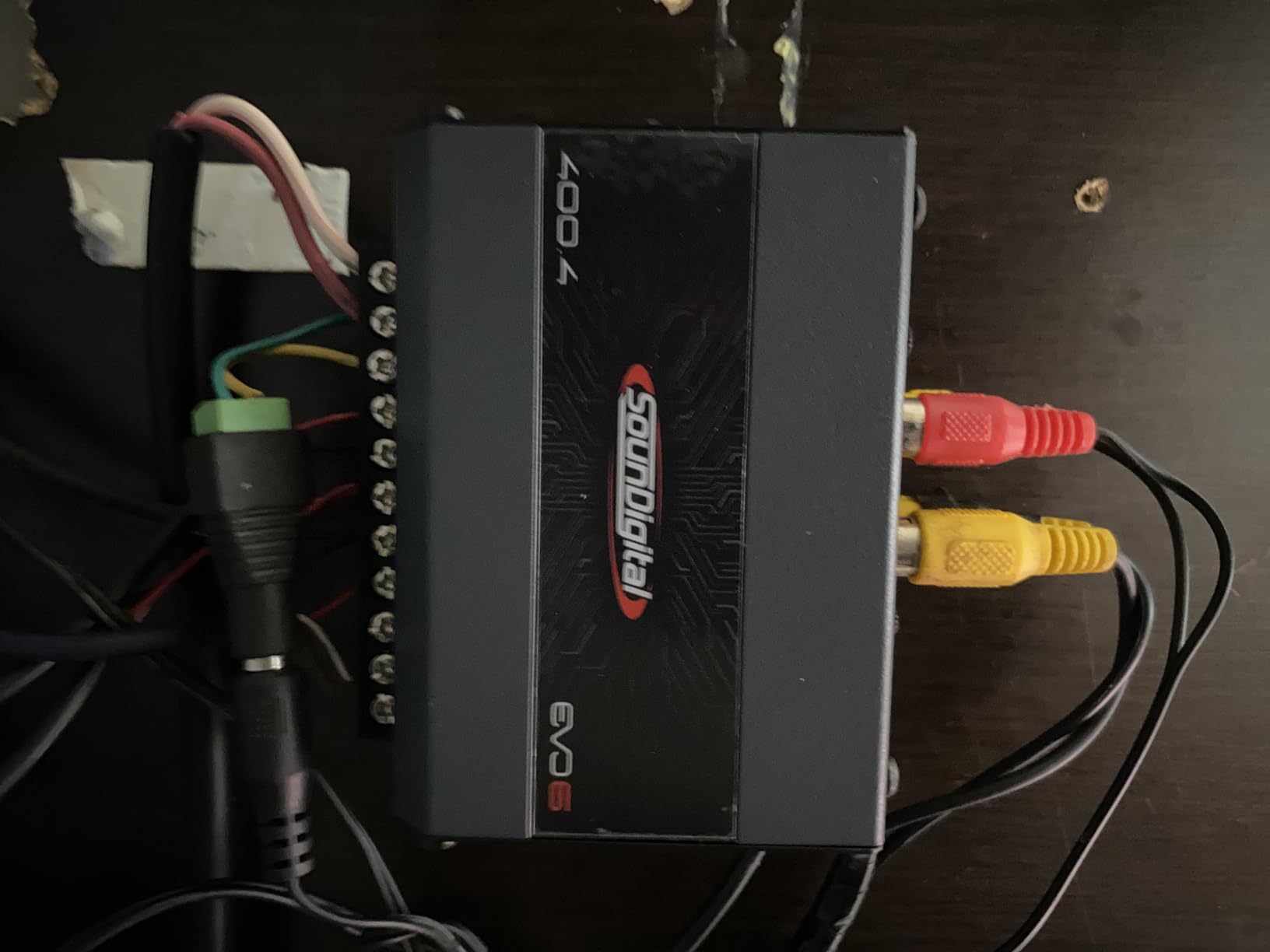
The crossover modes are welcome at this size too, since a four-channel amp in a tiny package would normally leave you with no way to protect door speakers from low frequencies. HPF, LPF and full-range selection means you can set a front stage properly even in a constrained install.
One practical detail worth noting is the supply voltage range. Operating from 8V to 16V means the amp will function in smaller vehicles and in situations where the charging system is not boosting as aggressively, which gives you more installation options than a unit designed only around a full 12V system.
Is a micro amplifier too small to sound good?
Not any more. Modern Class D designs are extremely efficient, so a small chassis is not a sign of a weak power supply or a cheap output stage. This amp runs from 8V to 16V and delivers clean output well beyond what most factory speakers can use, and the reviews consistently describe the sound as clear.
What you give up is current capability for high-power loads. If your speakers are rated at 100 watts or more, or you plan to bridge for a large subwoofer, size up. For efficient door speakers and a discreet install, the small footprint is an advantage no larger chassis can match.
What about that faint buzz?
A small number of owners report a faint buzz at very low listening levels, and it typically disappears once music is playing. It is a minor complaint rather than a functional problem, but it is worth mentioning if you listen at near-idle volume for long stretches.
There is also a small early-failure share in the reviews. As with every amp in this price bracket, run the unit hard for an hour or so inside the return window and confirm all four channels behave before you finish the install.
8. Pioneer GM-A4704 – Best for a Straightforward Factory Speaker Upgrade
Pioneer GM-A4704 520W Max Class AB Bridgeable 4-Channel Car Amplifier
40W RMS x 4 at 4 ohm
130W x 2 bridged
Class A/B
8.5 x 12.88 x 2.38 in
4.4 lb
Pros
- Clean distortion-free output that several owners measured above its rating
- Modest current draw of roughly 25 to 30 amps at full output
- Runs cool when the gain is set correctly
- Variable high-pass and low-pass filters for basic system tuning
- Compact footprint for a Class A/B amplifier
Cons
- 40W RMS per channel is low for higher-power speakers
- Several reviews report thermal cutoffs when the gain is set too high
- One long-term owner reported progressive failure
The Pioneer GM-A4704 is the quieter sibling of the GM-A6704 and the better choice when your speakers do not need much power. At 40 watts RMS per channel and 130 watts bridged, it is sized almost exactly for replacing a factory system, and the 4.5 star average across 283 reviews reflects that it does its job without drama.
Owners who measured it found output above the rated RMS and a current draw of roughly 25 to 30 amps at full output, which is remarkably efficient for a Class A/B design. That makes it a comfortable match for older vehicles with a modest factory electrical system.
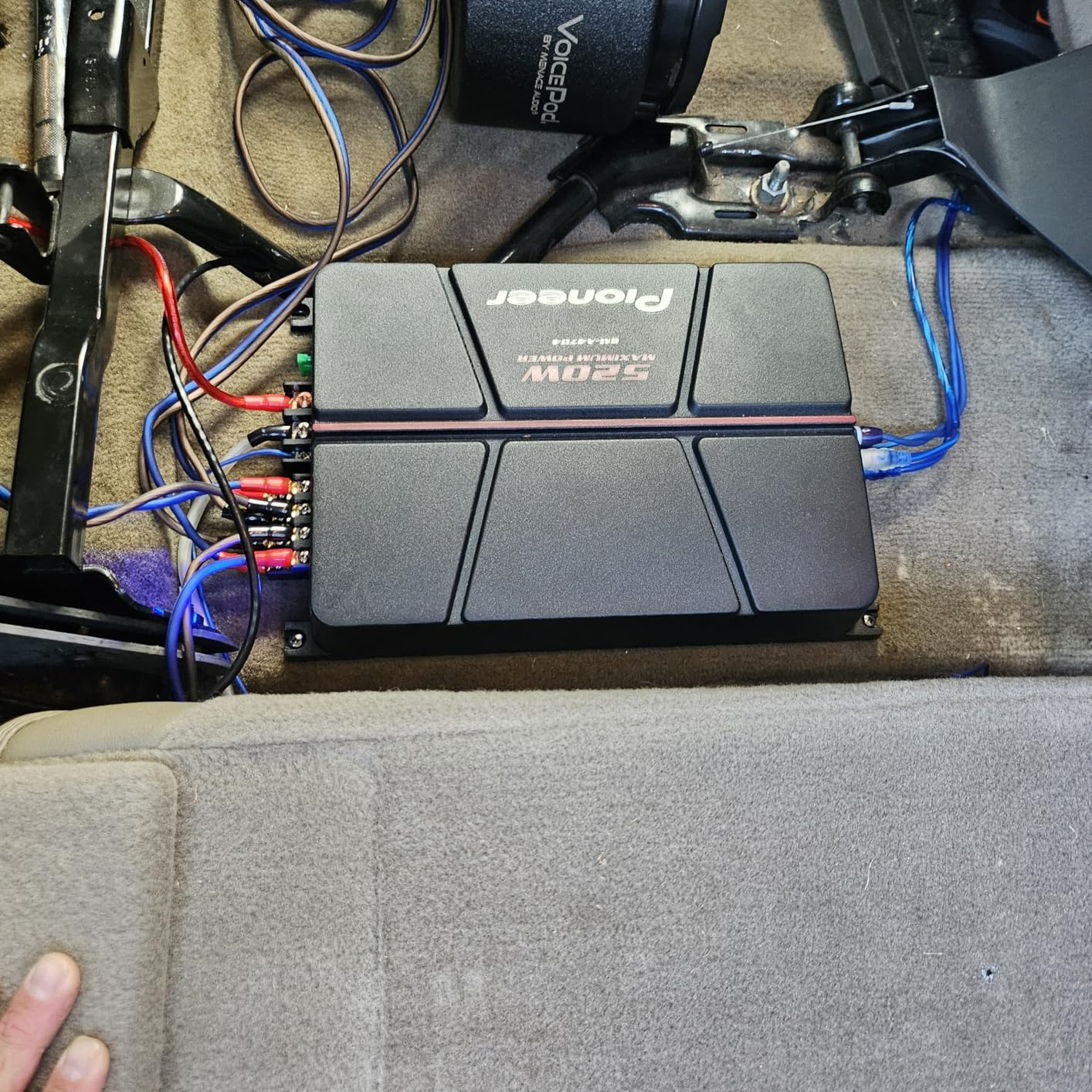
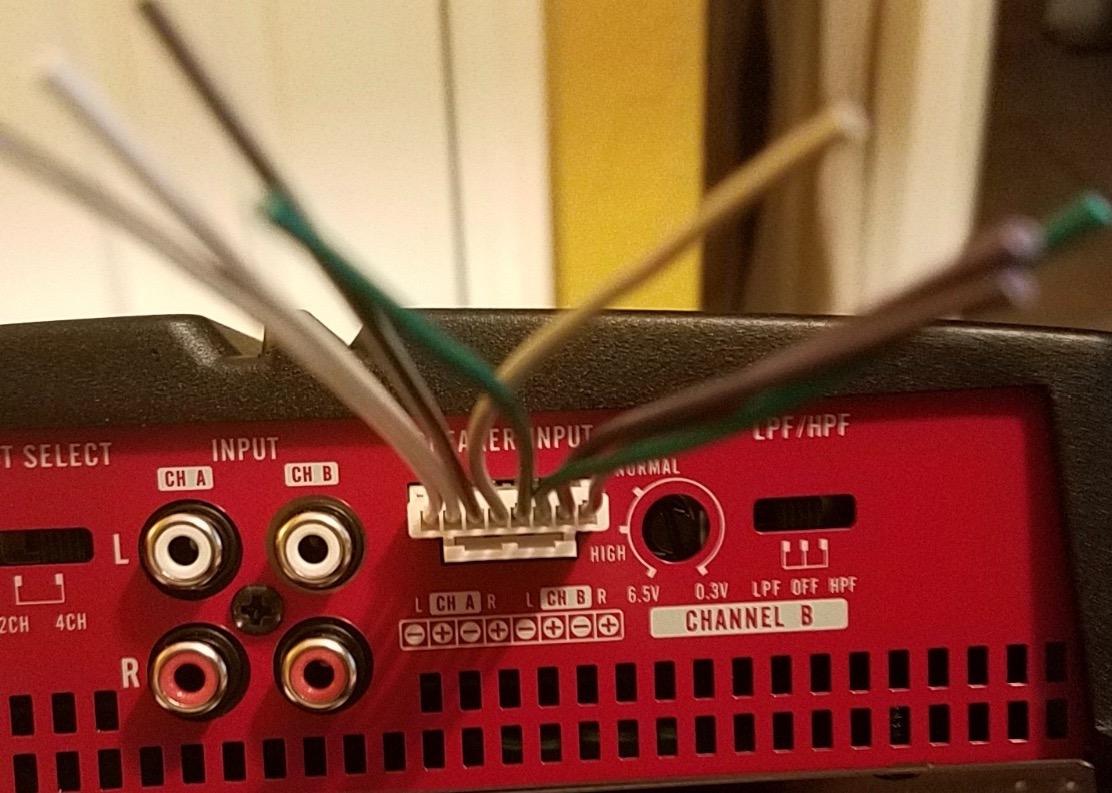
The high-pass and low-pass filters give you the same system-design freedom as the bigger Pioneer, just with less power behind it. Many installs pair the front doors on high-pass, the rears on low-pass with a subwoofer, and this amp has the outputs to do exactly that.
Reliability is the other reason owners prefer this model over its bigger brother. In the reviews for this amp, the negative feedback is almost entirely misconfiguration, with people driving 120 to 180 watt speakers off a 40 watt per channel amplifier and then reporting cutouts as if the amp were faulty.
How do you avoid overdriving speakers with a 40-watt amp?
Check the speaker rating and the gain together. If your speakers are rated 80 watts RMS or less, this amp is a sensible match. If they are rated well above that, you are asking the amplifier to run out of headroom, and the resulting distortion is what damages tweeters and leads to the thermal cutouts described in the reviews.
Set the gain so that the amp is not being asked for more than it can deliver, and keep the source volume moderate. The rule is simple: an amplifier should never be the weak link in the chain, because a clean low-volume signal sounds far better than a distorted loud one.
When to step up instead
If you plan to add a subwoofer later, this amp will handle a small one on a bridged pair, but you lose front and rear channels to do it. That is the moment a dedicated mono amplifier or a five-channel unit becomes the smarter purchase, rather than stretching a four-channel amp across a job it was not sized for.
There is also one report of progressive failure over an extended period, which is rare but worth knowing. Testing the amplifier within the return window covers this, and it costs an afternoon.
9. ORION CBA2000.4 – Best Class A/B Starter Amp
ORION CBA2000.4 Cobalt High Efficiency 4-Channel Class A/B Amp, 2000W
75W RMS x 4 at 2 ohm
40W RMS x 4 at 4 ohm
Class A/B
10Hz to 30kHz
11 x 7 x 2.5 in
Pros
- Strong sales rank for a budget amplifier
- Good sound quality for the money spent
- High-pass
- low-pass and bass boost for basic tuning
- Stable at both 2 and 4 ohms with 2-way protection circuitry
- Can drive door speakers and a subwoofer from one unit
Cons
- Highest one-star share in this roundup at 14 percent
- Owners report difficulty finding warranty information when a unit fails
- 40W RMS x 4 is low against the 2000W headline figure
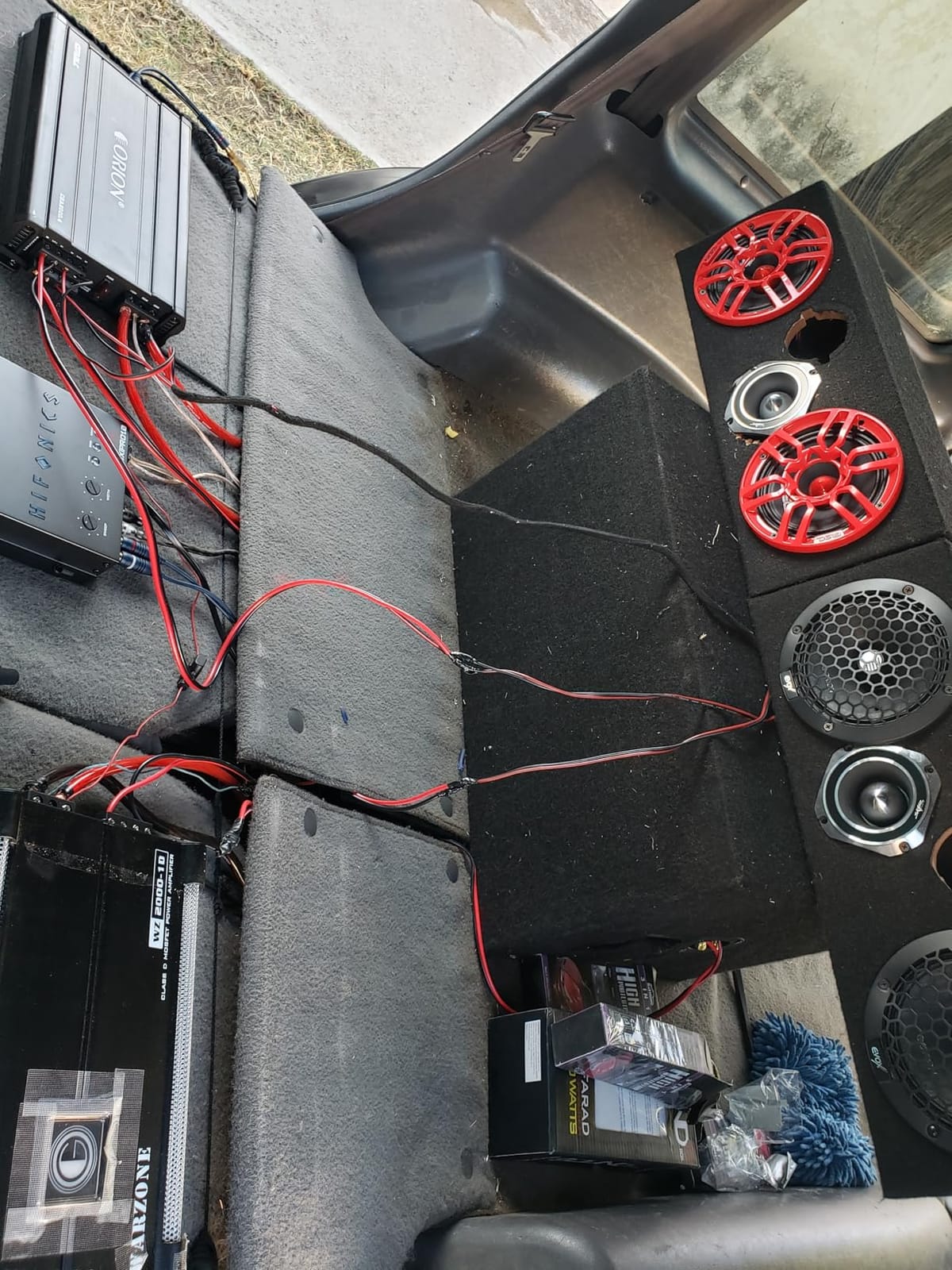
The ORION CBA2000.4 is a straightforward Class A/B amplifier for someone who wants the traditional sound character without paying Class A/B prices from an established audio brand. It offers 40 watts RMS per channel at 4 ohms and 75 watts at 2 ohms, plus high-pass, low-pass and bass boost controls for basic system shaping.
Owners are candid that satisfaction here is tied mostly to the price. They describe it as good value that sounds fine with midrange speakers and can push a subwoofer, which is exactly what a first amplifier step-up needs to be. Frequency response is rated from 10Hz to 30kHz, wide enough for full-range door speakers.
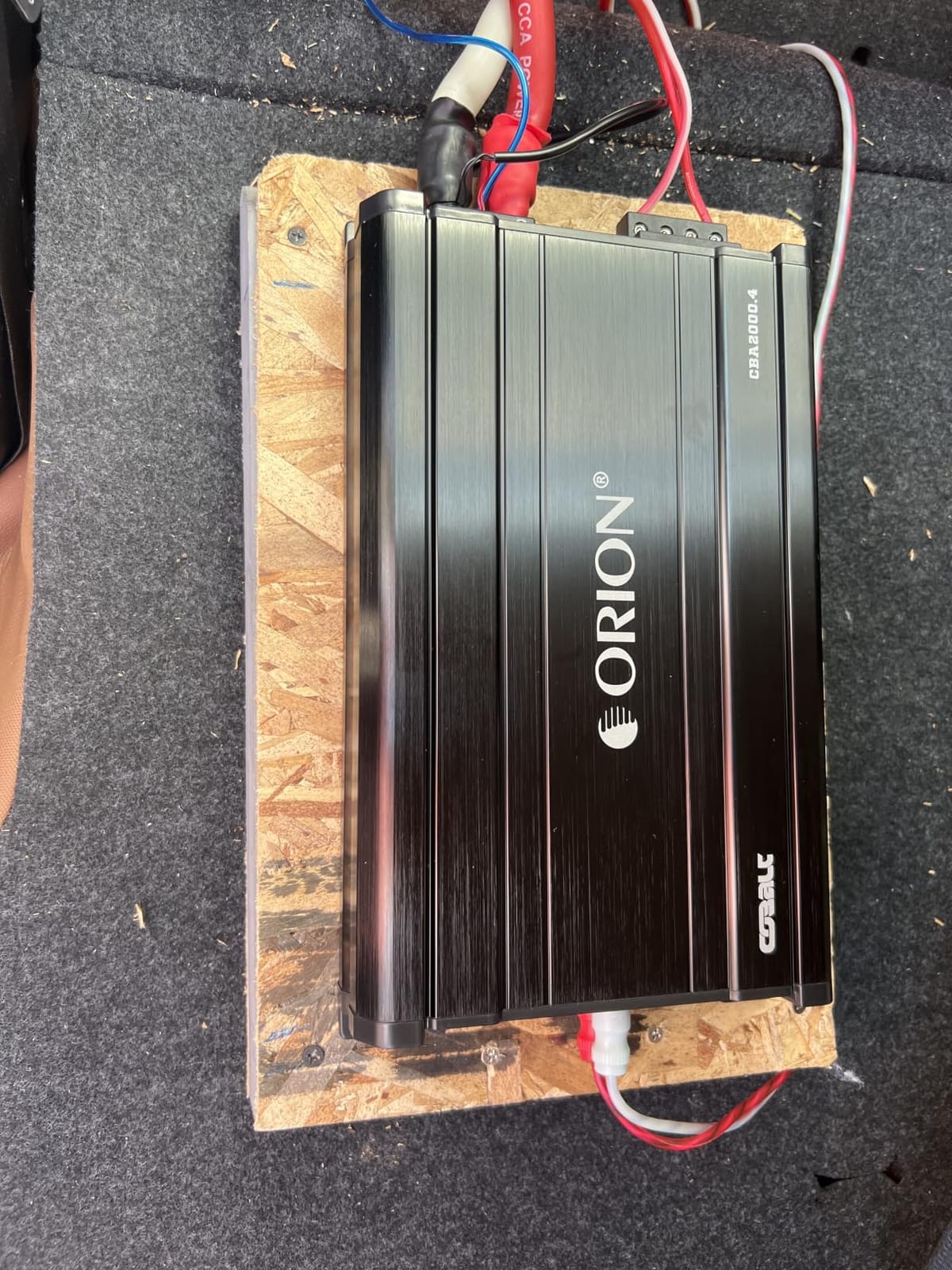
The 2-way protection circuitry and stable operation at 2 or 4 ohms give it a reasonable working envelope, and the MOSFET power supply keeps the amp responsive without the weight of a traditional Class A/B design. It is a metal chassis at 11 by 7 by 2.5 inches, which is manageable in a trunk or under a seat.
Being Class A/B, it draws more current and runs warmer than the Class D units in this list. If your car has an older charging system or you plan to run high volumes for long periods in a hot climate, that is worth factoring into your choice.
How do you read a 2000-watt claim correctly?
Ignore it for anything other than marketing. That figure is a maximum or peak number that the amp can briefly deliver into an ideal load, not a continuous rating. The only numbers that describe real listening use are the RMS figures, and here they are 40 watts per channel at 4 ohms and 75 watts at 2 ohms.
This is the single biggest source of confusion in car audio shopping, and it is the same trap that makes oversized, peak-rated amplifiers look like a bargain. Compare RMS at the impedance you will actually run, and nothing else. The community advice in r/CarAV threads is consistent on this point: verified per-channel RMS at 4 ohms is the only figure worth reading.
The after-sales caveat
The 14 percent one-star share is the highest here, and it is driven less by sound quality than by after-sales problems. At least one owner who had a unit fail after roughly two months could not locate the warranty terms, and that experience is what drives the negative reviews.
That matters more than the rating suggests. Before you buy, confirm the warranty terms for the seller you are using and keep your receipt. If after-sales support is a priority for you, a brand with a clear dealer network is the safer route.
10. ORION CBA2500.4 – Best for Driving a Subwoofer Pair
ORION CBA2500.4 Cobalt High Efficiency 4-Channel Class A/B Amp, 2500W
100W RMS x 4 at 2 ohm
60W RMS x 4 at 4 ohm
Class A/B
10Hz to 30kHz
2-way protection
Pros
- 100W RMS per channel at 2 ohms is the highest here for a Class A/B chassis
- Owners report it comfortably drives a pair of 12-inch subwoofers
- Clean sound that reviewers rate above the price point
- Stable at 2 and 4 ohms with 2-way protection circuitry
- Does not overheat in typical use
Cons
- Lowest average rating in this roundup at 4.0 stars
- Highest one-star share at 16 percent with reports of channels failing after a few days
- One owner reported thermal cutouts after 30 to 40 minutes at half volume
- Slow and unhelpful support was reported during an exchange
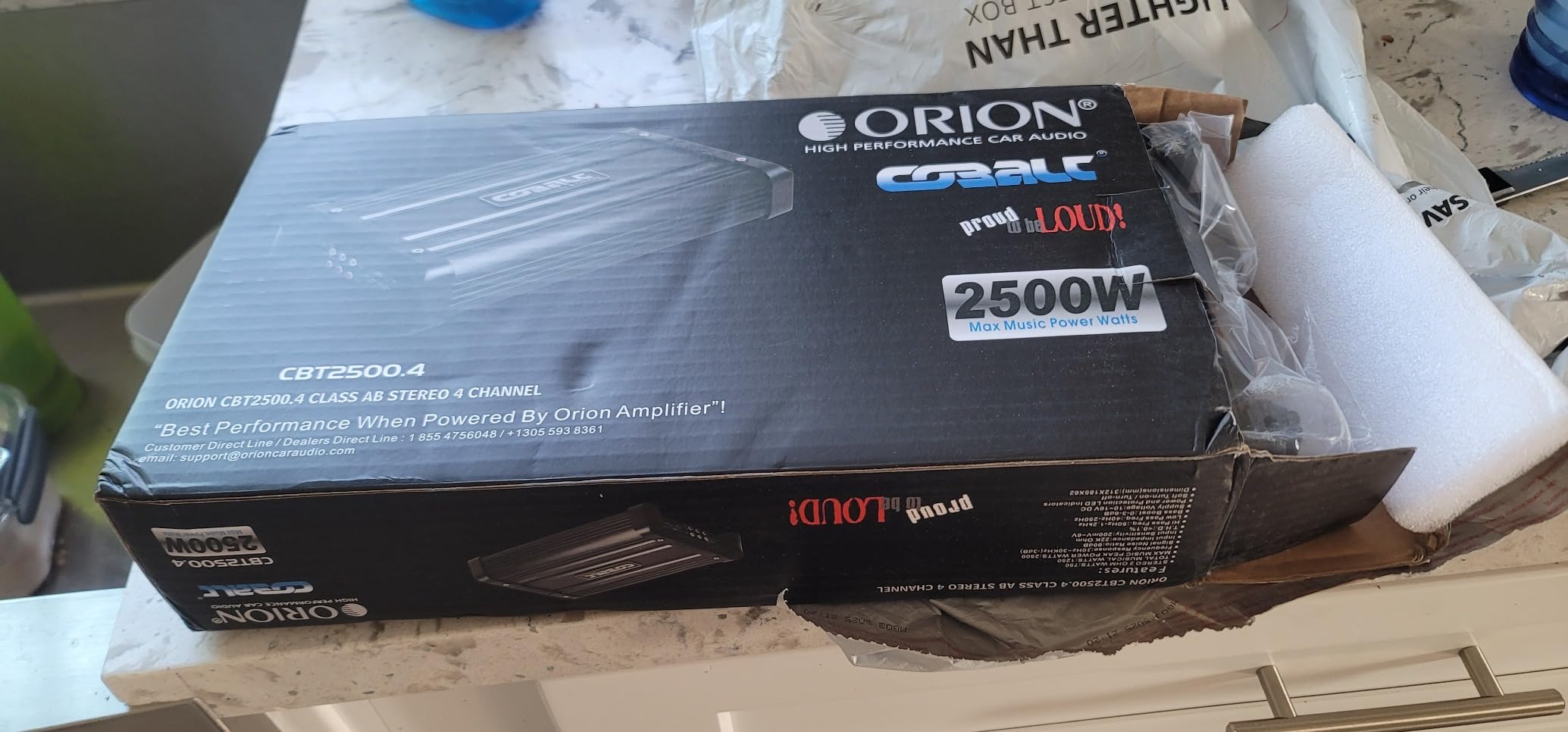
The CBA2500.4 steps up from its sibling with 100 watts RMS per channel at 2 ohms and 60 watts at 4 ohms, and that extra capacity is what makes it a genuine option for a subwoofer pair rather than only for door speakers. Several owners report using it to drive two 12-inch subwoofers satisfactorily from a bridged pair.
On the positive side, the sound quality is consistently rated above what the price suggests, the install is straightforward, and the amplifier stays cool in typical use. High-pass, low-pass and bass boost controls give you enough shaping to blend a sub stage with your front speakers.
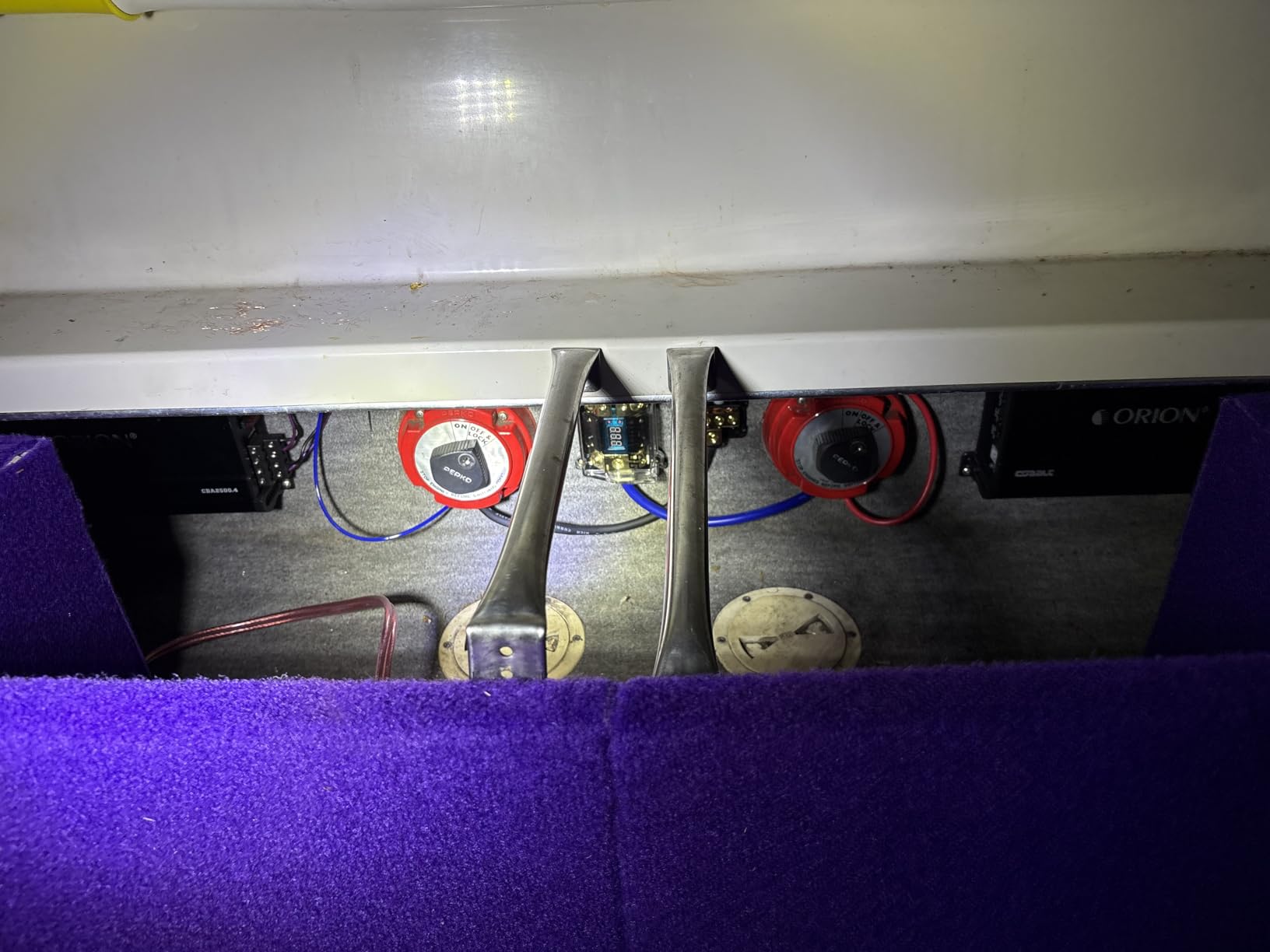
It is also the most polarising amplifier we tested in this roundup. The 64 percent five-star share is the lowest here, and the 16 percent one-star share the highest, with the complaints clustering around units losing one or two channels a couple of days after purchase, often just outside the return window.
That pattern points to a batch or component-consistency issue rather than a design flaw, because the failures are abrupt rather than gradual. It also means the return window matters enormously with this model. Test all four channels hard, immediately, and keep the packaging until you are certain.
Is it worth the risk for a subwoofer pair?
For a system that will be pushed hard on every drive, a dedicated mono amplifier is the safer engineering choice. A mono amp is purpose-built for the load, runs cooler, and if it fails you lose the bass rather than half your system. A four-channel amp bridging a pair of channels to drive subs is a reasonable approach when budget and space are tight.
If you do go this route, the thermal report is worth heeding. One owner reported cutbacks after 30 to 40 minutes at half volume, which points to gain being set too high for the load rather than a cooling failure, so set the gain conservatively and give the chassis airflow.
How to handle the after-sales risk
Confirm the warranty terms with the seller before you commit, and keep every bit of packaging and documentation. At least one owner reported slow and unhelpful communication during an exchange, which is the part of the experience that turns a failed unit into a lost weekend.
With those caveats, the CBA2500.4 does deliver the highest Class A/B per-channel output in this group and does the job when the system is set up properly. It simply asks for more care in testing and support than the other nine.
How to Match an Amplifier to Your Speakers
Match your amp to about 1.5 to 2 times the RMS rating of your speakers. That headroom rule is the answer to the single most repeated question in car audio forums, and it is the one number that decides whether a system sounds effortless or strained. If your door speakers are rated 50 watts RMS, look for an amp delivering 75 to 100 watts RMS per channel.
Why the multiple? Because an amplifier running at the edge of its capability clips, and clipping is what makes an aftermarket system sound worse than the stock one. Extra headroom means your amp is never the weak link, so the cleanest available signal reaches the speaker at any volume. Speakers rated well below the amp are safe, because they can never ask for power the amp cannot deliver.
Sensitivity decides how much power you actually need. A speaker rated 90 dB will produce far more volume from the same watts than one rated 84 dB, which is why two builds with identical amps can sound nothing alike. Read the sensitivity number on the speaker spec sheet before you fix on an amplifier, and if it sits at the low end of the range, move up a power bracket rather than an amp with more features.
One useful comparison point from the community: when people swap a Rockford Fosgate unit for a Pioneer in an existing install and hear a difference, the culprit is almost always gain calibration rather than the brand. The C.L.E.A.N. gain circuitry on the Rockford R2-500X4 exists specifically to remove that guesswork.
Class D vs Class A/B: Which Amplifier Type to Choose
Both types work, and the sound difference between a well-built example of either is smaller than most marketing suggests. Efficiency, size and heat are where they genuinely diverge, and that is what should drive your decision. For a car with limited space and a working electrical system, Class D is the sensible default. For a system you will tune carefully and want the traditional sound signature from, Class A/B has its place.
Class A/B amplifiers spend a large share of your current as heat, which is why the Pioneer GM models in this roundup are physically larger and warmer-running. Class D designs are dramatically more efficient, run cooler, and are therefore smaller and easier to mount away from airflow. For older vehicles with tired alternators, that efficiency is a genuine practical advantage.
Forum discussion often frames this as sound quality versus size, but the honest version is that a properly engineered Class D amp is accurate and clean, and a properly engineered Class A/B amp is accurate and clean with a different midrange character. Set the gain correctly and the difference is far smaller than the fit and finish of your speaker install. If you are comparing home and car systems, the same principle shows up in our guides to the best Bluetooth amplifiers for passive speakers and the best mini amplifiers for desktop speakers, where power per watt matters even more.
High-Level vs RCA Inputs for Factory Radios
High-level inputs are the single most important feature for most people upgrading a stock system. A factory head unit without RCA pre-outs has only one way out, which is its speaker-level wires. An amplifier with high-level inputs and automatic turn-on can take its signal straight from those wires and wake up with the head unit, with no converter and no extra wiring.
RCA inputs are for aftermarket head units that provide proper pre-outs, and for signal chains that include a processor or sound-shaping unit. Feeding a speaker-level signal into an RCA input produces distortion that gets amplified, which is the classic source of a system that sounds worse after an upgrade rather than better.
Three of the amplifiers in this roundup have high-level inputs with automatic turn-on: the Taramps TS 1200X4, the Taramps TS 400X4 and the Rockford Fosgate R2-500X4, which also supports high-level input alongside its balanced differential RCA path. If you are keeping your factory radio, that capability narrows your shortlist before any other feature matters.
How Many Speakers Can a 4-Channel Amp Power?
A four-channel amplifier is built for four speakers, which in a typical car is the front and rear door pair. You can also run three channels with a bridging pair feeding a subwoofer, two bridged channels for a subwoofer alone, or more than four speakers in parallel per channel as long as the total impedance stays above the amp rating.
The impedance limit is the rule people get wrong. Two 4-ohm speakers wired in parallel present 2 ohms to the amp, so you need an amp rated for 2 ohms or you will overheat it or trip protection. Two 8-ohm speakers in series present 4 ohms, which is the easy way to add door and rear speakers without exceeding an amp’s rating.
Running more than four speakers is usually a mistake at this power level. Splitting the same watts across six speakers gives each one less, and the ones that are wired wrong get the least. Two speakers per channel, total, is the sensible maximum for a four-channel amp doing a front and rear stage.
4-Channel vs 5-Channel When You Want a Sub Later
A four-channel amp is the right answer when your system is four speakers, and a compromise when you add a subwoofer. Bridging one channel pair takes those two speakers away, so you drop from four speakers to two, which is a real loss for anyone who wants full front and rear coverage.
A five-channel amplifier solves that by giving you four channels for speakers plus a dedicated subwoofer channel with its own gain and low-pass filter. The 3/2/1 channel configurations common on modern multi-channel amps exist for the same reason. If you know a subwoofer is part of your plan within the next year, budget for the five-channel or a separate mono amplifier instead of stretching the four-channel across both jobs.
Until then, bridging the Taramps TS 1200X4 or the Pioneer GM-A6704 for a subwoofer is a legitimate way to get bass from one box. Just know what you are giving up, and set the low-pass filter properly so the sub does not fight the door speakers for the same low frequencies.
Installation Basics: Fusing, Wire Gauge and Gain
Before anything else, run a proper power wire. An amp cannot deliver its rated output through an undersized cable, and a thin wire is the reason budget builds underperform. The general rule is roughly 8 to 10 AWG for amps up to about 100 watts total, 4 AWG for mid-power, and 2 AWG or heavier for high-power units like the Taramps TS 1200X4.
Fuse the amplifier at the battery, not at the amp. A correctly rated inline fuse protects the car if a cable shorts, and the fuse should be as close to the battery terminal as the cable length allows. Ground to bare metal on the chassis, not to a painted bolt, and treat the ground connection with the same care as the positive run.
Gain is not volume. Turn the head unit volume to about three-quarters, set all tone controls flat, and raise the amp gain until the music just starts to distort, then back it off until the distortion is gone. On the Rockford Fosgate R2-500X4, the C.L.E.A.N. circuit walks you through this process instead of making you guess with a screwdriver.
Finally, give the amp airflow and keep it away from carpet and sealed trim. A Class D amp that is properly ventilated will not enter thermal protection, and protection mode is the most common cause of an amp cutting out mid-drive. Keeping your factory speaker lines and signal cables away from the power cable also prevents the alternator whine that ruins an otherwise clean install.
Why Is My 4-Channel Amp in Protection Mode?
Protection mode means the amplifier has detected a fault and shut itself down to avoid damage. The most common causes are a speaker impedance below what the amp is rated for, a shorted or badly wired speaker, insufficient supply voltage, or a chassis that has overheated. Work through them in that order, because the first three cause hard faults and the fourth causes gradual ones.
Check speaker impedance first. Confirm that each channel pair presents 4 ohms or more, or 2 ohms if the amp is rated for it. A single miswired speaker is the most common cause of a protection-mode trip.
Check for a short. Disconnect the speakers and power the amp with no load, then reconnect them one pair at a time. If protection clears with speakers off, the fault is in the wiring or the speaker.
Check supply voltage. An amp that draws hard current from a tired alternator or a thin power wire will see voltage drop and shut down. Measure at the amp terminals under load, not at the battery.
Check gain. An amp with the gain wound up too high asks for power it cannot deliver, which trips protection and generates heat. Set gain with a multimeter or the C.L.E.A.N. circuit, not by ear.
Check grounding and heat. A loose ground or an amp mounted against hot carpet will run into thermal cutback, usually after 20 to 40 minutes rather than instantly.
Popping on turn-on or turn-off usually points to an amplified speaker-level signal with a DC offset, which is a sign you are feeding speaker-level audio into an RCA input without a proper converter. A hum or whine that scales with volume is a ground or routing problem, while a hum that stays constant as volume rises points to the RCA signal itself.
Clipping only at high volume is not a fault, it is a headroom problem. Either your amp is undersized for your speakers or the gain is set too high, and the fix is the same 1.5 to 2x matching rule from the buying guide. If you are ever choosing an amp purely on the big number printed on the front, that is the situation that produces it.
Frequently Asked Questions
What is the best 4-channel amplifier for a car?
The Alpine S-A32F is the best 4-channel amplifier for most cars, combining the highest average rating in our roundup with a compact Class D chassis, 55W RMS per channel at 4 ohms and a low noise floor. For deeper system tuning, the Rockford Fosgate R2-500X4 offers more power and adjustable crossovers, and for high headroom the Taramps TS 1200X4 delivers 300W RMS per channel at 2 ohms.
How many speakers will a 4 channel amp handle?
A 4-channel amplifier is designed for four speakers, usually the front and rear door pairs. You can run three channels with a bridged pair feeding a subwoofer, or two bridged channels for a subwoofer alone. Adding more than two speakers per channel is only sensible if the combined impedance stays at or above the amp rating, such as two 8-ohm speakers wired in series to present 4 ohms.
What class amplifier is best for car speakers?
Class D is the best default for most car installs because it runs cooler, draws less current from the vehicle and fits into smaller spaces, and modern designs are accurate and clean. Class A/B amplifiers deliver a traditional sound character and remain a good choice when you have the mounting space and airflow, but they generate more heat and pull more current from the charging system.
What is a good small 4-channel car amplifier?
The SounDigital 400.4 EVO is the strongest compact option, measuring 4.33 by 4.33 by 1.97 inches so it fits behind a dash panel or in a tight frame. The Taramps TS 400X4 is the alternative at under 16 ounces, and both include high-level inputs with automatic turn-on for factory radios plus selectable high-pass, low-pass and full-range crossover modes.
Do I need an amplifier for my car speakers?
You need one as soon as you fit aftermarket speakers. Factory head units deliver only about 15 to 20 watts per channel and strain quickly, while aftermarket door speakers are designed to be driven hard. An amplifier supplies clean, matched power so your speakers reach volume without distortion, and most factory speakers also improve dramatically when driven by an amp.
How do I match an amp to my speakers?
Match your amplifier to about 1.5 to 2 times the RMS rating of your speakers per channel, so a 50W RMS speaker wants a 75 to 100W RMS amplifier. Check sensitivity too, since a speaker rated 90 dB produces far more volume from the same power than one rated 84 dB. Only compare continuous RMS ratings at the impedance you will actually run, never the peak wattage on the box.
Final Verdict: The Best 4 Channel Car Amplifiers for Speakers in 2026
The Alpine S-A32F is our pick for the best 4 channel car amplifiers for speakers, because it delivers the cleanest, quietest and most compact performance in this group and holds the highest average rating across hundreds of owner reviews. If you want real headroom for power-hungry door speakers, the Taramps TS 1200X4 puts 300 watts RMS per channel on tap. If you want to tune the system properly, the Rockford Fosgate R2-500X4 is the one worth paying up for.
At the other end, the Taramps TS 400X4 and the SounDigital 400.4 EVO prove that a small budget amplifier can transform a factory speaker set, as long as you pick one that matches the power your speakers actually need. Whichever you choose, match the amp to 1.5 to 2x the speaker RMS, set the gain properly before you turn it up, and test every channel hard while you are still inside the return window.