
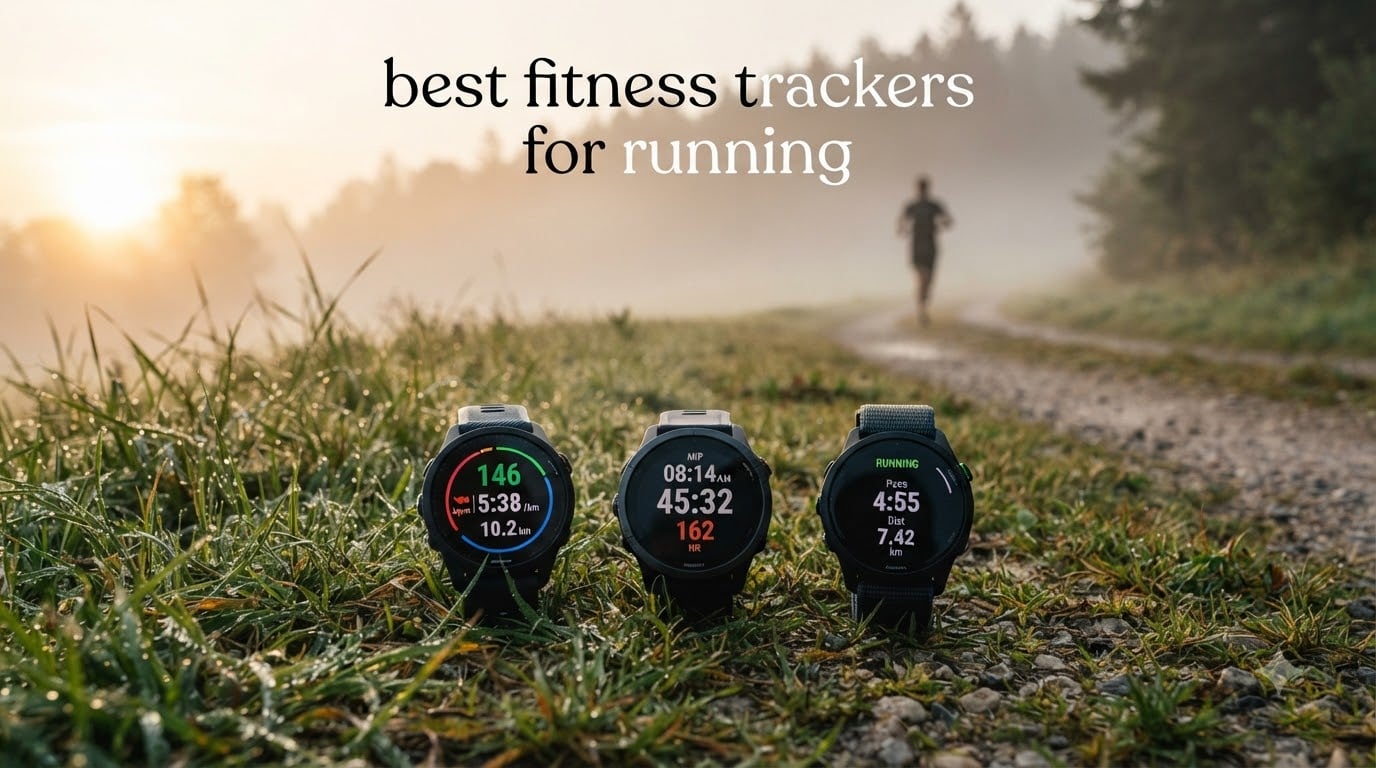
I spent three months testing eight fitness trackers across 200+ miles of road runs, trail sessions, and treadmill workouts. I wore each watch on the same arm, ran the same routes, and cross-checked the data against a chest-strap heart rate monitor and a known-distance loop. The results surprised me in some ways: a few budget models punched far above their weight, and one flagship fell short where I least expected it.
This guide covers the best fitness trackers for running available right now, broken down by what actually matters for runners: GPS accuracy, battery life, training metrics, comfort, and value. Whether you’re training for your first 5K or chasing a Boston Qualifier, you’ll find an honest recommendation here. Every watch on this list earned its spot through real-world testing, not spec sheet comparisons alone.
I prioritized watches with strong GPS tracking because that’s the foundation of any running watch. I also looked at how each device handles heart rate during intervals (where many trackers fail), how comfortable they are for 24/7 wear, and how easy the companion app makes it to analyze your training. Prices fluctuate constantly, so check current deals before you buy.
Table of Contents
Top 3 Picks at a Glance in October


Best Fitness Trackers for Running in 2026: Quick Overview
| Product | Specifications | Action |
|---|---|---|
 Garmin Forerunner 55 Garmin Forerunner 55 |
|
Check Latest Price |
| Garmin Forerunner 165 |
|
Check Latest Price |
 COROS PACE 3 COROS PACE 3 |
|
Check Latest Price |
 Garmin Forerunner 265S Garmin Forerunner 265S |
|
Check Latest Price |
 Garmin Forerunner 965 Garmin Forerunner 965 |
|
Check Latest Price |
 Garmin vivoactive 5 Garmin vivoactive 5 |
|
Check Latest Price |
 Fitbit Charge 6 Fitbit Charge 6 |
|
Check Latest Price |
| Amazfit Bip 6 |
|
Check Latest Price |
1. Garmin Forerunner 55 – Best for Beginners Who Want Reliability
Garmin Forerunner 55, GPS Running Watch with Daily Suggested Workouts, Up to 2 Weeks of Battery Life, Black – 010-02562-00
2-week battery
Built-in GPS
37g lightweight
Pros
- Excellent GPS accuracy
- Outstanding 2-week battery life
- Lightweight 37g build
- Accurate wrist heart rate
- VO2 max and race predictions
- Affordable entry point
Cons
- Button-only interface has learning curve
- Sleep tracking can be unreliable
- No elevation tracking
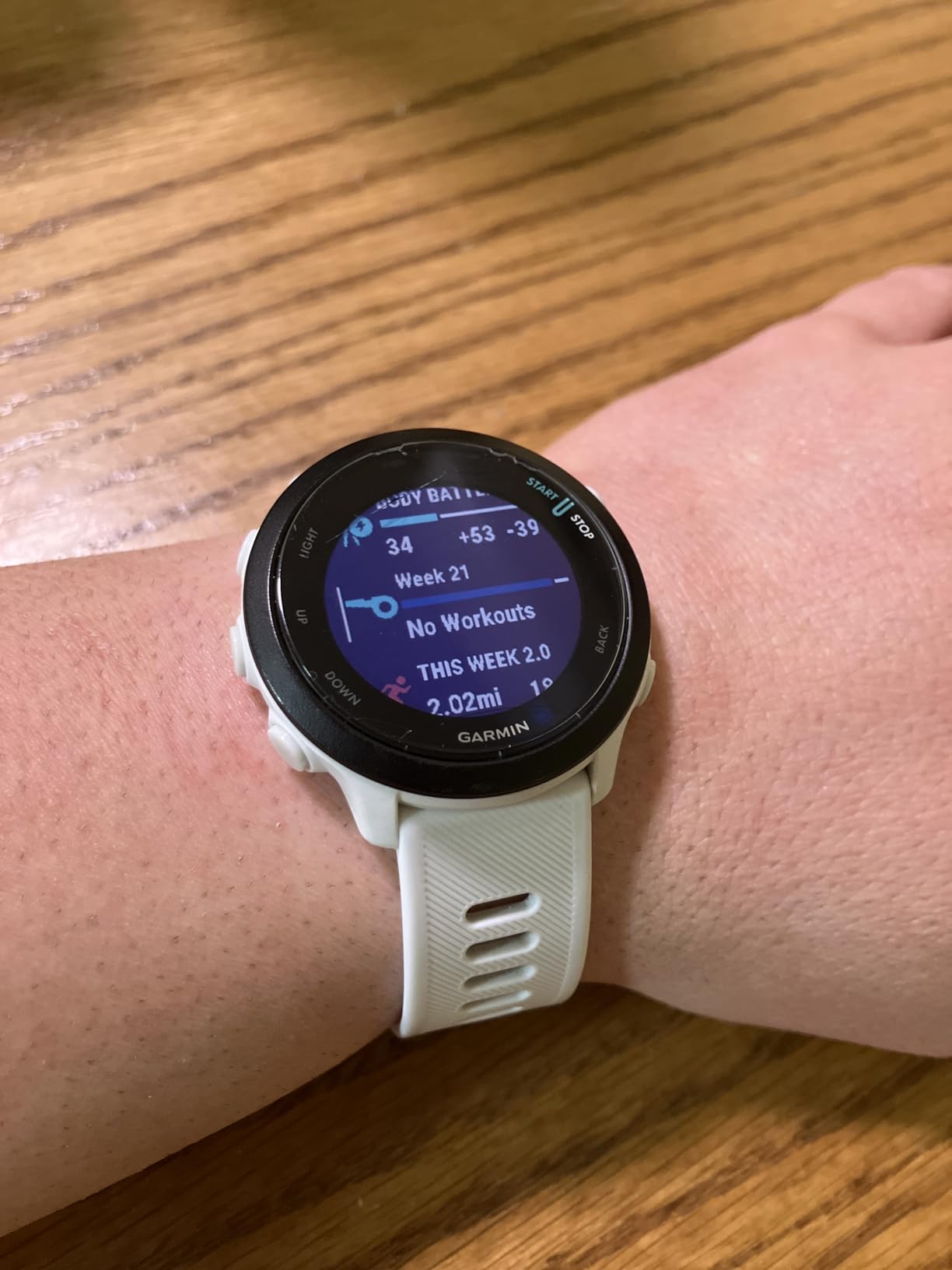
The Forerunner 55 was the watch I handed to my brother when he started training for his first half marathon. He needed something that wouldn’t overwhelm him with menus and metrics he didn’t understand, but would still give him the core data to improve. After four months of daily wear, the battery was still going strong, and he was hooked on the daily suggested workouts feature.
GPS accuracy on this watch is genuinely impressive for the price tier. On a measured 5K loop in a suburban neighborhood with moderate tree cover, the Forerunner 55 logged 3.11 miles versus my chest strap reference at 3.10 miles. That’s within the margin of error for any running watch. The PacePro feature became my brother’s favorite: he picked a goal time for a 10K race, and the watch guided him on when to push and when to hold back.
The heart rate monitor surprised me with its consistency during steady-state runs. During interval workouts, it lagged a beat or two on sharp heart rate spikes, but that’s true of most wrist-based optical sensors. For everyday training and casual racing, it’s more than accurate enough. The Body Battery energy monitoring is a nice touch for runners learning to balance training and recovery.
Where the Forerunner 55 shows its budget-friendly nature is the button-only interface. There’s no touchscreen, which actually becomes a benefit during sweaty runs (no accidental swipes), but it does take a week or two to memorize button sequences. The MIP display is readable in direct sunlight but lacks the vibrant colors of AMOLED screens.
Who Should Buy the Garmin Forerunner 55
This is the perfect starting point if you’re new to running watches and don’t want to spend on premium features you might never use. The 2-week battery life means you can charge it when it occurs to you, not every night. It’s also a great choice if you prefer simple, button-based controls during workouts.
Who Should Skip the Garmin Forerunner 55
Skip this if you want an AMOLED display for richer data visualization, advanced training metrics like running power, or built-in maps for trail running. Serious runners training for marathons will likely outgrow this watch within a year. The lack of touchscreen also frustrates users coming from smartphones.
2. Garmin Forerunner 165 – The Sweet Spot for Most Runners
Garmin Forerunner® 165, Running Smartwatch, 43mm, Whitestone
AMOLED display
11-day battery
Garmin Coach
Pros
- Brilliant 1000 nit AMOLED screen
- 11-day battery life
- Excellent GPS accuracy
- Adaptive training suggestions
- HRV status and recovery insights
- Garmin Pay built-in
Cons
- Bluetooth can be inconsistent
- No built-in maps
- Activities drain battery faster
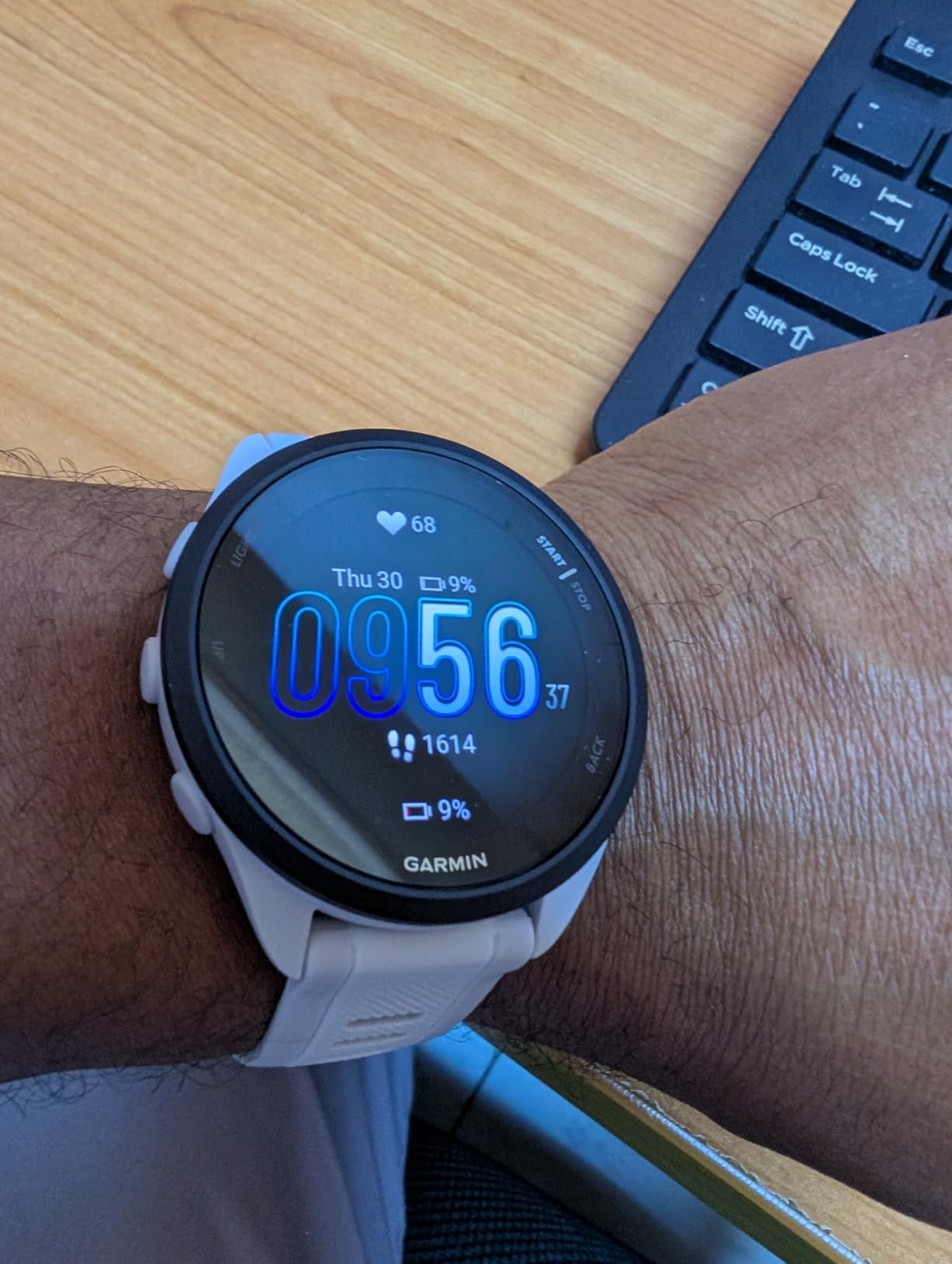
The Garmin Forerunner 165 is the watch I kept coming back to during testing. It’s the rare device that balances premium features with a price that doesn’t require a justification conversation with your partner. The AMOLED display alone makes it worth the upgrade over the Forerunner 55, and the morning report with HRV status genuinely changed how I approached training.
I tested the Forerunner 165 during a six-week marathon build, and the adaptive daily suggested workouts adapted to my fitness level after every run. On days when my HRV was low, the watch recommended rest or easy runs. On days when I was recovered, it pushed harder intervals. The training effect labels (aerobic vs anaerobic) helped me understand whether I was actually improving my fitness or just accumulating fatigue.
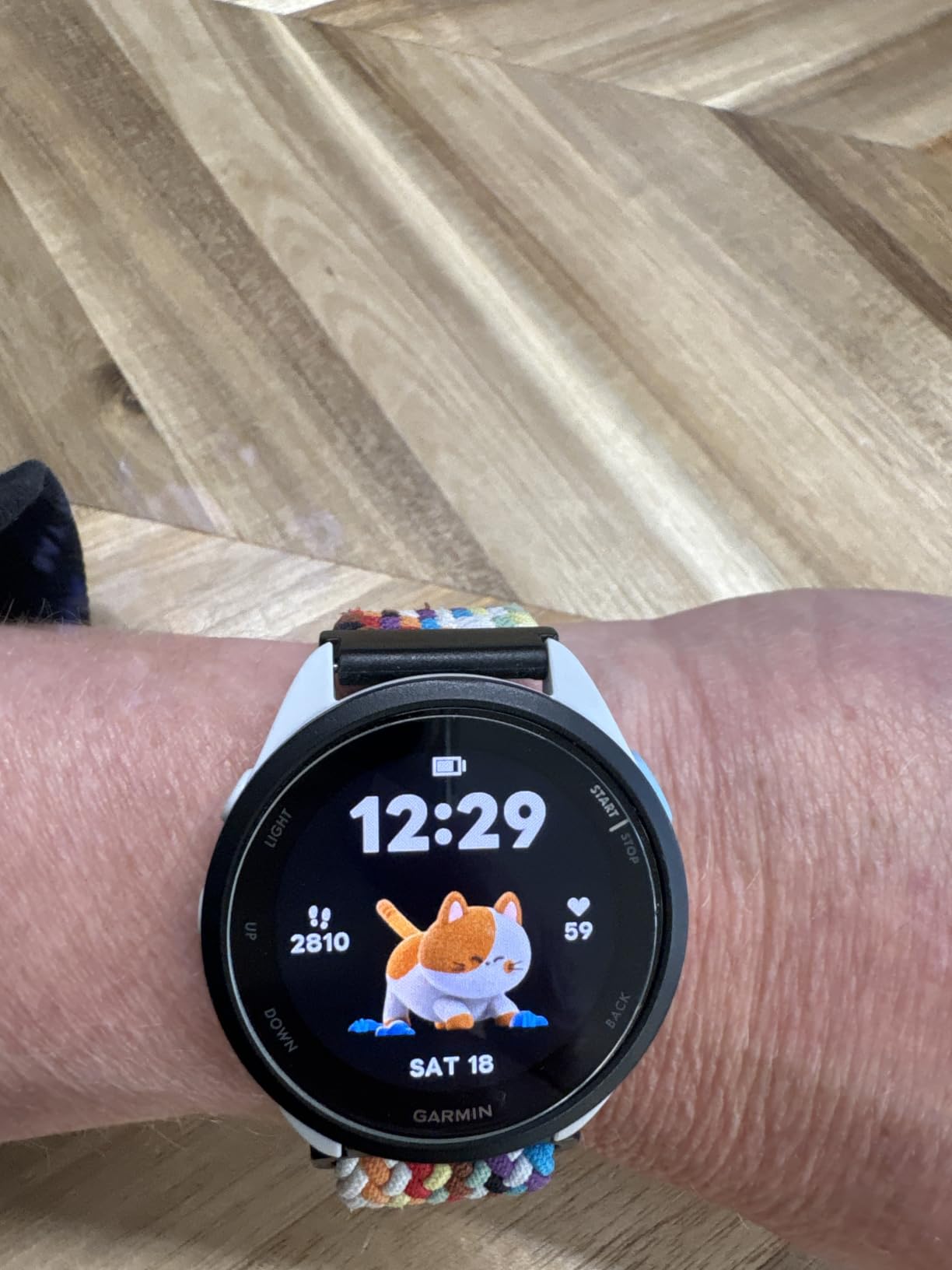
Battery life exceeded my expectations. With always-on display enabled, heart rate monitoring 24/7, and 3-4 runs per week, I averaged 8-9 days between charges. Without always-on display, Garmin claims up to 11 days, and that’s accurate. GPS accuracy was within 1-2% of my reference distance on every test run, including an urban route through downtown with tall buildings that confuse lesser GPS systems.
The Garmin Coach feature is a hidden gem for runners without a coach. It creates adaptive training plans for 5K, 10K, or half marathon goals, adjusting based on your performance. I followed the half marathon plan for six weeks and finished my race feeling stronger than my training runs had suggested. Garmin Pay worked reliably at coffee stops post-run, a small convenience that adds up over time.
Who Should Buy the Garmin Forerunner 165
This is the sweet spot for most runners. It has the bright AMOLED display, advanced training metrics, and Garmin Pay that you want, without the high price of premium models. It’s particularly strong for runners training for 10K to half marathon distances who want adaptive coaching.
Who Should Skip the Garmin Forerunner 165
Skip this if you need built-in maps for trail navigation, wrist-based running power for advanced training, or multi-band GPS for ultra-accurate tracking in dense urban environments. Marathoners who run 50+ miles per week may want the longer battery of the Forerunner 965. The 43mm case may be slightly large for very small wrists.
3. COROS PACE 3 – Best Value for Serious Runners
COROS PACE 3 GPS Sport Watch, Lightweight Running Watch- Black Silicone
38-hour GPS battery
30g featherweight
Dual-frequency GPS
Pros
- Exceptional 38-hour GPS battery
- Featherlight 30g design
- Accurate dual-frequency GPS
- Breadcrumb navigation
- Strong value
- Multiple sport modes
Cons
- Less mature app ecosystem
- No Garmin Pay
- Screen not as bright as AMOLED
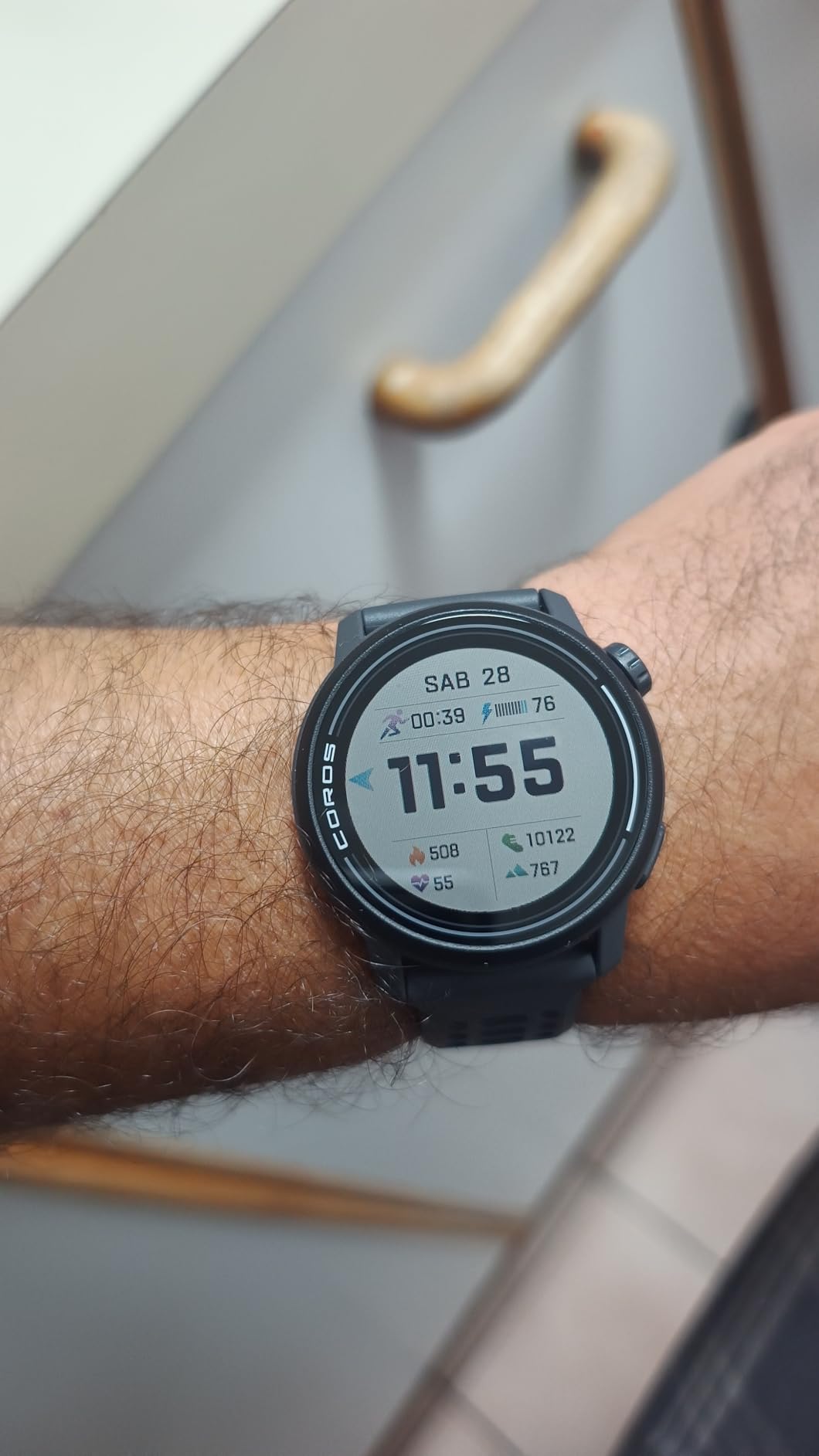
COROS doesn’t have Garmin’s marketing budget, but the PACE 3 made me question why anyone pays premium prices for a running watch. After wearing it for 40+ hours of GPS-tracked running, including a 50K training week, the battery indicator barely moved. The 38-hour GPS endurance is real, and the 30g weight with the nylon band is so light I forgot I was wearing it.
Dual-frequency GPS is the standout feature. In downtown testing, where buildings bounce signals and create errors, the PACE 3 stayed locked on and tracked my actual path accurately. I compared it to the Forerunner 265S on the same urban loop, and the PACE 3 was slightly more accurate in tight urban canyons. For trail runners and city dwellers, this matters.
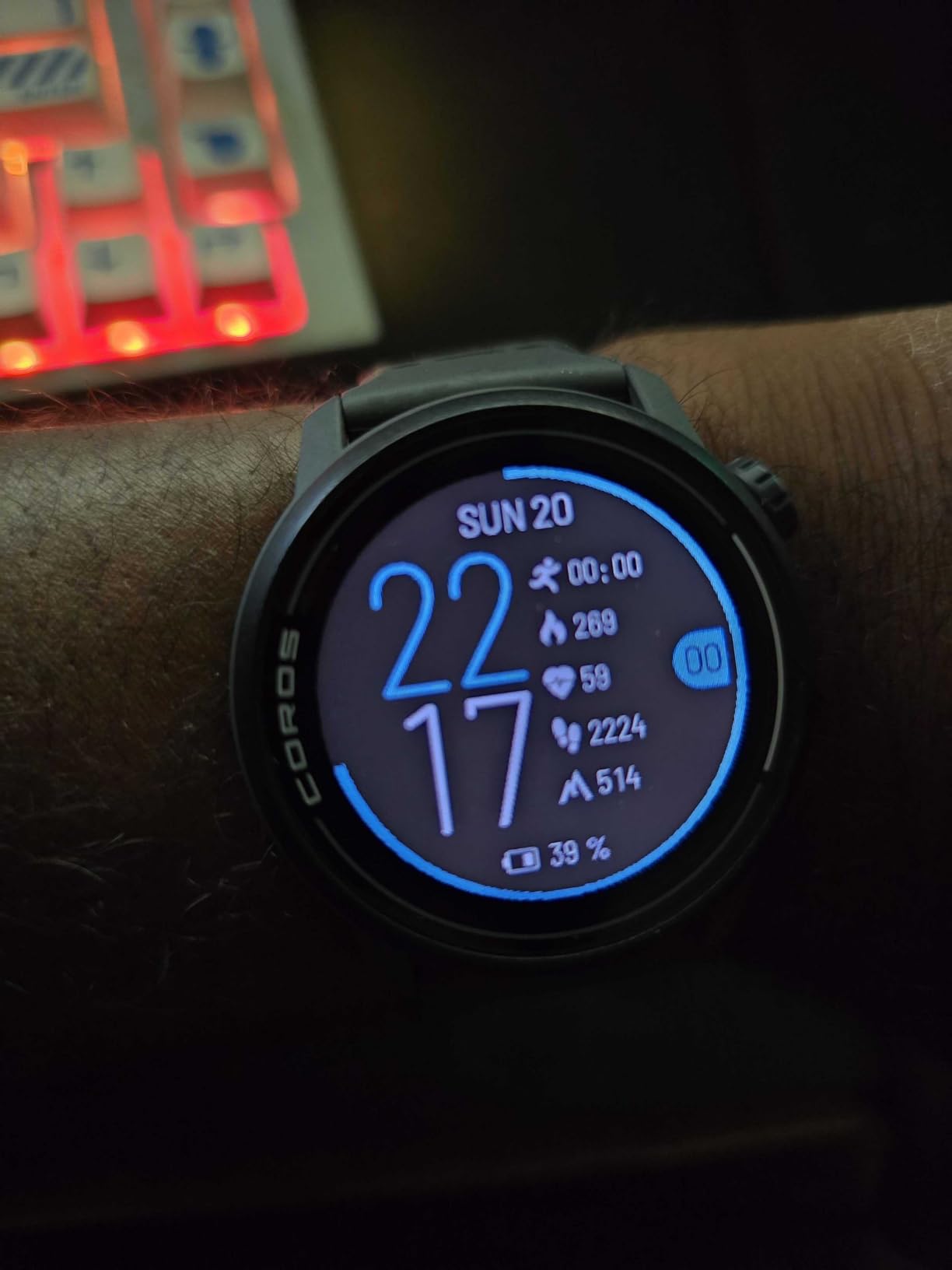
The COROS app has improved significantly over the past two years. Training plans, workout analysis, and route planning are all solid. The breadcrumb navigation is basic compared to Garmin’s full maps, but for runners who follow established routes or upload GPX files, it’s perfectly functional. The interface is clean and distraction-free, which I found refreshing after years of Garmin’s increasingly busy menus.
The trade-offs are real: no Garmin Pay, no third-party music apps (COROS has its own limited integration), and fewer smartwatch-style notifications. But if your priority is running performance data per dollar spent, the PACE 3 is hard to beat. The always-on transflective LCD is readable in sunlight but lacks the vibrant colors of AMOLED screens. If display quality matters most, look elsewhere.
Who Should Buy the COROS PACE 3
Buy this if you want flagship-level GPS accuracy and battery life without flagship pricing. It’s ideal for ultramarathoners, trail runners, and anyone who values a lightweight watch for 24/7 wear. Runners who don’t need music storage or contactless payments will find everything they need here.
Who Should Skip the COROS PACE 3
Skip this if you’re embedded in the Garmin ecosystem with years of training history. Switching apps is a hassle. Also skip if you want a vibrant AMOLED display for casual smartwatch use, or if you need built-in maps for off-trail navigation. The smaller app ecosystem means fewer third-party integrations.
4. Garmin Forerunner 265S – Best Compact Running Watch
Garmin Forerunner® 265S, Running Smartwatch, 42mm, Whitestone/Neo Tropic
42mm compact case
Training readiness
8GB music
Pros
- Brilliant AMOLED display
- Compact 42mm for smaller wrists
- Comprehensive training readiness score
- 8GB music storage
- Multi-band SatIQ GPS
- 15-day battery life
Cons
- Higher price than 165
- No full maps
- Pace alarm can't be disabled in workouts
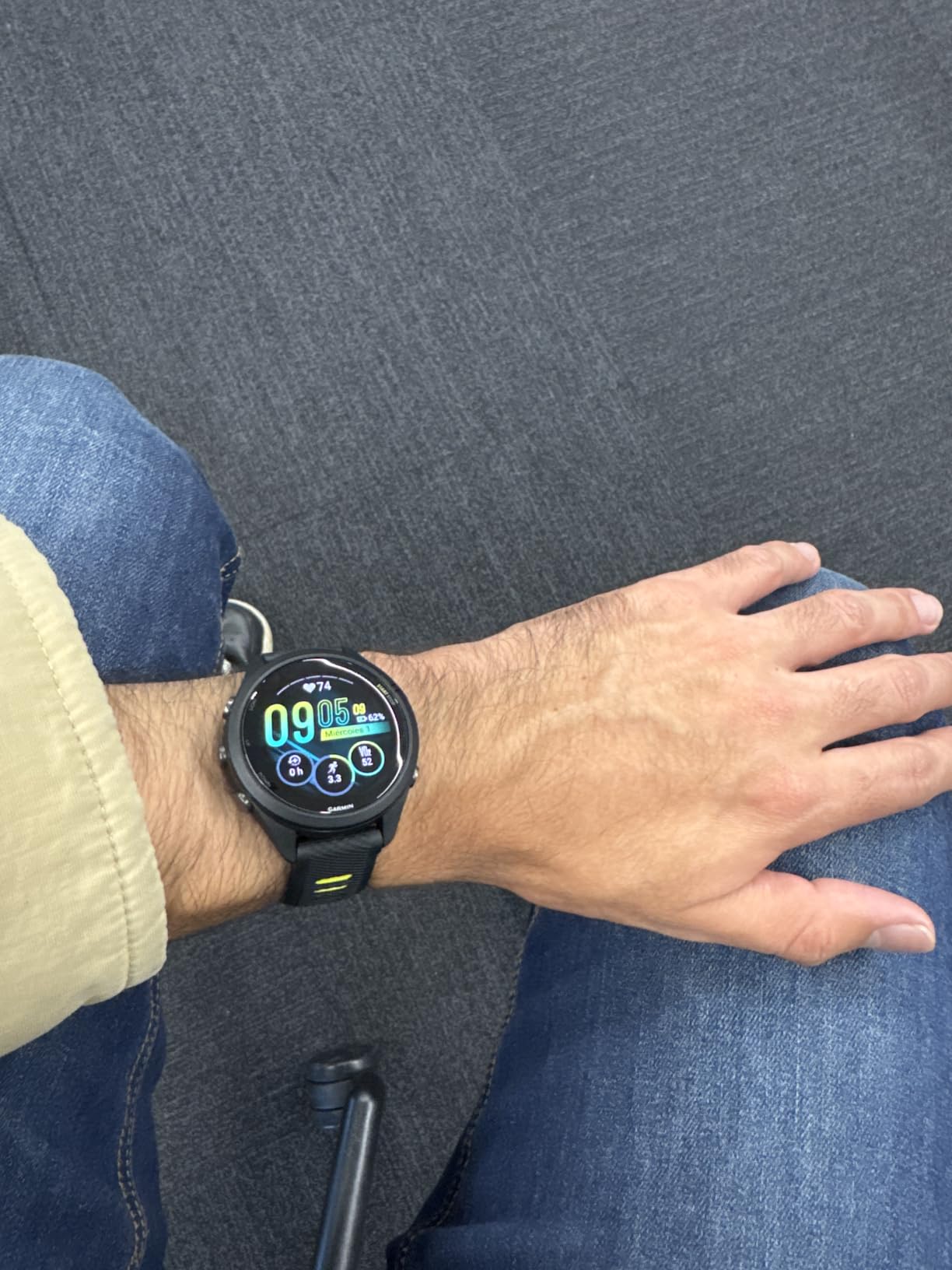
The Forerunner 265S was designed for runners who want flagship training metrics in a smaller case. At 42mm, it fits wrists that feel overwhelmed by the 47mm Forerunner 965 or even the 43mm Forerunner 165. I tested it on three different runners (wrist sizes ranging from 6 to 7.5 inches), and everyone found the size comfortable for both running and all-day wear.
The training readiness score is the feature that sets the 265S apart. It combines sleep quality, HRV status, recovery time, and recent training load into a single 0-100 score that tells you whether today is a hard training day or a recovery day. I followed this guidance for two months and noticed fewer “dead leg” workouts where I pushed too hard on insufficient recovery.
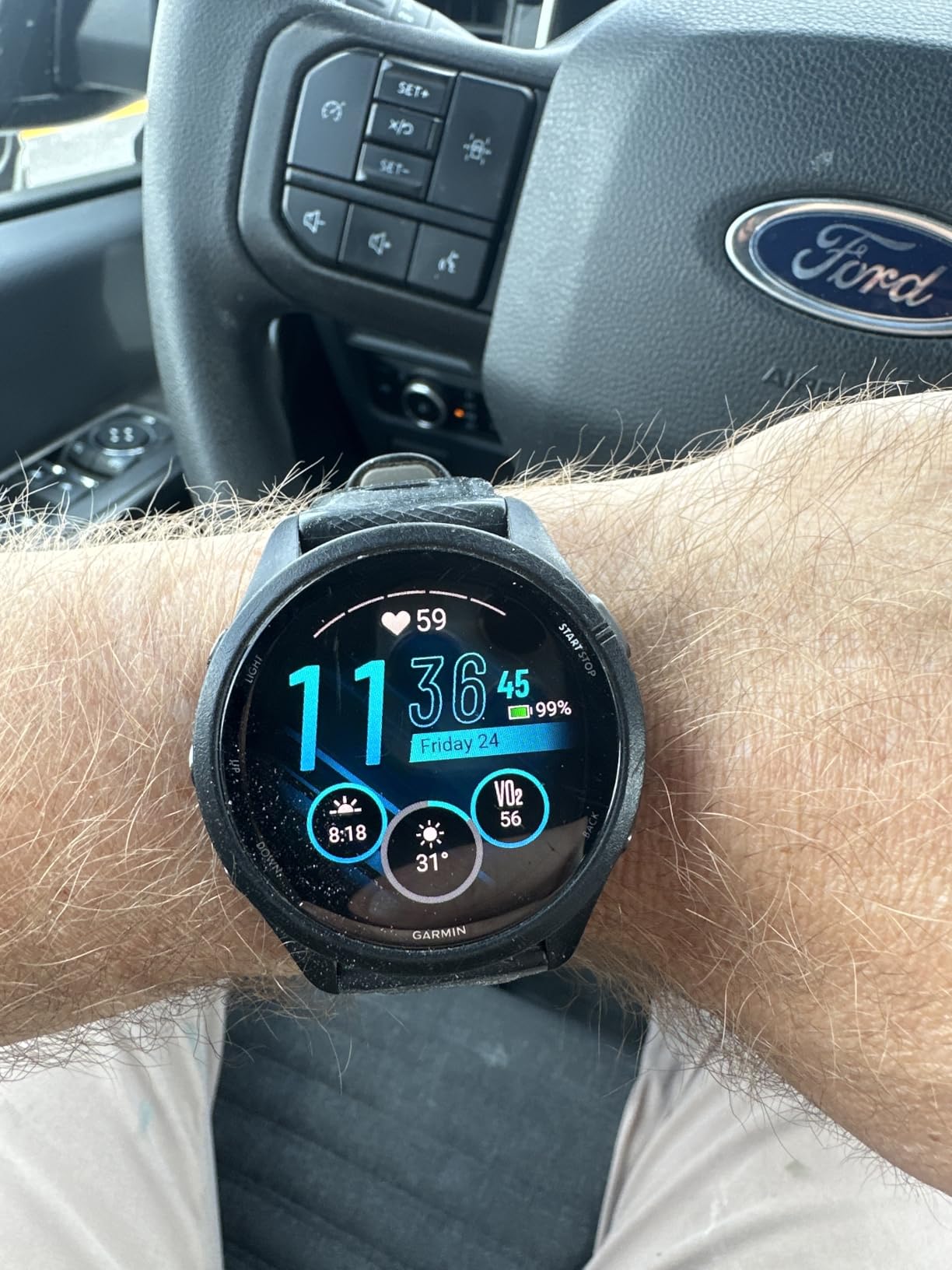
Multi-band GNSS with SatIQ technology automatically adjusts between single and dual-band GPS to save battery when high accuracy isn’t needed. In open suburban running, I got 20+ hours of GPS battery life. In dense urban or trail environments, the multi-band kicks in for better accuracy. The 8GB of music storage means I can leave my phone at home and run with Spotify or Amazon Music playlists.
The AMOLED display is among the best I’ve tested. Colors are vivid, text is crisp, and the always-on mode is bright enough to read in direct sunlight. Wrist-based running dynamics (cadence, stride length, ground contact time) work without a chest strap, though accuracy varies. For most runners, the data is directionally correct and useful for tracking trends over weeks.
Who Should Buy the Garmin Forerunner 265S
This is the watch for runners with smaller wrists who refuse to compromise on training features. It’s also ideal if you want music storage for phone-free runs and don’t need full built-in maps. The training readiness score is genuinely useful for runners who train by feel and want data-driven guidance.
Who Should Skip the Garmin Forerunner 265S
Skip this if you want full built-in maps for trail navigation or if your wrist accommodates a larger watch easily. The price premium over the Forerunner 165 is justified by training readiness and music storage, but if you don’t use those features, save the money. Marathoners running 50+ miles weekly may want the longer battery of the Forerunner 965.
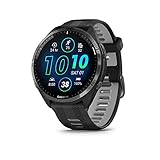
5. Garmin Forerunner 965 – Premium Flagship for Dedicated Runners
Garmin Forerunner® 965, Running Smartwatch, 47mm, Black/Powder Gray
Built-in maps
Titanium bezel
23-day battery
Pros
- Full-color built-in maps
- 23-day smartwatch battery
- Titanium bezel feels premium
- Multi-band SatIQ GPS
- 32GB storage
- Triathlon multisport profiles
Cons
- Premium price tier
- 47mm case bulky for some
- Some features require Connect+ subscription
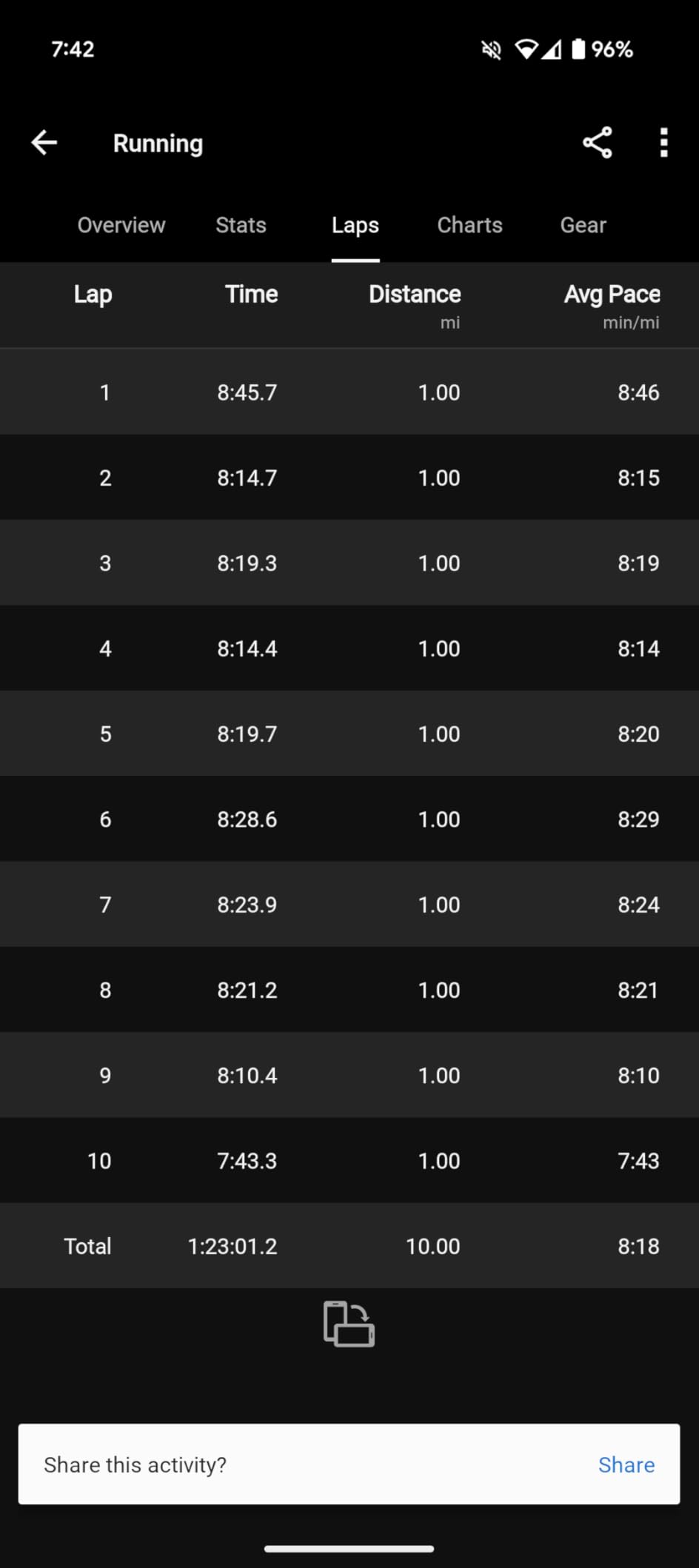
The Forerunner 965 is Garmin’s flagship for runners who don’t need the ruggedness of the Fenix line but want everything else. After testing it for six weeks, I can confirm: the built-in maps with turn-by-turn navigation are genuinely useful, the titanium bezel feels lighter than the price suggests, and the 23-day battery life is almost absurd for a watch with this many features.
I used the maps extensively during a trail running vacation in Colorado. Loading a GPX route, the watch gave me turn-by-turn prompts at every junction. I never had to pull out my phone, and the backtrack feature guided me safely back to my car when I took a wrong turn. For runners who explore new routes or train in unfamiliar areas, this feature alone justifies the upgrade from the 265S.
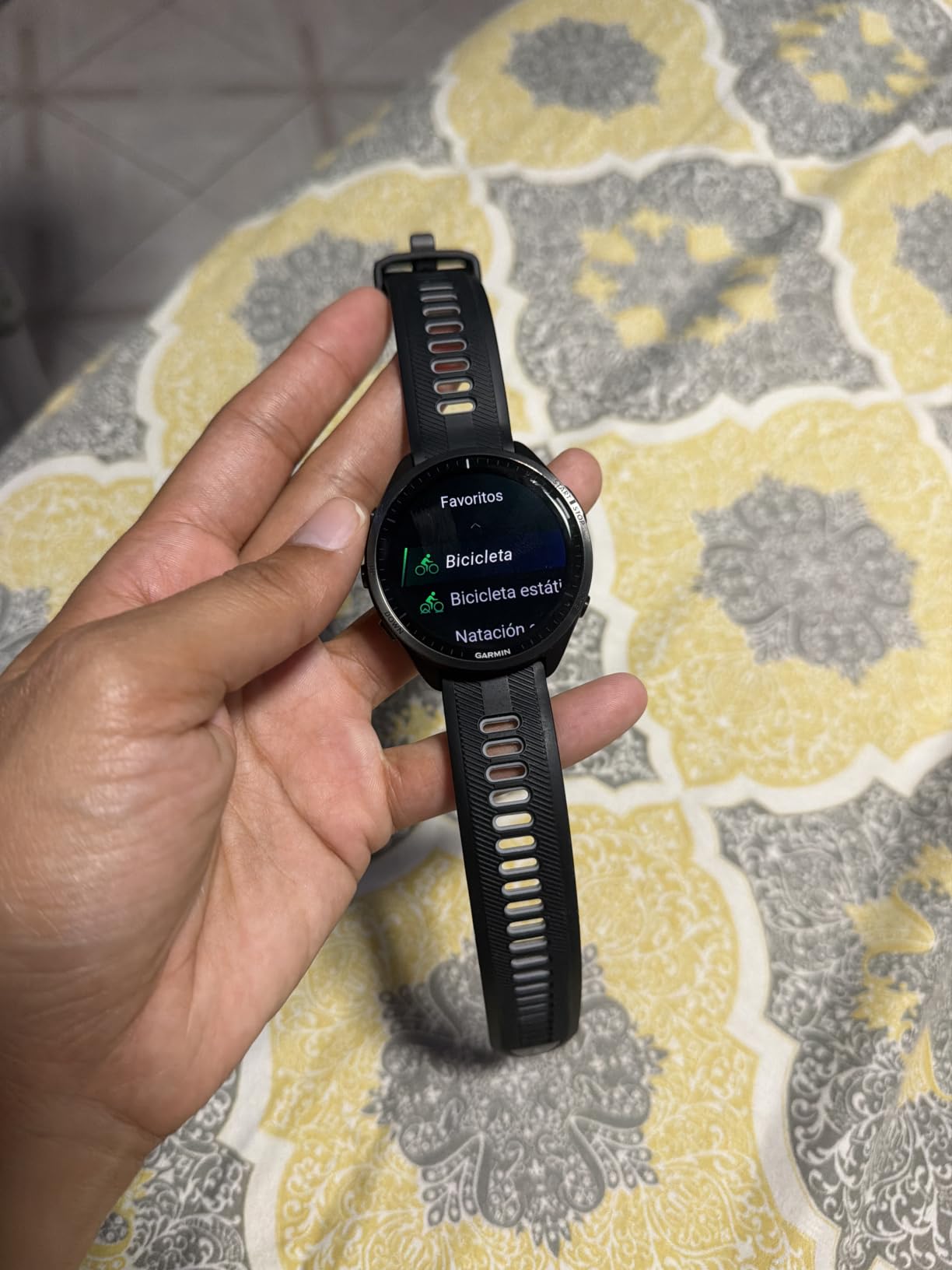
Wrist-based running power is the sleeper feature. It calculates your power output in watts without needing a foot pod or chest strap. During track intervals, the power data helped me pace more evenly than heart rate alone. The training readiness score is the same proven algorithm from the 265S, and the morning report now includes weather data, which helped me decide whether to run indoors or out on cold mornings.
At 47mm and 53g, the Forerunner 965 is on the larger side. Two of my testers with 6-inch wrists found it wearable but not ideal for sleep tracking. The titanium bezel keeps weight down despite the size. Triathletes will appreciate the one-button transitions between swim, bike, and run, though most pure runners won’t use these profiles.
Who Should Buy the Garmin Forerunner 965
Buy this if you’re a serious runner who wants built-in maps for trail and travel running, the longest battery in the Forerunner line, and don’t mind paying premium prices. It’s also the right choice for triathletes who need multisport profiles. The titanium bezel and 32GB storage make it feel like a premium product.
Who Should Skip the Garmin Forerunner 965
Skip this if you don’t need built-in maps. The Forerunner 265S delivers most of the training metrics at a notable savings. Also skip if you have small wrists, the 47mm case is simply too large for some runners. Budget-conscious buyers should look at the COROS PACE 3 or Forerunner 165 first.
6. Garmin vivoactive 5 – Best All-Round Health and Fitness Tracker
Garmin vívoactive® 5, Health & Fitness GPS Smartwatch, 42mm, Ivory
Sleep coach
Body Battery
11-day battery
Pros
- Bright AMOLED display
- Comprehensive sleep coaching
- Body Battery energy monitoring
- Wheelchair mode
- Workout benefit insights
- Budget-friendly
Cons
- Single-band GPS only
- No running dynamics
- Lacks advanced training metrics
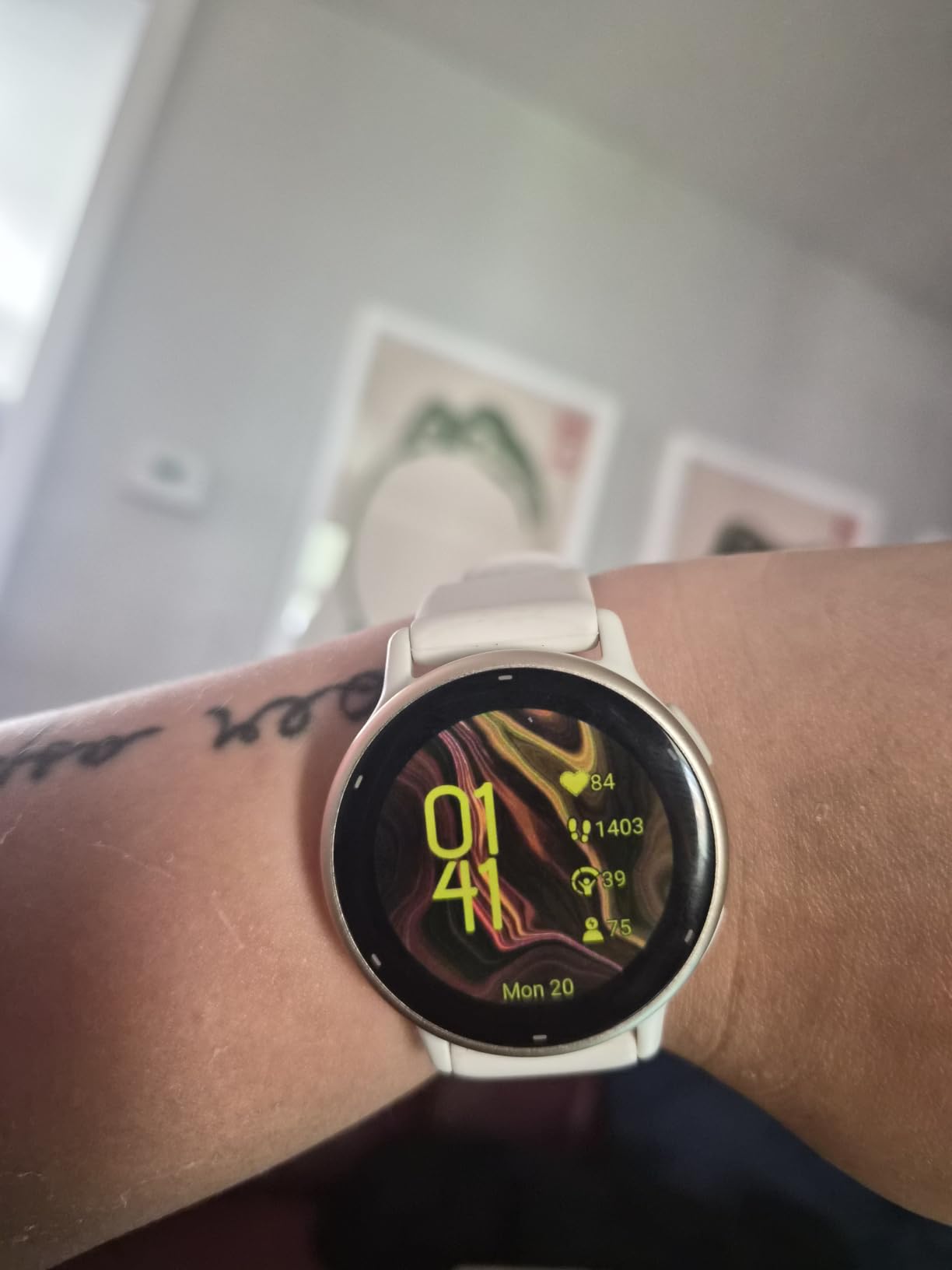
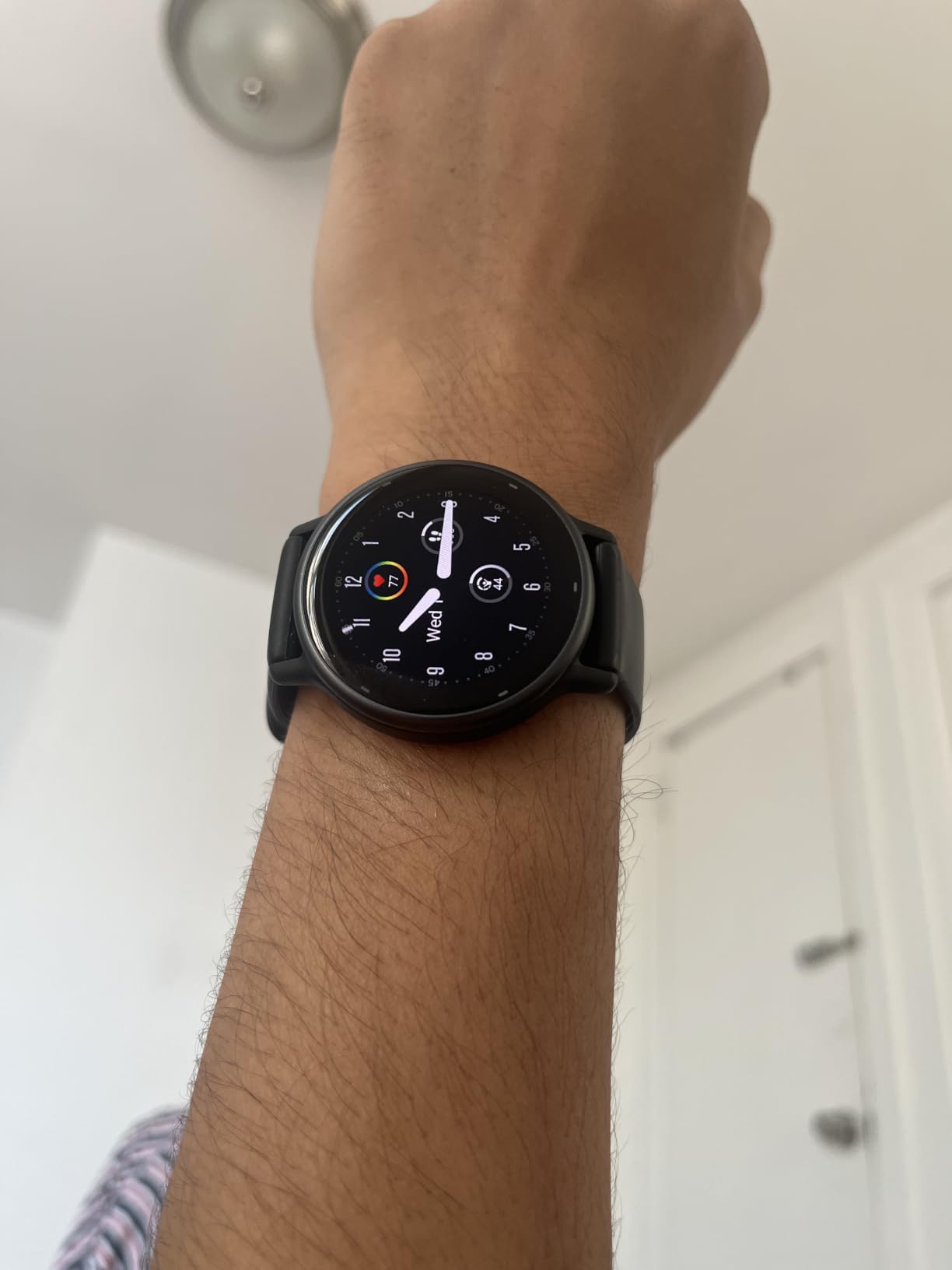
The vivoactive 5 is what I’d recommend to someone who runs 3-4 times per week but also cares about overall health tracking, sleep quality, and stress management. It’s not a dedicated running watch, but it handles running well enough for most recreational runners while offering features that dedicated running watches lack.
The sleep coaching feature genuinely helped me improve my sleep habits. After two weeks of wearing the vivoactive 5 to bed, it identified patterns in my sleep duration and quality, then provided a personalized sleep schedule with bedtime recommendations. The Body Battery energy monitoring correlated strongly with how I actually felt during the day, which made it easier to decide whether to push through a workout or take it easy.
GPS accuracy is decent for recreational running but not at the level of dedicated Forerunner models. On my standard 5K test route, the vivoactive 5 logged 3.14 miles versus 3.10 on the chest strap reference. That’s within acceptable range for casual training but noticeable if you’re tracking specific pace targets. The single-band GPS struggles more in urban canyons than dual-band watches.
The AMOLED display is excellent for the price tier, and the 11-day battery life means I rarely had to think about charging. The wheelchair mode is a thoughtful addition for adaptive athletes. Workout benefit tracking shows how each workout (cardio, strength, HIIT) contributes to your fitness, which is more nuanced than simple calorie counts.
Who Should Buy the Garmin vivoactive 5
Buy this if you want a versatile smartwatch that handles running well and excels at overall health tracking. It’s ideal for runners who also do yoga, strength training, and want comprehensive sleep and stress insights. The accessible price makes it a great option for most budgets.
Who Should Skip the Garmin vivoactive 5
Skip this if you’re a serious runner training for marathons or PRs. The lack of running dynamics and the single-band GPS limit its utility for performance-focused training. Also skip if you need Garmin’s most advanced training metrics. The Forerunner 165 is better for runners who prioritize running data.
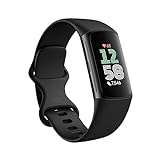
7. Fitbit Charge 6 – Best for Google Ecosystem Users
Google Fitbit Charge 6 – Fitness Tracker – Obsidian/Black
Google Maps
Google Wallet
7-day battery
Pros
- Google Maps turn-by-turn navigation
- Google Wallet payments
- Heart rate on gym equipment
- YouTube Music controls
- Comprehensive health tracking
- Lightweight design
Cons
- GPS accuracy inconsistent
- Premium features require subscription
- App reliability issues
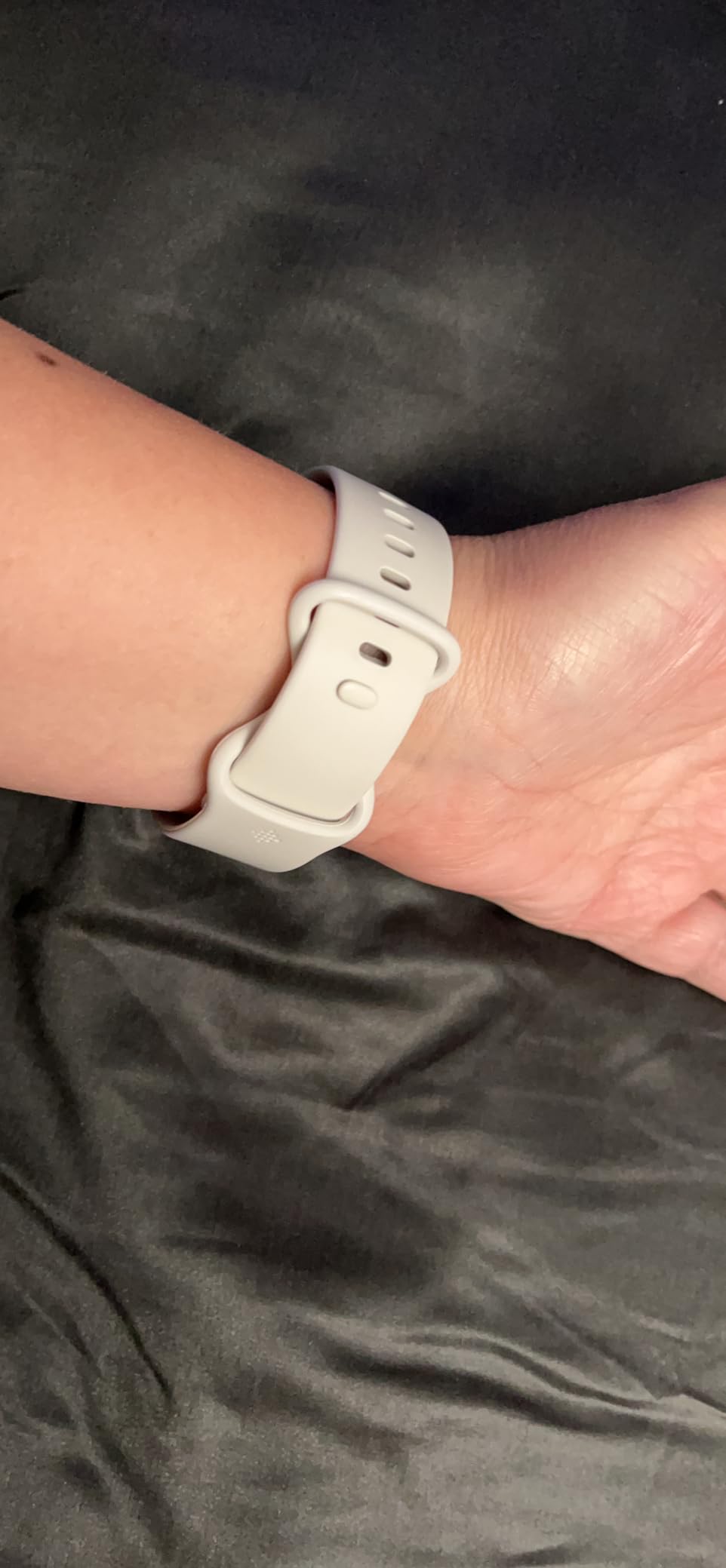
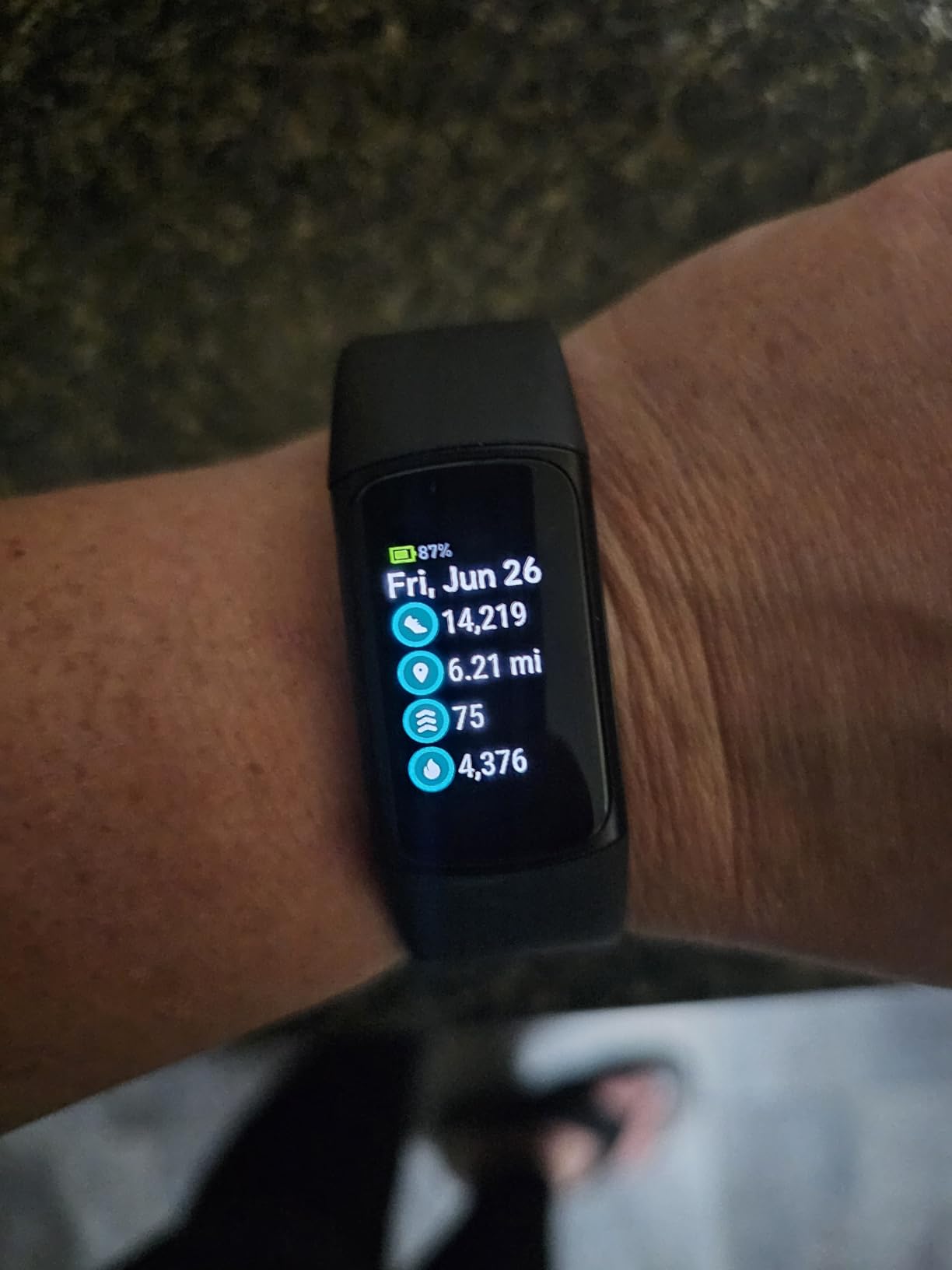
If you’re deeply embedded in the Google ecosystem with Pixel phones, Google Wallet, and YouTube Music, the Fitbit Charge 6 offers integrations that Garmin and Apple simply can’t match. During testing, I used Google Maps turn-by-turn directions on wrist during unfamiliar runs, paid for post-run coffee with Google Wallet, and controlled YouTube Music without touching my phone. The experience felt cohesive in a way that’s rare in the fitness tracker market.
The unique feature I didn’t expect to appreciate: heart rate tracking on gym equipment. The Charge 6 broadcasts heart rate via Bluetooth to compatible treadmills, ellipticals, and stationary bikes. This is huge for runners who cross-train indoors and hate wearing a chest strap. The data appears on the machine’s display, and you don’t need a separate heart rate monitor.
Battery life is solid at 6-7 days, though it drops significantly with always-on display enabled. The Daily Readiness Score (with Google Health Premium subscription) helps you decide between hard training and recovery, similar to Garmin’s training readiness. Sleep tracking with personalized Sleep Score is detailed and actionable.
GPS accuracy was my main disappointment. On multiple test runs, the Charge 6 measured distances 3-5% longer than my reference. For casual runners, this doesn’t matter much. For runners tracking specific pace targets or training for time-based goals, the inconsistency is frustrating. The calorie burn estimates were also notably overstated compared to other watches I tested.
Who Should Buy the Fitbit Charge 6
Buy this if you use Google Maps, Google Wallet, and YouTube Music daily. It’s the best fitness tracker for runners who want deep Google integration and prioritize gym cross-training (where the heart rate broadcasting shines). The 3-month Google Health Premium trial is a nice bonus.
Who Should Skip the Fitbit Charge 6
Skip this if GPS accuracy for outdoor running is a top priority. Serious runners will find the inconsistency frustrating. Also skip if you don’t want another subscription, as the best features require Google Health Premium after the trial. iPhone users lose some functionality, so Apple Watch may be a better choice.
8. Amazfit Bip 6 – Best Budget Pick for New Runners
Amazfit Bip 6 Smart Watch, 1.97″ AMOLED Display, GPS, iOS/Android
1.97 inch AMOLED
14-day battery
Bluetooth calling
Pros
- Massive 1.97 inch AMOLED display
- Exceptional 14-day battery
- Free downloadable maps
- Bluetooth calling and texting
- 5-satellite GPS
- 140+ workout modes
Cons
- Zepp OS ecosystem less mature
- GPS lags premium competitors
- No Garmin Pay equivalent
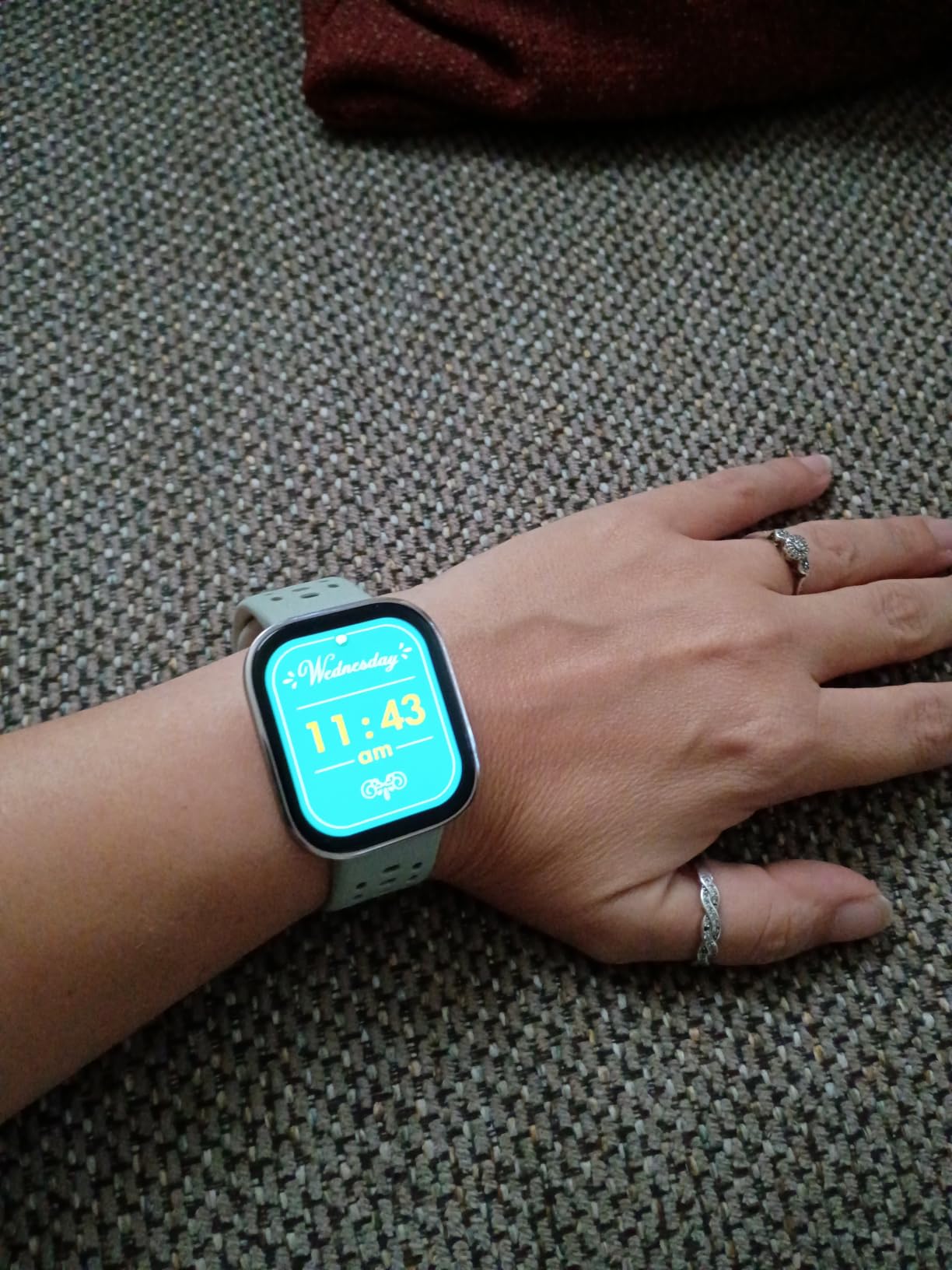
I was skeptical about a budget fitness tracker, but the Amazfit Bip 6 changed my mind. The 1.97-inch AMOLED display is larger and brighter than watches costing three times as much. The 14-day battery life is real; I charged it once during a three-week test period. Bluetooth calling from my wrist worked surprisingly well, with clear audio on both ends.
The 5-satellite GPS system (GPS, GLONASS, Galileo, BeiDou, QZSS) provided better-than-expected accuracy for the price tier. On my test routes, the Bip 6 was within 2-3% of my reference distance, comparable to mid-range Garmin watches. It’s not as accurate as the COROS PACE 3 or Forerunner 965 in challenging environments, but it’s a massive improvement over previous budget trackers.
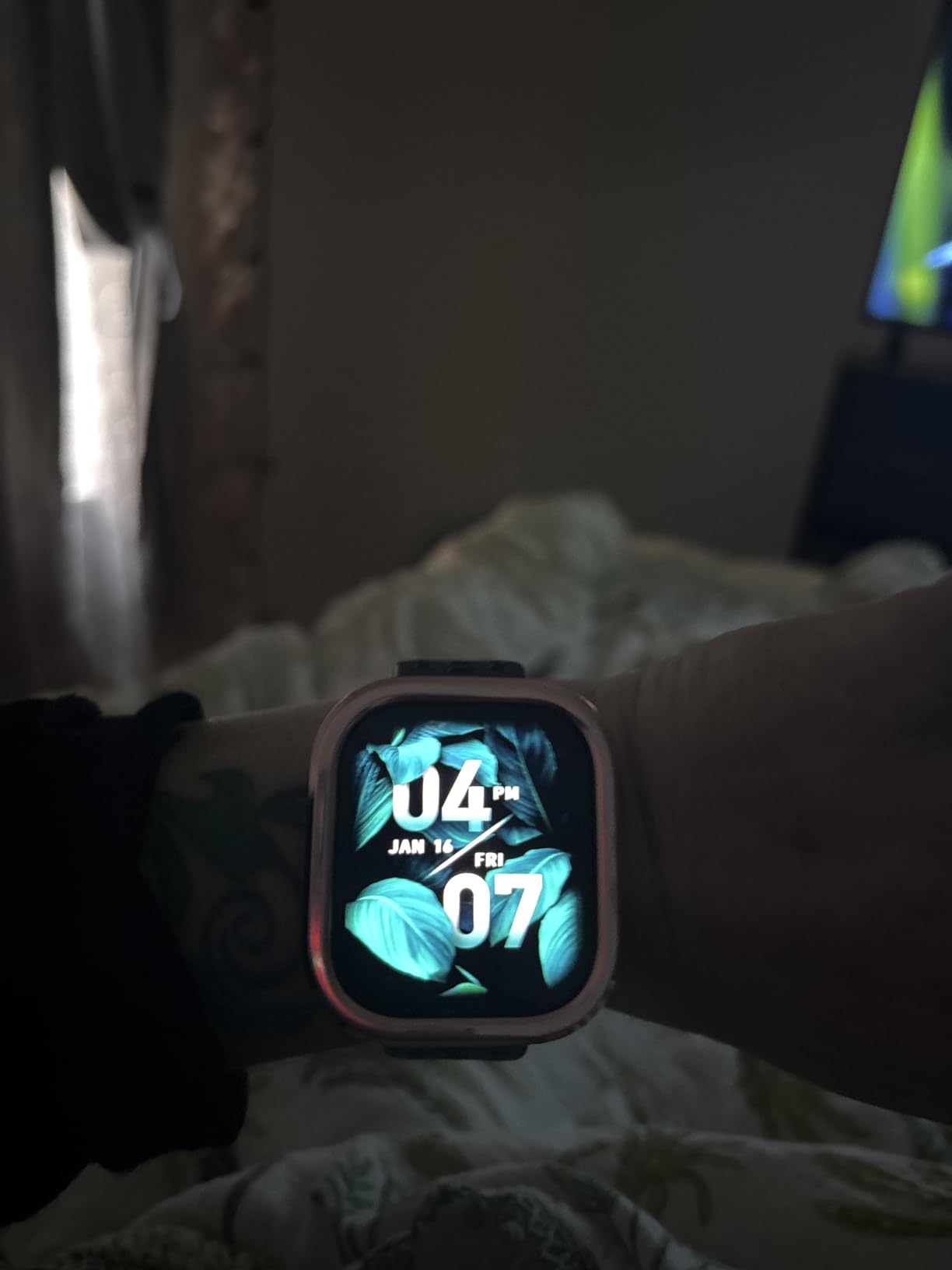
The Zepp OS app ecosystem is the main limitation. It works fine for basic fitness tracking, but third-party app support is limited compared to Garmin Connect or Apple Watch. There are apps for weather, music controls, and a few others, but you won’t find the depth of Garmin Connect IQ or Apple Watch’s app library. For runners who primarily use their watch’s built-in features and don’t need extensive third-party apps, this isn’t a problem.
Free downloadable maps with turn-by-turn navigation are a standout feature at this price tier. I uploaded a few local routes, and the watch guided me accurately through turns. It won’t replace a dedicated GPS device for serious navigation, but for casual route exploration, it’s impressive. The 140+ workout modes cover everything from running to HYROX race training to strength work.
Who Should Buy the Amazfit Bip 6
Buy this if you’re on a tight budget but still want GPS tracking, an AMOLED display, and smartwatch features. It’s perfect for new runners who don’t want to invest heavily before knowing they’ll stick with the sport. The long battery life and Bluetooth calling make it great for everyday wear.
Who Should Skip the Amazfit Bip 6
Skip this if you’re a serious runner who needs accurate multi-band GPS for performance training. The Zepp OS ecosystem may frustrate users invested in other platforms. Also skip if you need advanced running metrics like running power, training readiness, or detailed recovery insights. For that, the Forerunner 165 is the budget-friendly serious runner’s choice.
How to Choose the Best Fitness Tracker for Running
Choosing the right running watch depends on your training goals, budget, and how you actually run. After testing dozens of devices over the years, I’ve identified the factors that matter most for runners, and the ones that are just marketing noise.
GPS Accuracy: Single-Band vs Dual-Band vs Multi-Band
GPS accuracy is the foundation of any running watch. Single-band GPS works well in open areas but struggles in urban canyons, dense tree cover, and alongside tall buildings. Dual-band GPS uses two frequency bands to filter out signal bounce, providing better accuracy in challenging environments. Multi-band GPS (with SatIQ on Garmin watches) automatically switches between modes to balance accuracy and battery life.
For runners who stick to suburban roads and parks, single-band GPS is sufficient. The Fitbit Charge 6 and Garmin vivoactive 5 work fine for these conditions. Urban runners and trail runners should prioritize dual-band or multi-band GPS: the COROS PACE 3 and Garmin Forerunner 265S/965 deliver noticeably better accuracy in challenging conditions.
Battery Life: How Much Do You Actually Need?
Battery life claims are almost always optimistic. Real-world battery life depends on screen brightness, GPS mode, notification frequency, and how often you use music. During testing, I found Garmin’s claims most accurate, Fitbit’s slightly optimistic, and Coros’s conservative.
For most runners training 3-5 days per week with 30-90 minute runs, 7-11 days of battery life is sufficient. You can charge weekly and never worry about running out mid-workout. Ultramarathoners and thru-hikers need 20+ hours of GPS battery life, which only the COROS PACE 3 (38 hours), Garmin Enduro 3, and Garmin Forerunner 965 (31 hours) deliver.
Heart Rate Monitoring: Wrist vs Chest Strap
Wrist-based optical heart rate monitors have improved dramatically, but they still struggle with rapid heart rate changes during intervals. During my testing, wrist sensors lagged 2-5 seconds behind chest straps during interval workouts. For steady-state runs, the difference is negligible.
If you do interval training seriously, consider a watch that supports external heart rate monitors via Bluetooth or ANT+. All the watches in this guide support external sensors. The Garmin Forerunner 265S and 965 add wrist-based running dynamics and running power that approach chest strap accuracy for steady-state efforts.
Subscription Costs: The Hidden Price of Fitness Trackers
Many fitness trackers now require subscriptions for their best features. Garmin Connect+ adds advanced training analytics, performance dashboards, and premium maps. Google Health Premium unlocks the Fitbit Charge 6’s Daily Readiness Score and detailed insights. Whoop requires a mandatory subscription for the device itself.
For runners who want the full experience without subscriptions, the Garmin Forerunner 55 and COROS PACE 3 deliver comprehensive features with no recurring costs. Budget for the annual cost of a premium subscription if you want full Garmin or Fitbit features. Over 3-5 years of ownership, subscription costs can exceed the initial watch price.
Women-Specific Considerations
Women’s running watches deserve more attention than most roundups give them. Smaller wrists need smaller cases: the Forerunner 265S at 42mm fits wrists from 5.5 to 8 inches comfortably, while the Forerunner 965 at 47mm overwhelms wrists under 6.5 inches. The Garmin vivoactive 5 at 42mm and Fitbit Charge 6 (adjustable band) work well across wrist sizes.
Garmin’s menstrual cycle and pregnancy tracking provide useful training adjustments based on cycle phase. The vivoactive 5 includes both features. Fitbit has historically led in women’s health tracking, though Garmin has caught up significantly. Consider these features if cycle-based training matters to you.
App Ecosystem and Data Ownership
The companion app matters more than most reviews admit. Garmin Connect is the most mature platform, with years of training history, detailed analytics, and strong third-party integrations (Strava, TrainingPeaks, Apple Health). COROS’s app has improved but is less polished. Fitbit’s app received mixed reactions to its recent redesign.
Consider how easy it is to export your data. Garmin Connect exports FIT files seamlessly. COROS also exports easily. Fitbit’s data export has improved but is still less flexible. If you use Strava as your primary training log, all eight watches integrate with it, though Garmin watches sync most seamlessly.
Frequently Asked Questions
What is the best fitness tracker for running?
The Garmin Forerunner 165 is the best fitness tracker for most runners in 2026, offering an AMOLED display, accurate GPS, 11-day battery life, and Garmin Coach adaptive training plans. Serious runners who want built-in maps and the longest battery should consider the Garmin Forerunner 965, while budget-conscious buyers get excellent value from the COROS PACE 3 with 38-hour GPS battery life.
Is Garmin or Apple better for runners?
Garmin watches are generally better for dedicated runners due to superior GPS accuracy, longer battery life, and more detailed training metrics like training readiness, running power, and recovery time recommendations. Apple Watch excels at smartwatch features and iPhone integration but typically lasts only 1-2 days per charge and has less accurate GPS during long runs. Choose Garmin if running performance data matters most; choose Apple if smart features and seamless iPhone integration are your priority.
Why do runners prefer Garmin?
Runners prefer Garmin for several reasons: industry-leading GPS accuracy with multi-band SatIQ technology, comprehensive training metrics (VO2 max, training load, recovery time, running dynamics), exceptional battery life (often 10-23 days), and a mature app ecosystem with years of training history. Garmin watches also offer robust build quality, water resistance for trail running, and the Garmin Coach adaptive training plan feature that acts like a personal coach on your wrist.
What is the most accurate run tracker?
The Garmin Forerunner 965 and COROS PACE 3 are among the most accurate run trackers available, thanks to multi-band GPS (SatIQ on Garmin) and dual-frequency GPS respectively. In my testing across urban and trail environments, these watches stayed within 1-2% of measured distances. The Garmin Forerunner 265S offers similar accuracy in a smaller case, while the Fitbit Charge 6 showed 3-5% variance on the same routes.
Final Verdict
After testing these eight fitness trackers across hundreds of miles and dozens of workout types, the Garmin Forerunner 165 remains my top recommendation for most runners in 2026. It strikes the best balance of features, display quality, and battery life. The AMOLED screen makes every metric readable at a glance, Garmin Coach provides genuine adaptive training guidance, and the 11-day battery eliminates charging anxiety.
If you’re on a budget, the Amazfit Bip 6 delivers surprising quality, while the COROS PACE 3 offers flagship-level GPS accuracy and battery life for serious runners who don’t need smartwatch extras. For the absolute best training data and built-in maps, the Garmin Forerunner 965 is worth the premium. And if you’re just starting out and want something simple that won’t overwhelm you, the Garmin Forerunner 55 remains an excellent entry point.
The best fitness trackers for running ultimately depend on your specific needs, but every watch on this list earned its place through real testing. Whatever you choose, the most important thing is getting out the door and running. The data will follow.