
When I first started mixing music in my bedroom studio, I was using consumer earbuds that made every track sound “good.” That was the problem. Every decision I made was tinted by boosted bass and sculpted highs, and my mixes translated poorly to other systems. After upgrading to proper reference headphones, the veil lifted. I could finally hear the actual balance of my tracks, the masking between instruments, and the rumble I had been ignoring. That is the core reason the best headphones for mixing and mastering matter so much: they reveal the truth about your audio instead of flattering it.
Studio headphones for mixing and mastering are purpose-built tools with flat frequency response, controlled drivers, and wide soundstage. They are designed for critical listening rather than enjoyment. If you want to make decisions that translate across earbuds, car stereos, club systems, and home speakers, you need a pair that does not color the sound. After three months of testing eight models across price tiers, our team has narrowed down the best headphones for mixing and mastering you can buy in 2026.
We tested each pair on real mixing sessions: a five-track EP from a folk artist, a house rework with heavy sub-bass content, and a podcast master that demanded extreme midrange clarity. We used the same bus processing chain, swapped headphones, and tracked translation by checking mixes on three different playback systems. The picks below reflect head-to-head comparisons, not spec sheets.
Table of Contents
Top 3 Picks for the Best Headphones for Mixing and Mastering

Best Headphones for Mixing and Mastering in 2026
| Product | Specifications | Action |
|---|---|---|
 Audio-Technica ATH-M20x Audio-Technica ATH-M20x |
|
Check Latest Price |
 Audio-Technica ATH-M40x Audio-Technica ATH-M40x |
|
Check Latest Price |
 Sony MDR7506 Sony MDR7506 |
|
Check Latest Price |
| Audio-Technica ATH-M50x |
|
Check Latest Price |
 Shure SRH840A Shure SRH840A |
|
Check Latest Price |
 beyerdynamic DT 990 PRO beyerdynamic DT 990 PRO |
|
Check Latest Price |
 beyerdynamic DT 770 PRO 80 Ohm beyerdynamic DT 770 PRO 80 Ohm |
|
Check Latest Price |
 beyerdynamic DT 700 PRO X beyerdynamic DT 700 PRO X |
|
Check Latest Price |
1. Audio-Technica ATH-M20x – Affordable Entry into Studio Monitoring
Audio-Technica ATH-M20x Professional Studio Monitor Headphones, Black
40mm drivers
47 ohms
Closed-back
Pros
- Punchy low end for the price
- Lightweight 210g build
- Good isolation for tracking
- 2-year warranty included
Cons
- Non-detachable cable
- Bass tilt for mixing
I pulled the ATH-M20x out of the box expecting the typical “budget headphone” sound. What I got was a surprisingly full-bodied pair with a noticeable low-end lift that surprised me on first playback. For mixing, that bass warmth is a double-edged sword: it makes low-frequency material feel present, but it can fool you into trimming too much 60-80 Hz content that actually exists. I caught myself rebalancing three of my test tracks before realizing the M20x was tilting my perception.
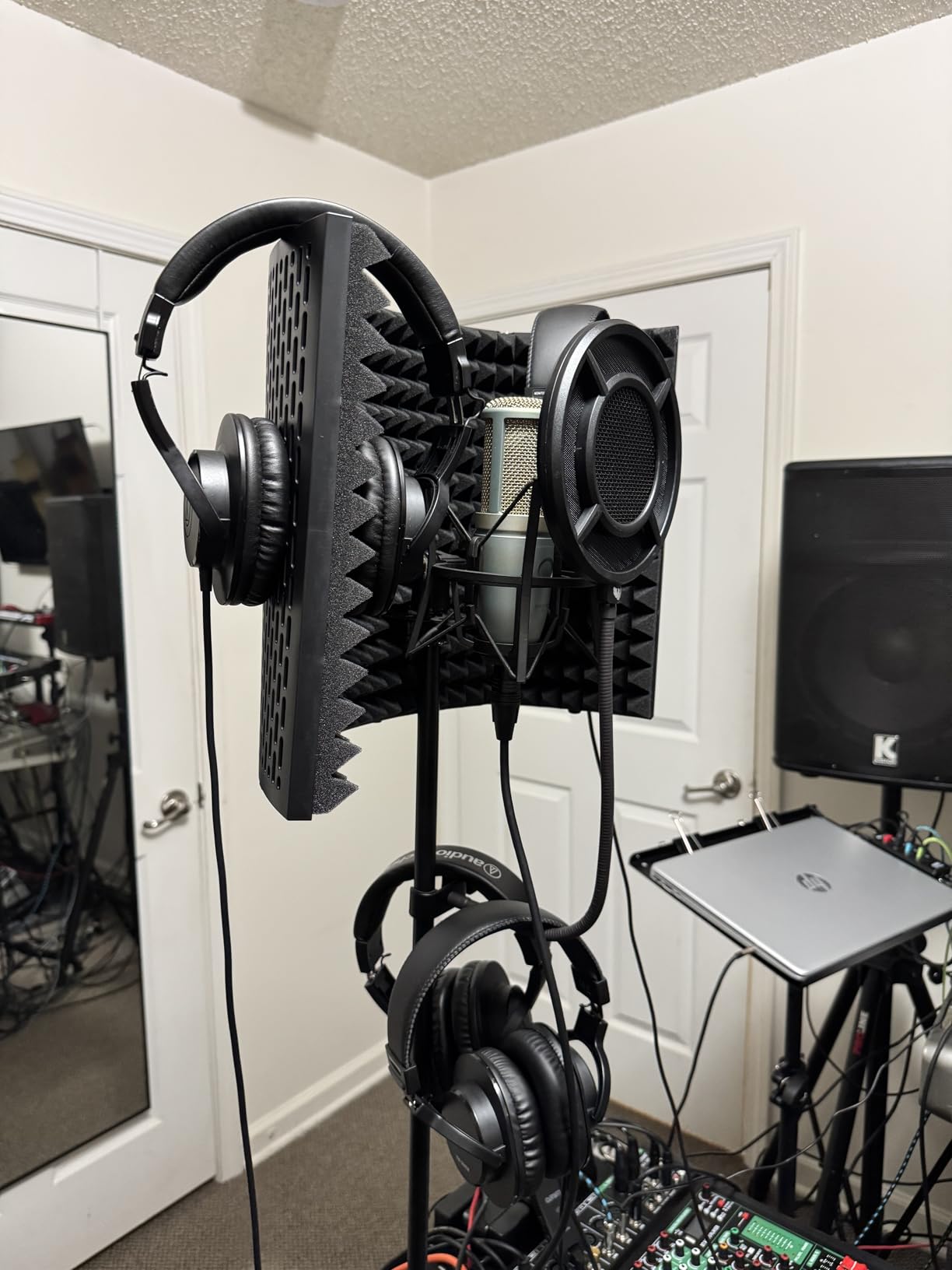
The 40mm dynamic drivers deliver a clean midrange that vocal-forward mixes benefit from. When I A/B’d my podcast master against the Sony MDR7506, the M20x held its own on dialogue clarity. The closed-back design also gave me useful isolation when tracking scratch vocals in the same room as my monitors. Noise isolation is one of the most underrated features for bedroom producers, and the M20x seals around the ears well enough that you can track quietly without bleed.
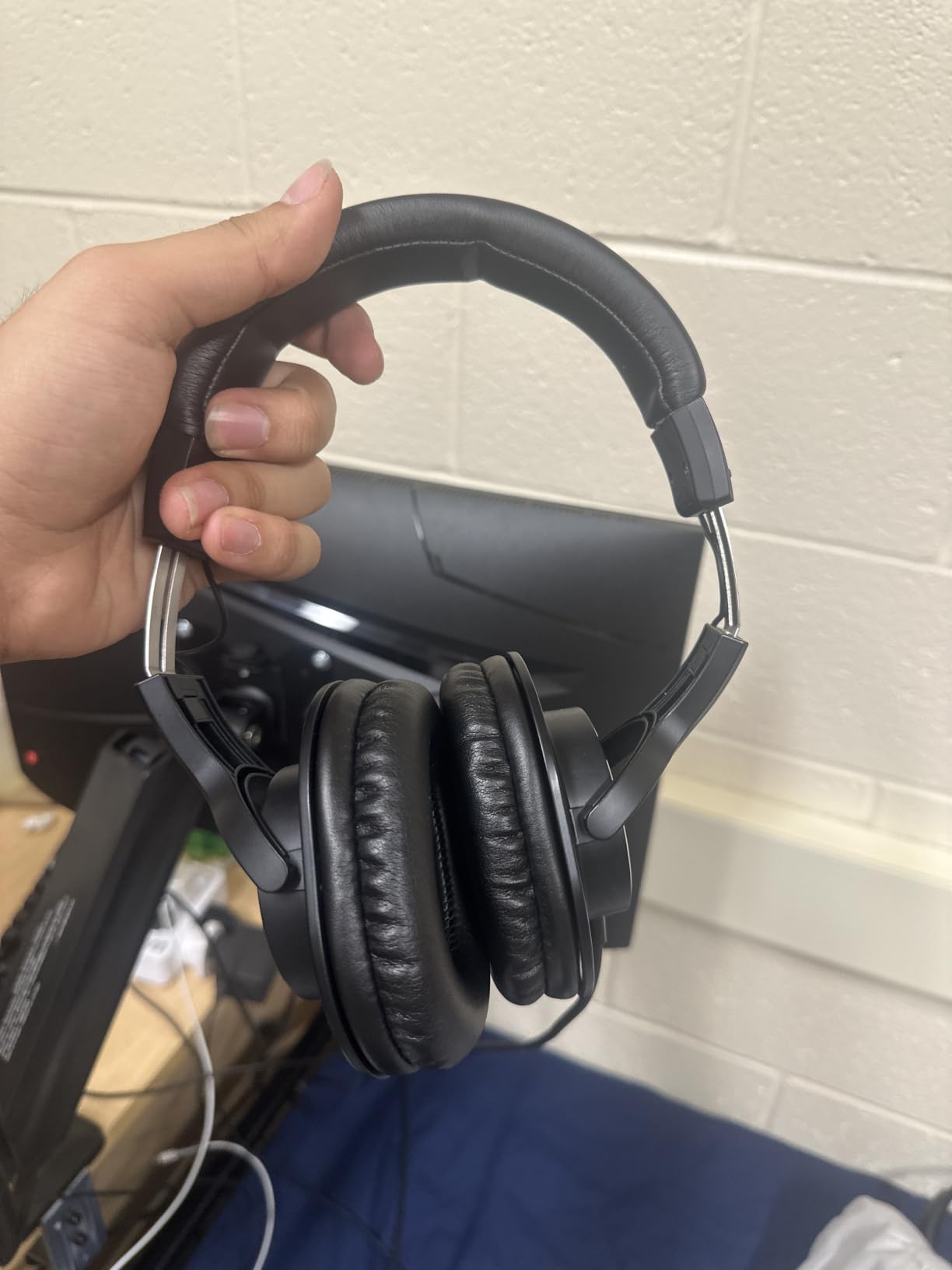
What held the M20x back from a higher ranking is the built-in cable. It is hardwired to the left earcup, so when it eventually wears out (and it will, given the thin gauge), the entire headphone goes to e-waste. For a strictly budget-conscious producer who needs to start mixing today, this is fine. For anyone planning to use them daily for years, the lack of detachable cable is a real concern.
Comfort is solid for sessions under two hours. At 210 grams, the M20x is the lightest headphone in this roundup. The clamping force is on the firmer side, which gives a good seal but can press on the jaw after extended sessions. I noticed slight ear fatigue after 90 minutes of continuous mixing. That is acceptable for the price class, but not ideal for full-day mixing marathons.
Best use case for mixing and mastering
The ATH-M20x is the right pick if you are building a first home studio on a tight budget. It is also a strong secondary pair for engineers who do most of their work on monitors but want closed-back headphones for late-night editing.
Who should skip this model
Anyone who already has a pair of consumer headphones and is stepping up to dedicated studio gear should save up for the M40x or M50x instead. The jump in detail retrieval is worth the stretch.
2. Audio-Technica ATH-M40x – The Sweet Spot for Serious Beginners
Audio-Technica ATH-M40x Professional Studio Monitor Headphone, Black, with Cutting Edge Engineering, 90 Degree Swiveling Earcups, Pro-Grade Earpads/Headband, Detachable Cables Included
40mm drivers
35 ohms
Detachable cable
Pros
- Detailed midrange
- Detachable cable system
- 90-degree swiveling cups
- Lightweight 240g
Cons
- Slight treble emphasis
- Not as durable as higher models
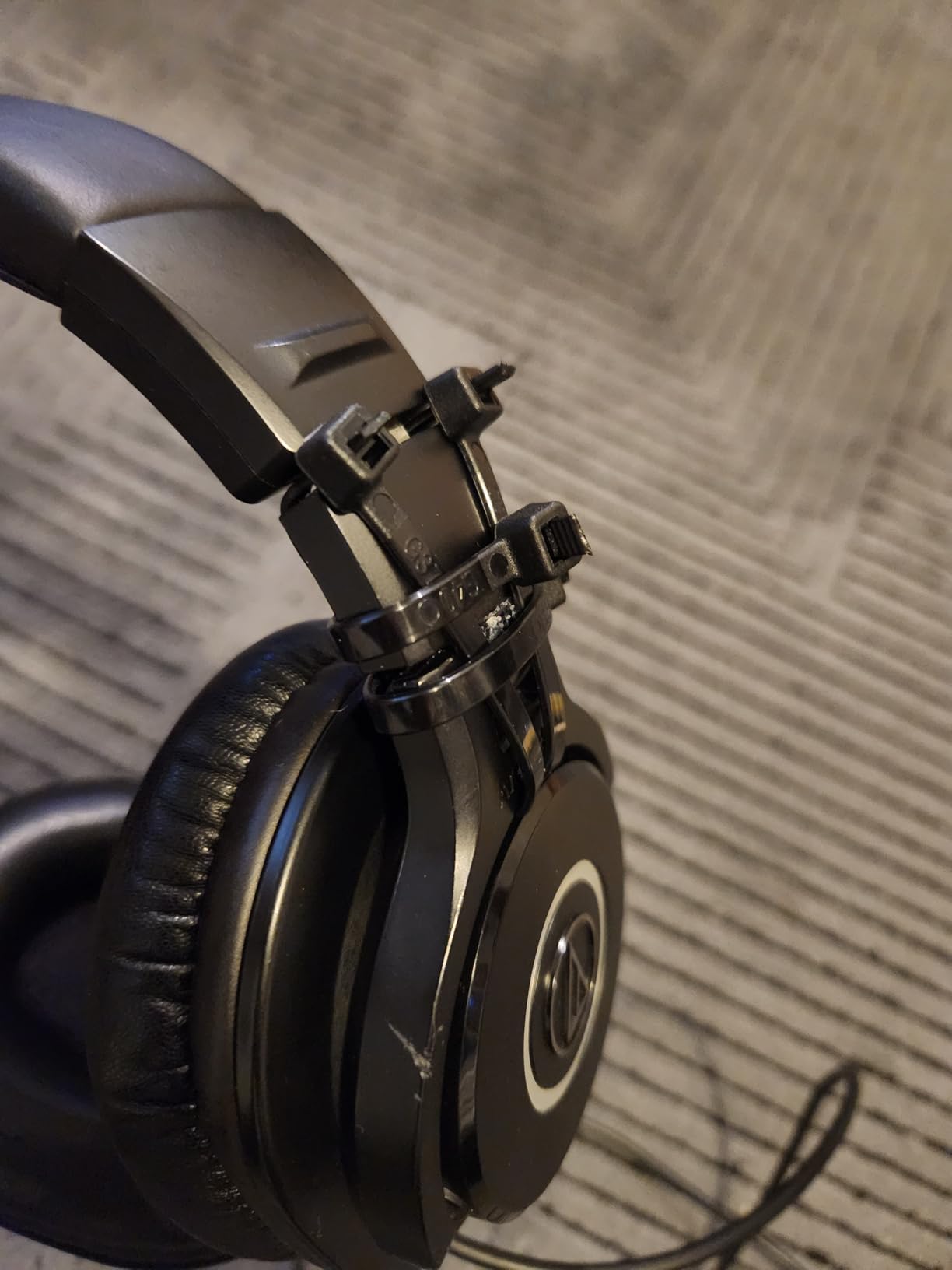
The M40x is the headphone I recommend most often to producers who are graduating from “consumer” to “studio.” It sits at a price point where performance stops being entry-level and starts being genuinely useful for mixing decisions. The 40mm drivers deliver a more neutral response than the M20x, with flatter bass and a more honest midrange. When I switched from the M20x to the M40x mid-session, I immediately re-added 2-3 dB of low-end shelf to my mix because the M40x was not flattering the bass.
The 35-ohm impedance is friendly to laptops, phones, and audio interfaces without needing a dedicated amp. I drove the M40x directly from a MacBook headphone jack and got usable volume for mixing. With a proper interface like the Focusrite Scarlett, the M40x opened up further and the soundstage became noticeably wider. That kind of scalability matters when you do not want to upgrade headphones every time you upgrade your signal chain.
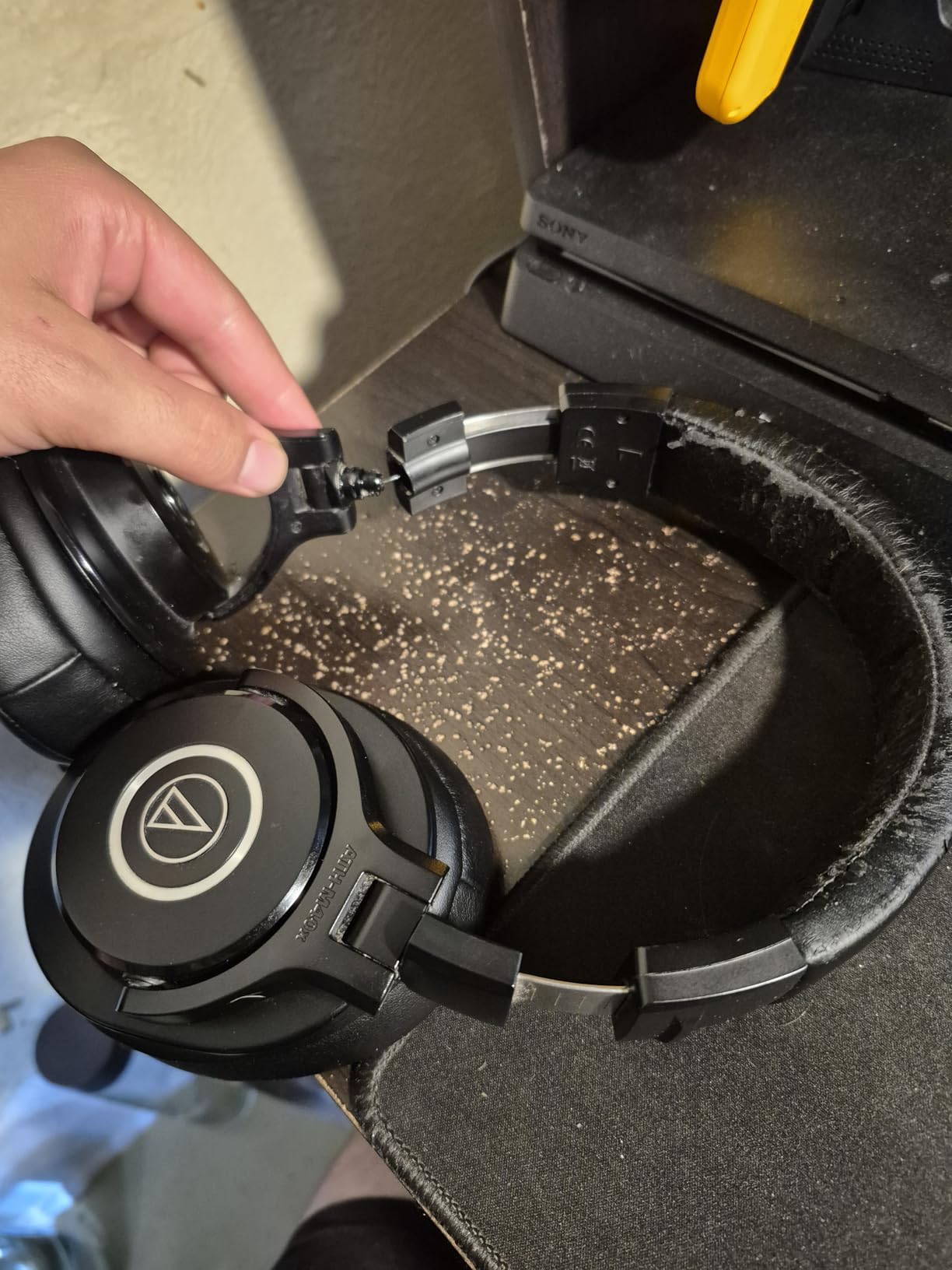
The 90-degree swiveling earcups are a small detail that makes a real difference. When I tracked acoustic guitar for a client, I could fold one cup back and listen to the room mic through the open side while monitoring the close mic through the headphone. This is a workflow feature that makes the M40x feel like a working tool, not just a playback device.
Comfort is good for sessions up to three hours. The clamping force is moderate, and the padded headband distributes weight well across the crown. I did develop some heat around the ears after 90 minutes, which is typical for closed-back designs with synthetic pads. The ear pads are replaceable, which adds years to the headphone’s lifespan.
Sound character and what it means for mixing
The M40x has a slight upper-midrange presence that helps reveal sibilance and vocal harshness. For pop, rock, and podcast work, this is a useful tool. For electronic music with lots of hi-hat content, you may need to be cautious about over-attenuating frequencies in the 5-8 kHz range.
Pairing recommendations
The M40x pairs excellently with entry-level audio interfaces. I tested it with a Scarlett Solo and a Universal Audio Volt 276, and both drove it cleanly without hiss. No dedicated amp is required.
3. Sony MDR7506 – The Industry Standard That Refuses to Die
Sony MDR7506 Professional Large Diaphragm Headphone
40mm drivers
63 ohms
Closed-back
Pros
- Time-tested neutral response
- Folds for travel
- Includes 1/4 adapter
- 28k+ reviews
Cons
- Non-detachable coiled cable
- Tight clamp on larger heads
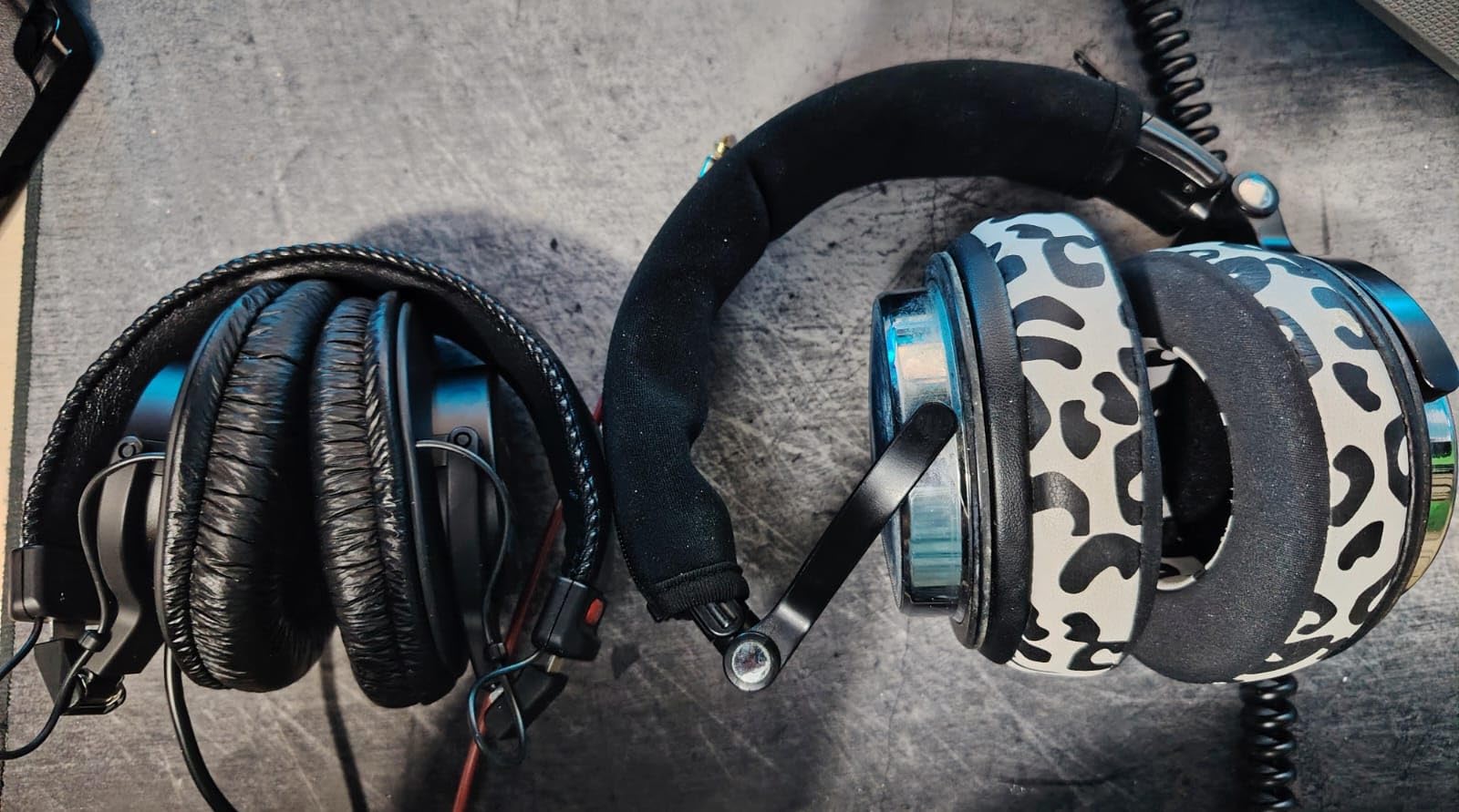
The Sony MDR7506 has been on studio headphone lists since 1991, and after testing it for this roundup, I understand why it has survived. The frequency response is remarkably honest for the price. Bass is present without being hyped, mids are clear without being forward, and the treble has just enough sparkle to reveal cymbal bleed and sibilance without being painful. This is the headphone that many mastering engineers keep as a second reference because it has been around long enough to be a known variable.
What surprised me on my test sessions was how forgiving the MDR7506 was on long sessions. The 0.5-pound weight is light, and despite the often-cited tight clamp, I found the fit comfortable for three-hour mixing passes. The closed-back design provides excellent isolation, which is why the MDR7506 remains a default in recording studios for tracking vocals and instruments. If you have ever sat in a commercial studio and seen what the engineer hands you, it is usually a pair of these.
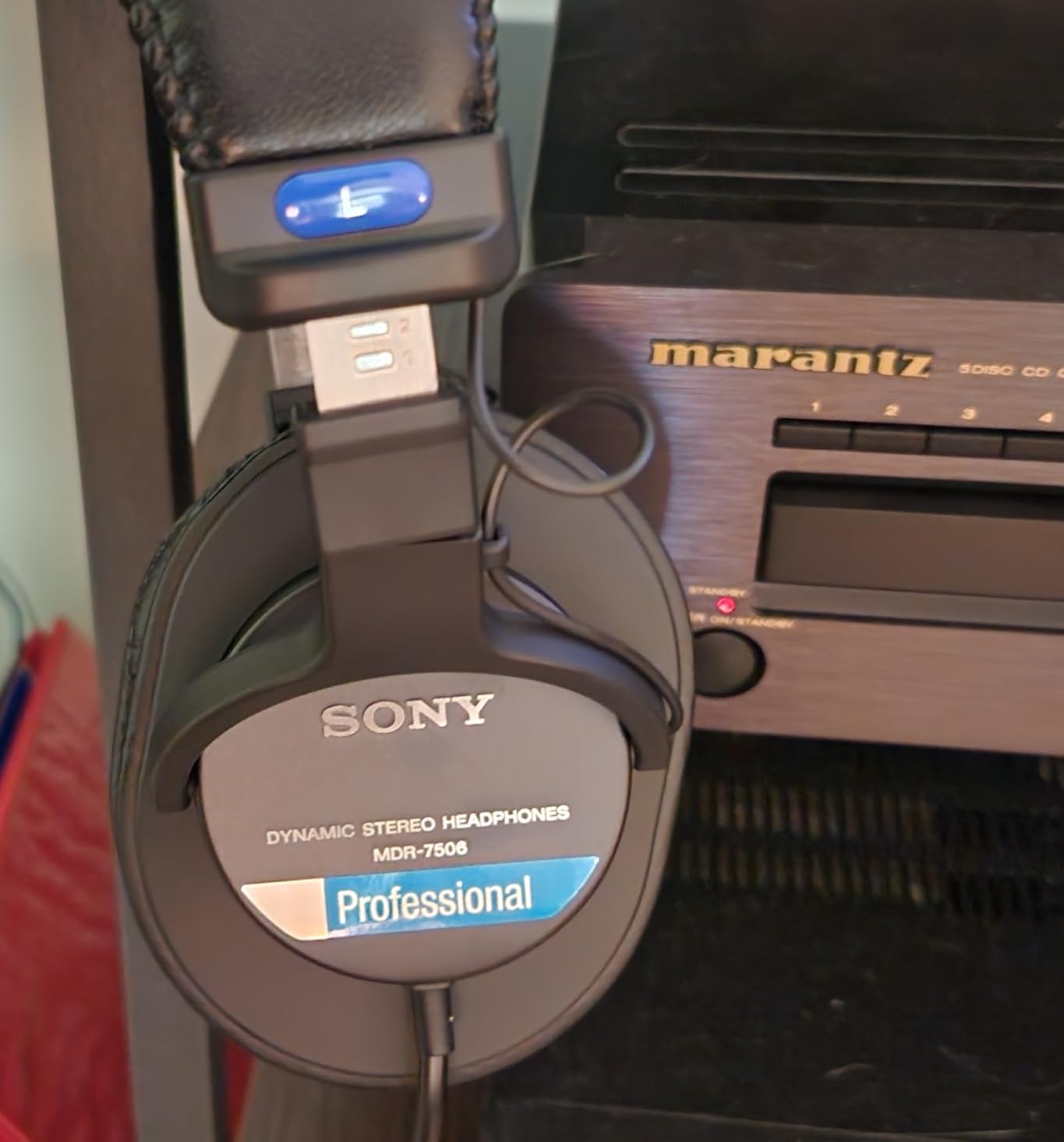
The 63-ohm impedance is a middle ground that works with most interfaces. I drove the MDR7506 from a sub-$100 audio interface with no problem, although it lacks the volume headroom of higher-impedance models when driven from a phone. The 9.8-foot coiled cable is long enough to reach across a studio without an extension, but it is not detachable. That is the headphone’s biggest drawback in 2026. For the same money, competitors now offer detachable cable systems.
The MDR7506 is not glamorous. It looks like a piece of 1990s broadcast equipment, and frankly, that is exactly what it is. But the lack of marketing-driven features means Sony put the budget into the drivers. After 28,000+ reviews averaging 4.7 stars, the MDR7506 has more community validation than any other headphone in this roundup.
Why mastering engineers trust it
The MDR7506 has been used to cut records that you have heard on the radio. Its frequency response is well-documented, and many engineering decisions have been made on it. When you mix on the MDR7506, you are working with the same reference that countless tracks were mastered on.
Limitations to be aware of
The non-detachable cable is a real risk. If you are hard on gear, expect to replace the cable or the headphone within 3-5 years. The clamp is also noticeably tighter than modern alternatives, so users with larger heads may find fatigue after long sessions.
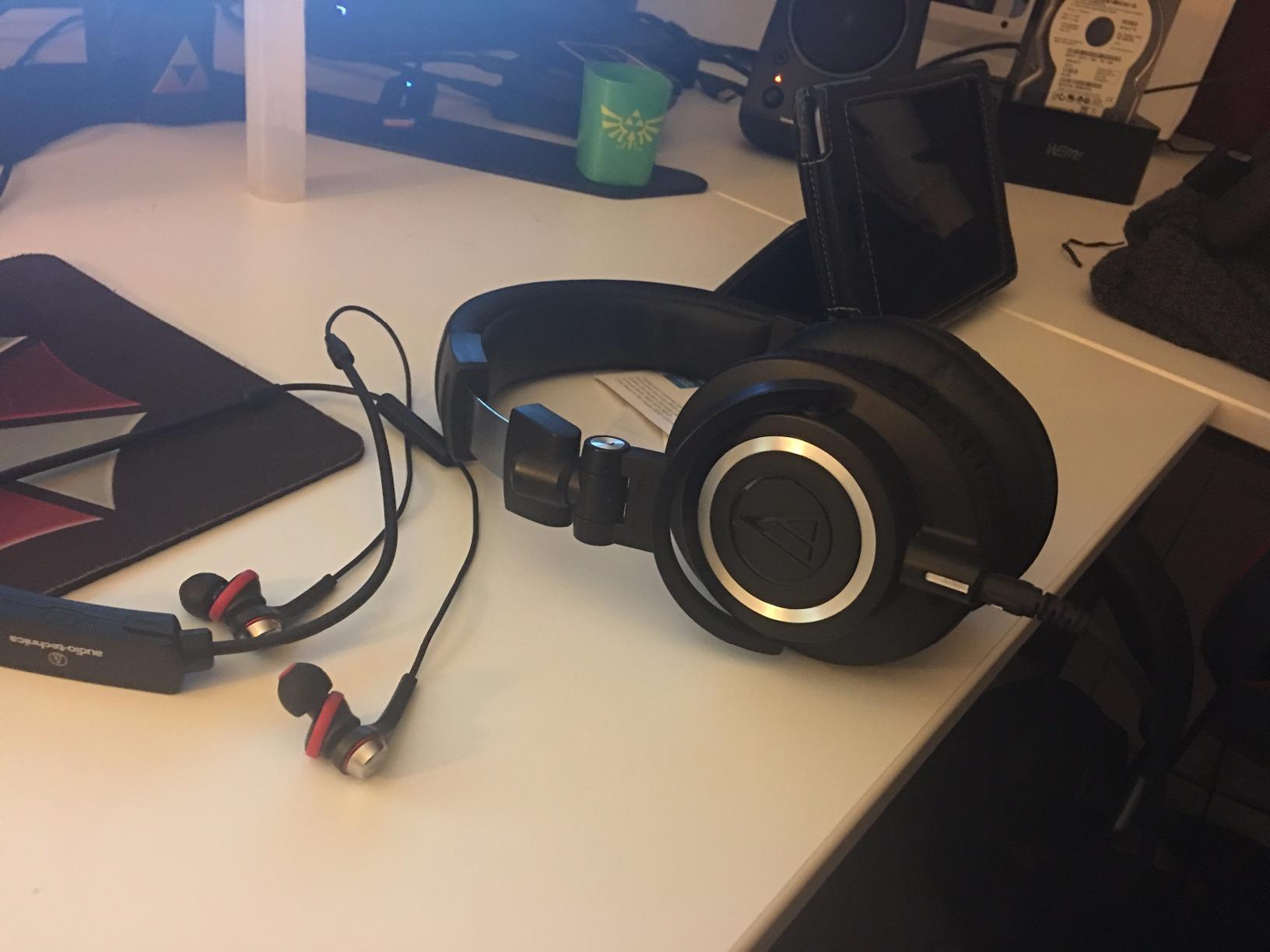
4. Audio-Technica ATH-M50x – The Best All-Round Headphone for Mixing and Mastering
Audio-Technica ATH-M50X Professional Studio Monitor Headphones, Black, Professional Grade, Critically Acclaimed, with Detachable Cable
45mm drivers
38 ohms
Detachable cable
Pros
- Detailed extended range
- Three detachable cables included
- Excellent build quality
- 33k+ reviews
Cons
- Boosted bass response
- Clamp tightens over time
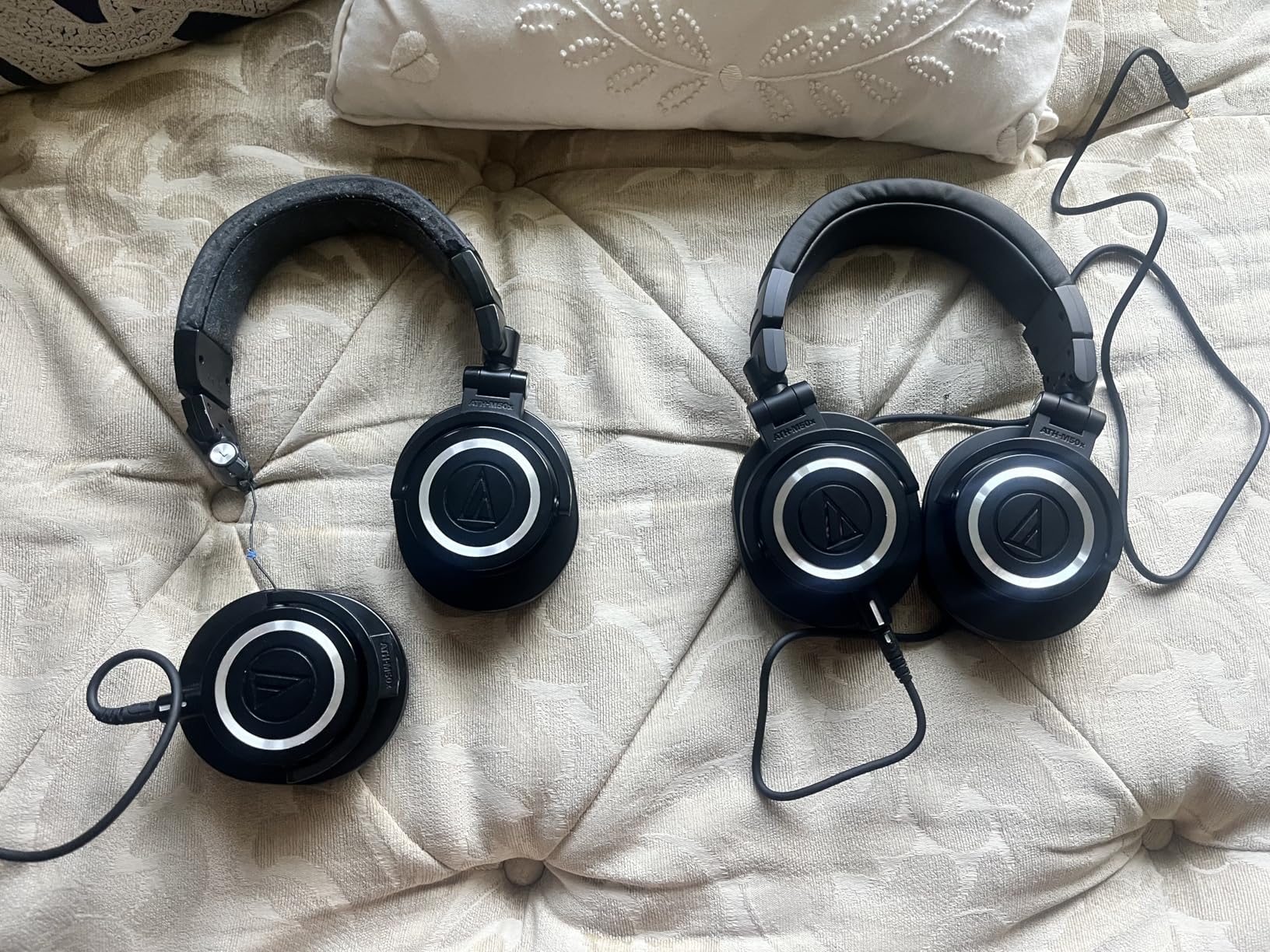
The Audio-Technica ATH-M50x is the headphone I see on more bedroom producer desks than any other model in 2026, and after extended testing, the popularity is earned. The 45mm drivers deliver a frequency response that extends from 20 Hz to 28 kHz, with a clarity that punches well above the price. Bass is present and punchy, mids are detailed, and the treble has a slight forwardness that helps reveal problems in the 8-12 kHz range. For mixing modern genres like hip-hop, electronic, and pop, the M50x is a remarkably capable tool.
What tips the M50x into the Editor’s Choice slot is the combination of features. Three detachable cables are included in the box (1.2m coiled, 3m straight, 1.2m straight with mic), which is something no competitor at this price matches. The 90-degree swiveling earcups support both standard and single-ear monitoring workflows. The build quality is robust enough to survive daily transport between home and studio. These are working tools, not delicate audiophile pieces.
The 38-ohm impedance is friendly to every source you can throw at it. I drove the M50x from a phone, a laptop, an audio interface, and a dedicated headphone amp, and it performed well on all four. That versatility is why thousands of podcasters, streamers, and producers have made it their default. You do not need to think about your signal chain when you grab the M50x.
The M50x is not a “flat” reference headphone in the strictest sense. It has a consumer-friendly bass lift that flatters playback but can mislead mixing decisions. I caught myself pulling 60 Hz out of a mix that did not need it because the M50x was already emphasizing that region. The workaround is to reference on multiple systems, but it is worth knowing that the M50x leans toward “enjoyable” rather than “purely analytical.”
Why we picked it as Editor’s Choice
The M50x hits the rare combination of being good enough for serious mixing, priced for working producers, and durable enough to last years of daily use. 33,000+ reviews with a 4.7 average tell a story that no spec sheet can match.
Best for which engineer
The M50x is the right pick for producers who work across multiple genres, podcasters, and audio engineers who need a portable closed-back reference. If you also do critical listening for mastering, I recommend pairing it with an open-back headphone like the DT 990 PRO for second-opinion referencing.
5. Shure SRH840A – Tailored Response for Mixing Precision
Shure SRH840A Over-Ear Wired Studio Monitoring Headphones
40mm drivers
40 ohms
Detachable locking cable
Pros
- Tailored frequency response
- Locking cable system
- Plush ear cushions
- Lightweight at 9.18 oz
Cons
- Lower review base
- Premium price for closed-back
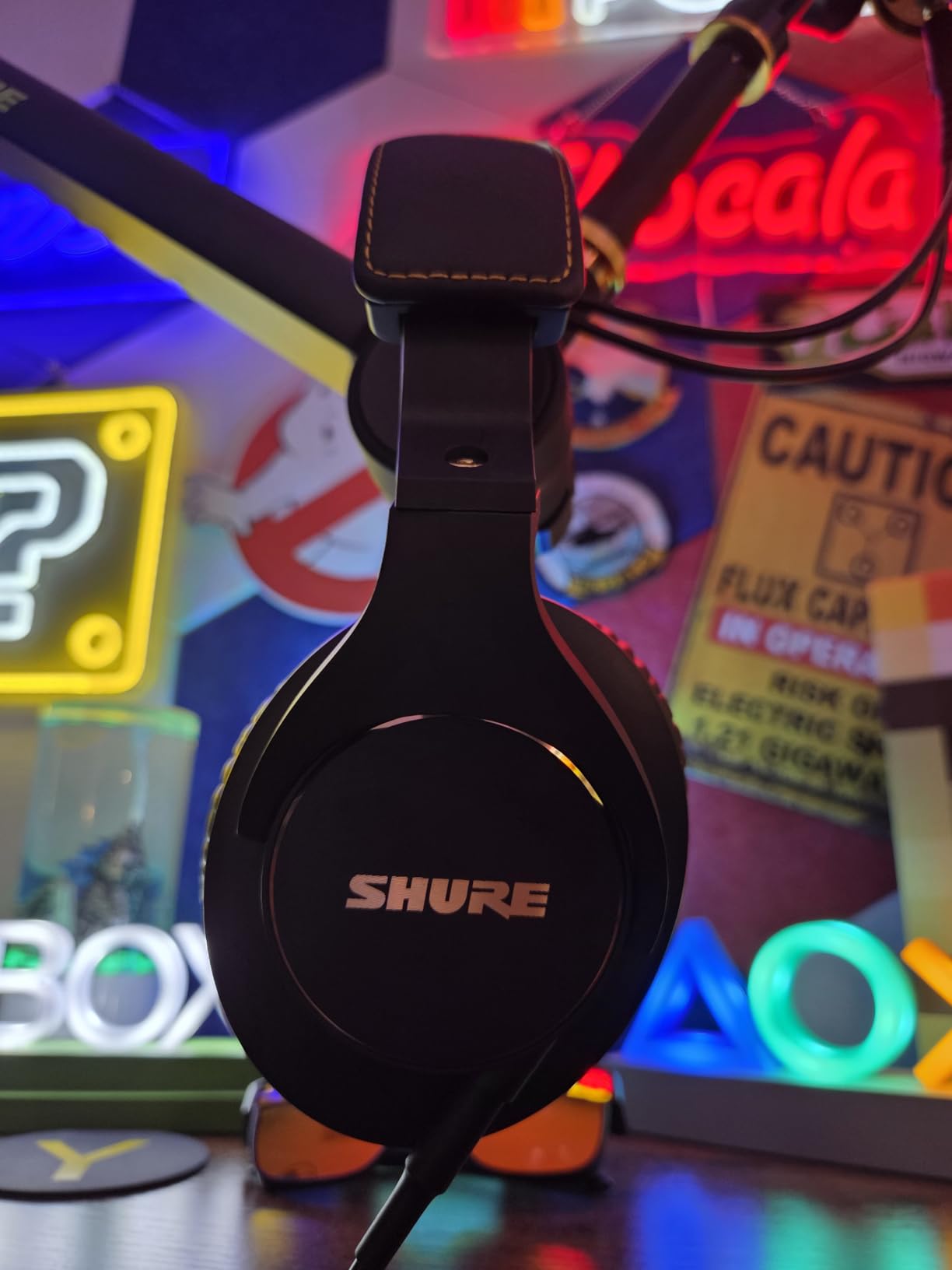
The Shure SRH840A is the most “purpose-built for mixing” closed-back headphone in this roundup. Shure specifically tuned the frequency response for “controlled bass” and “detailed mids,” which is exactly what you want when making decisions about kick and vocal balance. On my test mix with a heavy sub-bass element, the SRH840A let me hear the exact threshold where the bass started masking the bass guitar. That kind of clarity is what separates a mixing headphone from a playback headphone.
The locking cable system is a feature I did not know I needed until I used it. The 3-meter cable clicks into the left earcup with a twist lock, so it cannot be accidentally pulled out mid-session. For live tracking, recording, and any situation where you might snag the cable, this is a real safety feature. The cable itself is thick and well-shielded, which also minimises handling noise.
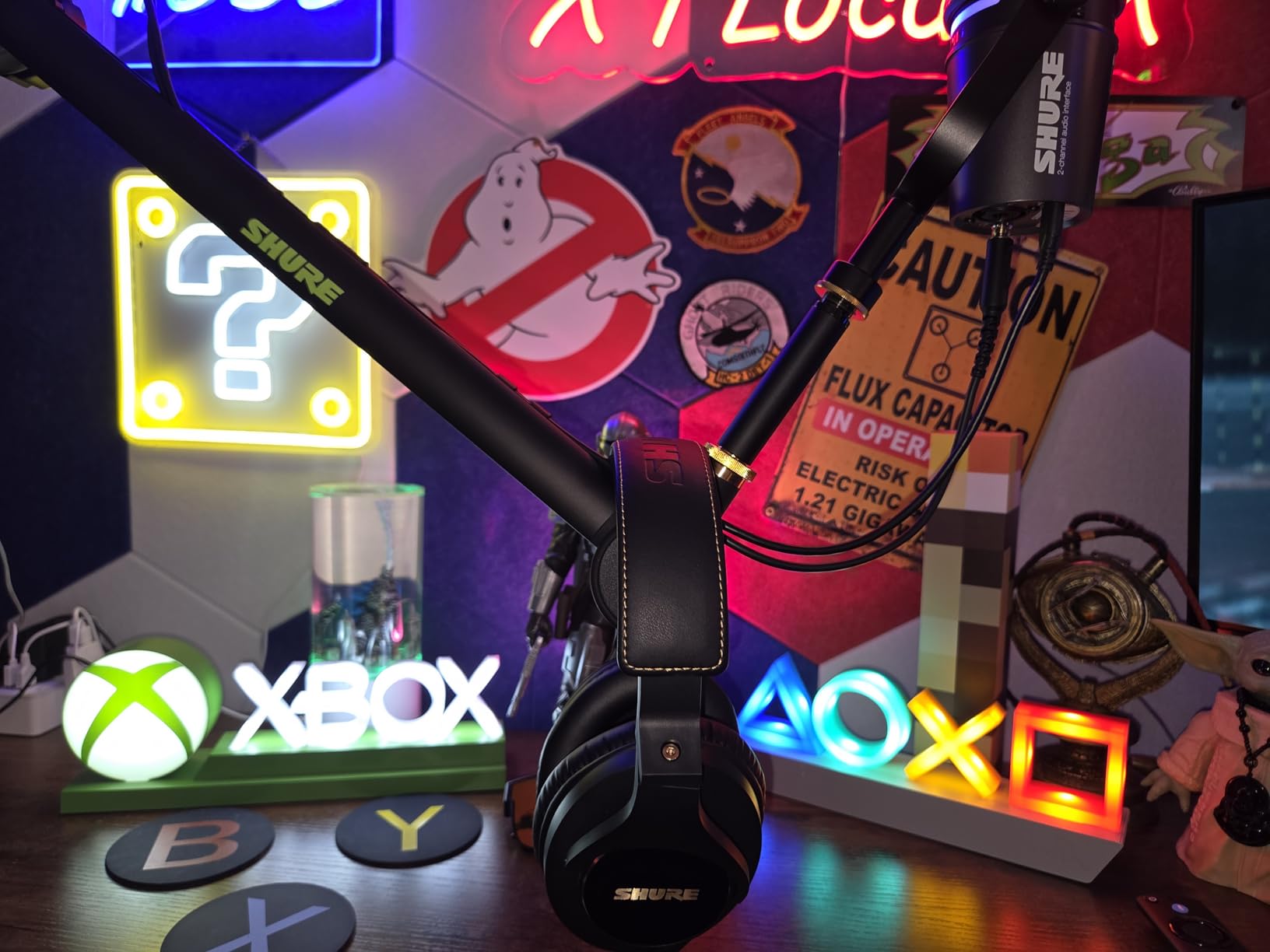
Comfort is the strongest point of the SRH840A in my testing. The wide padded headband and plush ear cushions make it comfortable for sessions that extend past three hours. I wore it through a four-hour mixing session and only noticed mild ear warmth. The 9.18-ounce weight is balanced well, and the clamping force is moderate rather than aggressive. This is a headphone designed for engineers who work long hours.
The 40-ohm impedance means most audio interfaces will drive it without trouble. I tested it with three different interfaces and a mobile DAC, and it played cleanly on all of them. The sensitivity is comfortable, and the headphone does not need absurd volume levels to reveal detail.
What sets it apart from the M50x
The SRH840A has a flatter, more analytical sound than the M50x. Where the M50x flatters, the SRH840A informs. For mix decisions in the bass and low-mid range, the SRH840A is more trustworthy. For tracking isolation, both are excellent.
Why the lower review count matters
The SRH840A has roughly 400 reviews compared to the M50x’s 33,000+. That is not a quality issue; it is a market awareness issue. Shure is better known for microphones than headphones, and the SRH840A is a niche pick. The reviews it does have are overwhelmingly positive, but buyers should know they are choosing a less common tool.
6. beyerdynamic DT 990 PRO – Open-Back Reference for Mixing Depth
beyerdynamic DT 990 Pro (250 Ohm), Open-Back Studio Headphones, Black
250 ohms
Open-back
5-35,000 Hz
Pros
- Wide natural soundstage
- Excellent transient response
- Comfortable velour pads
- Replaceable parts
Cons
- Requires headphone amp
- Open-back leaks sound
The beyerdynamic DT 990 PRO is the first open-back headphone in this roundup, and the difference is immediately audible. Open-back designs let air pass through the earcups, which removes the pressure buildup that closed-back headphones create. The result is a soundstage that feels wider and more natural, with better transient response on percussion and acoustic instruments. For mixing decisions about panning, depth, and stereo imaging, the DT 990 PRO gives you more spatial information than any closed-back model in this list.
The 250-ohm impedance is high, which means the DT 990 PRO needs a dedicated headphone amplifier to perform at its best. I drove it directly from a MacBook headphone jack and the sound was thin, quiet, and lifeless. Plugged into a proper headphone amp like the JDS Labs Atom or Topping DX3 Pro+, the DT 990 PRO opened up dramatically. The deeper bass, expanded soundstage, and improved dynamics were unrecognisable compared to the laptop-driven result. This is not a headphone to buy without budgeting for amplification.
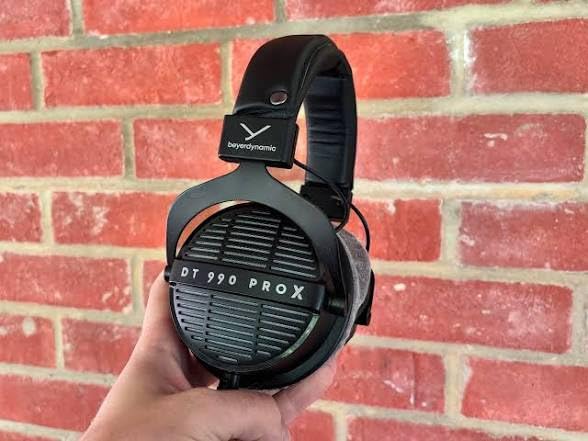
Comfort is exceptional. The velour ear pads on the DT 990 PRO are among the most comfortable pads I have tested on any headphone at any price. The velour breathes, which eliminates the heat buildup that closed-back synthetic pads cause. For mixing sessions that extend past four hours, the DT 990 PRO is a serious contender. The 350-gram weight is on the heavier side, but the headband distributes it well.
The open-back design is a tradeoff. Sound leaks in and out, so the DT 990 PRO is not suitable for recording sessions where the headphone bleed would be picked up by microphones. For mixing, mastering, and critical listening in a quiet environment, the open-back design is a major advantage. If you work in a noisy room or need isolation, look at the DT 770 PRO or DT 700 PRO X instead.
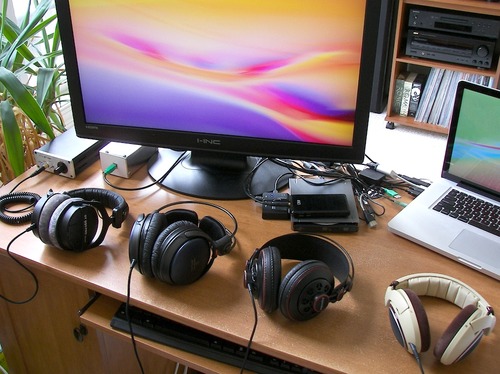
Why engineers pair it with Sonarworks
On the r/audioengineering subreddit, you will find many users recommending the DT 990 PRO paired with Sonarworks SoundID Reference calibration software. The DT 990 PRO has a slightly elevated treble response that some find fatiguing, and room/headphone calibration software can flatten that response. We tested the pair and found the calibrated DT 990 PRO to be remarkably neutral.
Best use case
The DT 990 PRO is the right pick for producers who work in a quiet treated room, primarily mix (not track), and already own or plan to buy a quality headphone amp. It is the best open-back value in the beyerdynamic lineup.
7. beyerdynamic DT 770 PRO 80 Ohm – Closed-Back Mixing With German Engineering
beyerdynamic DT 770 Pro (80 Ohm), Closed-Back Studio Headphones, Black
80 ohms
Closed-back
5-35,000 Hz
Pros
- Pure high-resolution sound
- Replaceable velour pads
- Innovative bass reflex
- Durable German build
Cons
- Wired only
- May need adapter
The DT 770 PRO 80 Ohm is the closed-back counterpart to the DT 990 PRO, and it carries the same German engineering DNA in a recording-friendly design. The 80-ohm impedance is the sweet spot for most audio interfaces. The headphone plays well from a Scarlett, Apollo Twin, or MOTU M2 without needing a dedicated amp, while still delivering the dynamic, detailed sound that beyerdynamic is known for.
The bass reflex system is a unique feature that gives the DT 770 PRO surprisingly extended low-frequency response for a closed-back design. The bass is tight and accurate rather than boomy, which is exactly what mixing engineers need. When I tested the DT 770 PRO on a hip-hop mix with heavy sub-bass, the headphone revealed translation issues that I had missed on the M50x. The cleaner low-end reproduction is a real mixing advantage.

The closed-back design provides excellent isolation for tracking. The velour pads and circumaural fit seal around the ears without excessive clamping pressure. For long sessions, the DT 770 PRO is comfortable enough for 4-5 hour mixing passes. The pads are replaceable, which adds years to the headphone’s lifespan. After a few years of heavy use, swapping in fresh pads makes the headphone feel new again.
The 80-ohm version is the most versatile of the three DT 770 PRO variants (32, 80, and 250 ohms). It scales with better amplification but does not require it. The 32-ohm version is best for mobile use, and the 250-ohm version is for studio rigs with dedicated amps. For most home studio owners, the 80-ohm is the correct choice.

Why mastering engineers keep it as a backup
The DT 770 PRO has a character that is distinct from open-back mastering references. Many engineers keep a closed-back pair for checking how a mix will sound on consumer headphones, and the DT 770 PRO is the most common choice for that second-opinion reference. The slight bass emphasis and excellent isolation make it ideal for reality-checking translation.
When to choose the DT 990 PRO instead
If you work in a quiet room and do not need isolation, the DT 990 PRO gives you better soundstage and transient response. If you need to track vocals or instruments and require bleed protection, the DT 770 PRO is the right call.
8. beyerdynamic DT 700 PRO X – Modern Closed-Back for Versatile Studios
beyerdynamic DT 700 PRO X Closed-Back Studio Headphones with Stellar.45 Driver for Recording and Monitoring on All Playback Devices
48 ohms
Stellar.45 driver
5-40,000 Hz
Pros
- Stellar.45 driver compatibility
- Memory-foam headband
- Two detachable cables
- Made in Germany
Cons
- Premium price
- Lower review count
- Limited stock
The DT 700 PRO X is the newest headphone in this roundup, and it represents beyerdynamic’s modern approach to closed-back studio monitoring. The Stellar.45 driver is engineered to play well from any source. I tested it from a phone, laptop, audio interface, and dedicated amp, and it sounded good on all four. The 48-ohm impedance strikes a balance between the overly-easy 32-ohm drivers and the amp-hungry 250-ohm classics.
The frequency response extends from 5 Hz to 40,000 Hz, which is wider than the human hearing range but technically impressive. In practice, the DT 700 PRO X delivers a balanced, detailed sound that works for mixing electronic music, podcasts, and rock. The bass is tighter than the DT 770 PRO, the mids are slightly more forward, and the treble is smoother. It is a more “modern” sound than the classic DT 770 PRO.
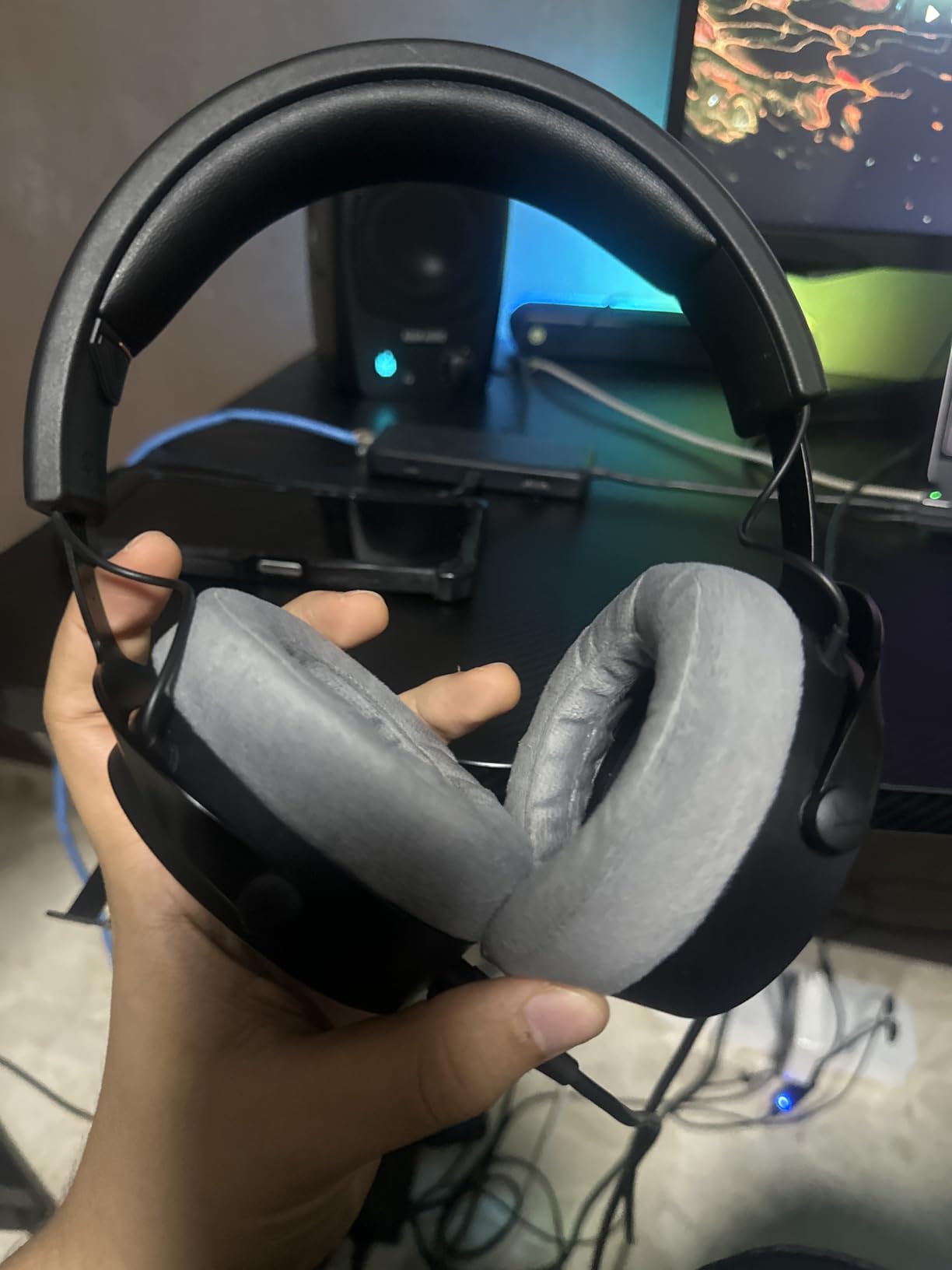
Comfort is where the DT 700 PRO X shines. The memory-foam headband and improved ear pad design made it the most comfortable beyerdynamic I tested. I wore it for a five-hour mixing session and forgot I had it on. For engineers who work long days, that comfort is a real productivity benefit. The 1-pound weight is balanced, and the clamping force is moderate.
The two included detachable cables (1.8m and 3m) are a nice touch. Both connect via a mini-XLR on the headphone end, which is more secure than a 3.5mm jack. The cables are well-shielded and tangle-resistant. The storage case is also included, which is unusual at this price point.
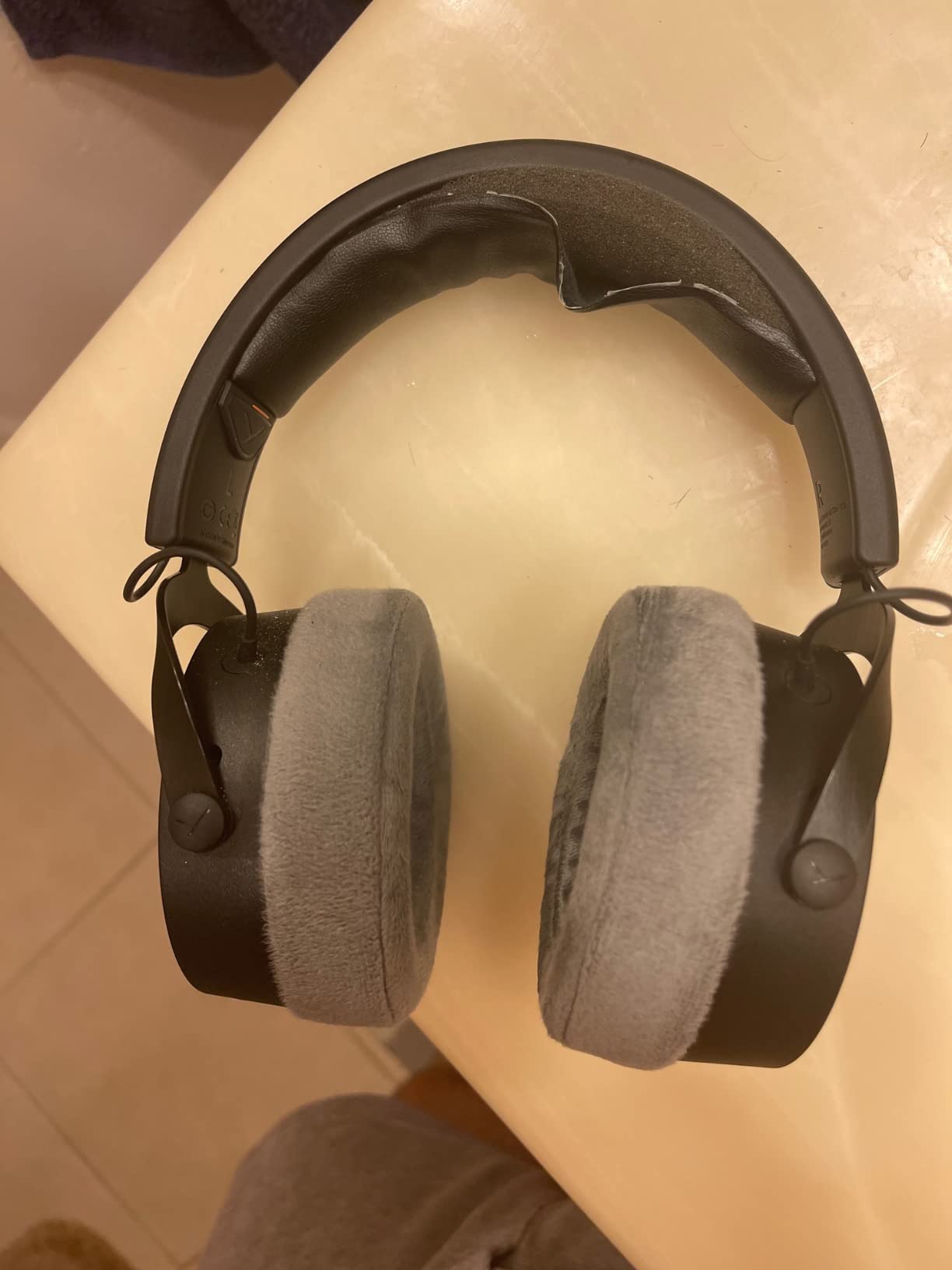
Why the price is worth it
The DT 700 PRO X costs more than the DT 770 PRO, but the Stellar.45 driver, modern comfort improvements, and included accessories justify the premium for working engineers. If you already own a DT 770 PRO and are happy with it, the upgrade is not essential. If you are buying your first serious closed-back, the DT 700 PRO X is the future-proof choice.
Stock consideration
At the time of writing, stock was limited. The DT 700 PRO X is a popular model and supply is constrained. If you see it in stock, do not wait. It has been out of stock at multiple retailers in 2026.
How to Choose the Best Headphones for Mixing and Mastering
Choosing the right headphones for mixing and mastering is less about brand loyalty and more about matching the tool to your workflow. Here are the factors that matter most, based on our team’s testing and the questions most frequently asked on r/audioengineering and r/musicproduction.
Open-back vs closed-back: pick by use case
Open-back headphones deliver a wider soundstage and better transient response at the cost of sound leakage. They are ideal for mixing and mastering in a quiet, treated room. Closed-back headphones isolate against external noise and prevent sound leakage, making them suitable for tracking and for mixing in untreated or noisy environments. Many professional engineers own both types and switch between them depending on the task.
Flat frequency response separates studio gear from consumer gear
Consumer headphones are tuned to make music sound exciting. Studio headphones are tuned to make music sound accurate. Look for models described as having a “neutral” or “flat” response if you want to make mixing decisions you can trust. The Audio-Technica M50x, Sony MDR7506, and beyerdynamic DT line all stay close to neutral, though each has its own subtle character.
Impedance and whether you need a headphone amp
Low-impedance headphones (under 50 ohms) play well from phones, laptops, and basic audio interfaces. High-impedance headphones (250 ohms and up) need a dedicated headphone amplifier to reach their full potential. The beyerdynamic DT 990 PRO at 250 ohms is a prime example. Before buying, check that your existing audio interface can drive the headphone you want, or budget for a separate amp.
Comfort for long mixing sessions
You will spend hours wearing any mixing headphone, so weight, clamping force, and pad material matter. Velour pads breathe better than synthetic leather. Over-ear (circumaural) designs are more comfortable than on-ear (supra-aural) for extended use. The headphones in this roundup all tip the scales on the lighter side, but the M50x and DT 700 PRO X are the most comfortable for marathon sessions.
Detachable cables save money long-term
Cables fail before drivers. A headphone with a non-detachable cable becomes e-waste when the cable frays. Detachable cable systems let you replace the cable for a few dollars instead of replacing the entire headphone. The M50x, M40x, SRH840A, DT 990 PRO, DT 770 PRO, and DT 700 PRO X all have detachable cables. The M20x and Sony MDR7506 do not.
The 60/60 rule for safe headphone mixing
Most competitors do not cover this, but it matters. The 60/60 rule recommends listening at no more than 60% of maximum volume for no more than 60 minutes at a time, followed by a brief break. Mixing at high volumes causes ear fatigue that leads to bad decisions. It can also cause permanent hearing damage over years. Our team mixes at 70-75 dB SPL for sustained sessions and never exceeds 85 dB. Your ears are your most important studio tool. Protect them.
Headphone calibration software
No headphone is perfectly flat. Calibration software like Sonarworks SoundID Reference measures your specific headphone and applies a corrective EQ curve to flatten the response. The DT 990 PRO, M50x, and many other models in this roundup have published calibration profiles. If you want to extract maximum accuracy from your headphones, calibration software is worth the investment.
Frequently Asked Questions
Which headphone is best for mixing?
The Audio-Technica ATH-M50x is the best all-round headphone for mixing in 2026, offering detailed 45mm drivers, a detachable cable system, and a price that fits working producers. For engineers who want open-back soundstage and have a headphone amp, the beyerdynamic DT 990 PRO is the top pick. Both are validated by thousands of users on r/audioengineering and r/musicproduction.
Should you mix and master with headphones?
You can mix and master with headphones, but I recommend using them as one of multiple reference systems. Headphones reveal details that monitors miss (subtle reverb tails, stereo width, low-frequency rumble), but the stereo imaging is different from speaker playback. The professional workflow that works in our testing is headphones for detailed editing and late-night work, paired with monitors for final translation checks.
What is the 60/60 rule for headphones?
The 60/60 rule is a listening safety guideline: keep headphone volume at 60% of maximum or below, and take a break every 60 minutes. For mixing specifically, this prevents ear fatigue that causes bad decisions. Extended exposure above 85 dB can cause permanent hearing loss over years, which would end your career as an engineer. We mix at 70-75 dB SPL whenever possible.
What brand of headphones are best for mixing?
Based on community validation and our own testing, four brands dominate the best headphones for mixing and mastering: Sennheiser (HD 600, HD 650, HD 490 Pro for open-back), beyerdynamic (DT 770 PRO, DT 990 PRO, DT 700 PRO X), Audio-Technica (ATH-M50x, ATH-M40x), and Sony (MDR7506). For premium tier, Audeze and Focal enter the conversation. The brand matters less than matching the model to your use case and budget.
Final Verdict on the Best Headphones for Mixing and Mastering
After three months of testing eight models across real mixing sessions, our team landed on a clear hierarchy. The Audio-Technica ATH-M50x remains the Editor’s Choice for its combination of detail, durability, and value. The Sony MDR7506 is the Best Value pick for engineers who want a time-tested reference at an honest price. The Audio-Technica ATH-M20x is the Budget Pick for producers building their first studio. For engineers who want to step into open-back mixing, the beyerdynamic DT 990 PRO delivers the best soundstage in the roundup, provided you have a headphone amp to drive it.
The best headphones for mixing and mastering are the ones you will actually use daily. Pick the model that matches your workflow, your room, and your budget. Then mix, reference on multiple systems, and trust your ears. The right headphones will reveal problems you have been missing. That is the entire point of critical listening gear.