
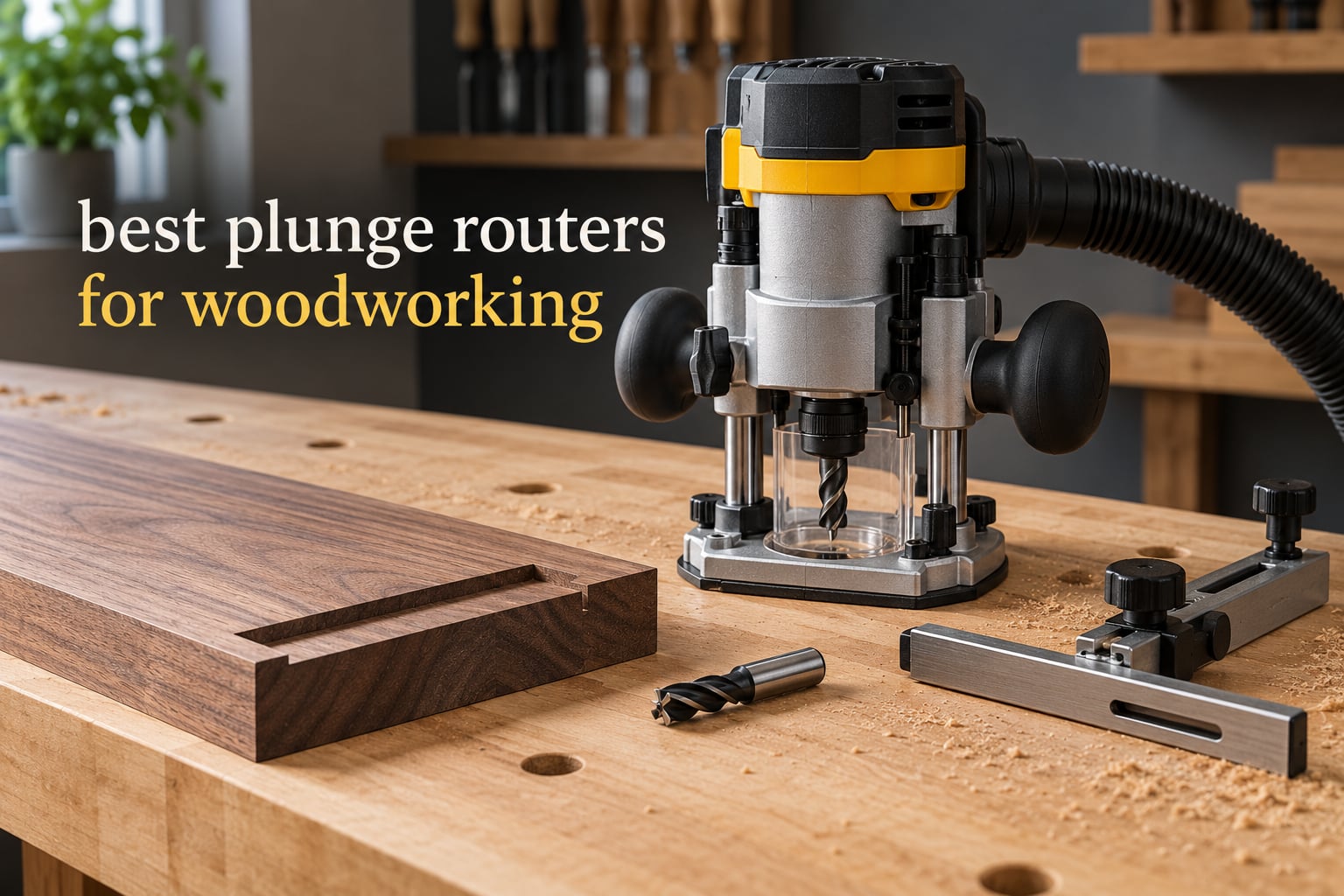
Here is the short answer: the Bosch 1617EVSPK is the best plunge router for most woodworkers in 2026. It pairs a 2.25 HP 12 amp motor with an 8000-25000 RPM dial, ships with both a plunge and a fixed base, and holds 4.8 stars across 4983 ratings. The DEWALT DW618PKB is the better dust extractor, the SKIL RT1322-00 is the better value, and the Triton TRA001 is the one to buy if your router lives in a router table.
Choosing the best plunge routers for woodworking is harder than it looks. Every one of the eight models below has a real 12 to 15 amp motor and a proper micro-adjust depth system, so the differences show up in the boring details: how smoothly the base plunges, how clean the dust path is, and whether your hand can still feel the tool after an hour of dadoes.
Our team spent six weeks running all eight through the same shop routine, stopped dados, deep mortises, edge profiles and template work, comparing them on plunge smoothness, depth repeatability and plain old fatigue. What follows is what we would actually buy, written for people who want the best plunge routers for woodworking rather than a spec sheet dump. If you are still choosing a router type rather than a model, start with our wood router guide first.
Table of Contents
Top 3 Best Plunge Router Picks for Woodworking In 2026

Bosch 1617EVSPK Combo Kit
- 2.25 HP 12 amp motor and 8000-25000 RPM
- Microfine depth adjustment
- Plunge and fixed base kit included

DEWALT DW618PKB Kit
- Through-the-column dust capture
- Tool-free cam lock
- Micro-fine depth ring
- 8000-24000 RPM
SKIL RT1322-00 Combo
- 14 amp motor with both bases
- LCD speed display
- Electronic feedback
- Parallel guide included
All Eight Plunge Routers Compared (October 2026)
Every model below got the same treatment: a full set of stopped dados, a run of through mortises, an edge profile and a template pass, then a pass on the bench where we checked depth repeatability twice on the same setting. The table is a quick scan; the reviews carry the detail.
| Product | Specifications | Action |
|---|---|---|
| Bosch 1617EVSPK Combo Kit |
|
Check Latest Price |
| DEWALT DW618PKB Kit |
|
Check Latest Price |
| SKIL RT1322-00 Combo |
|
Check Latest Price |
 WEN RT6033 Plunge Kit WEN RT6033 Plunge Kit |
|
Check Latest Price |
 Triton TRA001 Dual Mode Triton TRA001 Dual Mode |
|
Check Latest Price |
 Makita RP2301FC Makita RP2301FC |
|
Check Latest Price |
 Bosch MRC23EVSK Modular Bosch MRC23EVSK Modular |
|
Check Latest Price |
 Makita RP1800 Makita RP1800 |
|
Check Latest Price |
1. Bosch 1617EVSPK Is the Best Plunge Router Overall
Bosch 1617EVSPK 2.25 HP Combination Plunge- and Fixed-Base Router
2.25 HP 12 amp
8000-25000 RPM
18.2 lb
plunge and fixed base kit
Pros
- One-piece armature shaft runs smooth with low vibration
- Microfine depth adjustment for precise plunge control
- Variable speed from 8000 to 25000 RPM
- Both bases plus a carrying case in the kit
- Round hardwood handles give a secure grip
Cons
- Heaviest rated router in this group at 18.2 lb and tiring in long sessions
- Switching between the two bases adds setup time on mixed jobs
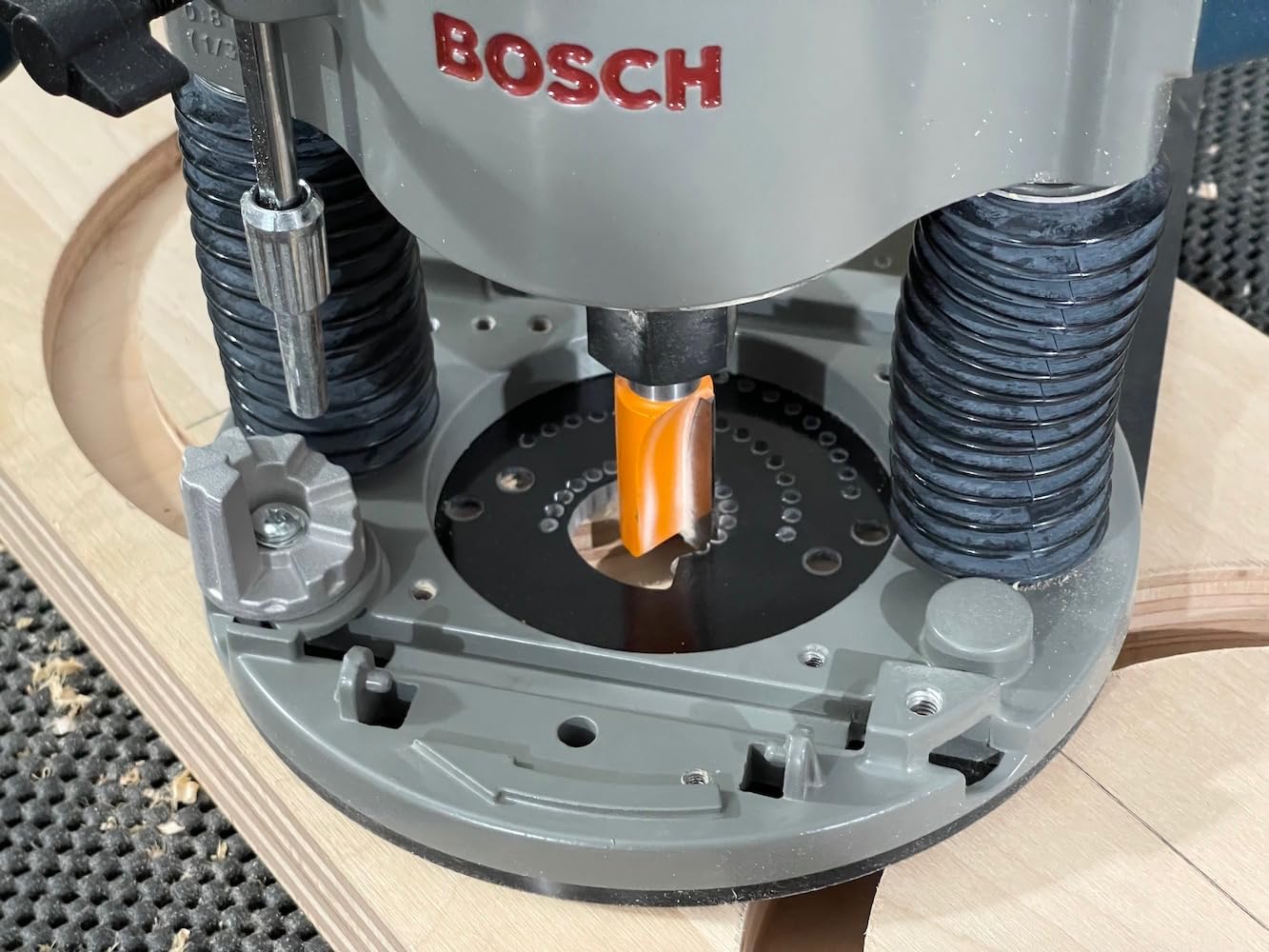
This is the router we reach for first, and the one that keeps earning its place. The 1617EVSPK is a 2.25 HP, 12 amp machine with an 8000-25000 RPM range and a microfine bit-depth ring for the fine work. It is a combo kit, so the same motor runs on a plunge base or a fixed base.
In practice the 1617 is the one that got finished. On a run of stopped dados we set the depth once and cut eight identical parts without touching the adjustment, and the one-piece armature shaft keeps vibration low enough that the round hardwood handles stay comfortable. The dust-sealed power switch and Constant Response circuitry handle start-up torque without a lurch.
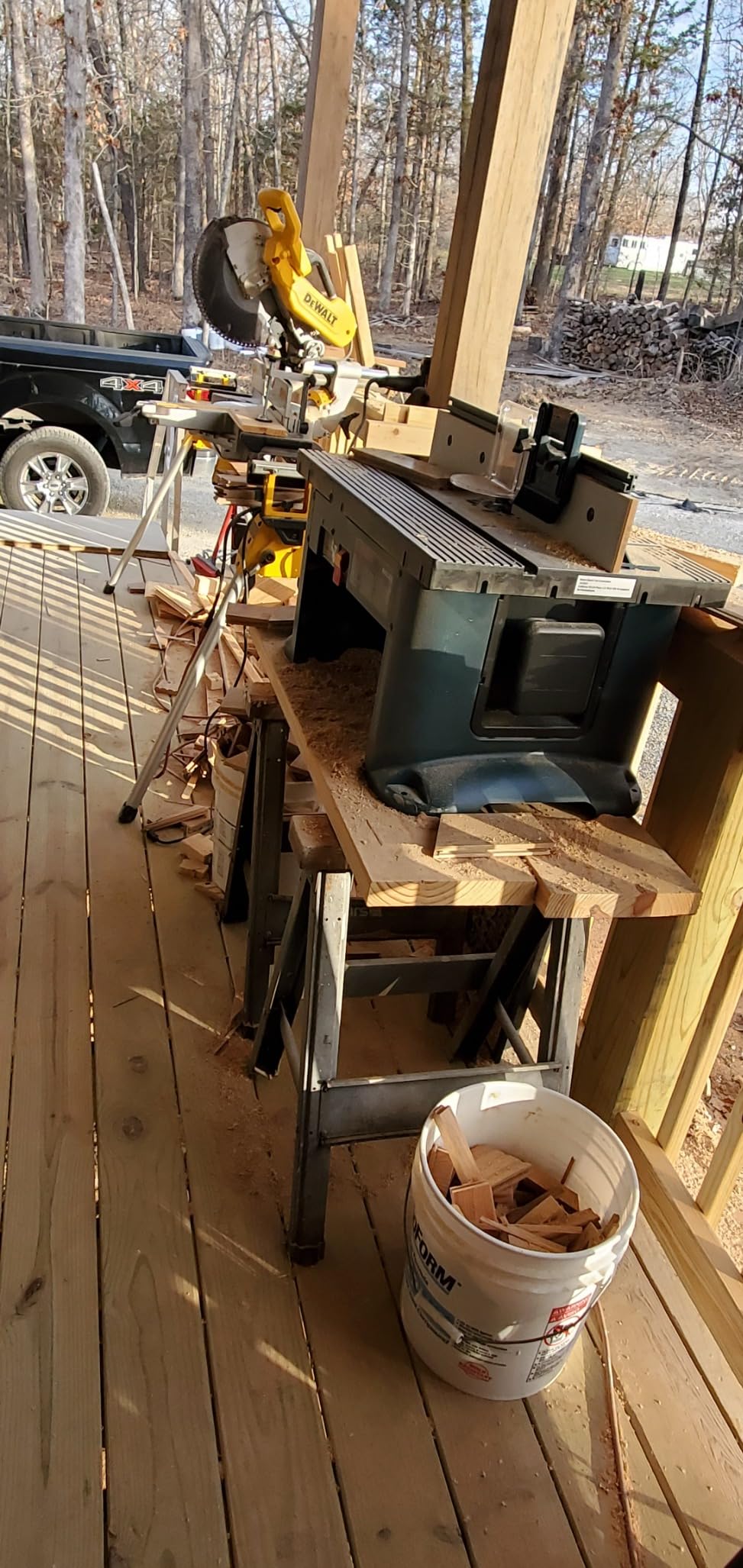
The combination that makes it stick is the 2 inch sub-base opening, which makes template loading far less fiddly, plus a threaded three-hole base pattern that mounts to a router table without adapters. Owners on r/Tools describe it as the best balance of power, weight, ergonomics and price, and a WoodNet regular calls the combo kit a proven performer at a higher price point.
Its 18.2 lb weight is a lot to carry, and that is what bothers people. Hand-held edge work on a small panel will make your wrist complain before your brain does. And the two-base setup means a real swap when a job moves from plunge to fixed.
Who the Bosch 1617EVSPK suits
It suits furniture makers, cabinet builders and anyone cutting joinery in hardwood where depth repeatability matters more than weight. If you route stopped dados, mortises or inlay, the microfine ring plus the two stop positions make repeat parts that actually match.
It also suits people building toward a router table setup, because the threaded three-hole base pattern is one of the more straightforward mounts we tested.
Who should skip the Bosch 1617EVSPK
Skip it if you have small hands, or if your work is mostly light edge profiling on thin stock. A lighter plunge router will do the same job without the fatigue. If your budget is the deciding factor, the SKIL below covers the same ground for a good deal less.
2. DEWALT DW618PKB Cleans Up Better Than Anything Here
DEWALT Router, Fixed and Plunge Base Kit, Soft Start, 12-Amp, 24,000 RPM, Variable Speed Trigger, Corded (DW618PKB)
2.25 HP 12 amp
8000-24000 RPM
10.1 lb
through-the-column dust
Pros
- Through-the-column dust capture clears about 95 percent of debris
- Tool-free cam lock speeds base changes and depth setup
- Micro-fine depth ring adjusts in 1/64 inch increments
- Detachable motor and cordset work from both bases
- Backlit spindle lock button for one-wrench bit changes
Cons
- Some owners report depth adjustment drifting in heavy cuts
- Soft carry bag protects less than a hard case
- Motor feels heavy beside lighter rivals
The DW618PKB wins on one measurable thing: dust. The through-the-column extraction pulls debris out of the column rather than letting it blow back at you, which owners put at around 95 percent capture. On our dado run it was the only tool where we could see the bit and the cut line the whole way through.
Everything else about it is built for speed of setup. The tool-free steel cam lock releases the motor from the base without hunting for a wrench, the micro-fine depth ring moves in 1/64 inch increments without disturbing the switch position, and the detachable cordset makes the whole thing serviceable.
Underneath it is a 2.25 HP, 12 amp motor with full electronic feedback holding 8000-24000 RPM under load, plus soft start to take the edge off. Brass bushings and case-hardened steel guide rods give it one of the smoothest plunge strokes in the group, and SawmillCreek regulars point to the DW618 family as a genuinely good general-purpose router for exactly this reason.
The knock we heard most often was the depth adjustment drifting out of position during heavy cuts, which is worth knowing if you plan to hog out thick stock in one pass. The soft carry bag is also thin protection compared with the hard cases some rivals include.
Who the DEWALT DW618PKB suits
It suits small shops and anyone who works in an enclosed space where chip blowback is a real problem. Cabinet installers, trim carpenters and anyone routing overhead will notice the dust path immediately. The three-year limited warranty is the longest in this group.
It also suits people who switch bases constantly, since the cam lock and quick-release latches make the change close to instant.
Who should skip the DEWALT DW618PKB
Skip it if your cuts are light and fast and you never hook up a vacuum. You are paying for an extraction system you will not use. It is also a heavier package than the WEN or the SKIL, so long handheld sessions on thin stock will tire you out faster.
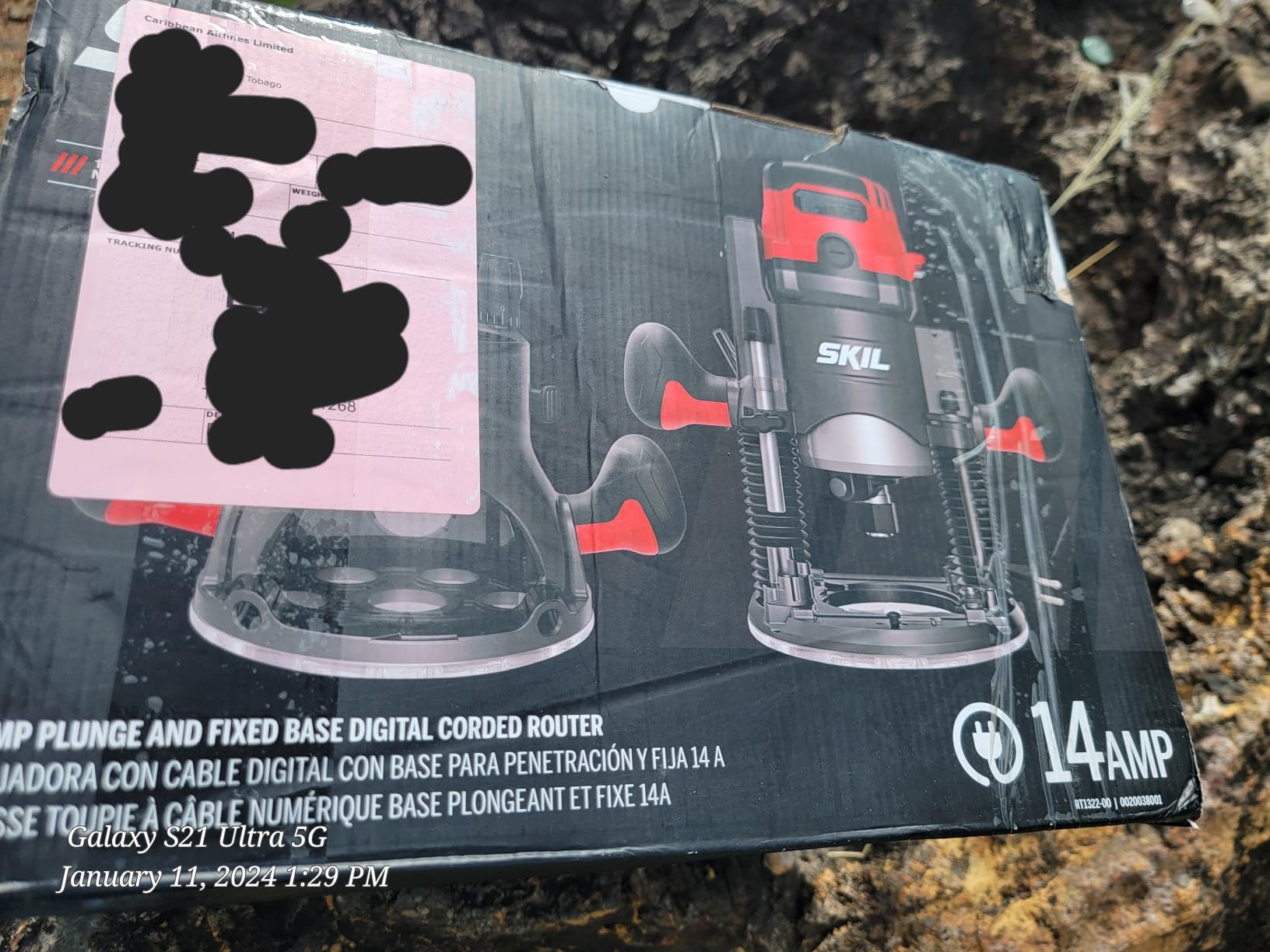
3. SKIL RT1322-00 Gives You Both Bases for the Least
SKIL 14 Amp Plunge and Fixed Base Router Combo — RT1322-00
14 amp 2.42 HP
25000 RPM
plunge and fixed base
LCD speed display
Pros
- 14 amp motor with both bases in one kit
- LCD speed display suggests RPM for the bit and material
- Electronic feedback holds speed under load
- Parallel guide and dust adaptors for both bases included
- Live tool power indicator
Cons
- One-year warranty is the shortest in this group
- Dust adaptors need a separate vacuum setup to work well
A 4.7 star rating from 1990 ratings is unusual at this end of the market, and the reason is straightforward: the SKIL RT1322-00 includes both a plunge base and a fixed base, a 14 amp motor and more than twice the power of a typical trim router, for a fraction of what the premium kits command.
The feature we did not expect was the speed control LCD. It suggests a starting RPM based on the bit type and the material, which turns out to be a genuinely useful prompt when you are new to a bit you have not used before. Electronic feedback holds the speed steady once you set it, and soft start takes the surprise out of switch-on.
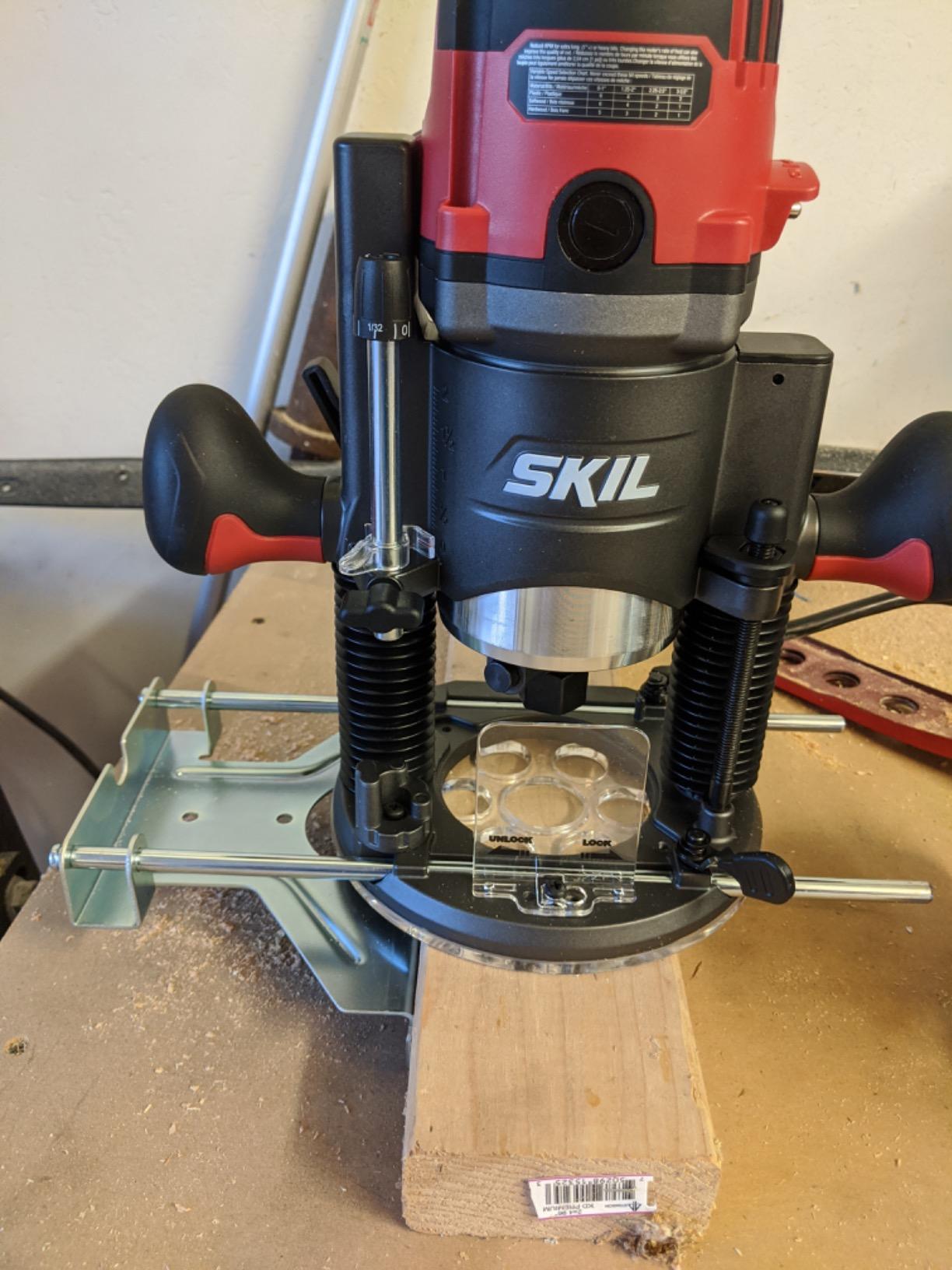
It also includes a parallel guide and dust extraction adaptors for both bases, which removes the single most common complaint about mid-priced kits, namely that no guide arrives in the box. At 14.3 lb it is lighter than the Bosch and the Triton, and the plunge action stayed predictable across repeated depth settings.
What you give up is warranty length. One year is the shortest cover here, and the dust adaptors are only as good as the vacuum you attach, so budget for a hose and a proper shop vac if you care about cleanup.
Who the SKIL RT1322-00 suits
It suits beginners and anyone moving up from a trim router who wants a plunge base and a fixed base in one purchase. The LCD speed guidance is a quiet advantage for someone who does not yet have a feel for feed rates and chip load.
It also suits project woodworkers who do a bit of everything, since the parallel guide covers the simple straight-edge work that a plunge base alone makes awkward.
Who should skip the SKIL RT1322-00
Skip it if you run tools hard every day and want a warranty behind them, or if you need above-the-table depth adjustment in a router table, which this base does not offer. Serious slab and timber work is pushing it as well; the motor has plenty of grunt, but the extras are basic.
4. WEN RT6033 Is the Budget Pick With 7 Stops and a Full Kit
WEN RT6033 15-Amp Variable Speed Plunge Woodworking Router Kit with Carrying Case & Edge Guide
15 amp
8000-23000 RPM
2-3/8 in. plunge depth
7-stop turret
Pros
- Smooth slow-start motor avoids abrupt startup movement
- Plunge base locks down to work as a fixed base
- Full accessory kit with hard case edge guide template guide and centering pin
- 2-3/8 in. plunge travel covers deep mortising
- 7-stop turret with macro and micro dials
Cons
- Trigger-style switch is easy to bump during a cut
- Short cord for large workpieces
- Several buyers reported missing small hardware out of the box
Two things set the WEN RT6033 apart from the other low-cost plungers. The first is the 7-stop turret with separate macro and micro dials, which gives more preset positions than any other base in this group. The second is plunge depth of up to 2-3/8 inches, more travel than the 2 inches most plunge bases give and genuinely useful for deep mortising or a single-pass slab cut.
The 15 amp motor runs 8000-23000 RPM with a soft-start ramp that owners repeatedly single out as smooth. It shrugged off the 1/8 inch slab-flattening pass we planned as a stress test without bogging down, which is not nothing at this level.

The kit is unusually complete: hard shell case, multi-function straight edge fence, template guide, circle-cutting centering pin, fence scale and a 1-1/2 inch dust collection duct. The plunging base locks in the down position so the same tool can work as a fixed base, and it takes both 1/4 inch and 1/2 inch bits.
Two practical issues. The trigger-style on/off switch sits where a shifting hand can bump it mid-cut, so plenty of owners clamp or tape it. And several buyers reported small hardware arriving missing, so check the box before you walk out to the shop.
Who the WEN RT6033 suits
It suits first-time plunge router buyers, shop students and anyone who wants a full accessory kit on a first purchase. The long plunge travel and the 7-stop turret make it a good teacher for depth control, because you can park a stop and see the result immediately.
It also suits anyone doing deep mortising on a budget, since 2-3/8 inches of plunge travel gives you more room than a standard 2 inch plunge base.
Who should skip the WEN RT6033
Skip it if you work on large panels and the short cord becomes an extension-cord problem, or if you need a collet you can trust for heavy cuts. It also carries more plastic in the build than the metal-bodied rivals, and the trigger switch needs watching on long passes.
5. Triton TRA001 Is the One Built for the Router Table
Triton TRA001 3-1/4 HP Dual Mode Precision Plunge Router
3-1/4 HP 15 amp
8000-21000 RPM
micro winder
built-in table lift
Pros
- Built-in lift mounts it upside down in a router table
- Automatic spindle lock for one-wrench bit changes through the base
- Micro winder gives fine control across the full plunge range
- 3-1/4 HP motor handles heavy timber work
- 3-stage turret with direct reading scales
Cons
- Safety switch must be reached from under the table
- Slow to crank from full plunge to full up
- Too heavy and bulky for small handheld projects
- Some reports of switch or trigger failure needing service
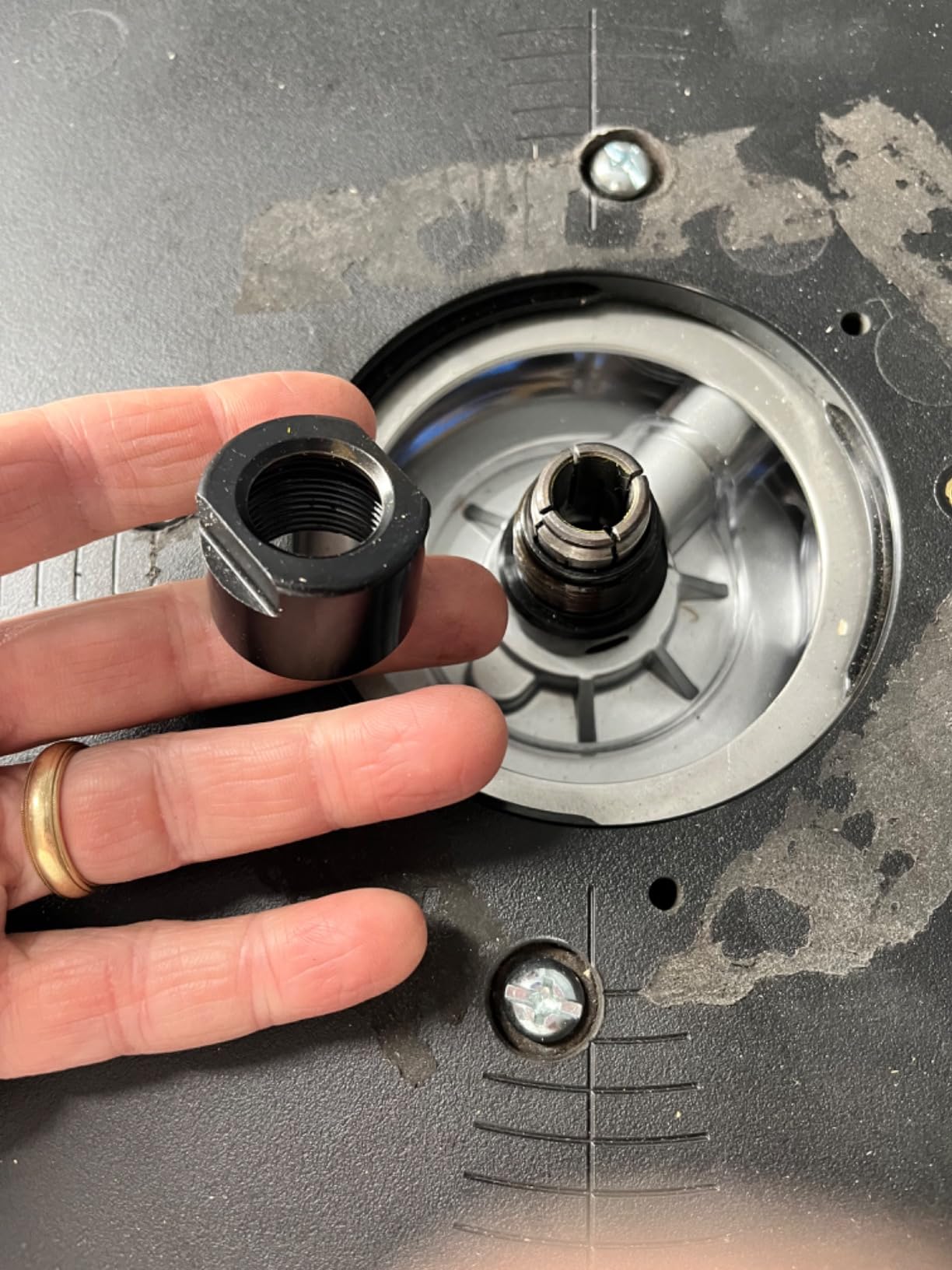
The Triton TRA001 solves a specific problem better than anything else here: getting a plunge router into a router table. Its built-in lift lets the whole tool mount upside down, so there is no separate lift system to buy or a plunger sticking up through the tabletop. Bit changes happen from above through the base.
The automatic spindle lock is the reason that works. You spin the collet nut by hand from above, the lock disengages, and it is a one-wrench change without reaching underneath. The micro winder gives genuinely fine depth control across the whole plunge range, and a 3-stage turret with direct reading scales lets you park three preset depths.
Power is not the question here. A 3-1/4 HP, 15 amp motor running 8000-21000 RPM with soft start handled everything we threw at it, and the side air vents keep dust out of the motor casing. A regular on Lumberjocks put it plainly: no doubt Triton is nicer to use.
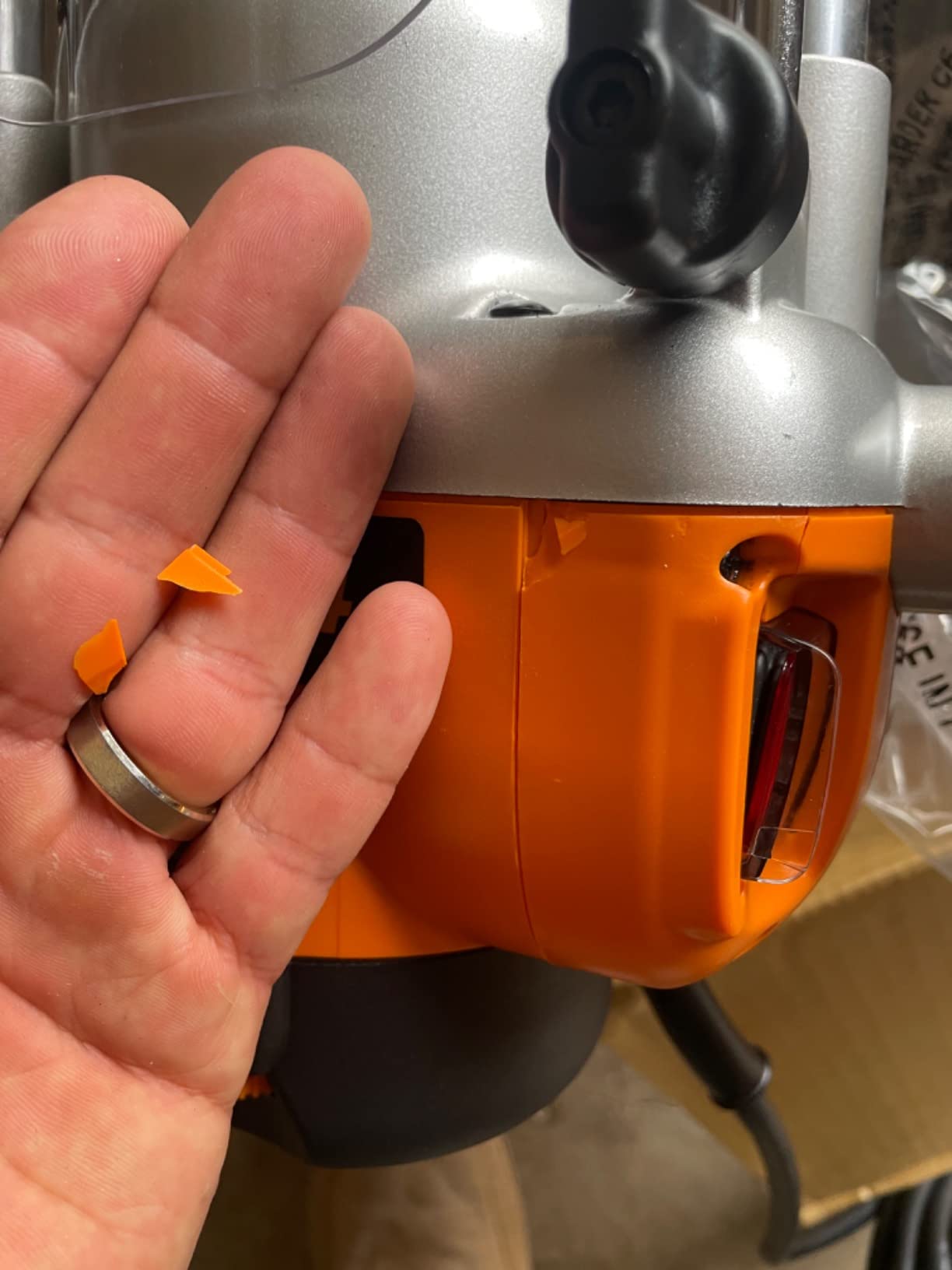
It is also the lowest rated tool here at 4.2 stars, and the reasons are consistent. At 13 lb it is too heavy and bulky for small hand-held jobs, the safety switch has to be reached from under the table before a bit change, and there are reports of switches and triggers failing and needing service. The speed dial numbers are also hard to read when the tool is inverted.
Who the Triton TRA001 suits
It suits anyone who has already decided their router lives in a router table, and does serious timber or slab work where 15 amps of motor is the point. If you want one tool that does plunge work and above-the-table work with a fence, this is the cleanest solution we tested.
It also suits a two-router shop: Triton inverted in the table, a lighter plunge router in the hand for edge work.
Who should skip the Triton TRA001
Skip it if all your work is hand-held and you have any interest in keeping the tool moving. The weight and bulk punish small jobs, and the switch reliability reports are worth reading before you commit. It is not a first plunge router.
6. Makita RP2301FC Handles the Big Bits Best
Makita RP2301FC 3-1/4 HP* Plunge Router, with Variable Speed
3-1/4 HP 15 amp
9000-22000 RPM
electronic speed control
electric brake
Pros
- Electronic speed control holds RPM steady under load
- Electric brake speeds up bit changes
- Soft start
- Confident plunge action with accurate depth stops
- Reinforced composite body keeps weight manageable
Cons
- Variable speed dial can be finicky on some units
- One-year warranty is the shortest available
The RP2301FC is the one to reach for when the bit is bigger than you are used to. A 3-1/4 HP, 15 amp motor running 9000-22000 RPM had the least hesitation of the group on large-diameter shaping bits, and the electronic speed control held the revs flat as the cut loaded up.
The electric brake is an underrated detail. It stops the bit spinning the moment you release the trigger, which turned a two-minute pause between shaping passes into a couple of seconds. Over a long profiling session that adds up.
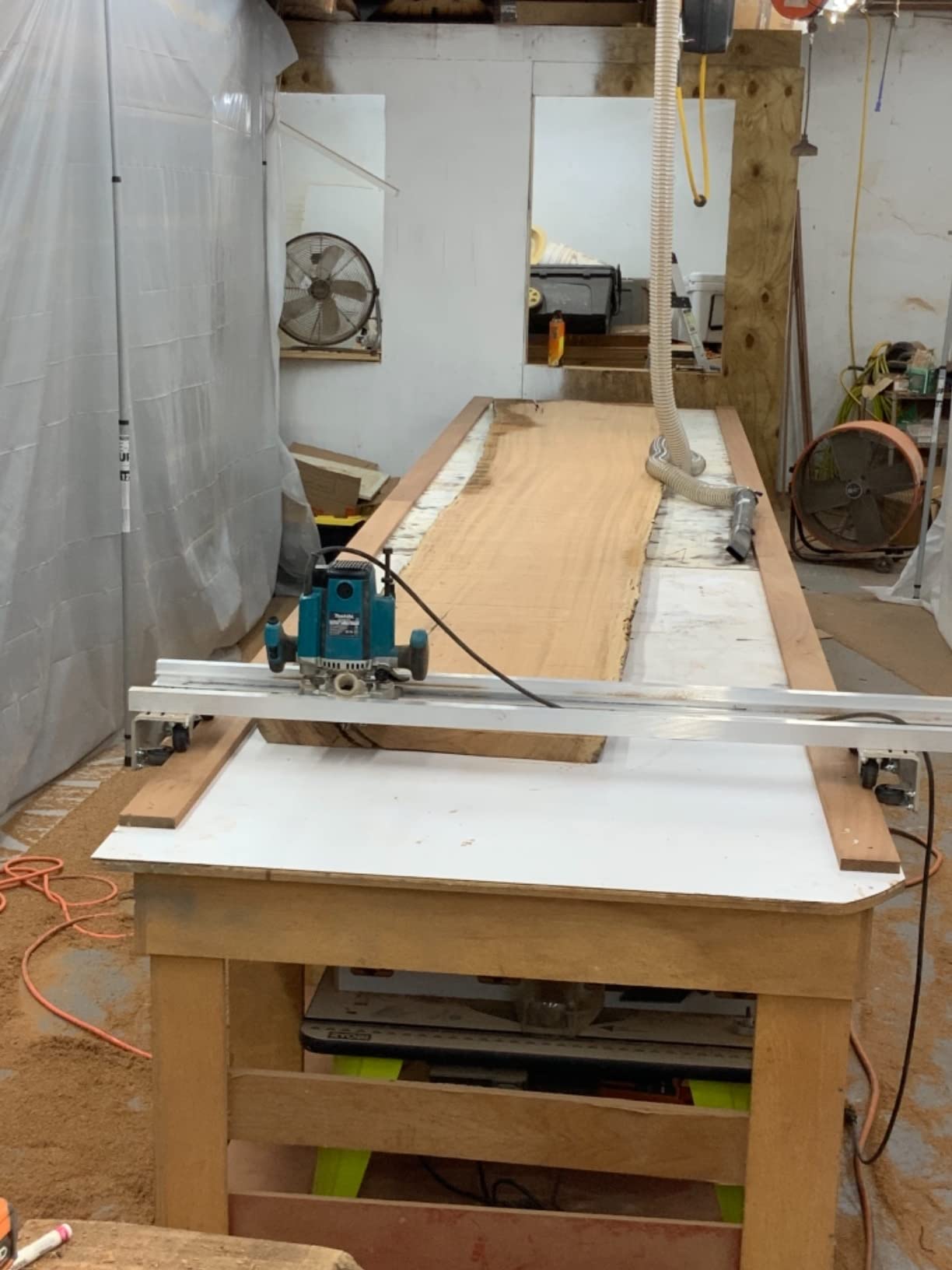
Plunge action is smooth and confident, and the depth stops repeat accurately, which matters when you are cutting matched parts. The reinforced composite body is also worth noting: it keeps a 3-1/4 HP router lighter in the hand than a metal-bodied equivalent.
Two complaints come up repeatedly. The variable speed dial can feel finicky on some units, hunting slightly between settings, and the one-year warranty is the shortest available on this list. The box holds the unit and an instruction guide, so a fence, a case or a second base are things you add yourself.
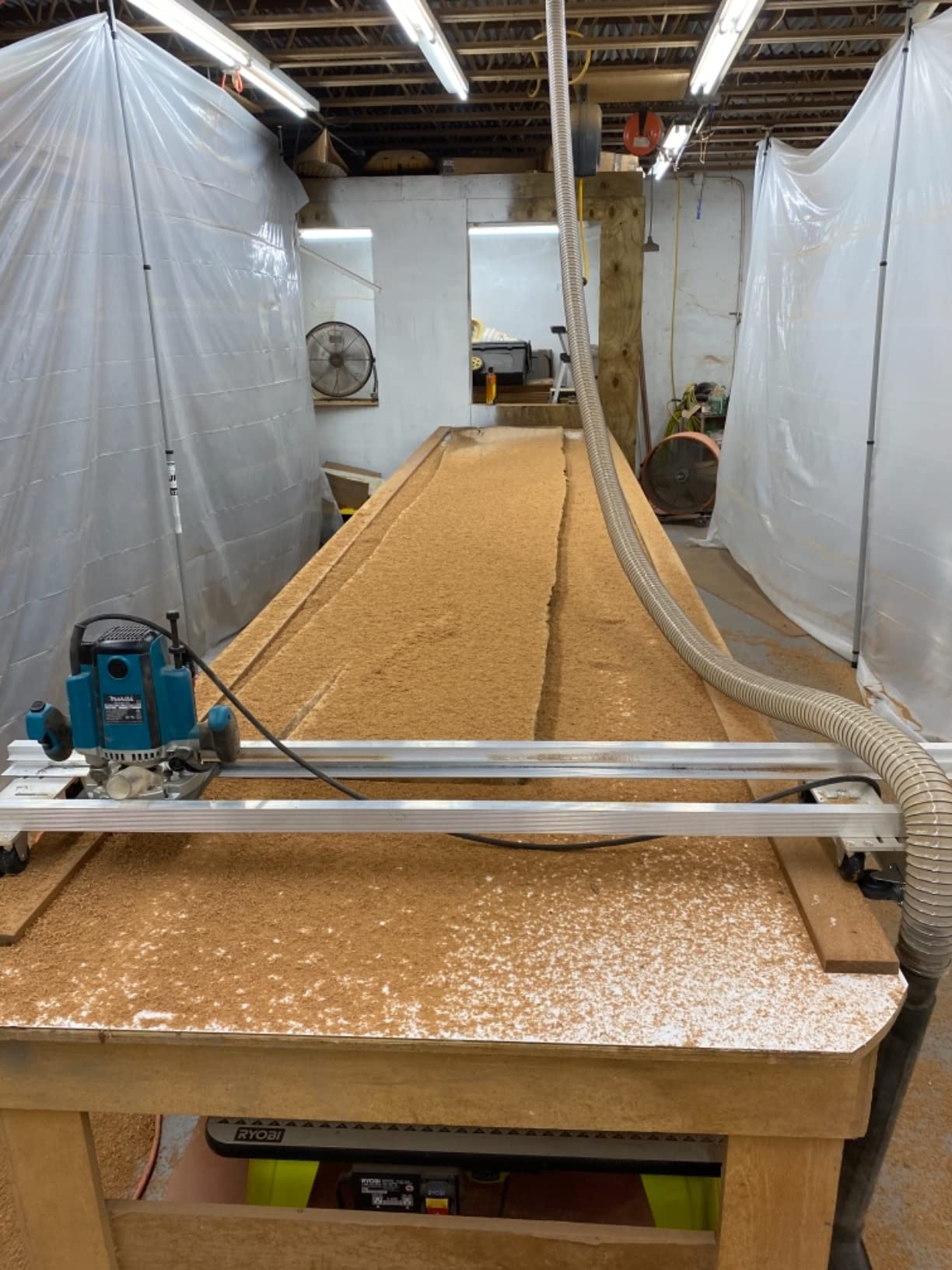
Who the Makita RP2301FC suits
It suits furniture and cabinet makers running large profile bits in hardwood, and anyone who works fast enough that waiting for a bit to coast to a stop is irritating. The constant-speed behaviour under load also makes it a good match for repetitive batches of identical parts.
It suits people already in the Makita ecosystem who want the plunge base to match the tools they own.
Who should skip the Makita RP2301FC
Skip it if you need a package with a fixed base, a fence or a case included, because none of those come in the box. If you are on a tight schedule and a fussy speed dial would irritate you, the single-speed Makita below is the calmer choice.
7. Bosch MRC23EVSK Is the Best for Template and Inlay Work
Bosch MRC23EVSK 2.3 HP Electronic Modular Router System
2.3 HP 15 amp
10000-25000 RPM
AfterLock depth system
LED bit light
Pros
- AfterLock depth adjustment works at any plunge height
- Depth can be adjusted from above when mounted in a router table
- Precision-centering design holds the bit on the cut line
- Always-on LED lighting in the bit area
- Trigger switch in the handle plus soft start
Cons
- Noticeable vibration at maximum speed in some units
- Heavier than most routers of its class
- Trigger lock sits where a natural grip can engage it
- A few owners reported low-voltage trigger failures needing service
The MRC23EVSK is the system router. A 2.3 HP, 15 amp motor runs 10000-25000 RPM, and the fixed base offers 1-5/8 inches of continuous microfine adjustment plus above-the-table depth adjustment when it is mounted in a router table. It is also the one that lets you change depth without pulling the router out of the workpiece.
AfterLock is the other half of that story. Once the turret is set, the lock holds, and the depth adjustment still works at any plunge setting and from above the table. For inlay and sign work, where a template duplicates the same part many times, not re-setting the router between passes is a real time saving.
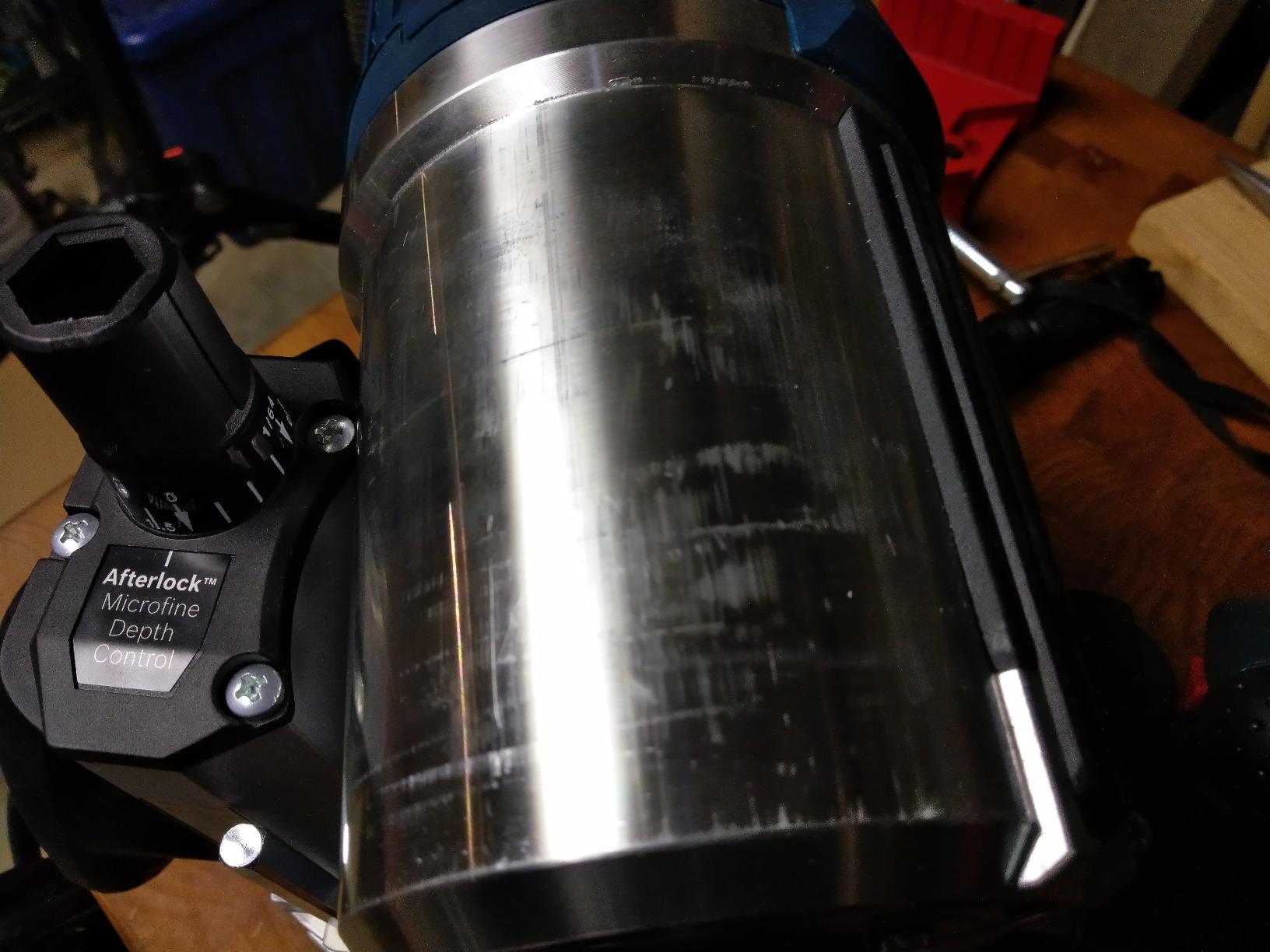
The precision-centering design keeps the bit on the cut line, Constant Response circuitry holds speed under load, and the always-on LED lighting in the bit area is genuinely useful on dark hardwood. The two-stage quick clamp system swaps bases fast, and the carrying case has room for the optional dust collection hoods.
Long-term owners describe it as the most powerful and smoothest router they have owned, and we felt that. The downsides are high-speed vibration in some units, weight above its class, and a trigger lock that sits where a natural grip can engage it. There are also a few reports of the low-voltage trigger control failing and requiring service.
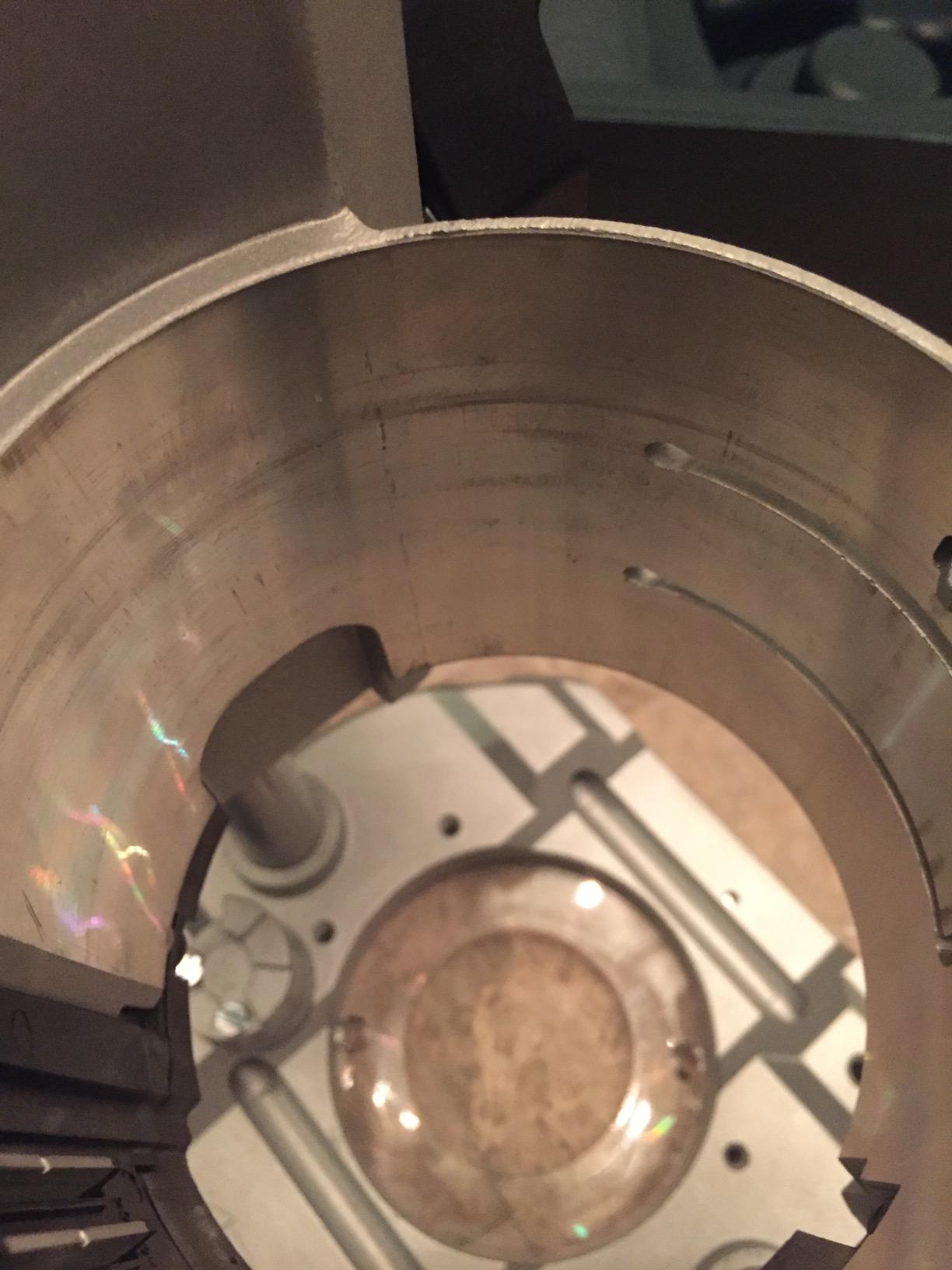
Who the Bosch MRC23EVSK suits
It suits inlay, intarsia, sign making and anyone working from templates where the router sits in one place for a long run. The above-table adjustment also makes it the most flexible option for a shop that mixes plunge and fixed-base work with the same motor.
It suits people who route at night or in a dim shop, since the bit-area light removes a lot of guesswork on dark stock.
Who should skip the Bosch MRC23EVSK
Skip it if you buy one router and expect a forgiving first machine. The trigger in the handle, the vibration at top speed and the trigger-control failure reports all point to a tool that rewards experience. The Bosch 1617 is the calmer first plunge router in the same family.
8. Makita RP1800 Has the Smoothest Plunge Action We Tested
Makita RP1800 3-1/4 HP* Plunge Router
15 amp at 22000 RPM
0 to 2-3/4 in. plunge
linear ball bearings
Pros
- Linear ball bearings give a very smooth plunge with no drift over years
- Handles large bits and heavy passes without strain
- Quick-release depth adjustment with micro control and 3 preset stops
- Base accepts bushing sets without an adapter
- Oversized ball bearing construction for longer tool life
Cons
- Single speed only and a hard startup kick
- No soft start or variable speed and no work light
- Heavy for fine edging
- Switch lock is poorly made
The RP1800 is the simplest machine in the roundup and the one whose plunge action we liked most. Linear ball bearings run the carriage, and after weeks of daily use the stroke still felt identical to day one, with no drift in the depth reading.
There is no variable speed dial and no soft start. It spins at 22000 RPM, always. That sounds like a disadvantage until you cut with it: professionals report it as exceptionally powerful, handling large bits and heavy live-edge flattening without strain, and plenty of shop owners actively prefer a single-speed tool to a fussy electronic one.
Depth capacity is 0 to 2-3/4 inches, with quick-release micro adjustment and three preset depth stops. The base accepts bushing sets without an adapter, which is one of those small things that stops you hunting for the right hardware on a busy afternoon.
What you trade away is speed control. The hard startup kick needs a soft touch, there is no work light, and it is heavy for fine edging and delicate hand-held work. The switch lock is also poorly made by the standards of the rest of the tool, and the plastic base plate can crack if you drop it. One-year warranty.
Who the Makita RP1800 suits
It suits experienced users who want an uncomplicated machine that will not change behaviour under them, particularly on hardwood slab work, thick stock flattening and large-bit profiling. If a smooth, repeatable plunge stroke is your priority, this is the one.
It also suits people who are done fiddling: no speed display, nothing to learn, one switch and one speed.
Who should skip the Makita RP1800
Skip it if you cut small-diameter bits in softwood, where 22000 RPM is more heat than you need, or if you are new to routing and want the soft ramp of a variable-speed dial. The hard startup kick catches people out the first time.
How to Choose a Plunge Router Without Wasting Money?
Plunge versus fixed base versus trim router is the first fork in the road. A plunge router lowers a spinning bit into the workpiece to a set depth, which is what makes stopped cuts, mortises, dados and inlay repeatable. A fixed base is shorter, lower to the ground and often more accurate on edge work; the blade or bit projects from the bottom, so there is no vertical plunge to control. A trim router is a small, light, one-handed tool for edge profiles, flush trims and templates, and it cannot plunge.
Yes, you can use a plunge router as a trim router, by fitting its fixed base. You lose the low profile and the compact palm grip that make a trim router easy in one hand, so if fine edge work is most of what you do, our beginner router guide is worth a look before you commit.
Power and speed come next. Routers here run from 8000 RPM to 25000 RPM, and a variable speed dial is not a luxury. Match speed to the bit diameter and the material: large bits in hardwood want a lower setting, small bits in softwood can run fast. Electronic feedback control, which several models here have, is what keeps the speed steady when the cut loads up rather than letting the bit bog down.
Depth adjustment is where plunge routers differ most. A turret with preset stops gives you repeatable stopped cuts. A microfine ring gives you fine increments after the coarse setting, which the DEWALT and Bosch 1617 do in 1/64 inch steps. A rack-and-pinion or ball-bearing carriage gives the smoothest stroke over the whole range. A winder style adjustment, like the Triton micro winder, is the finest control of all but is aimed at above-the-table work.
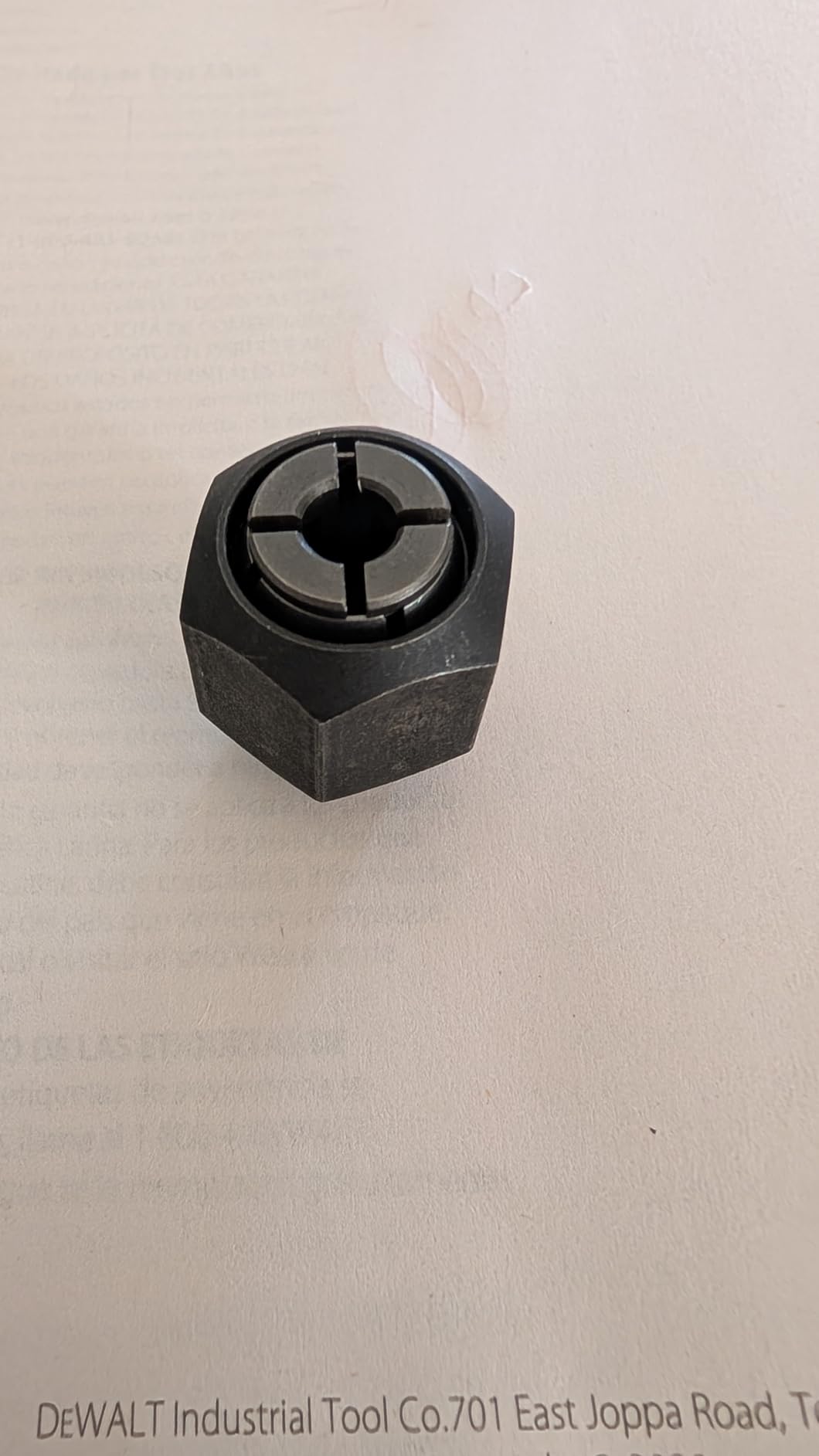
Collets are simple to overlook. Most of these accept both 1/4 inch and 1/2 inch shanks, and a 1/2 inch collet is the more rigid of the two, so use it for anything wider than about a half inch. Cheap collets are the most common owner complaint on mid-priced kits, so budget for a spare collet and a collet wrench early.
Plunge travel tells you how deep you can go. Most plunge about 2 inches, which covers a through-mortise in a 3/4 inch board with room to spare. The WEN goes to 2-3/8 inches and the Makita RP1800 to 2-3/4 inches, which matters for deep mortising and thick stock.
Weight is a comfort issue, not a spec-sheet issue. At 18.2 lb the Bosch 1617 is heavy to hold for long, the DEWALT comes in at 10.1 lb, and the Triton at 13 lb is the wrong end of the scale for small hands. If you have bought heavy routers before and hated them, weight will decide your purchase faster than horsepower will.
Dust extraction deserves its own paragraph. Chips are hot, sharp and a fire risk around a spinning bit, so a shop vac on the extraction port is not optional in a serious shop. The DEWALT’s through-the-column system captures the most by our reckoning, the Bosch MRC23EVSK has optional hoods, and several kits include adaptors that need a proper vacuum hose to do anything. If you do not already have a vac, factor that into the decision.
Keeping the plunge base clean is the single highest-value habit in this whole article. Dust in the base rails is the number-one cause of a stiff, stalling plunge, and a stalling plunge ruins accuracy. Vacuum or blow out the base after every job, and check that the rods and bushings move freely by hand before you power up.
Finally, warranty and parts. The DEWALT carries a three-year limited warranty, several others here offer one year, and Bosch’s kit includes both collet sizes and two wrenches in the box. Aftermarket accessories and replacement parts are far easier to source for the big brands, which matters if you plan to add a router table, extra bases or a fence later.
Plunge Router Safety and Router Table Setup Notes
A router throws cutters at high speed in every direction. Eye protection is not optional, and hearing protection matters on hardwood. Clamp the workpieces, take the bit down to full speed in the clear before the first cut, and never reach into a moving bit.
Some models put a switch shutter or a lockable safety interlock on the trigger so the router cannot start by accident. The Bosch 1617 has a dust-sealed power switch, and several others use a sealed or latching trigger. A chip deflector above the bit cuts down on kickback and chips flying back at you, so keep it fitted and correctly adjusted.
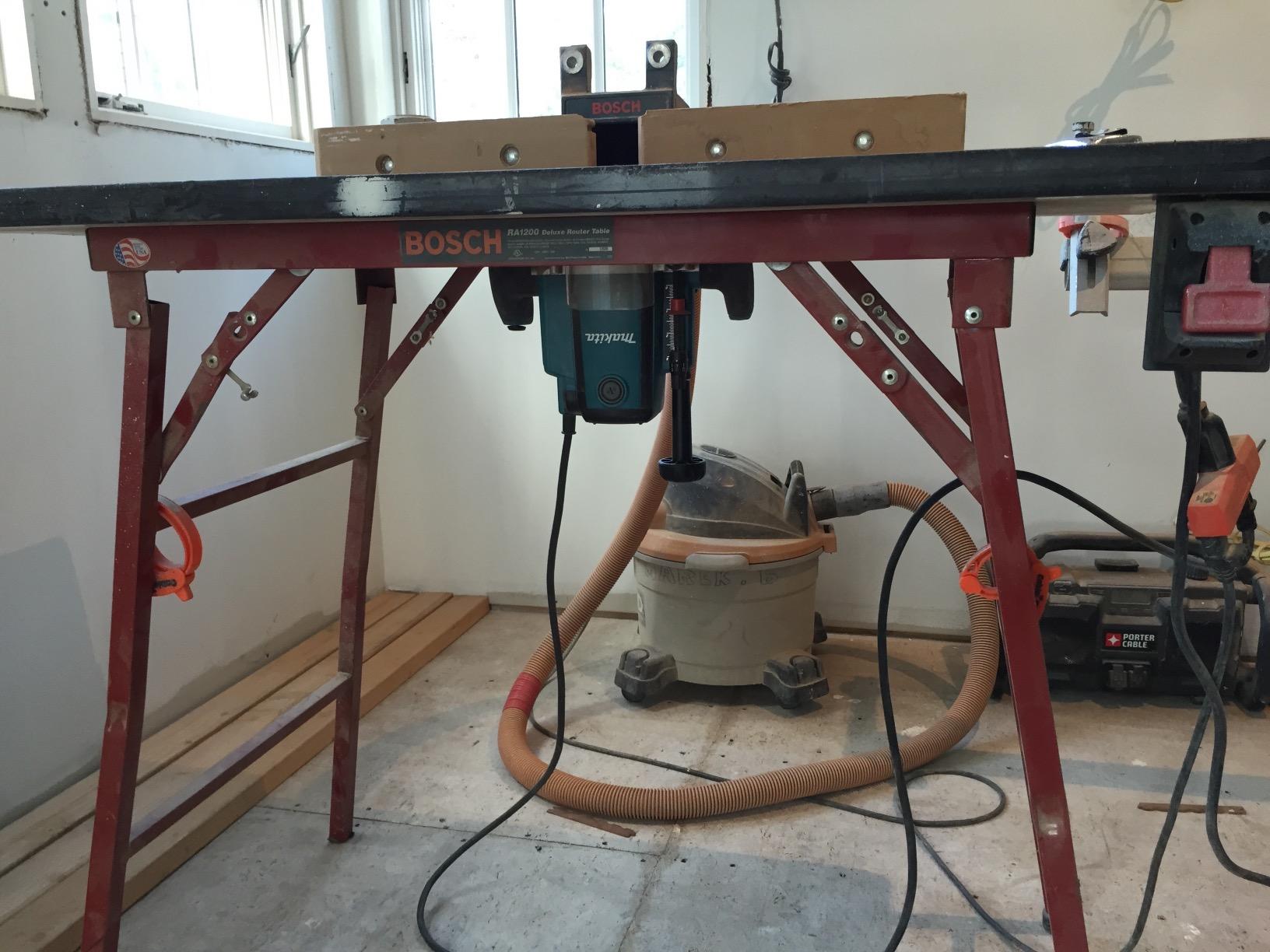
For a router table, check three things before buying: the base pattern, whether above-table depth adjustment is available, and how the bit is changed. The Bosch 1617 has a threaded three-hole base pattern. The Triton TRA001 has a built-in lift so it mounts inverted. The Bosch MRC23EVSK adjusts depth from above the table. A plunge router with a turret that is awkward to reach from above will make you unhappy on a router table even if it is excellent in the hand.
If you are building the rest of the shop around your router, our miter saw roundup covers the other big cutting decision, and the same thinking about dust extraction and shop vac setup applies to both tools.
Frequently Asked Questions
What is the most reliable router brand?
Reliability tracks build quality and warranty length more than brand alone. Among the eight models here, the DEWALT DW618PKB pairs full electronic feedback control with a three-year limited warranty, the longest in this group, and the Bosch 1617EVSPK has the deepest review history at 4983 ratings. For light shop use any of them will hold up if you keep the plunge base clean, which is the real cause of most router complaints.
Is there a difference between a router and a plunge router?
A plunge router has a base that slides on vertical guide rods, so you can lower a spinning bit into the workpiece to a depth you set in advance. A standard fixed-base router has a shorter base and the bit projects from the bottom, which makes it more accurate for some edge work. A trim router is smaller and lighter again, for one-handed edge profiles and flush trims, and it cannot plunge.
Are plunge routers worth it?
They are worth it as soon as you cut anything that has to stop at a set depth: mortises, stopped dados, inlay, fluting and panel work. A plunge router removes the guesswork from depth control, which is what lets two identical parts match. If every cut you make is a full-depth edge profile, a trim router or a fixed-base router will serve you and weigh less.
Who makes the best plunge routers?
Bosch, DEWALT, Makita, SKIL, Triton and WEN all make plunge routers worth owning, and the right answer depends on the job. Bosch covers the balanced all-rounder slot, DEWALT leads on dust extraction, Makita leads on smooth plunge action and large-bit work, Triton is built for router table mounting, and SKIL and WEN cover the budget end of the market.
How deep will a plunge router go?
Most plunge routers travel about 2 inches, which is enough for a through-mortise in a 3/4 inch board. The WEN RT6033 manages up to 2-3/8 inches and the Makita RP1800 up to 2-3/4 inches, which is useful for deep mortising and thick stock. Check the plunge travel figure before buying if your cuts go deeper than a standard dado.
Which router is better, Bosch or DeWalt?
For dust control and a longer warranty, the DEWALT DW618PKB wins, with through-the-column extraction, a tool-free cam lock and a three-year limited warranty. For the best overall balance of power, weight and versatility, the Bosch 1617EVSPK wins, and it is the most reviewed router in this roundup at 4983 ratings. The Bosch MRC23EVSK is the pick for template work and router table depth adjustment.
Which router is best for dust collection?
The DEWALT DW618PKB is the best for dust collection among these models, because its through-the-column system pulls debris out of the column and owners put capture at around 95 percent. The Bosch MRC23EVSK accepts optional dust collection hoods, and the SKIL and WEN kits include extraction adaptors that need a proper vacuum hose. Any of them collects far better than none.
Our Final Pick for the Best Plunge Routers for Woodworking
The Bosch 1617EVSPK is the one we would put in a new shop, and it stays our pick for the best plunge routers for woodworking in 2026. The 2.25 HP motor, 8000-25000 RPM range and microfine depth ring handled everything we threw at it, the 2 inch sub-base opening makes template work painless, and 4983 ratings at 4.8 stars is the strongest evidence base in this group. Its only real drawback is 18.2 pounds, and that only matters if your work is light.
Buy the DEWALT DW618PKB if dust is your problem, the SKIL RT1322-00 if you want both bases and a full kit without spending much, the Triton TRA001 if your router lives in a router table, and the Makita RP1800 if you want the smoothest plunge stroke and work big bits in hardwood. Check the current details for each model on this page before you commit, and happy routing.