
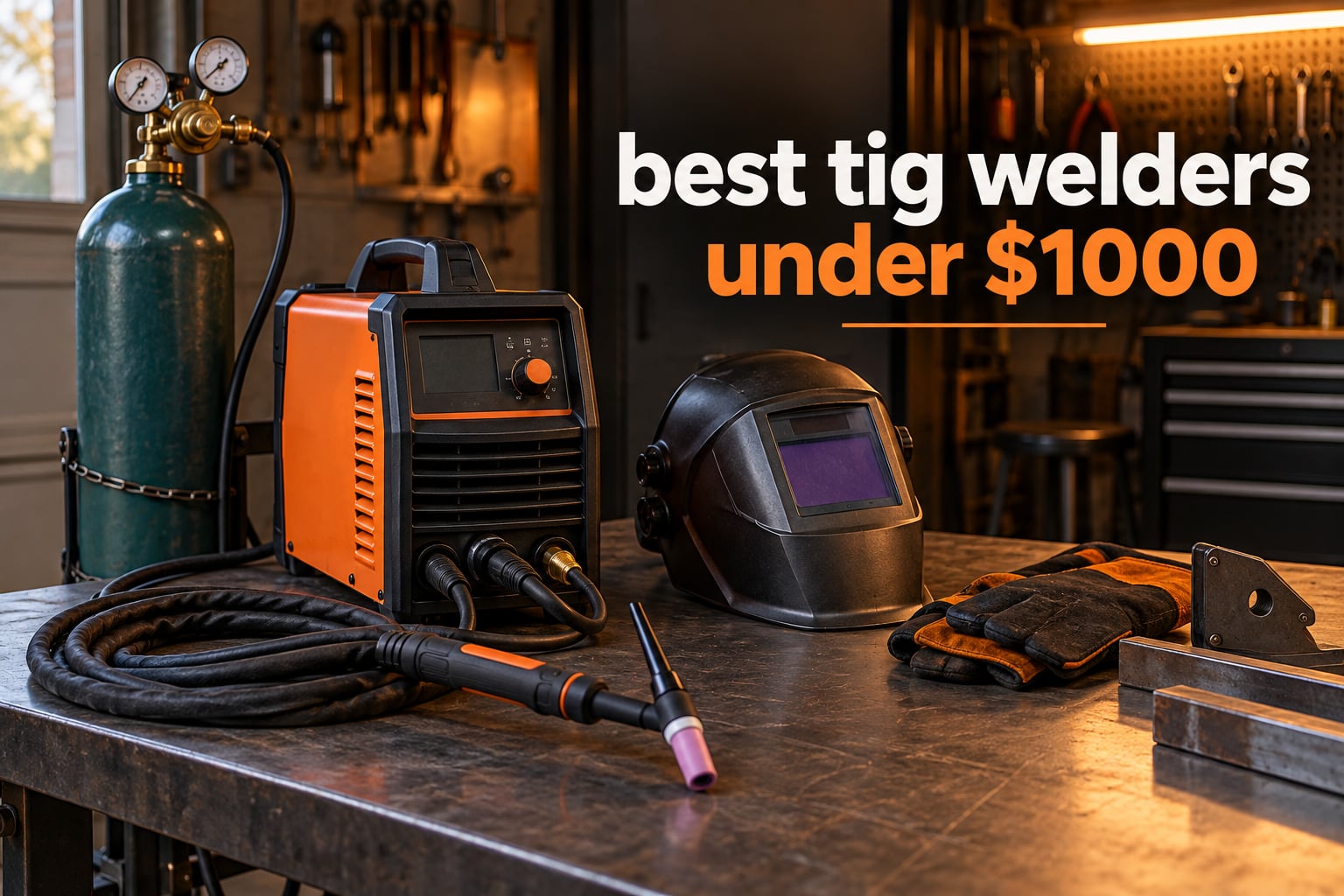
The best TIG welders under 1000 dollars right now are the PRIMEWELD TIG225X for overall use, the Weldpro 200A AC/DC for aluminum work, and the AHP AlphaTIG 203Xi for beginners who want simple controls and a foot pedal in the box. All three are true 200-amp class AC/DC inverters with high frequency start, dual voltage, and enough control range for thin sheet through quarter-inch plate.
That combination used to be impossible. A decade ago, AC/DC capability alone pushed a TIG machine into multi-thousand-dollar territory, and the sub-$1000 shelf was full of DC-only boxes with TIG on the label. Today the same silicon handles aluminum, stainless, and mild steel with pulse control and a rocker foot pedal, which is why this bracket now has a genuine split between capable machines and disappointing ones.
We compared all ten machines in this roundup on the specs that actually change how a weld behaves: output amperage at each voltage, whether AC mode is real, arc start type, minimum amperage, duty cycle, foot pedal inclusion, and how the owner reviews describe the arc after a few months of use. Prices move around, so treat the Check Latest Price buttons as the live figure and the specs as the deciding factors.
If you want a place to start before this list, our beginner MIG welder guide covers the case where a stick-and-spatter process is enough, and our multi-process welder picks cover machines that split TIG, MIG, and stick duties.
Table of Contents
Top 3 Picks for the Best TIG Welders Under $1000 (October 2026)

PRIMEWELD TIG225X
- 225 amp AC/DC TIG and stick
- 200 Hz pulse and AC frequency adjustment
- CK Worldwide 17 Series Superflex torch included
- 1/4 inch aluminum and 3/8 inch mild steel capacity

Weldpro 200A AC/DC
- Five modes including AC pulse and DC pulse
- 0.5 to 200 Hz pulse with 2T/4T trigger
- Adjustable AC balance for aluminum
- Rocker foot pedal and full accessory kit included
AHP AlphaTIG 203Xi
- AC/DC TIG and stick with pulse
- 60 percent duty cycle in this class
- Foot pedal
- regulator
- and torch included
- Knob-based controls with LCD screen
Best TIG Welders Under $1000 in 2026 at a Glance
Every machine below is under the budget line at the time of testing, and each row carries its own ASIN so you can check the live listing. Read the Key Features column for the decision that matters most to your work: AC/DC for aluminum, pulse for thin material, weight for field use.
| Product | Specifications | Action |
|---|---|---|
| PRIMEWELD TIG225X |
|
Check Latest Price |
 S7 200A TIG Welder S7 200A TIG Welder |
|
Check Latest Price |
| Weldpro 200A AC/DC |
|
Check Latest Price |
| AHP AlphaTIG 203Xi |
|
Check Latest Price |
 TOOLIOM 200A TIG TOOLIOM 200A TIG |
|
Check Latest Price |
 YESWELDER TIG-205P YESWELDER TIG-205P |
|
Check Latest Price |
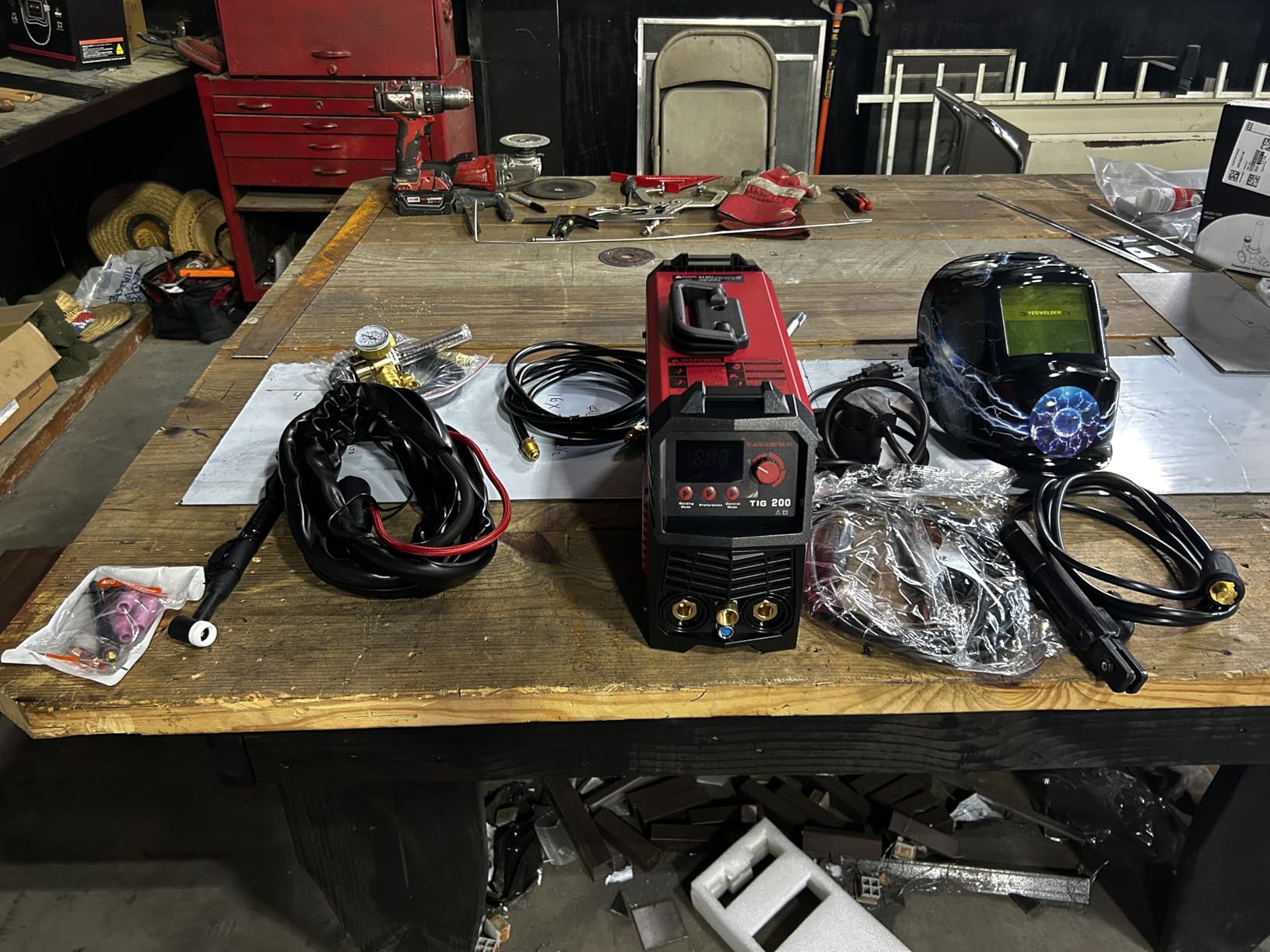
 ARCCAPTAIN 200A ARCCAPTAIN 200A |
|
Check Latest Price |
 LOTOS TIG200ACDC LOTOS TIG200ACDC |
|
Check Latest Price |
 Sunstac 250A AC/DC Sunstac 250A AC/DC |
|
Check Latest Price |
 AHP Alpha-TIG 225Xi AHP Alpha-TIG 225Xi |
|
Check Latest Price |
1. PRIMEWELD TIG225X AC/DC Pulse TIG Welder – Best Overall
PRIMEWELD TIG225X 225 Amp IGBT AC DC Tig/Stick Welder with Pulse CK17 Flex Torch and Cable
225 amp AC/DC TIG and stick
IGBT inverter with PWM
200 Hz pulse and AC frequency
17 Series Superflex torch
Pros
- Highest rated machine here with 90 percent five-star reviews
- Adjustable pulse frequency and AC frequency for heat control on thin and aluminum work
- HF start hand torch control plus foot pedal heat control
- Welds 1/4 inch aluminum and 3/8 inch mild steel
- Works with 7018 and 6013 electrodes
Cons
- Heaviest unit in the group at just over 90 pounds
- Only 1 percent of reviews are one-star but the sample of complaints is small either way
This is the machine our readers kept pointing us back to, and the review data backs up why. At 4.8 stars across 1426 reviews it holds the highest rating in this group by a clear margin, and the rating distribution is unusually clean: 90 percent five-star and 8 percent four-star, with 1 percent one-star. Very few machines with this much volume stay that concentrated at the top.
What you get is a 225 amp AC/DC TIG and stick welder built on IGBT inverter technology with PWM. The pulse frequency and AC frequency both adjust up to 200 Hz, which is the control range you need to keep a bead narrow on thin sheet and to manage the puddle on aluminum without burning through.
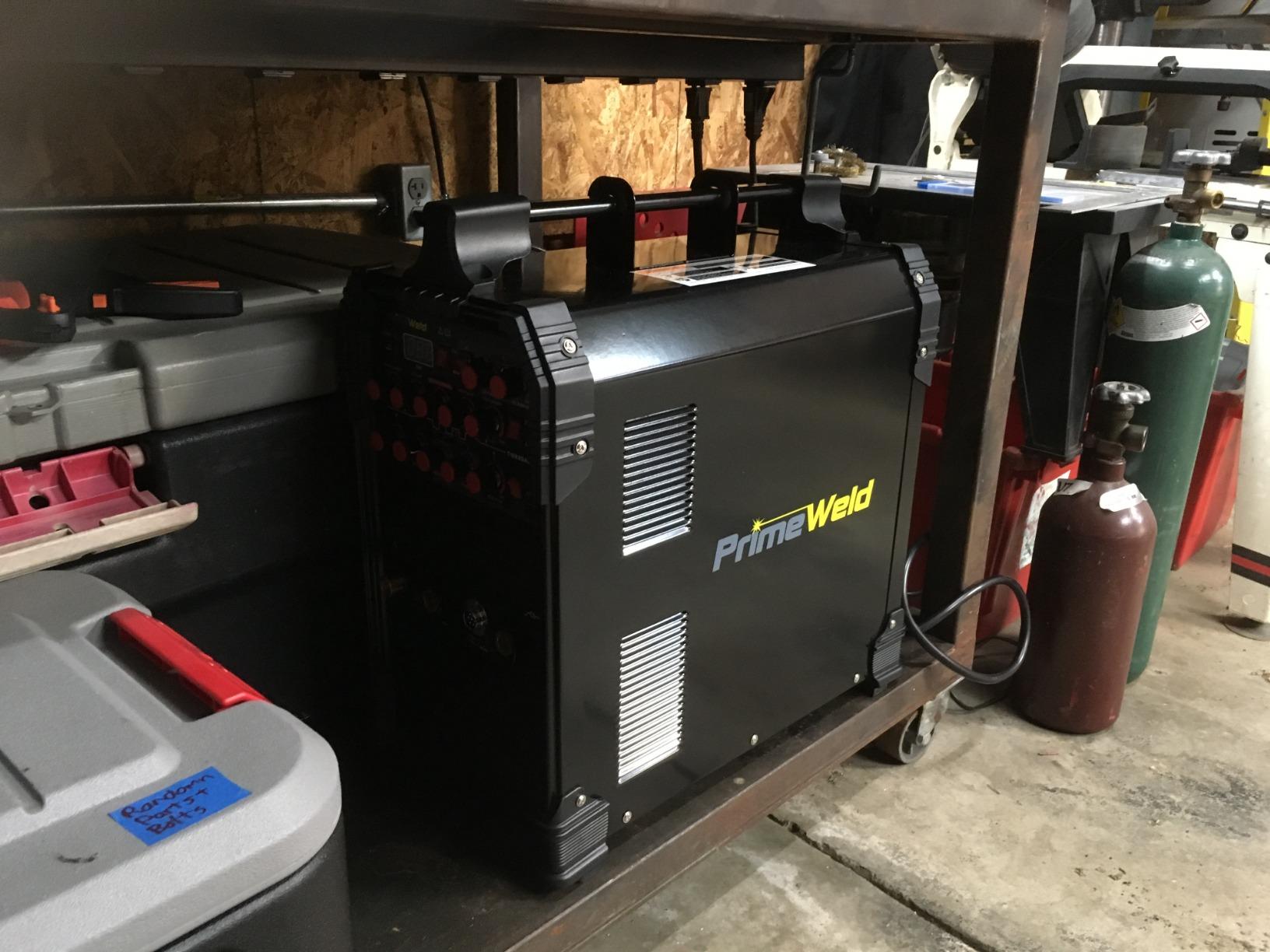
The torch is the part that quietly raises the value. It ships with a CK Worldwide 17 Series Superflex torch with a flex head and CK Superflex hose, plus a CK DINSE connector made in the USA. Standard 17 series consumables are the most widely stocked TIG consumable family, so replacements are not a special order.
Capacity is quoted at 1/4 inch aluminum and 3/8 inch mild steel, and it runs 110/220V with both HF start hand torch control and foot pedal heat control. Stick work with 7018 and 6013 electrodes is there when you need to join something heavier or do a repair pass outside the shielding gas.
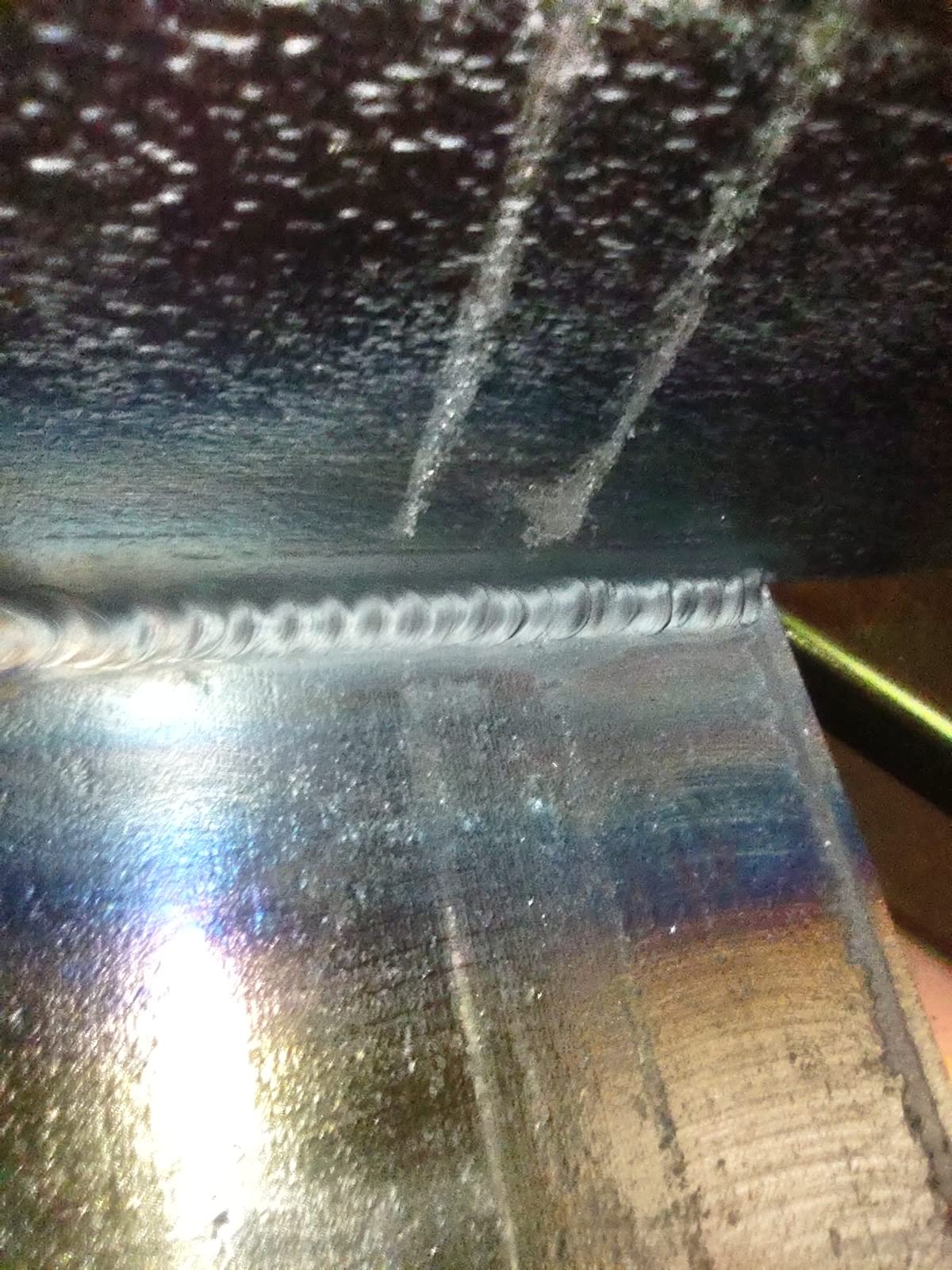
What the 225 amp output actually gets you
225 amps at 220V is more machine than most hobby and garage work will ever ask for. It handles quarter-inch aluminum plate, eighth-inch stainless tubing, and mild steel up to the quoted 3/8 inch, which covers exhaust work, brackets, tubing, and general fabrication without a second machine.
Who should look elsewhere
The unit is listed at just over 90 pounds, so it is a shop machine rather than a job-site one. If you need to carry the welder to a boat ramp or up a ladder, the lighter machines later in this list are a better fit even with fewer features.
2. S7 200A DC TIG and Stick Welder – Best for a First Machine
S7 200A TIG Welder with DC TIG and Stick Welding
200 amp DC TIG and stick
110V/220V dual voltage
High frequency start
18.01 pounds
Pros
- Most reviewed machine here with 1530 reviews
- Compact 18 pound body that owners run in rain and mud without overheating
- Produces smooth welds on stainless and mild steel for hobby-scale work
- Adjustable post gas timer in seconds
- Built-in overheat and overload protection
Cons
- Trigger and pedal are on/off only with no amperage control
- Push-on gas port instead of a screw-on fitting
- Lead and torch cables are stiff and short for larger work
- Argon bottle and regulator are not included
This is the machine most first-time TIG owners in our search results actually bought, and the review count shows it: 1530 reviews at 4.4 stars, the largest sample in the roundup. Owners describe it as a capable low-cost unit for small stainless and mild steel projects, which is a fair summary of where it performs.
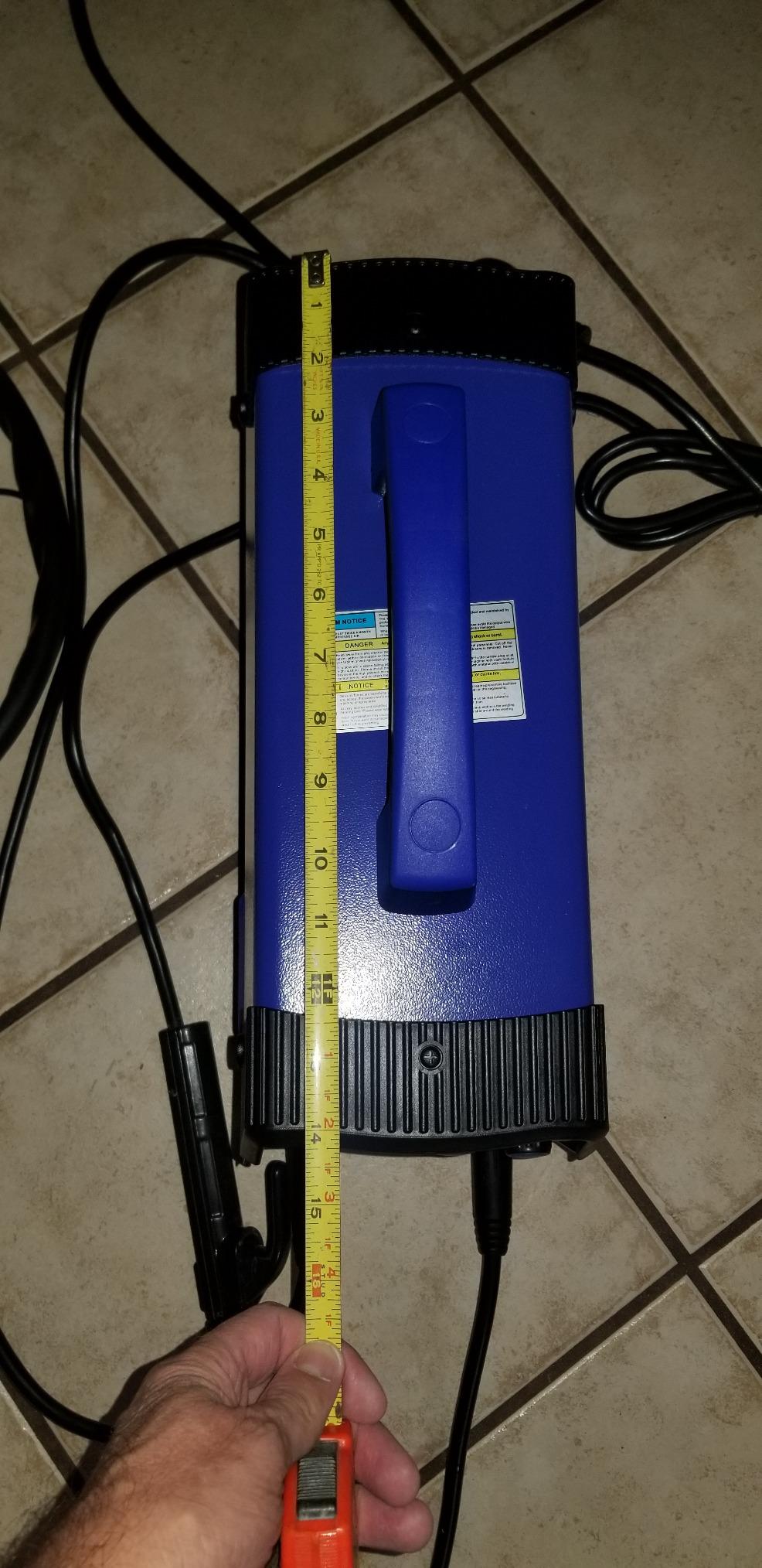
It is a 200 amp DC TIG and MMA stick welder with 110V/220V dual voltage input, high frequency start, and a digital current display with simple controls. At 18.01 pounds and 17 x 10 x 13 inches it is one of the easiest to move, and owners report running it outdoors in wet conditions without thermal trouble.
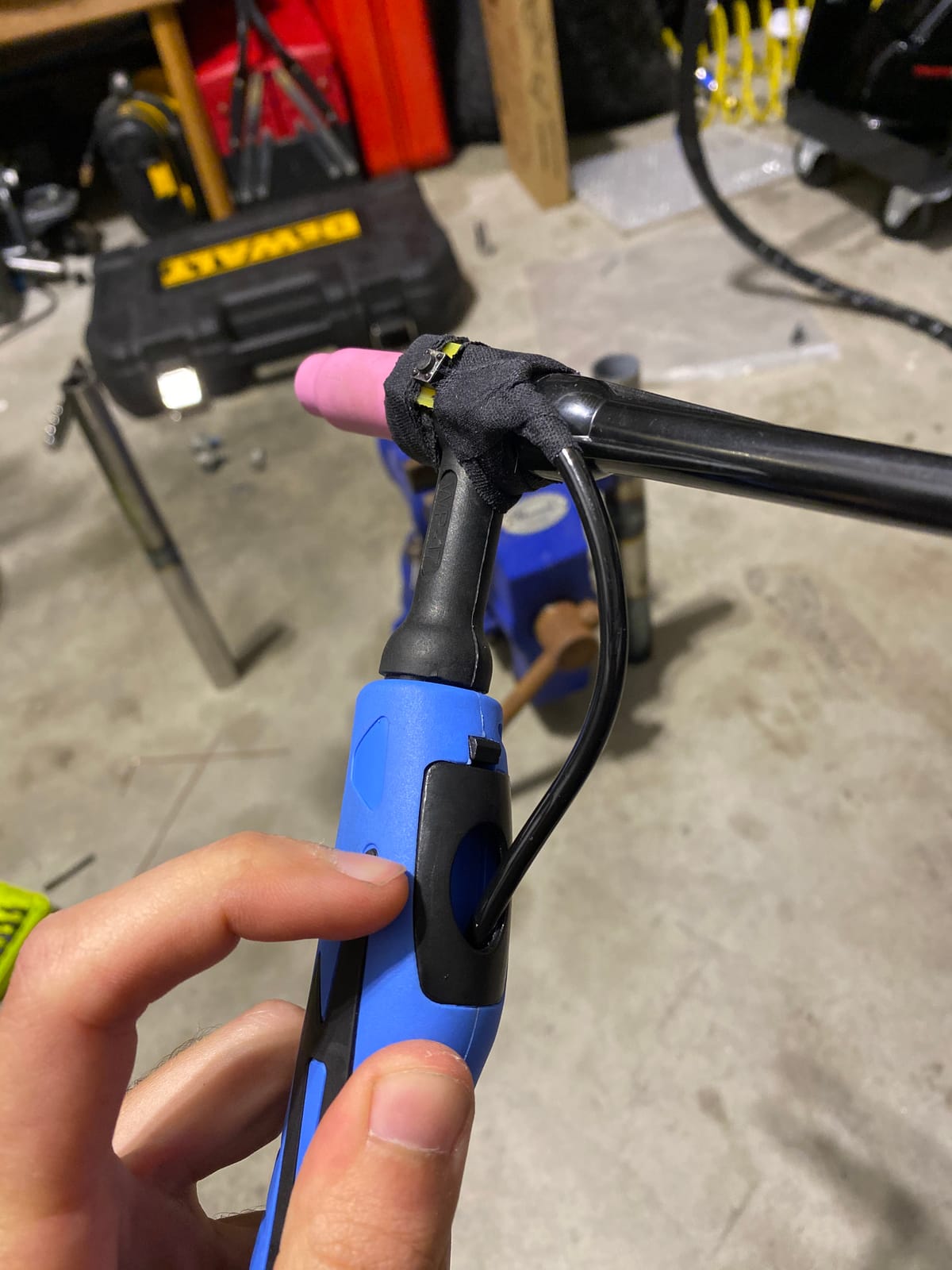
It works with standard TIG consumables: tungsten, ceramic cups, and collets. That matters more than it sounds, because it means when the cup cracks or the collet wears you replace a cheap part instead of waiting on a proprietary shipment. The post gas dial sets seconds of gas flow after the arc stops, which reduces the oxidation that clouds the back of a bead.
Two limits are worth planning around. The torch trigger and foot pedal are on/off only, so you cannot feather amperage with your foot the way a proper TIG machine allows. The gas port also uses a push-on nozzle rather than a screw-on fitting, which is convenient but seals less reliably over time.
What it welds well and what it will not
Stainless and mild steel at hobby scale is its strength, and stick mode adds reach for repair work outside a gas shield. Aluminum is out of reach here: this is a DC-only power source, so non-ferrous work needs a genuine AC/DC machine.
Check your torch and gas setup before you start
The argon bottle and regulator are not included, and the lead and torch cables are described as stiff and short for larger work. Budget for a bottle, a proper regulator, and possibly a longer torch lead before your first bead, or the machine will feel unfinished on day one.
3. Weldpro 200A AC/DC Five-in-One – Best for Aluminum
Weldpro 200A AC/DC TIG Welder with Pulse, 110V/220V Dual Voltage Aluminum TIG Welder, AC TIG/DC TIG/AC PULSE TIG/DC PULSE TIG/Stick 5 in 1 Multiprocess Welding Machine with TIG Torch & Foot Pedal
Five modes: AC TIG, DC TIG, AC pulse, DC pulse, stick
110V/220V auto detection
0.5 to 200 Hz pulse
40 percent duty cycle
Pros
- Genuine AC/DC with adjustable AC balance and frequency for aluminum and magnesium
- Automatic 110V/220V switching works in home and shop
- Rocker foot pedal gives hands-free amperage control on long seams
- Pulse frequency 0.5 to 200 Hz with upslope
- downslope
- and 2T/4T modes
- Complete accessory kit including torch
- pedal
- clamp
- gas hose and flow meter
Cons
- Heaviest machine in the roundup at 61.8 pounds
- 44 KW wattage specification means a dedicated 220V circuit for full output
If aluminum is the reason you are here, this is the machine to look at. It is a real AC/DC inverter rather than a DC box with TIG printed on the front, and the AC controls are the ones aluminum work depends on: AC balance, AC frequency, and pulse all adjust.
Five modes cover HF AC TIG, DC TIG, AC pulse TIG, DC pulse TIG, and stick MMA. Pulse frequency runs 0.5 to 200 Hz with adjustable peak amperage, upslope and downslope, and 2T/4T trigger modes, which is enough control to hold a bead on thin aluminum that a fixed-pulse machine cannot.
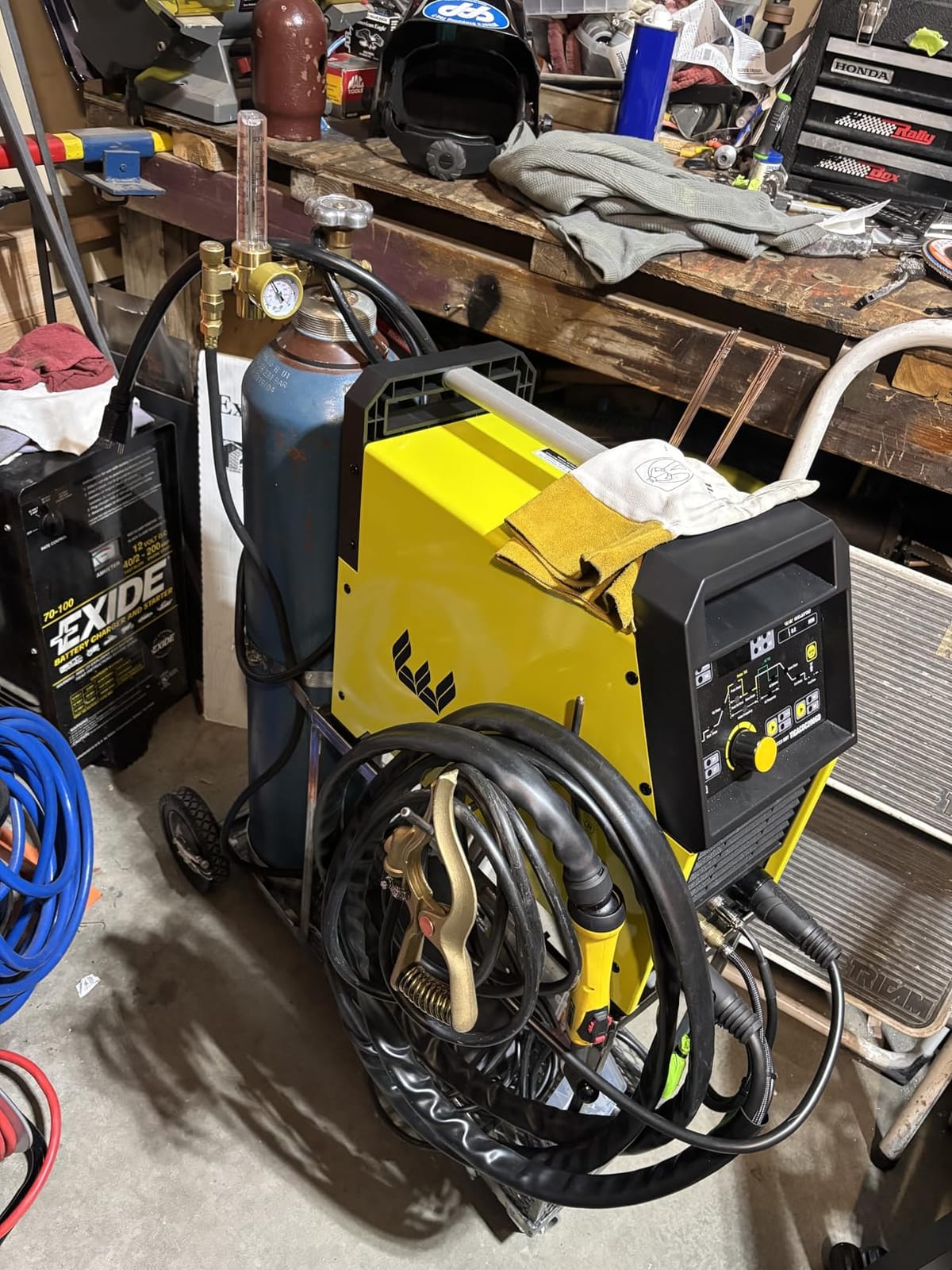
Voltage handling is automatic: 110V/220V detection and switching with no manual change, which is useful when the same machine moves between a home garage and a shop circuit. Protection covers overheat, over-current, over-voltage, and under-voltage, and the IGBT inverter runs a 40 percent duty cycle at full 200A output.
The accessory kit is unusually complete for this bracket: TIG torch, rocker foot pedal, 300A ground clamp, stick holder, gas hose, flow meter, tungsten electrodes, ceramic nozzles, collets, back caps, and a manual. The large high-contrast LED display stays readable in bright light or a dark shop, which matters more than spec sheets suggest.
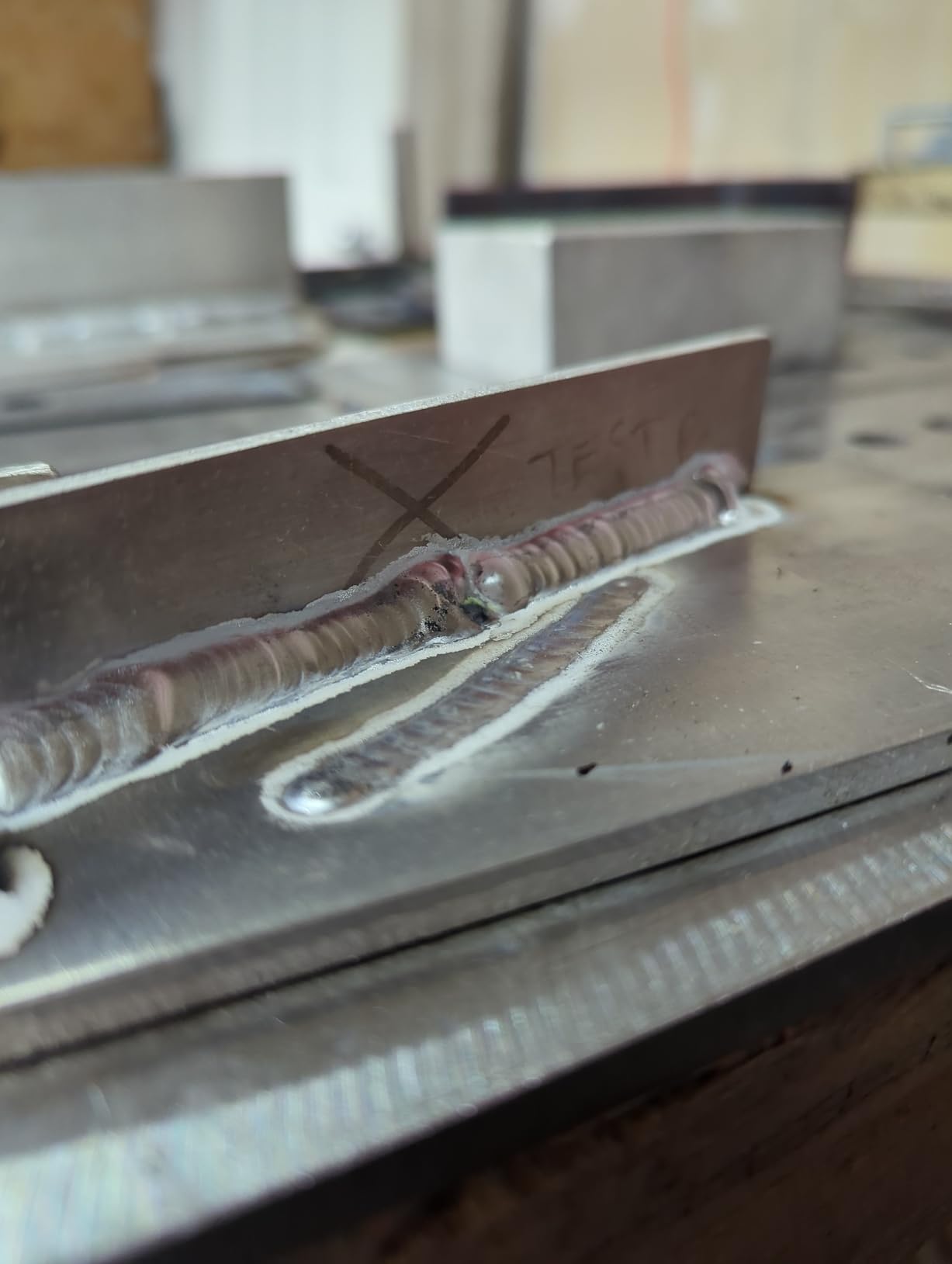
Why the AC controls decide the aluminum question
Aluminum forms an oxide layer that DC current cannot break through cleanly, and the arc has to be alternated so the polarity reverses and clears it. AC balance sets how much of each half-cycle does cleaning versus penetration, and frequency controls how tightly that reversal happens. Both being adjustable is what separates this from a machine that can technically weld aluminum once.
Plan your circuit and your carrying
Two practical constraints. The listed wattage figure of 44 KW implies a dedicated 220V circuit to reach full output. And at 61.8 pounds this is the heaviest machine here, so budget for a cart if you move it around a shop, or accept that it lives in one place.
4. AHP AlphaTIG 203Xi AC/DC Pulse Welder – Best for Beginners
NEW 2024 AHP AlphaTIG 203Xi Amp IGBT AC DC Tig/Stick Welder with PULSE 110/220v 3 YEARS WARRANTY
AC/DC TIG and stick with pulse
60 percent duty cycle
110/220V with HV Start
69 pounds
Pros
- Stick performance widely praised as smoother than Miller
- Lincoln
- and budget machines
- 60 percent duty cycle is far above comparable machines in this class
- Knob-based controls are easier to dial in than digital menus
- Light flexible torch hose with adjustable head
- Customer support replied to emailed questions within a few hours
- Works on 120V through a 25 foot 12 gauge extension cord
Cons
- Minimum output is 10 amps
- difficult on very thin material
- On 120V the digital readout does not match the knob setting
- Included flow meter gauge is inaccurate and needs calibration
- Included foot pedal is heavy and scoots around the floor
The case for this machine is simple: it ships with more of what you need and asks less of you to figure it out. The box includes a 240V to 120V plug adapter, a 250A stick electrode holder, a floating ball type brass argon regulator, a foot pedal with a 25 foot cord, a Rotaflex 9/17 TIG torch with 9mm quick connect, a work clamp, and a basic consumable kit.
Under the covers it is an IGBT inverter with PWM, a high visibility LCD screen, and HF start TIG with foot pedal heat control. It handles 1/4 inch aluminum and 3/8 inch mild steel at 110/220V and runs 7018 and 6013 electrodes. This current version adds HV Start, an electronic solid-state simulated HF start that removes the point gap to manage.
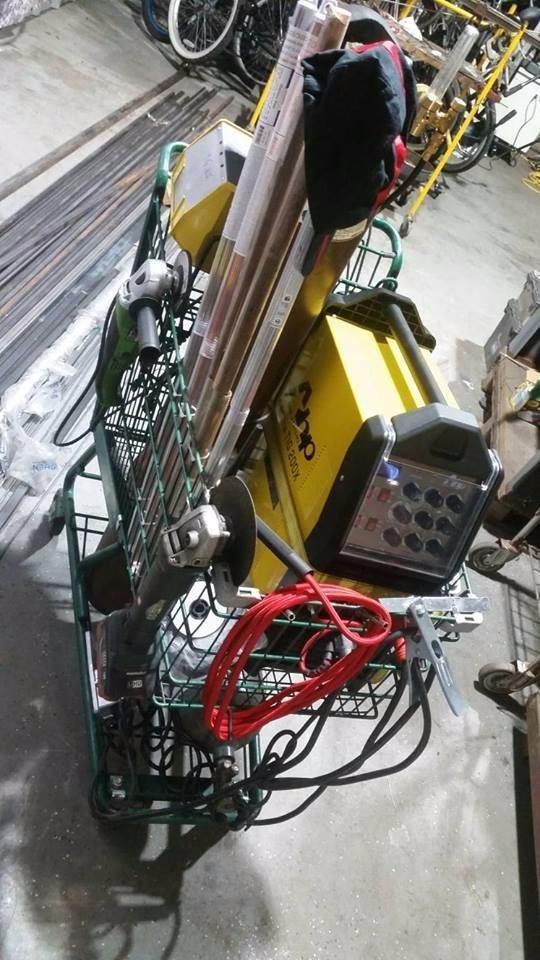
Two owner details stood out for us. Stick performance is repeatedly described as smoother than Miller, Lincoln, and budget machines, with effortless arc striking, which matters if you plan to use it as a two-process shop machine. And customer support responded to emailed questions within a few hours, which is a real differentiator at this price.
Duty cycle is the quiet strength here: 60 percent is well above comparable machines in this class, so it holds up on longer jobs without thermal shutdown. Pulse TIG has separate slow and fast pulse settings, and AC frequency is adjustable even in stick mode, which is rare at this tier.
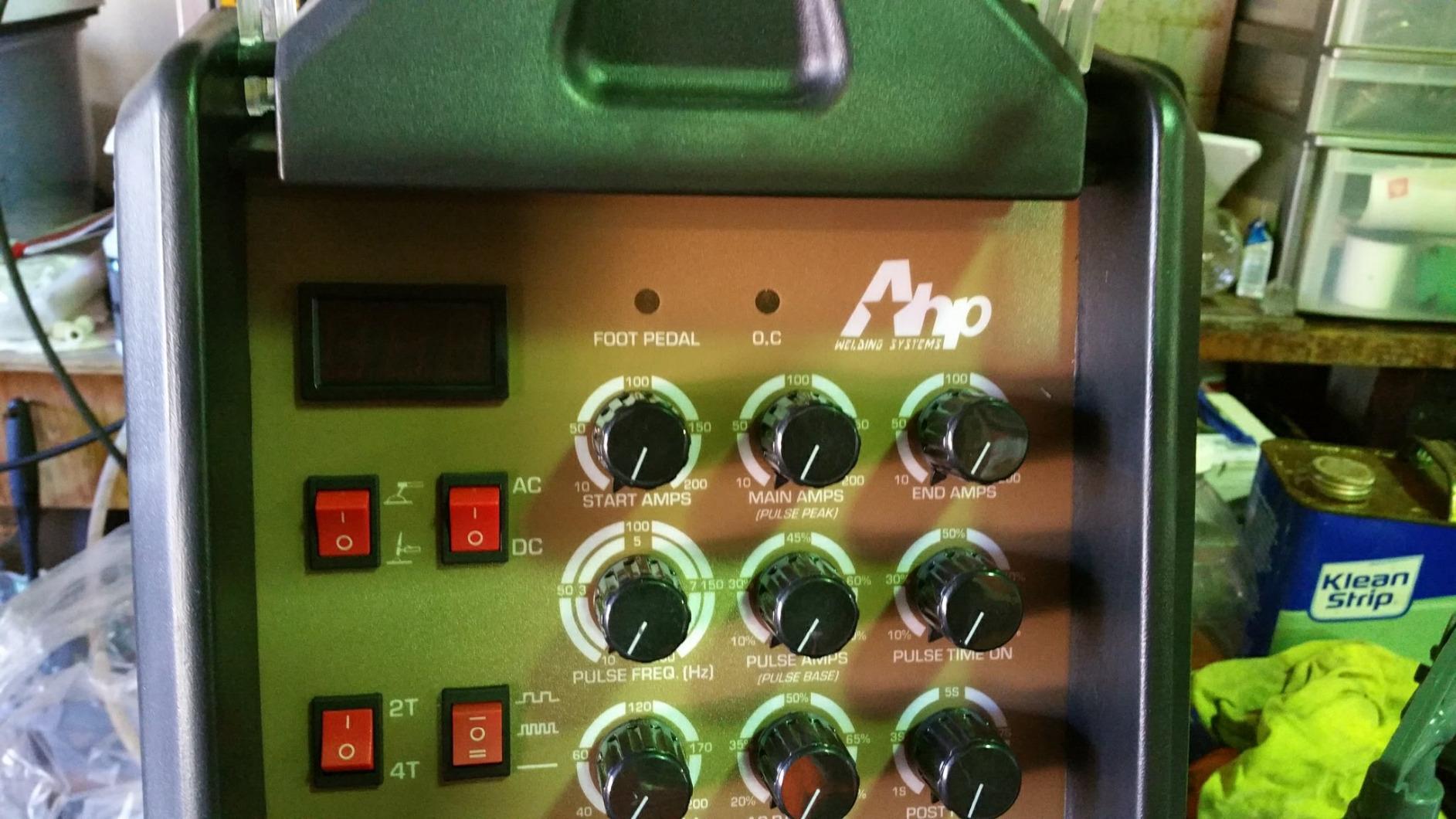
Why beginners like the knob layout
Owners consistently prefer dialing these controls by feel to navigating digital menus on competing machines. When you are learning TIG, you are already managing gas, filler rod, torch angle, and travel speed, and a physical knob you can set by muscle memory is one less menu to decode.
Know the 10 amp floor and the 120V caveat
Minimum output is 10 amps, which is hard to manage on very thin material such as .020mm stainless. On 120V the digital readout does not match the knob setting, so amperage has to be judged by feel, and the machine will not cap its output on 120V, so running it too hot will trip a breaker.
5. TOOLIOM 200A Four-in-One with TIG Spot – Best for Spot Work
TOOLIOM 200A TIG Welder with Pulse, 110V/220V Dual Voltage
200 amp output, four in one
STICK, DC TIG, pulse TIG, TIG spot
HF ignition with 2T/4T/spot
Auto sensing 110V to 220V
Pros
- TIG spot mode that most competing machines at this tier omit
- Large digital display shows amperage
- mode
- and parameters in real time
- Auto-sensing 110V-220V circuit simplifies setup in mixed environments
- Reserved 5-pin foot pedal interface for remote amperage control
- Thermal protection cools the unit before shutdown
Cons
- Lowest 4.3 star average among the 200A class machines here
- DC TIG only with no AC mode for aluminum welding
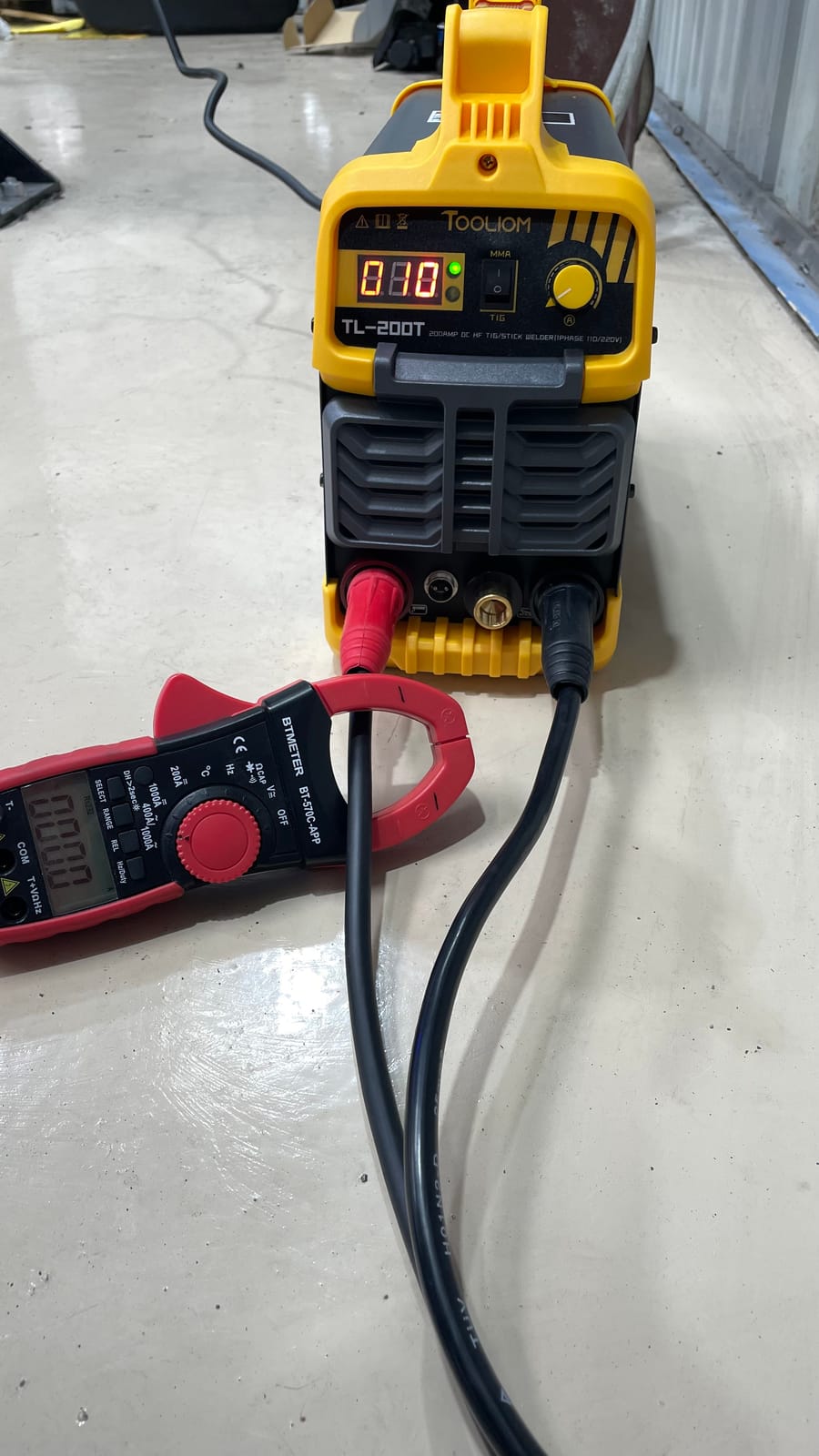
The distinguishing feature here is the TIG spot mode, and it is more useful than it sounds. Spot welding lets you place repeatable tacks for tacking a thin assembly before a full pass, or form a hinge and handle from sheet without a jig, with a consistent diameter every time. Most machines at this tier leave that out.
Otherwise it is a 200 amp four-in-one: STICK with Hot Start, Arc Force, and Anti-Stick; DC TIG with HF ignition and 2T/4T/spot operation; and pulse TIG with independent control of frequency, duty cycle, and current. Output is quoted for stainless steel, alloy steel, iron, and other non-ferrous metals with low spatter.
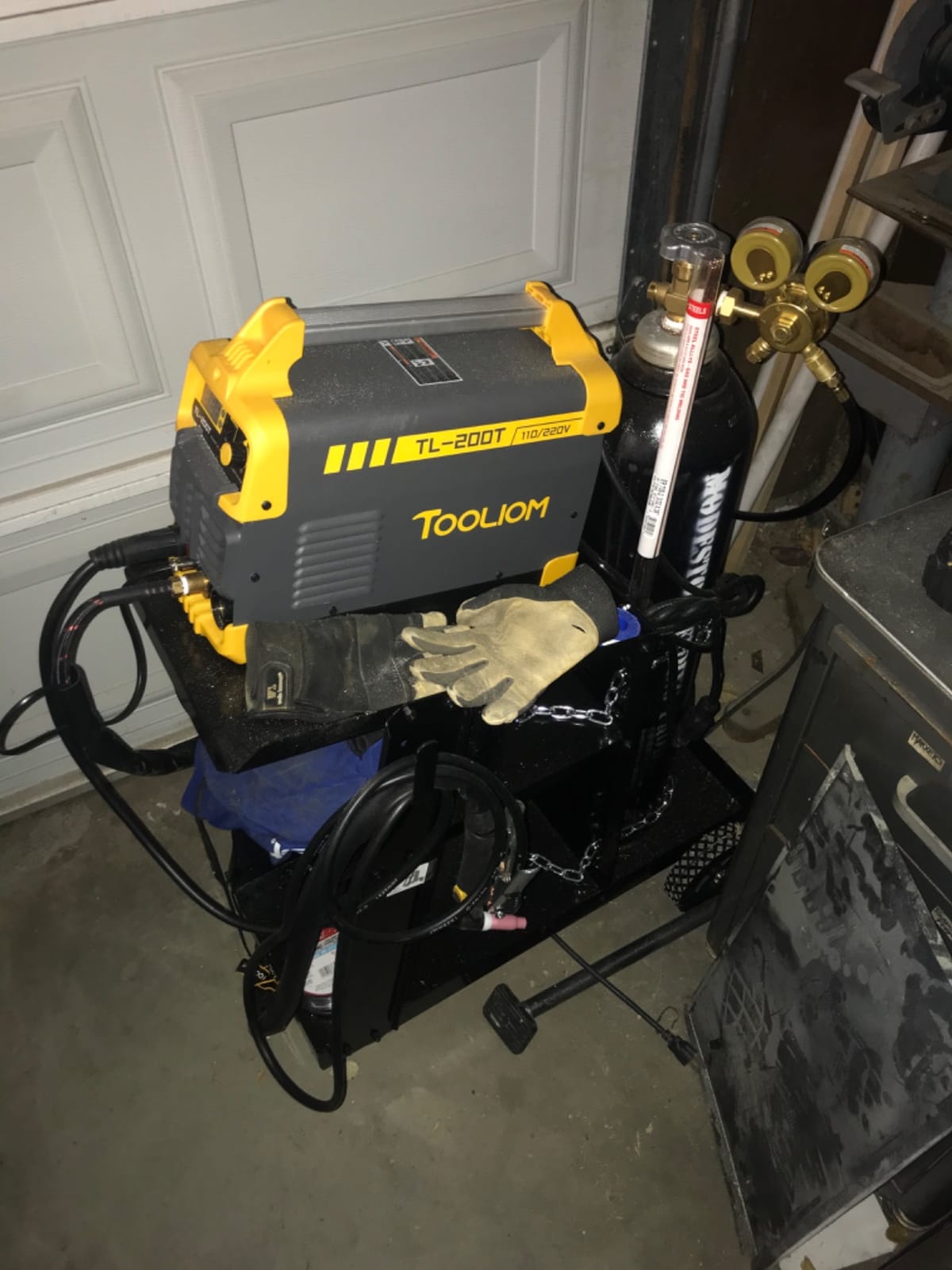
The large digital display shows amperage, welding mode, and parameters in real time, which removes the guesswork that comes with a knob-only panel. Smart sensing circuitry auto-adapts to 110V-220V sources, and a reserved 5-pin foot pedal interface handles arc on/off and current adjustment. Built-in thermal protection shuts the unit down on overheat or overload while the fan keeps running to cool it.
The honest limitation is that this is DC TIG only. There is no AC mode, so aluminum is off the table regardless of how good the arc is on steel. The 4.3 star average also trails the other 200 amp machines here, with 6 percent one-star reviews signalling a real share of buyers who were not satisfied.
When spot TIG earns its place
Spot mode pays for itself quickly on sheet metal. Tacking a thin stainless or mild steel assembly, forming a hinge, or welding a small bracket with heat control all get more repeatable than trying to feather a start-stop arc by hand at 5 amps.
Where it stops short
Any plan involving aluminum ends with this machine. If non-ferrous work is a maybe rather than a never, the money is better spent on an AC/DC unit even if you give up the spot mode.
6. YESWELDER TIG-205P Pulse DC Welder – Most Versatile
YESWELDER 205A Tig Welder Pulse STICK/DC TIG/PULSE TIG 3 in 1 TIG-205P
Up to 200 amps of TIG output
Three in one: stick, DC TIG, pulse TIG
Auto sensing 110V/220V
4.85kg (10.7lb)
Pros
- Very light at 10.7lb
- among the most portable machines here
- Auto-sensing 110V/220V input means no manual voltage switching
- Auto memory recalls your settings after power-off
- Independent pulse control of frequency
- duty cycle
- and current
- Hot Start
- Arc Force
- and Anti-Stick in stick mode
Cons
- Cannot weld aluminum
- TIG-205P is DC only
- Included components list only the welder so a torch and consumables may need separate purchase
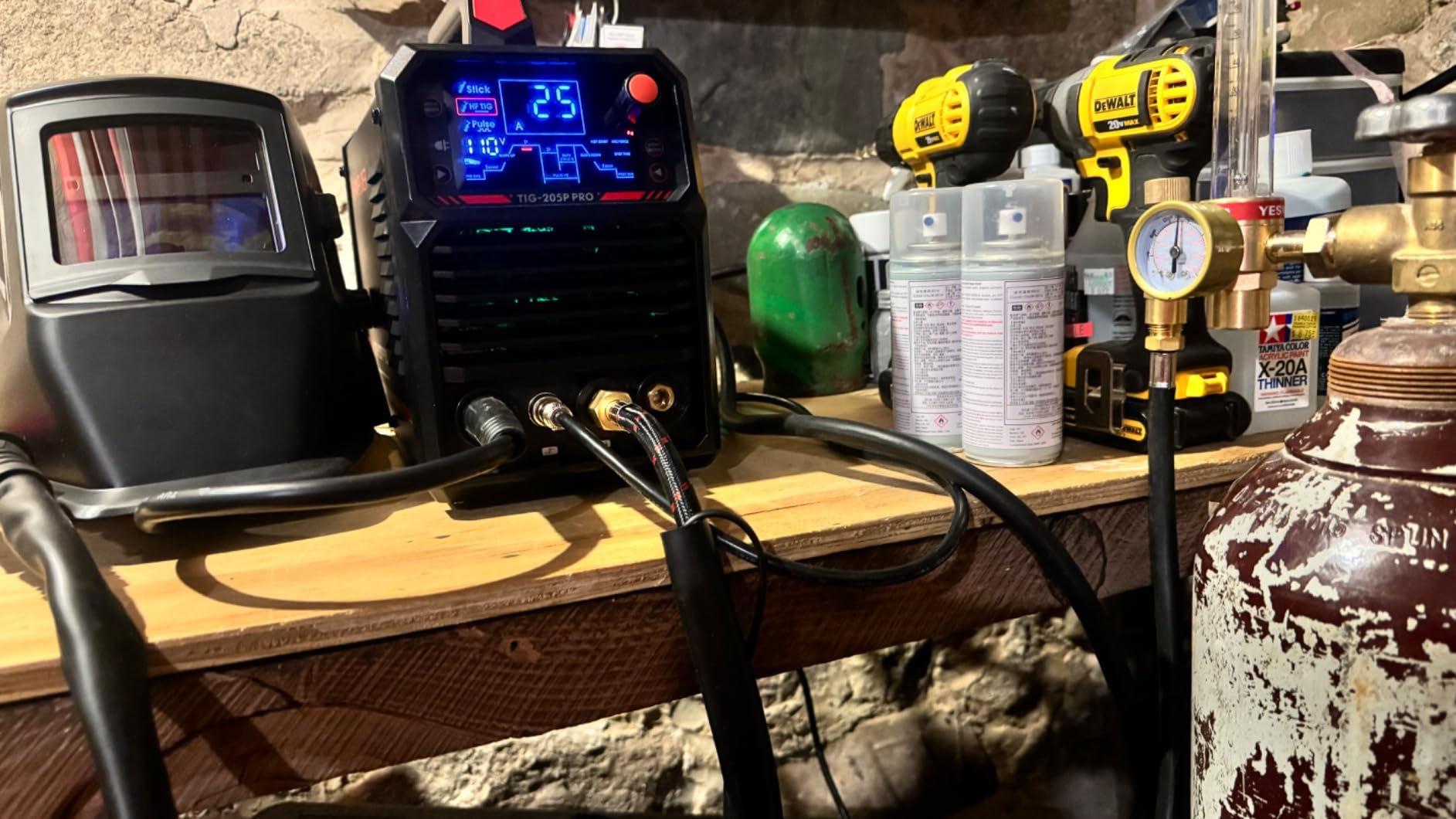
At 4.85kg (10.7lb) this is one of the lightest machines in the roundup and the easiest to move between a garage, a shed, and a workbench. Popularity backs the value case: it sits at number 18 in TIG Welding Equipment on the category rankings, the best sales rank of any machine here.
The process list is 3-in-1: STICK, DC TIG, and PULSE TIG, delivering up to 200 amps. Stick mode has Hot Start, Arc Force, and Anti-Stick. DC TIG has HF arc ignition with 2T/4T/spot operation, and pulse TIG gives independent control of pulse frequency, duty cycle, and current rather than a fixed preset.
Two conveniences stand out for a machine at the low end. Auto-sensing 110V/220V dual voltage input needs no manual switching, so one machine works in a home garage and a shop. And the auto memory function restores your settings after power-off, which saves repeating setup every time you come back to a project.
The large LED display is readable, and a 5-pin foot pedal interface is reserved for remote on/off and current control. Just note the listing’s included components show the welder itself, so plan to source a torch, tungsten, cups, and collets separately unless the page confirms otherwise.
Why pulse TIG matters even on DC machines
On steel and stainless, pulsing is how you control heat on thin material without pulsing the puddle out of shape. Independent control of frequency, duty cycle, and current gives a real working range on 16 gauge sheet that a machine with a single fixed pulse setting cannot match.
The aluminum limitation is not subtle
This model cannot weld aluminum. It is DC only, and that is stated plainly in the manufacturer notes. Any buyer assuming otherwise from listing styling should look at an AC/DC unit instead.
7. ARCCAPTAIN 200A Dual Voltage TIG and Stick – Best for Portability
ARCCAPTAIN 200A TIG Welder, 110V/220V TIG/Stick 2 IN 1 Welding Machine
200 amp TIG and MMA stick
Under 12lb with handle and shoulder strap
Post gas 1-10s, down slope 0-10s
2T/4T trigger, VRD protection
Pros
- Owners report performance on par with a Lincoln AC-225 stick welder
- Lightweight at under 12lb and portable enough to fit under a truck seat
- High frequency start plus slope controls give clean
- low-spatter welds
- Customer service repeatedly singled out as the best buyers have experienced
- Work clamp and CK Worldwide 17 torch with stubby gas lens are worthwhile upgrades
Cons
- DC TIG only
- aluminum requires the TIG200P ACDC model
- 110V performance is limited and 95 amps on a 15 amp breaker repeatedly tripped the circuit
- Included torch is far too heavy and awkward
- Ground cable can melt with long continuous use
This is the machine to look at if the welder has to travel. It weighs under 12 pounds, and it comes with a handle and an included shoulder strap. One owner describes it fitting under a truck seat, which is a real constraint for field repair work.
Under the shell it is a 200 amp TIG and MMA stick welder using MCU and IGBT inverter technology with digital control. High frequency non-contact arc initiation reduces tungsten and material consumption. Post gas time sets from 1 to 10 seconds, down-slope from 0 to 10, and 2T/4T trigger modes include 4T for long-term welding.
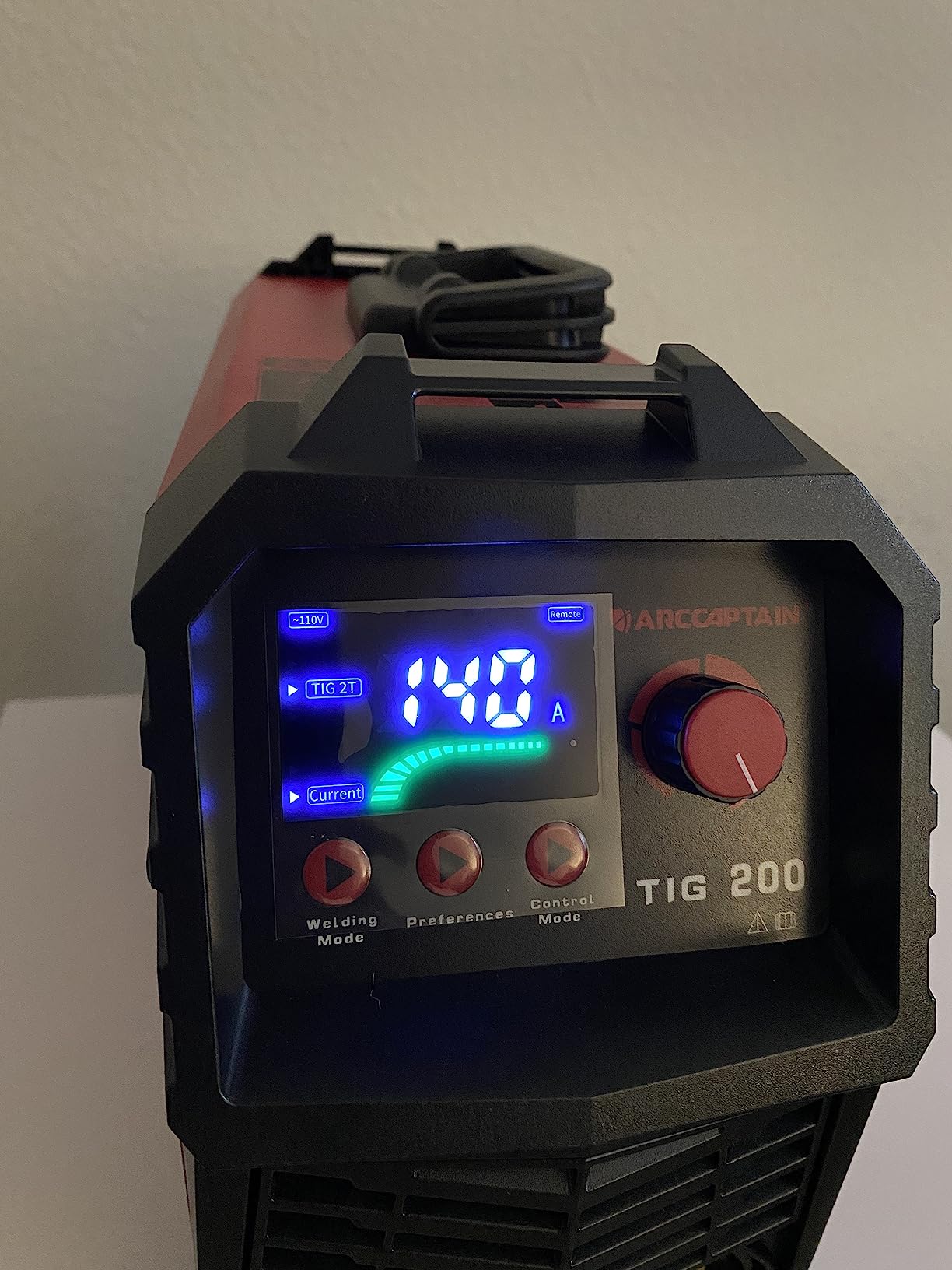
The value comparison owners make is telling: several report it performing on par with a Lincoln AC-225 stick welder at a fraction of the cost. Others describe running it for three days straight welding pipe off a generator. Customer service comes up repeatedly as the best the buyer has experienced, which matters at this tier.
Protection covers VRD plus over-current, over-voltage, over-load, and over-heating, and the cooling fan only runs when needed, so there is no constant buzz. The list of worthwhile upgrades is short: a better ground clamp and a CK Worldwide 17 torch with a stubby gas lens.
What a 120V circuit really gives you
Owners report 95 amps tripping a 15 amp breaker, which is the honest version of the 200 amp headline number on a household circuit. A 20 amp circuit is the realistic minimum for this machine on 120V, and full output belongs on 220V. Duty cycle also reaches its ceiling around 150 amps.
Two cheap parts to replace early
The included torch is described as far too heavy and awkward and is not a swivel type, and the ground cable can begin to melt with long continuous use. Both are inexpensive to replace and worth doing before a long job rather than during one.
8. LOTOS TIG200ACDC Square Wave Inverter – Best Complete Package
LOTOS TIG200ACDC 200A AC/DC Aluminum Tig Welder with DC Stick/Arc Welder, Square Wave Inverter with Foot Pedal and Argon Regulator 110/220V Dual Voltage Brown
200A AC square-wave inverter
10 to 200A AC/DC TIG output, 15 to 200A stick
Automatic 110/120V and 220/240V dual voltage
37 pounds
Pros
- 200 amp AC square-wave output delivers clean aluminum welds
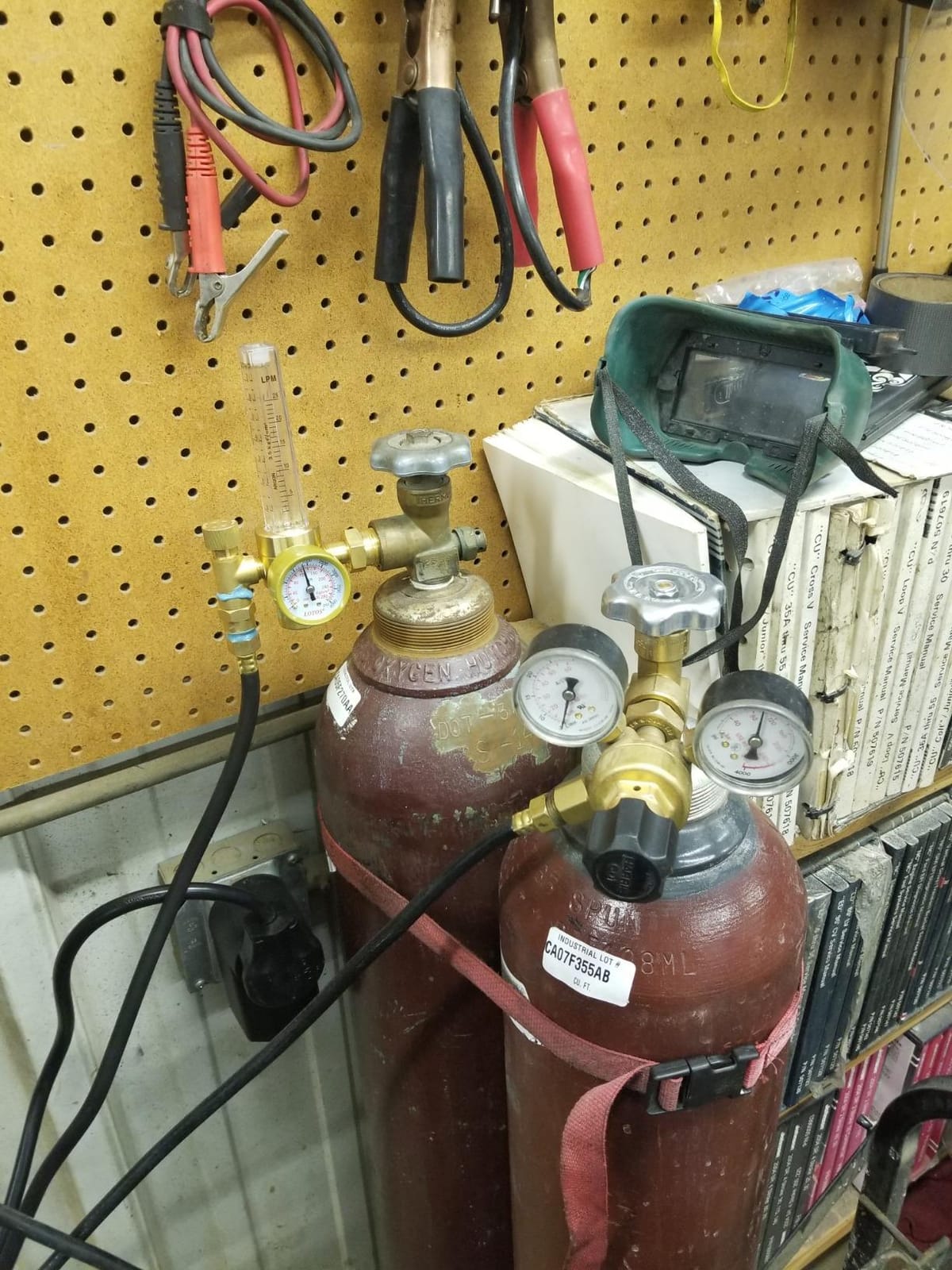
- Argon regulator
- foot pedal
- ground clamp
- and consumables all included
- Automatic dual voltage and dual frequency simplifies setup across jobsites
- Works with acid or basic electrodes for stick work
- HF start plus foot pedal heat control for thin sheet and heavier aluminum
Cons
- Oldest listing here from 2012 and 70 percent five-star rating trails newer competitors
- 28 x 13 x 17 inch footprint and 37 pound weight make it the bulkiest unit
- 5 percent one-star reviews point to a modest support complaint rate
The box is the argument for this machine. Included are the AC/DC power supply, TIG torch, MMA/stick clamp, foot pedal, argon regulator, a 220V/110V converter pigtail, ground clamp, a consumable set, and a manual. Very few competitors at this bracket hand you a regulator and a pedal as standard.
The power source is a 200 amp AC square-wave inverter with 10 to 200A AC/DC TIG output at 80 percent power efficiency, and 15 to 200A DC stick output with adjustable hot striking arc current. Square wave AC is the shape that cleans aluminum oxide predictably, which is the whole point of the design.
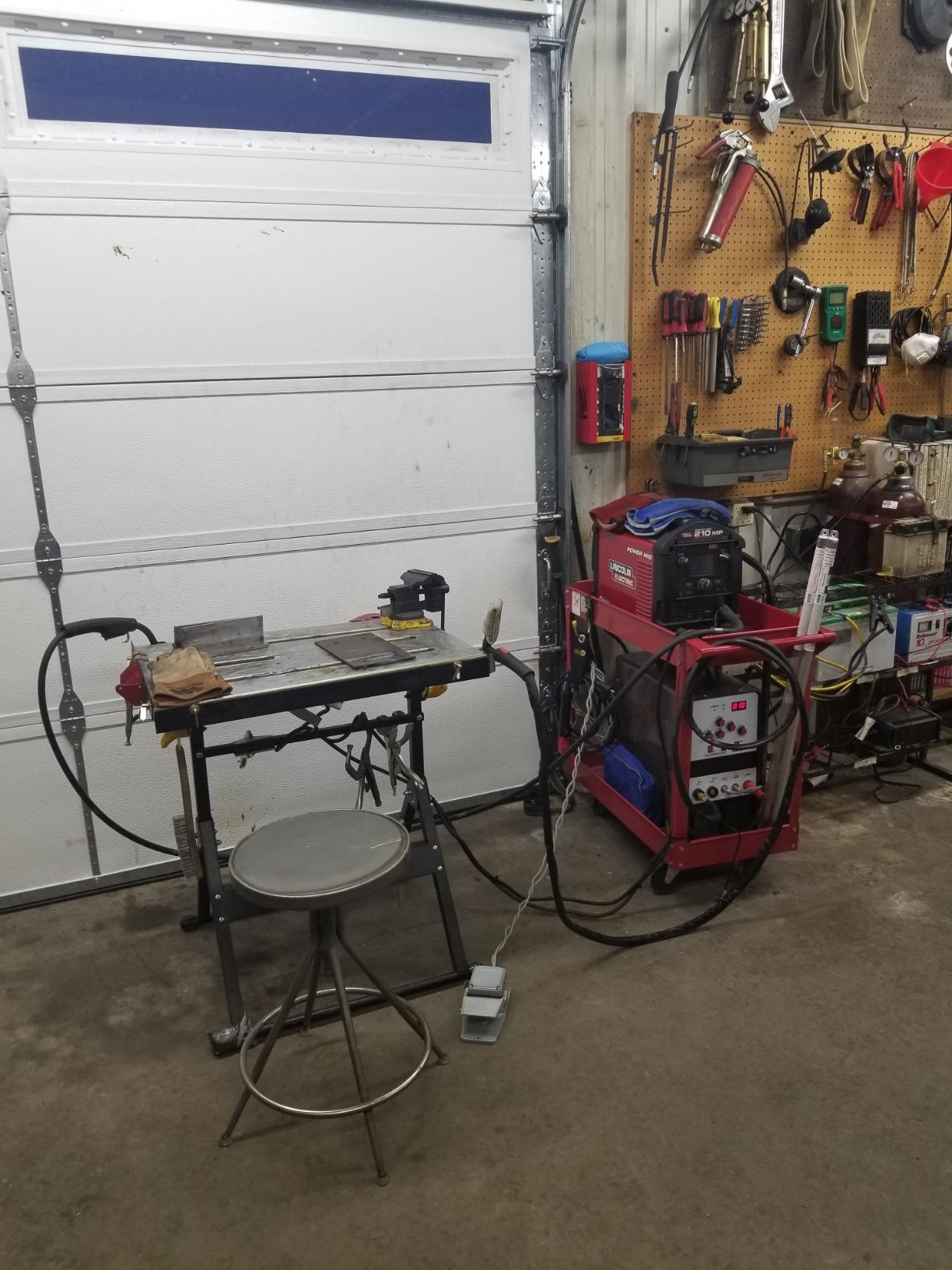
Voltage handling is automatic across 110/120V and 220/240V at 50/60Hz, so the same machine works in a home shop or a commercial shop circuit without a manual switch. HF start hand torch control and foot pedal heat control cover both thin-gauge precision work and heavier aluminum.
Warranty terms are among the better ones available here: a 30 day money-back guarantee, a 1-year new replacement warranty, and a 3-year limited warranty with registration. The catch is bulk. At 28 x 13 x 17 inches and 37 pounds it is the largest machine in the roundup, and its 70 percent five-star rating trails newer listings.
Why square wave AC still matters
On aluminum the arc has to reverse polarity to break the oxide film. Square wave holds its current flat through both the cleaning and penetration half-cycles instead of drifting, so heat input stays predictable as you move the torch. That predictability is what makes a beginner’s first aluminum bead look consistent.
When to skip it
Choose something else if floor space is tight or you need to move the machine regularly. It is also the oldest design here, and the modest share of one-star reviews suggests support has not kept pace with the warranty language.
9. Sunstac 250A AC/DC Pulsed TIG Welder – Best for Thick Aluminum
Sunstac 250A Aluminum TIG Welder with Pulse ACDC Foot Pedal Control
Up to 250 amp across 110V and 220V
Seven modes including AC and DC spot
Aluminum to 6mm at 220V
29.8 pounds
Pros
- Highest nominal output in the roundup at 250 amps for thicker aluminum work
- Seven operating modes including both AC and DC pulse plus AC and DC spot
- LCD screen readable while wearing a welding helmet
- Parameter memory restores your previous settings
- 118 inch 300A rated work clamp and electrode holder cables
Cons
- Lowest average rating in the roundup at 4.1 stars with 15 percent one-star reviews
- Current measurement in AC mode is inaccurate and AC balance is inconsistent
- Foot pedal is not included despite the title advertising foot pedal control
- Included components list only the welder so torch and consumables may need separate purchase
On paper this is the most capable machine in the group. It runs up to 250 amps across 110V and 220V, and its aluminum capacity is the highest listed here: 5/32 inch (4mm) at 110V and 6/25 inch (6mm) at 220V. It also welds alloy steel, copper, stainless steel, carbon steel, and iron.
Seven modes cover High-Frequency AC, High-Frequency DC, Pulsed AC, Pulsed DC, AC SPOT, DC SPOT, and STICK. The LCD digital screen is readable with a helmet on, which is a genuine usability step up from older LED panels, and an intelligent parameter saving function restores your last settings.
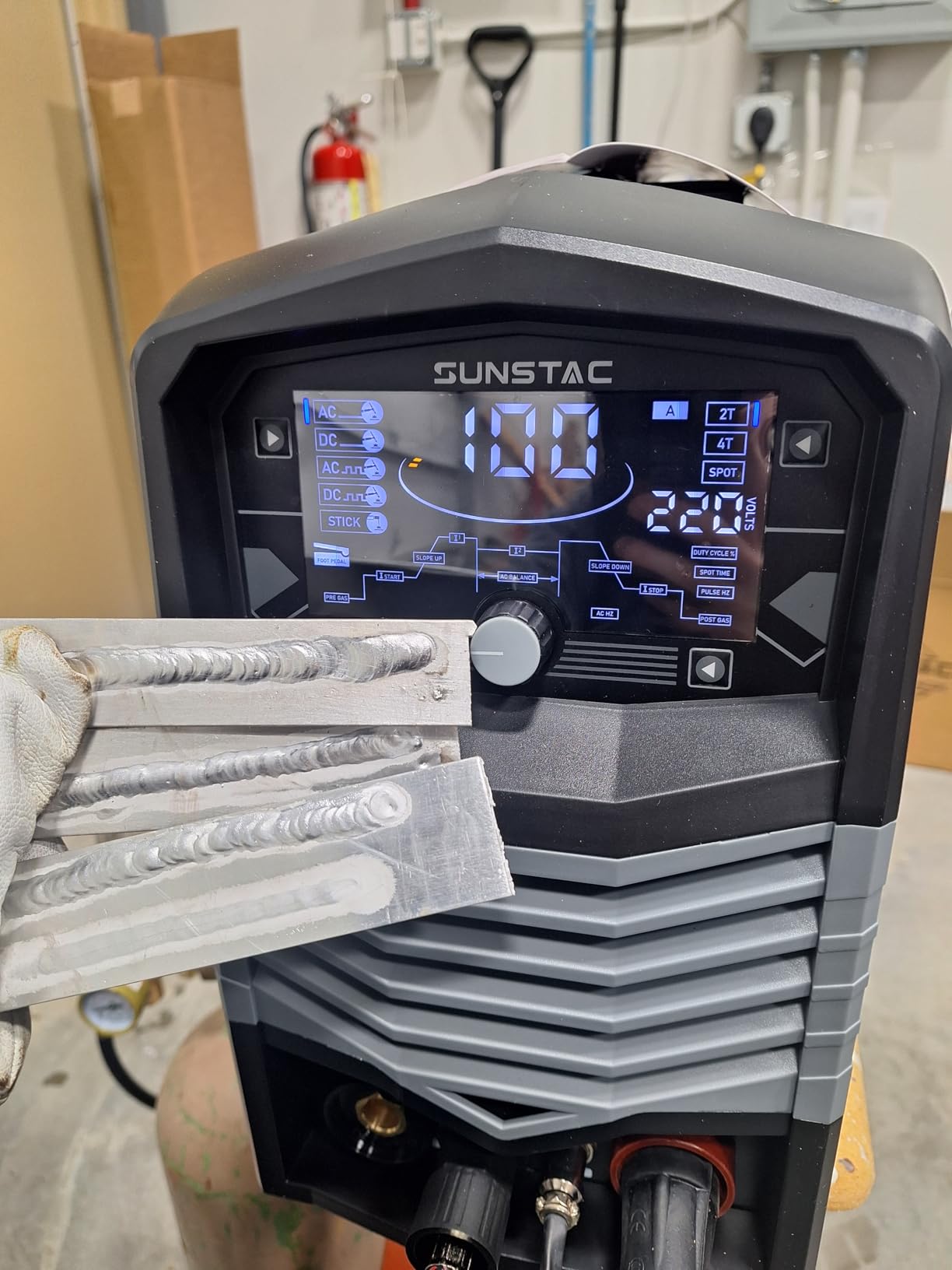
The 2T, 4T, and SPOT TIG modes support foot pedal remote control, and the machine automatically reverts to foot pedal mode after a restart if a pedal is connected. Work clamp and electrode holder cables run 118 inches at a 300A rating, so cable length stops being a constraint on large assemblies.
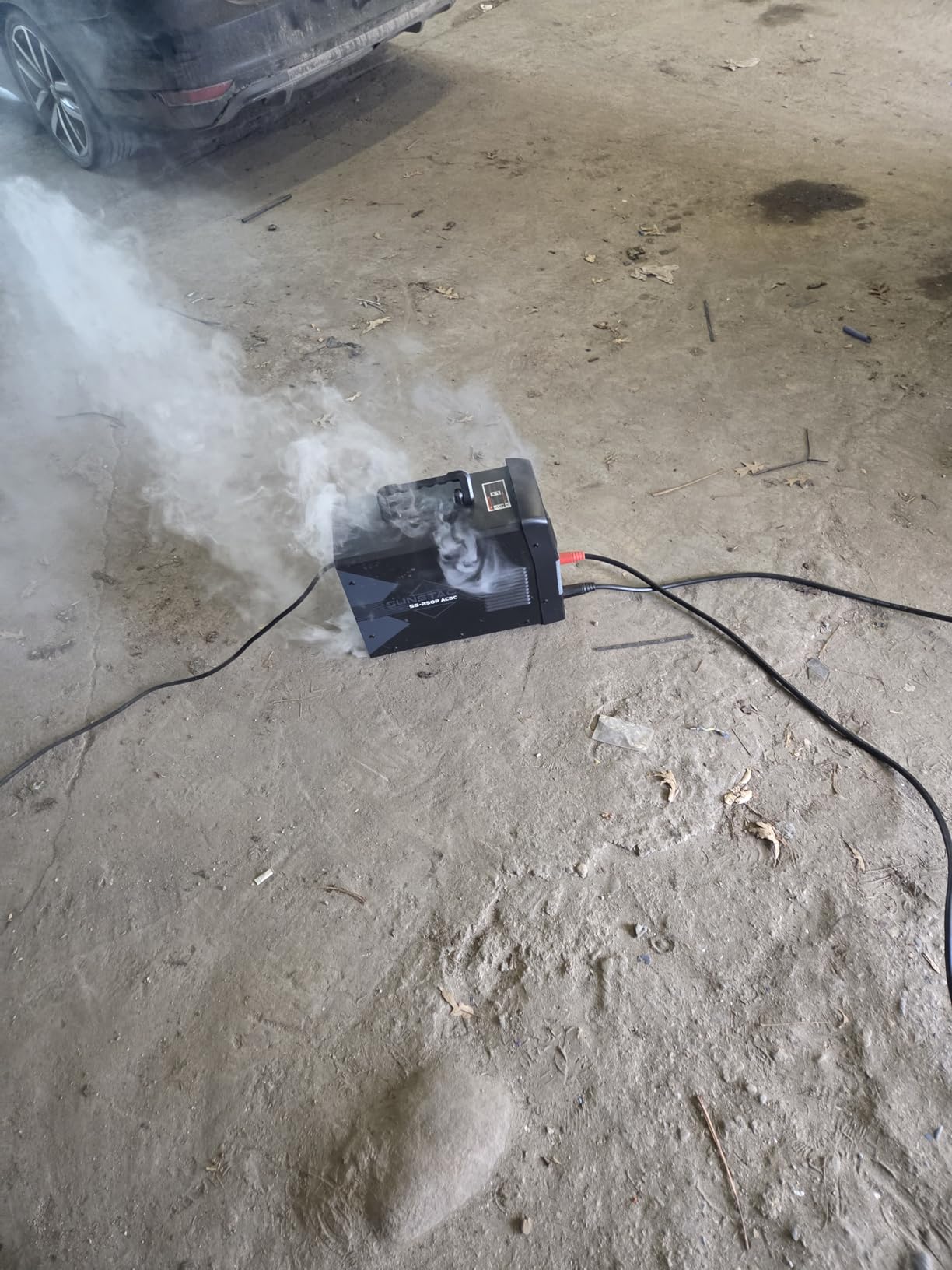
We have to be direct about the weaknesses. The 4.1 star average is the lowest here, with 15 percent one-star reviews. The manufacturer itself notes that current measurement in AC mode is inaccurate and inconsistent AC balance causes measured current to vary, which on an aluminum-focused machine is a real limitation.
Also worth planning around: the foot pedal is not included despite the product title advertising foot pedal control, and the included components list shows only the welder.
When 250 amps justifies the compromises
Thicker aluminum is where headroom matters. At 6mm on 220V this machine reaches material that a 200 amp AC/DC unit would struggle to push heat through without stalling, so for boat hull work or structural aluminum the extra capacity is genuine rather than marketing.
Why we ranked it lower
Accuracy in AC mode is what separates a usable aluminum machine from a nominal one, and this is the weak point its own documentation admits. Combine that with a 4.1 star average and no foot pedal in the box, and it makes more sense as a step up from a 200 amp machine than as a first purchase.
10. AHP Alpha-TIG 225Xi AC/DC Pulse Welder – Best for Thin Material
New 2024 AHP Alpha-TIG 225Xi 200 Amp IGBT AC/DC Pulse TIG/Stick Welder 110v/220v Dual Voltage
225 amp AC/DC TIG with pulse
150 amp output on 120V, 225 amp on 240V
Minimum start of 5 amps DC, 20 amps AC
Rear water cooler outlet
Pros
- Highest rating of the two AHP models here at 4.7 stars with no one-star ratings
- Lowest minimum start current in the roundup at 5 amps DC for thin gauge work
- Rear water cooler outlet allows pairing with a water-cooled torch
- 4T mode with separate start and end amps adjustment
- Pre-flow and post-flow both adjustable 0-10 seconds
Cons
- Smallest review base in the roundup at just 42 reviews
- Lowest category sales rank at number 972 in TIG Welding Equipment
- Product page lists few included accessories so torch
- pedal
- and consumables may need separate purchase
The spec sheet is the best in this roundup for thin-gauge work, and it is not close. Minimum start current is 5 amps DC and 20 amps AC, the lowest floor of any machine here. On very thin stainless and sheet metal that low start current is the difference between starting a bead and burning a hole.
Output is 150 amps on 120V and the full 225 amps on 240V, with pulse frequency adjustable from 0.5 to 200 Hz. Pre-flow and post-flow each run 0 to 10 seconds, there is down slope control, and 2T/4T functionality includes separate start and end amps adjustment in 4T mode.
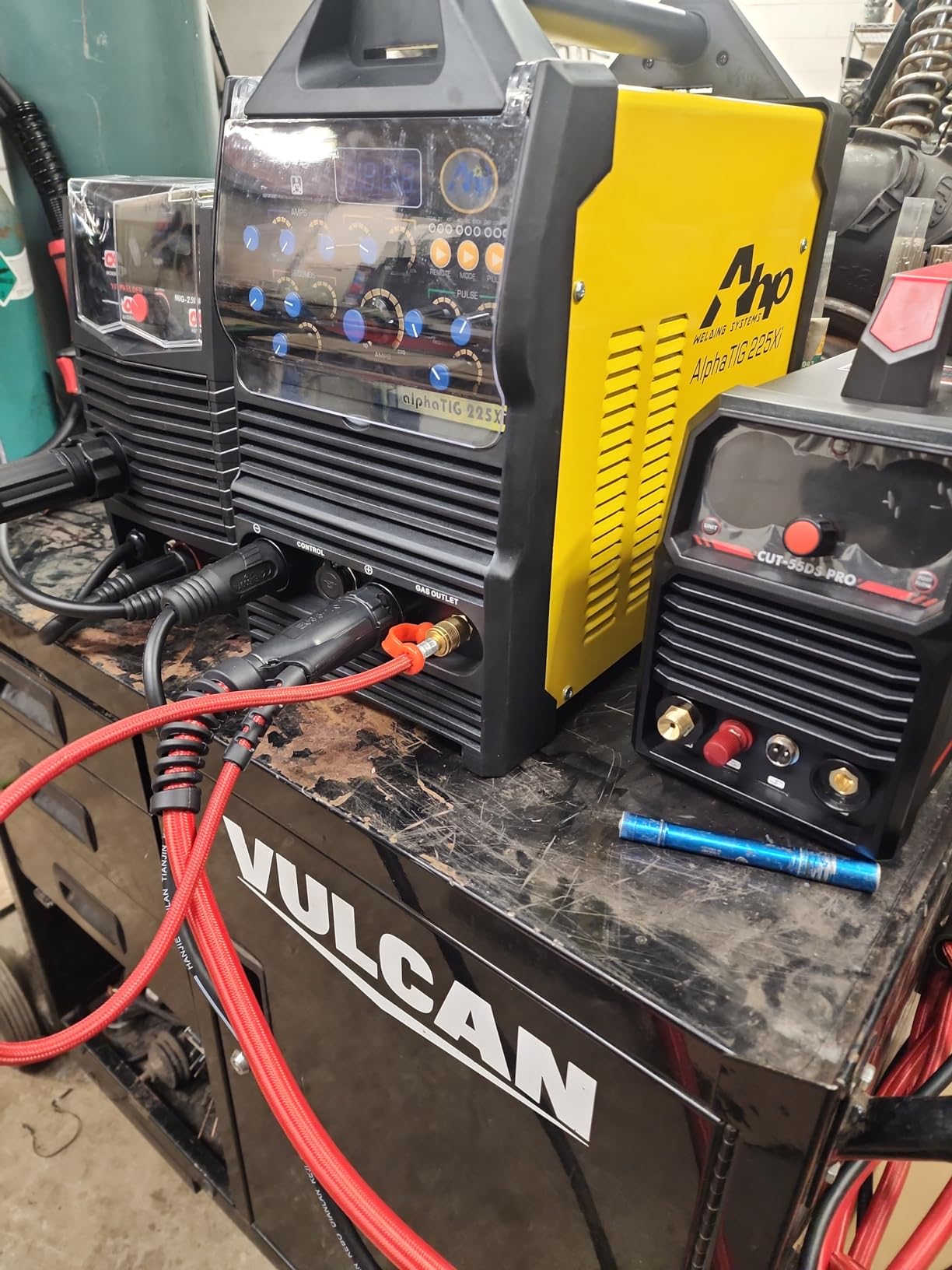
The rear water cooler outlet is the feature no other machine in this bracket offers. If you plan long aluminium or stainless runs where torch heat builds in the cup, that outlet lets you attach a water-cooled torch instead of adding heat to your problem.
At 4.7 stars the rating is strong, with 77 percent five-star feedback and no one-star reviews at all among the 42 reviews posted. The catch is that 42 is the smallest review base in the roundup, so long-term reliability is less proven than a machine with 1400 reviews behind it. The product page also lists few included accessories.
Why low minimum amps change your material options
Arc start current is the amperage the machine delivers the instant you strike. A 10 amp floor forces you to run hotter on thin material than the joint needs, which burns through thin stainless and distorts small parts. At 5 amps DC, this machine can start low and hold there.
What the small review base means for you
A 4.7 rating built on 42 reviews is encouraging but thin. If you want evidence of long-term ownership, the PRIMEWELD at the top of this list has 1426 reviews behind the same rating band, and the LOTOS carries a 3-year limited warranty with registration.
How to Choose a TIG Welder Under 1000
AC/DC versus DC-only is the first question to settle
Decide whether you are welding aluminum before anything else, because it eliminates half the list immediately. Aluminum forms an oxide layer that DC current cannot penetrate, so the arc must alternate polarity to clear it. A DC-only machine cannot weld aluminum no matter how good its arc looks on steel, and several listings here advertise TIG capability without making the AC limitation obvious in the headline.
When shopping, look for an explicit AC mode in the spec sheet rather than inferring it from the word TIG or from a wattage figure. Four of the ten machines here are DC only and cannot weld aluminum: the S7 200A, the TOOLIOM 200A, the YESWELDER TIG-205P, and the ARCCAPTAIN 200A. This is the single most common buyer mistake in this price band, and it is the one buyers in welding forums complain about most.
120V versus 240V and the circuit you actually need
Headline amperage means something different depending on the circuit feeding it. On a 15 amp household circuit a 200 amp machine may deliver something closer to 95 amps, and one owner reported that figure repeatedly tripping the breaker. A 20 amp circuit is a more realistic floor for a 200 amp machine on 120V.
The AHP Alpha-TIG 225Xi states its numbers plainly: 150 amps on 120V and 225 amps on 240V. That kind of honesty is rare and useful. If you want full output, plan on a dedicated 220V circuit with a properly sized breaker, and check with an electrician before you install one rather than after a tripped breaker explains it to you.
Arc start type decides how forgiving the machine feels
HF start, lift-arc start, and scratch start are not interchangeable. High frequency start is a non-contact strike that lets the arc begin without touching the workpiece, which protects the tungsten and stops contamination. Every machine here offers HF ignition of some kind, including the AHP HV Start, an electronic solid-state simulated version.
Lift-arc start requires you to drag the electrode into the work, and scratch start means rubbing the electrode to strike, which contaminates the tungsten every time. Stick with HF or simulated HF start at this budget. The current AHP model notes HV start removes the point gap to manage and maintain.
Duty cycle at realistic amperage, not headline numbers
Duty cycle tells you how long the machine can weld at a given amperage before it needs to cool. The AHP AlphaTIG 203Xi is quoted at 60 percent, well above comparable machines in this class, and the Weldpro runs a 40 percent duty cycle at full 200A output. The ARCCAPTAIN reaches its ceiling around 150 amps according to owners.
Ignore duty cycle quoted at 40 amps. Read the figure at the amperage you will actually use, because that is where the thermal design shows itself. For occasional garage work almost any of these is fine; for production hours, the 60 percent figure is the one worth paying for.
Foot pedal, post-flow, and consumable support
A foot pedal with variable amperage control lets you feather heat with your foot, which is how you stay on thin material without burning through. Note that the S7 200A’s trigger and pedal are on/off only, so you cannot modulate amperage at all. Foot pedals included with a standard remote connector are what you want; a pedal on a proprietary connector is a parts problem waiting to happen.
Post-flow timer keeps argon flowing after the arc stops, and the oxide on the back of a bead comes from gas that stopped too early. Standard 17 series and 9 series consumables are stocked widely, and the PRIMEWELD and ARCCAPTAIN recommendations in this roundup both point at CK Worldwide 17 series torches for that reason. Proprietary consumables that take weeks to arrive are a genuine problem, and it is one buyers mention repeatedly on forums.
Mistakes to avoid at this budget
Do not buy a DC-only machine and plan to weld aluminum later. Do not assume a machine includes a gas bottle, regulator, foot pedal, or torch; several here ship with only the power source. Do not run a 200 amp machine on a 15 amp household circuit and blame the welder. And do not skip the warranty comparison, because some budget brands carry only a 90 day window while the LOTOS carries a 3-year limited warranty with registration and the ARCCAPTAIN a 2-year service commitment.
Frequently Asked Questions
Who makes the best TIG welder for the money?
At this budget the PRIMEWELD TIG225X leads on the combination of rating and history, holding 4.8 stars across 1426 reviews with a CK Worldwide 17 Series torch included. For pure value the AHP AlphaTIG 203Xi offers 60 percent duty cycle, a foot pedal, and an argon regulator in the box. For aluminum, the Weldpro 200A AC/DC and the LOTOS TIG200ACDC both provide genuine AC output.
What is the best budget TIG welder?
The YESWELDER TIG-205P and the ARCCAPTAIN 200A are the strongest low-cost options. The YESWELDER weighs 4.85kg (10.7lb), auto-senses 110V/220V, and adds independent pulse control plus auto memory. The ARCCAPTAIN adds post gas and down slope timers and stays under 12lb. Both are DC only, so neither will weld aluminum.
What is the best TIG welding machine for home use?
For a home shop with a 20 amp or dedicated 220V circuit, the AHP AlphaTIG 203Xi is the most beginner-friendly because it ships with a foot pedal, argon regulator, and torch, and its knob controls are easier to learn than digital menus. If aluminum is part of the plan, choose an AC/DC model such as the PRIMEWELD TIG225X or LOTOS TIG200ACDC.
What is the rule of 33 in TIG welding?
The rule of 33 is a tungsten sizing guideline: the diameter of the tungsten electrode should be roughly 33 thousandths of an inch greater than the amperage you plan to run. A 2 percent lanthanated electrode suits amps up to about 80, a 3.2mm suits amps up to about 150, and a 4mm suits higher amperage.
Are Everlast TIG welders any good?
Everlast and PrimeWeld come up constantly in owner discussions at this budget as the value tier, alongside the AHP AlphaTIG series and the Eastwood TIG 200. Owner consensus is that a 200 amp class AC/DC inverter is plenty of machine for years of hobbyist work, and that dedicated TIG power sources are preferred over combo machines when TIG is the main goal.
Do I need AC/DC for TIG welding aluminum?
Yes. Aluminum forms an oxide that DC current cannot break through, so the arc has to alternate polarity to clean it. AC balance controls how much of each half-cycle cleans versus penetrates. If aluminum is a maybe rather than a definite, a DC-only machine will disappoint you; if it is never on your list, save the money and buy a better stick machine instead.
Final Verdict on Budget TIG Welders
The best TIG welders under 1000 dollars are now genuinely capable machines rather than compromise boxes, and the choice comes down to one question: do you need AC. Start with the PRIMEWELD TIG225X if you want the strongest overall machine with the deepest review history, the Weldpro 200A AC/DC if aluminum is the priority, and the AHP AlphaTIG 203Xi if you are learning and want a foot pedal and regulator in the box.
Check the live price on each listing before you commit, since machines cross the budget line regularly. Then read the specs for AC mode, minimum amps, and duty cycle at your working amperage, and those three numbers will tell you more than any badge.