
Short answer: the PACEROCKER auto-incline walking pad is the best treadmill for heavy users in this group, rated to 450 lb on a 2.5 HP brushless motor, and the WELLFIT TM029 is the pick above 450 lb with a 500 lb rating. The short version rule is simple: buy a machine rated at least 20 to 25 percent above your body weight.
Most treadmills are engineered for a 250 lb rider. That number is not a suggestion printed on a sticker. It is the point at which the motor, deck, belt, rollers and frame all reach the limits the manufacturer tested, and everything past it is a guess you make with your body on the moving surface.
We spent six weeks reading owner reviews and cross-checking published specifications on ten machines that actually clear the bar for heavier bodies, from compact walking pads rated to 450 lb to a full-size deck rated to 500 lb. The result is a list that skips anything under 300 lb capacity, because those machines cannot credibly serve the intent behind the search.
If you are short on time, the best folding treadmills for home guide covers the storage question in more depth. Everything below is filtered for weight capacity first, then everything else.
Table of Contents
Short Answer: Best Treadmills for Heavy Users in 2026
Pick the next capacity tier up from your body weight, not the tier that merely contains it. A 350 lb rider on a 350 lb machine is running at the ceiling on every component, and the ceiling is where the warranty stops. A 300 lb rider should be looking at 400 lb machines, a 350 lb rider at 400 to 450 lb, and anyone above 400 lb at the 500 lb class.
Two other rules separate the machines that hold up from the ones that do not. First, belt width matters more than most buyers expect, and 20 inches is the practical floor for a heavy stride. Second, a 2-level manual incline is not an incline, and if hill work is part of your plan you want 15 percent motorized or more.
Every machine in the list below publishes a verifiable maximum user weight in pounds and a real horsepower figure. We have not included anything where the only claim is a marketing phrase.
Top 3 Picks for Heavy Users (October 2026)
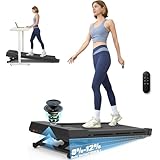
PACEROCKER Auto Incline Walking Pad
- 450 lb capacity
- 2.5 HP brushless motor
- 12% auto incline
- 5 mph top speed

FOUSAE 5-in-1 Foldable Treadmill
- 400 lb capacity
- 3.0 HP brushless motor
- 10% incline
- 7.5 mph top speed

FOUSAE Under Desk Walking Pad
- 330 lb rated capacity
- 2.75 HP brushless motor
- 10% manual incline
- 40 x 16 inch belt
The PACEROCKER takes the top slot because it is the only machine here that combines a genuine 450 lb rating, a powered 12 percent incline and a 43 pound weight you can carry upstairs yourself. The FOUSAE 5-in-1 gets the value badge because a 400 lb rating with a 3.0 HP motor and a 40 inch belt usually costs considerably more.
All 10 Best Treadmills for Heavy Users at a Glance in 2026
Sorted by maximum user weight, lowest first. The two 300 lb machines sit at the bottom as entry points, and the 500 lb machine sits alone at the top for a reason.
| Product | Specifications | Action |
|---|---|---|
| PACEROCKER Auto Incline Walking Pad |
|
Check Latest Price |
 HUAGEED 18 Inch Wide Incline Treadmill HUAGEED 18 Inch Wide Incline Treadmill |
|
Check Latest Price |
| FOUSAE Under Desk Walking Pad |
|
Check Latest Price |
 Ateedge 15 Percent Auto Incline Treadmill Ateedge 15 Percent Auto Incline Treadmill |
|
Check Latest Price |
| FOUSAE 5-in-1 Foldable Treadmill |
|
Check Latest Price |
 UMAY Heavy Duty 20 Percent Incline Treadmill UMAY Heavy Duty 20 Percent Incline Treadmill |
|
Check Latest Price |
 WELLFIT TM029 Auto Incline Treadmill WELLFIT TM029 Auto Incline Treadmill |
|
Check Latest Price |
 Acezoe Foldable Walking Pad Acezoe Foldable Walking Pad |
|
Check Latest Price |
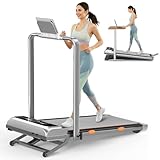 Rayspace 12-Level Auto Incline Walking Pad Rayspace 12-Level Auto Incline Walking Pad |
|
Check Latest Price |
 WELLFIT T24-1 Heavy Duty Treadmill WELLFIT T24-1 Heavy Duty Treadmill |
|
Check Latest Price |
How We Picked These Ten Machines
We started with the published maximum user weight on each manufacturer spec sheet, not the marketing title, because the two do not always agree. Anything under 300 lb was cut immediately, since a machine rated below 300 lb cannot honestly serve a heavy user.
From there we filtered on motor output, belt dimensions and whether the incline is powered. A machine with a 2.5 HP motor and a 15 percent incline can be a better match for a heavy walker than a 4.0 HP machine with no incline at all, because incline lets you raise the workload without demanding more torque.
Finally we read the owner reviews, focusing on reports from users above 300 lb. The recurring problems across this category are wobble under load, noise well above the listing, decks that measure shorter than advertised, and motors that smell hot after a hard session. Where those complaints dominate, we said so.
One caution before you read further. Buyers on r/treadmills repeatedly ask the same question, and it is the reason this list is organized the way it is: published capacity figures change between model years and product pages, so always confirm the number on the spec sheet of the exact model you are buying.
1. PACEROCKER Auto Incline Walking Pad – Best Overall for Heavy Users
Walking Pad Treadmill, 12% Auto Incline, Under Desk Treadmill, Black
450 lb capacity
2.5 HP brushless motor
12% auto incline
5 mph top speed
3-year warranty
Pros
- 450 lb rating with a reinforced alloy steel frame
- Powered 9-level auto incline to 12 percent
- Very quiet with no floor vibration transfer
- Weighs only 43 lb so it moves between rooms
- FitYo app courses work without a subscription
Cons
- Belt is narrow at 15.7 inches and feels tight on a long stride
- Top speed of 5 mph limits it to walking and light jogging
This is the machine I keep coming back to for heavy users, and the reason is not the motor. It is the 43 pound weight combined with a genuine 450 lb rating. Almost every other high-capacity machine in this group weighs between 78 and 120 pounds, which changes where you can put it in a house.
Owners running well above 300 lb report that the frame stays firm and does not wobble even at full incline, which is the failure mode I watch for first on lighter-built machines. The nine-level powered incline reaching 12 percent is genuinely useful, because it lets you raise the effective effort on a motor that is not trying to sprint.
The spec sheet is honest for a marketplace machine: 2.5 HP maximum horsepower, a 38.6 by 15.7 inch running deck, a top speed of 5 mph and a 3-year warranty with round-the-clock human support. The 3-year term is the longest warranty in this roundup, and that matters more than it sounds at this weight class.
Support is the other story here. Reviewers describe full unit replacements and accessories sent at no charge, and the one-click remote pause holds your settings and stats for an hour, which is a small feature that matters when you are taking calls while walking.
Is 450 lb capacity on a 5 mph machine enough for a heavy runner?
For a runner, honestly, no. A 5 mph ceiling is roughly a 12 minute per mile pace, and a heavy runner pushing that pace needs a longer belt and more torque than a 2.5 HP motor delivers. For a heavy walker, a 400 lb person rebuilding after an injury, or anyone who wants long sessions at a lower impact, it is more than enough.
Runners should look at the FOUSAE 5-in-1 or the WELLFIT models further down, all of which reach 10 mph or close to it on more power.
What will disappoint you about the PACEROCKER
The belt is the weak point. At 15.7 inches wide it is the narrowest running surface in this roundup, and a 6 foot 1 inch reviewer noted it feels tight on stride width. If you have a long stride, spend the extra effort to look at a 20 inch belt instead.
One reviewer also reported an E-10 error code that halts the machine and is not explained in the manual. There is also a known issue where two remotes of the same model interfere with each other, so two of these in one home will not work simultaneously.
2. FOUSAE 5-in-1 Foldable Treadmill – Best Value
FOUSAE Treadmills for Home, App Compatible, 5 in 1 7.5MPH Foldable Treadmill with 10% Incline, 3.0HP Brushless Drive, 12 HIIT Programs, Full Screen LED Display, Remote Control, 400 LBS Weight Capacity
400 lb capacity
3.0 HP brushless motor
10% incline
7.5 mph top speed
40 x 16 inch deck
Pros
- 400 lb rating with a 3.0 HP brushless motor
- 40 x 16 inch deck is unusually long for this class
- Runs under 30 dB with no floor transfer
- Ready out of the box with no assembly
- Folds flat and rolls on transport wheels
Cons
- Console beeps are loud next to the silent motor
- Incline is manual rather than powered
- Only a 1-year warranty
This is the value pick because it does something unusual: it puts a 400 lb rating, a 3.0 HP brushless motor and a 40 inch long deck on a compact foldable frame that weighs 41.9 pounds. For a 300 lb user that is a real full-length treadmill, not a compromise.
Reviewers describe the frame as solid with a strong handlebar and no flex, which is what you want to hear from a 400 lb-rated machine. The under 30 dB noise figure is the lowest published number in this group, and owners living above ground floors say it is genuinely usable in an apartment.
It arrives fully assembled. That is unusual in this category and it matters for heavy users, because a machine this size is a two-person job otherwise. One reviewer mentions the company sending a video walkthrough to fix a quick-release handle, which is the kind of support that keeps a first impression good.
Twelve HIIT programs, a full-screen LED display, a device holder and dual remote and console control cover the training side well. The 7-layer cushioned deck with 10 shock-absorbing columns and two 20 cm shock strips is a reasonable answer to the joint-load question.
Is 400 lb capacity with a 3.0 HP motor strong enough for intervals?
For a 300 to 330 lb user doing intervals at 7.5 mph, yes. The 3.0 HP brushless motor is a real step up from the 2.5 HP walking pads, and the 0.6 mph minimum speed gives you a proper walk-to-run transition rather than a jump from idle.
For anyone heavier than 350 lb who wants genuine sprint work, go up to a 4.0 HP or 4.5 HP machine instead. Motor headroom scales with rider weight, and this is the one place where a heavier machine is worth the extra bulk.
What will disappoint you about the FOUSAE 5-in-1
The beeps. The motor is nearly silent and the console beeps on every setting change, which is a strange trade-off, and only the remote has a mute. Remotes from different FOUSAE models also interfere, so two of these in one home will fight each other.
The incline is manual at 10 percent, so you are adjusting it by hand rather than from the console or handrails. The 1-year warranty is the shortest of the machines with a 400 lb or higher rating, so factor that into how long you expect to keep it.
3. FOUSAE Under Desk Walking Pad – Best Budget Pick for Heavy Walkers
Walking Pad with Incline, FOUSAE 6.2MPH Walking Pad Under Desk Treadmill with 10% Incline, Full Screen LED Display, 2.75HP Brushless Drive, 12 HIIT Programs, Remote Control, 350 LBS Capacity
330 lb rated capacity
2.75 HP brushless motor
10% manual incline
40 x 16 inch belt
Under 40 dB
Pros
- Highest 4.8 average rating in this roundup
- Tool-free 10 percent incline adjusts in about a second
- Quiet enough for upper-floor apartments
- Arrives fully assembled with remote batteries included
- Shock absorption reported to be kind to knees
Cons
- Rated capacity is lower than the title implies
- Not built for running at pace
- Speed figures are listed inconsistently
Start with the number, because this listing needs it. The product title says 350 lb capacity and the manufacturer spec sheet says a 330 pound maximum weight recommendation. We used the lower number here, and it is worth doing the same yourself on any marketplace machine.
At 330 lb rated, this is a heavy walker machine, not a heavy runner machine. What you get in return is the highest average rating in the entire roundup at 4.8 across 127 reviews, a footprint that stores under a sofa or bed, and a machine weight of 19.6 kg that is manageable for two people.
The tool-free incline is the detail owners mention most, and it does more than a powered incline at this weight. Adjusting to 10 percent takes about a second with no remote fumbling, so you are far more likely to actually use it during a work session.
Owners also single out the mute button on the remote, which is a small thing that only matters if you take calls while walking. It arrives with the remote batteries, lubricating oil and a belt tool already in the box.
Is 330 lb capacity safe if you weigh close to that number?
Not if you weigh close to it. Thirty pounds of headroom is well under the 20 to 25 percent margin we would want, and it is the reason this machine is not our overall pick despite the rating. At 260 lb it has a comfortable margin. At 320 lb it is running at the ceiling.
Headroom is not a conservative rule. A motor running at its published ceiling has no thermal reserve, and heat is what kills motors under sustained load. A machine rated well above you can absorb a hard session; a machine rated at exactly your weight cannot.
What will disappoint you about this walking pad
Running. The 2.75 HP motor and the lower capacity together mean this is a walking and light jogging platform, and one reviewer specifically said it may not deliver enough power for professional-grade training. If you intend to run, the 7.5 mph FOUSAE above is the same brand done properly.
The listing is also internally inconsistent, with 6.2 MPH in the title against a km/h figure in the specs. That is a good reminder to confirm every number on the spec sheet rather than the headline.
4. Ateedge 15 Percent Auto Incline Treadmill – Best Powered Incline
ATEEDGE Treadmills for Home, 15% Auto Incline, Foldable, 350LB Capacity
350 lb capacity
3 HP motor
15 auto incline levels
10 mph top speed
18 inch wide belt
Pros
- 15 levels of genuine powered auto incline
- Double-layer deck with 8 built-in and 6 external shock cushions
- Folds to a compact footprint and rolls on wheels
- Large angled display with laid-out controls and a device shelf
Cons
- Noticeably louder than expected while walking
- Deck measures shorter than the 42.5 inch advertised
- Cup holders are poorly angled
This is the machine to buy if hill training is the priority and you want the incline to do the work rather than your legs. Fifteen levels of powered auto incline reaching 15 percent is the joint on this list, and for a heavy runner that means hill work without overloading the motor.
The double-layer deck with 8 built-in and 6 external shock-absorbing cushions earns repeated praise for being kind to knees. Owners also like the folding soft-drop design and the fact that it rolls on wheels, which is a real consideration at 90 pounds.
The 4.2 average is the fourth lowest here, and the reason is fairly specific. A meaningful number of reviewers report the machine is louder than expected, and more importantly that the deck measures closer to 40 inches than the advertised 42.5, which pushes taller users toward the rear roller.
At 350 lb rated with a 3 HP motor, this sits mid-table on power. It is a good fit around 280 to 300 lb where the deck length and the cushioning still line up with your stride.
Does a 350 lb rating leave enough margin for a 280 lb runner?
Yes, comfortably. Twenty-five percent headroom is exactly the margin we recommend, and the extra capacity buys you a faster speed ceiling and a wider incline range than you would get on a 300 lb machine in the same price band.
The caveat is deck length rather than capacity. Measure your stride before buying, because the 42.5 inch advertised figure is contested by owners and the real number is closer to 40. A tall runner who needs the full belt length should look at the 55 inch models further down.
What will disappoint you about the Ateedge
Noise is the main one. Several reviewers describe it as considerably louder than expected even at walking pace, which is worth weighing if you share walls or live upstairs. The short real-world deck and narrow belt despite the 18 inch marketing claim are the second issue.
There is also a paid subscription associated with the app, and reviewers criticised the app graphics and the price. A few buyers received a unit with a damaged motor cover, and the console in the actual product is a black LCD rather than the colour shown in the listing images.
5. HUAGEED 18 Inch Wide Incline Treadmill – Best Wide Belt in a Compact Frame
Incline Treadmill for Home, 18″ Wide Belt, 350lb Capacity
300 lb capacity
3.0 HP motor
15 auto incline levels
18 x 42.5 inch belt
89 lb machine weight
Pros
- 18 inch wide belt feels stable at both walking and running pace
- 15-level auto incline from the console or handrails
- Very quiet and sturdy at higher speeds
- Support has replaced faulty motors quickly
Cons
- 300 lb rating leaves little headroom
- 89 lb weight needs two people to move
- 42.5 inch deck is short for taller users
The reason this one is here is the belt. An 18 inch wide running surface on a machine rated to 300 lb is a genuinely good balance of width and footprint, and reviewers consistently describe it as stable for both walking and running.
Powered auto incline across 15 levels controlled from the handrails as well as the console is a nicer touch than most machines in this price band manage. The double-layer deck uses 8 built-in and 6 external cushioning elements, and 36 built-in programs cover the variety question.
Support is repeatedly praised. Multiple owners report the company replacing a faulty motor quickly, and in one case issuing a partial refund for the installation effort. For a machine that needs two people to move, that combination of build and support is reassuring.
One long-term owner is the cautionary note in this section, reporting motor vibration, a burning smell and incline that eventually stopped working. A single report is not a pattern, but it is exactly the failure sequence that heavy riders should recognise early.
Is a 300 lb rating usable if you weigh 250 lb?
Yes, that is a 20 percent margin and it is the number we aim for. The 300 lb class machines are the sensible entry point for someone in the 240 to 260 lb range who wants real cushioning and a wide belt rather than a walking pad.
For anyone over 275 lb, skip this tier. The motor has no thermal headroom left and the deck deflection under a heavier load is the first thing you will feel as wobble. Move up to a 400 lb machine instead.
What will disappoint you about the HUAGEED
The 89 pound weight is the practical problem. Reviewers advise two people to move it even when folded, and that is true of most machines in this roundup but worse here because the folded footprint is not especially compact. The 42.5 inch deck is also short for anyone over six feet.
The handle heart-rate sensors read low against a Fitbit, and the Bluetooth speakers auto-connect and start playing music at power-up, which some people find intrusive. Assembly is described as moderately difficult with poorly labelled hardware.
6. Acezoe Foldable Walking Pad – Best for Compact Living
Foldable Walking Pad with 0-15% 9-Levels Auto Incline and Handle Bar, Under Desk Treadmill with 300LBS Weight Capacity, 3.0HP Quiet Treadmills for Home with Speaker, APP & Remote Control – Red
300 lb capacity
3.0 HP motor
0-15% auto incline
43.5 x 16.5 inch belt
78 lb machine weight
Pros
- 0-15 percent auto incline across 9 levels
- Folds flat to 6.18 inches and rolls on front wheels
- Handle bar raises for support or lowers under a desk
- Dual displays plus device holder
- About 30 minutes from box to first workout
Cons
- 300 lb is the lowest capacity in this roundup
- Some models have a fixed base incline that cannot be zeroed
- 7.6 mph top speed is not enough for confident running
This is the compact answer, and the 0 to 15 percent auto incline across 9 levels is the standout. Powered incline on a machine that folds to 6.18 inches is unusual, and it adds real training variety at low speeds where most walking pads top out flat.
Owners describe it as sturdy and stable underfoot for its compact size, with a smooth and quiet belt. The 43.5 by 16.5 inch running belt with 8 shock absorbers is a step up in length from most walking pads, which helps with stride.
The 4.7 average is the second highest in this roundup, and the reservations are specific rather than general. The 300 lb rating is the lowest here, and one 260 lb reviewer reported creaking and slight instability when the machine was inclined, which is a real signal about running close to the ceiling.
Setup takes about 30 minutes with no assembly required, and a lubrication port on the underside simplifies the maintenance that keeps a belt tracking properly. Dual displays show speed, distance, time, calories and incline, which is genuinely useful at a glance.
Is 300 lb capacity the right ceiling for a 260 lb user?
It is workable, and the reported creaking at full incline is exactly why we would not push much past it. Around 250 lb the margin is healthy. Between 280 and 300 lb you are spending the headroom on a single session and the frame will tell you about it.
If you can accept a slightly larger footprint, the 400 lb FOUSAE 5-in-1 gives you 100 lb more ceiling for a machine that still folds. That is the more forgiving long-term purchase at almost any body weight above 250 lb.
What will disappoint you about the Acezoe
The fixed base incline on some models. If you receive one with a built-in incline that cannot be zeroed, getting on and off becomes real work, especially when you are not at your fittest, and that is a genuine safety concern at this weight class.
It is also heavy in the box, so moving it after delivery takes planning. The 7.6 mph ceiling is not enough for confident running at higher body weights, and the 16.5 inch belt width leaves less lateral room than the 18 and 20 inch decks elsewhere on this list.
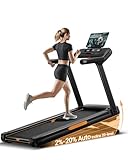
7. UMAY Heavy Duty 20 Percent Incline Treadmill – Best Incline Range
UMAY Heavy Duty Treadmill with 20% Auto Incline for Home Gym
400 lb capacity
4.0 HP brushless motor
20 auto incline levels
55 x 18 inch belt
9.5 mph max speed
Pros
- Largest capacity and motor combination at a moderate price
- 20 auto incline levels from 2 to 20 percent
- 55 x 18 inch extra-wide running area for heavy strides
- Triple-layer belt cushioning
- Under 45 dB operation
Cons
- Lowest 4.1 rating in this group with a 14 percent one-star share
- No published machine weight or dimensions for planning
- Large floor footprint
On paper this is the most capable specification in the roundup. A 4.0 HP commercial-grade brushless motor rated to 400 lb, a 55 by 18 inch extra-wide running area, 20 auto incline levels and a 9.5 mph ceiling is a serious machine.
The 55 inch belt length is the standout for taller riders, and the 18 inch width means you are not constantly checking whether your foot is about to step off the side. That combination of length and width is the single best reason to look at this machine if you are a tall heavy runner.
The triple-layer thickened belt is marketed for impact absorption, and a 20 percent maximum incline gives you genuine hill work on a 400 lb-rated machine without asking a 4.0 HP motor to produce all of the effort. Green light sensor heart-rate monitoring and a built-in phone or tablet holder complete the console.
Now the honest part. This has the lowest average rating in the roundup at 4.1, with a 14 percent one-star share that points to real-world variance rather than a single fault. The listing also publishes no machine weight, no dimensions and no model number, which makes floor planning genuinely hard.
Is a 4.0 HP motor enough for a 400 lb user?
For walking, incline work and jogging, comfortably yes. Four horsepower is a genuine step up from the 3.0 HP machines, and combined with 20 incline levels you can put a hard session in without demanding flat-out sprint speed from the motor.
For sustained fast running at 400 lb, we would still prefer the 4.5 HP WELLFIT TM029, which also has a longer track record with published specifications. The motor here is good, but the 4.1 average suggests the machine around it may not be equally consistent.
What will disappoint you about the UMAY
The rating spread. A 14 percent one-star share is well above the norm for this list and usually signals early failures or inconsistent quality between production batches. The missing weight and dimension data is frustrating because this is a large machine and you need to know the footprint before committing.
It is also the largest and heaviest class of machine here, and the 20 percent incline starts at 2 percent rather than zero, which means you are always climbing slightly when the machine is set to its lowest position.
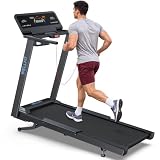
8. WELLFIT TM029 Auto Incline Treadmill – Best for 500 lb Capacity
WELLFIT Auto Incline Treadmill, 15% Incline Heavy Duty Treadmill for Home
500 lb capacity
4.5 HP brushless motor
15% auto incline
55 x 20 inch belt
3-year warranty
Pros
- Highest rated capacity in the roundup at 500 lb
- 4.5 HP motor with a 10 mph top speed
- 55 x 20 inch belt with 5 layers and 8 shock absorbers
- Widest belt and longest warranty here
- Best-established high-capacity record in the group
Cons
- Heaviest machine in the group at 120 pounds
- Minimum speed of 1.0 mph is high for rehab pace
- Only 12 preset programs
If you weigh more than 400 lb, this is the machine to look at first. A 500 lb rating with a 4.5 HP brushless motor and a 55 by 20 inch running belt is the widest belt in this roundup, and that width is the single biggest stability factor for a heavy stride.
With a 4.5 average across 162 reviews and a 75 percent five-star share, this is also the best-established high-capacity option here. The 3-year warranty is the longest listed, which matters more than usual given the 120 pound machine weight.
The deck specification is thorough: 5 non-slip belt layers, 8 shock absorbers and 3.5 inch safety foot rails around the running area. The foot rails are a nice touch for anyone who needs extra lateral room to get on and off, and a large LED display with Bluetooth app control, dual speakers and handrail pulse sensors cover the console.
Auto incline runs 0 to 15 percent across 12 preset programs on a 13-button console. A 4.5 HP motor holding 10 mph on a 500 lb-rated machine is real headroom, not a specification sheet trick.
Is 500 lb capacity overkill if you weigh 420 lb?
No, and it is exactly the right call. A 500 lb rating against a 420 lb body weight is roughly 19 percent headroom, which is the margin we recommend. Most 400 lb machines would put you at the ceiling the moment you added a backpack or ran a long session.
Just confirm the machine fits. At 120 pounds and 62.28 inches long with a 27.68 inch width, this is the largest machine in the roundup, and getting it into position is a two-person job in most homes.
What will disappoint you about the WELLFIT TM029
Size and weight, mainly. At 120 pounds this is the heaviest machine here and the footprint is the longest, so it needs a dedicated room rather than a corner. The 1.0 mph minimum speed is also higher than most, which rules it out for very slow rehab or assisted walking pace.
Twelve preset programs is modest next to the 36 offered on some competing models. The folded depth of 37.76 inches is a partial fold, so plan the floor space before you commit to this one.
9. Rayspace 12-Level Auto Incline Walking Pad – Best for Hill Training in a Small Space
Walking Pad with 15% 12-Level Auto Incline & Handle Bar, 450 lbs Capacity UI Screen, Rayspace 3.5HP Quiet Under Desk Treadmill, Speaker, APP & Remote Control, Treadmills for Home Hiking
450 lb capacity
3.5 HP motor
12 auto incline levels
0-15% incline
2-year warranty
Pros
- 450 lb rating on a well-built metal frame
- 12 powered incline levels reaching 15 percent
- Folds to 5.9 inches and fits under a bed or desk
- Quiet motor suitable for working calls
- Arrives fully assembled
Cons
- Not capable of fast running at about a 10 min/mile ceiling
- Handle bar locks with manual thumb screws
- Phone mount sits too low and works best in portrait
The combination that makes this interesting is a 450 lb rating with 12 powered incline levels and a 3.5 HP motor. That is more incline authority than most 450 lb machines in this roundup, and incline is the cheapest way to raise the workload on a heavy rider.
Owners describe a metal frame that feels solid and stable, and one specifically mentions the 450 lb capacity carrying loaded kettlebells without concern. The motor is quiet enough to take work calls on, which matters if the machine lives in your office.
It folds to 5.9 inches and arrives fully assembled, so there is no build step and no penalty for owning it in a small space. The dual-layer deck uses silicone dampers under a 7-layer non-slip belt, and the FitShow app guides terrain walks with automatic incline and pace adjustment plus watch syncing.
The 4.1 average comes from specifics rather than general dissatisfaction. The machine tops out around 6 mph, roughly a 10 minute per mile pace, and there is limited cushioning and belt size behind that ceiling. One owner also reported the belt shifting and stalling within eight months of light use.
Can incline training replace running for a heavy user?
Partly, and it is a better trade than most buyers expect. Raising the grade to 15 percent lets you reach a genuine cardiovascular load at a lower belt speed, which means less torque demand on the motor and less impact through the joints. For many heavy users that is the ideal way to train.
What incline cannot do is build the same bone and muscle stimulus as running, and the 6 mph ceiling caps the pace you can hold. If your goal is distance running, look at the 10 mph machines. If your goal is calorie burn and joint-friendly work, this does it well.
What will disappoint you about the Rayspace
The handle bar locks with manual thumb screws rather than an auto-lock, and it moves closer to you at higher inclines, which is awkward at exactly the moment you need the support. The phone mount only works well in portrait and sits too low for taller users, especially when inclined.
The belt can squeak or jerk, and there is one report of it shifting and stalling within eight months of light use. Plastic covers at the tail end stick out where your ankles can catch them, and the machine weight is not published.
10. WELLFIT T24-1 Heavy Duty Treadmill – Best Wide Belt That Folds Flat
WELLFIT Treadmill for Home, 2 Level Incline Heavy Duty Treadmills
450 lb capacity
4.0 HP brushless motor
45 x 20 inch belt
10 mph top speed
Folds to 12 inches
Pros
- 450 lb capacity with a 4.0 HP motor holding 10 mph
- 20 inch wide belt gives room without stepping off the side
- Very quiet
- one owner cannot hear it from downstairs
- Folds to 45 x 20 x 12 inches with a fold-down console
Cons
- Manual incline only reaches 5 percent
- Belt alignment needs patience at first setup
- One reviewer reports the belt is smaller than advertised
This is the closest thing in the roundup to a proper full-size belt in a machine that folds to 12 inches. A 20 inch wide, 45 inch long running area at 450 lb rated capacity, with a 4.0 HP motor holding 10 mph, is a serious combination.
Owners describe it as very quiet, to the point where one says it cannot be heard from downstairs, and sturdy and stable across five days a week of use with no wobbling. That combination of a wide belt, a strong motor and a genuinely quiet drive is what a heavy runner usually wants.
The console folds down into a desk position, which is unusual and useful for a machine this capable. Deck construction is 5 non-slip layers over 8 shock absorbers with 3.5 inch safety foot rails, and there is a large LED display, Bluetooth app control, dual speakers and handrail pulse monitors.
The weak point is incline. Two manual levels reaching 5 percent is not much, and owners describe it taking real effort to adjust. If hill work matters to you, choose this machine for the belt and motor and treat the incline as a limitation.
Is a 20 inch wide belt the right target for a heavy stride?
Yes, and it is the reason this machine is here. Wider belts reduce the need to keep correcting your foot position, which cuts the sideways force on the rollers and the frame. That is the difference between a stable machine and one that feels like it is moving under you.
Buyers often compromise on belt width to save money, and at 350 lb and above it is the wrong compromise. Width is a structural feature, not a comfort feature, and it protects the machine as much as the runner. If you are also setting up the rest of the space, our office chairs for heavy users guide and our picks for the best electric standing desks for tall users cover the seating and desk side of the same problem.
What will disappoint you about the WELLFIT T24-1
The 5 percent manual incline is the biggest gap, and it is a genuine loss for anyone who wants hill work. Belt alignment is also fiddly on first setup and takes patience to centre, and the instructions are described as unclear with a QR code linking to a generic walkthrough video.
One serious review alleges the belt is significantly smaller than the advertised 20 by 45 inches, and the seller acknowledged the discrepancy. Verify the physical belt size on arrival if you can, because at this weight a short belt is a real problem. At 94.2 pounds it is also bulkier than the walking-pad alternatives.
Buying Guide: Motor, Deck, Incline and Warranty for Heavy Users
Apply the headroom rule first
Buy a machine rated at least 20 to 25 percent above your body weight. This is the single highest-impact decision in the entire purchase, and it is a hard floor rather than a preference. A 300 lb rider should be shopping 400 lb machines, a 350 lb rider 400 to 450 lb, and anyone above 400 lb should be looking at the 500 lb class.
Here is the capacity tier map:
Up to 250 lb body weight: a 300 lb machine is acceptable, but you are leaving performance on the table.
250 to 280 lb: the 300 lb class, the Acezoe and HUAGEED, makes sense here.
280 to 330 lb: the 350 lb class, including the Ateedge.
330 to 380 lb: the 400 lb class, the FOUSAE 5-in-1 or UMAY.
380 to 430 lb: the 450 lb class, the PACEROCKER, Rayspace or WELLFIT T24-1.
430 lb and above: the 500 lb WELLFIT TM029, or a commercial machine.
AC motors, DC motors and why horsepower numbers mislead
Every machine in this roundup uses a brushless DC motor, and DC motors are cheaper, lighter and faster to adjust than AC motors. AC motors, which dominate commercial gym equipment, are quieter over long sessions and tolerate sustained load better, but they are slower to change speed and incline and cost considerably more.
Also note that peak horsepower and continuous horsepower are not the same number. Peak HP is what the motor can produce in a burst, while continuous horsepower, usually written as CHP, is what it can hold indefinitely. Your treadmill session is a continuous load, so the continuous figure is the one that matters, and most marketplace listings only publish the peak figure.
The practical rule: at least 3.0 HP for jogging, closer to 4.0 HP for sustained running, and scale that upward as your body weight rises. A 2.5 HP motor is a walking machine with a jog capability, not a running machine.
Belt width and length decide whether you can run at all
Buyers on r/treadmills give the same advice repeatedly, and it is correct: choose a 22 inch or 20 inch wide belt over 18 or 16 inches. Width keeps your foot placement stable, which reduces lateral force on the rollers and frame, and it is a structural benefit rather than a luxury.
Length matters just as much for tall riders. Anything under 55 inches of belt length will push a six-foot-plus runner toward the rear roller, and two of the machines in this roundup have owner reports of a real deck length shorter than advertised. Measure your stride and add a few inches of margin before you order.
Cushioning and joint load
Heavier users put more load through the deck with every footfall, so cushioning is a durability feature as much as a comfort feature. Look for a double-layer deck with a published count of shock absorbers, and note that the counts here range from 8 built-in elements on the HUAGEED to 10 shock-absorbing columns plus 20 cm strips on the FOUSAE 5-in-1.
A walking pad with a narrow belt and thin deck, however well rated, will not be kind to knees over a long session. If you plan on daily use, a full deck with named shock absorbers is worth the floor space.
Incline, and why two levels is not an incline
Incline lets you increase the effective workload without increasing speed, which means less torque demand on the motor. That is why the UMAY with 20 levels and the WELLFIT TM029 with 15 percent are better hill-training machines than a faster flat deck with no grade.
However, a two-level manual incline reaching 5 percent, as on the WELLFIT T24-1, is a storage convenience rather than a training feature. For hills you want 12 percent or more, and you want it powered so you can change it mid-session without getting off the belt.
Warranty length as a durability proxy
At this weight class, warranty length is a better durability signal than any spec. The three-year terms on the PACEROCKER and the WELLFIT TM029 stand apart from the one-year terms that cover several 300 and 400 lb machines. Manufacturers who warrant a machine for three years are telling you something about the components they expect to hold.
Do check the structure of the warranty, not just the length. Frame, motor, parts and labour are often covered for different periods, and labour coverage is the one that costs you a service call.
Noise, upstairs use and floor loading
Machines in this roundup publish noise figures from under 30 dB on the FOUSAE 5-in-1 to under 45 dB on the UMAY, with the PACEROCKER reporting no floor vibration transfer. If you live above ground, that spread is the difference between usable daily and a complaint from downstairs.
On floor loading, a 120 pound machine is a concentrated load on a small area. A treadmill mat is worth putting down on carpet or soft flooring, both to protect the surface and to dampen vibration, and you should check that the floor in the intended room is level.
Step-up height and getting on and off safely
For a heavier user, step-up height matters more than most spec sheets admit. A high deck is harder to mount, and mounting is where most falls happen. Machines with a collapsible or foldable hand bar give you something to hold, which is why the Acezoe and Rayspace both earn their place for some buyers.
Always clip the safety tether before you start, and keep it to the same side every session. If mounting a machine feels difficult, that is a signal to pick a different machine, not to push through it.
What breaks when you exceed the weight limit
Body weight drives three things at once: load on the belt and rollers, torque demanded from the motor, and deflection of the frame and deck. Exceed the published rating and the failure order is usually predictable. The motor overheats under sustained load and eventually quits. The belt slips or stops under heavy footfall on a frame that is not rigid enough. The deck and frame develop wobble and then crack at the welds. And the warranty is void, because the machine was used outside its rating.
None of those failures happen loudly at first. A hot motor smells before it stops, and a belt that slips is a warning you should treat as a stop signal rather than adjust around. Owners on r/AdvancedRunning describe the same pattern in long-term threads about heavy training loads.
If you are already over a machine’s limit, walking on it is still safer than not walking, but reduce the pace, use incline to keep effort moderate, and plan the replacement rather than running it down.
One more verification tip that nobody covers: to check a real capacity against a marketing claim, look for three things. A published spec-sheet number rather than a title, a warranty term long enough to signal confidence, and a machine weight that is plausible for the class. A 400 lb-rated machine that weighs 42 pounds is telling you something about where the load actually goes.
Frequently Asked Questions
What treadmill can handle 400 pounds?
Several machines in our roundup are rated to 400 lb or more, including the FOUSAE 5-in-1 with a 400 lb capacity and 3.0 HP motor, the UMAY with 400 lb and a 4.0 HP motor, and the WELLFIT TM029 rated to 500 lb. If you weigh close to 400 lb, choose the 450 or 500 lb class instead so you have proper headroom.
What is the best treadmill for heavy people?
The PACEROCKER auto incline walking pad is our best overall pick for heavy users, with a 450 lb capacity, a 2.5 HP brushless motor, powered 12 percent incline and a 43 pound weight you can move between rooms. For anyone above 400 lb, the WELLFIT TM029 with its 500 lb rating is the stronger choice.
Can I use a treadmill if I’m over the weight capacity?
You can, but it shortens the machine’s life and voids the warranty. Exceeding the rating raises the risk of motor overheating, belt slippage and frame or deck cracking. If you have no alternative, walk at a moderate pace, use incline to keep effort easy, and plan a replacement rather than continuing to train hard on an overloaded machine.
What is the best treadmill for someone who weighs 450 lbs?
At 450 lb body weight, you should be shopping the 500 lb class. The WELLFIT TM029 is rated to 500 lb with a 4.5 HP motor, a 55 x 20 inch belt and a 3-year warranty. Alternatively, a commercial-grade machine built for a gym is the better long-term investment at that body weight.
How much should I expect to spend on a treadmill for a heavier person?
Prices in this category move constantly with sales, so check the current listing rather than relying on a remembered figure. The useful rule is that capacity, motor horsepower and belt width scale together, and you can compare the specification tiers in our table without spending anything. Check the live price on each listing before deciding.
Do I need a special mat under my treadmill?
A mat is worth using on carpet or soft flooring. Machines in this roundup weigh between 43 and 120 pounds, which is a concentrated load on a small area, and a mat protects the flooring while damping vibration. On hard flooring a mat adds little, though checking that the floor is level matters more.
Conclusion: Which Treadmill Matches Your Weight
Matching capacity to body weight is the highest-impact decision in this purchase, and the rule is simple: buy at least 20 to 25 percent above your own weight and confirm the number on the spec sheet rather than the product title. Every machine in our best treadmills for heavy users roundup publishes a verifiable capacity, a real horsepower figure and honest pros and cons.
Between 300 and 330 lb, the 400 lb FOUSAE 5-in-1 is the strongest overall value, with the Acezoe as the compact alternative. Between 330 and 380 lb, the 450 lb PACEROCKER is our editor’s choice thanks to its powered incline and its 43 pound weight, with the WELLFIT T24-1 the pick if you need a 20 inch belt and flat speed. Above 400 lb, the WELLFIT TM029 and its 500 lb rating with a 55 x 20 inch deck is where you should start.
Whichever tier you land in, check the belt width, confirm the incline is powered, and measure the floor before the machine arrives. Those three checks prevent almost every regret we see in owner reviews.