

Riding second in a group on a dry trail is the hardest seat on any UTV. The machine in front throws a cloud of fine grit that hangs in the air long after it passes, and that cloud does not care how good your suspension is or how fast you are trying to go. Visibility drops to the length of your front bumper, ruts and rocks disappear into the haze, and you end up crawling over terrain that demands full attention at full speed.
That is why picking among the best UTV windshields for dusty trails is a safety decision rather than a comfort accessory decision. A windshield earns its place by intercepting that dust before it reaches your eyes and your lungs, and by sealing the cab tightly enough that air cannot find a way around it.
We compared eight front windshields across the platforms riders actually own, from the Honda Pioneer 1000 and Can-Am Maverick X3 to the Polaris Ranger and RZR families. Each one was scored on dust performance rather than on how impressive the bullet list looks, because the fit, the seal and the material decide the dust outcome more than any other feature. Pair this with a proper UTV audio setup and the rest of the cab is sorted.
One thing up front: this is a front windshield roundup. Every shield listed here works on its own, but the dust maths changes dramatically when you add a rear panel, and that is covered in detail below.
Table of Contents
- Top 3 Picks for Dusty Trails in 2026
- The 8 Best UTV Windshields for Dusty Trails at a Glance (October 2026)
- Why a Full Windshield Can Make Dust Worse Without a Rear Panel
- 1. SuperATV Flip Windshield for Honda Pioneer 1000 and 1000-5 – Best Overall for Dust Control
- 2. SuperATV Flip Windshield for Can-Am Maverick X3 – Best Multi-Position Shield
- 3. A and UTV PRO Full Windshield for Kawasaki Teryx KRX 1000 – Best Value
- 4. Full Windshield for Polaris Ranger Midsize 570 and 500 – Budget Fit-First Pick
- 5. KEMIMOTO Front Windshield for Ranger XP 1000 and XP 900 – Widest Platform Coverage
- 6. StarknightMT Full Windshield for RZR XP 1000 and RZR 900 – Lowest-Cost Dust Blocker
- 7. StarknightMT Full Windshield for Ranger 800 and Full-Size 570 – Best Optical Clarity
- 8. StarknightMT Full Windshield for Pioneer 700 and 700-4 – Longest Model-Year Run
- Full vs Half vs Vented vs Folding: Which Style Blocks the Most Dust
- Polycarbonate vs Acrylic vs Glass for Dusty Trails
- Fitment by Platform for 2026 Model Years
- Buying Guide: 7 Criteria Before You Buy
- Install and Maintain It So It Actually Blocks Dust
- How We Scored Dust Performance
- Frequently Asked Questions
- The Verdict for Dusty Trails in 2026
Top 3 Picks for Dusty Trails in 2026
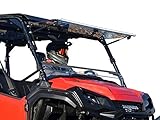
SuperATV Flip Windshield Honda Pioneer 1000
- 1/4 inch polycarbonate
- Full vented and flip-up positions
- XR Optic hard coating both sides

SuperATV Flip Windshield Maverick X3
- Three-position flip mechanism
- Dual-sided XR hard coating
- Contour fit to cage and hood

A and UTV PRO Full Windshield Teryx KRX
- 3/16 inch optical polycarbonate
- Two adjustable vents
- Clamp and roof-strap mount
The 8 Best UTV Windshields for Dusty Trails at a Glance (October 2026)
| Product | Specifications | Action |
|---|---|---|
| SuperATV Flip Windshield for Honda Pioneer 1000 |
|
Check Latest Price |
| SuperATV Flip Windshield for Can-Am Maverick X3 |
|
Check Latest Price |
| A and UTV PRO Full Windshield for Teryx KRX 1000 |
|
Check Latest Price |
 Full Windshield for Polaris Ranger Midsize 570 and 500 Full Windshield for Polaris Ranger Midsize 570 and 500 |
|
Check Latest Price |
 KEMIMOTO Front Windshield for Ranger XP 1000 and XP 900 KEMIMOTO Front Windshield for Ranger XP 1000 and XP 900 |
|
Check Latest Price |
 StarknightMT Full Windshield for RZR XP 1000 and 900 StarknightMT Full Windshield for RZR XP 1000 and 900 |
|
Check Latest Price |
 StarknightMT Full Windshield for Ranger 800 and 570 StarknightMT Full Windshield for Ranger 800 and 570 |
|
Check Latest Price |
 StarknightMT Full Windshield for Pioneer 700 StarknightMT Full Windshield for Pioneer 700 |
|
Check Latest Price |
Why a Full Windshield Can Make Dust Worse Without a Rear Panel
Yes, a full windshield can make the dust problem worse, and this is the single most misunderstood point in the whole category. A full front shield moves the air you were relying on for cabin ventilation, and the fast-moving air that was sweeping dust out through the rear openings instead recirculates inside the cab, curling fine particles forward and back onto the riders.
Riders on the forums describe it plainly. One RZR owner put it this way: the front windshield creates a vacuum behind it that sucks the dust in, and anything you can do to move air inside the cab will break it up. Another rider in the same community noted that any windshield you install will kill your airflow, swirl dirt from the rear of the machine forward, and bring engine heat with it.
The fix is mechanical rather than clever. A rear panel eliminates the low-pressure zone behind the front shield by sealing the back of the cab, so dust in the airstream no longer has a recirculation path. One r/UTV regular put the recommendation plainly: a solid rear windshield is necessary for dust abatement if you are running a front windshield.
1. SuperATV Flip Windshield for Honda Pioneer 1000 and 1000-5 – Best Overall for Dust Control
SuperATV Flip Windshield for Honda Pioneer 1000 / 1000-5
1/4 inch polycarbonate
XR Optic hard coat both sides
Full vented and flip-up positions
Fits 2016+ Pioneer 1000
Pros
- Hard coat holds up against branch and brush contact
- Three airflow positions operated from the seat
- Pre-assembled with all hardware
- Highest review volume in the group
Cons
- Not compatible with the OEM roof
- Heaviest unit here at 28 pounds
- Roof and soft top fit varies by build
This is the shield we would put on a dusty trail before anything else, and the reason is not the badge, it is the control. A gas strut and an easy-access latch let you move between fully closed, cracked for airflow, and flipped all the way up, all from the driver’s seat. On a dry ride you run it closed and let the front shield do the work, then crack it the moment the engine heat builds.
The panel is quarter-inch polycarbonate, described by the manufacturer as 25 times stronger than acrylic, with the XR Optic hard coating applied to both faces. That double-sided coating is the part that matters for dust, because most trail scratching happens on the outside where brush drags across the surface. Coating both sides means an inside scuff from a glove or a clamp never turns into a haze across your forward view.
Riders on the Pioneer 1000 platform report that the flip positions are the difference between a usable cab and an oven in July. The vented position gives you airflow without dumping dust straight into the cab, and the full flip-up position is there for the slow technical climbs where you would rather have open air than a heat chamber. That flexibility is what separates this from a fixed shield.
At 28 pounds it is the heaviest unit in this group, and that weight is real. It also will not work with the factory roof in the range listed, so check your build before you commit. Protective film covers both faces and has to be peeled off before you ride, which is the one step people skip and then mistake for a hazing defect.
What to check before you buy it
Confirm the year range covers your Pioneer, and check whether you run the OEM roof. The flip mechanism and the roof bracket are not interchangeable, and that mismatch is the most common ownership regret in this category.
Then confirm the latch hardware is in the box. The unit arrives pre-assembled, so the install is closer to bolting on than building, which matters on a machine you are trying to get out to the trail.
Where it falls short
Weight is the honest drawback. Every time you flip the panel up you are lifting nearly 30 pounds over your head at a stop, and on long day rides that adds up in a way that a 9-pound shield does not.
There is also a coating caveat worth repeating from the forums. On Maverick forums, owners of the SuperATV flip-up hard coat describe it as very hit or miss, and the same coating carries over to this Pioneer version. Wash mud and grit off gently before you wipe anything, and your hard coat will still be clear after a year of brush.
2. SuperATV Flip Windshield for Can-Am Maverick X3 – Best Multi-Position Shield
SuperATV Flip Windshield for Can Am Maverick X3 | 2017+
1/4 inch clear polycarbonate
XR hard coating inside and out
Three-stage flip mechanism
Shatter resistant
Pros
- Dust and heat both manageable from the seat
- Coating holds up better in brush and sand than cheaper shields
- Cleans easily after muddy rides
- Contour fits cage and hood
Cons
- Will not work with OEM or aftermarket intrusion bars
- Install can take 3 to 4 hours
- Top bracket holes hard to reach on roof-equipped X3 MAX builds
The Maverick X3 is the most popular platform in this group and the most modified, which means fitment is where most of the risk lives. This shield is built for the 2017 and newer X3 and X3 MAX families across the turbo, DS, X, RS and RC variants, and it contours to both the cage and the hood so the base sits where the factory seal would.
From a dust perspective, the three-position mechanism is the story. Full closed for the dusty section, half for the transition, and a cracked vent when the cab gets hot. Riders consistently credit the flip function with making dust and heat manageable in the same ride, which is exactly the balance a trail rider needs when the two problems arrive together.
The XR Optic hard coating goes inside and out, and the manufacturer describes the panel as shatter resistant, 250 times stronger than glass and 25 times stronger than acrylic. That two-sided coating is the one that shows up in owner reviews as holding up better in brush and sand than cheaper aftermarket shields do.
Installation is the hard part. Owners report three to four hours for this fit, frequently with bracket modification or a second pair of hands, and the top mounting holes are awkward to reach on X3 MAX builds that already carry a roof. If your X3 has an intrusion bar, this shield will not fit, full stop.
Fitment is the whole game here
Before anything else, check for intrusion bars and check whether you have a roof. Both change the answer, and neither is a small detail. Many X3 owners add a front intrusion bar for rock crawling protection, and those riders need a different mounting solution entirely.
Paper instructions are not in the box, the manufacturer points to a QR code instead, so have your phone ready. That is a small friction point but it adds up on a build where you are also reaching around a roof bracket.
Where it falls short
The 4.3 rating is the widest spread in this group, and the low reviews trace back to install difficulty and coating inconsistency rather than the shield failing at its job. Some owners report scratches appearing sooner than they expected on the hard coat.
That coating inconsistency is the most repeated note from Maverick owners, and it is worth factoring in if you ride heavy brush. Expect to clean more carefully than you would with glass, and the shield will hold up better for it.
3. A and UTV PRO Full Windshield for Kawasaki Teryx KRX 1000 – Best Value
A & UTV PRO Front Full Windshield for 2020-2025 Kawasaki Teryx KRX 1000/ KRX 4 1000, Clear Vented Full Windshield, Hard Coated Window for 2024 2025 Kawasaki Teryx/ KRX 1000 Accessories
3/16 inch optical polycarbonate
Scratch-resistant hard coating
Two adjustable vents
Clamp and roof-strap mount
Pros
- Full dust and debris coverage across the opening
- Good light transmission for dusty conditions
- Clamp system needs no complex tools
- Looks near-OEM once fitted
Cons
- Gap remains at either the top rail or the bottom
- Vent levers need heavy force and can pop open
- Bottom rubber trim can wear through at the hood
The KRX and KRX 4 1000 for 2020 through 2025 are covered by this full vented shield, and the deciding factor for most buyers is straightforward: it does the job of a full factory-style panel at a fraction of the cost. The mounting is a clamp system with a roof strap, so there is no drilling and no template to trace.
Optical-grade polycarbonate at three-sixteenths of an inch is thinner than the quarter-inch panels from SuperATV, but the stated light transmission is higher than most competing shields, and that is the number that matters when you are looking through a dusty film at dusk. Two adjustable vents give you some airflow control without a flip mechanism to operate at speed.
The dust verdict is genuinely good for the money. Full frontal coverage blocks the wind, rain and off-road debris that ride straight into the cab, and the hard coating takes branch contact without immediate hazing. It is the pick if you ride the Teryx on dusty ranch roads and want sealed coverage without a premium badge.
There is a fit caveat that owners raise often. A gap tends to remain at either the top rail or the bottom depending on how the panel is set, and that gap is exactly where dust finds its way. Check the seal with the engine running before you ride far from the trailhead.
Why the vents matter less than you think
The two adjustable vents are an airflow feature, not a dust filter. They move hot air out of the cab, which makes the shield bearable in summer, but they also create a path that dust can use. Riders who care most about dust usually run them closed.
The practical problem is the levers. They need noticeably heavy force to move and can pop open on their own at speed, which means you should set them before you roll rather than adjusting them on the trail.
Where it falls short
The top and bottom seal gap is the honest weakness, and on a dusty run that gap is where your protection leaks. Some owners also note that cheaper versions flex or rattle slightly at speed, and the instructions are thin enough that alignment takes patience.
One more thing to know: this is a parent listing covering several platforms, so the reviews you read mix in Ryker, Ranger, RZR and Viking experiences. Judge the KRX-specific fit by the fitment list, not by the aggregate review count.
4. Full Windshield for Polaris Ranger Midsize 570 and 500 – Budget Fit-First Pick
HJSIUTV Front Full Windshield Compatible for Polaris Ranger Midsize 570 500
1/4 inch PMMA acrylic
Four clamps with rubber pads
Blocks sticks and debris
Works with hard or soft tops
Pros
- Accurate fit on 2015 to 2021 Midsize 570 models
- Four clamp mounts hold once the seal is pushed on
- Nearly invisible optically once installed
- Holds up with both hard and soft tops
Cons
- Acrylic scratches and clouds where polycarbonate would not
- Shortest warranty in the group at 60 days
- 2023 Ranger SP 570 Crew needs a manual trim cut
- Brackets can crack in transport
The Ranger Midsize 570 and 570 Crew, along with the 2017 to 2021 Midsize 500 and ETX, are covered here, and the fit is described as accurate across that range. Four clamps with rubber pads hold the panel to the roll cage, and the rubber pads do real work by damping vibration rather than letting the panel buzz against the tubing.
It works with a hard or soft top, which removes one of the compatibility questions that trips people up on bigger platforms. Owners report a stable, rattle-free ride once the rubber seal is pushed onto the base, and optically it is clear enough to be nearly invisible once installed.
The material is where this one differs from everything else in the roundup. It is quarter-inch PMMA acrylic rather than polycarbonate, and while the manufacturer describes it as stronger than glass and resistant to chemical and ultraviolet attack, acrylic does not carry a hard coat in the same way polycarbonate does. That changes the dust story over a season of riding.
Static cling is the recurring theme in the reviews. Dust sticks to acrylic harder and more persistently than it sticks to coated polycarbonate, and one review reports the panel crystallising and clouding in under a year. If you ride dusty trails, that is the trade you are making for the lower entry point.
Get the fitment year right first
Check the model year carefully, because there is one known exception. 2023 Ranger SP 570 Crew builds need roughly an inch trimmed off the lower lip to fit, and that is a modification rather than a plug-and-play install.
Confirm whether your midsize has the round tube layout this panel expects. If it does not, you are looking at the wrong shield for the machine and no amount of clamping will fix it.
Where it falls short
Acrylic is the compromise, and it is a real one. It scratches, it hazes, and it has the highest share of one-star reviews in this group at nine percent, which points squarely at long-term clarity rather than fit or function.
The 60-day manufacturer warranty is the shortest here by a wide margin. On a part you expect to keep for years, that is worth weighing against the harder-coated polycarbonate options before you decide.
5. KEMIMOTO Front Windshield for Ranger XP 1000 and XP 900 – Widest Platform Coverage
KEMIMOTO Front Windshield Compatible with Ranger XP 1000/1000/900
5mm hard-coated polycarbonate
93 percent light transmission
Pre-drilled clamp mount
Works across XP 900 through Ranger 1000
Pros
- Broadest model-year coverage in the group
- 5mm panel is thicker and more impact resistant than typical shields
- Clamp design avoids drilling
- Rounded edges leave accessory installs unblocked
Cons
- Not compatible with builds fitted with full doors
- Self-adhesive straps can loosen on rough trails
- Limited published fitting notes for modified builds
Fewer riders get this wrong. The fitment list runs from the 2013 to 2019 Ranger XP 900 and its Crew variants through the 2017 and newer XP 1000 and Crew XP 1000, and on to the 2020 and newer Ranger 1000 and Crew 1000. For a platform that has been produced in so many configurations, that range solves most of the guesswork.
The panel is 5mm hard-coated polycarbonate, which is thicker than the standard UTV shield and more impact resistant in brush. Stated light transmission is 93 percent, high enough to keep forward vision usable through a dust film, and the coating is the hard-coated PC type rather than bare plastic.
Mounting is a solid clamp fastened to pre-drilled holes with widened self-adhesive straps, and rubber pads on the clamp stop the panel rubbing against the body. Rounded edges are a quietly useful detail here, because they mean a roof, a light bar or a wiper kit can still go on afterwards without the panel being the limiting factor.
Full, flip and vented variants exist in the same line, so if you decide you want airflow control later you do not have to start over. That flexibility is part of why this is the safe Ranger buy.
Why fitment coverage is the real feature
If you own a Ranger and are even slightly unsure of your model year, this is the least risky purchase in the roundup. The chance of ordering the wrong shield is small, and the chance of it being the wrong shape for a Crew or a round tube cage is smaller still.
Broader coverage also means resale is easier. A shield that fits a decade of Ranger variants is easier to pass on than one tied to a single model year.
Where it falls short
The one hard blocker is full door kits. If your build has a full door package fitted, this windshield will not work, and that is a fairly common setup on work-spec Rangers.
The self-adhesive straps are the second concern. On rough trails they can loosen over time, and a loose strap is exactly the kind of small gap that turns into a dust leak two hours into a ride. Check them after your first few outings.
6. StarknightMT Full Windshield for RZR XP 1000 and RZR 900 – Lowest-Cost Dust Blocker
StarknightMT 14-18 RZR 900, XP 1000 UTV Full Windshield Scratch Resistant
Hard-coated polycarbonate
95 percent light transmission
Pre-installed waterproof rubber seal
Four no-drill clamps
Pros
- Pre-installed seal and four clamps make it a one-person install
- No rattle reported on rough terrain
- 95 percent light transmission with UV blocking
- Useful warmth gain on cold-weather rides
Cons
- Vented variant vent flap will not stay closed
- Seal is not perfectly tight on every model
- Static charge makes dust cling to the panel
- Flip-up latch needs adjustment after fitting
For RZR riders who want sealed dust protection without a premium badge, this is the efficient pick. Fitment covers the 2014 to 2018 RZR XP 1000 and XP 4 1000 including Turbo variants, the 2015 to 2019 RZR 900 family with its S 900 and S 1000 siblings, and the 2020 Trail S models.
What makes the install easy is the pre-installed waterproof rubber seal. You are bolting four clamps onto a panel that is already sealed, rather than pressing a gasket onto a bare edge first, and most owners describe it as a one-person job with no drilling and no rattling once the clamps are torqued.
Light transmission is stated at up to 95 percent with no distortion or hazing, and the UV blocking matters more than most riders expect on long desert days. Riders also mention the warmth gain, which is a genuine benefit on a cold morning ride where the wind chill is the problem instead of the dust.
The dust performance is genuinely effective for a front shield. Reviewers consistently call it good value with effective dust and wind blocking, and that is the core job being done well.
Pick the right variant for your dust
Full, flip-up and vented variants are all offered, and the choice matters more than it looks. If dust is your primary complaint, take the full or flip-up version. The vented variant is an airflow product, and its flap is the most common complaint in the reviews.
Owners report that the vent flap will not stay closed and pops open in motion. A vent that will not shut is a permanent hole in your dust seal, so treat that variant as an airflow purchase rather than a dust purchase.
Where it falls short
The seal is not perfectly tight on every model, and a seal that varies by unit is a real quality control issue. Check yours with the engine running before you leave the driveway.
Static cling is the other one. Dust sticks to this panel through static charge, which is the single most common complaint in dusty conditions across the whole category, polycarbonate or not. Waxing the panel matters more here than on a glass unit.
7. StarknightMT Full Windshield for Ranger 800 and Full-Size 570 – Best Optical Clarity
StarknightMT UTV Windshield for Ranger 800 2010-2016, Fullsize 570 2016-25
Dual-sided scratch-resistant coating
95 percent UV blocking
Thick bottom waterproof rubber seal
Six quick-release clamps
Pros
- Clearest optics of the affordable full-size shields
- Blocks 95 percent of UV light
- No rattle once all six clamps are set
- Install usually takes under 20 minutes
Cons
- Not compatible with midsize Ranger platforms
- Not compatible with cages lacking the round tube layout
- Large and heavy package can arrive with damage or missing pieces
Clarity is the headline here, and it is measurable. Owners report that the view improves visibly over scratched OEM plastic, which is the whole point on a dusty trail where you are squinting through a film. The panel pairs 95 percent light transmission with 95 percent UV blocking, and the dual-sided coating handles scratches from both faces.
The mounting hardware is the most substantial in this roundup: six quick-release clamps plus a top bracket, backed by a thick bottom waterproof rubber seal that also buffers impacts. That base seal is the dust line that matters most, because the bottom edge is where the air pressure is highest as you punch through a wash.
Fitment runs from the 2010 to 2014 Ranger XP 800 and its Crew variant and the 800 6×6, through the 2016 to 2025 full-size Ranger 570 with a round tube cage, the 2017 to 2022 570-6, and the 2023 to 2025 Crew 570. That is a long run of full-size machines covered by one shield.
Installation is quick for most owners, sometimes solo, and the quick-release clamps make removal simple when you want to clean. Owners also like that the surface wipes clean with a soft wet microfiber, which keeps maintenance to one product.
Round tube cage is the deciding detail
This shield is not for midsize Rangers, and it needs the round tube cage layout. Verify both before you order, because the visual difference between full-size and midsize is small and the mounting points are not.
If you own a full-size 570 with a round tube cage, the fit is described as accurate across the 2016 to 2025 range, which covers the current generation of that platform.
Where it falls short
The main practical issue is packaging. This is a large, heavy item, and owners report the box arriving damaged with pieces missing. Check the contents against the parts list before you start, because six clamps and a top bracket need all six clamps.
Two people make installation easier even though one person can do it, and that is worth arranging if you are fitting it in a driveway rather than a garage.
8. StarknightMT Full Windshield for Pioneer 700 and 700-4 – Longest Model-Year Run
StarknightMT UTV Windshield for Pioneer 700 & 700-4 2014-2026 Clear PC
Dual-coated polycarbonate
95 percent UV protection
Waterproof rubber seal
Four no-drill clamps
Pros
- Fits Pioneer 700 and 700-4 from 2014 through 2026
- Dual coating built for thick brush
- No-drill clamp mounting
- Lowest complaint rate of the group
Cons
- Vent lever is stiff and needs real force
- Full and vented variants differ in dust performance
- Limited fitting notes for modified cages
Thirteen model years is the longest continuous run in this roundup, covering the Pioneer 700 and Pioneer 700-4 from 2014 all the way through 2026. For owners who bought early and kept the machine, or who bought late and want the same shield, that span removes the usual fitment gamble.
The material is dual-coated polycarbonate rated for scratch resistance, with up to 95 percent UV protection to slow yellowing. Dual coating on a trail machine matters more than it does on a road vehicle, because Pioneer 700s spend a lot of their life in the same narrow brushy trails that scratch a shield.
The box contains four no-drill clamps, a waterproof rubber seal and the panel, which is a complete install with nothing else to buy. Owners report rattle-free fitments right across the model range, and the one-star share here is the lowest of the eight we looked at.
Which variant suits dusty riding
Both a full and a vented variant are offered, and the choice is the same one as on every other platform. For dust specifically, the full shield is the right pick because it closes the airflow path that recirculates grit through the cab.
The vent lever is stiff and needs noticeable force to operate, which is a minor annoyance but a useful one to know before you try to adjust it at a stop with gloves on.
Where it falls short
There is very little wrong with it, and the honest limitation is thinness of the published detail. Fitting notes for heavily modified cages are limited, so if you have added a custom cage or a non-standard bumper, verify the mount points yourself.
Like the rest of the polycarbonate options here, dust will cling to the surface through static on a dry ride. That is a maintenance habit, not a product defect, and the fix is straightforward.
Full vs Half vs Vented vs Folding: Which Style Blocks the Most Dust
A full front shield blocks the most dust of any front style, and the ranking is simple. Full fixed, then folding or flip-up in the closed position, then vented, then half. The differences matter, but not as much as the seal quality and whether you close the rear of the cab.
Do you need a rear panel?
Yes, a rear panel is the single most effective upgrade you can make if you run a full front windshield, and no front shield fully compensates for a missing rear. A rear windshield eliminates the vacuum effect that a full front shield creates behind it, which is the mechanism pulling dust and engine heat forward into the cab.
Riders debate this constantly, and the consensus on the forums lands on a solid rear panel rather than a mesh one if dust is the goal. A perforated or mesh rear lets the airstream through and keeps some of the recirculation problem alive.
What vents do and do not do
Vents move air, and air movement is what you need for heat and for preventing pressure buildup. They do not filter dust, and treating a vent as a dust feature is the most common marketing misunderstanding in this category. r/UTV consensus on this is blunt: vents really do not accomplish much for dust.
Run your vents for heat management and keep them closed when the trail is driest. The moment they are open on a dusty section, they are a path.
Mesh bug screens as a middle ground
A mesh bug-out screen sits between a half shield and a full shield. It stops large insects and the worst of the branch debris while keeping airflow high, which makes it a reasonable choice for cooler forest trails where dust is light. It is a poor choice for the dry open terrain this roundup is built around, because fine grit passes straight through the mesh.
Polycarbonate vs Acrylic vs Glass for Dusty Trails
Polycarbonate is the right material for dusty trail riding, and the reason is not only impact resistance. Glass sheds dust better because it does not generate the static charge that makes grit cling to plastic, but glass shatters in a rollover and adds weight to a machine that already handles badly in one.
Polycarbonate with a hard coat gives you the impact resistance without the static problem being unmanageable, and the coating is what buys you the durability. Acrylic, at one entry in this roundup, is the material to avoid if you ride brush, because it scratches and clouds faster than coated polycarbonate.
Of the eight shields here, seven are polycarbonate and one is acrylic. The SuperATV panels use XR Optic hard coating, which is the most widely reported coating on the market, and the competition in this list describes scratch-resistant or dual-coated polycarbonate with UV blocking.
Fitment by Platform for 2026 Model Years
UTV windshields are model-specific, not universal, and this is the most common reason a purchase goes wrong. Every shield in this roundup lists an explicit fitment range, and the ranges differ by several years between brands for the same platform.
For the Honda Pioneer 1000 and 1000-5, the fitment here starts at 2016. For the Can-Am Maverick X3 and X3 MAX, the range covers 2017 onward across the turbo, DS, X, RS and RC variants. The Kawasaki Teryx KRX 1000 and KRX 4 1000 are covered for 2020 through 2025.
On the Polaris side, the Ranger Midsize 570 and 500 panels cover 2015 through 2021, the KEMIMOTO panel spans Ranger XP 900 from 2013 through the current Ranger 1000, and the Ranger 800 and full-size 570 panel covers 2010 through 2025 with a round tube cage requirement. The RZR panel covers 2014 to 2019 RZR 900 and S variants plus the 2014 to 2018 XP 1000 family, and the Pioneer 700 panel runs 2014 to 2026.
Check for accessory conflicts as carefully as you check years. Intrusion bars, full door kits, non-standard cages and factory roofs each rule specific shields out regardless of the year.
Buying Guide: 7 Criteria Before You Buy
1. Exact model and year fitment. Check the listed range against your VIN year, then check for excluded accessories. This eliminates more bad purchases than any other step.
2. Material. Hard-coated polycarbonate for trail work. Skip acrylic if you ride brush or care about long-term clarity, and treat glass as a comfort option rather than a dust solution.
3. Base seal quality. The bottom edge carries the highest pressure as you punch through loose material. Look for a thick rubber or waterproof seal that is pre-installed where possible.
4. Airflow control. A flip-up or multi-position mechanism lets you run closed on the dusty section and cracked for heat. Vents help with heat and do nothing for dust.
5. Coating on both faces. Inside scuffs turn into permanent haze across your forward view. Two-sided coating is worth more than a thicker unbodied panel.
6. Light transmission. Figures range from 93 to 95 percent in this group. Higher transmission means more usable visibility once dust starts to build.
7. Warranty and hardware. Warranties here run from 60 days to one year, and that spread reflects how the brands feel about long-term clarity. Stainless or reinforced clamps resist the vibration that loosens hardware on rough trails.
Install and Maintain It So It Actually Blocks Dust
The install is straightforward on all eight, but two habits separate a good dust seal from a disappointing one. First, run the engine and run your hand along every edge before you leave. Any air movement you can feel is a dust leak, and it is far easier to fix at the trailhead than an hour into the trail.
Second, do not wipe dust dry. Rinse grit off with clean water first, then dry with a soft microfiber cloth. Dry-wiping is what scratches a hard coat, and on the forums owners who wash grit away before cleaning report shields that are still clear and unfogged after months of use.
On static cling, the community fix is wax rather than spray. Let the wax dry and buff it off with a new microfiber towel, and dust stops adhering as readily. Riders report this works better than over-the-counter anti-static spray.
A wiper and washer kit is worth considering for long days, since it clears accumulated film without you scrubbing the coating. Roof and door kits go further and seal the cab properly, but that is a larger project and a larger spend, and the front shield plus a rear panel gets most of the benefit for far less.
How We Scored Dust Performance
Every shield in this roundup was judged on four things rather than a feature count. Coverage is how much of the front opening the panel closes. Seal grade is the quality and continuity of the rubber around the frame, especially at the base. Venting is whether airflow can be controlled without losing the dust seal. Coating is the scratch resistance applied to the panel, and whether it covers one face or both.
Ratings and review counts are reproduced exactly as published, and negative feedback is reported where owners raised it. We do not score on price, because the question is which shield stops dust, not which one costs the least.
Frequently Asked Questions
Does rear window help with dust in a UTV?
Yes, and it is the most effective single upgrade for dust control. A full front windshield creates a low-pressure zone behind it that pulls dust and engine heat forward into the cab. A rear panel closes the back of the cab and removes that recirculation path, which is why riders running a front shield pair it with a solid rear panel rather than a mesh one.
Which is better for a UTV windshield, polycarbonate or glass?
Polycarbonate for trail riding, glass for maximum clarity. Polycarbonate is roughly 250 times stronger than glass and will not shatter in a rollover, but it builds static charge that makes dust cling. Glass sheds dust better and stays clearer, at the cost of weight and shatter risk. Most riders accept hard-coated polycarbonate as the better balance.
What is the best windshield for a side-by-side?
A full front windshield in hard-coated polycarbonate, paired with a solid rear panel. Full coverage blocks the most dust, a hard coat survives brush, and the rear panel removes the vacuum effect the front shield creates. A flip-up or folding style adds airflow control without giving up protection on dusty sections.
What is the best cleaner for an UTV windshield?
Rinse grit off with clean water first, then dry with a soft microfiber cloth. Dry-wiping is what scratches a hard coat. For coated polycarbonate, avoid alcohol, acetone and gasoline, and use a non-woven cloth or a dedicated polycarbonate cleaner. Waxing the panel and buffing it dry also reduces the static that makes dust stick.
Are UTV windshields universal or model-specific?
They are model-specific. Every windshield is built to a specific platform and model-year range, and the ranges differ by several years between brands for the same machine. Check the listed fitment range, then check for excluded accessories such as intrusion bars, full door kits, non-standard cages or a factory roof.
Will a full windshield make dust worse?
It can, on its own. A full front shield kills the airflow that was carrying dust out of the cab, and the air that recirculates inside curls grit forward onto the riders. Adding a rear panel fixes it by closing the back of the cab. Adding a roof and door kit fixes it more completely by sealing the whole enclosure.
The Verdict for Dusty Trails in 2026
After comparing all eight, the SuperATV Flip Windshield for the Honda Pioneer 1000 and 1000-5 takes the top spot for dusty trails. It combines quarter-inch polycarbonate, two-sided hard coating and three airflow positions you can operate from the seat, and it carries the largest review base in the group, which is the best evidence available that it holds up over a season of brush.
The Can-Am Maverick X3 version is the pick if you want the same mechanism on the platform with the most modifications, provided you have no intrusion bars. On value, the Kawasaki Teryx KRX full vented shield does the job for a fraction of the OEM cost, and the Ranger and RZR entries cover the widest spread of model years at sensible specifications.
Whichever shield you pick, pair it with a solid rear panel. That is the part that turns a windshield from a comfort item into an actual dust solution on a trail where the rider behind you is watching through your cloud.