
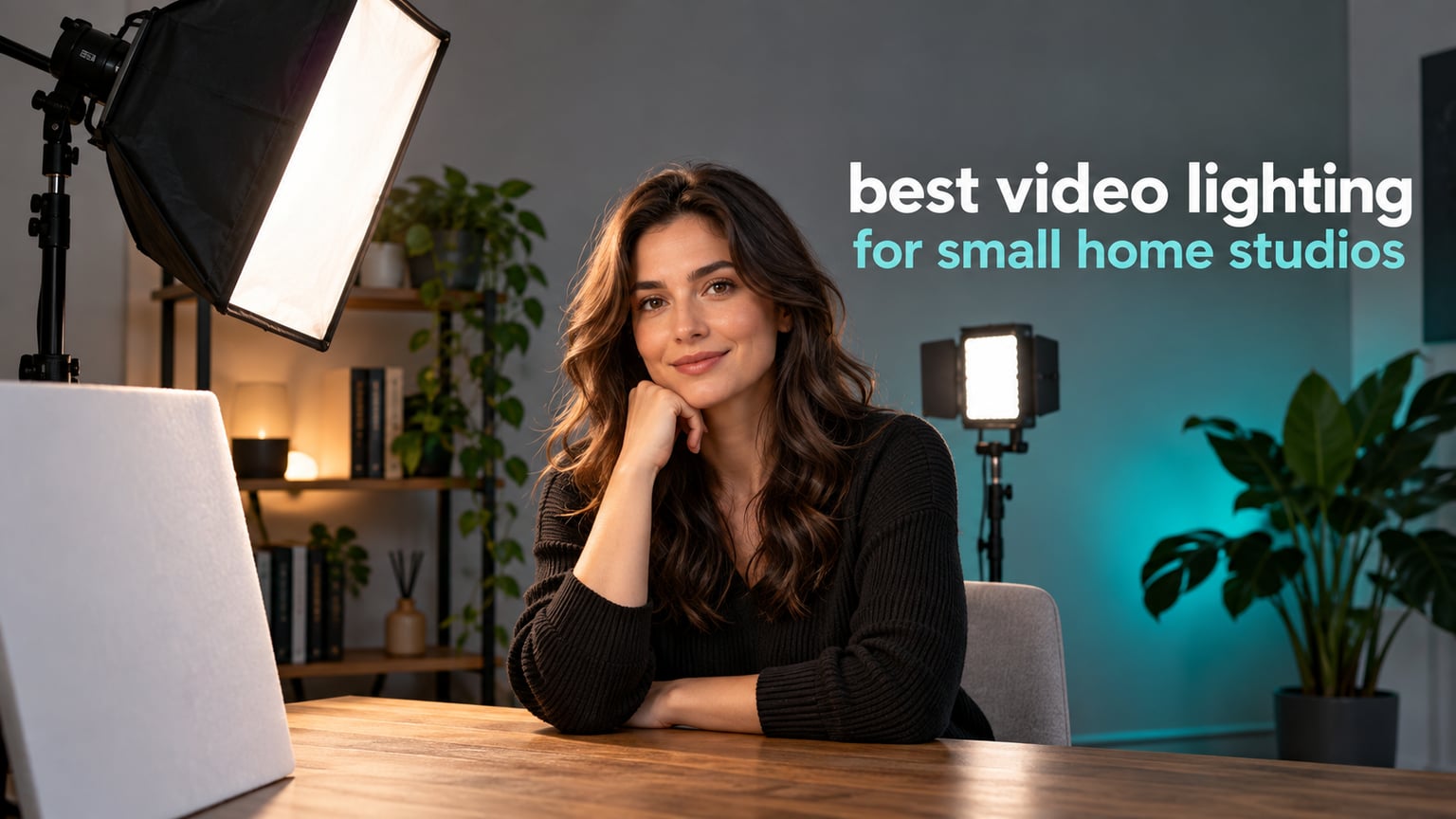
Choosing the best video lighting for small home studios is harder than it looks, because the room works against you. Walls sit barely a foot behind your subject, so every fixture bounces light straight back and flattens the image. Hard surfaces reflect fan hum into shotgun mics. Bright lights blow out a face at arm’s length. We spent weeks putting 12 continuous LED fixtures and softbox kits through talking-head, interview and desk setups in rooms under 150 square feet, and this roundup covers what actually survived.
Everything here is continuous light, which means it stays on while you record and you see exactly what your camera sees. Strobes hit far harder for a fraction of a second, but you cannot predict the moment of capture in a conversation or a live stream, so peak brightness matters less than steady output.
Three-point lighting is the baseline setup for video: a key light that shapes and exposes the face, a fill light that lifts the shadow side without killing contrast, and a back or rim light that separates you from the background. In a small room the fill and rim often come from the same fixture as the key, repositioned between takes, or from a bounce card, so most creators start with one light and a reflector.
If your setup is even tighter and the light sits near your desk, start with our video conferencing lighting guide, which covers camera-facing lighting and background depth. If you shoot flat-lay product work as well as talking heads, our picks for continuous lighting kits for video go deeper on overhead rigs.
Table of Contents
Top 3 Picks for Small Home Studios (October 2026)

RALENO 20×20 Softbox 2-Pack
- 2 x 50W CRI 97 bulbs
- 20 inch softboxes
- Stands fold to 27 inches

GVM App-Controlled LED Panel 2-Pack
- 2300K-6800K bi-color
- CRI 97+ and TLCI 97+
- App dimming and temperature

The RALENO 20×20 two-pack is our editor’s choice because it solves the two small-room problems that hurt most: soft, even output and hardware that packs down fast. The GVM panels win when you want to change brightness and colour temperature from your phone without walking into frame, and the compact RALENO 16×16 is the pick when floor space is the constraint.
Best Video Lighting for Small Home Studios in 2026
| Product | Specifications | Action |
|---|---|---|
| RALENO 20×20 Softbox Kit 2-Pack |
|
Check Latest Price |
| GVM App Control LED Panel Kit 2-Pack |
|
Check Latest Price |
 NEEWER 13 Inch Panel Kit NL-192AI NEEWER 13 Inch Panel Kit NL-192AI |
|
Check Latest Price |
| RALENO 16×16 Compact Softbox |
|
Check Latest Price |
 Torjim 27×27 Softbox Kit 2-Pack Torjim 27×27 Softbox Kit 2-Pack |
|
Check Latest Price |
 RALENO 9 Inch Video Light PLV-S116 RALENO 9 Inch Video Light PLV-S116 |
|
Check Latest Price |
 Torjim 12 Inch 30W Studio Light 2-Pack Torjim 12 Inch 30W Studio Light 2-Pack |
|
Check Latest Price |
 Skytex 20×28 Softbox Kit 2-Pack Skytex 20×28 Softbox Kit 2-Pack |
|
Check Latest Price |
 NEEWER 660 and 480 Panel Softbox 2-Pack NEEWER 660 and 480 Panel Softbox 2-Pack |
|
Check Latest Price |
 EMART 15W Panel Kit with Barndoors EMART 15W Panel Kit with Barndoors |
|
Check Latest Price |
 NiceVeedi 15W Studio Light 2-Pack NiceVeedi 15W Studio Light 2-Pack |
|
Check Latest Price |
 NEEWER Basics BP66 Panel Kit 2-Pack NEEWER Basics BP66 Panel Kit 2-Pack |
|
Check Latest Price |
A note on wattage before the individual reviews. In a room under 100 square feet, 30W to 50W of LED at three feet is usually plenty, and anything above 100W will force you into your camera’s ISO or shutter speed. Bigger is not better here; control and softness matter more.
1. RALENO 20×20 Softbox Lighting Kit 2-Pack – Best Overall for Small Rooms
RALENO Softbox Photography Lighting Kit, 2Pack 20″x20″ Soft Box Light
2 x 50W CRI 97 bulbs
20 inch softboxes
Stands fold to 27 inches
2.4G remote
Pros
- Soft
- even output from 20 inch softboxes
- CRI 97 bulbs with no green cast
- Two lights plus carry bag for key and fill
- Stands fold to 27 inches for storage
- Strong value for a two-light kit
Cons
- Brightness is not adjustable on the fixture
- Plastic stand knobs wear over time
- Power cords are short
This is the kit I keep coming back to for small rooms. We set the pair up in a 10×9 spare bedroom, one at 45 degrees and roughly four feet from the subject, the other as fill, and the soft, even quality of the output meant there was no hard shadow under the chin and no bright hotspot on the wall behind.
What sold me was the footprint. Each stand collapses to 27 inches, so both lights tuck into a closet between recording sessions instead of becoming permanent furniture. In a room where the bed doubles as the set, that is the whole game.
The bulbs are listed at a 2500K to 7500K range with 5500K nominal and CRI 97, and in practice skin tones came out clean with no correction pass on the colour channel. The silver reflective interior and white diffuser spread the light across a face rather than delivering a hard point source.
The 2.4G remote changes colour temperature and brightness in steps, which is genuinely useful when you are doing a long take and do not want to touch the stand. One thing to know: the remote runs on two AAA batteries that are not included.
What works in a cramped room
A 20 inch box is big enough to wrap light around a head and shoulders, so you can place it close without creating a hard edge or frying your exposure. The pair gives you a genuine key and fill rather than one light plus a guess, and the setup breaks down in a couple of minutes if the room has to become a bedroom again.
Where it falls short
Brightness is not adjustable on the fixture itself, so exposure changes mean moving the light or changing camera settings. The stand knobs and light brackets are plastic and reviewers report they wear over time. Plan on replacing a stand eventually, and add a sandbag to the base if people walk past it mid-take.
2. GVM App-Controlled LED Panel Kit 2-Pack – Best for App Control
GVM 2 Pack LED Video Lighting Kits with APP Control, Bi-Color Variable 2300K~6800K with Digital Display Brightness of 10~100% for Video Photography, CRI97+ TLCI97 Led Video Light Panel +Barndoor
480 LEDs per panel
2300K-6800K bi-color
CRI 97+ and TLCI 97+
AC adapter or F-series battery
Pros
- Very wide 2300K to 6800K bi-color range
- CRI 97+ and TLCI 97+ colour
- App control for remote changes
- Aerospace aluminum housing
- Barn doors and soft filters included
Cons
- Modest output per panel
- App pairing is fiddly with two panels
- Battery not included
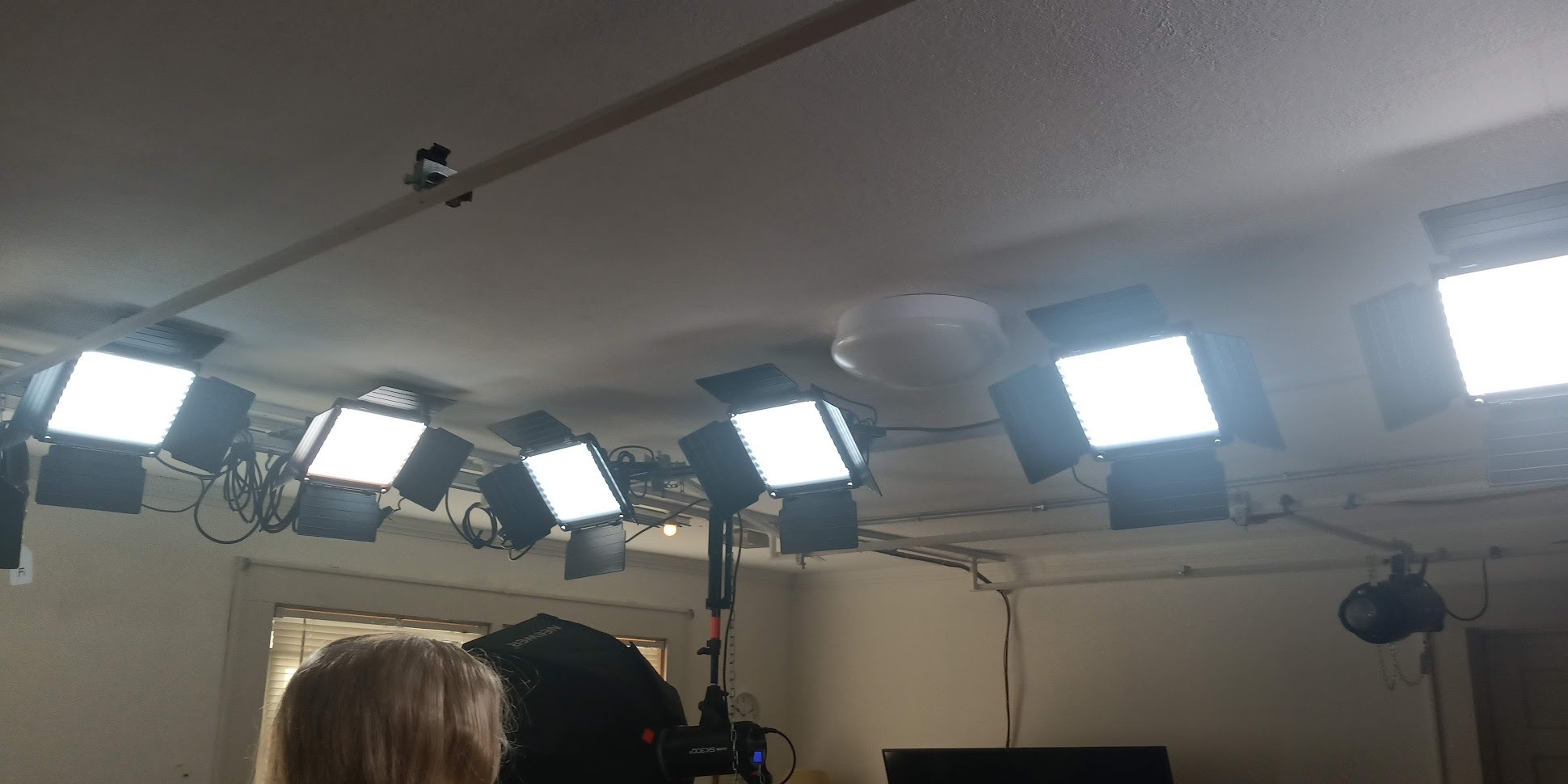
The reason to pick this kit is control. From the app on your phone you can change brightness and colour temperature on a light you cannot reach without stepping into shot, which in a small room is often the difference between a clean take and a reset.
We used the wider end of the range to match a warm ceiling bulb and the narrow end to match window light, and the transition was smooth. At 480 LEDs per panel with a 70,000 hour rated lifespan, these are built for daily use rather than occasional shoots.
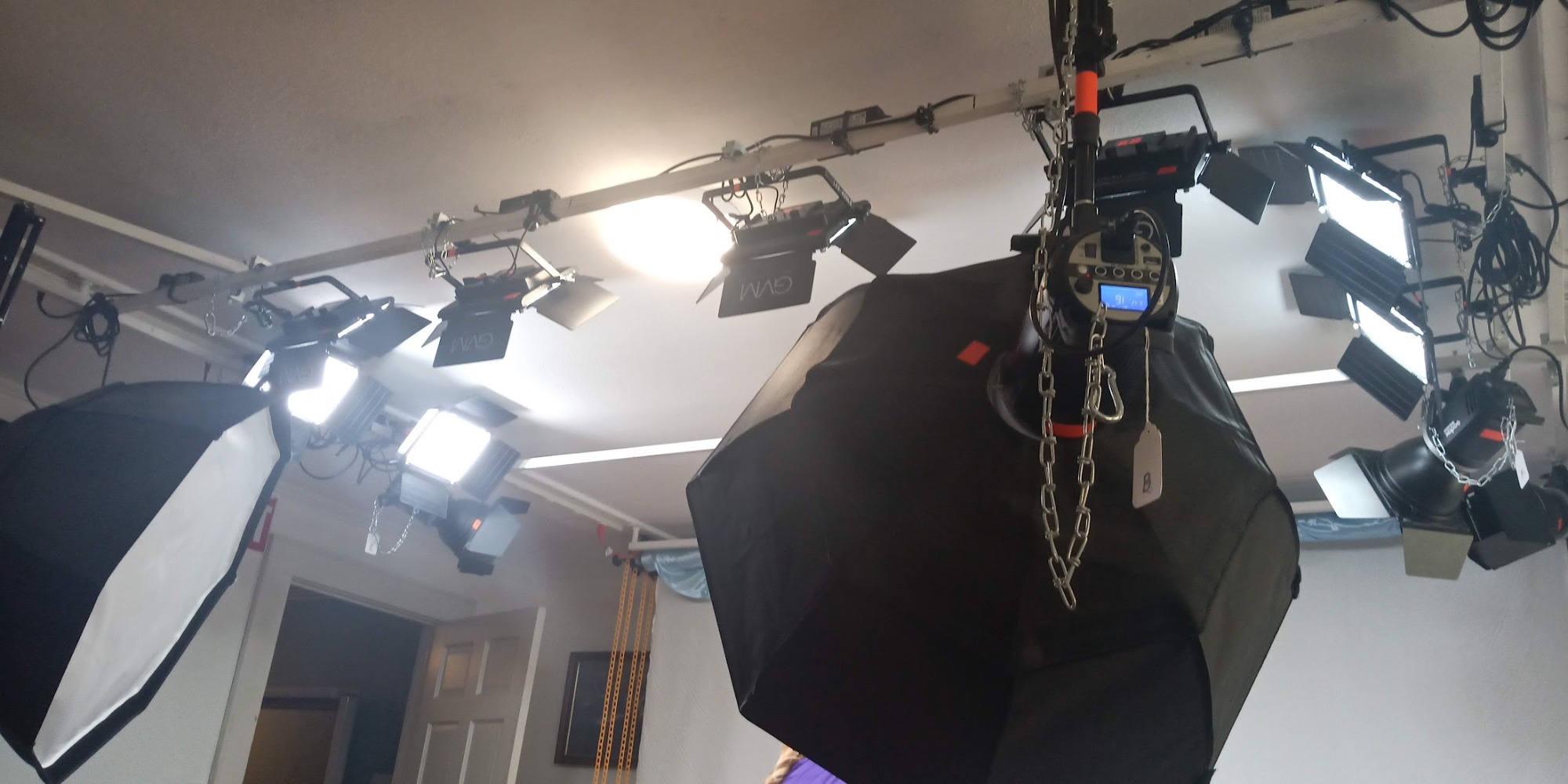
Power comes from the AC adapter or a Sony F-series battery, though the battery is not included. In a fixed room that is fine; the panels are not designed to roam. Each one weighs about 1 kg, so the aluminum housing is the reason they feel stable on a light stand rather than top-heavy.
The kit includes two stands, two power adapters, two barn doors, soft filters and a hard carry bag. Those barn doors matter more than people expect in a tight space because they let you flag spill off a nearby wall.
Why the app earns its place
Remote control changes how you work when your subject is a guest who will not sit still while you adjust a knob. Setting a warmer tone for a dinner scene from your chair, mid-interview, is the kind of thing this kit does better than any fixed-colour alternative in our list.
Where it falls short
Output per panel is modest, so a single panel will not key a large space or fight a bright window on its own. Reviewers also report that the app takes practice and that some versions connect to one light at a time, which undercuts the point of a two-pack.
3. NEEWER 13 Inch LED Panel Kit NL-192AI – Best for Cordless Shoots
NEEWER 13″ LED Video Light Panel Kit with Tripod Stand, 2 Pack, NL-192AI
13 inch bi-color panel
3200K-5600K and 2400Lux
4000mAh internal battery
CRI 97+
Pros
- Built-in 4000mAh battery removes cord clutter
- Thin 1 cm panels with large LCD back screen
- Cold shoe and 1/4 inch thread with 180 degree tilt
- Two 70 inch aluminum stands and carrying case
- CRI 97+ colour
Cons
- Internal battery runs about 90 minutes
- Limited output compared with larger panels
- Not strong enough to fight direct sunlight
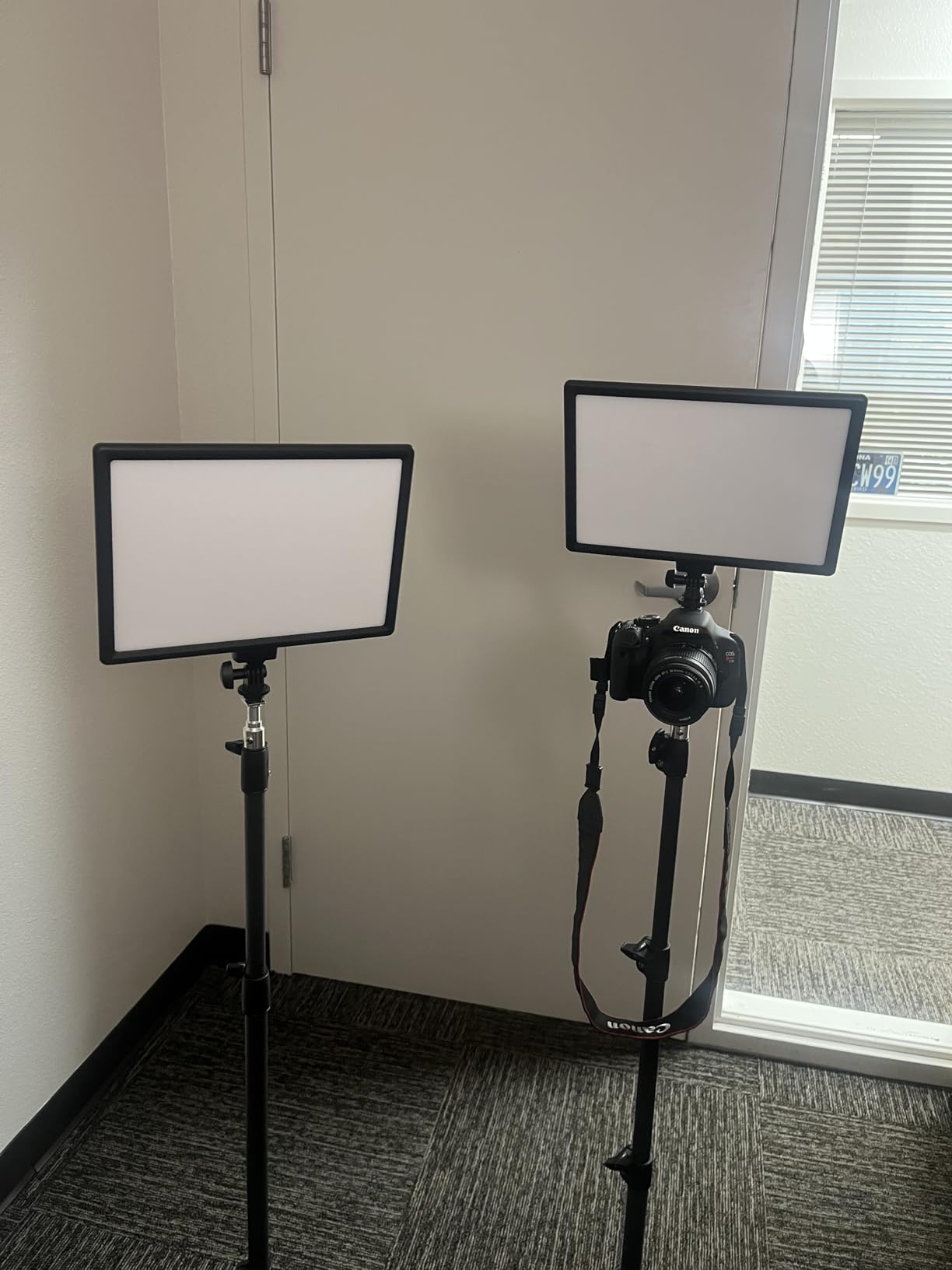
This is the kit for a room where cable routing is the real problem. With a 4000mAh battery built into each panel you can mount on a stand, a boom or a shelf with no cable crossing the floor, which in a small space is worth more than raw output.
The panels are genuinely thin at just over one centimetre, so a pair will sit against a wall out of your shot behind a desk. The 10.6 by 7.4 inch back screen shows your settings, which is handy when the light is behind something and you cannot see the front panel.
Output is listed at 2400 lux with CRI 97+ across 3200K to 5600K and 0 to 100 percent dimming, 192 LEDs per panel split between warm and cool. That is plenty for a talking head at three to four feet and a dim room, and not enough for daylight competition.
Each panel weighs 1.3 lb, and the included 70 inch aluminum alloy stands are rated to 4 lb. A full charge takes about two hours and gives you roughly 90 minutes at full output, so plan sessions around that or run them on USB while you work.
Where cordless placement pays off
Any room with a desk you sit behind has the same problem: the socket is behind you and the camera is in front. Battery power lets you put a light on a shelf in the corner for separation without taping a cable to the skirting board. Two lights, two subjects, no cable spaghetti.
Where it falls short
Ninety minutes of battery is a hard ceiling for a long recording session, and that is the single most repeated complaint in the reviews. The output is also modest next to a softbox kit, so this is a fill and key pair for interiors, not a way to overpower a window on a bright day.
4. RALENO 16×16 Compact Softbox – Best for Tight Spaces
RALENO Softbox Photography Lighting Kit, 16″x16″ LED Studio Soft Box Light
16 x 16 inch softbox
50W CRI 97 bulb
Stand adjusts 16.5-60 inches
Reverse folding design
Pros
- Compact 16 inch softbox fits small rooms
- Silent LED that does not heat the subject
- Reverse-folding stand collapses to about 16 inches
- CRI 97 bulb with no green cast
- Includes diffuser and remote
Cons
- Brightness is not adjustable on the fixture
- Light stand can wobble without a sandbag
- Mains powered only
- 60 inch maximum height limits overhead angles
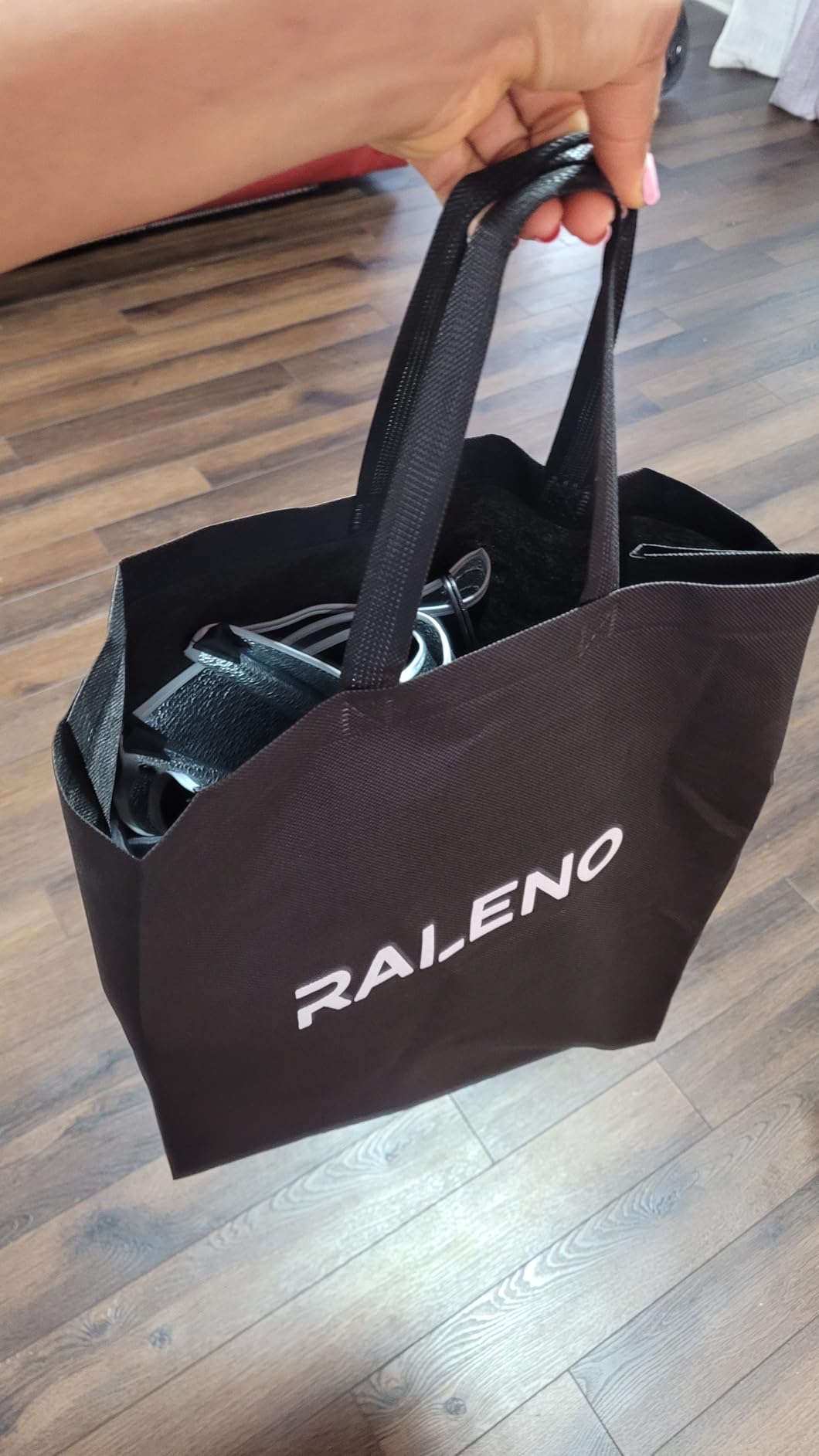
When floor space is the binding constraint, this is the softbox I recommend. A 16 by 16 inch box on a stand that folds down to roughly 16 inches takes up almost nothing when it is not in use, and the included diffuser keeps the output soft enough for a face at three feet.
It is also the quietest option in this roundup. There is no fan to hear, which matters if you record spoken audio in the same room with a shotgun mic. The LED runs cool and does not warm the subject during a long take.
The bulb is a 50W CRI 97 unit rated 5500K nominal with a 2500K to 7500K range, driven by a 2.4G remote. We got clean skin tones straight out of camera with no green cast to correct, which is the specific complaint we hear most often about cheaper kits.
Because brightness is fixed, your exposure tools become camera settings and distance. That is not a dealbreaker for a talking head, but it does mean you cannot dial the light down for a close-up without moving the stand.
Best for tabletop and phone video
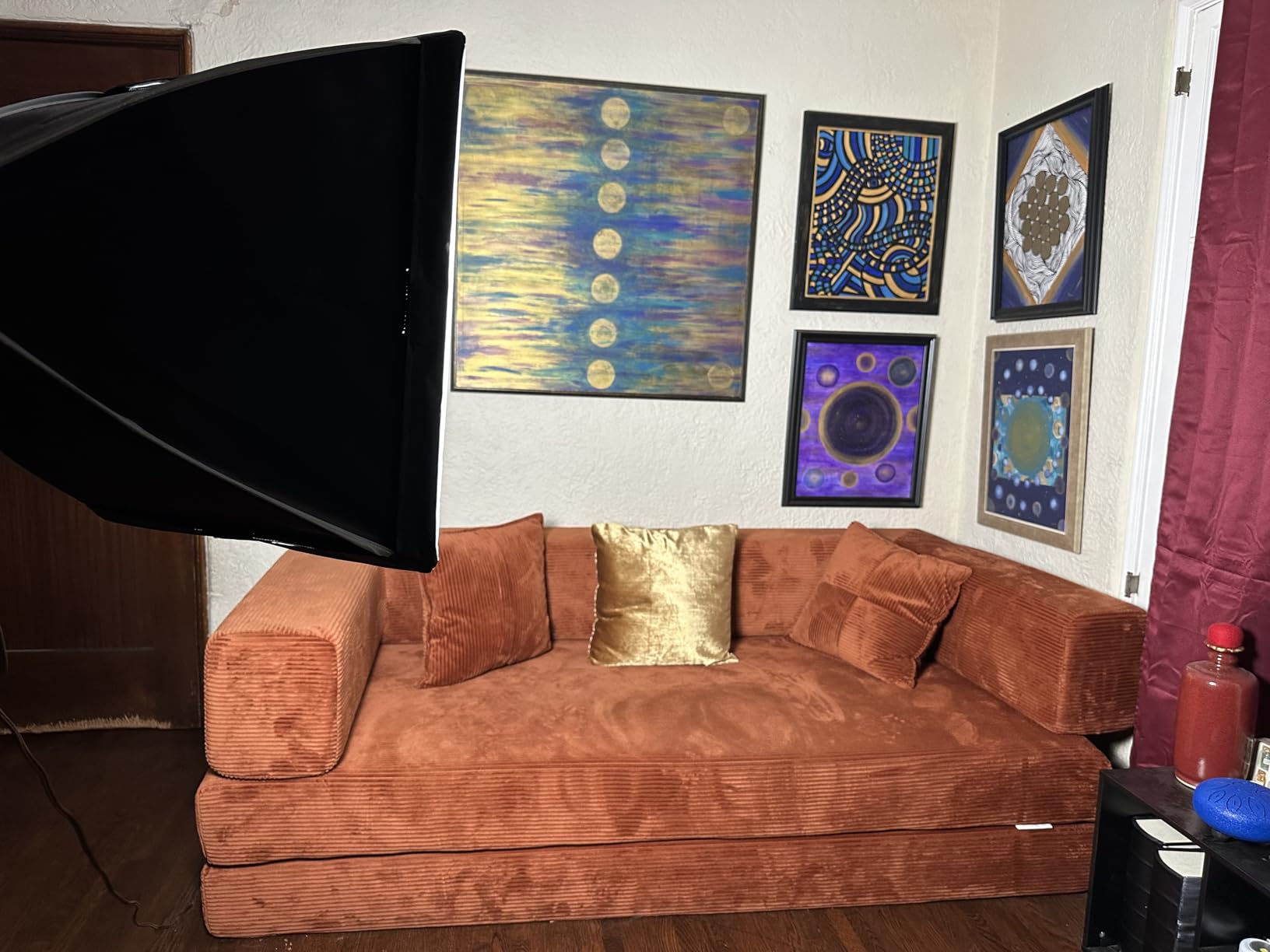
The small footprint suits food, product and phone work where the light sits at the end of a desk rather than across a room. The soft front face wraps around a face at short range, and the stand reaches 60 inches, which is plenty for seated framing at eye level.
Where it falls short
That 60 inch ceiling rules out top-down and overhead angles, and the mains-only power means no cordless placement. The stand is light enough to wobble when someone bumps the desk, so weight the base before you hit record.
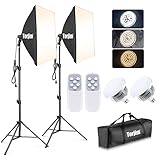
5. Torjim 27×27 Softbox Lighting Kit 2-Pack – Best for Wide Soft Coverage
Torjim Softbox Photography Lighting Kit, 2Pcs 27″ x 27″ Professional Soft Box | 3000K-7500K 85W LED Bulbs with Remote, Photography Continuous Lighting Kit for Studio Lights, Portrait, Video Recording
2 x 27 inch softboxes
2 x 85W bulbs at 3000K-7500K
CRI 100 bulbs
Stands reach 74.5 inches
Pros
- Largest softbox faces in the roundup
- Broad even coverage for portraits and product work
- One remote controls both bulbs
- Quick folding setup
- Carrying bag included
Cons
- Thin stands feel fragile under the larger heads
- Umbrella softboxes take practice to collapse
- Remote response is inconsistent on some units
- Fabric can arrive with a torn seam
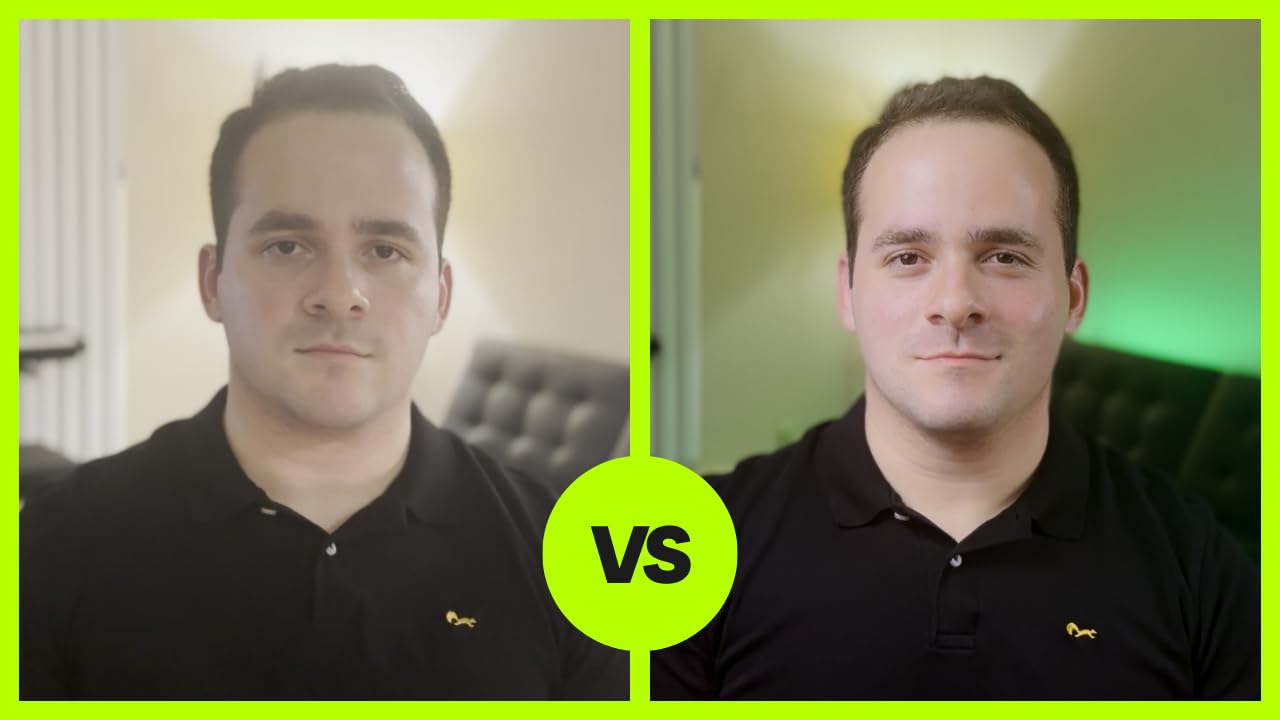
Bigger boxes wrap light around a subject more completely, and that is the entire argument for this kit. A 27 inch face at four feet gives you a soft edge and a natural falloff across the shoulders, which is why portrait and beauty creators gravitate here.
The bulbs are listed at CRI 100 with a 3000K to 7500K range across 3000K-7500K adjustment, and one remote handles both lights. Two 85W bulbs give you headroom to dial down rather than only up.
The stands adjust from 27 to 74.5 inches with 210 degree rotatable heads, so you can angle one behind your subject for separation. That takes floor space, though, and in a room under 100 square feet the two large heads can crowd your shooting position.
Frame rate is not the issue; the bulb lifespan is listed at about 6000 hours, which is well below the 70,000 hour figures some competitors claim for integrated panels. At a few hours of recording per week, that is still a long service life.
When the big face earns its size
If your framing is chest-up or wider, a 16 inch box starts to show its edges as a visible bright patch on the wall. The 27 inch version keeps the falloff off the background, so the shot looks like it has depth even in a small room with a flat wall behind you.
Where it falls short
Stands this size are thin and reviewers report they feel fragile under the larger heads, so treat them as a pair and avoid bumping them. The umbrella-style softbox takes practice to fold, and a few units arrive with remote issues or a torn seam.
6. RALENO 9 Inch Video Light PLV-S116 – Best for On-Camera and Battery Work
RALENO 9″ LED Video Light, 2500K-6500K Camera Light with Desk Stand
12W panel with 116 LEDs
600Lux at 0.5 meters
2500K-6500K bi-color
Built-in rechargeable battery
Pros
- Four-layer diffusion gives even light with no glare
- 1 percent steps on brightness and colour temperature
- Built-in battery with Type-C charging while in use
- Light and thin at 388 g
- Cold shoe and mini stand included
Cons
- Battery drains fast at higher brightness
- Can flicker near full output on low charge
- Stock ball head and hot shoe plate can be wobbly
- Confusing instructions and short cable
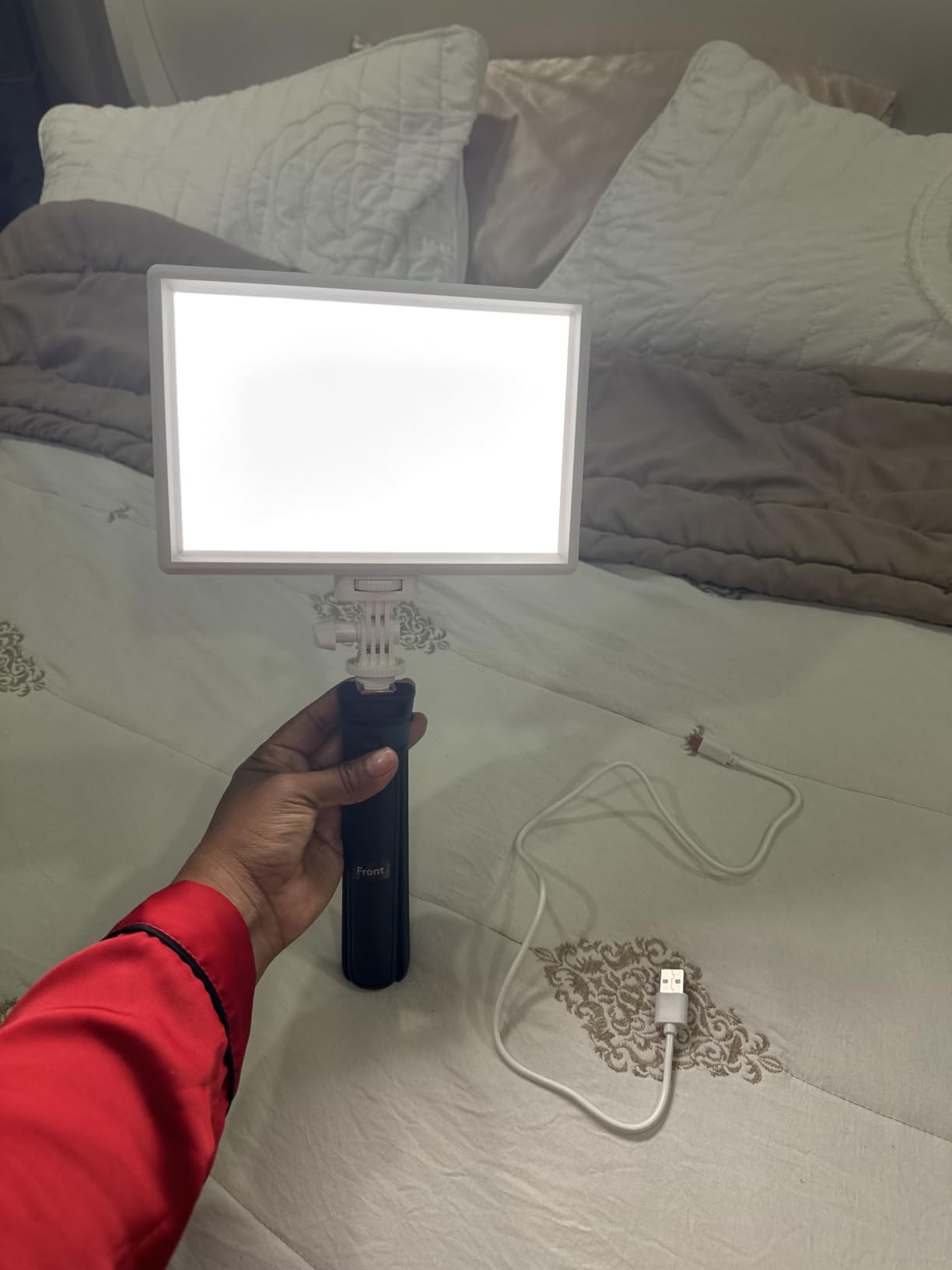
At 388 g this is the smallest light in the roundup, and it is the one we would clip to a camera for a walk-and-talk or a location clip. The 9 inch panel is thinner than a paperback and the built-in battery means no cable at all in a shot where a cable would be visible.
Control resolution is the standout. Brightness and colour temperature both adjust in 1 percent increments from 0 to 100, so you can match an existing room almost exactly instead of stepping through preset jumps, which is where most entry-level panels let you down.
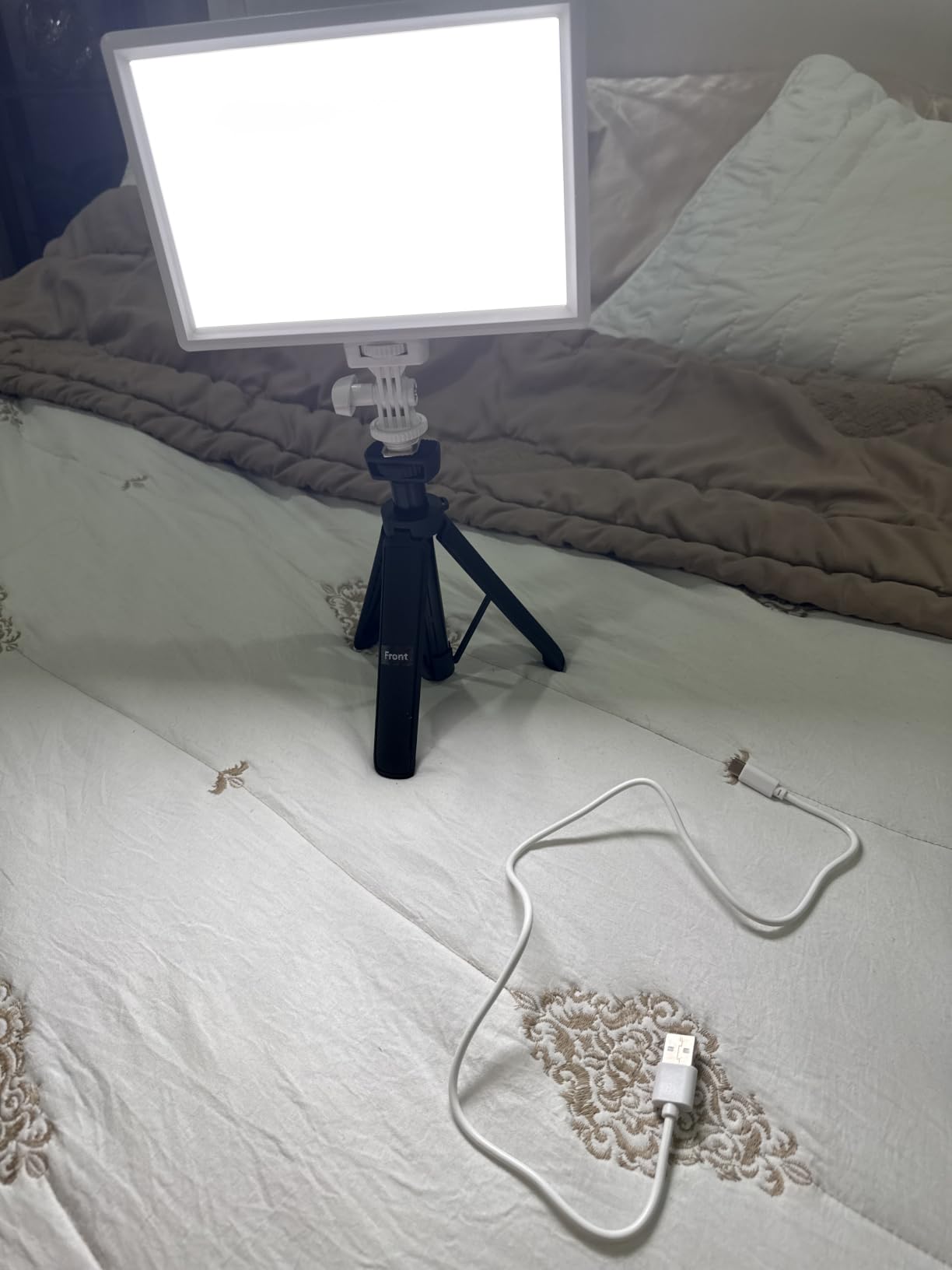
Output is listed at 600 lux at 0.5 meters, which is bright for the size and clearly aimed at close work. It will not key a room, but as an on-camera or tabletop light at under two feet it is genuinely bright enough.
It charges over USB Type-C and can run while charging, so a long session plugged into a 5V 3A adapter is straightforward. The mini stand extends from 3.74 to 7.09 inches for desk work, and a cold shoe mount takes it to a camera or light head.
Where on-camera light wins
Fill inside a room with a window behind your subject is where a small on-camera panel earns its place. Move the key to a softbox and keep this on the camera as a subtle face fill, and you avoid the flat, evenly lit look that gives away a small room immediately.
Where it falls short
The internal battery runs about 80 minutes at full brightness, and reviewers report flicker at 95 to 100 percent output when the charge drops, which is exactly the range you would use indoors at night. The supplied ball head and hot shoe plate are also the weak point, so budget for a proper mount if you are serious.
7. Torjim 12 Inch 30W Studio Light 2-Pack – Best for Phone Creators
Torjim 12 Inch Video Light Kit for Creators | 30W High Brightness
2 x 12 inch 30W panels
3000K-6500K range
1-9 brightness levels
In-line wired controller
Pros
- 30W output fixes a dim room cheaply
- In-line controller changes settings mid-record
- Phone holders support vertical filming
- Storage bag for moving between rooms
- Nine brightness levels
Cons
- Nine-step dimming is coarser than continuous control
- Wired in-line controls add cable clutter
- Designed for phones and small cameras rather than large sensors
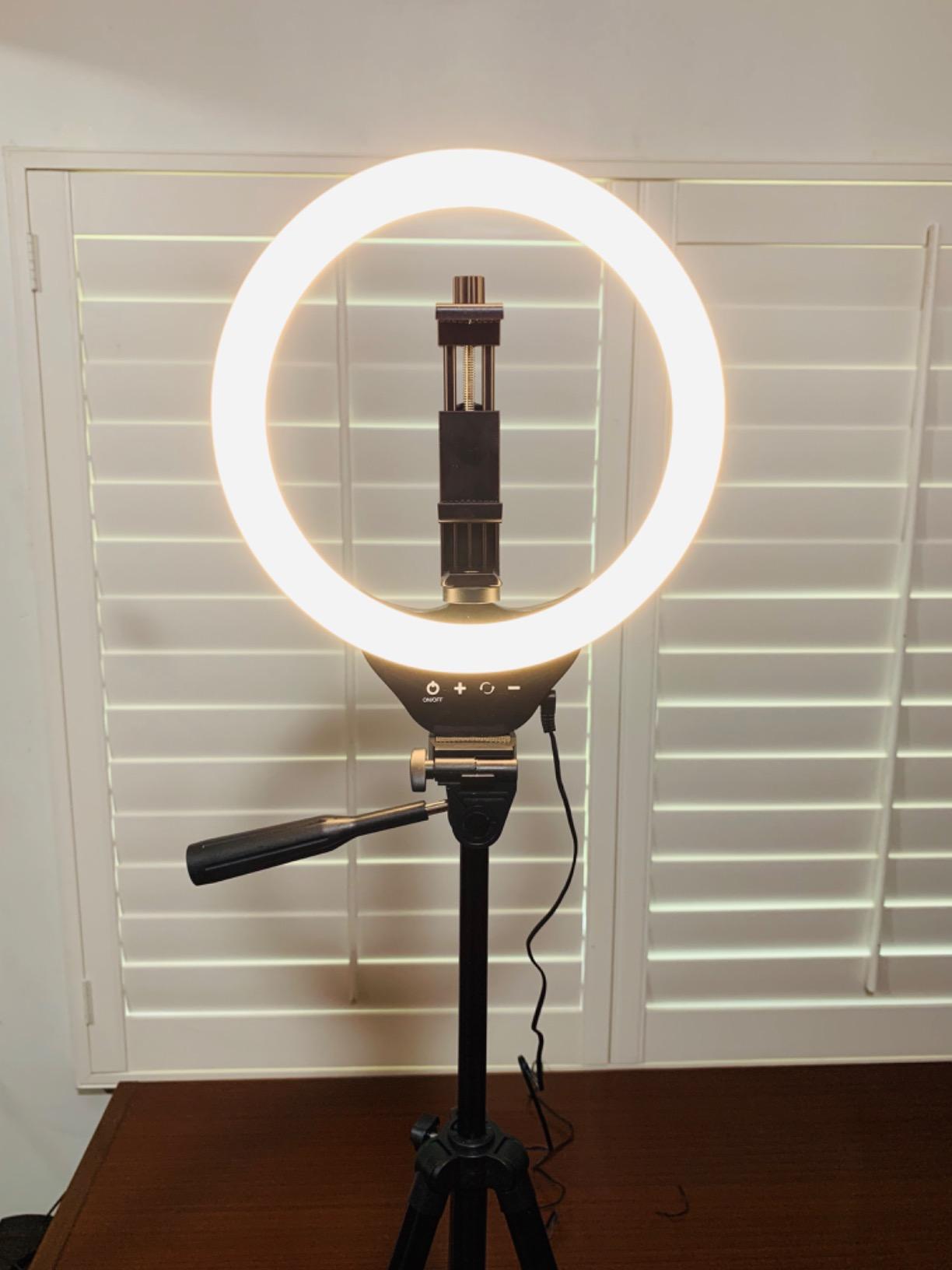
This is the kit most first-time creators end up with, and for a phone or small camera on a desk it does the job well. Two 12 inch 30W panels are enough to key and fill a dim bedroom, which is the room most people start in.
The in-line controller is the feature we liked more than expected. It runs from the panel to a control box you can place within reach, so you can change colour temperature or step brightness without touching the lights and knocking the stands.
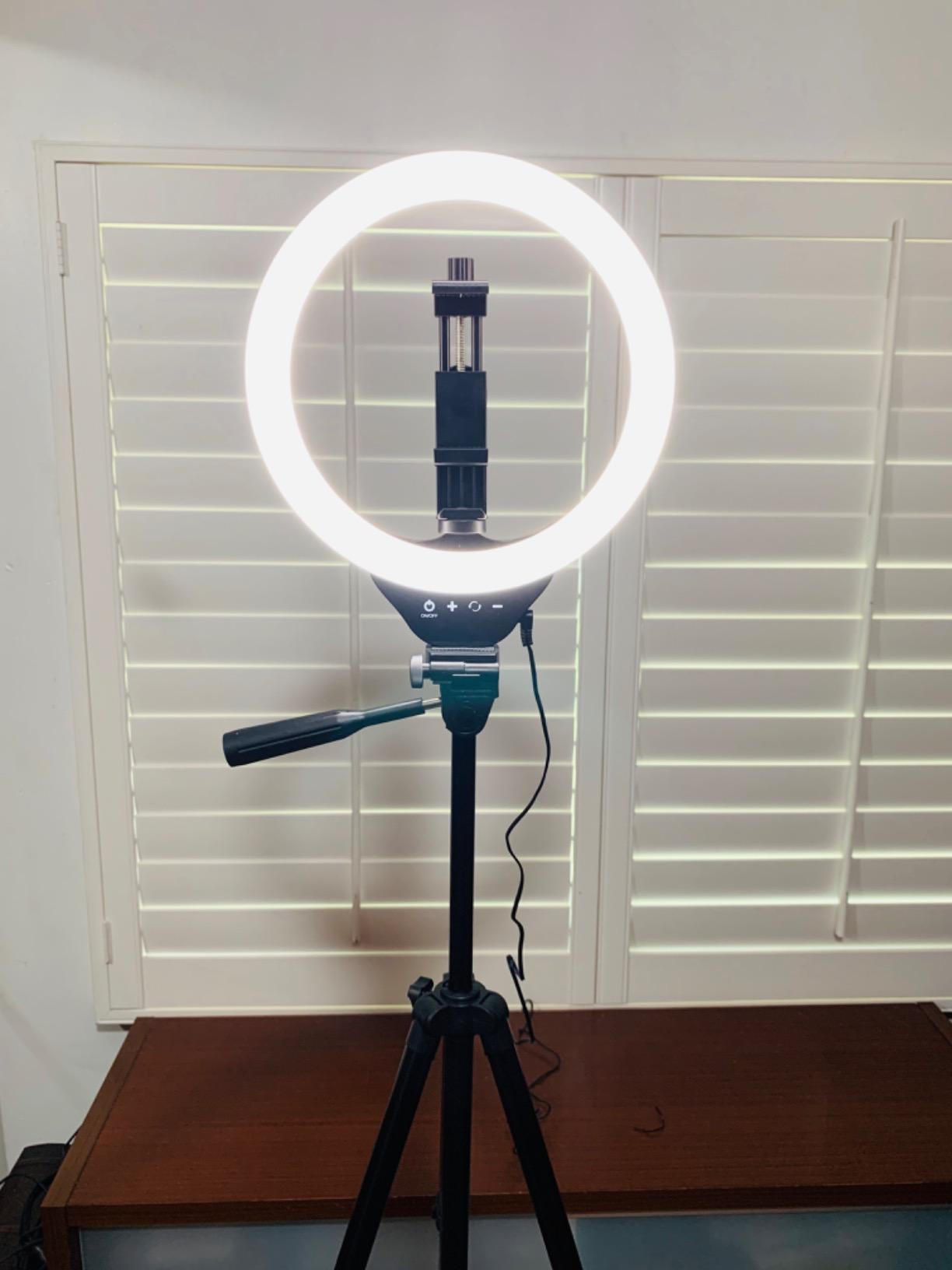
Colour temperature spans 3000K to 6500K, which covers warm indoor evening setups through to a daylight look by a window. Two tripod stands, two phone holders, a remote and a storage bag are all included, so nothing else is needed to start.
The trade-off is control granularity. Brightness runs in nine steps rather than a continuous dial, and the panels use a 1/4-inch audio jack for the controller, so cameras without that connection are not directly supported.
Good for a first two-light setup
Most talking-head mistakes come from using a single light and accepting the hard shadow it creates. Having two panels lets you put a weak light opposite your key to soften the shadow side, which is the single biggest quality jump in a small room for very little cost.
Where it falls short
Nine brightness steps is coarse when you are matching a room that is already dimly lit, and the wired controller adds cable runs to a desk. If your recording is audio-critical, note that this is a silent LED design with no fan to worry about.
8. Skytex 20×28 Softbox Kit 2-Pack – Best for Overhead Angles
Skytex Softbox Lighting Kit 2Pack 20x28in Soft Box | 85W 2700-6400K E27 LED Bulb Continuous Photography Lighting, Photo Studio Lights Equipment for Camera Shooting, Video Recording
2 x 20 x 28 inch softboxes
2 x 85W bulbs at 2700K-6400K
Stands reach 79 inches
Remote dimming
Pros
- Tall 79 inch stands allow overhead and back lighting
- Remote dimming and colour temperature in the bulb
- Large softboxes give broad even coverage
- Long 8.5 foot cables for real placement freedom
- Carry bag included
Cons
- CRI of 90 is below the 95 plus standard here
- Remote batteries are not included
- Large softboxes take more floor space
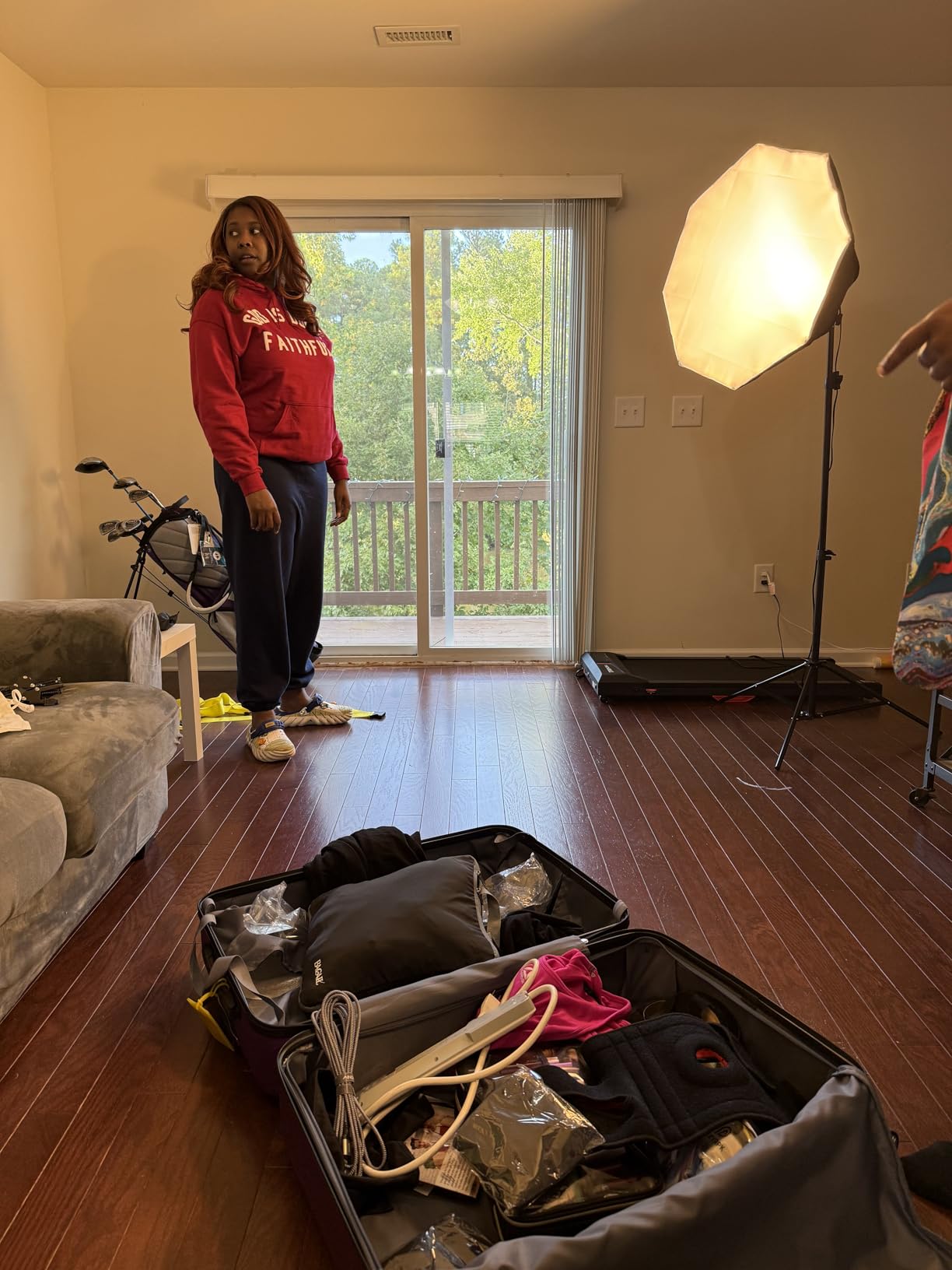
These are the tallest stands in the roundup, reaching 79 inches, and that is the reason to buy them. When your key light needs to sit high and angled down, or your back light needs to come from above and behind, a shorter stand simply cannot reach the angle you need.
The 20 by 28 inch faces are larger than square boxes, so they wrap a seated subject and put a soft gradient across the background rather than a hard circle of light. The 210 degree rotatable heads let you aim without re-clamping the stand.
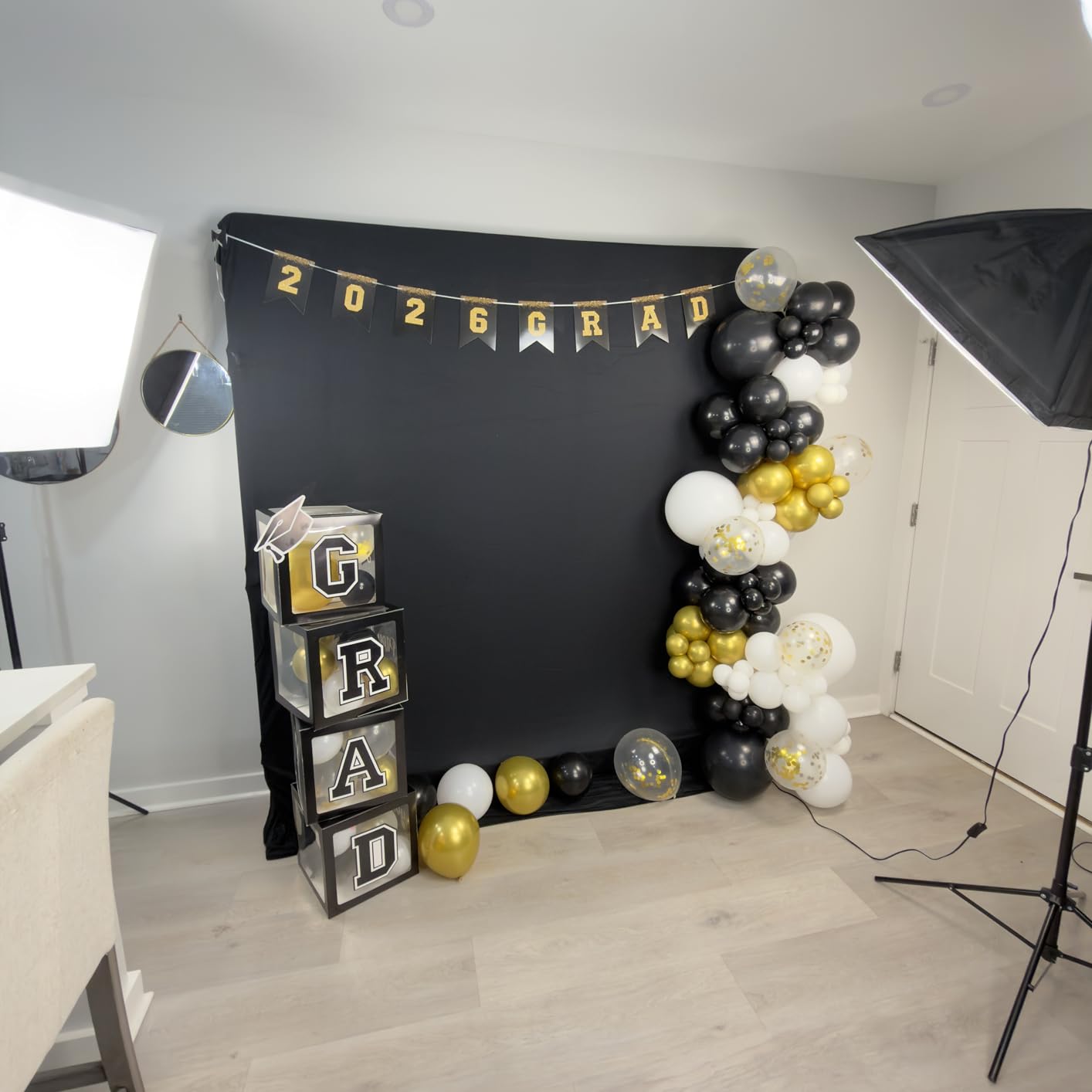
Remote dimming and colour temperature from 2700K to 6400K are built into the E27 bulbs, and the 8.5 foot cables give you placement freedom that shorter leads do not. Note the listed CRI of 90, which is below the 95 or better standard most of the products here meet.
You can see that gap on skin tones if you are grading carefully, though it is far less obvious in a quick edit. It is the main reason this kit sits below the RALENO and Torjim softboxes in our ranking.
When height is the deciding factor
Flat-lay product work, overhead cooking shots and back-lit hair separation all need a light above the subject. A 79 inch stand plus a 20 by 28 inch softbox is the most headroom of any two-light option in this list, which makes it useful for more than just talking heads.
Where it falls short
Two large softboxes on tall stands need a bigger room than most small home studios can spare, and the lower CRI is a real cost if colour accuracy is your priority. The remote also needs two AAA batteries that are not included.
9. NEEWER 660 and 480 Panel Softbox 2-Pack – Best Softbox Upgrade
NEEWER 2 Pack LED Light Panel Softbox for 660 480 Video Light
Fits NEEWER 660 and 480 panels
16.25 inch pop-up softbox
Magnetic rod attachment
Collapses flat
Pros
- Snug fit on NEEWER 660 and 480 panels
- Visibly softer light and fewer shadows
- Collapses flat for storage in a tight closet
- Simple magnetic rod assembly
Cons
- LED light is not included so it is an add-on
- Tilt is restricted without an extra adapter
- Included bags fit poorly
- Covers about half a body
Raw panels are a hard light source, and this is the fix if you already own a NEEWER 660 or 480. The pop-up softbox mounts with four magnetic rods and straps, and the difference in shadow softness is immediate once it is on.
Because it collapses flat, it costs you almost nothing to store between sessions, which is the same small-room problem every other product here is trying to solve. The nylon construction is light and the 9.25 by 9.25 inch front opening defines the beam.
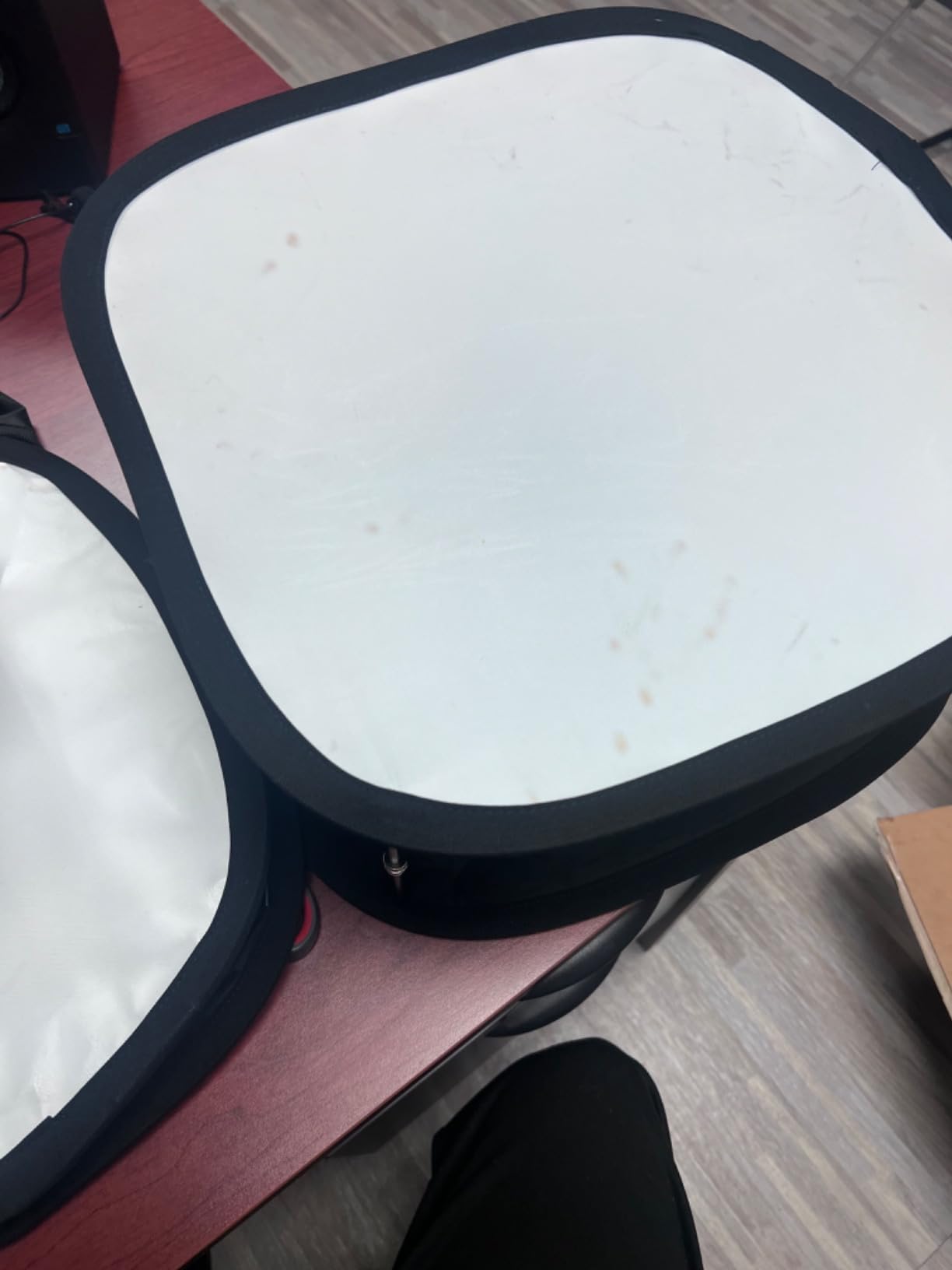
It is worth being clear that this is an accessory. No LED light is included, so budget for the panel separately if you do not already own a compatible one. That makes it a value pick only for existing NEEWER owners, which is how we have positioned it here.
Tilt can be limited once the box is mounted, and reviewers note that a 90 degree umbrella or ball-head adapter restores full positioning. The included carry bags are also a poor fit for the folded softboxes, so store them flat instead.
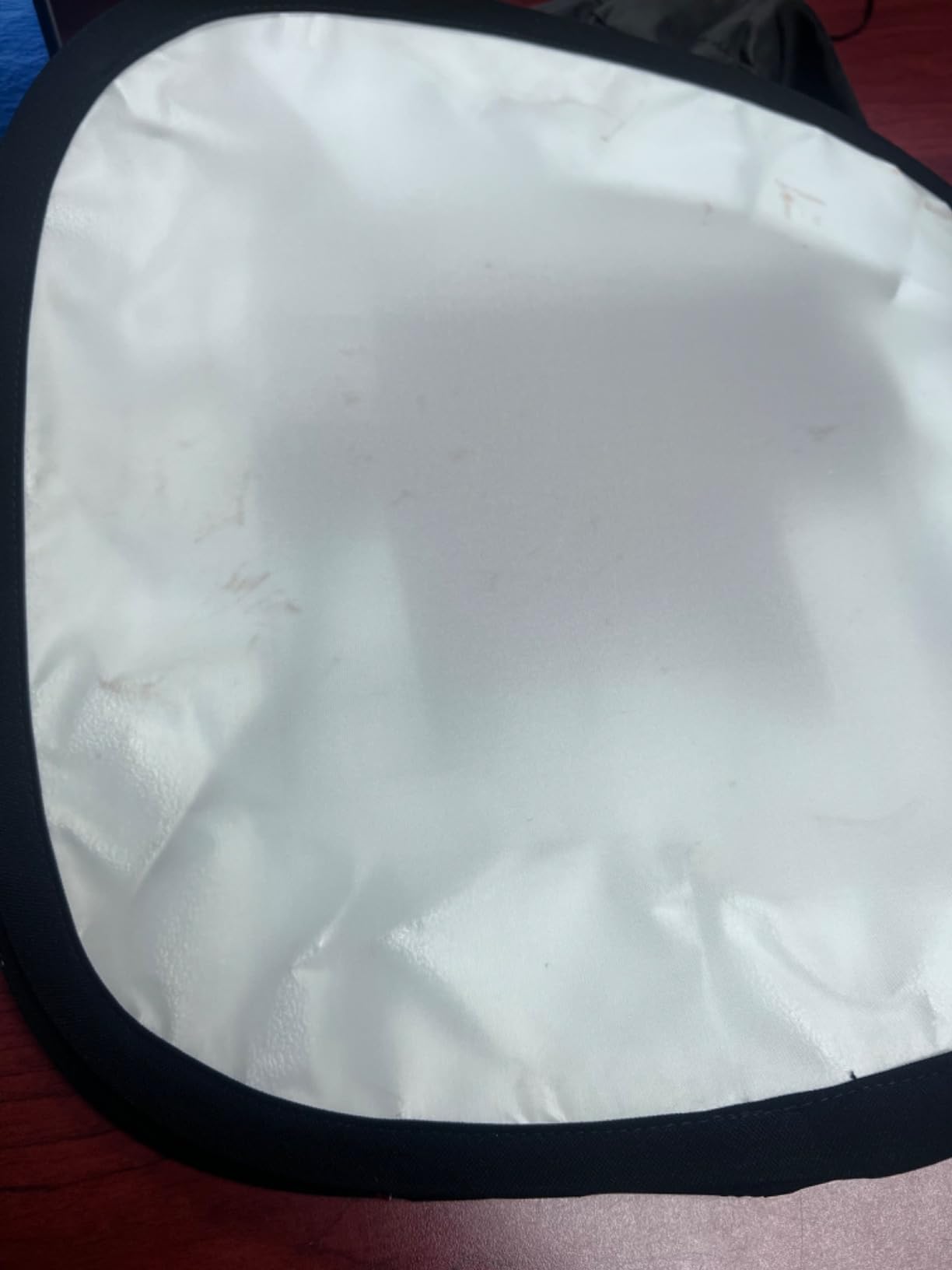
Why softboxes change a small room
A bare panel at three feet throws a hard-edged shadow of your nose onto the wall behind you, and a hard bright patch on that wall. Diffusing spreads the source, softens the shadow and keeps the background even, which is why this is the upgrade we recommend before buying a brighter panel.
Where it falls short
It only covers roughly half a body, so wide framings will show the edge of the diffusion. And the restricted tilt is a genuine issue if you are used to angling a bare panel freely, so check your mounting options before you commit.
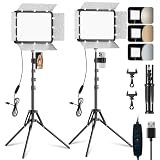
10. EMART 15W Panel Kit with Barndoors – Best for Light Control
EMART 2-Pack 15W LED Video Light Kit with Phone Holder & Barndoor
2 x 15W panels with CRI 97+
2800K-7000K range
Magnetic detachable barndoors
10 brightness levels
Pros
- Barndoors cut glare and flag wall spill
- CRI 97+ across 2800K-7000K
- Cold shoe and 1/4 inch mounts on each panel
- Phone holders and 6.4 foot USB cables included
- Tripods fold to 17 inches
Cons
- Wall charger is not included
- 15W output is modest for larger sets
Barndoors are the feature that makes this kit relevant to small rooms specifically. In a space under 100 square feet, spill bouncing off a side wall flattens your contrast and washes out your background, and flaps that let you aim the light are worth more than extra watts.
The panels cover 2800K to 7000K with 10 brightness levels and 352 high-CRI LEDs each, so colour matching to a room is easy. Each panel has a cold shoe port and a quarter-inch mount, so follow-the-light setups and off-camera placement are both possible.
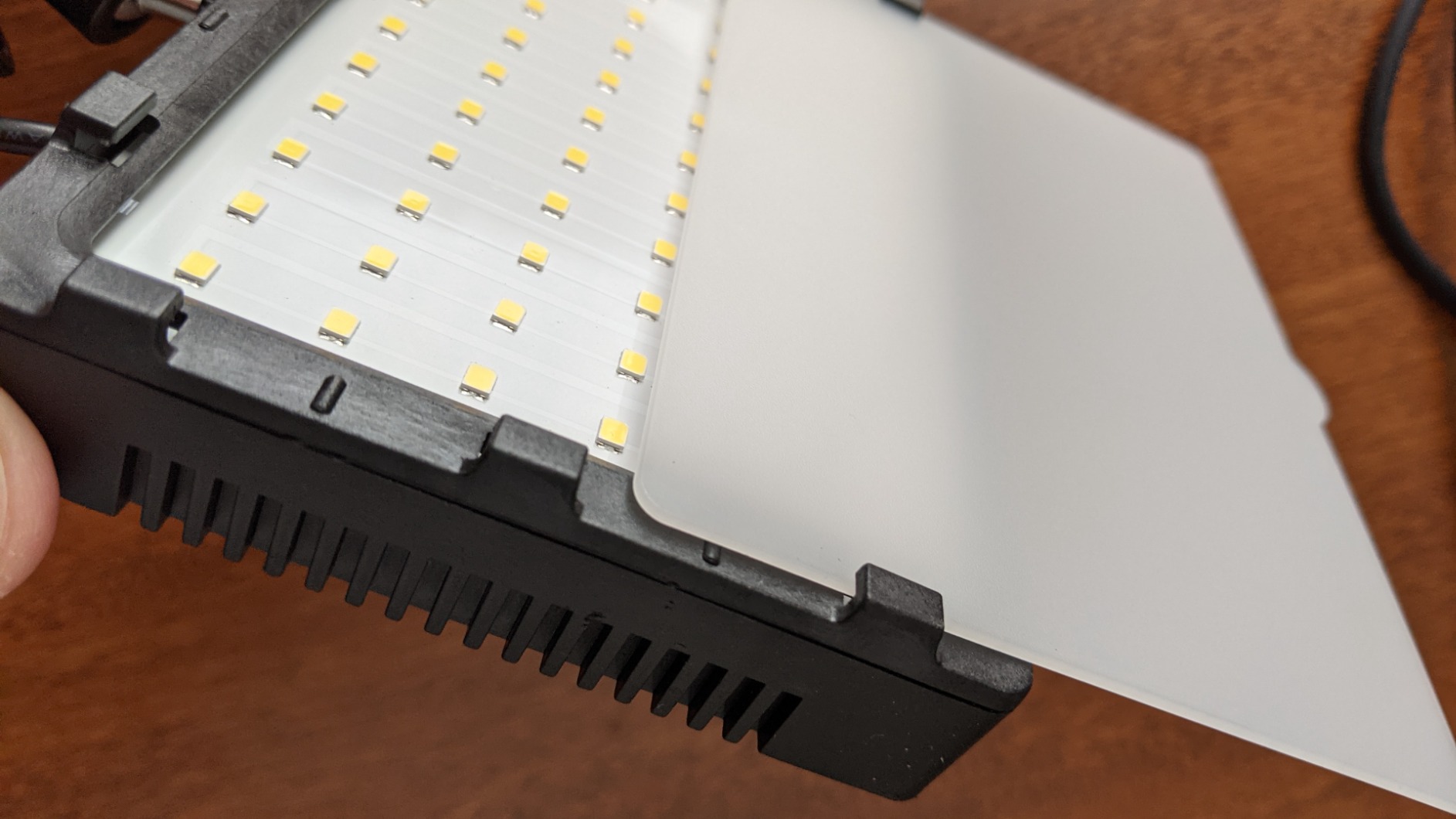
The magnetic barndoors detach when you want the wider, softer spread for a talking head and snap back on when you are fighting a nearby wall. Two 73 inch aluminum tripods with 180 degree tilt and 6.4 foot USB cables round out the kit.
No wall charger is included, and the 15W rating per panel means this is a fill and key pair for a subject at two to four feet rather than a way to light a whole room. Powering both from a laptop is not realistic; plan on a proper USB supply.
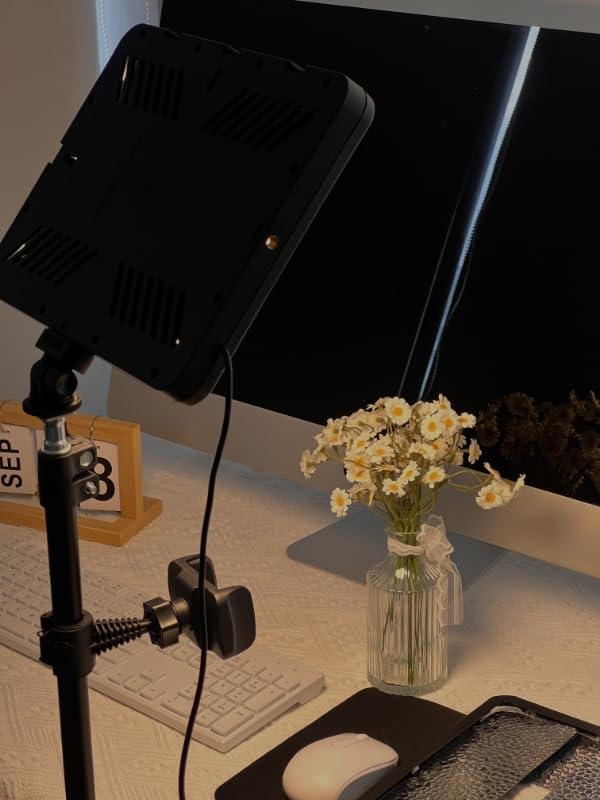
Controlling spill in a small room
The single biggest visual upgrade in a cramped room is stopping light from hitting the walls behind and beside your subject. Barndoors let you shape the beam so your background stays dark and your subject stays bright, which reads as depth and separates you from a busy room.
Where it falls short
The power draw means you will be buying a wall adapter, and at 15W per panel the output is modest. If your room has a large window, these will not compete with daylight and you will be dimming the ambient instead.
11. NiceVeedi 15W Studio Light 2-Pack – Most Versatile
2-Pack LED Video Light Kit, NiceVeedi Studio Light, 2800-6500K Dimmable Photography Lighting Kit with Tripod Stand&Phone Holder, 73″ Stream Light for Video Recording, Game Streaming, YouTube
2 x 15W panels with CRI 97+
3 colour temperature presets
10-100 percent remote dimming
USB-C powered
Pros
- Even soft output with CRI 97+ skin tones
- Three presets plus remote dimming
- Two lights for key and fill
- Phone holders and storage bag included
- USB-C from laptop or power bank
Cons
- Tripod legs cannot be adjusted independently
- High power draw for most laptop USB ports
- Wall charger is not included
- Occasional defective panels
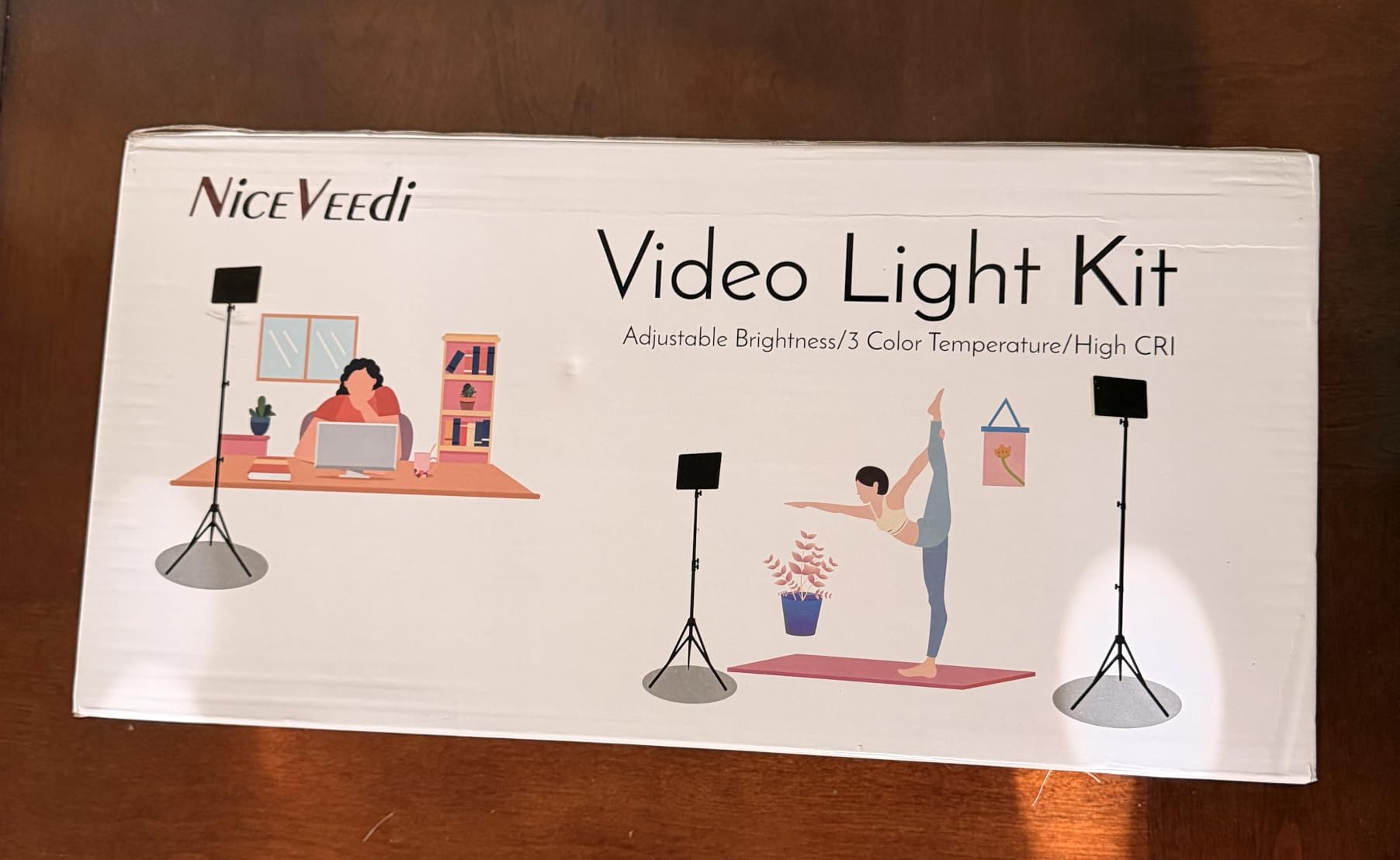
This is the most reviewed kit in our list, and for a first setup the logic holds up. Two 10 by 7.8 inch panels with 356 LED beads each and CRI 97+ give you a key and a fill for less than most single softbox kits cost, and the colour is accurate enough that skin tones do not need correcting.
It is also the simplest to set up, which matters when the room is a bedroom and setup time is the real constraint. The phone holders mean you can shoot vertical without a separate rig.
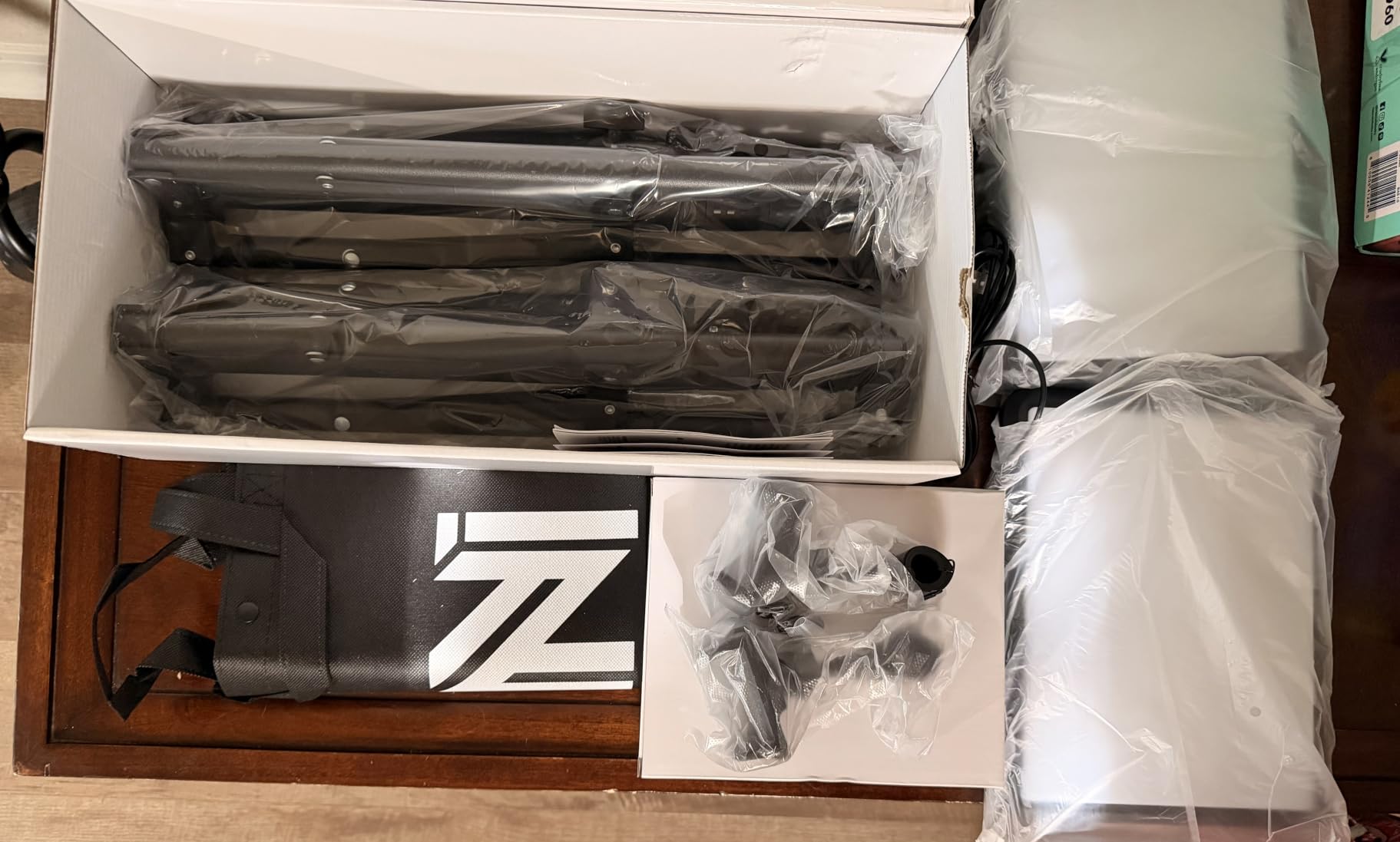
Colour temperature offers three presets at 2800K, 4800K and 6500K with 10 to 100 percent dimming via the remote, so you are not stuck with a fixed white. The 73 inch aluminum tripods rotate 180 degrees and fold to 17 inches.
Power runs over USB-C at 5V and 2A, and the wall adapter is not included. Because the draw is high, most laptop and monitor USB ports will not run a panel, so this needs a proper supply despite the USB-C label.
A sensible first purchase
If you are starting from nothing, two dimmable panels with CRI 97+ teach you far more about lighting than one bright fixture. You learn where a key belongs, what fill feels like, and how colour temperature changes the mood of a room, all for a modest outlay.
Where it falls short
The fixed tripod legs cannot be adjusted independently, so positioning a panel low near a desk is awkward. Reviewers also report occasional defective panels arriving, so check the unit as soon as it arrives rather than on shoot day.
12. NEEWER Basics BP66 Panel Kit 2-Pack – Best Desk Fill
NEEWER Basics BP66 2 Pack LED Video Light Panel Lighting Kit, Bi Color
2 x 10W bi-color panels
CRI 95+
3200K and 5600K
Stands adjust 19.7-53.2 inches
Pros
- Simple bi-color panel with CRI 95+ skin tones
- Ten brightness levels plus continuous dimming
- Magnetic white and orange filters included
- Stands work as tabletop tripods
- USB powered from laptop or power bank
Cons
- Low output suits fill within about two meters
- Small panel size limits wide coverage
- Phone holders and camera adapters not included
The 5.9 inch panels here are the smallest in the roundup, and that is a feature in a home studio where a light has to live on a desk. The stands adjust from 19.7 to 53.2 inches, so the same unit is a tabletop tripod for a product shoot and a small stand for a seated talking head.
Two bi-color positions at 3200K and 5600K plus ten brightness levels and long-press continuous dimming cover the basics. CRI 95+ keeps skin tones natural, and there is no fan to hear.
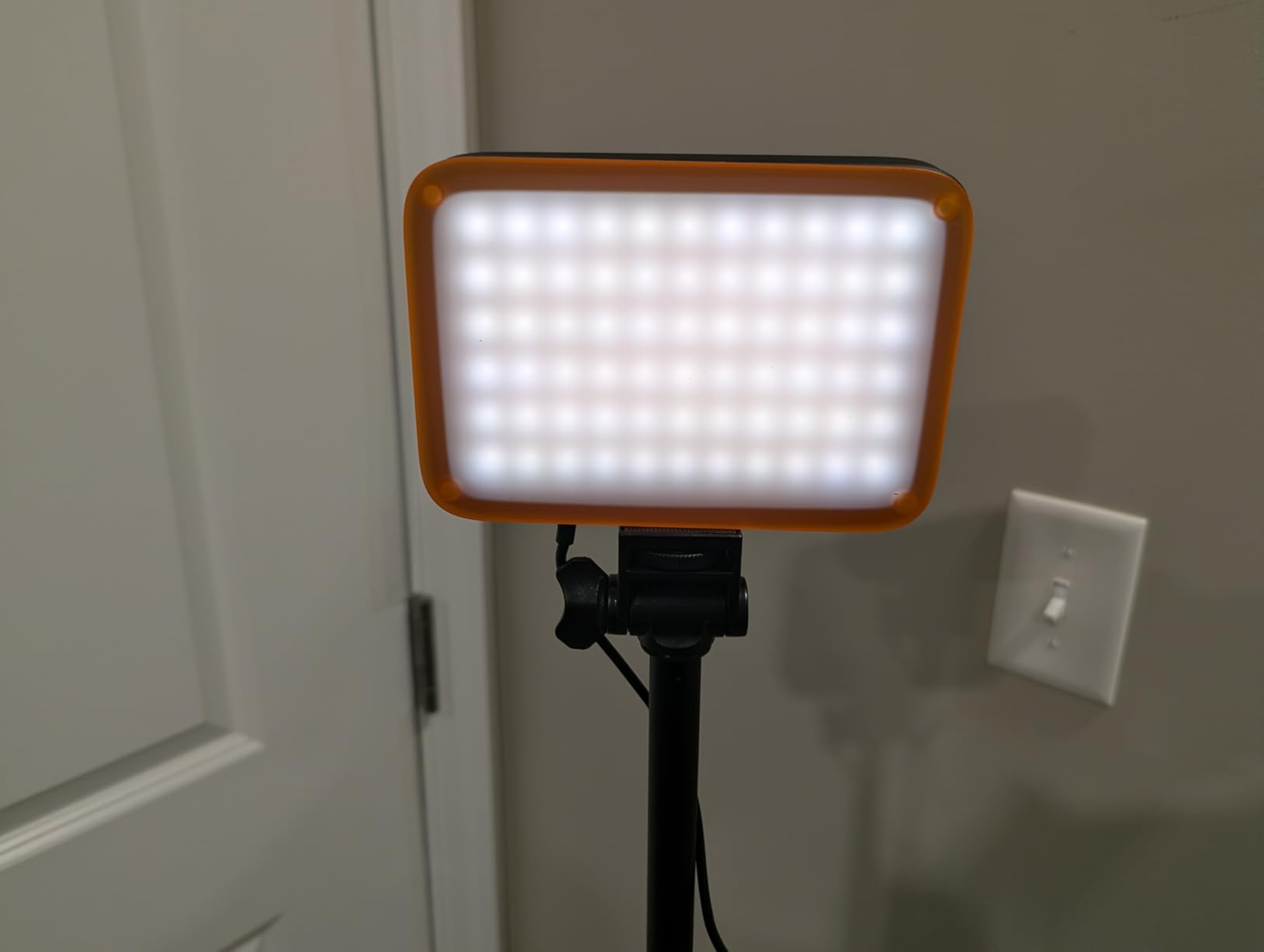
The magnetic filters are more useful than they sound. An orange filter warms a panel that reads cold against a tungsten-lit room, and a white diffuser softens the output, both without buying another light.
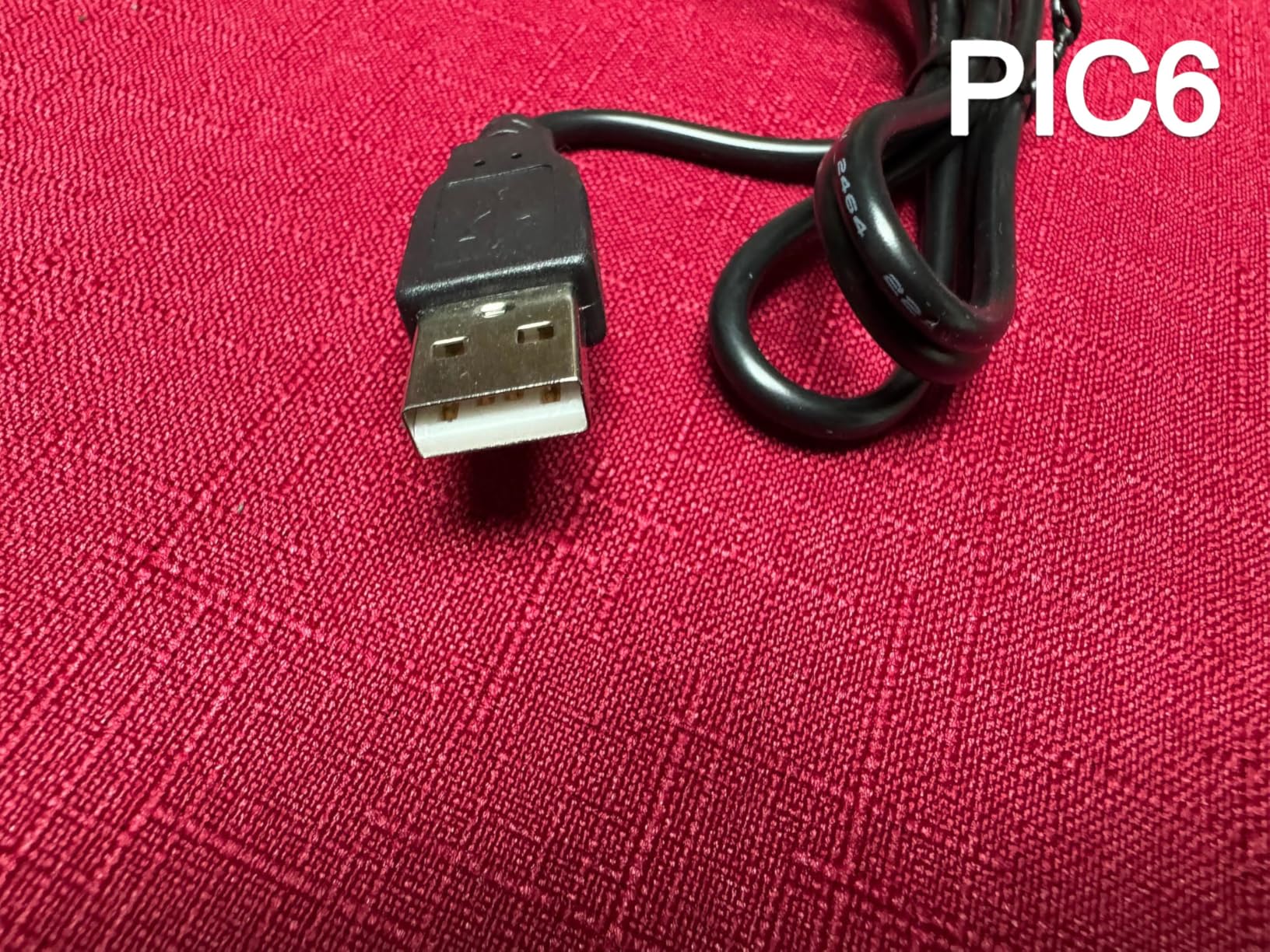
Power is USB 5V and 2A over a built-in 6.6 foot cable, so a panel can run from a laptop or power bank. That is convenient at a desk and a liability anywhere else.
A filler light, not a key light
Treat this as a fill for lifting the shadow side of a face while your key comes from a softbox, window or another panel. Within about two meters that is exactly what it does well, and the small size means it can sit at the edge of a desk without showing in frame.
Where it falls short
The 10W output is low by design and the 5.9 inch face limits coverage on wide shots. Phone holders and camera adapters are not included either, so vertical shooters need their own clamp.
How to Light a Small Room: A Three-Point Setup
Geometry beats gear in tight rooms. Place the key light 45 degrees to one side of your subject and slightly above eye level, roughly 3 to 4 feet away, and turn it about 45 degrees toward the camera. This is the shortest throw distance that still gives you control over shadow direction.
Next, add fill. In a small room you usually do not need a second fixture, so put a white foam board or a reflector on the shadow side close in, maybe 1.5 to 2 feet from your subject. Fill should sit at roughly half the brightness of the key, which is why a small panel like the BP66 works well for the job.
Third, separate the subject from the background. Mount a light behind and above your subject, aimed at the back wall or at your shoulders, so their edges pick up a rim of light. If floor space is the problem, a clamp or boom arm above the shooting position solves it. We covered mounting options in more detail in our continuous lighting kit guide.
Finally, control the room itself. Blackout on windows kills the biggest variable in a home studio, a white wall behind your subject bounces fill back into the shadows, and a grey or textured backdrop behind the subject keeps the eye on your face. The light mods matter, but so does the paint.
Common mistakes we keep seeing: lights placed too high, which puts shadow in the eye sockets, and key lights too close, which blows out skin while the background stays dark. Step the key back until the falloff across the frame looks right, then bring in fill to taste.
Buying Guide: Specs That Matter in a Small Room
Colour accuracy first. Look for CRI 95 or better, or TLCI 97 or better, and treat anything below 95 as a fill-only fixture. This is the single spec that changes how your footage looks, and it is the one most often buried in marketplace listings. A Skytex kit at CRI 90 will show it on skin tones; every RALENO, NEEWER, GVM and Torjim option here rates 95 or above.
Wattage against room size. In a room under 100 square feet, 30W to 50W of LED at three feet is a comfortable key. In a 150 to 200 square foot room, 60W to 100W gives you room to dial back. Beyond 200 square feet, go higher or add a second fixture. The trap is over-lighting a small room, which is why several reviews here warn against big bright lights indoors.
Noise. Every product in this roundup is a panel or a softbox kit, and all of them are fanless or effectively silent. If you later move to a COB monolight, check for a silent mode, and in any small room with hard walls, keep the light at least an arm’s length from your microphone.
Modifiers and mounts. Panels take a magnetic softbox, and that is the cheapest way to turn a hard light into a soft one. Bulb-based kits include the softbox, which is why the RALENO and Torjim options deliver softer light out of the box. Bowens mount is not on the table for this category, but it is the ecosystem to think about if you outgrow panel lights.
Power and cables. Mains power is fine in a single fixed room, and battery panels such as the NEEWER NL-192AI remove cable clutter but cap you at around 90 minutes. Cordless is not worth paying for if you never leave the room.
Colour temperature. Match your lights to the room. A warm 2700K bulb overhead means a 3200K to 4000K key will blend more naturally than a 6500K one. Between 4000K and 6500K, choose 4000K for warm indoor rooms and mixed household lighting, and 6500K only when you want a crisp daylight look and can dim the room lights to match.
Stands and hardware. Lightweight stands need weight on the base. A sandbag on the legs is the cheapest fix for wobble in a busy household, and it is the recommendation that appears most often in owner feedback. Watch for kits that ship without a wall charger or remote batteries, since several here do.
For related reads, our art studio lighting guide covers colour-critical work, and our tattoo studio lighting guide looks at setups that need extremely high output in confined rooms.
Frequently Asked Questions
What is the best studio lighting setup for video?
A three-point setup works in almost every small home studio: a key light 45 degrees to one side and slightly above eye level, a fill on the shadow side, and a back or rim light to separate you from the background. Most creators start with one softbox plus a white foam board for fill, then add a third light once the room and budget allow.
What is the 3 lighting rule?
The rule is simple: three lights, three jobs. The key light exposes and shapes the face, the fill light lifts the shadow side so contrast survives, and the back or rim light separates the subject from the background. If you only have one fixture, block the ambient instead and bounce a reflector for fill.
What is a good small light for video shooting?
A compact bi-color LED panel with CRI 95 or better and a 12W to 30W output is a good small light for video. The RALENO 9 inch PLV-S116 and the Torjim 12 inch 30W panel both fit a small desk, and the NEEWER Basics BP66 works as a fill within about two meters.
Is 60W light enough for video?
Yes, 60W of LED is enough for a small home studio, provided you place it far enough away and add a second light for fill. At 3 to 4 feet a 30W to 50W fixture handles a talking head comfortably, so a bigger light is not automatically better. In rooms under 100 square feet, too much wattage is the more common problem.
Do LED video lights have fan noise?
Panels and softbox kits like these are effectively silent because they have no fan. Fan noise appears with high-wattage COB monolights, which is a common complaint in small rooms where hard walls carry the hum into shotgun microphones. If you buy a COB light later, look for a silent mode and keep it away from your mic.
Which is better, 4000K or 6500K?
Use 4000K when your room has warm household lighting or wood furniture, because it blends with the ambient and looks natural on skin. Use 6500K only for a crisp daylight look, and dim or switch off the room lights so the two sources do not fight. Matching the key to the room matters more than picking the brighter setting.
Conclusion
For most people building the best video lighting for small home studios, the RALENO 20×20 two-pack is the pick: soft 20 inch faces, CRI 97 bulbs, and stands that fold to 27 inches. If your floor space is genuinely tight, the compact RALENO 16×16 gives you the same colour accuracy in a fraction of the footprint, and if you want to adjust settings mid-take, the GVM app-controlled panels handle that best.
Start with one light and a reflector, add a second to kill the shadow on your face, and only then consider a third for separation. Whatever you choose, keep the output modest, match colour temperature to your room, and weight the stands. We update this roundup through 2026 as new fixtures land.