
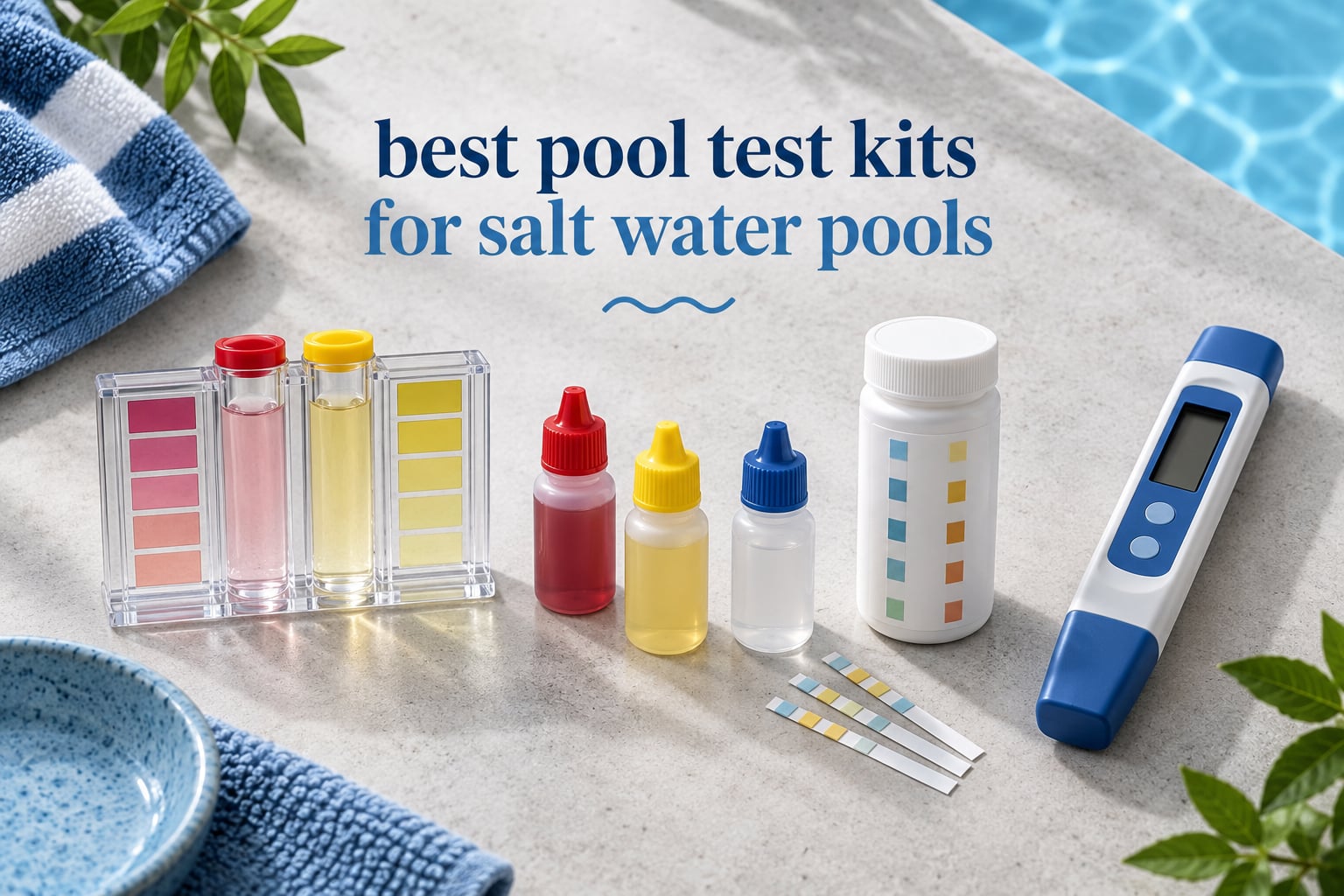
A saltwater pool needs two testing capabilities, and most kits on the shelf only deliver one. You need a proper FAS-DPD chemistry kit for free chlorine, pH, total alkalinity, calcium hardness and cyanuric acid, plus a completely separate sodium chloride test to confirm your generator is running inside its 3000-3400 ppm window. That is the whole argument behind this ranking of the best pool test kits for salt water pools: the winners here are the products that cover salt honestly, not the ones with the loudest packaging.
We compared ten kits across three genuine categories, a liquid FAS-DPD kit with an integrated salt test, salt-only drop tests and titration strips, and salt test strips or digital meters used as a screening layer. Each pick is judged on the same three questions: does it measure sodium chloride at all, can you trust the number it gives you, and what does it cost you in reagent refills over a season. We read the aggregated owner feedback on every listing, cross-checked the technical specifications against the published instructions, and weighted drop-count and titration methods above color matching, because a counted drop does not drift when your eyes are tired at dusk.
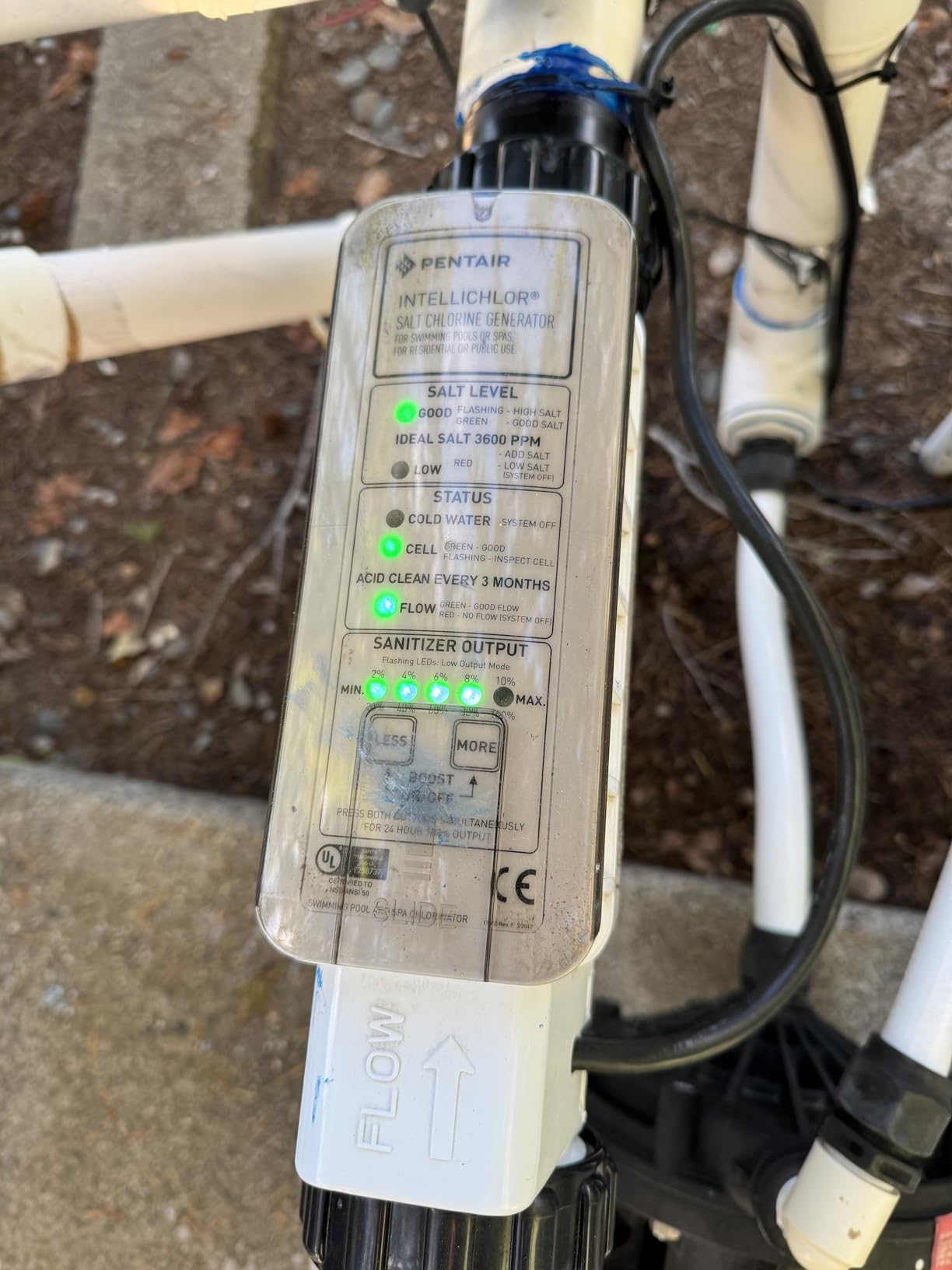
One piece of advice before the list. The display on your salt water chlorine generator is not a substitute for a real salt test. As the Trouble Free Pool wiki puts it plainly, the salinity reading on the SWG is often the first thing to fail, and it can lead you to pour salt into a pool that already has plenty. If you are still using your generator’s number as your only salt reference, keep reading; we explain how to reconcile conflicting salt readings later in this guide.
Table of Contents
Top 3 Picks for Saltwater Pool Testing (October 2026)


Joyzakzak 8-in-1 Strips
- Salt plus 7 parameters
- 150 strips per bottle
- Salt range 1500-5000 ppm
The 10 Best Pool Test Kits for Salt Water Pools in 2026
| Product | Specifications | Action |
|---|---|---|
| Taylor K-2006-SALT |
|
Check Latest Price |
| EASYTEST Salt Strips 25 ct |
|
Check Latest Price |
| Joyzakzak 8-in-1 Strips |
|
Check Latest Price |
 AquaChek Salt Titration Strips AquaChek Salt Titration Strips |
|
Check Latest Price |
 SaySummer 8-in-1 Strips SaySummer 8-in-1 Strips |
|
Check Latest Price |
 DIPSTIK Salt Strips DIPSTIK Salt Strips |
|
Check Latest Price |
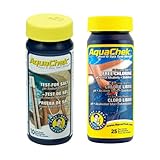 AquaChek Salt System Kit AquaChek Salt System Kit |
|
Check Latest Price |
 Taylor K-1766 Salt Kit Taylor K-1766 Salt Kit |
|
Check Latest Price |
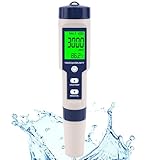 Hofun 5-in-1 Digital Meter Hofun 5-in-1 Digital Meter |
|
Check Latest Price |
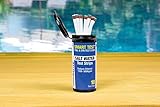 Poolmaster 22210 Salt Strips Poolmaster 22210 Salt Strips |
|
Check Latest Price |
Do You Need a Special Test Kit for a Salt Water Pool?
Yes, but only for the salt reading. The standard chemistry tests do not change on a salt pool; the parameter that needs a dedicated test is sodium chloride, because your generator makes chlorine by electrolysis and only works inside a specific salt concentration.
Two capabilities, then. The first is a FAS-DPD chlorine test, which measures free chlorine by counting reagent drops until the pink sample turns clear rather than by comparing a shade of pink against a printed block. That matters most on a salt pool because your generator holds a steady free chlorine reading, so the small daily swings that hide algae in a chlorine pool are compressed, and a color match cannot tell you whether you are at 2 or 4 ppm. The second is an independent sodium chloride test.
Here is why the second capability matters more than most roundups admit. When salt runs low, the cell strains and sanitization drops below what a CYA-stabilized pool needs. When salt runs high, the cell scales, the water hardens, and plaster surfaces in an SWG pool erode faster because of the higher ionic load. Owners who discover an over-salting problem late are usually looking at a cell replacement rather than a chemistry correction. The TFP wiki states the position directly: if you use a salt water chlorine generator you should independently test pool water salinity and not rely on the SWG reading.
Now the money question that no competitor answers. For years the consensus across r/pools, r/swimmingpools and Trouble Free Pool has been that you do not need the expensive all-in-one salt kit. You buy a solid FAS-DPD chemistry kit and add a small salt-only drop test, and the two together cost less than a single combined kit carrying both. Our number one pick is the exception that proves the rule: it does both jobs in one case, and for a buyer who wants a single box that covers everything, that is worth the premium. Everyone else is better served buying two things.
There is a reason to test salt more often than you test the rest. Water loss from backwash, a heavy rain, splash-out and evaporation all change concentration. Add fresh water and salt drops; run a vacuum and you pull a surprising amount of water out of the pool. Your target sits between 3000 and 3400 ppm, and a range of several hundred ppm is normal between tests, so a cheap weekly screen followed by an accurate titration when the number looks wrong is a sound routine.
If you are new to this, we also covered how to read a FAS-DPD result without a chemistry degree in our inground pool equipment guide, and remember that the word salt shows up in water softener conversations too, which is a completely different measurement.
1. Taylor K-2006-SALT: Best Complete FAS-DPD Kit With a Salt Test
Taylor Technologies K-2006-SALT FAS-DPD, 9-in-1 Saltwater Pool Test Kit
FAS-DPD high range
Tests 9 parameters including salt
15 reagents and comparator
Pros
- Covers 9 parameters in one case including free and combined chlorine pH alkalinity calcium hardness cyanuric acid and salt
- Readings check out against pool store testing for several owners
- Plain-language instructions with pictograms stored in the case lid
- Replacement reagents sold separately so the case survives
Cons
- Small reagent bottles run out mid-season for frequent testers
- Steep first-week learning curve across different reagent combinations
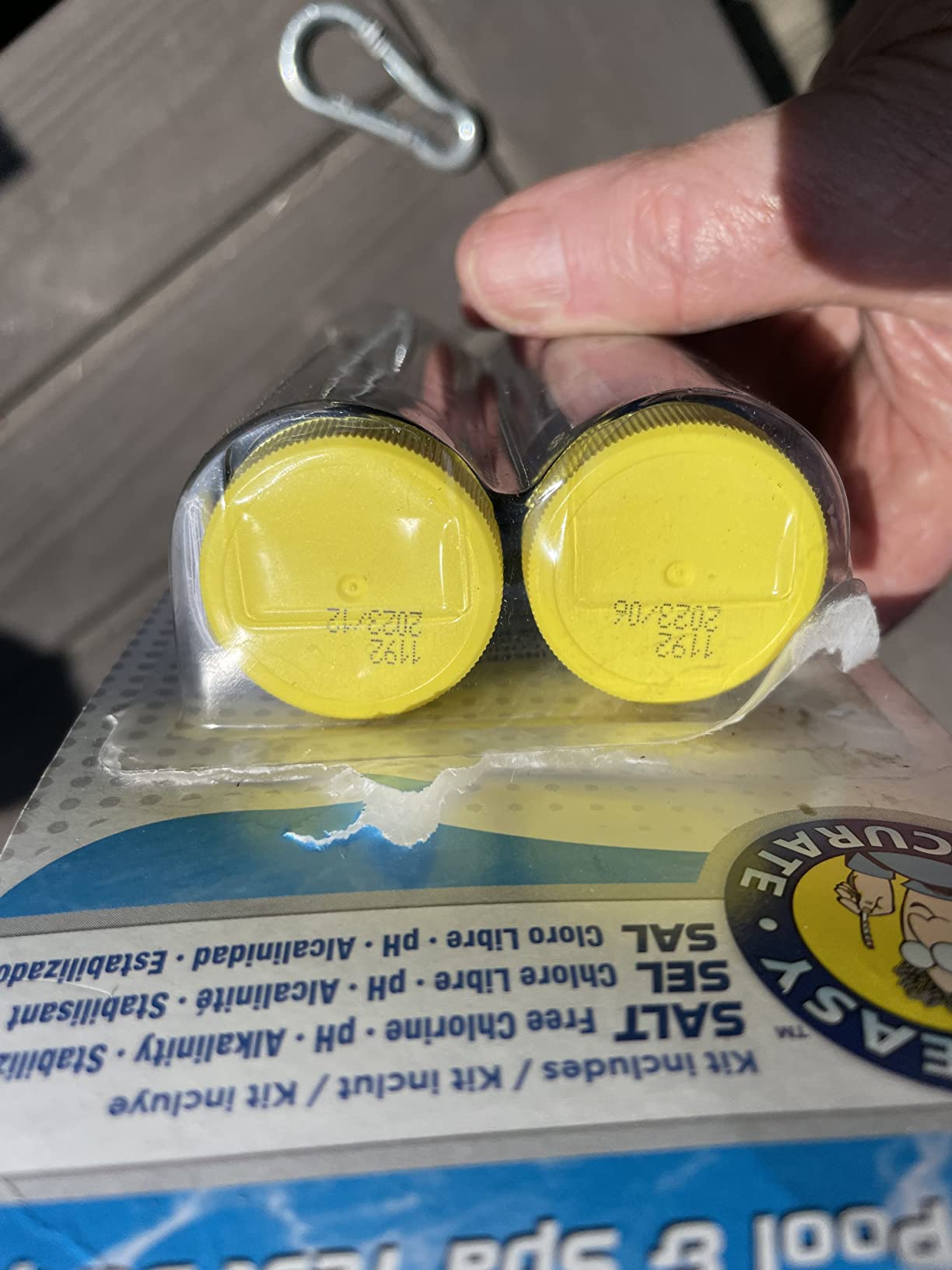
- Some buyers received bottles with short shelf life dates
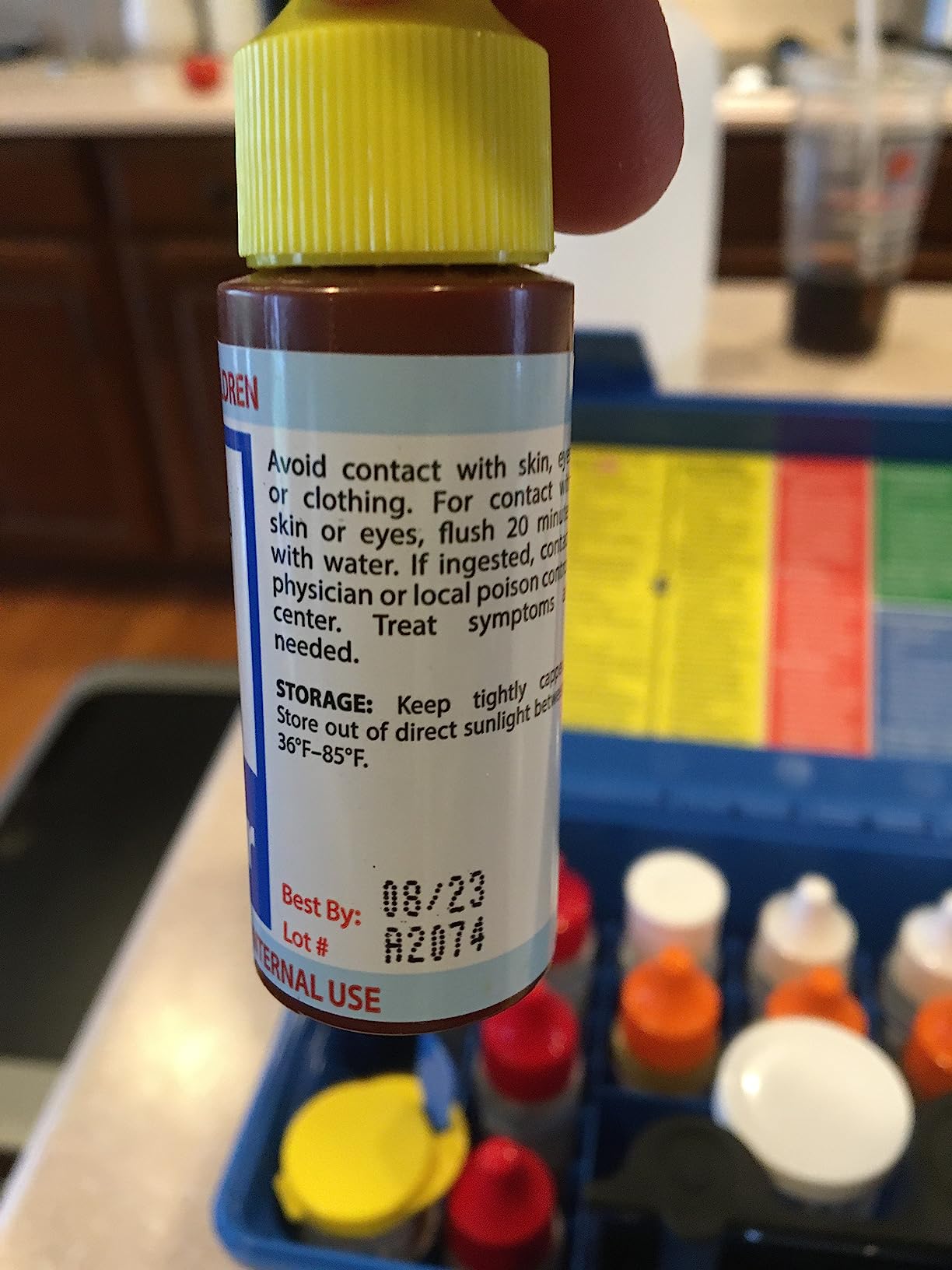
This is the only product in our group that answers the question a saltwater owner actually asks with a single box. The K-2006-SALT runs a FAS-DPD high range chlorine test and covers nine parameters: free chlorine, combined chlorine, pH, acid and base demand, total alkalinity, calcium hardness, cyanuric acid and chloride. The comparator, the 25 mL sample cell and fifteen reagents all ship in a storage case with the instruction card tucked into the lid.
Multiple owners cross-checked the readings against their pool store results and report agreement, which is not a low bar in this category. Store testing has a well-earned reputation for being off on pH and alkalinity, so a home kit that holds up against it is doing real work. The FAS-DPD design means your free chlorine number is a counted drop value, not a color impression, so the reading stays honest in evening light.
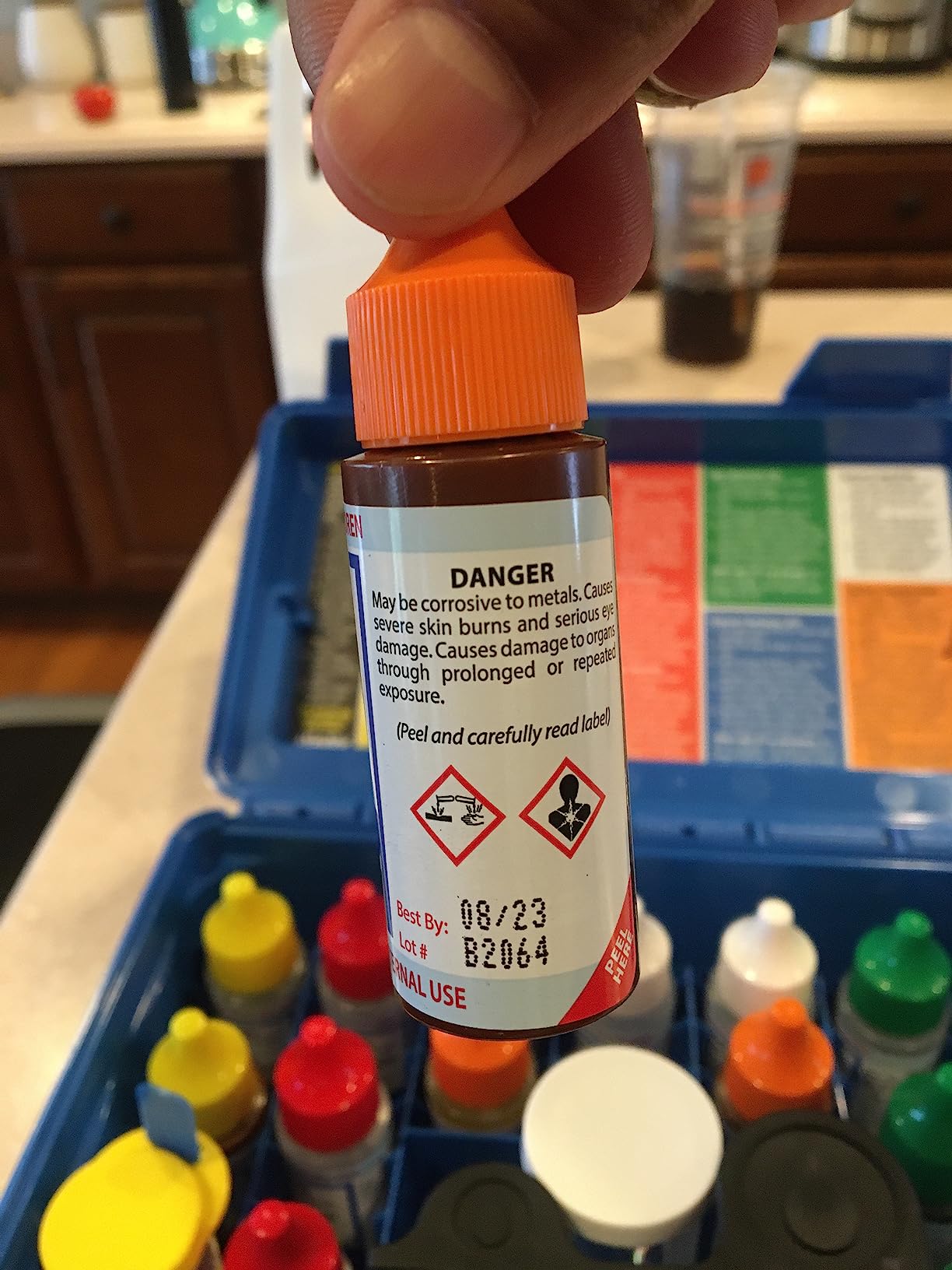
The two caveats are predictable but worth stating plainly. Reagent bottle sizes run small at 0.75 oz, which means owners testing several times a week can run out of cyanuric acid and other reagents before the season ends; a 2 oz service version exists for high-frequency testing. And the first two or three sessions are genuinely awkward, because each parameter uses a different reagent combination and some readings need a calculation step.
Replacement reagents are widely available individually, so the case itself outlives the bottles. This is the kit for the person who wants one purchase that covers a salt pool completely, and it is also the safest single answer if you have never drop-tested anything before and would rather learn on one box than on two.
Who this kit suits
It suits the owner who wants one box for everything and plans to test three or more times a week through the season. It also suits anyone with a combined chlorine problem, since the FAS-DPD procedure exposes combined chlorine that a simple DPD color block hides completely.
It also suits a high-cyanuric acid pool, which is common on any salt system that has gone a few seasons without a partial drain. When CYA climbs, the free chlorine target climbs with it, and a color-matched kit cannot push you past the top of its own scale to show where you actually are.
Who this kit does not suit
Skip it if your budget is tight and you are comfortable with two separate purchases. A standard FAS-DPD kit plus a salt-only drop test covers the same ground for a fraction of the outlay, and that pairing is what most experienced owners actually run.
Also skip it if you test casually, maybe twice a month. The reagent volumes are matched to regular use, and the full nine-parameter procedure is more effort than a casual check needs. A strip set for screening plus a salt test when something looks off is the lighter routine for that owner.
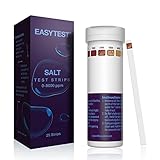
2. EASYTEST Saltwater Strips: Best Value Salt-Only Strip
EASYTEST Saltwater Pool Test Strips, 0-8000 ppm, 25 Count
Salt only
0-8000 ppm range
25 strips per bottle
Pros
- Fast dip hold and compare routine reads in 5 to 15 seconds
- Very low cost per test suits frequent checking
- Owners report pH and free chlorine close to liquid drop tests
- Color chart is legible and strips handle repeated use well
Cons
- pH pad tends to read about 0.5 below a Taylor liquid kit
- Cyanuric acid pad often reads 0 when the true value is 40-50 ppm
- Strips stored in hot humid storage discolor and skew pH and alkalinity
- Some buyers report a chlorine pad that never registers free chlorine
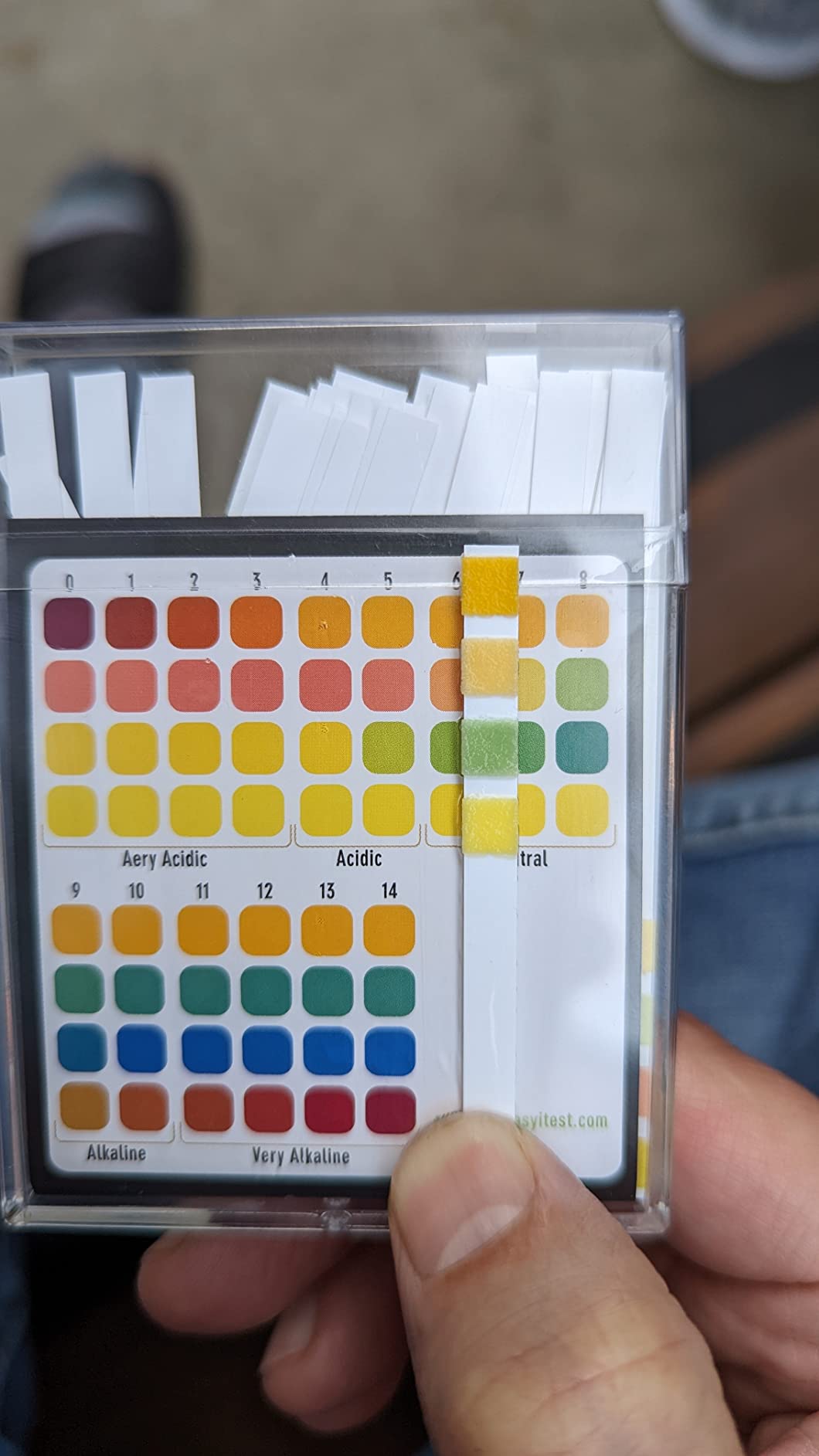
With more than 26000 reviews behind it, this is the highest-volume product we examined and the default salt screening tool for a reason. The routine is genuinely simple: immerse for one second, hold horizontally for five seconds, read against the bottle chart. The sodium chloride pad covers 0 to 8000 ppm, which is wide enough to catch a badly over-salted pool rather than just pegging the top of the scale.
Owners consistently treat it as a trend instrument rather than a measuring device. The pH and free chlorine pads are trusted and land close to a liquid drop kit. The cyanuric acid pad is the weak point, with frequent reports of a zero reading when the pool is really at 40 to 50 ppm, which is exactly the kind of failure that sneaks up on a salt pool because the generator masks the drop in sanitizer.
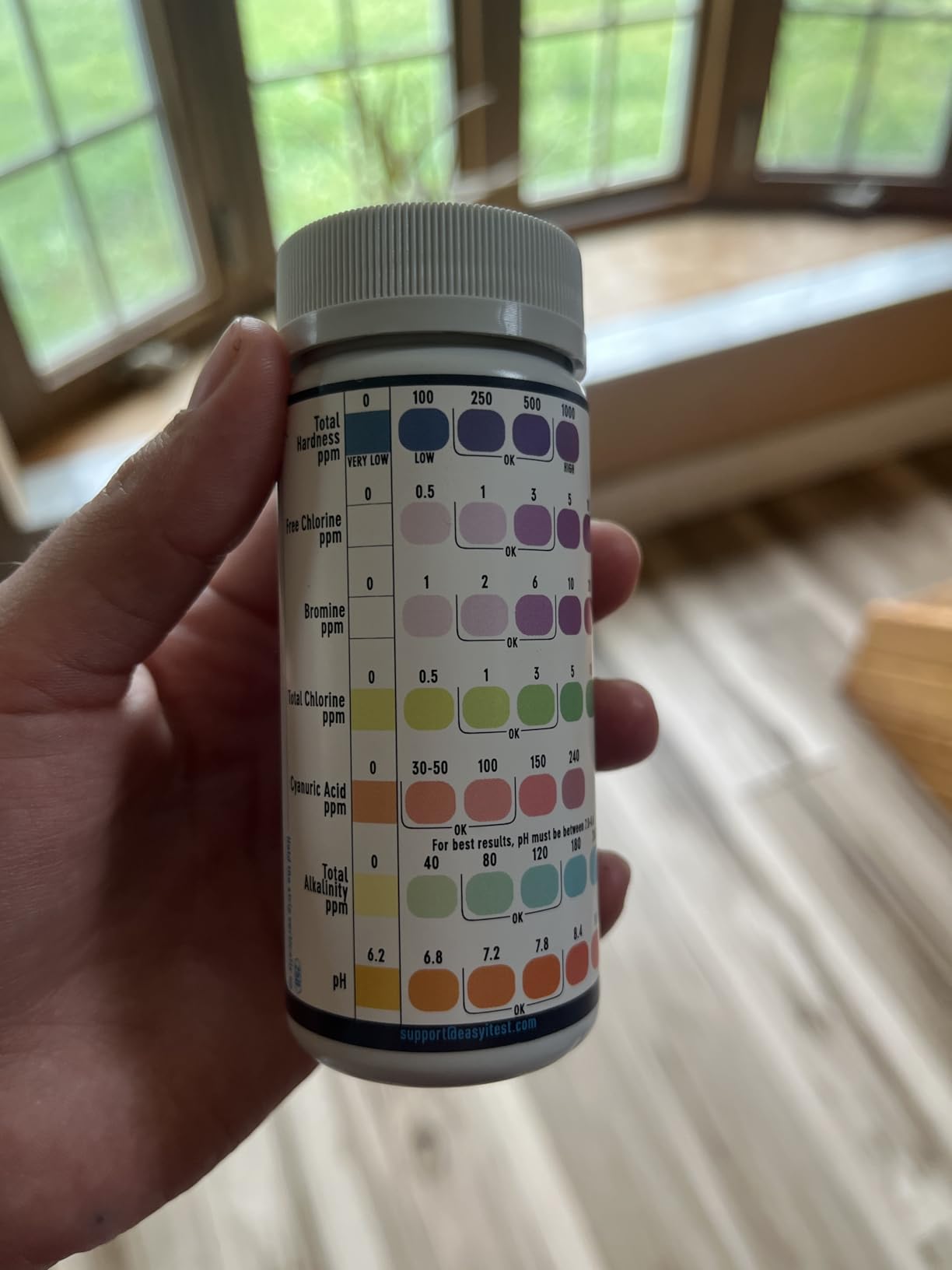
Storage is the single most cited failure trigger across the reviews, and it deserves emphasis. Strips kept in a hot humid pool shed discolor and produce badly skewed pH and alkalinity numbers. Keep the bottle sealed, out of direct sun, and replace it if the pads have visibly faded.
Read in natural daylight, keep wet fingers off the pads, and use the bottle soon after opening for the best results. That last instruction is the reason so many owners keep a second bottle as a fresh backup rather than stretching one container through a full season.
Who this kit suits
It suits any saltwater pool owner who wants a ten-second weekly or twice-weekly check on salt level. At this cost per test you can screen as often as you like and only escalate to a titration when the pad looks wrong.
It also suits owners of above-ground pools, spas and hot tubs where the volume is small enough that salt drifts noticeably after a few hot weekends. Knowing whether you need to add salt, or whether you over-added last month, takes ten seconds with this strip.
Who this kit does not suit
It does not replace a real chemistry kit. If your cyanuric acid reads zero on this strip, that tells you nothing about your actual stabilizer level, and CYA sets the entire free chlorine target in a salt pool just as it does in a chlorine pool.
It is also the wrong tool if you are mid-SLAM or chasing algae, where a half-ppm chlorine error matters. Strips and precise drop counts serve different purposes, and this one belongs firmly in the screening layer.
3. Joyzakzak 8-in-1 Strips: Best All-in-One Strip Set
All-New 2026 8-in-1 Pool Test Strips -150 CT Pool Salt Test Strips | Salt Water Pool Testing Kit for Salt Water Pools, in & Above-Ground Pools, Hot Tubs&Spas| Quick&Accurate Testing Chlorine,pH,Salt
8 parameters in one dip
Salt range 1500-5000 ppm
150 strips per bottle
Pros
- Highest average rating in the group with a strong five-star share
- Reads salt pH free and total chlorine alkalinity calcium CYA and bromine in a single dip
- Nordic fiber paper stops color bleeding between pads
- 150-count bottle makes refills rare for routine checking
Cons
- Salt pad is the least trusted reading on the strip
- Colors bleed after about a minute so results must be read fast
- Not a substitute for a full reagent kit for precise chemistry work
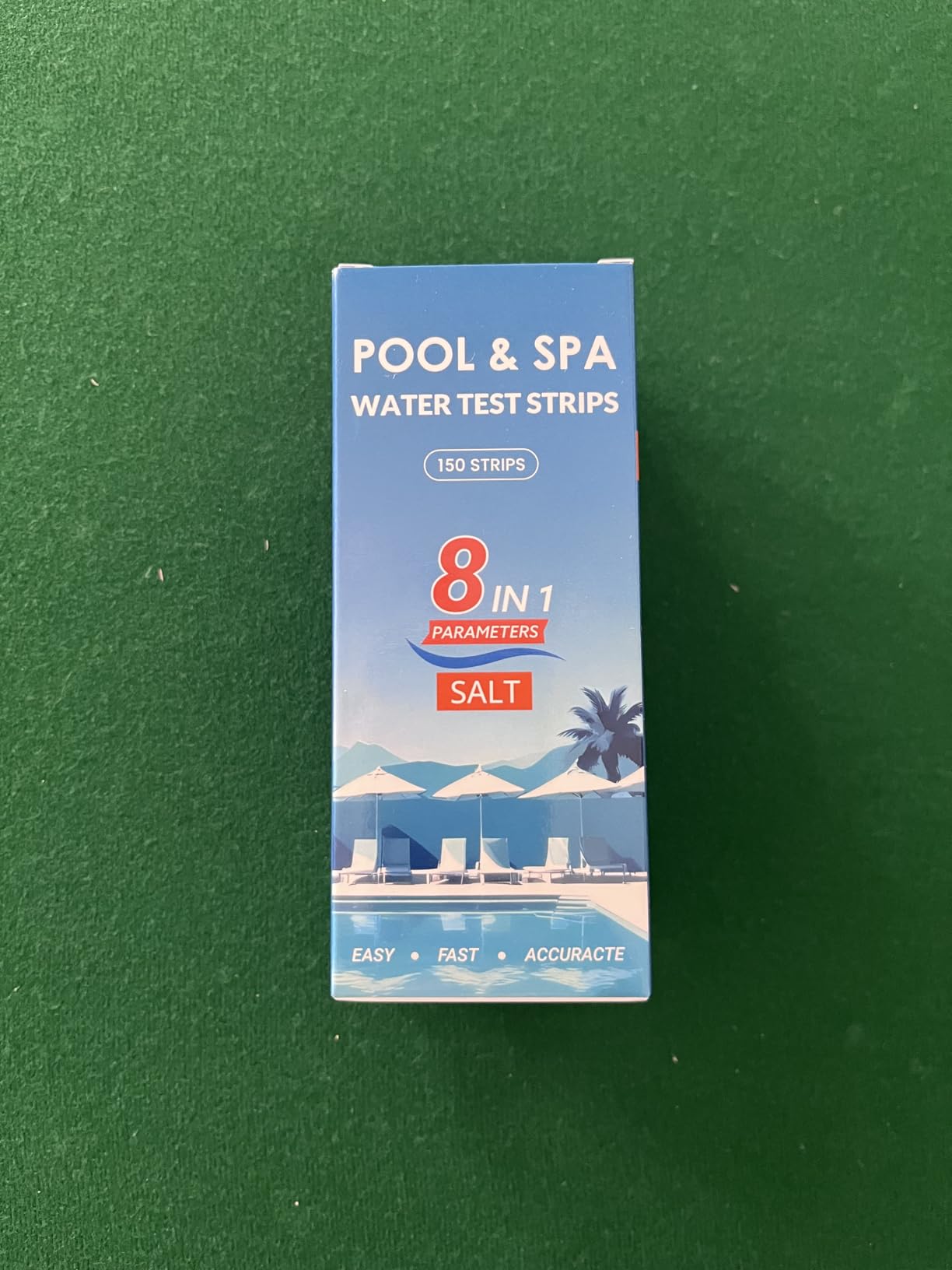
This is the strip set we would hand to someone who wants one dip to tell them almost everything about their pool. Eight parameters come off a single strip: salt, pH, free chlorine, total chlorine, bromine, total alkalinity, hardness and cyanuric acid. The salt section covers 1500 to 5000 ppm with the 2700 to 3400 ppm ideal band printed on the chart, so you are comparing against a target rather than guessing at a color name.
The Nordic fiber paper is the quiet advantage here. Most multi-pad strips bleed color from one reagent into the next pad, which is exactly how owners misread a pH or alkalinity block. Buyers credit this construction with keeping results legible, and the 4.6 average rating reflects that. With 150 strips in the bottle, refills are genuinely rare for routine checking.
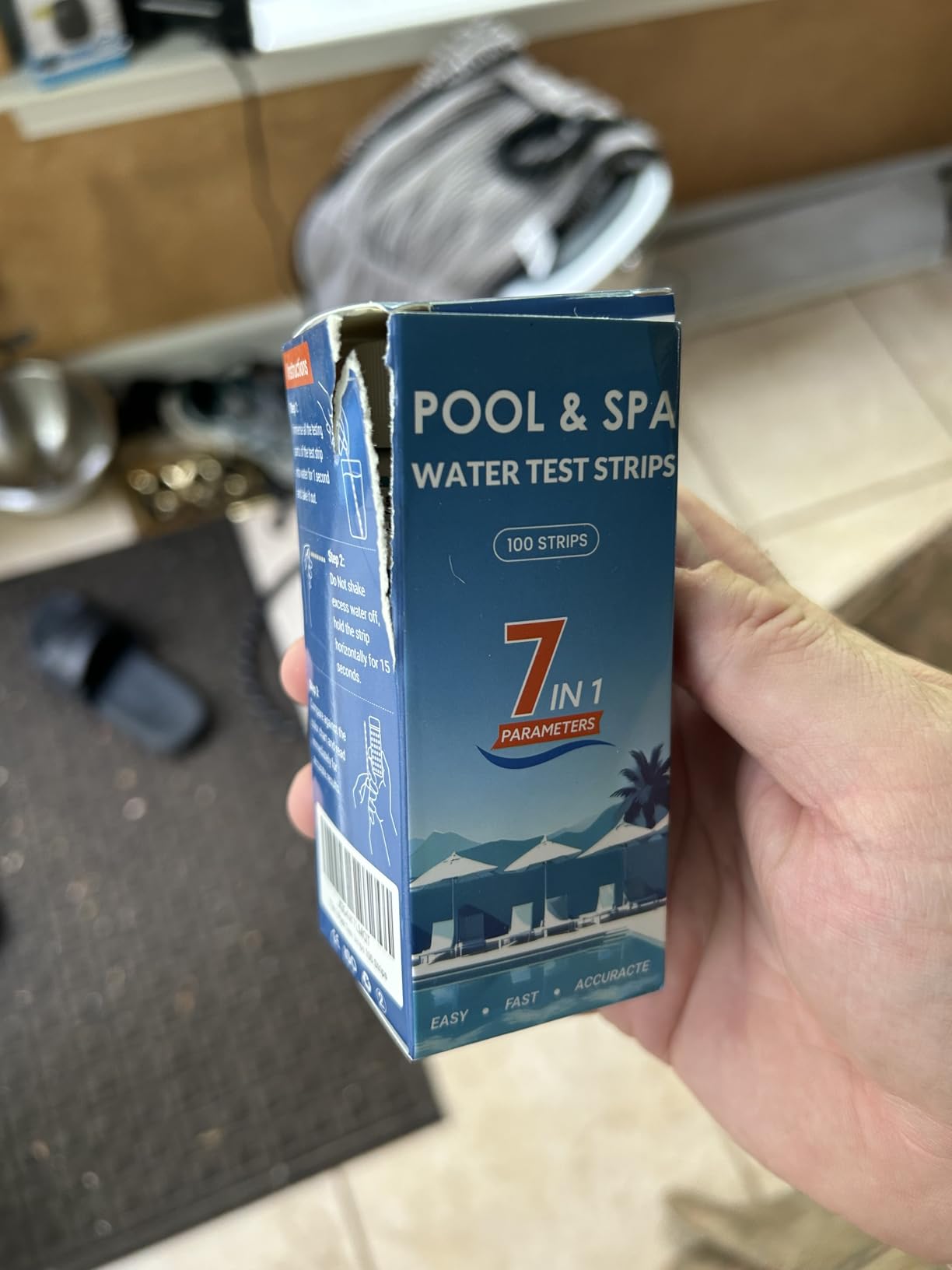
The honest weakness is the salt pad, and owners say so plainly. Chlorine, pH and cyanuric acid land in the same range as a Taylor liquid kit, but the salt block is the parameter people are least confident interpreting, and several buyers bought a dedicated salt test after using it. If salt is the reason you bought the product, that caveat deserves a second look.
The timing is tight: dip for two seconds, hold horizontally for fifteen seconds, then read immediately. Colors start bleeding out after about a minute, so set a timer rather than trying to inspect each pad in sequence. That single habit removes most misreadings on this strip.
Who this kit suits
It suits the owner who wants a single product covering salt and the seven standard parameters without juggling bottles and cells. It works across inground and above-ground pools, spas and hot tubs, which makes it a good all-season choice.
It also suits a beginner who finds seven separate tests overwhelming. One dip, one chart, eight answers, and a routine that takes under a minute including the read.
Who this kit does not suit
It does not suit anyone who needs a defensible salt number before adding salt to the pool. Guessing wrong in either direction has real consequences for the cell and for plaster, and this pad is not the instrument to make that decision with.
Nor does it suit high-frequency commercial work, where the honest weakness compounds. Three dips a day on a strip set whose salt pad is already the least reliable reading will produce numbers you cannot act on.
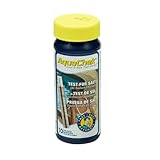
4. AquaChek Salt Titration Strips: Best Top Rated Salt Read
AquaChek Salt Test Strip Titrators for Pools – Salt Water Pool Test Strips for Sodium Chloride – Quick and Accurate Results – Professional Water Quality Testing Kit (10 Strips)
Titration strip
Sodium chloride 400-7000 ppm
10 strips per tube
Pros
- Titration strips return a numeric ppm figure instead of a color guess
- Accuracy checked against digital TDS meters and Taylor drop tests within a few hundred ppm
- No drops to measure or count so fewer handling errors
- Cross-reference chart matched real digital readings in owner testing
Cons
- Small 10-strip tube works out to a high cost per individual test
- Some owners report large variance against a Taylor silver nitrate test
- Reading must be taken at the peak color moment around 3-4 minutes
- Older tubes criticized for arriving past their use-by date
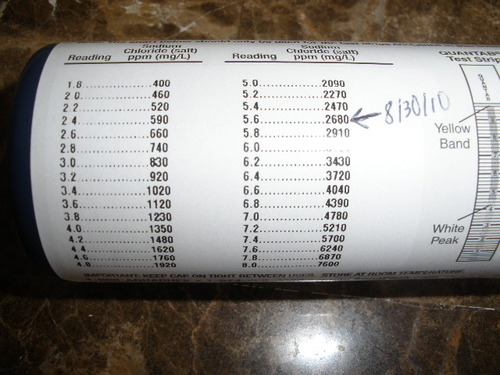
This is the strip category’s genuine step up in accuracy, and the mechanism explains why. Instead of a color block that gives you a range, these white titrator strips give you a number, which is the reason detailed owner experiments line them up so closely with handheld digital TDS meters. The sodium chloride range runs 400 to 7000 ppm, which brackets the 3000 to 3400 ppm target with room on both sides.
Because there are no reagents to measure, drop or count, the whole failure mode that ruins liquid kits is absent. There is no miscount, no undercounted dipper, no missed endpoint. You dip, you wait, and you read a figure. With a 4.5 rating across more than 5400 reviews, this is the most established dedicated salt strip in our group.
Two practical complaints recur. The 10-strip tube is small enough that the cost per individual test works out high, particularly if you are testing twice a week as recommended. And the read has a timing window: take it at the peak color moment, roughly three to four minutes after dipping, because earlier or later readings drift.
A few owners report meaningful variance when comparing strips against a Taylor silver nitrate test, so treat the result as a very good screen rather than the final word. If the strip reads 2900 and your cell is struggling, confirm with a drop test before you act.
Who this kit suits
It suits owners who want a real number without the fuss of drop counting, and who are tired of squinting at a color block and wondering which shade of tan is correct. Owners who have been blindsided by a pool store reading find this a good middle ground.
It also suits anyone who does not want reagents in the house at all. There is nothing to store, nothing to spoil in a hot shed, and no refill routine to remember.
Who this kit does not suit
It does not test anything except salt, so you still need a separate kit or strip set for chlorine, pH, alkalinity, calcium and CYA. On its own it covers roughly a third of what a salt pool owner needs to check.
It is also a poor fit if you plan to test daily. A 10-strip tube will not carry that cadence, and older tubes have been criticized for arriving past their use-by date, so check the date on arrival and buy the multi-pack variants if you are testing often.
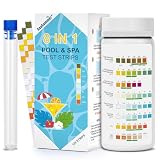
5. SaySummer 8-in-1 Strips: Best Large-Bottle Strip Pack
Salt-Water Pool Test Strips Kit: 125 Counts 8-in-1 for Salt Water Pool Testing Kit, Salt Pool Test Strips for Hot Tub Spa Testing Salt Chlorine pH and More
8 parameters in one dip
Salt range 0-6000 ppm
125 strips per bottle
Pros
- Combines salt with the other seven standard parameters in one dip
- 125-strip bottle covers a full testing season comfortably
- Chlorine pH and alkalinity reported close to professional lab results
- Outer box color bars more accurate than the bottle label
Cons
- Salt pad repeatedly reported unreliable and sometimes shows dark brown at a true 3500 ppm
- One verified buyer saw pH 8.0 when the true value was 7.4
- Bottle label colors can differ from box colors and cause misreadings
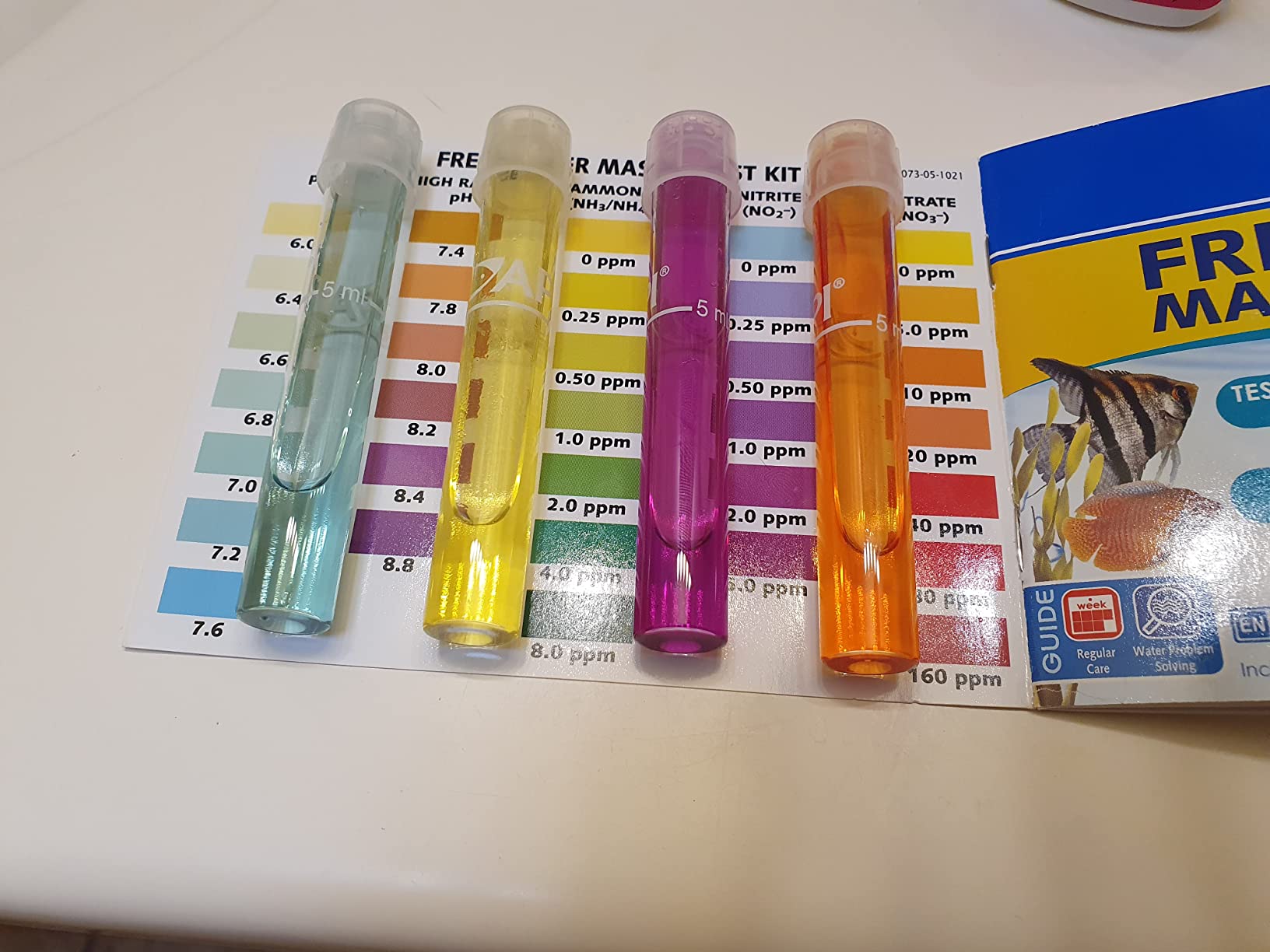
Like the other 8-in-1 set in our group, this one folds salt into a single dip alongside total hardness, free chlorine, bromine, total chlorine, cyanuric acid, total alkalinity and pH. The bottle holds 125 strips, which is more than a standard spa pack, and owners confirm that volume comfortably covers a testing season without a second purchase.
Buyer feedback splits cleanly along parameter lines. The chlorine, pH, alkalinity and CYA pads are widely praised and reported as close to professional lab results. The salt pad is the constant complaint, and it is the reason a number of buyers added a separate salt reader after buying this set.
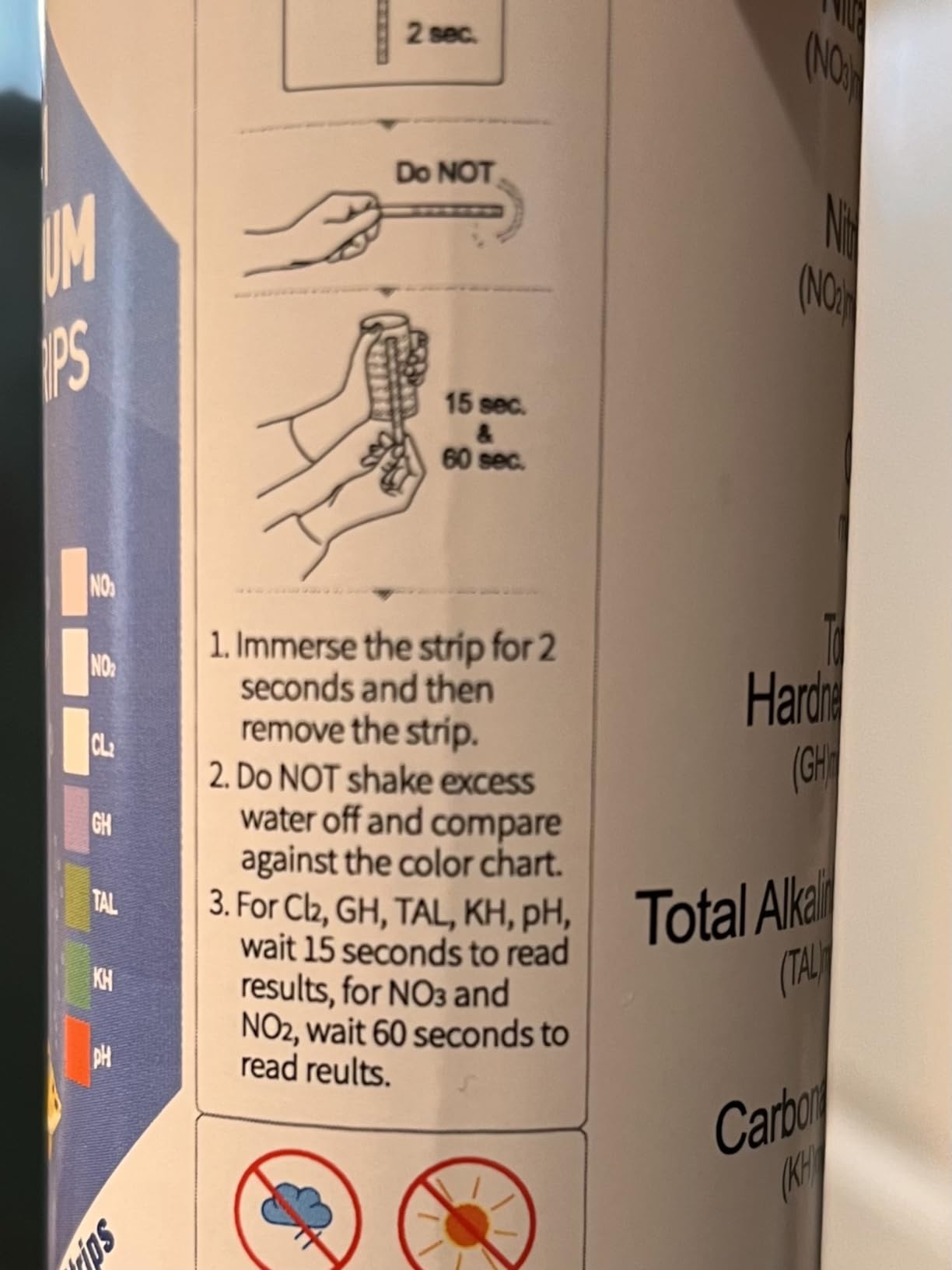
One packaging detail is worth repeating because it causes real misreadings. There are two color charts in the box, one on the bottle and one on the outer packaging, and the box colors are the more accurate of the two. Match your pads against the box chart and keep the bottle chart out of the way.
The timing is more generous than most, dip for two seconds then hold horizontally for thirty seconds without shaking. That slower development window is a genuine advantage if you are testing in poor light or with cold hands, though it does mean the salt pad has more time to drift toward the dark end that owners complain about.
Who this kit suits
It suits owners who test two or three times a week and want one bottle to last the season without topping up. The chlorine and pH reliability is the selling point for routine balance checks.
It also suits anyone running a hot tub or spa alongside a pool, since the same eight parameters cover both and a single bottle covers both water bodies.
Who this kit does not suit
It does not suit anyone buying it for the salt reading specifically. If salt is the deciding parameter, choose a different set or add a salt-only titration, because the pad on this strip is the least dependable thing in the package.
Nor does it suit a color-sensitive reader without a workaround. Misreads of more than half a pH unit have been documented on this strip, which is a wide enough gap to send you chasing a chemistry problem that does not exist.
6. DIPSTIK Salt Strips: Best Budget Spot Check
Saltwater Pool Test Strips,0-8000 ppm,Salt Test Strips Kit
Salt only
0-8000 ppm range
50 strips per bottle
Pros
- Lowest cost per strip in the group for very frequent checking
- Dip wait 30 seconds and compare routine with a bottle-mounted chart
- Owners report a usable approximate result for routine trend monitoring
Cons
- Readings are approximate and some pads may not register at all when levels are fine
- Moisture and heat sensitive so strips degrade if stored improperly
- Buyers who compared against a known-good strip found only one parameter reading correctly
- Not intended for professional or technician-level use
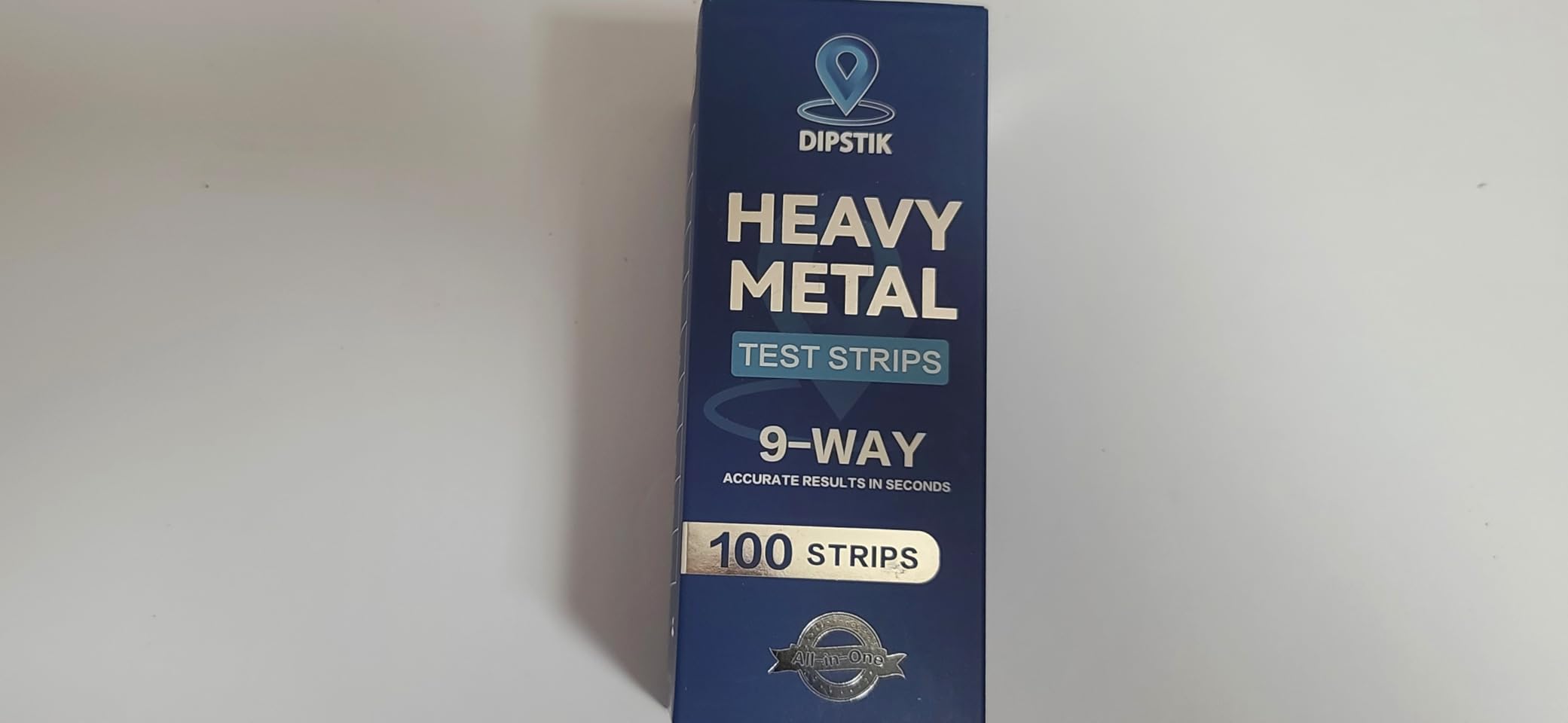
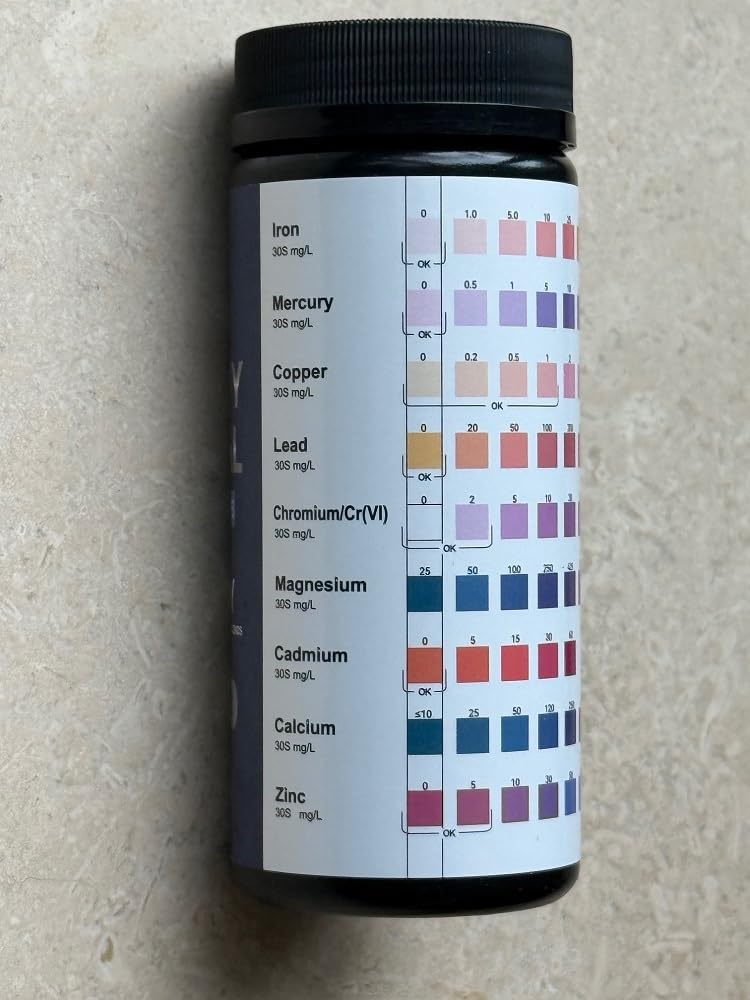
When your question is simply whether the salt is roughly where it should be, this is the cheapest way to answer it. The bottle holds 50 strips covering 0 to 8000 ppm, and the routine is dip for two seconds, wait thirty seconds, compare against the bottle chart. Most owners are content with the general ballpark it gives.
We want to be straight about what this is. It is a spot check, not a measuring instrument. Buyers who cross-checked it against a known-good strip found only one parameter reading correctly, and that shows up in the rating, which sits lower than most of the group with a notable one-star share.
Storage matters more here than with the better strips. These are litmus-based and both moisture and heat degrade them, so keep the bottle somewhere dry and cool rather than in a pool shed through summer. A faded pad that never develops color will read as fine even when it is not fine.
Test strips are not reusable, and wet fingers on the pad will throw off the result. Read under natural light for the most consistent answer.
Who this kit suits
It suits the owner who wants to glance at salt twice a week at almost no cost, particularly on a large pool where concentration shifts more slowly and a rough answer is usually enough to decide whether to test properly.
It also suits anyone who wants to keep a spare strip bottle on hand in a pool house, purely so they never run out and are never tempted to skip a check because the good kit is out of reagents.
Who this kit does not suit
It does not suit anyone making a salt correction. If the reading suggests you need to add salt or dilute the pool, confirm with a titration strip or a drop test first; the cost of a wrong correction is a cell replacement or eroded plaster.
Nor does it suit anyone who needs to document readings over a season or handle a technician-level handoff, since the accuracy simply is not at that standard.
7. AquaChek Salt System Kit: Best Matched Two-Jar Set
AquaChek Salt System Test Kit – for Pools and Spas – Salt Water Pool Test Strips for Sodium Chloride – Test Kit Includes Yellow 4-Way (25 Strips Each) and White Salt Test Strips (10 Strips Each)
Salt titrators plus 4-way balance strips
35 strips total
Two jars
Pros
- Two-part system covers salt level and the four core balance parameters together
- Owners cross-checking with a Taylor kit confirm the salt test works accurately
- Dip and read format removes guesswork from color-only salt strips
- Free app turns logged readings into a treatment plan
Cons
- Only 10 salt titrator strips compared with 25 of the 4-way strips so salt supply runs out sooner
- Owners testing at every water change can find the quantity short
This is the pairing strategy in a single purchase, and for many owners it is the most sensible way to cover a salt pool. One jar holds white titration strips that read sodium chloride from 400 to 7000 ppm. The other holds yellow 4-in-1 strips covering free chlorine, pH, total alkalinity and cyanuric acid, the four parameters you check most often.
What makes it work is that the salt jar uses the titration format rather than a plain color block, so the salt number is a figure rather than a guess. Owners cross-checking against a Taylor liquid kit report that the salt test holds up well, which is not something we can say for the salt pads on the cheaper 8-in-1 strips.
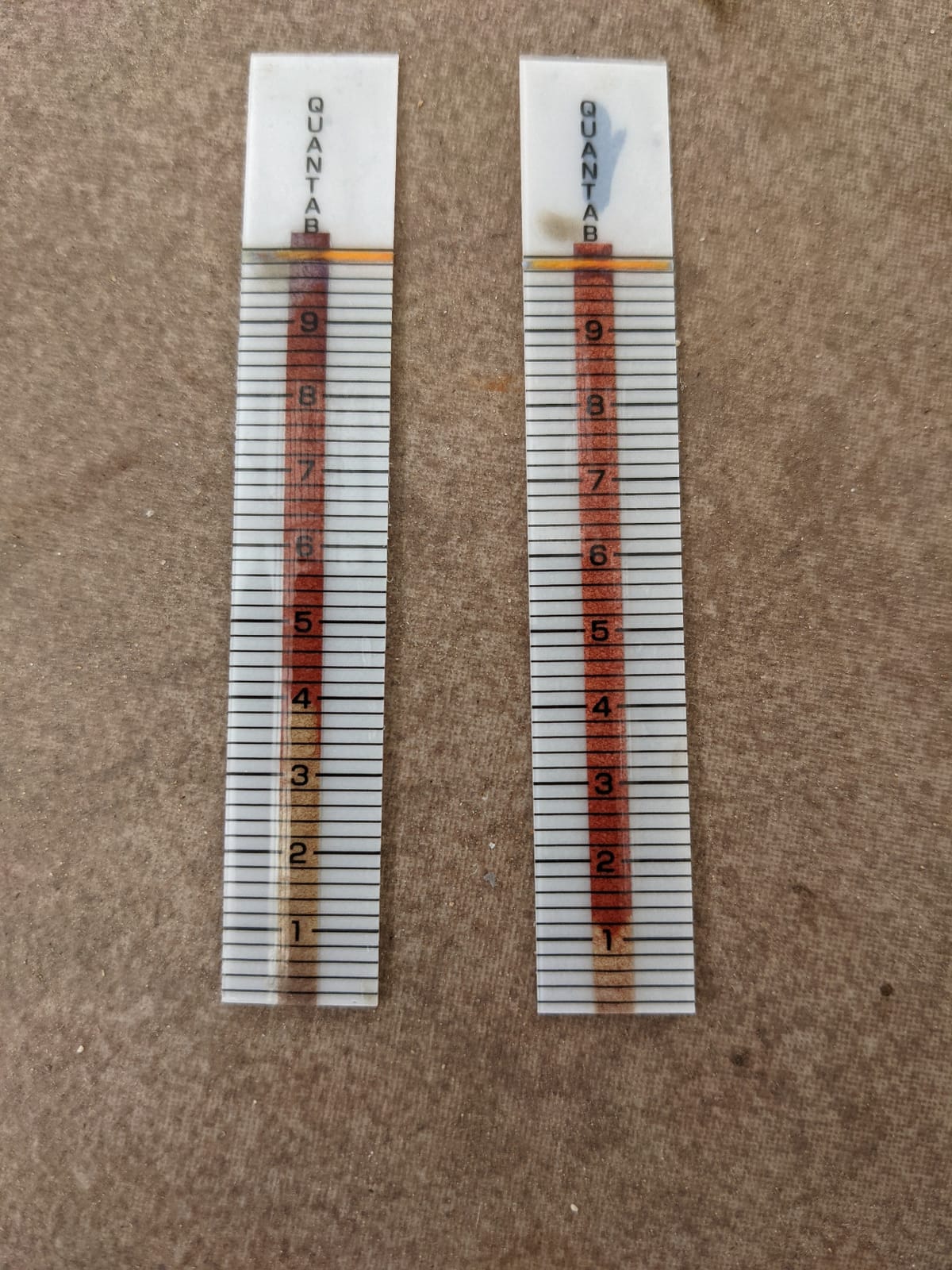
The proportion is the flaw. You get ten salt titrators against twenty-five of the 4-in-1 strips, and salt is the reading you will want most often on a salt pool. Plan on replenishing the salt jar sooner, or test salt weekly and the 4-way parameters on a looser schedule.
There is a free companion app that turns readings you enter into a tailored treatment plan. We would treat any app recommendation as a starting point and verify against your own kit, since the failure most owners report about pool store testing is acting on numbers without checking them.
Who this kit suits
It suits the owner who has decided the two-capability approach is right but wants it in a single purchase with matched strip technology throughout. The strip format also means nothing to store and nothing to spoil.
It suits owners of smaller pools who test salt less often than the general balance parameters, because the ten-strip salt jar stretches further at that cadence.
Who this kit does not suit
It does not suit a high-frequency tester. Three dips a week plus twice-weekly salt checks will empty the salt jar mid-season, and this set tops out at four parameters, so you would still need calcium hardness elsewhere.
It is also not a precision route to a defensible salt number. Good as a titration-based screen, it sits a step below a true silver nitrate drop test when a cell is at stake.
8. Taylor K-1766: Best Salt-Only Drop Test
Taylor Technologies K-1766, Pool and Spa Drop Test Kit for Sodium Chloride
Silver nitrate drop count
Two reagents plus glass tube
4.5 oz kit
Pros
- Drop-count method gives a precise repeatable salt reading with no battery or sensor drift
- Results match closely after known salt additions which builds dosing confidence
- Consistently lands within a couple hundred ppm of a handheld digital tester
- Clear instructions and the kit becomes quick after two or three runs
Cons
- Second reagent clumps and needs a lot of swirling
- Judging the salmon endpoint color takes practice
- Both bottles are the same size despite very different drop usage
- One buyer received the silver nitrate bottle without a drop cap and it leaked
This is the reference-grade salt test in our group, and it is the piece most experienced owners buy alongside a standard chemistry kit. The method is a silver nitrate drop-count titration with a chromate indicator. You add a single drop of solution 1 to a measured sample, then count drops of solution 2 until the color changes. Every drop is a fixed quantity of chloride, so the count converts straight to ppm.
There is no sensor, no battery and no calibration drift. Owners report results landing within a couple hundred ppm of a handheld digital tester and matching expectations closely after known salt additions, which is what makes it trustworthy enough to decide a correction. One documented complaint reported a reading roughly 1500 ppm above the true value, which is worth knowing but is an outlier.
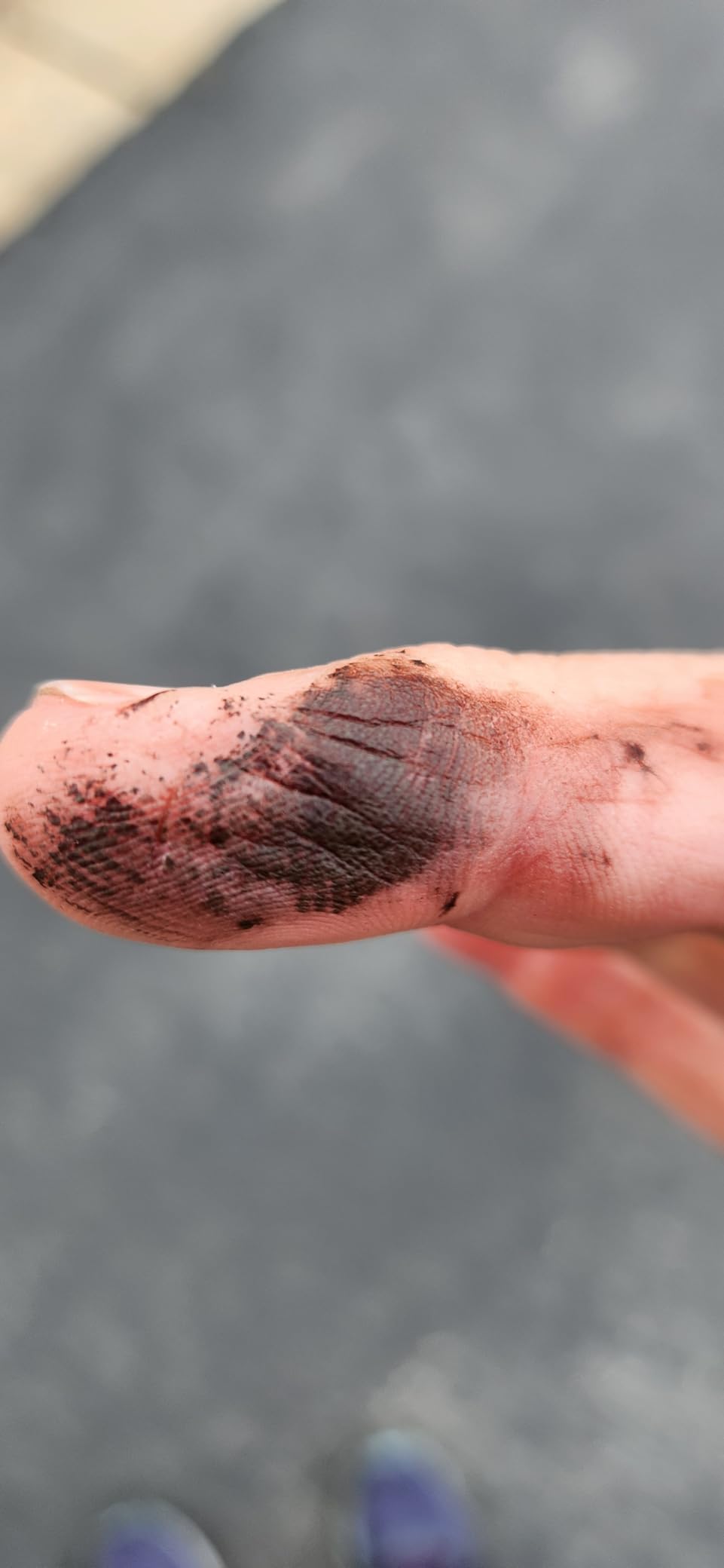
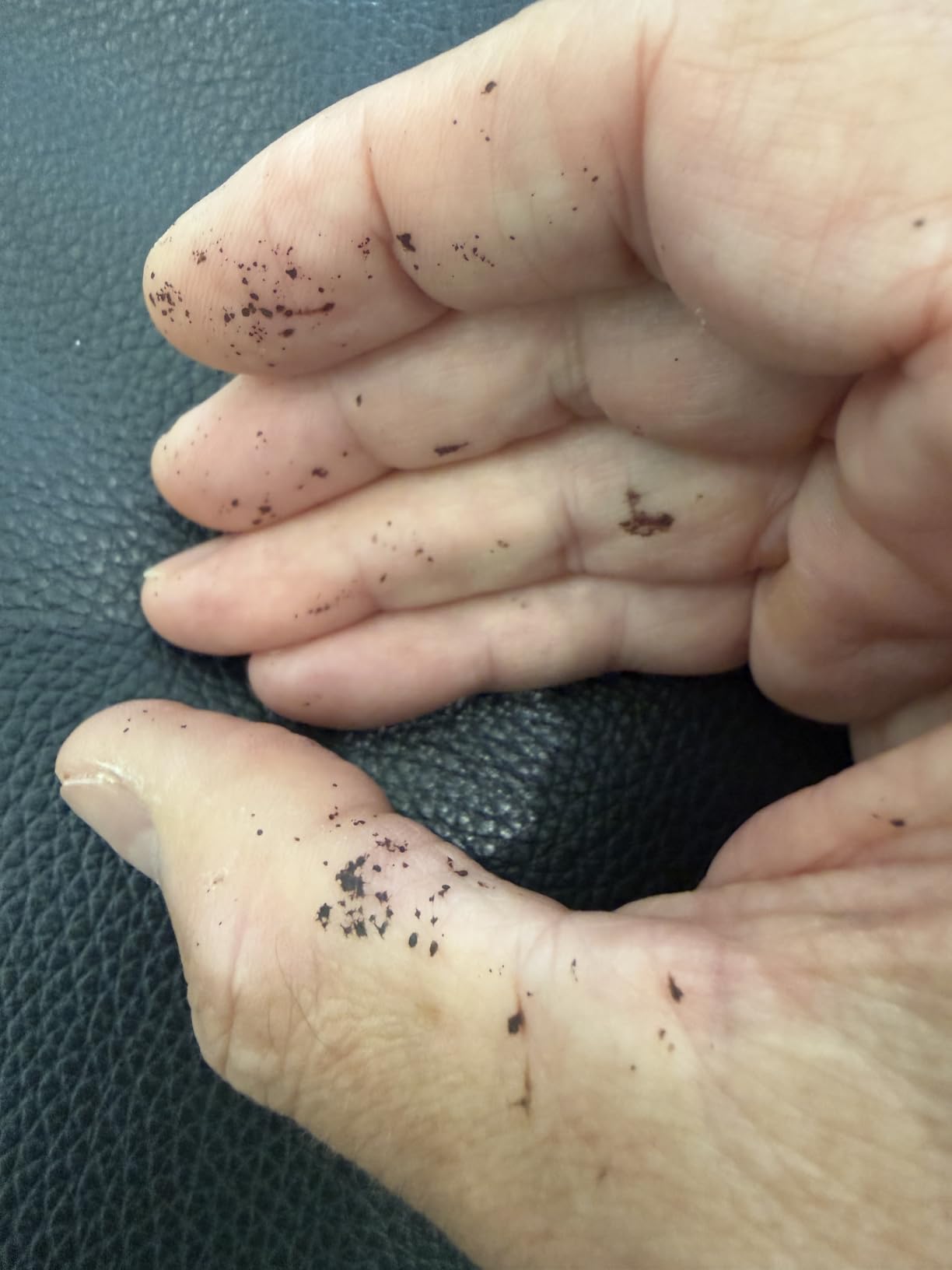
The learning curve is real but short, and it sits almost entirely in the endpoint. Judging the salmon color takes a few runs, and the second reagent tends to clump so it needs vigorous swirling between drops. Once you have done it two or three times it becomes quick.
One design oddity is worth flagging so you do not misjudge the kit: both bottles are the same size even though bottle 1 uses one drop per test and bottle 2 uses fifteen to twenty. That is normal for this kit and not a sign of anything wrong. Keep it out of heat, since silver nitrate reagents degrade in a hot shed.
Who this kit suits
It suits the owner who needs to trust a salt number enough to add salt or dilute the pool, and who plans to test salt weekly or at every major water change. It also suits anyone whose generator display has already given them a reading they do not believe.
It suits the technical owner who wants to cross-check a digital meter or a strip. Because the drop count is the reference method, it is the right instrument for settling a disagreement between your home kit and the pool store.
Who this kit does not suit
It does not test anything except sodium chloride, so it cannot stand alone as your pool test kit. You will still need free chlorine, pH, alkalinity, calcium hardness and CYA covered by something else.
It also does not suit someone who wants a fifteen-second answer with no technique to learn. Silver nitrate handling and endpoint judging are not for every owner, and the titration strips cover the same need far more cheaply if a rough figure will do.
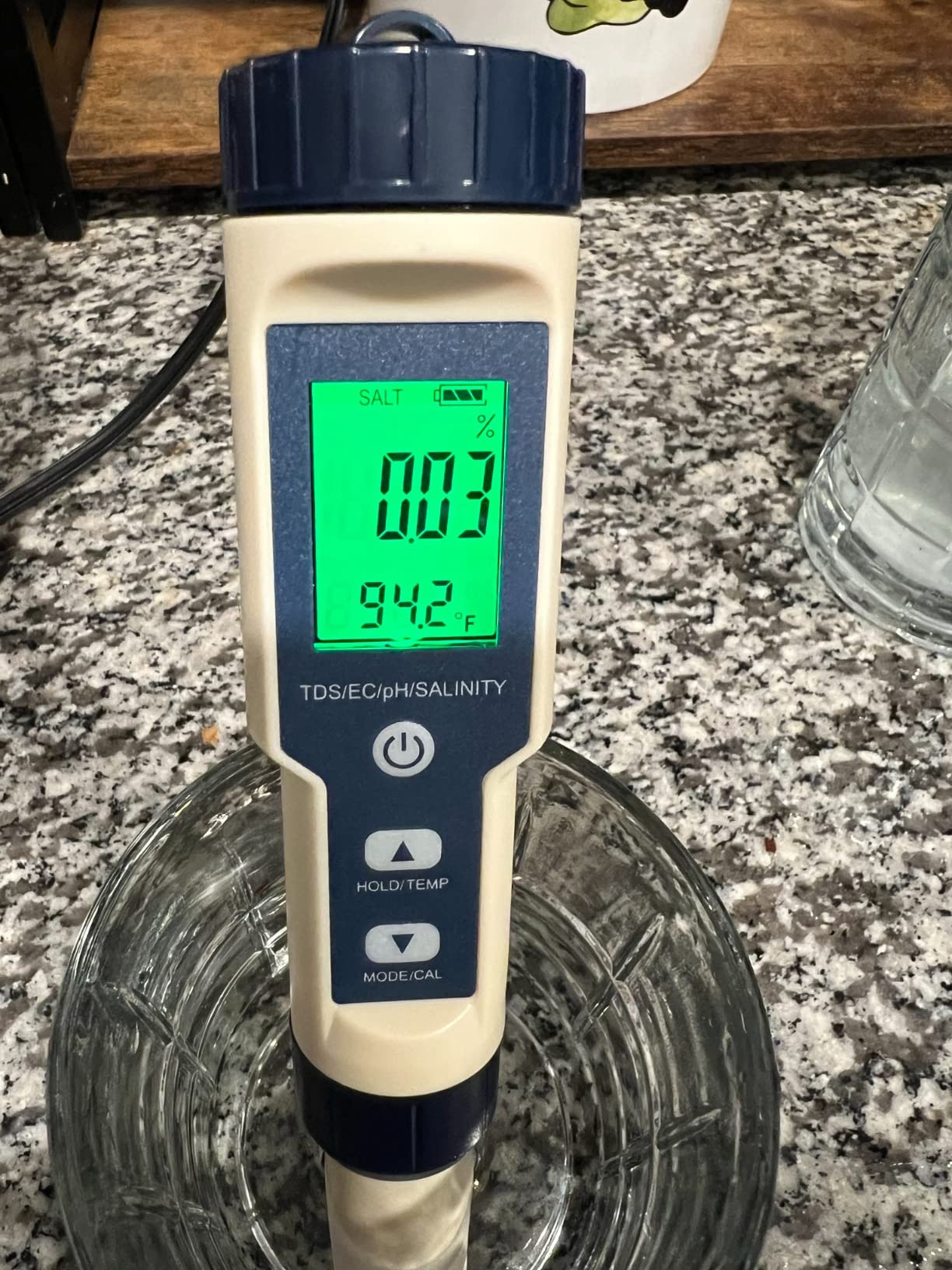
9. Hofun 5-in-1 Digital Meter: Best Digital Salt Meter
Pool Salt Tester & PH Meter, Hofun Digital Salinity Meter and PH Tester for Aquarium and Pool Saltwater Water, 5 in 1 Salinity PH Temp EC and TDS Meter, Aquarium Swimming Pool Hot Tub, Multiparameter
Salinity TDS EC pH temp
Pool salt 0-9999 ppm
Titanium alloy probe
Pros
- Instant digital readings with no reagents drops or color matching
- Five measurements in one handheld unit covers salt pH temperature EC and TDS
- Three display modes remove the need to convert readings manually
- Useful for trend-checking between strip and liquid tests
Cons
- Around a tenth of buyers rate it one star citing drift as the unit ages
- Probe readings shift with temperature and calibration is recurring maintenance
- Less precise than a reference drop test for a definitive number
A digital meter changes the feel of salt testing more than the price suggests. There are no reagents, no drops and no color chart, so the entire routine becomes dip the probe, wait for the value to settle, read it. The pool salt range runs 0 to 9999 ppm, and it switches automatically to ppt above that.
The same unit covers five measurements, which makes it a genuinely useful companion: salinity, total dissolved solids, electrical conductivity, pH and temperature. Owners explicitly pair it with a strip or liquid test to confirm a reading, and that is how we would use it, as a fast trend instrument that flags a change before you go find your drop kit.
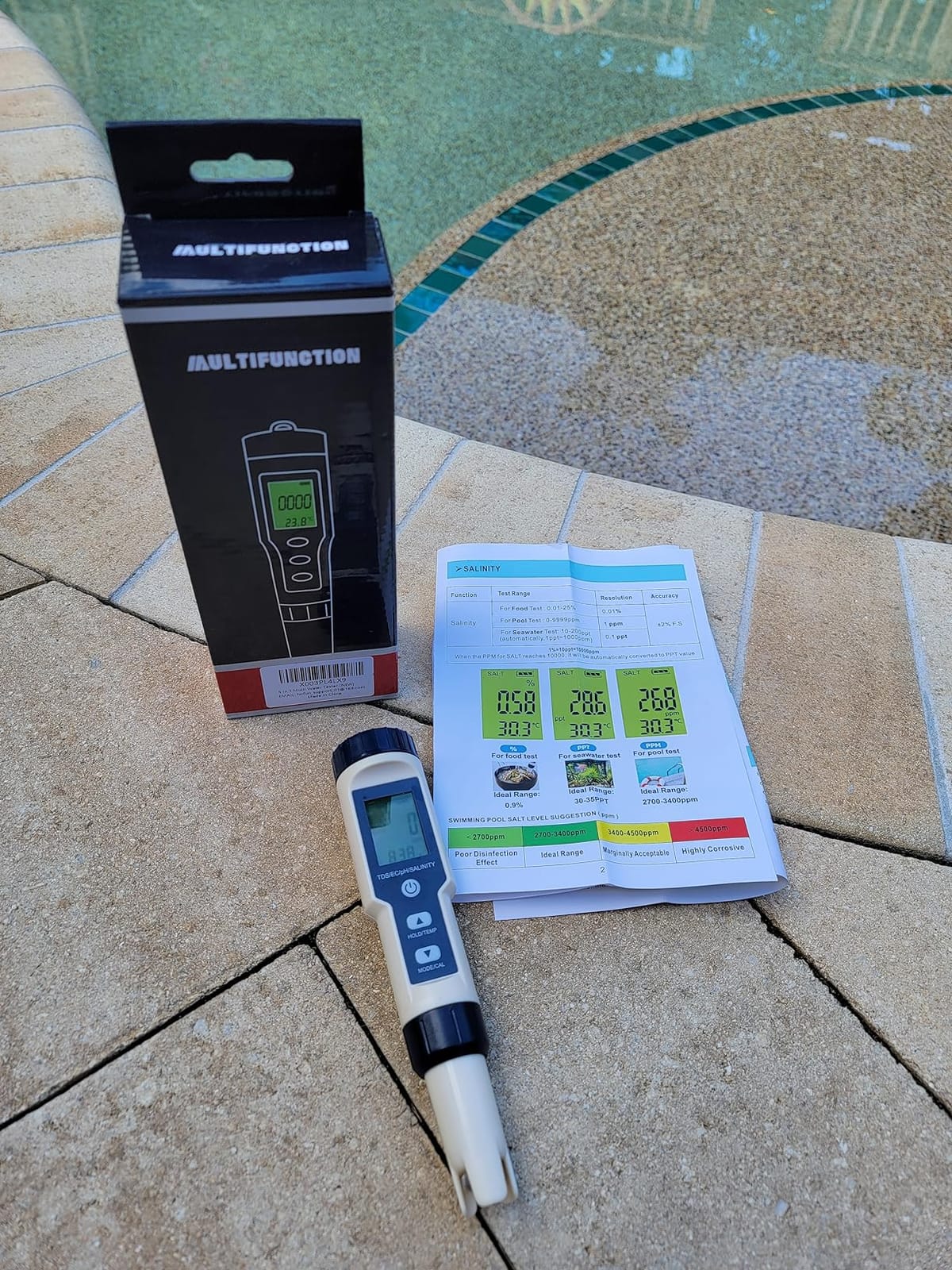
The weakness is drift, and it comes up repeatedly. Probe-based readings shift with temperature and drift as the unit ages, with owners noting values becoming inaccurate after a few months in warm pool water without recalibration. That is a real hazard on a salt pool, where you may be tempted to act on a fast number rather than confirm it.
Calibration is therefore part of the routine rather than an occasional task. Treat the meter as an instrument that needs occasional care, not as a permanent authority, and confirm any reading you intend to act on with a drop test or titration strip.
Who this kit suits
It suits owners who test several times a week, or who run a pool, a spa and a hot tub, and want one handheld device covering salt, pH and temperature without any consumables. For that owner the absence of reagents is a genuine convenience win.
It also suits anyone who dislikes handling silver nitrate or reading color charts. A digital number suits some people far better than a counted drop.
Who this kit does not suit
It does not suit anyone making a salt correction off the number alone. Drift and temperature sensitivity mean this meter is not the instrument to decide whether to add salt, and the review base makes that clear enough.
Nor does it replace a chemistry kit. Its pH reading is not a substitute for a calibrated pH test in a pool where alkalinity and calcium hardness are also out of balance.
10. Poolmaster 22210: Best US-Made Salt Strip
Poolmaster Salt Water Swimming Pool and Spa Water Chemistry Testing Strips, Made in the USA, 22210
Salt only
1500-5000 ppm range
10 strips per bottle
Pros
- Made in the USA in a pop-top container with a desiccant liner that keeps strips fresh
- Dedicated single-purpose salt strips for sodium chloride maintenance
- Simple focused format for owners who check salt 2-3 times a month
Cons
- Only 10 strips per bottle for a product used 2-3 times per month
- Salt-only coverage so pH chlorine and alkalinity need a separate test
- Lowest average rating and highest one-star share in this group
This is the narrowest product we included, and we included it deliberately. If all you need is a sodium chloride reading two or three times a month and nothing else, a dedicated salt strip is the correct purchase and there is no reason to overbuy. The range covers 1500 to 5000 ppm, which brackets the target band for any normal salt pool.
The packaging is the best feature. Made in the USA, it ships in a pop-top container with a desiccant liner, and that liner is doing real work, keeping the strips fresh and dry. We have seen strip failures in our research traced almost entirely to humidity, and this is one of the few products in the category addressing it at the container level.
Its limitations are structural. Ten strips per bottle is thin for a product recommended at two to three tests per month, so you will replace it several times a season. And it tests one parameter, which means pH, chlorine and alkalinity all need something else entirely.
The rating also sits lowest in our group with a 13 percent one-star share, on a much smaller review base than the leaders. That is consistent with a simple focused product where expectations are modest and the failures cluster on quantity rather than accuracy.
Who this kit suits
It suits the owner who wants a salt-only answer a couple of times a month, prefers a domestically made product, and cares about how the strips are stored. The desiccant-lined container is a quiet quality signal.
It also suits anyone who already has a full chemistry kit and simply needs the missing salt leg, and wants to keep the addition small.
Who this kit does not suit
It does not suit anyone testing salt daily or weekly, because ten strips will not carry that cadence. Nor does it suit an owner who has no chemistry kit yet, since this tests nothing else.
It is also not the right instrument for settling a disagreement about salt between your generator, your home kit and a pool store. For that, go to a drop-count test.
How to Test a Saltwater Pool Step by Step
Two separate routines live in a salt pool, and mixing them up is how owners end up with a confident wrong number. Here is the sequence we use.
Free chlorine, FAS-DPD drop count. First rinse your sample cell with pool water, then take the sample at elbow depth, roughly halfway between the surface and your feet, because that is where a representative mix of surface and bottom water sits. Fill to the 25 mL line. Add two dippers of the DPD powder reagent, cap it, and swirl until it dissolves. Now add the FAS titrating reagent one drop at a time, swirling after each drop, and count. When the pink color disappears completely, stop, and your free chlorine reading is the number of drops. Add one drop to the count for accuracy.
The salt titration. For a drop-count salt test, take a fresh elbow-depth sample in the supplied glass tube, add a single drop of the chromate indicator solution, then add silver nitrate drops slowly while swirling. The sample will turn from yellow through cloudy to a salmon or pink endpoint. Count the drops and convert to ppm using the chart in your instructions. On a titration strip, the routine is far shorter: dip the white pad, wait for the color to peak at around three to four minutes, and read the figure rather than the shade.
When results disagree. If your home drop test and the pool store disagree by a wide margin, test again with a fresh sample before changing anything, because a sample taken from a return line or a dirty cell is the most common cause. If the store reading is higher than yours by a thousand ppm or more, suspect their instrument calibration before you suspect your own technique. And if your generator display disagrees with both, believe the drop test, because that display is documented as the first component likely to fail.
Buying Guide: 7 Factors That Decide Which Kit Fits an SWG Pool
1. Salt capability, and whether it is real. This is the only non-negotiable. Check that the product measures sodium chloride and that the range brackets 3000 to 3400 ppm rather than topping out at 2000. Prefer a method that gives a number, so a titration strip or a drop-count test, over a color pad.
2. Chlorine method: titration versus color matching. FAS-DPD counting drops to a clear endpoint is the standard owners trust, and it is why the Taylor kits dominate forums. DPD color matching loses accuracy above about 5 ppm and can bleach out, which is precisely the failure that leads to shocking a pool that did not need it. Knowing your chlorine range ceiling before buying matters too, since 10 ppm and 50 ppm kits behave very differently during a SLAM.
3. Parameter count, and which ones are missing. Cyanuric acid is the parameter people regret skipping, because it sets the entire free chlorine target. A kit without a CYA test is like being given a speed with no speed limit. Calcium hardness matters more in a salt pool than many owners expect, since higher ionic load accelerates plaster erosion.
4. Reagent bottle size and refill economics. Bottle size codes tell you the drop count: 0.75 oz is roughly 532 drops, 1 oz roughly 710, and 2 oz roughly 1420 at 24 drops per mL. Small bottles run dry fast for frequent testers, and a small CYA bottle is the usual first casualty. Buy refills individually rather than replacing the whole kit, and store reagents between 36 and 85 degrees F, which in practice means not leaving them in a pool shed through summer.
5. Testing frequency, which decides your category. Screen with strips two or three times a week, confirm with a drop test when a reading looks wrong, and test salt weekly because concentration drifts with water loss. Owners testing three or more times a week should prioritize bottle size over features. Anyone testing monthly can stop buying consumables entirely and pick a digital meter.
6. Color-matching tolerance and lighting. If you are color blind or simply test at dusk, avoid kits that depend on telling pink from orange. Counting drops solves this problem completely, and reading strips in natural daylight solves most of it.
7. Storage reality. Heat and humidity ruin reagents and strips, and this is the most common cause of wrong readings we found in owner feedback. Somewhere indoors, cool and dry, is the whole requirement. It is worth checking where your kit actually lives before blaming the kit.
For general water treatment equipment beyond testing, our salt-free water softener guide covers a completely different kind of salt reading, useful if you have ever wondered whether the two measurements are related. They are not. If hardness is also driving your calcium numbers at home, our whole-house water descaler guide covers the household side of the same mineral problem, which is worth ruling out before you blame your pool kit.
Frequently Asked Questions
What is the best pool test kit for a saltwater pool?
The best all-in-one is the Taylor K-2006-SALT, a FAS-DPD kit that measures nine parameters including sodium chloride. For most owners the better answer is a standard FAS-DPD chemistry kit plus a separate salt test, because the chemistry portion is identical on a salt pool and only the salt reading needs its own method. Add the Taylor K-1766 or an AquaChek titration strip for salt.
Do you need a special test kit for a salt water pool?
You need a special test only for the salt reading. Chlorine, pH, alkalinity, calcium hardness and cyanuric acid are measured exactly as they are in a chlorine pool, and a good FAS-DPD kit handles them. Sodium chloride requires its own titration or a salt-specific strip, because the display on your generator is often the first component to fail.
How do I test the salt level in my pool?
Take a sample at elbow depth and use either a drop-count titration with silver nitrate and a chromate indicator, counting drops to the salmon endpoint, or a salt titration strip that returns a ppm figure rather than a color range. Your target is 3000 to 3400 ppm. Test weekly, since backwashing, rain and evaporation all shift concentration.
Which Taylor test kit is best for a saltwater pool?
The K-2006-SALT is the only Taylor kit that includes a salt test with its full chemistry panel, covering nine parameters in FAS-DPD high range. If you already own a K-2006 or similar FAS-DPD kit, add the K-1766 sodium chloride drop test rather than buying the combined kit again. Model numbers differ mainly in chlorine method and bottle size.
What is the most accurate saltwater pool test kit?
A FAS-DPD drop-count kit paired with a silver nitrate salt drop test is the most accurate combination for a home pool. Drop counting gives objective numbers that do not depend on lighting or eyesight, and the salt drop test lands within a couple hundred ppm of a reference tester. Colorimetric photometers are convenient but less reliable, as aging light sources, fogged lenses and non-linear dye response all skew wide-range results.
Do salt water pool test strips measure salt accurately?
It depends on the strip. Salt-only titration strips return a numeric ppm figure and owners confirm agreement with drop tests within a few hundred ppm. Multi-parameter 8-in-1 strips often carry the least trusted pad on the bottle, with owners reporting dark or zero salt readings at levels that are clearly present. Use a strip to screen, then confirm with a titration before adding salt.
Why does my salt test read different from the pool store?
The usual causes are a sample drawn from a dirty cell or a return line, reagent that has spoiled in heat, and instrument calibration on the store side, which is often off on pH and alkalinity. Test twice with fresh elbow-depth samples before changing anything. If your generator display also disagrees, trust the drop test, since the salinity reading on the SWG is often the first to fail.
Final Verdict
The Taylor K-2006-SALT is our pick for the best pool test kits for salt water pools because it is the only product here that measures sodium chloride and a full nine-parameter chemistry panel in the same case, using a counted-drop chlorine test that does not depend on your eyesight. It is the shortest path to complete coverage for a new salt pool owner.
For budget-conscious owners, the Joyzakzak 8-in-1 strips give you salt plus the seven standard parameters in one dip at a low cost per test, and the AquaChek titration strips upgrade your salt screen from a color guess to an actual number. For high-frequency testing, buy the larger reagent bottle sizes rather than more kits, and keep a Taylor K-1766 drop test on hand for the salt decisions that actually matter.
Whichever route you take, test salt independently of your generator’s display, keep reagents stored somewhere cool and dry, and confirm any reading you plan to act on with a second method.