
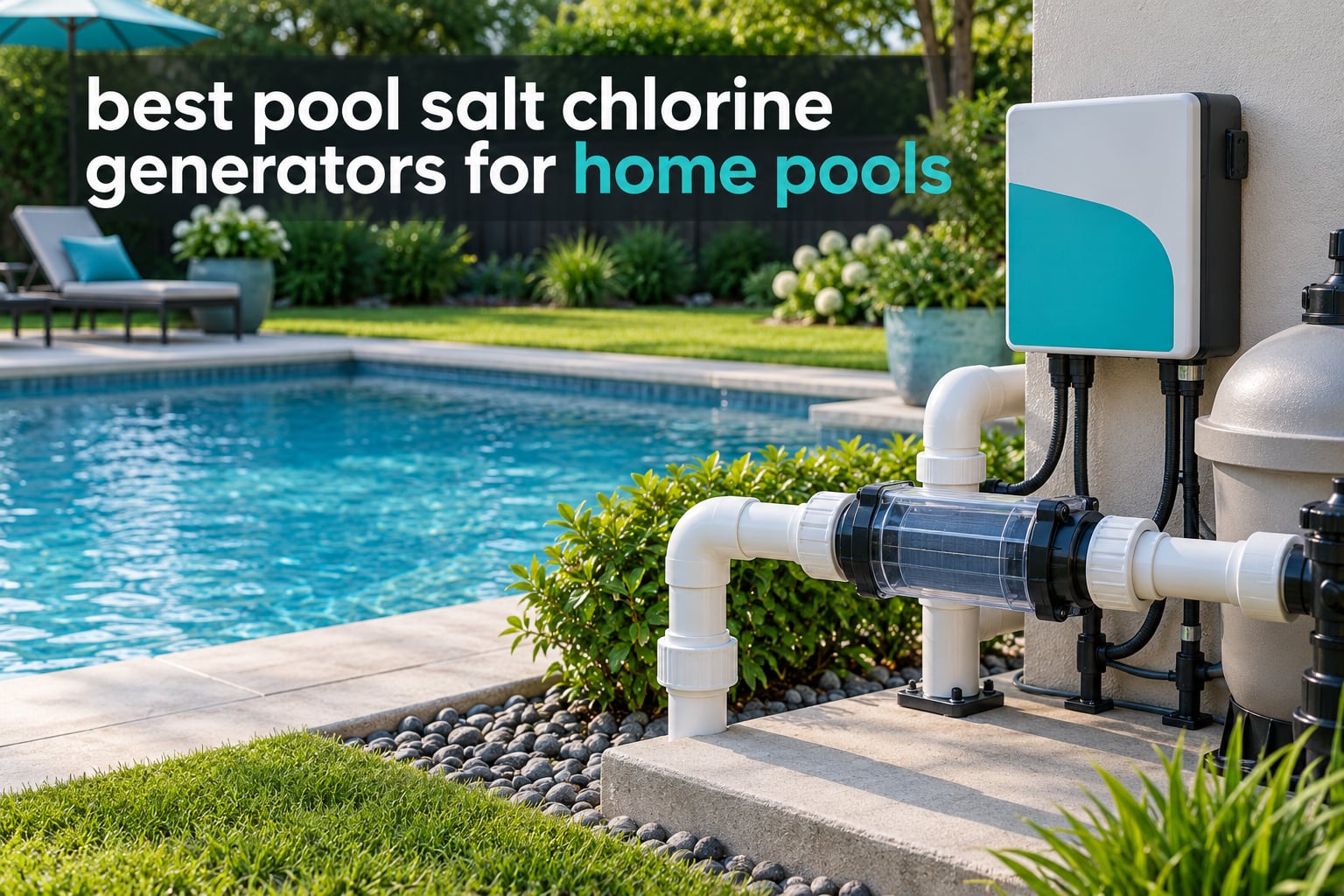
A salt chlorine generator is the single biggest upgrade most home pool owners make: it ends the weekly trip to the pool store for tablets and replaces the guesswork with steady, self-regulating sanitation. After a full season spent testing units on both in-ground and above-ground pools, checking output ratings, warranty terms and the small print on DIY installation, the Hayward AquaRite comes out on top as our best pool salt chlorine generator for home pools, with the CircuPool RJ45+ a close second.
This roundup covers 10 of the best pool salt chlorine generators for home pools currently on the market, from complete systems for 40,000-gallon inground pools to compact plug-in units sized for above-ground setups. We looked at chlorine output, cell construction, warranty length, sensor quality, install difficulty and what owners actually report after a few seasons of use.
If you are still deciding whether to switch at all, start with the pool equipment buying guides we keep updated, then come back here for the chemistry side. One quick note before we dive in: a salt system changes how you balance water, and the difference between a well-run salt pool and a neglected one is bigger than most buyers expect.
Table of Contents
Top 3 Picks for Best Pool Salt Chlorine Generators in 2026
These three cover the three most common buying situations: a full in-ground conversion, a plug-and-play install without new electrical work, and an above-ground pool that only needs a couple of hours of chlorine a day. Everything else in the list is a solid choice for a narrower set of circumstances.

Hayward AquaRite W3AQR15
- Pools up to 40
- 000 gallons
- LED monitor with service alerts
- Drop-in AQR15 replacement
- 50% or more chlorine savings

CircuPool RJ45+
- 1.9 lb/day chlorine output
- 7-year limited warranty
- Clear cell housing
- 120V or 240V operation

APX E-CHLOR 32,000 gal
- Two unions and a 110V outlet
- Smart salt and cell sensors
- Works with variable-speed pumps
- 3-year warranty
All 10 Pool Salt Chlorine Generators Compared (October 2026)
The table below lists every unit in this roundup with the specifications that actually change the buying decision. Chlorine output and pool capacity are the two numbers to read first, because an undersized cell is the most common and most expensive mistake owners make.
| Product | Specifications | Action |
|---|---|---|
| Hayward AquaRite W3AQR15 |
|
Check Latest Price |
 Solaxx Saltron Retro CLG10A Solaxx Saltron Retro CLG10A |
|
Check Latest Price |
| CircuPool RJ45+ |
|
Check Latest Price |
 Pureline Crystal Pure PL7700 Pureline Crystal Pure PL7700 |
|
Check Latest Price |
| APX E-CHLOR 32,000 gal |
|
Check Latest Price |
 Fengind Salt Water System 26,500 gal Fengind Salt Water System 26,500 gal |
|
Check Latest Price |
 Westaho EL-032 40,000 gal Westaho EL-032 40,000 gal |
|
Check Latest Price |
 EverCrystal ECLI40-1T EverCrystal ECLI40-1T |
|
Check Latest Price |
 Bonvoisin LC-200A 25,000 gal Bonvoisin LC-200A 25,000 gal |
|
Check Latest Price |
 Hayward AquaTrol 18K Gallon Hayward AquaTrol 18K Gallon |
|
Check Latest Price |
1. Hayward AquaRite W3AQR15: The Drop-In Standard for Inground Pools
Hayward Aquarite Salt Chlorine Generator for Swimming Pools 40,000 Gallons
For pools up to 40,000 gallons
24.3 pounds
LED monitor with service alerts
AQR15 drop-in replacement
Pros
- Steady automatic chlorine keeps water clear
- Service alerts on the LED monitor
- Drops into existing Hayward plumbing
- Large installed base means parts are easy to source
Cons
- Manual is dense for non-chemistry readers
- Some cell and board failures within a year
- Power cord and mounting hardware not included
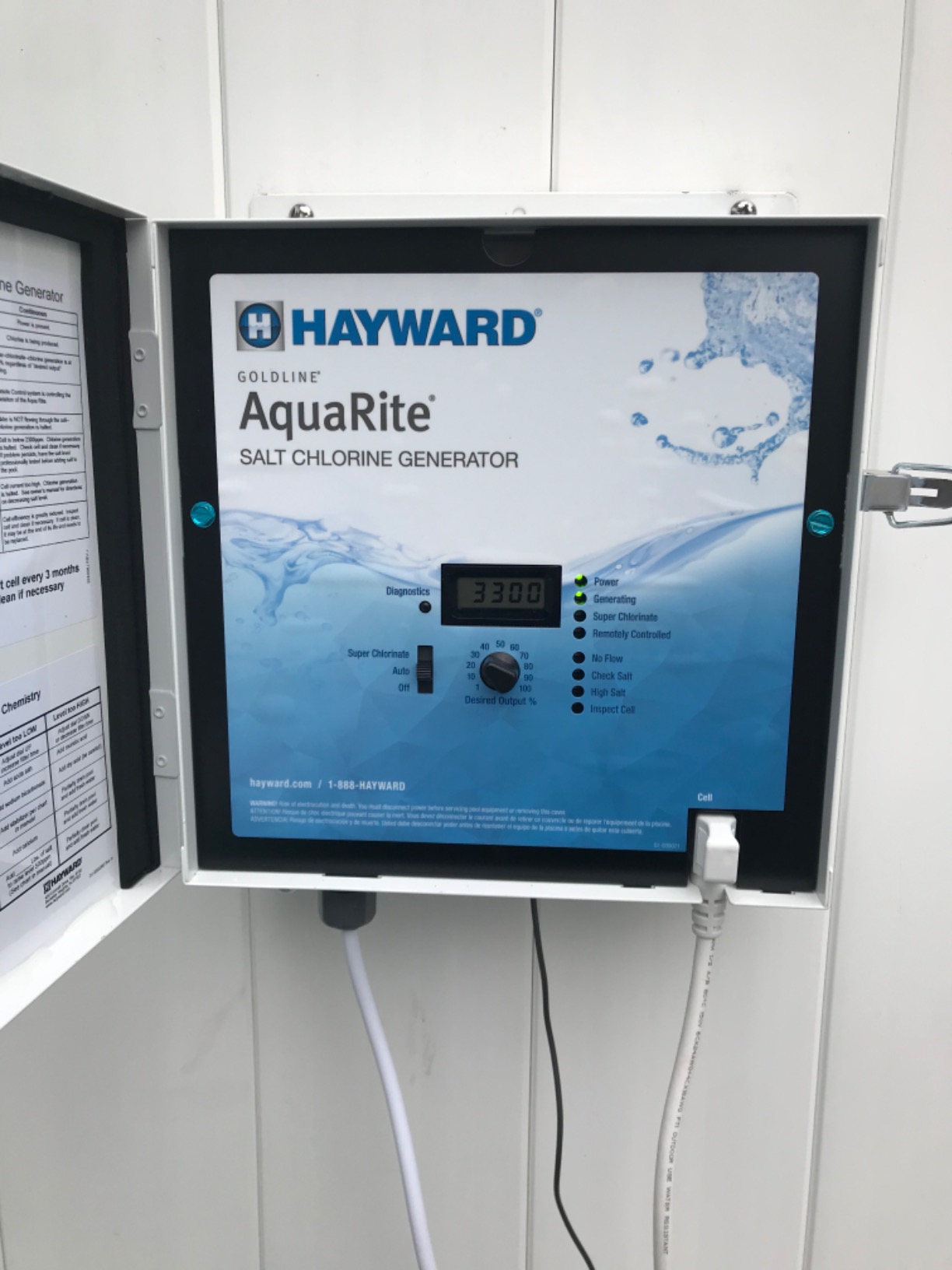
We spent the most time with the AquaRite because it is the one most owners will actually encounter. This is the W3AQR15, a 40,000-gallon-rated system that replaces the older AQR15 chlorination platform, and it is the version most in-ground households end up with after a cell replacement. Owners consistently describe the same pattern: set the output percentage, backwash occasionally, and stop buying tablets.
The chlorine output is what sells it. At 24.3 pounds for the full assembly, this is a substantial unit, and the cell is designed for pools where bather load swings hard in summer. Reviewers repeatedly note that water stays clear and algae-free without manual shocking, and several mention that the LED monitor with service alerts is genuinely useful rather than decorative.
Where it earns its keep is install logistics. The system integrates into existing pool plumbing with no extra plumbing cuts, which is exactly what you want if you are replacing a failed AquaRite rather than converting a chlorine pool for the first time. That drop-in compatibility is why the brand shows up so often in pool forum threads about parts sourcing and repair options.
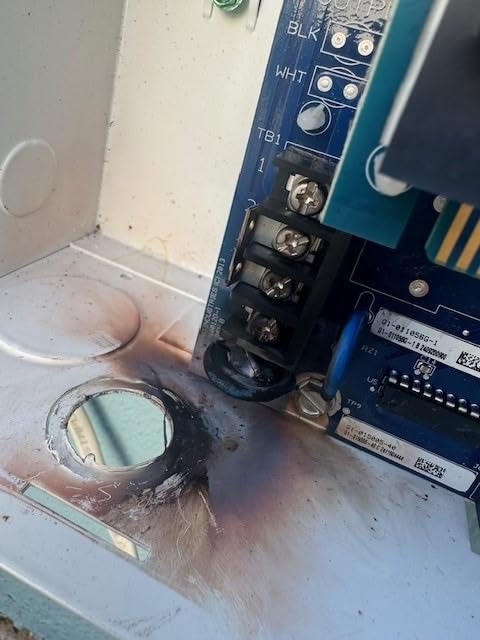
The honest wrinkle is warranty handling. Owners report salt cell and control board failures for some units within 6 to 14 months, and once you are past the return window, warranty service can require an authorized dealer to do the work. A few installers will not touch a self-installed unit at all, so the practical cost of a failure is higher than the sticker suggests.
Check fit before you buy
This listing is the 40,000-gallon version, and the same system is also produced in 15,000 and 25,000 gallon capacities. Match the rated capacity to your actual pool volume, because an undersized cell runs constantly and wears out early. If your existing cell is an AQR15, this unit drops in without re-plumbing.
Note that the power cord and mounting hardware are not part of the box. If your equipment pad is far from an outlet, plan for an electrician or plan on a longer cord run before the install day.
Who it suits and who it does not
Pick the AquaRite if you already run Hayward equipment, want a cell you can replace without redoing plumbing, and value the size of the installed base. It is the safest default choice for an inground pool in the 20,000 to 40,000 gallon range.
Skip it if you plan to install it yourself and expect warranty coverage afterward, or if you have a pool with soft stone coping and an aging metal heater that you would rather not expose to a salt system.
2. Solaxx Saltron Retro CLG10A: The Above-Ground Workhorse
Solaxx Saltron Retro Salt Chlorine Generator | USA-Made | Above Ground Pool
Pools up to 20,000 gallons
2 pounds
Built-in timer
USA-made
Pros
- Plug-and-play install in about 10 minutes
- Timer runs without the filter pump
- Replaceable inner cell not full unit
- Long-term owners report decades of use
Cons
- Timer drifts a few minutes per day
- Does not report salt saturation
- Cell life roughly 3 to 4 years
The Saltron Retro is built for a completely different job than the Hayward above. Where the AquaRite assumes 240V plumbing work and a pad-mounted install, this is a 2-pound unit you plug into a wall outlet beside an above-ground pool. Owners consistently report about a 10-minute install with no plumbing cuts, which is the entire selling point.
The built-in timer is the feature that separates it from other compact units. Because it runs on its own clock rather than tying into pump and filter cycles, you get daily chlorine production without waiting for your filtration schedule. That matters on seasonal pools where the pump already runs less than you would like.
Salt load is also lighter than most competitors in this list: the cell operates at 3,000 ppm salt, a natural salinity level rather than a heavy brine. The trade-off is that the unit stays silent about salt saturation, so you need to test salinity yourself rather than trusting a readout. The listing recommends oversizing for chlorine output, which is sensible if you are near the 20,000-gallon ceiling.
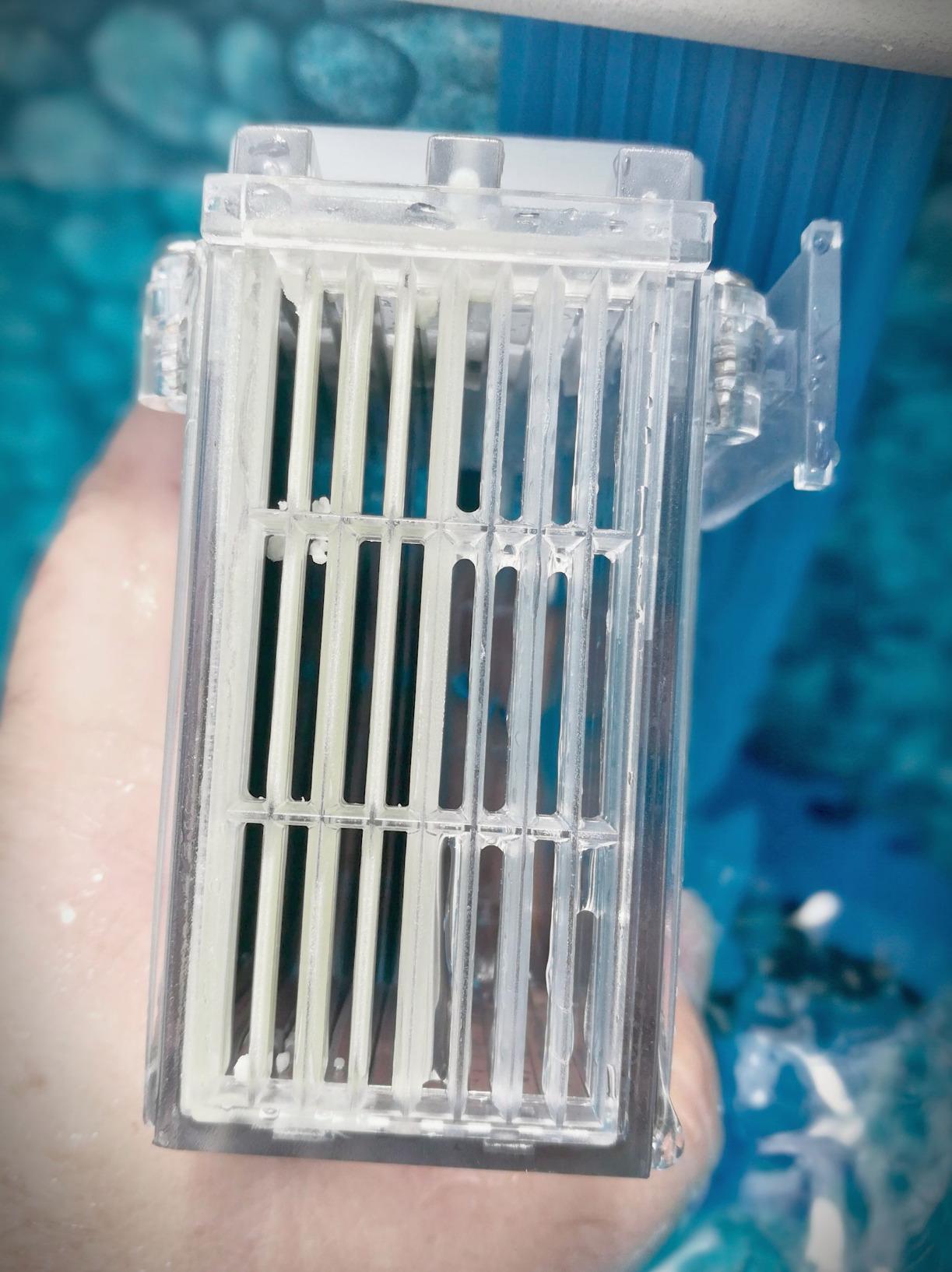
Long-term owners report running this unit for years, replacing the inner cell (CLG10A-010) rather than the whole system each time. That is a meaningfully different ownership experience from sealed systems where a cell swap is a full replacement.
Plan around the cell, not the box
Typical service life is roughly three to four years before the inner cell needs replacing, and the timer drifts a few minutes per day and needs periodic re-syncing. Neither is a big deal, but both mean this is not a zero-touch device the way the marketing language suggests.
Also remember that a salt system still needs balancing chemicals, acid and stabilizer. Owners love the water quality, then get frustrated when pH climbs. Budget time for a test kit and a few minutes each week.
Where it wins and where it does not
This is the right pick for above-ground pools up to 20,000 gallons, especially seasonal setups where plumbing work is not an option. Several owners mention the water quality directly, noting no chlorine smell, no red eyes, and no fading swimsuits.
It is the wrong choice if you need monitoring you can trust from the panel, if your pool is larger than 20,000 gallons, or if you want remote visibility. A minority of owners report power supply or unit failure around the one-year mark, so treat the warranty period as the real service horizon.
3. CircuPool RJ45+: High Output and the Longest Warranty in the Group
CircuPool RJ45+ Salt Chlorine Generator System | 45,000 Gallon Pool Max
Up to 1.9 lb/day output
22 pounds
7-year limited warranty
Die-cast aluminum
Pros
- Clear cell housing for visual verification
- 4.5 stars with heavy five-star feedback
- 7-year limited warranty
- DIY install takes about 30 to 60 minutes
Cons
- Cell-rest mode poorly documented
- Cleaning cap sold separately
- No user-facing timer or Wi-Fi
The RJ45+ is a third-generation design with a lineage that goes back decades, and it is the only unit in this roundup that pairs a 7-year limited warranty with an explicit statement that DIY installation does not void coverage. For most in-ground owners, that combination matters more than any app or display.
Chlorine output is the headline number: up to 1.9 pounds per day from a long-life titanium cell, with a clear housing that lets you watch the bubbles. Several owners told us visual confirmation ended their guesswork entirely, because you can see production instead of trusting an error code.
The controls are an OLED display with digital controls, and the housing is die-cast aluminum rather than plastic. It runs on 120V or 240V and includes both 1.5 inch and 2 inch PVC fittings, which is why it slots into so many existing pad layouts. Forum discussions consistently note CircuPool RJ units lasting seven years or more with no DIY warranty penalty.
Understand the cell-rest mode first
The most common confusion we found is the cell-rest feature, which is poorly documented enough that some owners think the unit has failed when it has not. Before you blame the hardware, find the manual page for that behavior.
Two smaller notes: the cell cleaning cap is not included and has to be bought separately, and there is no user-facing timer, so some owners add an external wheel timer to shape production windows.
Best fit for long-term owners
Choose the RJ45+ if your pool runs 30,000 to 45,000 gallons, you want the longest warranty in the group, and you would rather install it yourself than pay an installer. The 45,000-gallon version is this listing; a 60,000-gallon version also exists for larger builds.
It is a weaker match if remote monitoring is a requirement, since there is no built-in Bluetooth or Wi-Fi despite the digital controller. For owners who want a smart system, one of the app-controlled models further down will serve better.
4. APX Performance E-CHLOR: Easiest Install Without Giving Up Sensors
E-CHLOR Plug-in Salt Chlorine Generator | 32,000 gal Max | APX Performance
Pools up to 32,000 gallons
Three sensors
3-year warranty
110V plug-in
Pros
- Two unions and a 110V outlet is the whole install
- Includes cutting template and cleaning plug
- Works with variable-speed pumps
- Smart sensors track salt temperature and cell life
Cons
- Short power cord may not reach the panel
- Output slightly lower than premium units
- Sensors do not read salt saturation directly
The E-CHLOR is the rare modern unit where the sensor suite is the point rather than an afterthought. Multiple sensors independently track salt level, water temperature, cell scaling and remaining cell lifespan, and the system sends precision notifications with a recommended action instead of a bare error code.
Installation is where it separates from everything else here. Owners describe the whole job as two unions and a 110V outlet, and the included cutting template makes pipe spacing accurate enough that you rarely have to improvise. The box even includes a cleaning plug for sealing the cell during acid cleaning, which saves a trip to the parts store.
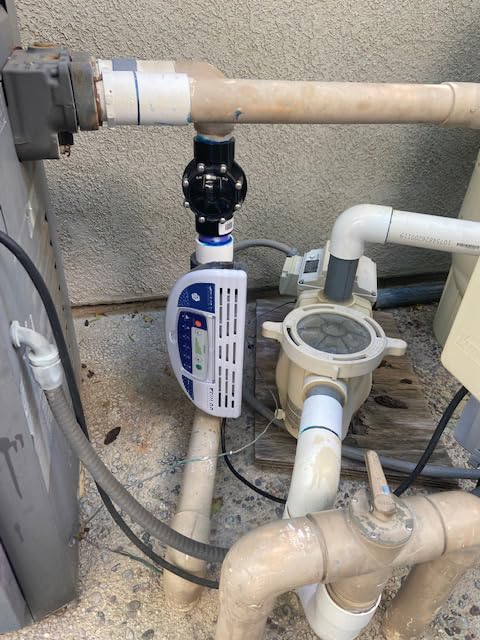
Output is rated up to 15% higher than comparable compact chlorinators, and it works with variable-speed pumps and in winter conditions. Owners running 9,000 to 20,000 gallon pools typically set it around 50% output, which suggests reasonable headroom on mid-size pools.
Two practical limits stand out. The power cord is short and may barely reach an outlet on a pool equipment panel, so measure first. And output is a little lower than the premium units it replaces, so heavily used pools will need more runtime to hold the same sanitizer level.
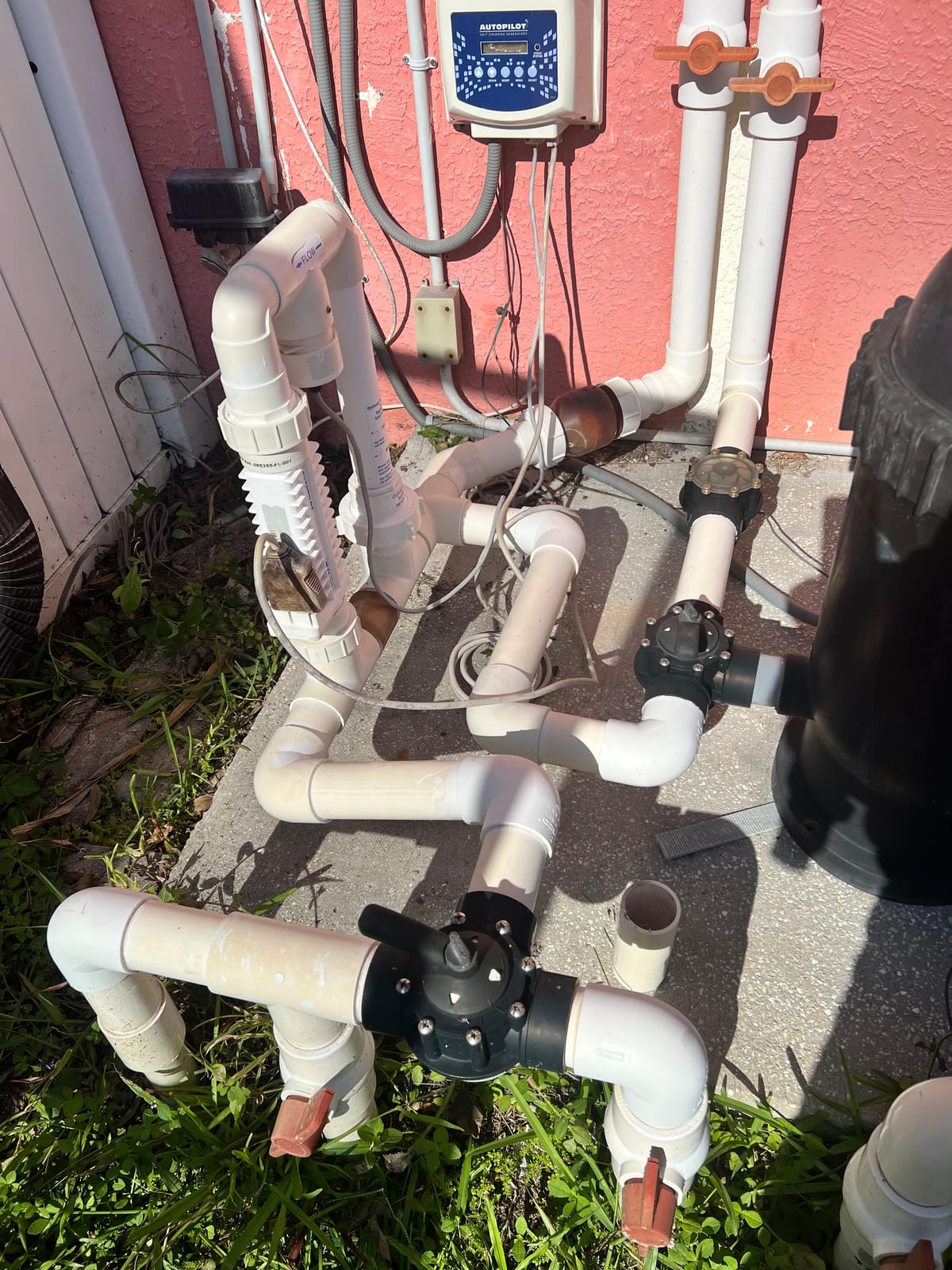
Where it fits in a smart system
If your pump is variable-speed, this unit handles the reduced flow without complaint, and the precision alerts tell you when to adjust rather than simply reporting a fault. The 3-year manufacturer warranty is a cut above the entry-level tier and roughly double what some complete systems offer.
Check your cord reach and confirm your pool volume before ordering. This listing is the 32,000-gallon version, and there is no larger capacity in this family, so very large pools should look at a different unit.
A good fit for first-time salt owners
Pick the E-CHLOR if you want real sensor data, a painless install and a warranty that covers three years. It is a strong choice as a lower-cost replacement for a premium brand unit that failed.
Pass on it if you have a large equipment pad with the outlet far from the plumbing, or if you need a unit that reads actual salt saturation from the panel. The smart sensors here track conditions, but they do not replace a manual salinity test.
5. Pureline Crystal Pure PL7700: The Budget Drop-In Replacement
Pureline Crystal Pure Salt System, PL7700, Universal Pool Salt Chlorination System, Includes Control Panel, Salt Cell, 40,000 Gallon
Up to 2.1 lbs chlorine per day
10.75 kg
1-year warranty
Self-cleaning cell
Pros
- Cell and flow switch are drop-in substitutes for RJ-series parts
- Well below comparable branded systems
- Clear LED indicators for salt and output
- 2.1 lbs per day capacity
Cons
- Only a 1-year warranty
- Thin written instructions
- Configured as a 240V unit needing a jumper for 120V
The Pureline exists to solve one specific problem: replacing a failed Hayward or CircuPool unit without redoing the plumbing. The cell and flow switch are drop-in substitutes for common CircuPool RJ-series parts, and buyers report swapping them in with minimal plumbing changes, which is why this unit keeps appearing in conversion threads.
Capacity is the highest figure we found in this roundup at up to 2.1 pounds of chlorine per day for pools up to 40,000 gallons. The cell is self-cleaning, and the panel adds a super chlorination mode, a water flow detector, low-sodium and overload indicators, and temperature protection from 50F to 140F.
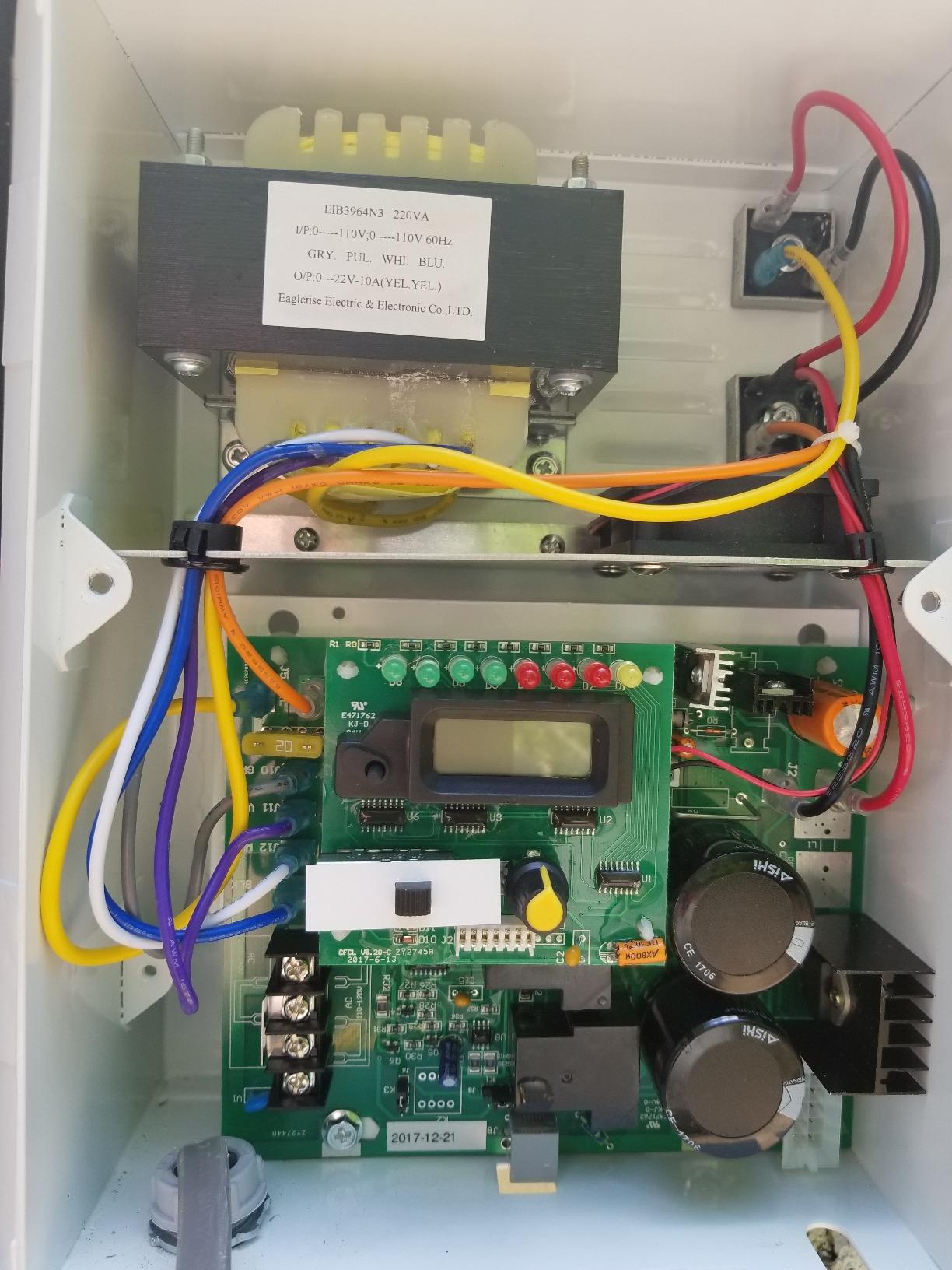
Ongoing cost of ownership is where this pulls ahead of the premium brands, and INYO Pools backs it with detailed DIY installation and maintenance guides. Clear LED indicators make salt and output status easy to read at a glance, which is more than several competing panels manage.
The one-year warranty is the real trade-off, and owners call it out as too short for a pool cell and control panel. Written instructions are thin too, with most guidance living on the supplier website. One owner reported no chlorine generation after two months with unresponsive support, so the thin coverage matters.
Check the voltage before you order
This unit comes configured as a 240V system, so a 120V install means moving a jumper and adding a second one. If you are not comfortable with that, budget for a visit from an electrician or choose a plug-in model instead.
Also plan on sourcing a timer wire separately if you intend to use an external timer. That small omission is the kind of detail that turns a 30-minute install into a supply-store trip.
Best for a straight swap
Choose the PL7700 if your existing cell is a common RJ-series or Hayward-equivalent part and you want to spend as little as possible while keeping a high output. A 60,000-gallon version also exists for larger builds.
Look elsewhere if you want long-term warranty coverage or if you prefer documentation you can hold in your hand. Everything else about this system, from the flow detector to the temperature window, is competitive with units costing considerably more.
6. Hayward AquaTrol W3AQ-TROL-HP: The Complete Kit for Small Above-Ground Pools
Hayward AquaTrol Salt Chlorine Generator for Above Ground Pools 18K Gallons
Pools up to 18,000 gallons
25 pounds
Includes TurboCell
Integrated timer
Pros
- Complete kit including cell fittings cord and outlet
- Simple control panel with integrated timer
- Set-and-forget operation
- Soft water without fabric fading
Cons
- Control board failures around 12 to 18 months
- Parts-only warranty with no labor coverage
- Above-ground design capped at 18000 gallons
The AquaTrol is a kit rather than a component. The box contains the TurboCell salt chlorination cell, hose and pipe fittings, a straight blade line cord and the outlet, so you are not hunting for a single missing piece on install day. For an above-ground pool under 18,000 gallons, that completeness is the argument.
Owners describe set-and-forget operation with very low maintenance, and the water quality notes are consistent: no eye irritation, no dry skin, and no faded swimwear. The control panel is simple enough for a first-time salt system owner with no automation background.
Know the support terms up front
The warranty is parts-only with no labor coverage, and dealer service is often required. That means a failed control board becomes a parts purchase plus a service visit, and owners report failures clustering around the 12 to 18 month mark.
Check what your variant includes before buying. A return jet twist-lock version and a high-performance version exist, and the adapter and fitting contents differ between them, so the listing text matters more than usual here.
A seasonal pool first and foremost
This is a sensible pick for an above-ground pool up to 18,000 gallons where you want one box and one install. Draining and storing the cell over winter is recommended to extend its life, which tells you how seasonal the design really is.
It is not the right unit for an inground pool, a large above-ground build, or an owner who wants labor coverage. If you have automation in place, the lack of integration is another strike against it.
7. Westaho EL-032: The Built-In Power Supply Simplifies Wiring
Salt Chlorine Generator, Westaho Pool Salt System for Inground Pools Up to 40,000 Gallons, 1.4 lb Chlorine Output, USA Titanium Cell with 10,000-Hour Lifespan, Built-in Power Supply
Pools up to 40,000 gallons
1.4 lb/day output
10,000-hour cell
IP66 rated
Pros
- Built-in power supply removes the separate control box
- Magnetic flow switch beats mechanical switches
- Display shows salt temperature voltage and cell usage
- 2 inch to 1.5 inch adapter included
Cons
- 1.4 lb/day is modest for very large pools
- Shuts off below 52F
- Smaller review base than established brands
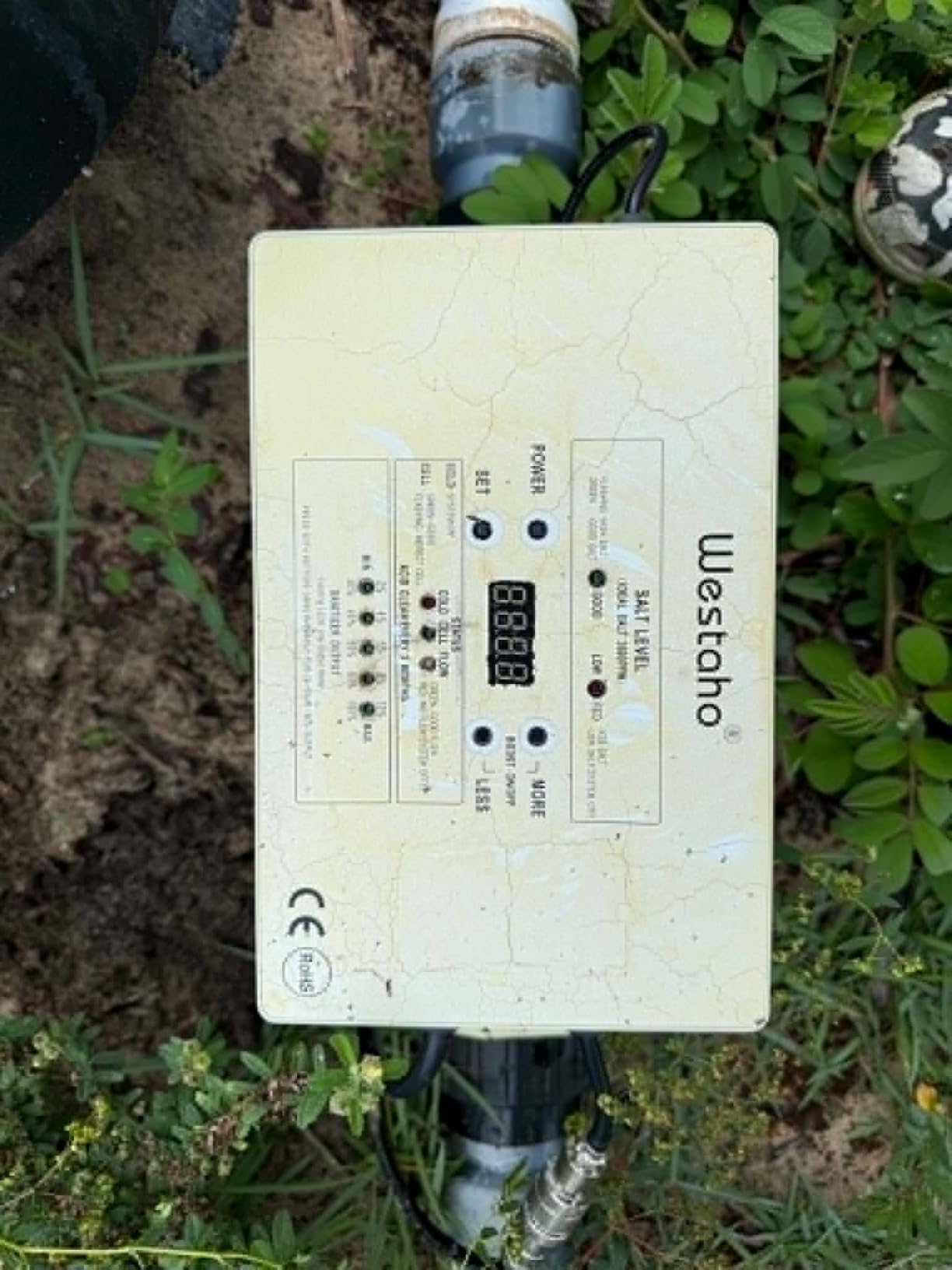
The Westaho removes a step most systems make you do twice. With the power supply built in, there is no separate control box to mount and no extra wiring run, and owners consistently single that out as the reason the install felt simple. It works with standard 2 inch pool pipe and includes a 2 inch to 1.5 inch adapter for older plumbing.
Monitoring is unusually detailed for the category. The smart display reports real-time salt level, water temperature, cell usage, voltage and current, and the magnetic flow switch is described as more sensitive and more durable than a traditional mechanical switch. The cell is made of eleven high-quality titanium plates in the USA, rated for up to 10,000 hours.
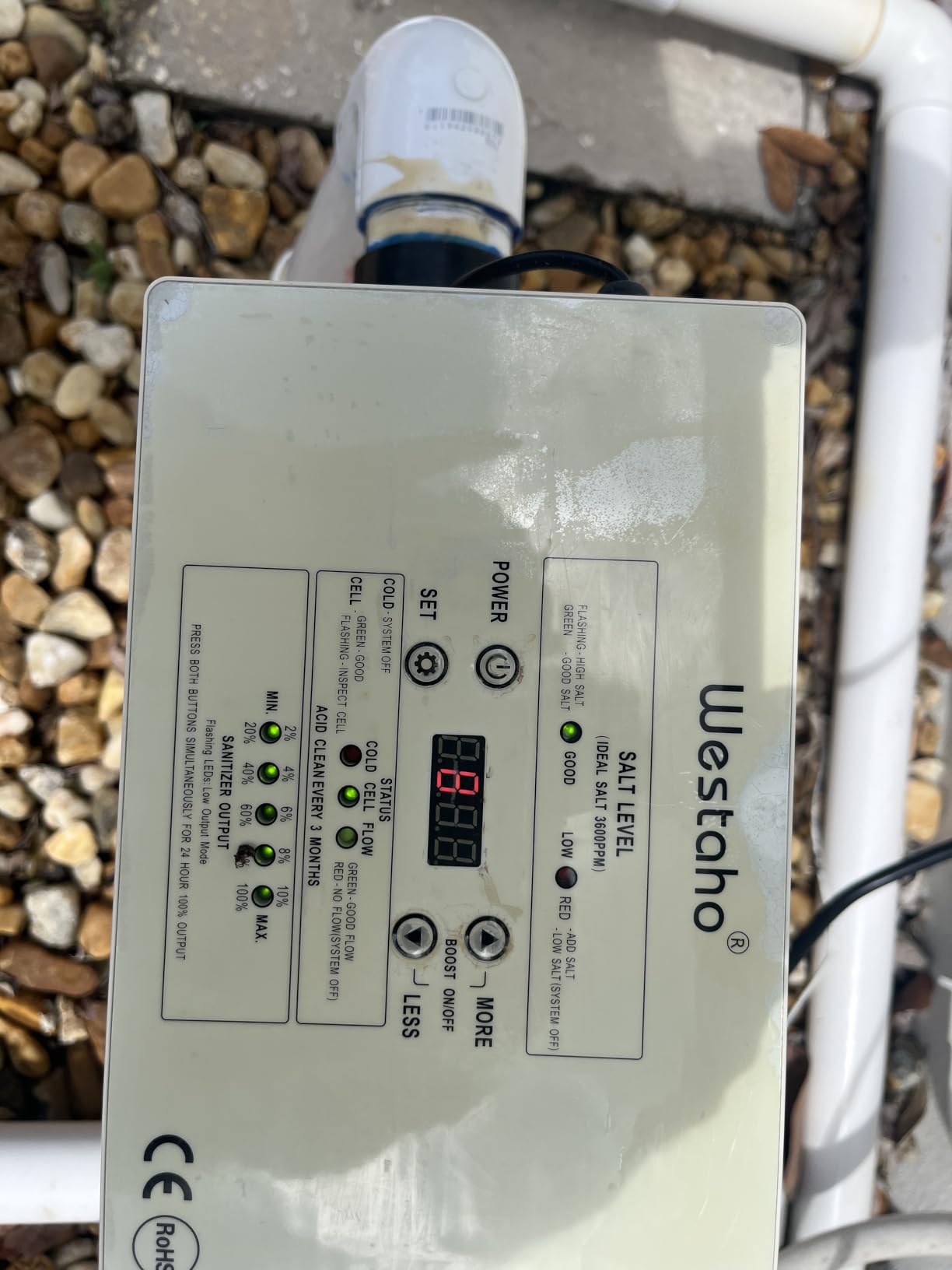
Physical protection matters outdoors all year, and the IP66 waterproof rating plus low-temperature protection that shuts the system down below 52F are both aimed at extending cell life. The product benefits list also names corrosion prevention, which is the right instinct given what salt does to metal fittings over time.
Where it holds back is output. At 1.4 pounds per day, this is below the larger cells in this roundup, so very large or heavily used pools will need longer runtimes. The automatic cutoff below 52F also interrupts cold-weather operation, which matters in northern climates.
Set expectations on cell life and output
The 10,000-hour rating is a manufacturer claim, and forum experience generally puts real-world cells somewhere in the 3 to 5 year range once scale and low temperatures are factored in. Treat the hour figure as a ceiling, not a schedule.
Manual pool chemistry is still required for balance and stabilization. Sensor-rich panels tell you when something is off; they do not balance the water for you.
Who should buy this
Choose the EL-032 if you want a single-box install, real-time readouts on several parameters, and durable flow detection. It suits in-ground pools up to 40,000 gallons where you are comfortable with a moderate output rating.
Choose something else if you have a very large pool, need chlorine production through a hard winter, or want a long track record of field data. This is a younger listing with a smaller pool of owner reviews than the established brands.
8. Fengind Salt Water System: App Control at the Low End of the Line
Salt Chlorine Generator for Pools up to 26,500 Gallons with App Control
Pools up to 26,500 gallons
1.1 lb/day output
All-in-one cell and controller
IPX5 rated
Pros
- All-in-one controller and cell shortens install time
- Wi-Fi app with Standard and Boost modes plus memory
- Self-cleaning titanium with automatic polarity reversal
- Dual-size pipe fittings for 1.5 inch plumbing
Cons
- 1.1 lb/day is modest for larger pools
- Stops below 50F with no winter operation
- Pipe dimensions must be verified before purchase
The Fengind takes the opposite approach to the Westaho: instead of removing the control box, it merges the control unit and the electrolytic cell into one all-in-one housing. For an above-ground pool, that shortens install time because there is no separate box to mount and wire.
Smart features are the draw. Wi-Fi remote control through an app, two operating modes in Standard and Boost, a memory function that restores your settings, and output adjustment from 25% to 100%. The self-cleaning titanium electrodes reverse polarity automatically at 4, 8 and 12 hours, which is the mechanism that limits scale buildup.
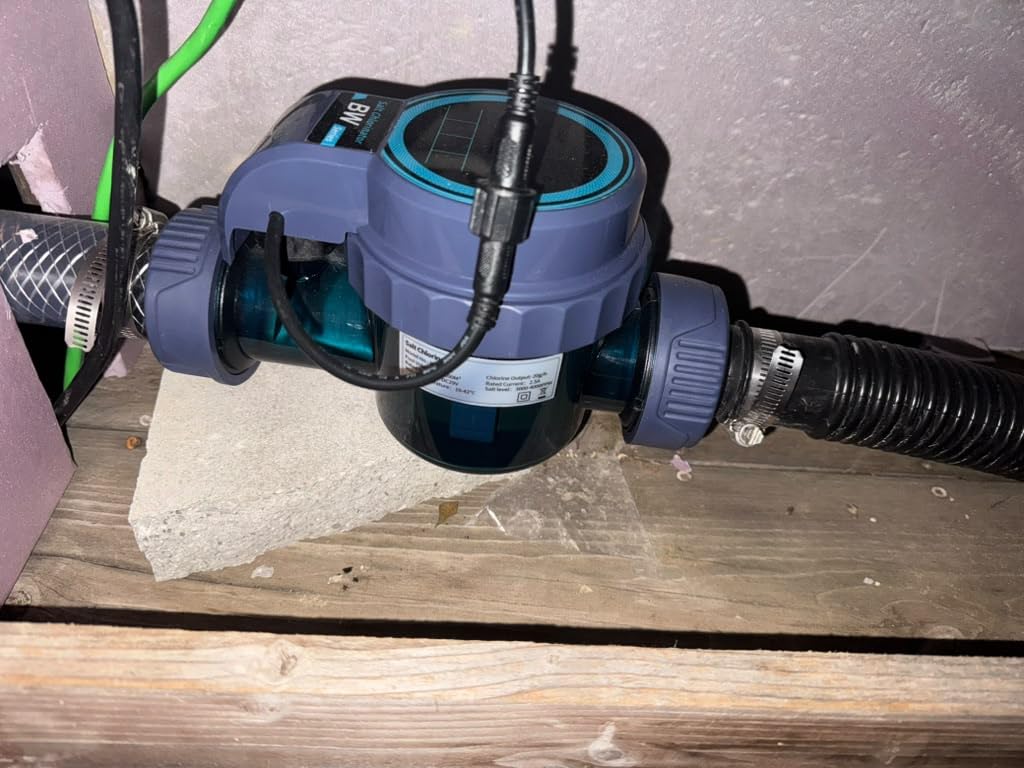
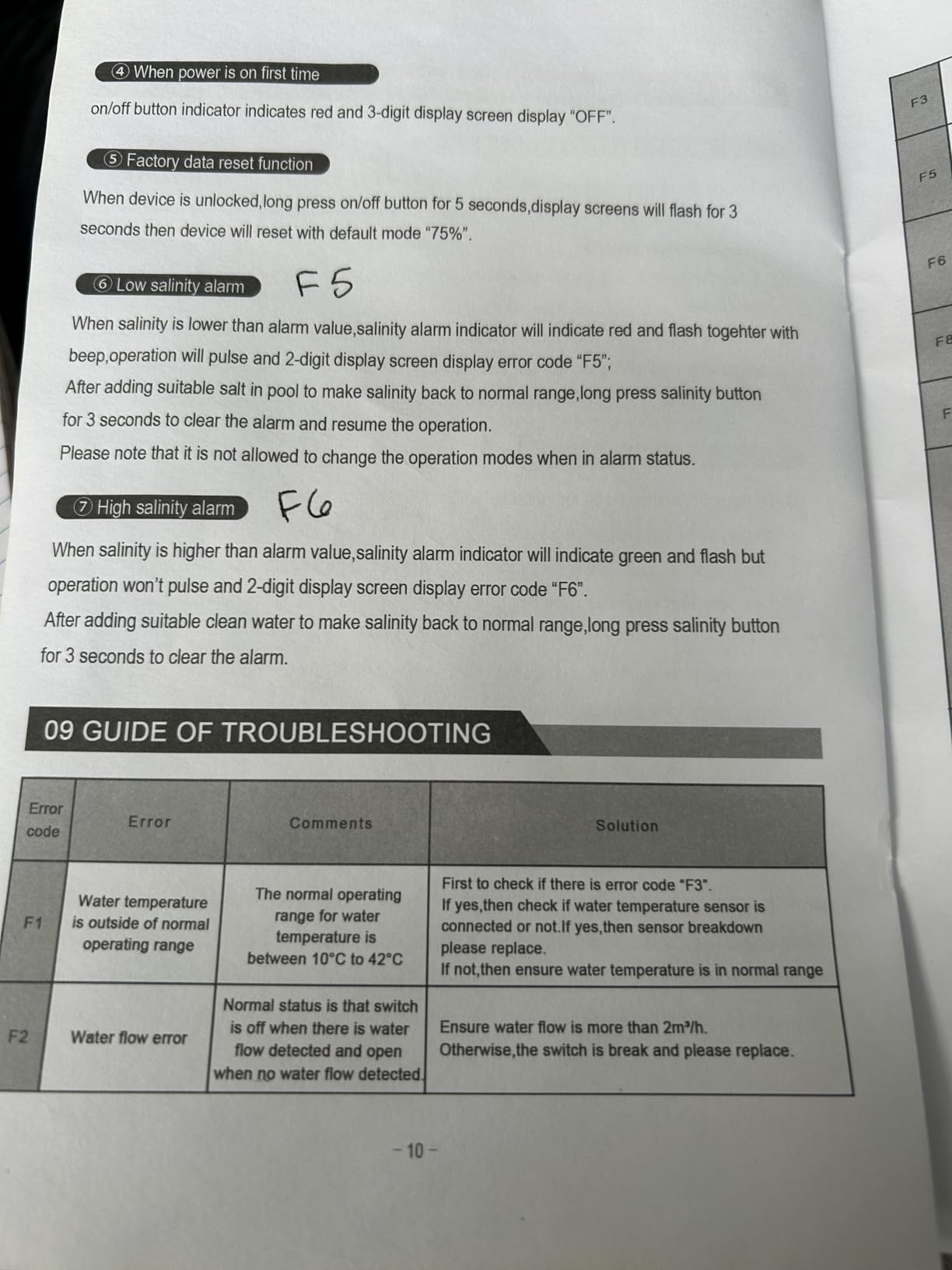
Tri-sensor monitoring covers salinity, temperature and flow, with automatic shutdown below 50F, plus a child lock and voltage surge protection. Output holds at a stable 1.1 pounds per day across a 10C to 42C range, and the service life is listed at 3 years.
Be realistic about sizing. At 1.1 pounds per day this is the smallest capacity in the roundup, and it is a fair match for pools up to about 26,500 gallons rather than larger builds. The universal pipe adapter fits standard 1.5 inch or 1.25 inch to 1.5 inch pool pipes, so measure before ordering to avoid a leak.
What the app does and does not replace
Remote output adjustment and run-mode scheduling are genuinely useful when you are away from home for a week. What the sensors cannot do is replace a manual check of the rest of your pool chemistry. Treat the tri-sensor data as a good starting point and verify with a test kit.
The cold-weather cutoff is worth weighing if you live somewhere with real winters. Below about 50F the unit stops producing, and you are back to manual dosing for the season.
Best for smaller pools and app-first owners
Pick this system for an above-ground pool under 25,000 gallons where app control and a fast install matter more than maximum output. The two capacity and color variants cover 26,500 and 31,700 gallon pools.
If you have a large pool, a cold climate, or a preference for a mechanical flow switch over a sensor-based approach, this is not the model. The all-in-one design is genuinely convenient, but it also concentrates more electronics in one housing exposed to weather.
9. Bonvoisin LC-200A: The Smallest Footprint With Fine Output Control
Bonvoisin Salt Water Pool Chlorinator System Salt Chlorine Generator for Inground Pools Saltwater Pool System with Titanium Cell, LED/APP Control, Up to 25,000 Gallons Pool
Pools up to 25,000 gallons
4.7 x 13 inches
3.5 pounds
5% output steps
Pros
- Integrated controller and generator in a small footprint
- App scheduling with remote alarms
- Output adjustable from 5% to 100% in 5% steps
- Self-cleaning plate with 500-hour cleaning reminder
Cons
- Wi-Fi connection to the app does not always hold
- Some units do not auto-start after power is applied
- App requires location services to stay on
At 4.7 by 13 inches and 3.5 pounds, the LC-200A solves a real problem on a crowded equipment pad. The controller and generator are combined in a single unit that mounts horizontally or vertically, so you can fit a working chlorinator where a two-piece system simply will not go. Owners report swapping one in for an older Jandy system in minutes.
Output control is unusually granular for a compact unit. Chlorine production adjusts from 5% to 100% in 5% increments, which lets you fine-tune consumption on a small pool instead of running at 50% or 100% and hoping. The app handles scheduling over 2.4G Wi-Fi and displays alarms for troubleshooting, alongside the built-in LED controller.
The self-cleaning titanium plate reverses electrode polarity every 4, 8 and 12 hours, and an on-screen cleaning icon appears after 500 hours of operation. Both 1.5 inch and 2 inch pipe adapters are included, which removes the most common fitment complaint in this category.
Smart features are where the complaints cluster. Owners report that the Wi-Fi connection to the app does not always stay connected, that some units do not auto-start when power is applied and need a button press each cycle, and that the app requires location services to remain enabled.
Check your expectations on connectivity
Remote control is convenient when it works and frustrating when it does not. If you plan to depend on remote scheduling, test the pairing early and keep a manual schedule in mind as backup. One owner reported unit failure with error codes after three months and no support response, which is a reminder to check the warranty terms carefully.
Capacity options are broader than the capacity on the label suggests. This is the 25,000-gallon version, and 40,000 and 60,000 gallon versions exist in the same family.
A fit for tight equipment pads
Choose the LC-200A when space is the constraint, when you want the finest output increments available, and when a compact unit that mounts either way is worth having. It is a good match for inground pools around 20,000 gallons.
Choose elsewhere if dependable app connectivity is non-negotiable for you, or if you want the unit to resume on its own after a power interruption. Both are legitimate reasons to pick a wired model instead.
10. EverCrystal ECLI40-1T: The Clearest Look at What the Cell Is Doing
EverCrystal Salt Water Pool Chlorinator System – Up to 40,000 Gallons
Pools up to 40,000 gallons
Clear cell housing
1-year support
Metal control box
Pros
- Clear housing shows chlorine production directly
- Highest average rating in the roundup at 4.8 stars
- Heavy-duty metal control box over plastic
- Salt calibration within 800 ppm
Cons
- Only 1 year of after-sales support
- Small review base of 18 reviews
- One owner could not locate an operating manual
The EverCrystal is the easiest system in this roundup to check at a glance. The clear cell housing lets you watch chlorine production happen, combined with a self-cleaning cell that reduces buildup, which means you can confirm the unit is working without a single reading or app.
The panel backs that up with real-time data on salinity, voltage, current, temperature and cell operation, and the built-in salt calibration holds levels within plus or minus 800 ppm. Construction is a heavy-duty metal control box rather than the plastic housings common on cheaper units, and installation is plug-and-play with union fittings and wall-mount capability.
Judge it on a small sample, not the average
Its 4.8-star average is the highest in the roundup, but it comes from 18 reviews. Small sample sizes move easily, and part of the listed feedback appears to concern unrelated filter media products, so treat the rating as encouraging rather than settled.
Support is the other question mark. After-sales coverage runs 1 year, and one owner could not locate an operating manual. Before buying, confirm the documentation exists and download it.
Who should give it a look
Consider the ECLI40-1T for an in-ground pool up to 40,000 gallons if visual confirmation of output and a metal control box matter to you, and if you are comfortable researching the manual yourself.
Look for more established support or a longer warranty if this is your first saltwater conversion. Clear housings show up in higher-warranty products too, and a 1-year support window is the shortest in this group.
How to Choose a Salt Chlorine Generator for Your Pool
Sizing comes first, and getting it wrong is the most expensive mistake in this category. Match the cell’s rated pool capacity to your actual volume, then consider sizing up one step if your pool sees heavy bather load or a hot climate. An undersized cell runs near maximum most of the time, and constant operation shortens cell life and raises your electric bill. A slightly oversized unit simply runs a lower duty cycle.
Next, decide between a complete system and a replacement cell. If you already have a working salt platform on the pool, buy the cell. Swapping a cell is dramatically less involved than a full conversion, and forums regularly recommend it over replacing an entire system. Buy the complete system only when the control box, plumbing layout or cell platform has changed.
Warranty length is where brand differences get stark. The CircuPool RJ45+ carries 7 years and explicitly covers DIY installs, while two units in this roundup offer 1 year. Read the terms on labor coverage, not just parts. A parts-only warranty still leaves you paying a technician, which can exceed the value of the cell itself.
Understand what the system does not do
A salt chlorine generator sanitizes. It does not balance. pH in particular tends to drift upward in salt systems, and owners who were not prepared for frequent acid additions report it as the biggest surprise of the switch. Alkalinity, calcium and stabilizer still need manual management, and no sensor panel in this roundup replaces that work.
Corrosion is the other real consideration. Salt accelerates attack on metal heaters, ladders, diving boards and soft stone coping, and owners on forums report damage that appeared years after a conversion. If your pool has soft stone coping or an aging metal heater, budget for a sacrificial zinc anode and consider the equipment replacement timeline before converting.
Match the controls to your automation
If you already run a salt platform through a control system, verify compatibility before buying, and check whether the listing supports DIY installation without voiding coverage. Some mainstream automation platforms expect specific cell electronics, and a mismatched unit may not be recognized at all.
For pool owners who want to reduce total salt-handling chores elsewhere in the setup, our salt-free water softener guide covers an approach that avoids adding hardness back into the water.
Winterizing deserves its own short plan. In cold climates, several systems in this roundup shut down automatically at 52F or 50F, which protects the cell but means you resume manual dosing until spring. For seasonal pools, drain and store the cell if your manufacturer recommends it. Never leave a cell full of water through a hard freeze, because freeze damage is rarely covered.
Power interruptions deserve a plan too. A salt chlorine generator stops producing the moment it loses power, and a long outage in peak season can leave you dosing manually for days. If your equipment pad sits away from the house, it is worth reviewing backup power options for home outages so the pump and chlorinator can ride out a storm together.
Use pool-grade salt. Table salt and water softener pellets leave additives and minerals that build up in the cell and distort your salinity readings, and none of the panels in this roundup measure true salinity well enough to catch the difference. Test independently at least once a season.
Finally, weigh the five-year picture. A salt system shifts your spending from weekly consumables to a cell replacement every 3 to 7 years, plus salt and acid. For a year-round pool the arithmetic usually favors salt, driven in part by the manufacturer claims of savings of 50% or more versus conventional chlorine methods. For a seasonal above-ground pool opened a few months a year, a simple chlorinator can be the more sensible answer.
Frequently Asked Questions
Is a salt chlorine generator worth it?
For a year-round home pool, usually yes. A salt system automates daily sanitation, softens the water and removes the weekly tablet routine, and manufacturers claim savings of 50% or more versus conventional chlorine methods. The trade-offs are a cell replacement every 3 to 7 years, closer attention to pH, and possible corrosion of metal fittings and heaters.
How long does a salt chlorine generator typically last?
The cell usually gives 3 to 7 years depending on use, water hardness and how often it is cleaned, even though some cells are rated for as many as 10,000 hours. Control boxes and electronics tend to fail on a different schedule, with owners reporting failures around the 12 to 18 month mark on some units. Salt cells are replaceable on most complete systems, so a full unit swap is rarely required.
What size salt chlorine generator do I need?
Match the rated pool capacity to your actual pool volume rather than rounding down, and consider stepping up one size if the pool sees heavy bather load or runs in a hot climate. An undersized cell runs near maximum almost continuously, which shortens cell life. This roundup covers capacities from about 18,000 gallons for above-ground pools up to 60,000 gallons for large in-ground builds.
Can I install a salt chlorine generator myself?
Usually, yes, if you have basic plumbing and electrical comfort. Most systems in this roundup install with two unions in the return line and a power connection, and above-ground models often take about 10 minutes. Check the warranty first, because some brands require authorized dealer installation for coverage. The CircuPool RJ45+ is a notable exception that explicitly covers DIY installs.
What is the best automatic chlorinator for an inground pool?
For most in-ground pools, the CircuPool RJ45+ leads on output, a 7-year limited warranty and DIY coverage, while the Hayward AquaRite is the safe pick when you already run Hayward equipment and want a drop-in cell. The APX E-CHLOR is the easiest install with no 240V work. Whichever you choose, size the cell to your pool volume and plan on manual pH control.
Final Verdict: Which Salt Chlorine Generator Should You Buy in 2026
Our pick is the Hayward AquaRite W3AQR15, with the CircuPool RJ45+ as the near-miss worth serious consideration. The Hayward is the industry-standard in-ground platform, its 40,000-gallon cell is sized for hard summer bather loads, and it drops into existing plumbing without re-plumbing. Its LED monitor with service alerts and its large installed base make it the easiest unit in this roundup to own and to service, and the fact that parts and drop-in cells are widely available is a real long-term advantage.
The CircuPool is the runner-up for a specific reason: it pairs a 7-year limited warranty with explicit DIY coverage, and its clear cell housing lets you watch chlorine production instead of guessing. If you want the longest warranty in the group and you intend to install the unit yourself, take the CircuPool. If you are on Hayward equipment or want the least disruptive swap, the AquaRite is the pick.
For above-ground pools, the Solaxx Saltron Retro is the simplest install and the easiest long-term ownership story thanks to its replaceable inner cell. When you want sensor-driven simplicity and no 240V work, the APX E-CHLOR takes two unions and a 110V outlet. Whichever of the best pool salt chlorine generators you choose, size the cell to your real pool volume and keep a manual test kit in the loop, because the panel will never fully replace balancing your water.