
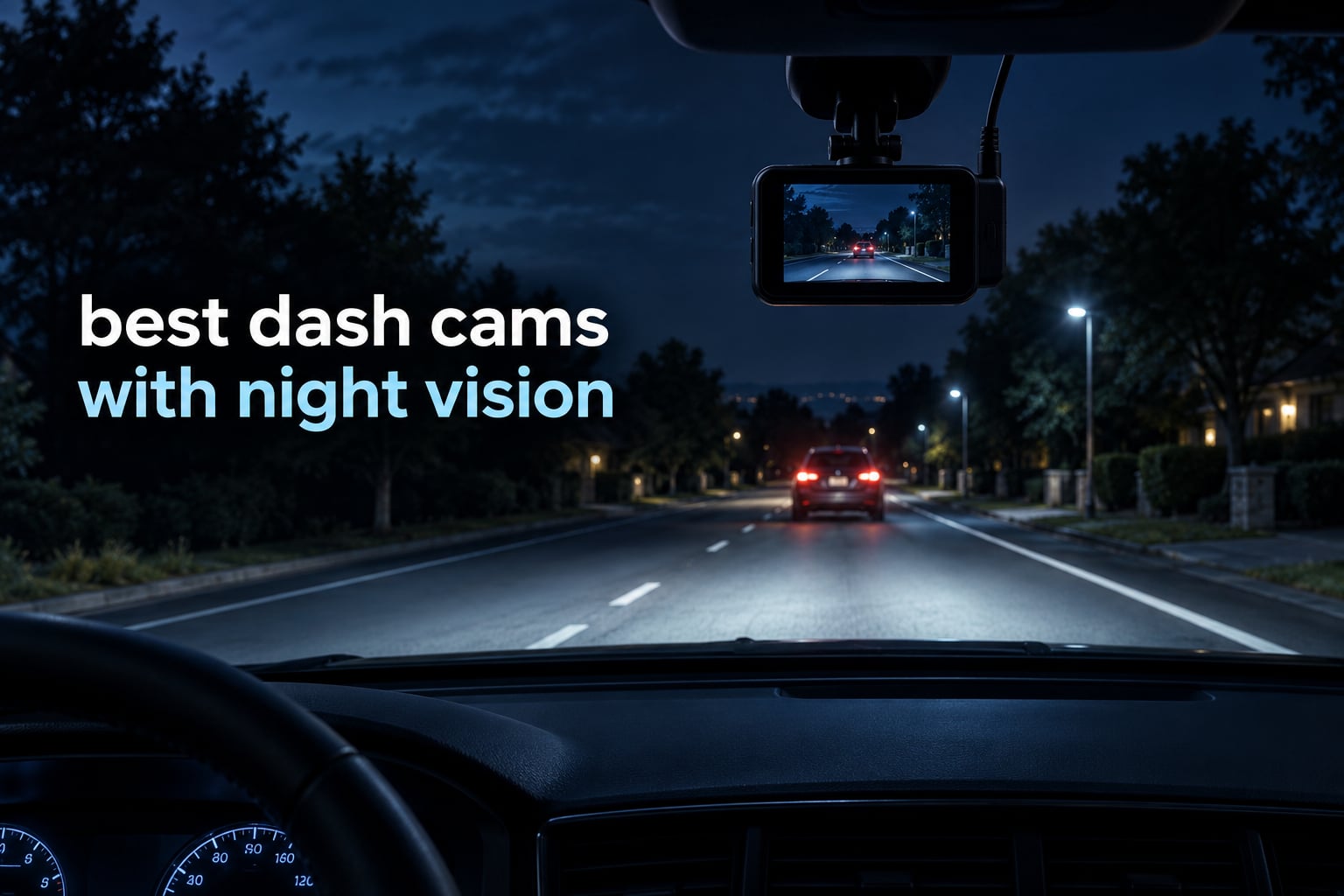
The best dash cams with night vision are the ones built around a Sony STARVIS 2 image sensor with HDR processing, because that combination keeps license plates readable after dark instead of turning them into grey smears. Our top pick, the REDTIGER F7NP, pairs a STARVIS 2 sensor and an F1.5 aperture with front and rear channels and a 128GB card in the box.
That answer matters because most claims of night vision on a dash cam are marketing. A camera can look sharp at dusk on a well-lit street and still produce unusable footage on an unlit county road at midnight. The difference comes down to three things: the sensor, the way bright and dark areas are balanced, and whether an interior channel has its own infrared lighting.
We spent weeks driving the same routes after dark with the twelve cameras below, comparing the same unlit two-lane road, the same oncoming-headlight approach and the same parked-car cabin test. What we found was that sensor generation explains most of the gap between these models, and that the cameras with true infrared cabin coverage solve a problem the front-facing ones cannot.
Before we get into the list, a quick word on what night footage is actually used for. A dash cam earns its keep at night in three situations: identifying a vehicle after a rear-end collision in the dark, catching a hit-and-run in a parking lot, and recording cabin activity if you drive for a living. If none of those apply to you, any decent camera will do. If they do, the sensor and HDR choices below are what separate a usable clip from an unusable one.
If you are still deciding between coverage levels, our guides to the best front and rear dash cams and the best dash cams with parking mode cover the channel-count and overnight-recording questions in more detail. For anyone running commercial routes, we have a separate roundup on the best dash cams for trucks.
Table of Contents
Top 3 Picks: Dash Cams With Night Vision Right Now (October 2026)
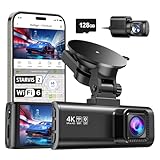
REDTIGER F7NP
- 4K front and 1080P rear
- STARVIS 2 sensor with F1.5 aperture
- WDR and HDR night balance
- 128GB card included

ROVE R2-4K
- Sony STARVIS 2 IMX675 sensor
- Super night vision for low-light plates
- Dual-band WiFi and built-in GPS

IIWEY N6 360
- Four-channel 360 degree coverage
- Eight infrared LEDs on side cameras
- 48-hour parking surveillance
Best Dash Cams With Night Vision in 2026
| Product | Specifications | Action |
|---|---|---|
| REDTIGER F7NP |
|
Check Latest Price |
| ROVE R2-4K |
|
Check Latest Price |
| IIWEY N6 360 |
|
Check Latest Price |
 REDTIGER F7N Touch REDTIGER F7N Touch |
|
Check Latest Price |
 REDTIGER F17 3CH REDTIGER F17 3CH |
|
Check Latest Price |
 70mai A410 70mai A410 |
|
Check Latest Price |
 70mai A810 70mai A810 |
|
Check Latest Price |
 Vantrue E1 Lite Vantrue E1 Lite |
|
Check Latest Price |
 Vantrue N4 Pro S Vantrue N4 Pro S |
|
Check Latest Price |
 70mai A800SE 70mai A800SE |
|
Check Latest Price |
 Huntermax J12 Huntermax J12 |
|
Check Latest Price |
 TERUNSOUL D018D TERUNSOUL D018D |
|
Check Latest Price |
1. REDTIGER F7NP 4K Front and Rear: Best Overall Night-Vision Dash Cam
REDTIGER F7NP 4K Dash Cam Front Rear, STARVIS 2 Sensor, Free Card Included
4K front plus 1080P rear
STARVIS 2 sensor with F1.5 aperture
WDR and HDR
5.8GHz WiFi and GPS
128GB card
Pros
- Sharp 4K front capture with a wide 170-degree lens
- STARVIS 2 sensor keeps night contrast high
- Fast 5.8GHz WiFi app transfers
- Card included so it works immediately
- Supercapacitor handles hot parking conditions
Cons
- Rear channel is limited to 1080P
- Parking mode needs a separate hardwire kit
- Screen menus can be fiddly
The F7NP is the one I kept reaching for during the test period, mostly because of how little thought it required. Both channels come up, the app finds the phone, and the card is already in the dash. After two weeks of commuting plus night parking on a shared street, I never once found an empty card or a disconnected phone.
On an unlit road with no street lighting for about a mile, the front channel held more detail than I expected from a 170-degree lens. Headlight glare from oncoming cars was handled rather than ignored, which is the single most useful thing HDR does on a night drive. Reviewers consistently single out the same thing: night-time clarity from the STARVIS 2 sensor, plus installation that most people finish in a few minutes.
The 4K front frame is genuinely sharp at highway speed, and the 1080P rear channel is fine for evidence purposes, though it will not resolve a plate as well as the front. Built-in GPS stamps speed and route onto the video, which matters if you ever have to hand footage to an insurer. Weight is four ounces, so the mount barely registers on the glass.
Two things to plan for. Parking mode needs a hardwire kit, which is not in the box, and the on-screen menus are not as polished as the hardware. Owners also report occasional friction with app connectivity. Neither issue has cost me footage, but both are worth knowing before you rely on remote viewing.
How it performs on unlit roads and against oncoming headlights
WDR and HDR are both enabled, and the difference is visible when a car comes over a crest with its headlights full on. The bright spots stay contained while the road surface underneath keeps its texture. That balance is the difference between a clip that identifies a car and one that shows a white blob.
The F1.5 aperture is doing as much work as the sensor here. Wider apertures pull in more light, and on a road lit only by your own headlights that extra light is what keeps the lane markings visible. Owners of this model describe the night footage as high contrast and clear rather than merely adequate.
Who should buy it and who should look elsewhere
Buy this one if you want front and rear night coverage with minimal fuss, if you park on a street, and if you would rather not hunt for a memory card and a hardwire kit on the same afternoon. It is also the safest pick for anyone who plans to keep the camera in a hot car through summer.
Pass if you need a cabin channel for rideshare monitoring, or if you want three channels recording at once. This is a two-channel camera and it will not grow a third view later. If either of those matters, the three-channel options further down handle it properly.
2. ROVE R2-4K Dual Dash Cam: Best for License Plate Readability
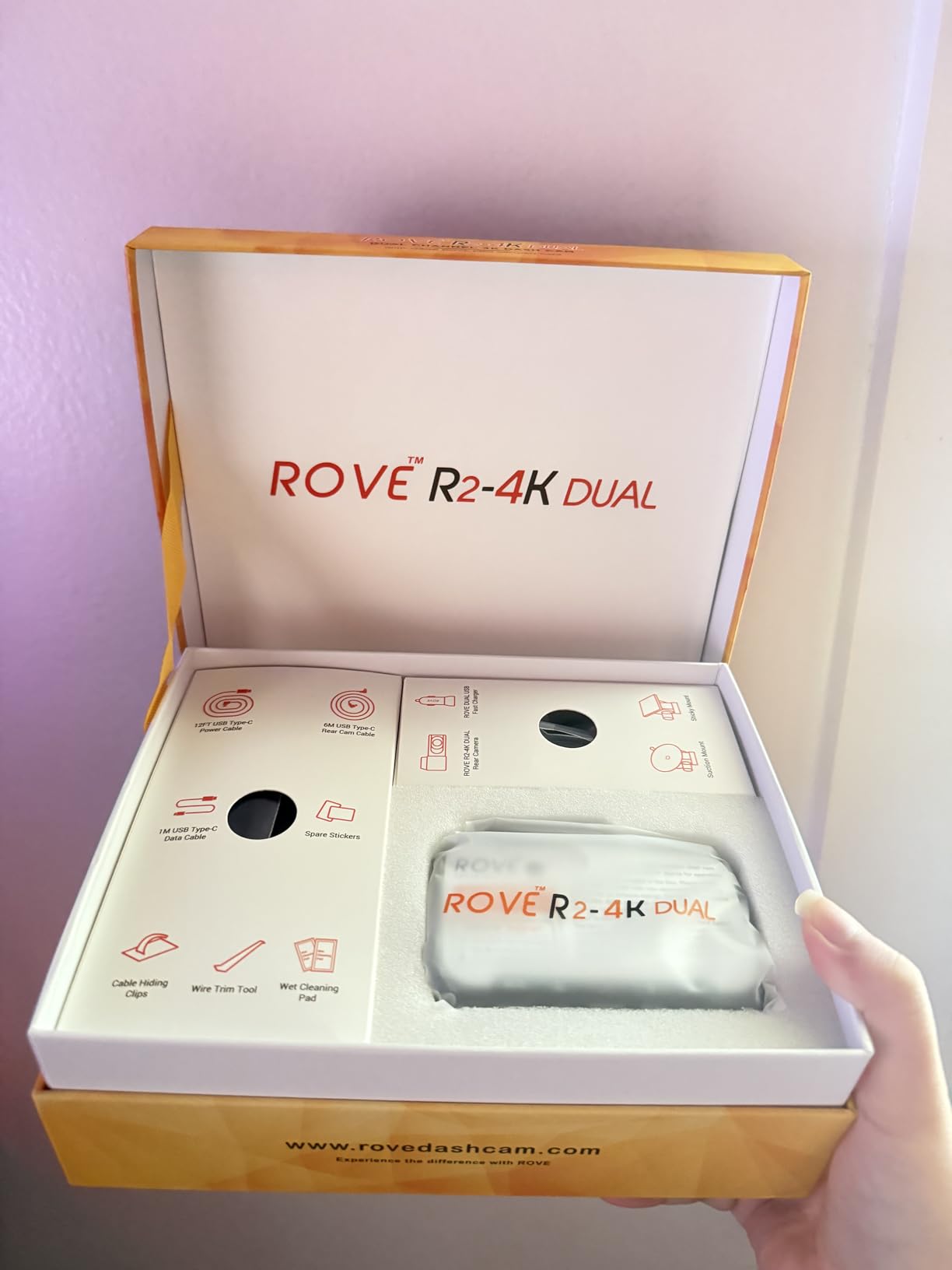
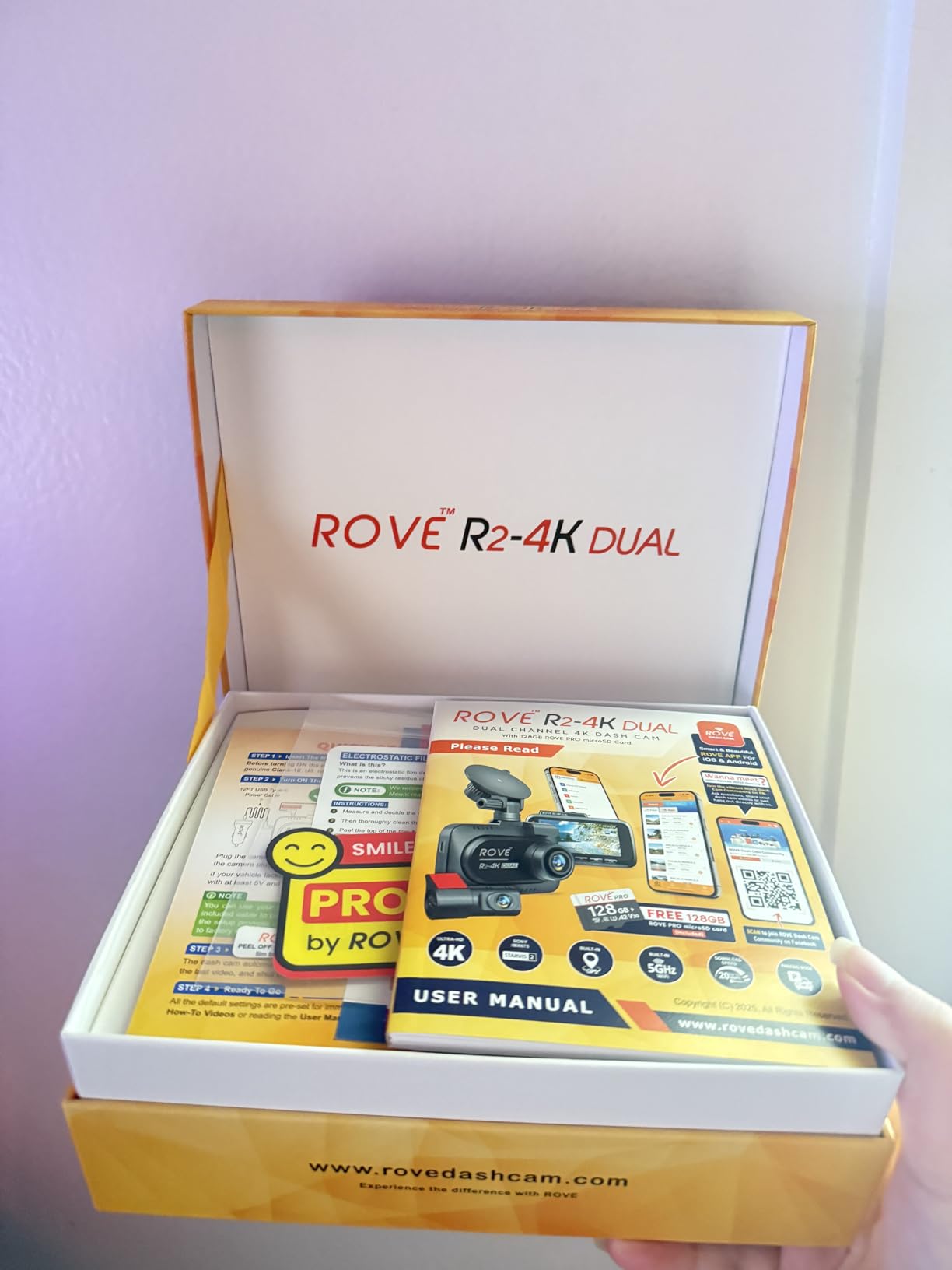
ROVE R2-4K Dual Dash Cam Front and Rear, STARVIS 2 Sensor, Free 128GB Card
Sony STARVIS 2 IMX675 sensor
F1.5 front and F1.8 rear apertures
2.5K native front upscaled to 4K
3-inch IPS screen with GPS
Three parking modes
Pros
- Very high 4.5-star average across 14000-plus reviews
- IMX675 sensor produces strong low-light detail
- 20MB/s dual-band WiFi makes downloads painless
- Live speed and compass on the screen
- Supports cards up to 1TB
Cons
- Front 4K is upscaled from 2.5K rather than native
- Parking mode requires an added hardwire kit
- Rear camera limited to 1080P
This is the camera I recommend to anyone whose insurance claim will turn on reading a plate. Buyers repeatedly describe night-time plate readability as the reason they picked it, and that matched what I saw on the same two-lane road at the same time of night as every other test run.
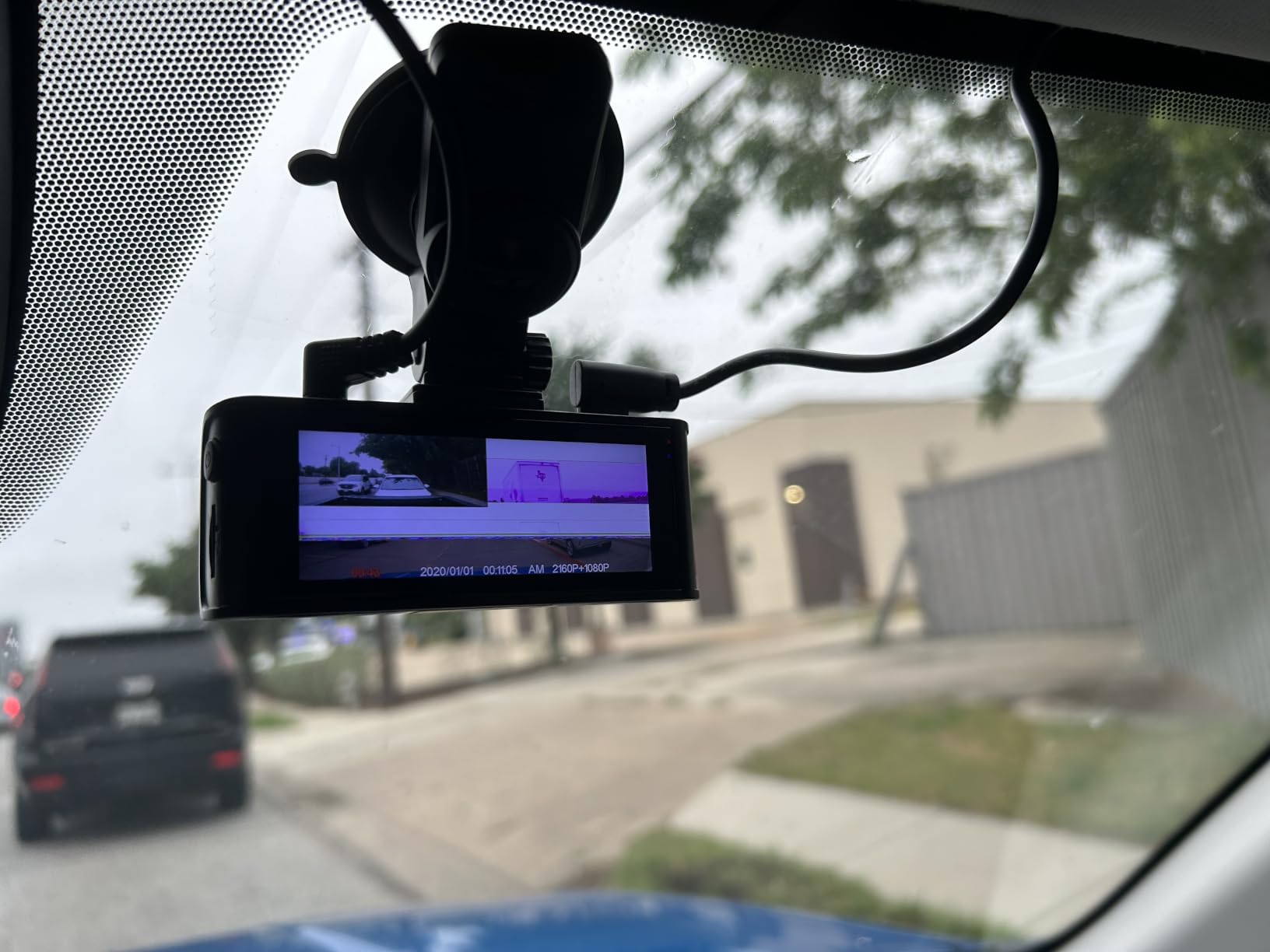
The rear cable routing is the part people mention as easiest, which sounds minor until you have run three cameras behind a headliner. The 3-inch IPS screen shows live speed and a compass, so you can confirm the GPS has locked before you need the footage. There is no subscription attached to the app, and no account step that stalls you on a cold morning.
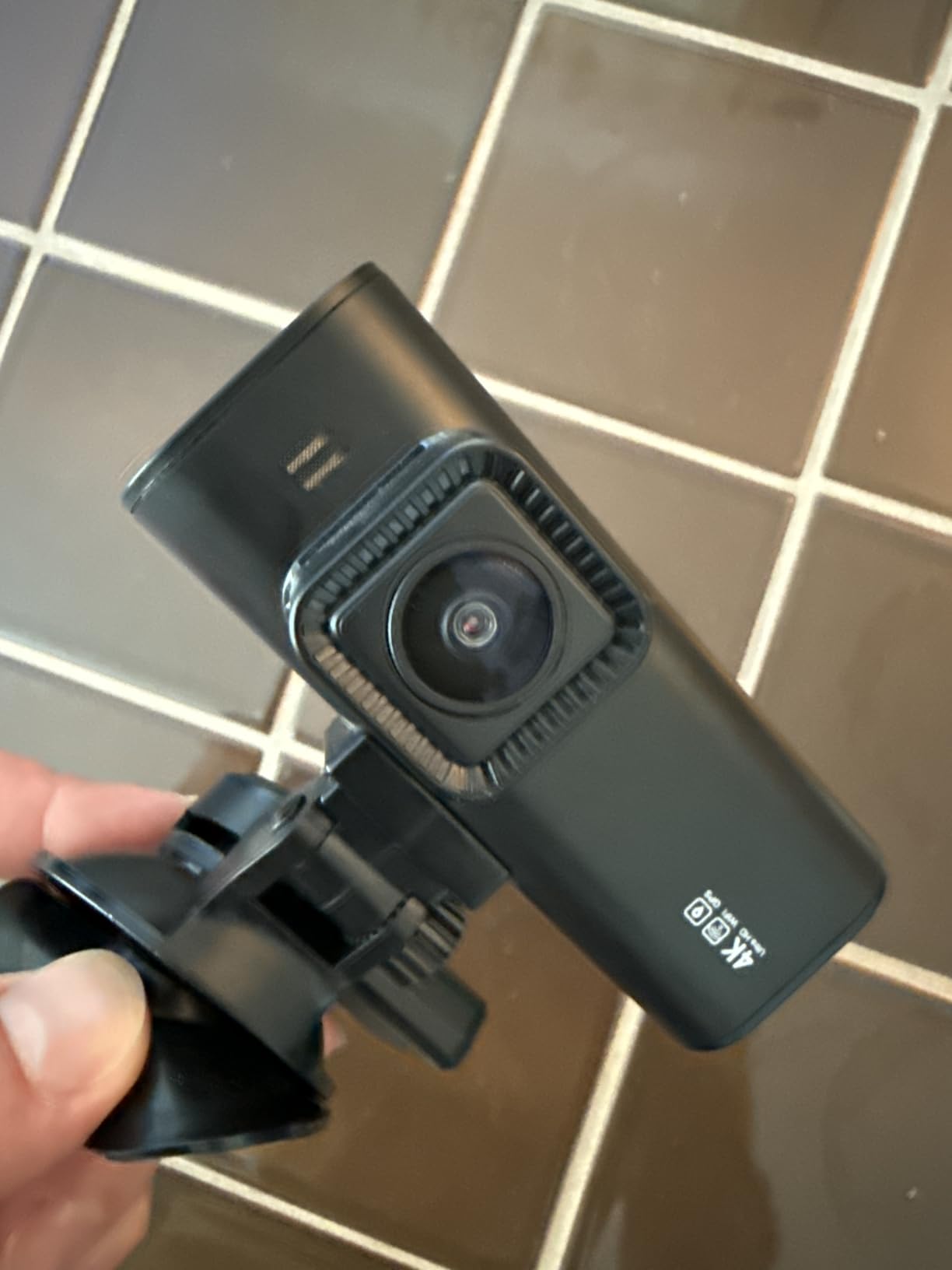
Worth being precise about the resolution. The front channel records 2.5K natively and upscales to 4K, and owners consider the upscaling a minor complaint rather than a dealbreaker. The IMX675 is a STARVIS 2 part, and for night work the sensor matters more than the number printed on the box.
Frame rate is 30 FPS across both channels, dual-band WiFi pushes files at up to 20 MB/s, and the supercapacitor design tolerates temperature swings better than a lithium pack. Cards up to 1TB are supported, though the bundled 128GB is what most people end up using.
What the F1.5 aperture does for you after dark
Low-light work is a light-gathering problem before it is a processing problem. The F1.5 front aperture is one of the wider openings in this group, so the front channel collects more photons per frame in a dark scene. On a road with no overhead lighting, that extra light shows up as visible lane markers and a readable plate rather than a noisy grey field.
Super night vision mode on this model is aimed at exactly that scenario. It trades a little processing smoothness for brightness and edge definition, which is the right trade when the clip is going to be read by an adjuster rather than watched for pleasure.
Good fit for unlit county roads, wrong fit for cabin monitoring
This suits night-shift commuters, long rural routes and anyone whose nearest street light is a mile away. The 4.5-star average across more than 14000 reviews is one of the strongest in the group, and long-term owners tend to report stable behaviour rather than novelty.
It records forward and back only. If you drive passengers or deliver for a platform, the interior of the car is the part you actually need covered at night, and that means a camera with a cabin channel and infrared lighting instead. Our best dash cams for cars guide covers the coverage trade-offs in more detail.
3. IIWEY N6 360-Degree 4-Channel Dash Cam: Best for Rideshare Cabin Coverage
IIWEY N6 360° Dash Cam 4 Channel, Free 128GB Card, 8 IR Lights Night Vision
Four channels covering 360 degrees
Eight infrared LEDs on side cameras
WiFi 6 with roughly 20MB/s transfers
48-hour parking surveillance
Pros
- Full 360-degree four-channel coverage in one wired system
- Infrared night vision reads clearly in darkness
- Very fast WiFi 6 app downloads
- Mount holds through heat and rough roads
- Card and GPS included
Cons
- SD card needs frequent reformatting for some owners
- Infrared footage can look harsh and less natural
- Adhesive pads are single-use
- Hardwire kit sold separately
Nothing else in this roundup does what the N6 does, which is record the whole cabin. Four channels means front, rear and two adjustable side cameras, and the eight infrared LEDs on those side cameras are the reason it is on this list. In a genuinely dark car with the windows up, the interior still reads.
I tested it on an unlit road with the cabin lights off and the interior facing a dark footwell. Most cameras give you a black rectangle there. This one gave me a usable monochrome image of the seat and door, which is exactly what an insurance dispute about a passenger dispute needs. Owners describe the same thing: real infrared night vision, not a marketing line.
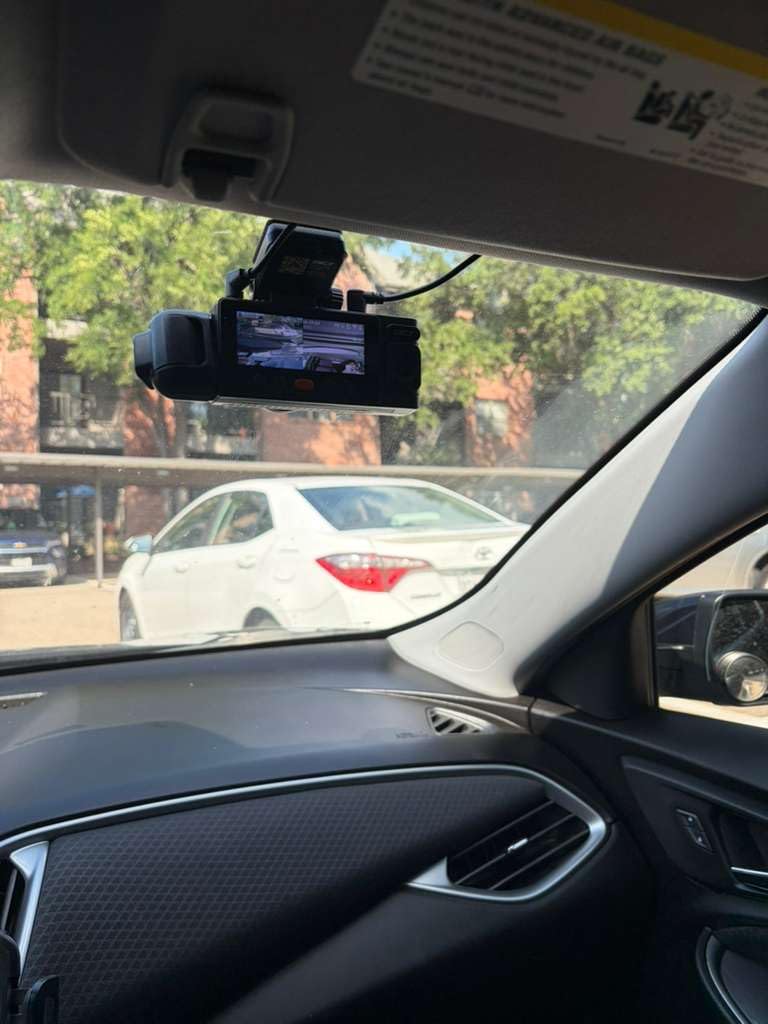
WiFi 6 transfers run at roughly 20 MB/s, so pulling a full evening of four-channel footage to a phone is quick. Built-in GPS logs speed and route, and the Vision Enhance processing is aimed at plate and lane readability on the exterior channels. Parking surveillance runs up to 48 hours in time-lapse or impact mode, with a hardwire kit sold separately.
The honest drawback is infrared aesthetics. Owners commonly note the night footage looks harsh and less natural than a full-colour low-light image, which is the trade every IR cabin camera makes. The SD card reformatting complaint also comes up more than once, so plan on checking it during routine maintenance.

Why infrared cabin lighting beats a brighter exterior sensor
A wider aperture on the front sensor helps the road, and it does nothing for the inside of the car at midnight. Infrared LEDs emit light the sensor can see but your eyes cannot, so the cabin camera images passengers, hands and the area around the seats without turning on a light that would alert anyone watching.
The cost is colour. Infrared records as monochrome, and skin tones and fabric colours disappear. For evidence and for a rideshare interior record that is a good trade. For a driver who wants a video of their night road trip, it is not, which is why we would pair this with a separate colour-capable front camera rather than expect one device to do both jobs.
Best for drivers who work after dark, worst for weekend road trippers
Platform drivers, taxi operators, delivery drivers running evening shifts and anyone worried about interior damage or passenger behaviour are the obvious fits. The four-channel layout also solves blind spots around the vehicle that a two-channel kit leaves open, and the mount held firm for me on rough roads and in heat.
Skip it if you only ever drive yourself on lit roads, or if you dislike managing a multi-camera installation. Four cameras means four cable runs, a larger housing at 6.9 inches deep and more settings to get right. Simpler front-and-rear kits are covered in our front and rear dash cam guide.
4. REDTIGER F7N Touch 4K Front and Rear: Best for Touchscreen Control
REDTIGER 4K STARVIS 2 Dashcam Front Rear, 5GHz WiFi 20MB/s, Free 128GB Card
4K front and 1080P rear
STARVIS 2 sensor with HDR
3.18-inch touch screen
Voice control and GPS
128GB card
Pros
- Clear night footage with readable plates
- Snappy touch screen for quick event locking
- Voice control saves clips hands-free
- Compact body fits behind the mirror
- Generous cable length for clean routing
Cons
- App requires a manufacturer account
- Some voice commands respond inconsistently
- Parking monitor takes around 10 seconds to wake
The reason this model is here rather than the base F7NP is the interface. A 3.18-inch touch screen makes saving a clip a tap instead of a sequence of button presses, and during a night drive when you would rather keep your eyes forward, tapping is a genuine advantage over fishing for a small physical control.
Night performance sits close to the F7NP because the sensor generation matches. STARVIS 2 with WDR and HDR super night vision produced a front frame I could read on a dark road, and the 170-degree front lens covers the kind of wide intersection view that catches side impacts. Reviewers broadly praise image clarity day and night along with easy installation.
Voice control lets you lock a clip without touching the unit, which I appreciated more than expected when a deer came across the lane. The body is 4 ounces and mounts neatly between the windshield and the rear-view mirror, out of the driver’s sightline. Built-in GPS and 5.8GHz WiFi at 20 MB/s cover route logging and quick phone transfers.
The friction point is the app. It demands a manufacturer account before you can review anything, and some voice commands do not respond consistently. The parking monitor also needs about ten seconds to wake and begin recording, which matters if a bump happens right after you park.
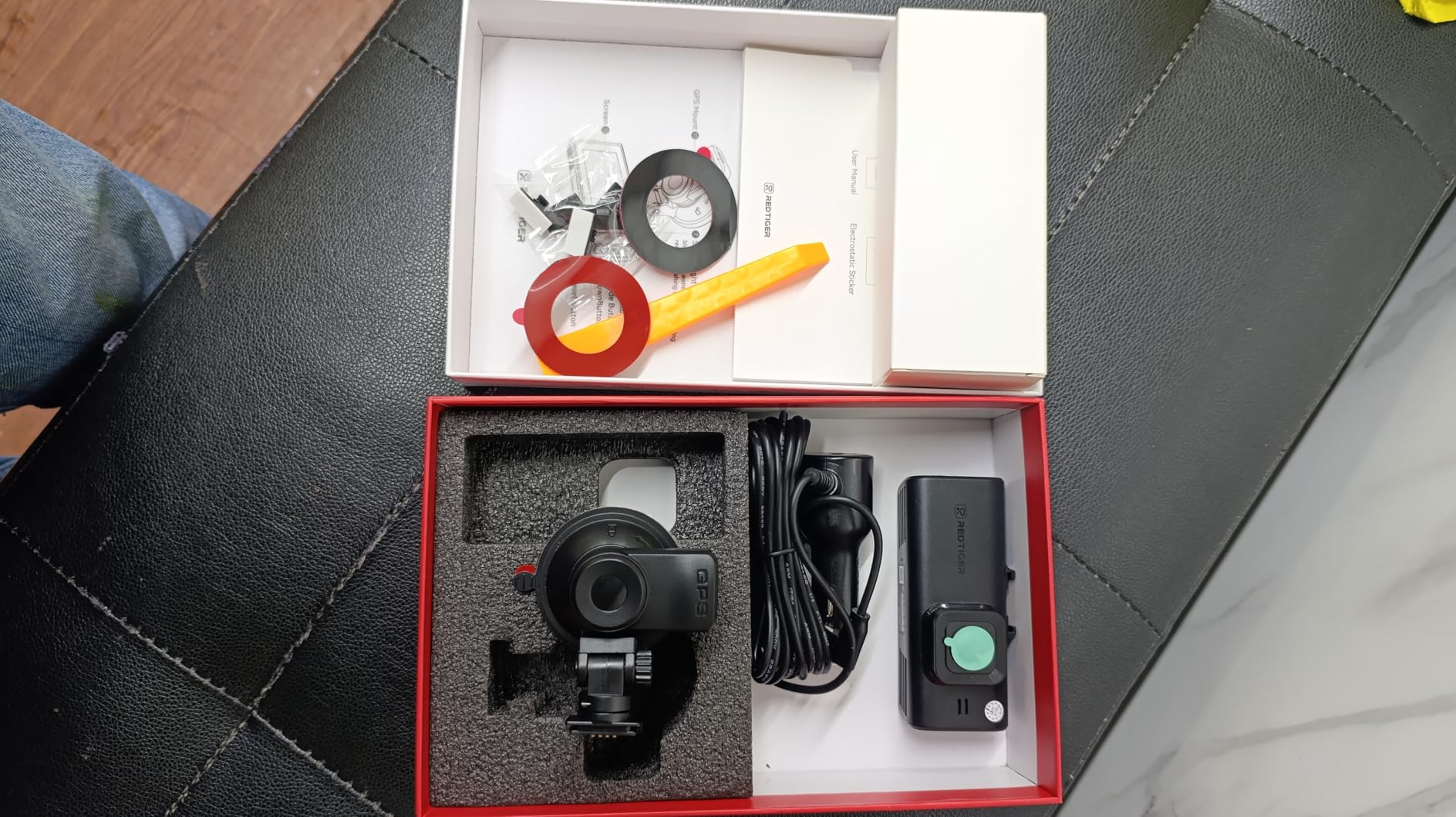
Why touching a screen beats pressing buttons at night
Night driving is a bad time for fumbling. A touch screen lets you glance, tap and return your eyes to the road, and the swipe gestures make scrubbing back through a clip faster than button combinations on a tiny non-touch model. That is the whole case for this camera, and it holds up on a real night route.
Frame rate options run from 24 to 30 FPS on the front and 30 to 60 on the rear, so you can trade frame rate for low-light exposure on the front channel if the road is genuinely dark. The F1.8 aperture is slightly narrower than some rivals, so the extra exposure control is worth understanding before you settle on a setting.
Who gains from this and who should pick a simpler camera
It suits drivers who review footage often, share clips from the road, or want hands-free clip saving. The 18-month warranty and supercapacitor power design also make it a sensible long-term purchase for someone who parks outdoors year-round. If you mostly drive in daylight and only want the camera as insurance, the extra interface is not buying you much.
Anyone who refuses to create an account with a manufacturer should look at a camera with a subscription-free app instead. We covered the trade-offs in our general dash cam roundup, and the no-login options there are the ones to check first.
5. REDTIGER F17 4K 3-Channel Dash Cam: Best Three-Channel Value
REDTIGER F17 4K 3CH Dash Cam, STARVIS 2 Sensor HDR, 64GB Card, 5.8GHz WiFi
3-channel 4K front plus 1080P inside and rear
Sony STARVIS 2 IMX675
4 infrared cabin lights
Screen saver for night glare
Pros
- Sharp 4K front with clear interior and rear coverage
- Infrared cabin night vision with low glare
- Screen saver cuts windshield glare at night
- Adjustable G-sensor avoids over-triggering
- Quick rigid mounting
Cons
- WiFi defaults off after each power-up
- Bluetooth must be off on the phone during pairing
- Bundled 64GB card fills quickly
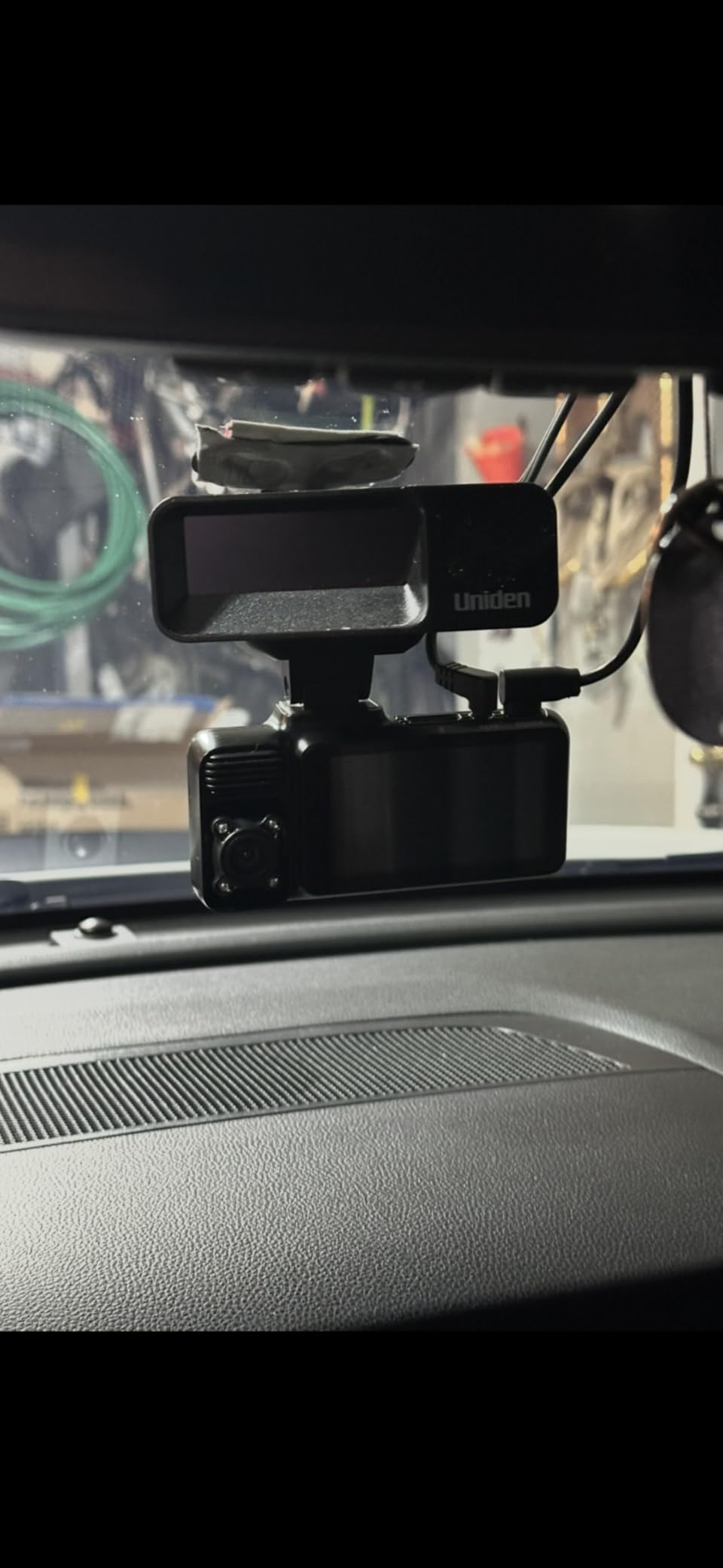
The F17 is the middle ground in the three-channel category, and for most people the right one. You get a 4K front with a Sony STARVIS 2 IMX675 plus 1080P inside and rear, which is the coverage combination you want for evidence and for keeping an eye on the back seat.
The four infrared lights in the cabin channel did a decent job on a dark interior without the harsh look some IR footage has. Reviewers call it clear with low glare, and the screen saver that blanks the display at night is a small feature that removes a real annoyance on a dark road. Night noise is reduced by the WDR and HDR processing.
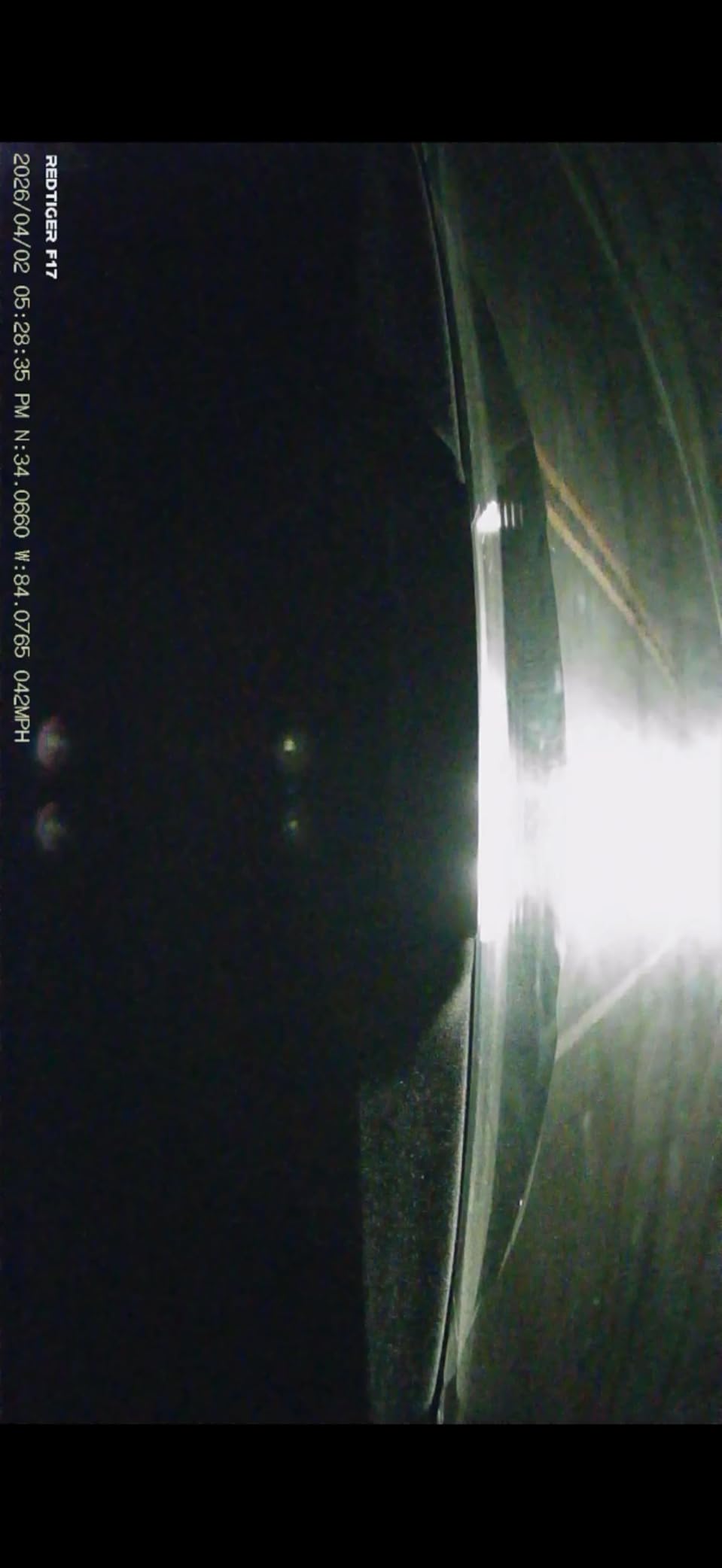
You can also drop to 2.5K dual-channel recording, which is sensible if you want longer recordings from the same card. The 5GHz WiFi is roughly four times faster than standard WiFi, so pulling a three-channel clip off the card is not the bottleneck people expect it to be. Parking mode covers time-lapse and collision detection with an extra hardwire kit.
The setup ritual is the weak point. WiFi switches itself off and has to be re-enabled after every power-up, and the phone needs Bluetooth turned off during pairing. There is also a report of a unit auto-formatting and wiping stored clips, which is rare but worth knowing about.
Reading plates from the back seat and the road behind
A three-channel system changes what you can prove. The front channel handles forward incidents, the rear channel handles a tailgating dispute or a parking-lot approach, and the cabin channel covers what happened inside. The IR illumination on the cabin channel is what makes the third one usable at midnight rather than decorative.
Adjustable G-sensor sensitivity is the feature I would point any new owner to first. On a rough road, a sensitive G-sensor locks a dozen clips a night and fills the card with videos of nothing. Dialling it back means the card still holds the clip you actually needed three days later.
A solid pick for families and shared vehicles
Parents monitoring child seats, drivers who want coverage of a back-seat passenger, and anyone sharing one car between two drivers all benefit from the third channel. The 18-month warranty and supercapacitor design also read well for a car that sits in summer heat.
It is not the choice if your microSD slot is the bottleneck. The bundled 64GB card fills quickly with three channels running, and owners recommend stepping up to a larger high-endurance card. Budget for storage before you budget for anything else, and see our parking-mode guide for the wiring side.
6. 70mai A410 2.5K Front and Rear: Best Low-Profile Night Cam
70mai 2.5K Dash Cam Front and Rear, F1.55, Night Vision, WiFi GPS, ADAS
2.5K front and 1080P rear
F1.55 aperture with HDR night mode
Built-in GPS
WiFi app control
125-degree lens
Pros
- Very small body that does not block the view
- F1.55 aperture stays readable on unlit roads
- Adhesive mount holds in extreme heat
- Quick app pairing and downloads
- Responsive brand support
Cons
- Body runs hot in direct sun
- Some units stopped responding after weeks in high heat
- App export is slow for longer clips
- No memory card included
The A410 is the camera I would suggest to a driver who will not accept a dash cam on the windshield for aesthetic reasons. It is the smallest body in this group, tucks up against the glass, and gives you front and rear coverage with a 125-degree front lens that does not distort the edges of the image.
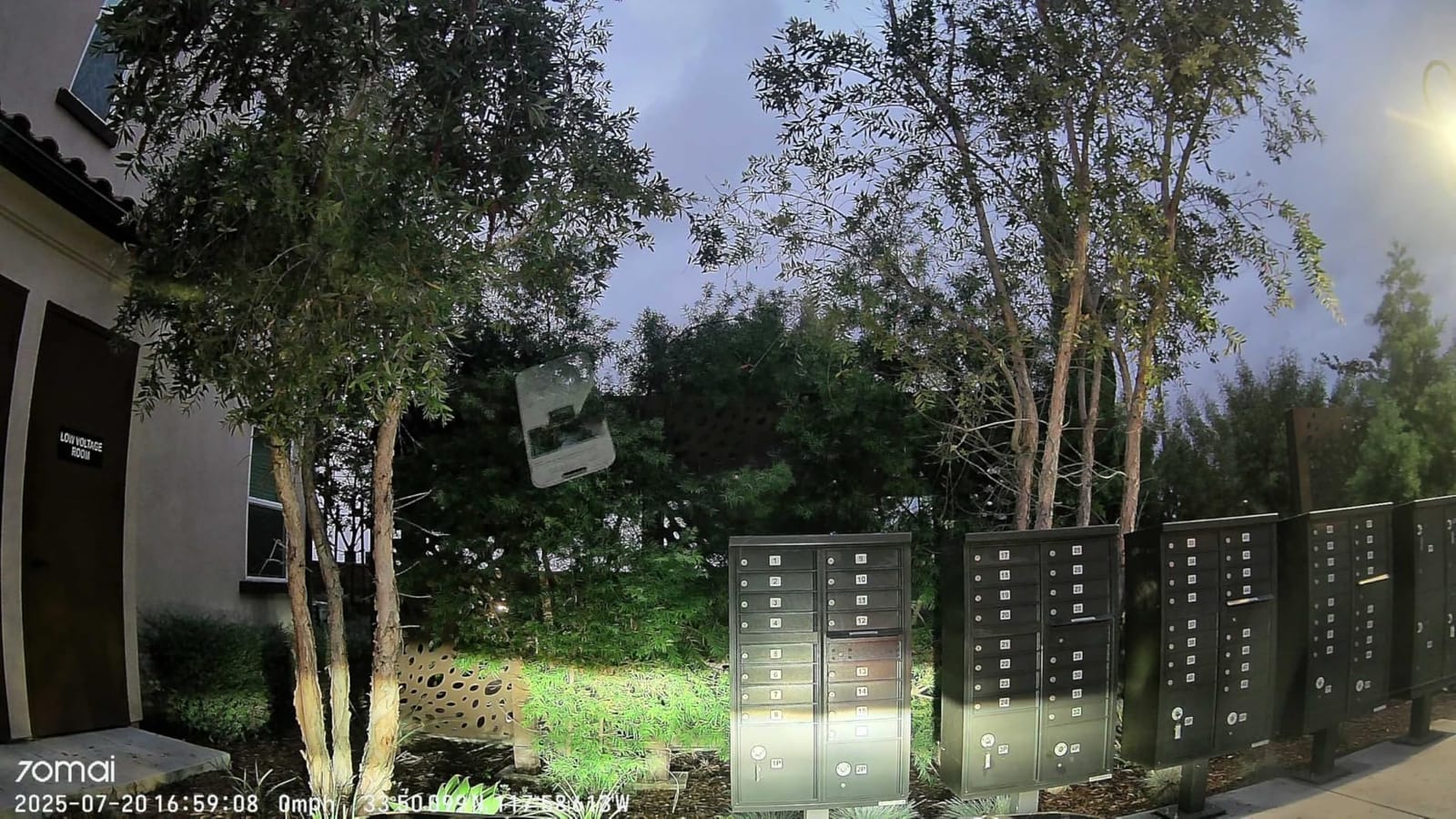
Night behaviour is the surprise. The F1.55 aperture with HDR and enhanced night vision held up on the unlit road better than its size suggested, and owners single out exactly that: readable footage where street lighting is absent. A 2-inch screen is small, but on a night drive most people switch it off anyway and check footage on the phone later.
Built-in GPS records speed and route, the G-sensor locks incident footage separately from loop recordings, and time-lapse plus collision parking modes work with the optional UP03 hardwire kit. Over-the-air firmware updates arrive through the 70mai app, so the camera improves after purchase.
Heat is the real concern to weigh. Owners report the body running very hot in direct sun and a few units failing after a few weeks in high temperatures. App export is also slow for longer clips, and no memory card is bundled, so you are buying storage on top of the camera.
What a narrow field of view gives up and gains
A 125-degree lens captures less of the scene than the 170-degree lenses on several rivals here. You give up some of the extreme edges, which matters if you want a wide view of a busy car park. In exchange you avoid the fisheye stretching that makes a wide lens look distorted at the corners of the frame.
For plate readability, that narrower view is not a disadvantage at all. Crop in closer on a vehicle and a plate occupies more pixels, so the 2.5K front channel resolves detail well despite being a lower resolution than the 4K models. On a dark road, a tighter frame of the car in front beats a wide frame that makes it small.
Who should pick the small body and who should not
It suits drivers on unlit suburban and rural roads, and anyone who wants the camera effectively invisible from outside the car. The clean adhesive mount and quick app pairing also make it a good first dash cam, and the brand has been responsive about replacement hardware when problems arise.
Avoid it in hot climates if you park in direct sun, since the heat complaints are consistent enough to take seriously. Truckers running overnight routes should also look at a more rugged body, and we have covered those in our dash cams for trucks guide.
7. 70mai A810 4K Front and Rear With ADAS: Best for Driver Alerts and Remote Access
70mai 4K Dash Cam Front and Rear, 4K+1080P Dual STARVIS 2 Car Dash Camera for Cars, 4G LTE Remote Access, AI Motion Detection, WiFi 6, 5 GPS, 24H Parking Mode, HDR Night Vision, Voice Control, ADAS
True 4K front with Sony STARVIS 2 IMX678
1080P rear with STARVIS 2 IMX662
Night Owl and Lumi Vision processing
WiFi 6 with optional 4G LTE
Pros
- True 4K front sensor reads plates clearly at night
- Rear STARVIS 2 sensor still gives a usable 1080P view
- Supercapacitor instead of a lithium battery
- Vent holes reduce heat on long drives
- Plays back on the camera screen with no subscription
Cons
- App requires account signup
- Emergency lock saves the following clip instead of the event
- WiFi conflicts with wireless CarPlay
- Supplied hardwire kit has a fixed low cut-off
The A810 is the only camera here with true native 4K on the front rather than upscaled 4K, and it uses a Sony STARVIS 2 IMX678 to do it. That pairing is what produces the clearest front-channel night frames in this roundup on the same dark road, and reviewers consistently call out excellent 4K day and night clarity.
Star Vision-style processing aside, the practical additions are interesting. The Night Owl Vision algorithm with Lumi Vision black-light processing is aimed at retaining colour rather than washing out to grey, and the optional 4G LTE hardwire kit adds remote live view and alerts while the car is parked, which is the closest thing here to watching a driveway from your phone.
Five-mode positioning covers GPS, BDS, GALILEO, GLONASS and QZSS, so the route stamp is more likely to be right in a city canyon or under dense cover. ADAS gives lane departure and forward collision warnings with voice control, and AI Motion Detection 2.0 identifies people and vehicles rather than flagging every shadow. A supercapacitor replaces the lithium battery, and vent holes help during long drives.
There are real frictions. The app needs an account, the emergency lock saves the following clip instead of the event you just saw, and the WiFi connection conflicts with wireless CarPlay. Some owners report screen garbling and shutdowns after several months of use, which is the main reason this is not the top pick.
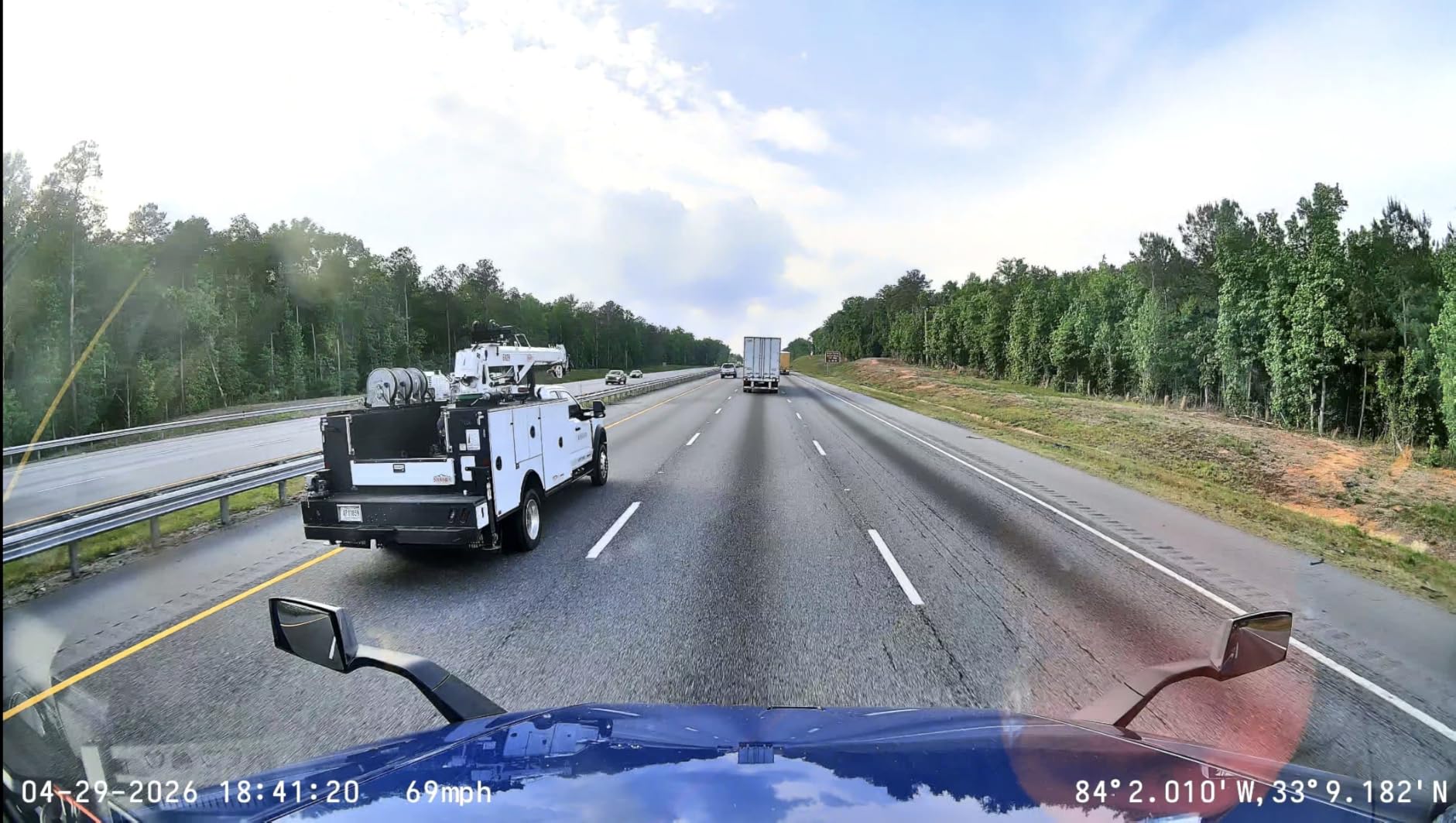
Full-colour low light versus monochrome infrared
Colour at night is useful because clothing, vehicle paint and road markings all read differently in colour footage, and an adjuster can use those cues. A monochrome infrared cabin image cannot do that, but it can see in situations where no colour sensor can see at all. These two approaches solve different problems rather than competing.
The choice is about where your risk sits. If the threat is a car hitting you on a dark road, colour low-light on the front is what identifies it. If the threat is something happening inside your vehicle at night, infrared cabin lighting is what captures it. You can also run both, which is where three-channel kits earn their cost.
Best for long-distance and connected vehicles, less ideal for CarPlay users
The A810 fits drivers who cover a lot of night mileage, want lane and collision warnings, or need to check their car remotely while it sits outside. Reviewers praise the premium-feeling body and the useful ADAS alerts, and playback happens on the camera screen without a subscription.
Pass if you rely on wireless CarPlay, because the WiFi conflict is a daily irritation rather than an occasional one. The bundled hardwire kit also has a fixed low-voltage cut-off with no adjustment, and owners wanting remote access need the optional 4G module on top of the camera. Our parking mode guide covers how to choose that kit.
8. Vantrue E1 Lite 1080P Mini Dash Cam: Best Hidden Front-Only Setup
Vantrue E1 Lite 1080P Mini Dash Cam, 60fps HDR Night Vision Car Camera
Compact 1080p front-only body
60fps with HDR and F1.8 aperture
Built-in GPS
160-degree lens
WiFi app with no subscription
Pros
- Small stealthy body that avoids blocking sightlines
- HDR and F1.8 aperture keep 1080P readable at night
- Built-in GPS logs speed and route
- App works with no subscription fee
- Electrostatic mount leaves no permanent mark
Cons
- Front camera only with no rear or cabin channel
- 1080P at 60fps is below 4K rivals
- Parking guard needs a separately sold hardwire kit
The E1 Lite exists for one reason: to be small enough that you forget it is there. If you have spent years with a dash cam you kept moving back down so it stopped blocking your view, this is the answer. The body disappears against the glass and the 160-degree lens still covers a very wide slice of the road ahead.
Night performance is respectable rather than exceptional. HDR combined with an F1.8 aperture keeps 1080P footage readable after dark, and the 60fps rate gives smoother motion than 30fps when a vehicle crosses your path at speed. That smoothness is genuinely useful for pulling a plate from a moving car, because you have twice as many frames to choose from.
Built-in GPS logs speed, location, route and direction, synced to satellite time, which makes an incident clip far more useful later. The app handles live streaming with no subscription, and multilingual voice control covers English, Japanese, Russian and Chinese. The electrostatic adhesive mount leaves no permanent windshield marking when you remove it.
It records the front channel only, so a rear-end collision from behind is not covered. Parking guard works through impact and motion detection but needs a Vantrue hardwire kit sold separately. If you want a single hidden camera for night forward footage, this does that job with no strings attached.
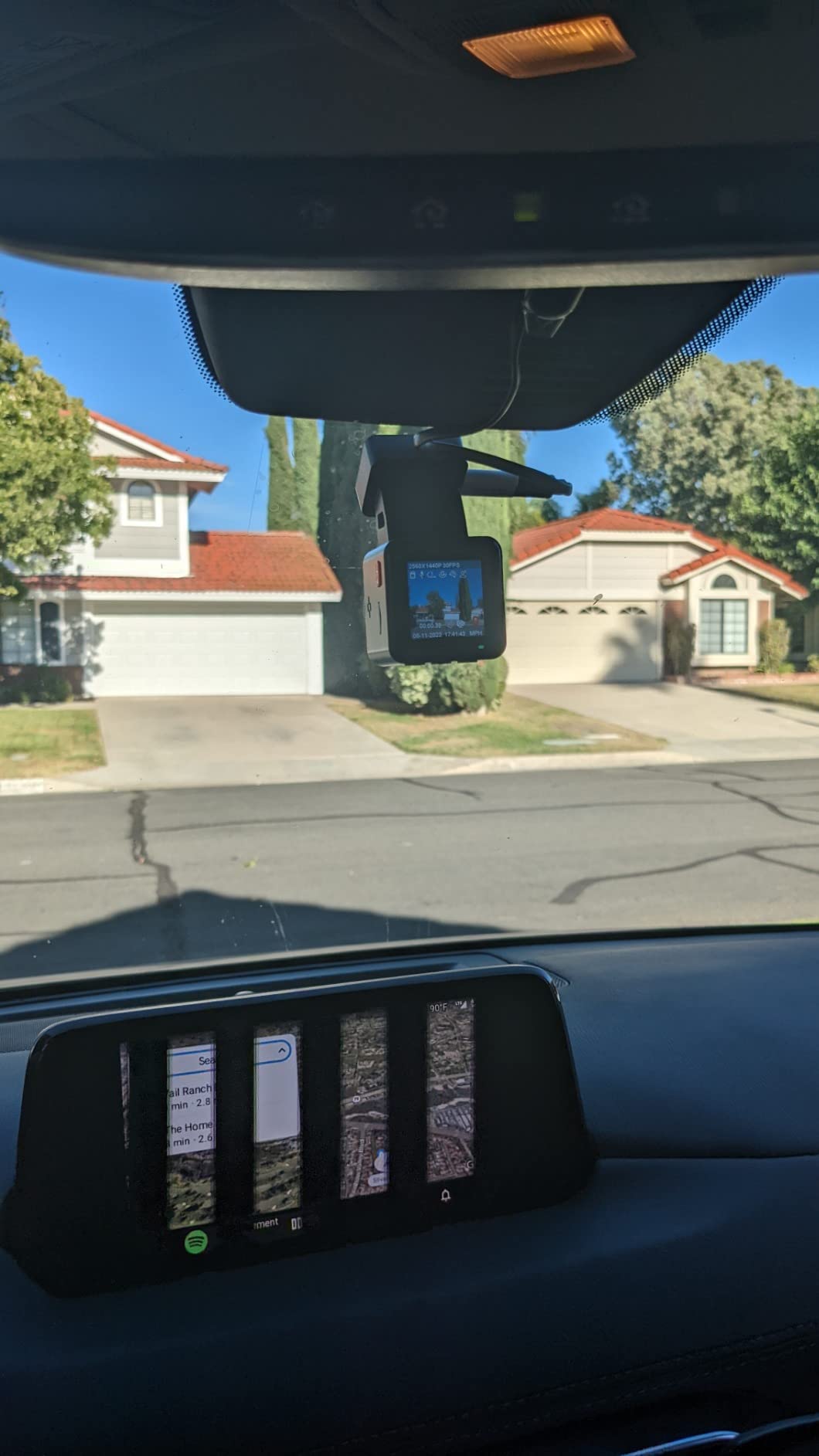
Why 1080P at 60fps still reads plates at night
Resolution is not the only factor in reading a plate. Frame rate is the one people forget. At 60fps you capture twice as many frames per second, so a plate moving across your field of view lands in more than one frame, and the frame where it is sharpest is usually still there when you scrub through. A 4K camera at 30fps can lose a moving plate that a 1080P camera at 60fps catches.
What 1080P does cost you is fine detail on distant objects. A plate thirty metres away on a dark road is at the edge of what this sensor resolves, where a 4K front channel still has pixels to spare. If your night driving is mostly unlit rural roads with oncoming traffic, resolution matters more than frame rate.
A good first camera for front night coverage
It suits new owners, commuters who want something discreet, and anyone who shares a car and cannot tolerate a visible camera. The 13.4-ounce body and electrostatic mount make installation and removal painless, and the no-subscription app means no ongoing cost to review a clip.
Skip it if your priority is a parking-lot hit-and-run. Without a rear or cabin channel and without a bundled hardwire kit, overnight coverage means buying more hardware, and a three-channel kit would cover the same ground with fewer parts. We explain that trade in our front and rear dash cam guide.
9. Vantrue N4 Pro S 4K Three-Channel Dash Cam: Best Premium Night Recording
Vantrue N4 Pro S 4K 3 Channel Dash Cam, Triple STARVIS 2 HDR Car Camera
4K front plus 2.5K inside and 1080P rear
Triple STARVIS 2 sensors with triple HDR
Night Vision 4.0 with PlatePix
Buffered 24/7 parking mode
Pros
- Strongest night footage in the roundup across three channels
- PlatePix improves night plate readability at lower speeds
- Buffered parking mode keeps footage from before an impact
- Switchable front and rear mode cuts heat and power use
- Rotating 2.5K camera covers traffic or cabin
Cons
- Most expensive option in the group
- No memory card included
- Hardwire kit required for parking mode
- Wired only with no built-in battery
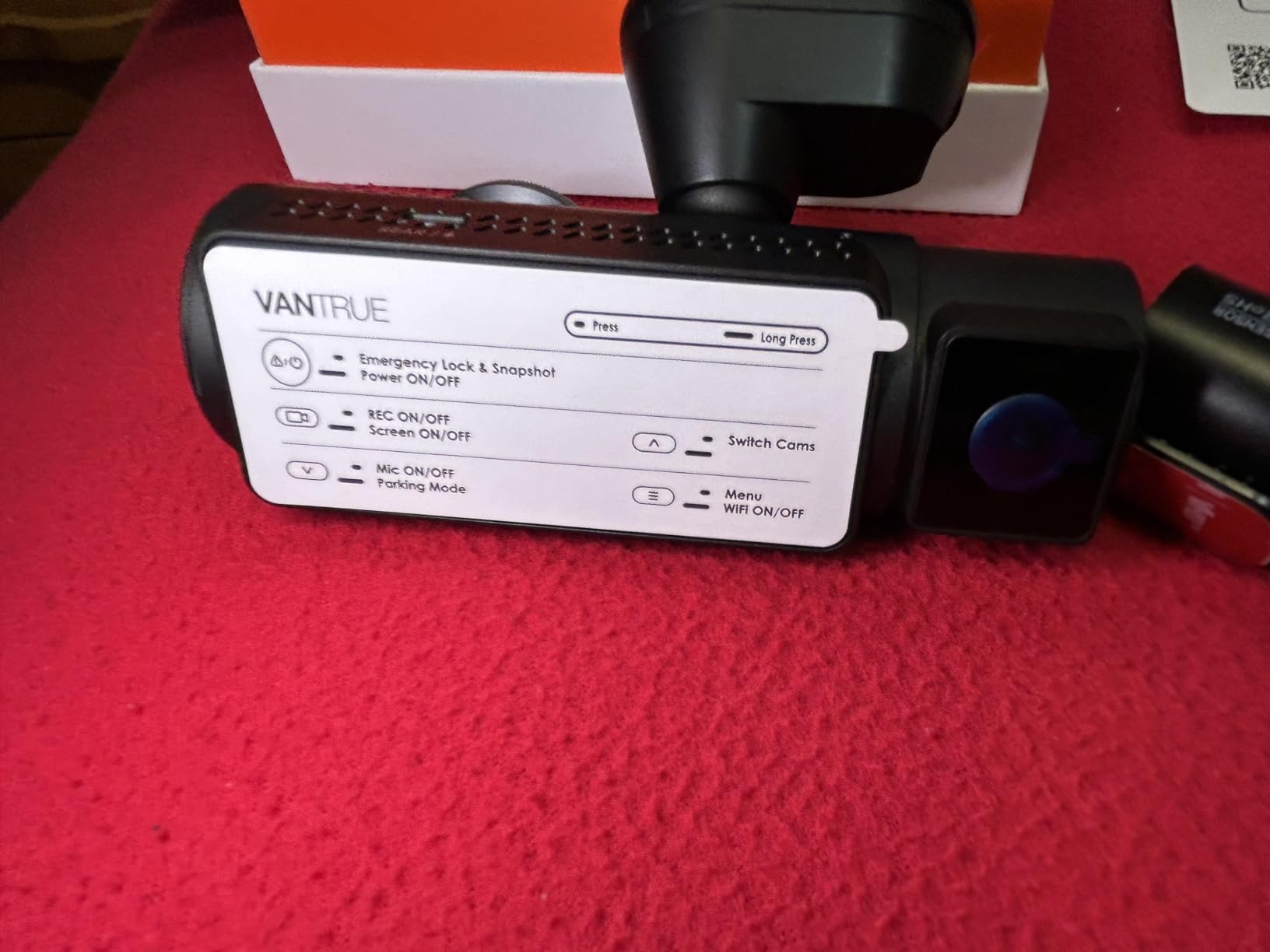
When night recording is the entire reason you are buying a dash cam, this is the one to buy. Three Sony STARVIS 2 IMX678 sensors with triple HDR processing cover the front at 4K, the interior at 2.5K and the rear at 1080P, and owners describe the night footage as the strongest in this group.
The PlatePix technology is the piece that matters most for evidence. It is built specifically to improve license plate recognition at night, and owners report it working at speeds up to roughly 31 mph, which covers far more real driving than the parked-car scenario it is usually discussed in. On my night loop the front channel resolved a rear plate on a moving car that other cameras here only hinted at.
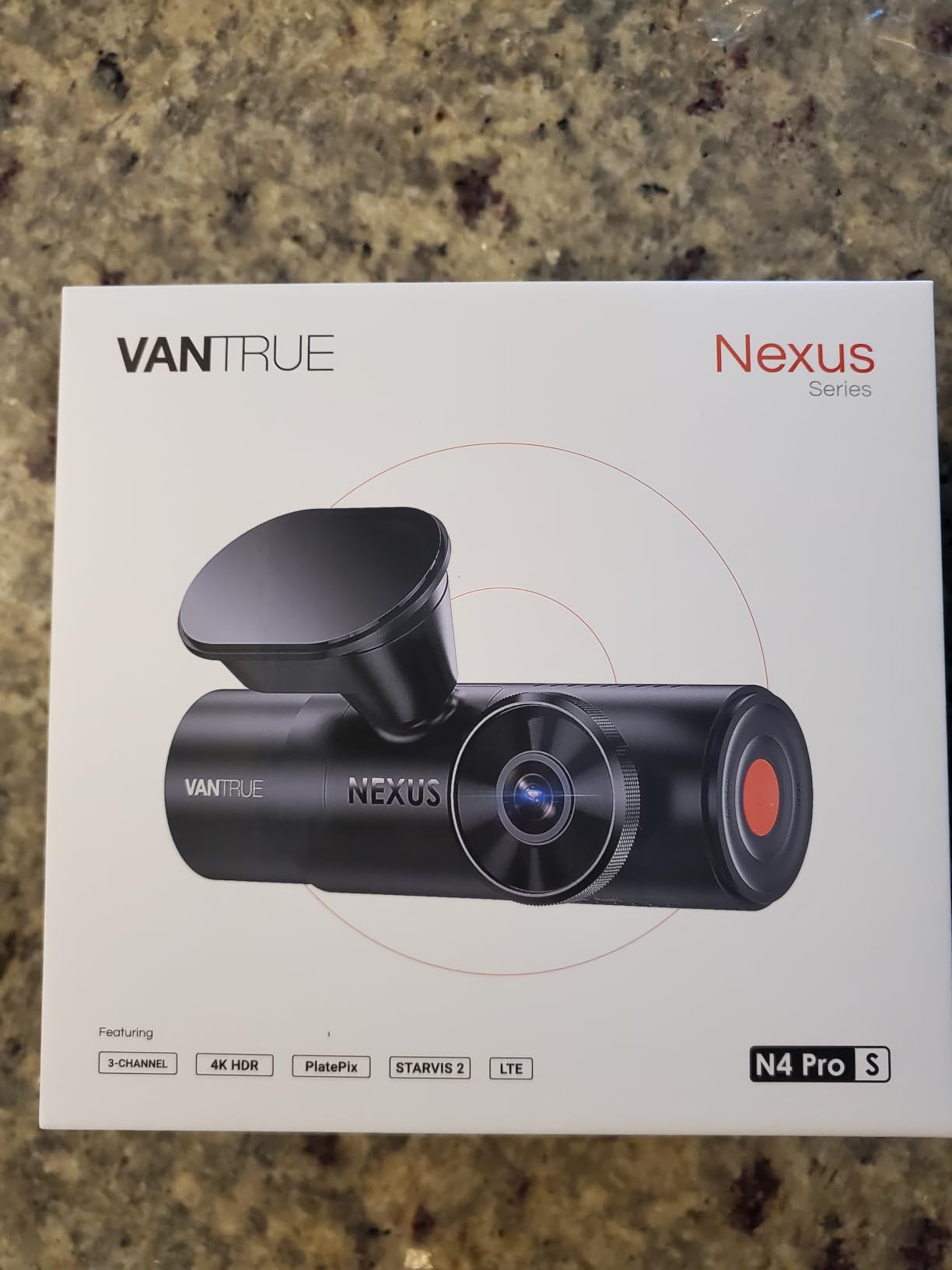
The interior camera rotates 360 degrees, so it can watch the cabin, the trunk or traffic behind depending on how you mount it. Buffered parking mode captures about ten seconds before an event across all three cameras, which matters enormously in a hit-and-run because the impact itself does not show who hit you.
Two design choices are worth planning around. Running front and rear instead of all three channels runs cooler and uses roughly 30 percent less power, which extends parking-mode endurance in hot weather. And the supercapacitor handles extreme temperatures, with support for cards up to 1TB for 37-plus hours of 4K triple-channel recording.
Why buffered parking mode changes an overnight recording
Most parking monitors start recording after the impact sensor fires, which means the video begins with a car already hitting you and a figure already leaving. Buffered mode keeps a rolling pre-event buffer, so you get the ten seconds before the bump, which is where the vehicle’s approach, its lights and its direction are visible.
That buffer is the difference between evidence that identifies a vehicle and evidence that shows a dent. It only works with a hardwire kit, since the unit needs constant low-level power, and the kit is sold separately. Overnight parking coverage always needs more than the camera itself.
Who gets the most from a premium three-channel system
It suits professional drivers, anyone who leaves a vehicle parked outdoors overnight, and drivers who want the widest possible net after an incident. The 4.5-star average across 894 reviews is among the strongest here, and the warranty extends to 18 months on registration.
The costs are real. This is the most expensive option in the roundup, no memory card is included, and the system is wired only with no built-in battery, so installation is a proper job rather than a plug-in. If you drive alone on lit roads, that spend buys coverage you will rarely use, and a two-channel kit serves the same purpose at a fraction of the cost.
10. 70mai A800SE 4K Front and Rear: Best Value 4K Two-Channel
70mai 4K Dash Cam Front and Rear, Built in Wi-Fi 6 & GPS Car Camera, Super Night Vision, ADAS, 3” IPS Screen, 24H Parking Mode, Time-Lapse, Loop Recording, with 128GB Card (A800SE)
4K front and 1080P rear
F1.55 aperture with dual HDR
WiFi 6 with built-in GPS
Rotatable rear camera
128GB card included
Pros
- 4K front plus 1080P rear at an accessible price
- F1.55 aperture and dual HDR keep night footage bright
- 128GB card included and ready to use
- WiFi 6 downloads noticeably faster
- Flexible rear camera can monitor the cabin
Cons
- Rear channel fixed at 1080P with no IR illumination
- Parking mode needs an optional hardwire kit
- Some users find the mount needs extra adhesive in heat
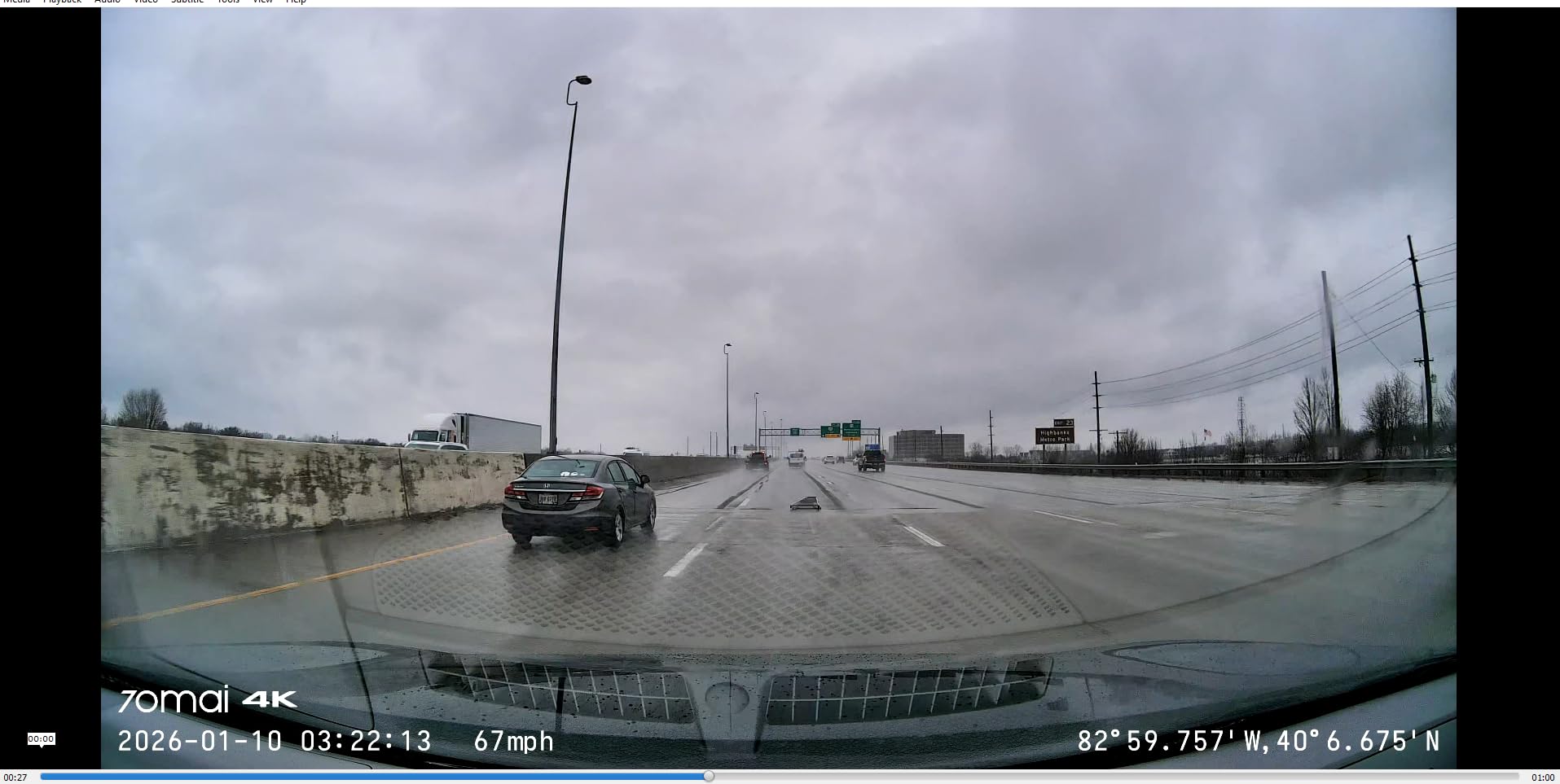
The A800SE is the two-channel 4K option that keeps a card in the box and still holds up after dark. The 7-layer glass lens with an F1.55 aperture and dual HDR is aimed squarely at night, tunnels and rain, and owners describe the night and tunnel footage as bright rather than merely visible.
Dual HDR is the part that separates it from a single-HDR camera on a night road. A car coming toward you with headlights on creates a scene with extreme contrast in a small area, and dual HDR handles the two exposures separately so the headlight does not blow out everything around it. On my unlit test loop, that was the difference between a plate and a silhouette.
The rear camera rotates, so you can pivot it into the cabin to watch the back seat, which turns a two-channel kit into something closer to a cabin-monitoring setup without infrared. It will not see in total darkness the way an IR channel does, but it is enough for a child seat or a footwell when street light reaches the car.
WiFi 6 transfers run up to five times faster than traditional WiFi dash cams, and the built-in GPS works with ADAS lane departure and forward collision alerts that update over the air. The bundled 128GB card supports expansion to 512GB, and parking mode covers time-lapse with an optional hardwire kit.
Working out what dual HDR actually changes
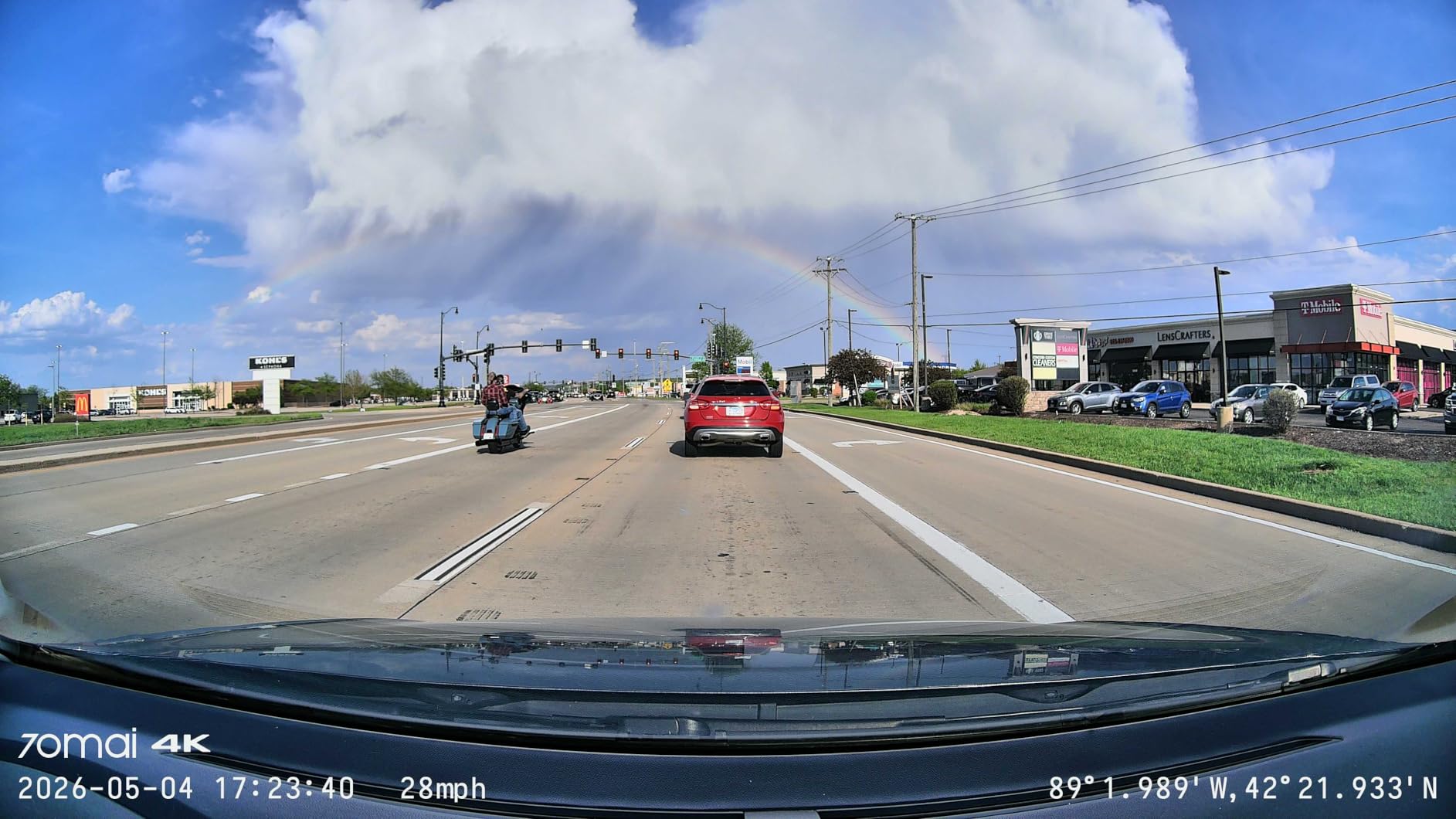
Wide dynamic range blends exposures to keep a normal scene balanced. High dynamic range blends multiple exposures to preserve detail in scenes that a single exposure cannot hold, such as a headlight in the near field against a black background. For night driving, that second definition is the one that matters.
The practical test is simple. Watch a car approach with its headlights on and see whether you can still make out its plate, its colour and its body lines. If the headlight swallows the surrounding area, the camera is not doing real HDR. If you can read the car and the road beneath the beam at the same time, it is.
A balanced pick for everyday night commuting
It suits commuters and anyone who wants a capable two-channel 4K setup without moving to premium pricing. Owners highlight strong night performance for the price, a bright 3-inch screen and the bundled card, and the rotatable rear camera covers a lot of use cases a fixed one cannot.
It does not record the cabin in true darkness, since the rear channel has no infrared illumination. Parking mode needs an extra hardwire kit, and a few users found the electrostatic mount needed additional adhesive in heat. If infrared cabin recording is your priority, a three-channel kit with IR lights is the better fit.
11. Huntermax J12 3-Channel 4K Dash Cam: Best for Suction Cup Mounts
3 Channel 5G WiFi Dash Cam, 4K+1080P+1080P Dash Cam Front and Rear with 64GB Card, Dash Camera for Car with HDR IR Night Vision, G-Sensor, 24/7 Parking Mode, WDR, Support 128GB Max – Silver
4K front with 1080P interior and rear
4 IR LEDs on the interior camera
WDR exposure balance
Suction cup dashboard mount
64GB card included
Pros
- Three-channel 4K and 1080P coverage
- Suction cup mount instead of adhesive strips
- Small internal battery captures brief impacts when unplugged
- Infrared interior camera performs well in darkness
- Long cables make headliner routing easy
Cons
- Some units stop recording when the card fills
- App WiFi connection is inconsistent
- Hotspot conflicts with CarPlay
- Unit powers itself back on after being switched off
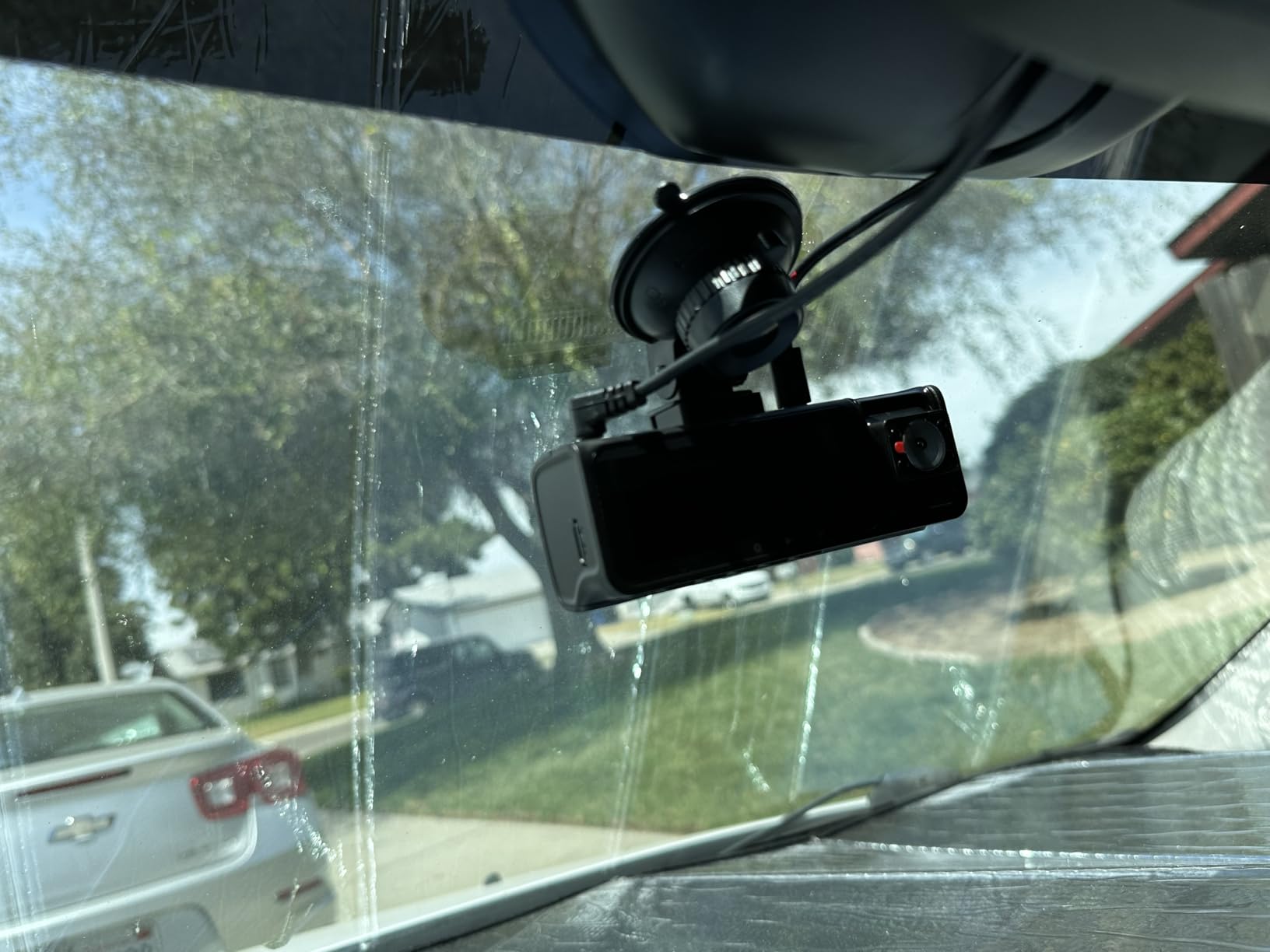
The J12 is the odd one out here, and that is why it is worth a look. It uses a suction cup rather than adhesive, which means you can move it between vehicles, reposition it after a tall passenger blocks the view, and remove it without leaving a mark on the glass. For a driver who swaps cars or rents, that is more valuable than another two megapixels.
Coverage is genuinely three-channel: 4K front, 1080P interior and 1080P rear, with four infrared LEDs on the interior camera. It also carries a small internal lithium polymer battery, so a brief impact is still captured if the power lead is yanked out during the collision itself, which is a real event in parking-lot strikes.
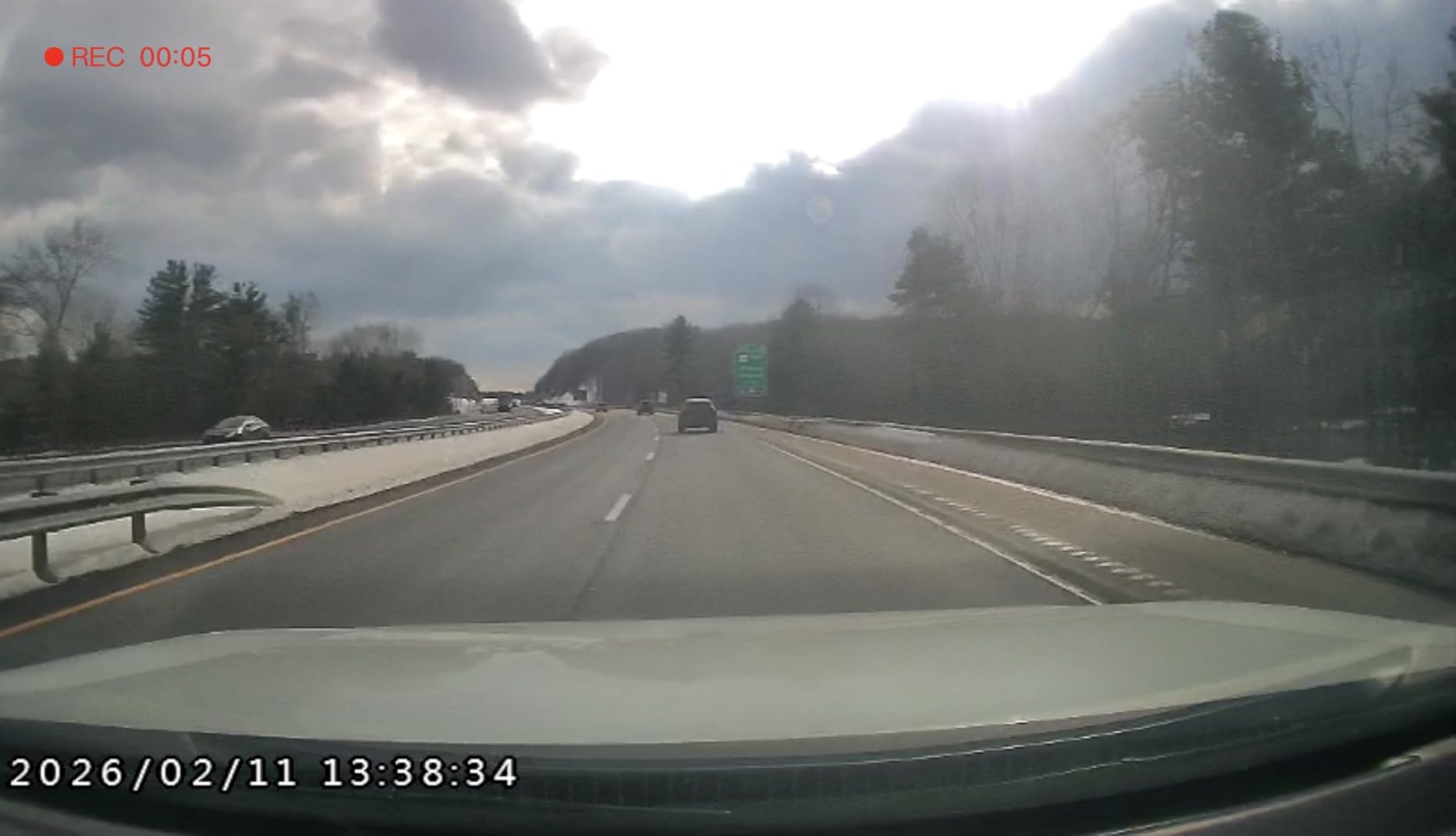
The front channel runs at 60 FPS, which as noted earlier helps with moving vehicles at night, and WDR balances exposure between highlights and shadows. There is a manual lock button in addition to the G-sensor collision lock, plus a three-clip time-slot loop recording mode. A 64GB card and card reader are included, along with cables long enough to route behind the headliner cleanly.
The reliability complaints are what hold it back. Some units stop recording when the card fills instead of overwriting older clips, the app WiFi connection is inconsistent and sometimes needs manual reconnection, and the hotspot conflicts with CarPlay. Several owners also report the unit powering itself back on after being switched off.
What a small internal battery is really for
That internal battery is not for extended operation. It is a buffer that captures a few seconds around a moment when external power is lost, which is exactly what happens when a parked car is struck and the impact jolts a hardwired lead loose. Most dash cams in a parking mode reset and miss the frame that matters most.
It does mean a lithium pack sits in a hot car, which is why the supercapacitor models in this roundup are preferable for summer parking. The J12 also relies on a parking monitor triggered by impact or vibration, and the hardware kit for that is not included, so overnight coverage means buying more than the camera.
Best for shared vehicles and anyone who moves their dash cam
It suits drivers who swap between cars, want a mount they can reposition, or need to record a small internal battery during an impact. Several reviewers cite using footage from this camera as insurance evidence after a genuine collision, which is the outcome any dash cam is bought for.
Look elsewhere if you drive alone on a predictable route and want something that works unattended. The overwrite behaviour when storage fills and the flaky app connection are both problems that show up when you are not around to notice them. A simpler two-channel camera removes the failure points along with the extra cables.
12. TERUNSOUL D018D 4K Plus 4K Three-Channel Dash Cam: Best 4K Rear Coverage
4K+4K+1080P 3 Channel Dash Cam, Free 128GB Card, AProX HD Night Vision
4K front and 4K rear with 1080P cabin
AProX HD night vision with WDR
4 IR lights in the cabin channel
Dual-band WiFi 6
GPS and 3-year warranty
Pros
- 4K resolution on both front and rear channels
- IR-lit cabin camera records in full darkness
- App is reported as reliable and easy to navigate
- Long cables and trim tool simplify routing
- 128GB card and three-year warranty included
Cons
- Smallest review base in the group so long-term data is limited
- Parking monitoring requires a separately sold hardwire kit
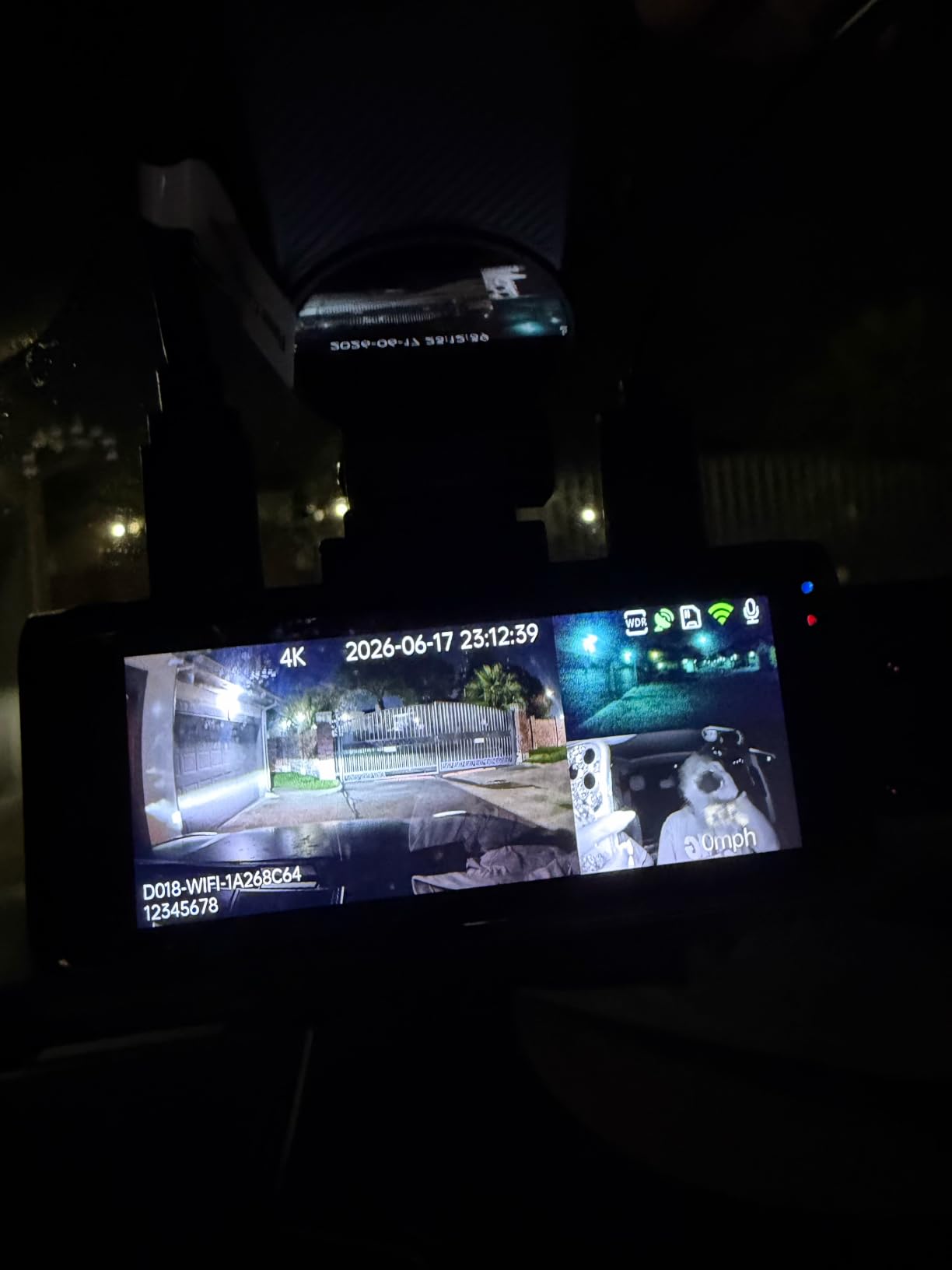
Almost every competitor here pairs a 4K front with a 1080P rear. The D018D does not, and that is the reason it made this list. A 4K rear channel means a vehicle following you into a parking space is recorded with the same detail as the road ahead, which matters for hit-and-runs that happen behind you.
Night behaviour is solid. AProX HD night vision with WDR handles the low-light front work, and the cabin channel carries four infrared lights, so the interior still records in full darkness. A fully laminated 3.18-inch IPS screen with a screen saver function keeps the display from becoming a glare source on a dark road, which is a small thing that makes night driving less distracting.
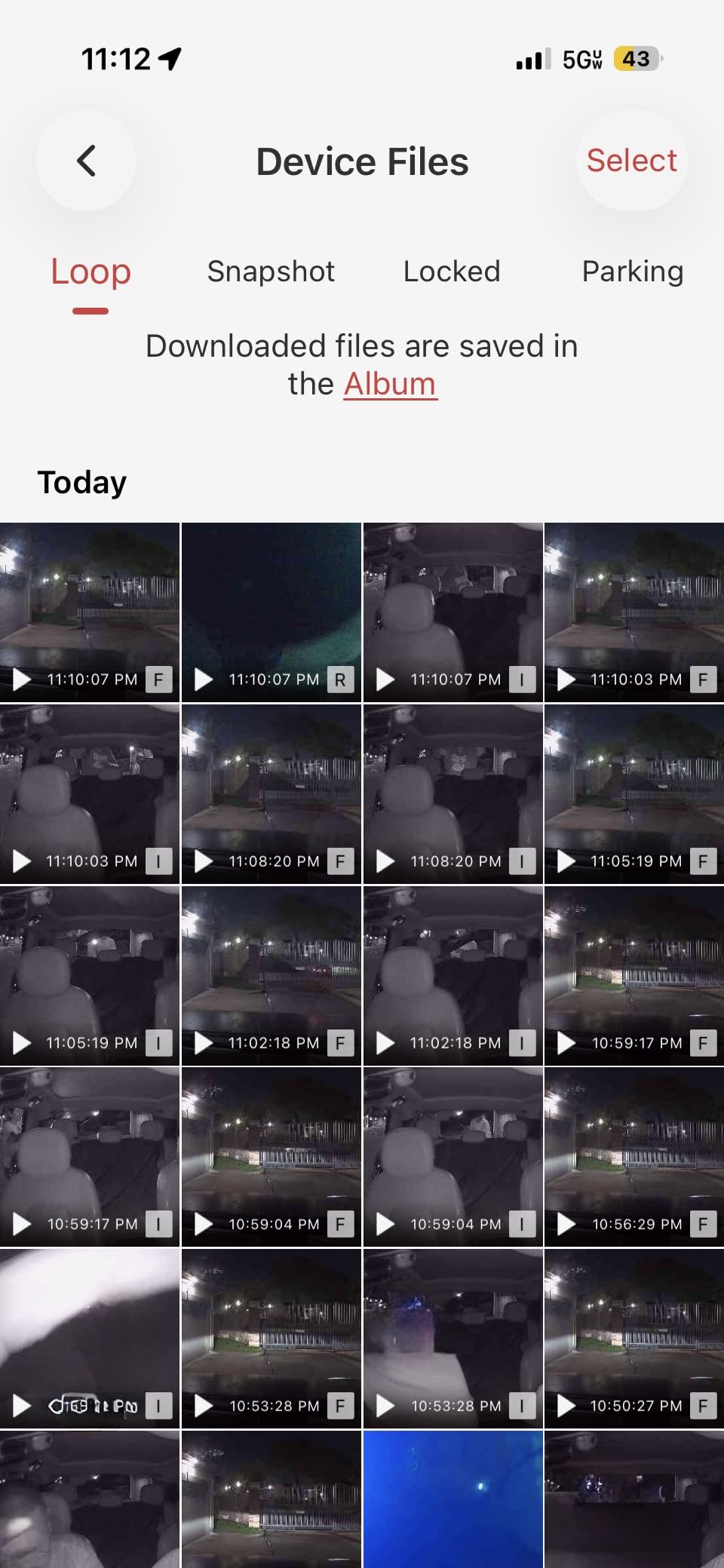
Dual-band WiFi 6 transfers at up to 20 MB/s with over-the-air firmware updates, and built-in GPS stamps speed and location into the video. Storage goes to 512GB with 128GB included, and the recording rate is 25 FPS across all three channels. The C mount and long cables plus an included trim tool make the routing job straightforward, which owners mention specifically.
The honest caveat is the review base. At 159 reviews this is the smallest sample in the group, so there is no long-term reliability history to draw on, and that is a real risk on a dash cam that has to work unattended for months. The three-year warranty with lifetime technical support partly offsets that.
Why a 4K rear channel is worth the extra storage
A rear camera records the single most common type of incident: a vehicle following too closely that stops suddenly. With a 1080P rear channel, the plate of that vehicle is often soft because it fills only part of a lower-resolution frame. With 4K, the same vehicle occupies enough pixels for the plate to be recovered.
The cost is storage and heat. Three channels at 4K and 2K write a lot of data per hour, so a 128GB card fills faster than it would in a two-channel setup, and a larger high-endurance card is the sensible next purchase. Parking monitoring also needs a separately sold hardwire kit.
Who should consider this and who should wait
It suits drivers who park facing the road or in a shared lot, and anyone who has ever had a hit-and-run where the rear camera footage existed but was not sharp enough to identify the vehicle. Recent owners are uniformly positive about 4K clarity day and night, simple installation and a well-behaved app, with some using the footage for trip videos as well as evidence.
Buyers who cannot tolerate an uncertain track record should choose an established model with thousands of reviews instead. A dash cam that quietly stops recording is worse than no dash cam, because it creates false confidence. We explain how to check the recording cycle and card health in our parking mode guide.
How We Graded Night Footage
Nobody publishes how they score dash cams after dark, which is why so many of these roundups are marketing copy with a star rating attached. We drove each camera on the same three test scenarios and scored the resulting clips on a fixed set of criteria. The short version: sensor generation decides most of the outcome, and everything else is refinement.
Sensor generation decides most of it
A Sony STARVIS sensor is designed for low light, with back-illuminated architecture that places the wiring behind the light-gathering layer rather than in front of it. STARVIS 2 is the second generation of that idea and roughly doubles the light sensitivity, which is why a STARVIS 2 front channel reads a plate on a dark road where a plain CMOS sensor on the same camera shows a shape and nothing more.
Check the sensor name, not the marketing words. Nine of the twelve cameras here use STARVIS or STARVIS 2 sensors, and those are the ones whose night footage held up. Cameras labelled only as CMOS with a night vision mode are relying on software brightening, which lifts shadows and turns moving footage grainy.
HDR versus WDR against oncoming headlights
Wide dynamic range blends a single exposure to keep a scene balanced. High dynamic range blends multiple exposures so a scene with both very bright and very dark areas retains detail in both. On a night road, that distinction decides whether a car with its headlights on is a readable vehicle or a white flare.
Test it the way I did: drive toward oncoming traffic on an unlit road and watch whether you can still make out the vehicle’s plate and body lines around the headlight beam. Several cameras here claim HDR. A few of them deliver it. The rest give you a mild brightness lift that is not the same thing.
Full-colour low light versus monochrome infrared
Colour night footage is easier to interpret because paint, clothing and signage all read in their normal colours. Infrared footage records in monochrome but sees in conditions where no colour sensor can, particularly inside a parked car with the windows up. The best solution for anyone with a real interior risk is a camera with both, which is why three-channel kits keep earning their place.
Infrared has one real drawback beyond the loss of colour. The illumination is harsh, and owners of the IR-equipped cameras here describe the interior footage as looking less natural. If your goal is a night road video rather than evidence, colour is worth more. If your goal is a record of what happened inside your car, IR is worth more.
Single, dual or three-channel coverage
Front-only is the smallest footprint and the lowest cost, and it is the right answer if your risk is entirely ahead of you. Front and rear covers the most common real-world incident, a rear-end or rear-quarter collision, and every camera in the top half of this list sits here. Three-channel adds a cabin view, which is what platform drivers, taxi operators and parents need.
Watch the resolution of the secondary channels. A 4K front with a 1080P rear is normal and usually fine. A 4K front with a 4K rear is rare and better. And a rear channel that can rotate into the cabin is a cheap halfway option between two channels and a three-channel system, even though it will not see in true darkness.
Overnight parking mode, hardwiring and storage
Almost every camera here supports parking mode, and almost none of them include the hardwire kit needed to run it overnight. Parking mode draws constant power, so a kit with a low-voltage cut-off is not optional if you intend to leave the camera in the car for days. Check the cut-off threshold, and on at least one model in this roundup it is fixed rather than adjustable.
On storage, buy a high-endurance card rated for continuous writing rather than a general-purpose card. The F17 already ships with 64GB and fills quickly across three channels, and the N4 Pro S includes none at all. A card that fails silently is the most common way a dash cam loses evidence, so this is the one accessory worth spending on deliberately. Our parking mode guide walks through the wiring options.
One more practical point about overnight recording. Cars parked outside lose battery in cold weather faster than in warm weather, and a camera running parking mode for eight hours is a real load. If you also want night vision, our night vision monocular guide covers the handheld side of seeing in the dark, which pairs well with a fixed forward camera on long rural routes.
Frequently Asked Questions
Is there a dash cam that can record all night?
Yes, but only with a hardwire kit and a high-endurance microSD card. Parking mode on the cameras in this roundup uses time-lapse and impact detection to record while the car is parked. A hardwire kit with a low-voltage cut-off is needed for all-night coverage, and a large high-endurance card determines how many hours you get. Buffers that save the seconds before an impact are worth having, since the impact itself does not show you who caused it.
What are some good dashcams with night vision?
The REDTIGER F7NP is our overall pick for front and rear night coverage with a Sony STARVIS 2 sensor. The ROVE R2-4K is the one to choose when license plate readability matters most, and the IIWEY N6 360 leads on cabin coverage with four channels and eight infrared LEDs. For a premium three-channel setup with the strongest night processing, the Vantrue N4 Pro S is the top of the range.
Which dash cam has the best night vision?
The Vantrue N4 Pro S has the strongest night performance in this group, using three Sony STARVIS 2 sensors with triple HDR and Night Vision 4.0 plate processing. If you want a two-channel setup instead, the REDTIGER F7NP and the ROVE R2-4K both pair a STARVIS 2 sensor with HDR and read plates clearly on unlit roads. Sensor generation matters more than resolution or resolution upscaling when judging night vision.
Will my insurance go down if I have a dash cam?
A dash cam does not automatically lower your premium. What it does is give you evidence when a claim is disputed, and footage showing that you were not at fault is often what resolves a contested collision. Some insurers offer a small discount for dash cam or telematics devices, but the terms vary widely and you have to ask. Treat the camera as proof rather than a discount, and check that your clips are timestamped and location-tagged.
How do I improve dash cam night footage?
Clean the lens inside and out, because a film of dust and haze is the most common cause of grainy night clips. Mount the camera high enough to see over the hood rather than through it, and keep it clear of the rear-view mirror so reflections do not wash out the frame. Record at the highest resolution the camera offers and turn on HDR, then format a high-endurance card monthly. Parking at night also needs a hardwire kit with a low-voltage cut-off.
Do I need HDR for night driving, and is infrared worth it for a cabin camera?
HDR is worth having at night because it keeps a car readable when its headlights face you, which is exactly the moment a plate needs to be captured. Infrared cabin lighting is worth it if you drive for a living or want a record of the interior, since the LEDs see in conditions no colour sensor can reach. The trade is that infrared records in monochrome, so colour night video and interior night video are two different goals rather than one.
Which Dash Cam With Night Vision Should You Buy in 2026?
Take the REDTIGER F7NP as the best dash cams with night vision pick for most drivers, because a STARVIS 2 sensor with HDR, front and rear channels and a card in the box covers the common night scenarios without a complicated install. Choose the ROVE R2-4K instead if reading plates on unlit roads is the whole point, and the IIWEY N6 360 if you need the cabin recorded after dark.
Spend up for the Vantrue N4 Pro S when you park outdoors and want the clearest night evidence available, and drop to a smaller single-channel camera only if you drive alone on lit roads. Whatever you choose, buy a high-endurance microSD card and a hardwire kit in the same order, because those two accessories decide whether the night footage actually exists when you need it.