
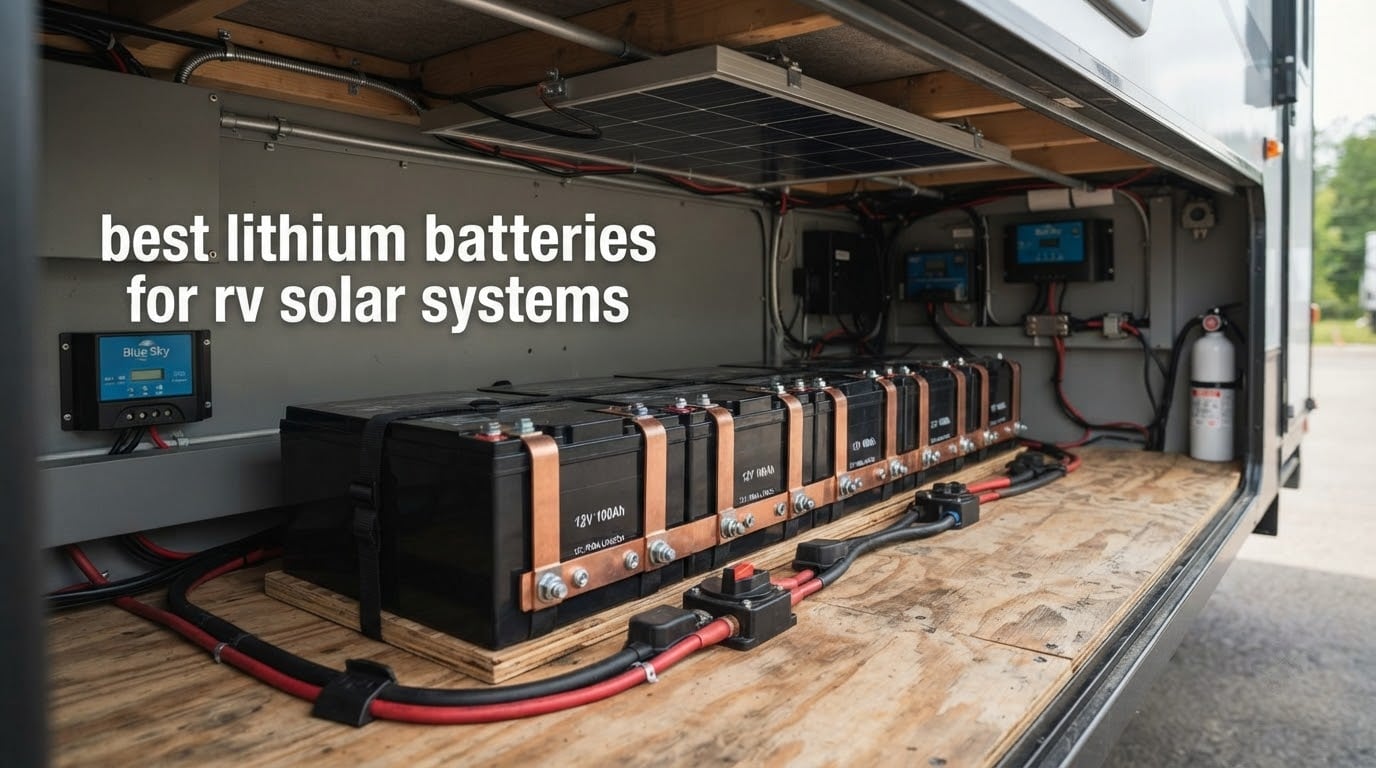
LiFePO4 (lithium iron phosphate) deep-cycle batteries are the best choice for RV solar systems because they deliver nearly 100% usable capacity, hold a steady voltage under load, and last 3,000 to 5,000+ cycles instead of the few hundred you get from flooded or AGM lead-acid. That combination is what makes solar-only boondocking practical rather than theoretical.
But chemistry is the easy part. The battery still has to physically fit your bay, the BMS amp rating has to survive inverter startup, and the converter in your rig has to push enough voltage to fill it. A great battery paired with a converter that tops out around 13.6V will sit near 80% state of charge forever, and no chemistry fixes that.
Our team compared 12 lithium batteries built for RV solar duty, weighing usable capacity, BMS headroom, cold-weather charging behaviour, Bluetooth monitoring, warranty length and physical footprint against real review data. We pulled the same questions RV owners argue about on iRV2, Forest River Forums and Fiberglass RV, from sizing anxiety to the perennial solar-versus-generator debate. If you want to skip ahead, the generator comparison and solar charger roundup cover the hardware that sits on either side of the bank.
Before reading on, note three questions that decide most of your shortlist: which appliances do you actually run, what can you physically fit, and does your rig charge lithium properly. The picks below are ordered by how well they handle those realities, not by sticker price.
Table of Contents
Top 3 Picks for Best Lithium Batteries for RV Solar Systems (October 2026)

Litime 12V 230Ah LiFePO4
- 230Ah with 200A BMS
- Bluetooth 5.0 app monitoring
- 4000+ deep cycles
- Group 4D fit


ECO-WORTHY EnergyRock 280Ah
- 3584Wh metal case
- 200A BMS with safety switch
- Front terminals and mounting feet
- Bluetooth monitoring
Best Lithium Batteries for RV Solar Systems in October
| Product | Specifications | Action |
|---|---|---|
| Litime 12V 230Ah LiFePO4 |
|
Check Latest Price |
| dumfume 12V 150Ah Max |
|
Check Latest Price |
| ECO-WORTHY EnergyRock 280Ah |
|
Check Latest Price |
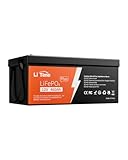 Litime 12V 460Ah Group 8D Litime 12V 460Ah Group 8D |
|
Check Latest Price |
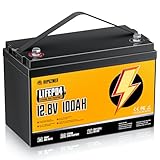 Rvpozwer 12V 100Ah Group 31 Rvpozwer 12V 100Ah Group 31 |
|
Check Latest Price |
 PUPVWMHB 12V 300Ah PUPVWMHB 12V 300Ah |
|
Check Latest Price |
 SUPER EMPOWER 12V 100Ah Group 24 SUPER EMPOWER 12V 100Ah Group 24 |
|
Check Latest Price |
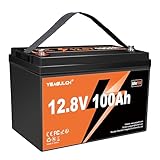 yeagulch 12V 100Ah Group 31 yeagulch 12V 100Ah Group 31 |
|
Check Latest Price |
 yeagulch 12V 200Ah yeagulch 12V 200Ah |
|
Check Latest Price |
 ECO-WORTHY 12V 314Ah LED Display ECO-WORTHY 12V 314Ah LED Display |
|
Check Latest Price |
 HumsiENK 12V 640Ah 8.19kWh HumsiENK 12V 640Ah 8.19kWh |
|
Check Latest Price |
 VATRER 12V 300Ah Self-Heating VATRER 12V 300Ah Self-Heating |
|
Check Latest Price |
1. Litime 12V 230Ah LiFePO4 — Best Overall for RV Solar
Litime 12V 230Ah LiFePO4 Lithium Battery for RV, Travel Trailer, Solar
230Ah at 12.8V
200A BMS with 20+ safeguards
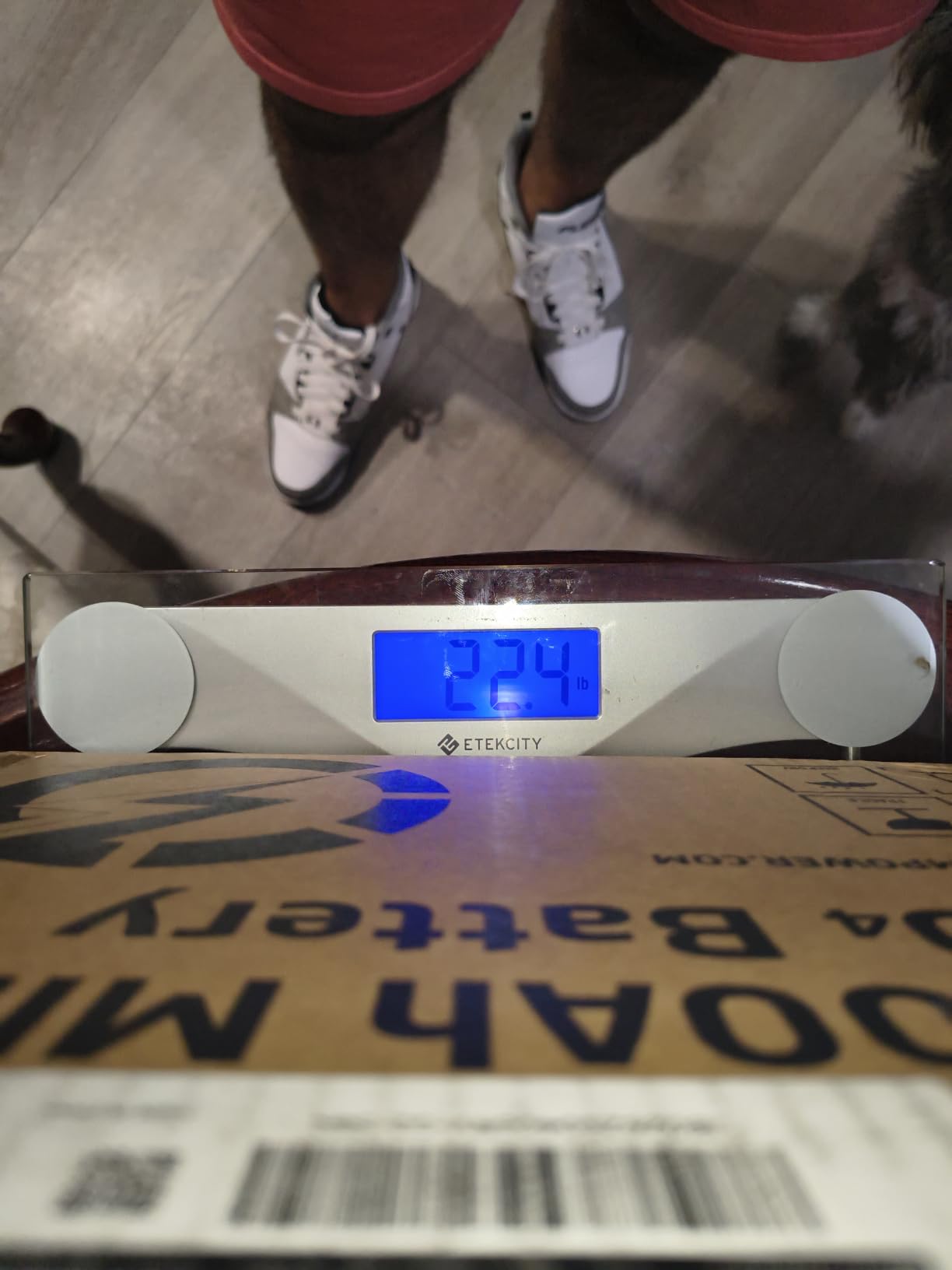
45.98 lb Group 4D case
4,000+ deep cycles
Pros
- Usable energy well beyond the roughly 50% an AGM bank delivers
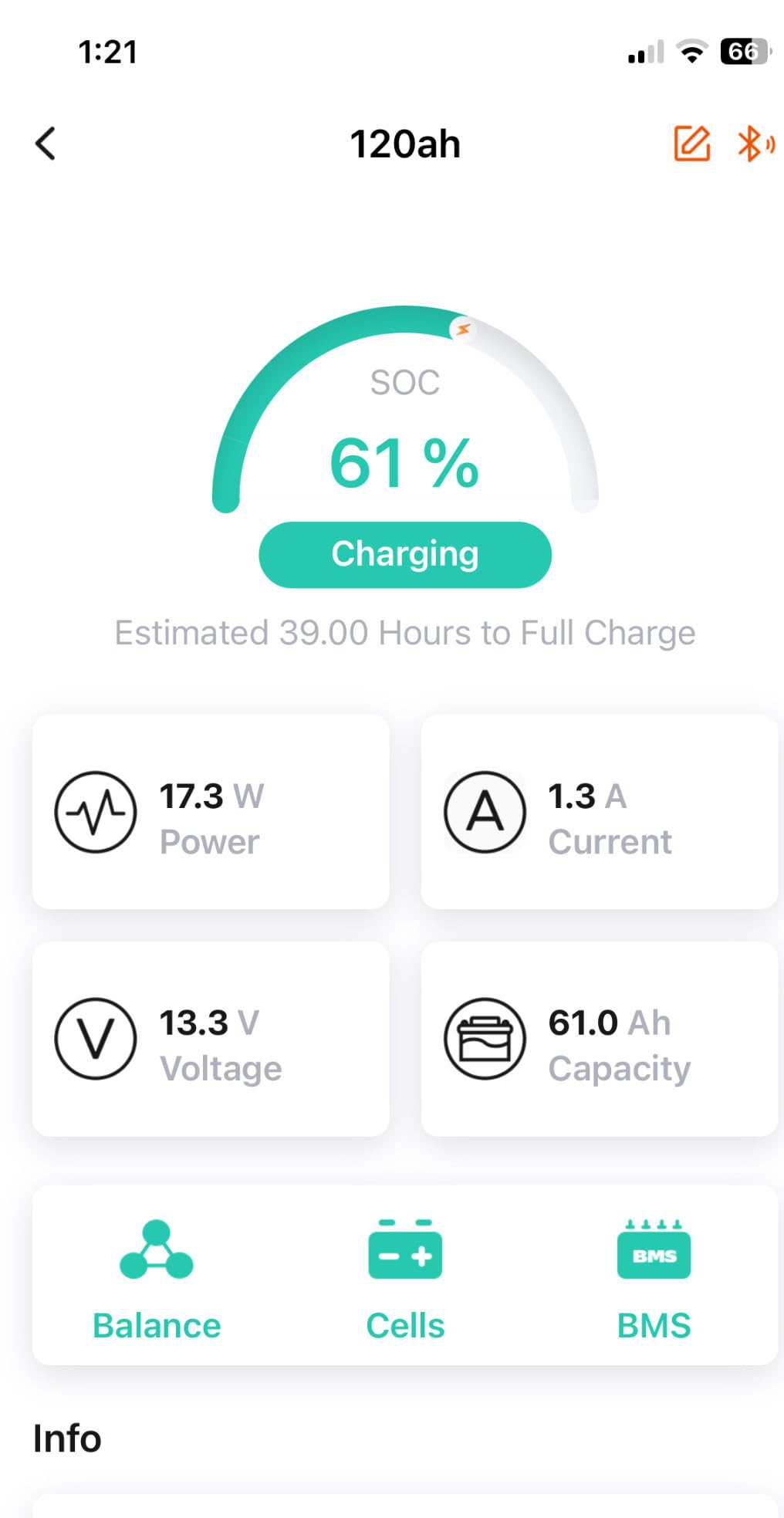
- Bluetooth 5.0 app shows voltage current and state of charge
- About one third the weight of a comparable lead-acid bank
- 200A BMS with automatic charging cutoff below 32F
Cons
- Listed warranty is 2 years which is short for a house bank
- App often needs closing and reconnecting to refresh
- Not self-heating so cold-weather owners want the heated variant
This is the unit we kept coming back to while working through the list. At 230Ah and roughly 2944Wh of stored energy, it covers a typical weekend of lights, water pump, refrigerator and phone charging without a generator, and the 200A BMS has enough headroom for inverter startup surges that trip smaller 100A units.
The Group 4D footprint is the practical headline. It is 19.02 x 6.69 x 9.45 inches and 45.98 lb, which is large for a single battery box but consolidated enough to replace several smaller lead-acid batteries in one go. Installation handling is far easier than the 200Ah-plus lead-acid bank it substitutes for.
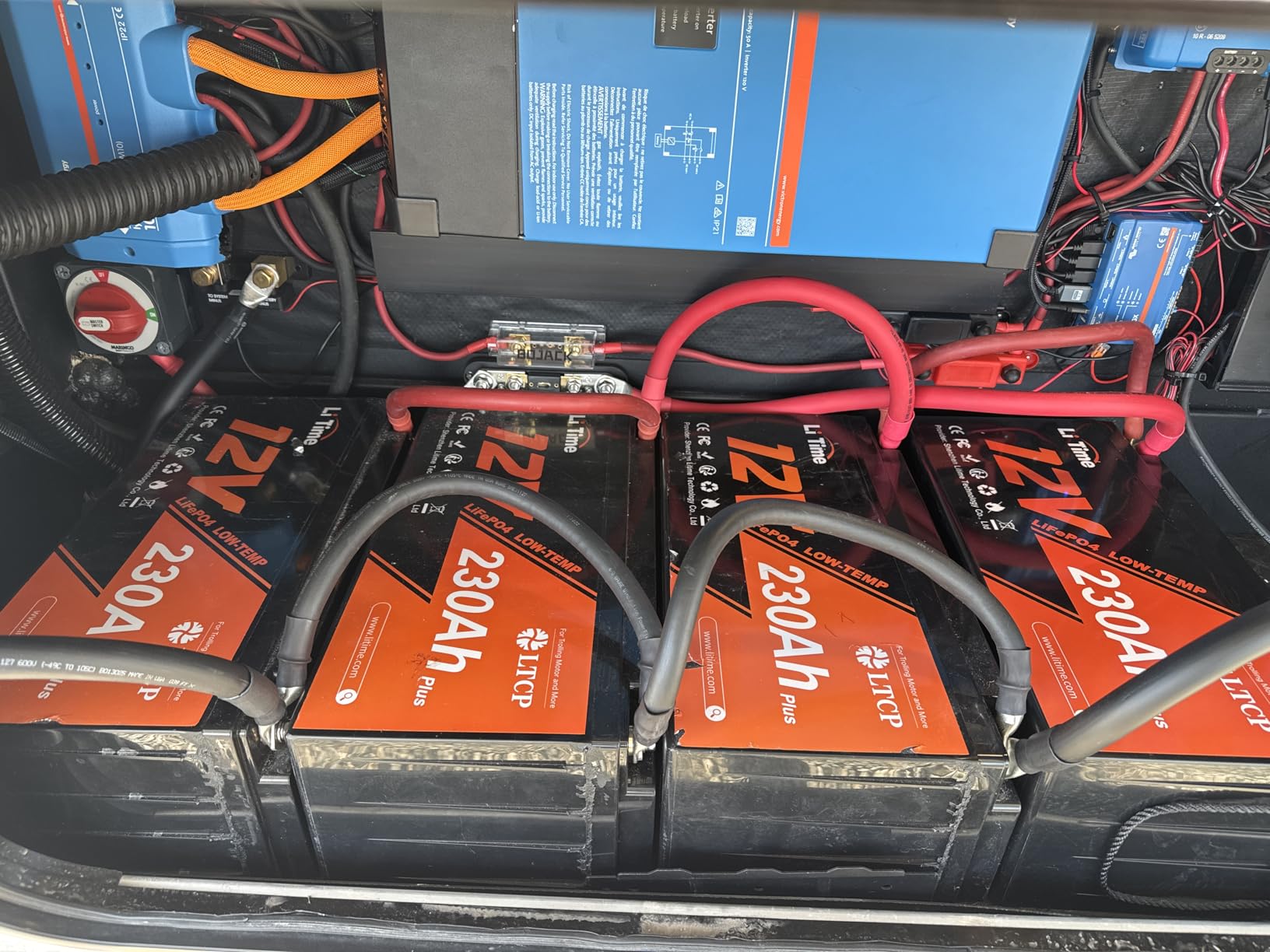
Bluetooth 5.0 monitoring through the LiTime app is where this unit separates itself from the cheaper 100Ah options. Owners report seeing voltage, current, state of charge and charge or discharge rate in real time, which turns a guess about remaining overnight power into a number you can plan around. Expansion runs to 16 batteries for a 48V 920Ah configuration if your later needs outgrow the single unit.
The cells are automotive-grade A+ LiFePO4 rated for 4,000+ deep cycles and a 10-year lifespan, and the pack is covered by AIG product liability insurance. One practical note for older phones: some units arrive asleep and need a LiFePO4-compatible charger to wake before the first use.
What works well for boondocking
Rated at 4.6 stars across 742 reviews with 84% of those at five stars, the feedback pattern is consistent: owners replacing an AGM bank find more usable capacity than they expected and stop rationing power. For dry camping with a residential-size refrigerator and a decent MPPT controller, this is the pick we would fit first.
The 20-plus protection features in the BMS handle the common failure modes, including overcharge, over-discharge, short circuit and temperature extremes. That matters in an RV where a bay can get hot in July and cold in January without warning.
Where it falls short
Two things temper the recommendation. The listed warranty is 2 years, which is short next to the 5-year terms several rivals carry, and that is the single biggest gap for anyone planning to keep the bank for a decade.
The app is the other weak spot. Owners frequently report needing to close and reopen it to refresh, plus repeated disconnect alerts when a phone walks out of Bluetooth range. The hardware is sound; the software is simply not as polished as the monitoring deserves.
2. dumfume 12V 150Ah Max — Most Versatile for Smaller Solar Setups
dumfume 12V 150Ah Max LiFePO4 Battery, IP65 Waterproof 100A BMS
150Ah at 12.8V / 1920Wh
IP65 sealed enclosure
100A BMS
41.03 lb
Pros
- High capacity in a compact Group 31-style footprint
- Built-in 100A BMS with four-layer protection
- IP65 rating suits outdoor RV and solar cabinets
- 4000+ rated cycles to 80% capacity
Cons
- Needs 5°C or higher so there is no cold-weather charging option
- Manufacturer listing is inconsistent on weight
- Maintenance charge every 6 months during long storage
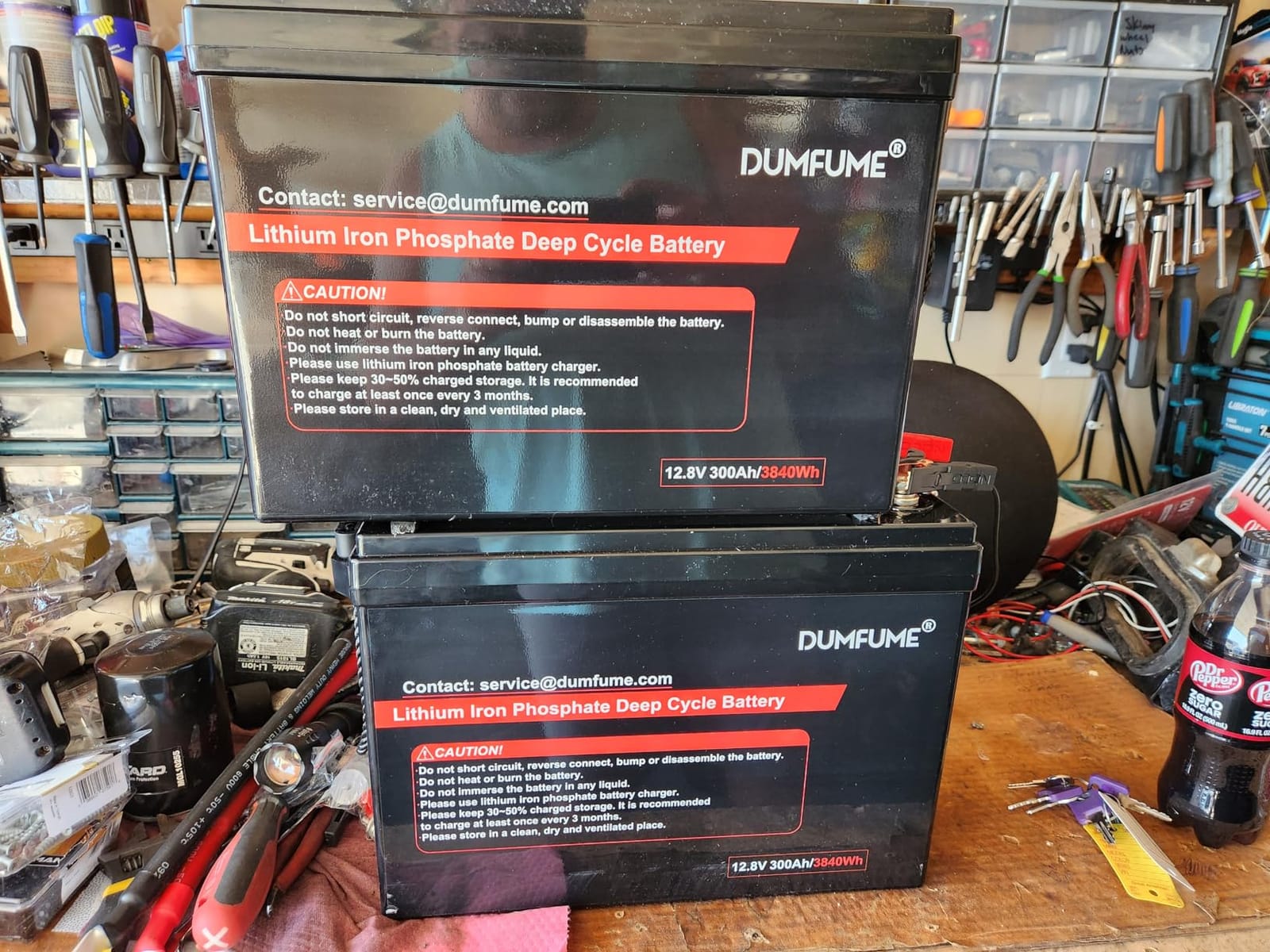
The dumfume 150Ah Max packs 1920Wh into a case measuring 10.04 x 7.68 x 9.84 inches at 41.03 lb. That is the rare combination in this list: serious capacity in a box that still fits a standard RV battery bay, which makes it far easier to install between a wheel well and a plumbing line.
At 4.4 stars from 789 reviews, it also carries the largest review base here. Buyers consistently point to usable capacity, low weight and a form factor that drops into RV battery cabinets without modification, which is exactly what a first lithium upgrade needs.
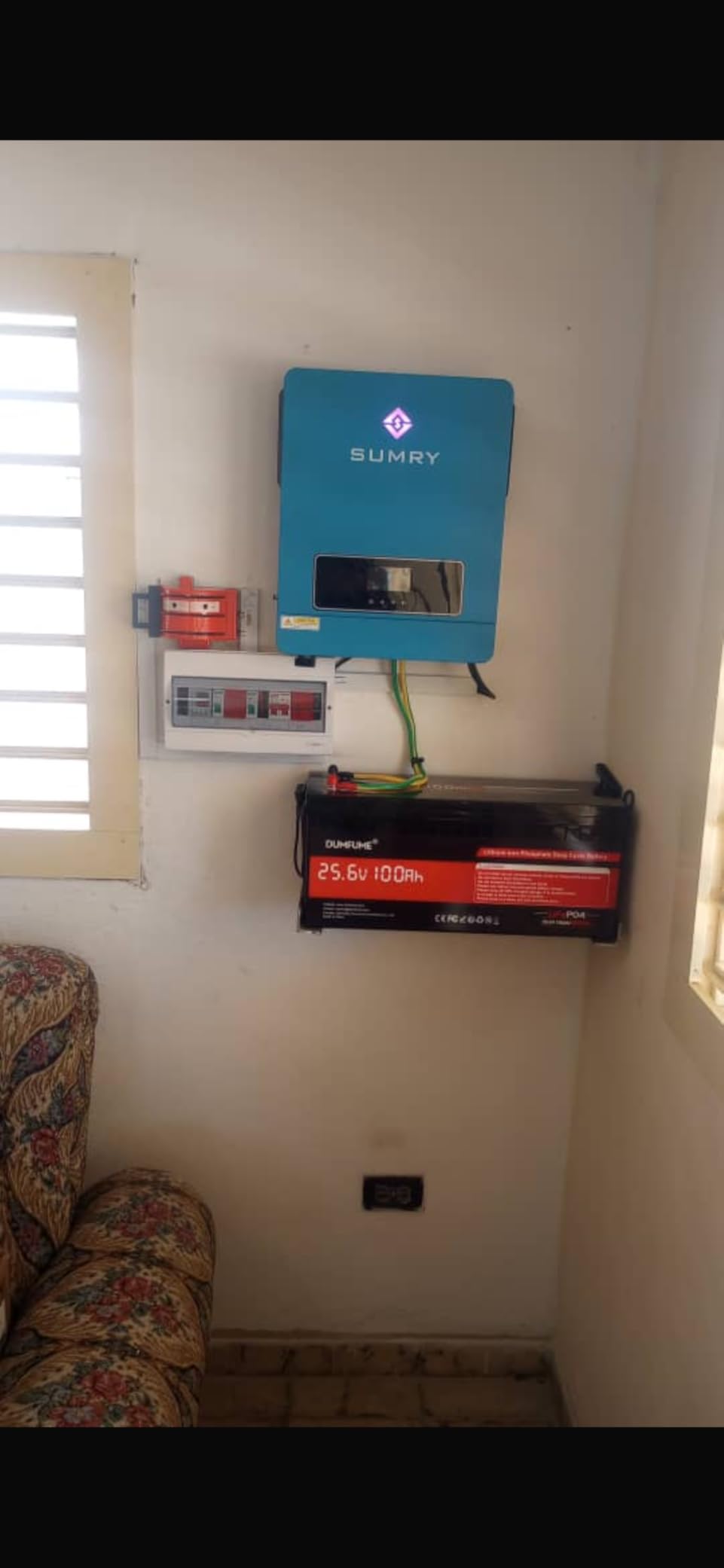
The IP65 enclosure rating is unusual at this level and genuinely useful for an under-bed or exterior compartment install where spray and dust are a concern. The 100A BMS covers overcharge, over-discharge, short circuit and overheating, and series or parallel expansion runs to 4S4P for larger solar arrays.
Cycle life is claimed at 4,000+ cycles to 80% capacity, so your effective bank lasts far longer than a typical lead-acid setup even if you only ever take it to 80% state of charge. Note the maintenance requirement: a charge cycle roughly every six months during extended storage keeps the cells balanced.
Who it suits
This suits weekend campers and part-time boondockers who want a real step up from AGM without a large single-unit purchase. A 300 to 400 watt solar array feeding an MPPT controller will refill it comfortably on a clear day.
For owners building a van or bus conversion where space is the binding constraint, the compact footprint often beats raw amp-hour count. Two of these in parallel give 300Ah while remaining far easier to place than one large battery.
Who should pass
Cold-climate campers should pass. The battery requires 5°C or higher for reliable operation, and there is no self-heating pad, so charging simply halts until the cells warm up on their own.
Quality control is the second concern. Twelve percent of ratings are one-star, a sizable negative block for a listing this well reviewed, and the manufacturer’s own listing gives three different weights (41.03 lb, 22.1 lb and 19.5 kg), which is a fair signal to verify dimensions yourself before ordering.
3. ECO-WORTHY EnergyRock 280Ah — Best Value Metal-Case Bank
ECO-WORTHY EnergyRock 12V 280Ah Metal Case LiFePO4 Lithium Battery
280Ah at 12.8V / 3584Wh
Metal case with safety switch
200A BMS
68.5 lb
Pros
- Metal case resists heat and fire far better than plastic enclosures
- One-touch safety switch isolates the discharge circuit
- Front terminal layout keeps RV bay wiring tidy
- Mounting feet let it install without a separate battery box
Cons
- Larger than a standard Group 31 so some compartments need modification
- About 68.5 lb makes it a two-person lift
- Bluetooth range limited to roughly 12 feet
- No stated IP certification
The EnergyRock is the pick for anyone who cares about durability more than gram counts. The metal enclosure resists heat and fire far better than the ABS plastic cases that dominate this category, and owners building campervans and RV conversions single it out for that reason above everything else.
At 280Ah and 3584Wh, it delivers well over twice the usable energy of a 100Ah lead-acid battery at a similar weight. The 200A BMS includes automatic charging cutoff in low temperatures, and Bluetooth monitoring covers voltage, capacity and charge or discharge status.
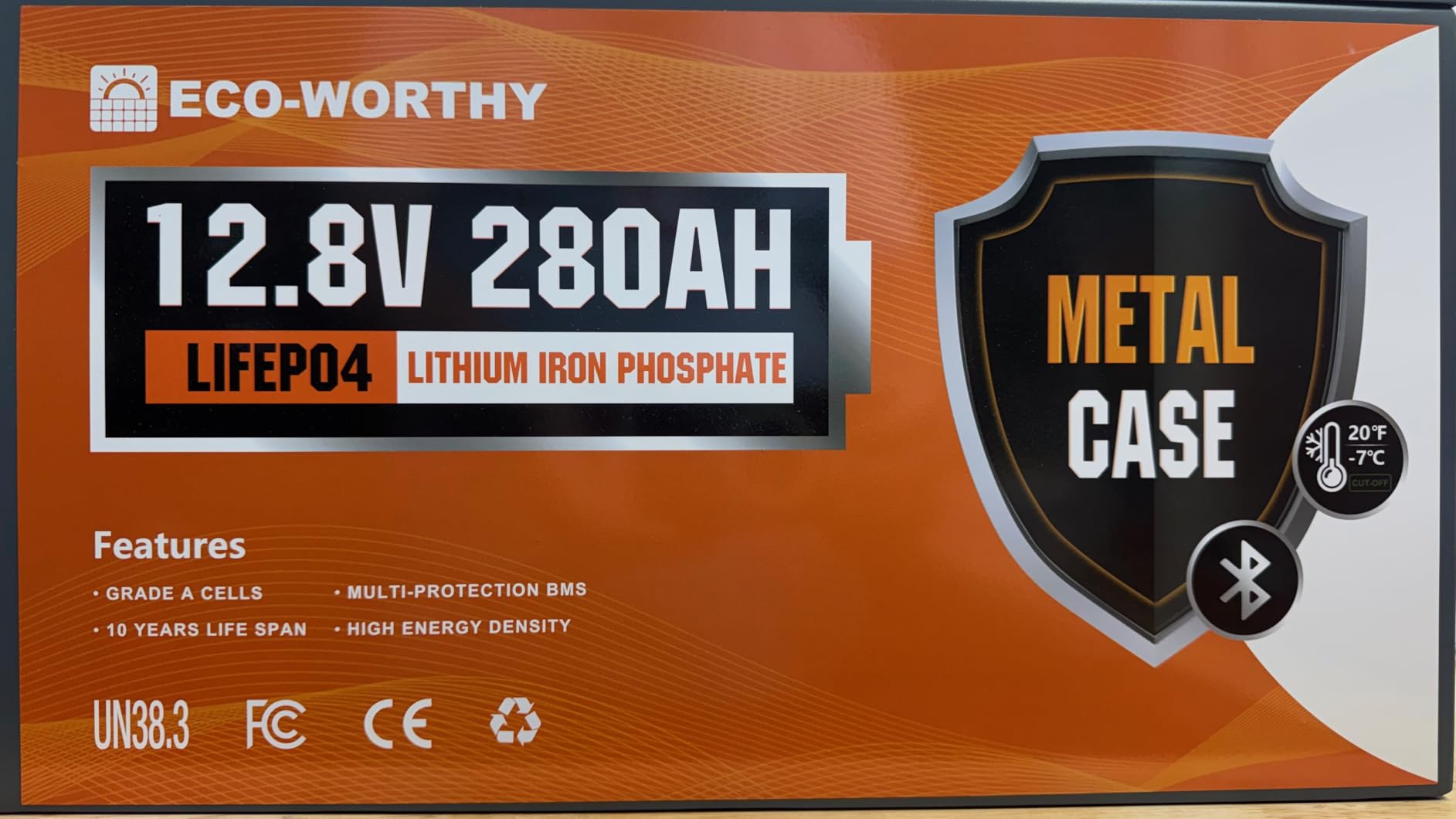
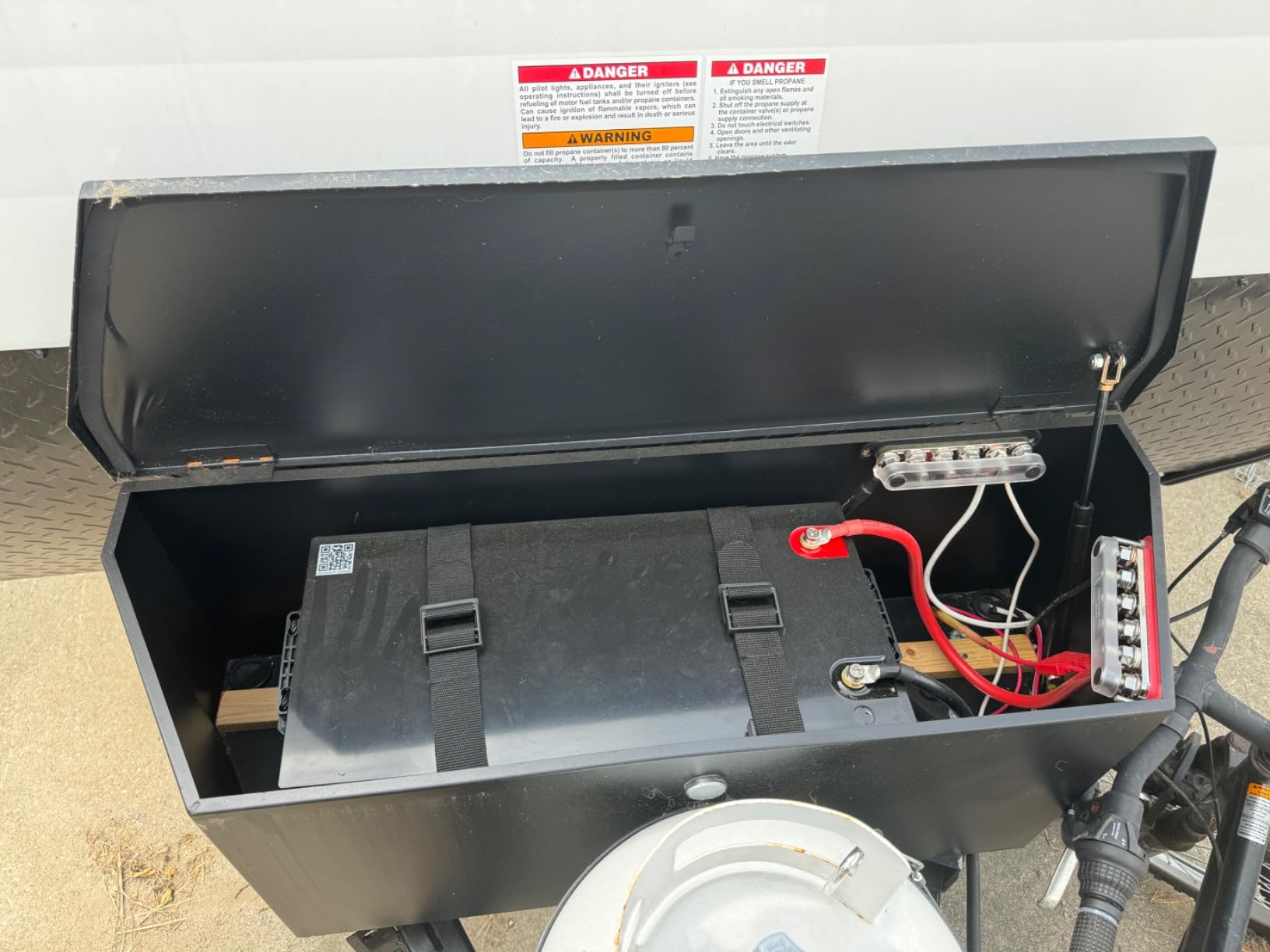
The details that separate it from generic 280Ah units are physical. Four mounting feet mean no separate battery box, the front terminal layout cleans up an otherwise messy RV bay, and reinforced internal cell holders resist road shock and vibration over long transits.
The flat top surface is a quiet bonus: owners mount an inverter or a distribution block directly on top, which matters in the tight compartments common to Class C and travel trailer rigs. One owner reported Bluetooth readings that matched a shunt within roughly 12 feet, and another confirmed low-temperature protection during a snowy trip to about 20°F.
Best fit for full-time and upgrade builds
For full-time RVers and van builds, the metal case and the safety switch make this the sturdiest option in the group. The switch is genuinely useful: you can isolate the output for wiring work or long-term storage without fumbling with terminal connections.
At 4.6 stars from 487 reviews with 85% five-star ratings, the feedback is unusually consistent for a mid-capacity unit. Reviewers highlight the same three things every time: the metal case, the safety switch and the front terminals.
Watch out for these issues
Size and weight are the recurring installation complaints. At 16.54 x 8.64 x 9.65 inches and roughly 68.5 lb, it is bigger than a Group 31 and heavy enough to need two people, so measure the compartment and check your floor load rating before ordering.
There is also a naming trap. A metal case version and an ABS case variant carry similar product names, so confirm which one you are actually buying. Bluetooth range of roughly 12 feet is short, and no IP certification is stated, which matters for exposed compartment installs.
4. Litime 12V 460Ah Group 8D — Best for High-Draw Loads
Litime 12V 460Ah Group 8D Lithium LiFePO4 Battery for RV Marine Solar
460Ah at 12.8V in Group 8D
250A BMS on EV-grade cells
100% depth of discharge
86 lb
Pros
- Runs rooftop AC and other large loads for a full night on modest solar
- 100% usable depth of discharge nearly doubles lead-acid energy
- 250A BMS handles inverter startup and heavy continuous draw
- Consolidates an entire multi-battery bank into one enclosure
Cons
- At 86 lb it is a two-person lift
- Tall form factor means many battery boxes must be reworked
- Some LiTime chargers fail to auto-detect it and need unplugging
- High cost versus 100Ah alternatives
This is the answer when the question is not weekend power but a rooftop air conditioner, a residential refrigerator and an induction cooktop all running at once. The 250A BMS built on EV-grade cells gives it the headroom for the largest inverter in this roundup, and the 460Ah capacity stores a genuinely large bank of energy.
Owners replacing 200Ah-class lead-acid setups report the biggest night-to-night win here. At 4.6 stars from 469 reviews, with 82% five-star, the enthusiasm is real, and the 100% depth of discharge claim means nearly twice the usable energy per pound.
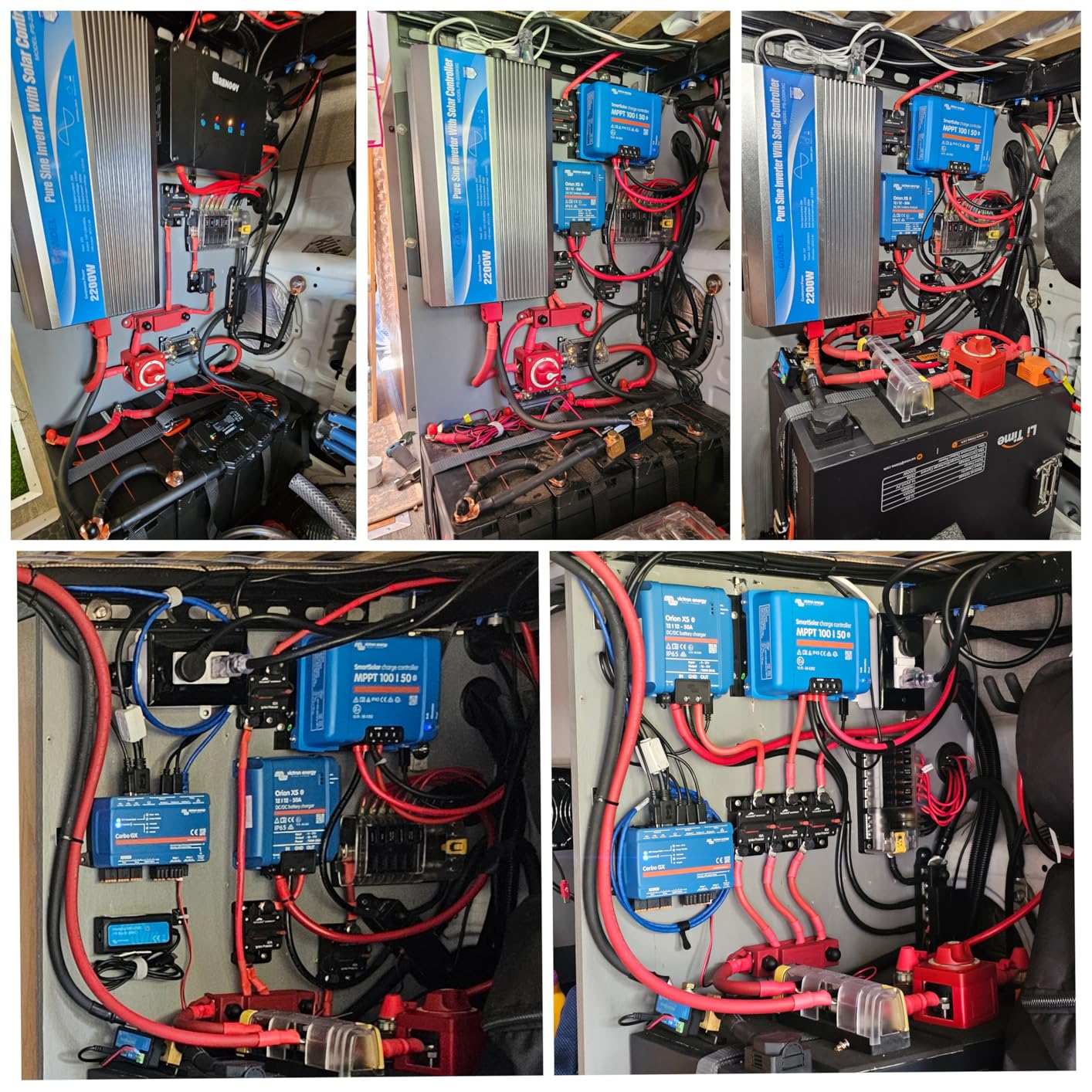
It is CE and RoHS certified and carries AIG product liability coverage, and expansion to 4P4S handles later growth. The Group 8D form factor at 20.47 x 10.59 x 8.66 inches is a standard marine and large-RV size, which makes it easier to source a matching tray than a bespoke lithium case.
Teardown footage shared by reviewers points to solid internal build quality, which matters more than usual on a battery this heavy. Just budget properly for handling: at 86 lb, plan the mounting position and the route into the compartment before the pallet arrives.
When high output actually matters
The 250A rating exists for loads that spike, not just steady draw. Compressor startup, inverter surge and a rooftop air conditioner cycling all demand far more than nominal amp-hour figures suggest, and a smaller 100A BMS will throttle or cut out under those conditions.
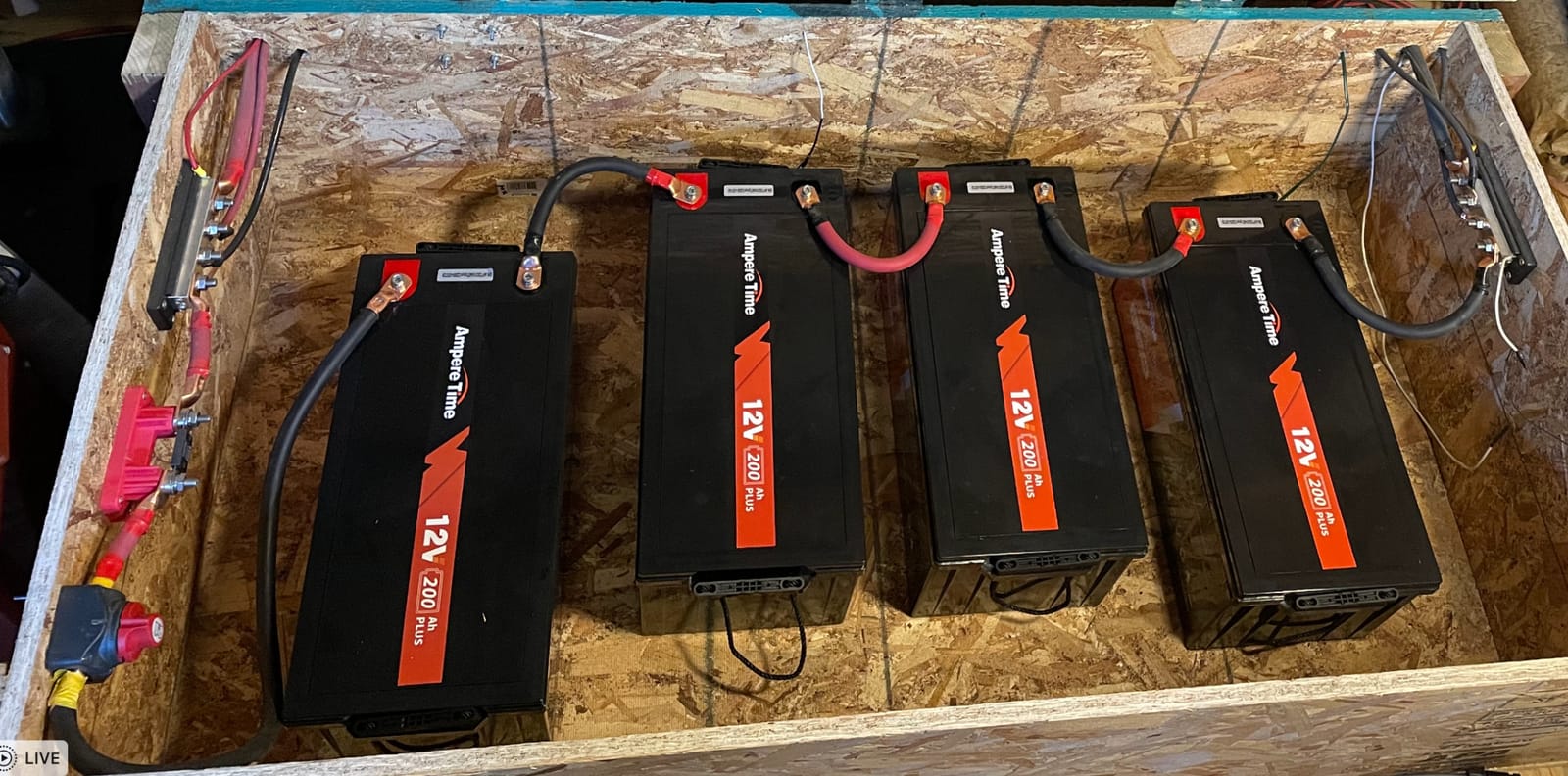
For someone running a mini-split alongside a microwave and a residential fridge, this is the battery that removes the anxiety. Consolidation also frees space: one enclosure replaces the tray, cabling and spacing a multi-battery bank would need.
Reasons to choose something smaller
The physical problems are the real complaints, not the electrical ones. At 86 lb and with a tall form factor, many battery boxes must be replaced or reworked, and that hardware plus labour can rival the battery cost.
This listing also carries the widest rating spread in the set at 4.6 stars, with 7% one-star, and some owners report LiTime chargers failing to auto-detect the battery and needing an unplug to restart. If your budget is tighter, the 280Ah EnergyRock or the 300Ah picks deliver most of the runtime at a fraction of the handling difficulty.
5. Rvpozwer 12V 100Ah Group 31 — Best Entry-Level 100Ah Upgrade
Rvpozwer 12V 100Ah LiFePO4 Lithium Battery Group 31 with Built-in 100A BMS
100Ah at 12.8V in Group 31
120A smart BMS
23 lb
4,000 cycles at 100% DoD
Pros
- Standard Group 31 footprint drops into most existing battery boxes
- 120A smart BMS covers overcharge over-discharge and short circuit
- 23 lb is roughly half the weight of the AGM it replaces
- Grade-A cells with 4000 cycle claim at full depth
Cons
- Lowest average rating in the group at 4.1 stars with 17% one-star
- Claimed -20C to 65C range has no documented low-temp charge protection
- No Bluetooth or app monitoring at all
- Generic OEM branding reduces buyer confidence
The logic here is straightforward. If you are replacing a single Group 31 AGM in a small trailer or Class C and want lithium benefits without rewiring anything, this fits the bill at 12.99 x 6.77 x 8.46 inches and 23 lb, which is about half the weight of the lead-acid it displaces.
The 120A smart BMS handles overcharge, over-discharge, over-current, over-voltage and short circuit, which is more protection coverage than most 100Ah units in this list claim. Series expansion reaches 51.2V and parallel expansion reaches 400Ah, so a starter bank of two grows into a serious setup later.
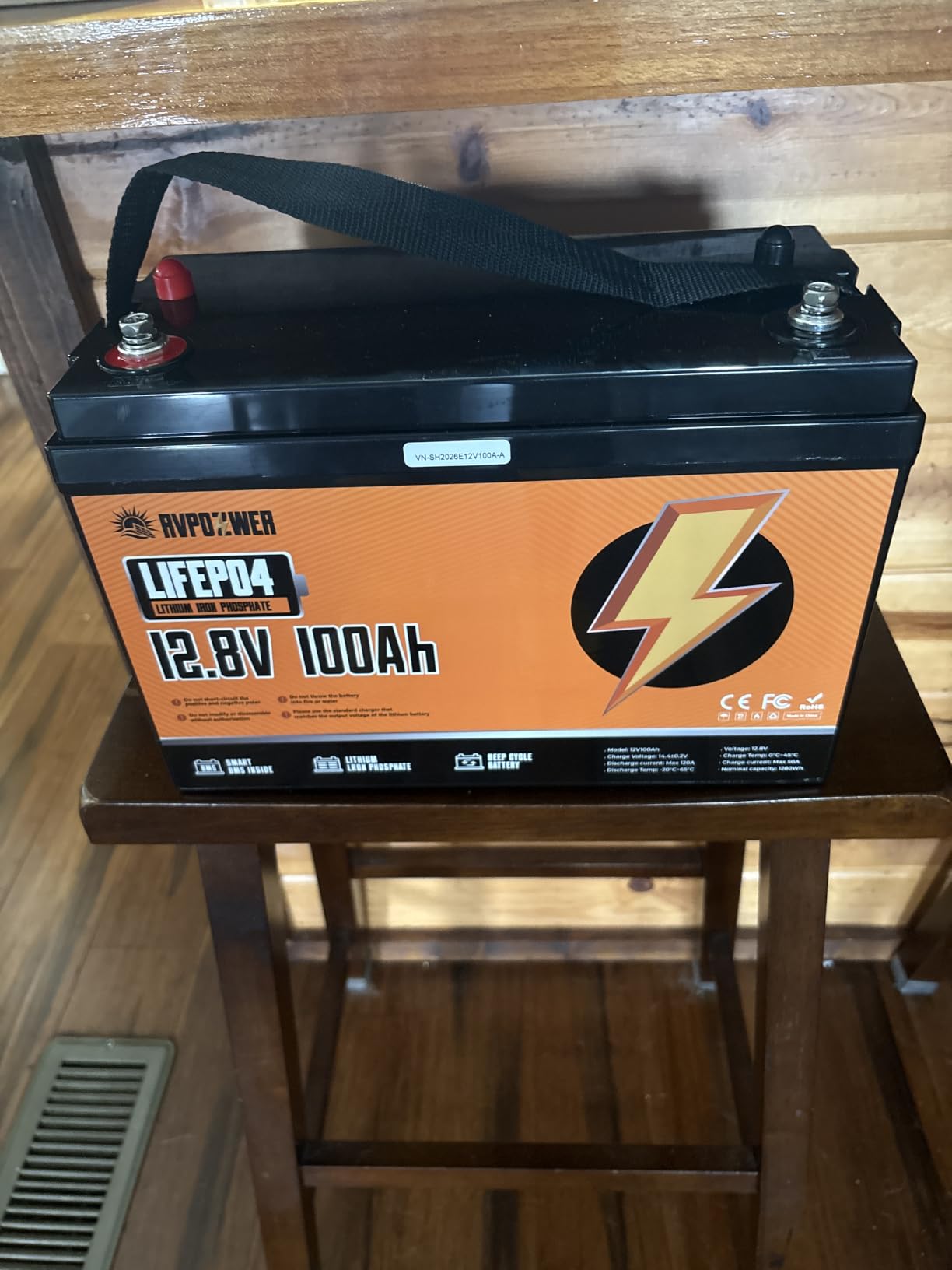
Cycle claims are unusually granular: 4,000 cycles at 100% depth of discharge, 6,000 at 80%, and up to 15,000 at 60%. That spread lets you budget realistically, since most RVers cycle in the middle range rather than at absolute maximum. An ergonomic nylon carry handle is a small touch that matters at install time.
Series and parallel expansion is straightforward, and the stated operating range of -20°C to 65°C is worth reading carefully, because it is a claim rather than a documented low-temperature charging behaviour.
Why it is still worth considering
At 4.1 stars from 422 reviews, the 71% five-star share confirms the basics work. Standard sizing, adequate protection for house-bank duty and meaningful weight savings are the reasons owners keep it, and a 15-year published spare parts window is unusual to see.
For weekend campers pairing a modest solar panel with basic 12V loads, the simplicity is the point. One battery, one box, no app to learn.
Reasons to look elsewhere
Seventeen percent one-star ratings is a meaningfully large negative block and points to inconsistent quality control relative to branded alternatives. Owners also lose the Bluetooth diagnostics that let you check state of charge, which is the feature most buyers now expect at this tier.
The -20°C operating claim is the one to treat sceptically, because there is no documented low-temperature charging protection behind it. If you camp below freezing, this is not the battery to bet your recharge plan on.
6. PUPVWMHB 12V 300Ah — Best for Any-Orientation Mounting
PUPVWMHB 12V 300Ah LiFePO4 Lithium Battery, Bluetooth LifePO4 Battery, Upgraded 200A BMS, 3840Wh Rechargeable Lithium Battery with Low Temp Cut off, Perfect for RV Solar Marine Solar Panel Camping
300Ah at 12.8V / 3840Wh
200A BMS on UL tested cells
Bluetooth telemetry
59 lb
Pros
- 3840Wh at a competitive price for this capacity tier
- Bluetooth app reports current voltage temperature and cycle count
- Acid-free chemistry mounts in any orientation
- Expansion path reaches 61.44kWh across 4S4P
Cons
- Long generic brand name and marketing-heavy listing
- 6% of ratings are 3-star the largest mid-rating block here
- No self-heating so cold charging is cut off rather than managed
- Bluetooth range and app polish are not specified
Any-orientation mounting is the quiet superpower here. RV battery bays are rarely a comfortable rectangle, and acid-free chemistry means you can install this on its side, upright or in a confined compartment without the corrosion concerns that rule out lead-acid in the same position.
At 300Ah and 3840Wh with a 200A BMS built on UL tested cells, this is a capable mid-size bank. The battery holds over 80% of cell capacity after 2,000 cycles, and Bluetooth reporting covers current, voltage, temperature and cumulative cycle count without any extra hardware.
Expansion runs to 51.2V and 1200Ah, with a maximum of 61.44kWh and 40.96kW of load, which covers a whole-house or large array build. M8 terminals, a 5-year warranty and 24-hour support round out a package that is well specified on paper.
At 4.5 stars from 251 reviews with 78% five-star, buyers focus on capacity per dollar and the fact that Bluetooth telemetry comes built in. Detailed long-term field experience is thinner here than on the higher-volume listings, so treat the cycle claims as directional.
Where it earns its place
Van builds, bus conversions and marine installs where the mounting position is awkward are the ideal use. The Bluetooth app reporting cycle count is genuinely useful for tracking degradation over a multi-year ownership, and 3840Wh in 59 lb keeps the weight budget reasonable.
Owners running several days of cloudy or rainy weather report the capacity taking the anxiety out of a forecast, which is the whole point of specifying a larger bank.
Where caution is warranted
That six percent three-star block is the largest mid-rating share in this roundup, and the review text is thinner than for the leaders. A long generic brand name plus a marketing-heavy listing does not inspire confidence when something needs supporting.
There is no self-heating pad, so cold-weather charging is cut off rather than managed, and neither Bluetooth range nor app quality is documented. If monitoring accuracy matters to you, look at a unit with a shunt-matched track record instead.
7. SUPER EMPOWER 12V 100Ah Group 24 — Best for a True Drop-In Fit
12V 100Ah LiFePO4 Battery, Group 24 Deep Cycle for RVs & Trolling Motors
100Ah at 12.8V / 1280Wh
BCI Group 24 with M8 terminals
100A BMS
21.6 lb
Pros
- True Group 24 footprint fits standard boxes without modification
- Documented low-temperature charge and discharge thresholds
- 21.6 lb is about a third lighter than comparable AGM
- Clear guidance for LiFePO4 chargers and lithium-mode solar controllers
Cons
- No Bluetooth or app monitoring on this variant
- Charging is disabled below 32F so cold owners need a heated model
- Non-lithium chargers are not recommended which may force an upgrade
- Cables and mounting hardware are not included
This is the cleanest physical swap in the roundup. It follows BCI Group 24 dimensions with M8 terminals, so it drops into a standard Group 24 box without cutting, shimming or swapping terminal hardware, and at 21.6 lb it is roughly a third lighter than the AGM it replaces.
What stands out is documentation. The low-temperature behaviour is spelled out precisely: charging pauses below 0°C (32°F), discharge stops at -20°C (-4°F), and charging resumes above 5°C (41°F). That specificity is rare, and it lets you plan winter behaviour instead of discovering it on a cold morning.
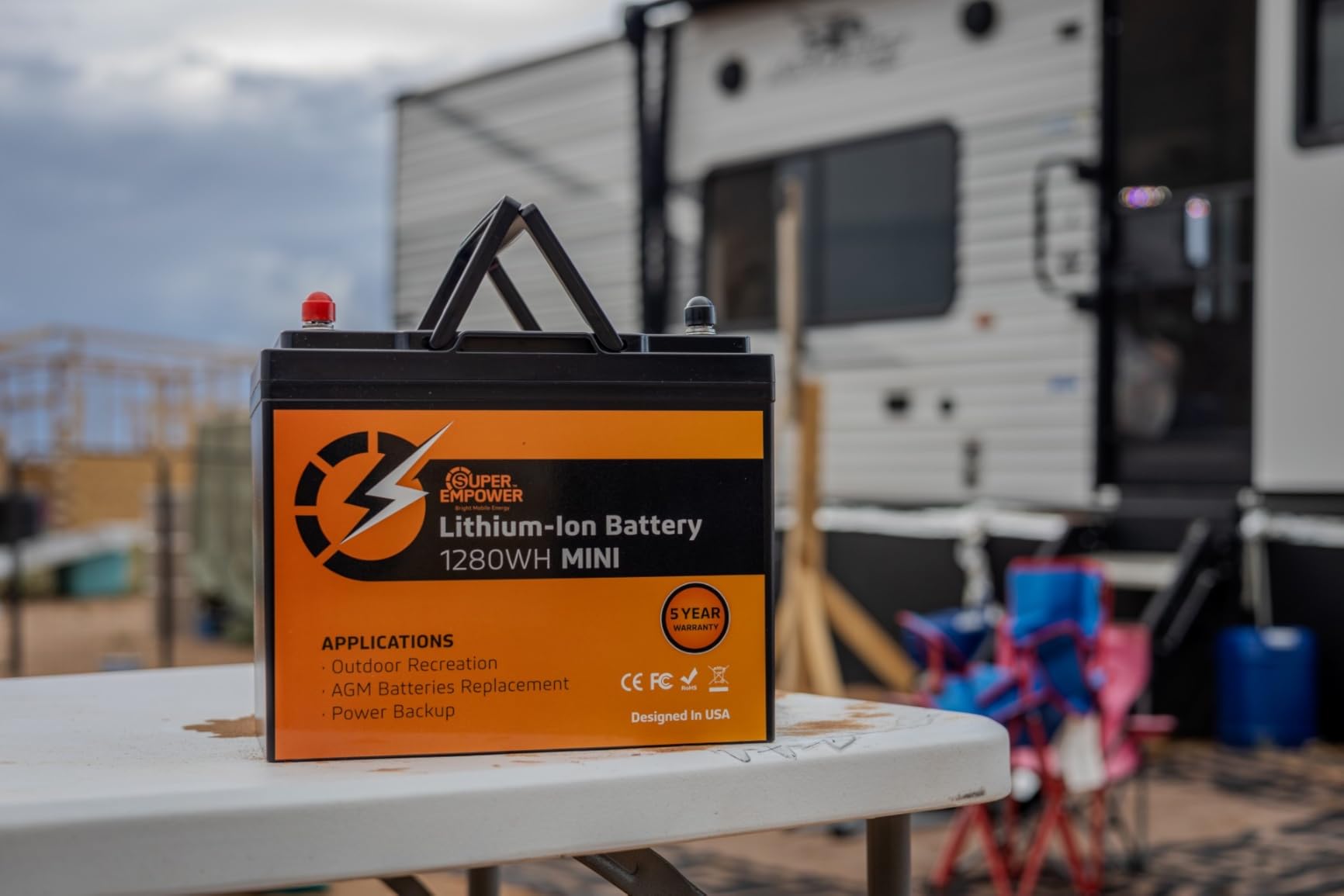
The 100A BMS includes cell balancing for multi-battery operation, and expansion reaches 4S4P for a 51.2V 400Ah configuration totalling 20.48kWh. At 4.6 stars from 220 reviews with 84% five-star, reviewers describe genuine drop-in fit and strong day-to-day RV and trolling motor performance.
Charging guidance is clear too: 14.4 to 14.6V CC/CV through a LiFePO4 charger, and it works with MPPT or PWM solar controllers set to lithium mode. That last detail saves a common installation headache.
Why buyers with older RVs like it
Trailers and Class C rigs from the 2010s were often built around Group 24 boxes, so this is the pick where nothing has to move. Installation compatibility is the clearest strength in the review text, and it means a weekend DIY install rather than a trip to a shop.
The light weight matters in tight compartments where you are stacking batteries or working overhead alone, and cell balancing across a bank keeps the group even as it ages.
Before you order, check this
There is no Bluetooth or app on this variant, so state of charge has to come from a shunt-based monitor or your inverter. If remote monitoring is important, budget for a monitor.
Two more practical notes: the battery is energy storage only and not for engine cranking, and cables and mounting hardware are not included, so add those to your parts list. Charging halts below 32°F, which means a self-heating model is the better winter choice.
8. yeagulch 12V 100Ah Group 31 — Best-Rated 100Ah Unit
12V 100Ah LiFePO4 Lithium Battery BIC Group 31 with 100A BMS 1280Wh
100Ah at 12.8V in Group 31
95% usable capacity
100A BMS
21.6 lb
Pros
- 4.7 stars from 198 reviews with 88% five-star
- 95% usable capacity leaves far less on the table than lead-acid
- 21.6 lb is about two thirds lighter than comparable lead-acid
- No memory effect so partial charges are not penalised
Cons
- No Bluetooth or app monitoring
- Not recommended for trolling motors above 700W
- Requires a charge or discharge cycle every six months in storage
- Not suitable for engine starting or golf cart use
The rating distribution here is among the best in the group: 4.7 stars from 198 reviews, with 88% five-star and only 5% one-star. Against other 100Ah options, the consistency of the experience is what stands out rather than any single headline specification.
Capacity is 95% usable with a flat discharge curve that holds usable capacity down to 12.8V at 100A, so the last quarter of the charge still does real work instead of collapsing in voltage. At 21.6 lb, it is about two thirds lighter than comparable lead-acid.
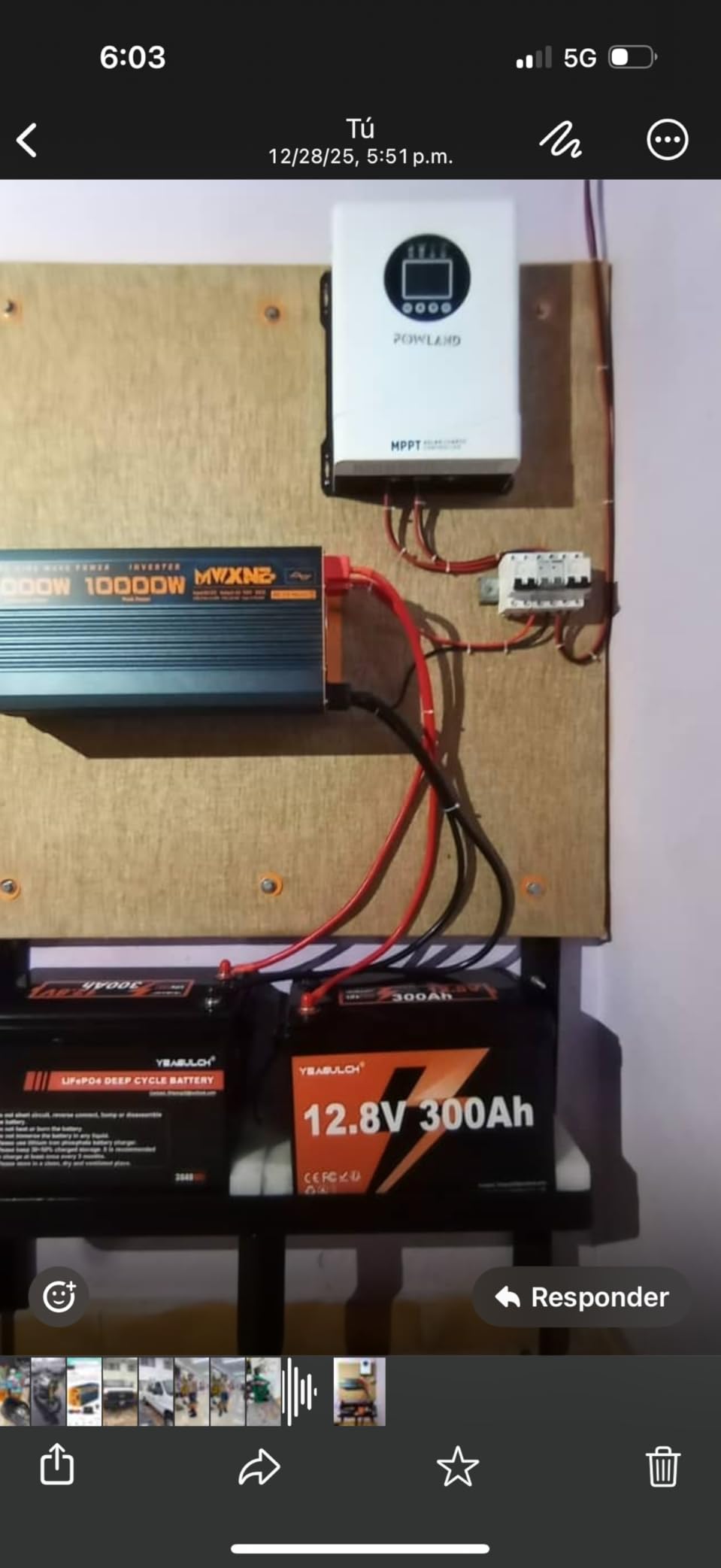
The 100A BMS covers multi-direction protection, and expansion supports 4 in series for 48V or 4 in parallel, with the manufacturer advising against going beyond four units. There is no memory effect, so topping off partway through a solar day costs you nothing.
Reviewers focus almost entirely on usable capacity relative to price and the weight savings over AGM, which is the honest summary of where this battery wins: it does the simple job well and cheaply per kilowatt-hour.
A strong choice for weekending
For a couple of weekenders running lights, water, refrigerator and charging devices, 100Ah of genuinely usable capacity is usually enough with 200 to 400 watts of solar. The flat discharge curve means your appliances see stable voltage right down to the bottom of the range.
That absence of memory effect also makes it forgiving of imperfect charge habits, which matters if your solar gain varies with weather or you drive between campsites more than you sit still.
Know the limits
No Bluetooth means you will need a shunt-based battery monitor to track state of charge properly, and that is an extra purchase some buyers forget.
The listing is explicit about exclusions: not recommended for trolling motors above 700W, not for car starting or golf cart use, and it needs a charge or discharge cycle at least every six months during storage. Voltage and current readings may also deviate by 1 to 5% depending on measurement method, so do not treat the app-free telemetry as laboratory precise.
9. yeagulch 12V 200Ah — Best Mid-Size Bank with Surge Headroom
12V 200Ah LiFePO4 Lithium Battery Built-in 200A BMS 15000+ Deep Cycle
200Ah at 12.8V / 2560Wh
200A BMS with temperature cut-off
58.86 lb
4 in series to 48V
Pros
- 2560Wh is the sweet spot for a mid-size RV house bank
- 200A BMS gives real headroom for inverter and compressor startup
- About one third the weight of a 200Ah lead-acid battery
- 4S or 4P expansion reaches about 10.24kWh usable
Cons
- No Bluetooth or app monitoring on this model
- At nearly 59 lb it is a two-person lift
- 20.08 in length requires checking compartment depth
- Trolling motor use limited to 55-62 lb of thrust
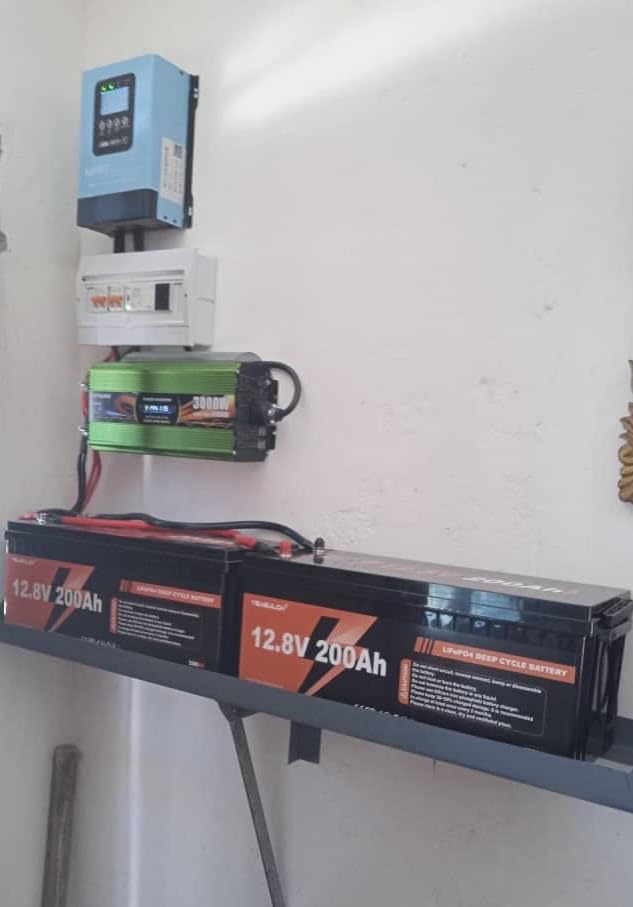
The 200Ah tier is the sweet spot most RVers land on, and this is the version we would put in a mid-size coach. At 2560Wh nominal, it holds roughly what a pair of good 100Ah AGMs gave you, but at about a third of the weight and with double the depth of discharge available.
The 200A BMS is the differentiator. It provides genuine headroom for inverter startup and compressor surges rather than sitting right at the limit, which is where many 100A units get overwhelmed. Automatic high and low temperature cut-off is built in, and expansion runs to 4 in series for 48V or 4 in parallel for 800Ah at 12V, roughly 10.24kWh usable.
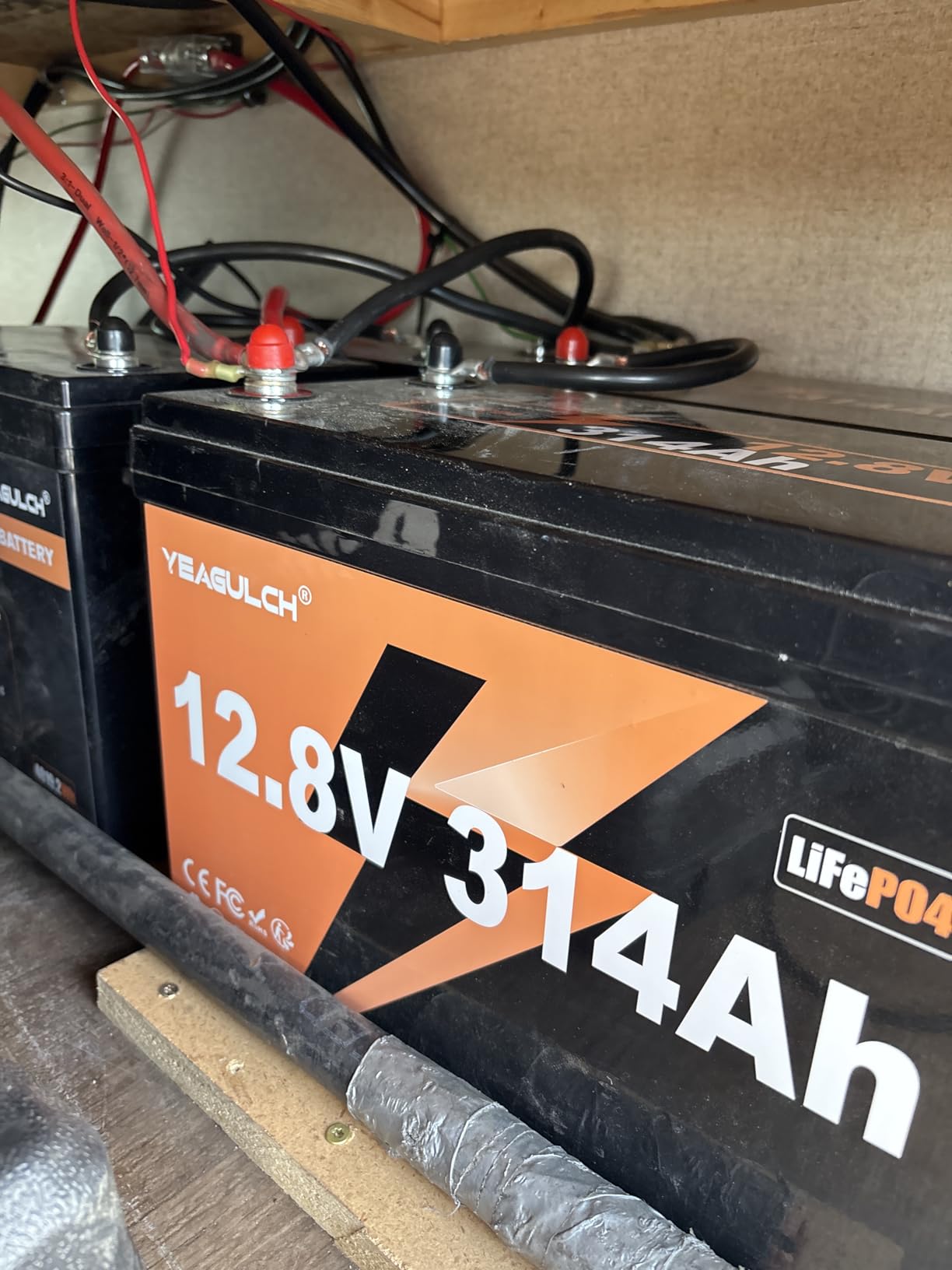
It shares the brand platform with the highly rated 4.7-star 100Ah unit, so cell sourcing and cycle claims are consistent: 4,000 cycles at 100% depth of discharge, 6,000 at 80% and up to 15,000 at 60%. Reviewers point to the 200A BMS surge capability and the capacity-to-weight match as the standouts.
Installation is where the effort goes. At 20.08 x 8.07 x 8.46 inches and 58.86 lb, this is a long, heavy battery, and compartment depth needs checking before it arrives.
The balance point for most coaches
Full-time RVers and anyone running a microwave, a coffee maker and a residential refrigerator on solar will feel the difference between 100Ah and 2560Wh most clearly here. Two of these in parallel give you 400Ah of usable bank with sensible physical dimensions.
Temperature cut-off means you can leave it installed through shoulder season without babysitting it, and the deep cycle claims hold up at shallower discharge, which is how most solar systems actually get cycled.
Reasons it may not suit
Weight and length are the practical objections. Nearly 59 lb is a two-person lift for most installs, and 20 inches of length will not fit every bay without moving something.
There is no Bluetooth or app monitoring, which means a shunt-based monitor becomes a sensible addition, and the manufacturer limits trolling motor use to 55 to 62 lb of thrust, so it is not the battery for heavy fishing setups.
10. ECO-WORTHY 12V 314Ah — Best Built-In Status Display
ECO-WORTHY 12V 314AH LiFePO4 Lithium Battery Bluetooth with SOC LEDs, Low Temp Protection, 4019WH, 200A BMS Up to 15000 Deep Cycle for Off-Grid, RV, Solar Power System, HomeBackup
314Ah at 12.8V / 4019.2Wh
Top-mounted LED status panel
200A BMS
60.4 lb
Pros
- On-board LED display shows level status and fault modes without the app
- Bluetooth app gives real-time monitoring with good connection range
- Three times the usable capacity of a 100Ah lead-acid at similar weight
- Built-in buzzer alerts you to battery faults
Cons
- Some units report voltage and current about 6-7x higher than a clamp meter confirms
- State of charge can read 100% when the battery is well below it
- Warranty is only 3 years
- Support has been slow to respond to incorrect volt reading reports
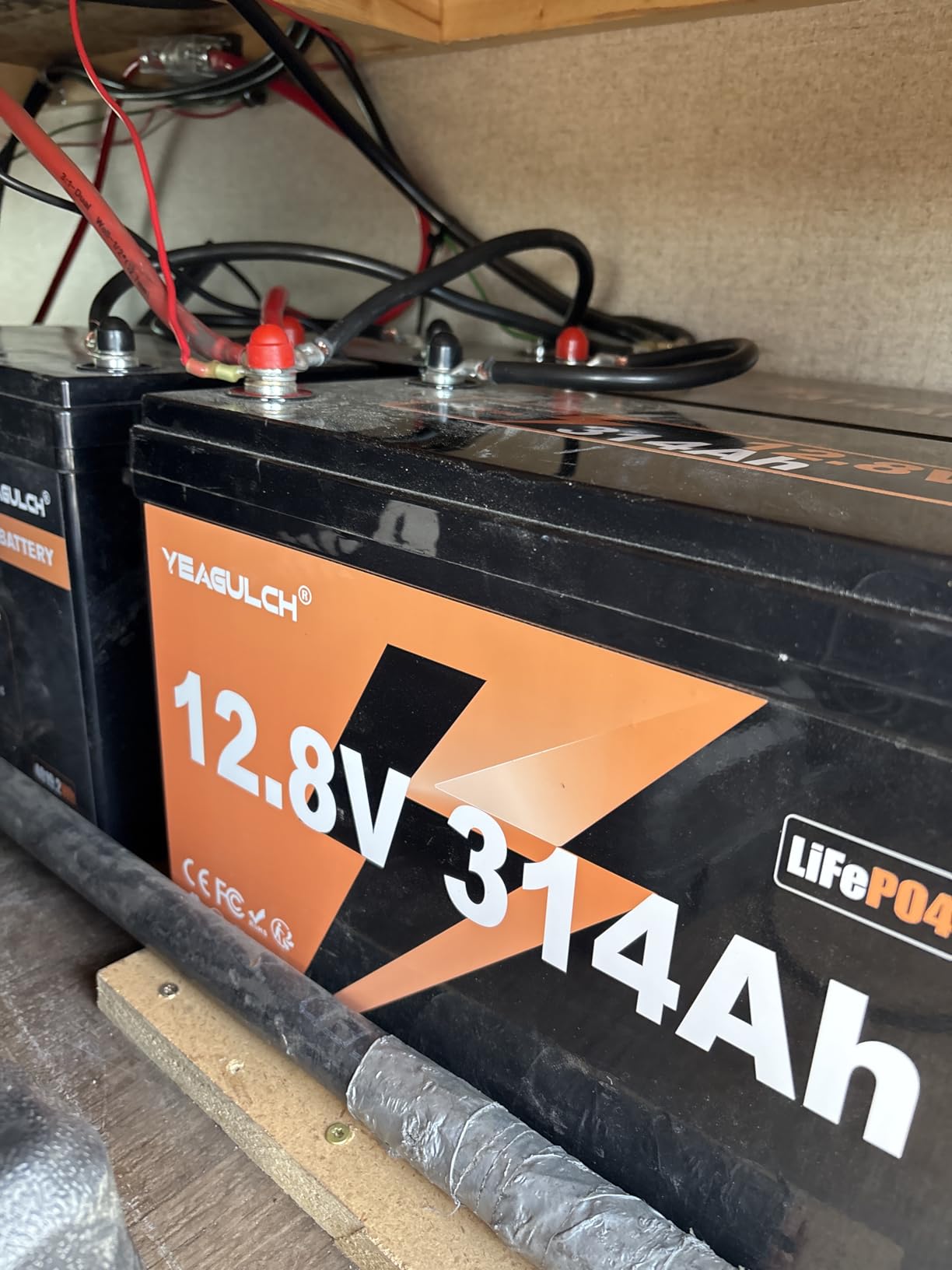
This unit was upgraded from 300Ah to 314Ah in April 2026 and now stores 4019.2Wh in a 60.4 lb fire-resistant case with integrated handles. That is several times the usable capacity of a 100Ah lead-acid bank at a similar weight, which is the number that matters for multi-day cloudy-weather resilience.
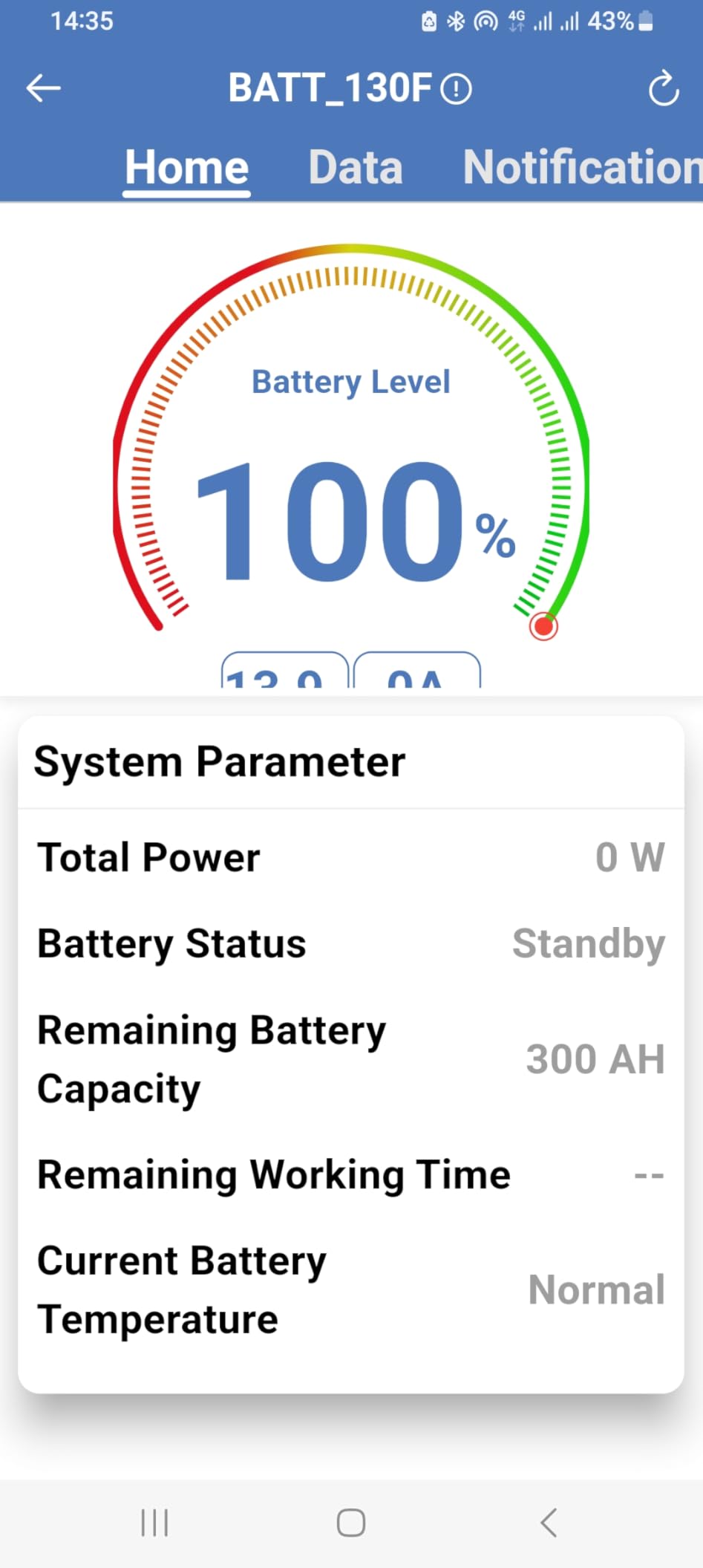
The feature that stands apart is the top-mounted intelligent LED display, showing battery level, status and fault modes without opening an app. A built-in buzzer alerts you to faults, and Bluetooth monitoring through the ECO-WORTHY app covers the detailed view. Owners report connections holding across a whole home, which is a real improvement on shorter-range modules.
The 200A BMS includes high and low voltage, overload and high and low temperature protection, with charging automatically cutting off below -7°C (19.4°F). Expansion reaches 32.15kWh across 4P2S or 2P4S, and Grade A cells are claimed to last more than three times as long as lead-acid.
Reviewers consistently praise the LED panel, the app connectivity and the capacity, and several report easing multi-day off-grid anxiety by carrying several days of cloudy or rainy weather on the bank alone.
Useful where you cannot check a phone
For owners who want a quick answer without pulling out a phone, the top indicator panel plus app both confirming full status is genuinely useful, particularly on a rig where the battery sits in a sealed compartment. The fault modes shown on the panel speed up troubleshooting considerably.
It is also a good capacity-to-weight trade: 60.4 lb for 4019.2Wh is competitive with the metal-case EnergyRock in the same weight class, but with a longer warranty on some rivals and a shorter one here.
The telemetry accuracy caveat
Several owners report voltage and current readings around 6 to 7 times higher than a clamp meter confirms, and state of charge reading 100% when the battery is well below it. One unit’s BMS cut off at 13.9V and never reached full, though the manufacturer replaced it.
The 3-year warranty is also shorter than the 5 years most peers here offer, and support response times on the volt reading reports have been slow. If accurate monitoring drives your decisions, pair this with an independent shunt-based monitor and keep the app as a convenience rather than a source of truth.
11. HumsiENK 12V 640Ah 8.19kWh — Best for Full-Time Living
HumsiENK 12V 640Ah LiFePO4 Battery 8.19kWh Massive Capacity Lithium Battery
640Ah at 12.8V / 8.19kWh
250A BMS at 3200W continuous
Bluetooth monitoring
109.02 lb
Pros
- 8192Wh in one enclosure replaces six 100Ah batteries
- 250A BMS delivers 3200W continuous for a rooftop air conditioner and appliances
- 24.92 in width fits compartments where a bank of six would not
- Bluetooth app reports voltage state of charge and cell health
Cons
- At 109 lb it is the heaviest battery here and needs a two-person lift
- Only 90 reviews so long-term field history is thin
- Bluetooth range is not specified
- No self-heating so charging cuts off below 32F
Consolidation is the whole argument here. At 640Ah and 8192Wh, a single enclosure replaces six 12V 100Ah batteries, and at 24.92 inches wide it fits compartments where a bank of six never would. For a full-time RVer or a converted bus, that is a structural advantage no parallel-bank alternative can match.
The 250A BMS is rated for 3200W continuous output, enough to run a 15,000 BTU RV air conditioner alongside a microwave, espresso machine and refrigerator on the same bank. Cells are EV-Grade A rated 6,000+ deep cycles with a 10-year service life, backed by a 5-year warranty.
Bluetooth pairing with the Humsienk app covers voltage, state of charge and cell health, and expansion runs to 4S4P for a 51.2V 2560Ah system. Standard M8 terminals mean it fits conventional cabling, and the box includes M8 screws, insulation caps and a manual. Low-temperature charging stops below 32°F (0°C), so this is a warm-season or mild-climate battery unless you add heat externally. At 4.4 stars from 90 reviews with 81% five-star, the feedback is largely about the value of consolidation rather than long-term durability data.
When one big battery beats a parallel bank
A single large unit removes the balancing problem that comes with parallel banks, cuts cable runs and reduces the number of failure points. Fewer connections mean fewer things to torque, secure and inspect over a decade of road vibration.
For households running a rooftop air conditioner, a residential fridge and a cooktop, 8192Wh of usable storage is the difference between an unhurried morning and a generator start. The 3200W continuous rating is the figure that makes those loads coexist.
Reasons to hesitate
At 109.02 lb this is the heaviest battery in the roundup and needs a two-person lift plus a mounting plan, so check the compartment floor and your payload budget before committing.
With only 90 reviews, long-term field history is thin compared with the higher-volume listings, and there is no self-heating pad, so winter charging is a cutoff rather than a managed process. If your travels take you into sustained freezing, a heated 300Ah unit is the safer configuration.
12. VATRER 12V 300Ah Self-Heating — Best for Cold-Weather Boondocking
12.8V 300Ah Self-Heating LiFePO4 Lithium Battery with APP Monitoring
300Ah at 12.8V / 3840Wh
Built-in self-heating
200A enhanced BMS
54.7 lb
Pros
- Clear cold-weather charging where other units simply stop
- 4.9 stars from 77 reviews with 98% five-star
- 3840Wh at 54.7 lb which is about a third of lead-acid weight
- Over 5000 rated cycles at 100% depth of discharge
Cons
- Only 77 reviews so the rating rests on a small sample
- Self-heating draws from the battery itself so arrival state of charge matters
- Manufacturer advises against series connection for golf cart use
- Heating function carries a premium over non-heated 300Ah models
Every other battery in this roundup responds to freezing temperatures by refusing to charge. This one has a built-in self-heating pad, so cells come up to a safe temperature before charging begins. For four-season camping that is not a nice-to-have feature, it is the difference between a full battery at dawn and a dead one.
At 300Ah and 3840Wh with a 54.7 lb build, the capacity-to-weight ratio is strong, and the enhanced BMS protects against overcharge, over-discharge, high and low temperature, overcurrent and short circuit. Cycle life is claimed at over 5,000 charge-discharge cycles at 100% depth of discharge, a notably high figure at full depth.
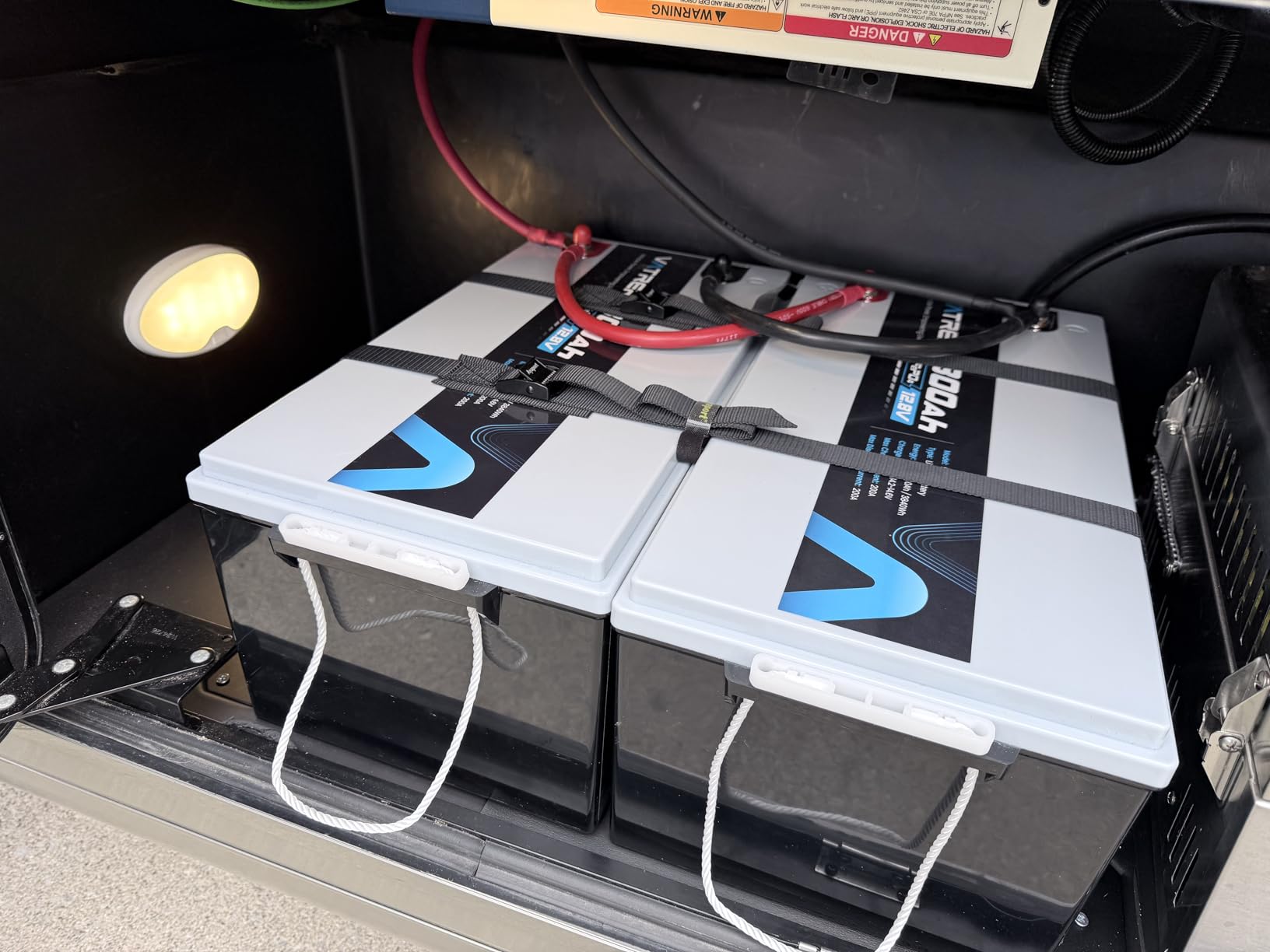
App monitoring reports current, voltage, temperature and cycle count as standard rather than as an upgrade, and Grade A cells sit under the whole package. Two battery tie-down straps are included, which is one less thing to source before the install.
The rating distribution is unusually strong: 4.9 stars from 77 reviews, with 98% five-star and no ratings below four stars at all. Treat that with the usual caution of a small, relatively recent sample.
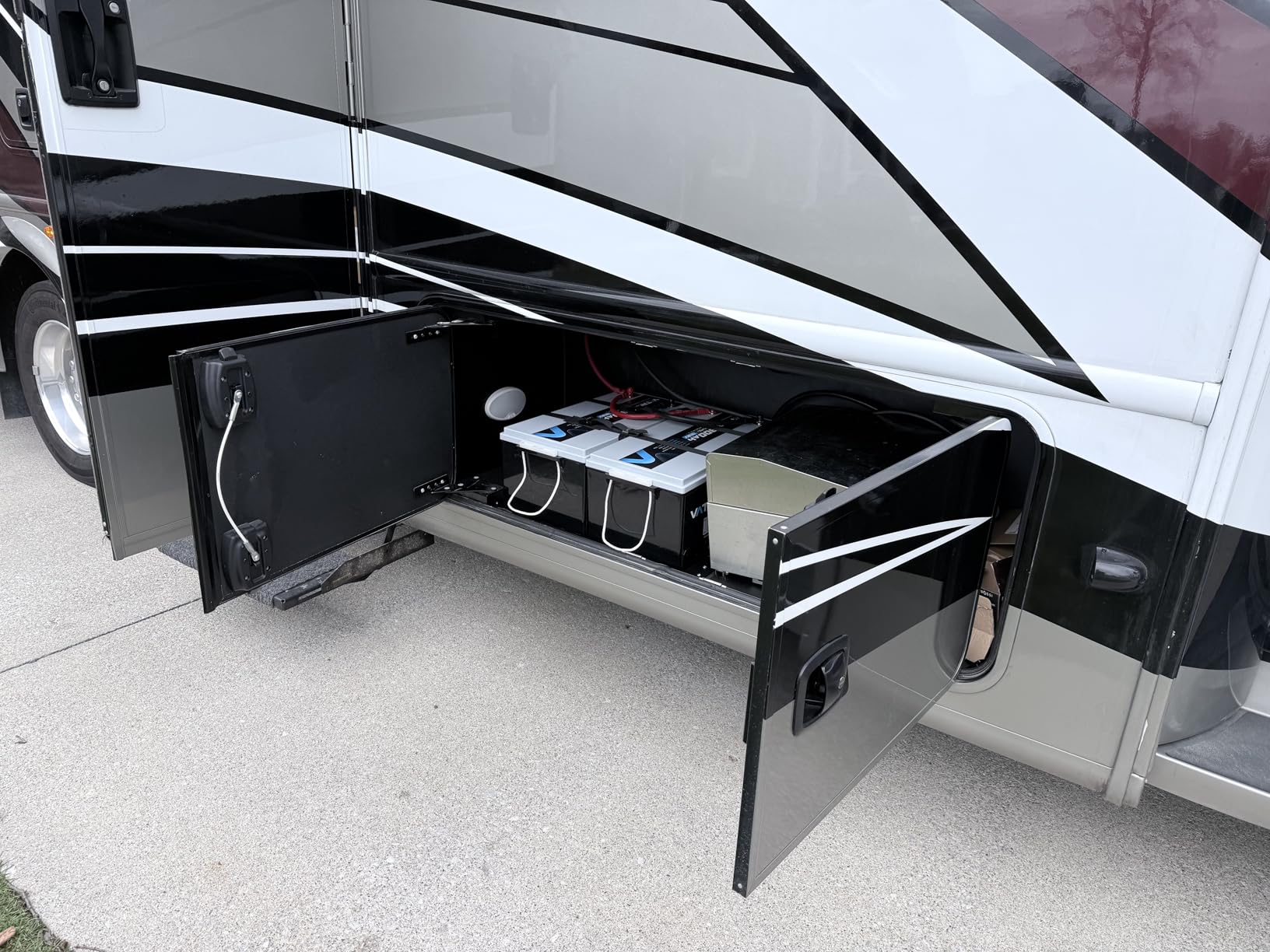
What self-heating actually solves
Lithium cells cannot safely accept charge below freezing, and a cold-soaked battery that refuses to charge can leave you stuck with reduced power until ambient temperature climbs. Heating solves that cycle, which matters most in shoulder season and early spring departures when mornings start below 32°F.
Because the pad draws from the battery itself, arrival state of charge matters more than with a non-heated unit. Rolling in at a low state of charge on a cold night is the scenario worth planning around.
Where the caution belongs
Seventy-seven reviews is a small sample, and the near-perfect 4.9 rating says more about early owner enthusiasm than it does about a decade of field data. Owners on iRV2 and Forest River Forums repeatedly note that most lithium disappointments cluster around firmware and app experience rather than cell failure, so the software is worth testing early.
The manufacturer also advises against series connection for golf cart use, and the heating function carries a premium over non-heated 300Ah models. If you camp warm, a non-heated 300Ah unit delivers the same stored energy for less.
How to Size a Lithium Battery Bank for RV Solar
Size from your daily amp-hour draw, not from the largest battery you can physically fit. List every 12V load you intend to run for a typical day, estimate hours of use for each, and multiply to get watt-hours, then divide by 12.8V to convert to amp-hours.
A worked example makes it concrete. A 12V drawer fridge averaging 5A for 10 hours is 50Ah. Add 20Ah for a water pump, 10Ah for interior and exterior lighting, 15Ah for phone and laptop charging, and 5Ah for a water pump run, and you land near 100Ah daily. Add a 30% buffer for cloudy days and conversion losses, and you are looking at a bank around 130Ah, which a single 150Ah unit covers with room to spare.
Two rules of thumb make the rest easier. Total solar panel watts should be roughly 20% of your daily amp-hour draw, so a 100Ah day calls for about 200 watts of panels. Recharge time from solar then works out as panel watts multiplied by peak sun hours, divided by charge efficiency: 400 watts with 4 peak sun hours recovers roughly 100Ah on a good day.
Match the MPPT controller to the bank, not the other way round. A controller sized far below your array will throttle charging no matter how good the battery is, and an oversized controller adds cost without adding recovery speed. Do not mix lithium batteries of different brands, ages or capacities in one parallel bank, since imbalance causes rapid degradation and the packs will not age evenly.
Cold Weather, Converters and DC-to-DC Chargers
Confirm your rig is lithium-ready before buying anything. Pre-2018 converters typically push around 13.6V, which leaves a lithium bank parked near 80% state of charge instead of full, and you will spend the whole trip thinking the battery is faulty. A lithium-compatible converter charging at 14.2 to 14.6V fixes it, and a properly sized DC-to-DC charger is the alternative for charging from the alternator while driving.
Cold weather changes the chemistry question into a hardware question. Cells cannot accept charge below roughly 32°F (0°C), so any battery without a self-heating pad simply stops charging until it warms up. Most of the batteries here rely on low-temperature cutoff, which is fine for mild climates and a real limitation for winter camping.
Owner reports also point at a monitoring gap that catches people out. A Bluetooth app shows state of charge, but a shunt-based battery monitor gives you a true reading and works regardless of the battery brand. If your runs are long or multi-day, adding one is cheap insurance, and the same hardware will tell you whether your converter is actually finishing the charge.
Physical Fit, Fusing and Safety Certifications
Measure before you order, because fit is the most common reason a good battery gets returned. Group 24 and Group 31 footprints are common in trailer bays, but the 280Ah metal-case, 200Ah, 314Ah, 460Ah and 640Ah units in this roundup are all larger, and the 460Ah and 640Ah models are heavy enough that mounting position and floor load need checking.
Terminal orientation catches people next. Top-post batteries need the stud adapters that come with the battery, while side-post trailer boxes need the correct terminal hardware. M8 terminals are the norm on most lithium units here, and a missing or mismatched post is a five-minute fix that saves a return shipment.
On safety, install a Class T fuse within about seven inches of the positive terminal, follow ABYC guidance for the rest of the circuit, and look for UL 1973 and UL 9540A certification where the manufacturer publishes it. None of the batteries here requires venting, which is a genuine advantage over flooded lead-acid in an enclosed RV compartment, but proper fusing is not optional regardless of chemistry.
One more practical note for campsite living: lithium frees up a lot of 12V headroom, so it pairs well with efficient [12V lighting setups](https://www.exponation.net/best-outdoor-lighting-for-rv-campsites/) that draw less than the incandescent fixtures they replace. Lower draw means a smaller bank does the same job, and the freed capacity goes to the appliances that actually need it.
Frequently Asked Questions
What type of battery is best for an RV solar system?
Lithium iron phosphate, or LiFePO4, is the best battery type for an RV solar system. It delivers roughly 95-100% usable capacity versus about 50% for lead-acid, holds a steady voltage under load, weighs around a third of an equivalent AGM bank, and lasts 3,000 to 5,000+ cycles. A 200A BMS and low-temperature charging cutoff are worth prioritising in any LiFePO4 purchase.
Which lithium solar batteries are best for my solar system?
The best lithium solar batteries match three things: your daily amp-hour draw, your physical compartment, and your charging hardware. High-capacity picks such as the 460Ah and 640Ah units suit full-time living and high-draw loads, while 100Ah Group 24 and Group 31 models suit weekend trips. Whatever the size, confirm the converter charges to 14.2V or higher.
Which brand of LiFePO4 battery is considered the best?
Owner communities most often name Battle Born, Victron, Renogy, Redodo, LiTime, Power Queen, Eco Worthy, Epoch and Vatrer as reliable, and forum consensus favours buying as much amp-hour capacity as your space and budget allow. Among the units reviewed here, LiTime, ECO-WORTHY and SUPER EMPOWER combine the strongest ratings with the most consistent review histories.
What is the best lithium battery for RV boondocking?
For boondocking, the best lithium battery is one sized to your daily draw with a BMS that can handle inverter startup, roughly 100A per 1,000W of inverter capacity. A 230Ah to 300Ah unit with a 200A BMS and Bluetooth monitoring covers most two-to-four day solar-only trips, and adding a self-heating model becomes essential if you camp below 32F.
Can I replace my AGM battery with lithium without changing anything else?
Usually yes, if the physical group size and terminal orientation match. The battery is the easy part: what matters is your converter. Older converters charging around 13.6V will leave a lithium bank near 80% state of charge, so budget for a lithium-compatible converter charging at 14.2 to 14.6V or a properly sized DC-to-DC charger before the trip.
How many amp-hours do I need for my RV solar system?
Total your daily loads in watt-hours, divide by 12.8V for amp-hours, then add a 30% buffer for cloudy days and conversion losses. A typical weekend rig lands near 100-150Ah per day, while a full-time RVer running a residential fridge, microwave and rooftop air conditioner needs 300Ah or more. Size solar panel watts at roughly 20% of your daily amp-hour draw.
Final Verdict: The Best Lithium Batteries for RV Solar Systems
The Litime 12V 230Ah takes our Editor’s Choice for the best lithium batteries for RV solar systems, because it combines 200A BMS headroom, Bluetooth 5.0 telemetry, 4,000+ cycle cells and a Group 4D footprint with the deepest review history in the roundup. Budget units should start with the dumfume 150Ah, cold-climate campers should look at the self-heating VATRER 300Ah, and durability-focused full-time rigs get the metal-case ECO-WORTHY EnergyRock.
Whichever one you choose, verify three things before you order: the group size and terminal orientation of your bay, the amp rating of your inverter against the BMS, and whether your converter actually charges lithium to full.