
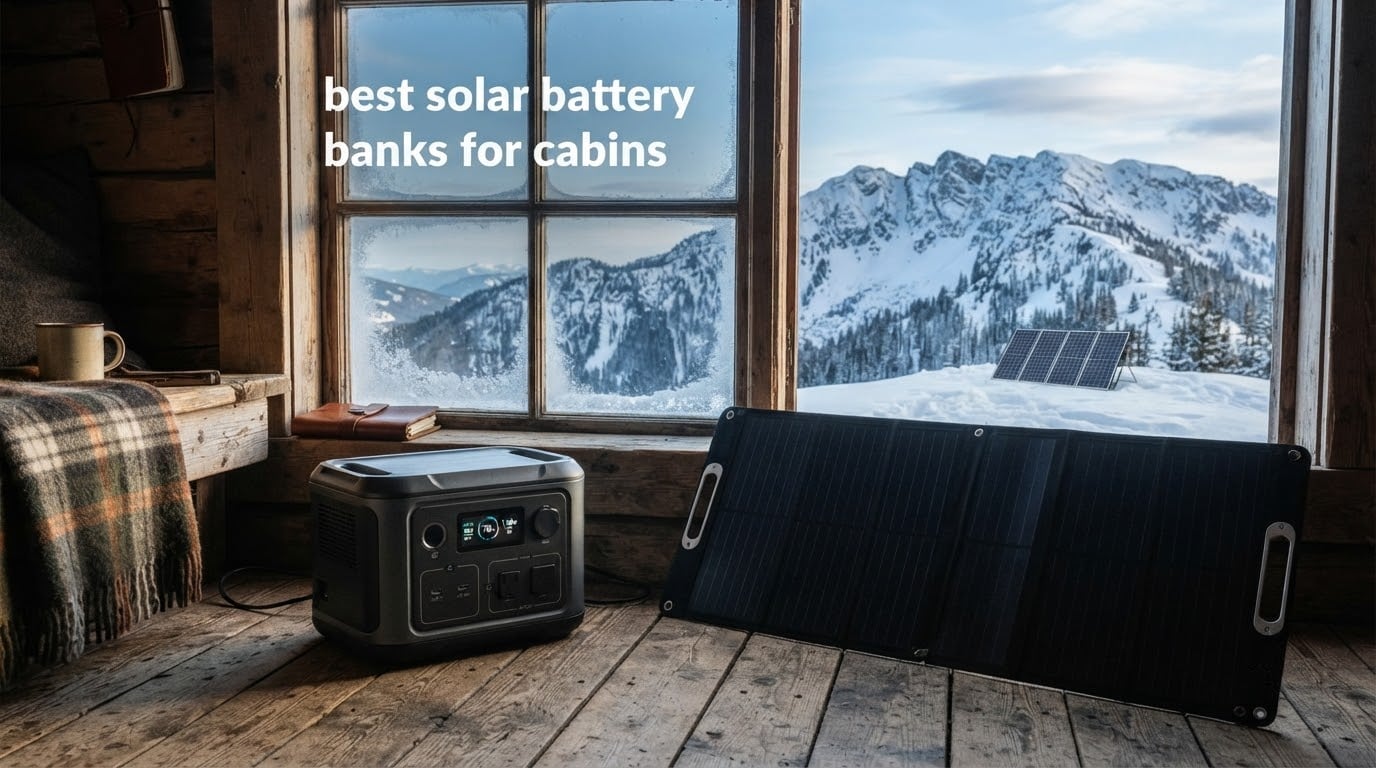
A solar battery bank is the storage half of a cabin’s power system. Panels feed charge current through an MPPT charge controller, the bank’s battery management system accepts it, and an inverter turns the stored DC into the 120V AC your appliances run on. If you are comparing the best solar battery banks for cabins in 2026, that one-paragraph description is the whole concept, and everything else is detail.
The detail matters because the failure modes in a remote cabin are never subtle. A refrigerator warms and spoils a week of food. Cell signal and Wi-Fi drop, so the cabin goes quiet. A well pump stops, so there is no water and no flush. In winter the same failures turn into frozen pipes, which is the emergency that actually costs money. None of those problems happen because the panels were undersized. They happen because there was nowhere to put the energy after sundown.
That is also why the market has split. Every bank we looked at for this roundup is a LiFePO4 portable power station rather than a stack of lead-acid modules, and the eight below run from 292Wh to 3072Wh. A 292Wh unit is a phone charger that happens to have an AC outlet. A 3072Wh unit can hold a freezer, a router and a few lights through a two-day storm. Comparing them without asking what the cabin actually needs is the single most common mistake we saw in owner discussions on off-grid and cabin forums.
Our team spent several weeks comparing all eight on capacity, continuous output, charge paths, idle draw, cold-weather behaviour and warranty length, and we cross-checked the specs against owner reports on the forums where cabin builders talk about real runtime rather than marketing figures. If you also want the small-scale side of the topic, our picks for the best solar power banks and the best high capacity power banks cover the same chemistry at a different size class.
Table of Contents
Top 3 Picks: Best Solar Battery Banks for Cabins (October 2026)
The AC180 takes the top slot because it holds the best mix of usable capacity, output headroom and review depth in this group. The Elite 100 V2 wins on value because a 200W panel is in the box, and the Jackery 1000 v2 is our budget pick for anyone who counts every pound of carry weight.


Jackery Solar Generator 1000 v2
- 1070Wh LiFePO4
- 1500W continuous
- 23.8 lb
- 3 pure sine wave outlets
Best Solar Battery Banks Side by Side in 2026
Read the capacity and output columns together, never on their own. A large bank that cannot start a well pump is worse than a modest one that can, because you will not find out until the pump is the only thing running.
| Product | Specifications | Action |
|---|---|---|
| BLUETTI AC180 |
|
Check Latest Price |
 BLUETTI Elite 100 V2 BLUETTI Elite 100 V2 |
|
Check Latest Price |
| Jackery Solar Generator 1000 v2 |
|
Check Latest Price |
 BLUETTI Elite 200 V2 BLUETTI Elite 200 V2 |
|
Check Latest Price |
 Jackery HomePower 3000 Jackery HomePower 3000 |
|
Check Latest Price |
 Anker SOLIX S2000 Anker SOLIX S2000 |
|
Check Latest Price |
 Anker SOLIX C300 Anker SOLIX C300 |
|
Check Latest Price |
 Jackery Explorer 300 Jackery Explorer 300 |
|
Check Latest Price |
1. BLUETTI AC180: Best Overall Solar Battery Bank for Most Cabins
BLUETTI AC180 Portable Power Station 1152Wh 1800W LiFePO4 Solar Generator
1152Wh LiFePO4
1800W continuous, 2700W surge
500W solar input
20ms UPS
37.4 lb
Pros
- Full charge in about an hour at 1440W AC input
- 1800W continuous with 2700W power lifting
- 11 outlets including USB and wireless pad
- 20ms UPS keeps essentials running
- Quiet and does not run hot
Cons
- Heavy at 37.4 lb so it lives in one spot
- 15-20W inverter overhead cuts usable capacity on small loads
- Wireless charging pad often fails to charge a phone
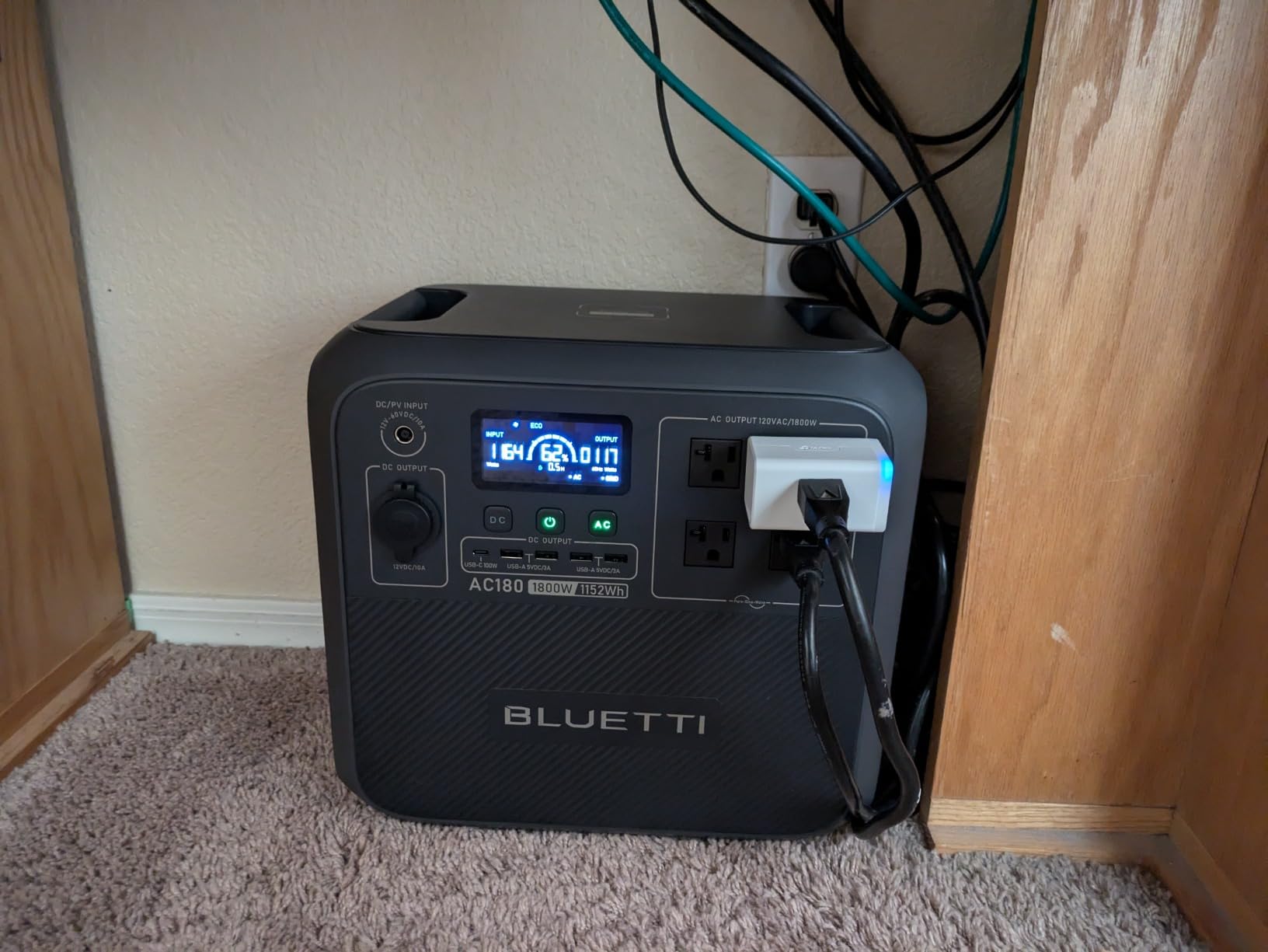
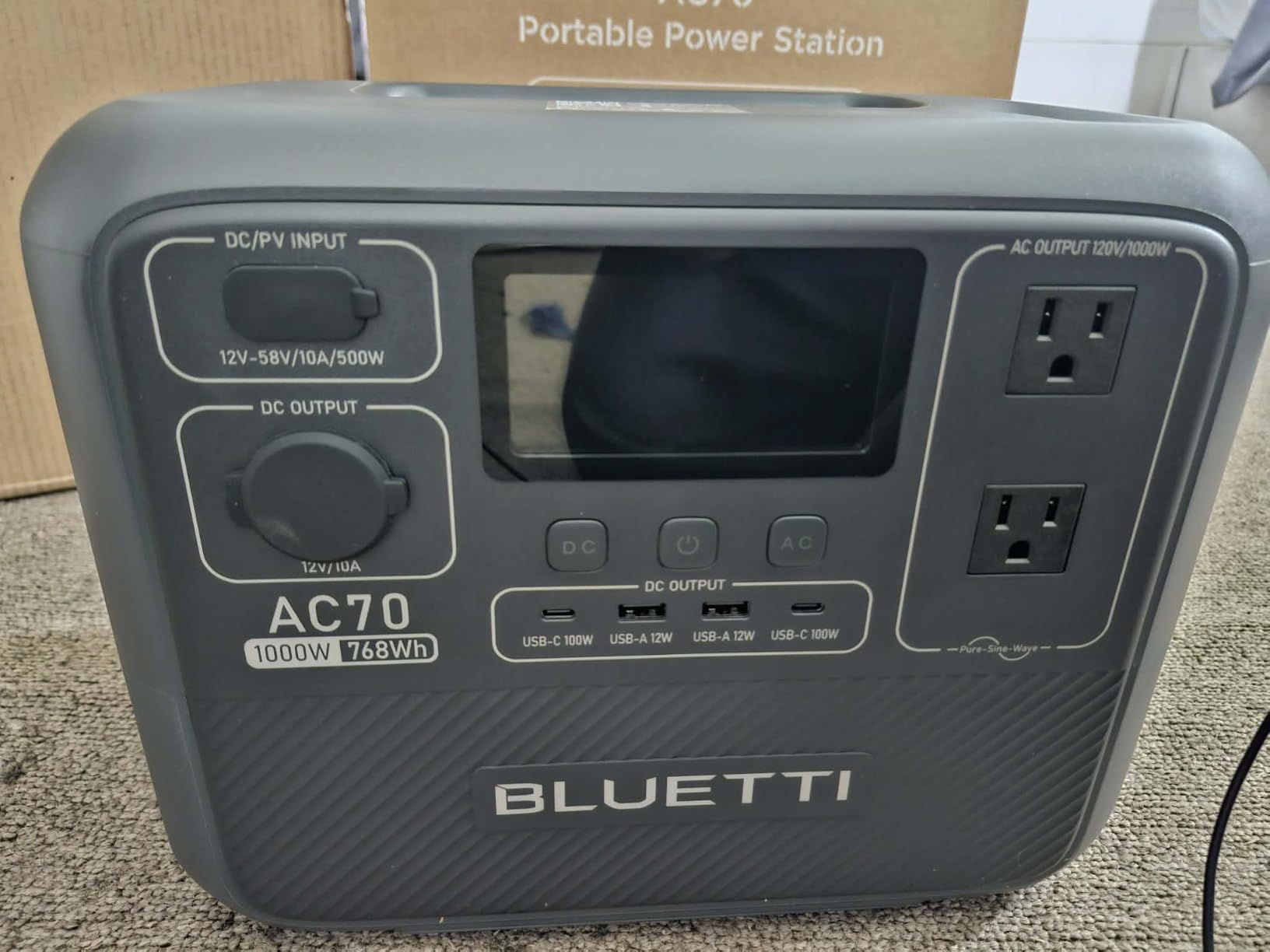
The BLUETTI AC180 stores 1152Wh of LiFePO4 capacity and delivers 1800W continuously, with power lifting that takes it to 2700W through the app. That output figure is the reason it tops this list. A 1800W inverter will start a small well pump where a 1200W unit stalls, and it will run a small microwave without the fridge browning out.
Charging is the second reason. It accepts 1440W of AC input and fills from empty in roughly an hour, while the 500W solar input brings it back from flat in about three hours of good sun. For a cabin with a modest array already on the roof, that fast solar window means a cloudy morning still recovers before the compressor needs to run again.
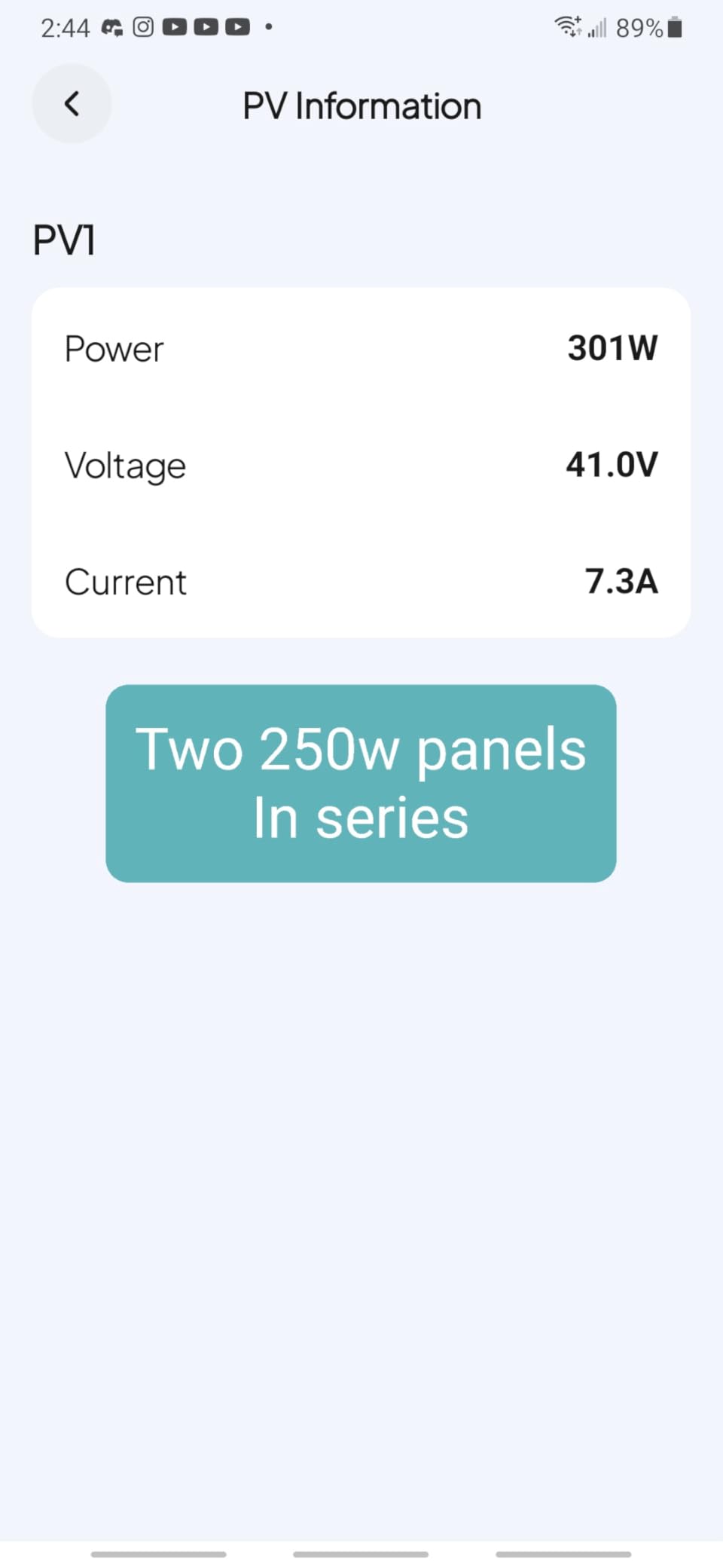
Owners report that after a full discharge and recharge calibration cycle, plus a firmware update, several early units that seemed to underperform came right. That is worth knowing before you write the unit off on a bad first night. The BLUETTI app and customer support come up often as reasons people recommend the brand to other cabin owners.
The honest drawback is the inverter’s own appetite. Reports of 15W to 20W of overhead draw from the inverter and display mean a 1152Wh battery delivers closer to 1000Wh to real loads. On a big fridge that is irrelevant. On a router and two lamps idling all winter, it decides how many months the bank survives.
Will 1152Wh run a well pump and a refrigerator together
For a refrigerator alone, comfortably, with hours to spare after an overnight run. For a well pump plus a freezer plus lights, you are drawing closer to the edge during a startup surge, and the 2700W power lifting mode is what keeps the pump from tripping the inverter.
Size check before you buy: measure the running wattage of your pump from its nameplate and compare it to 1800W. Pumps with motors are the one category where the surge number matters more than the capacity number.
Where the AC180 is the wrong choice
At 37.4 lb it is a fixed-install battery, not something you carry to the porch or the truck bed. If your backup plan depends on grabbing a battery and walking to a shed, look at the Explorer 300 or the C300 instead.
It also cannot be expanded with add-on modules, so if you know your load will grow substantially in two years, size for that today or plan on a separate bank later. Our picks for the best high capacity power banks cover the units built for growth.
2. BLUETTI Elite 100 V2: Best Value Pick with a Panel in the Box
BLUETTI Solar Generator Elite 100 V2 with 200W Solar Panel Included, 1024Wh
1024Wh LiFePO4
1800W rated, 3600W surge
200W panel included
10ms UPS
25 lb
Pros
- 200W monocrystalline panel included in the box
- 10ms UPS keeps routers and laptops alive
- 30dB silent mode suits overnight indoor use
- Roughly 70 minute full recharge on AC
- Rated 4000+ cycles to 80%
Cons
- Real solar yield falls short of the panel nameplate
- Idle draw reduces capacity on low-draw appliances
- Only one USB-A port pair
The Elite 100 V2 holds 1024Wh of LiFePO4 rated for more than 4,000 cycles to 80%, and a 200W monocrystalline panel is included in the box. For a first-time cabin owner that bundled panel is the whole value argument, because a bare battery with no charge path is a paperweight until you mount something.
Output is 1800W rated with 3600W surge, and the UPS transfers in 10ms. That figure is short enough that a router, a monitor and a laptop do not blink when the grid drops, which matters if your cabin doubles as a work location. It also accepts up to 1000W of solar input, reaching 80% in about four hours from a good array.
At 25 lb it is light enough to move between the cabin floor and a shelf in a truck, and the 30dB silent mode means it will not wake you at three in the morning. Off-grid cabin builders report running fridges, fans, lights and small tools on it comfortably across several nights, and one CPAP user reported stable overnight runtime.
What to understand about the bundled panel is that its real output falls well short of the nameplate whenever there is cloud, shade or a low sun angle. Plan on it as a trickle and maintenance charger rather than the primary recovery path, and add panels later if you want the bank back to full by mid-afternoon.
Is a bundled 200W panel enough to keep this bank charged
On its own in summer, yes, for a light load of lights, a router and a small fridge. Across a week of cloudy days, no. The panel is generous for a starter kit and thin for a primary array, which is exactly the balance most weekend cabins want.
Check the connector type before you plan an expansion. Reviewers single out the XT-60 solar connectors as solidly built and readable, with a clear wattage readout for input and output.
Who should skip the Elite 100 V2
Skip it if cold is the main concern and the battery will live in an unheated shed, because low-temperature charging cutoff behaviour varies and none of these portable banks advertise integrated battery heating.
Also skip it if you already own panels and would rather spend the money on more storage. Paying twice for solar you already have is the most common regret in owner threads about bundle kits.
3. Jackery Solar Generator 1000 v2: Best for Cabin Builds Where Weight Matters
Jackery Solar Generator 1000 v2 and 200W Solar Panel,1070Wh,1500W AC
1070Wh LiFePO4
1500W continuous, 3000W surge
23.8 lb with carry handle
Bundled 200W panel
Pros
- Lightest 1kWh class unit at 23.8 lb
- Three pure sine wave AC outlets
- 1.7 hour default full charge
- Real pass-through for fridges
- 5 year coverage
Cons
- Bundled panel is bulky and awkward in wind
- Short solar cable forces the panel into direct sun
- 1 hour fast charge needs app emergency mode
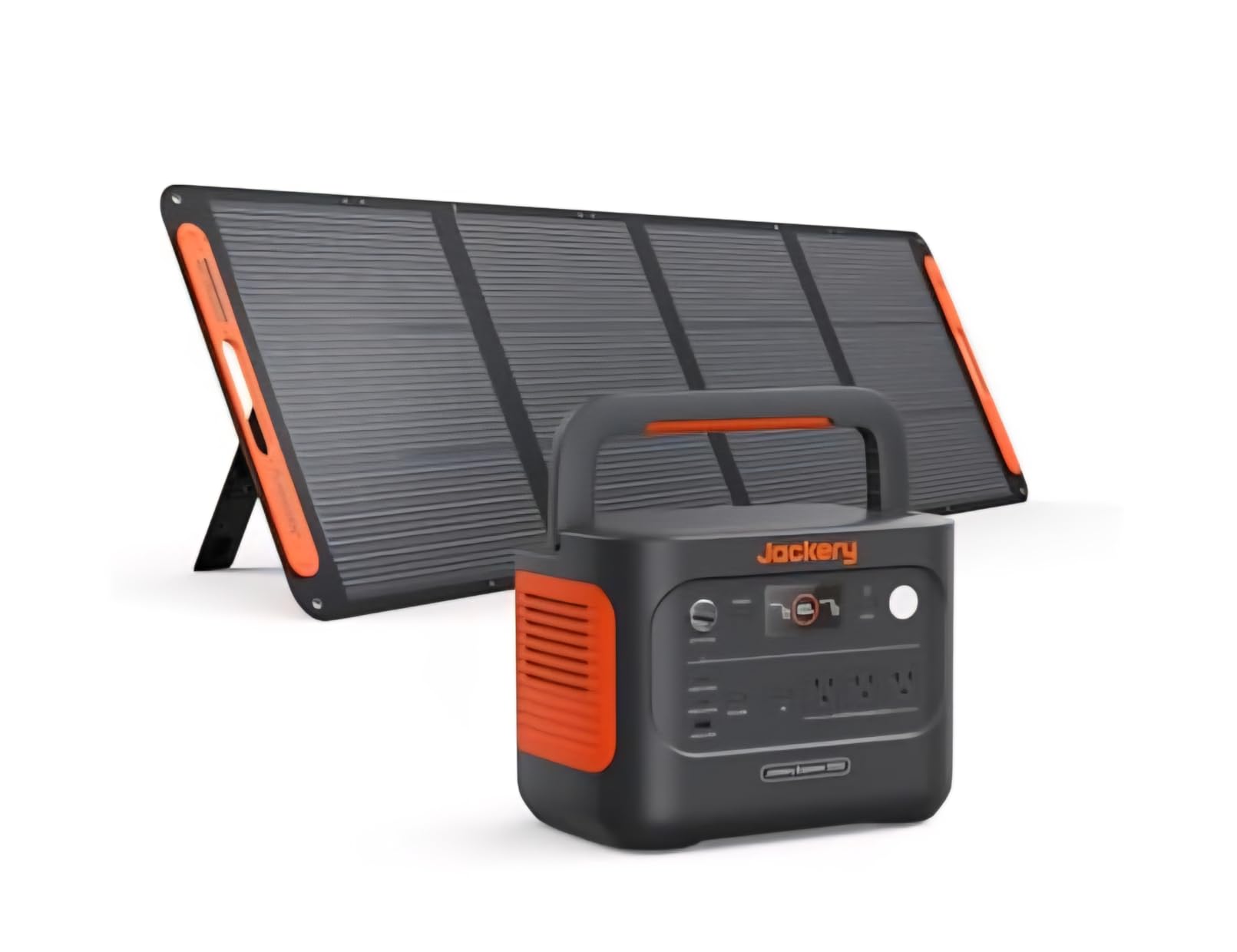
The Jackery Solar Generator 1000 v2 packs 1070Wh of LiFePO4 rated for 4,000-plus cycles into a 23.8 lb case with a folding handle. At 1070Wh it is the lightest unit in the group that can still carry a full-size refrigerator, and that gap matters when you are carrying a battery up cabin steps or across a snowy path to a shed.
Power comes from 1500W continuous with 3000W surge across three pure sine wave outlets, plus 100W USB-C PD, a USB-A port and a 12V car socket. Pure sine wave output is the detail experienced owners care about most, since it runs sensitive electronics without the buzz a modified wave can introduce.
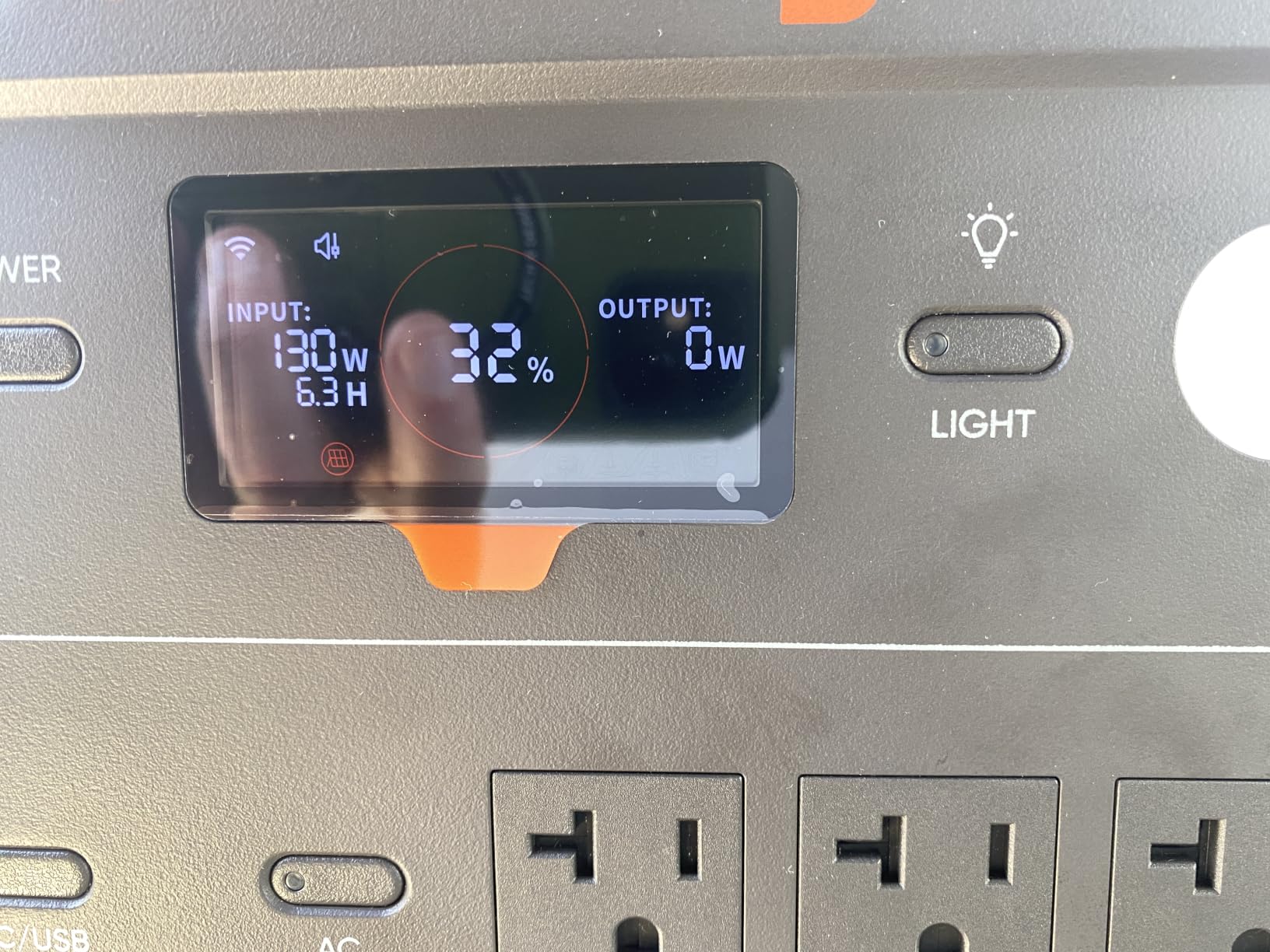
Cabin and outage users report running full-size refrigerators for eight to ten hours per charge, and they report cycling between solar and AC charging through multi-day outages without trouble. Genuine pass-through behaviour means it charges and powers a fridge at the same time, which is more than a number of competitors at this tier manage well.
Build quality draws consistent praise, with no loose or misaligned ports. The default full recharge takes about 1.7 hours; the advertised one-hour charge requires the app’s emergency mode, which shortens cycle life and is worth using only when you need it.
Is this the right capacity for a weekend cabin
For a weekend cabin running a fridge, a couple of lights and phone charging, 1070Wh is comfortable and the 23.8 lb weight keeps it manageable. For a full-time home running a well pump, a freezer and a computer, move up a size class.
The pure sine wave outlets are the practical reason many owners pair it with medical gear like a CPAP. If your cabin hosts anything that needs clean power, that specification matters more than another 200Wh of capacity.
What the bundled panel gets wrong
Owners report the 200W SolarSaga panel is bulky, awkward in wind and hard to reposition, with legs that are clumsy to set on uneven ground. The included solar cable is also short, which pushes the panel into a fixed position in direct sun.
If you already have a folding panel or a roof array, this is the pick to skip in favour of the AC180, which has more usable capacity and a faster AC charge.
4. BLUETTI Elite 200 V2: Best Multi-Day Battery Bank for Full-Time Cabins
BLUETTI Elite 200 V2 Solar Generator & 2x200W Solar Panel Included 2073.6Wh
2073.6Wh LiFePO4
2600W continuous, 3900W lifting
10W standby
Bundled 2x200W panels
Pros
- Runs full-size refrigerators and chest freezers past 24 hours
- 2600W inverter handles several appliances at once
- Very low 10W standby draw
- 6000+ cycle cells with a 17 year service claim
- Silent with no exhaust
Cons
- Heavy at 53.4 lb and not expandable
- Solar input capped at 60V
- Bundled panels are too light to resist wind
- App missing some hardware features
The Elite 200 V2 stores 2073.6Wh in LiFePO4 cells rated for 6,000-plus cycles, and its 2600W inverter runs up to nine devices at once. That combination is the full-time cabin profile: enough energy for a refrigerator and a chest freezer through a long stretch, and enough output that the compressor starting does not dim the lights.
The detail reviewers single out most is the 10W standby draw. Comparable 2kWh units idle at roughly three times that, and on a cabin running a router, a modem and a small freezer overnight, the difference in usable overnight energy is substantial. Charging is quick too, reaching 80% in about 50 minutes on dual AC and DC input.
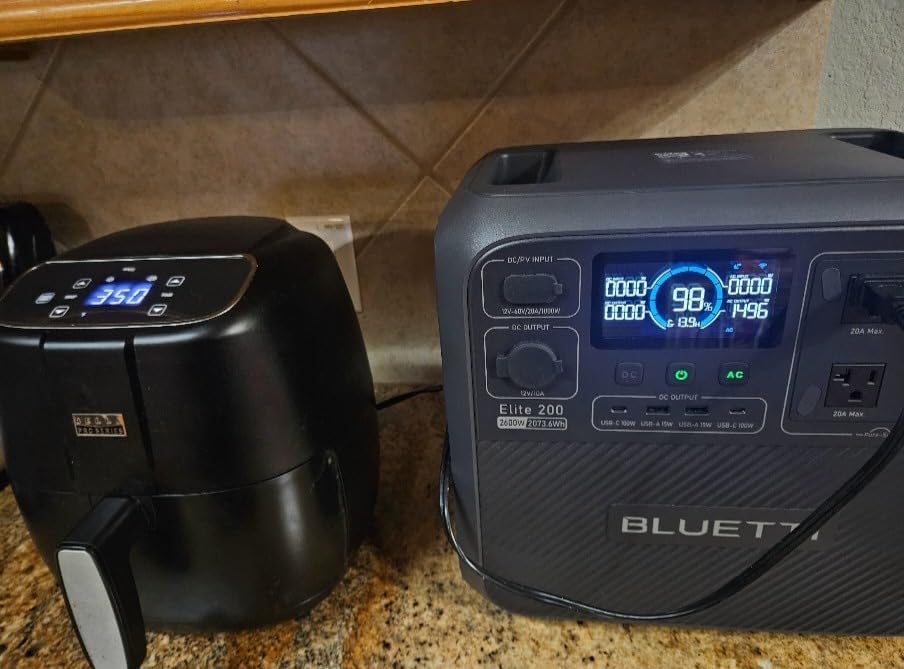
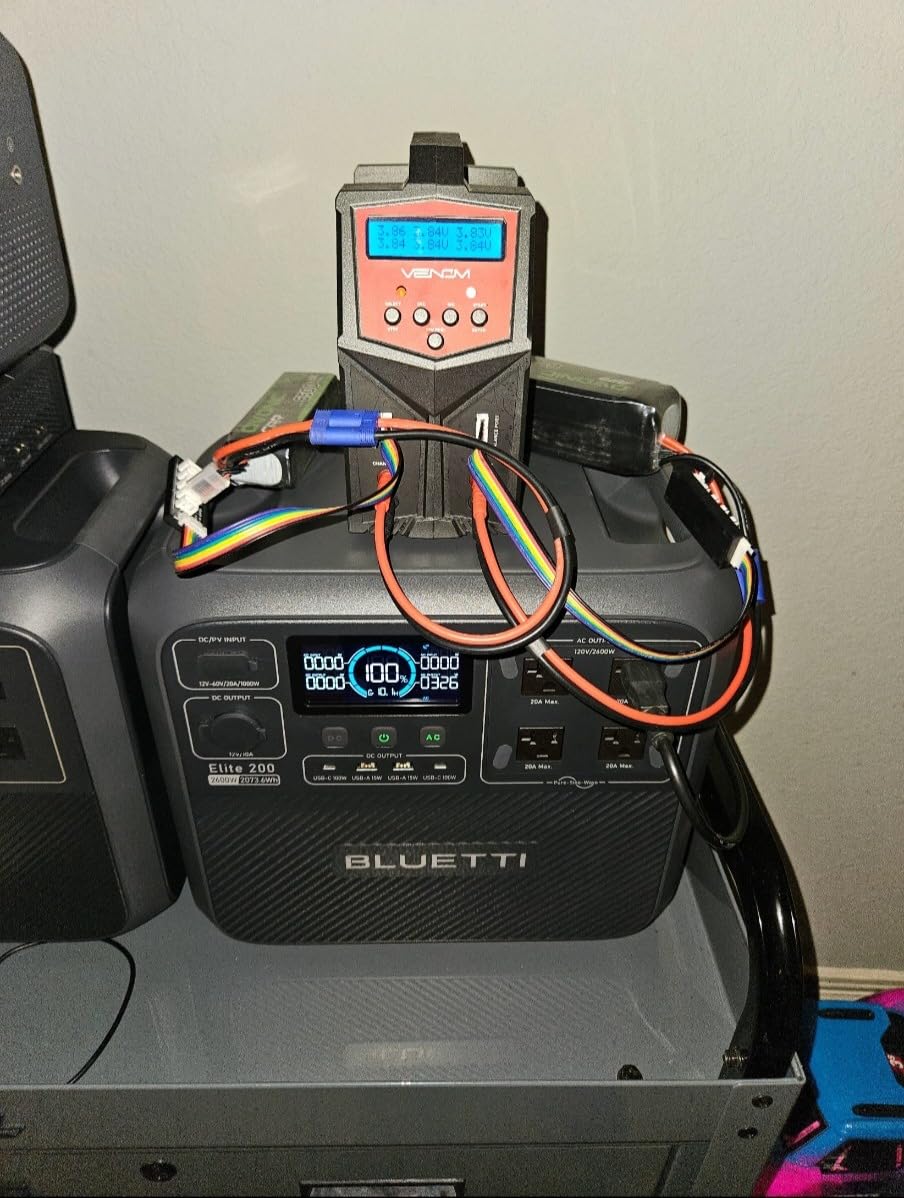
Owners consistently report full-size refrigerators running past 24 hours on a charge, and one reviewer powered a small office’s worth of electronics from it. Efficiency is the recurring theme, with inverter efficiency above 95% and 2600W handling air fryers, microwaves, coffee makers and power tools at the same time.
It is also quiet with no exhaust, which matters indoors in a sleeping cabin. Compactness comes as a bonus: reviewers note it is noticeably smaller and lighter than the comparable earlier model, though 53.4 lb is still a two-person carry.
Can this bank carry a cabin through a multi-day cloudy spell
Better than anything smaller in this roundup, yes. Two thousand watt-hours with a 10W idle draw and 90-plus percent usable depth means more nights of refrigeration per solar day than a 1kWh unit, and it recharges faster when the sun returns.
The honest limit is the 1000W solar ceiling and the 60V input cap. With typical residential panel strings above 60V you will need a charge controller between the array and the unit to reach the full 1000W, which is an extra box and extra cost.
Where the Elite 200 V2 disappoints
It cannot be expanded with external battery modules. That is a real limit if your load grows, and it is the main reason to size up rather than plan to add later.
The bundled panels are also too light to resist wind and tip over, so expect to add ballast or a proper mount. The app lacks features the hardware supports, including lower AC charge rates and real-time temperature monitoring, which matters if you want to watch battery temperature remotely in winter.
5. Jackery HomePower 3000: Highest Output for Well Pumps and Workshops
Jackery HomePower 3000 and 2x200W Solar Panels, 3072Wh, 3600W AC Output
3072Wh LiFePO4
3600W continuous, 7200W surge
20ms UL-certified UPS
TT-30 RV port
Pros
- Genuinely powers camper A/C
- microwave
- fridge and WiFi together
- 3600W continuous with 7200W surge
- Quiet enough to sleep beside
- 80% solar recharge in about 9 hours
- Cell-to-battery design is compact for 3kWh
Cons
- Heavy at 59.5 lb and not expandable
- Confusing solar cable splitter with only one working input
- UPS mode has an undocumented minimum load
The HomePower 3000 is the largest bank here at 3072Wh of LiFePO4, rated for 4,000 cycles to 70% capacity, and it delivers 3600W continuous with 7200W of surge. Nothing else in this roundup starts a hard inductive load with that much headroom, which is the entire reason to choose it.
The surge figure is the selling point for a cabin with a well pump, a compressor or a table saw. A 3600W continuous rating also means a window air conditioner or a microwave can run alongside the refrigerator, not in place of it.
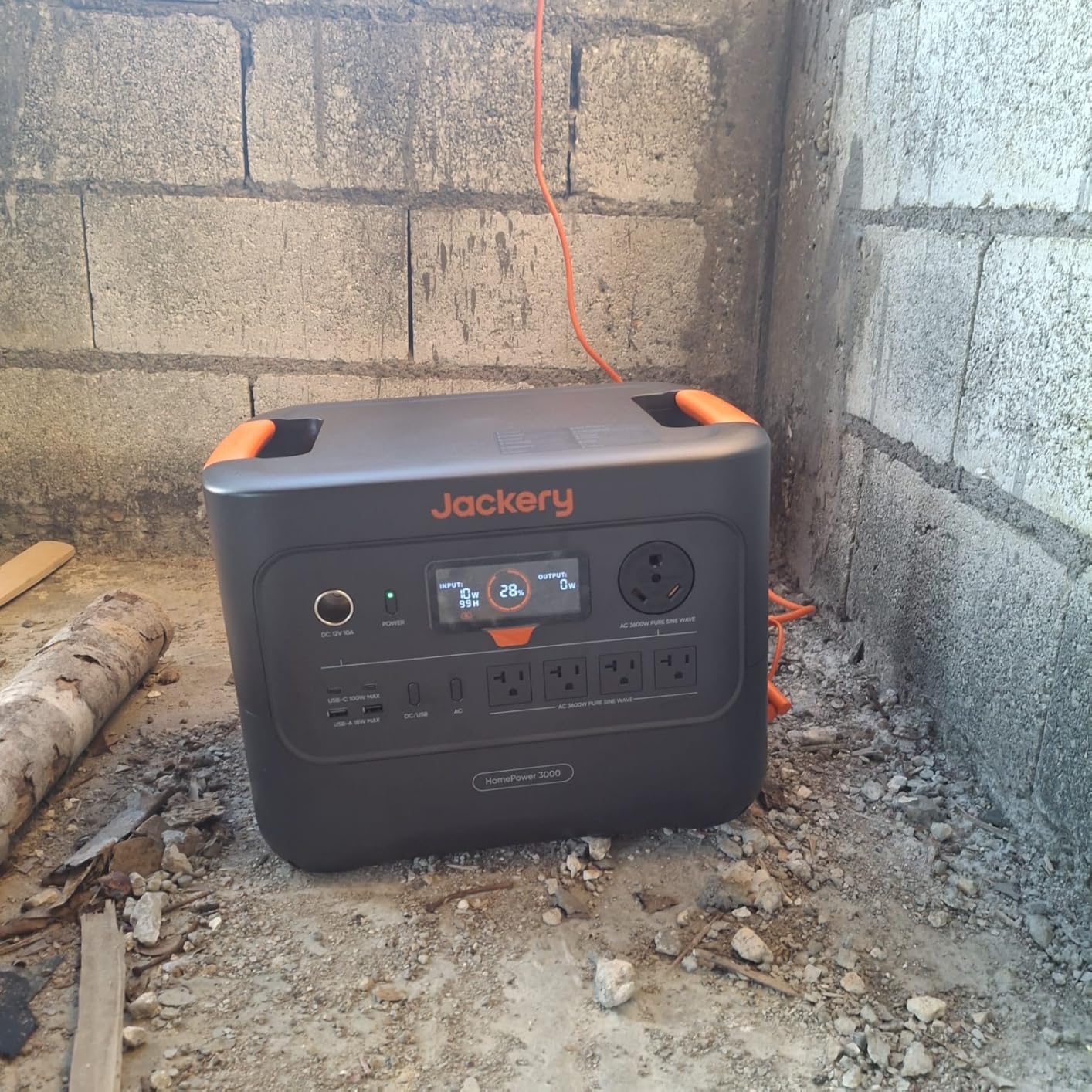
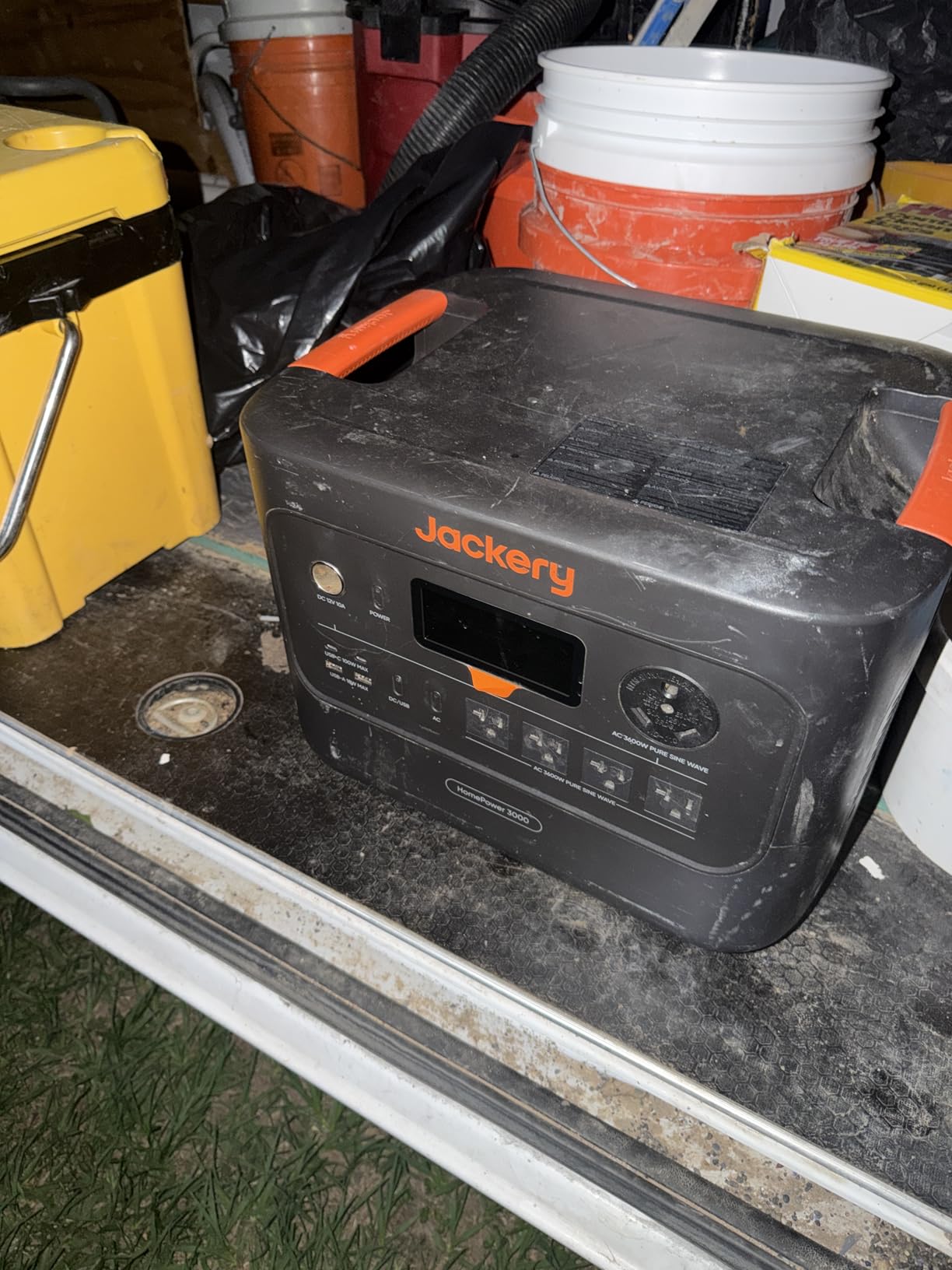
Owners running RV and off-grid setups report carrying it through 24 to 30 hour outages with fridges and freezers staying cold, and one reviewer powered a camper A/C, microwave, fridge and WiFi at the same time. Operation is quiet enough to sleep beside, and hybrid AC and DC charging refills it in about 1.7 hours.
The cell-to-battery construction makes it 47% smaller and 43% lighter than comparable 3kWh units, though 59.5 lb is still the heaviest item on this list. A wheel kit is worth budgeting for. The two bundled 200W panels reach 80% in about nine hours of good sun, and a TT-30 RV port adds a useful connection for trailer and camper setups.
Is 7200W of surge enough for a cabin well pump
For most cabin pumps up to roughly 1HP, yes, and the 3600W continuous ceiling covers the running load with room for a refrigerator and lighting at the same time. Very large pumps or multiple motors starting together still need the inverter’s momentary peak checked against the pump’s locked-rotor figure.
The 20ms UPS transfer is UL-certified, which is the specification to look for if the cabin runs computers or network gear rather than just a fridge and a lamp.
What owners report not working as advertised
The solar cable splitter is confusing, and only one input port actually accepts the second panel. Budget time to sort the wiring rather than assuming both panels work the moment you plug in.
UPS mode has an undocumented minimum load requirement, and the unit can drop output on light loads, which matters if you plan to run a small router off it during outages. Some reviewers also report that an advertised Alexa integration is not available, and one detailed negative review covers an effectively unreachable support portal, so check the warranty servicing terms for a remote site before you commit.
6. Anker SOLIX S2000: Best Runtime Per Watt Where Solar Recharge Is Weak
Anker SOLIX S2 Portable Power Station, 2,010Wh, 1,500W
2010Wh LFP
1500W continuous, 3000W peak
6W idle draw
Under 10ms UPS
Pros
- Exceptionally low 6W idle draw
- Compact at 35.7 lb with front and rear outlets
- Under 10ms UPS with roughly 3W draw in UPS mode
- App control of limits and kWh tracking
- 10000 cycle and 15 year rated lifespan
Cons
- Cooling fan is loud during high-rate charging
- No 12V DC car port
- Solar input tops out at 400W
- Outputs pause briefly during firmware updates
The Anker SOLIX S2000 holds 2010Wh of LFP built from 314Ah cells rated for 10,000 cycles and a 15-year lifespan, yet it runs at only 1500W continuous. That is a deliberate trade: less inverter power in exchange for far better efficiency, and for a cabin on a small array that is the right side of the trade.
The idle draw is 6W, which reviewers report translates into roughly 20% longer runtime than comparable 2kWh units, and in UPS mode it drops to about 3W. Reviewers measured these figures themselves rather than taking them on trust, which is rare. The UPS transfers in under 10ms, short enough that routers and medical equipment do not reset.
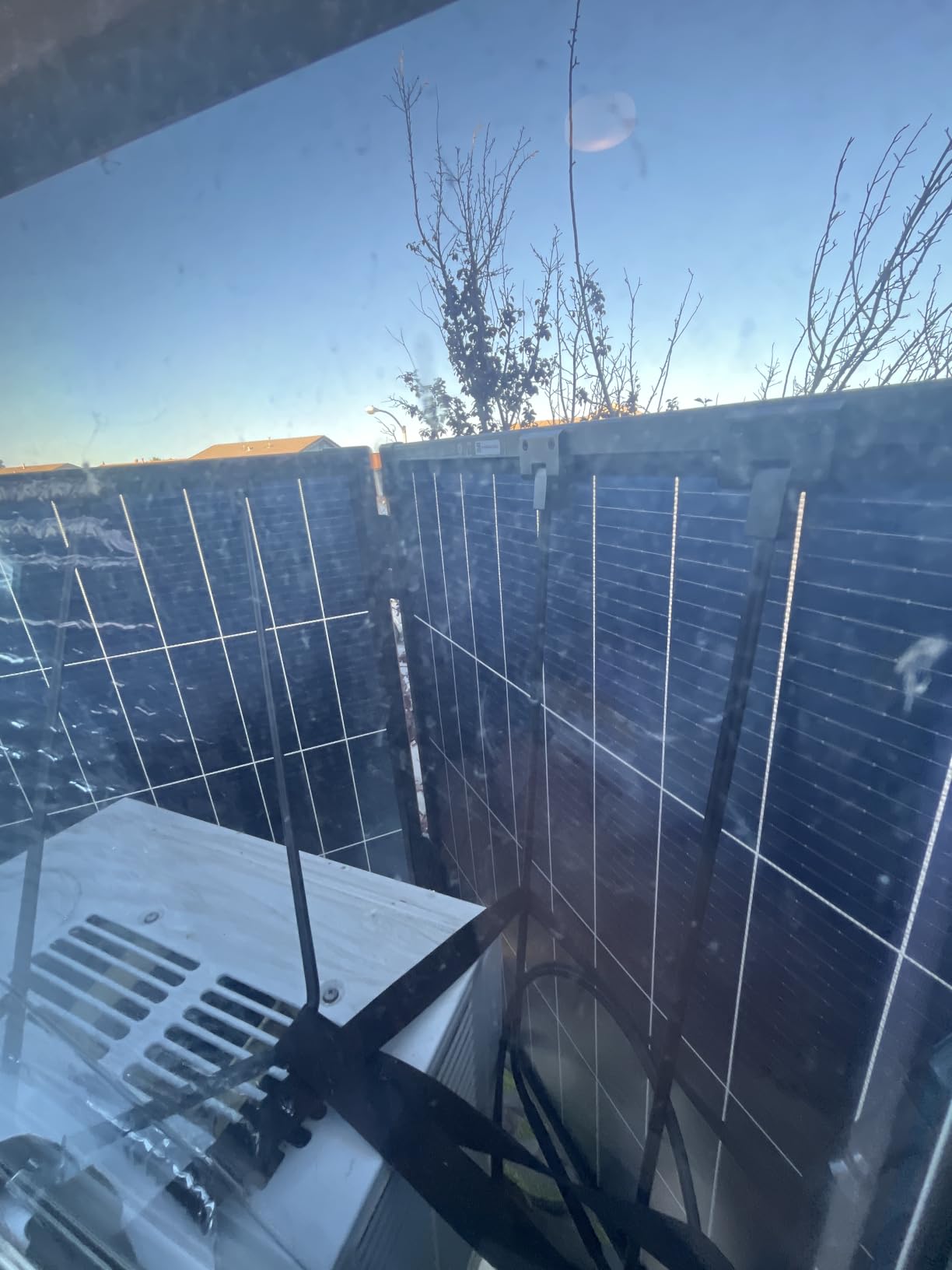
Several owners used it through 24 to 30 hour outages keeping refrigerators, network racks and medical equipment running. The app is the most-praised feature in owner reviews, with fine-grained control over charge and discharge limits, wattage adjustment, custom power modes and kWh tracking per day, week and month.
Outlets are split across the front and rear faces, which makes cable routing behind furniture far tidier than a single-panel layout. Rated runtime reaches up to 35 hours on a refrigerator, and it handles window air units and full-size fridges without strain in multiple owner tests.
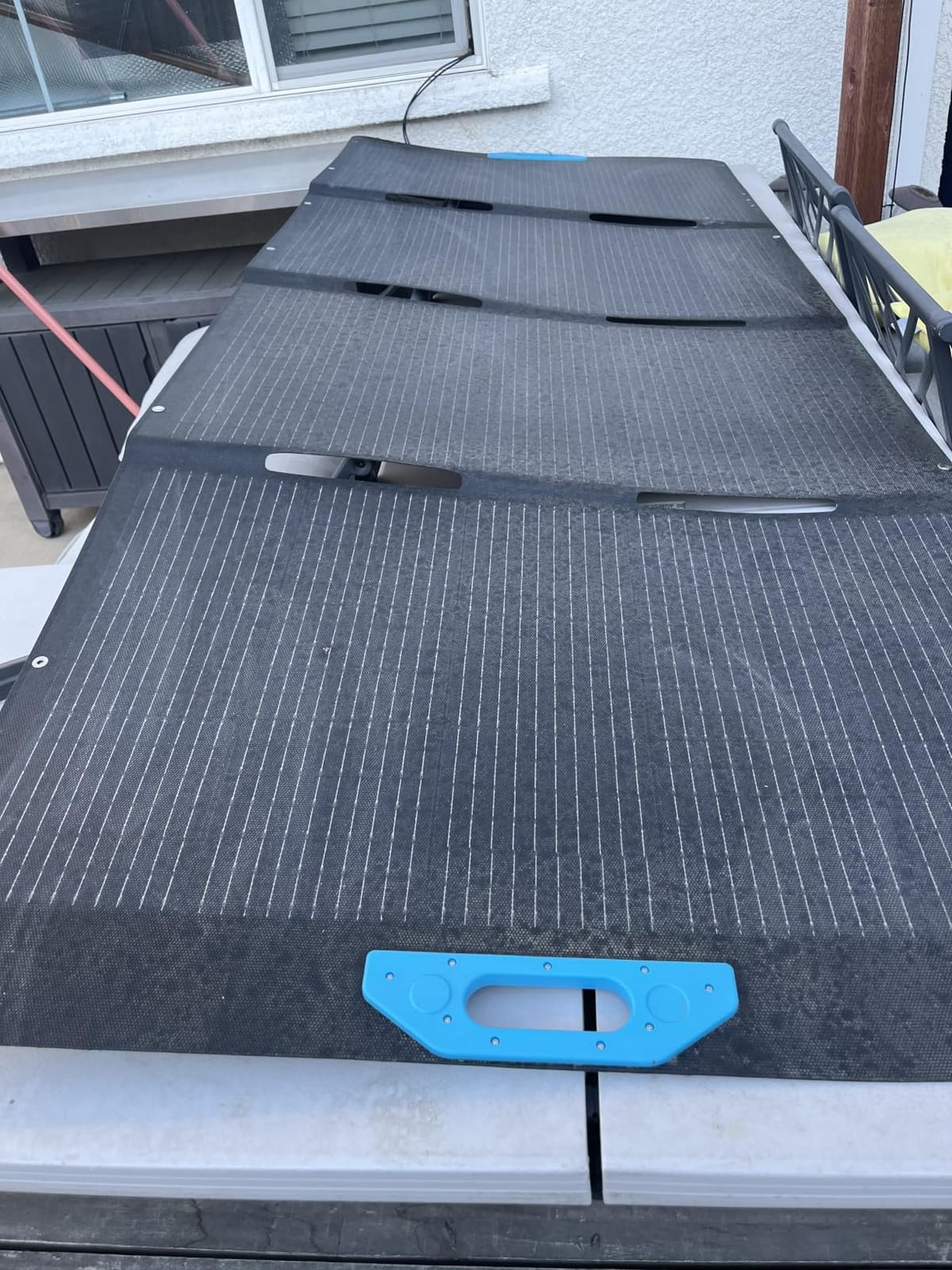
Why idle draw matters more than capacity for some cabins
For a winter cabin running a router, a modem and LED lights for months between visits, standby draw is where the usable capacity actually goes. At 3W in UPS mode, a 2010Wh bank spends roughly 72Wh a day just staying alive, which is the sort of overhead the Elite 200 V2 avoids at half that.
This is also why it suits someone whose solar recharge is modest. If your array cannot push 1000W into the bank, better conversion of what you do capture matters more than a bigger inverter.
What to plan around
The 400W solar input is the lowest ceiling in this class, so filling 2010Wh from solar alone takes considerably longer than on the Elite 200 V2. The missing 12V DC car port also rules it out if you plan to run a 12V-only device from the unit.
Owners report a loud cooling fan during high-rate charging, which matters if the battery lives in a sleeping area, and outputs pause briefly during firmware updates, so schedule those when nothing critical is running.
7. Anker SOLIX C300: Best Small Cabin and Backup Unit
Anker SOLIX C300 Portable Power Station with 60W Solar Panel, 288Wh, 300W
288Wh LiFePO4
300W continuous, 600W surge
15.5 lb
25dB
60W panel included
Pros
- Only 15.5 lb and smaller than comparable designs
- Very quiet at 25dB
- Eight ports for its size
- 80% wall recharge in 50 minutes
- 3000 cycle LiFePO4 with 5 year warranty
Cons
- 288Wh will not run a refrigerator overnight
- 60W panel is a trickle charger
- 300W ceiling limits high-draw appliances
- Carry strap sold separately
The Anker SOLIX C300 stores 288Wh of LiFePO4 rated for 3,000 cycles and weighs 15.5 lb. At 300W continuous and 600W surge it sits firmly in the small-appliance tier, and it includes a 60W solar panel that keeps a trickle load topped up between visits.
Port selection is unusually rich for the size: three AC outlets, a 120W car socket, two USB-C ports including one at 140W, a third USB-C and a USB-A. It reaches 80% from a wall outlet in about 50 minutes, so a weekend recharge is a coffee break rather than an evening project.
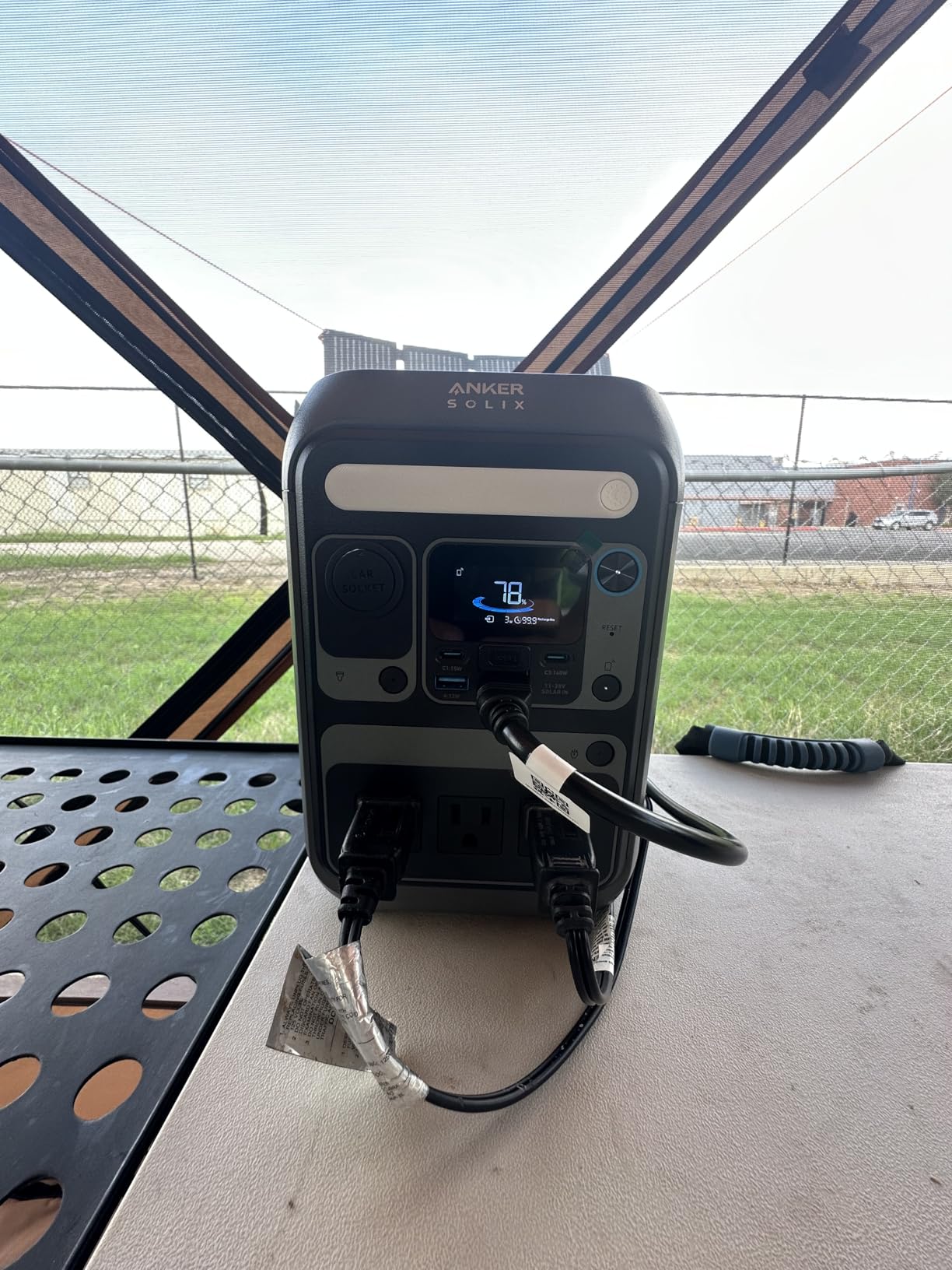
Reviewers treat this as a lightweight weekend and travel unit rather than cabin backup, and praise the low 15.5 lb weight, the 25dB operating noise and the port count. The chemistry is modern LiFePO4 with a 5-year limited warranty, which is longer than most units in its weight class.
The consensus is that capacity is the limiting factor. It handles phones, laptops, lights and small appliances well, and owners are clear that it is not the right tool for a refrigerator or sustained high-draw loads. The 60W bundled panel is understood as a maintenance charger rather than a meaningful recovery path.
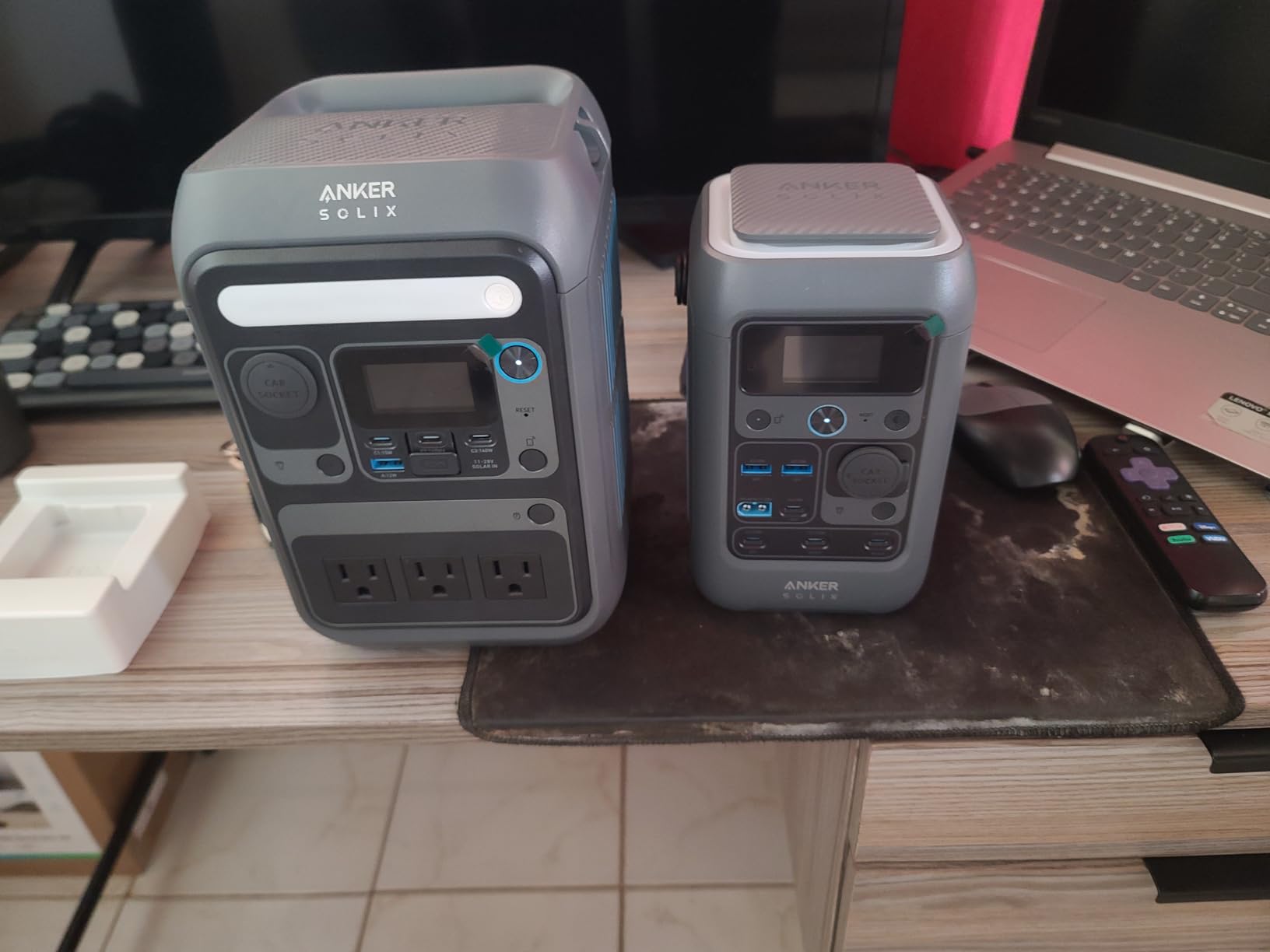
What a 288Wh bank can realistically run at a cabin
Phone and laptop charging for a weekend, LED lighting for several evenings, a router and modem continuously, and small appliances used in short bursts. That is the honest ceiling for 288Wh with a 300W output limit.
For a hunting cabin where the goal is lights, comms and a weekend of charging, it is a good fit. For anything refrigerated, size up to at least the 1000Wh class.
Where it falls short
The 60W panel is a trickle charger, and it cannot be paired with the larger PS200 or PS400 panels, so owners with a real array need different hardware. At 300W continuous it will not run a heater, power tools or a refrigerator.
The carry strap is sold separately, and with eight ports on a unit this compact, cable management takes more thought than the power budget does.
8. Jackery Explorer 300: Best Carry-In Unit for Backup Power
Jackery Explorer 300 Portable Power Station,292Wh
292Wh LiFePO4
300W rated, 600W peak surge
7.1 lb
100W USB-C PD
2 year warranty
Pros
- Extremely light at 7.1 lb with an integrated handle
- Enough for laptops
- cameras
- drones and a CPAP
- 4000+ cycle LiFePO4 rated
- 80% solar recharge in about 2.8 hours with a 100W panel
- By far the most reviewed unit in this group
Cons
- 292Wh is the smallest capacity here
- 300W ceiling rules out heating
- tools and refrigerators
- Solar panel not included
- Only a 2 year manufacturer warranty
The Jackery Explorer 300 holds 292Wh of LiFePO4 rated for more than 4,000 cycles and weighs 7.1 lb with an integrated handle. It is light enough to hike into a cabin rather than carry up steps, and with over 11,000 reviews it also has the longest track record of reliability in the group.
Output is 300W rated with 600W of peak surge across two AC outlets, a 100W USB-C PD port, two USB-A ports and a 120W car socket. The USB-C port is the reason most owners buy it, since it charges a laptop, a drone battery or a camera directly.
Owners consistently praise portability and build quality, using it for phone charging, lighting, laptops, cameras and as a backup for a CPAP machine. Solar charging is genuine when paired with Jackery 40W or 100W panels, reaching 80% in about 2.8 hours with the 100W model, but the panel is not included.
Our picks for the best power banks cover the smaller end of the capacity range, if the cabin only needs phone and laptop charging between visits.
How long does a 292Wh battery run a CPAP or a laptop
A 100W USB-C PD port will charge most laptops at full speed, which turns this into a genuine work-from-the-cabin device. For overnight medical gear, reviewers report stable runtime, though a 292Wh bank will not carry a full-size refrigerator even for a few hours.
For a smaller battery comparison, our roundup of the best power banks for travel covers the same use case at even lower weight, and the best laptop power banks covers charging performance in more depth.
Why the shorter warranty matters
The 2-year manufacturer warranty is the shortest in this roundup, against 5 years on the BLUETTI and Anker units. For a battery that will sit in an unheated cabin between visits, a longer warranty is worth weighting in your decision.
The 300W ceiling is the other hard limit. No heating, no power tools, no refrigerators. If the cabin needs to keep food cold, this is a backup for your phone, not for the kitchen.
How to Size a Solar Battery Bank for a Cabin
Pick the battery after you know your loads, not before. Every sizing mistake we saw in owner discussions traces back to choosing on nameplate capacity first and checking the inverter second, so work through these steps in order.
Step 1: Separate must-run loads from comfort loads
Must-run loads are the ones that cause damage or panic when they stop: a refrigerator, a well pump, communications equipment, a freezer, a medical device, and lights if you are there after dark. Comfort loads are everything else, including microwaves, coffee makers, tools, a television and entertainment.
Size the bank against must-run loads first and treat comfort loads as the bonus. A 1000Wh bank sized for refrigeration, comms and lighting will carry a much lighter weekend than a 1000Wh bank sized for a microwave, and the second one will disappoint you the first cold morning.
Step 2: Understand kW versus kWh
kW is output power, the rate at which the inverter delivers energy. kWh is stored capacity, the total it can deliver before it is empty. A 3.6kWh bank with a 1200W inverter can power a 1200W load for about three hours, but it cannot power a 2000W load for even one.
This is the single most repeated misunderstanding we found on cabin and off-grid forums. People read 3072Wh on a spec sheet and assume it can start anything, then discover the inverter ceiling months later. Check both numbers, and check the surge rating for anything with a motor.
Step 3: Pick the chemistry honestly
LiFePO4 is the right answer for nearly every cabin, which is why all eight picks above use it. Compared with AGM lead-acid it gives roughly 90% usable depth rather than about 50%, thousands of cycles rather than a few hundred, no watering, and far less weight per usable kWh.
Lead-acid still has one honest advantage: purchase cost per kWh. For a seasonal cabin with a genuinely small load, a maintenance-free AGM bank is not a bad financial choice. It is a bad longevity choice, since cold cabins degrade lead-acid faster than the label suggests and sulfation damage cannot be reversed.
Portable NMC power stations, the older chemistry, still appear in cheap listings. They cost less per kWh than LiFePO4 and tolerate discharge better, but they carry the thermal stability concerns that ended in recalls. For a cabin where nobody is watching the battery, that is the wrong risk.
Note that retrofitting lithium into an existing 12V lead-acid wiring scheme is not a simple swap. Cable gauge, fusing and the charge controller all need checking, which is a large part of why owners on forums describe the change as a rewire rather than an upgrade.
Step 4: Plan for cold weather and winter charging
Charging a lithium battery below freezing causes lithium plating, which permanently reduces usable capacity and, in the worst cases, creates a safety risk. Every battery management system should refuse charge below roughly 0C. None of the eight units here advertise integrated battery heating, which is the first question to ask any seller claiming a bank works in a freezing cabin.
Owners on off-grid forums report banks installed in unheated garages and sheds cutting charging in the first hard frost, which is a protection working as intended. Practical responses are to keep the battery in the heated living space, add a heated enclosure, or accept that a midwinter battery will charge late in the morning and reach full only by late afternoon.
Winter sizing needs one more adjustment beyond cold. Winter solar production is roughly half a summer month in most northern latitudes, so either add days of autonomy or plan to reduce the comfort loads in the cold months. Snow cover on panels costs you more still.
Step 5: Decide days of autonomy and expansion
Days of autonomy is how many days the bank carries must-run loads with no sun and no generator. Two cloudy days is the minimum most full-time cabins aim for; a week is comfortable and expensive. Multiply your must-run kWh per day by the number of days, then divide by 90% usable depth to get a raw capacity target.
Worked example: a fridge and freezer averaging 1.5kWh per day, plus comms and lighting at 0.3kWh, gives about 1.8kWh per day. Two days of autonomy needs 3.6kWh raw and roughly 4kWh of installed lithium capacity. A single 3kWh unit covers that; a 2kWh unit covers about one day with margin.
Check expandability before you buy, because it is where these picks differ most. The AC180, the Elite 200 V2 and the HomePower 3000 cannot be extended with external battery modules, so if you expect your load to grow, size for the larger value now. Stackable 48V systems exist for owners who want that path, at the cost of a component build instead of a plug-and-play unit.
For four-season cabins, one advanced option that comes up repeatedly in forums is two parallel banks with a marine either-or switch, one chemistry per season. It is flexible but doubles the wiring and gives you two sets of terminals to maintain, so treat it as a deliberate choice rather than a default.
Step 6: Match the inverter and plan the installation
Every unit here includes an inverter, so you do not need a separate one unless you are building a component system with a 48V stack and a hybrid inverter of your own. Do check that the inverter is pure sine wave if the cabin runs sensitive electronics, and check the UPS transfer time if you need computers to keep running: 10ms and 15ms models exist here, and 20ms is fine for a fridge but marginal for a desktop.
Total installed cost is more than the bank. A realistic cabin build includes the battery, an inverter if not integrated, an MPPT charge controller sized to your array, cable and conduit, disconnects, and either a permit and inspection or a certified installer’s time. For remote sites the labour and travel usually cost more than the hardware, which is the argument for a component you install once.
Remote monitoring deserves more weight than it usually gets. A cabin you cannot easily reach should report state of charge, temperature and fault codes to your phone, and the app depth varies widely between these units. The S2000 gives the most control per setting; a dead battery management system in a unit you cannot reach is an expensive trip.
There is one more sizing mistake that shows up repeatedly, which is budgeting a bank around a load list that mixes 240V and 120V appliances into one number. Add the running watts of each item separately, then check the sum against continuous output and each motor’s starting draw against surge.
Repairability deserves a question before you buy. Confirm whether a failed battery management system can be replaced rather than condemning the whole bank, and check whether warranty service means shipping to a service centre three days away. On a remote site, that difference decides the whole purchase.
Frequently Asked Questions
Which solar battery bank is considered the best for a cabin?
The BLUETTI AC180 is the best overall choice for most cabins in our testing roundup. It stores 1152Wh of LiFePO4, delivers 1800W continuously with 2700W of power lifting, accepts 500W of solar input and transfers in 20ms as a UPS. That combination covers refrigeration, lighting, communications and most well pumps without the weight or cost of a 3kWh unit.
Which solar battery bank is the best quality?
Quality in this category tracks three things: cell cycle rating, battery management system behaviour in cold, and warranty length. The Anker SOLIX S2000 uses LFP cells rated for 10,000 cycles and a 15-year lifespan, and owners measured its 6W idle draw independently. The BLUETTI Elite 200 V2 rates its cells at 6,000-plus cycles. Both ship with a 5-year warranty.
Which solar battery bank is best rated?
Ratings in this group are close together. The BLUETTI Elite 100 V2, Elite 200 V2 and Anker SOLIX S2000 each hold a 4.7 average across their review bases. Rating alone is a poor tiebreaker because review counts differ by an order of magnitude, from a few hundred to more than 11,000, so compare cycle rating, continuous output and warranty alongside the star figure.
Are solar battery banks worth it for a cabin?
For an off-grid or outage-prone cabin, yes, because they decide what keeps running after sundown: refrigeration, water pumping, communications and lighting. The value case weakens when the cabin is lightly used and rarely occupied, since an unused bank mostly sits. Judge a bank on cost per usable kWh over its life rather than purchase price alone.
What type of battery is best for an off-grid solar system?
LiFePO4 is the best overall choice. It delivers roughly 90% usable depth versus about 50% for lead-acid, thousands of cycles instead of hundreds, and needs no watering. AGM lead-acid remains reasonable for a seasonal cabin on a tight budget, but it degrades faster in cold storage and sulfation damage is permanent. NMC cells cost less per kWh but carry greater thermal risk.
How long will a 100Ah lithium battery run a 12V fridge?
A 100Ah 12V lithium battery stores 1.28kWh, and at roughly 90% usable depth that is about 1.15kWh of usable energy. A typical 12V compressor fridge averages 40 to 60W once the duty cycle is averaged, which works out to roughly 19 to 29 hours of runtime. A 100W compressor cycling harder will cut that toward 11 hours, so check the fridge’s actual draw.
The Bottom Line on the Best Solar Battery Banks for Cabins
The BLUETTI AC180 is our pick for the best solar battery banks for cabins in 2026, because 1152Wh, 1800W of continuous output and a 500W solar input cover the majority of cabin loads without the two-person carry of a 3kWh unit. For full-time use, step up to the BLUETTI Elite 200 V2 for multi-day autonomy, to the Anker SOLIX S2000 when standby draw and remote monitoring matter most, or to the Jackery HomePower 3000 when a well pump or workshop sets the output requirement.
Pick the battery bank that matches your must-run loads, your coldest month and your realistic solar input, then stop worrying about it. It is the last piece of the cabin power system you should have to think about weekly.