
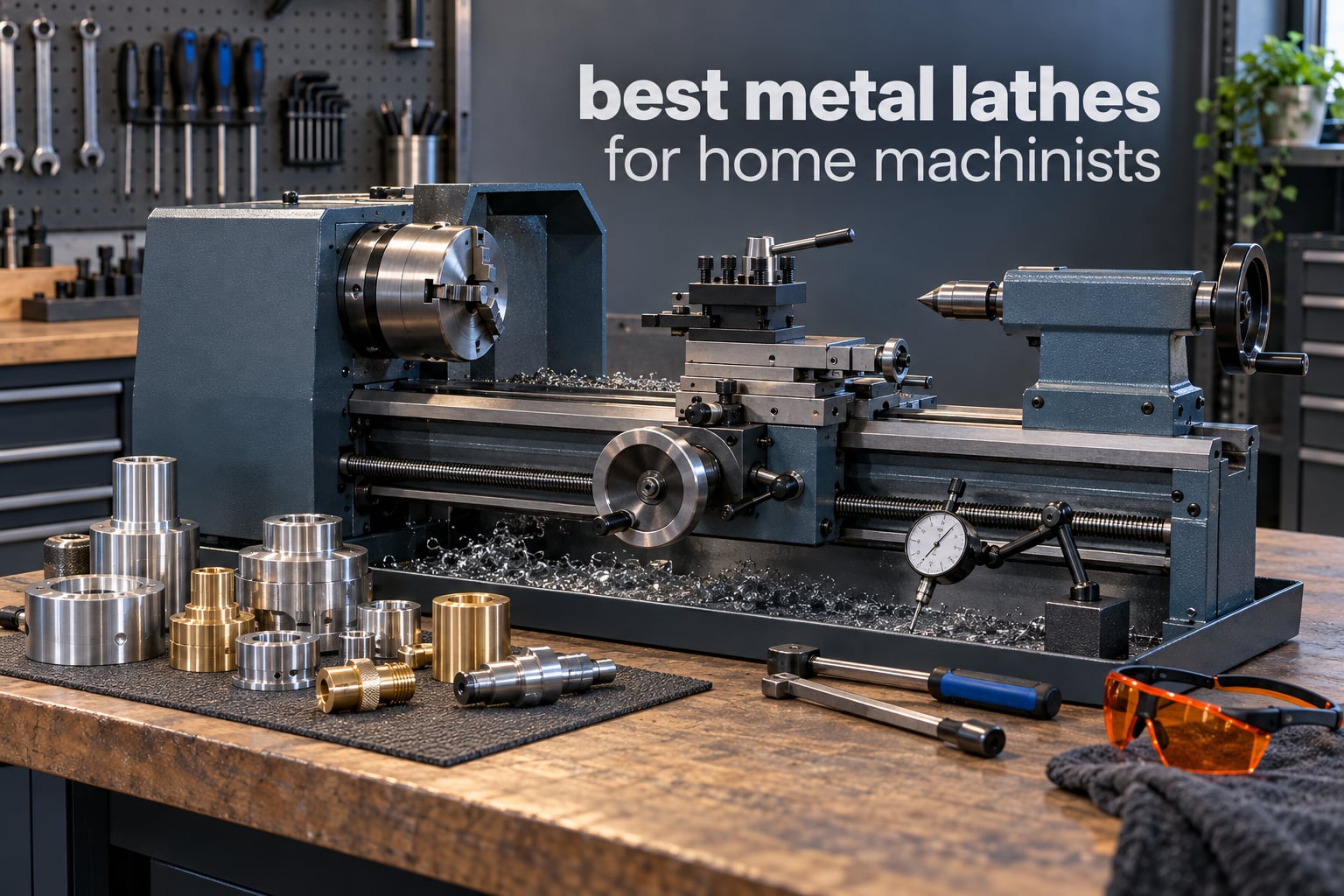
If you are picking the best metal lathe for a home machinist in 2026, start with the size class you will actually work in rather than the horsepower on the box. For most home shops the sweet spot is an 8-inch swing benchtop machine with about 30 inches between centers and a gearless electronic leadscrew, which covers everything from aluminum and brass to mild steel without taking up a dedicated corner of the garage.
That is exactly what the INTSUPERMAI RC-210E 8×32 gets you, and it is our top pick for 2026. The smaller 7×12 and 7×14 machines below it are cheaper and lighter but will outgrow you within a year, while the 11×26 Grizzly trades portability for the mass you want when cutting steel or stainless. We compared ten machines across swing, between-centers distance, spindle bore, drive type, motor output and owner feedback.
The most common mistake in this hobby is buying on swing over bed alone. Swing is the largest diameter you can turn; the second number in a size like 8×32 is the distance between centers, which decides whether you can machine a 24-inch shaft or a 6-inch bushing. Get that pair right first, then worry about drive type and power.
Table of Contents
Top 3 Picks: Best Metal Lathes for Home Machinists (October 2026)
INTSUPERMAI RC-210E 8×32
- Gearless electronic leadscrew
- 31.5 in between centers
- 50-2500 RPM
- 1100W brushless motor


INTBUYING WM210V 8×24
- 38mm spindle bore
- 23.6 in between centers
- 1100W brushless motor
- Metric threads 0.5-3mm
Best Metal Lathes for Home Machinists in 2026
| Product | Specifications | Action |
|---|---|---|
| INTSUPERMAI RC-210E 8×32 Metal Lathe |
|
Check Latest Price |
| VEVOR 7×14 Metal Lathe |
|
Check Latest Price |
 Grizzly G9972Z 11×26 Bench Lathe Grizzly G9972Z 11×26 Bench Lathe |
|
Check Latest Price |
 Proxxon PD 250/E Precision Lathe Proxxon PD 250/E Precision Lathe |
|
Check Latest Price |
 INTBUYING RC-210E 8×32 Metal Lathe INTBUYING RC-210E 8×32 Metal Lathe |
|
Check Latest Price |
| INTBUYING WM210V 8×24 Metal Lathe |
|
Check Latest Price |
 TECHTONGDA 8×16 Brushless Metal Lathe TECHTONGDA 8×16 Brushless Metal Lathe |
|
Check Latest Price |
 EQCOTWEA 8×30 Double-Chuck Lathe EQCOTWEA 8×30 Double-Chuck Lathe |
|
Check Latest Price |
 VEVOR 8.7×30 Benchtop Lathe VEVOR 8.7×30 Benchtop Lathe |
|
Check Latest Price |
 WEN ML712 7×12 Benchtop Lathe WEN ML712 7×12 Benchtop Lathe |
|
Check Latest Price |
1. INTSUPERMAI RC-210E 8×32 Metal Lathe – Best Metal Lathe Overall
INTSUPERMAI 8″× 32″ Metal Lathe Precision Benchtop Metal Lathe Electronic Leadscrew Gearless Hobby DIY Metal Lathe 50-2500rpm Variable Speed with 4 Jaw/3 Jaw Chuck 110V
Swing 8.27 in
Center 31.5 in
50-2500 RPM
1100W brushless
205 lb
Pros
- Gearless electronic leadscrew switches metric and imperial from the panel
- Very quiet running with smooth variable speed
- Low spindle run-out reported out of the box
- Three-jaw and four-jaw chucks both included
- Automatic reciprocating turning with set travel distance
Cons
- Documentation is thin with no real service manual
- Some machines need alignment work before precision cutting
- Cross-slide extension boss complicates a quick-change tool post fit
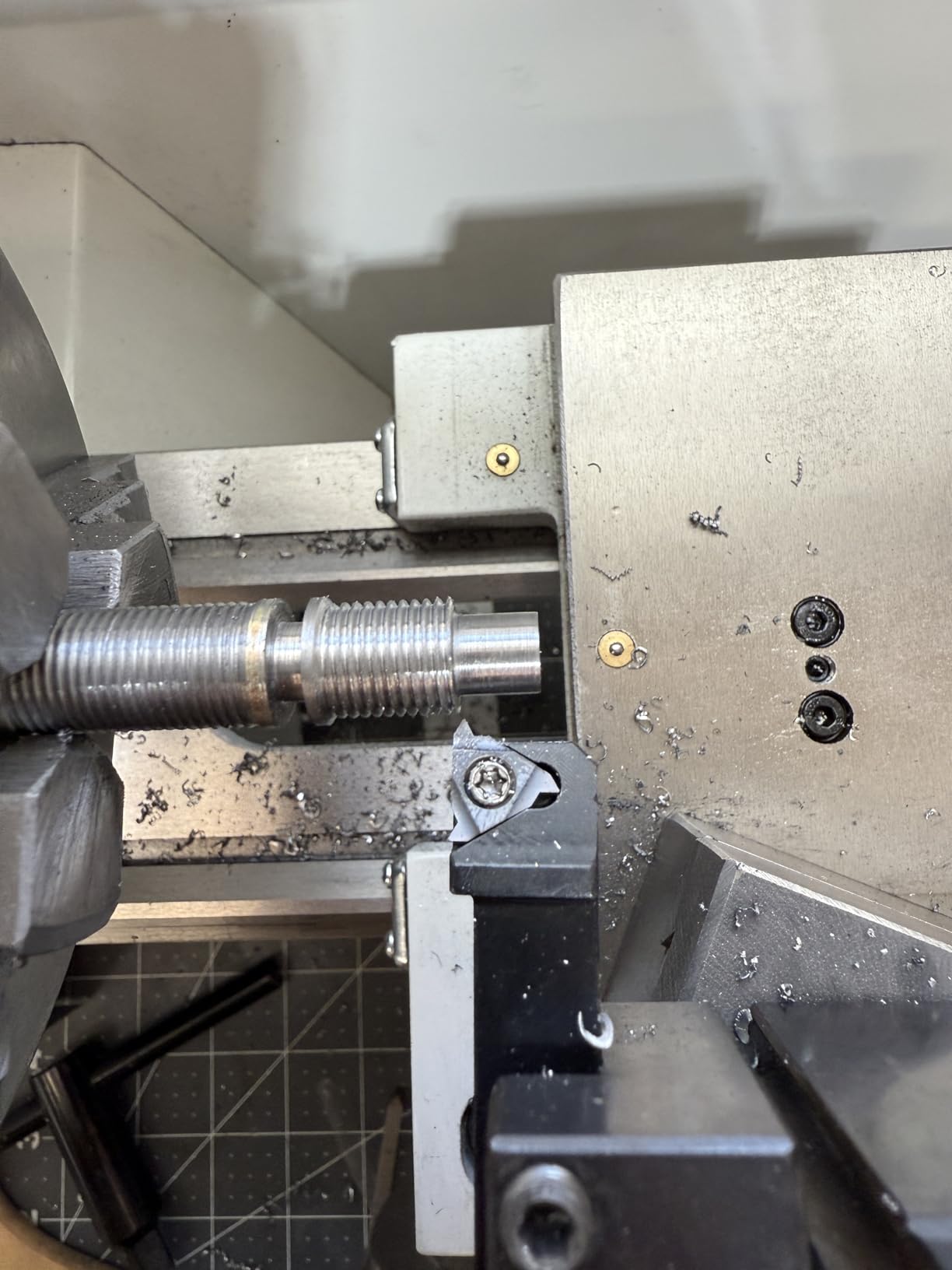
This is the machine I keep coming back to after reading owner reports across the 8-inch benchtop class. The gearless electronic leadscrew is the headline feature and it delivers in practice: you switch between inch and metric threading from the control panel instead of hunting for gear sets, and the spindle angle readout makes indexing far less of a guess.
Capacity is the real reason it wins. At 31.5 inches between centers and an 8.27 inch swing over bed, it turns longer shafts than the other benchtop machines here while staying light enough at 205 pounds to move with two people. The 1100W brushless motor covers aluminum, brass and mild steel comfortably, and the included 3-jaw and 4-jaw chucks save you two separate purchases.
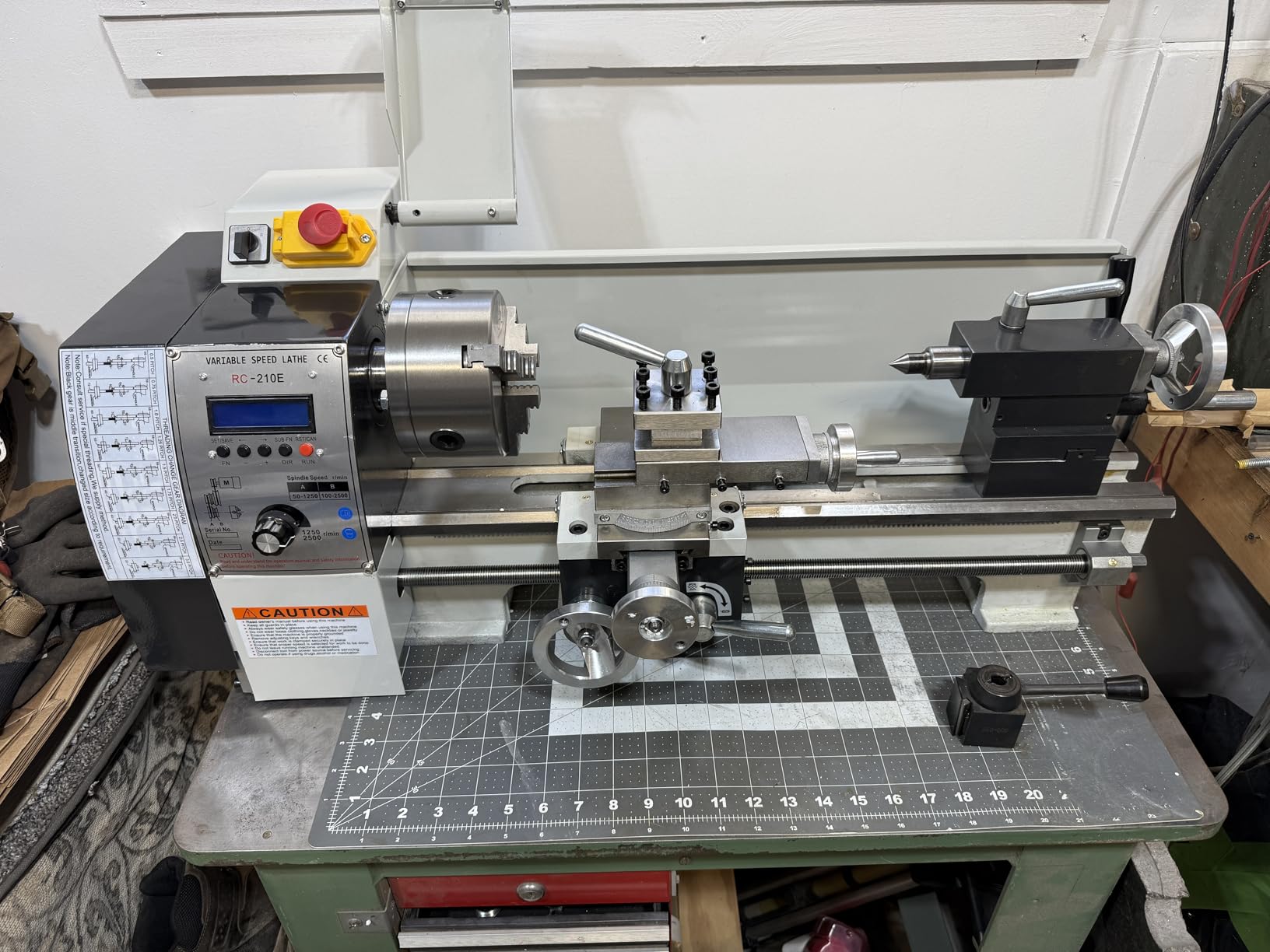
Owner feedback describes mirror-finish aluminum and mild steel and accuracy across the bed without a full rebuild. Several reviewers with machining backgrounds called out low run-out as delivered, which is exactly what you want to hear about a machine where alignment is the usual first-week complaint.
The honest weakness is documentation. There is no proper operation or service manual, panel headings arrive untranslated, and at least one buyer received a machine with a different model designation than the listing. If you are the kind of owner who expects a printed manual on the bench, look elsewhere. If you are comfortable with a panel-driven machine and want threads without gear gymnastics, this is the deal.
Is the gearless leadscrew worth the learning curve?
For anyone cutting threads, yes. Gear-driven machines make you stop, swap gears and re-dial the pitch; this one changes systems from the panel in a second. There is a modest learning curve because the controls are different from an old-school gearbox, but the panel sets parameter memory, reciprocating turning and thread cutting once you learn the layout.
For pure straight turning with no threading at all, the advantage shrinks and you are paying for a feature you may not touch. In that case a simpler belt-drive machine at a lower tier is a defensible buy.
Where this machine will frustrate you
The cross-slide carries an extension boss that reviewers say gets in the way of fitting a standard quick-change tool post. If you plan to run a proper four-way post with real tooling rather than the small set included, budget time and possibly a modification for clearance.
Parts availability is the other soft spot. The seller resolved missing parts quickly for at least one buyer, but this is not a brand with a deep domestic service network the way Grizzly is. If you keep machining seriously, order a spare chuck jaw set early.
2. VEVOR 7×14 Metal Lathe – Best Budget Pick
VEVOR 7″x14″ Metal Lathe, Upgraded Digital Display, 550W
Swing 7.09 in
Center 13.78 in
50-2500 RPM
550W
103 lb
Pros
- Most owner reviews in this roundup at 294
- Upgraded metal gear instead of nylon
- Digital display with 50-2500 RPM readout
- Four-way quick-change tool post
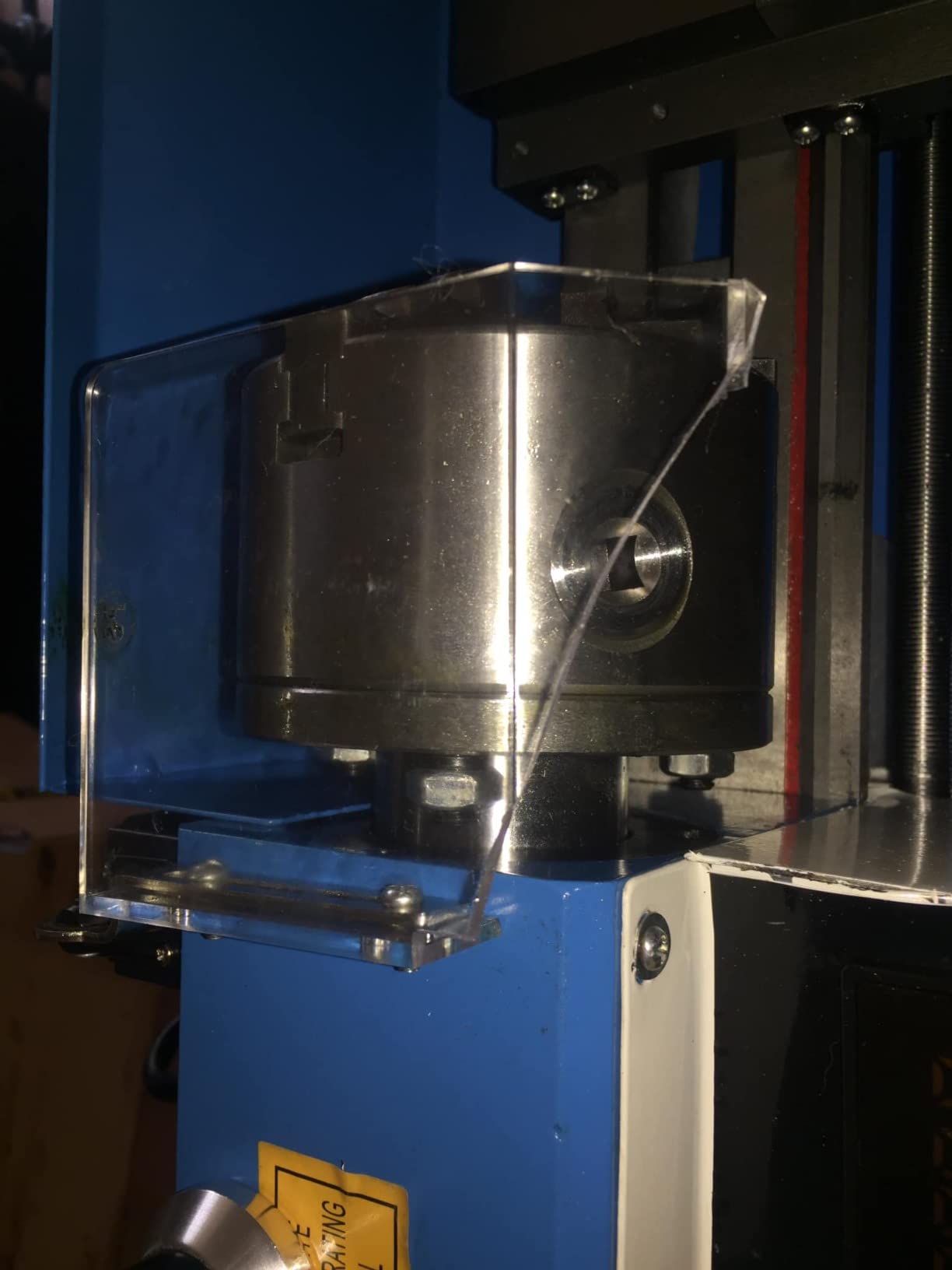
- Automatic power-off protection and LED lamp included
Cons
- One-star reviews run 14 percent of the total
- Aluminum handwheels and 4-inch chuck limit capacity
- 550W motor is modest for heavy steel
The VEVOR 7×14 has by far the largest owner base of anything we tested, with 294 reviews averaging 4.0 stars. That matters more than the spec sheet here, because a machine with hundreds of owners produces an enormous amount of tribal knowledge about which parts break and how the assembly really goes together.
At 103 pounds and with a 4-inch chuck, it is light enough to sit on a normal bench without reinforcing anything. The 7.09 inch swing and 13.78 inch center distance cover bushings, spacers and short pins, and the digital display with a 50-2500 RPM range removes the guesswork from speed changes on small work.
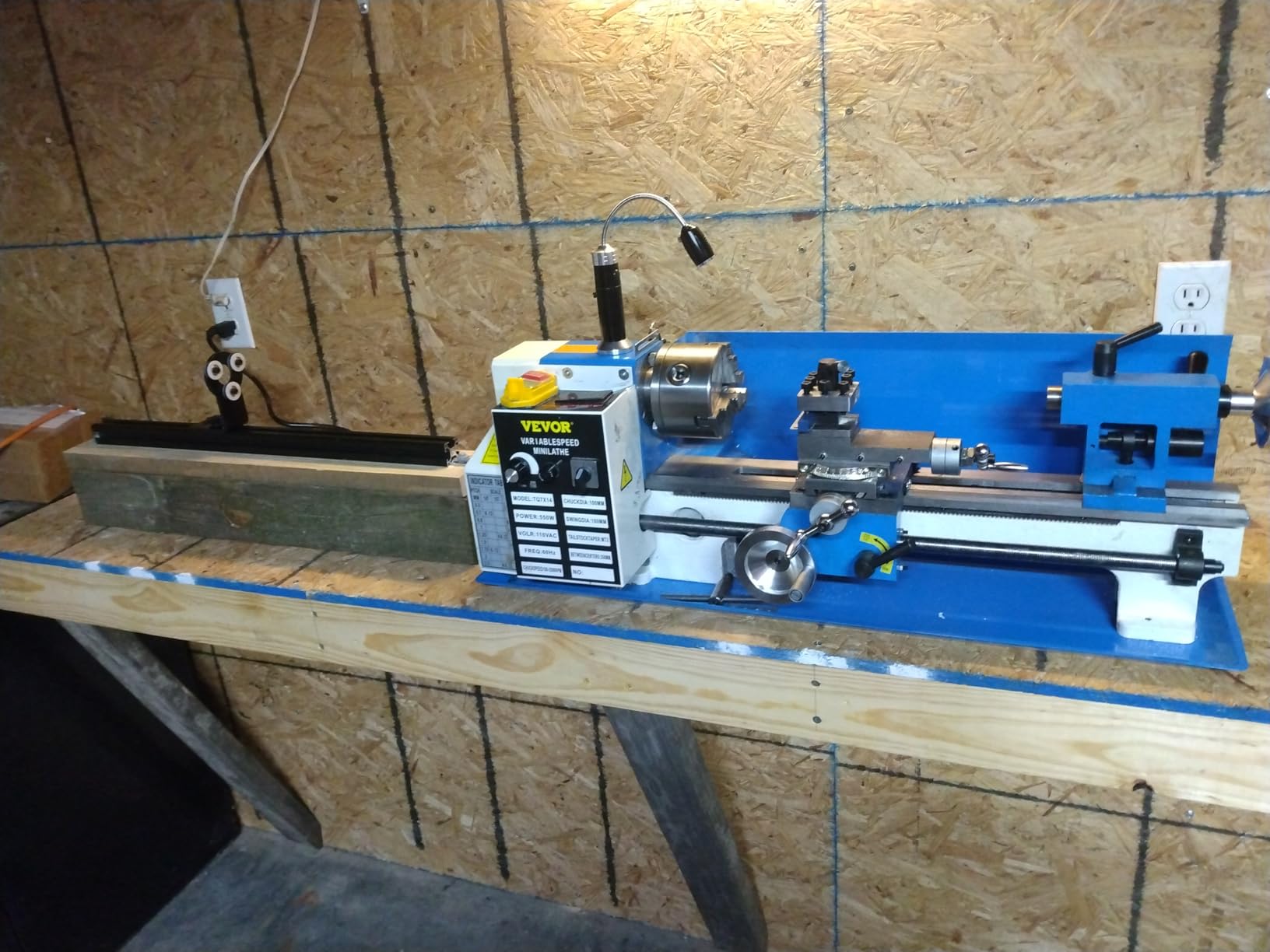
Specs that matter more than the price tag: the drive gear is metal rather than the nylon gear many competitors fit, which is the single best upgrade on this machine, and the four-way tool post holds four standard turning tools so you can swap setups in seconds.
The 14 percent share of one-star reviews is the thing to weigh. That pattern usually means machine-to-machine variation in assembly quality rather than a bad design, and it is the reason we rank this second rather than first despite the low entry point. Check yours carefully in the first hour.
Can a 7×14 handle real metal work?
For aluminum, brass and acrylic, easily. For short mild steel parts with light cuts, also yes. The 550W motor will not push heavy feeds in steel, and a 4-inch chuck limits how large a diameter you can grip in one setup.
If your projects are all under 12 inches long and under 7 inches across, this is genuinely capable. Forum regulars on machinist boards describe machines in this class as good for one-off hobby work, which is a fair description of what most people need in year one.
When you will outgrow it
The 13.78 inch center distance is the wall. Ask yourself whether you will ever turn a part longer than a foot, and if the honest answer is probably, buy the 8×32 instead and skip a re-purchase later. Many first-time buyers regret a mini lathe within months for exactly this reason.
One more consideration: 103 pounds still needs a solid bench. Bolt it down or at least restrain it, because a light lathe that walks across the bench mid-cut is a real problem regardless of its mass.
3. INTBUYING WM210V 8×24 Metal Lathe – Best for Metric Threads
INTBUYING 8″x24″ Benchtop Metal Lathe 1100W Brushless Motor 50-2500RPM Precision Mini Lathe Machine for Metal/Woodworking Industrial & Hobby Use with Metric Thread WM210V 110V
38mm spindle bore
Center 23.6 in
1100W brushless
Metric 0.5-3mm
Pros
- 38mm spindle bore gives real through-hole capacity
- 1100W brushless motor in a compact frame
- Four gear options covering 0.5-3mm metric threads
- Digital screen shows live spindle speed
- Forward reverse plus emergency stop
Cons
- Only three reviews makes the rating fragile
- Short 23.6 inch center distance for the class
- Gear-based threading needs physical gear changes
The WM210V is the machine to look at if you work in metric and want to chuck large bar. A 38mm spindle bore is genuinely useful on a machine this size, because it lets you grip stock that a smaller bore would force you to part down first.
It shares the RC-210E chassis style with an 8.3 inch swing, a 23.6 inch center distance and the same 1100W brushless motor. Threading is gear-based across 40, 50, 60 and 72 tooth options covering 0.5-3mm pitches, so changing thread systems means changing gears rather than pressing a button.
All three reviews are five-star, which sounds like a perfect score and is really a sample too small to trust. Read it as absence of complaints rather than proof of quality. That is why we rank it third: the specification sheet is good, the owner evidence is not yet there.
Does spindle bore size matter for a home shop?
More than most spec lists suggest. The bore sets the largest round bar you can grip directly in the chuck without opening the jaws around a smaller diameter and hoping. On a 38mm bore machine you can mount 1.5 inch stock straight away.
For decorative and hobby work, the standard bore on smaller machines is fine. For anyone rebuilding mechanical parts where you want to turn a new shaft from raw stock rather than a pre-cut blank, bore diameter saves a real amount of setup time.
What to watch before buying
The 23.6 inch between-centers figure is the compromise here. It is shorter than the 8×32 machines, so longer workpieces need a steady rest and more careful work. If your longest planned part exceeds two feet, this is the wrong machine.
Owners of the sibling gear-driven machine from the same brand have reported buggy behavior, so treat the five-star rating with care and test the spindle, carriage and thread dial the day it arrives. Related tooling like an angle grinder setup for truing tools will be needed regardless of which lathe you pick.
4. Grizzly G9972Z 11×26 Bench Lathe – Best for Rigid Steel Work
Grizzly G9972Z Bench Lathe with Gearbox, 11 x 26-Inch
11x26 in capacity
Six speeds 150-2400 RPM
1 HP 110V
517 lb
Pros
- Cast iron mass gives real rigidity in a home shop
- Reported spindle run-out under 0.0002 inches
- 26 inches between centers for long shafts
- Gearbox with six speeds covers threading and turning
- Grizzly warranty replaced a cracked chuck jaw
Cons
- Bolted controls need ratcheting wrenches
- Power switch sits awkwardly near the chuck
- Some chatter when boring stainless
- Basic tool post needs shimming to centerline
The Grizzly is the odd one out in this roundup and that is exactly why it is here. Every other machine is a modern Chinese-supplied benchtop design with a brushless motor and a plastic-and-aluminum feel. The G9972Z is an American cast iron gearbox lathe weighing 517 pounds, and when you cut steel, that mass is the entire point.
Six geared speeds from 150 to 2400 RPM, a 10-5/8 inch swing over bed and 26 inches between centers put it firmly in the range where you can bore stainless and turn a shaft in one piece. Owners report spindle run-out under 0.0002 inches that stays true after hundreds of hours, which is a durability claim rather than a factory promise.
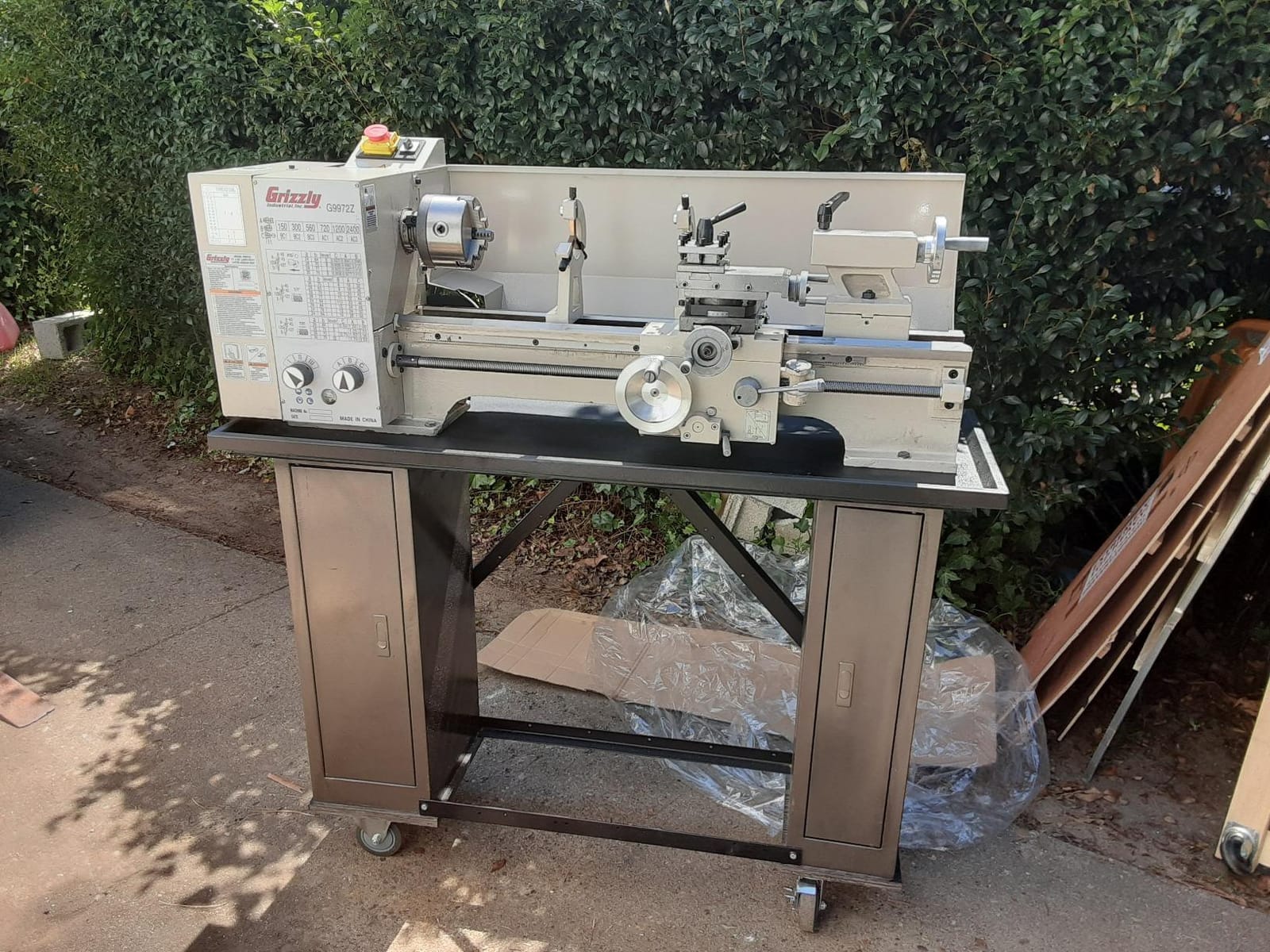
Brand support is the quiet advantage. Grizzly parts and warranty service have a reputation for turning around replacement components, and that matters over a twenty-year ownership cycle far more than any feature on the box. The same thread on machinist forums repeatedly names Grizzly as a brand that answers the phone.
The ergonomics are dated, though. Controls are bolted rather than lever-operated, so a gib adjustment or speed change means reaching for ratcheting wrenches. The power switch sits awkwardly near the chuck, the tool post is basic and needs shimming to centerline, and a few owners noted chatter when boring stainless that resolved with tightening adjustments.
Who needs this much machine?
Gunsmiths, motorcycle restorers and anyone cutting stainless or hardened steel regularly. Those jobs reward low-speed torque and a bed that does not ring, and a gearhead lathe delivers both in a way a 1100W brushless benchtop machine structurally cannot.
You also need the floor for it. At 517 pounds this is a floor-standing machine that needs a dedicated stand and real shop space, and you should check that your 110V circuit has headroom before you commit.
Where the money goes
Roughly half the spend is mass and iron casting, and that is exactly what you are paying for. If your work is aluminum and brass, you are buying stiffness you will never use and a footprint you will resent in a one-car garage.
Two long-form reviews at 4.1 stars skew positive on accuracy and long-term durability, with the complaints concentrated in ergonomics rather than build quality. For steel work in a shop with space, that trade is worth it.
5. Proxxon PD 250/E Precision Lathe – Best for Small Spaces
Proxxon 34002 Metal Turning Precision Lathe PD 250/E
150W DC motor
34.3 lb body
Automatic feed
Two-year warranty
Pros
- Only 34.3 pounds so it fits a small bench or shelf
- Quiet vibration-free running that stays accurate
- European engineering with a premium feel
- Real automatic feed rather than a manual lever
- Two-year manufacturer warranty
Cons
- Cannot cut coarse threads and that is the top complaint
- 150W motor is loud and underpowered for heavy work
- Capacity limited to fine detail and model-scale parts
The Proxxon solves a problem none of the other machines here address: what to do when you have one bench and 34 pounds of machine. At 34.3 pounds you can lift it with one arm, which means you can store it on a shelf and bring it down when you work, instead of dedicating 200 to 500 pounds of floor space permanently.
Build quality is a step above everything else in this list. Owners who already own Proxxon tools describe smooth, well-damped controls and genuinely quiet running that stays accurate after upgrades, and the automatic feed is a real one rather than the accessory-style afterthought some competitors fit.
The limitation owners mention most is coarse threading, which follows directly from a 150W DC motor. This is a precision and model-scale machine: pen turning, small brass fittings, delicate instrument parts. It is not going to turn a steel bolt or face a 4-inch flange.
When a 150W motor is the right answer
For aluminum and brass at small diameters, a modest motor with smooth speed control produces better finishes than a powerful machine with coarse steps. Smoothness is what determines surface finish, not raw wattage.
For anyone building miniature engine parts, model engineering hardware or small instruments, it is a match. The two-year warranty also makes it a lower-risk first lathe for a teenager learning the trade.
When to buy something bigger instead
If your parts list includes anything threaded that is not a fine instrument thread, move on. Coarse thread cutting is where a small DC motor runs out of authority and where owners report the most frustration.
Six reviews at 4.8 stars is a strong signal but still a small one. The 4-star review with the most helpful votes captures the consensus well: excellent build and smoothness, limited motor and thread range.
6. VEVOR 8.7×30 Benchtop Lathe – Best for High Top Speed
VEVOR Metal Lathe 8.7 x 30 in 1100W Benchtop Lathe Machine Variable Speed, 3000 RPM Max Spindle Speed, with Metal Gear, Brushless Motor, 8 Metric 8 Imperial Threads, for Metalworking Threading Turning
Swing 8.66 in
Center 30 in
3000 RPM max
159.8 lb
Pros
- Highest spindle speed in this group at 3000 RPM
- Long 30 inch distance between centers
- Chuck guard interlock plus emergency stop
- Handles turning drilling threading and knurling
- Arrived well crated and complete
Cons
- Only one review exists so there is no track record
- Metal gear train needs physical changes for pitch
- Instructions were reportedly unhelpful
This 8.7×30 is a recent addition to the range and the numbers are the biggest in this roundup: 8.66 inch swing, 30 inches between centers and a 3000 RPM ceiling on variable speed. That top end matters for small diameter work in aluminum, where surface speed rather than chip size is the limiting factor.
Safety is better specified than most competitors manage. An emergency stop plus a chuck guard interlock that cuts power when the cover opens is a real feature at this size class, and the cast iron and carbon steel construction with metal gears is the honest build description rather than a plastic gear train.
We are ranking this sixth on evidence, not on capability. There is exactly one review, and that buyer describes himself as a beginner who checked the machine powered up, ran forward and reverse and reached the advertised RPM. He had not cut anything yet, so treat the 5.0 rating as a delivery check.
Why 3000 RPM changes small work
Cutting speed scales with diameter. A small aluminum part at 1500 RPM is spinning far too slowly to cut cleanly, which leaves you at heavier feeds and a rough finish. Extra top-end speed lets you run a proper surface speed on small parts.
On large diameter work the ceiling is irrelevant and low-end torque is what matters, so this machine gives you the opposite of what the Grizzly does. Most home machinists end up using the middle of the range.
What the single review does and does not tell you
It confirms the machine arrives complete and crated, which matters more than people assume given the weight and the cast iron casting. It also confirms the controls and speed range function as described.
It tells you nothing about accuracy, finish or durability. With physical gear changes required for thread pitches, you are buying into the older maintenance style, and we would want a few hundred hours of owner feedback before recommending it as a first lathe.
7. TECHTONGDA 8×16 Brushless Metal Lathe – Best for One-Key Thread Switching
TECHTONGDA 1100W Brushless Metal Lathe Automatic Thread Benchtop Lathe
Stepless 50-2500 RPM
One-key thread switch
1100W
160 lb
Pros
- One key switches metric and imperial threads
- Stepless 50-2500 RPM with forward and reverse
- All-metal transmission gears and taper roller bearings
- Emergency stop with overload protection
- Control panel handles reciprocating turning and tool indexing
Cons
- Only two reviews and both are five-star
- Six-month warranty is shorter than most rivals
- 8x16 is the smallest bed in this roundup
The TECHTONGDA takes the gearless idea further than the others in one respect: metric and imperial threads switch with a single key on the control panel. There is no gear case to open, no gear set to lose, and no re-dialing after a system change.
Underneath that it is a solid 1100W brushless build with all-metal transmission gears and taper roller bearings supporting the spindle, stepless 50-2500 RPM in both directions, and a panel that handles parameter memory, reciprocating turning, thread cutting and tool indexing. Emergency stop and overload protection are both standard.
At 160 pounds it is lighter than most of the 8-inch machines here, which makes bench placement easier. The catch is capacity: at 8×16 this is the shortest bed in the roundup, so plan around a 16 inch maximum workpiece length.
What stepless speed control actually buys you
You pick any RPM value instead of the nearest of six fixed speeds. That removes the habit of cutting at the wrong speed because the gearbox only offered what it offered, which is where most of the tool life and surface finish is won.
It also makes small diameter aluminum work far less frustrating, because you can dial the speed down continuously instead of dropping to a very low geared speed and losing torque.
The warranty is the part to read twice
A six-month warranty is the shortest in this roundup, against two years on the Proxxon and WEN and longer coverage elsewhere. On a machine with a brushless motor and metal gears that is arguably conservative, but warranty length is usually a proxy for how confident a seller is in long-term reliability.
Two five-star reviews tell you almost nothing, so judge this one on the spec sheet. If the panel-driven threading workflow appeals to you and the 16 inch bed fits your work, the engineering description is the most complete of any machine here.
8. EQCOTWEA 8×30 Double-Chuck Lathe – Best for Large Diameters
EQCOTWEA Double-Chuck Metal Lathe 8″x30″ Precision Bench Lathe Machine With Grating Ruler 50-2500RPM Variable Speed MT3 0.02mm Accuracy for DIY, Workshops & Industrial Machining Inch Thread 1100W 110V
8x30 in
0.02mm spindle precision
220 lb
Dual chuck
Pros
- Dual chuck design handles larger diameters than single-chuck rivals
- Quenched bed and hardened gears resist wear
- Dual 3.94 in and 4.92 in chuck with 8.27 in swing
- Cuts metric 0.5-3mm and inch 8-44 TPI threads
- 26.77 in bottom plate stroke gives real turning room
Cons
- Only one written review in the set
- Manual gear changes required for thread pitch
- 220 pounds is the heaviest benchtop machine here
The distinguishing feature here is a double-chuck arrangement with a 3.94 inch chuck on one end and a 4.92 inch chuck on the other. A larger chuck means larger capacity, and on a home lathe that is how you handle short parts of bigger diameter without re-chucking mid-turn.
The build description is specific in ways most listings are not: a quenched lathe bed, hardened gears, 0.02mm spindle precision and 0.03-0.05mm concentricity. Threading covers both metric 0.5-3mm and imperial 8-44 TPI, and the 26.77 inch bottom plate stroke gives genuinely long turning room in a benchtop footprint.
At 220 pounds this is the heaviest machine in the roundup after the Grizzly, so the bench underneath needs to be a serious one. That is the trade for the rigidity a quenched bed gives you.
Is a second chuck worth buying for?
Yes if you regularly turn short, larger-diameter parts where a single small chuck forces you to stop and re-grip. Two chucks also let you keep a setup installed on one while a second job waits on the other, which saves time on batch work.
No if your work is long thin shafts, because the dual chuck does nothing for between-centers capacity and you gain nothing from the larger jaw spread.
Read the accuracy claim carefully
0.02mm spindle precision and 0.03-0.05mm concentricity are manufacturer figures, roughly a thousandth of an inch. That is in the right range for a benchtop machine of this class, but it is a specification rather than a measured result.
The single written review does add something: that owner compared it with a Techtongda of the same general design and found this machine cleaner and more accurate out of the box. One report is not a track record, but it is a better signal than none.
9. INTBUYING RC-210E 8×32 Metal Lathe – Best for Automatic Feed
INTBUYING 8″x32″ Benchtop Metal Lathe Machine 1100W Brushless Gearless Motor 50-2500RPM, Horizontal Design for Precision Metal/Wood Working Imperial/Metric Conversion, RC-210E 110V
8x32 in
1100W brushless
Auto feed 0.01-0.4mm
190 lb
Pros
- Automatic X-axis feed adjustable from 0.01 to 0.4mm
- 1100W brushless motor with low maintenance
- Real-time spindle speed readout on the panel
- Manual automatic and delayed start modes
- Imperial and metric conversion without gear changes
Cons
- Only three reviews and a mixed 5 and 3 star split
- Speed range split across two ranges rather than stepless
- Thin review base says little about long-term reliability
This RC-210E shares the gearless electronic architecture with our top pick but leans harder on automation. The automatic X-axis feed is adjustable from 0.01 to 0.4mm, which means the carriage can feed at a set rate on its own while you watch the cut, instead of cranking the handwheel for a long pass.
For turning a long shaft in aluminum that is a meaningful time saver, and it takes some of the physical load off repetitive facing and roughing passes. Manual, automatic and delayed automatic start modes cover straight work, threading and reciprocating turning from one panel.
The honest problem is evidence. Three reviews split between five and three stars, which points to machine-to-machine inconsistency rather than a clear verdict. The feature claims come from the manufacturer, and there is not enough independent owner data to judge accuracy or durability.
When automatic feed earns its place
Long turning passes on soft materials, where hand-cranking a 30 inch traverse gets tiring and inconsistent. Consistent feed also means consistent finish, since depth and feed rate stay constant across the pass instead of varying with how tired your arm is.
It is less useful for facing a flange or cutting a short precision part, where you want direct control anyway. Think of it as an assist rather than an autopilot.
Two ranges versus stepless control
This machine splits its speed range into 50-1250 and 1250-2500 RPM bands rather than running stepless across the whole span. That is a gear-driven compromise that occasionally forces you to a speed you did not choose.
The top pick in this roundup runs a continuous 50-2500 with an angle readout, and the TECHTONGDA is stepless as well. If fine control at any RPM matters to your work, that difference shows up within a month of ownership.
10. WEN ML712 7×12 Benchtop Lathe – Best for Warranty Support
WEN 7-by 12-Inch Benchtop Metal Lathe, Variable Speed, Two Direction (ML712)
7x12 in
100-2500 RPM
Two-year warranty
114.4 lb
Pros
- Only established US name-brand seller in this roundup
- Two-year warranty backed by a domestic company
- Two full variable speed ranges 100-2500 RPM both directions
- Threading dial covers 18 sizes from 12-52 TPI
- Adjustable auto feed plus manual operation
Cons
- Lowest rated at 3.7 stars with a wide spread
- 5/16 inch tool post and tool rest limit tooling
- Smallest capacity here at 7x12
- 4-amp motor is modest for steel work
The WEN ML712 wins on one axis that no specification captures: it is the only machine here from an established US brand selling consumer power tools domestically, and it carries a two-year warranty. If you want a phone number to call when something breaks, this is the one.
Otherwise the machine is competent for its class. Two full variable speed ranges from 100 to 2500 RPM in either direction, a threading dial indicator covering 18 sizes from 12 to 52 TPI, manual operation or adjustable auto feed, and a 3-jaw chuck with MT3 spindle and MT2 tailstock tapers at 114.4 pounds.
The 3.7 star average is the lowest here and the distribution is unusually spread out, with 40 percent five-star alongside 29 percent three-star and 13 percent one-star. That spread is the signature of inconsistent units rather than a bad design, and it is why this sits at the bottom despite the warranty advantage.
Does the warranty make it the safer first lathe?
For a first-time buyer with no local machine shop, genuinely yes. A two-year domestic warranty on a 114 pound benchtop machine means a cracked casting or a failed spindle bearing is someone else’s problem, and that risk is the biggest unknown when you cannot evaluate a machine in person.
It also makes buying during a sale less stressful, because the downside of an unlucky machine is bounded. That is a real advantage over saving a few hundred on an anonymous brand.
The tooling limit you should know about
The 5/16 inch tool post and tool rest capacity is the spec that constrains you later. Once you move past light finishing cuts into boring, parting or wider inserts, you will want a larger tool post, and a bigger machine comes with a better one.
The 4-amp motor is adequate for aluminum and light brass work and modest for steel. At 12 inches of turning length, treat this as a first machine, not a lifetime one.
What Size Metal Lathe Do You Need?
Lathe sizing uses two numbers, and confusing them is the most expensive mistake in this hobby. The first is swing over bed, the largest diameter the workpiece can reach as it rotates past the carriage. The second is distance between centers, the longest workpiece that fits between the headstock spindle and the tailstock center. A 9×20 lathe turns 9 inch diameter and holds 20 inches long.
The 7×12 and 7×14 class is the starter tier. You will turn bushings, spacers, pins and short threaded fittings, typically in aluminum and brass. At roughly 100 to 115 pounds they are manageable, and they are the cheapest way to find out whether you enjoy turning before committing real money.
The 8×24 to 8×32 class is where most serious home machinists should aim. Thirty inch beds handle long shafts, the brushless motors have the power for mild steel, and the electronic panels make threading far less painful. Forum consensus in machinist communities treats the 9×20 class as the practical minimum for a first real lathe, and the 8×30 machines in this roundup fill the same role with a longer bed.
The 11×26 class is for steel. The Grizzly’s cast iron mass, gearbox torque and heavy rigid structure are what separate it from the benchtop machines, and they cost you 517 pounds of floor space. Anyone doing stainless, gun work or production of repetitive steel parts will feel the difference immediately.
A practical rule: buy the largest machine you can honestly bench and afford, then stop. Buying a small lathe for a large project is the most common way people end up buying two lathes within two years.
What Each Size Class Can Actually Cut
Aluminum is the friendliest material and every machine here handles it. The limit is surface speed and chip clearance rather than power, which is why the higher-RPM machines score better on small parts and why good chip clearing beats horsepower in aluminum.
Brass is nearly as easy, cuts at lower speeds with almost no spindle torque demand, and gives the best surface finish of any common hobby material. It is the material that flatters a cheap machine, which is worth remembering when a beginner reports a beautiful brass part on a small lathe.
Mild steel is the dividing line. It needs real torque, rigid ways and correct feeds, and it is where the 1100W brushless benchtop machines work well while a 4-amp mini lathe struggles. Frequent steel turning pushes you toward a heavier machine with a gearbox.
Stainless and hardened alloys belong to the rigid class. They are gummy, they generate heat, and they punish a light bed. Cast iron is similar, mostly relevant to engine work and to anyone restoring older machinery. If most of your material is anything other than aluminum, brass or light mild steel, weight and rigidity matter more than spindle speed.
The Specs That Matter: Drive Type, Bore, Gibs and Accuracy
Drive type decides your daily experience more than any other spec. Gearless electronic machines like our top pick switch imperial and metric threads from the panel with no mechanical change. Belt and gear machines need physical gear changes and manual dial resetting, which is slower but well understood. Gearhead machines deliver the strongest low-speed torque in fixed steps, which is why they dominate steel work.
Spindle bore is the largest bar you can chuck directly. A smaller bore forces you to cut bar down to a smaller diameter or work from a collet arrangement, which adds setup time to every job. It matters most if you want to turn finished shafts from raw bar rather than pre-cut blanks.
Buying a mill as well is a fair question for a small shop, and our angle grinder picks for metal cutting cover the tool-truing side of the same bench.
Runout, expressed as total indicator reading, is how far the workpiece wanders from true when the spindle turns. It is the single best predictor of whether a new machine will produce accurate parts, and it is checked in minutes with a dial indicator and a round bar. Backlash is different: it is play in the gear train when you reverse feed direction, and it directly limits your threading accuracy.
Gibs are the adjustable wedges that close clearance in the carriage and cross-slide ways. Fresh out of the box they are often loose enough to feel sloppy, and tightening them is the highest-value thing a new owner can do in the first hour. Way lubrication is the other one, and a machine that gets oiled on the schedule stays accurate for decades.
Two other items quietly decide fit. Motor power shows up as HP or watts, and a 1100W brushless unit covers most home work while a 1 HP gearhead machine delivers far more low-end punch. Electrical requirements matter too: everything in this roundup runs on 110V, though larger steel-capable machines often want a dedicated circuit for starting current.
Brands, Parts Support and New vs Used
Brand matters for a machine you will own for decades, and it matters most after the sale. Bearings, chuck jaws, gibs and spindle parts fail eventually on any lathe, and a brand with a domestic service network turns an annoying week into a short wait. That is the strongest argument for the Grizzly at this tier.
The budget brands compete on price and specification sheet, and the comparison is fair: for aluminum and brass hobby work in the 8-inch class, the value is genuinely there. What you give up is parts support, documentation and the ability to get a service answer when something breaks at hour 400.
Used and vintage lathes are a real option. Machinist forums repeatedly single out South Bend for parts availability in the used market, and buyers of older machines value condition, tooling and standard spindle configuration over brand name alone, because a standard taper means backplates and chucks can be sourced anywhere.
The rule most experienced owners follow: a used lathe with tooling and known history beats a new bare machine at the same money. The used market also carries risk, since you cannot verify gib condition or spindle bearings until they are running.
What to Check When Your Lathe Arrives
Chatter and misalignment out of the box are the most reported frustration in machinist forums, and buyers rarely know what to look for before the machine is on the bench. Work through this list in the first hour, before you cut anything.
Check spindle runout with a dial indicator and a known-good bar in the chuck, targeting under 0.001 inch of total indicator reading and noting where in the rotation the error peaks.
Tighten the carriage, cross-slide and saddle gibs until the handwheels move smoothly with no perceptible slack, and check that the cross-slide indicator reads zero at center.
Run the carriage over the full length of the bed and watch for drift or tight spots that indicate a shipping knock.
Inventory the contents against the listed included components, since chuck jaws, spare gears and hex keys go missing more often than machines.
Confirm the spindle bore, spindle taper and tailstock taper match what you planned, and check the chuck key and spindle lock function.
Check the bed and ways are clean of shipping grease before you lubricate, and oil the ways per the manual.
Confirm speed direction and reverse work correctly, and test the chuck guard interlock or emergency stop if the machine has one.
Lathe Safety and PPE
A metal lathe throws chips hard enough to embed in skin and eyes, and the biggest cause of lathe injuries is well documented: gloves. Never wear gloves, loose sleeves, a watch or jewelry near a rotating workpiece. A chuck key left in the chuck is the classic fatal error, so treat a key left in the jaws as an immediate stop.
Wear safety glasses, tie back hair, keep the chuck guard closed and shut the machine down before measuring anything. Chips need somewhere to go, so a chip pan or brush with a handle keeps the bed clean without putting your hands near the work.
Sharpen your tooling properly, because a dull insert generates heat and grabs. Keep an angle grinder setup nearby for truing tools; our guide to angle grinders for metal cutting covers the options. Finish any sanding of a spinning part off the lathe and before it starts.
Frequently Asked Questions
What is the best lathe machine for home use?
For most home shops the INTSUPERMAI RC-210E 8×32 is the strongest all-round choice, because its gearless electronic leadscrew switches between imperial and metric threads from the control panel with no gear changes. It turns 8.27 inch diameter parts up to 31.5 inches long on a 1100W brushless motor. If your work is mostly steel or stainless, the heavier Grizzly G9972Z 11×26 gearbox lathe is the better answer.
Is the Harbor Freight lathe any good?
It depends on the size class, and the honest answer is that the brand name matters less than the machine. Forum buyers report Harbor Freight 7×10 and 7×12 machines are cheap, capable of better accuracy than expected and fine for one-off hobby work in aluminum and brass. The same buyers warn that Harbor Freight 9×20 and 10×22 machines lack the rigidity of established brands. For your first metal lathe for a home machinist, a brand with real parts support is worth the difference.
What is a good small lathe for metal?
The VEVOR 7×14 is the best small metal lathe for a home machinist, with a metal drive gear, a four-way quick-change tool post, a digital speed display and by far the largest owner base in this roundup. It covers aluminum and brass comfortably and light mild steel. Keep in mind its 13.78 inch center distance means parts longer than a foot are out of reach.
What company makes the best lathes?
At the top end of this roundup, Grizzly earns its place for cast iron rigidity, a six-speed gearbox and domestic parts support that survives a twenty-year ownership cycle. Proxxon leads for small precision work with a light 34.3 pound body and a two-year warranty. Among the benchtop machines, brand is a weaker signal because most share similar Chinese-supplied gearless designs, so judge those on owner feedback and the specification sheet instead.
How do you get rid of chatter on a lathe?
Chatter is a stiffness and setup problem before it is a machine problem. First, confirm the workpiece is short and rigid, with the tailstock or a steady rest holding the free end so the part cannot flex. Second, tighten the gibs on the carriage and cross-slide until the handwheels have no perceptible slack. Third, reduce the tool overhang and use a sharp positive rake insert rather than a dull or negative one. Fourth, cut at the right speed and feed for the material. If chatter persists on a rigid setup, the machine bed itself is resonating.
What is the best size lathe for gunsmithing?
Gunsmithing needs barrel length and a rigid bed more than it needs swing. A lathe with at least 30 inches between centers is the practical choice, and that means the 8×30 and 8×32 benchtop class rather than a 7×12. If you are porting barrels or working with stainless receivers, step up to the cast iron class such as the Grizzly G9972Z, where the mass suppresses the chatter that ruins barrel work.
Do I need a 240V circuit for a metal lathe?
Not for any machine in this roundup. All ten run on 110V, including the 517 pound Grizzly with its 1 HP 110V motor. Larger gunsmithing and production machines from other brands do often want 240V, so if you are stretching toward a floor-standing gearbox lathe, have an electrician check your panel and budget for a dedicated circuit and a machine on a proper disconnect.
Conclusion
The best metal lathe for a home machinist in 2026 is the INTSUPERMAI RC-210E 8×32, because a gearless electronic leadscrew and a 31.5 inch bed solve the two problems that frustrate new owners most: threading without gear changes, and enough room between centers to make real parts. Its owner feedback is the strongest in the group at 4.9 stars, and both chucks are included.
If you need less machine, the VEVOR 7×14 is the value pick with the biggest owner base around, and the Proxxon PD 250/E is the only one you can lift with one arm. If you need more, the Grizzly G9972Z is the only cast iron machine here and the right call the moment stainless or repeated steel work enters your projects.
Whatever you pick, check runout and gib tension in the first hour and budget for tooling beyond the machine itself. A lathe without a bench grinder and a proper tool post is a very expensive doorstop, and getting that right early makes the first year of ownership far less frustrating. Our angle grinder guide covers the sharpening side.