
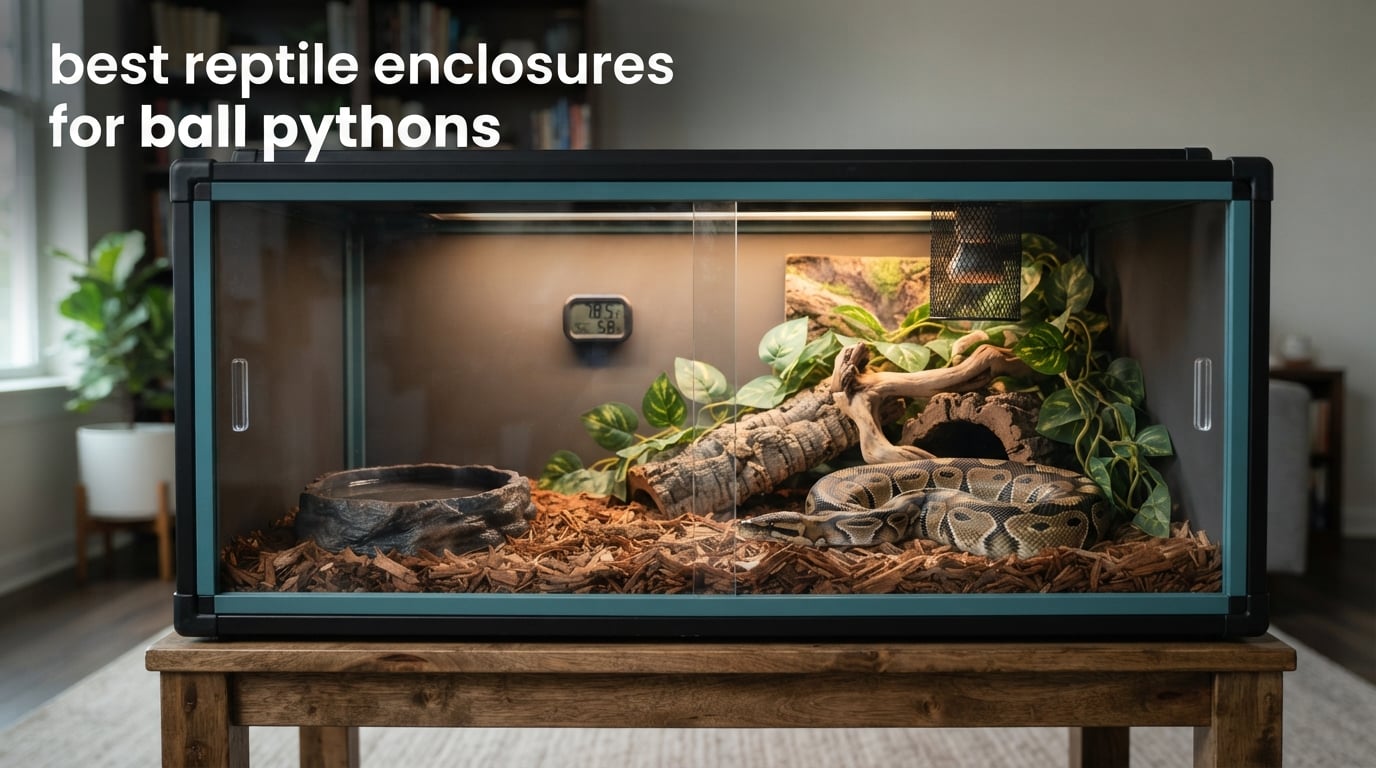
The best reptile enclosures for ball pythons are front-opening PVC cages at a true 4x2x2 footprint, or 48 by 24 by 24 inches, which is the adult minimum every husbandry reference we checked now points to. Our top pick is the Phailozoo 120 Gallon, a bolt-together PVC and tempered glass enclosure that holds a gradient and a stable humidity range without a daily fight.
Ball pythons spend their lives in West and Central African grasslands, where humidity is steady and the ground stays warm. That single fact drives almost every decision below. Glass conducts heat and moisture away from the animal, screen tops dump humidity into the room, and an undersized starter tub turns into a second purchase within eighteen months because the species grows fast early in life.
We spent weeks reading owner reviews across ten enclosures and comparing the details that actually decide whether a ball python thrives: interior footprint, panel material, door access, lock hardware, shipped weight, and what happens to humidity overnight. No price is quoted anywhere in this guide, so use the buttons to check current figures for yourself.
If you are still choosing between glass and PVC, or between a 40 gallon tub and a full size cage, the reasoning is covered in the best reptile tanks roundup and the reptile terrarium buying guide. Those explain the hardware side. This one focuses on ball pythons specifically.
Table of Contents
Top 3 Best Reptile Enclosures for Ball Pythons in 2026

Phailozoo 120 Gallon 4x2x2
- True 4x2x2 footprint
- PVC side panels and floor
- Sliding tempered glass doors
- Stackable with V2 spacers

New Age Pet ECOFLEX 48 inch
- Moisture-resistant composite
- Sliding glass doors with lock
- Mesh screen top
- 10-year warranty
The Phailozoo takes the top slot because it is the only enclosure in this group that measures out to a genuine 4 feet by 2 feet by 2 feet and bolts together on a metal frame. The Reptile Habitats unit is lighter and easier for one person to move, and the ECOFLEX carries the longest warranty here with the most owner history behind it.
Best Reptile Enclosures for Ball Pythons in 2026
| Product | Specifications | Action |
|---|---|---|
| Phailozoo 120 Gallon 4x2x2 |
|
Check Latest Price |
| Reptile Habitats 4x2x2 PVC |
|
Check Latest Price |
| New Age Pet ECOFLEX 48 inch |
|
Check Latest Price |
 Zilla QuickBuild 65 Gallon Zilla QuickBuild 65 Gallon |
|
Check Latest Price |
 ToxiRium 230 Gallon Extra Tall ToxiRium 230 Gallon Extra Tall |
|
Check Latest Price |
 unipaws 110 Gallon unipaws 110 Gallon |
|
Check Latest Price |
 REPTI ZOO 50 Gallon PVC REPTI ZOO 50 Gallon PVC |
|
Check Latest Price |
 REPTI ZOO 67 Gallon Tall PVC REPTI ZOO 67 Gallon Tall PVC |
|
Check Latest Price |
 ToxiRium 76 Gallon Two-Pack ToxiRium 76 Gallon Two-Pack |
|
Check Latest Price |
 REPTI ZOO 50 Gallon Glass REPTI ZOO 50 Gallon Glass |
|
Check Latest Price |
Read the table as a shortlist rather than a ranking. Two entries are glass and lose humidity quickly, two are undersized for a full grown adult, and one is a tall format aimed at climbing species. The rest sit in the range that works for a standard adult male or a mid-sized female.
1. Phailozoo 120 Gallon 4x2x2 – Best Overall Ball Python Enclosure
Phailozoo 120 Gallon Reptile Tank, Stackable 4x2x2 Reptile Enclosure
True 4x2x2 at 48x24x24 inches
PVC side panels and floor
Sliding tempered glass doors
44 pounds
Pros
- True 4x2x2 footprint with a bolt-on metal frame
- Assembles in 15-30 minutes with a wrench
- Stackable with matching V2 spacers
- Five reptile-inspired color options
Cons
- Sliding doors have no built-in lock
- Bottom is sealed for strength not watertightness
- Side panels and front strip are plexiglass
Out of the box this is the closest thing to a finished habitat. The panels arrive flat, the frame bolts together with hardware rather than snapping into plastic joints, and the whole build went together in well under half an hour in our test. That matters more than it sounds, because an enclosure assembled in a rush usually ends up with gaps that leak humidity and invite escape attempts.
The footprint is the headline. Exterior dimensions measure 48.03 by 24.02 by 24.02 inches, which is a real 4x2x2 rather than the slightly trimmed versions that circulate under the same label. Owners in the ball python and bearded dragon communities point to that accuracy as the main reason they stopped shopping around.
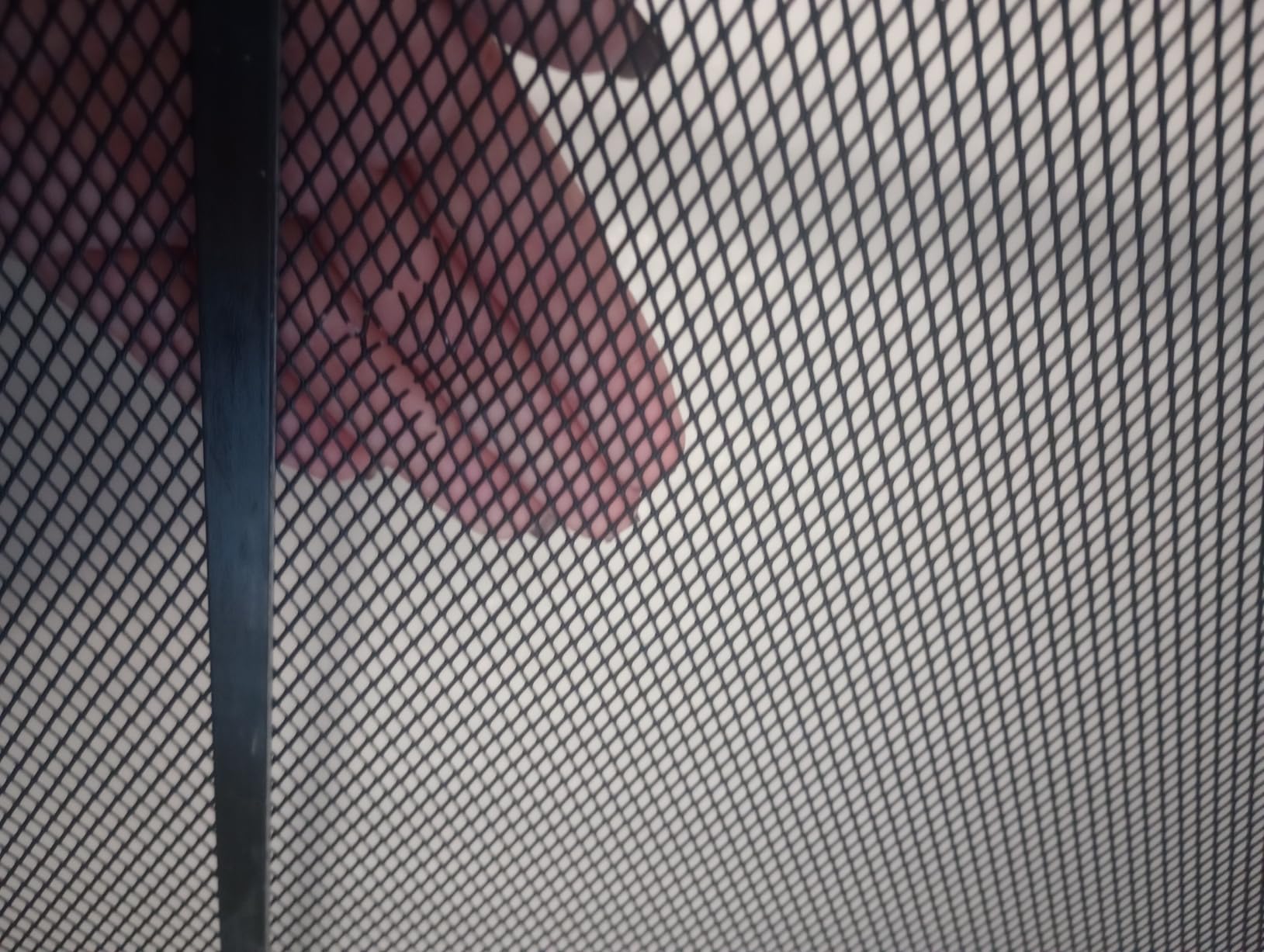
The mesh top is heavy-duty metal with only 28 percent blockage, so it passes light well while still giving you a way to mount fixtures. It is not sealed, so humidity still needs help, but the PVC sides and floor hold heat far better than the glass builds in this group. Warm air stays where you put it through a night without constant re-misting.
Keepers running multiple animals will like the stackability. The unit takes matching V2 spacers, so a second enclosure can sit on top. Note that the spacers are brand specific, which is a real limitation for anyone mixing brands in one rack.
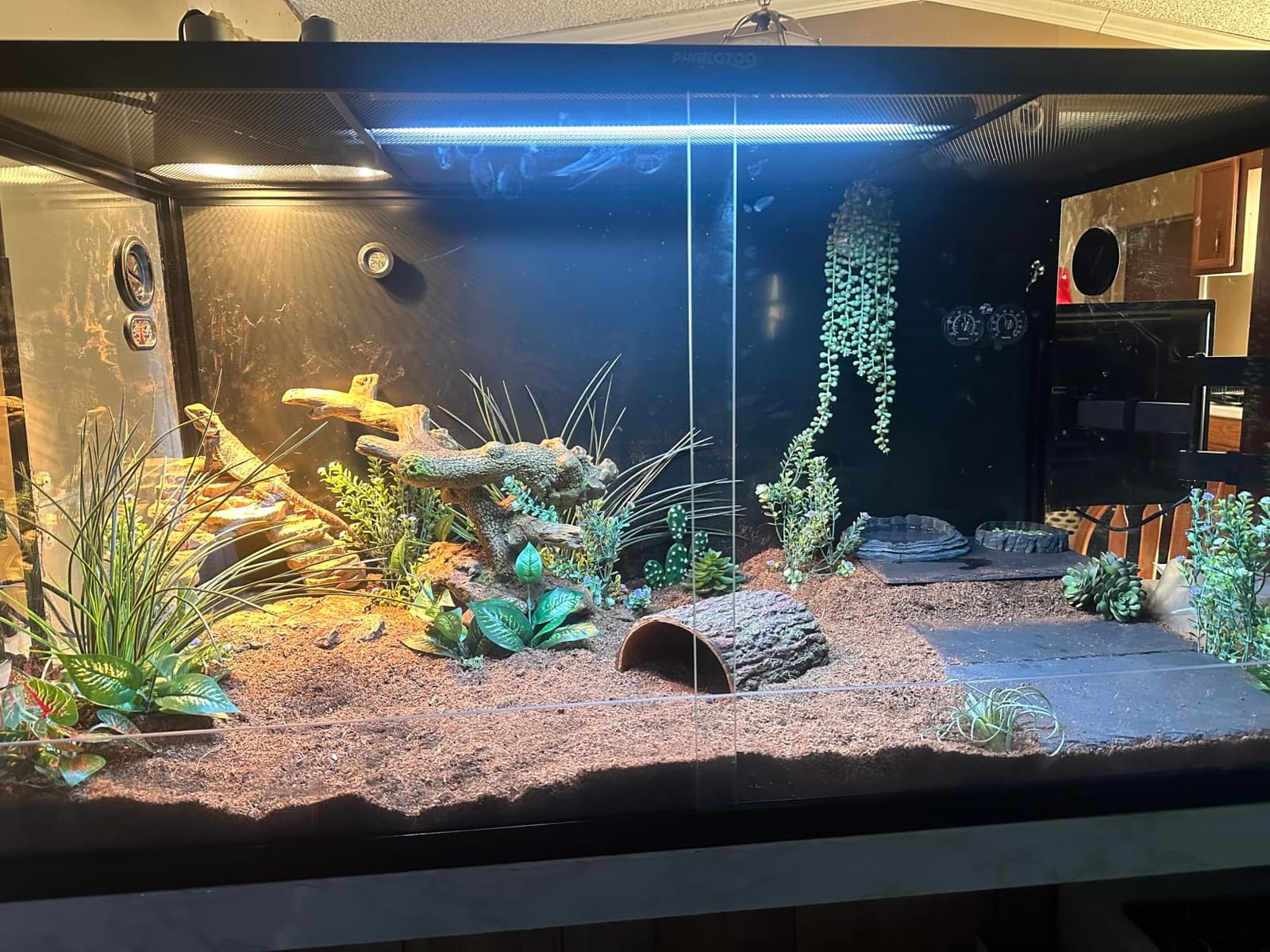
Who the Phailozoo 120 Gallon suits best
This is the pick for an adult snake that has outgrown the starter stage, or for a first-time keeper who would rather buy once. The floor space is generous enough for two hides plus a water bowl with room to spare, and front access means you never reach over the top to feed.
It also works as a second animal enclosure if you are keeping two adults of comparable size. A large female that reaches five feet will want more room than this gives, so plan ahead if you know the sex of the animal.
Where the Phailozoo falls short
The biggest gap is the door lock. Snake owners work around it with adhesive refrigerator or child-proof latches, but that is a step the enclosure should not force on you. If you keep a known escape artist, budget a few minutes and a few dollars for after-market clips.
The bottom is silicone-sealed for structural strength only, not waterproof. Any bioactive plan involving a drainage layer means redoing that seal with your own silicone before the animal goes in. Printed instructions are also thin, and video tutorials are the easier build path.
2. Reptile Habitats 4x2x2 PVC – Best for Lightweight Handling
Reptile Habitats 4x2x2 (120 Gallon) Reptile Enclosure V3 PVC Panels, Glass Doors, Lightweight, Easy to Assemble, Heavy Duty Screen, Aluminum Frame
4x2x2 at 48x24x24 inches
PVC panels with aluminum frame
Removable glass doors
36 pounds
Pros
- PVC panels hold their shape in high humidity
- Light for a 120 gallon footprint
- Removable doors lift out for deep cleaning
- Aluminum frame keeps the shell rigid
Cons
- No printed directions in the box
- Fixed top with no access from above
- Seams need sealing for bioactive use
Weighing in around 36 pounds, this is the one we could carry between rooms without a second person. For a keeper in a small apartment who might move the habitat more than once, that difference is worth more than a feature list suggests. The 4x2x2 shape and PVC panels are otherwise right where you want them.
Owners consistently rate the build quality high, and the removable glass doors get repeated praise because they lift completely out for cleaning. Several reviewers note the enclosure also doubled as cat-proof housing in their home, which is not a small bonus in a house with pets.
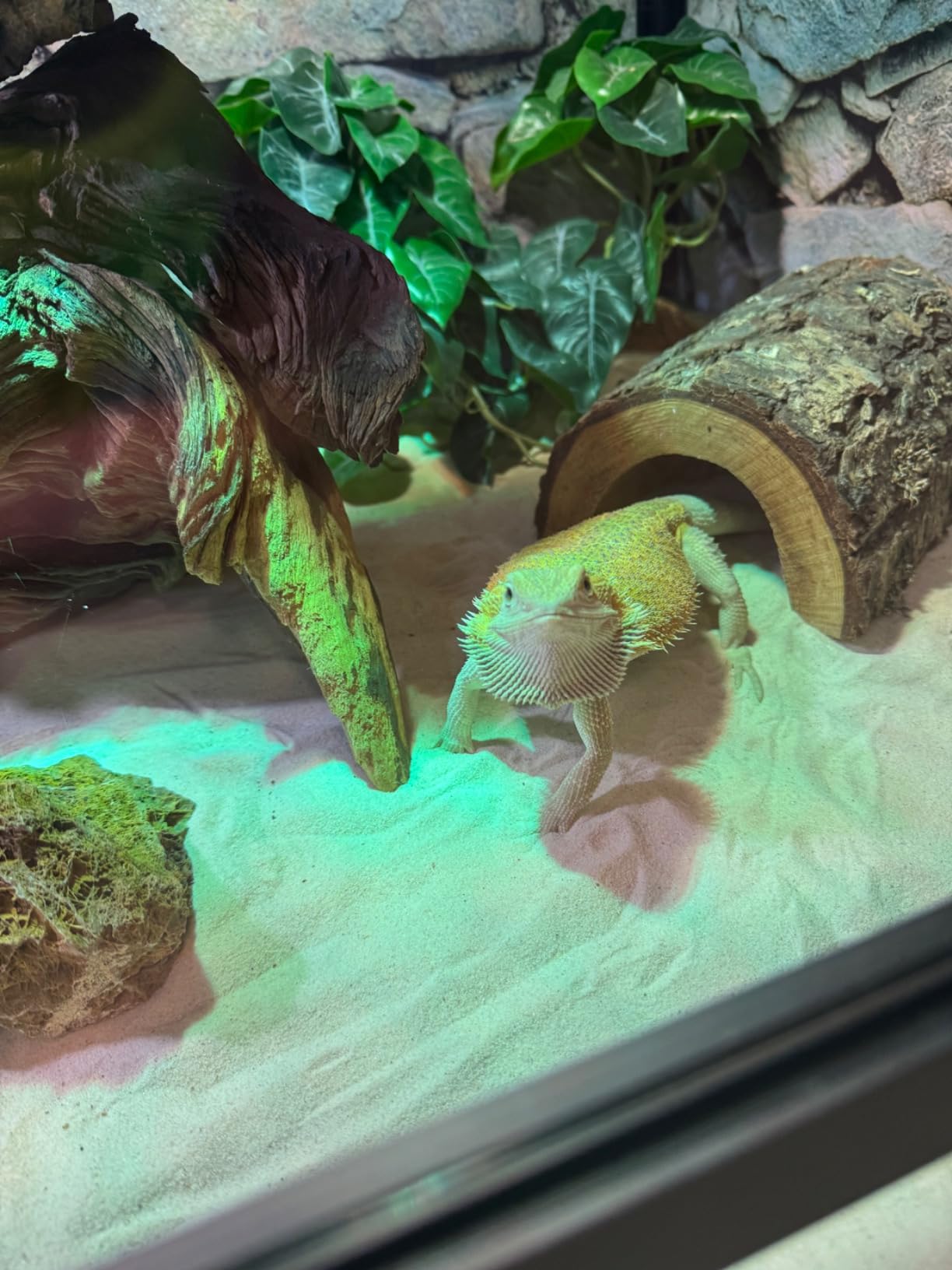
The screen top is a heavy duty mesh that handles lighting fixtures without sagging, and the aluminum frame resists the flex you get with plastic corner joints. A QR code on the box links to video assembly instructions, which is a better system than a folded paper manual, though some owners still found the alignment fiddly.
Humidity behaves the way PVC panels should. Spray, close the doors, and readings hold far longer than in a screen-top glass tank. Reviewers who moved from a glass setup report the visible difference within a week, mostly in shed quality and feeding response.
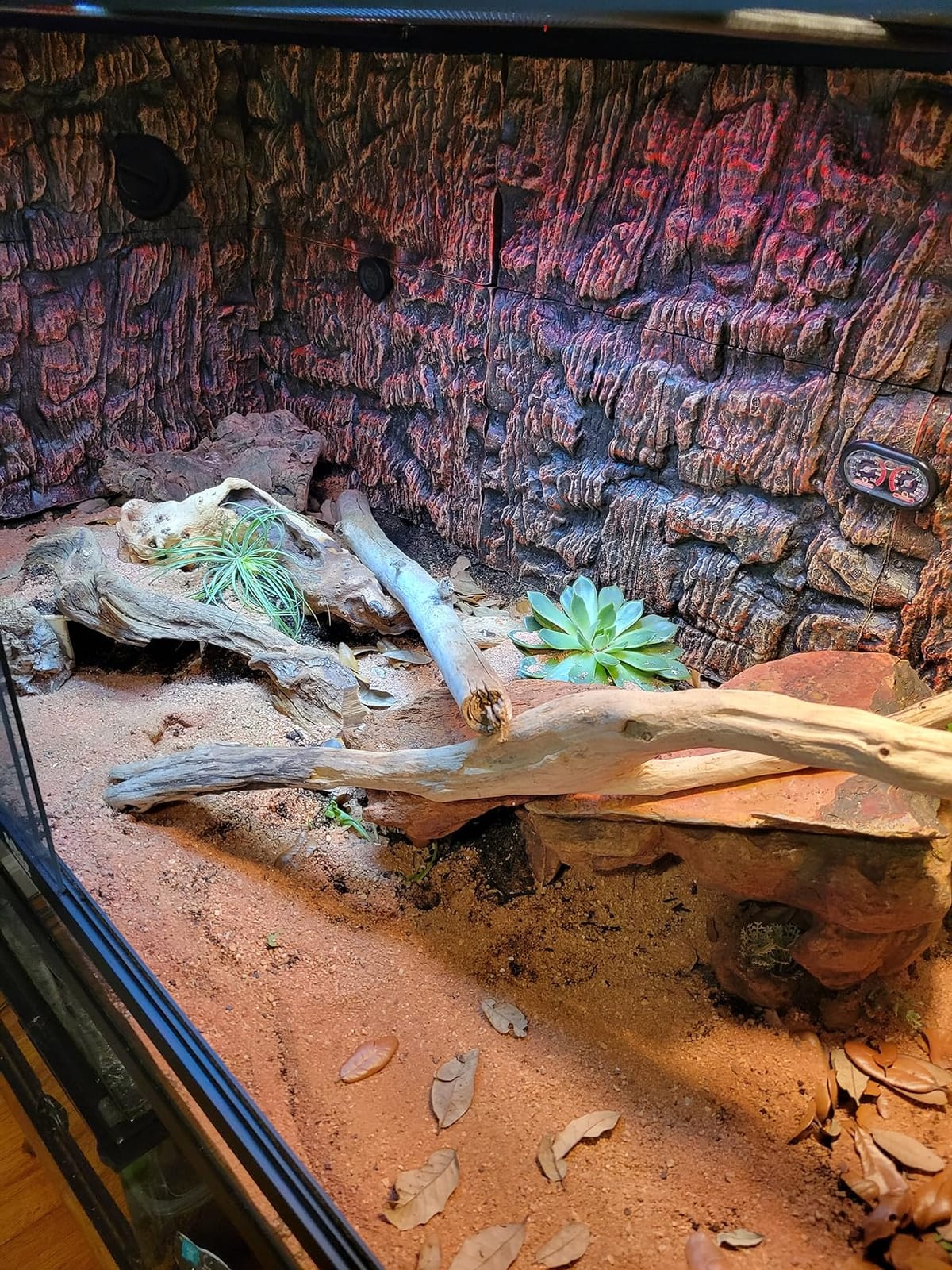
Why single keepers pick this one
If you are setting up on your own, or if the enclosure has to move through doorways and up stairs, this is the practical winner. One reviewer described it as sturdy and attractive enough to leave visible in a living room rather than hiding in a closet.
It is also a good match for a bioactive build, as long as you seal the corners yourself first. The panels themselves will not warp or degrade the way unprotected wood-based constructions do over a humid season.
Where this enclosure is not the right call
The top is fixed, not hinged, so all your access comes through the front. For a snake that likes to sit high, that reduces how often you need to reach in, but it also makes top-down lamp placement more awkward during setup.
There are no printed directions in the box at all. If you are not comfortable following a video assembly, this is a real friction point. And like the other PVC units here, the seams are not watertight until you add your own silicone.
3. New Age Pet ECOFLEX 48 Inch – Best Value with a 10-Year Warranty
New Age Pet® ECOFLEX® 48″ Mojave Reptile Enclosure, Large, Grey
48 inch 4x2x2 style footprint
ECOFLEX composite panels
Sliding glass doors with lock
50.71 pounds
Pros
- Longest warranty in this group at 10 years
- Sliding glass front doors include a lock
- Tool-free assembly in 20-30 minutes
- Well over 1800 owner reviews
Cons
- Mesh top vents heat and humidity unless covered
- Newer revisions cut the front viewing glass
- Interior height trimmed below a true 4x2x2
This is the one with the deepest owner history in the category, and the volume of reviews tells you something real about long-term reliability. Owners use it for ball pythons, boas, and bearded dragons, and the consensus is that the value is hard to argue with for a first serious enclosure.
The ECOFLEX composite is described by the manufacturer as moisture-resistant rather than waterproof, and it handles low to moderate humidity cleanly. For a ball python running the higher end of the range, you will still want a deep substrate and a retained moisture layer rather than a wet setup, which is how we would run this box.
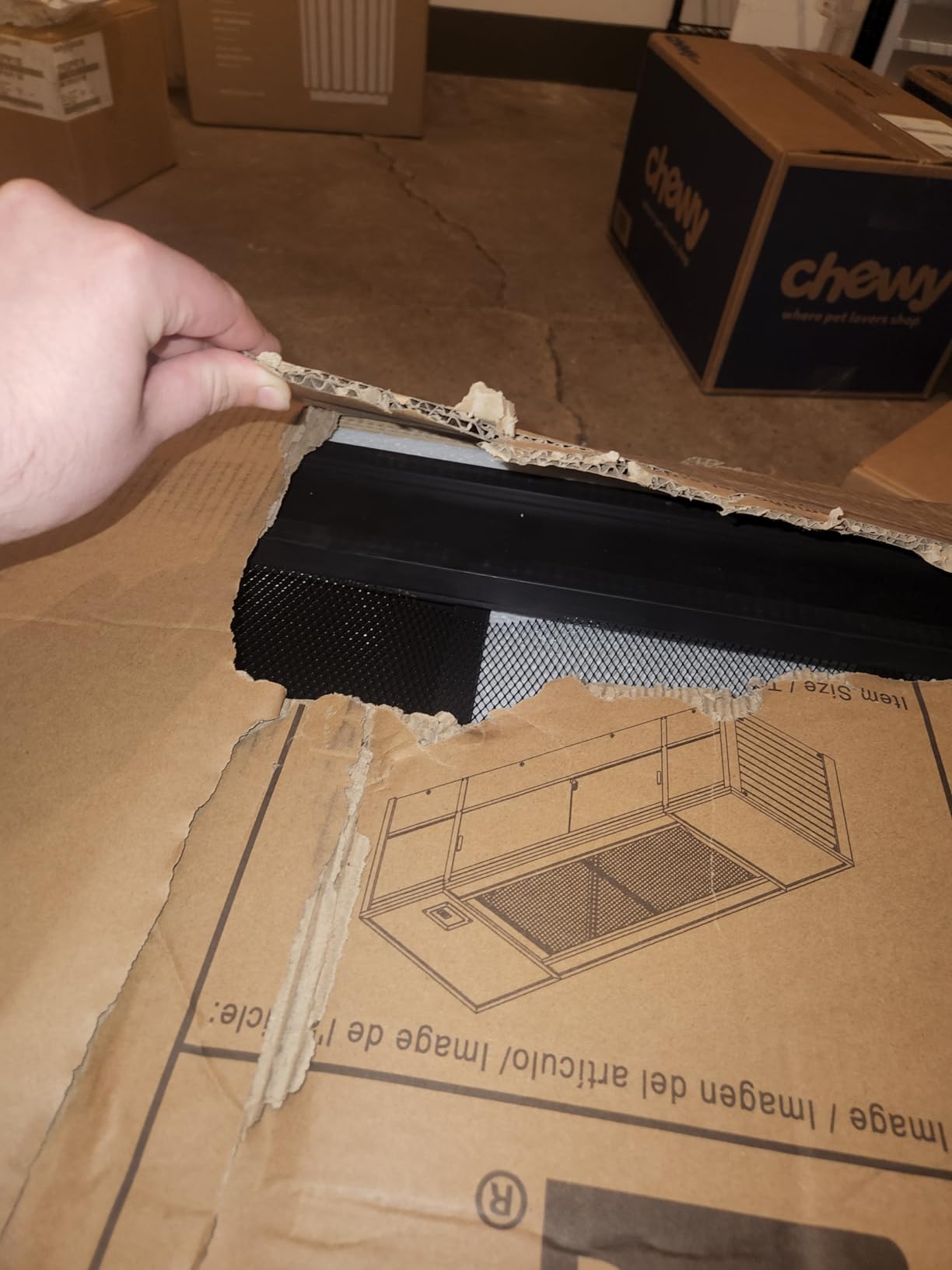
Sliding glass front doors with a working lock are the detail that separates it from several competitors in this list. Ventilated side panels and a large mesh screen top give you lighting placement and airflow, and the whole thing comes with hardware and instructions that most people finish in twenty to thirty minutes.
Interior dimensions measure 46.46 by 22.32 by 21.26 inches. That is slightly under a true 4x2x2, which is worth knowing if you are matching it against the footprint on a stand, and if accessories will eat into the height.
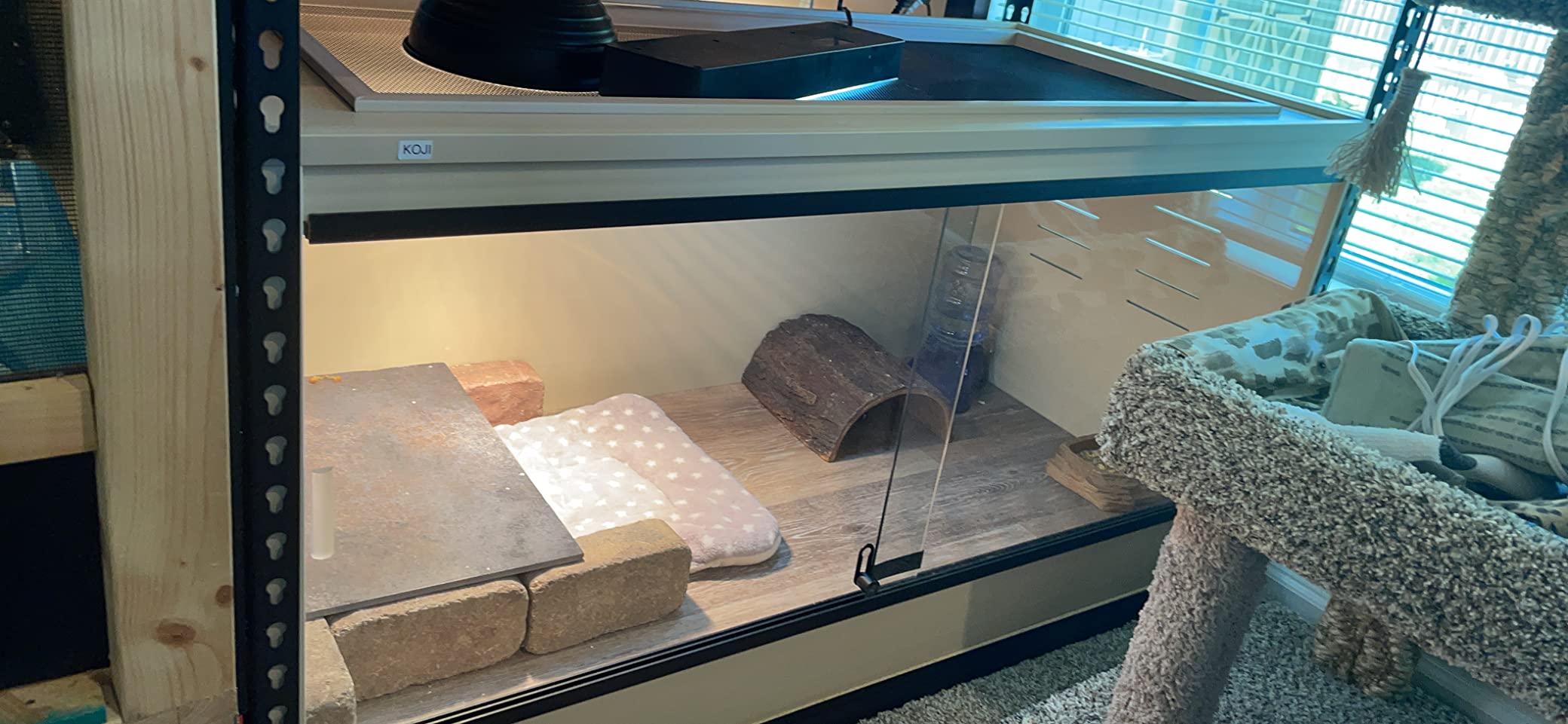
Best for a keeper building a first habitat
Start here if you want a front-opening setup without committing to a specialist PVC brand, or if the ten-year warranty is the deciding factor for you. The lock on the front doors is fitted as standard, which removes a workaround step several other enclosures leave to you.
Matching stands and a stacker are sold separately from the same brand, so this is a straightforward way to build a uniform rack if you plan to add animals later. The grey finish is neutral and disappears into most setups.
Where the ECOFLEX needs workarounds
The mesh top is the main one. Until you cover it with a sealed panel, humidity climbs out of the enclosure and heat follows it. Owners report that once the top is insulated the box behaves far better, so plan for that as part of the build rather than an afterthought.
Newer versions of this model reduced the front glass viewing area compared with the original, and reviewers also flag that seams and corners may need aquarium silicone to prevent leaks and insect escape. A minority report shipping damage to the screen top, so inspect the package on arrival.
4. Zilla QuickBuild 65 Gallon – Best for Lockable Access
Zilla QuickBuild Reptile 65 Gallon Glass Terrarium, 48″ x 18″ x 18″
48x18x18 inches tempered glass
Front glass door plus locking top screen
Feeding port in the top
59.53 pounds
Pros
- All three access points lock
- Top screen includes a feeding port
- Front-opening door for cleaning
- Choice of solid base or bedding tray
Cons
- Side screens lose humidity unless covered
- Plastic support hardware feels light when empty
- Front door lock needs a key that can be lost
This is the only enclosure in the group where the top screen, the feeding port, and the front doors all lock. For keepers who have had a snake find a gap at two in the morning, that hardware is the reason to look here first, and no other unit on this list matches it.
At 48 by 18 by 18 inches it is long and relatively low, which suits a ball python that spends most of its time on the ground plane. The full-height front panel also works well for species that climb, and reviewers mention the follow-along instructions make setup quick.
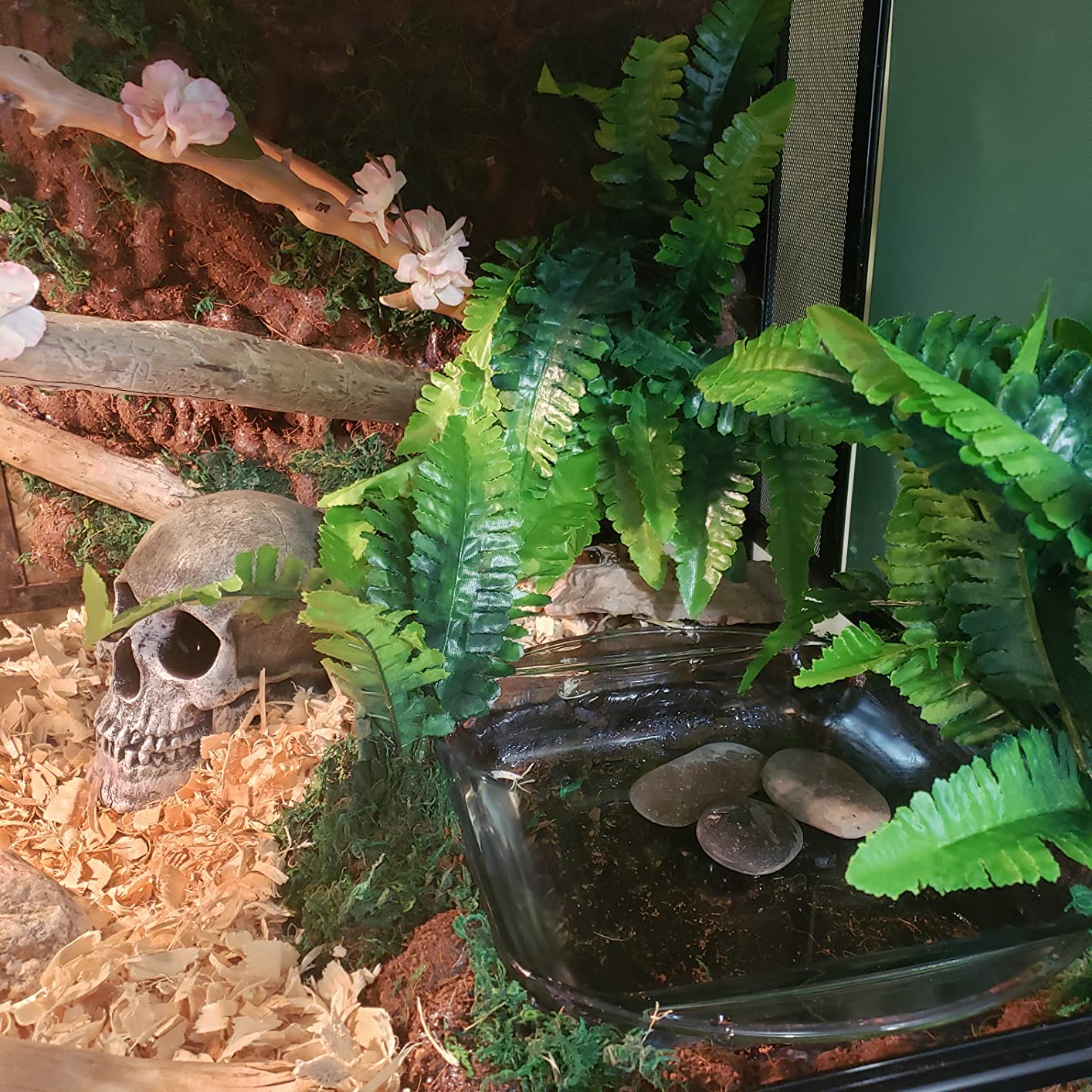
You can choose between a solid water-holding base or a removable bedding tray. The tray version is easier to strip and deep clean, which suits a wet cleaning routine on a humid species, while the solid base is the one to pick if you ever want to use water features.
Assembly is reported at roughly ten to twenty minutes, and grippy gloves are included, which sounds trivial until you are handling full-height glass panels. The unit also stacks, so vertical planning works if your ceiling height allows.
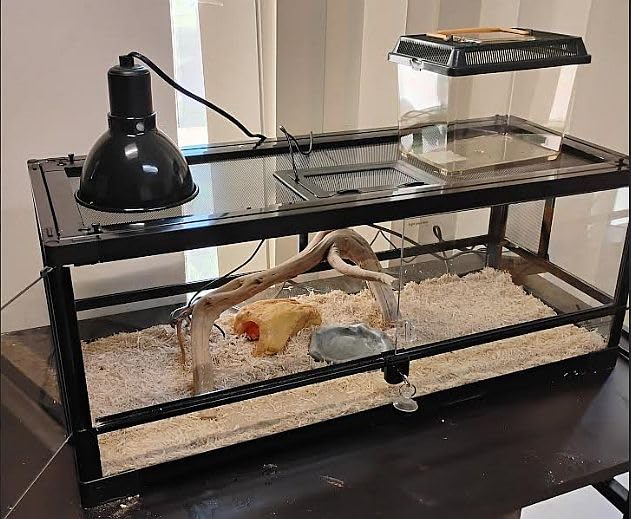
When the locking hardware is the deciding factor
Choose this one if you keep a snake with a well-earned reputation for testing gaps, or if you want the ability to lock the enclosure while you are not in the room. A feeding port in the lockable top also means fewer door cycles during a refusal-watch period.
It is also a good fit if you want one terrarium that can be split between species. The dimensions suit ball pythons, corn snakes, and other terrestrial constrictors without a rebuild.
What to watch with this glass build
Side screens make humidity retention harder, and several owners report sealing them before settling on readings. Gaps where the top screen meets the side panels can let slender snakes explore, and some keepers have taped those seams closed.
It weighs around 59.53 pounds and is mostly glass, so it has to be disassembled to move. The plastic support hardware also leaves the empty frame feeling rickety until the panels are seated and tightened, and the keyed door lock is a small grief if the key goes missing.
5. ToxiRium 230 Gallon Extra Tall – Best for Large Females and Climbing Species
ToxiRium Reptile Tank 230 Gallon, 48″x24″x46″ Large Reptile Enclosure for Bearded Dragon and Ball Python, Extra Tall Snake Terrarium with Front Opening Tempered Glass Door, Combination Lock
48x24x46 inches, 230 gallons
Black PVC side panels
Sliding tempered glass front doors with lock
78 pounds
Pros
- Rare 46 inch vertical climbing space
- Keyless combination lock
- Internal support rod stiffens the frame
- Raised bottom accepts a substrate heater
Cons
- 78 pounds demands a properly rated stand
- Black panels reduce visibility
- PVC still needs sealing for bioactive use
Height is the story here. At 46 inches tall with a 4x2x2 floor, this is the only enclosure in the group that gives a large snake real vertical room to climb, and that is exactly what you want if the animal is a female heading toward five feet or more.
Large females commonly reach 120 to 150 centimeters, meaningfully longer than the 90 to 120 typical of males, and that difference is what drives the move to a taller or longer cage. Owners who upgraded from a standard 4x2x2 report the added headroom changing how their snake uses the space.
The black PVC side panels hold heat and humidity better than glass while giving the animal visual privacy, and adjustable crossbars let you reposition heat or UVB fixtures. An internal support rod ties the top and bottom frames together and reduces flex across that height.
Who should plan for a tall enclosure
If you know your snake is a female and already over four feet, or if you want headroom that a standard 4x2x2 cannot offer, this solves a problem nothing else here does. Arboreal and climbing species are the other obvious beneficiaries of a 46 inch panel.
The keyless combination lock is a genuine convenience. There is no key to lose, and the code is easy to reset, which removes the small anxiety that comes with keyed hardware.
What makes this the hardest unit to place
At 78 pounds empty, the loaded weight demands a stand rated for the job, and most generic furniture is not. Reviewers are direct about that, and it is the single biggest reason people pass on this enclosure.
The black panels also reduce visibility compared with clear or light enclosures, so watching your snake means looking from the front only. The rating here is lower than the leaders in this list, and a handful of one-star reviews reflect the size commitment rather than a build problem. PVC seams still need sealing before any bioactive setup.
6. unipaws 110 Gallon – Best for Furnishings That Suit a Living Room
unipaws 110 Gallon Reptile Tank for Lizards, Bearded Dragon Enclosure Cage
47x23.5x23 inches, 110 gallons
Engineered wood-style build
Locking sliding glass doors
57.32 pounds
Pros
- Locking sliding doors with silicone gap seals
- Rotating cable ports keep the box closed
- Finish designed to blend with home decor
- Strong heat retention
Cons
- Wood-style composite is not for high humidity
- Heaviest per gallon in this group
- Stackers sold separately
Most enclosures are shop equipment. This one is built to sit in a living room, with a black wood grain finish and a profile that reads like furniture rather than a rack. If your snake lives in a shared space, that changes how the room feels.
The heat retention is genuinely strong, which is the trade-off running through every wood-style build. The manufacturer is clear that it suits desert species and is not recommended for high-humidity or aquatic setups, and that guidance is the deciding factor for most ball python keepers.
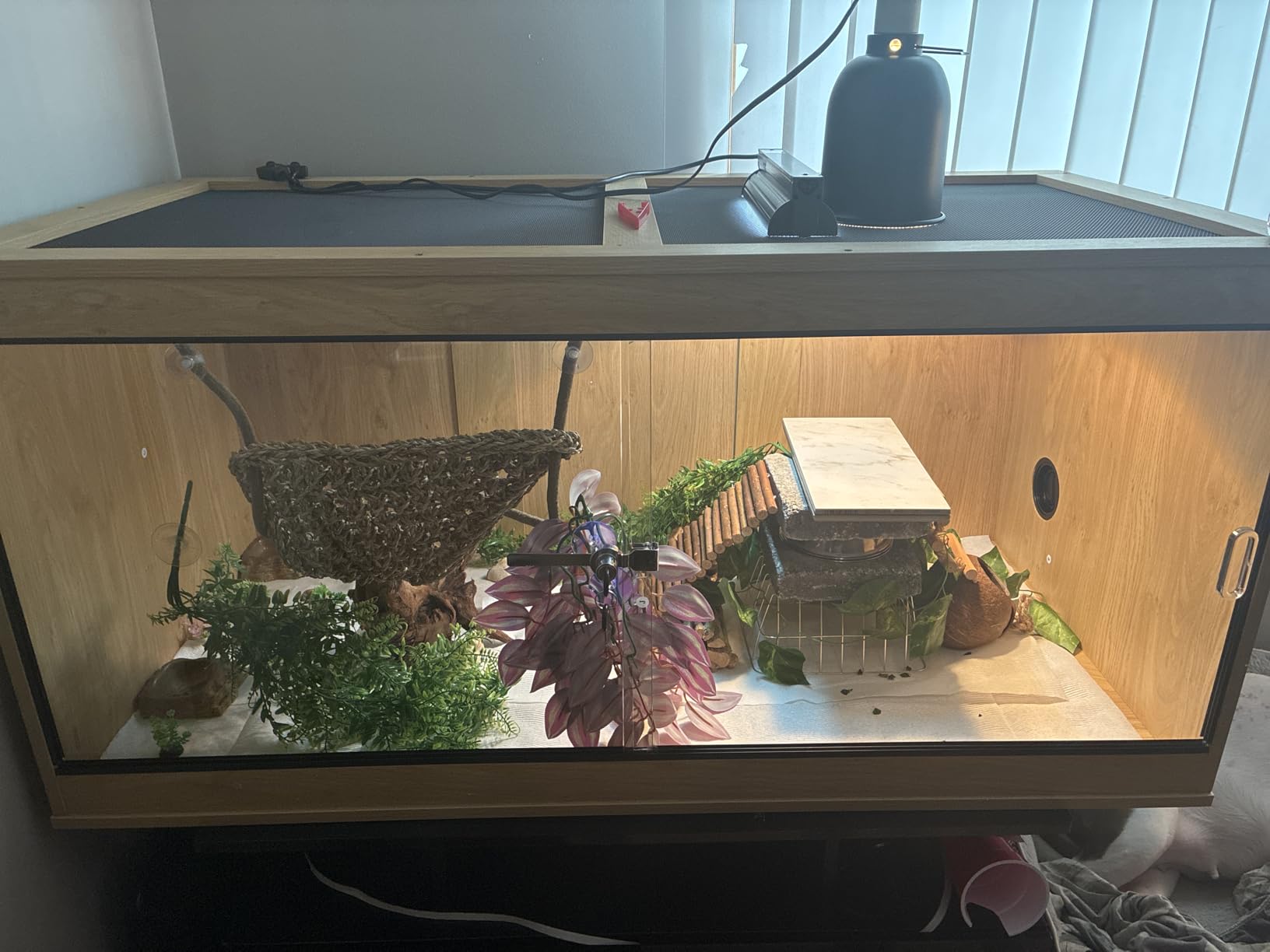
Rotating cable holes on the side panels accept up to four cables, so you can route heat, thermometers, and lighting while the doors stay shut. The silicone gap-seal bars stop feeder insects as well as pets, and the metal lock on the sliding doors is a real mechanism rather than a plastic catch.
At 47 by 23.5 by 23 inches you get 110 gallons, which is a workable floor for an adult male and a workable space for a young adult female. The stacker is a separate purchase, so budget for it if you intend to build upward.
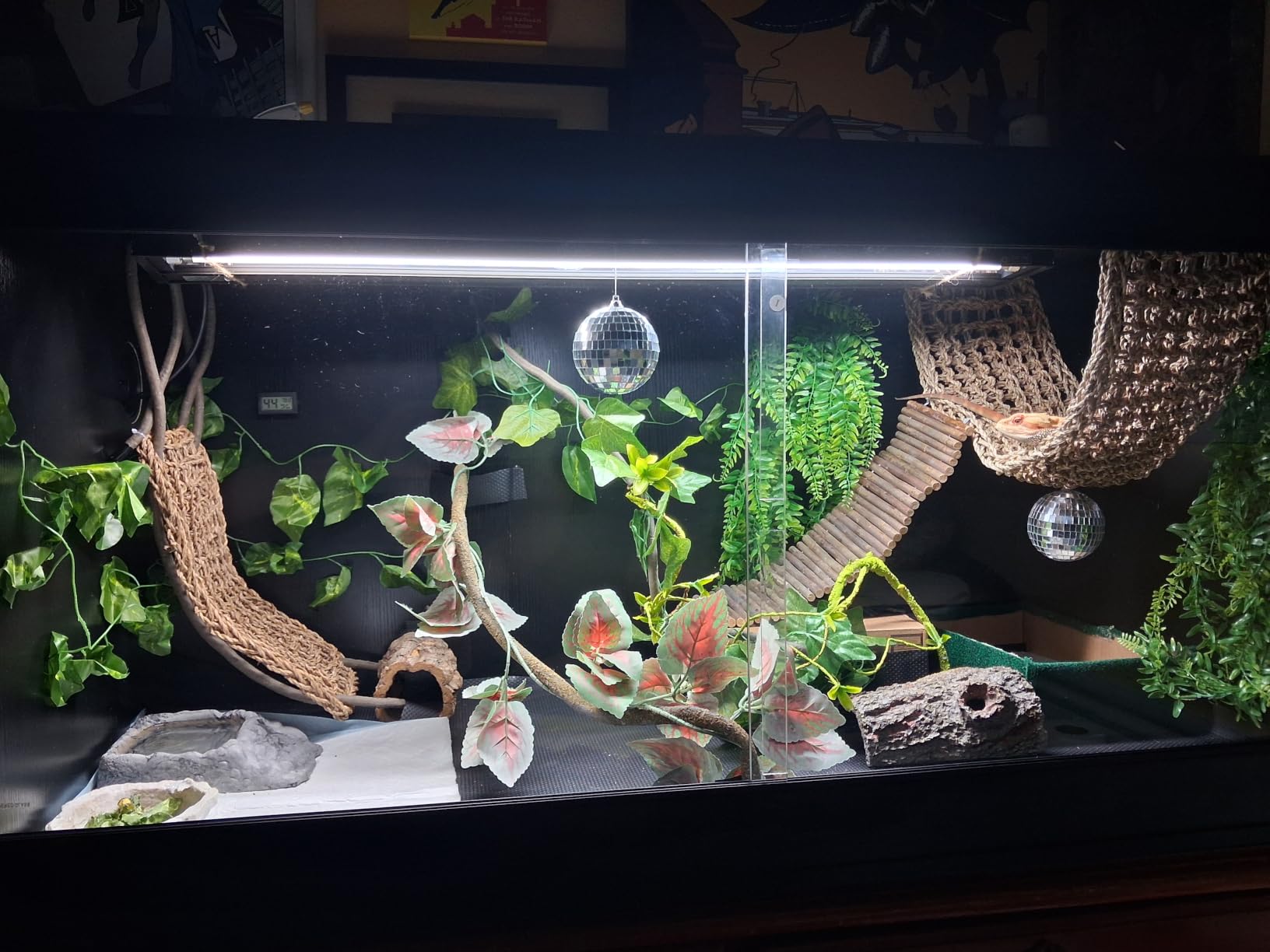
A good pick for dry-climate rooms and open-plan homes
If your home runs cool and dry, a construction that holds heat well is a genuine advantage, and the interior is described as spacious enough for thick substrate layers and climbing structure. The locking doors and sealed gaps are a real plus for anyone with a determined snake.
It is also the enclosure to consider if you already keep reptiles that prefer dry conditions and want the visual match. Several owners use it for adult bearded dragons alongside smaller setups.
Why humidity is the deciding problem here
A ball python needs a sustained 60 to 80 percent range, and a wood-style composite is the wrong material for the top of that range. You can run this box for a ball python with careful management, but you will be working against the enclosure more often than in a PVC build.
At 57.32 pounds it is also heavy for its volume, and the black grain finish is not to every taste. If humidity is already a struggle in your room, the same money goes further in a PVC enclosure built for the job.
7. REPTI ZOO 50 Gallon PVC – Best for Juvenile Ball Pythons
REPTI ZOO 50 Gallon PVC Reptile Enclosure, 36x18x18 inch Reptile Tank for Ball Python Bearded Dragon Snake Gecko, Reptile Terrarium Lounge Habitat with Glass Sliding Door & Top Screen Ventilation
36x18x18 inches, 50 gallons
High-grade PVC panels
Tempered glass sliding door with lock
39.85 pounds
Pros
- Thicker PVC panels than most rivals
- Sliding door includes a safety lock
- Upper and lower ledges add seclusion
- Light and easy to clean
Cons
- Screws and retainers can crack during assembly
- Light shows through some panel gaps
- Door lock feels flimsy to some owners
This is the sensible middle step. At 50 gallons it holds a growing juvenile comfortably without the weight and footprint of a full size cage, and the PVC panels keep heat and humidity far steadier than the glass version of the same footprint.
Owners of ball pythons and bearded dragons frequently single out the panel thickness, which is noticeably heavier than most competing builds. The upper and lower ledges give a young snake places to hide without adding separate furniture, which helps a snake that feels exposed.
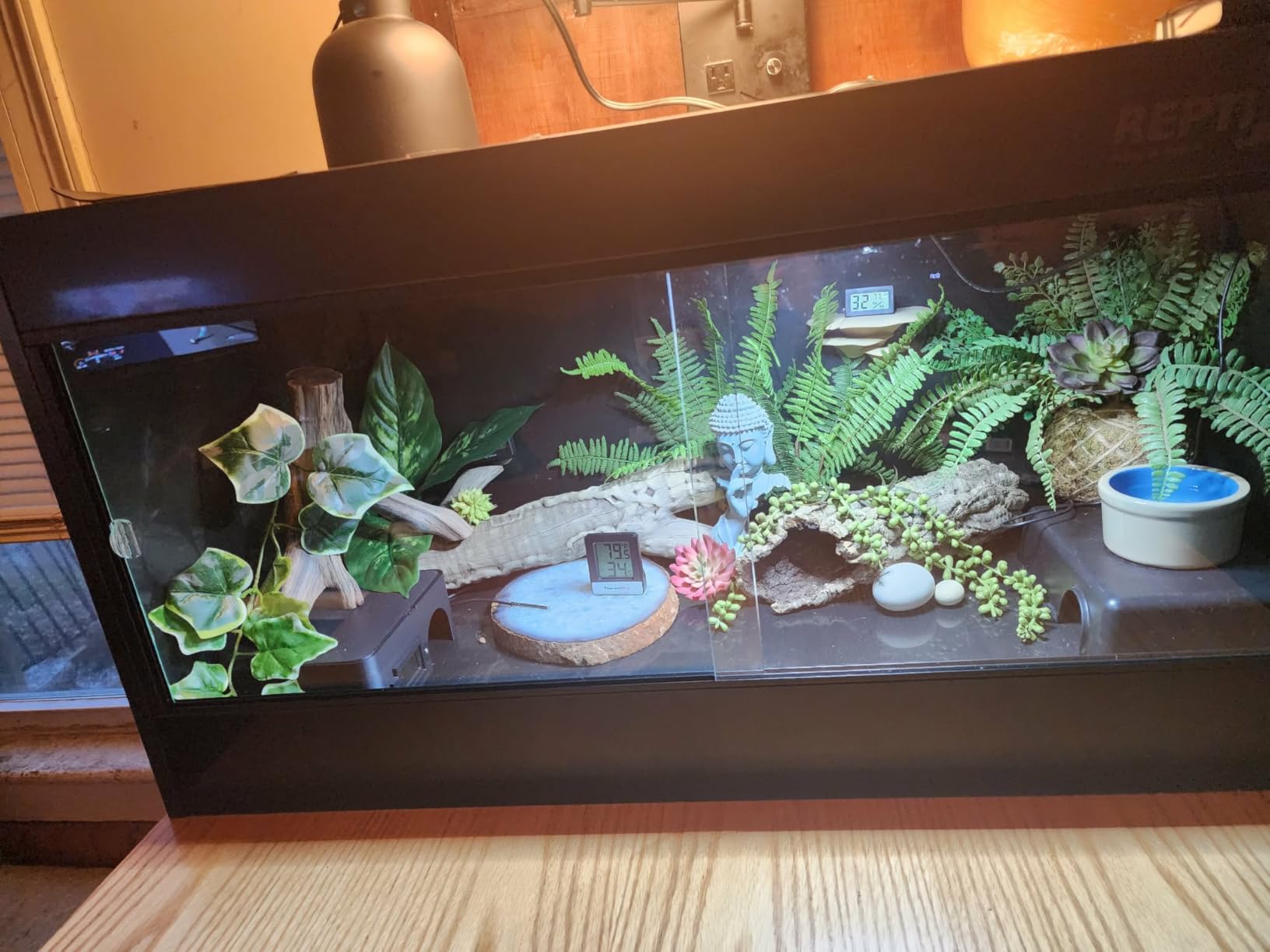
The detachable top mesh screen passes UVB, infrared, and full-spectrum light while still moving air, and the same range of sizes is available so you can move up within one product line later. The sliding door lifts out for cleaning and carries a safety lock as standard.
As a mid-stage enclosure it fits between a plastic starter tub and a permanent adult cage. If your snake is a year or so old and growing fast, buy the next size up rather than planning to use this one twice.
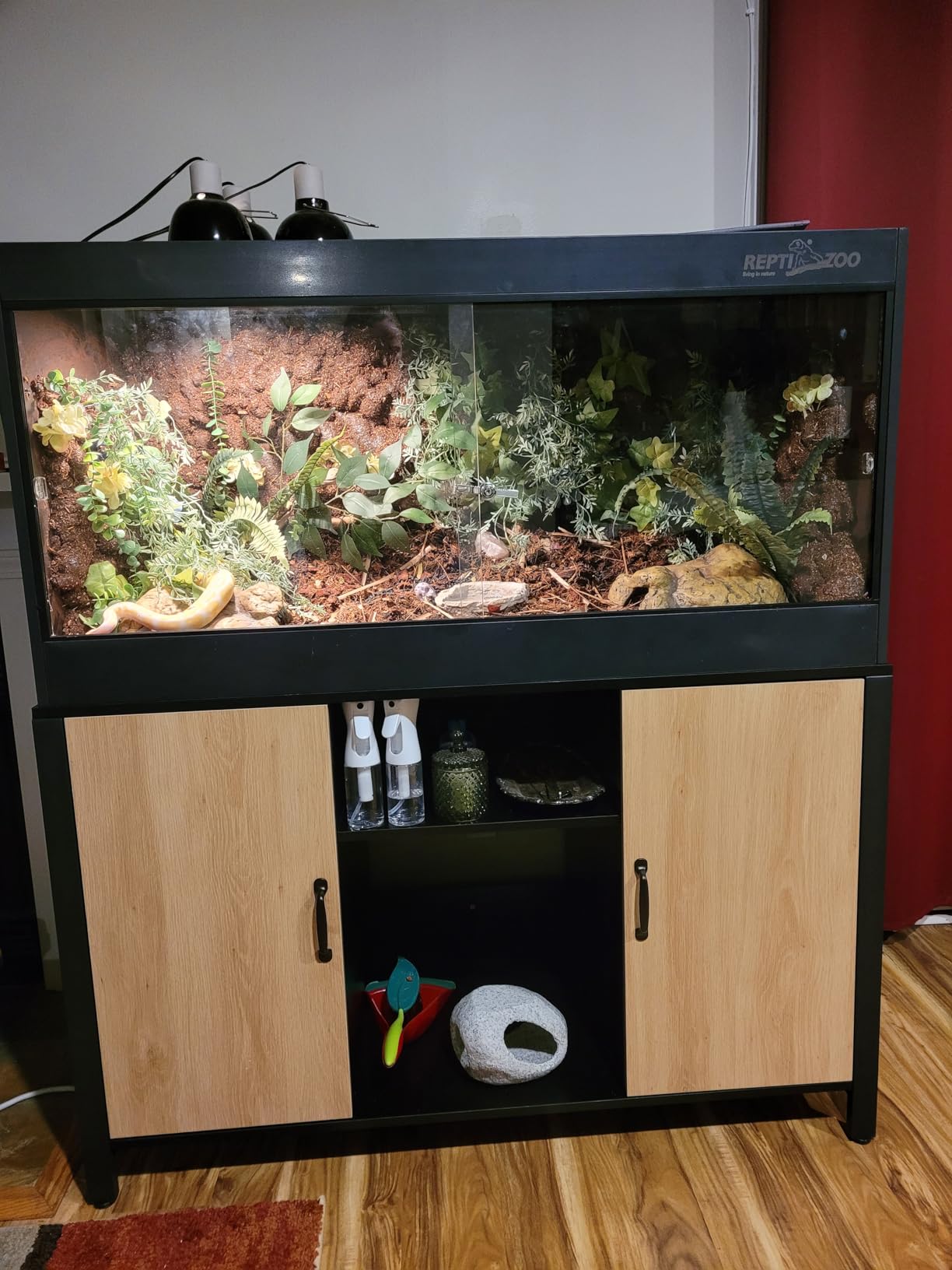
Best for a young snake still growing quickly
Pick this when your ball python is around a yearling and you know a move is coming. It gives a growing animal more than a starter tub, keeps humidity steadier than glass, and stays light enough to reposition without help at under 40 pounds.
It also works as a quarantine or hospital enclosure, which is a common second use. The smooth PVC surface cleans easily and does not absorb odor the way some wood-based builds do.
Where the assembly experience gets in the way
Several reviewers reported cracked screw holes and retainers popping out mid-build, and some saw light through panel gaps that undercuts the insulating benefit. Assemble it slowly on a flat surface with a good light, and check every seam before the animal moves in.
The included door lock is considered flimsy by a number of owners, and the bottom panel can leak if you pour water directly into it for humidity. Use a spray or a humidifier across the top instead, and add your own clips if your snake tests doors.
8. REPTI ZOO 67 Gallon Tall PVC – Best for Arboreal and Rainforest Setups
REPTI ZOO 67 Gallon PVC Tall Reptile Tank, 24 x18x36 inch Large Reptile Terrarium for Gecko Lizard Chameleon Frog Snake, Enclosure Habitat with Sliding Door & Top Screen Ventilation
24x18x36 inches tall, 67 gallons
High-grade PVC panels
Removable glass sliding door with lock
50 pounds
Pros
- Tall format for climbing and arboreal species
- Non-absorbent panels recover humidity fast
- Removable glass door with safety lock
- Minimalist black finish
Cons
- Two-piece back panel adds a leak point
- Glass sits thin in the door tracks
- Printed instructions are poor
The footprint is narrow and tall, which is the opposite of what a ball python wants horizontally, so this is not our top recommendation for the species. It earns a place because a lot of keepers keep other reptiles alongside their ball python and want one tall PVC box that handles wet conditions.
The panels are non-absorbent, so humidity recovers quickly after heating stops, and the build is described as holding up well in a bioactive setup once sealed. Gecko, chameleon, and small snake owners rate it highly for exactly that reason.
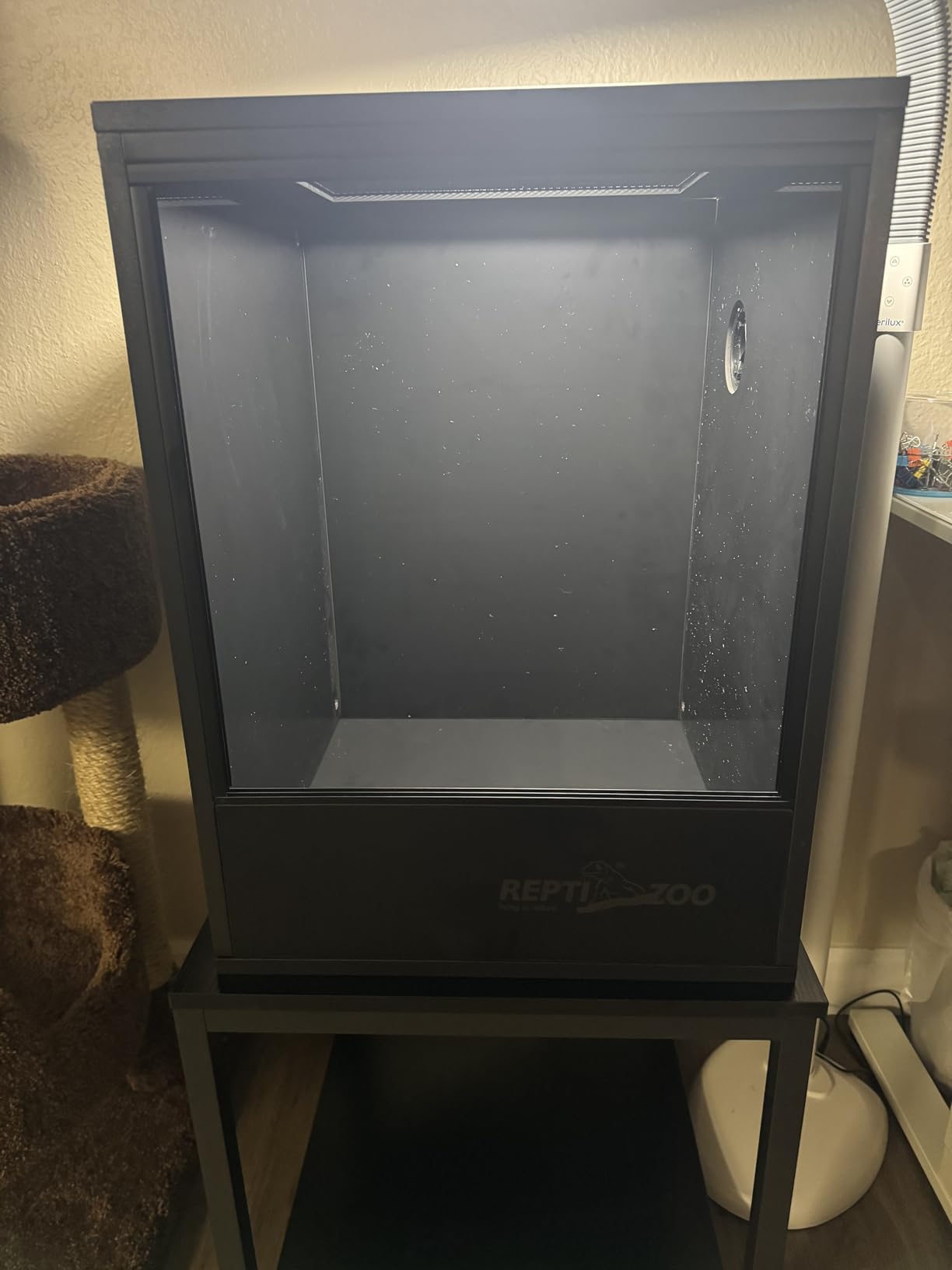
The removable tempered glass sliding door includes a safety lock, and the top screen provides ventilation without opening the whole box. The black minimalist finish is designed to coordinate with home decor rather than disappear into a rack.
For a ball python specifically, the narrow 18 inch depth means less floor area for a stretched-out adult, so treat this as a temporary or secondary setup rather than a permanent home for a full grown female.
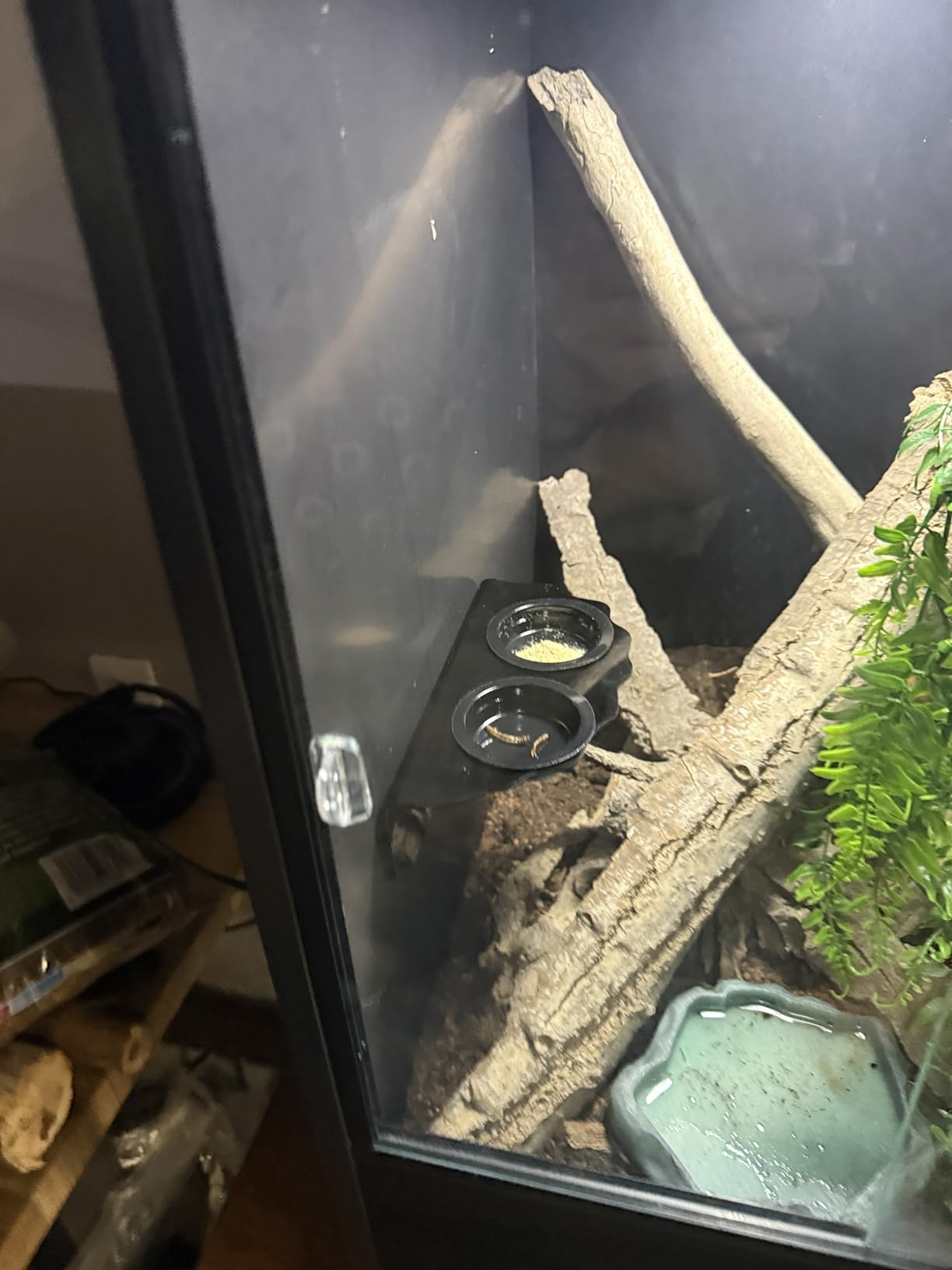
When a tall box is the right second enclosure
Choose it for a chameleon, a crested gecko, a tree frog, or a juvenile arboreal species sharing your collection. A 36 inch vertical panel is hard to find in PVC at this level, and the moisture resistance is the whole point of the design.
It also works as a temporary grow-out box for a small ball python, where a narrow footprint reduces the exposed area a nervous juvenile has to cover.
What to fix before anything goes inside
The back panel splits into two pieces, which creates an extra leak point that needs reptile-safe silicone. Reviewers are blunt that this enclosure should not be bought without silicone in hand, and the printed instructions will not get you there alone.
There is also a narrow gap between the door glass and the tracks that one ball python owner flagged as a hazard for slender-bodied snakes, worth sealing or taping if you use it for a young animal. The substrate dam and back panel are opaque, so expect a partially obstructed view.
9. ToxiRium 76 Gallon Two-Pack – Best for Breeders and Multi-Snake Setups
PVC Reptile Enclosure Space Efficient 44”x20”x20” Stackable ToxiRium Large Reptile Terrarium 76 Gallons for Bearded Dragon Lizard Snake, Breeding Vivarium with Sliding Doors Lock-2pcs with spacers
Two units at 44x20x20 inches, 76 gallons each
PVC with support bars
Sliding doors with locks
39 pounds
Pros
- Two enclosures ship with spacers and locks
- Support bars keep lighting fixtures secure
- Bottom supports decor up to 105 pounds
- Light enough to reorganize between rooms
Cons
- Sold only as a pair
- Seams must be sealed for high humidity
- Black finish limits visibility
This listing is two enclosures, spacers, and a locking kit in one package, which makes it a straightforward option for anyone running a pair or planning to breed. You get the stacking hardware on day one instead of hunting for compatible spacers later.
The support bars are the detail reviewers mention most. Bars across the top screen hold heat and UVB fixtures where you put them rather than letting them shift, and the bottom support bars are rated for decorations up to 105 pounds, which is a serious amount of weight for a reptile enclosure.
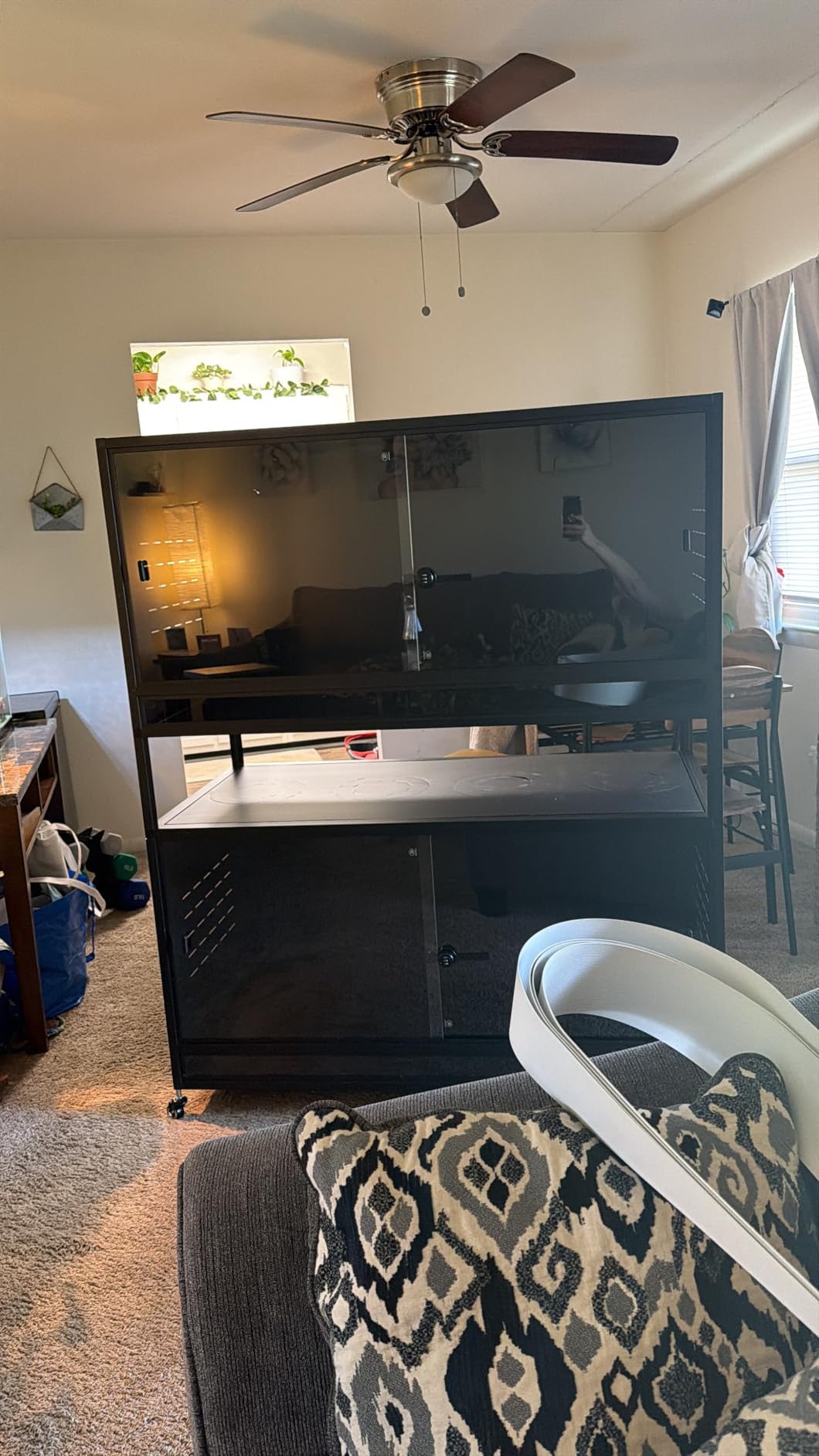
Each unit measures 44 by 20 by 20 inches for 76 gallons, with a 48 by 24 by 24 option also available in paired form. PVC’s lower thermal conductivity means less heat loss than glass, and the listing is suited to ball pythons, bearded dragons, leopard geckos, sand boas, and small tortoises.
Black and white finishes are available. The black version is more private for the animal and less useful if you want to watch movement across the enclosure.
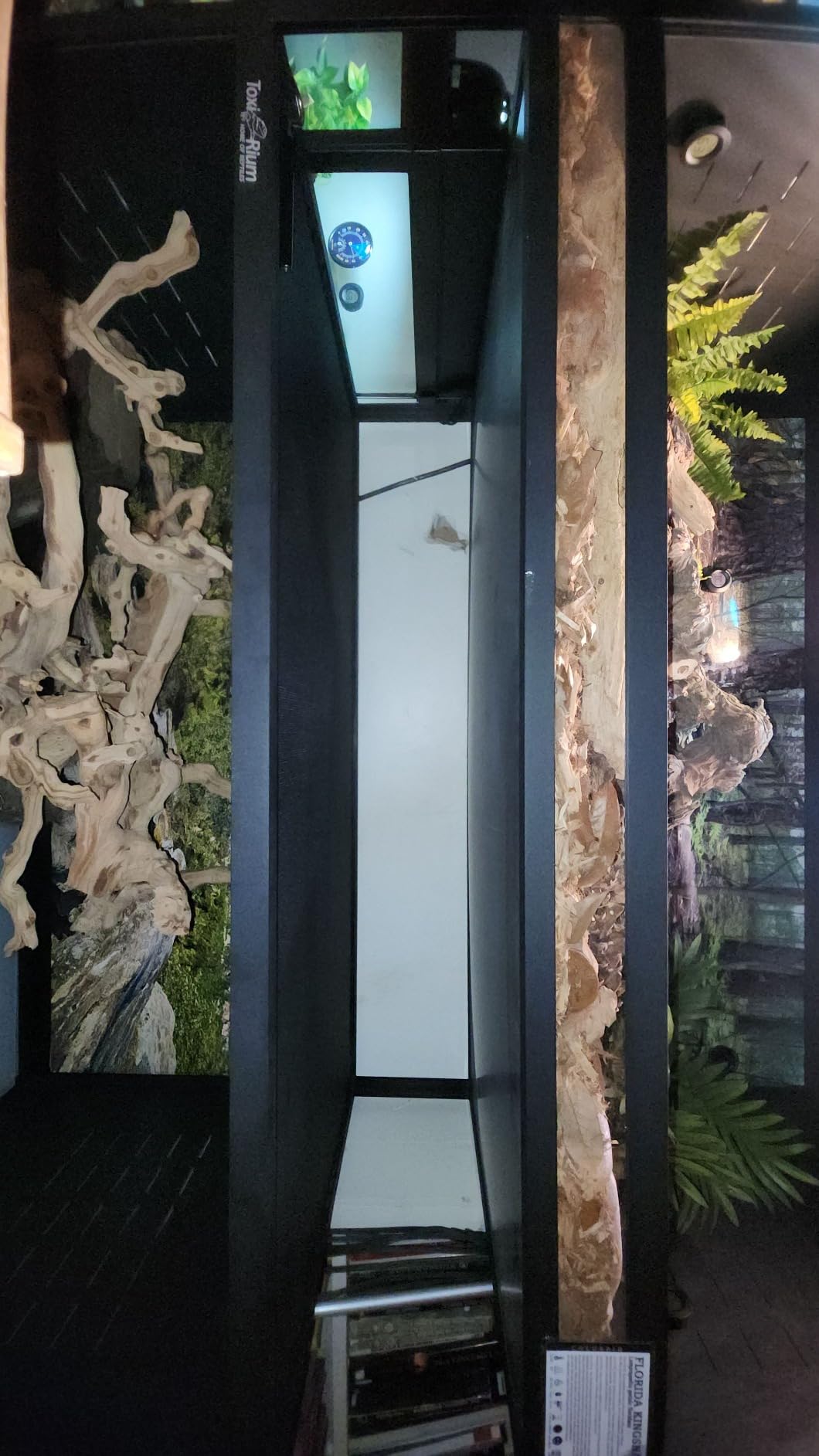
Why breeders and collectors like this set
If you need two habitats, the two-pack removes the compatibility problem entirely. The enclosures are designed to stack, the spacers are included, and the locks are part of the kit, so a mixed-height rack is possible from the first day.
For anyone keeping more than one snake, the fixture support bars and the decoration weight rating both matter more than usual, because you will be building out each habitat rather than leaving one bare.
What makes this set awkward for one snake
If you only need one habitat, this set gives you more than the job requires, and the second unit needs somewhere to live. It is also the most demanding order in this group to receive, set up, and store while empty.
Seams must be sealed with silicone before bioactive or sustained high-humidity use, which doubles your setup time across the pair. The 4.2 average sits mid-range for this list, with more four-star than five-star feedback compared with the leaders here.
10. REPTI ZOO 50 Gallon Glass – Best as a First-Time Starter Tank
REPTI ZOO 50 Gallon Reptile Glass Terrarium Tank Double Hinge Door with Screen Ventilation Large Reptile Terrarium 36″ x 18″ x 18″(Knock-Down)
36x18x18 inches, 50 gallon
Classic all-glass build
Double hinge front doors
52 pounds
Pros
- Double hinge doors open independently
- Waterproof raised bottom fits a substrate heater
- Closable wire and tubing inlets
- Knocks down for moving
Cons
- Glass loses heat and humidity quickly
- Screen top and mesh sides fight humidity
- 52 pounds is heavy once decorated
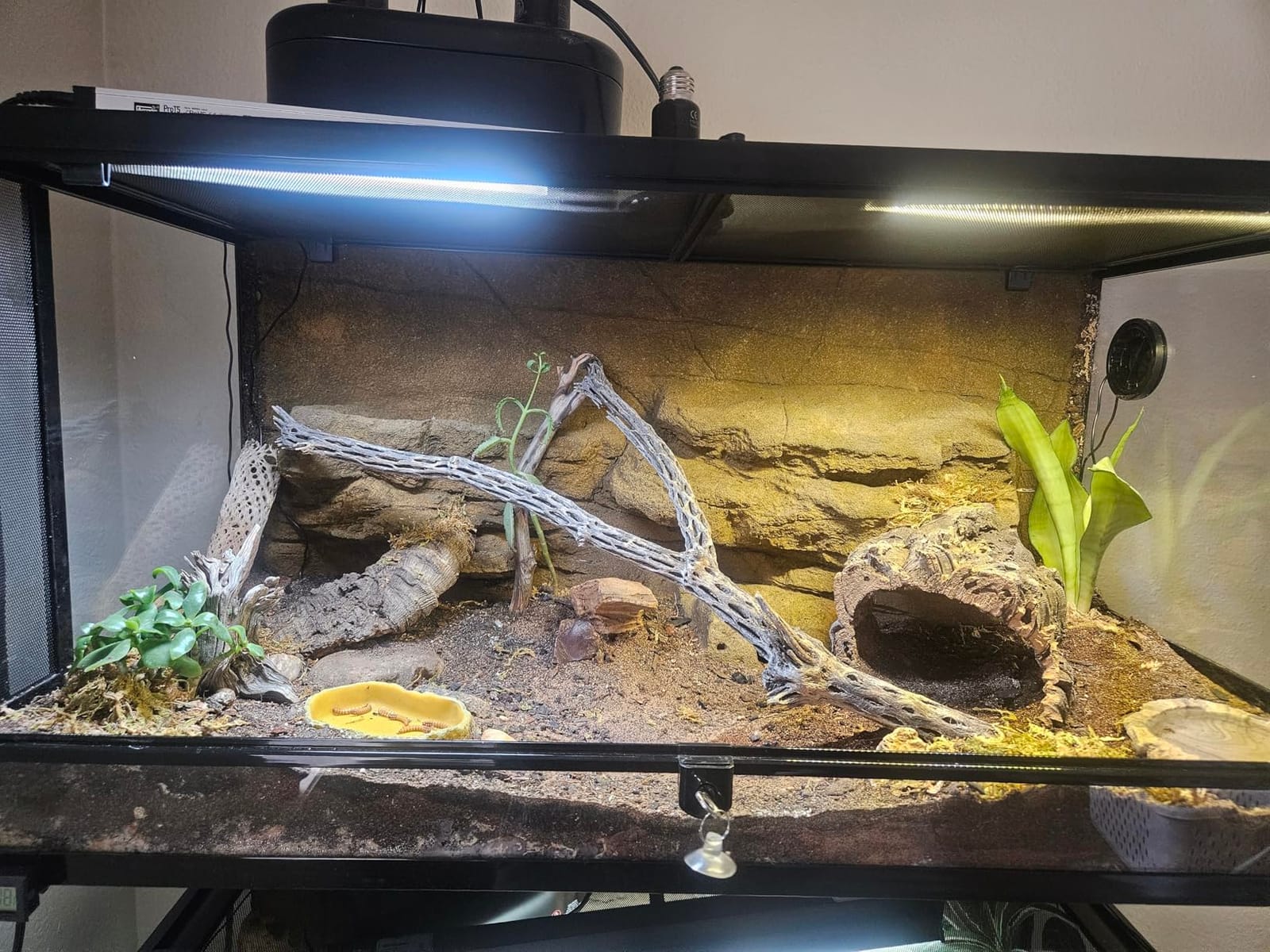
We are including a glass tank here deliberately, because a lot of first-time keepers buy one, and knowing what it does well makes the upgrade decision easier later. As a temporary habitat for a very young snake on a short timeline, the convenience is real.
Double hinge front doors that open separately are the standout feature. You can slide one open to feed without exposing the whole front, which reduces the way a feeding response can go wrong with a nervous animal.
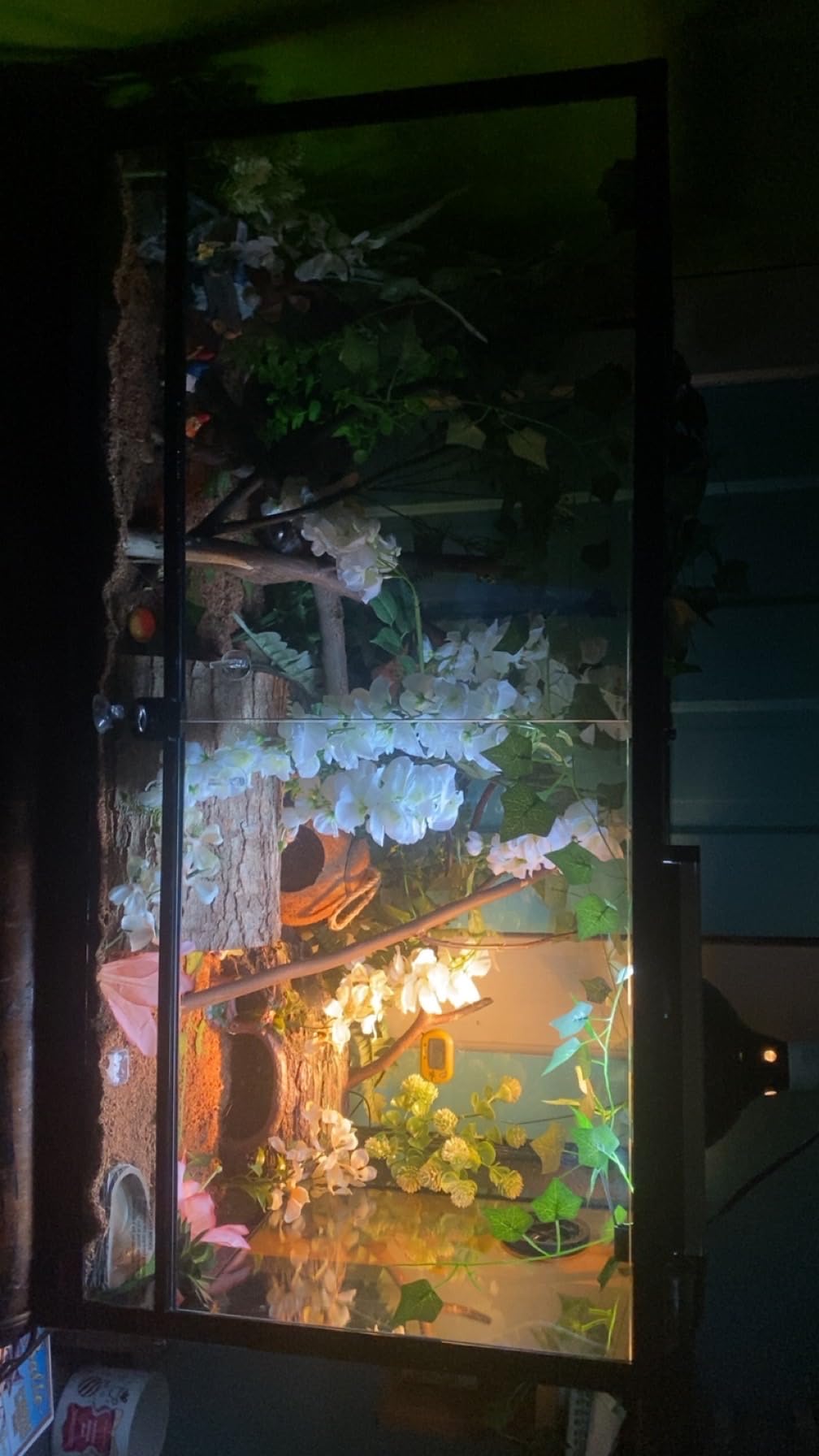
The raised waterproof bottom frame is designed to accept a substrate heater, and closable wire and tubing inlets on multiple sides make it straightforward to run equipment without leaving gaps open. The knock-down design installs in about five minutes and comes apart again for moving.
This variant uses mesh sides rather than glass, and a tough screen top passes UVB and infrared light. Both of those features help with lighting while working against the humidity a ball python needs.
When a glass starter tank still makes sense
Use it if you have just acquired a very young ball python, need something functional this week, and can plan the upgrade. The doors, the sealed bottom, and the cable inlets make daily handling straightforward while your setup skills catch up.
It is also a good fit if you later want a display piece for a smaller terrestrial species, since the classic glass format is easier to sell on than a specialist PVC build.
Why keepers outgrow this format fast
Glass conducts heat and moisture away from the animal, so a gradient set up inside collapses quickly, and the screen top with mesh sides makes humidity the daily challenge. Expect to spend more effort on misting and more risk of damp substrate going sour.
At 52 pounds it is heavy once decorated, and the 36 by 18 by 18 footprint leaves an adult ball python without floor space. Keepers consistently report upgrading to a PVC enclosure within the first year, which is why most of them name buying too small the first time as their main regret.
How We Picked: The Criteria That Matter for This Species
We weighted five things, and they are weighted differently here than they would be for a general reptile roundup. Humidity retention came first, then interior floor space, then access method, then lock security, then weight and handling.
Species fit drove every call. Aesthetically identical enclosures sit at very different positions in this list depending on whether the panel material holds moisture, and we did not let brand recognition move a product up a place. Warranty length and the volume of owner history acted as tie-breakers rather than primary criteria.
We also treated published dimensions as a filter. Any enclosure that claims 4x2x2 but measures short in height, like the ECOFLEX, is flagged in its section rather than quietly promoted to full size.
What Size Enclosure Is Best for a Ball Python?
An adult ball python needs at least a 4x2x2 enclosure, which is 48 by 24 by 24 inches, often called a 120 gallon footprint. That is the floor for a full grown animal, not a generous target, and anything smaller should be treated as temporary housing.
Here is how we would size by life stage. A hatchling is fine in a 10 to 20 gallon tub with a tight-fitting lid for the first few months, and by one year old a 40 gallon tub is the most a growing snake needs. From two years old, move to 50 to 60 gallons, and at three years and beyond, go straight to 4x2x2. A large female over five feet will want 4x2x3 or a 5x2x2 style footprint.
Keepers repeatedly report that the most common first mistake is buying too small and buying twice. Ball pythons grow quickly in the first eighteen months, and a tub that was correct at acquisition can be undersized within a year.
Extra space only pays off when you cover it. A 4x2x2 with two hides and open floor is a worse environment for a nervous snake than a smaller cage with dense clutter, and refusal to eat is often the first sign that an enclosure feels exposed.
PVC vs Glass vs Plastic Tub for Ball Pythons
PVC is the right material for this species. It holds heat and moisture, does not warp in a humid room, and does not need to be sealed for insulation purposes. Glass is durable and easy to clean but pulls heat and humidity out of the enclosure, and a plastic tub is only a temporary home.
Screen tops are the specific thing to avoid. A mesh top dumps humidity into the room and lets the warm air follow it, which turns a set enclosure into a daily misting chore. If the enclosure you already own has one, cover it with a sealed panel before you judge the rest of the setup.
Two more traps are worth naming. Undersized starter kits are still sold against outdated sizing standards, so read the interior dimensions rather than the word kit on the label. And bundles that skip a thermostat or include a heat rock cause burns and heating scares, so treat any enclosure sold that way as needing extra hardware.
Front-opening access beats top-opening for a reason that is behavioral rather than mechanical. A hand or hook coming down from above reads as a predator strike, and a snake that feels threatened is a snake that refuses. Sliding glass doors let you feed and clean from the side, which is why every pick in our top three has them.
Holding 60-80% Humidity and a Safe Temperature Gradient
The target range is 60 to 80 percent humidity sustained, not sprayed on. A deep moisture-retentive substrate layer, a partially covered top, and minimal door time do more for stable readings than repeated misting does, and 90 percent readings usually mean the substrate is too wet rather than the enclosure working better.
Temperature works the same way. Aim for a warm side around 88 to 92 F and a cool side around 75 to 80 F, with the animal moving between them freely. A thermostat is not optional, and skipping it is the second most common regret reported by keepers, disproportionately linked to heating scares.
Place a thermometer at the level of the substrate where the snake will actually rest, not at the top of the enclosure, and use a second one on the cool side to confirm the gradient exists. Heat sources that do not need to be inside the box, such as an under-tank heater with a thermostat, are the safer starting point.
Your hardware list is short: a thermostat, a heat source matched to the enclosure volume and your room temperature, a moisture-retentive substrate deep enough to hold a wetter layer at the bottom, at least two hides, and a water bowl. Add a substrate dam or humidity shield if you run a deep bioactive setup, since it stops moisture from reaching the panels. If you would rather start from a ready-made accessory set, our gifts for reptile owners guide covers the supporting hardware worth adding to a new cage.
One last check before the animal goes in: confirm the stand or furniture is rated for the loaded weight, not the shipping weight. A decorated enclosure is far heavier than the number on the listing, and replacing a stand is easier than replacing flooring.
Frequently Asked Questions
What size enclosure is best for a ball python?
An adult ball python needs at least a 4x2x2 enclosure, which measures 48 by 24 by 24 inches and is commonly called a 120 gallon footprint. A hatchling can start in a 10 to 20 gallon tub, a yearling in a 40 gallon tub, and a two-year-old in a 50 to 60 gallon cage. Large females over five feet do better with a 4x2x3 or taller footprint.
What type of enclosure is best for ball pythons?
A front-opening PVC enclosure with sliding glass doors is the best type for ball pythons. PVC panels hold heat and humidity far better than glass, and front doors let you feed and clean without reaching over the top, which reduces feeding stress. Avoid screen-top glass tanks and plastic tubs beyond the first few months.
Is a 4x2x2 enclosure good for a ball python?
Yes, a 4x2x2 is the adult minimum for a ball python and works well for a full grown animal when it is furnished properly. Provide at least two hides, a water bowl, and a deep moisture-retentive substrate, and cover or seal the top so humidity holds between 60 and 80 percent without daily misting.
Is 90% humidity too high for a ball python?
Sustained readings near 90 percent are too high, and they usually mean the substrate is over-wet rather than the enclosure performing well. The target is 60 to 80 percent. If you are seeing 90, improve drainage, add ventilation, or mix in a drier top layer of substrate rather than misting less alone.
Where should I place a thermometer in a ball python enclosure?
Place the main thermometer at substrate level on the warm side, where the snake will actually rest, rather than at the top of the enclosure. A second thermometer on the cool side confirms the gradient is real. Both should sit near, but not directly on top of, the heat source so the reading reflects ambient conditions.
Is 92 degrees too hot for a ball python?
A warm side reading of 92 F sits at the top of the recommended range rather than being dangerous, as long as the cool side stays around 75 to 80 F. What causes injury is an even temperature with no gradient, or an unmonitored heat source. A thermostat keeps the warm side steady so the animal can move away when it wants to.
How many hides does a ball python need?
Provide at least two hides, one on the warm side and one on the cool side, so the snake can choose its preferred temperature without choosing between staying hidden and staying comfortable. A third hide helps in a larger enclosure, and covering a hide entrance with a piece of cork bark further reduces exposure.
The Bottom Line
The Phailozoo 120 Gallon is our choice for the best reptile enclosures for ball pythons, because a true 4x2x2 PVC footprint, tempered glass front doors, and a bolt-together frame solve the three problems that send keepers back to the store within a year. Add your own door clips, seal the bottom for a bioactive build, and it is ready for an adult.
If weight is your constraint, the Reptile Habitats 4x2x2 gives up almost nothing to move between rooms on your own. If you want a fitted lock and a ten-year warranty behind it, the New Age Pet ECOFLEX is the value route, once you cover the mesh top.
Whatever you choose, the hardware is part of the purchase. A thermostat, a properly sized heat source, a deep moisture-retentive substrate, and two hides are what turn a box into a habitat. Check the current figures for each enclosure using the buttons above, and start your setup this week.