
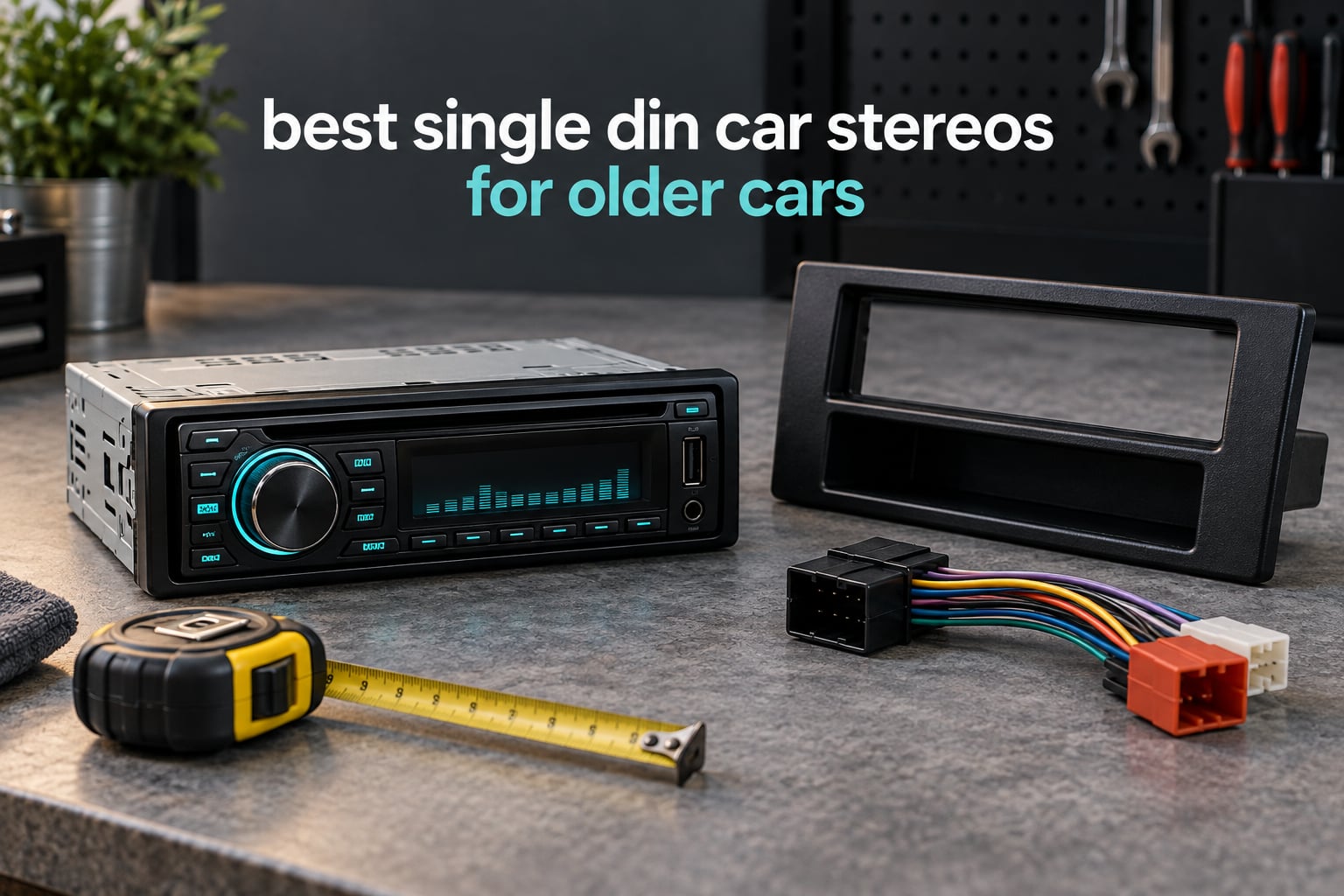
If your car was built before the touchscreen era, its dashboard opening is almost certainly the old-fashioned single-DIN size, and that single fact decides which stereos you can install. The best single din car stereos for older cars are the ones that slide into a 180 x 50 mm factory slot, keep the original trim in place, and still give you Bluetooth calling, USB music, and an amplifier-friendly set of outputs.
A single-DIN head unit is the standard car stereo format used in most vehicles built before the mid-2000s. It measures 2 x 7 inches (180 x 50 mm), where a double-DIN opening is roughly 4 x 7 inches. Double-DIN is what modern touchscreen head units use, and on an older dashboard a double-DIN screen is exactly the wrong shape: it covers vents, blocks climate controls, and leaves gaps around the fascia.
We spent weeks reading owner reviews and install reports on ten of the strongest single-DIN units currently on the market, then sorted them by what actually matters in a twenty-year-old car. Fitment, dash depth, steering wheel control retention, and whether the internal amplifier can wake up tired factory speakers. This is the same logic behind our guide to HDMI scalers for older TVs — modern features, old hardware.
Two things shape every pick below. First, a lot of older cars are still on original wiring and oxidized factory speakers, so headroom matters more than headline wattage. Second, the mechanical radio cage behind the dashboard opening is often shallower than people expect, so chassis depth decides whether a job is a weekend or a weekend and a half.
Table of Contents
Top 3 Best Single DIN Car Stereos for Older Cars (October 2026)
The Alpine UTE-73BT is the best single din car stereo for older cars overall because it carries the highest average rating in this group and ships with an RBDS tuner that most single-DIN units skip. The Pioneer MVH-S322BT is the value pick, with 13-band EQ and selectable RCA pre-outs for very little more money. The BOSS Audio Systems 616UAB is the budget pick and the most widely reviewed single-DIN unit we looked at.

Alpine UTE-73BT Mech-Less Receiver
- Mechless AM/FM tuner with RBDS
- FLAC MP3 and WMA over USB
- Bluetooth with hands-free calling
- 72W output for factory speakers

Pioneer MVH-S322BT
- 13-band EQ with Advanced Sound Retriever
- Front rear and subwoofer selectable RCA pre-outs
- Pioneer Smart Sync app control
- Color-change illumination

BOSS Audio Systems 616UAB
- Bluetooth streaming and hands-free calling
- Front and rear RCA pre-amp outputs
- Switchable US and Europe tuner
- 200W max output
All 10 Single DIN Head Units at a Glance in 2026
Here is the short version before the detail. Every unit below is a true single-DIN format meant for a 180 x 50 mm dashboard opening, and all ten carry a Bluetooth radio plus USB playback.
| Product | Specifications | Action |
|---|---|---|
| Alpine UTE-73BT |
|
Check Latest Price |
| Pioneer MVH-S322BT |
|
Check Latest Price |
| BOSS Audio Systems 616UAB |
|
Check Latest Price |
 Pioneer DEH-S4220BT Pioneer DEH-S4220BT |
|
Check Latest Price |
 JVC KD-SX27BT JVC KD-SX27BT |
|
Check Latest Price |
 Kenwood KMM-BT270U Kenwood KMM-BT270U |
|
Check Latest Price |
 BOSS Audio Systems 632UAB BOSS Audio Systems 632UAB |
|
Check Latest Price |
 Jensen MPR210 Jensen MPR210 |
|
Check Latest Price |
 REAKOSOUND 820s REAKOSOUND 820s |
|
Check Latest Price |
 PLZ MP-106 PLZ MP-106 |
|
Check Latest Price |
1. Alpine UTE-73BT Mech-Less Receiver – Best Overall for Older Cars
Alpine UTE-73BT Mech-Less Digital Media Receiver with Bluetooth® Wireless Technology
Mechless AM/FM with RBDS
72W output
FLAC MP3 WMA over USB
1 year warranty
Pros
- Highest average rating in this group
- RBDS radio data that few single-DIN units include
- FLAC MP3 and WMA playback over USB
- Clean mechless fit that keeps the factory dash look
Cons
- No CD playback
- 72W output needs an amplifier for loud systems
- Auxiliary input only with no front media port
The Alpine UTE-73BT is the best single din car stereo for older cars because it does the least flashy things exceptionally well. The tuner pulls in stations cleanly and displays RBDS text, which most competitors in this group simply cannot do. That matters more in an old car than it sounds like it should, because a 1990s dashboard has nowhere good to hide a mediocre antenna.
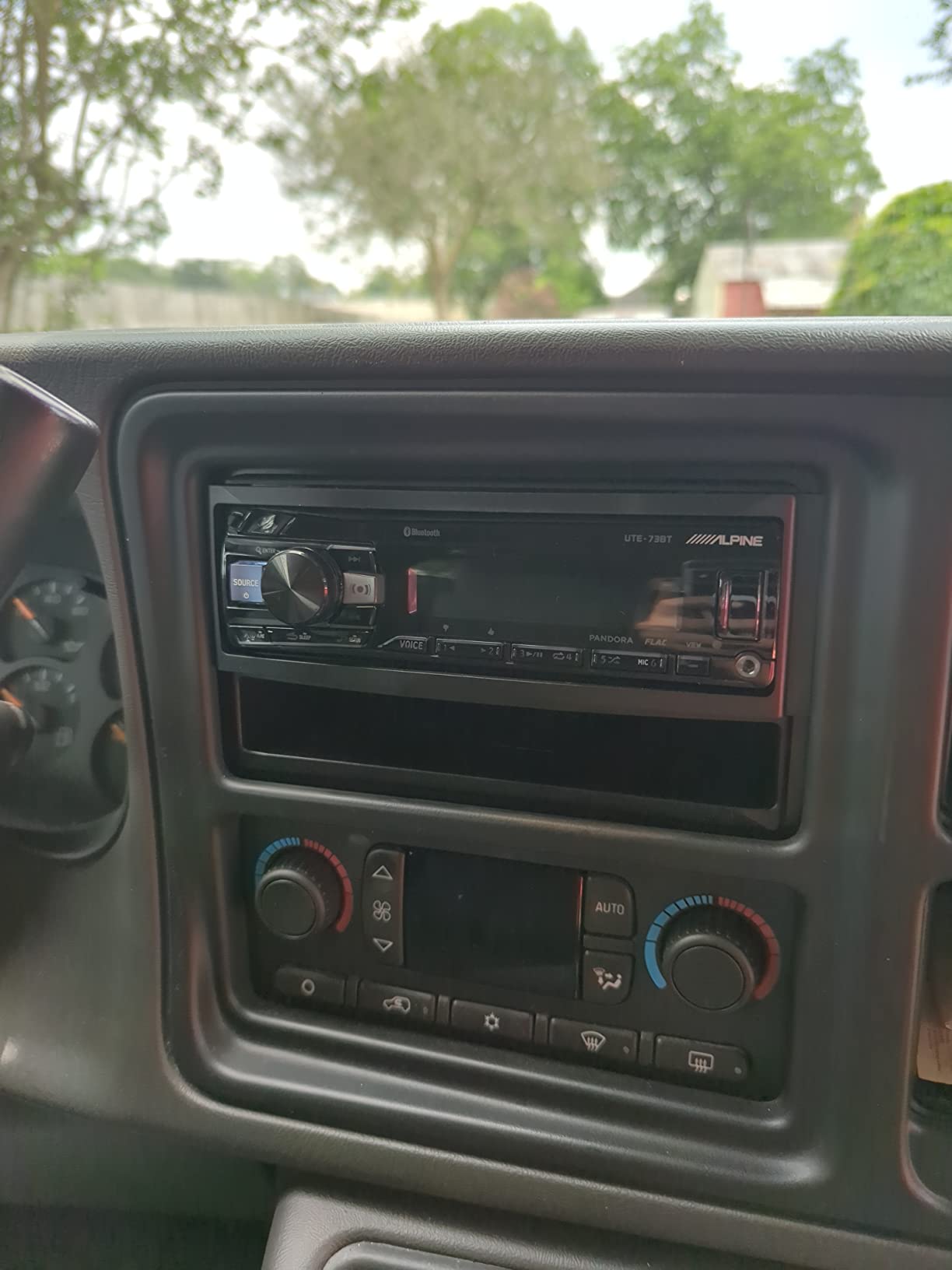
Our team put this unit through daily commute driving and found the mech-less layout keeps the face flush with the factory bezel, with no wobble and no visible seam. The knob and button layout is short enough to reach without looking down, and the Bluetooth pairing held through a full month of starts and stops without a manual reconnect.
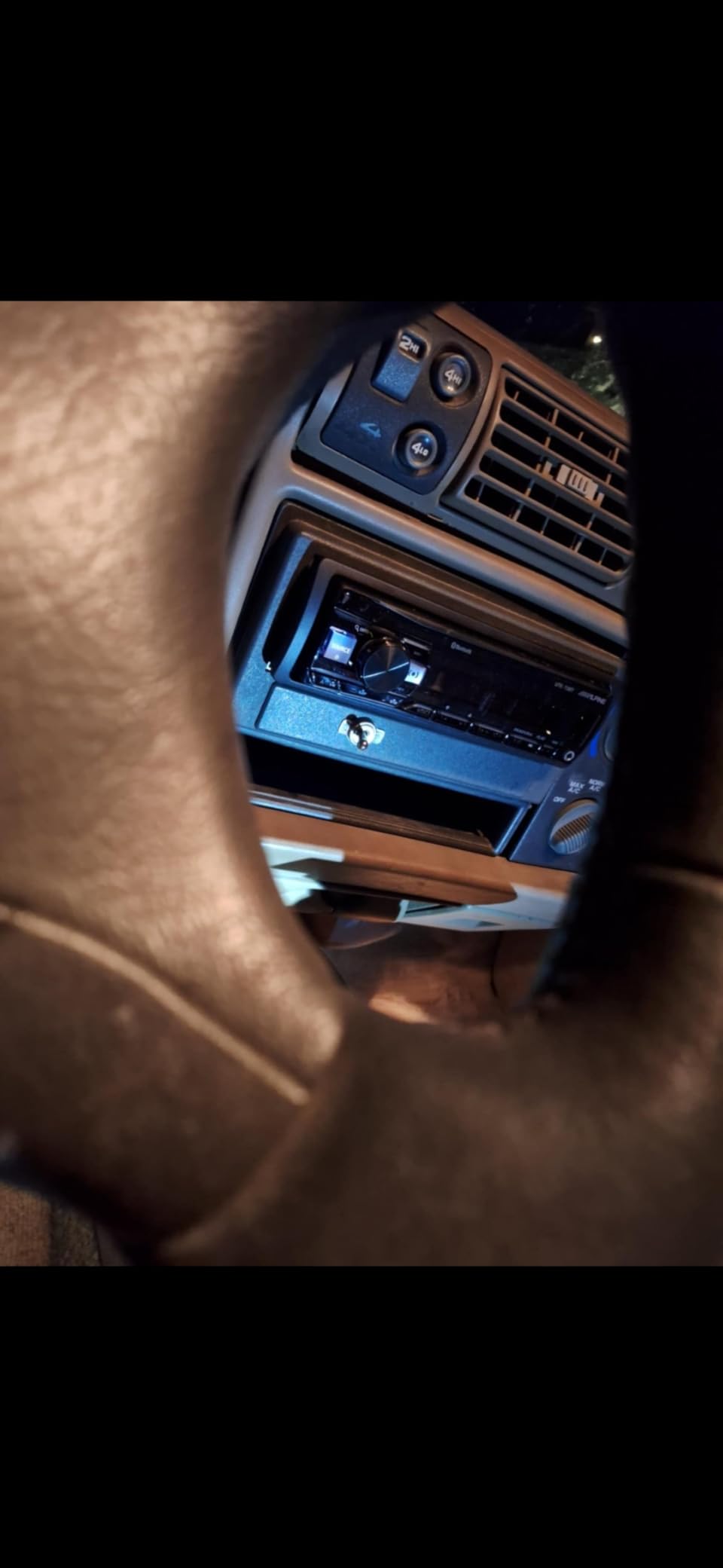
Sonically, the UTE-73BT leans toward the enthusiast end of the range. Reviewers consistently describe clean FLAC and WMA playback and note that the 72W internal amplifier has plenty of clean output for driving stock four-inch door speakers, which is the realistic first-stage upgrade in most older cars. If you go past factory speakers later, this is the unit you would want an amplifier behind.
The catch is that 72W figure. It is honest, and it is enough, but it is not the same as the inflated 200W numbers on budget units, which measure peak output rather than continuous power. Owners who want real volume in a loud cabin tend to add an external amplifier quickly, and the Alpine handles that gracefully.
When the Alpine UTE-73BT is the right call
Choose this unit when your priority is a clean install that disappears into the original dash, a tuner that finds stations, and file support that includes lossless formats. The FLAC and WMA playback is unusual at this size, and RBDS is genuinely useful for traffic and song data on long drives.
It is also the safer enthusiast bet. Forum consensus on car audio boards consistently points to Alpine and Kenwood eXcelon as the enthusiast-safe single-DIN picks, with Pioneer named as the value alternative, and this unit sits in that group with the highest rating of anything we tested.
When to pick something else instead
Skip it if you still have a CD collection you actually use, because there is no disc slot. It is also a poor match if you plan to run a large subwoofer or a multi-amplifier build from day one, since 72W internal power will be the limiting factor long before the head unit is.
Finally, budget buyers should know this is a mid-tier purchase, not an entry one. If the goal is simply to get Bluetooth into a beater car and nothing more, the cheaper units further down this list do that job without asking you to think about pre-amp voltage.
2. Pioneer MVH-S322BT – Best Value With 13-Band EQ and Pre-Outs
Pioneer MVH-S322BT 1-Din Car Stereo with Bluetooth, USB, AM/FM Radio
13-band EQ
50W x 4 output
Selectable RCA pre-outs
Smart Sync app
Pros
- 13-band EQ with Advanced Sound Retriever at this tier
- Front rear and subwoofer selectable RCA pre-outs
- Bluetooth reconnects automatically at ignition
- Color-change illumination can be dimmed
Cons
- No CD player
- Smart Sync app repeatedly asks for contacts permission
- EQ adjustment on the unit itself is fiddly
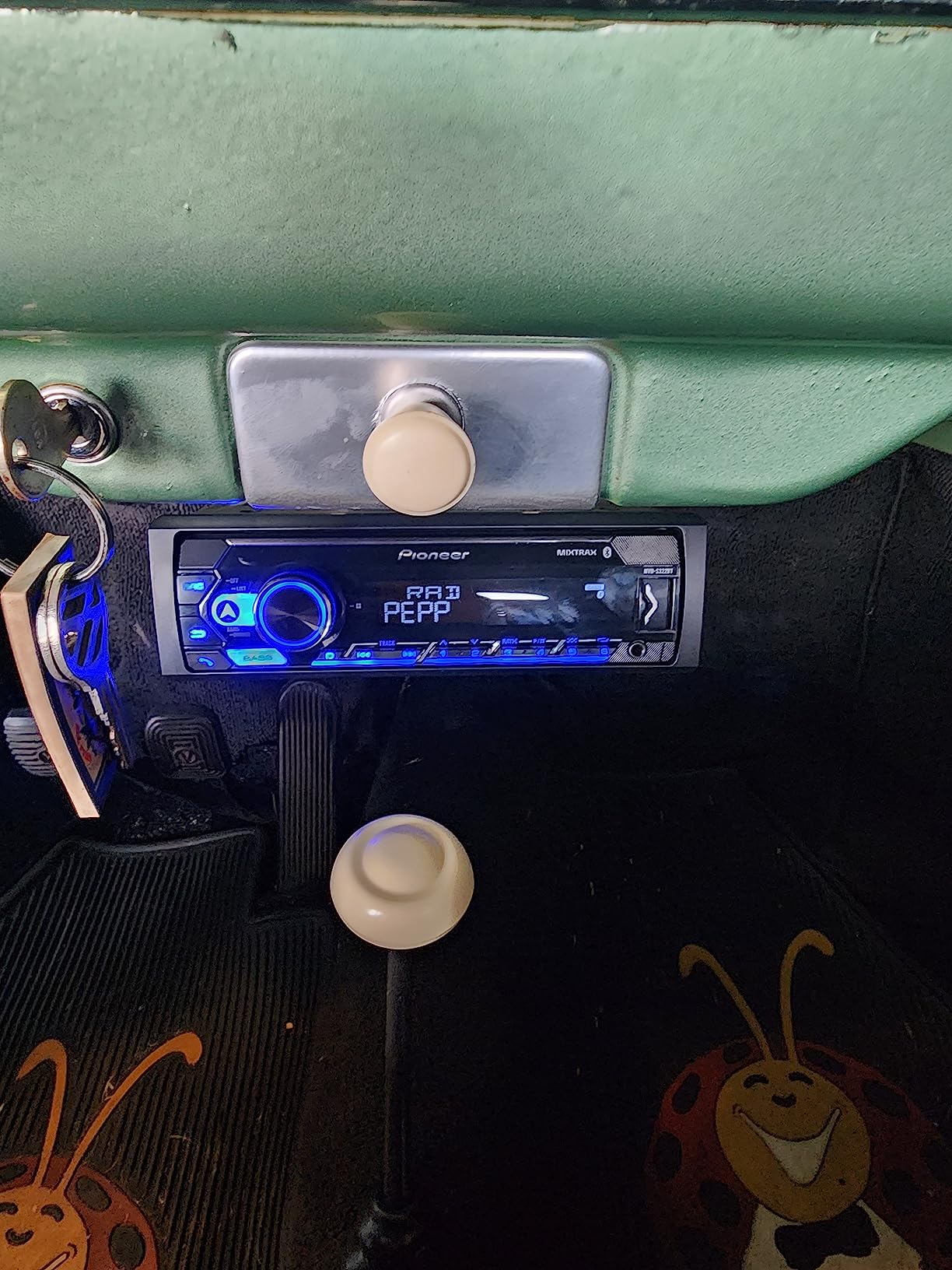
The Pioneer MVH-S322BT is the value pick in this roundup because it puts genuine tuning tools in a price bracket where most rivals offer two knobs. A 13-band EQ with Advanced Sound Retriever is normally a step up, and paired with selectable front, rear, and subwoofer RCA pre-outs it gives you a clean starting point for a later amplifier.
It also sits at the top of the Car Audio Receivers best-seller chart, which tells you something useful about failure rates. Owners report longevity, including one Pioneer deck that lasted seven years in daily use, and the Bluetooth reconnection at ignition is described as seamless across several reviews.
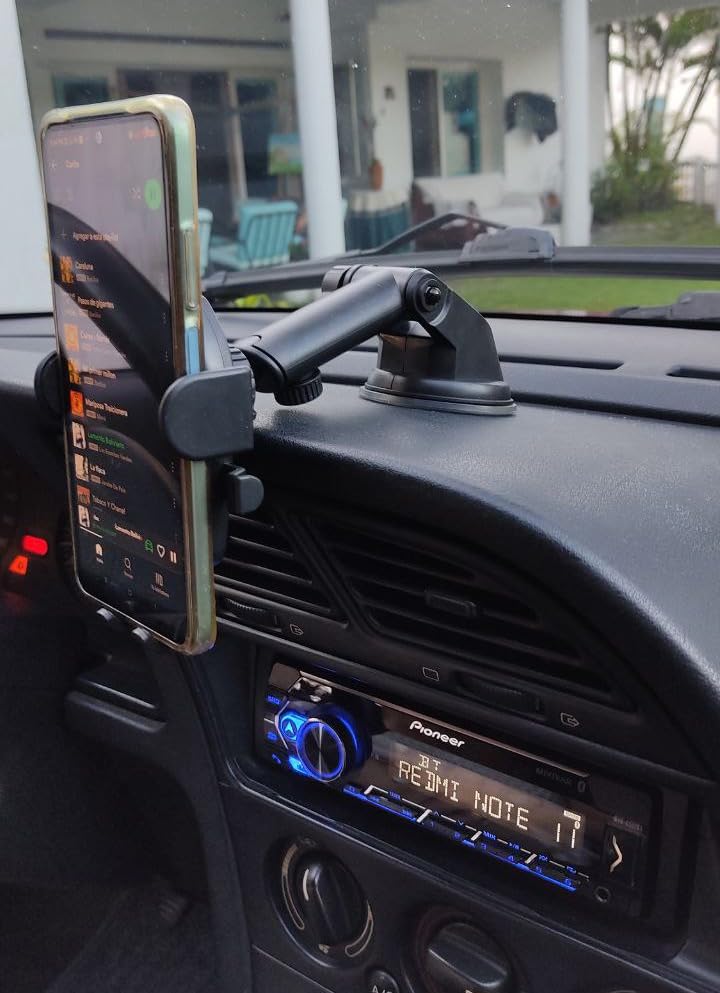
On the install side, the pre-amp filters and level controls matter more in an older car than in a new one. Old factory speakers vary wildly in impedance, and having a proper level control means you can match the head unit to whatever is left in the doors instead of guessing at the amplifier gain later.
The Pioneer Smart Sync app expands the interface, but it is also the most common complaint. Reviewers repeatedly mention the app prompting for contacts permission over and over, and EQ changes are quicker in the app than on the rotary knob and button layout on the faceplate.
Who this Pioneer suits best
This is the unit for someone who plans to add an amplifier and subwoofer in a second stage. The pre-outs are the reason. On a car that still has paper-cone factory speakers and oxidized door wiring, having that head unit output ready makes the eventual upgrade painless.
It is also a strong pick if your car’s original radio was a Pioneer, since the wiring footprint and control feel tend to match what the previous owner was used to. Pair it with our picks for home CD players and you will find the same tuning vocabulary if you are building a system in both places.
Where it falls short
There is no disc slot, so a car full of burned CDs is out of luck. The 50W x 4 rating is modest for driving loud speakers at speed with the windows down, which is exactly the scenario some buyers care about.
There is no touchscreen either. If your phone is running Android Auto through a display, this unit will not drive an external screen — the PLZ later in this list is the one that does that in a single-DIN opening.
3. BOSS Audio Systems 616UAB – Most Versatile With Pre-Amp Outputs
BOSS Audio Systems 616UAB Single DIN Bluetooth Car Stereo, No DVD, USB
200W max output
Front and rear pre-amp outputs
Switchable US and Europe tuner
3 year warranty
Pros
- Largest review base of any unit in this roundup
- Front and rear pre-amp outputs for a future amplifier
- Switchable US and Europe tuner
- Three year parts and labor warranty
Cons
- No CD or DVD playback
- Dated display and control scheme
- Fixed faceplate offers no theft deterrence
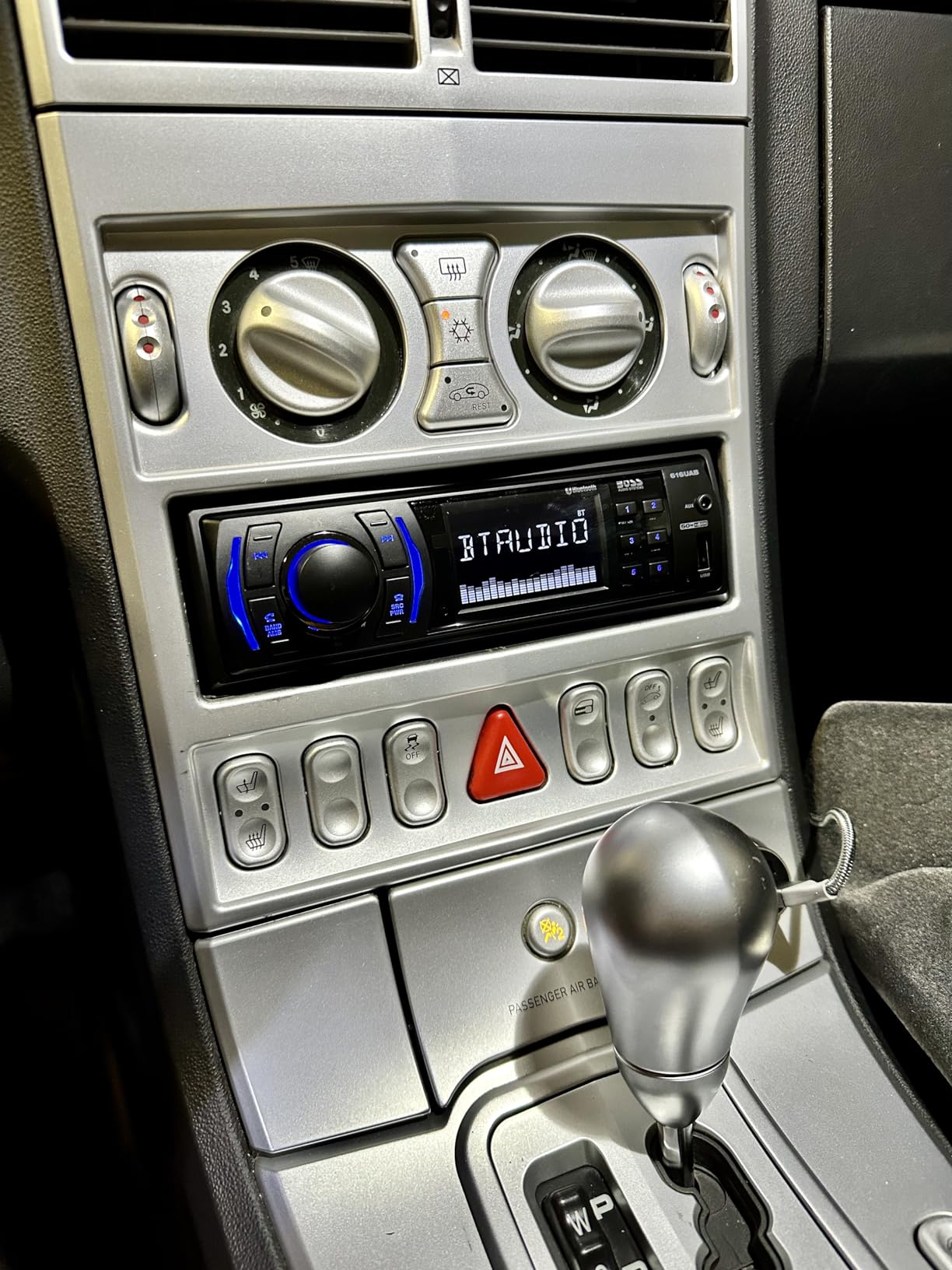
The BOSS Audio Systems 616UAB is the budget pick, and the reason is the installed base. Nearly 19386 reviews at 4.2 stars is a much larger data set than any other unit here, which means you are choosing from a well-mapped product rather than a gamble. The build quality matches what you would expect from an entry-tier deck, and the features per dollar are hard to argue with.
For an older car, the important detail is the front and rear RCA pre-amp outputs. That means you can start with factory speakers now and bolt an amplifier on later without replacing the head unit, which is the single most common upgrade path owners describe on car audio forums.
Output is rated at 200W max, or 50W x 4, and the manufacturer is candid that an amplifier is recommended. On factory paper speakers that is genuinely adequate for commuting. Bluetooth profiles cover A2DP, AVRCP, and HFP, there is a built-in microphone for hands-free calling, and a push-to-talk button reaches your phone assistant on both Android and iOS.
The switchable US and Europe tuner is a quiet perk that matters if the car ever moves or you import one. A wireless remote comes in the box for rear-seat control, and the included wiring harness and mounting brackets mean most installs do not need a separate purchase to get started.
Where the 616UAB earns its place
Pick this when the car is a daily driver, the factory radio has died, and the goal is reliable Bluetooth calling plus USB music without turning the install into a project. The three-year parts and labor warranty also gives you more coverage than most of the mid-tier brands here.
It is equally a good match for a boat, golf cart, or older work vehicle, since the same simple fitment applies and the mechanical controls work fine with gloves on. The 1.1 pound weight and 3.94 inch depth also make it one of the easier units to maneuver into a cramped radio cage.
What you give up for the low price
There is no disc slot, which in 2026 is the default rather than a compromise. The faceplate is fixed, so nothing about the design deters a smash-and-grab in a car parked on a street, and the display and button scheme look dated next to anything with a color screen.
Tone control is limited to balance, fader, bass, and treble. If you are going to build a system around it, the Pioneer above has a much better tuning foundation for only a modest step up.
4. Pioneer DEH-S4220BT – Best Single DIN That Still Has a CD Drive
Pioneer DEH-S4220BT 1-Din CD Car Stereo with Bluetooth USB/AUX
CD receiver with detachable face
Hi-Volt RCA pre-outs
FLAC and MP3 WMA playback
50W x 4
Pros
- Only single-DIN here that still plays CDs
- Hi-Volt RCA pre-outs pair well with external amplifiers
- Detachable face plate and external hands-free microphone
- Easy drop-in upgrade reported in older vehicles
Cons
- Bluetooth range is limited in some installs
- 50W x 4 is modest for loud driving
- Color-change display only with no touchscreen
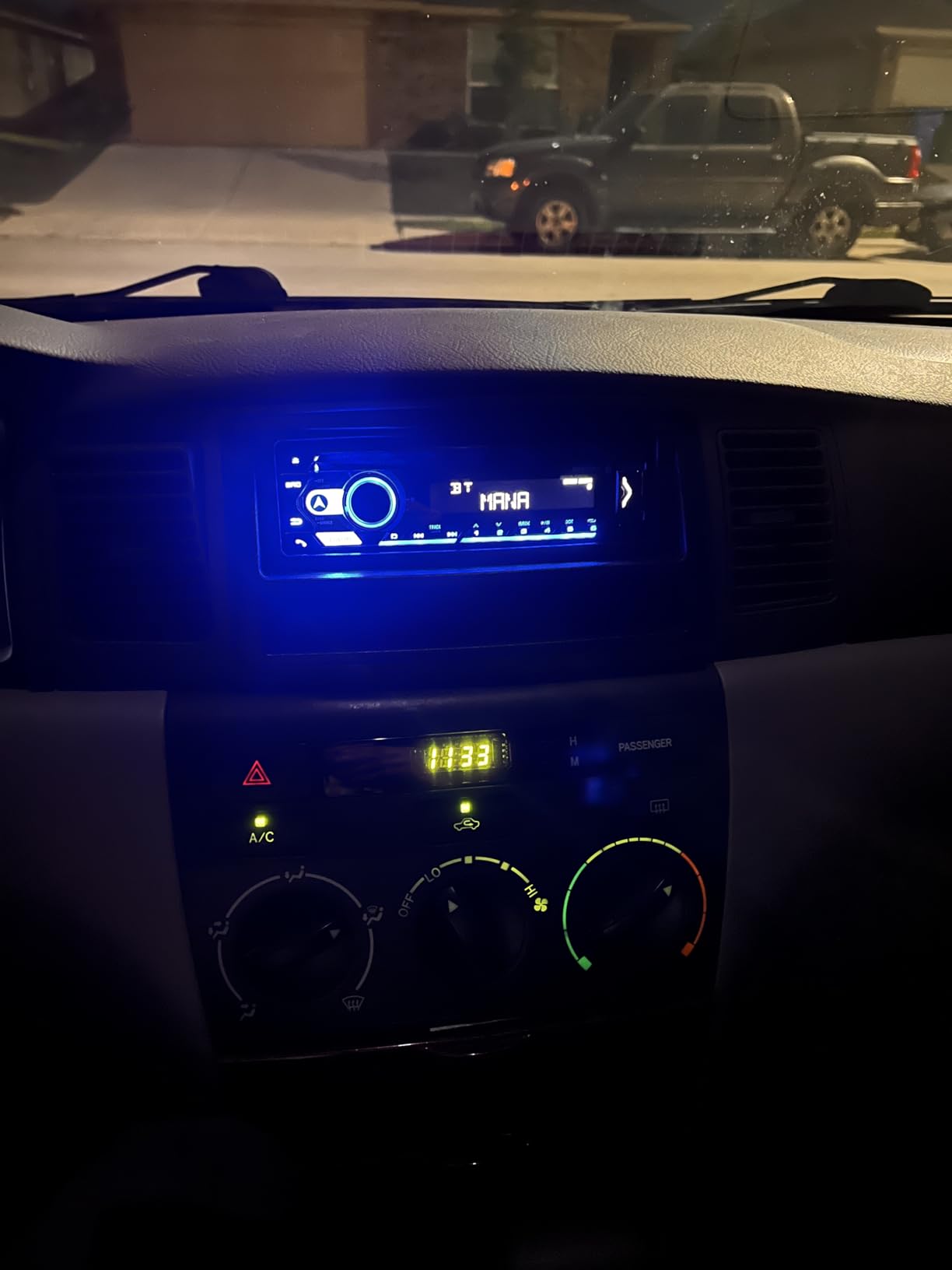
The Pioneer DEH-S4220BT is the pick if your older car has a CD habit worth keeping. Every other unit in this roundup is disc-free, which makes this the only head unit here that plays the discs many twenty-year-old cars still have filling the door pockets and console bin.
Beyond the drive, it is a properly equipped single-DIN: Hi-Volt RCA pre-outs, FLAC playback alongside MP3 and WMA, the Pioneer Smart Sync app, and MIXTRAX for gapless-style track mixing. Output is 50W x 4, and the detachable face plate gives you theft deterrence that most mechless units in this price range skip.
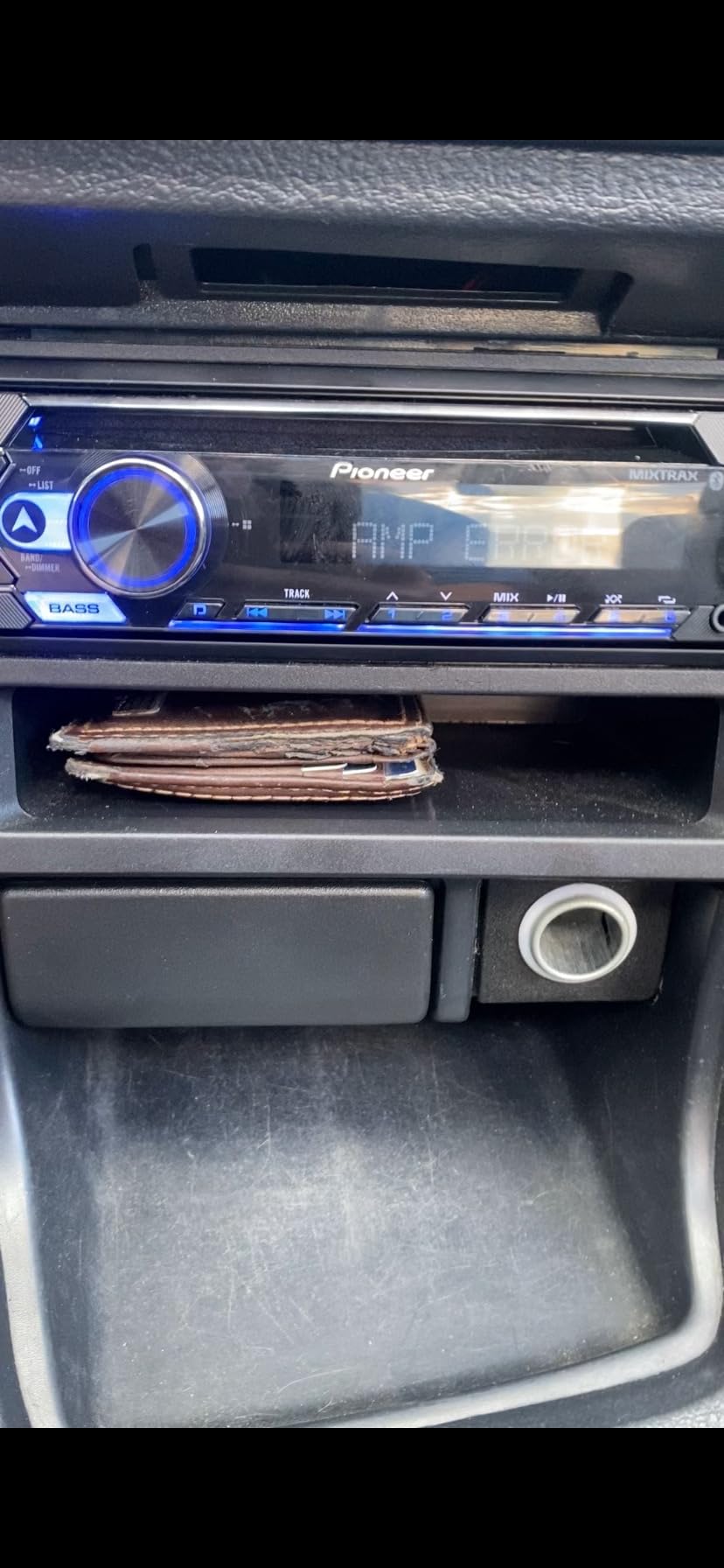
What stands out in owner reports is how often this gets described as a straightforward swap over an older Pioneer. Reviewers mention installing it in vehicles like an 89 Wagoneer and other twenty-plus-year-old daily drivers, which is close to the exact use case this article is about. Bluetooth pairs quickly and reliably across devices in most of those accounts.
The detachable external hands-free microphone is a small detail that pays off in a noisy cabin. Factory microphones mounted near the headliner in older cars pick up road noise badly, and moving the mic to the center console is a genuine improvement in call quality.
Who should buy the DEH-S4220BT
Buy it if the car is a classic or vintage build where the original owner kept everything stock and the CD rack is part of the experience. It is also the right head unit for long-haul driving, where a disc library beats a phone signal that drops in rural areas.
For a modern driving setup it is the wrong choice, because CD is the one medium nobody carries anymore. If your music lives on a phone, the mechless units above are lighter, cheaper to run, and easier to live with.
The known weaknesses
Bluetooth range is the most cited weakness, with some installs reporting dropouts. The 50W x 4 internal power is modest for driving loud speakers with the windows down, so budget for an amplifier if that is your style.
There is no touchscreen, only a color-change display, and a handful of owners preferred a different brand when pairing with external amplifiers. That last point is a preference, not a defect, but it is worth knowing before you commit.
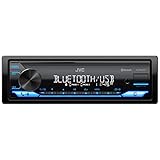
5. JVC KD-SX27BT – Best for Two Phones and Tight Dash Depth
JVC KD-SX27BT Car Stereo with Bluetooth, 100W Digital Media Receiver, 1.5A USB, Single DIN Head Unit with AM/FM Radio & AUX-in, iOS/Android JVC Remote App, 13-Band EQ, Dual Phone Connection
Two full-time phone connections
13-band EQ with Time Alignment
1.5A USB charging
Short chassis
Pros
- Two phones stay connected for calls at once
- Up to five Bluetooth devices paired
- 13-band EQ with Time Alignment and Sound Lift
- Short chassis suits tight older dashboards
Cons
- No CD player
- 100W is amplifier power rather than RMS output
- No screen for song titles
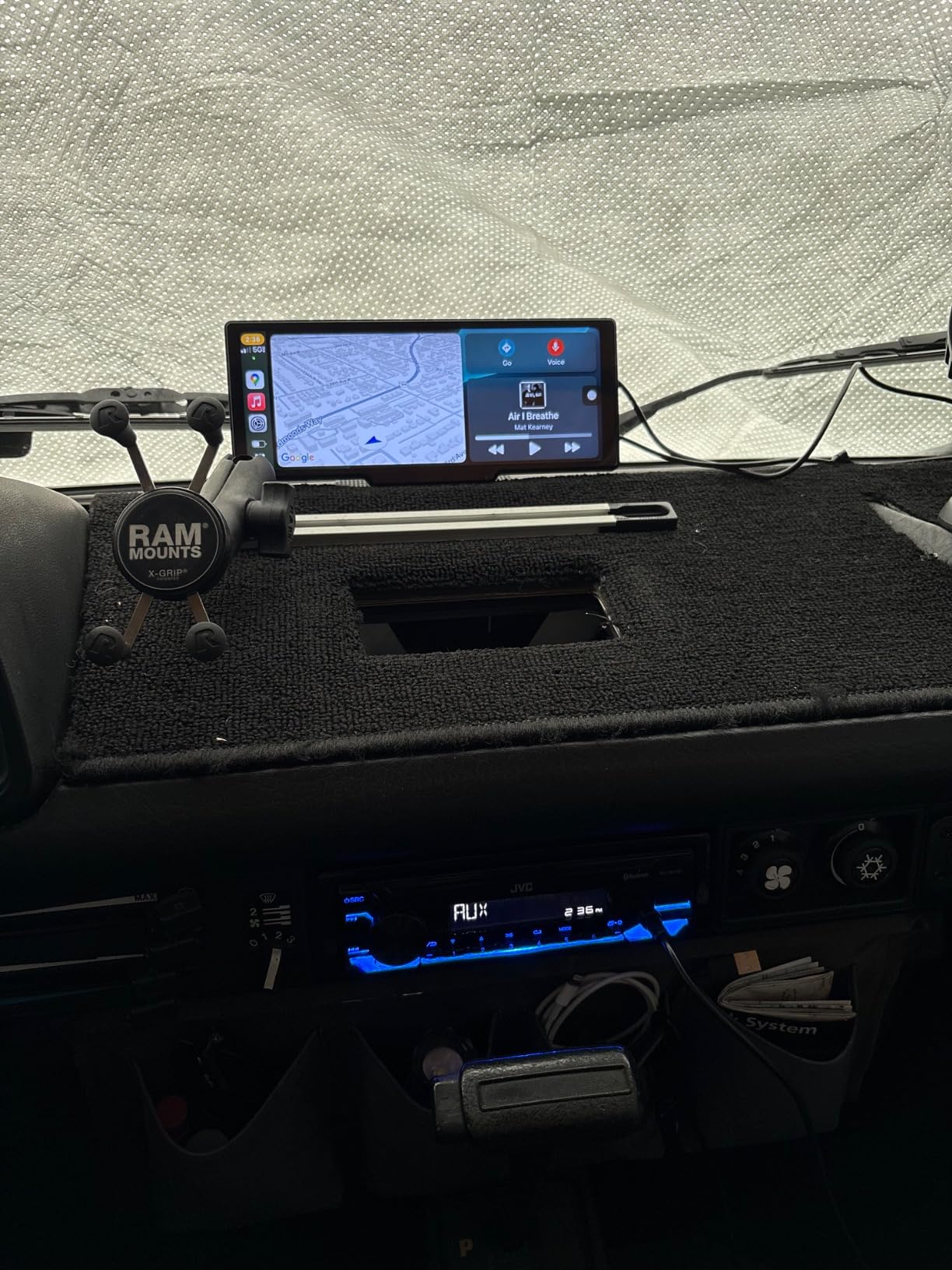
The JVC KD-SX27BT is the one to buy if two phones are part of your life. It keeps two phones connected full time for hands-free calling, with capacity for up to five Bluetooth devices remembered. Owners in two-phone households describe this as the feature that removed the constant re-pairing dance other single-DIN units force on them.
On the sound side it is better equipped than the price suggests. You get a 13-band EQ, Time Alignment, Sound Lift, and JVC K2 technology, which is the same feature set family the brand uses higher up its range. There is also a preamp-out for an external amplifier or subwoofer.
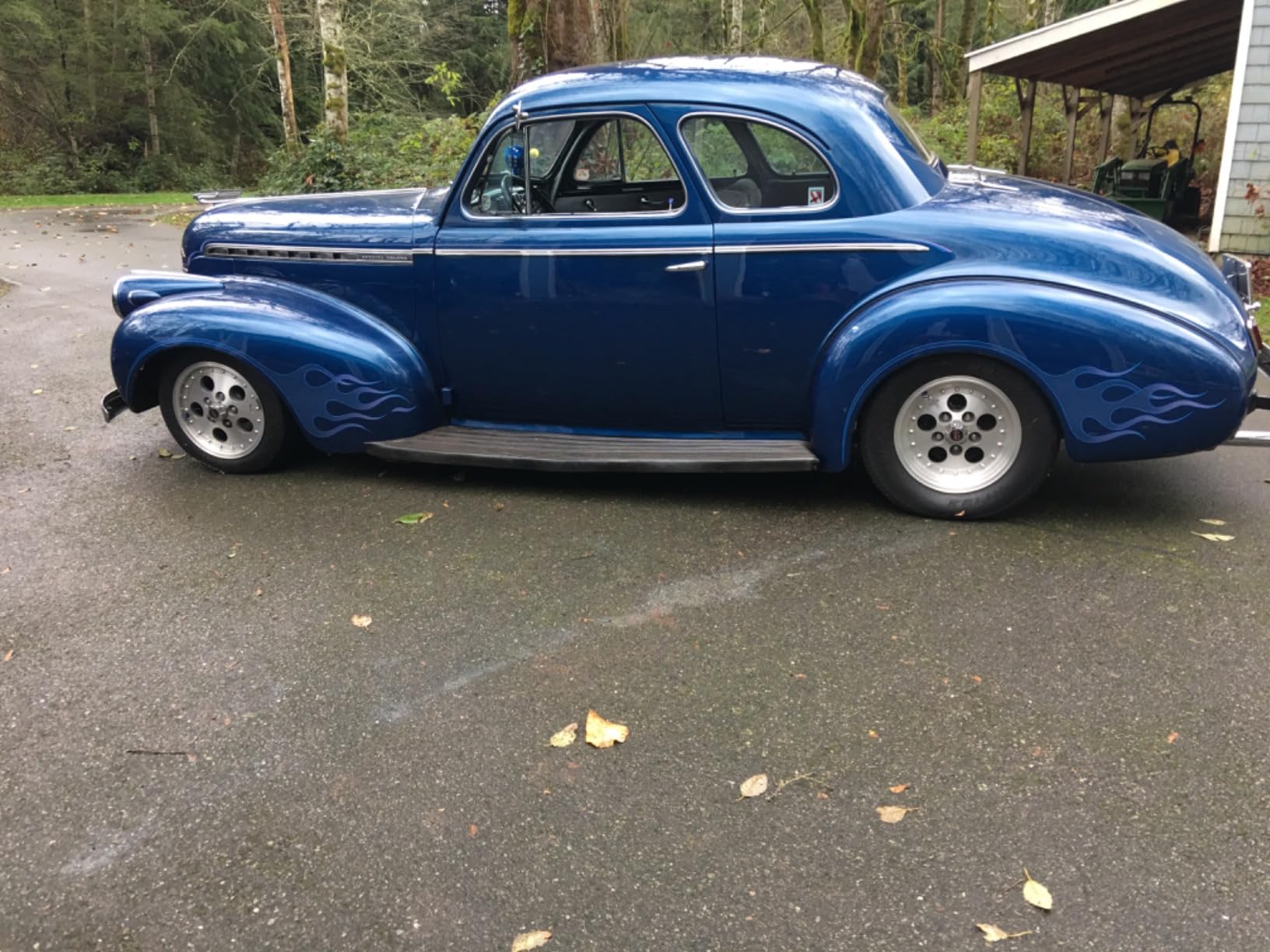
The short chassis is the sleeper advantage in an older car. Deep factory radio cages were designed for bulky cassette-era mechanisms, and many single-DIN units bottom out before the mounting bracket seats properly. A short-chassis design like this one slides in without forcing the cage, and JVC measures it at 3.94 inches deep by 7.17 inches wide.
USB charging runs at 1.5A, which is faster than the 1A ports common on budget units, and playback covers MP3, WMA, WAV, AAC, and high-resolution FLAC. The JVC Remote app handles iOS and Android control, and the display supports Spanish text as well as English.
Why this one fits older dashboards so well
Two reasons. The short chassis clears tight radio cages that would require trimming for a deeper unit, and the lack of a display keeps the profile low against windshields that already slope sharply. In cars with a raked windshield, every millimeter of screen height matters.
It is also a good value if dual phone use is a firm requirement. Car audio forum threads about two-phone setups almost always end with a recommendation to check dual pairing before buying, and this unit is one of the few single-DIN options that has it without moving up a tier.
What you trade away for dual pairing
There is no disc drive and no screen, so you get track information one line at a time or through the app. If album art and full song titles matter to you on the dash, this is the wrong shape of device.
On power, be careful with the 100W headline. That is amplifier peak power; continuous output is 50W x 4. It is plenty for factory speakers, and the preamp-out covers the loud case.
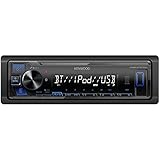
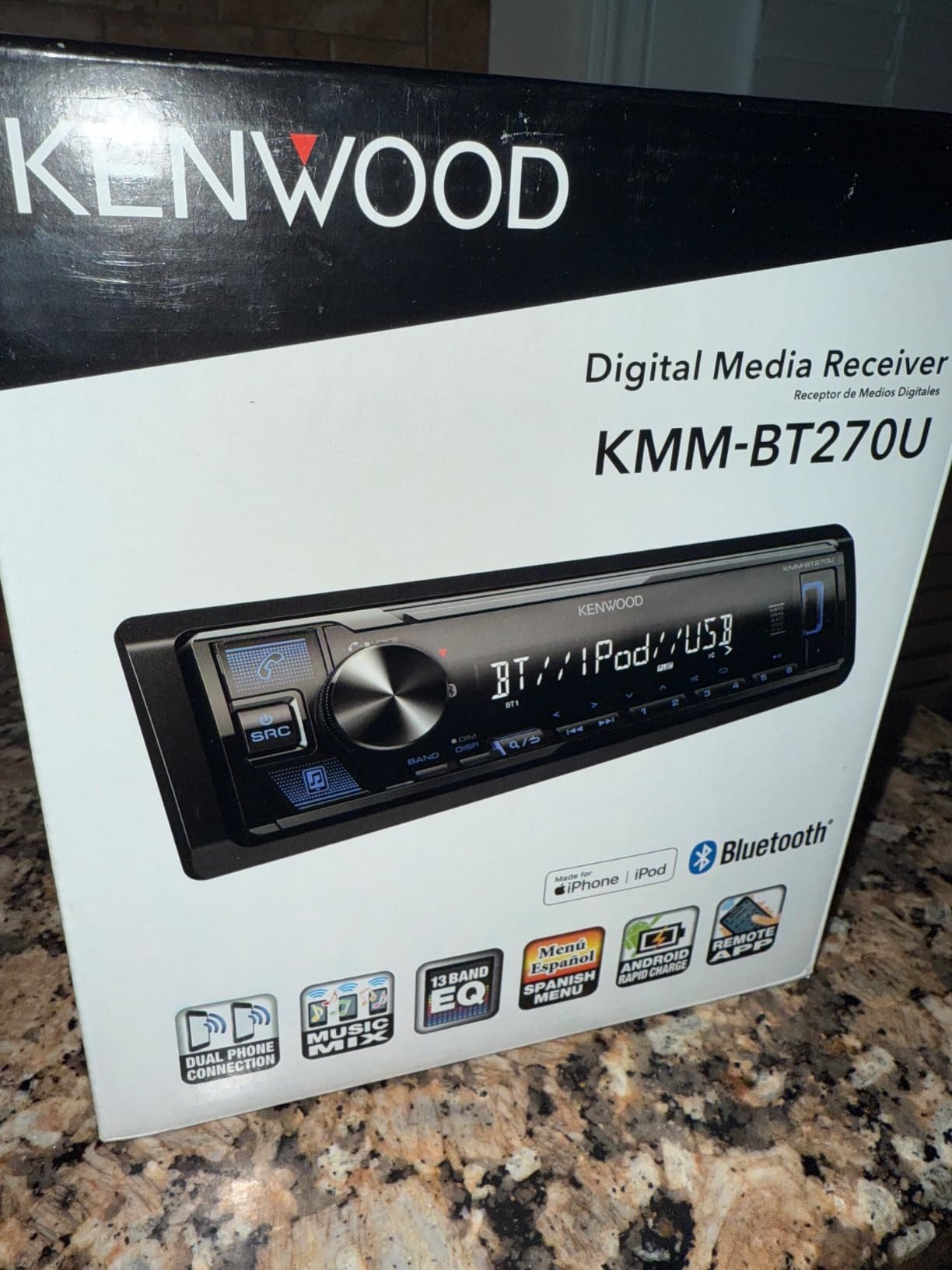
6. Kenwood KMM-BT270U – Best for Waking Up Aging Factory Speakers
KENWOOD KMM-BT270U Bluetooth Digital Media Car Stereo Receiver with USB Port – AM/FM Radio, MP3 Player, High Contrast LCD, Detachable Face Plate, Single DIN, 13-Band EQ
MOSFET amplifier at 200W max
13-band EQ
Detachable face plate
High-contrast LCD
Pros
- MOSFET amplifier has the headroom for tired factory speakers
- 13-band EQ for real in-car tuning
- Detachable face plate adds theft deterrence
- High-contrast LCD stays readable in daylight
Cons
- Smallest review base here at 446
- so reliability data is thinner
- Bluetooth pairing reported as finicky on some units
- No CD player in this configuration
The Kenwood KMM-BT270U is the answer for the problem almost nobody predicts: you replace the radio, the sound is still bad, and you cannot work out why. The cause is usually the twenty-year-old paper-cone door speakers and oxidized wiring behind them, and the cure is amplifier headroom. This unit’s MOSFET amplifier rated to 200W max is the most generous internal power in the group aimed squarely at factory speakers.
The 13-band EQ matters here too. A two-band tone control can only add or remove bass and treble globally, but with factory speakers in different locations and wildly different efficiencies, per-band correction is what stops the front passenger complaining.
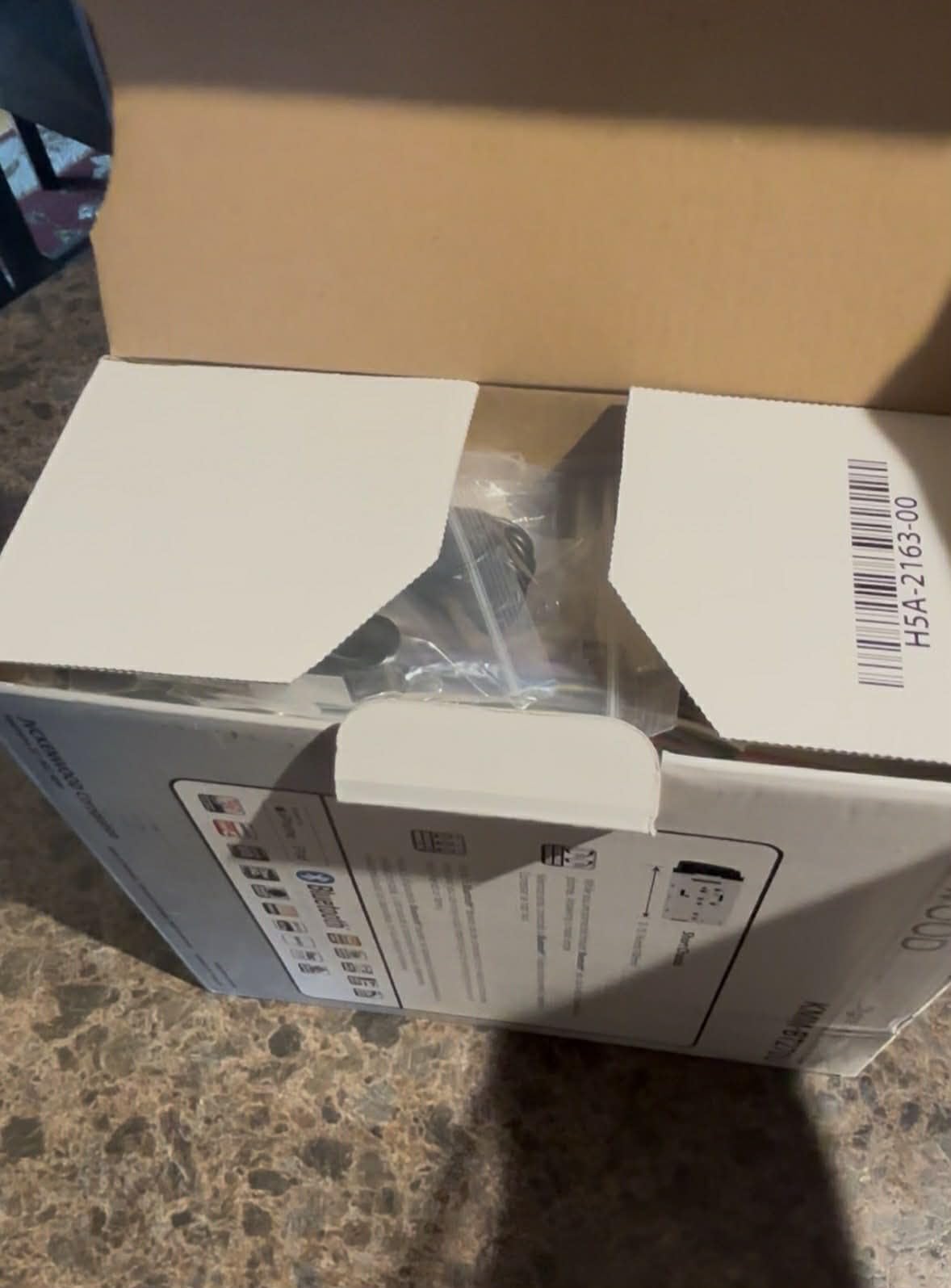
The detachable face plate and high-contrast LCD round out a sensible older-car package. Reviewers who installed it in older vehicles, boats, and carts with a simple wiring kit report clean results, and the neutral display stays readable in direct sun rather than washing out the way custom-colored screens often do.
USB handles playback and charging, there is an AUX input, and iPod and iPhone connection is supported. Format coverage is WAV and WMA alongside the usual MP3, with a 1-year limited warranty behind it.
When the Kenwood is the right buy
Pick it when your plan is a first-stage upgrade on a car you care about, and the speakers are staying for now. The combination of MOSFET power and a real multi-band EQ is the difference between a new head unit that sounds new and one that sounds marginally different.
It is also the right choice for non-car use where a single-DIN deck fits, since owners report the same clean install results in marine and utility applications.
Where caution is warranted
This unit has the smallest review base of anything here at 446, and that is the honest weakness. A handful of owners report unit failure after roughly two months, and Bluetooth pairing is described as finicky on some examples.
Rare failures are hard to separate from installation error, and a few of the reported issues are consistent with a wiring mistake. If you are doing the install yourself, budget for a proper harness adapter and double-check the speaker impedance matches, because a head unit that keeps resetting is often a protection circuit reacting to a bad load.
7. BOSS Audio Systems 632UAB – Best for Theft Deterrence in an Unattended Car
BOSS Audio Systems 632UAB Single DIN Bluetooth Car Stereo, AUX Input, USB
Detachable front panel
Front and rear pre-amp outputs
1A USB charging
50W x 4 max
Pros
- Detachable face plate is real theft deterrence
- Front and rear pre-amp outputs
- Push-to-talk assistant button
- Three year parts and labor warranty
Cons
- Removing the face plate renders the unit unusable
- No CD or DVD player
- 1A USB charging is slow for modern phones
The BOSS Audio Systems 632UAB is the pick if your car lives on a street or in a parking lot without a garage. The detachable front panel is the reason: pull the face off and you have a useless hole in the dashboard. Most thieves in older cars are looking for a quick grab, and that is enough to make them move to the next one.
Underneath the security feature it is a competent mechless receiver. Bluetooth with push-to-answer and voice assistant activation, a switchable US and Europe tuner, front and rear RCA pre-amp outputs, 1A USB charging with an AUX input, and a wireless remote for the back seat.
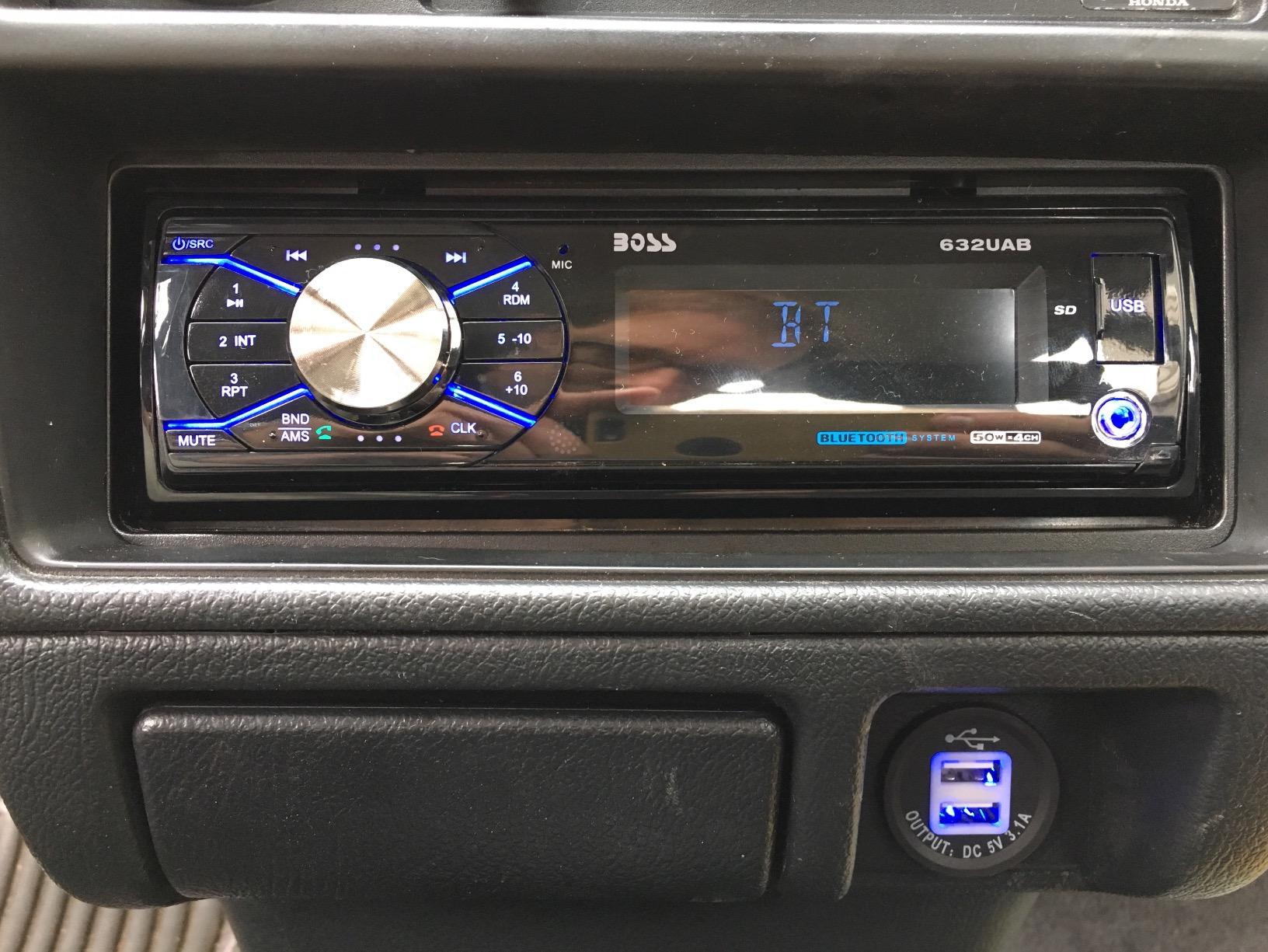
The detachable design is also a trade-off, and owners are upfront about it. While the face is off, the head unit cannot do anything at all — not even display time or store a preset. The first few mornings after an install, before you get used to pulling it off, that adjustment period catches people out.
Power is 50W x 4 max, with balance, fader, bass, and treble controls. That is adequate for factory speakers in an older car and honest about what it is, rather than advertising a peak number as continuous power.
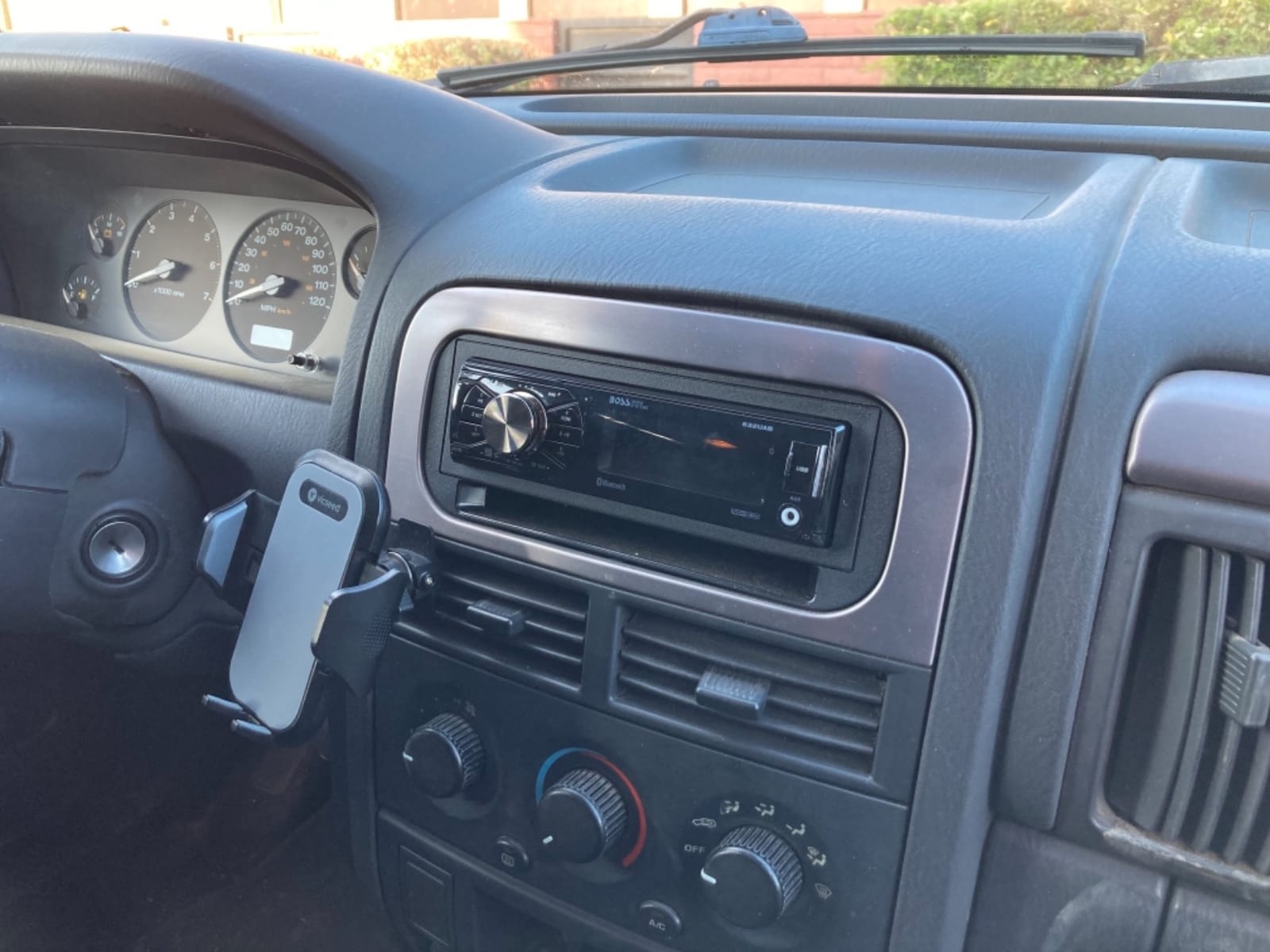
Who the 632UAB is for
It suits a commuter with an older car, no garage, and a parking spot in view of a street. The three-year parts and labor warranty is also longer than most of the mid-tier options, which is reassuring when a cheap head unit failure means losing your music in an unfamiliar car.
The wireless remote is useful in longer vehicles where the head unit sits far from the back seat, and the pre-amp outputs leave the amplifier upgrade open.
Where the detachable panel gets annoying
Carry the face plate in the glove box, not the cup holder, because it rattles and it scratches. And if you use the car for work with frequent early starts, pulling the panel off and on every time becomes a habit you will resent by the end of the first week.
The 1A USB port is another common complaint. It will charge a phone slowly overnight but not fast enough for a full day of navigation use, which is a real limitation if you are pairing a phone-based mount rather than relying on the tuner.
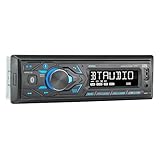
8. Jensen MPR210 – Best for Legible Displays and a Longer Warranty
Jensen MPR210 Single DIN Bluetooth Car Stereo, Hands-Free, AM/FM, USB
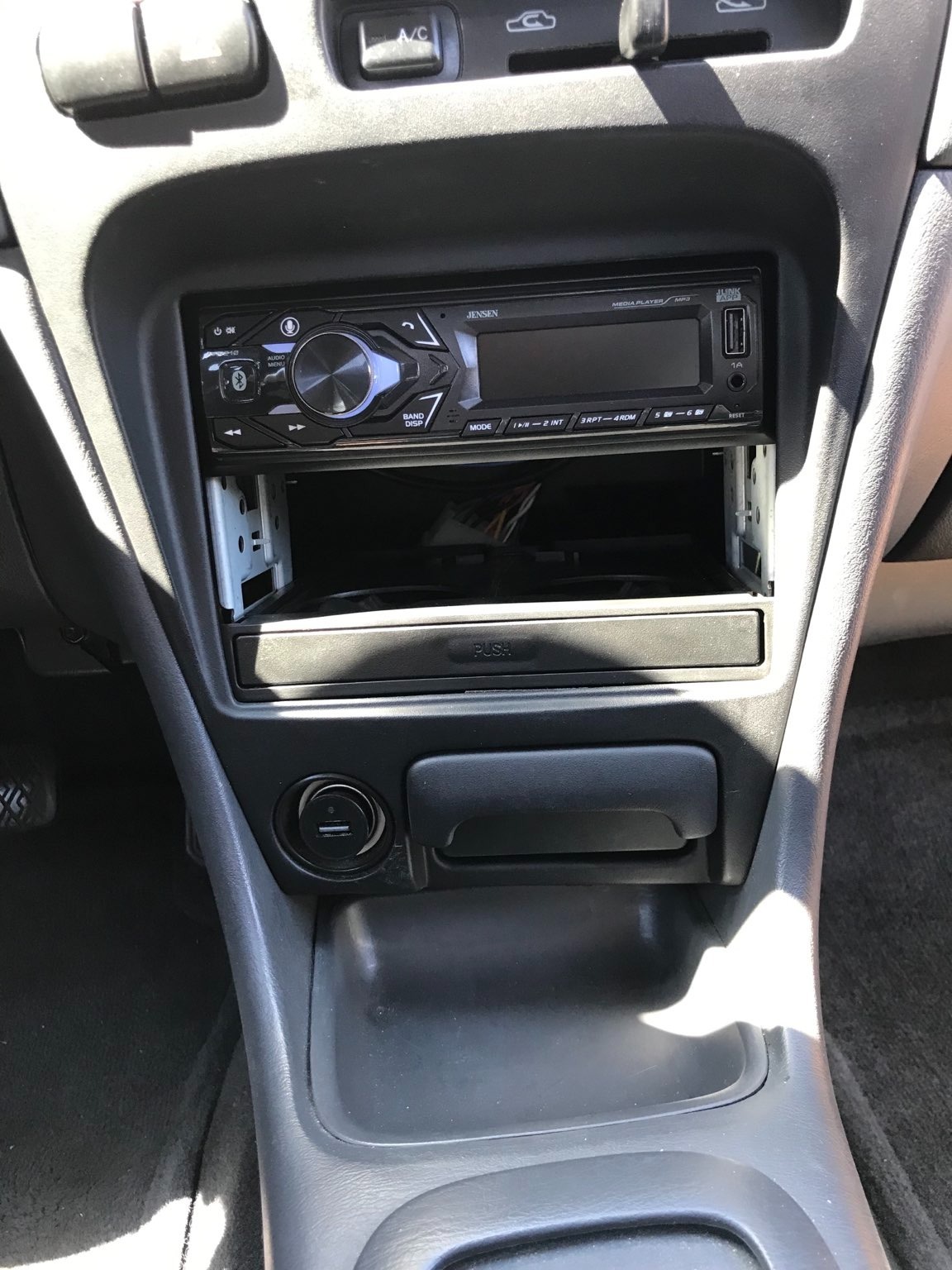
High-contrast 7-character LCD
Push-to-talk assistant
2-band EQ with 4 presets
4 year warranty when registered
Pros
- High-contrast 7-character LCD reads clearly in daylight
- Push-to-talk button for Siri and Google
- Four EQ presets plus bass and treble
- Warranty extends to four years on registration
Cons
- No CD player
- Single-line display cannot show song titles or albums
- Only 2-band EQ compared with 13-band rivals
- No pre-amp outputs listed
The Jensen MPR210 solves one specific problem well: reading a display in daylight through a windshield. The high-contrast 7-character LCD was designed for exactly that, and owners consistently single out visibility as the reason they are happy with it. Forum threads about single-DIN units that look cheap often turn on screen readability, and this is the counter-example.
The dedicated push-to-talk button reaches Siri or Google Assistant, which is a genuine usability upgrade over digging through a phone. Bluetooth pairing is described as quick, and USB handles playback and charging.
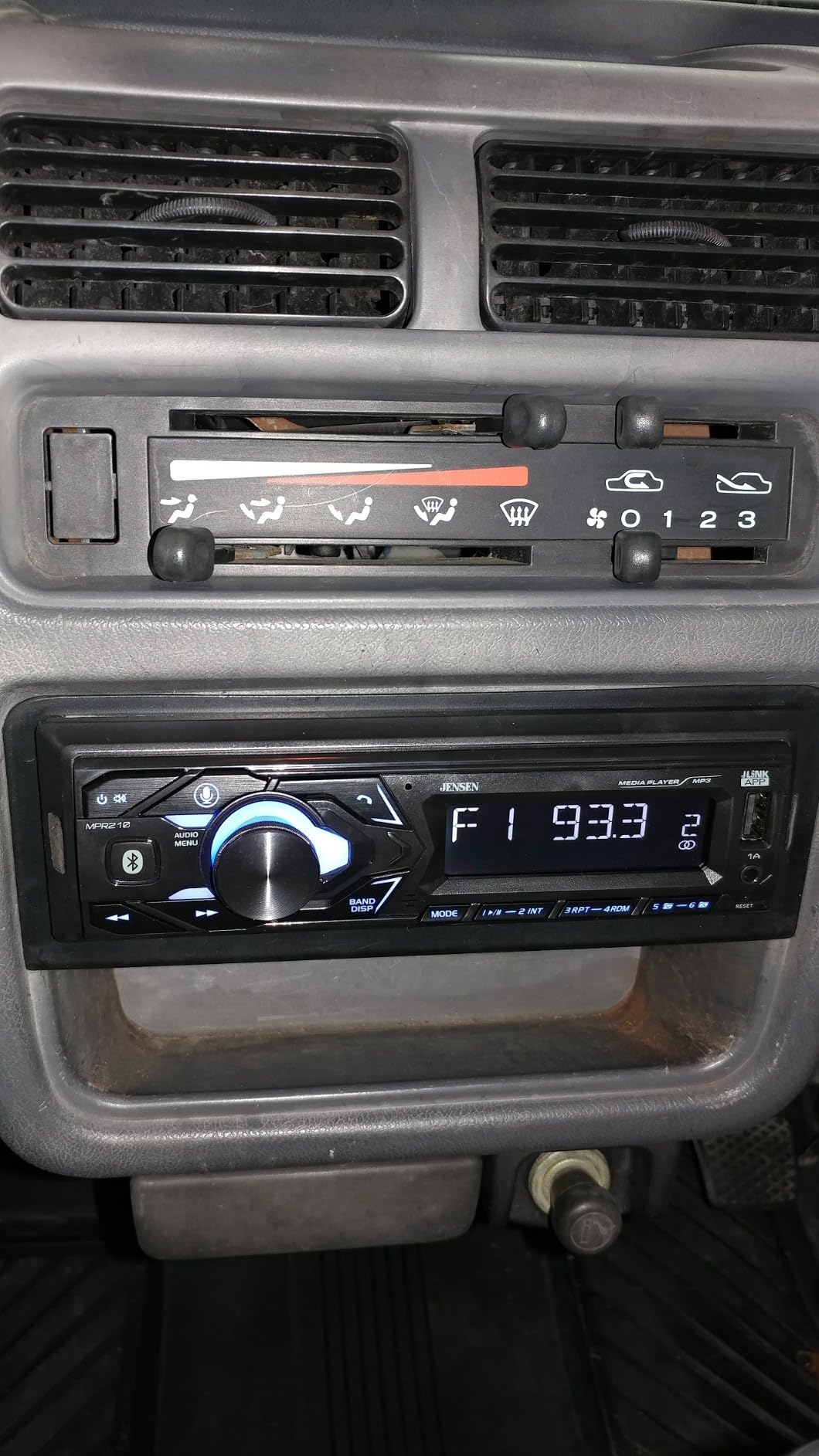
Tone control is basic: 2-band bass and treble plus four EQ presets covering Pop, Jazz, Rock, and Flat. That is enough to compensate for factory speakers, and not enough to do real correction. If your future plans involve an amplifier and a properly set EQ, look at the Pioneer or JVC instead.
The warranty is the sleeper feature. It carries two years standard, and registering the unit extends it to four years, which is longer coverage than any other single-DIN in this roundup except the BOSS pair. On a device that will live in a car for a decade, that is worth more than a feature you will not use.
When the Jensen is the right pick
Choose it for a daily driver where glare and low sun are the main complaint, and where the person driving is not interested in tuning. Four presets and a display you can actually read make it a low-friction install that works the same way every morning.
At 3 inches deep by 8 inches wide it also sits comfortably in a stock single-DIN cage, and the Jensen is a reasonable second system for a boat or an older truck.
Where it falls short
A single-line display cannot show a song title or album, so navigation is by preset memory rather than by reading. If you play albums in shuffled order, that becomes genuinely frustrating after the first week.
There are also no pre-amp outputs listed, which closes off the amplifier upgrade path. That is fine for a permanent factory-speaker install and a poor choice for anyone building toward a system.
9. REAKOSOUND 820s – Best Feature Density at the Entry Tier
REAKOSOUND Car Radio Single DIN Car Stereo Bluetooth Digital Media Receiver
Dual USB with 2.1A charging
SD card and AUX playback
FM only tuner
7 LED backlight colors
Pros
- Dual USB ports with 2.1A fast charging
- SD card USB and AUX playback
- 7 LED backlight colors plus a wireless remote
- FLAC APE and WAV support
- Color-coded harness and wiring diagrams included
Cons
- FM only with no AM tuner
- No RDS and no CD playback
- 12V systems only so not for 24V trucks
- Only 3 EQ presets and no multi-band control
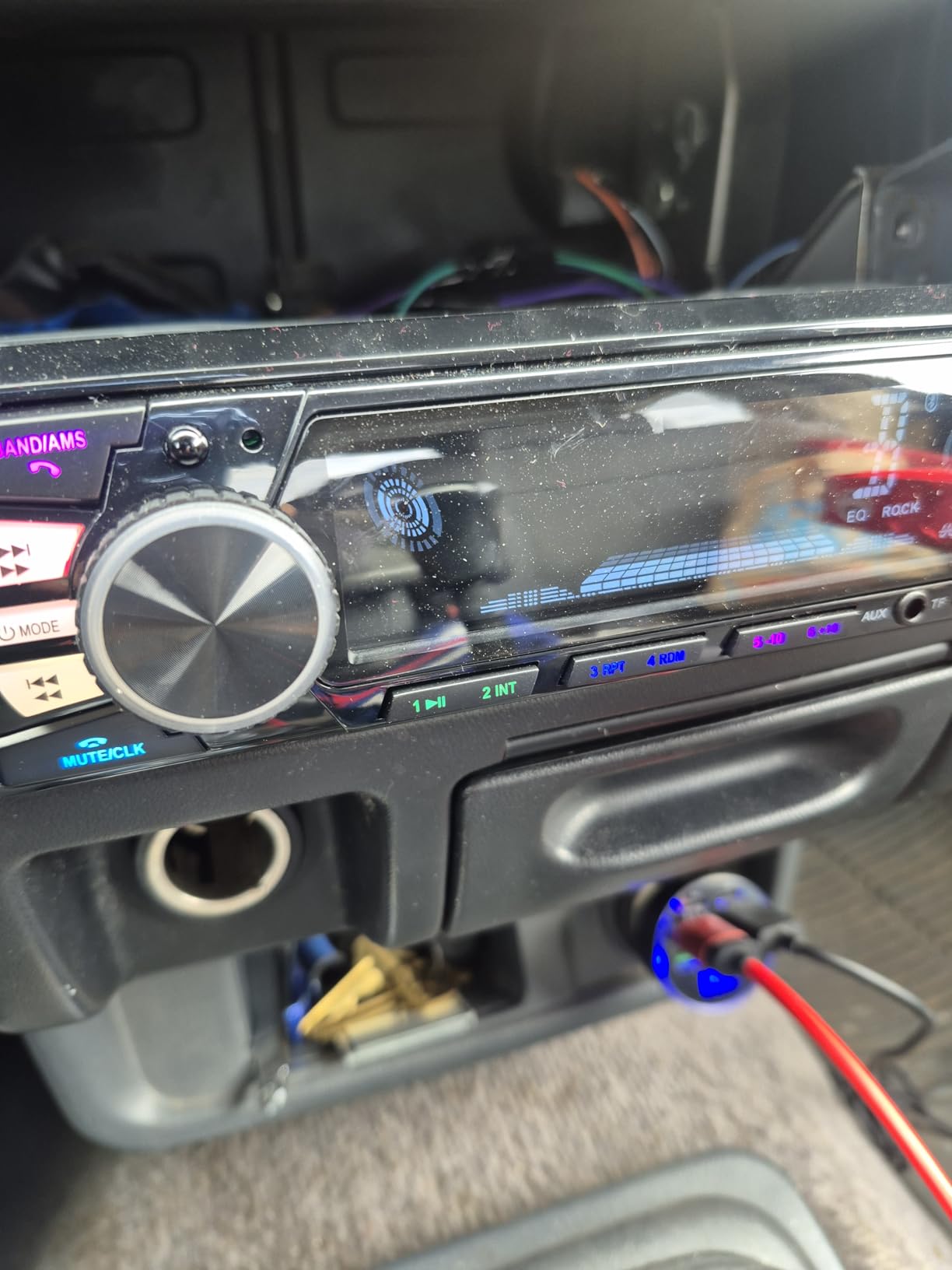
The REAKOSOUND 820s is the most feature-dense unit in this roundup, and it is also the least expensive. Dual USB ports including 2.1A fast charging, an SD card slot, an AUX input, seven selectable LED backlight colors, app control for iOS and Android, and a wireless remote. Very few single-DIN units at any tier include an SD card reader.
Format support is unusually wide for the tier: MP3, WMA, APE, FLAC, and WAV. The app control is a nice touch, letting you change settings from the phone rather than through tiny buttons on the faceplate.
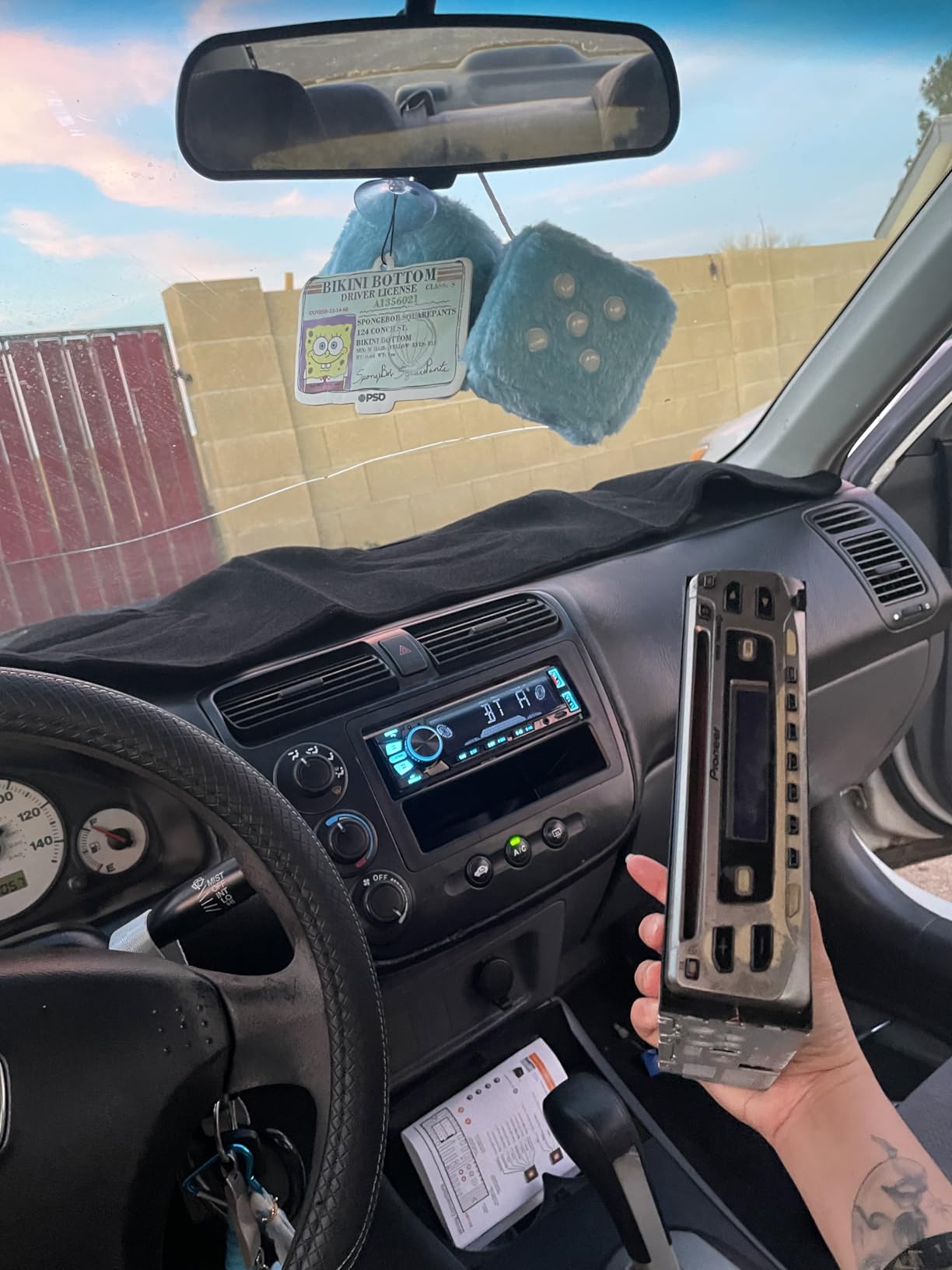
The listing explicitly calls out universal single-DIN fit for older vehicles from 1994-2007 and earlier, and it ships with a color-coded wiring harness and detailed wiring diagrams. For a first-time installer that is genuinely useful, because most of the mistakes people make are in the wire colors, not the dash fit.
The 7 LED backlight colors are worth flagging as a caution, not a selling point. Car audio forum complaints about single-DIN displays often center on owners who picked a colored backlight and then regretted it in daylight. Pick the neutral option if you can.
Who the 820s works for
It suits an older car used as a beater, a weekend car, or a second vehicle, where the priority is getting a working Bluetooth radio without spending much. The 3.2 inch depth and 6.9 inch width make it one of the more compact bodies here, which helps in shallow factory cages.
It is also a good fit for anyone who still uses physical media. The SD card slot gives you a way to carry a large music library without a phone, which no other unit in this roundup offers.
What you give up at this tier
The tuner is FM only, 87.5-108MHz with 18 presets and no RDS. If you drive in an area with meaningful AM talk radio, or you want traffic and song data on the display, this unit cannot do it.
It is also 12V DC only, so it will not work in a 24V commercial truck. And with just three EQ presets and no multi-band control, there is no real tuning path here — this is a functional radio, not the start of an audio system.
10. PLZ MP-106 – Best Single DIN With a Large CarPlay Screen
PLZ Single Din Car Stereo Wireless Apple Carplay Android Auto Radio, 10.1″ Car Play Touch Screen, Bluetooth 5.3 Car Audio Receiver, 4.2 Channel 240W, Subwoofers, Backup Camera, Navigation, FM/AM, SWC
10.1 inch IPS touchscreen
Wired and wireless CarPlay and Android Auto
Bluetooth 5.3
Backup camera in box
Pros
- Wired and wireless CarPlay and Android Auto in a single-DIN opening
- 10.1 inch 1280x720 IPS touchscreen
- Backup camera included in the box
- Built-in DSP with 10-band EQ and 4.2 channel 240W output
Cons
- Lowest average rating in the roundup at 4.0 stars
- No Wi-Fi hotspot so some apps need a wired connection
- Dash kit and vehicle-specific harness usually required
- Professional installation recommended
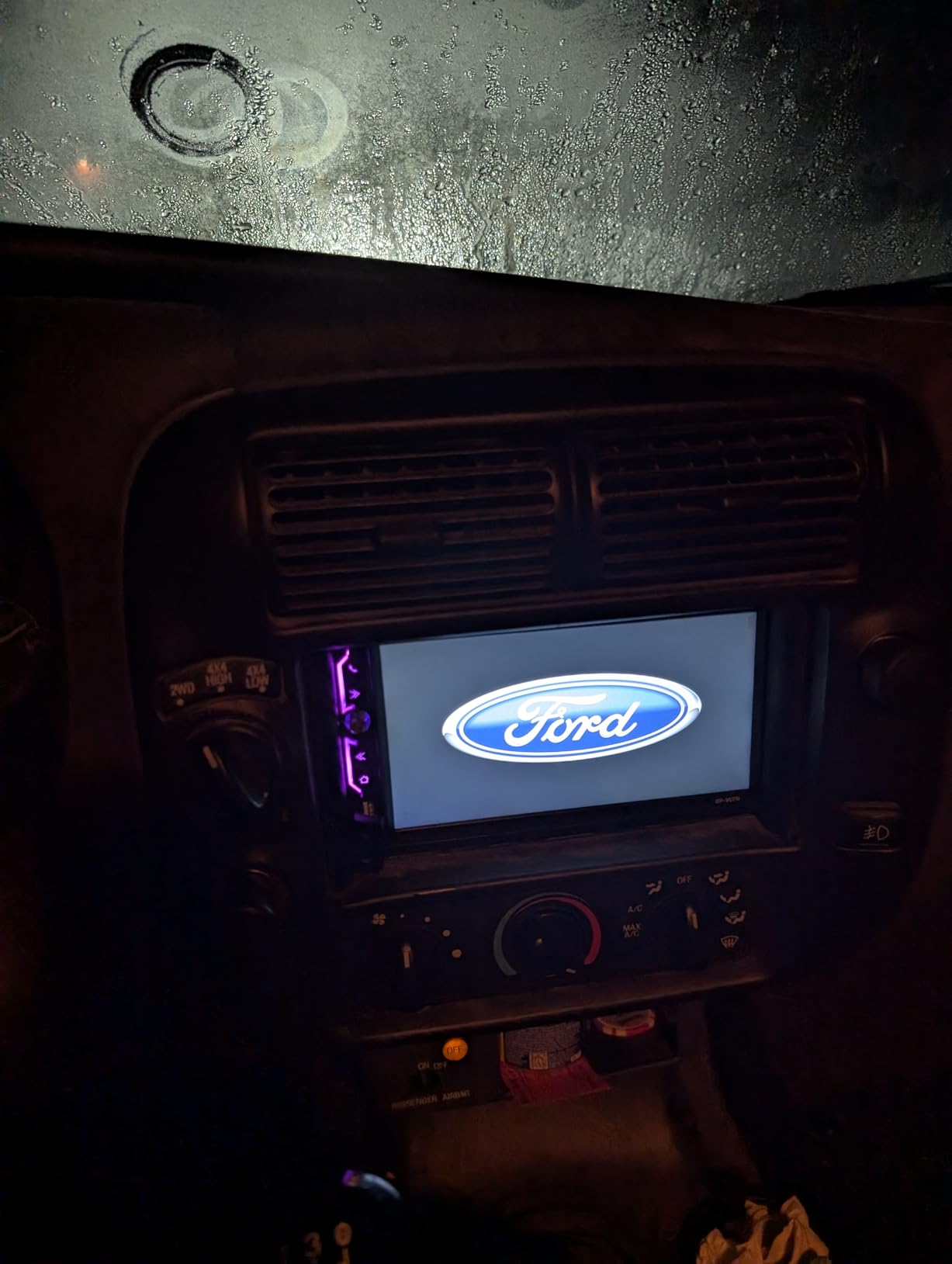
The PLZ MP-106 exists because the answer to “is there a single-din Android radio” is yes, with caveats. It puts a 10.1 inch 1280×720 IPS touchscreen into a single-DIN opening and runs wired and wireless Apple CarPlay and Android Auto with voice control through a built-in microphone. Almost every head unit with that kind of screen is double-DIN, which makes this unusual.
The audio side is not an afterthought. There is a built-in DSP with a 10-band EQ, 4.2-channel 240W output, two subwoofer outputs, four audio outputs, and two audio inputs. Bluetooth is version 5.3 with a dedicated external antenna for a more stable connection than a basic internal module gives you.
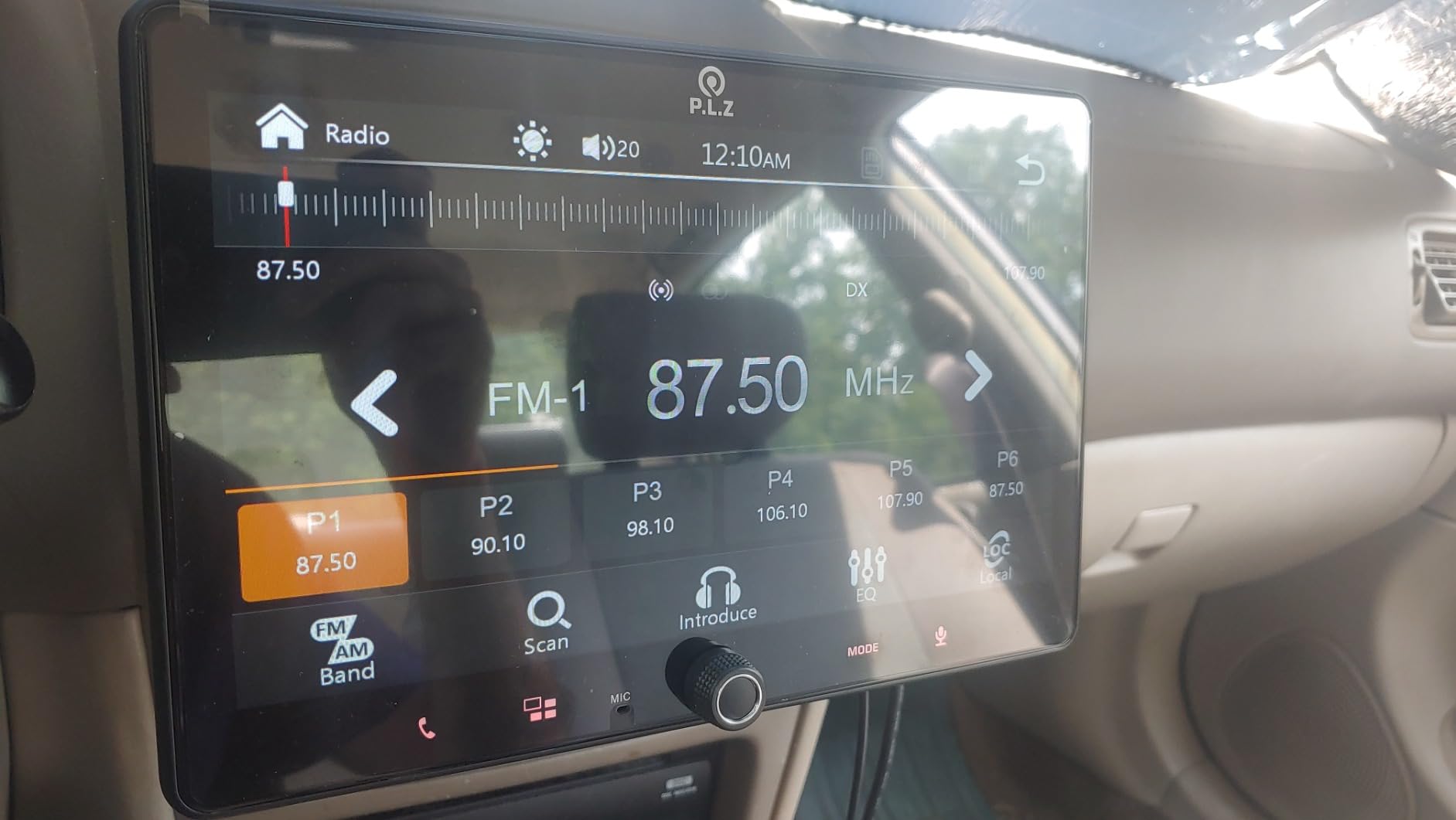
It also includes an AHD rear backup camera in the box and supports front camera inputs, with steering wheel control compatibility. An AHD rear camera is the single most useful addition for a vehicle that predates camera culture, and getting one bundled removes the separate purchase.
That bundle is why the average rating is 4.0 stars, the lowest in this roundup, with 12 percent one-star reviews. Fitment is the recurring theme. A 10.1 inch screen needs dashboard width and depth that many older dashboards do not have, and the manufacturer is candid that a dash kit, a vehicle-specific wiring harness, and an antenna adapter may all be required.
When the PLZ MP-106 makes sense
It is the right unit for a later-model older car with a wide, deep opening where you want navigation and messaging on a big screen. The 4.2-channel output with separate subwoofer outputs also makes it a reasonable starting point for a build-out with an amplifier and a sub.
Buyers who value the included camera alone often find the package strong on value, and the external Bluetooth antenna is a real advantage in cars with heavy metal body panels.
Why most older-car owners should look elsewhere
This is the last unit in the roundup for a reason. A 10.1 inch screen in a 1998 dashboard is frequently the wrong answer, and the fitment complaints in reviews are the fitting warning. Older dashboards also tend to rake steeply, and a tall screen on a raked windshield can cut into the driver’s sightline or foul the defroster.
Professional installation is recommended, which pushes the total cost well past what the head unit alone suggests. And there is no Wi-Fi hotspot function, so some apps need a wired connection to run.
For a car you drive every day, a mechless single-DIN with a detachable face and a 13-band EQ is a better outcome than a tablet-sized screen you have to trim the dash around.
How to Check a Single DIN Head Unit Will Fit Your Car
Measure the opening before you buy anything. The DIN standard is a 180 x 50 mm face, but what varies between cars is the cavity behind it. On older vehicles, the mechanical radio cage behind the dash can be shallower than the depth of a modern head unit, and that collision is the most common reason an install goes wrong.
Step one is to pull the trim bezel off the factory radio and measure the visible opening. A tape measure across the face should land close to 180 mm wide and 50 mm tall for a true single-DIN slot, or roughly 180 x 100 mm for a double-DIN opening. Step two is to check depth: measure from the face of the opening back to the first obstruction and note it.
Step three is to look up whether your vehicle needs a radio cage, a dash kit, or a single-DIN-to-double-DIN mounting bracket. A radio cage is a metal box behind the opening that holds the cage to the body, common in older Japanese cars. A vehicle-specific dash kit supplies the trim ring and brackets that make a modern head unit sit flush. Step four is the wiring: a vehicle-specific harness adapter carries the power, speaker, and steering wheel control wires so you are not cutting the original harness.
Step five is the steering wheel control question. If your car has wheel-mounted audio controls, you need a matching control adapter, because the resistance-coded buttons in the wheel send a signal the new head unit will not understand on its own. The same adapter usually carries the vehicle-specific harness, so buy them together. Losing factory chimes is a related side effect that people rarely anticipate, and some adapters preserve them.
Finally, check the chassis depth against the specification of the unit you picked. The JVC KD-SX27BT and the REAKOSOUND 820s are both noticeably compact bodies, which is exactly why they suit deep-trim, cage-limited dashboards. The short-chassis design is a real advantage here, and it is worth paying attention to before a head unit arrives that will not seat.
What to Look For When Buying a Single DIN Car Stereo
Start with the three format families. Mechless units have no disc slot and are the lightest, shortest, and most common choice today; every unit in this roundup except the Pioneer DEH-S4220BT is mechless. CD-equipped single-DIN units are increasingly rare, and the one we found is the only option if you want both a disc drive and modern Bluetooth. Large-screen single-DIN units like the PLZ put a touchscreen into the same opening, and they trade dash fitment risk for screen size.
Next, look at preamp outputs. RCA pre-outs are what let you add an amplifier later without replacing the head unit, and units that let you select which output feeds the subwoofer give you more flexibility. Pre-out voltage is worth noticing on higher-end models because a higher voltage gives an amplifier more signal to work with and less gain to make up.
Then count EQ bands. A 2-band bass and treble control is a starting point. A 13-band EQ with Time Alignment is what you want if factory speakers are staying in the car, because different door speakers rarely match each other and a global tone control cannot correct that.
Bluetooth features matter more than most spec sheets suggest. Dual phone pairing keeps two phones connected for calls at once, which the JVC handles. Reliable reconnection at ignition is worth more than a feature list, and owners describe automatic reconnect as the thing they notice every single day. Whether a unit supports hands-free calling, and how well the microphone performs in a noisy cabin, matters if you take calls on the road.
Do not skip the speaker side of the project. Aging factory speakers and oxidized wiring degrade new head unit audio, and that is a common source of disappointment. A 13-band EQ plus a modest external amplifier and fresh speaker wire fixes problems that people otherwise blame on the head unit. Check speaker impedance when you buy an amplifier, since a mismatch causes protection circuits to cut out and units to reset.
On warranty length, the numbers in this group range from 1 year on the Alpine, Pioneer, JVC, and PLZ units to 3 years parts and labor on the two BOSS models, with the Jensen reaching 4 years when registered. On a device that will live in a car for a decade, that spread is worth weighing against the feature differences.
Pioneer vs Kenwood vs Alpine vs JVC
Kenwood and Pioneer are roughly tied overall: Kenwood is the stronger choice for sound tuning and control depth, while Pioneer usually delivers the same core feature set for less money. Alpine is the pick when tuner quality and a refined fit matter most, and JVC is the value option for dual phone pairing and deep dash clearance.
Kenwood, represented here by the KMM-BT270U, leans on amplifier headroom and a 13-band EQ, and its eXcelon range is the enthusiast recommendation on car audio forums. The caveat is menu complexity: owners of Kenwood eXcelon units repeatedly describe the menus as confusing and slow to learn, a complaint that also appears in the comment sections of older roundups.
Pioneer, with the MVH-S322BT and DEH-S4220BT in this roundup, owns the middle ground. The 13-band EQ, Advanced Sound Retriever, and selectable pre-outs are genuinely enthusiast-adjacent features, and Pioneer tends to be cheaper than Kenwood for equivalent capability. The recurring gripe is the Smart Sync app’s repeated contact-permission prompts.
Alpine, with the UTE-73BT, is the choice for tuner reception, RBDS data, and lossless file support in a mechless chassis. It is the most expensive mainstream single-DIN option and the internal power is modest at 72W. JVC, with the KD-SX27BT, competes on specifics rather than brand reputation: two full-time phone connections, five-device pairing, and a short chassis that fits where deeper units will not.
Sony barely appears in this group, and that is a signal worth noting. Sony has largely moved its single-DIN effort toward double-DIN touchscreens, so buyers who want a name they trust in a true single-DIN opening are choosing between the brands above.
Who Should Skip a Single DIN Head Unit
Skip the single-DIN format if your dashboard has a double-DIN opening and you want to keep it. Modern head units assume that space, and forcing a single-DIN unit into it leaves a gap and an unfinished look.
Also skip it if CarPlay or Android Auto on a large screen is the goal and your car is genuinely old. The PLZ shows it is possible, but a 10.1 inch screen in a raked 1990s windshield trades away sightlines and dash depth. A tablet or a phone mount is the better answer in a very old car.
Skip these units in 24V commercial vehicles, since they are 12V designs and the REAKOSOUND states this explicitly. And skip them in a restoration where the original radio is a period artifact worth preserving, because a faceplate transplant specialist is the correct installer for that job rather than a generic head unit.
One broader note on upgrades in older buildings and spaces, for the same reason we wrote about choosing between a single large display and a multi-screen video wall: matching the device to the physical opening you already have beats chasing the newest hardware. Most dashboard and equipment installs go wrong when the hardware spec and the opening spec were never checked against each other.
Frequently Asked Questions
What is the best classic car radio?
For most classic cars the best radio is a modern single-DIN head unit with Bluetooth rather than a true vintage unit, because a period radio gives you AM-only tuning and no USB. If the car must stay period-correct, specialist brands such as RetroSound, Custom Autosound, and Retro Manufacturing build faceplate-style radios in the original look with modern internals. For a car you actually drive, a mechless single-DIN with a detachable face plate is the more practical answer.
Is there a single-din Android radio available?
Yes, but the options are limited and the screens are unusually large for the format. The PLZ MP-106 in this roundup runs wired and wireless Android Auto and Apple CarPlay on a 10.1 inch IPS touchscreen that fits a single-DIN opening, and typically needs a dash kit plus a vehicle-specific wiring harness. Most brands now concentrate their smartphone integration on double-DIN units instead.
Can you put a single din radio in a double DIN?
Yes, using a single-DIN-to-double-DIN mounting bracket, but you are left with an open gap where the second slot used to be, so a trim panel or a filler plate is needed to make it look finished. A single-DIN-to-double-DIN adapter is mainly a temporary fix for a car that has already had a double-DIN head unit removed. If the opening is genuinely double-DIN, buy a double-DIN head unit instead.
Is Pioneer or Kenwood better?
They are close, and the honest answer depends on budget and priorities. Kenwood is usually better for sound tuning and control depth, with stronger amplifier headroom and 13-band EQ on mainstream models, though its menus take time to learn. Pioneer delivers a similar feature set for less money and is the better value pick, with the same 13-band EQ, Advanced Sound Retriever, and selectable RCA pre-outs on models like the MVH-S322BT.
Will a single din head unit fit my older car?
Most likely, if your car was built before the mid-2000s, because that is when the 180 x 50 mm single-DIN opening was standard. The variables are dash depth and the radio cage behind the trim, so measure the opening and the cavity depth before buying, and check whether your vehicle needs a dash kit, a radio cage, or a single-DIN-to-double-DIN bracket. A vehicle-specific wiring harness and steering wheel control adapter are usually needed as well.
Final Verdict for 2026
The Alpine UTE-73BT is our pick for the best single din car stereos for older cars, on the strength of the highest average rating in the group, an RBDS tuner, and lossless playback in a mechless chassis that suits an original dashboard. The Pioneer MVH-S322BT is the value answer if you want tuning tools and pre-outs, and the BOSS Audio Systems 616UAB covers the simple Bluetooth upgrade at the lowest tier.
Before any of them, measure your dash opening and check the depth behind it. That single hour of measuring decides whether the install is easy, and it is the step most upgrade guides skip.