
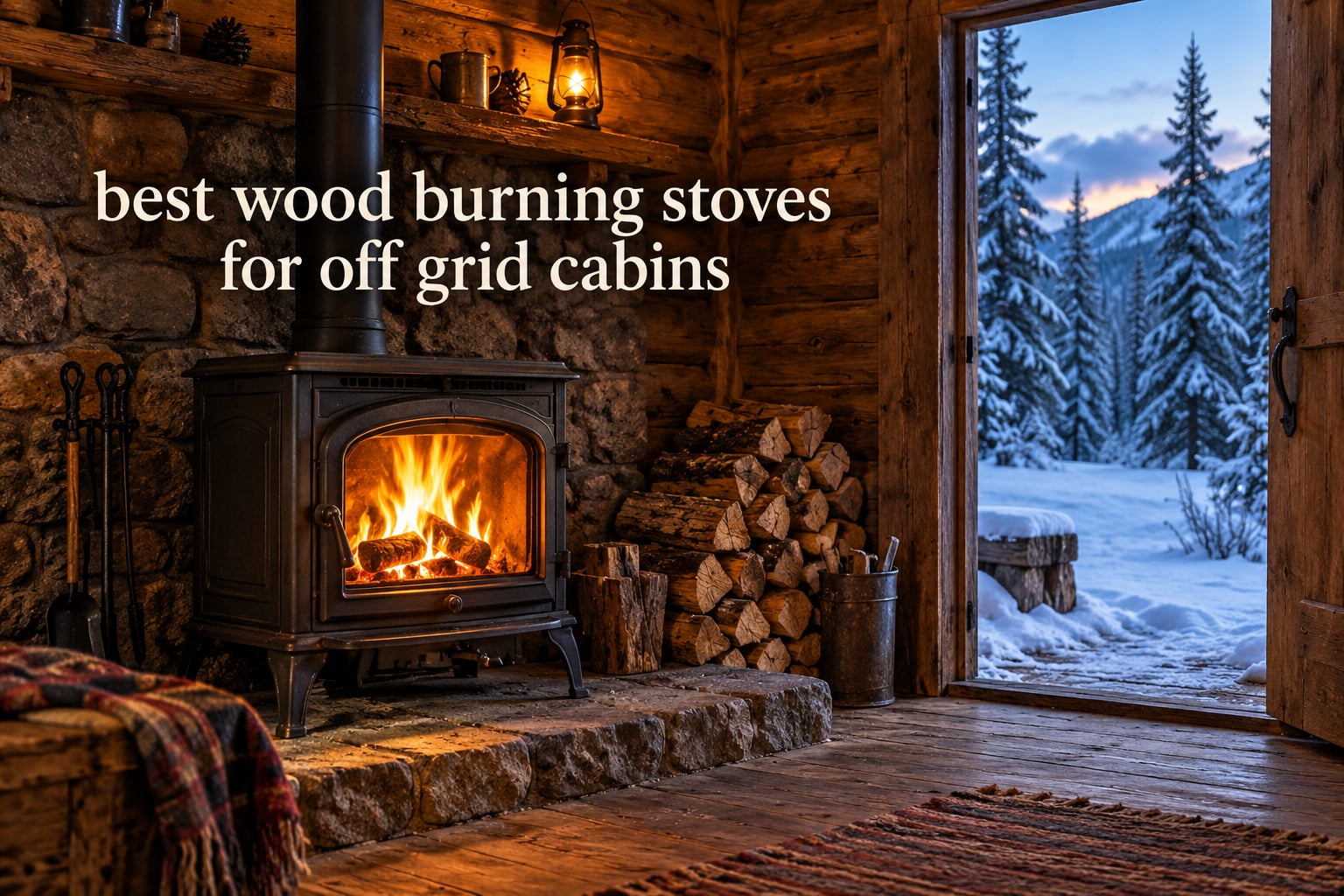
Three picks stand out for off-grid heat. The US Stove 900 Sq Ft Cast Iron Stove is the one most cabins should end up with, because its cast iron firebox holds heat for hours after the fire is out and it runs on nothing but split wood. The Ashley Hearth AW1120E-P is the pick if you want more heating capacity per dollar and you already have a chimney connector planned. The Ashley Hearth AW1820E insert is the pick if you have a masonry fireplace and want to wake up a dead hearth instead of installing a freestanding appliance.
That framing matters because the search results for best wood burning stoves for off grid cabins are mostly retailers selling a single brand and forum threads where people argue about sizing in the abstract. Neither is much help when you are standing in a hardware aisle with a stove, a flue collar, and a chimney kit priced separately.
I spent weeks going through owner reviews on all 12 stoves below, cross-checking rated capacity against firebox volume, log length and the electricity question, then sorting them into the buckets that actually decide a purchase: cabins under 900 square feet, cabins around 1,200 square feet, large cabins that need forced air, and cabins where cooking matters as much as warmth. Everything here runs on firewood. Nothing needs gas, and only two need a blower to move air.
Before you read further, one thing up front. Every stove in this roundup is only part of what you install. The chimney, the hearth pad and the install labor routinely exceed what people budget for the stove, and that is the single most common complaint from first-time owners. I cover it in detail in the buying guide, with no dollar figures because vent and hearth pricing moves with location and fuel prices move with the season. What matters is that you walk in knowing the stove is one line in a four-line budget.
Table of Contents
Top 3 Picks: Best Wood Burning Stoves for Off Grid Cabins (October 2026)
These three cover the most common cabin situations. Pick the cast iron freestanding box if your heat source has to be simple and forgiving, the pedestal steel stove if you want rated capacity and a small footprint, and the insert only if a masonry fireplace already exists.
Best Wood Burning Stoves for Off Grid Cabins in October
1. US Stove 900 Sq Ft Cast Iron Stove – Best Overall for Most Cabins

US Stove Company Cast Iron Wood Stove with Cool Touch Safety Handle, Heats up to 54,000 BTUs
54,000 BTUs
900 sq ft
130 lb cast iron
19 inch logs
Freestanding
Pros
- Holds heat long after the fire dies down
- Strong owner satisfaction at 897 reviews
- No electricity needed
- Accepts 19 inch firewood
Cons
- Fixed door vent limits burn rate control
- Door latch is not heavy duty
- Two-person lift at 130 lb
- Cast iron arrives with occasional transit damage
This is the stove I keep coming back to. It is the most-reviewed appliance in this roundup by a wide margin, and the review pattern is unusually consistent: owners are not impressed by the specification sheet, they are impressed that a 900 square foot rated box actually made it through a winter in a small cabin, a shop, or a garage.
Several owners report keeping a 1,700 square foot garage above freezing in single-digit weather, which says more about radiant cast iron than about the square footage claim on the box. The body is cast iron at 130 pounds, so heat stays in the metal long after the last log burns down. For an off-grid cabin where the power goes out and nobody wants to babysit a fire, that thermal mass is the whole argument.
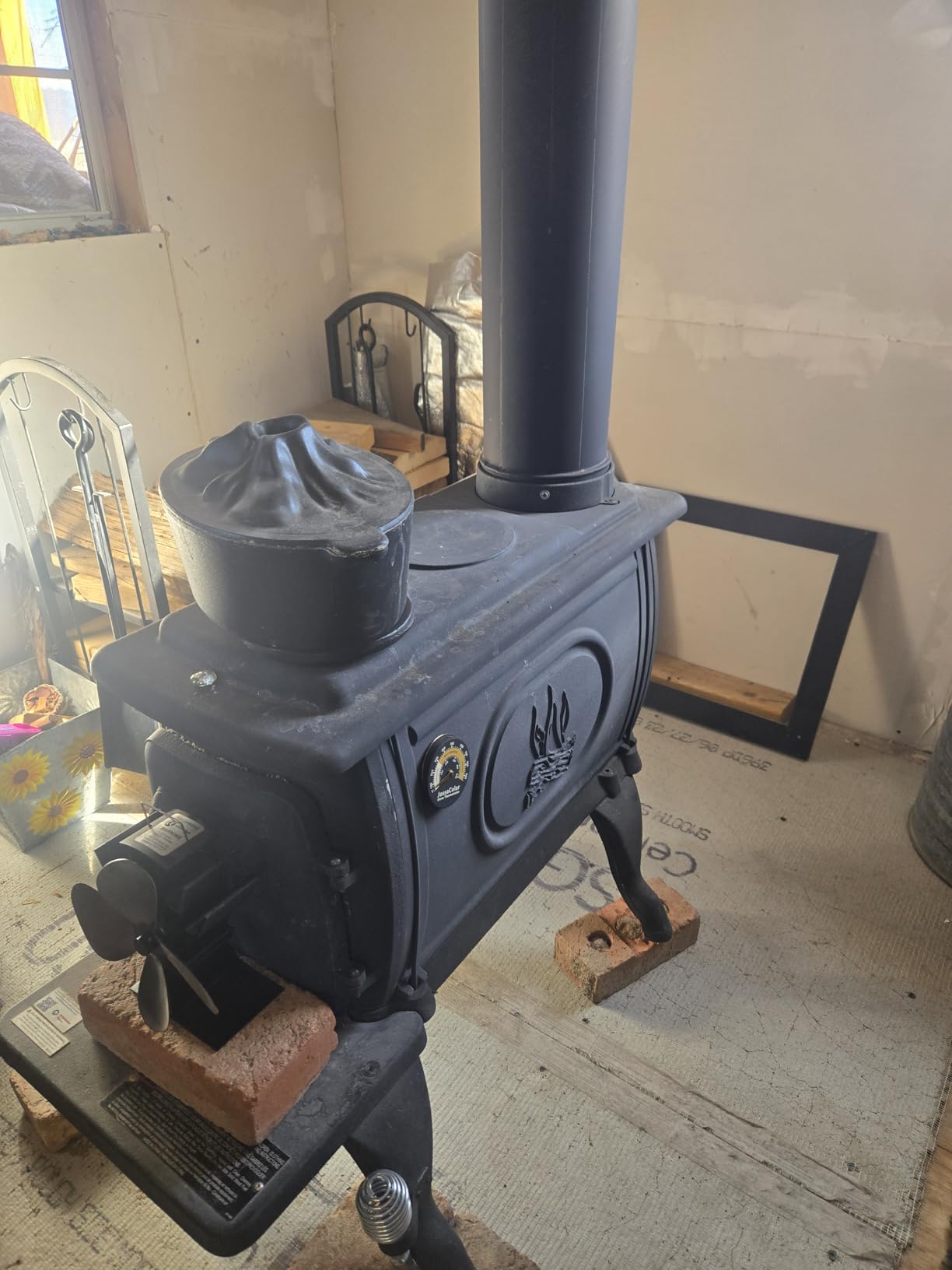
The firebox takes logs up to 19 inches, which is longer than most stoves in this group and matters if you split your own wood. Owners splitting into 16 inch rounds will find it fits with room to spare. The top plate doubles as a cooking surface, so it covers the boil-a-pot-and-keep-warm case even though it is not a cookstove.
My main reservation is the door vent. It is fixed, which means burn-time control is coarse: you choose a rate when the fire is built and then live with it. Owners who tried running it with a damper report that it was never designed for that, and those are the reviewers who rate it lowest. If you want fine control over how fast a fire burns, this is not the appliance.
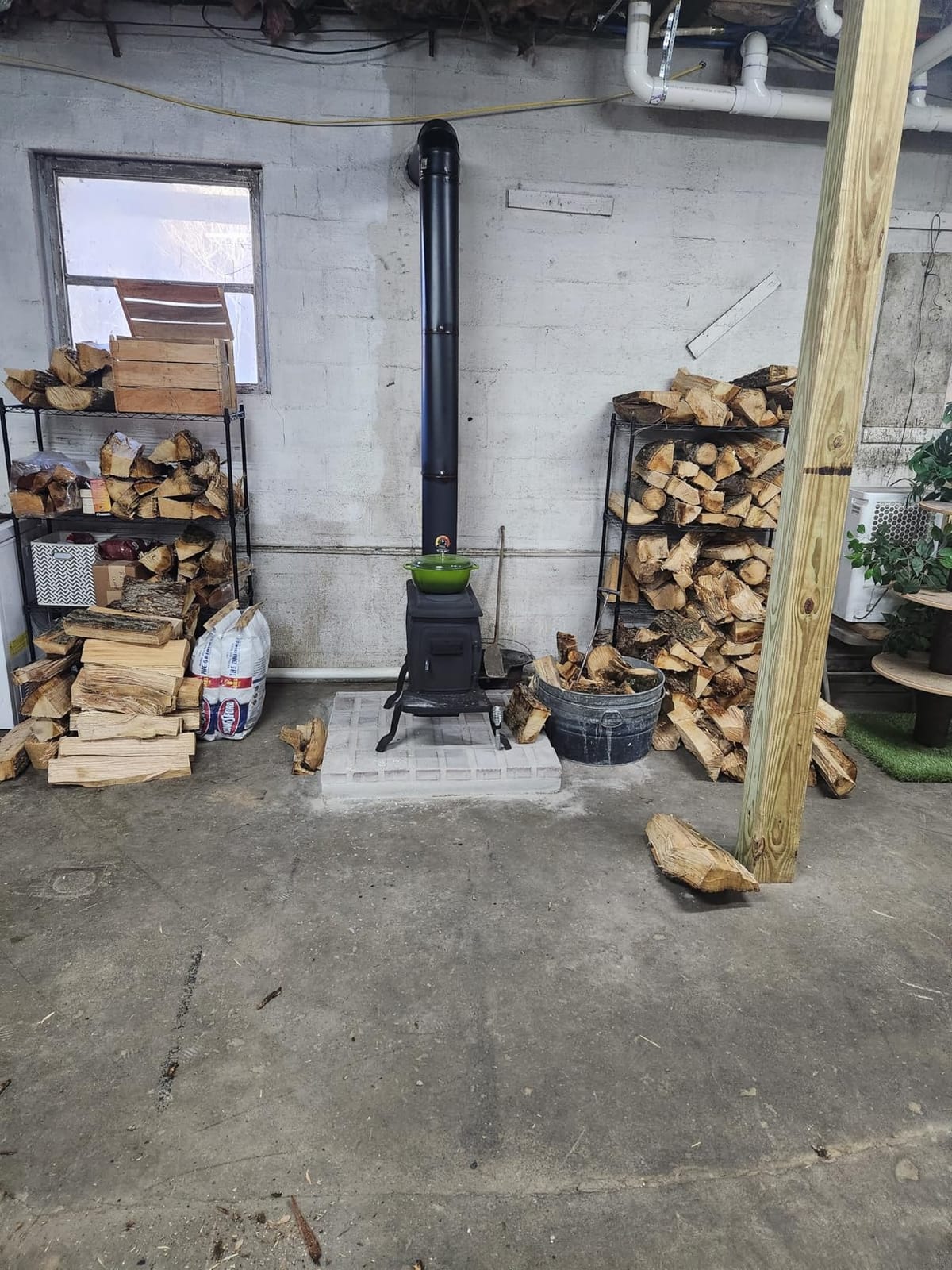
Two other things to know before you buy. The door latch is described as light and easily bent, so treat the door gently when loading wet wood. And because it is cast iron shipped in a wooden crate, some owners received units with cracked castings that needed replacement. Manufacturer customer service is repeatedly described as prompt and solution-oriented, which turns a cracked casting into a delay rather than a loss.
Assembly is genuinely simple: legs, a draft plate and a door plate. If you have ever assembled flat-pack furniture you can do this, though you will want a second person because of the 130 pound lift. The flue collar is a standard 6 inch, and the box ships with the stove and legs only, so budget separately for a connector pipe, a liner and a hearth pad.
Is this the right size for your cabin?
Rate this stove for a heated space in the region of 700 to 900 square feet with decent insulation. Owners in small cabins report comfortable results; owners in large open floors report working hard to keep up. The 54,000 BTU figure is the honest number to plan around rather than a stretch target.
If your cabin sits in a very cold climate and you want overnight heat without tending, the cast iron mass works in your favor. If you want to heat a workshop where you need the temperature up in twenty minutes, this is the wrong tool and the Cleveland Iron Works unit or a larger steel model suits you better.
Who should skip it
Skip it if burn-rate control is your priority, because the fixed vent removes that lever entirely. Also skip it if you are alone and the 130 pound cast body is a problem; two-person placement is the normal case.
Do not skip it because of the 4.0 average. A 4.0 across 897 reviews means a very large number of people got exactly what they paid for, which is the most reliable signal available in this group. The complaints are consistent and mechanical rather than fundamental, and all of them are manageable.
2. Ashley Hearth AW1120E-P – Best Value for Cabins Around 1,200 Sq Ft

Ashley Hearth AW1120E-P 1,200 sqft Wood Stove with Legs and Pedestal
68,000 BTUs
1200 sq ft
18 inch logs
Brick lined firebox
Ash pan and air wash
Pros
- Efficient once a coal bed is established
- Compact footprint for the capacity
- Large glass viewing window
- Legs and pedestal both included
Cons
- Firebox holds about one large split at a time
- Demper operation described as inconsistent
- Smoke puffs in when the door opens
- Vent and install costs can outweigh the stove
This is the most talked-about recommendation on stove forums for a first off-grid cabin, and the reasoning is the one buyers eventually agree on: a roughly 3 cubic foot class firebox is the sweet spot between holding a fire overnight and still fitting through a cabin door. This stove is a compact steel box in that class with a brick-lined firebox and a claimed 1,200 square feet.
Owners in 800 square foot cabins in cold Montana winters report it heats effectively, and the efficiency praise is consistent once a coal bed is established. That phrase matters. A steel firebox performs poorly when you are feeding it one log at a time from cold, and dramatically better once a bed of coals is established and burning the incoming wood off its own volatile gases.
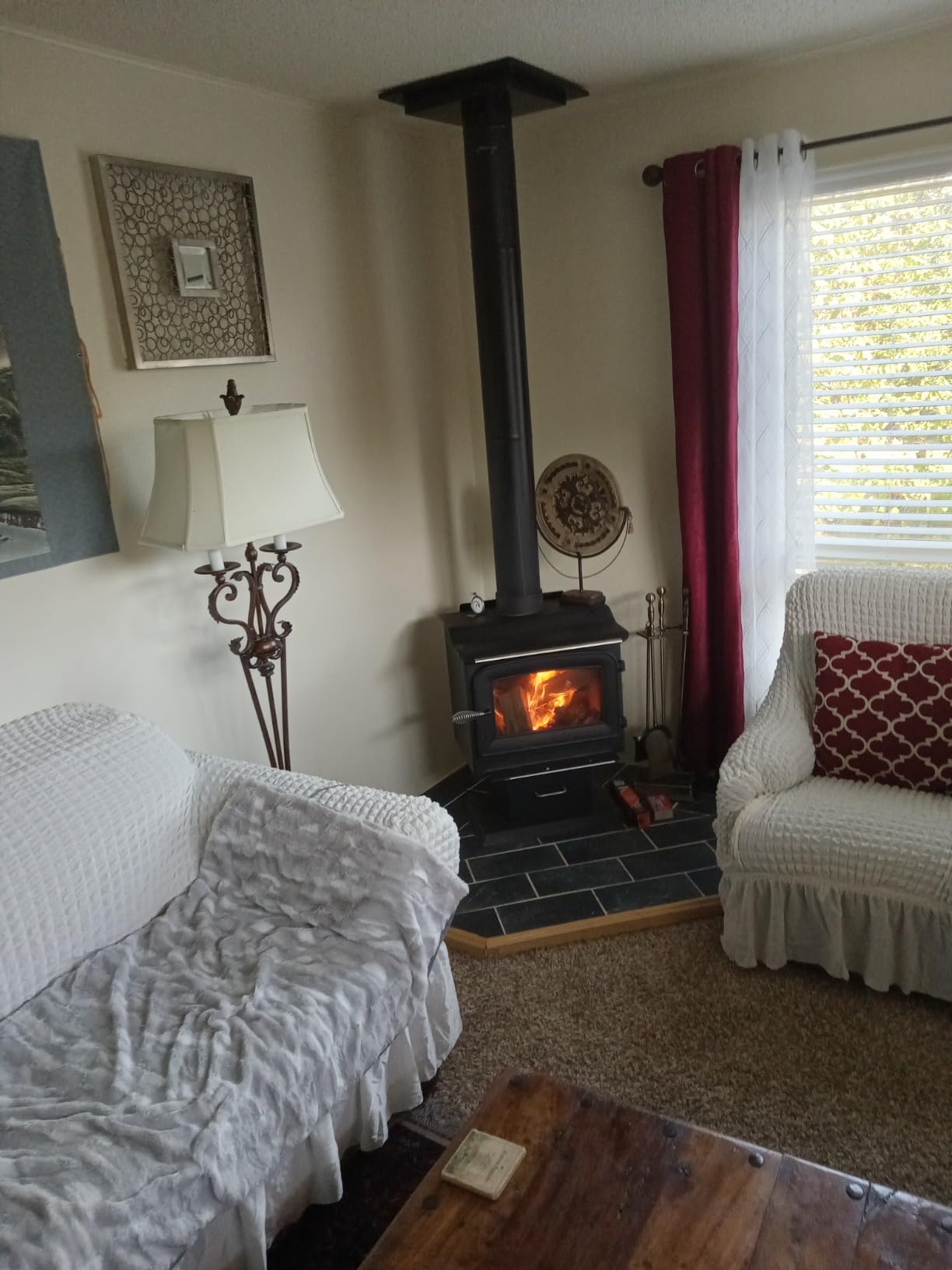
The styling gets mentioned more than it should, but it earns the mention: a large glass viewing door and a brushed nickel handle on a pedestal base. On a long winter evening in a cabin with no other light source, a stove you can actually see into matters more than the specification list suggests.
The catch is the firebox depth. Owners describe a firebox that holds roughly one large split log at a time, which translates into frequent refuelling and not much unattended burning in deep cold. That is the honest trade against the cast iron model above, and it is the reason this one is best value rather than best overall.
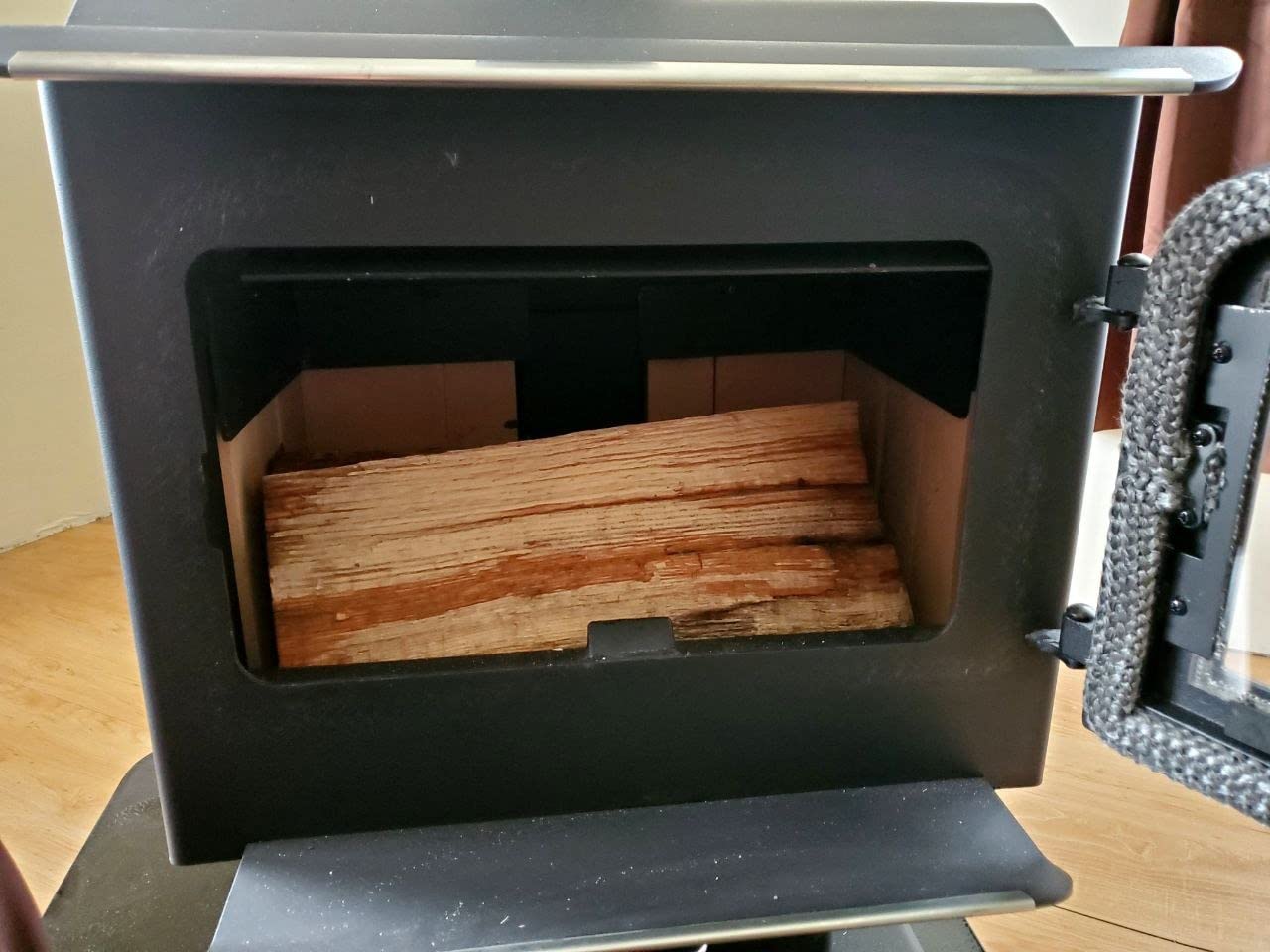
The other recurring warning from owners is financial rather than mechanical. Multiple reviews point out that flue pipe and installation costs can exceed what you paid for the stove, and that optional blower hardware has arrived incomplete for some buyers. Plan for a separate vent, connector and hearth line in your budget, and confirm the parts list before the stove shows up.
Air control is another soft spot. Owners describe the air valve and damper operation as not smooth or not consistent, and the shallow firebox means smoke puffs into the room when you open the door while the fire is still active. Open it slowly, or crack it while the fire is down.
What kind of cabin suits it
This fits a cabin, bunkie or lower-level space in the 600 to 1,000 square foot range that is used regularly, with someone able to feed it every few hours. Owners who like to be up and moving at first light, or who fire it up in the evening and bank it down, get the most out of it.
It is also the sensible pick if you want a legible, modern-looking appliance rather than an antique-looking cast iron box. The pedestal base and legs are both included, so you can set the height yourself once you know your hearth pad.
Who should skip it
Skip it for overnight, unattended heat in genuinely cold conditions. One log at a time is fine for a winter evening and a poor answer for a January night at minus fifteen with a storm on the ridge.
Also weigh the install reality carefully. If your budget is tight, a smaller stove that gets you a complete vented system matters more than extra rated capacity. If your chimney connector is already in place and code-compliant, that concern largely disappears and this stove becomes a stronger pick.
3. Ashley Hearth AW1820E Insert – Most Versatile for an Existing Fireplace

Ashley Hearth AW1820E 1,200 Sq. Ft. Wood Stove Insert , Black
69,000 BTUs
1200 sq ft
1.2 cu ft firebox
150 CFM blower included
235 lb
Pros
- Blower included so air moves out of the firebox
- Large air-washed glass viewing window
- Catalyst-free secondary combustion
- Pallet packing survives transport well
Cons
- Firebox needs refuelling every couple of hours
- Blower is audible on high
- 235 lb makes installation a chore
- Not a primary heat source for the whole cabin
Most cabins do not have a masonry fireplace, which is exactly why this stove is a premium pick rather than the default recommendation. If you have a firebox that was built to code, this insert converts it from a decoration into working heat, and it does that with a blower included rather than sold separately.
The technical case is solid. A 1.2 cubic foot firebox taking 18 inch logs, wrapped in firebrick, in 10-gauge reinforced plate steel, with a catalyst-free secondary combustion system. The firebrick lining is the part that matters over a decade rather than a season: it keeps the steel plate from cooking itself and it holds a thermal bed that keeps the fire going after you stop adding wood.
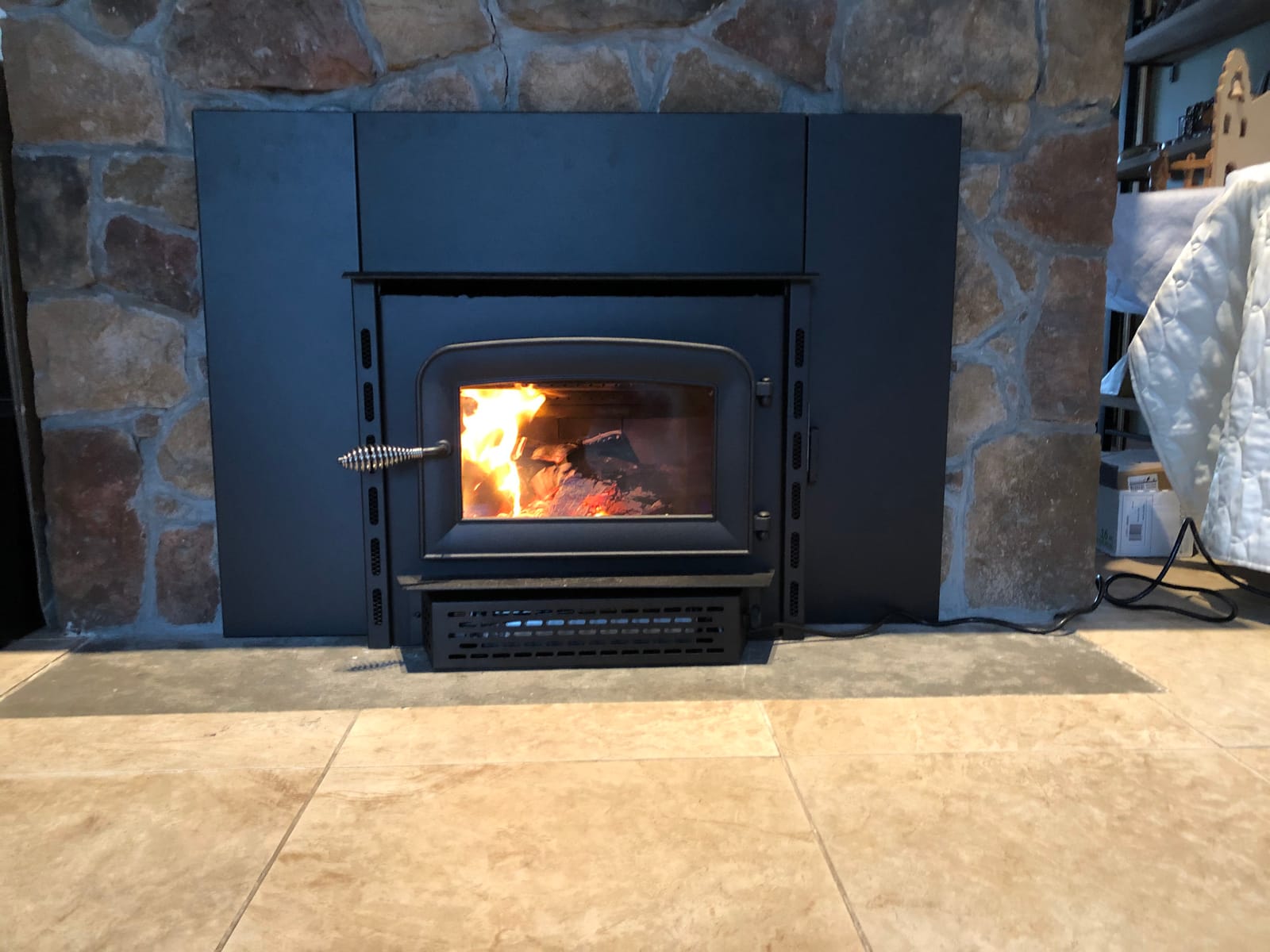
Owners praise the viewing window specifically, because it is a large piece of air-washed ceramic glass set in a cast iron door. Starting and watching a fire is the actual use of a fireplace insert, and a small window gives that away. The 150 CFM adjustable blower moves a noticeable amount of heat out of the opening, which is what separates an insert from a decorative box.
Packing is unusually good for this weight class. It arrives on a pallet and several owners report no transit damage at all, which is a real differentiator when you are comparing heavy appliances shipped long distances. The 31 by 44 inch hearth surround is included and uses a spring-loaded adjustment to fit the opening.
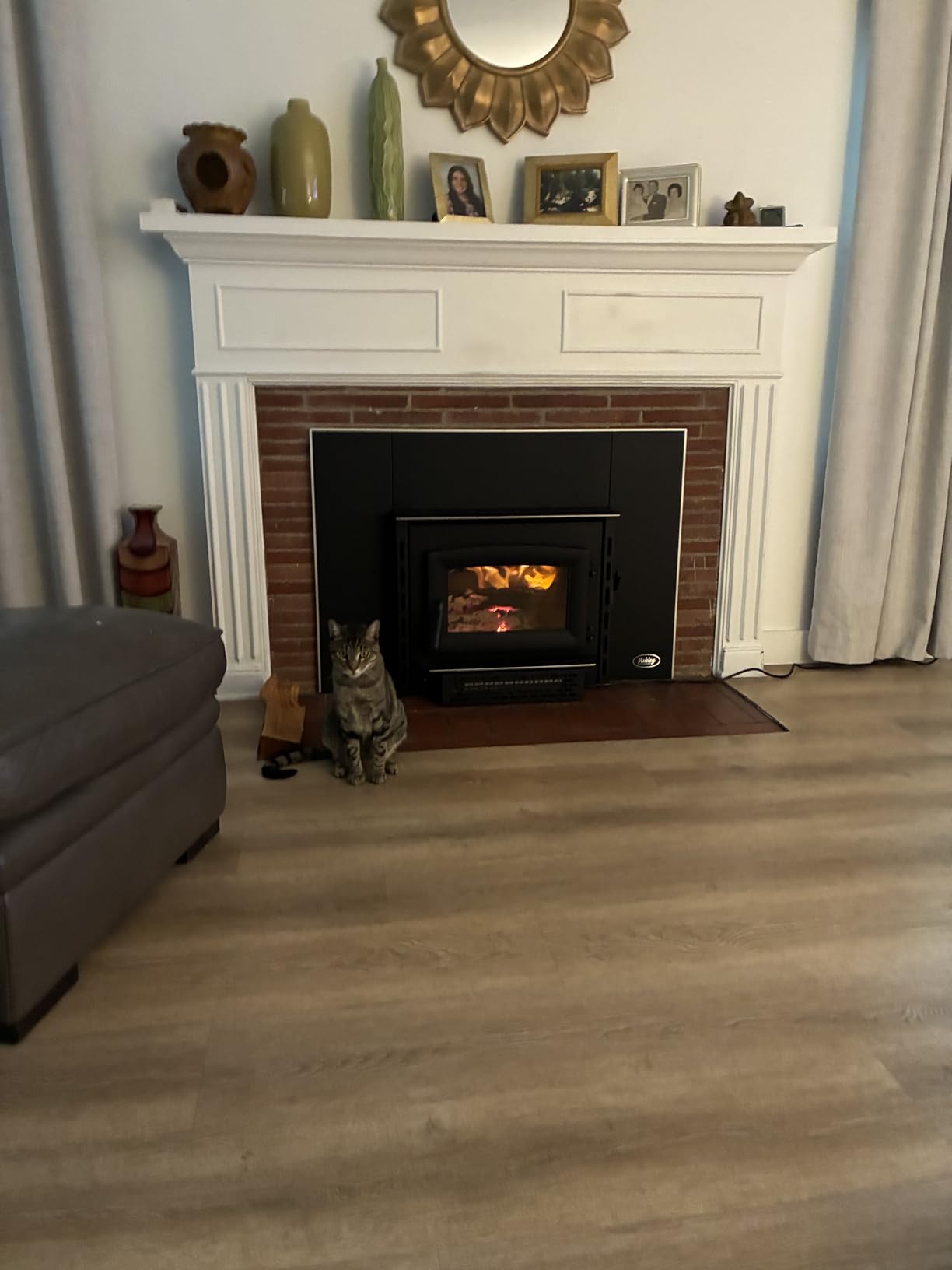
The limitations are consistent. The firebox is small enough that owners refuel every couple of hours. The blower is audible, especially on the highest setting, and audible means noticeable in a quiet cabin at night. At 235 pounds, getting it into the firebox is genuinely a two-person job on a raised hearth.
Two things to confirm before you commit: this is for residential masonry fireplaces only and it is not approved for mobile homes, and a 6 inch chimney liner is required but not included. If you have to install a liner, you are suddenly in the install-cost conversation described in the buying guide below, and a freestanding stove may serve you better.
When this beats a freestanding stove
Choose the insert when you already have a code-compliant masonry fireplace with adequate clearances. It is a smaller job with a better-looking result, and the blower is already included, which is money you do not have to spend on an accessory.
Choose it when you live in or regularly use the space where the fireplace sits. Inserts deliver a strong convective throw into the room they are installed in rather than heating a whole floor, and that concentration is an advantage in a cabin you use in one sitting area.
Who should skip it
Skip it if your cabin is newly built with no masonry chimney. Retrofitting a masonry fireplace into a remote cabin is a bigger project than a freestanding stove on a hearth pad, and the liner requirement is not optional.
Also skip it as a whole-cabin primary heat source despite the 1,200 square foot claim. Owners are clear that it heats the immediate room well, and a small number report damper or seal failures after a season or two of use, which is exactly the component you cannot inspect before winter.
4. Ashley Hearth AW2520E-P – Best for Large Cabins and New Builds

Ashley Hearth AW2520E-P 2,500 sq ft Wood Stove with Legs and Pedestal
112,800 BTUs
2500 sq ft
2.7 cu ft firebox
21 inch logs
291 lb
Pros
- Large firebox holds a coal bed through long nights
- Runs with no electricity for core heat
- Customer service ships missing parts free
- Legs and pedestal both included
Cons
- Flat cooktop spills smoke when the door opens
- Ash cleanout does not align with the ash pan
- Some units needed outside air and a taller chimney
- 291 lb is a serious install
This is the largest freestanding stove in the group, and it is one of just two models here that state outright that core operation needs no electricity. For a larger cabin, a new build, or a homestead where the stove is genuinely the primary heat source, the 2.7 cubic foot firebox is a meaningful upgrade over anything smaller.
The clearest owner report comes from northern Wisconsin, where a 900 square foot main floor held 72 to 74 degrees through 15 to 20 degree weather across a four to five month season. That is the real-world figure worth planning around, and it is a reminder that rated capacity is a marketing ceiling rather than a promise.
The firebox takes 21 inch logs, the longest capacity here, and it is firebrick lined with secondary combustion and no catalyst. Catalysts degrade, need replacement at intervals and can behave badly if burned wrong. A non-catalytic re-burn design is the simpler long-term answer for a stove you might own for twenty years.
Electricity is optional rather than required. An optional 100 CFM circulator can be added if you want forced air, but the core appliance runs without it. It is also mobile home approved with a fresh air intake kit sold separately, which is unusual in this group and matters if the cabin is a manufactured or transportable building.
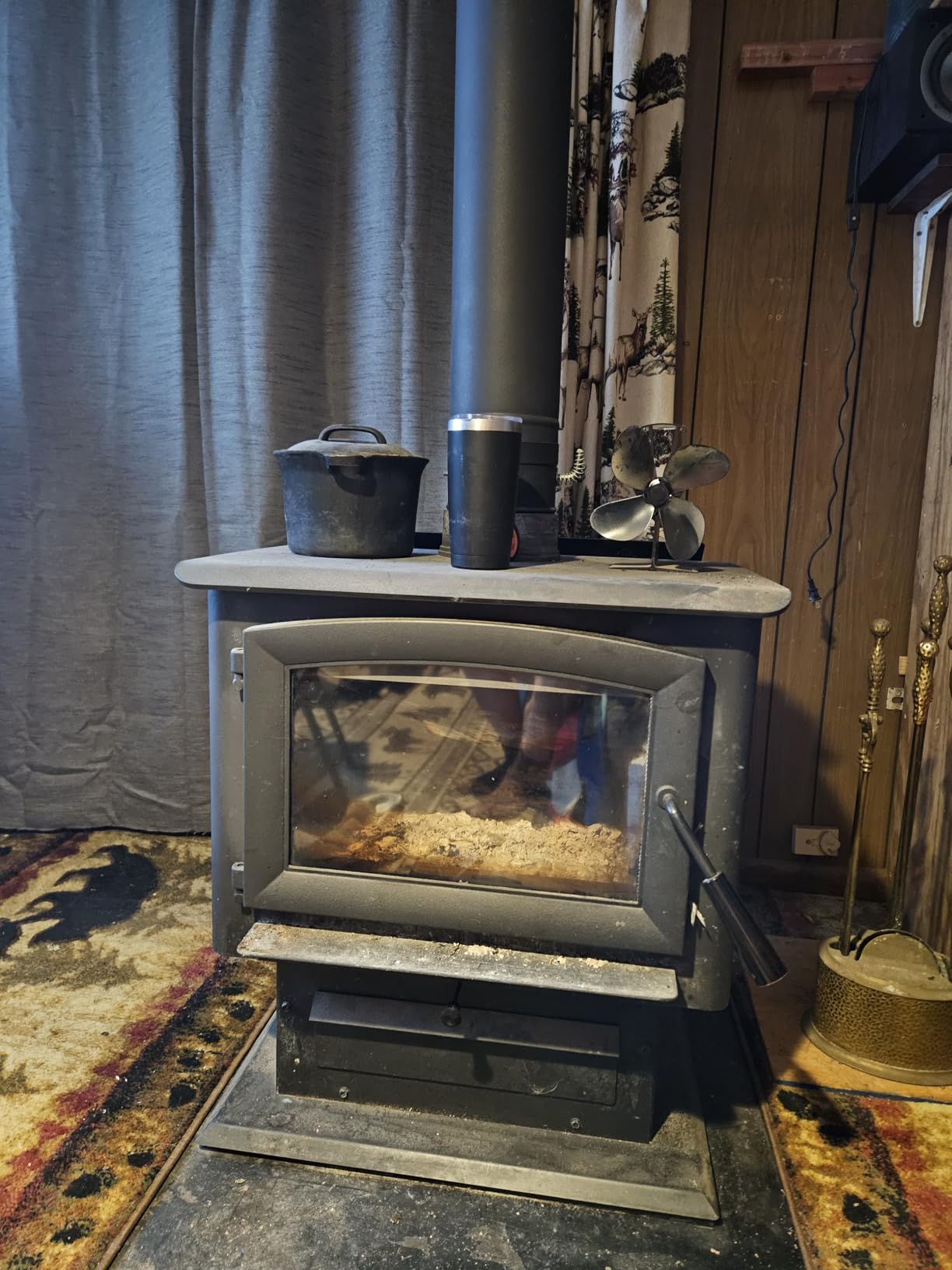
The complaints cluster around two specific problems rather than performance. First, the flat top means smoke spills into the room when you open the door on a live fire, because there is no upper air wash to catch it. Second, the ash cleanout opening and the removable ash pan do not line up well, so ashes spill during cleanup and you end up reaching into a hot firebox to get the rest.
A smaller number of owners had to solve a backdraft problem during installation, needing an outside air pipe, a taller chimney and even a chimney pipe fan to get stable draft. That is a chimney and site problem more than a stove problem, but it is the kind of thing you discover in February.
How to size it without oversizing
Use the owner-reported figure as your anchor: around 900 square feet of main floor for a well-insulated cabin in a cold climate. In a milder climate or a well-insulated shell, most owners find that generous rather than necessary.
Oversizing a small cabin is the mistake forum veterans warn about most often. A stove that can raise the room twenty degrees in ten minutes will get run wide open, and running any stove wide open is how creosote and chimney fires happen. If your cabin is under 600 square feet, one of the smaller stoves here is the correct answer even though this one is better.
Who should skip it
Skip it in a small cabin, a bunkie, or a hunting shack. At 291 pounds and with a firebox designed for a four to five month burn, it is the wrong appliance for a space you heat on weekends.
Also weigh the ash handling honestly. If you cannot empty a pan of ashes into a metal container outdoors a few times a week, the poorly aligned cleanout will annoy you every week for years. It is a small thing that becomes a real one over a season.
5. Cleveland Iron Works Single Burn Rate Stove – Best for a One-Person Install

Cleveland Iron Works Single Burn Rate Stove
27,000 BTUs
900 sq ft
18 inch logs
77 lb cast iron
6 inch flue
Pros
- 77 lb is a practical weight for one person
- A ceramic rope gasket gives a genuinely tight seal
- Quick and easy assembly
- EPA listed and approved
Cons
- Single burn rate gives coarse control
- 27000 BTUs is modest for a large space
- Small log capacity relative to rivals
- Only a one year warranty
The reason this one is on the list is the 77 pound weight. Every other cast iron stove in this roundup runs from about 92 to 300 pounds, and if you are installing alone on a remote site, that number changes your decision more than any specification.
It is still cast iron with a ceramic rope gasket on the door, which owners describe as delivering a tight, airtight seal. That seal is what lets a stove hold a coal bed and burn slowly, and it is the difference between a stove that smoulders for eight hours and one that burns through its wood in an hour and a half.
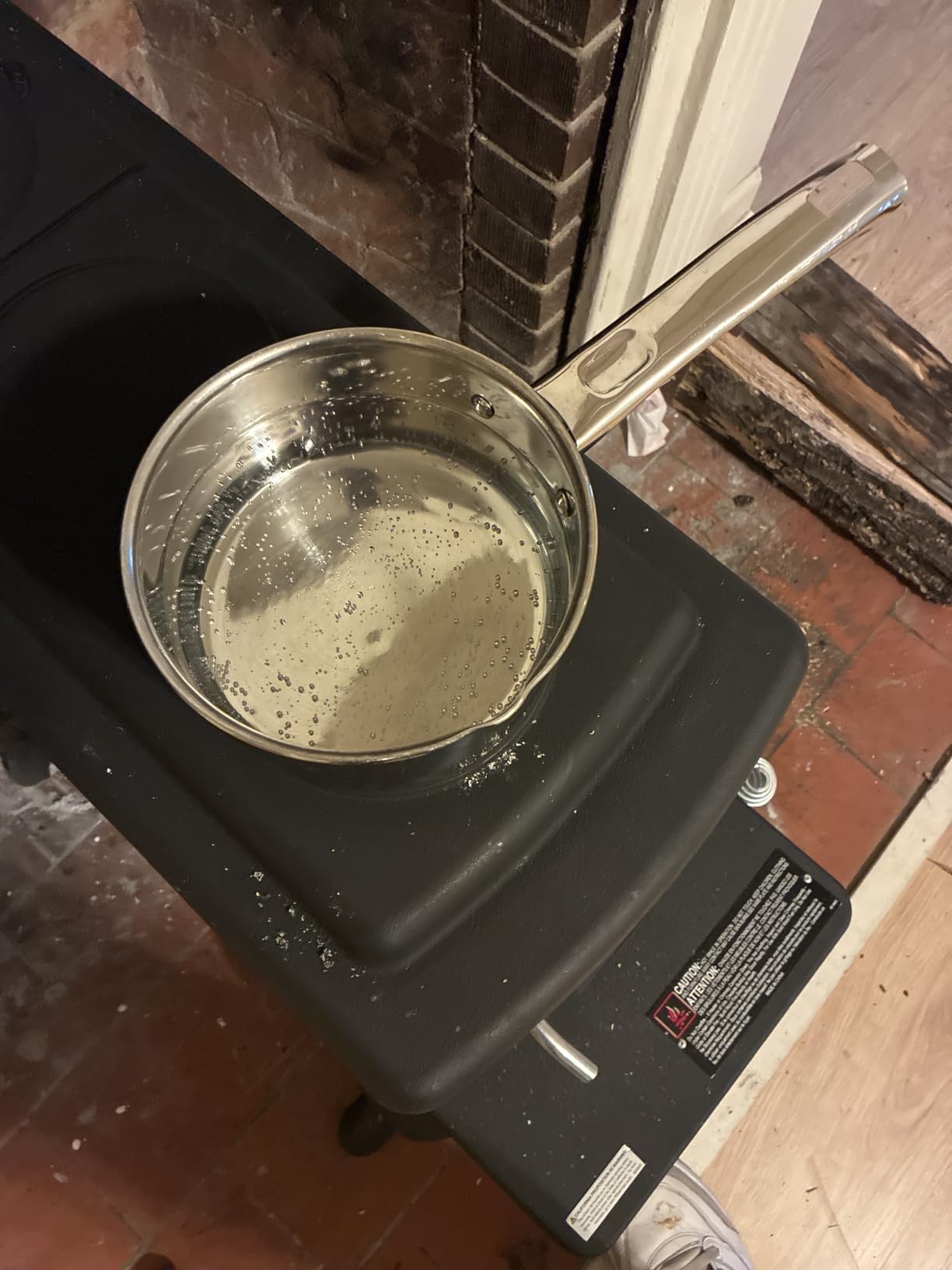
It holds 18 inch firelogs, runs on a standard 6 inch flue, and includes a two-piece safety handle that stays cool to the touch while the stove is burning. The handle detail sounds minor until you are loading wet firewood at night in a cabin and the alternative is standing near a hot door frame.
Owners consistently describe assembly as quick and easy, and the matte black high-temperature finish gets called out as better quality than the price suggests. EPA Listed and Approved, with the ceramic rope gasket as the sealing element.
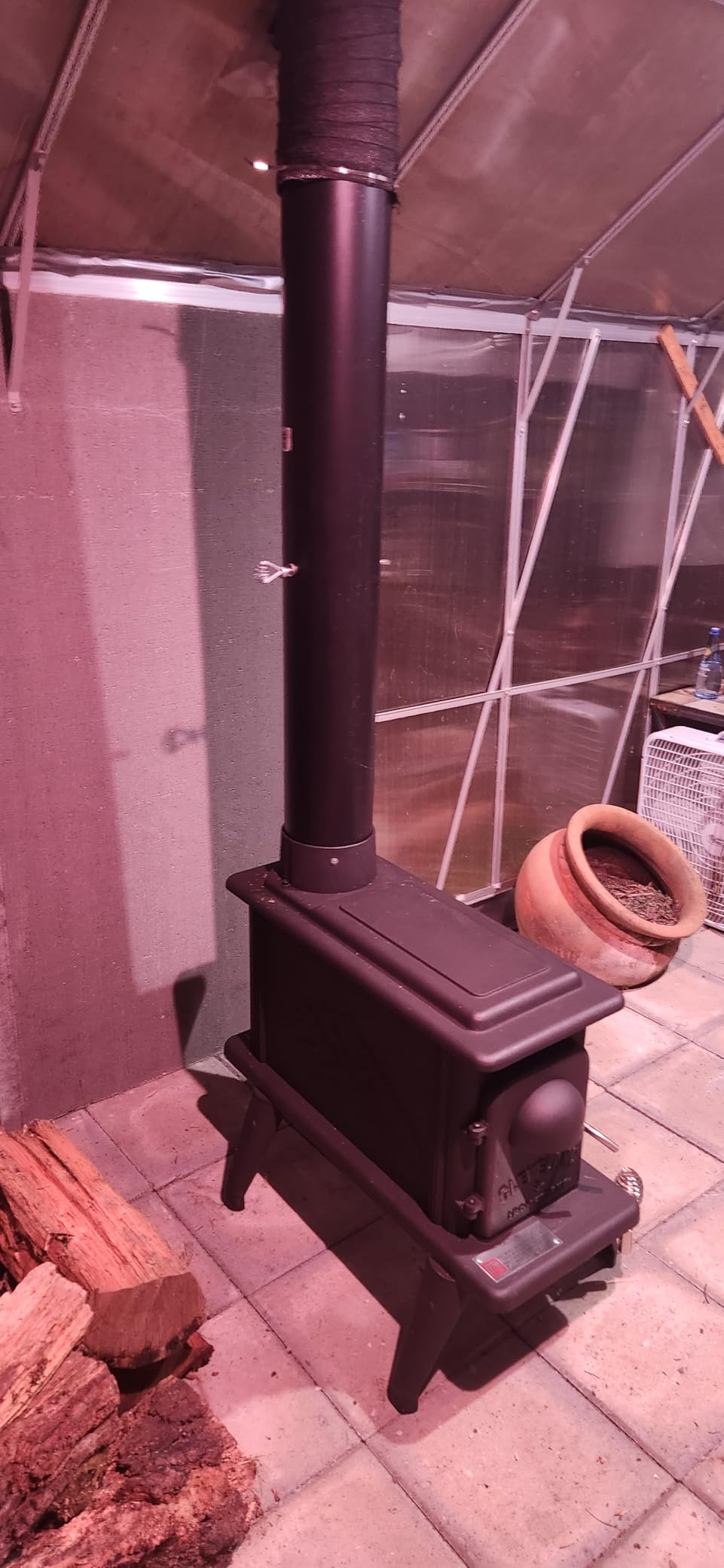
The trade is control. A single burn rate means you pick an air setting and live with it for the life of the fire, which is a coarse instrument. And 27,000 BTUs is a modest output figure, so while the box claims 900 square feet, treat that as a well-insulated, moderate-climate ceiling rather than a cold-weather number.
The warranty is one year, versus the limited lifetime firebox warranties carried by several rivals in this roundup. On a cast iron appliance that is a real difference, because firebox warranty is precisely the failure point that matters over fifteen years.
Who it fits best
It suits a small cabin, a workshop, a mudroom or a shop where you want cast iron heat retention and can carry the appliance in yourself. Owners describe dialing in the single rate as simple once you understand it, which is a genuine benefit for a first-time owner.
It is also a good fit for a hunting cabin or a place that is heated in bursts. A lighter cast iron box comes up to temperature faster than a 130 or 291 pound body, so it is more responsive to a cold afternoon and a quick evening fire.
Who should skip it
Skip it for a cold-climate primary heat source. There is no blower, no secondary combustion claim in the listing, and the output figure is the lowest of any EPA-listed cast iron stove here. A large cabin in a hard winter will out-run it.
Skip it if long-term warranty coverage is part of how you decide. The one-year term is short for an appliance that will sit in a cold building for a decade and see thermal cycling every season.
6. Stonehouse Forge Trailblazer Cookstove – Best for Off-Grid Cooking

Trailblazer Cookstove – Wood Fired Stovetop with Oven for Off-Grid Living, Camping, RV, Hunting, Prepping, Emergency Heat & Cooking
Wood charcoal or coal
13x9 pan baking oven
Two zone cooktop
About 50 lb
Folds flat
Pros
- Genuinely cooks and heats in one unit
- Everything packs inside the firebox
- Folding legs suit uneven floors
- Runs without any power
Cons
- Only seven reviews so durability is unverified
- Gasket-free door is not a sealed EPA appliance
- Needs a separate heat shield indoors
- 90 day warranty
This is a different category from everything else on the list. It is a cookstove first, with a full-size baking oven that takes a standard 13 by 9 pan, two heat zones on the cooktop, and a reversible grill and griddle. If your off-grid cabin needs to feed people, that oven changes the whole week.
The transport design is genuinely clever and genuinely relevant to off-grid use. All pipe sections and accessories pack inside the firebox, and folding legs mean you can set it up on uneven ground or a dirt cabin floor. One owner can load it into a vehicle and take it to the cabin or to basecamp.
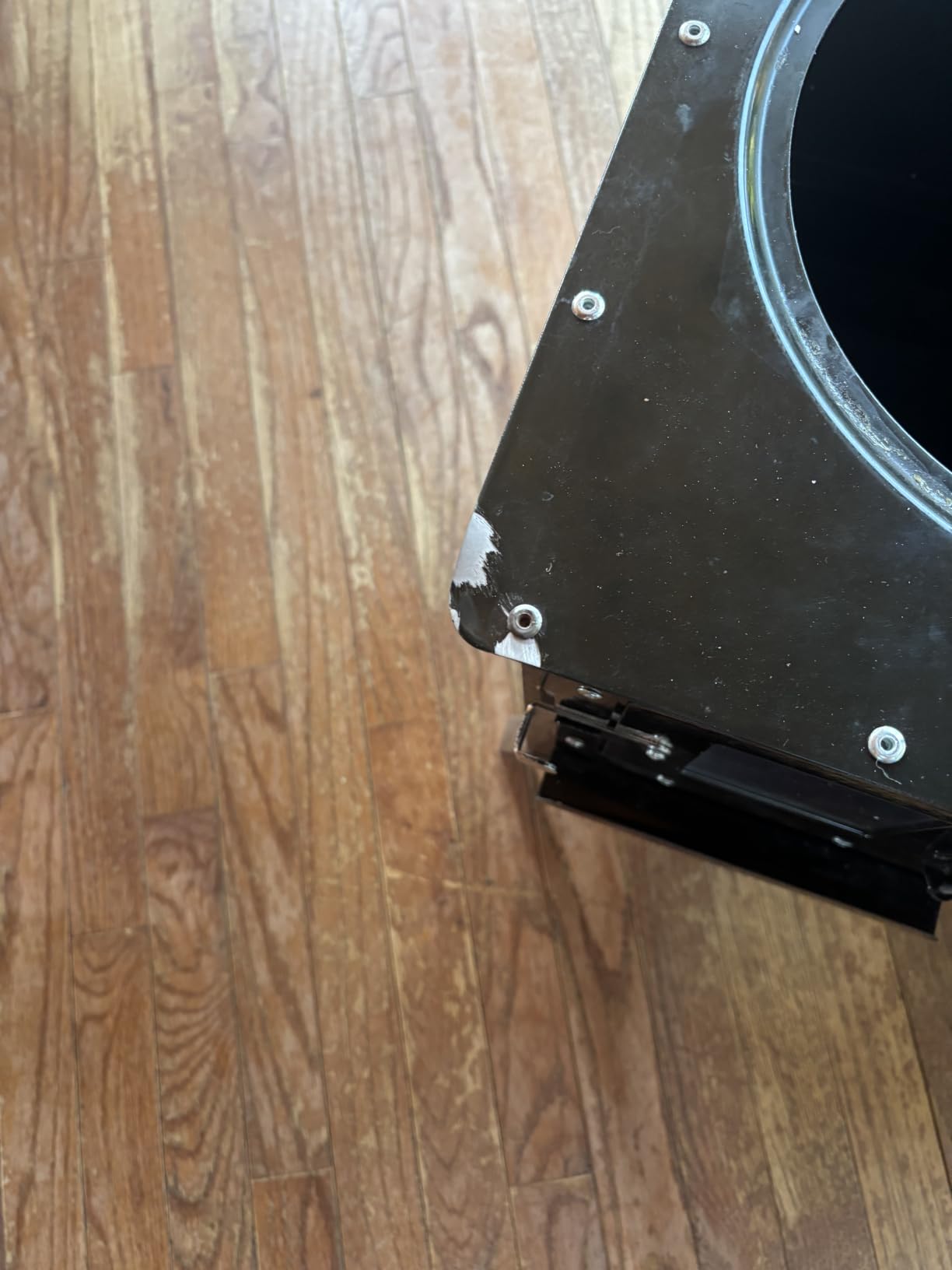
At about 50 pounds, it is the second-lightest unit here, and it runs on wood, charcoal or coal with no electricity. The oven section has a thermometer in the door, which is the difference between baking by guesswork and actually baking.
The construction is solid steel with an adjustable air slider and a built-in flue damper. The damper matters more than it sounds: it lets you throttle a fire down instead of letting it roar, which is how you cook steadily for hours rather than burning through a load in twenty minutes.
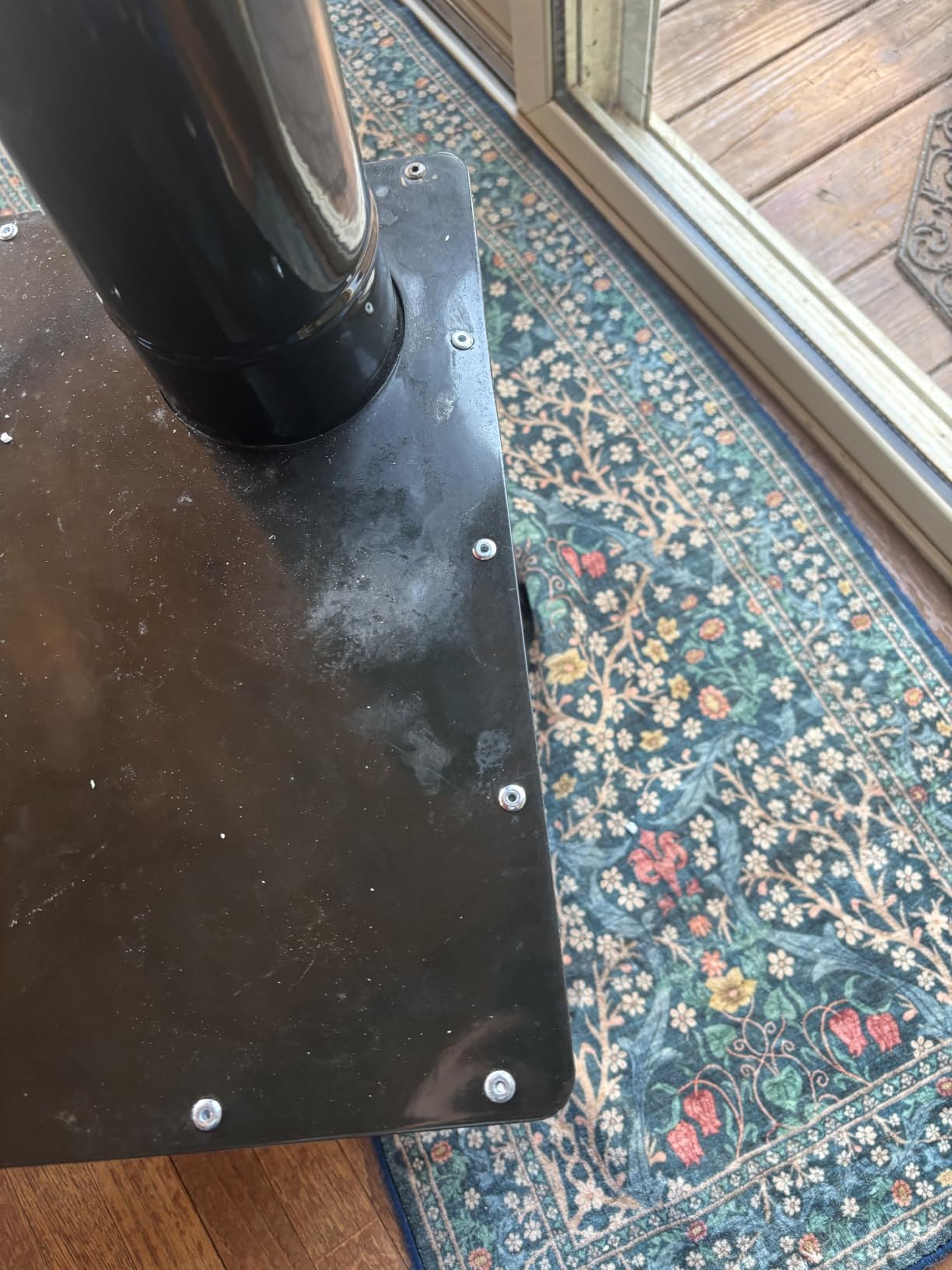
Be clear about what this is not. The door design is gasket-free, which means it is not a sealed high-efficiency EPA appliance. It will not heat a cabin the way the cast iron stoves on this list do, and it is listed for use in tents, cabins and shelters only with proper venting and a heat shield, neither of which is included.
The review base is seven. That is thin enough that you should treat durability as unverified, and the warranty is 90 days, the shortest in this group. Nobody has a five-year record on this appliance yet.
When a cookstove makes sense
Choose it when cooking is a daily need and heating is secondary. A baking oven, a two-zone cooktop and a griddle cover real meal prep, and it does it on wood with no fuel logistics beyond firewood.
It also makes sense as a second appliance rather than your only heat source. Plenty of off-grid owners run a proper stove for heat and a cookstove like this for the kitchen, and the Trailblazer packs away when it is not in use.
Who should skip it
Skip it as your primary cabin heat source. It is not a sealed appliance, its output is modest, and the listed use requires a heat shield and proper venting that you must source separately.
Skip it if you cannot install a heat shield and a proper flue. That requirement is not a formality in a small wood building, and running it without one in an enclosed cabin is the kind of shortcut that produces a carbon monoxide alarm at three in the morning.
7. US Stove US1100E-BL – Best for Forced-Air Distribution

US Stove US1100E-BL 1,200 sqft Wood Stove with Blower
68,000 BTUs
1200 sq ft
1.3 cu ft firebox
100 CFM blower included
258 lb
Pros
- Blower included for airflow into adjacent rooms
- One owner burned about 10 cords over two winters
- Adding a damper improved control
- Sturdy build with a clean look
Cons
- Blower needs electricity so not fully off-grid
- Small firebox means frequent ash cleaning
- 258 lb makes carrying and placement hard
- Can arrive damaged in transit
If your cabin has a loft, a bunk room or a closed-off area that needs heat, a blower changes what the stove can do. This one includes a 100 CFM blower rather than offering it as an accessory, which is the main reason it is worth considering over the pedestal stove in position two.
The most useful review in this roundup comes from the longest-serving owner, who reports burning roughly 10 cords of wood over two winters as a primary heat source. That is a real operating figure tied to a real cabin, and it is the kind of data you almost never get from a product listing. If you are budgeting fuel, this is the closest thing to a per-season estimate we have.
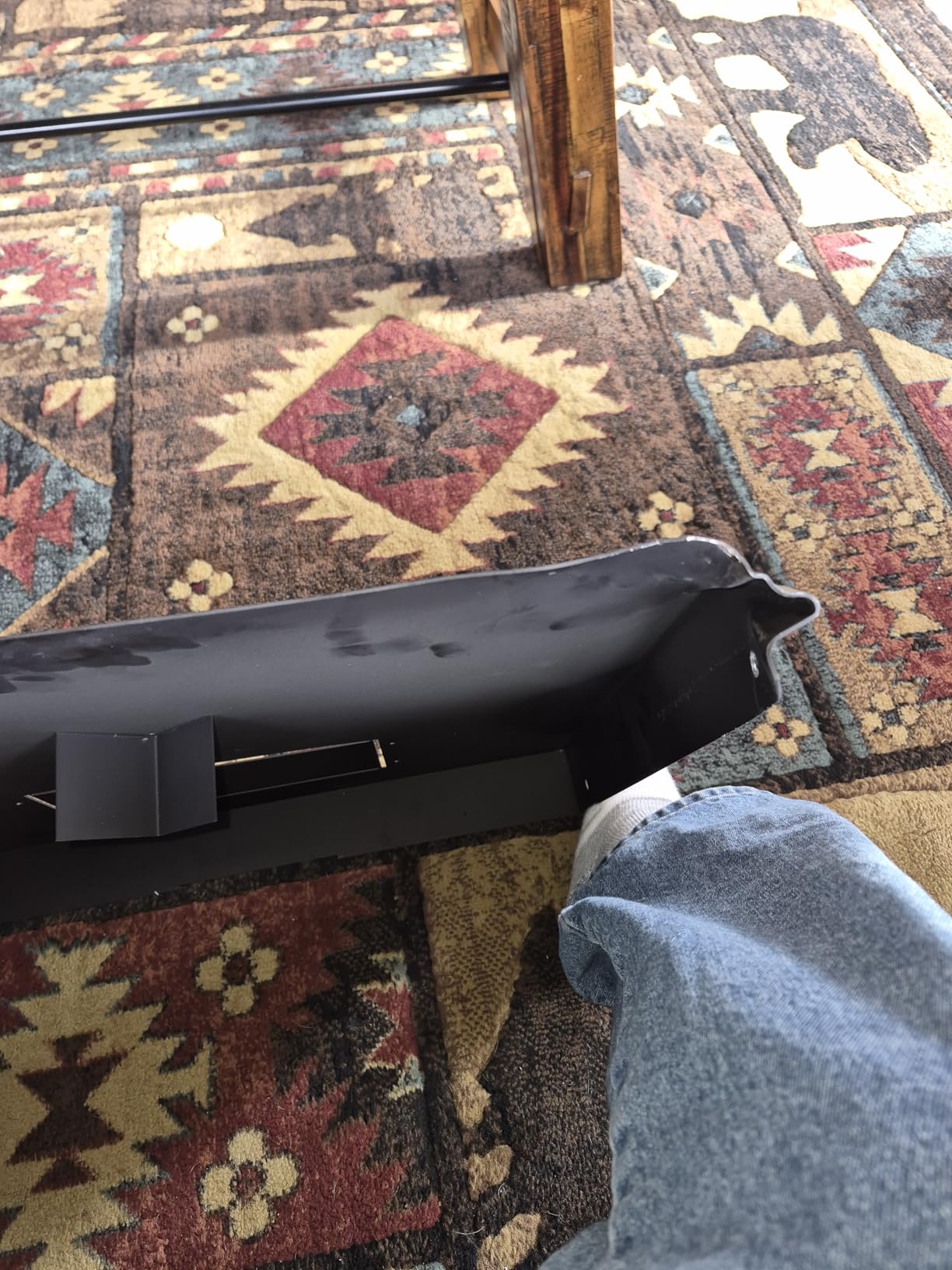
The same owner found that adding a damper considerably improved heat output control, which points to something useful: this freestanding stove responds well to a manual damper in a way the fixed-vent cast iron model does not. That is a real operating tip, not a spec.
The firebox is 1.3 cubic feet and takes 18 inch logs, with catalyst-free secondary combustion, a firebrick-lined interior, an integrated removable ash pan, and both adjustable legs and a pedestal base included. It is mobile home approved with a fresh air intake kit sold separately.
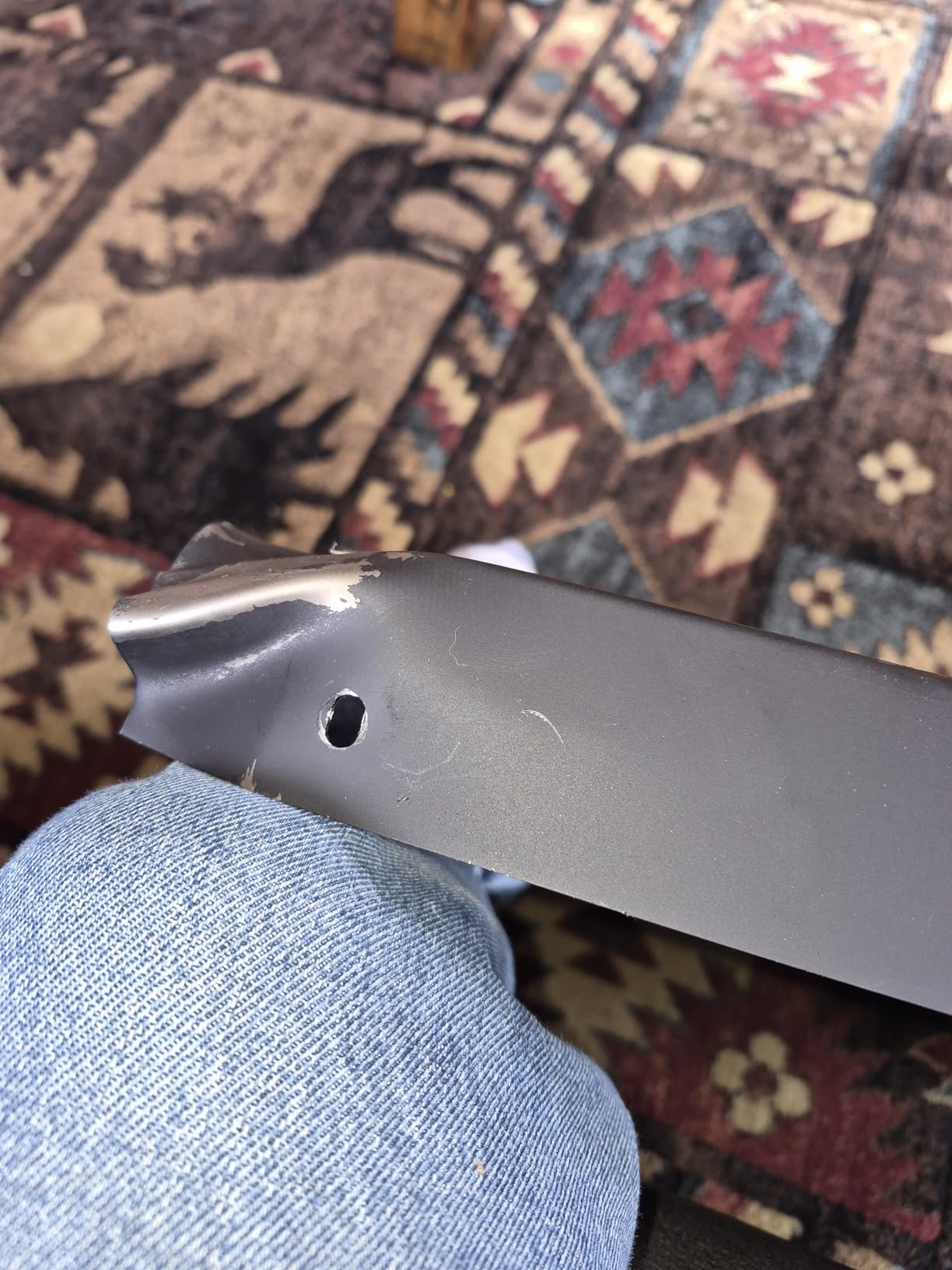
Three reviews is a very thin base, and I want to be honest that this recommendation rests on the appliance design rather than a deep owner record. The 4.3 average is promising but tells you little about what happens in year four.
The electricity point deserves emphasis for an off-grid buyer. The blower requires power, so while the stove burns perfectly well without it, the forced-air feature that justifies this pick is unavailable during an outage. In a remote cabin, that is a meaningful limitation and you should decide deliberately whether it is acceptable.
Also expect 258 pounds, and inspect the crate carefully on arrival because owners of this model report heavy-unit transport can damage the appliance. Check it over before you start a chimney install around it.
Who it suits
It suits a cabin with a closed-off second space, a basement area, or a long floor plan where a single point source leaves cold ends. The blower moves air into the next room rather than only warming the immediate space, which extends the effective heated area of a single appliance.
It also suits owners who have grid or generator power available and want the option of forced air. If your cabin has a small solar array or a generator that runs when needed, this is a meaningful upgrade over a non-blower stove of the same class.
Who should skip it
Skip it if electricity is genuinely absent. An off-grid cabin with no reliable power should prioritize an appliance that does everything without a plug, and several stoves on this list do that.
Skip it if you are waiting on long-term reliability data before committing. Three reviews is not a durability record, and this is a 258 pound appliance where a bad unit is a long trip to replace.
8. US Stove US1800E Cast Iron Insert – Best for a Heavy Masonry Fireplace

US Stove US1800E 1,200 sqft Wood Fireplace Insert
69,000 BTUs
Cast iron
1.2 cu ft firebox
150 CFM blower
300 lb
Pros
- Owners report no smoke back into the home once hot
- Long burn times and a clean chimney
- Easy install for the class of appliance
- Higher output than rated per one owner
Cons
- Only five reviews so reliability data is thin
- 300 lb unit needs a masonry fireplace and a liner
- Not approved for mobile homes
This is the heaviest appliance in the roundup at 300 pounds and the one with the smallest number of reviews behind a perfect score. I want to lead with that caveat rather than bury it, because a 5.0 across five reviews is not a reliability record. What it is, is a set of promising early signals.
The signals are good ones. Owners report no smoke coming back into the home once the stove is up to temperature, long fuel burn times, a chimney that stays clean, and straightforward installation and controls for an appliance of this size. Clean combustion and a clean flue are the two things that matter most over a decade, and both are reported here.
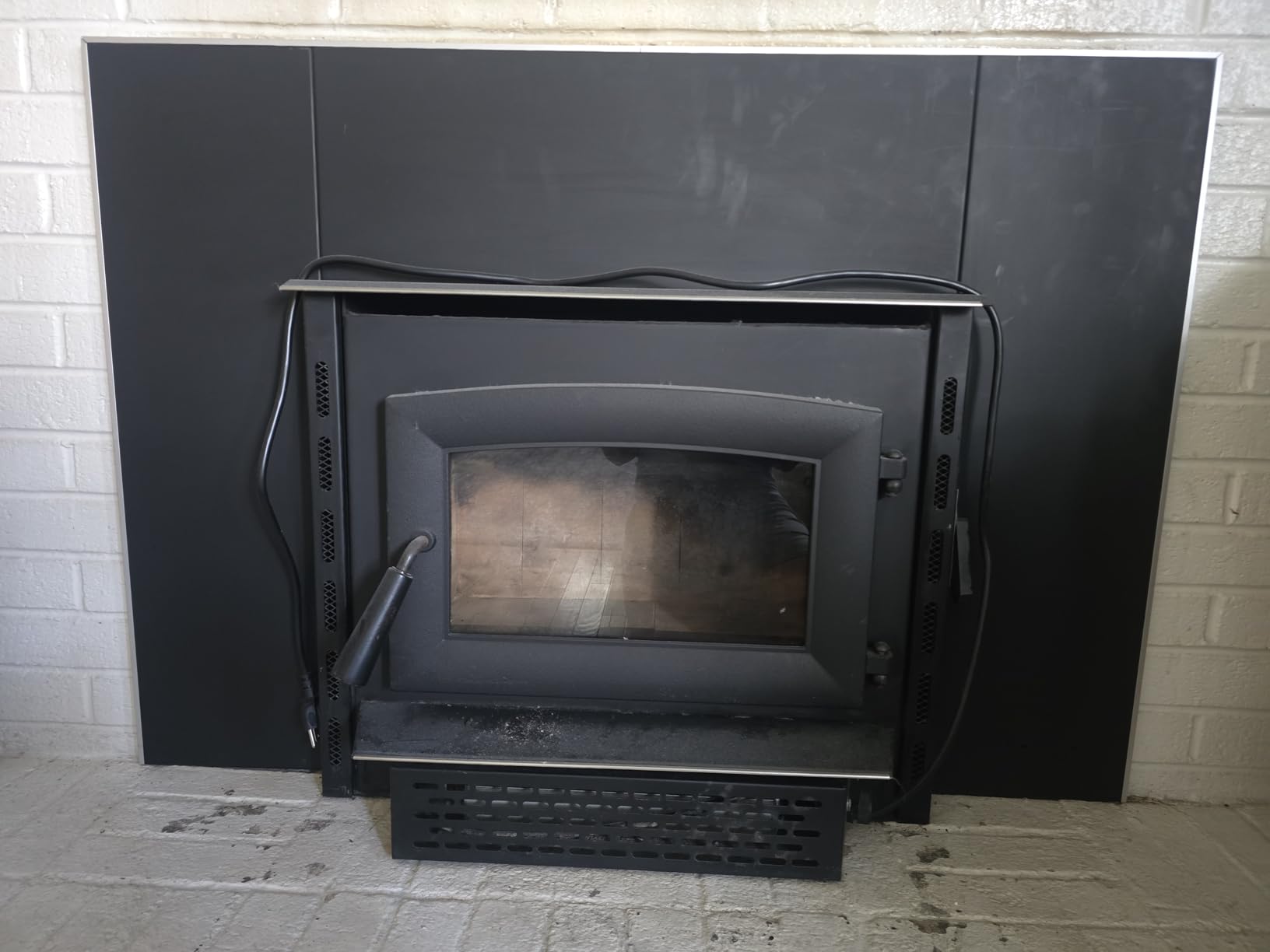
One owner also reports higher rated output than the specification suggests, which is the kind of finding you cannot plan on but are happy to discover in February.
The build is heavy-duty: a 10-gauge reinforced plate steel firebox, firebrick lined, behind a cast iron door with 14.5 by 8 inch air-washed ceramic glass. The 31 by 44 inch hearth surround is included with spring-loaded adjustment, and the 150 CFM blower is adjustable and included rather than sold separately.
When it earns its place
Choose it when you have a substantial masonry fireplace, likely one built for a full-size house rather than a cabin, and you want to convert a large opening into usable heat. At 300 pounds with a cast iron face, it fills a big opening in a way the lighter inserts do not.
Choose it when you already have or will install a proper 6 inch liner. The liner is required and not included, so budget for that and for professional installation given the weight.
Who should skip it
Skip it if you have a lightweight cabin fireplace or any non-masonry opening. This is a residential masonry installation and not approved for mobile homes or transportable buildings, so a modular cabin is out.
Also skip it if you need a deep owner record before committing. With five reviews there is no long-term data on gaskets, dampers or firebox steel yet, and this appliance has the longest expected service life of anything on the list. Wait for more owners, or choose a freestanding model where the failure modes are easier to reason about.
9. Stepnext Archway 2300 Cast Iron Stove with Oven – Best for Bread Baking

Cast Iron Stove with Oven, Durable Cast Baking Oven, Cooker Oven by Burning Wood, Warming Heater Stove, Oven Section with Thermometer, Brick Lined Fireplace Made in Turkiye (Black-with-Window)
1000 sq ft coverage
Cast iron with bake oven
92.6 lb
Firebrick lined
5.1 inch flue
Pros
- Heating and baking in one cast iron body
- Thermometer in the oven section
- 92.6 lb is heavier than portable stoves
- Traditional styling suits a cabin
Cons
- Stove pipe is explicitly not included
- Only four reviews so field data is minimal
- Non-US manufacture with a limited service footprint
Cast iron with a full baking oven and a thermometer in the door is a specific kind of appliance, and for a cabin where bread is part of the plan it is a genuinely good fit. Cast iron gives you an even, radiating heat around the oven chamber that thin steel simply cannot match.
The oven is the point here. It has a 15.7 inch cooking width, its own thermometer, and a brick-lined fireplace area behind it. The top surface is cast iron with covers, so you have a cooking surface as well as an oven, and there is an adjustable thermostat to hold temperature.
It covers up to 1,000 square feet, which is a moderate claim consistent with a cast iron appliance of this size rather than a stretched figure. At 92.6 pounds, the body is heavier than the portable stoves on this list, which is a reasonable signal of real thermal mass.
The flue detail you need to know
The flue diameter is 5.1 inches, convertible to 5.9 inches with an adapter. That is narrower than the 6 inch collar most freestanding stoves use, so if you are buying connector pipe for this appliance, buy it to this dimension and plan the adapter rather than assuming a standard 6 inch run will fit.
Stove pipe is explicitly not included. Add the connector, the liner, a hearth pad and installation as a separate line, and this is the third stove in this roundup whose listing says so directly. It is a reminder that the appliance is never the whole installed cost.
Who should skip it
Skip it if you need a long-term service footprint. Four reviews, all at five stars, is not enough to judge durability, and non-US manufacture with a limited service network is a genuine consideration for a remote cabin where a failed part is a shipping problem.
Skip it if you need a large firebox for overnight burning or do not want to plan a non-standard flue size. The 5.1 inch flue means sourcing specific pipe and an adapter, which adds a step most buyers do not expect.
10. US Stove US1261E – Best Compact Pick With No Electricity Needed

US1261E 900 sq. ft. Cast Iron Log Wood Stove
54,000 BTUs
900 sq ft
1.2 cu ft firebox
Non-catalytic secondary burn
No electricity required
Pros
- Runs entirely without electricity
- Compact freestanding footprint
- Effective for burning up scrap and firewood
- High owner rating on a small sample
Cons
- 1.2 cu ft firebox needs frequent loading
- Not suited to long unattended burn times
- Only four reviews so durability is unverified
- Listing is sparse with no dimensions or weight
This is the simplest expression of the off-grid idea in the roundup: a freestanding 900 square foot rated cast iron stove with a 1.2 cubic foot firebox, non-catalytic secondary burn and no electricity requirement at all. Nothing to plug in, nothing to fail, nothing to service electrically.
The 4.7 owner rating comes from a sample of four, so treat it as a signal rather than a verdict. What the written reviews do say is consistent: it works well in a small space and it is effective for burning up accumulated wood and scrap on a property, which is a real use case for anyone clearing land.
What the small firebox means in practice
A 1.2 cubic foot firebox is on the small side even for this roundup, and owners are clear that it needs frequent loading and is not a long unattended burn fire source. That is a design trade, not a defect: it comes up to heat quickly and responds well to a short burst.
For a weekend cabin or a hunting shack where you fire the stove for a few hours in the evening, that responsiveness is exactly right. For a primary heat source through a January cold snap, it is not, and you would be up several times a night.
Before you commit
The product listing is sparse. No dimensions and no weight are returned, which makes it harder to plan your hearth pad and your install. Ask for those figures before ordering, and confirm the flue collar diameter to match your connector pipe.
With four reviews, there is no long-term data. For a remote cabin where a replacement means a long trip, consider whether the added simplicity of an electricity-free appliance outweighs the thinner owner record.
Who it suits
It suits a small cabin, a shop, a garage or a shed where you want a straightforward cast iron burn with no electrical components and no accessories. If you are clearing brush and want to burn it up over a series of cold afternoons, this fits that use.
It also suits anyone whose only power source is unreliable. With no blower and no powered controls, nothing about this appliance depends on a generator running.
Who should skip it
Skip it for overnight, unattended heat in cold weather, because the firebox is small and needs frequent loading. Also skip it if you need precise dimensions and weight to plan a hearth pad and clearances, since the listing does not provide them.
11. Honma DM-700TX Dharma Cast Iron Stove – Best for a Tiny Radiant Room

Honma Manufacturing DM-700TX Cast Dharma Wood Stove
Radiant burn
About 5,400 kcal max
59 to 65 sq ft rated
15.7 inch logs
55 kg
Pros
- Exceptional radiant warmth for its size in owner reports
- Cast iron holds heat after the fire is out
- Flat top for boiling water and warming food
- Distinctive retro styling
Cons
- Rated area of 59 to 65 sq ft is far below a US cabin
- Consumes a lot of firewood
- At 55 kg it needs two people
- Needs a tall chimney run to avoid indoor smoke
This one needs a clear warning label, so here it is up front: the DM-700TX has a rated heating area of 59.3 to 65.6 square feet. That is a tatami-sized room, not a cabin. Any comparison to the square footage figures elsewhere in this roundup is apples to a very different fruit.
What owners actually praise is radiant output. Japanese owners describe the radiant warmth as exceptionally strong for the size, and that is the mechanism that matters: this is a wall-mounted radiant stove that throws heat into the room rather than warming a volume of moving air. The cast iron retains heat long after the fire is out, which is why the small fuel capacity still feels adequate.
The flat top is useful for boiling water and keeping food warm, and the Dharma form, a tumbling Buddha shape, has a nostalgic Showa-era look that suits a cabin interior better than it has any right to.
The trade-offs are significant and owners state them plainly. It consumes a lot of firewood for the heat delivered, it weighs 55 kg, so two people are needed to place it, and it requires a tall vertical chimney run to keep smoke out of the room. It is wall mounted, which means planning the mounting structure in advance rather than setting it down where it lands.
Fuel length is capped at 15.7 inches and the chimney diameter is 106 mm, so both your splitting and your vent run are constrained by this appliance.
Where it genuinely makes sense
It makes sense in a very small heated space where you sit still: a reading corner, a sleeping loft nook, a meditation room, a small cabin under about 100 square feet with excellent insulation, or a van or skoolie conversion with a designed mounting point.
It also makes sense if you specifically want radiant warmth over convective heating. A radiant stove heats you rather than the room, which feels different and is genuinely more comfortable at low ambient temperatures.
Who should skip it
Skip it if you are heating any conventional cabin, bunkie or hunting shack. Its listed heating area of 59 to 66 square feet maps onto a small tatami room rather than a normal US cabin footprint, and sizing it up means accepting a wood consumption rate that will surprise you.
Also weigh that the reviews are from Japan, so fit and installation guidance may not match US cabin builds or local code. Confirm wall clearances and mounting requirements with a local installer before you commit, because a wall-mounted radiant appliance has different clearances from a freestanding one.
12. Pddolw Welded Steel Smokeless Stove – Best for Supplemental Warmth

Pddolw Indoor Wood-Burning Heating Stove – Thickened steel Smokeless Cooker for Efficient Rural Heating & Camping S
Welded thickened steel
Integrated ash box
Burns wood coal branches or chips
Cooks and heats
Pros
- Light enough to move anywhere
- Handles branches and wood chips as fuel
- Dual cooking and heating role
- Ash box captures burning ash safely
Cons
- Top welds do not fully close on some units
- Very light build with minimal thermal mass
- A camping-stove class unit not a cabin appliance
- Not suitable as a primary or overnight heat source
This last one is here because readers ask about it, not because I would install it as a cabin heat source. It is a small welded steel stove in the camping-stove category, listed under camping stoves as much as wood burning stoves, and it is best understood as a supplemental heater.
What it does well is fuel flexibility. Owners report that it burns coal, firewood, branches and wood chips, which makes it genuinely useful on a property where you are clearing brush and do not want to split everything to firewood. It cooks and heats in the same unit, and it has an integrated ash box that captures burning ash safely rather than letting it fall out the door.
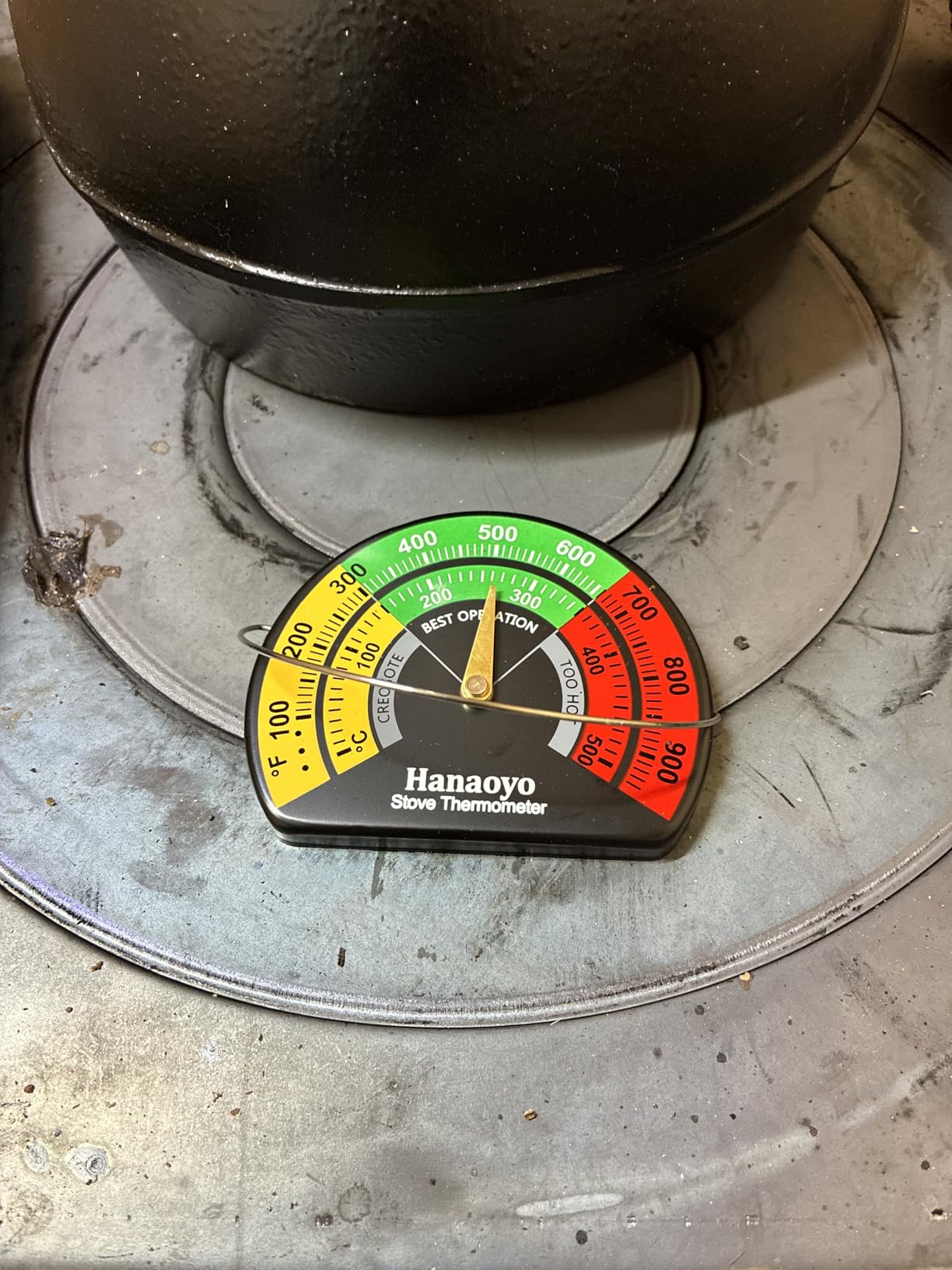
Owners report heating roughly 300 square feet, and at 16 ounces it is by far the lightest thing on this list. If you want a second heat source in a shed, a greenhouse, a workshop or the corner of a van, the weight is the feature.
That weight is also the warning. Minimal thermal mass means it does not hold heat, which means you are either feeding it continuously or watching it cool. It is a different category of appliance from the 130 pound cast iron box in position one.
The weld issue to check on arrival
Both written reviews single out incomplete welds around the top edge, and some owners had to apply high-temperature silicone sealant themselves. The double-layer thickened steel plate idea is sound, but the seam is the weak point on a small welded unit. Inspect the top edge closely before first use.
It also has a smoke vent system that needs to discharge outdoors through a proper vent, and in an enclosed space that requirement is not optional.
Who it suits
It suits a van, a skoolie, a small greenhouse, a shed or a workshop where you want a movable heat source that runs on whatever wood is to hand. It suits an owner who is processing brush and wants a stove that will eat small branches.
It does not suit anyone heating a cabin overnight or through a cold month. There is no baffle, no secondary combustion of any consequence and no thermal mass, so it burns what you give it and then stops.
Who should skip it
Skip it as a primary heat source in any kind of building. Skip it if you cannot properly vent it outdoors, since a small unvented stove in an enclosed cabin is a carbon monoxide risk rather than a heating solution.
With three reviews, you are also buying almost entirely on the design concept. Check the seams on arrival and have a sealant and a high-temperature plan ready.
How to Size a Wood Burning Stove for Your Cabin
Sizing is where most first-time owners go wrong, and the forum consensus is blunt about it: never buy too small. An undersized stove runs constantly, which burns more wood, produces more creosote and eventually leads to a chimney fire. An oversized stove in a tight cabin gets run wide open for the same reason, with the same result.
Start with heated square footage, not total square footage. Then adjust for insulation. The rough industry guideline is about 1 cubic foot of firebox per 150 square feet of well-insulated space in a moderate climate, moving toward 1 cubic foot per 100 square feet in a cold climate or a poorly insulated cabin. A 1,000 square foot well-insulated cabin in a moderate climate lands near 3 cubic feet, which is why that class comes up so often in off-grid stove discussions.
Then apply a second adjustment that people forget: if your plan involves a heat-duct kit or convection distribution to other rooms, you can size down, because you are moving air rather than trying to heat a volume from one point. A blower-equipped stove in a small cabin with a duct run is a different problem from a single stove heating an open floor.
Finally, size for your coldest week, not your average winter. A cabin used on weekends needs a much smaller stove than a cabin occupied in January, and if you will be there through a power outage you want enough burn time to get to morning without tending the fire.
The 3-2-10 Rule: Chimney Clearances in Plain English
The 3-2-10 rule is the single most quotable guideline in wood stove safety, and it describes clearances to combustible material: three feet from the flue connector where it passes through a wall or ceiling, two feet from the stove to the wall behind it, and ten feet to the nearest property boundary in many jurisdictions.
In practice, the three-foot rule governs your chimney connector run through the building interior, and it is why a freestanding stove in a small cabin is often vented straight up through the roof near the appliance rather than run to an exterior wall. The two-foot rule governs the rear and side clearances, and every appliance listing specifies its own required clearance, which varies by model and is non-negotiable for a listed product.
The ten-foot figure applies to distance to a property line in many codes. Where you sit matters for a remote cabin: setback from a road, a neighbour’s structure, a barn or dry vegetation can be stricter than the manufacturer’s clearance chart. Ask your local authority having jurisdiction before you cut a hole in a wall, because that inspection, if required, happens after the hole in some places and before in others.
Catalytic vs Non-Catalytic vs Airtight: What Actually Burns Less Wood
Three combustion designs show up in this roundup and they are not interchangeable. An airtight stove is a sealed firebox that burns slowly and completely, which is where the term comes from. Modern EPA-certified stoves are all effectively airtight, so the label now describes a category every appliance on this list falls into.
A catalytic stove burns the smoke and unburned gases a second time over a coated honeycomb surface. Catalytic efficiency is high and burn times are long, but the catalyst degrades, can be damaged by improper burning, and needs replacing at intervals. The practical cost is maintenance you have to plan for.
A non-catalytic re-burn stove achieves the same secondary burn with baffles and secondary air, burning the gases again at high temperature inside the firebox. Several stoves on this list specify catalyst-free secondary combustion. There is nothing to replace, it tolerates a wider range of burning habits, and it is generally the simpler long-term choice for an appliance you may own for decades.
The honest summary from owner reviews is that all of the EPA-certified stoves here perform well once a coal bed is established, and the difference between them is maintenance philosophy rather than a dramatic gap in wood consumption. Marketing claims about burning 50 percent less wood are not verifiable from any source we could check.
Total Installed Cost: Where the Budget Surprise Lives
The stove is one line in a system with at least four. This is the single most common complaint from first-time owners, so treat it as the most important planning item in this guide. We are deliberately not quoting figures, because connector pipe, hearth pad and install labor vary enormously by region, chimney height and code requirements.
The first line is the appliance. The second is the chimney system: connector pipe from the flue collar, a through-wall or roof thimble and support, a chimney liner where required, a cap, and enough vertical rise to draft properly. This is the line most people underestimate, and it is routinely the largest.
The third line is the hearth: a listed hearth pad or a masonry hearth extending the required distance beyond the stove on all sides. The required clearance is set by the appliance listing, and a hearth sized for a smaller stove will not be approved for a larger one.
The fourth is installation. Getting a 130 to 300 pound appliance onto your site, a chimney professional for the liner and connector, a permit where your jurisdiction requires one, and a local code inspection. The two inserts in this roundup explicitly require a chimney liner that is not included, and one builder-flagged stove explicitly notes that its flue pipe is sold separately.
Add to that any electrical work if you are installing a blower, and any site work such as outside air intake or a taller chimney where draft is marginal. Our advice is to price the whole system before choosing the stove, then pick the largest appliance that fits that total rather than the reverse.
Chimney, Hearth Pad and Code Requirements for a Remote Cabin
Every stove on this list requires a chimney, and the chimney is described by experienced owners as the most critical and least understood part of the installation. Get this right and the stove is easy. Get it wrong and you are looking at smoke in the room in January.
Most freestanding stoves here use a 6 inch flue collar, with two exceptions worth checking: the Stepnext uses 5.1 inches convertible to 5.9, and the Honma uses 106 mm. Source pipe to match the specific appliance, not to a generic rule of thumb.
Confirm connector length. Many codes limit the horizontal run inside the building, and a long horizontal run needs a chimney tee or a longer vertical rise to draft properly. The owner who needed an outside air pipe, a taller chimney and a chimney pipe fan to overcome backdraft had a marginal site and a marginal appliance, and those two factors compounded.
Check whether your jurisdiction requires a permit and an inspection, and whether a spark arrestor is mandated. A spark arrestor on the flue is inexpensive insurance for a cabin in wooded terrain, and many areas require it outright. Mobile home approval matters too: two stoves here are mobile home approved with a fresh air intake kit, and the inserts are explicitly not approved for mobile homes or transportable buildings.
Also plan where the wood goes. A stove that heats well but has no dry storage next to it gets run inefficiently, and the two inserts here need a 6 inch liner installed rather than used in an unlined masonry flue.
Cord Wood per Season, Seasoning and Fuel Choice
The best owner data point available in this roundup is the report of roughly 10 cords burned over two winters as a primary heat source in a 1,200 square foot rated cabin. Treat that as a working reference rather than a promise, since the same cabin in a milder climate uses far less and a poorly insulated one uses considerably more.
Moisture content decides your efficiency more than any appliance spec. Wood that is properly seasoned burns hot and clean; wood taken straight from the tree condenses inside the firebox and flue, produces creosote, and makes the stove work harder for less heat. Aim for wood that has dried for at least a full season, split to the size the firebox accepts.
Log length is a real compatibility issue and forum veterans raise it repeatedly. Fireboxes here take between 15.7 and 21 inch logs. If you buy 16 inch rounds and your stove takes 19 or 21 inch wood, the mismatch is manageable. If you buy 20 inch rounds and your stove takes 18, you will be splitting everything twice.
Stack the wood off the ground, cover the top but leave the sides open for airflow, and keep it as close to the cabin as practical so you are not carrying waterlogged rounds across snow in February.
Creosote Prevention and Burning-Season Maintenance
Creosote is a tar deposit that forms when wood smoke condenses on a cool flue wall. It is flammable, and a thick deposit is the primary cause of most chimney fires. Three habits prevent most of it.
Burn hot and burn dry. A small, smouldering fire is the condition that produces creosote, because it burns cool. Building a good bed of coals and keeping combustion vigorous is the single most effective preventive step. Conversely, running any stove wide open for hours is also risky, which brings us back to the sizing point: a correctly sized stove lets you burn steadily without going wide open.
Keep the flue warm. A tall enough chimney run keeps flue gases hot enough to carry condensation out. This is the second reason vertical rise matters beyond draft.
Clean during the season. Monthly is a reasonable cadence for a regularly used stove, and it matters more in shoulder seasons than mid-winter. Keep a metal container with a tight lid outdoors for ash, never dispose of hot ashes into anything else, and wait at least a couple of days before moving them. Run a brush and wire down the connector pipe at the same time.
Finally, check your detector. A working smoke and carbon monoxide alarm near the sleeping area is inexpensive and non-negotiable in a cabin where the stove is the heat source.
Frequently Asked Questions
What is the most efficient wood stove for a cabin?
Efficiency in a modern cabin stove comes from secondary combustion, not from a marketing percentage. A non-catalytic re-burn design burns the unburned gases a second time at high temperature inside the firebox, which pushes how completely the wood is used. All EPA-certified stoves here reach similar real-world results once a coal bed is established. The variables that matter more than the label are whether the wood is dry and whether the chimney keeps the flue warm.
What size wood-burning stove would I need for a 1000 sq ft cabin?
For a 1,000 square foot well-insulated cabin in a moderate climate, aim for roughly 3 cubic feet of firebox. That is the class most off-grid owners converge on. In a cold climate or a poorly insulated cabin, step up to about 1 cubic foot per 100 square feet, which pushes toward a 2.7 cubic foot model or larger. If you plan to distribute heat through a duct kit with a blower, you can size down since you are moving air rather than heating one volume from a single point.
What is the 3-2-10 rule for wood stoves?
The 3-2-10 rule describes required clearances to combustible material: three feet from the flue connector where it passes through a wall or ceiling, two feet from the stove to the wall behind it, and ten feet to the nearest property line in many jurisdictions. It governs how your chimney is routed through the cabin, which is why a small cabin is often vented straight up through the roof. Always confirm the clearances listed for the specific appliance, since they vary by model.
What is the best wood stove for off-grid living?
The best choice for most off-grid cabins is a freestanding, EPA-certified cast iron stove in the 900 to 1,200 square foot class that runs without electricity. Cast iron thermal mass keeps heat after the fire dies down and no moving parts can fail during an outage. In this roundup the US Stove 900 square foot cast iron model is the strongest general pick for its owner record, while the Ashley AW2520E-P is the choice for larger cabins that need more firebox volume.
How much does a wood stove installation cost, and what does it include?
The stove is only one of at least four cost lines. You also need connector pipe from the flue collar, a thimble and support, a chimney liner where required, a cap and enough vertical rise to draft properly. On top of that, add a listed hearth pad sized for your clearances, the cost of getting a heavy appliance to your site, and installation labor or a permit and inspection where your jurisdiction requires one. The chimney system is the line most first-time owners underestimate.
Can a wood stove heat a whole cabin?
Yes, if it is correctly sized for the space and the cabin is reasonably insulated, but the honest answer involves trade-offs. A single freestanding stove heats the room it stands in most effectively and loses heat through every wall it does not touch. A blower-equipped model or a heat-duct kit can move air into closed-off rooms or a loft and extend the effective heated area. Remember that an oversized stove in a tight cabin is a safety concern, not a comfort upgrade.
What kind of chimney does a wood stove need?
Most freestanding stoves in this roundup use a 6 inch flue collar with a listed connector pipe running to a chimney liner or manufactured chimney, terminated above the roof with a cap. Check two exceptions: one appliance uses a 5.1 inch flue convertible to 5.9, and one uses a 106 mm collar, so always source pipe to the specific appliance. The two inserts here require a 6 inch chimney liner that is not included and are for residential masonry fireplaces only.
What are people saying about the Toaks Titanium Backpacking Wood Burning Stove?
A titanium backpacking wood burning stove is a different product category from anything in this roundup. Backpacking stoves are small, often titanium for weight rather than durability, and designed to heat a person rather than a room. Cabin stoves here range from a small steel unit for supplemental warmth to 300 pound cast iron appliances rated for whole-space heating. If you are shopping for a backpacking item, a portable camping stove is the relevant comparison.
Final Verdict for Best Wood Burning Stoves for Off Grid Cabins
Our pick for the best wood burning stoves for off grid cabins is the US Stove 900 Sq Ft Cast Iron Stove. It runs without electricity, holds heat in cast iron long after the fire is out, accepts 19 inch firewood, and sits behind 897 owner reviews describing the same outcome: warm cabin, simple appliance, no surprises. For a cabin in the 700 to 900 square foot range in a moderate climate, that combination is hard to beat.
Move up in size when you need more heat. The Ashley AW2520E-P covers a larger, colder cabin and is the pick for a new build where you are sizing once and living with it for decades. Move sideways if your existing building already has a masonry fireplace, where the inserts earn their place, or if cooking matters as much as warmth, where a cookstove with a bake oven changes the week.
Whatever you choose, budget the whole system rather than the appliance, source your connector pipe to the exact flue diameter of the model you picked, and confirm your local clearances and permit requirements before anyone cuts a hole in your cabin. Wood is the only fuel on your list that involves no scheduled supply run, which is exactly why a correct first install is worth getting right. For the lighter comparison side, our guides to best camping stoves and wood burning kits cover the portable end of the spectrum, and freestanding electric fireplace stoves are worth a look when you want off-grid independence with a smaller installation.