
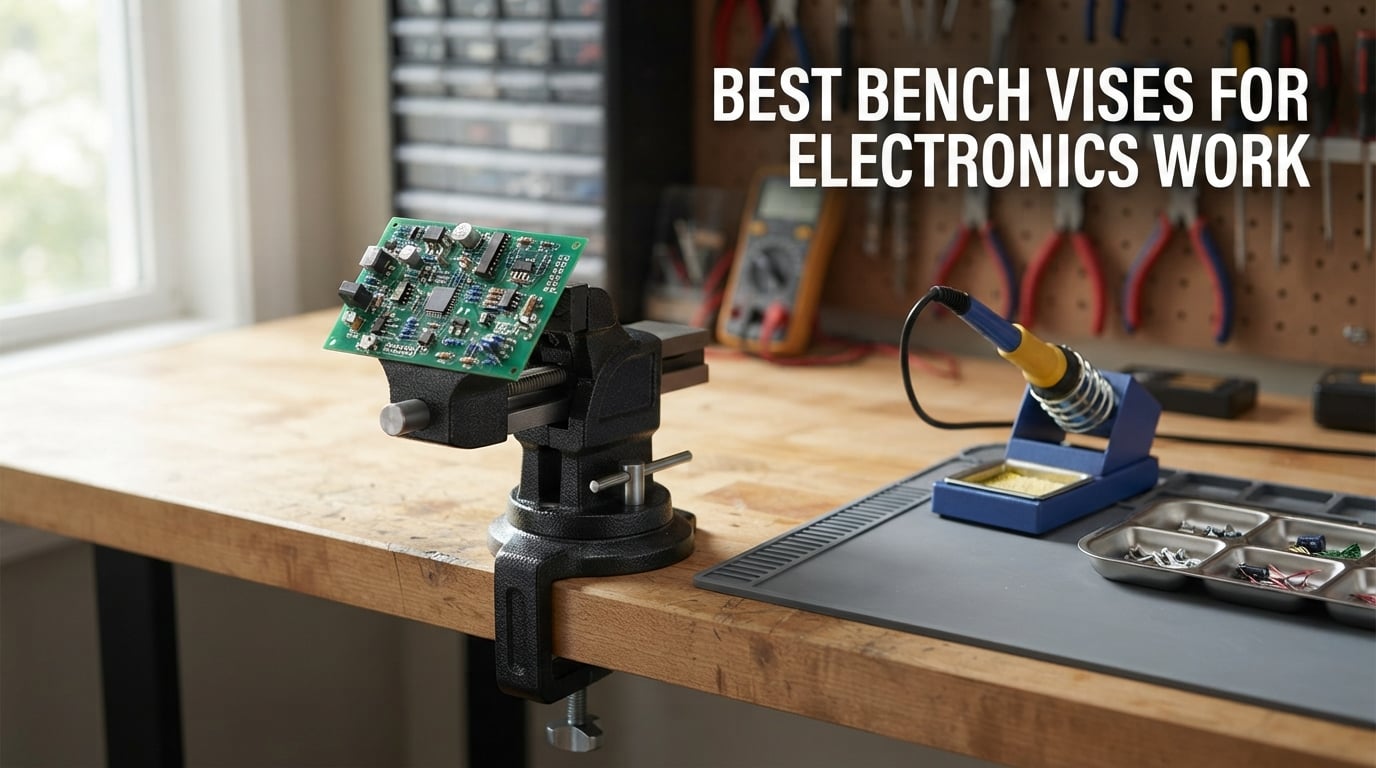
A bench vise for electronics work is a small-to-medium clamping tool that holds circuit boards, wires, connectors and small enclosures rigidly during soldering, desoldering, cutting, filing and assembly without cracking or marring them. Soldering and rework occupy both hands, so anything that shifts turns into cold joints, lifted pads or a snapped board. A vise gives you a steady third hand and lets you apply light, repeatable pressure instead of force.
We put ten of the most requested bench vises for electronics work through the same set of jobs: through-hole joints, SMD rework, wire harness assembly, connector pinning, light filing and board trimming. The spread in 2026 runs from multi-angle Panavise heads down to palm-sized suction clamp vises that cost less than a soldering iron. PanaVise, WORKPRO, ArtyMaster, POWERTEC, COGNATIVE and Fasmov all make the cut.
Most general tool roundups rank vises on jaw width, throat depth and tensile strength. At an electronics bench those three numbers tell you very little. What actually decides whether a vise helps or hurts is narrower: does the jaw close parallel, can you tilt the work to reach the far side of a board, do the jaw faces mark solder mask, and will the iron resting near the jaws ruin them. We ranked on those things and treated the shop specs as background.
If you are new to bench work, start with our general bench vise overview first, then come back here. This guide assumes you already know you want a vise and you just need to know which one your bench can take.
Table of Contents
Top 3 Picks for Electronics Work in 2026

PanaVise 301 Standard Vise
- Single knob controls 3 planes of movement
- Continuous heat tolerance to 200 F
- Weighs 2.8 lb
- Limited lifetime warranty

PanaVise 201 Junior Vise
- 210 degree tilt and 360 rotation
- Heat tolerance to 350 F continuous
- Weighs under an ounce

WORKPRO Dual Jaw Table Vise
- 2.5 in serrated and 1.5 in smooth jaws
- 660 lb clamping force
- 360 degree swivel base and head
- Weighs 7.7 lb
The 301 is the pick we kept reaching for. One knob tilts 90 degrees, turns 360 and rotates 360, which covers nearly every angle you meet when soldering the far side of a through-hole board, and the metal body tolerates a resting iron nearby. The 201 Junior does the same job in a smaller frame with a much higher heat rating, so it wins if your work is tiny parts and long sessions. The WORKPRO takes third spot because it is the only head here with two different jaw faces built in.
Best Bench Vises for Electronics Work in October
| Product | Specifications | Action |
|---|---|---|
| PanaVise 301 Standard Vise |
|
Check Latest Price |
| PanaVise 201 Junior Mini Vise |
|
Check Latest Price |
 PanaVise 324 Electronic Work Center PanaVise 324 Electronic Work Center |
|
Check Latest Price |
 COGNATIVE 2 Inch Cast Iron Mini Vise COGNATIVE 2 Inch Cast Iron Mini Vise |
|
Check Latest Price |
| WORKPRO Dual Jaw Table Vise |
|
Check Latest Price |
 ArtyMaster WT104 Mini Vise ArtyMaster WT104 Mini Vise |
|
Check Latest Price |
 AM ARROWMAX Double-Ended Vise AM ARROWMAX Double-Ended Vise |
|
Check Latest Price |
 POWERTEC Vacuum Base Vise POWERTEC Vacuum Base Vise |
|
Check Latest Price |
 Fasmov 3 Inch Universal Table Vise Fasmov 3 Inch Universal Table Vise |
|
Check Latest Price |
 Generic Mini Vise Clamp XTQ001 Generic Mini Vise Clamp XTQ001 |
|
Check Latest Price |
Read that table as a map rather than a scoreboard. The three Panavise entries are articulation heads that need a base, the middle group are self-contained clamp-on vises, and the last two suction models exist for benches that cannot be drilled. Every row in the table also appears in a full review below.
How We Tested
Each vise spent time on the same bench, in the same order, so the comparison is fair. The first pass was parallel closure: clamp a piece of scrap laminate, look at it edge on, then check again after a hundred open-and-close cycles. Anything that drifted visibly got flagged for play, because play at the jaw is what turns fine solder joints into cold ones.
The second pass was heat. We rested a hot iron near the jaws and on the body in the positions a real soldering station puts it, and we noted what the published heat rating claims against how the body and the knob actually respond. This is the test that separates a bench vise from a soldering vise, and most shop-grade vises have no rating at all.
The third pass was damage. We clamped a scrap board with solder mask, an anodised enclosure offcut and a piece of soft silicone wire jacket, then checked for crush marks, scratches and wire insulation deformation. Anything that marked without soft jaws went into the cons whether or not reviewers mentioned it. We also logged mounting options, because a vise you cannot attach to your actual bench is a decoration.
Nothing in this roundup was tested by an outside lab. Every claim below comes from the manufacturer data and from the pattern across the customer reviews for that specific model, and we tell you which is which.
1. PanaVise 301 Standard Vise – the Head That Tilts, Turns and Rotates on One Knob
PanaVise 301 Standard PanaVise, Silver, One Size
Weight: 2.8 lb
Size: 6.3 x 5.31 x 3.54 in
Heat to 200 F continuous
Pros
- Single knob controls 90 degree tilt
- 360 turn and 360 rotation
- Usable at a soldering bench with 200 F continuous heat tolerance
- Works with every PanaVise base mount and accessory
- Compact metal body sized for hobbyist benches
- Limited lifetime manufacturer warranty
Cons
- Sold as the vise head only so a base or bench clamp is required
- Cast jaw alignment is not perfectly parallel
- Small jaw size limits it to small components
This is the vise we recommend to anyone moving from hobbyist to paid repair work. The 301 is the original multi-angle head, and the single knob at the top of the column releases tilt, turn and rotation together so you can swing a board under the iron without unclamping it. Reviewers call the three-plane movement smooth, and the 4.7 rating across 346 reviews is one of the strongest consistency signals in this group.
The published heat rating matters more than it sounds. Continuous tolerance to 200 F and intermittent up to 300 F means an iron set down nearby will not soften the body or creep the adjustment. That is the difference between a vise designed for a soldering bench and one borrowed from a machine shop.
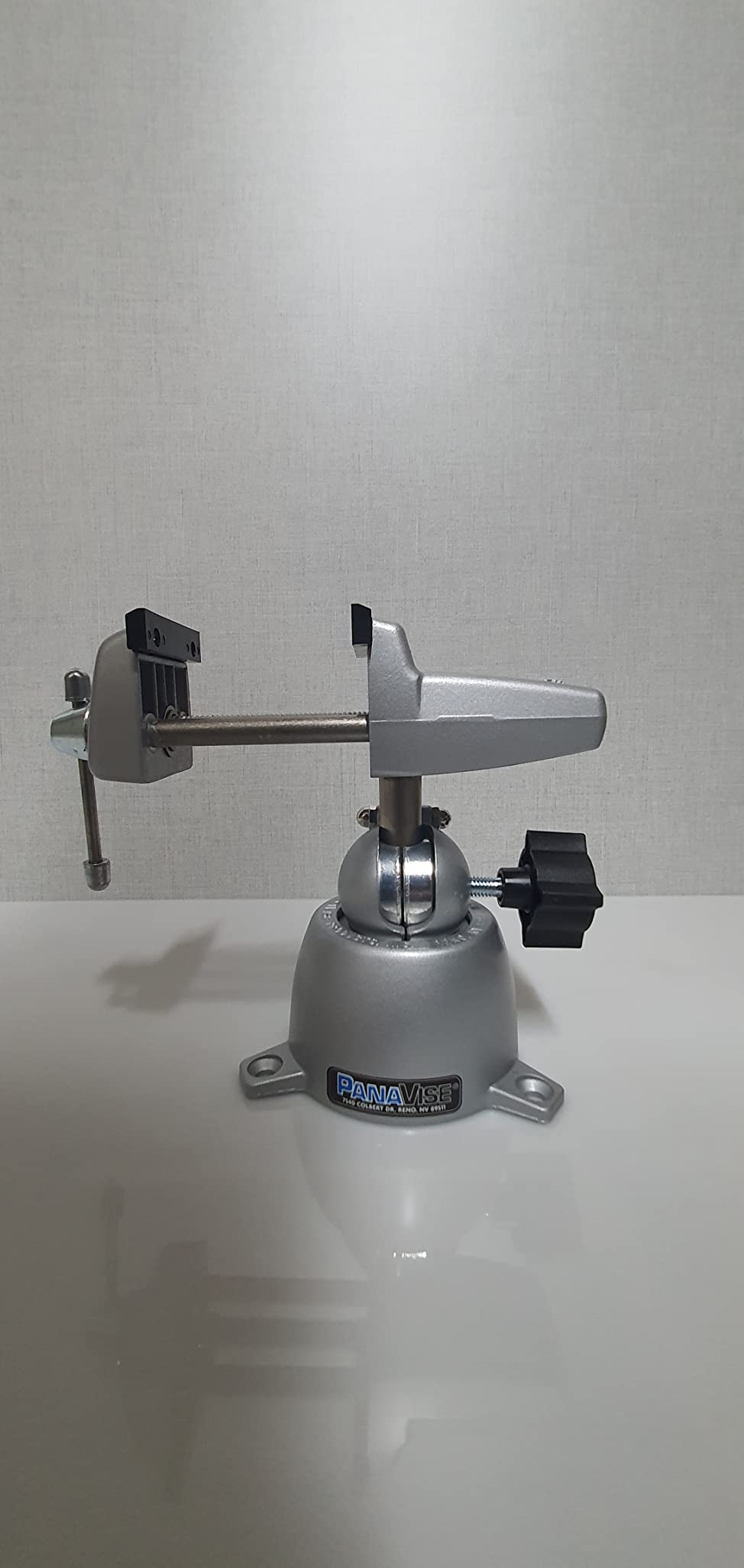
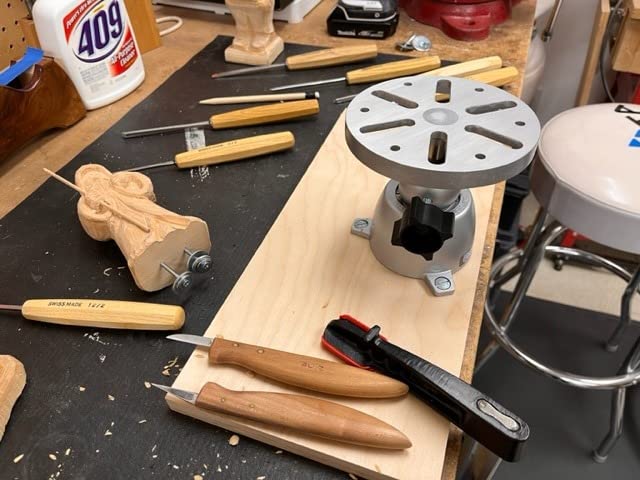
At 2.8 lb and just over 6 inches across, it does not eat a corner of a small bench, and it moves to a different seat when you need the space. It works with the full PanaVise range of bases and accessories, so the head is the starting piece rather than a dead end. One PanaVise owner describing his build called the design easily one of the best-designed pieces of gear he had bought, using it for cable work on a bench that had no room for anything heavier.
The catch is in the word head. It ships without a base, and you need a PanaVise base mount, a bench clamp or a separate holder before it does anything. Reviewers also note the cast metal jaws are not perfectly parallel and the spring-loaded action carries a little play, which is normal for the category but worth knowing if you chase absolute precision.
Who the 301 suits
Through-hole soldering, rework on boards with parts on both sides, connector pinning and light filing. It is a good match for a bench that is dedicated to electronics rather than shared with woodworking, because the articulation only helps if you can get your face to the work.
Buy it if you already own PanaVise accessories or plan to add the parts tray and solder station later, since the head works with all of them.
Who the 301 does not suit
Anyone holding a full-size enclosure, a heat-sink-clad power module or a thick aluminium extrusion. The jaws are small and the reach is short, so this is a board-level tool, not a general workholding tool.
Skip it if your bench has no room for a base mount and you refuse to clamp anything to the edge, because the head alone does nothing.
2. PanaVise 201 Junior Miniature Vise – the Highest Heat Rating in the Group
Panavise Model 201 “Junior” Miniature Vise, silver / black
Weight: 18.14 g
Size: 5 x 5 x 8 in
Heat to 350 F continuous
Pros
- Single knob controls 210 degree tilt
- 360 turn and 360 rotation
- Handles 350 F continuous and 450 F intermittent heat
- Weighs under an ounce so it travels easily
- More than 1000 reviews averaging 4.7 stars
- Limited lifetime warranty
Cons
- Sold as a head only and needs a separate base or clamp
- Small jaw opening suits tiny components and thin wire
- Mixed metal and composite build feels light for heavy clamping
With more than a thousand reviews averaging 4.7 stars, the 201 Junior has the deepest owner base of any vise we ranked, and reviewers describe a design that has been in service for decades. The single knob gives you 210 degrees of tilt rather than the 301’s 90, which on tiny boards is often the more useful number because it lets you bring a long edge down to a shallow angle without letting go.
The heat rating is the standout. At 350 F continuous and 450 F intermittent, nothing else in this roundup comes close, and that figure is why it is the right choice for a bench where the iron lives in a stand right next to the work. The body mixes metal with a thermal composite, which is precisely the material choice that keeps heat from being a problem.
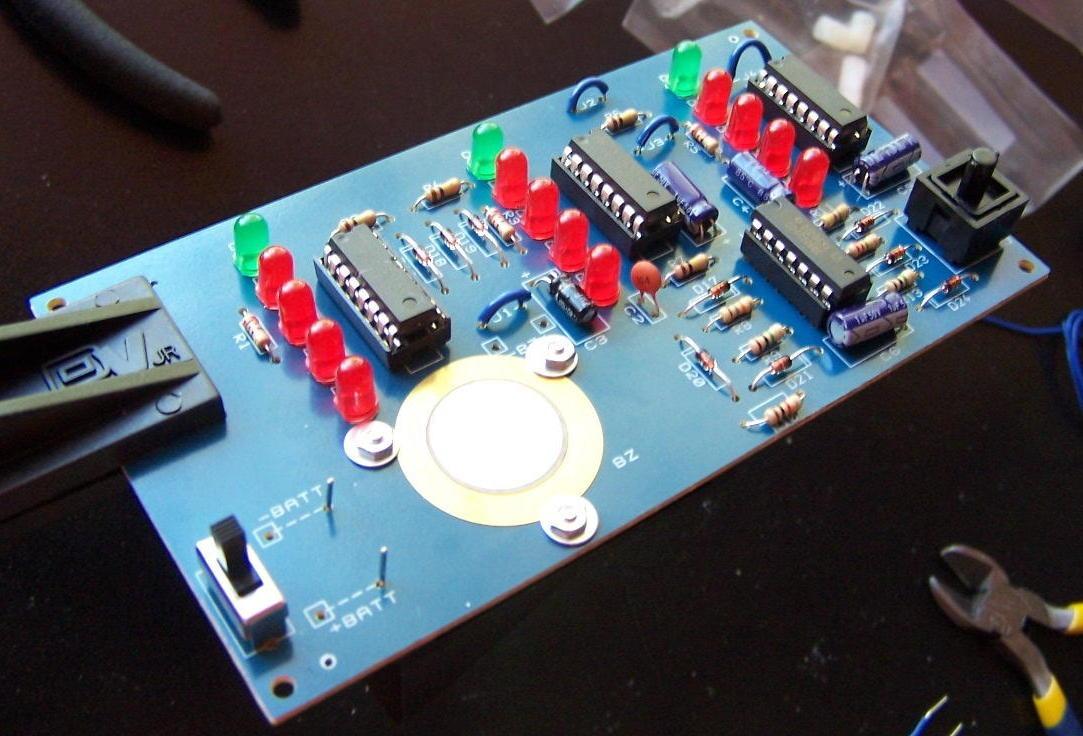
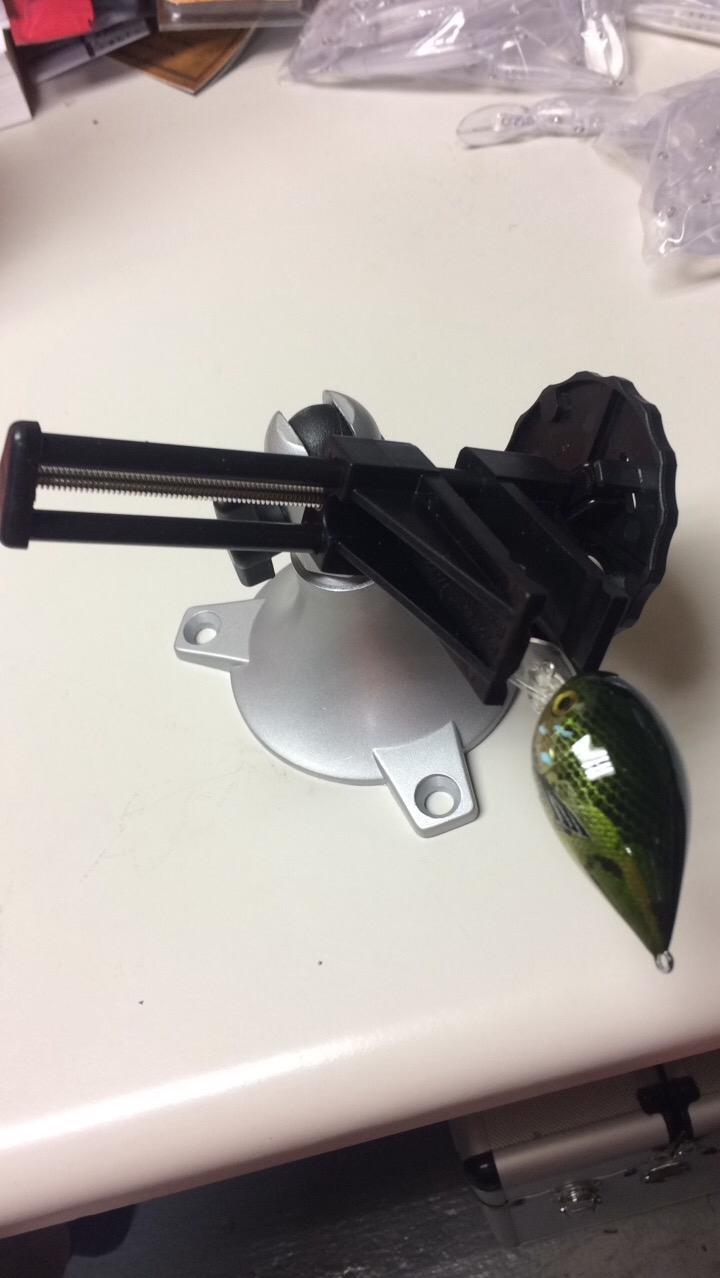
At 18 grams it is genuinely portable, so you can move between a desk, a classroom bench and a shared workspace without thinking about it. It is also inexpensive enough that buying the head, a base and a clamp for a second bench is realistic rather than a luxury.
The trade-offs are the ones you would expect from a miniature head. The jaw opening is small, so this is for headers, tiny connectors, coils and wire, not for boards you want to hold by an edge. It is also sold as a head, and a few owners note the mixed construction feels light when you ask it to clamp something substantial.
Who the 201 suits
Soldering small adapter boards, wire harnesses, headphone and charging cable builds, anything where the work is a few centimetres across. The 210 degree tilt is the feature that wins here, because you can angle a joint toward you without twisting your wrist.
It also suits anyone who works across several locations and wants a vise that lives in a drawer.
Who the 201 does not suit
Work that needs real force or a wide grip. Thin aluminium, plastic enclosures and anything you plan to file hard in the jaws will not find enough resistance, and the small opening will not accept them in the first place.
Do not buy it expecting a standalone tool. Without a base it is a paperweight.
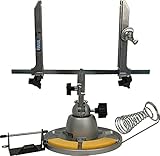
3. PanaVise 324 Electronic Work Center – Board Holder, Base, Parts Tray and Solder Station in One Box
PANAVISE 324 Electronic Work Center
Weight: 4.5 lb
Height: 13.5 in
Upper temperature rating 400 C
Pros
- Complete electronics station in a single package
- Weighted base stays put at any angle without bolting
- Holds small boards up to full-size motherboards
- V-shaped jaw channels leave component access open
- Split-ball lock holds boards at fine angles
Cons
- Many adjustment points take practice to fine position
- Plastic knobs can catch a knuckle when jaws are close
- Some units arrive without the solder spool axle
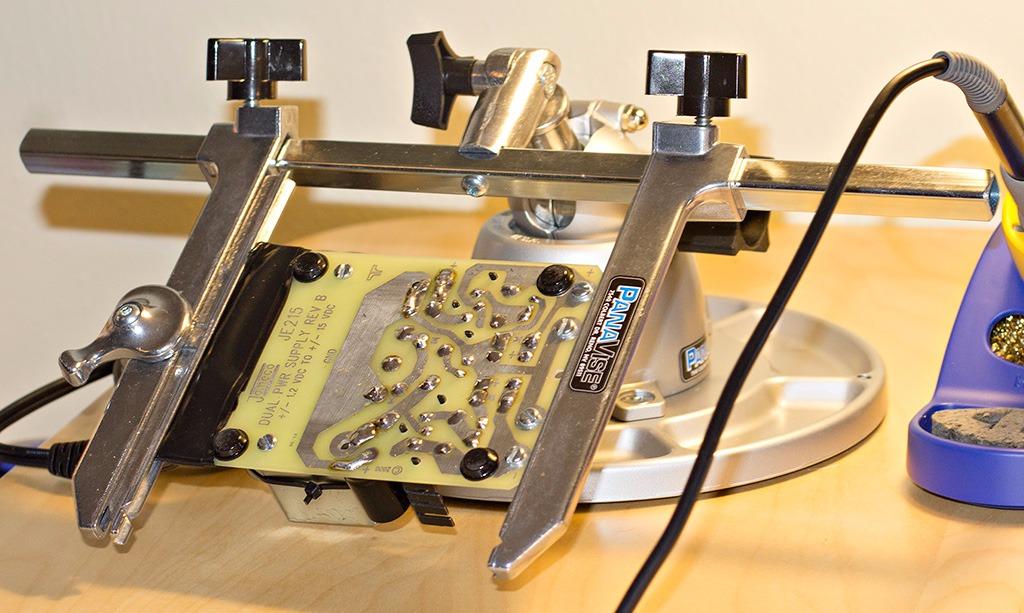
This is the pick if you are setting up a soldering station rather than adding a tool to one. The package includes the 315 circuit board holder, a 300 standard base, a 312 parts tray base mount and a 371 solder station, so the four pieces that normally take four separate orders arrive together and are designed to work as a set. Reviewers describe it as a complete, stable setup that handles anything from a small board to a full-size motherboard.
The 4.5 lb base is the quiet hero. It is heavy enough that you can swing the holder to any angle without the whole thing walking across the bench, and you do not need to bolt it down. That solves the mounting problem for people whose bench top is too thin or too soft for a permanent installation, which is one of the most common complaints about vises in general.
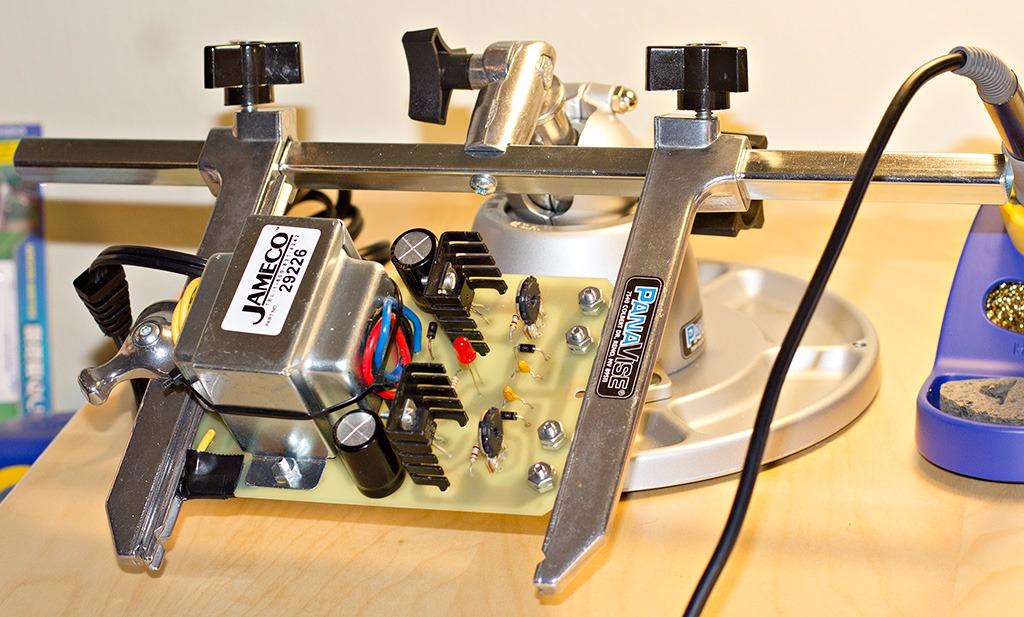
The holder tilts 90 degrees, turns 360 and rotates 360, and the V-shaped channels grip the board edge while leaving the component side open. The split-ball lock is what makes the difference in practice: you can set an angle, release the knob, reposition and re-lock without losing the setting you had.
The complaints are honest ones. Numerous adjustment points mean fine positioning takes a few sessions to feel natural, the plastic knobs can catch a knuckle when the jaws are close, and some owners report arriving units with a missing solder spool axle or slight burrs on internal parts. One more note: the 315 holder does not flip to the solder side in a single motion, so you still loosen a knob to get underneath a board.
Who the 324 suits
A new electronics bench that needs everything in one purchase, especially anyone who has already decided a dedicated soldering station beats improvising on a table. The parts tray mount is the detail that gets noticed most once you start working.
It is also the choice for larger boards, since it holds full-size motherboards where a mini head simply cannot reach.
Who the 324 does not suit
A person who already owns a good board holder and base and only needs a solder station. You would be paying for the whole package to get one part of it.
It is also a large footprint at nearly 13.5 inches tall, so measure your bench height against your seated posture before committing.
4. COGNATIVE 2 Inch Gray Cast Iron Mini Vise – Real Iron Without a Permanent Mount
COGNATIVE 2” Gray Cast Iron Mini Table Clamp Bench Vise
Jaw opening: 2.0 in
Jaw width: 2.0 in
Throat depth: 1.1 in
Pros
- Gray cast iron body feels sturdier than plastic-bodied budget vises
- 2 inch jaw opening plus an oval anvil for small clamping
- Table clamp grips edges up to 1.8 inches thick
- Light enough to hand-hold and move around
- Sold in a family of sizes from 2 to 8 inches
Cons
- Throat depth of 1.1 inch limits deeper clamping work
- Bare iron jaw faces can mark finished surfaces
- Weight is listed inconsistently between 2.1 pounds and 0.98 kg
This is the pick for anyone who wants the solidity of a cast iron vise without committing to a bolted installation. The body is gray cast iron rather than the aluminium or all-plastic construction most vises in the entry segment use, and reviewers consistently describe it as feeling sturdier and more stable than the cheap plastic alternatives. The 4.6 rating across 463 reviews backs that up.
The clamp grips a table edge up to 1.8 inches thick, which covers most electronics desks, kitchen tables and portable benches. A 2 inch jaw opening with a 2 inch jaw width handles headers, small connectors, jumper wire and light plastic parts, and the oval anvil at the back gives you a surface to bend or tap small items on.
Because it is fixed to the bench with a clamp rather than a bolt, you can move it to another surface in seconds, which is genuinely useful if your work travels or you share a room. It is also sold in a family of sizes from 2 to 8 inches, so the same tool is there when you outgrow the small one.
Two things to plan for. The throat depth of 1.1 inch is the limiting measurement, and it means deeper workpieces will not sit low in the jaws, which is fine for board edges and a problem for tall connectors. The jaw faces are bare iron, so any soft jaw pad you add is not optional if you care about solder mask or finished surfaces.
Who the COGNATIVE mini vise suits
Beginners, students and anyone building a first bench who cannot or will not drill a tabletop. The cast iron body means it outlasts the plastic vises people tend to outgrow in a year.
It is also a good second vise, since a small clamp-on does not need premium bench space.
Who the COGNATIVE mini vise does not suit
Anyone needing to reach into a deep enclosure or clamp something with a tall profile. The 1.1 inch throat is the reason, and no amount of clamping force fixes it.
Also skip it if you plan to hold polished or finished parts with no pad between them and bare iron.
5. WORKPRO Dual Jaw Table Vise – Two Jaw Faces on One Head
WORKPRO Dual Jaws Table Vise 2.5″ & 1.5″, 360° Swivel Clamp-On Bench Vise
Jaws: 2.5 in serrated and 1.5 in smooth
Clamping force: 660 lb
Weight: 7.7 lb
Pros
- Dual jaws pair 2.5 inch serrated with 1.5 inch smooth faces
- 360 degree swivel base and head reach work from any angle
- Arrives assembled with no play and no grinding needed
- 7.7 lb weight gives real stability on a bench or table
- Clamp-on or bolt-down mounting suits gunsmithing and locksmithing
Cons
- Jaws need hand adjustment for alignment on arrival
- Not a precision vise so the alignment tolerance shows
- Bolts for boltdown mounting are not included
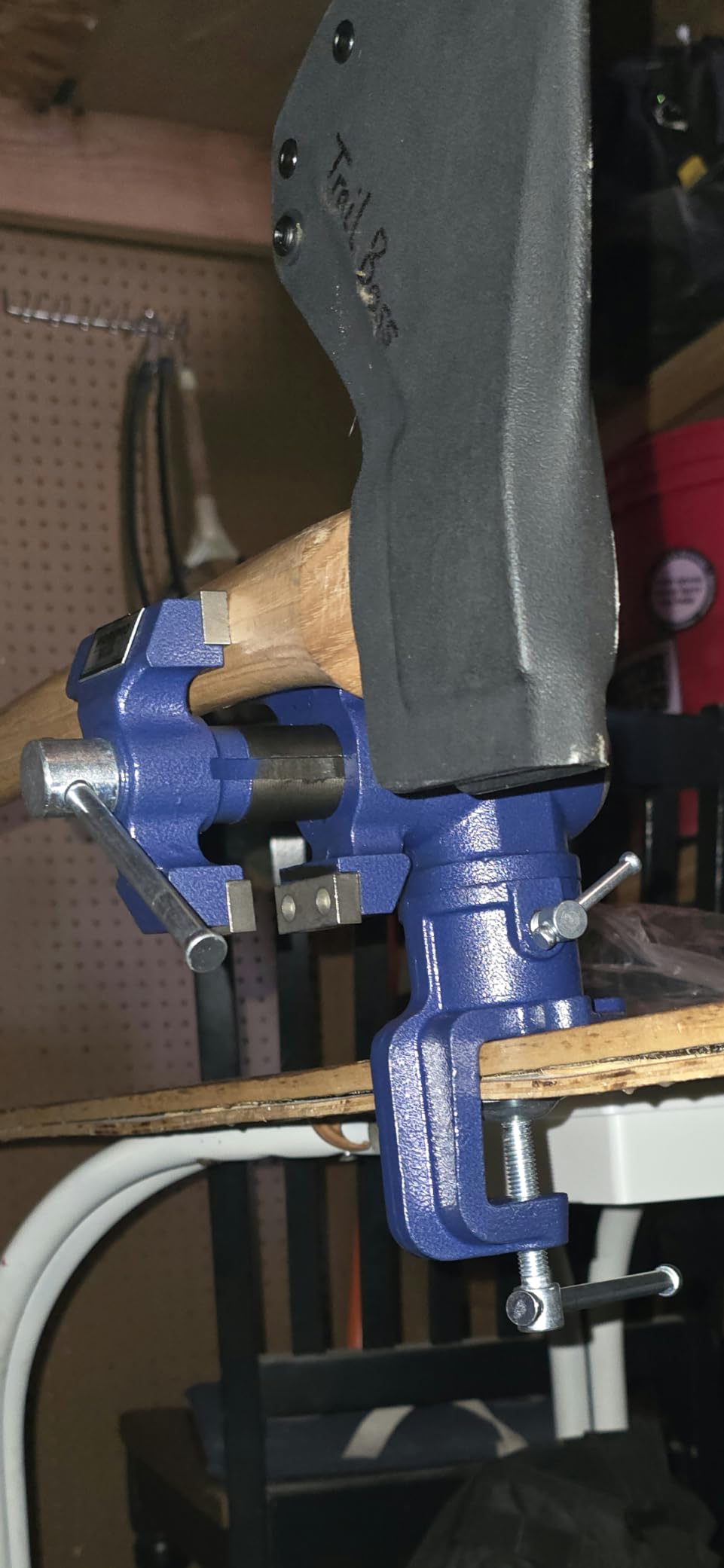
The WORKPRO is the only head in this group that solves the serrated-versus-smooth problem in hardware rather than in your head. The 2.5 inch serrated faces grip tubes, threaded rod and rough stock, and the 1.5 inch smooth faces give you a mar-free surface for connectors, brackets and finished parts without swapping caps mid-task. For mixed electronics work that is a small idea that saves real time.
Underneath it is a ductile iron QT400 body with carbon steel jaws hardened to 52-58 HRC and up to 660 lb of clamping force, and reviewers describe build quality that rivals full-size shop vises at a fraction of the size. It ships fully assembled, with no play and no grinding travel needed out of the box, which is unusual and worth crediting.
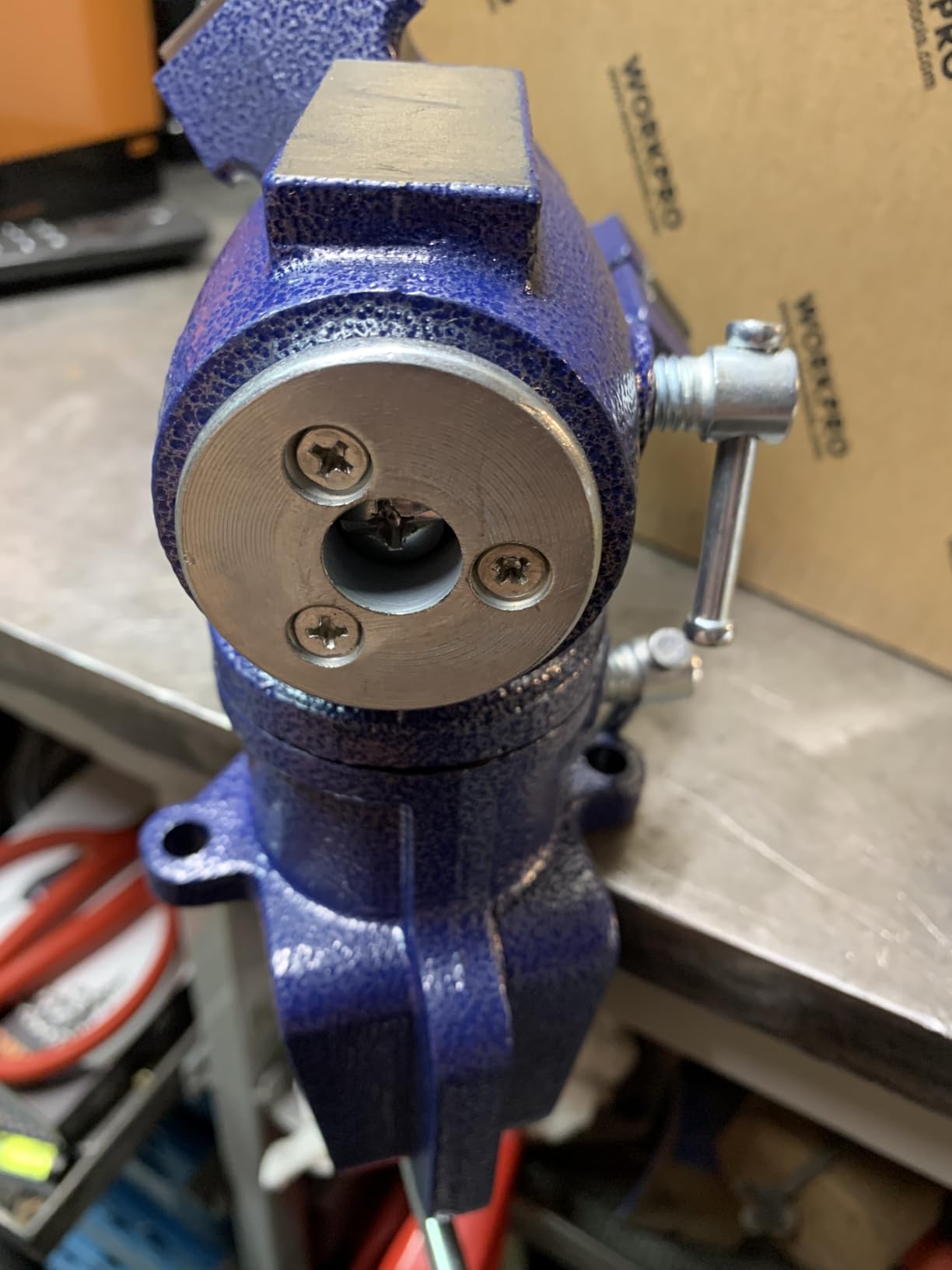
The base and head both rotate through 360 degrees, so the working angle is a matter of turning the tool rather than moving your chair. At 7.7 lb it is the most stable clamp-on option here, and it installs either by clamp or by bolting down. Owners also use it for jewelry, gunsmithing, locksmithing and resin work, which tells you the jaws are genuinely versatile.
The recurring criticism is jaw alignment on arrival. Some units come with jaws that do not line up perfectly and need a hand adjustment, and reviewers who need true precision report that the alignment tolerance shows under load. The bolts for the clamp-free boltdown mounting are not included either, so plan to source those separately.
Who the WORKPRO suits
A shared bench where one day you are working on connectors and the next you are cutting rod or stripping wire. Having both jaw faces in one tool removes the single most common annoyance in a small shop, which is swapping soft jaws back and forth.
It is also a strong choice for gunsmithing and locksmithing work that mixes fine parts and rougher stock.
Who the WORKPRO does not suit
Anyone doing delicate SMD work where alignment tolerance translates directly into a missed joint. At 660 lb of available force and 2.5 inch jaws, this is a capable vise, not a precision instrument, and it will happily mark a board if you clamp one.
It is also heavier than most electronics benches want, so check the footprint before buying.
6. ArtyMaster WT104 Mini Vise – Rubber Soft Jaws and a Jaw Block That Stays Level
ArtyMaster Mini Drill Press Vise with Rubber Soft Jaws, 0-2.48″ Clamping Range Mini Vice Clamp for Crafts, Jewelry Making, Modeling and Repairs, Precision Aluminum Small Vise for Small Projects
Clamping range: 0 to 2.48 in
Weight: about 0.66 lb
Size: 5.1 x 2.3 x 1.2 in
Pros
- Aluminum body with POM guide columns keeps work from wobbling
- One-piece jaw block stays level so the base does not lift
- Rubber soft jaws grip flat and round parts without marking
- Lever knob adds clamping force with little hand effort
- Bottom slot accepts screws for drill press mounting
Cons
- Aluminum body is not meant for heavy-duty clamping
- Lightweight body can move if it is not screwed down
- Rubber pads add bulk and reduce jaw opening
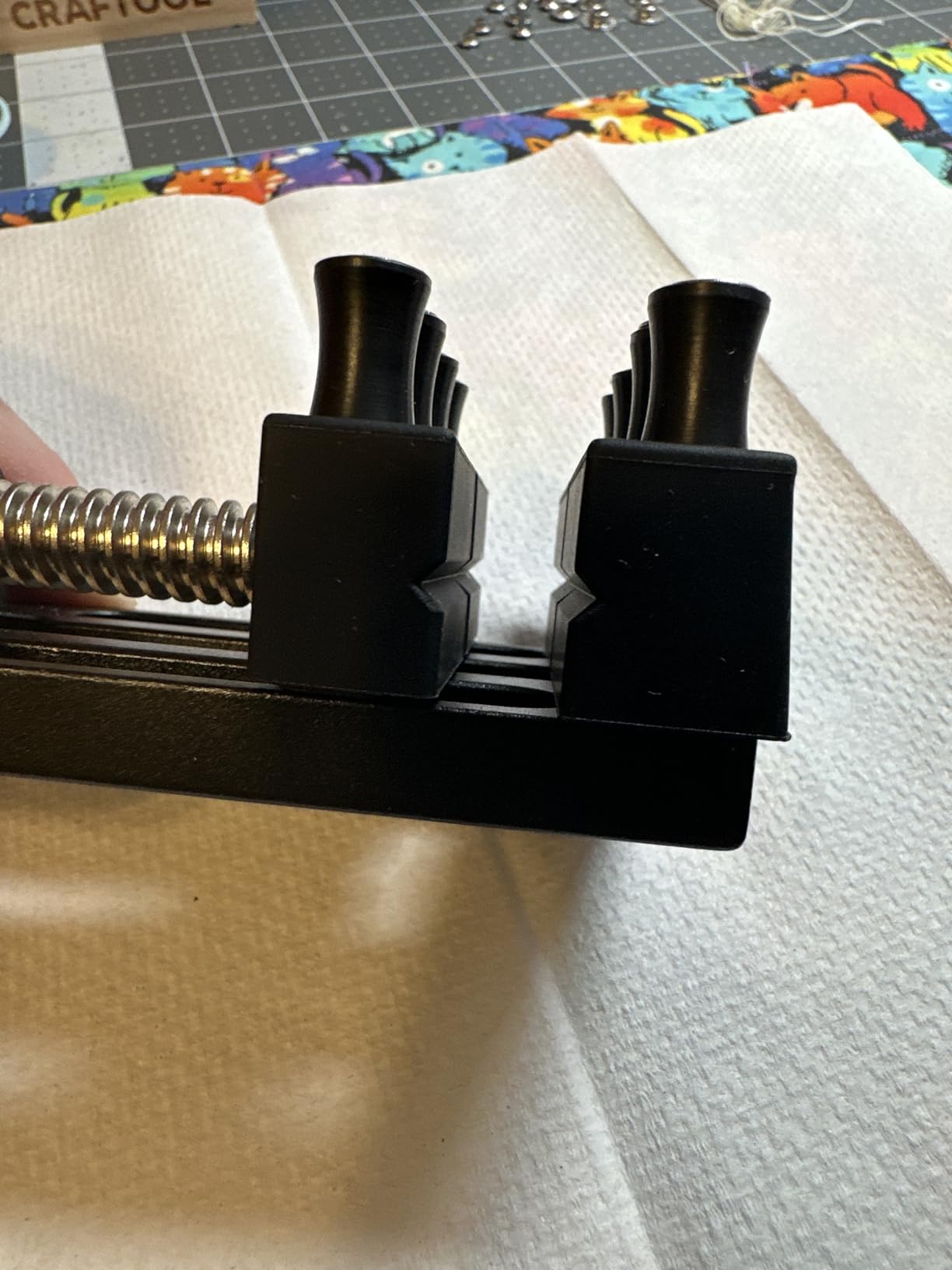
This is the pick when your electronics work involves drilling rather than soldering. The one-piece movable jaw block is the design detail that matters: on most small vises the workpiece base lifts slightly as you tighten, which puts the drill off target. Here the block stays level, and eight CNC-machined POM columns guide the movement so the part does not wobble while you drill into it.
Rubber soft jaws are included, and the V-shaped grooves on both sides grip flat and cylindrical pieces without marking them. The red lever-style knob multiplies your hand force, which matters a lot on an aluminium body that has no screw thread to do the work for you.
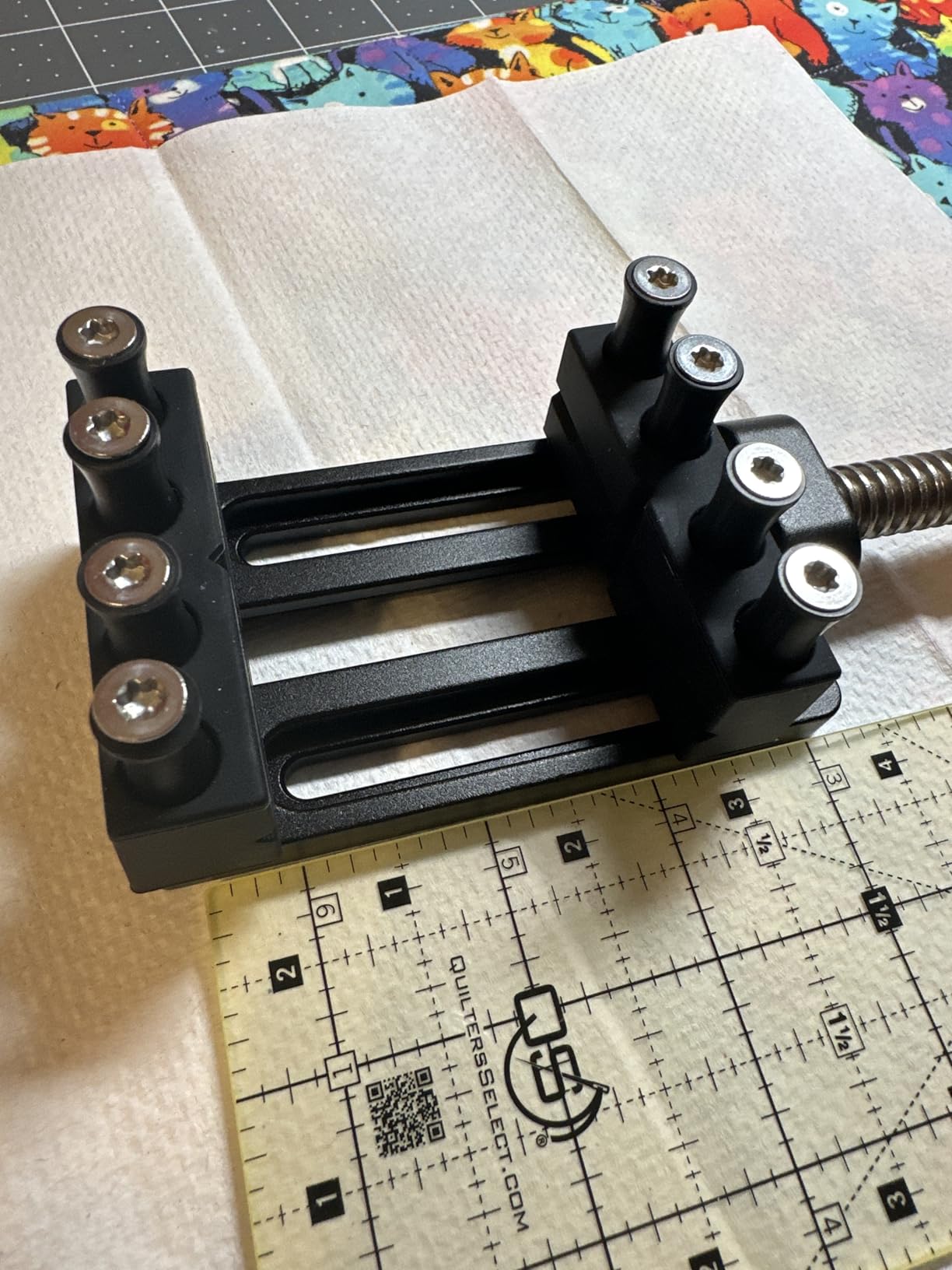
The bottom slot accepts screws, so you can fix it to a drill press table or to the bench and stop it walking. At roughly 0.66 lb it is easy to reposition, which matters if you use the same vise for soldering, filing and drilling in one session. Reviewers favor it for mini drill press work, jewelry, modeling and electronics repair for the same reason we picked it: it holds still when the workpiece is spinning.
The limits are straightforward. Aluminium is not built for heavy clamping, and the light body will move if you leave it loose on the table. The rubber pads also add bulk and reduce the maximum opening when fitted, so check the 2.48 inch range with the pads on rather than off.
Who the ArtyMaster WT104 suits
Drill press work on small PCBs, plastic housings and machined parts, plus general repair and modeling. The soft jaws mean you can clamp a board directly without a separate pad, which is exactly the fuss the ArtyMaster removes.
It is also a good fit for anyone who wants to screw the vise down rather than clamp it, since the base slot is designed for it.
Who the ArtyMaster WT104 does not suit
Heavy filing, cutting or any work where you need real clamping force from metal jaws. The soft rubber pads would be damaged first and the aluminium body would be the next thing to give.
It is also not a soldering vise in any meaningful sense, so keep it away from a hot iron stand.
7. AM ARROWMAX Double-Ended Mini Vise – Self-Centering Grip for Wire and Small Parts
AM ARROWMAX Precision Double-Ended Mini Bench Vise – Crafted from aerospace-grade aluminum alloy and precision CNC machined, Enhance Precision and Stability for Crafts,Jewelry Making
Length: 68mm
Width: 38mm
CNC aluminum body with magnetic base
Pros
- Screw runs through a bearing at both ends for parallel closing
- Self-centering dual grip steadies small parts from either end
- Rubber jaw pads keep solder heat out of the vise
- Composite thumb wheel turns easily on a light body
- Magnetic base mounts fast to a drill press or X-Y table
Cons
- Body is bulky so bit clearance is tight on small press stands
- Aluminum build is not made for heavy clamping loads
- One review reports the unit fell apart quickly
- Some users question the grub insert durability
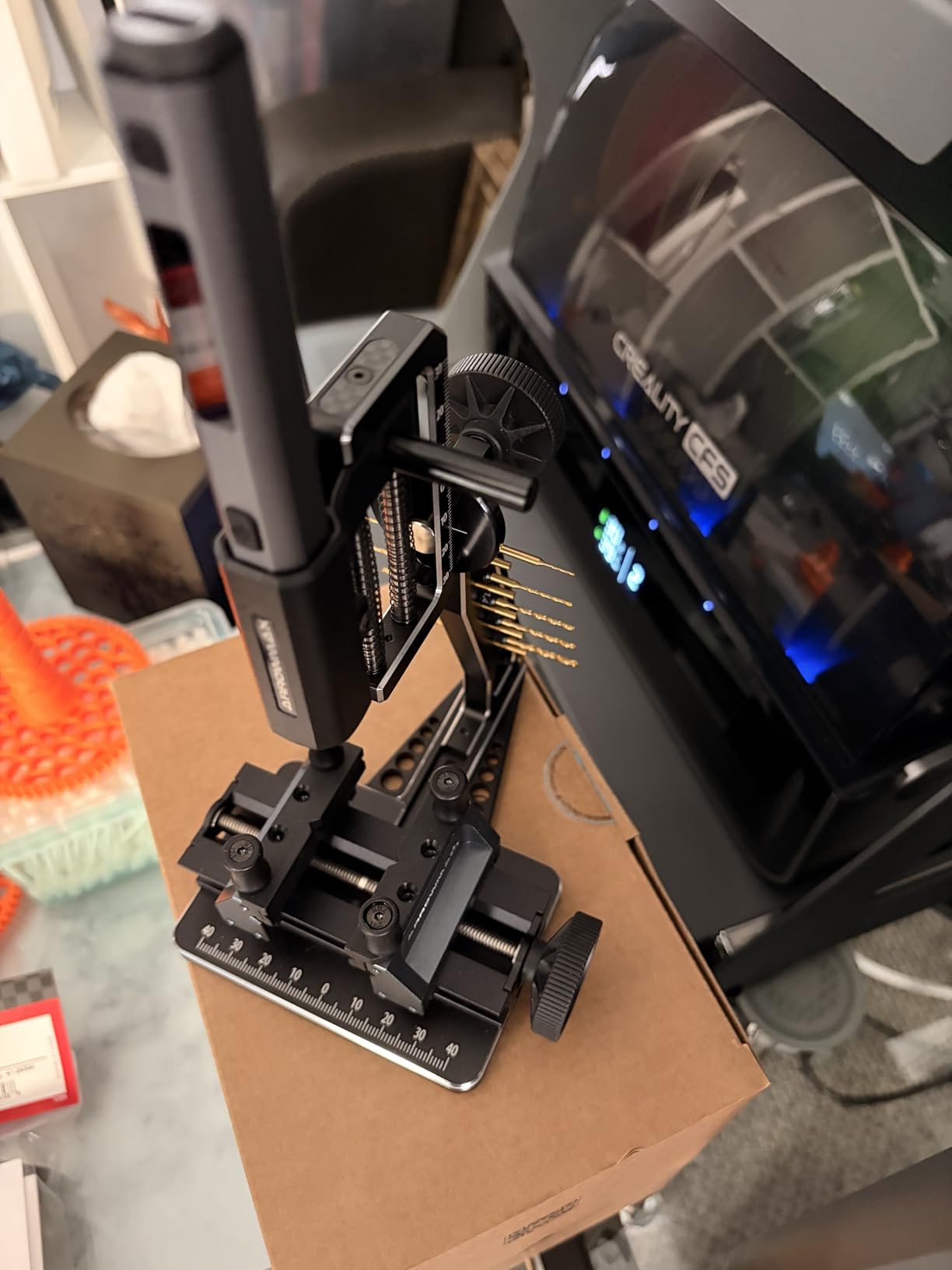
The ARROWMAX solves alignment differently from the Panavise heads. Its screw is mounted at both ends in a bearing, so the jaws close perfectly parallel with very little play, and the self-centering dual-ended grip holds a small part steady without you having to line it up. For wire, small connectors and jewelry-scale work that is a cleaner solution than a spring-loaded head.
It ships with rubber or composite jaw pads, which matters at a soldering bench because they limit how much heat reaches the vise body. The composite thumb wheel is stiff enough to hold position but easy enough to turn without over-tightening a light aluminium tool, and the magnetic base puts it on a drill press stand or an X-Y table in seconds.
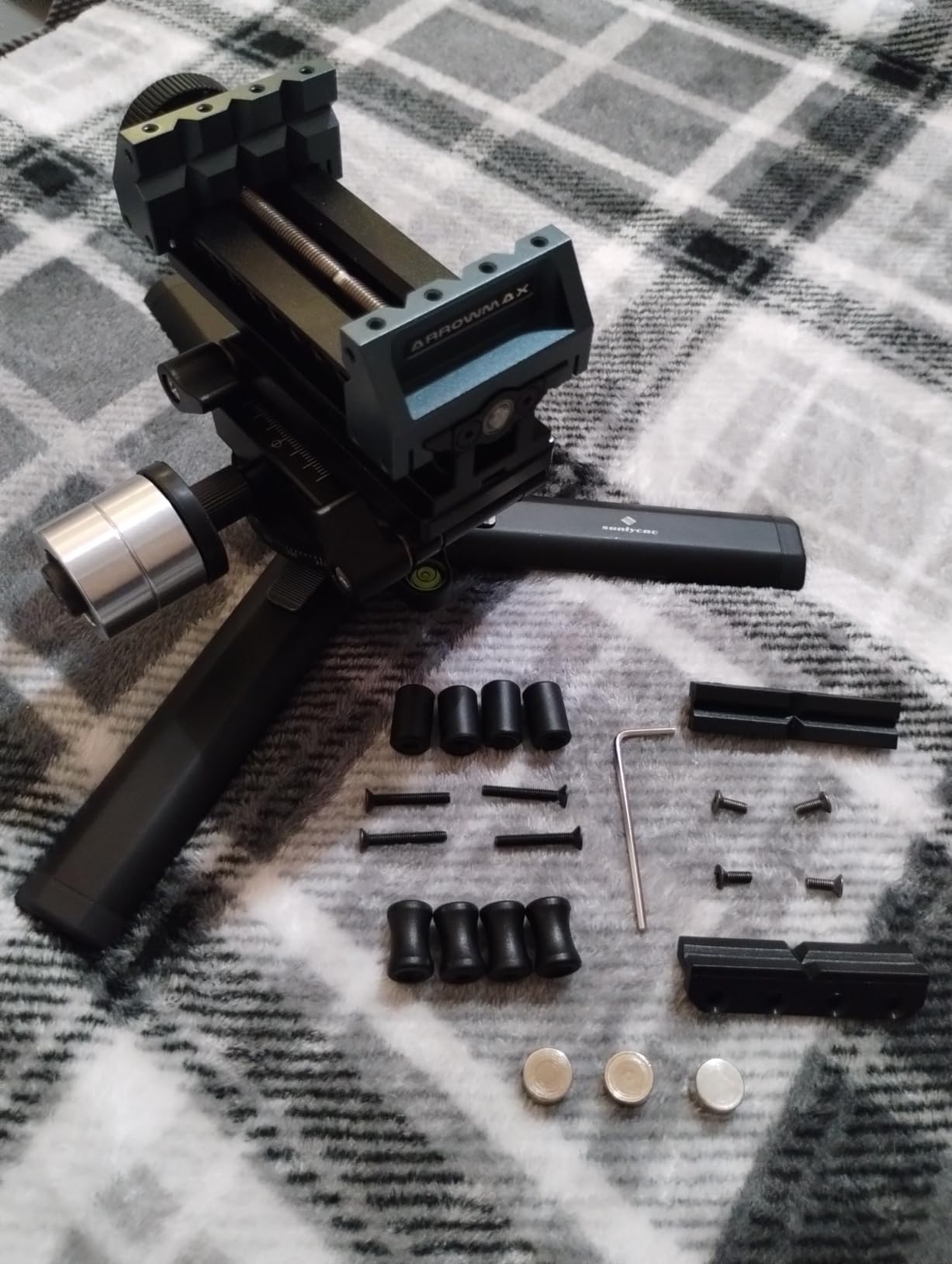
The 68 by 38 mm body is CNC-machined aluminium with an anodic oxidation surface, so it resists corrosion on a bench that sees flux and hand oils. Reviewers consistently praise the smooth screw-and-bearing mechanism and the parallel closure, which is the whole point of the design.
At 61 reviews this is the thinnest evidence base in the roundup, and the negative feedback is worth reading rather than skipping. One review reports the unit fell apart quickly and describes the after-sales handling as poor, and a few users question the durability of the grub inserts under the jaw. The body is also large enough that clearance between a drill bit and the vise can be tight on a compact press stand.
Who the ARROWMAX suits
Wire work, small connectors, jewelry-scale assembly and anyone who wants a vise that grips a cylindrical part without hunting for the center. The magnetic base makes it genuinely portable between a drill press, a magnifier lamp and a bench edge.
Buy it if parallel closing matters more to you than clamping force.
Who the ARROWMAX does not suit
Anyone who needs to squeeze hard. Aluminium jaws and a light body mean this is a holding tool, not a workholding tool, and the review base is too thin to treat as a long-term durability bet.
It is also a poor fit for a small drill press stand where the bit needs every millimeter of clearance.
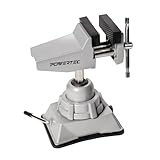
8. POWERTEC Vacuum Base Vise 71016V – Holding Power Without Drilling the Bench
POWERTEC Vacuum Base Vise, 2-3/4 Inch Jaw Portable Table Suction Clamp with 360° Swivel Head for DIY Projects, Woodworking, Model Building, Soldering, and Crafts (71016V)
Jaw width: 2.75 in
V-groove fits items to 65mm
Weight: 3.1 lb
Pros
- Suction base holds to glass
- granite
- steel and laminate
- Locking lever lets you dial suction force up or down
- 360 degree swivel head with ball pivot and 90 degree tilt
- Removable rubber jaw caps prevent scratches
- Needs no bench mounting at all
Cons
- Suction base will not hold under heavy force
- Suction fails on textured surfaces and loosens over time
- Swivel joint can cross-thread during adjustment
- Jaws show play when loosened
Almost every mounting problem people describe with bench vises comes down to not owning a bench worth drilling. The POWERTEC answers that directly with a rubber suction base that grips glass, granite, steel, laminate and marble, plus a locking lever so you can set the suction force to match the job rather than cranking it to maximum and hoping.
The head does a real job on its own. A 360-degree swivel with a rotary ball pivot and 90 degrees of tilt gives you access to awkward angles, and the V-groove jaw takes items up to 65 mm wide while the removable rubber caps keep finished surfaces from being scratched. A 2.75 inch jaw means it handles a decent slice of board and enclosure work for a portable tool.
The 4.1 rating from 261 reviews is the lowest of the vises that still earn a place here, and the reason is almost entirely the base rather than the head. Suction gives way when you need real force, it fails completely on textured or non-smooth surfaces, and it weakens as you reposition the tool. Owners still describe it as a dependable third hand for small carving, modeling, gluing and soldering work.
Two more warnings from reviews: the swivel joint can cross-thread while you are adjusting an angle and may need disassembly, and the jaws show noticeable play when loosened, with a few reports of the magnet inserts detaching from the pads. A YouTube electronics review of a budget vacuum-base vise made the same point from the other direction, calling it a great little vise for electronics while flagging the suction as its weak spot.
Who the POWERTEC suits
People with glass, granite or laminate desks, renters, students, and anyone who moves between locations. If you can get a smooth non-porous surface, the tool disappears from your setup decisions because there is nothing to install.
It also works well for light holding tasks where you only need the workpiece to stop moving.
Who the POWERTEC does not suit
Any work involving real clamping force, filing or cutting. Suction is a friction trick, and friction loses to a firm screw any time the load gets serious.
Also skip textured benches, carpet, unfinished wood and anything dusty, because the seal will not hold and you will be fighting the tool instead of the job.
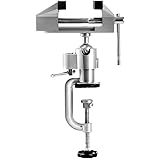
9. Fasmov Swivel 3 Inch Universal Table Vise – the Most Proven Budget Option
Fasmov Swivel 3″ Universal Table Vise Tilts Rotate 360° Universal Work, Portable Work Bench Vise for Drilling, Woodworking, Painting, Jewelry Making, Mental Working, Electronics Soldering
Jaws: 3 x 0.75 in
Opening: 2 in
Weight: 1.9 lb
Tensile 1500 psi
Pros
- Largest review base in this roundup at more than 3600 ratings
- Rotates and tilts through a wide range of angles
- Rubber jaw pads protect parts and lift off for wire work
- Light cast aluminum body clamps quickly to a table edge
- 2 inch opening beats most palm-sized mini vises
Cons
- Play develops in the swivel mechanism under moderate load
- Aluminum and chrome hardware can bend instead of holding alignment
- Drift and jaw looseness show up with repeated use
- Rubber pads can slide out of the jaws
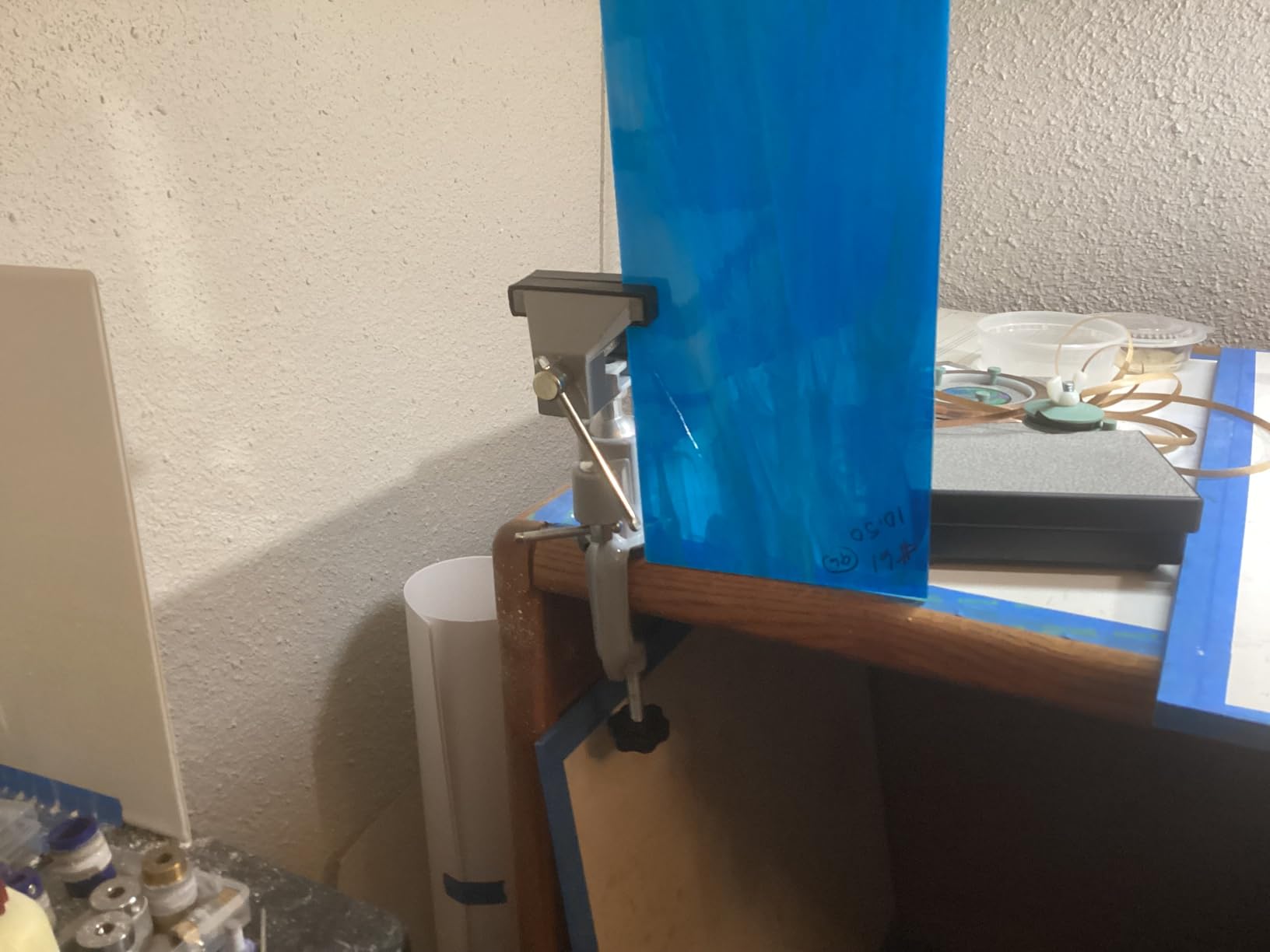
More than 3600 ratings averaging 4.2 makes this the best-documented vise in the group, and that volume tells you something useful about long-term behavior. Reviewers consistently use it as a third hand for electronics soldering, models and light craft work, and the table clip fits most workbenches and tables without a bolt hole.
The construction is cast aluminium with hardened high-carbon steel jaws, and the moving parts are precision milled, heat-treated chromium plate carbon steel. The jaws measure 3 by 0.75 inch with a 2 inch opening, which is wider than most palm-sized mini vises and the reason it can hold a small board as well as a bundle of wire.
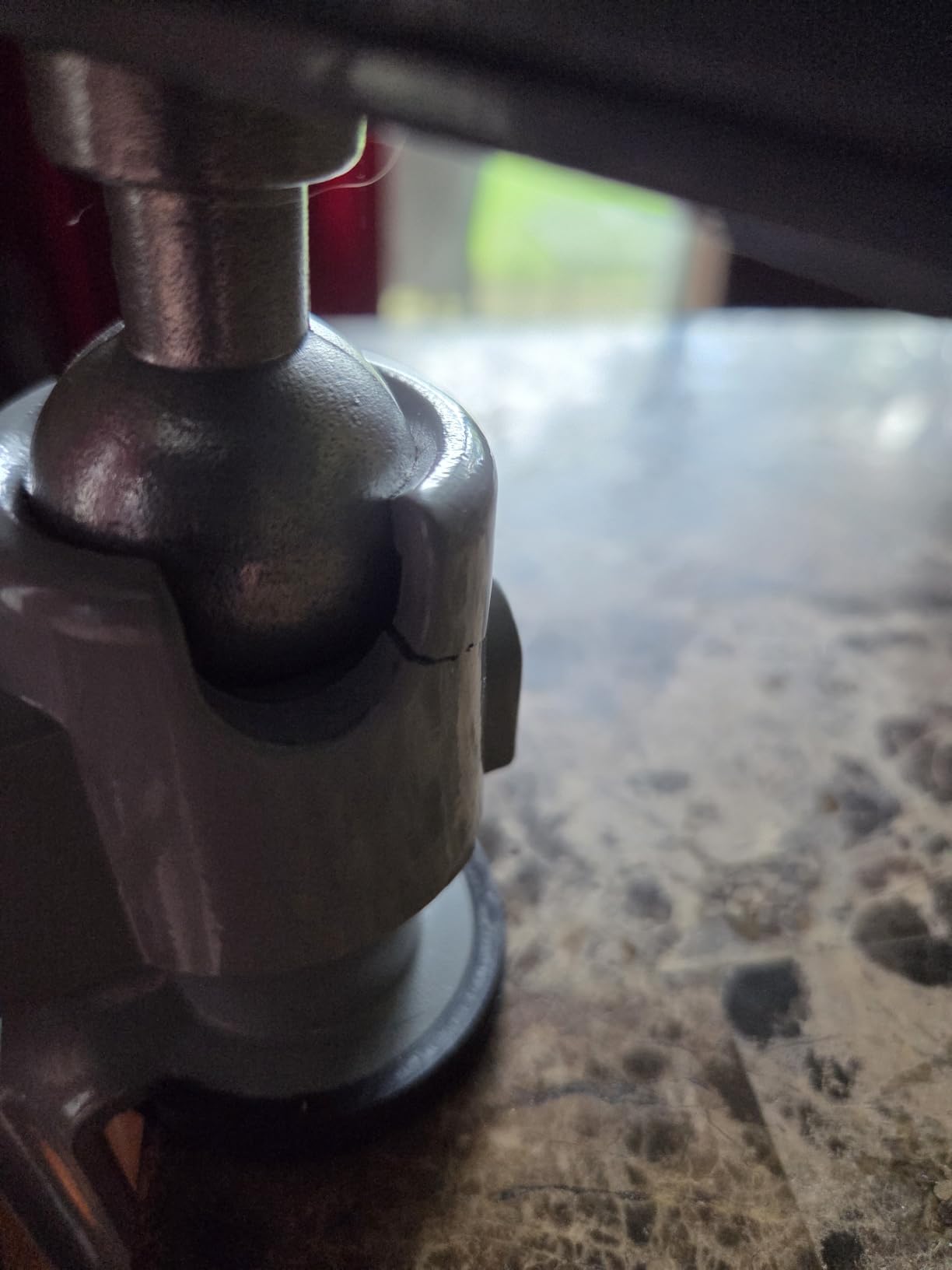
One feature is genuinely clever for electronics. The rubber jaw pads prevent scratching and can be pulled off to expose a cross-hatched pattern underneath, which gives you a positive grip on wire and rod stock when you need to pull a terminal on with pliers. That is a two-tool solution in one head.
The honest weakness, repeated in the reviews, is play. It appears in the swivel mechanism under moderate load, aluminium and chrome hardware can be stamped or bent rather than holding rigid alignment, and drift and looseness accumulate with use. It is not a precision instrument and reviewers are candid that it drifts.
Who the Fasmov suits
Hobbyists and students who want a capable swivel vise without a dedicated bench, and anyone whose work is a mix of light holding and occasional wire pulling. The removable rubber pads and exposed cross-hatch pattern cover both of those in one tool.
With 3600 reviews you also get the best read on how this thing ages, so buy it knowing exactly what you are getting.
Who the Fasmov does not suit
Production rework where joint consistency depends on a rigid hold, and anyone who cannot tolerate a joint that slowly develops play. If the swivel loosens, the workpiece moves, and at that point the vise is decoration.
It is also not a heavy-workholding tool, so keep it away from filing, cutting and hard tapping.
10. Generic Mini Vise Clamp with Swivel Suction Base – the Lowest-Commitment Way to Start
Mini Vise Clamp, Small Table Top Bench Vise with 360° Swivel Suction Base for Jewelry Making, Soldering, Watch Repair and Crafts(3.54×2.95×2.95 in, Silver)
Size: 3.54 x 2.95 x 2.95 in
Aluminum body with suction base
Model XTQ001
Pros
- Inexpensive way to test whether a vise suits your workflow
- 360 degree swivel base repositions fast between tasks
- Suction base works on clean smooth surfaces with no bolting
- Compact enough to store on a desk or counter
- Ships with small pliers and a hex screwdriver
Cons
- Explicitly light-duty and not for high clamping force
- Suction weakens with repeated repositioning
- Weakest five-star share in the group at 55 percent
- Generic branding with little listed documentation
We are including this one as a starting point rather than a recommendation. If you have never used a bench vise for electronics and you are not sure you will, this is a low-cost way to find out whether a third hand changes your soldering. Reviewers describe it as a practical occasional-use third hand for jewelry, watch repair, soldering and wire wrapping.
It is a compact aluminium body with a 360-degree swivel suction base, available in 86 mm and 98 mm sizes, and it includes small pliers and a hex screwdriver for setup. The swivel makes it quick to reposition between tasks, and the whole thing is small enough to live on a desk or counter instead of a workbench.
The 4.0 rating from 140 reviews is the lowest here, with 55 percent five-star and 9 percent one-star. The pattern behind those numbers is consistent: people are happy with it for light holding and unhappy when they expect real clamping. That is an honest match between the tool and its stated purpose, but it is worth being clear about which one you are buying.
Two practical limits. The suction base works best on clean, smooth surfaces and weakens each time you reposition it, and the build is explicitly light-duty, so it suits assembly, polishing, light sanding and repair rather than anything that resists. The XTQ001 model number and generic branding also mean there is little documentation when something goes wrong.
Who the generic mini vise clamp suits
Curious beginners, occasional repair work and anyone who needs a portable third hand more than a clamping tool. It is also fine for kids, classroom benches and anyone who does not want to commit to a permanent bench modification.
If you try it and find yourself reaching for it daily, that is your signal to move up to a proper cast iron or multi-angle model.
Who the generic mini vise clamp does not suit
Anyone doing daily production work or anything involving a soldering iron for hours at a stretch. Light aluminium and a suction base are the wrong materials for a long, hot, repeated session.
It also suits no one who needs a warranty behind the tool, since the branding offers none.
Bench Vise or Something Else: Making the Right Call for Electronics
Start with jaw width and opening, not throat depth
Three measurements get confused constantly. Jaw width is how tall the face is, jaw opening is how far the jaws separate, and throat depth is the vertical distance from the jaw line to the base of the body. Only the first two matter for board work: you need enough opening to accept a board edge and enough width that the board is not held at a single point.
For most electronics, a jaw opening of 2 inches handles a standard board edge and a small enclosure. A 3 inch opening gives you a full-size card or a phone-sized assembly. Opening beyond 4 inches rarely helps at a soldering bench, because you can no longer see or reach the joint you are holding. Our general bench vise guide covers the larger sizes in more depth if you need to go bigger.
Choose mounting by what your bench can physically take
Bolt-down mounting is the most rigid and the least reversible, and it needs a bench top thick enough to drill and a front edge to clamp against. Clamp-on mounting needs only an edge up to the clamp’s rated thickness and is what most electronics benches actually allow. A weighted base skips mounting entirely at the cost of some mass, which is the approach the PanaVise 324 takes.
Suction is the fourth option and the most conditional: it works on glass, granite, steel and laminate, and it fails on anything textured. Forum discussion about vacuum vises is almost entirely this question, and the consensus is that suction is a convenience, not a structural solution. Pick according to the least forgiving part of your setup, not the nicest surface you own.
More clamp force is not better
A PCB is a fiberglass laminate with a thin solder-mask coating and copper that is only a few ounces thick. Push too hard and you crack the laminate through a mounting hole, flatten a header pin, or crush an SMD component that has no tolerance at all. The correct approach is the least force that stops the workpiece moving, applied consistently.
This is why a 660 lb vise and a 1500 psi small vise are both usable at the same bench. Force is a ceiling, not a setting. If you find yourself leaning on the handle to make something stop moving, the vise is the wrong size for the job rather than under-powered.
Protect the workpiece before you clamp it
Add a soft jaw face before the first clamp. This can be aluminium or hardwood inserts, or the rubber pads that ship with several of the vises in this roundup. Place it on the jaw face closest to the finished surface, and add a piece of cloth or a strip of low-tack tape if the surface is anodised or painted.
Clamp on a board edge or a component body, never on a fine-pitch header or a flexing part of a display. And keep the iron out of contact with the jaw metal: heat cycling changes alignment, and none of the vises here are designed to be a soldering iron rest even where a heat rating is published.
Use a vise instead of helping hands when the work moves
Helping hands and a good third-hand arm are steadier than nothing and better for tweezers, probe work and holding a component steady while you brush flux. They are also adjustable, which means they change shape between sessions. A vise gives you a fixed, repeatable hold that you can set once, tighten the handle, and forget about.
The practical rule: if the part moves, drifts or has to be re-gripped mid-task, the free-standing holder is the wrong tool and a small vise is the right one. If you need an adjustable arm to hold a probe, a wire or a pair of tweezers, you want both. The other option is a purpose-built PCB holder, which stays a better choice than any vise for very small boards where you need the board to float rather than be held by an edge.
Build the rest of the station around it
A vise does not fix lighting, heat removal or static. If you are working under a magnifier, check our workshop lighting guide for how to avoid shadowing your own hands. If you cut, strip or file metal, a bench grinder will eventually be next on your list, and we compared the main options in our bench grinder review. Fume extraction and an ESD mat are the other two pieces that turn a bench into a workstation.
Frequently Asked Questions
Who makes the best quality bench vise for electronics work?
PanaVise makes the strongest bench vises for electronics because the multi-angle heads tilt, turn and rotate a board while the jaws stay closed, and the metal bodies carry a published heat tolerance for a soldering bench. The 301 Standard is the balanced pick, the 201 Junior handles small parts and high heat, and the 324 bundles a board holder, base, parts tray and solder station. For a self-contained clamp-on tool, WORKPRO and COGNATIVE offer the best construction in their tier.
Can a PanaVise be used for soldering?
Yes, and the PanaVise is the one vise family built with soldering in mind. The 301 is rated for 200 F continuous and 300 F intermittent heat, and the 201 Junior handles 350 F continuous and 450 F intermittent, so a resting iron will not soften the body. Its 90 degree tilt and 360 degree turn let you reach the far side of a board without unclamping it. Keep the iron out of contact with the jaw metal regardless, and use a soft jaw face on solder-mask surfaces.
What vise size do I need for an electronics workbench?
A 2 to 3 inch jaw opening is the right range for electronics, because it accepts a standard board edge or a small enclosure while keeping the work close enough to see. Jaw width tells you how tall a workpiece can be without tipping, and throat depth matters only for deep parts you reach into. Bigger is not better here, because a large vise pushes the workpiece out of your working field of view. A heavy vise also crushes small parts long before you notice it.
Are Harbor Freight vises any good for electronics work?
We did not include a Harbor Freight vise in this roundup, so we have no measured verdict to give you. The honest way to judge any budget vise is to check three things: whether the jaws close parallel out of the box, whether the spindle is enclosed so it does not pick up grit, and whether the jaw faces are replaceable so you can add soft pads. A heavy shop vise from any budget brand will still crush a small board, so sizing matters more than the badge on the label.
Will a bench vise crack a circuit board or crush SMD parts?
It can, and both failures come from the same cause: too much force. A PCB is a fiberglass laminate with thin copper and a brittle solder-mask coating, and SMD parts have no tolerance for clamping at all. Use the lightest pressure that stops the board moving, clamp on an edge or a component body rather than a fine-pitch header, and fit a soft jaw face before the first clamp. Vises with rubber pads built in remove the most common way of marking a board.
Should I use a bench vise or helping hands for soldering?
Use a vise when the workpiece moves, because only a vise gives you a fixed, repeatable hold that you set once and do not readjust. Helping hands and third-hand arms are better for adjustable tasks like holding tweezers, a probe or a component steady while you brush flux. The strongest setups use both: a small vise holding the board, and an arm holding the tool. For very small boards, a purpose-built PCB holder is still better than any vise.
Is a vacuum base vise strong enough for electronics work?
A vacuum base vise is strong enough for light electronics holding and not much more. Suction works on smooth non-porous surfaces such as glass, granite, steel and laminate, and it fails on textured or dusty surfaces while losing grip each time you reposition the tool. If your task is soldering, assembly or light filing, a vacuum base works well and needs no drilling. If you plan to file, cut or clamp real force, choose a bolted, clamped or weighted base instead.
Conclusion: Which Bench Vise to Buy in 2026
The PanaVise 301 is our pick for the best bench vises for electronics work in 2026, because single-knob articulation in three planes, a body that tolerates a resting soldering iron and a footprint small enough for a dedicated electronics bench are very hard to combine anywhere else. Add a PanaVise base and you have the most capable board holder on this list.
If your work is smaller or your sessions run longer near a hot iron, the 201 Junior takes over with a much higher heat rating. If you want the whole soldering station in one purchase, the 324 is the answer. If you cannot drill your bench, the COGNATIVE cast iron clamp-on gives you metal jaws and the WORKPRO gives you two jaw faces, while the POWERTEC vacuum model covers smooth desktops with no installation at all.
Whichever one you choose, add a soft jaw face before your first clamp and use less force than you think you need. That habit is worth more than any model on this list.